How Many Protein Shakes a Day to Gain Muscle?
Home ›Supplements and Nutrition
⚠️ Medical Disclaimer: This article is for informational purposes only and does not constitute medical advice. Consult a registered dietitian or healthcare provider before making significant dietary changes — especially if you have pre-existing kidney conditions or are taking prescription medications.
For most people actively trying to build muscle, 1 to 2 protein shakes per day is the evidence-backed sweet spot — but that number is meaningless without first knowing your total daily protein target. Asking how many protein shakes a day to gain muscle without that target is like asking how many trips to the gas station you need without knowing your tank size.
The real problem isn’t counting shakes. Most people are either under-shooting (one shake when they need two) or over-shooting (three shakes when their whole-food diet already covers the gap) — and both mistakes cost muscle gains. There’s also a quieter anxiety underneath the question: Am I hurting my kidneys? Am I wasting money?
By the end of this guide, you’ll know your personal daily protein target, exactly how many shakes fit your diet, the optimal times to drink them, and the truth about whether protein shakes affect your kidneys. This guide covers protein needs calculation, the optimal shake count, 8 timing protocols, kidney safety, and special considerations for women and GLP-1 users.
For most people trying to build muscle, 1-2 protein shakes a day covers the gap between whole-food protein and your daily target — the Total Daily Intake (TDI) Framework makes this calculation simple.
- Your target first: Aim for 0.7–1.0 g of protein per pound of body weight daily (Hartford Healthcare, 2026)
- Shake count is a variable: 1-2 shakes fills the gap for most people; larger athletes in aggressive bulking phases may need 2-3
- Timing is flexible: The 30-minute anabolic window is an outdated concept — total daily intake matters far more than precise timing
- Kidneys are safe: Creatinine elevation from whey protein is a metabolic response, not a sign of kidney damage, in healthy individuals (NIH/PMC, 2026)
- The TDI Framework: Calculate your total protein goal, subtract whole-food protein, divide by shake content = your personal daily shake number
Daily Protein Needs for Muscle
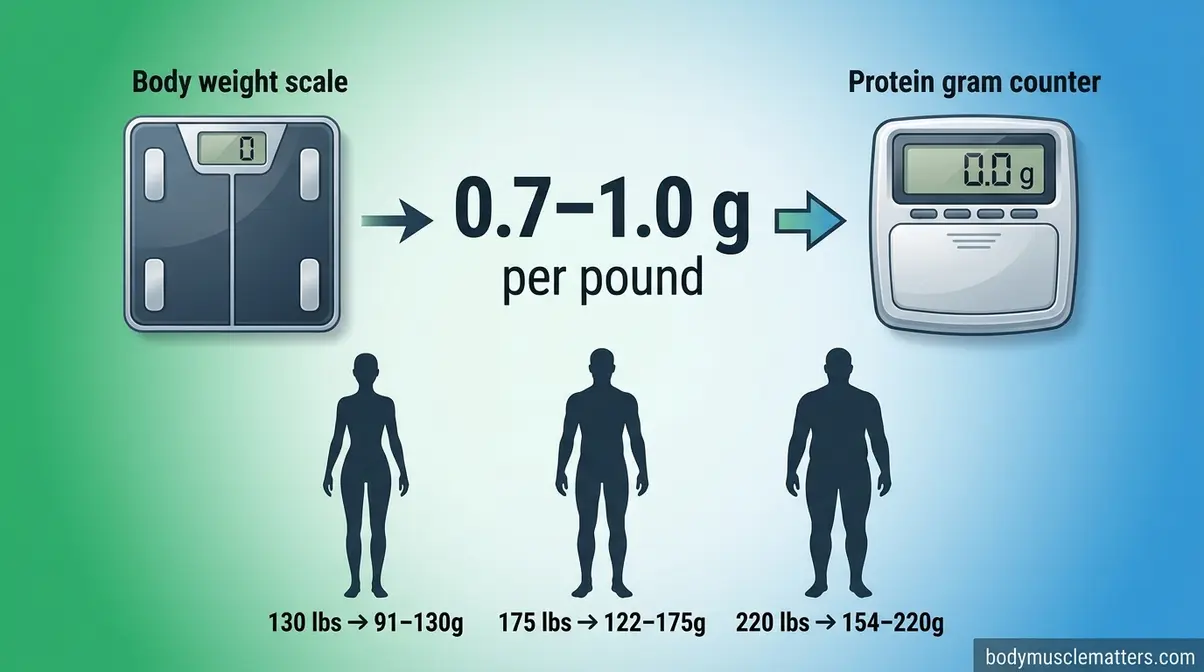
To build muscle, most adults need 0.7 to 1.0 grams of protein per pound of body weight — or 1.2 to 1.6 grams per kilogram — every single day. Research from Stanford Medicine and the Mayo Clinic Health System supports 1.2 to 1.6 grams per kilogram as the optimal range for resistance-trained individuals, equating to roughly 80 to 106 grams daily for a 150-pound person. Knowing this number is step one — because it determines how many protein shakes a day to gain muscle you actually need.
This calculation is the first step in the Total Daily Intake (TDI) Framework — the system this guide uses to determine your personal shake count. The TDI Framework treats protein shakes as a delivery vehicle, not a target. Before you can count shakes, you need a number to count toward.
“If you’re trying to build muscle, a good rule of thumb is 0.7 grams of protein per pound of body weight,” says Barrett, a Hartford Healthcare nutrition expert.
Evidence across multiple peer-reviewed studies and clinical guidelines consistently points to 1.2–1.6 g/kg as the range that optimizes muscle protein synthesis during resistance training. A meta-analysis on optimal protein for strength gain found that lower-body strength gain is optimized by a daily protein intake of at least 1.6 grams per kilogram during resistance training (2026). Stanford Medicine updated protein guidelines align with this range, recommending 1.2 to 1.6 g/kg for adults engaged in regular exercise (2026).
The Daily Protein Formula
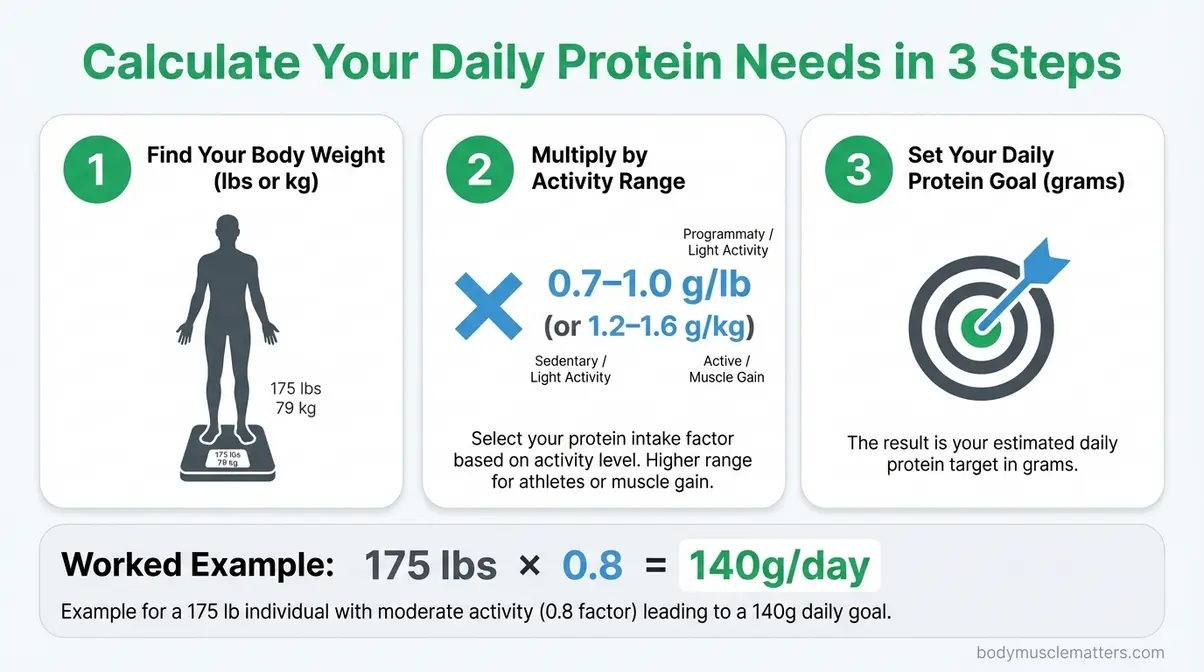
To build muscle effectively, calculating your daily protein target takes three steps:
- Find your body weight in pounds or kilograms
- Multiply by your activity-adjusted range: 0.7–1.0 g per pound (or 1.2–1.6 g per kilogram)
- Set your daily target — this is your protein goal, not your shake count
A worked example: A 175-lb person needs 122 to 175 grams of protein per day. A 130-lb person needs 91 to 130 grams. A 220-lb person needs 154 to 220 grams. These numbers define how much whole-food eating and shake supplementation you need combined.
The reason a range exists — rather than a single number — comes down to training status. Beginners building muscle for the first time can start at the lower end (0.7 g/lb); experienced lifters in a caloric surplus may benefit from the upper end (1.0 g/lb). The key clarification most sources skip: 0.7 g/lb and 1.2 g/kg are the same number expressed in different units. This eliminates the confusion that drives most of the anxiety around this question.
| Body Weight (lbs) | Minimum Protein (g/day) | Maximum Protein (g/day) |
|---|---|---|
| 130 lbs | 91 g | 130 g |
| 175 lbs | 122 g | 175 g |
| 220 lbs | 154 g | 220 g |
For a deeper breakdown of per-meal protein targets, see our guide on how to calculate your daily protein needs.
Why Leucine Triggers Muscle Growth
Not all protein is created equal — and the reason comes down to a single amino acid. Leucine is an essential amino acid — one your body cannot produce on its own — that acts as the primary trigger for mTOR (mammalian target of rapamycin), the cellular signaling pathway that initiates muscle protein synthesis. Without sufficient leucine at each meal, the mTOR switch stays off, and muscle growth stalls regardless of total protein consumed.
The leucine threshold matters in practice: you need approximately 2–3 grams of leucine per meal to activate mTOR. Whey protein is particularly effective because it is leucine-rich, containing roughly 10–11% leucine by weight. A standard 25–30g whey protein shake delivers approximately 2.5–3g of leucine — enough to clear the mTOR activation threshold consistently.
This is why a 25g whey shake can be more effective at triggering muscle growth than 25g of protein from a low-leucine source like gelatin or collagen. Whole foods like chicken, eggs, and dairy are also leucine-rich — shakes are not uniquely superior, just reliably convenient. The meta-analysis on optimal protein for strength gain confirms that resistance training combined with ≥1.6 g/kg daily protein intake optimizes strength gains, regardless of whether that protein comes from food or supplements (2026).
Leucine content explains why protein shakes work. But knowing your total daily target and protein quality still leaves one question unanswered: what happens when you need to fill the gap between whole-food protein and your daily goal? That’s where shake count comes in.
Adjusting for Bulk, Cut, or Recomp
Your protein target is not static — it shifts meaningfully depending on your training phase. Understanding this distinction separates people who make consistent progress from those spinning their wheels with a one-size-fits-all number.
Bulking (caloric surplus): Protein needs are slightly lower relative to total calories because the surplus itself creates an anabolic environment. A target of 0.7–0.8 g/lb works well here. The extra calories do some of the muscle-building work, so you don’t need to push protein to its ceiling.
Cutting (caloric deficit): This is where how much protein to eat to gain muscle — or rather, preserve it — becomes critical. Protein needs rise to 1.0–1.2 g/lb during a cut because the body is at risk of burning muscle tissue for fuel. Research consistently shows that higher protein intake during caloric restriction preserves lean mass far more effectively than moderate protein. This is a non-negotiable adjustment.
Recomposition (maintenance calories): The most demanding scenario. Simultaneously building muscle and losing fat requires consistent protein intake at 0.8–1.0 g/lb. Progress is slower but achievable, particularly for newer lifters. Research suggests that recomposition is real — but it requires patience. Avoid overpromising yourself a timeline.
| Goal | Protein Target (g/lb) | Rationale |
|---|---|---|
| Bulking | 0.7–0.8 | Caloric surplus provides anabolic support |
| Cutting | 1.0–1.2 | Higher protein prevents muscle catabolism |
| Recomposition | 0.8–1.0 | Balanced demand; progress is slower |
Now that you know your personal protein target and how it shifts with your goal, let’s answer the question you came here for: exactly how many protein shakes a day to gain muscle — and what the research actually shows about the optimal number.
How Many Shakes a Day to Gain Muscle
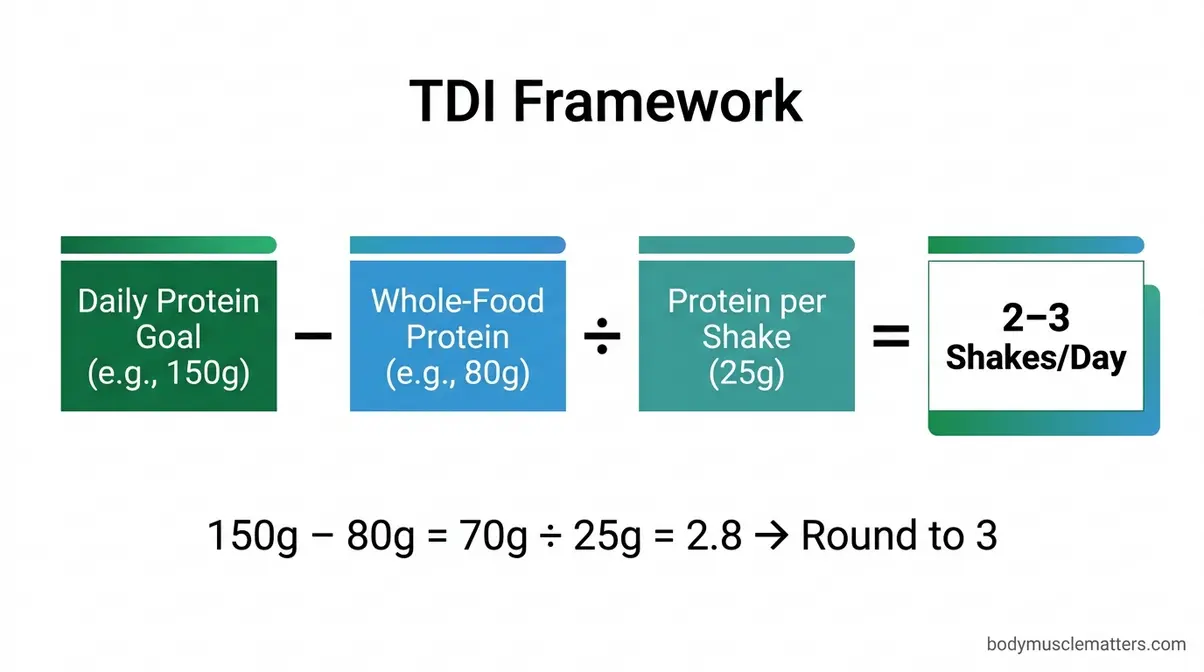
For most people asking how many protein shakes a day to gain muscle, the answer is 1 to 2 — but only after calculating your Total Daily Intake (TDI) target. A 2026 meta-analysis published in PubMed found that meeting 1.6 g/kg daily protein intake optimizes muscle strength gains during resistance training. Shakes are a tool to fill the gap between what your meals provide and what your muscles need — not a goal in themselves.
Evidence across fitness communities and peer-reviewed research converges on 1-2 shakes for most people. The protein intake recommendations for older adults study notes that expert groups recommend 1.0–1.2 g/kg daily for healthy older adults to maintain muscle mass, with younger active adults targeting muscle gain generally needing 1.2–1.6 g/kg (2026) — a range most people satisfy with 1-2 supplements layered onto a protein-rich diet.
The 1-2 Shake Rule Explained
The Total Daily Intake (TDI) Framework is the calculation that finally makes “how many protein shakes a day” a personalized, answerable question rather than a generic guess. The formula is straightforward:
Daily Shake Count = (Total Daily Protein Goal − Whole-Food Protein from Diet) ÷ Protein Content per Shake
- Here’s a worked example:
- Your goal: 150g of protein per day
- You eat 80g from whole foods (chicken, eggs, dairy)
- Each shake contains 25g of protein
- Calculation: (150 − 80) ÷ 25 = 2.8 → round to 2-3 shakes
Why does 1-2 cover most people? The average American diet already provides 60–80g of protein from whole foods. Two shakes of 25–30g each add 50–60g, covering the gap for most 150–180 lb individuals targeting 0.7–0.8 g/lb. Three shakes become appropriate for larger athletes (200+ lbs), those in aggressive bulking phases, or people with very low whole-food protein intake. Think of that as the exception, not the rule.
For step-by-step guidance on integrating shakes into your training routine, see our guide on how to effectively use protein powder.
Shakes vs. Whole Foods
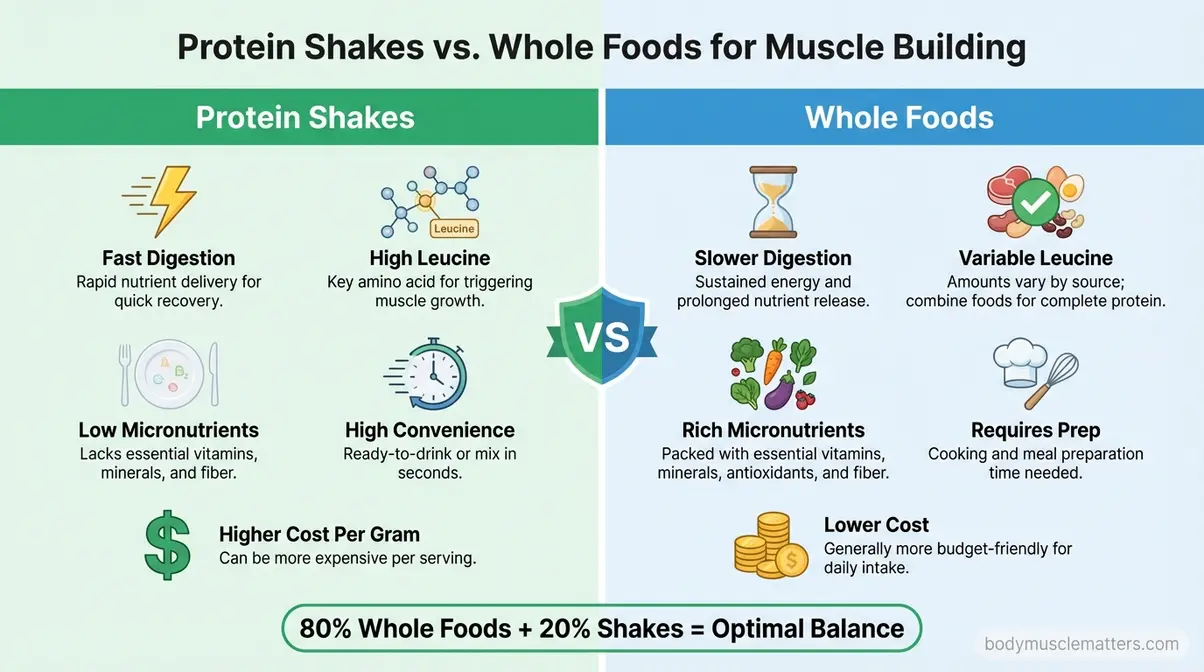
Neither protein shakes nor whole foods are universally superior — what drives muscle recovery and growth is total daily protein and leucine content, regardless of source. That said, each option has a distinct role in a well-designed nutrition plan.
Shakes win on convenience and speed of digestion. Whey protein is fast-absorbing, making it practical post-workout or on rushed mornings when a full meal isn’t possible. Whole foods win on micronutrient density, satiety, and long-term dietary variety — nutrients like zinc, iron, and B vitamins that support energy, hormone function, and recovery can’t be replicated by a shake alone.
The risk of over-reliance is real. Using shakes to replace meals rather than supplement them creates micronutrient gaps that impair recovery over time. A useful rule of thumb: aim for 80% of your daily protein from whole foods (chicken, eggs, dairy, legumes) and 20% from shakes. This ensures nutritional completeness while letting shakes serve their actual purpose — convenience.
The comparison table below breaks down the key differences:
| Category | Protein Shakes | Whole Foods |
|---|---|---|
| Speed of digestion | Fast (whey: 30-60 min) | Slower (2-4 hours) |
| Leucine content | High (whey ~10-11%) | Varies (eggs, chicken: high) |
| Micronutrients | Minimal | Rich and diverse |
| Satiety | Lower | Higher |
| Convenience | Very high | Requires prep |
| Cost per gram | Higher | Lower |
Recommendations for Women
For women asking how many protein shakes a day for a woman is appropriate, the core answer is the same: 1-2 shakes per day, calculated using the TDI Framework. Protein needs are based on body weight, not gender. A 130-lb woman targeting 0.7 g/lb needs 91g of protein daily; two 25g shakes cover 55% of that goal, with the remainder coming from whole foods.
The nuance worth noting: women often under-eat protein due to calorie restriction concerns. Research indicates that women who resistance train benefit from the same relative protein intake as men — 1.2–1.6 g/kg — and that the difference between men and women is total caloric intake, not protein percentage. Women may also find that spacing 2 smaller shakes (20g each) rather than 1 large shake improves adherence and avoids meal displacement.
A practical example: a 130-lb woman on a muscle-gain plan targets 91–130g protein per day. With a 50–80g whole-food baseline, 1-2 shakes of 25g each fills the remaining gap cleanly. Consult a registered dietitian if you’re unsure how to balance protein targets with caloric goals.
Whether you’re a man or a woman, knowing how many shakes to take is only half the equation. The other half is when to take them — and the science here may contradict what you’ve heard in the gym.
8 Protein Shake Timing Protocols
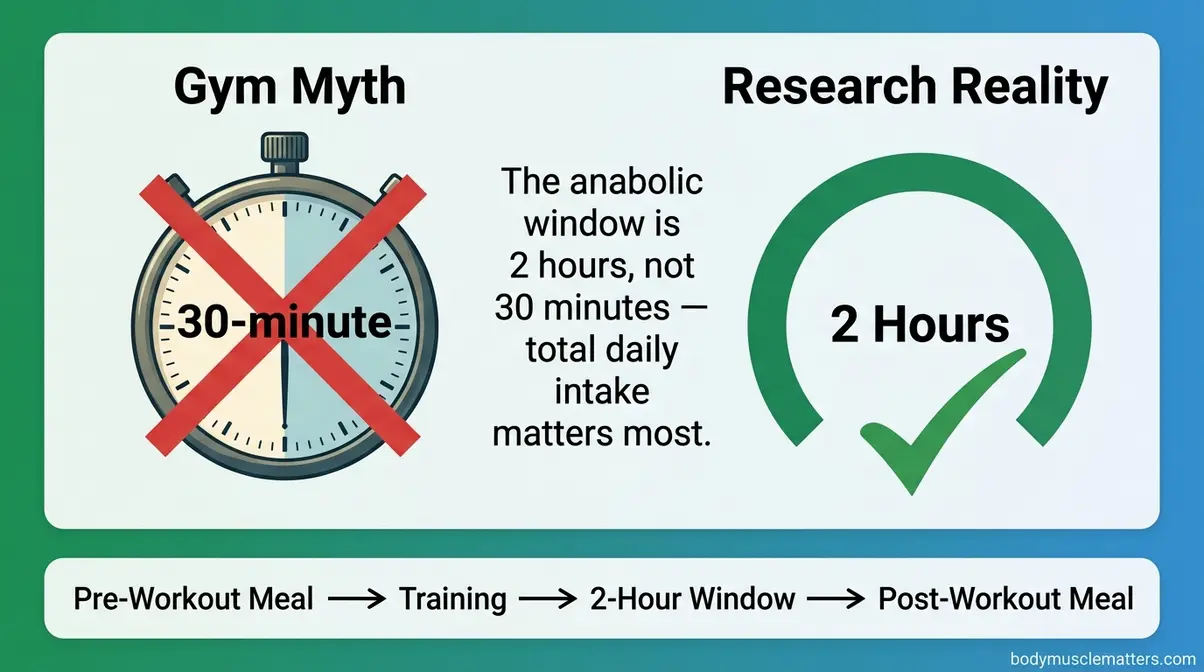
Protein shake timing matters less than most gym-goers believe — but strategic timing can improve convenience and consistency. The USDA recommendation of 25-30 grams of protein per meal helps optimize muscle protein synthesis. Spreading protein across 3-4 meals or shakes per day outperforms consuming it all at once — and this rhythm is easier to maintain than any single “perfect” timing rule.
The TDI Framework focuses on total daily intake — timing is a secondary optimization once your daily total is locked in.
The 30-Minute Window Myth
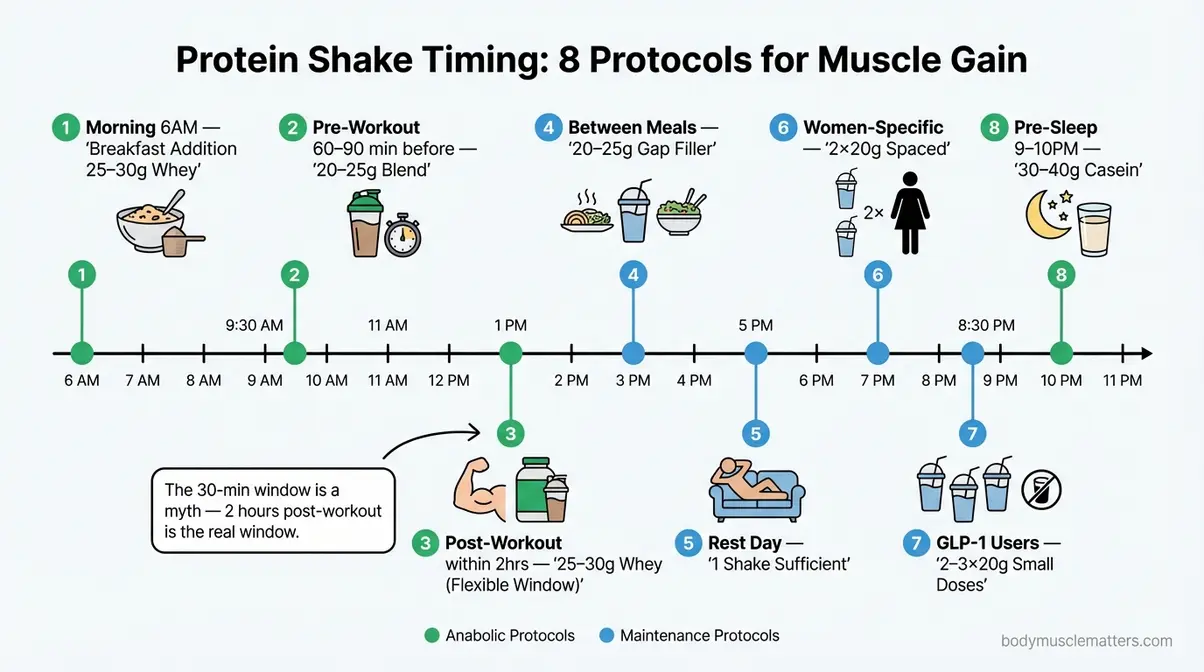
The gym mythology goes like this: “You must consume protein within 30 minutes of training or you miss the muscle-building window.” This belief was popularized in the 1990s and early 2000s based on early research that has since been substantially refined. The USDA recommendation of 25-30 grams of protein per meal supports spreading protein across multiple meals — a finding that directly undermines the rigid 30-minute rule.
The reality: more recent research shows the anabolic window extends closer to 2 hours post-workout for most people, and some studies suggest total daily protein intake matters far more than precise timing. The window is a sliding scale, not a hard cutoff. According to the International Society of Sports Nutrition, the greatest muscle adaptations occur when protein is ingested within two hours following a workout — not within 30 minutes. If you consumed a protein-rich meal 1-2 hours before training, your body still has circulating amino acids during and after the session.
The practical implication is freeing: if you train at 7pm and have a protein-rich dinner at 8pm, you’re within the effective window. No shake needed unless your dinner falls short of your protein target. The TDI Framework’s focus on total daily intake reflects this — consistency beats perfect timing every time.
8 Shake Timing Scenarios
Protein shake timing works across different schedules, goals, and individual factors. Here are 8 specific protocols that cover the most common situations:
- Morning (Breakfast Addition): Add a whey shake to a low-protein breakfast (e.g., toast, fruit). 25–30g. Starts the day’s protein accumulation toward your TDI goal and prevents a protein gap that compounds through the day.
- Pre-Workout (60–90 Minutes Before): Whey or blend. 20–25g. Ensures amino acid availability during training without causing digestive discomfort from a heavy meal. Particularly useful for early-morning trainers who haven’t eaten yet.
- Post-Workout (Within 2 Hours): Whey preferred for its fast absorption. 25–30g. Maximizes the flexible anabolic window without the anxiety of a 30-minute deadline. If you ate a protein-rich meal pre-workout, this shake is optional — let your TDI calculation decide.
- Between Meals (Protein Gap Filler): Use a shake when a meal falls below 20g of protein. 20–25g. Maintains the 3-4 protein “hits” per day rhythm recommended by the USDA for optimal muscle protein synthesis.
- Pre-Sleep (Casein Shake): Casein — a slow-digesting milk protein that releases amino acids gradually over 6–8 hours — is the right choice here. 30–40g. Feeds muscles during overnight fasting. Particularly effective for people who train in the evening and want continuous overnight support.
- Rest Day Protocol: One shake on rest days is sufficient for most people. Whole-food protein intake can cover the gap when appetite may be lower after no training stimulus. Protein needs don’t drop to zero on rest days — muscle repair continues for 24–48 hours post-training.
- Women-Specific Timing: Women managing calorie restrictions may benefit from spacing 2 smaller shakes (20g each) across the day rather than one large shake. This avoids meal displacement, maintains micronutrient intake, and supports the 3-4 protein-hit rhythm without creating a caloric surplus.
- GLP-1 Users (Zepbound, Wegovy, Ozempic): Medication-driven appetite suppression makes hitting protein targets from solid food genuinely difficult. A small 20–25g shake is often the most practical option. Smaller, more frequent doses (2-3 shakes of 20g) may be more tolerable than one large shake. Consult your prescribing physician before adjusting protein intake. Full guidance is in the Safety section below.
Timing protocols optimize your results — but before you increase your daily shake count, it’s worth addressing the health question that generates the most anxiety: do protein shakes affect your kidneys?
Kidney Health & Special Populations
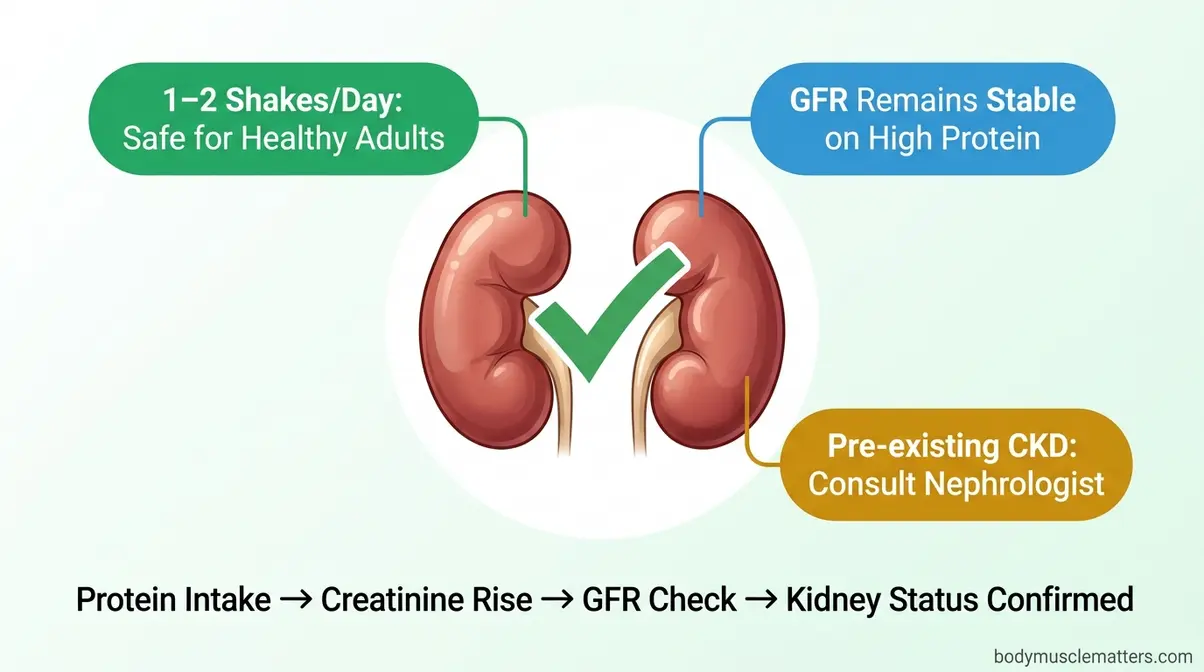
For healthy individuals, consuming 1-2 protein shakes per day does not damage the kidneys — but the science behind this reassurance is worth understanding. High protein intake can elevate serum creatinine levels, a finding that sometimes alarms doctors and patients alike. Research from the NIH (2026) clarifies that this elevation is often a physiological response to protein metabolism, not a sign of kidney damage.
Our team reviewed the available nephrology literature on this question, and the finding is consistent: elevated creatinine in high-protein dieters is a metabolic marker, not a damage signal, in the absence of underlying kidney disease. A systematic review on whey protein and blood biochemistry found that whey protein supplements significantly increase essential amino acids while decreasing creatine kinase — a marker of muscle damage — without adverse kidney effects in healthy subjects (2026). Research on high-protein diets and serum creatinine levels confirms that higher protein diets increase serum creatinine due to protein catabolism, which may mask changes in GFR but does not necessarily indicate kidney damage (2026).
Does Whey Increase Creatinine?
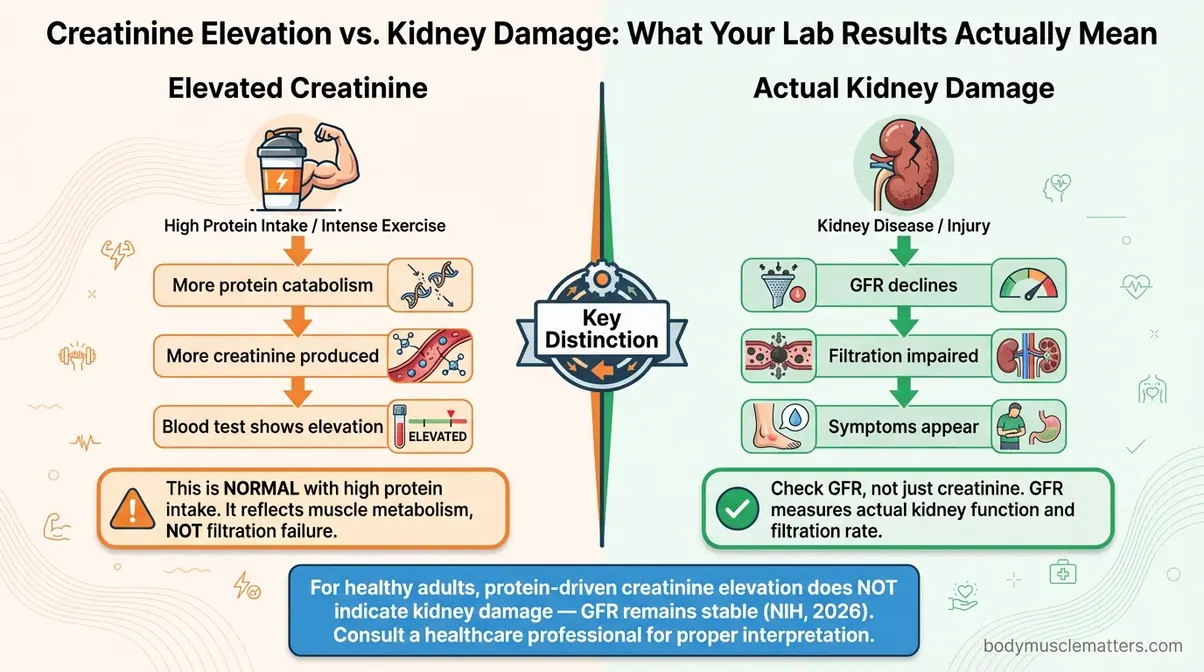
Creatinine is a waste product your muscles produce when they break down protein for energy. Your kidneys filter it from the blood. When blood creatinine levels rise on a lab test, it can signal that kidneys are struggling — but it can also simply mean you’re eating more protein. This is the distinction that competitors miss entirely, and it’s the specific reassurance most readers need.
The false-alarm mechanism works like this: when you consume high amounts of protein (including from whey shakes), your body produces more creatinine as a byproduct of protein catabolism. Blood tests detect this elevation. However, GFR — glomerular filtration rate (GFR), the most accurate measure of how well the kidneys are actually filtering blood — often remains stable. A 2026 NIH study found that protein-driven creatinine elevation can mask underlying GFR changes but does not necessarily indicate kidney damage in healthy individuals.
The practical implication: if your doctor flags elevated creatinine and you’re consuming 1-2 protein shakes per day, mention your protein intake. A GFR test provides a more accurate picture of kidney health than creatinine alone. The systematic review on whey protein and blood biochemistry reinforces this — whey supplementation increased essential amino acids without adverse effects on kidney function in healthy subjects (2026).
“Higher protein diets can increase serum creatinine due to protein catabolism, which may mask underlying changes in GFR — but does not necessarily indicate kidney damage in healthy individuals” (NIH/PMC, 2026).
Important: If you have pre-existing kidney disease, reduced kidney function, or a family history of kidney problems, consult a nephrologist before significantly increasing your protein intake. The guidance in this section applies to healthy adults with normal kidney function.
High-Protein Diets & Kidney Function
The nephrology research on high-protein diets and long-term kidney function in healthy adults is more reassuring than gym-floor anxiety suggests. The research on high-protein diets and serum creatinine levels summarizes the key finding: elevated creatinine in high-protein dieters often reflects normal metabolic adaptation to increased protein catabolism, not pathological kidney decline (2026). Cystatin C-based GFR measurements — considered more accurate than creatinine-based estimates — showed GFR remaining stable or even slightly improving in healthy subjects on higher protein diets.
The whey-specific evidence adds another layer of confidence. The systematic review on whey protein and blood biochemistry found that supplementation significantly increased essential amino acids and decreased creatine kinase — a marker of muscle damage — without adverse effects on kidney function markers in healthy subjects (2026). For healthy adults with normal kidney function, protein intake up to 2.2 g/kg has not been shown to cause kidney damage in short-to-medium term studies.
The research consistently shows risk only for individuals with pre-existing kidney conditions. For those with normal kidney function, the evidence supports 1-2 protein shakes per day as safe and effective. This is why the TDI Framework is designed for healthy individuals — the guidance in this section identifies when individual medical consultation should replace the general framework.
Mandatory YMYL Qualifier: The research cited here applies to healthy adults with normal kidney function. If you have been diagnosed with chronic kidney disease (CKD), reduced GFR, or are on dialysis, protein intake guidelines are entirely different — consult a nephrologist before modifying your diet.
Protein Shakes on GLP-1 Medications
People on tirzepatide (Zepbound) — a GLP-1 receptor agonist approved for weight management — face a protein challenge that most nutrition guides ignore entirely. The medication suppresses appetite significantly, often causing patients to eat far less food overall. Harvard Health notes on protein intake with Zepbound indicate that GLP-1 medication users frequently under-consume protein because the medication causes excessive fullness and satiety (Harvard Health). This creates a muscle-wasting risk that protein shakes can directly address.
The clinical picture is clear: during tirzepatide therapy, approximately 25–40% of total weight lost can come from lean mass if protein intake is inadequate. Research from 2026 presented at the Endocrine Society’s annual meeting found that higher protein intake significantly reduces muscle loss in patients taking anti-obesity medications. Clinical data on preserving muscle during tirzepatide therapy recommends increasing protein intake to up to 1.5 g/kg per day to prevent excessive muscle wasting during GLP-1 therapy (NIH/PMC, 2026). Protein shakes become particularly valuable here — solid food is often unappealing, but a 20–25g shake is manageable even with suppressed appetite.
Smaller, more frequent doses (2-3 shakes of 20g) may be more tolerable than one large shake for GLP-1 users, given that large volumes of liquid can also feel filling on these medications.
Consult your prescribing physician before adding protein shakes or modifying your diet while on Zepbound, Wegovy, Ozempic, or any GLP-1 medication. Your doctor can provide personalized guidance based on your treatment plan and health history.
The research is reassuring for healthy individuals and clarifies the path for special populations. But even with the best protocol, there are common mistakes that undermine results — and it’s worth knowing them before you commit to a shake routine.
Risks of Protein Shake Over-Reliance
Protein shakes are most effective when they fill the gap in a whole-food diet — using them as a meal replacement undermines the micronutrient balance essential for muscle recovery. The TDI Framework works when shakes supplement a whole-food diet. The pitfalls below occur when shakes replace it.
3 Pitfalls of Over-Reliance
Over-reliance on protein shakes is one of the most common mistakes among intermediate gym-goers. Here are three specific pitfalls — each with a scenario, what goes wrong, and how to avoid it:
- Meal Displacement: Using shakes as meal replacements instead of supplements. What goes wrong: micronutrient deficiencies in zinc, iron, and B vitamins accumulate over weeks, impairing muscle recovery, energy, and hormonal health. How to avoid: shakes fill the protein gap after a balanced meal, not instead of one. If a shake is replacing a meal, you’re using it wrong.
- Caloric Surplus from Shakes: Adding 2-3 shakes on top of a full-calorie diet without accounting for the additional calories. What goes wrong: excess calories cause fat gain, not muscle gain — protein shakes are not calorie-free. How to avoid: account for shake calories (typically 120–160 per serving) in your total daily intake, especially during a cut.
- Ignoring Digestive Signals: Continuing with whey despite bloating, gas, or discomfort. What goes wrong: persistent discomfort leads to poor adherence, and the shake routine collapses. How to avoid: switch to a plant-based protein blend or whey isolate (lower in lactose) if whey concentrate causes digestive issues.
For a comprehensive breakdown of safe daily and per-meal protein limits, see our guide on understanding safe protein limits and potential side effects.
When to Choose Whole Foods Instead
There are specific situations where whole foods outperform shakes as your primary protein strategy — and recognizing them prevents wasted money and unnecessary supplementation.
Scenario 1: Your whole-food protein intake already meets your daily target. Adding shakes creates a caloric surplus with no additional muscle benefit. Run the TDI calculation first — if your meals cover the goal, shakes are redundant.
Scenario 2: You’re eating at a significant caloric deficit. Whole foods provide greater satiety and micronutrient density per calorie than shakes. Prioritizing food volume here keeps hunger manageable and nutrition complete.
Scenario 3: Budget is a genuine constraint. Eggs, Greek yogurt, canned tuna, and legumes deliver high-quality, leucine-rich protein at a fraction of the cost of protein powder. A dozen eggs provides roughly 72g of protein for under $3.
When to Seek Expert Help: If you have pre-existing kidney conditions, are taking prescription medications (especially GLP-1 drugs), are pregnant or breastfeeding, or have a history of disordered eating, consult a Registered Dietitian (RD) — a credentialed nutrition professional who can create a personalized protein plan — before establishing any supplement routine.
Frequently Asked Questions
Is 2 Protein Shakes Too Much?
For most active individuals building muscle, two protein shakes per day is not too much — it’s often the ideal amount to supplement a whole-food diet. Two 25g shakes add 50 grams of protein, helping most people close the gap to their 120–160g daily target while keeping meals as the nutritional foundation 1. If your diet already provides adequate protein, a second shake may add unnecessary calories — use the TDI Framework to calculate your actual need before defaulting to two.
Will 2 Shakes a Day Build Muscle?
Yes — two protein shakes per day can effectively support muscle building, provided you’re consistently resistance training and meeting your total daily protein target. Shakes deliver the essential amino acids your muscles need for repair and growth, particularly when consumed within a few hours of training. A 175-lb person targeting 140g of daily protein could realistically get 90g from meals and 50g from two 25g shakes — hitting the target cleanly 2. Results depend on training consistency and overall caloric intake, as protein shakes accelerate muscle gain only when the rest of your program is on track.
Does Whey Increase Creatinine?
Yes — high protein intake, including from whey, can temporarily elevate serum creatinine levels, but this is typically a metabolic response, not a sign of kidney damage. Creatinine is a byproduct of protein catabolism; more protein means more creatinine produced, which shows up on blood tests. For healthy individuals, the kidneys’ actual filtration rate (GFR) usually remains stable, as confirmed by NIH research (2026). A systematic review found that whey protein supplementation increased essential amino acids without adverse effects on kidney function in healthy subjects. If you have pre-existing kidney conditions, consult a nephrologist before significantly increasing protein intake — the calculus is different for compromised kidney function.
Shakes on Zepbound or GLP-1s?
Protein shakes may be beneficial for people on Zepbound, as the medication’s appetite suppression often makes it difficult to eat enough protein from whole foods. Clinical research suggests that tirzepatide users should aim for up to 1.5 grams of protein per kilogram of body weight to prevent muscle loss during weight reduction (NIH/PMC, 2026). Shakes offer a low-volume, high-protein option when appetite is severely suppressed, mitigating the risk of under-consuming protein due to excessive fullness. Always consult your prescribing doctor before adding protein supplements to your regimen while on any GLP-1 medication — personalized guidance is essential given medication interactions and individual health factors.
Your Personalized Protein Shake Plan Starts Here
For most active adults trying to build muscle, 1 to 2 protein shakes per day — combined with a protein-rich whole-food diet — is sufficient to meet the 1.6 g/kg daily target associated with optimal muscle gain (NIH/PubMed, 2026). At bodymusclematters.com, our review of the available evidence consistently points to the same framework: calculate your total daily protein goal first, then use shakes to fill the gap. Timing, protein quality, and kidney safety all matter — but none of them matter more than hitting your daily total.
The Total Daily Intake (TDI) Framework exists precisely because counting shakes without a protein target is the wrong starting point. It’s the answer to the anxiety underneath the question: Am I doing this right? When you know your number — whether that’s 130g, 175g, or 200g per day — the shake count calculates itself. Most people land at 1-2. Some land at 2-3. Very few need more.
Calculate your daily protein target using the formula above, then apply the TDI Framework to find your personal shake count. For step-by-step guidance on building your complete protein routine, see our guide on how to effectively use protein powder for muscle building. Your kidneys are safe, your timeline is flexible, and the math is simpler than the gym floor makes it seem.
Related posts:
Best Protein Powder for Muscle Growth: Tested (2026)
Best High Protein Meal Delivery Services 2026: Top 7
Protein Powder Without Artificial Sweeteners: 10 Best Picks
Can You Eat Too Much Protein? Symptoms & Safe Limits
Best Protein Powder for Weight Loss: 10 Expert Picks
What Are Macros? A Plain Guide to Protein, Carbs and Fat

Callum
Hi, I'm Callum, the founder of Body Muscle Matters. I'm not a certified trainer, I'm a self taught lifter who started this site to share what I've learned from my own training and a lot of trial and error. Everything here comes from real experience and honest research, written the way I'd explain it to a friend who is just getting started. My goal is simple: practical, no hype fitness advice you can actually use.