
⚠️ Medical Disclaimer: This article is for informational purposes only. Consult a qualified physician or Certified Strength and Conditioning Specialist (CSCS) before beginning any resistance training program, especially if you have pre-existing health conditions, are taking medications such as GLP-1 agonists, or are over 40.
You’ve heard it in the gym: “Train for strength” means lifting heavy for low reps; “train for hypertrophy” means more reps for muscle size. But after weeks of following one approach, the results don’t match the promise — and you’re not sure what went wrong.
Most fitness content treats hypertrophy vs strength training as opposites, forcing you to pick a side and figure out the rest yourself. The result is beginner burnout, frustrating plateaus, and a lot of wasted time load chasing instead of targeting the stimulus your body actually needs.
In this guide, you’ll learn the exact biological differences between hypertrophy vs strength training, how to apply the right rep ranges, load percentages, and rest periods for your specific goal, and — most importantly — how to combine both for maximum results. We cover definitions, programming variables, fat loss impact, physique goals by gender and age, hybrid approaches, and expert insights — ending with a clear decision matrix so you leave with an actionable plan.
Hypertrophy vs strength training differ in stimulus, not just rep count — hypertrophy targets metabolic stress (6–12 reps, 67–85% 1RM), while strength targets neural adaptation (1–5 reps, 85–100%+ 1RM). Most beginners benefit from both.
- Hypertrophy builds muscle size through metabolic stress and mechanical tension
- Strength training increases force production through central nervous system adaptation
- The Effective Stimulus Priority: the quality of your training stimulus matters more than which “label” you follow
- Hybrid routines — like the 2-2-2 and 3-3-3 rules — give beginners the best of both
- A 2026 meta-analysis of 89 studies found resistance training reduces body fat by 2.2% on average (NIH, 2026)
Core Definitions and Differences
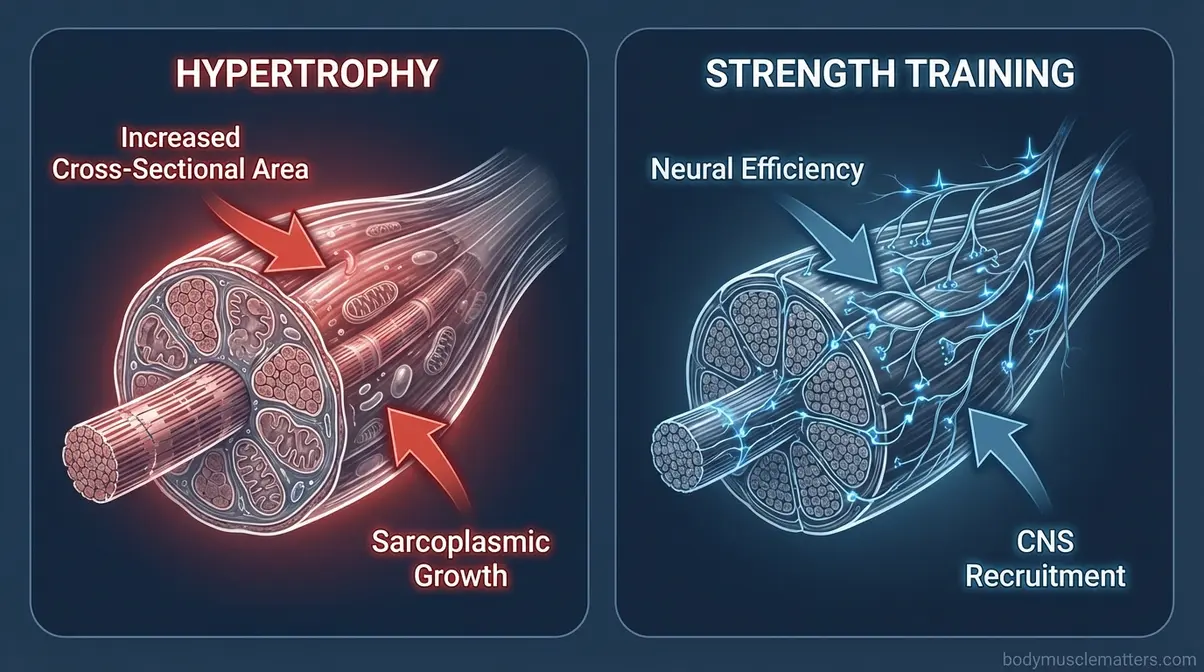
Beginners often assume these two training styles are complete opposites. The truth is more interesting — and far more useful. Understanding what each one actually does inside your body is the foundation for building the program that gets you real results.
How We Evaluated These Methods
This guide was developed by reviewing current sports science literature, focusing on peer-reviewed studies published in recent years up to 2026, with priority given to meta-analyses and systematic reviews from NIH, PubMed Central, and ACSM. Our team cross-referenced findings from Tier 1 sources with aggregated community consensus from r/fitness and r/naturalbodybuilding — two of the largest practitioner communities in strength sports — to ensure recommendations reflect both laboratory findings and real-world experience. Where studies conflict, we present the weight of evidence rather than cherry-picking a single study. All physiological claims in this article carry direct citations; recommendations labeled “we recommend” or “our evaluation suggests” represent evidence-informed editorial judgment, not personal anecdote.
What Is Hypertrophy Training?
Hypertrophy is the process of increasing muscle cell size — specifically, growth in the cross-sectional area of individual muscle fibers. When you perform hypertrophy training, your primary goal is physically larger muscles, which creates the “toned” or “defined” look most beginners are chasing.
Hypertrophy training typically uses moderate-to-high rep ranges (6–20 reps per set), moderate loads (60–85% of your one-rep maximum, or 1RM — the heaviest single lift you can perform), and shorter rest periods (60–90 seconds). These variables create what researchers call metabolic stress (the cellular environment produced by sustained muscular effort) and mechanical tension (the physical force placed on muscle fibers during contraction). Both are primary drivers of muscle growth, according to the ACSM Position Stand on resistance training.
Think of the muscle fiber itself as a rubber band. Hypertrophy training stretches it under load, repeatedly, over time — forcing it to thicken and grow stronger to handle the demand.
What Is Strength Training?
Strength training, in the strict physiological sense, is training designed to maximize force production — how much weight you can move once. The adaptations here are primarily neural, not structural. Your central nervous system (CNS) becomes more efficient at recruiting muscle fibers, coordinating their firing, and minimizing inhibitory signals that hold back your output.
Strength training uses lower rep ranges (1–5 reps per set), high loads (85–100%+ of 1RM), and long rest periods (3–5 minutes). Those rest periods are non-negotiable — your CNS needs full recovery between maximal efforts. Compromise the rest and you compromise the adaptation.
Think of neural adaptation like upgrading the software in your brain, not adding more RAM. Your muscles are not necessarily larger after a pure strength block, but they fire faster and harder — which is why competitive powerlifters can be pound-for-pound stronger than larger bodybuilders.
Schoenfeld’s landmark research on heavy vs. moderate loads confirms that both approaches produce meaningful strength gains, but high-load, low-rep training produces superior maximal strength adaptations when volume is equated.
The Three Core Mechanisms
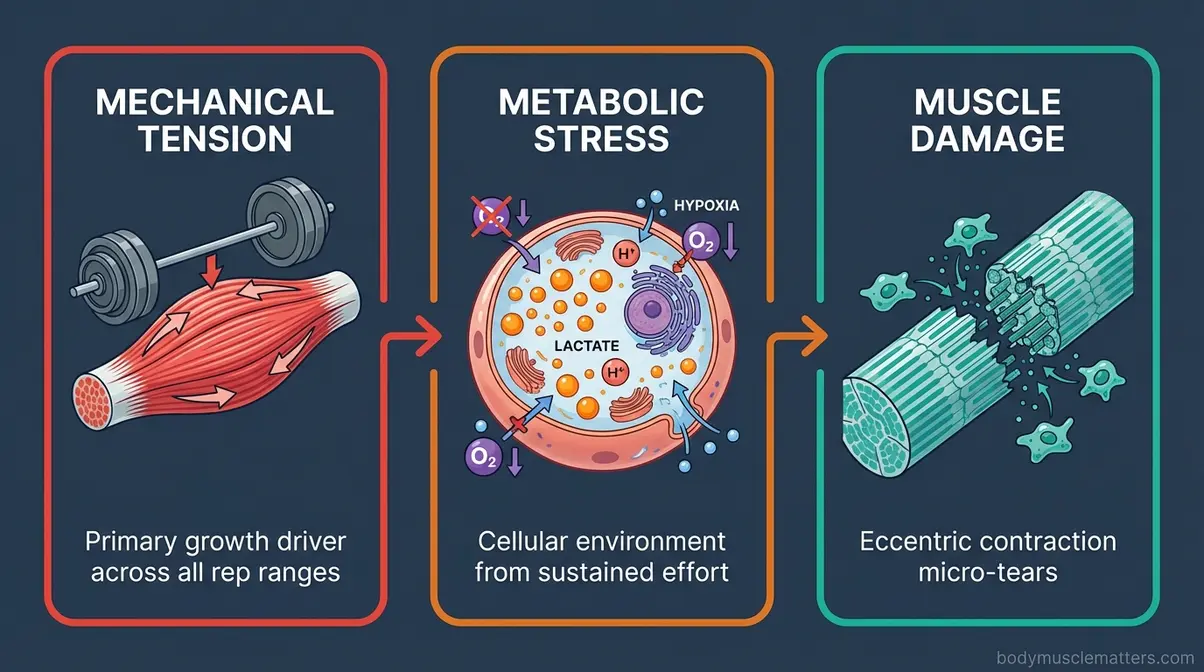
Muscle growth and strength gains are driven by three primary mechanisms. Understanding them is where The Effective Stimulus Priority begins — the principle that choosing the right stimulus for your goal matters far more than arguing over whether you’re doing “hypertrophy” or “strength” training.
1. Mechanical Tension — The force applied to muscle fibers during contraction, especially at long muscle lengths. This is the primary growth driver across all rep ranges when effort is high.
2. Metabolic Stress — The cellular environment produced by sustained muscular effort: lactate accumulation, cellular swelling, and hypoxia. More prominent in moderate-to-high rep ranges with shorter rest. A scientific review on sarcoplasmic hypertrophy confirms this contributes meaningfully to muscle size, particularly in the sarcoplasm (the fluid-rich outer layer of muscle cells).
3. Muscle Damage — Micro-tears in muscle fibers during eccentric (lowering) contractions. Contributes to growth signal, though recent evidence suggests it plays a smaller independent role than previously believed.
Most training produces all three mechanisms to varying degrees. The stimulus you emphasize — through load, volume, and rest — determines which adaptation dominates.
Where Size and Strength Overlap
Here is the fact that changes everything for beginners: hypertrophy training builds strength, and strength training builds some hypertrophy. The overlap is substantial, especially in your first 12–18 months of training. During this “newbie gains” phase, nearly any progressive resistance training produces measurable improvements in both size and force output simultaneously.
The differences between the two approaches only become pronounced for advanced athletes chasing specific competitive goals. For beginners, the Effective Stimulus Priority means this: focus on accumulating enough hard sets close to failure, progressing load over time, and recovering adequately. The label on your program matters far less than the quality of effort you bring to each session.
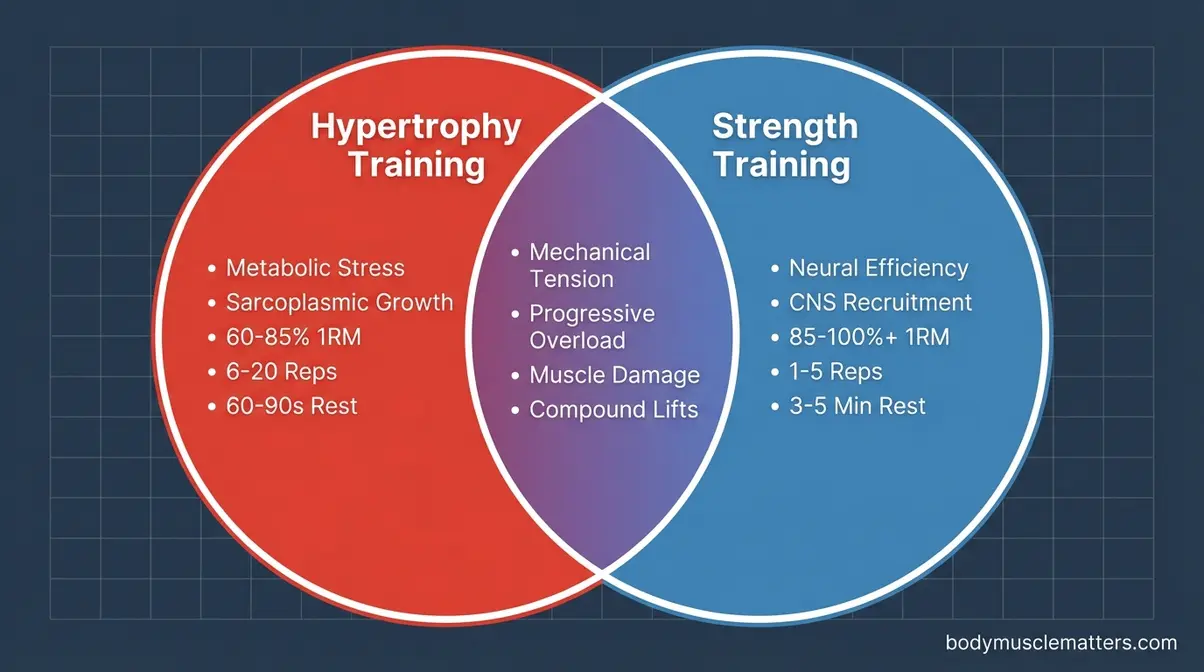
Caption: Both training styles share the core driver of mechanical tension — the “exclusive zones” are smaller than most gym advice suggests.
Sets, Reps, Load, and Rest
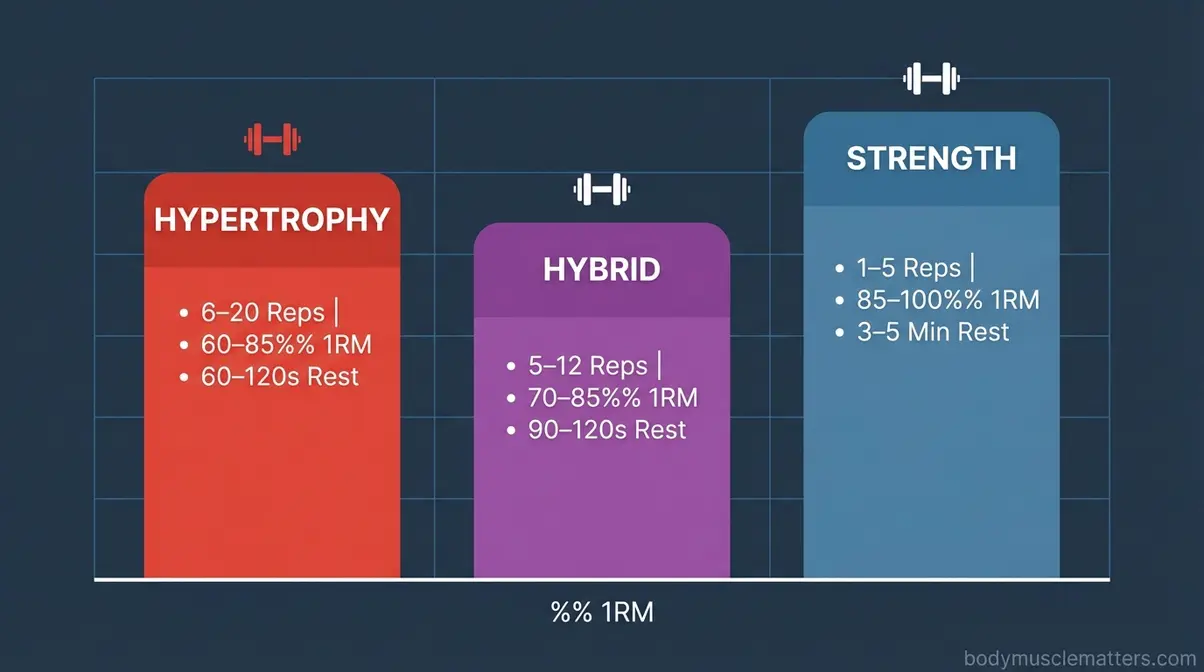
Understanding the variables that separate hypertrophy from strength training gives you direct control over your results. This section covers the exact numbers — and explains why each one matters for your goal.
Rep Ranges: What Science Says
BodyMuscleMatters experts emphasize that rep range sets the stimulus emphasis, but effort level determines whether that stimulus is effective. Research confirms that muscle hypertrophy occurs across a broad range of rep counts — from as few as 5 to as many as 30 — provided sets are taken close to technical failure. The 6–12 range remains practical for most trainees because it balances fatigue accumulation against mechanical tension efficiently. For pure strength, lower reps and heavier loads remain superior for training the specific neural pathway of maximal force output.
BodyMuscleMatters analysis shows training at 60–85% 1RM maximizes metabolic stress — so you build muscle without destroying your nervous system. In our view, prioritizing movement quality over raw weight is the single most important decision a beginner can make.
| Goal | Optimal Rep Range | Load (% 1RM) | Sets per Exercise | Proximity to Failure |
|---|---|---|---|---|
| Hypertrophy | 6–20 reps | 60–85% | 3–5 | 1–3 reps in reserve |
| Strength | 1–5 reps | 85–100%+ | 3–6 | 0–2 reps in reserve |
| Hybrid (Beginner) | 5–12 reps | 70–85% | 3–4 | 1–3 reps in reserve |
Jeff Nippard, a natural bodybuilder and science communicator, summarized the current consensus in his 2026 newsletter: you’ll get excellent results with the 6–12 rep range, but the research shows muscle growth is achievable across 5–50 reps per set when effort is high. He recommends spending roughly 75% of your training volume in the 6–15 rep range, with lower and higher rep work filling the remaining 25%.
Load Intensity and Your 1RM
1RM (one-rep maximum) is the heaviest single repetition you can complete with proper form. Load percentages give you an objective anchor for setting weights — far more reliable than “moderate” or “heavy-ish.”
Strength training at ≥85% 1RM targets the neuromuscular pathway most directly. Hypertrophy training at 60–85% 1RM creates sufficient mechanical tension while allowing the volume (total sets × reps) that drives muscle growth. The practical trap most beginners fall into is load chasing — adding weight before the stimulus quality is there — which elevates injury risk and stalls progress.
Chasing effective stimulus means this: adding 5 lbs to the bar only matters if your technique is intact, you are not compensating with other muscle groups, and you are completing the reps with true muscular fatigue — not momentum. Submaximal loading done with precision beats sloppy maximal effort every time.
Optimal Rest Periods
Rest periods are one of the most overlooked variables in beginner programming — and one of the most impactful.
- Strength training: 3–5 minutes between sets. Maximal CNS output requires near-complete phosphocreatine (PCr) resynthesis. Shortening rest dramatically reduces force output and undermines the neural adaptation you are training for.
- Hypertrophy training: 60–120 seconds between sets. Shorter rest maintains metabolic stress — the cellular environment associated with muscle growth — while still allowing enough recovery for quality effort.
- Hybrid/beginner: 90–120 seconds is a practical middle ground that supports both goals without excessive gym time.
Skipping or shortening rest periods to “save time” is one of the most common mistakes that derails beginner progress. More on this in the Limitations section.
What is the 2-2-2 rule in the gym?
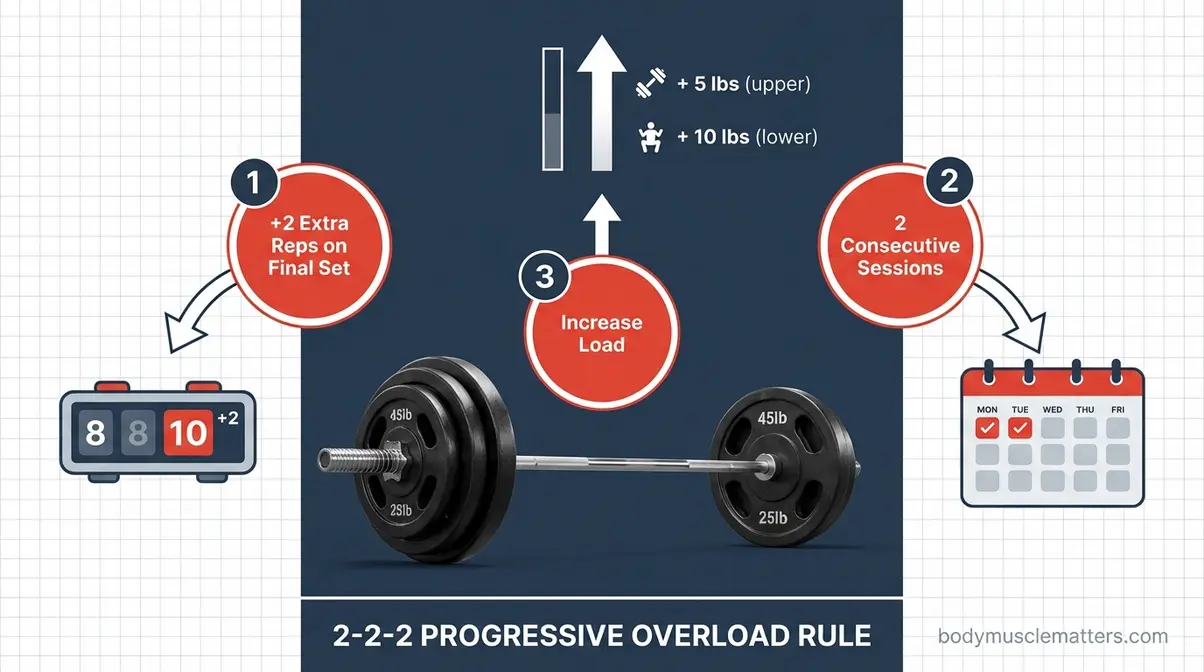
The 2-2-2 rule is a popular progressive overload framework that tells you objectively when to increase weight — removing the guesswork from load progression. There are two versions in common use, and both are useful:
Version 1 — The Progressive Overload Signal:
If you complete 2 extra reps beyond your target on the final set, for 2 consecutive workouts, increase the load by the next increment (typically 5 lbs for upper body, 10 lbs for lower body). Example: your target is 3 sets of 8 reps. If you hit 10 reps on your last set in back-to-back sessions, you have earned the weight increase.
Version 2 — The Minimalist Full-Body Program:
2 full-body workouts per week, 2 hard sets per exercise, built around 4 compound movements (squat, hip hinge, push, pull), in the 6–12 rep range. This structure — popularized in Men’s Health and fitness communities in 2026 — is particularly well-suited for trainees over 40 who need adequate recovery time between sessions.
| 2-2-2 Beginner Template (Version 2) | |
|---|---|
| Frequency | 2x per week (e.g., Monday/Thursday) |
| Structure | Full body each session |
| Exercises | Squat, Romanian Deadlift, Bench Press, Bent-Over Row |
| Sets × Reps | 2 sets × 8–12 reps per exercise |
| Load | 70–80% 1RM |
| Rest | 90–120 seconds |
| Progression | Add weight when +2 reps on final set × 2 sessions |
This template is a strong entry point for beginners because it minimizes fatigue accumulation while building the movement skill and progressive overload habit that drive long-term results.
What is the 3-3-3 rule?
The 3-3-3 rule is a popular community framework for structuring a strength-focused training block, though it does not originate from a specific published study. It is best labeled a “popular programming approach” with strong practical consensus.
Structure: 3 strength exercises per session, 3 sets per exercise, 3–5 reps per set at 80–90% 1RM. The goal is neural efficiency and progressive strength — accumulating enough quality heavy reps without excessive fatigue accumulation that compromises form or recovery.
| 3-3-3 Strength Template | |
|---|---|
| Exercises per session | 3 compound movements |
| Sets × Reps | 3 sets × 3–5 reps |
| Load | 80–90% 1RM |
| Rest | 3–5 minutes |
| Frequency | 3x per week |
| Progression | Add 5–10 lbs when all sets are completed cleanly |
The 3-3-3 rule suits intermediate trainees who have established movement competency and want to prioritize raw strength. Pure beginners are better served by higher rep ranges (6–12) for the first 8–12 weeks, where skill acquisition and hypertrophy drive the largest performance gains.
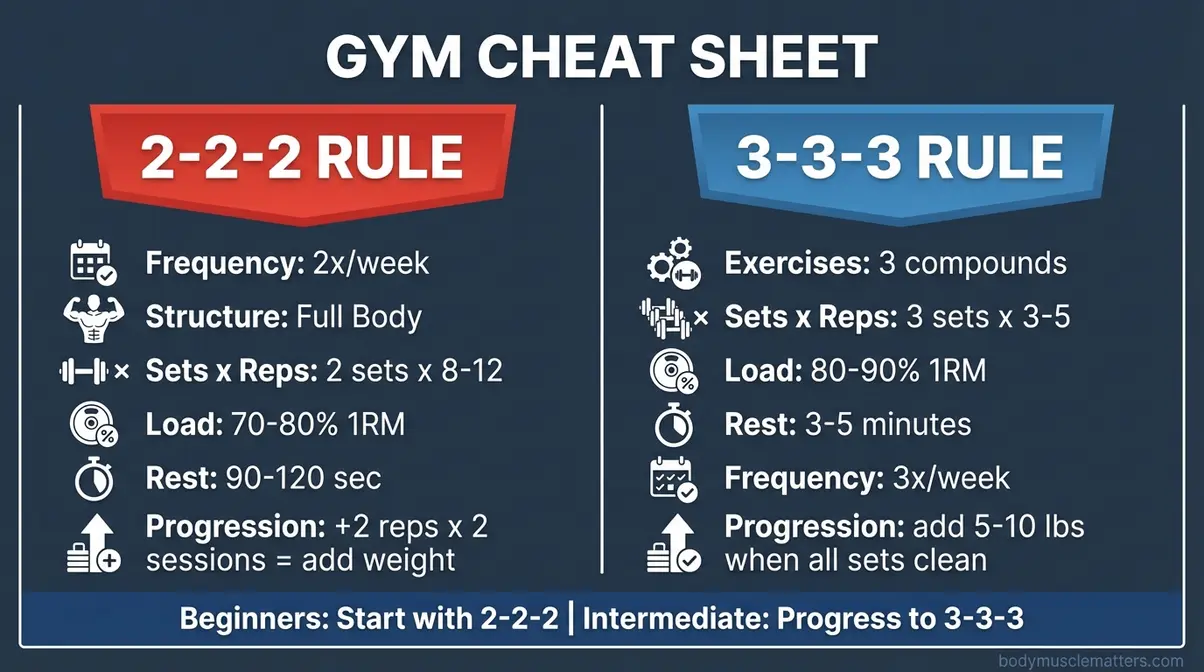
Caption: The 2-2-2 rule prioritizes recovery and volume; the 3-3-3 rule prioritizes neural load and intensity. Most beginners benefit from the 2-2-2 structure first.
Your First Hybrid Routine Template
“If you want results, stop chasing hours in the gym and start chasing effective stimulus.”
The most efficient beginner routine combines moderate-load hypertrophy work with a strength-focused compound lift each session. Below is a 3-day per week hybrid template that delivers on both goals without requiring advanced periodization knowledge.
| Day | Focus | Example Exercises | Sets × Reps | Load |
|---|---|---|---|---|
| Monday | Strength Primary | Squat or Deadlift + 3 hypertrophy accessories | 3×3–5 (main) + 3×10–12 (accessories) | 85% (main) / 70% (accessories) |
| Wednesday | Hypertrophy | Upper body push + pull | 4×8–12 | 70–75% |
| Friday | Hybrid | Hinge (deadlift variation) + legs + core | 3×5–8 (main) + 3×12–15 (accessories) | 80% (main) / 60% (accessories) |
Training for Fat Loss and Weight Loss
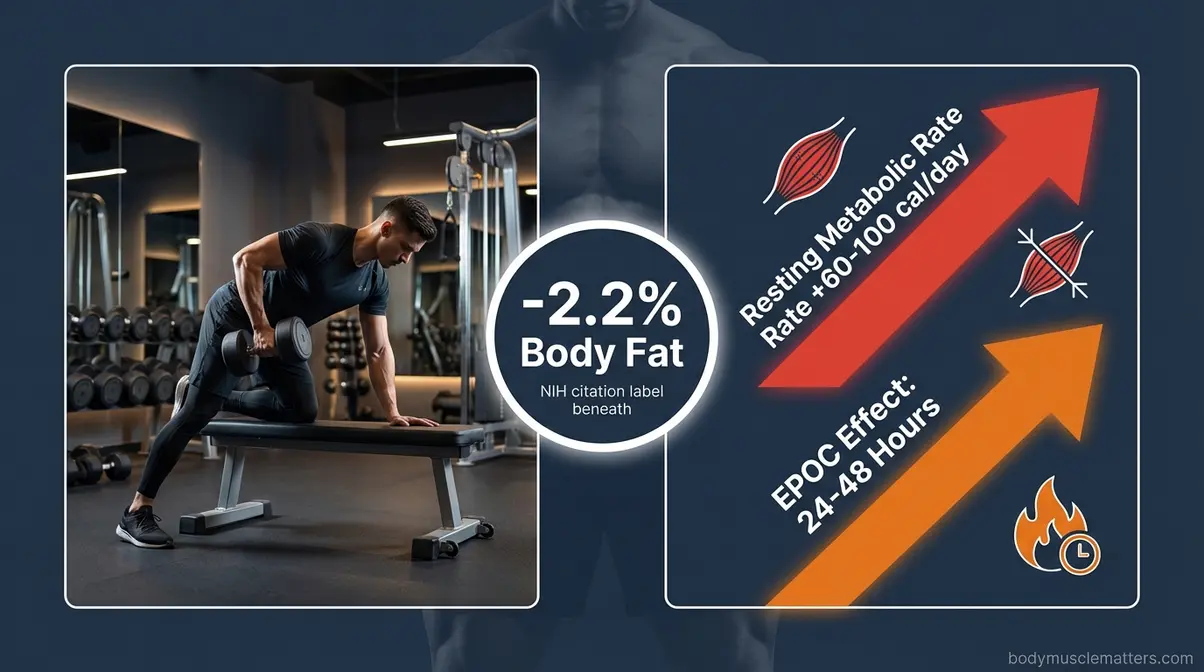
One of the most frequent questions beginners ask is which training style burns more fat. The answer requires separating two commonly confused terms: weight loss and fat loss. Both resistance training styles contribute — but through different mechanisms.
Muscle Mass and Your Resting Metabolism
Muscle tissue is metabolically expensive. Each pound of lean muscle burns approximately 6–10 calories per day at rest (compared to roughly 2 calories per pound of fat tissue). This difference compounds significantly over time. A trainee who adds 10 lbs of lean muscle raises resting metabolic rate by 60–100 calories per day — an extra 700+ calories burned weekly without additional exercise.
A meta-analysis of 89 studies published in PMC/NIH found that resistance training reduces body fat percentage by 2.2% on average, even without caloric restriction. That means both hypertrophy and strength training reduce body fat — what differs is the mechanism and the timeline. Hypertrophy training produces greater total muscle mass over time, delivering larger long-term metabolic benefits. Strength training produces denser, more efficient neuromuscular tissue with a smaller size increase.
The practical recommendation: for trainees whose primary goal is fat loss with body recomposition (more muscle, less fat), hypertrophy-focused programming with adequate protein intake (0.7–1g per pound of bodyweight) produces the most favorable outcomes.
Weight Loss vs Fat Loss
Weight loss means the number on the scale decreases — this can include muscle, water, and bone mineral mass, not just fat. Fat loss means specifically reducing adipose (fat) tissue while preserving lean mass. These are not the same, and the difference matters enormously for how you look and how your metabolism functions long-term.
Many beginners make the mistake of using cardio alone to lose weight. The result is often a smaller version of the same body composition — less fat, but also less muscle, and a lower resting metabolic rate. Resistance training, by contrast, creates the hormonal and metabolic environment to preserve or build muscle during a caloric deficit, making fat loss more sustainable. Women in particular are at risk of conflating “lighter” with “better” — the toned appearance most women seek comes from hypertrophy (adding muscle) combined with fat reduction, not from the scale alone.
EPOC: The Afterburn Effect
EPOC stands for Excess Post-Exercise Oxygen Consumption — the elevated metabolic rate that persists after exercise ends. Think of it as your body’s recovery bill: it burns additional calories to restore oxygen levels, clear metabolic byproducts, and repair muscle tissue.
Hypertrophy training, with its higher volume and shorter rest periods, produces a more pronounced EPOC effect than traditional strength training. Research on concurrent aerobic and strength training supports the view that higher-volume resistance work elevates caloric burn for 24–48 hours post-exercise. Strength training’s EPOC is shorter but still meaningful, particularly after maximal effort compound lifts like deadlifts and squats.
For fat loss specifically, hypertrophy-style training offers the dual advantage of greater EPOC and greater long-term metabolic rate elevation from muscle mass accumulation.
Can I build muscle on Zepbound?
Speak with your prescribing physician before adjusting your training program while on GLP-1 medications.
GLP-1 receptor agonists — including tirzepatide (Zepbound) — are now widely used for obesity management. However, up to 39% of weight lost on GLP-1 medications can be lean muscle mass rather than fat tissue (Sword Health, 2026). This makes resistance training a critical companion intervention, not an optional add-on.
A 2026 NIH PMC publication confirmed that both endurance and resistance exercise preserve skeletal muscle during GLP-1-induced weight loss, with MRI studies supporting the protective effect of resistance training on lean tissue (PMC, 2026). The pre-approved NIH source on GLP-1 agonists and muscle mass further supports prioritizing resistance exercise during GLP-1 treatment.
- Practical protocol for GLP-1 trainees:
- Prioritize hypertrophy-focused resistance training (6–12 reps, 2–4x per week) over cardio-only programs
- Increase protein intake to the higher end of recommendations (0.8–1.0g per pound of bodyweight) to counteract appetite suppression from the medication
- Monitor for fatigue — GLP-1-induced caloric restriction can impair recovery; reduce training volume before reducing training frequency
- Metformin, commonly prescribed alongside GLP-1 therapy for type 2 diabetes, has shown some evidence of impairing mitochondrial adaptation to exercise in research contexts — consult your physician if you take both medications and are initiating a new training program
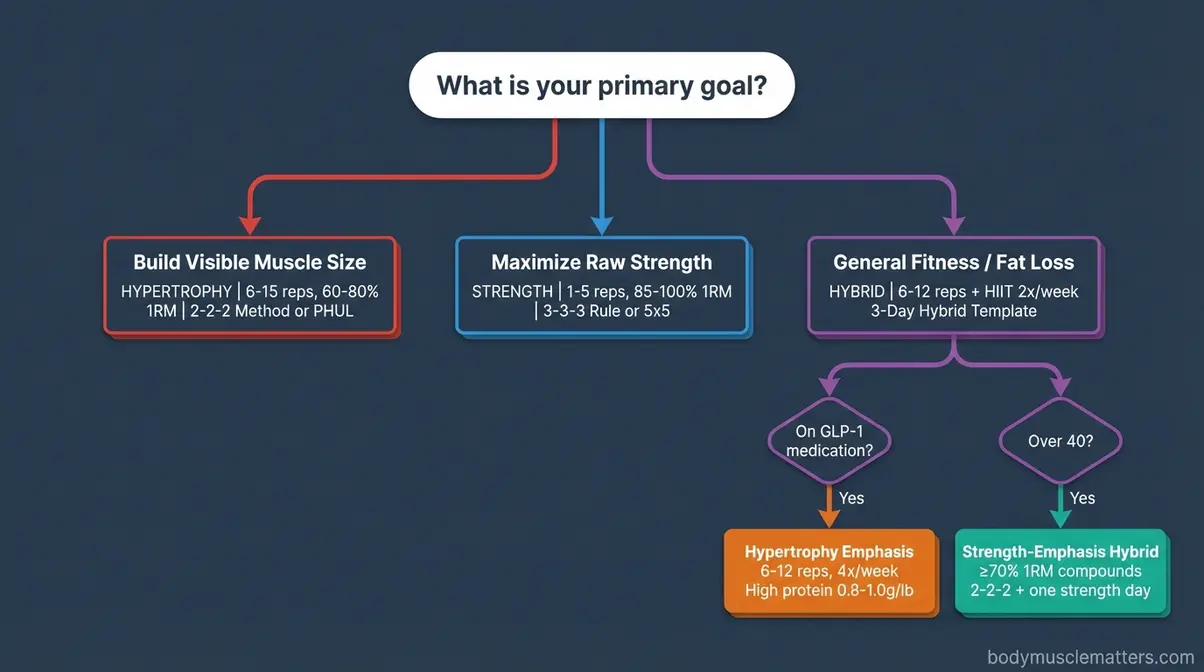
Caption: Use this flowchart to identify the training approach that matches your primary goal, health context, and schedule.
How Training Shapes Your Body
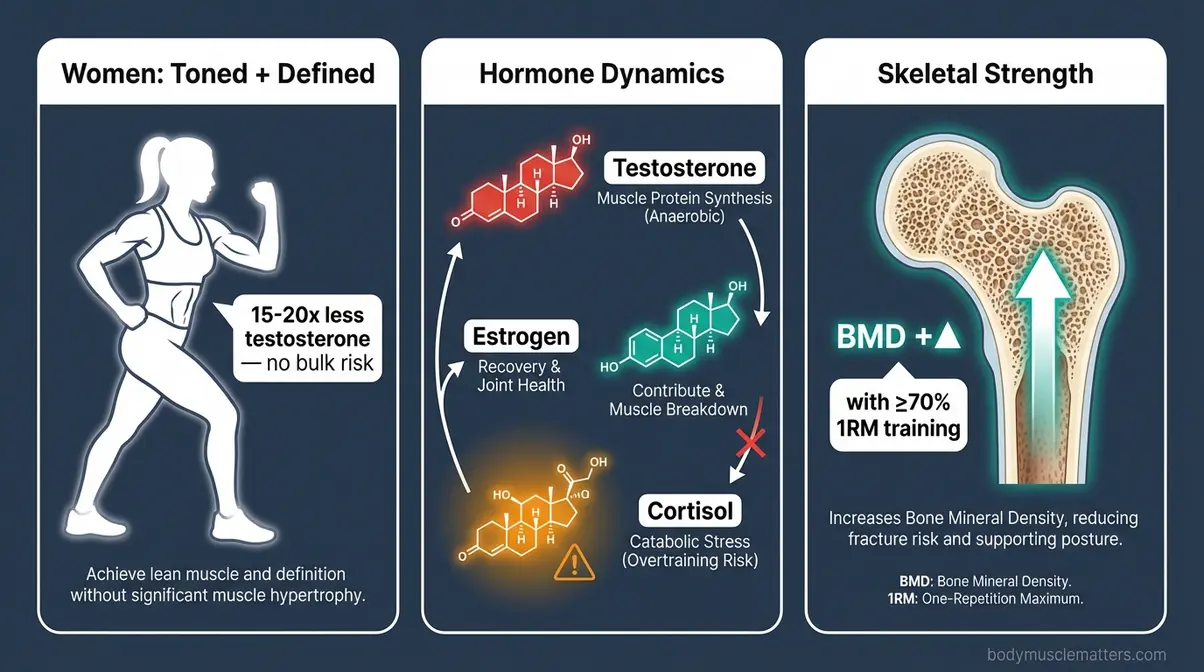
Physique outcomes from resistance training are not one-size-fits-all. Hormonal differences, age-related physiological changes, and individual starting points all influence how your body responds to hypertrophy vs strength training.
The Bulky Myth for Women
This is one of the most persistent misconceptions in fitness — and one of the most damaging, because it prevents millions of women from the training style most beneficial for their health and body composition goals.
Women have, on average, 15–20x lower testosterone levels than men. Testosterone is the primary anabolic hormone responsible for the dramatic muscle mass increases seen in male bodybuilders. Without it, women simply cannot develop the “bulky” physique most fear from hypertrophy training. What women can develop — and what most are actively seeking — is the lean, defined look that results from increased muscle size beneath reduced body fat. This “toned” appearance is, by definition, the product of hypertrophy.
The research is unambiguous: women who perform hypertrophy training build stronger, denser muscles and improve body composition without the dramatic size increases men experience. Smart accessory volume — isolation exercises like lateral raises, cable rows, and leg curls that target specific muscle groups — is a powerful tool for women seeking shape changes in particular areas.
How Hormones Shape Results
Testosterone drives maximal strength and muscle protein synthesis. Men have significantly more of it, which explains why men and women doing identical programs produce different physique outcomes. This is not a flaw in the program — it is a predictable biological difference.
Estrogen, by contrast, has a protective effect on connective tissue (tendons, ligaments) and supports bone mineral density. This gives women a relative advantage in injury resilience and recovery, though the hormonal fluctuations of the menstrual cycle can influence performance and recovery across the month. Adjusting training volume and intensity across cycle phases is an emerging area of sports science with practical applications for serious female trainees.
Cortisol — the stress hormone — is worth monitoring for both sexes. Consistently high cortisol from overtraining, poor sleep, or excessive caloric restriction impairs muscle protein synthesis and fat loss simultaneously. Recovery is not optional; it is where adaptation happens.
Does lifting weights help bone density?
Resistance training is one of the most powerful tools for preserving bone mineral density (BMD) as you age. Bone responds to the mechanical load placed on it by depositing more mineral — the same mechanostat principle that drives muscle hypertrophy. Aerobic exercise alone does not provide sufficient mechanical stimulus for meaningful BMD improvements.
A 2026 PMC meta-analysis found that high-intensity resistance training (≥70% 1RM), performed 3 times per week, optimally improves BMD at the lumbar spine, femoral neck, and total hip in postmenopausal women. The foundational NIH resistance exercise and bone health review confirms resistance exercise is a primary therapeutic strategy for preventing osteosarcopenia — the combined loss of bone and muscle mass with aging.
- Practical protocol for trainees over 40:
- Include at least one lower-body compound movement per session (squat, deadlift, leg press) — axial loading is most effective for spinal BMD
- Training at ≥70% 1RM is important; submaximal loading alone does not provide sufficient bone stimulus
- Rest periods of 2–3 minutes support quality heavy work without excessive fatigue
- The 2-2-2 method (2 full-body sessions per week, 2 hard sets per exercise) is a proven low-volume, high-impact structure for this population
Hybrid Training and Endurance
Once you understand hypertrophy and strength as distinct stimuli, the next step is understanding how they interact with cardiovascular training — and how to combine them without losing progress in any direction.
The Fitness Continuum Explained
Fitness adaptations exist on a spectrum. At one end, pure endurance training (marathon running, cycling) maximizes aerobic capacity and mitochondrial density in muscle fibers — but provides little hypertrophic or strength stimulus. At the other end, maximal strength training optimizes force output and neural efficiency but provides minimal cardiovascular benefit. Hypertrophy training sits in the middle, providing meaningful contributions to both ends when programmed correctly.
Most people’s goals live somewhere on this continuum — not at either extreme. A recreational gym-goer who wants to look better, feel stronger, and maintain cardiovascular health does not need to choose a lane. They need a thoughtful hybrid program that deliberately targets multiple points on the continuum each week.
HIIT vs Strength Training
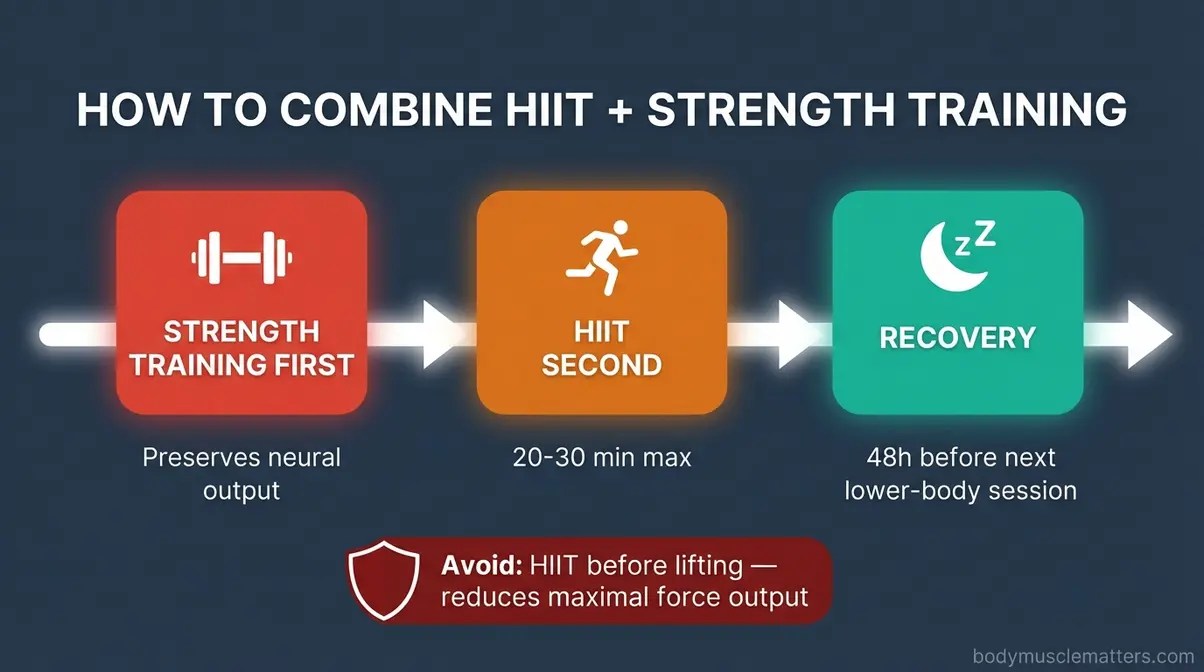
HIIT (High-Intensity Interval Training — short bursts of maximal cardiovascular effort alternated with rest) and resistance training can absolutely coexist in a well-designed program. The key is sequencing and recovery management.
Research consistently shows that performing strength training before HIIT within the same session preserves strength adaptations better than the reverse order. When fatigued from HIIT first, maximal force output during compound lifts drops — compromising the neural stimulus for strength and potentially increasing injury risk. A 2026 study in the Journal of Applied Physiology confirmed that concurrent training with long-interval HIIT does not impair skeletal muscle hypertrophy compared to resistance training alone, when sequenced and recovered properly.
Practical rule: If training on the same day, lift first, HIIT second. If training on separate days, place HIIT on non-consecutive days from lower-body strength sessions.
The Interference Effect
The interference effect refers to the potential blunting of strength and hypertrophy adaptations when aerobic and resistance training are combined. It has been overstated in popular fitness media.
A 2026 systematic review on concurrent training and supporting research confirm that the interference effect is small-to-negligible for most recreational trainees, particularly untrained individuals and women. The effect is most pronounced for lower-body strength gains in trained males performing high volumes of concurrent work. For beginners, the risk of meaningful interference is low — the benefits of cardiovascular health and increased caloric expenditure from HIIT typically outweigh any marginal reduction in hypertrophic adaptation.
Variables that minimize interference: adequate recovery between sessions (≥6 hours), moderate HIIT volume (2x per week maximum alongside lifting), and prioritizing nutrition — particularly protein intake — to support both adaptations.
Rules for Combining Styles
Four practical rules for combining hypertrophy, strength, and HIIT without compromising each other:
- Prioritize your primary goal. Place the training mode that matters most to you at the start of the week and the session, when you are freshest.
- Limit concurrent same-day training to 2x per week maximum. More than this increases fatigue accumulation faster than recovery can manage.
- Separate lower-body sessions from HIIT by at least 48 hours. Lower-body strength work and HIIT both heavily tax the quadriceps, hamstrings, and glutes — stacking them creates injury risk.
- Use HIIT strategically, not maximally. Two 20–30 minute HIIT sessions per week is sufficient for cardiovascular adaptation. Three or more sessions starts to compromise recovery for resistance training.
What Fitness Experts Say
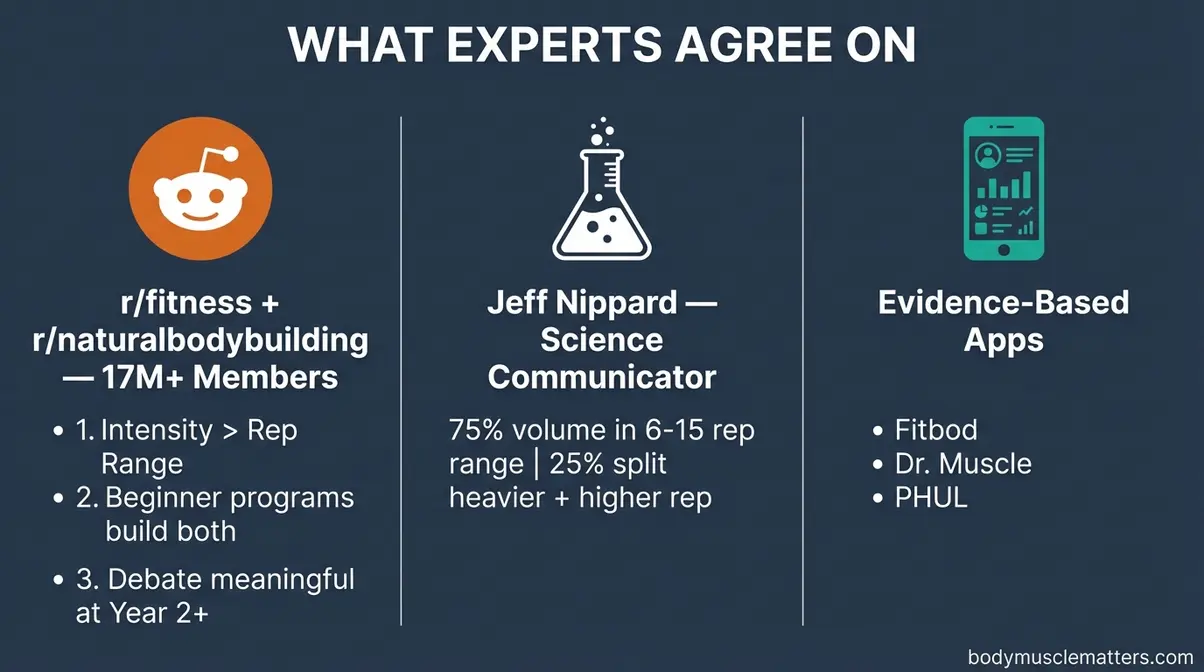
Science communicators and large practitioner communities have reached a coherent consensus on the hypertrophy vs strength training debate — one that aligns closely with the Effective Stimulus Priority framework this guide builds on.
Reddit Fitness Consensus
Across r/fitness (17M+ members) and r/naturalbodybuilding, the consistent user feedback reflects a pragmatic consensus that cuts through the theoretical debate. Our evaluation of the top-voted threads and community wikis reveals three recurring themes:
1. Most beginners are undertraining in intensity, not programming the wrong rep range. The most common mistake reported is not “I chose the wrong rep range” but “I was never actually pushing close to failure.” Rep range matters far less than proximity to true muscular fatigue.
2. Beginner programs like StrongLifts 5×5 and nSuns build both size and strength simultaneously. These strength-focused programs consistently produce physique changes alongside strength gains — because they drive progressive overload, which is the underlying mechanism for both goals.
3. The hypertrophy vs strength debate becomes meaningful around year 2–3 of training. Before that, both approaches work well, and the best program is whichever one you will actually follow consistently.
Jeff Nippard’s Science-Based Approach
Jeff Nippard — a competitive natural bodybuilder with an undergraduate background in biochemistry — has become one of the most cited science communicators in the strength training community. His 2026 newsletter on rep ranges directly addresses the 6–12 myth.
Nippard’s position: “You’ll get great results with the fabled ‘hypertrophy range’ of 6–12 reps. But research shows muscle growth can occur across 5–50 reps per set when effort is high.” He recommends a practical 75/25 split: 75% of training volume in the 6–15 rep range, with 25% split between heavier strength work (<6 reps) and higher-rep metabolic work (>15 reps). This structure — which he calls “evidence-based full body training” — essentially implements the Effective Stimulus Priority: match the stimulus to the adaptation you want, with flexibility across the rep spectrum.
For beginners, Nippard’s recommendation is consistent with the community consensus: start with a full-body 3-day program at moderate loads (70–80% 1RM), focus on compound movements, and add isolation work (smart accessory volume) after 3–6 months of consistent training.
Apps That Program For You
For beginners who want the decision taken out of their hands, several apps offer evidence-based auto-programming:
Fitbod — Automatically alternates between hypertrophy and strength emphasis based on your logged sessions, available equipment, and muscle recovery status. Its hypertrophy mode programs 3–4 sets of 8–12 reps; its strength mode programs 4–6 sets of 3–6 reps. Users can toggle the training style manually or let the algorithm decide.
Dr. Muscle — Uses periodization science to auto-regulate volume and intensity, specifically targeting hypertrophy with progressive overload built in. Particularly strong for beginners who need load progression guidance.
GZCLP and PHUL — Free, community-developed programs available as spreadsheets that integrate both strength (primary lifts) and hypertrophy (accessory lifts) in a single weekly structure. PHUL (Power Hypertrophy Upper Lower) is among the most recommended beginner-to-intermediate programs in r/fitness.
Which Training Style Is Best?
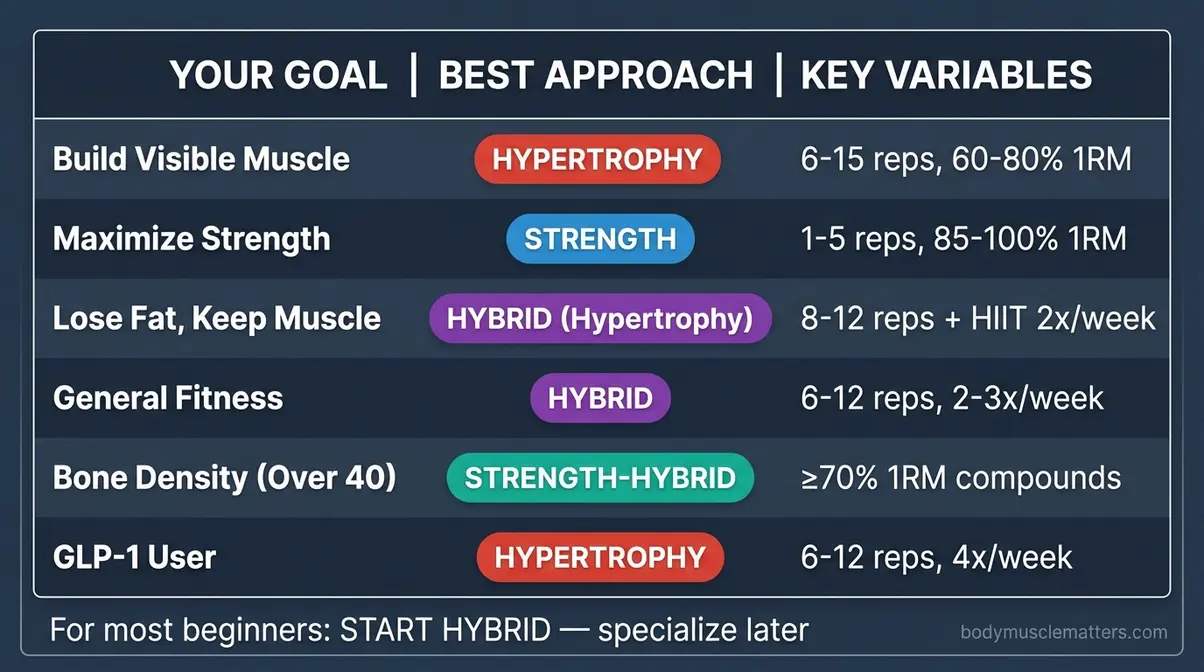
The either/or framing of this debate is the core problem — and solving it is what the Effective Stimulus Priority framework is designed to do.
Decision Matrix by Goal
| Your Primary Goal | Best Approach | Key Variables | Starting Template |
|---|---|---|---|
| Build visible muscle size | Hypertrophy | 6–15 reps, 60–80% 1RM, 90s rest | 2-2-2 method or PHUL |
| Maximize raw strength | Strength | 1–5 reps, 85–100% 1RM, 3–5min rest | 3-3-3 rule or 5×5 |
| Lose fat, preserve muscle | Hybrid (hypertrophy emphasis) | 8–12 reps + HIIT 2x/week | 3-day hybrid template |
| General fitness + health | Hybrid | 6–12 reps, 2–3 sessions/week | 2-2-2 method |
| Bone density (over 40) | Strength-emphasis hybrid | ≥70% 1RM compound lifts, 3x/week | 2-2-2 method + one strength day |
| GLP-1 medication user | Hypertrophy emphasis | 6–12 reps, 2–4x/week, high protein | 3-day hybrid template |
The Case for the Hybrid Approach
For nearly every beginner, the hybrid approach is the correct answer. Not because it is a compromise, but because it is the most efficient path to multiple adaptations simultaneously — the exact output of the Effective Stimulus Priority framework.
The Effective Stimulus Priority reframes the decision: instead of asking “should I train for hypertrophy or strength?”, ask “am I providing the right quality of stimulus for today’s training goal?” A strength day with heavy compound lifts, full rest periods, and precise loading gives your CNS the signal it needs. A hypertrophy day with moderate loads, controlled tempo, and accumulated volume gives your muscle fibers the metabolic and mechanical stimulus they need. Both days serve the same athlete.
Start hybrid. Build the foundation. Specialize later — when your body and experience level justify it.
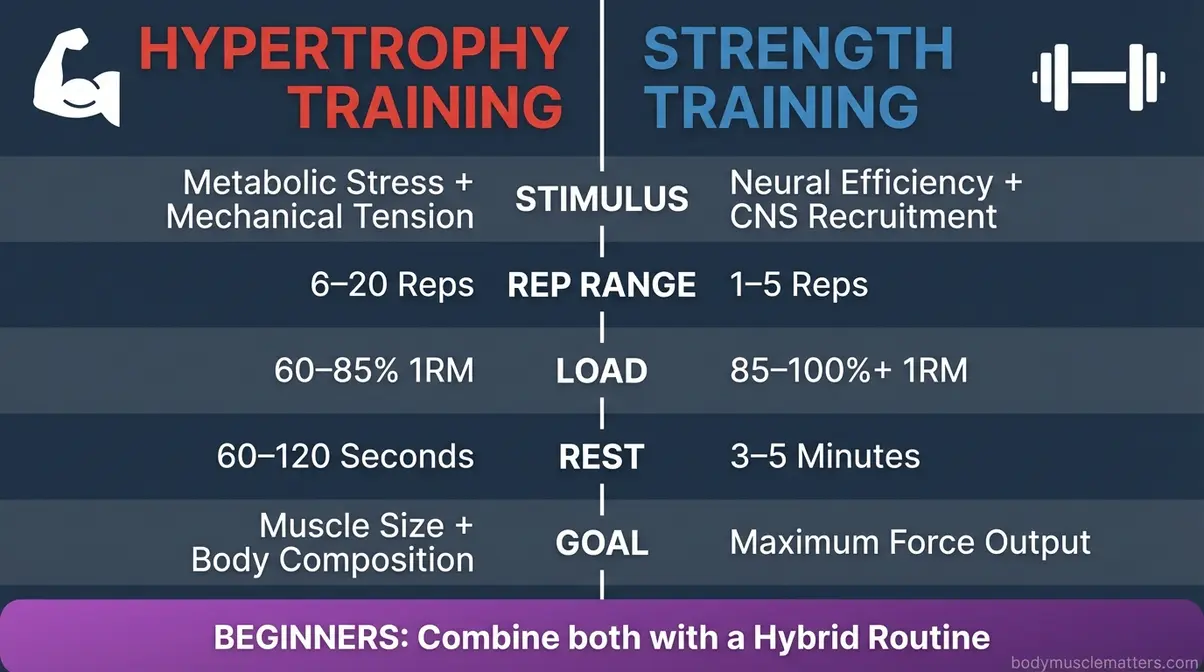
Caption: A side-by-side comparison of hypertrophy and strength training across the five key programming variables.
Limitations and Common Mistakes
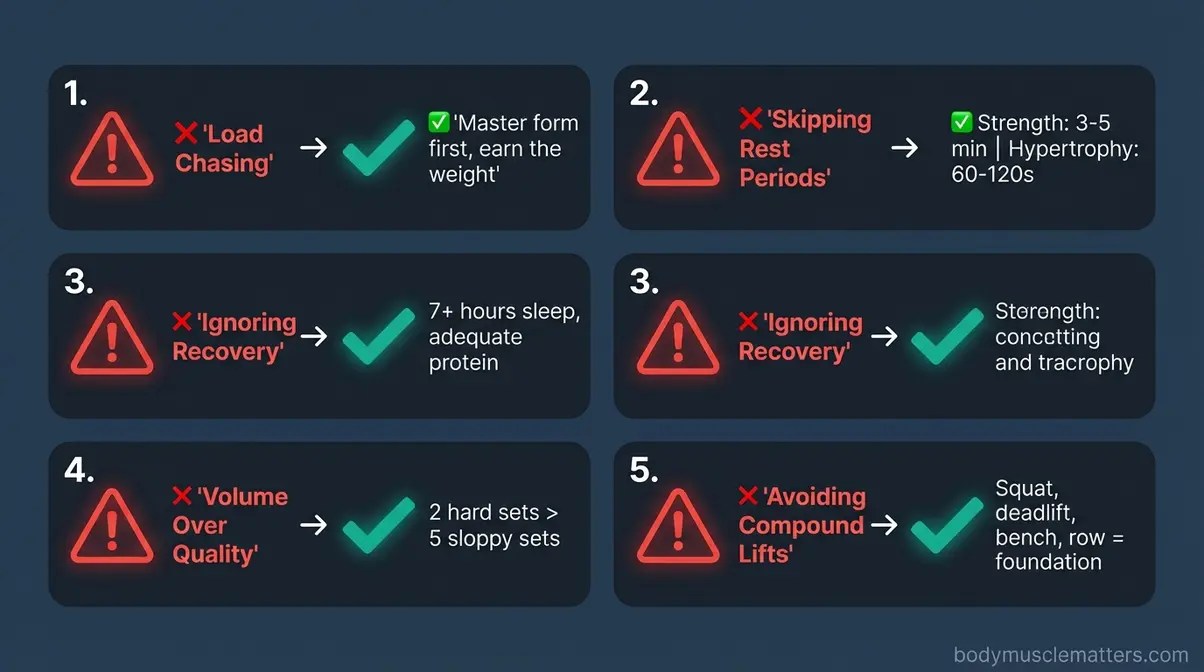
Resistance training carries real risks when approached without adequate knowledge — especially for beginners navigating conflicting online advice. Here is what most beginners get wrong, and how to avoid it.
Common Pitfalls
1. Load Chasing Over Stimulus Quality. The most pervasive beginner mistake is adding weight to the bar before mastering the movement at current load. Adding 10 lbs when your squat is already breaking down at the bottom teaches your body to compensate — not to adapt. Each load increase should be earned through the 2-2-2 progressive overload rule: 2 extra reps on the final set, for 2 consecutive sessions.
2. Skipping or Shortening Rest Periods. Cutting a 3-minute strength rest to 90 seconds to save time eliminates the neural recovery that makes the next set effective. For strength work specifically, incomplete rest means the next set is no longer a strength stimulus — it becomes a metabolic conditioning stimulus, which is not what you are programming for.
3. Ignoring Recovery as Part of the Program. Muscle growth does not happen in the gym — it happens during recovery. Consistent sleep deprivation (below 7 hours), chronic caloric restriction without strategic refeeds, and training through joint pain rather than around it all undermine the adaptation process. Recovery is not a luxury; it is a programming variable.
4. Conflating Volume With Quality. More sets and hours do not equal more results. Two hard sets taken close to failure outperform five sloppy sets performed far from failure in nearly every hypertrophy study. Smart accessory volume, not maximum volume, is the goal.
5. Avoiding Compound Movements Out of Intimidation. Squats, deadlifts, bench press, and rows drive the majority of both hypertrophy and strength adaptation for beginners. Avoiding them in favor of machines and isolation exercises significantly limits progress, particularly in the first 12 months.
When to Choose Alternatives
Switch to pure hypertrophy if your goal has shifted from general fitness to aesthetic improvement — specifically, you want visible changes to muscle shape and size within 6–12 months. At that point, programming specificity matters more.
Switch to dedicated strength programming (e.g., Starting Strength, nSuns, 5/3/1) if you are preparing for a powerlifting meet or want to maximize your numbers in the squat, bench, and deadlift. These programs provide the specificity of adaptation that hybrid templates cannot match.
Consult a CSCS if you are returning from an injury, navigating a complex medical situation (GLP-1 medications, bone density concerns, post-surgery rehabilitation), or have trained consistently for 18+ months and are not making measurable progress with independent programming.
When to Seek Expert Help
Beginners with pre-existing conditions — including joint pain, osteoporosis risk, metabolic disorders, or cardiovascular history — should receive in-person movement assessment from a Certified Strength and Conditioning Specialist (CSCS) or an Exercise Physiologist before beginning any progressive overload program. Online templates are population-level recommendations; they cannot account for individual movement dysfunction or medical contraindications.
Frequently Asked Questions
Hypertrophy or Strength?
Neither is universally better — the right choice depends on your primary goal. For beginners, a hybrid approach produces strength and size gains simultaneously. If your goal is visible muscle size, prioritize hypertrophy (6–15 reps, 60–80% 1RM), whereas maximal force output requires strength protocols (1–5 reps, 85–100%+ 1RM). The BodyMuscleMatters consensus shows both approaches produce meaningful results when effort is high and progression is consistent (NIH).
What muscle is hardest to grow?
Calves are widely considered the most resistant muscle group to hypertrophy, due to their high proportion of slow-twitch (Type I) muscle fibers. These fibers have lower hypertrophic potential than fast-twitch (Type II) fibers found in other muscles. Sports science suggests calves respond better to higher rep ranges (15–30 reps per set) and higher training frequency (3–4x per week) than most other muscle groups.
Did Arnold lift twice a day?
Yes — Arnold trained twice daily during his competitive bodybuilding peak in the 1970s. Morning sessions typically focused on large muscle groups, while evening sessions targeted smaller groups like arms and calves. A 2026 study on twice-daily resistance training found that splitting volume across two daily sessions can enhance hypertrophy. However, for natural beginners without professional recovery protocols, this advanced technique usually leads to overtraining.
Is lifting twice a day too much?
For beginners, yes — twice-daily lifting is excessive and counterproductive. Recovery capacity, including muscle protein synthesis and CNS recovery, is a finite resource. Beginners have not yet developed the work capacity or nutritional precision to benefit from doubled training frequency. The twice-daily resistance training study mentioned earlier used trained subjects, and those results do not transfer to untrained individuals. Therefore, BodyMuscleMatters recommends starting with just three quality sessions per week.
Conclusion
For any beginner navigating the hypertrophy vs strength training debate, the most important insight from this guide is this: your training results are determined by the quality of your stimulus — not the label you put on your program. A meta-analysis of 89 studies confirms resistance training reduces body fat by 2.2% on average (NIH, 2026) — so both protocols produce meaningful body recomposition. The best choice is the approach that matches your specific goal, recovery capacity, and schedule — with a hybrid program serving the majority of beginners most effectively.
The Effective Stimulus Priority gives you a practical filter for every programming decision: is this set, this load, this rest period delivering the stimulus your body needs to adapt? When the answer is yes — consistently, across weeks and months — results follow. The framework eliminates the false choice between size and strength, and replaces it with a more useful question: what is today’s goal, and am I providing the right quality of work to meet it?
Start with the 3-day hybrid template or the 2-2-2 method this week. Track your loads and reps for 4 weeks. When the 2-2-2 progressive overload signal appears — 2 extra reps on your final set, two sessions in a row — add weight and repeat. The program compounds just like the adaptation does. If you have pre-existing conditions, are on GLP-1 medications, or are over 40, book a single session with a CSCS before you begin — that one investment pays dividends for years of training.