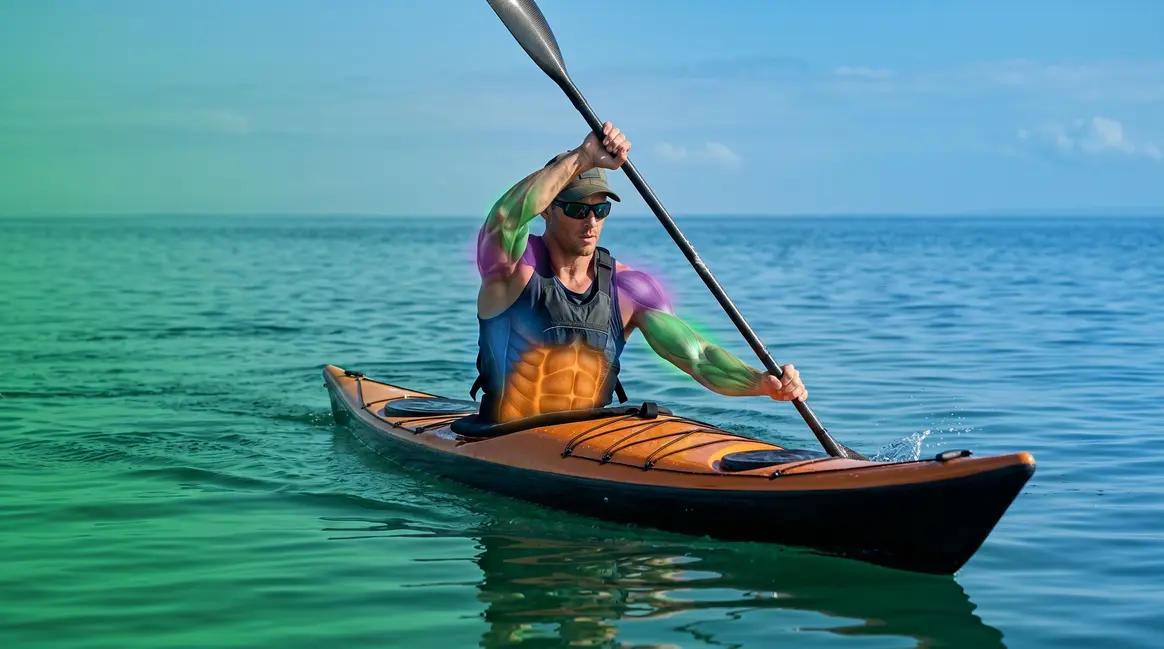
Most people climb into a kayak expecting an arm workout. But electromyography (EMG) research on the kayak stroke shows that your arms contribute less than 30% of the power in an efficient paddle — your core and legs drive the rest. If you’re paddling with arm strength alone, you’re not just leaving power on the table; you’re also setting yourself up for shoulder fatigue and injury.
That matters because the muscles used in kayaking are spread across your entire body — from your obliques and lats down to your glutes and feet pressing against the footrests. Paddling with only your arms makes you tire faster, risks rotator cuff strain, and leaves your most powerful muscle groups completely untouched.
In this guide, you’ll learn exactly which muscles kayaking works, why your lats and glutes are often the sorest the morning after a paddle, and how to get more out of every stroke. We’ll cover the full muscle breakdown, the real fitness benefits, how kayaking compares to rowing and canoeing, and the safety essentials every paddler needs to know.
⚠️ Health Disclaimer: This article is for informational purposes only. Consult a qualified healthcare professional or physical therapist before starting any new exercise routine, especially if you have pre-existing injuries.
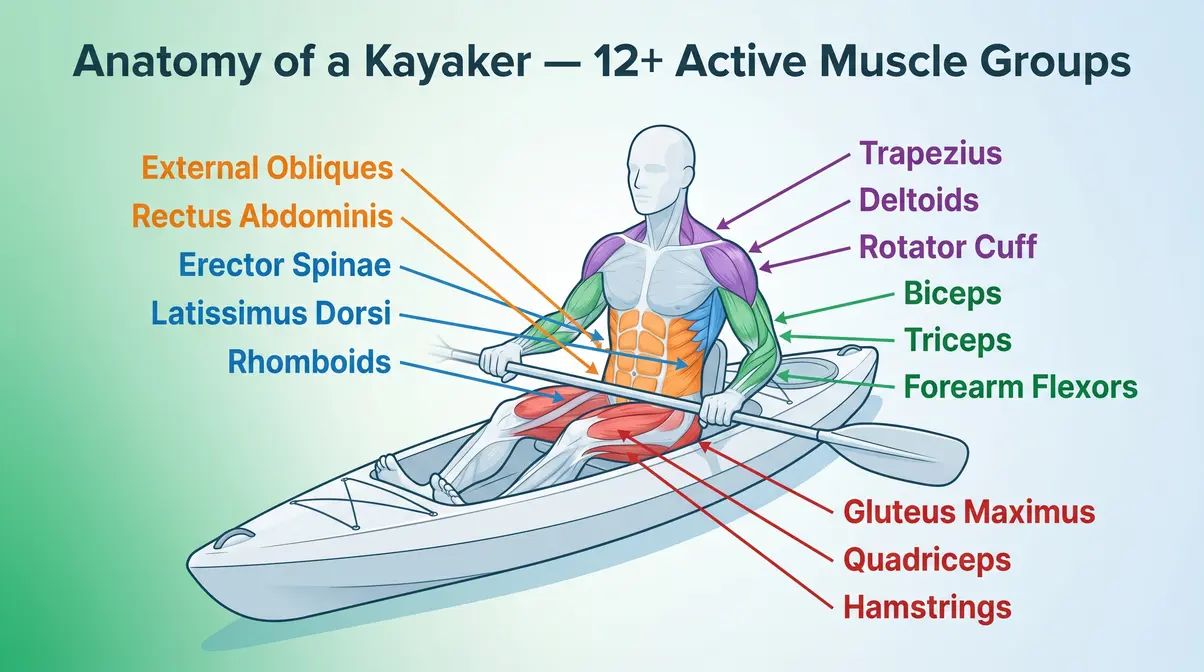
Kayaking works more than 12 major muscle groups — and your arms are actually the least powerful part of the equation.
- Core muscles (obliques, abs) generate the rotational power behind every stroke — not your arms
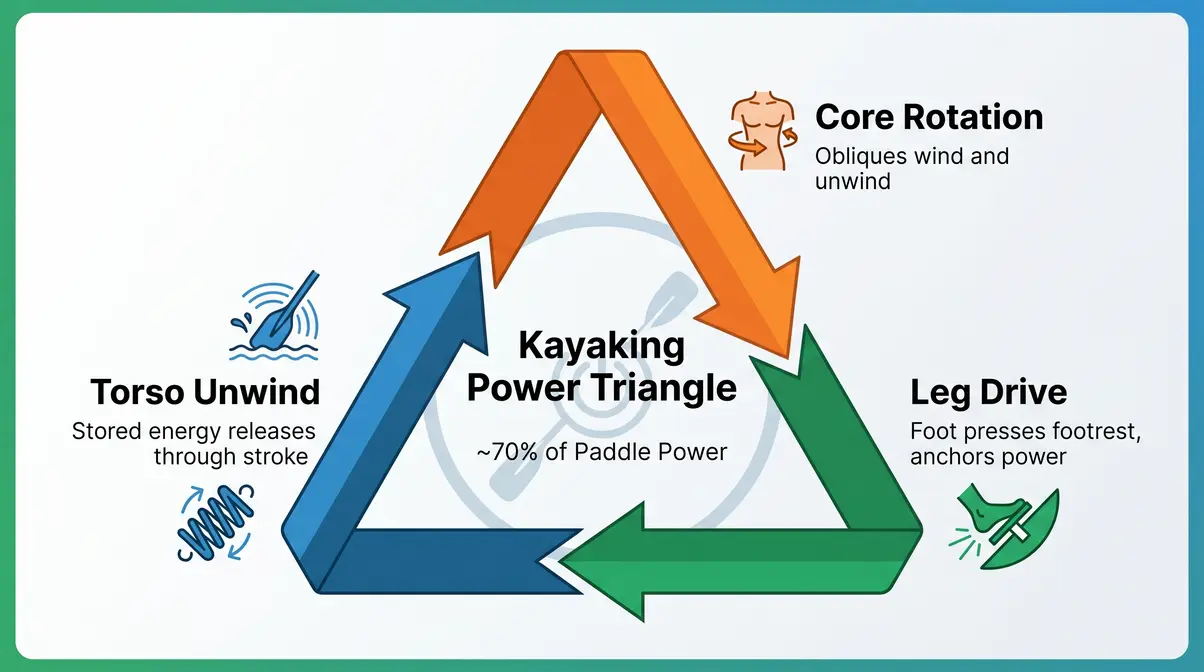
- The Kayaking Power Triangle — core rotation + leg drive + torso unwind — accounts for approximately 70% of paddle power
- Lats and deltoids are the most commonly sore muscles the day after a paddle session
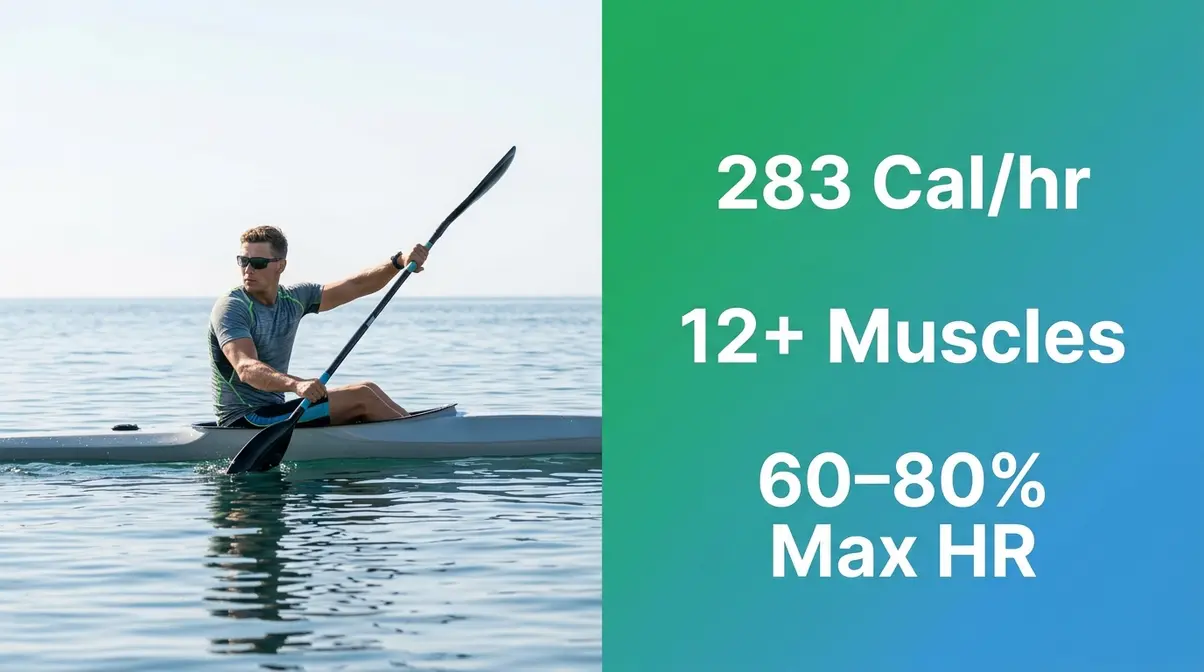
- Kayaking burns approximately 283 calories per hour for a 155-lb person at moderate effort, making it effective cardio (Harvard Medical School, 2021)
- Proper form protects your shoulders — the most injury-prone area for kayakers (NCBI research)


- Dual air chambers
- Two twist valves
- Webbing w/ buckle security loop
- Each chamber displaces 8 liters
- Reflective safety tape

- Removes Water Quickly & Easily: Our kayak hand pump draws water up effectively, even in hard-to-reach areas and water under 1-inch deep, helping you stay dry, safe and happy throughout the day; plus, a floating collar keeps the pump afloat if dropped overboard
- Designed for Kayaks & Canoes: Featuring an ergonomic grip, this one-way pump is specifically designed to remove water from kayaks and canoes; it comes with a mesh bag for convenient carry and features a removable hose for easy storage
- Works in Seconds, Lasts for Years: With sturdy plastic construction, our hand water pump not only does its job every time you’re on the lake, river or ocean, but it comes with an industry-leading quality assurance
- Save Time & Money, Have More Fun: Whether you’re a weekend boater or an experienced buyer, we keep your needs at the forefront of everything we do; every one of our products and parts is designed to work quickly and reduce costs
- Quality Marine Products That Make Sense: At SeaSense, we’ve been providing innovative marine and trailer products since 1984; we’ve rigorously tested and improved our entire catalog for decades to help deliver the best on-the-water experience possible
What Muscles Does Kayaking Actually Work?
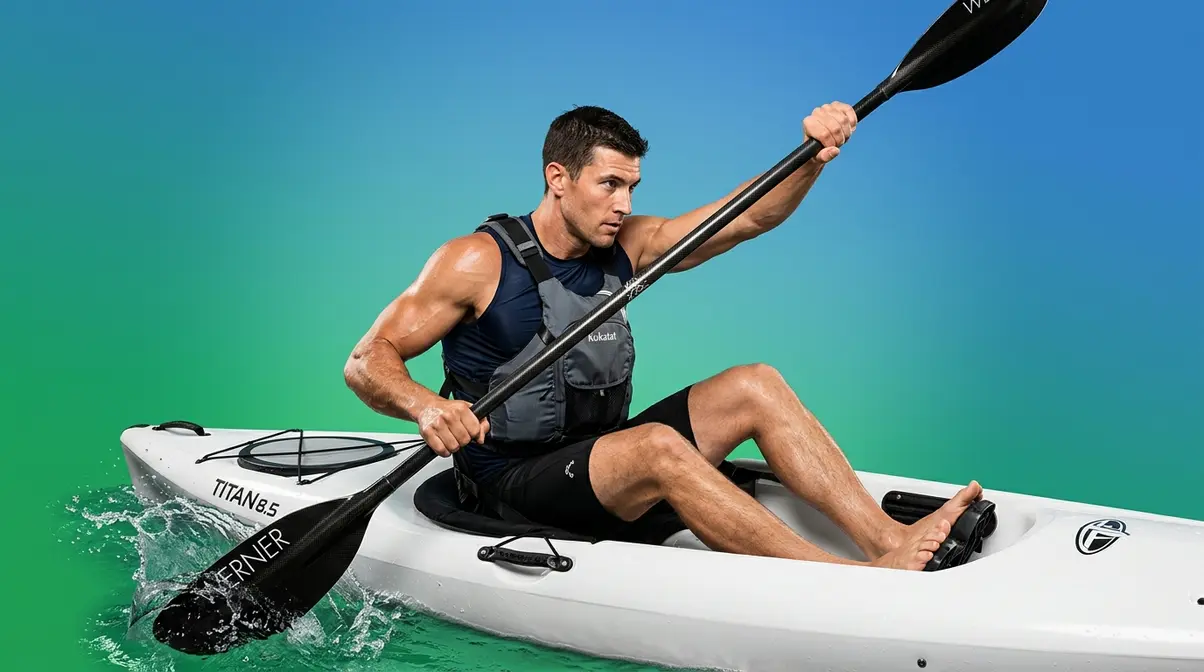
Kayaking works your core, back, shoulders, arms, and legs simultaneously — making it one of the most complete low-impact workouts available. Electromyography studies on the kayak stroke confirm that the primary power generators are your core rotators and back muscles, while your arms function as connecting levers rather than primary movers. Understanding the muscles used in kayaking changes how you paddle, how you train, and how you recover. For a deeper dive into the specific mechanics, check out our guide on how kayaking works your muscles: a detailed look.
Before you start — a note for beginners: You don’t need to memorize every muscle name before your first paddle. Focus on one idea: rotation drives power. If your torso is twisting with each stroke, you’re on the right track. Everything below will make that feel more natural.
Kayaking Power Triangle: Core Muscles
The core is the engine of your kayak stroke — not your arms. This is the central insight behind The Kayaking Power Triangle: the biomechanical framework where core rotation, leg drive, and torso unwind work together to generate approximately 70% of your paddle power.
Your external obliques (the muscles along the sides of your abdomen) and internal obliques initiate every stroke by rotating your torso toward the paddle side. Think of your torso like a coiled spring — you wind it up during the catch phase, then release that stored energy through the power phase. Your rectus abdominis (the “six-pack” muscle running down the front of your abdomen) stabilizes your spine throughout, preventing your lower back from collapsing under load.
Your erector spinae (the column of muscles running alongside your spine) work constantly as stabilizers, maintaining your upright posture against the rotational forces of each stroke. Without strong erector spinae, your lower back rounds under fatigue — the most common form breakdown seen in beginner kayakers.
Here’s how the core engages across the four stroke phases:
- Catch phase: Obliques pre-rotate your torso; abs brace your spine
- Power phase: Obliques unwind explosively, driving the blade through water
- Exit phase: Erector spinae stabilize as you lift the paddle clear
- Recovery phase: Core resets and pre-loads the opposite rotation
Sports medicine specialists consistently note that paddlers who learn torso rotation first — before focusing on arm technique — develop faster, more sustainable strokes and report significantly fewer shoulder injuries. This “Finesse over Power” principle is the single most important concept in efficient kayaking.
The Pulling Force: Your Back Muscles
Your back muscles are the largest and most powerful pulling muscles in your upper body — and they do the heavy lifting in every stroke. The latissimus dorsi (lats), the large wing-shaped muscles of your mid-back, are the primary movers during the power phase. When you pull the paddle blade through the water, your lats contract powerfully from your armpit down to your lower back. This is why lats are almost universally the sorest muscle after a first paddle session.
Supporting the lats are your rhomboids (the muscles between your shoulder blades that retract your scapula) and your trapezius (the large diamond-shaped muscle spanning your neck, shoulders, and upper back). The rhomboids stabilize your shoulder blades during each pull, preventing the “winging” that leads to shoulder impingement. The trapezius coordinates shoulder elevation and rotation throughout the stroke cycle.
Research published on PubMed confirms that back muscle activation in kayaking is comparable to rowing in terms of relative intensity — with the lats showing peak EMG activity during the power phase of the forward stroke. For a 155-lb person paddling at moderate intensity, this translates to meaningful muscular development over consistent sessions.
Community consensus among experienced paddlers is clear: “After a hard paddle, my lats are the muscles that’ll let me know it the next day.” This is biomechanically accurate — the lats work through a long range of motion under significant load with every single stroke.
Shoulder and Chest Engagement
Your deltoids (the rounded shoulder muscles capping your upper arm) are among the most active muscles in kayaking — and among the most vulnerable. The anterior (front) deltoid drives the blade forward during the catch; the posterior (rear) deltoid assists the pull during the power phase. Your rotator cuff (a group of four smaller muscles that stabilize the shoulder joint) works continuously to keep the humeral head seated in the socket under dynamic loading.
Your pectoralis major (the large chest muscle) contributes during the forward reach of the catch phase, assisting with shoulder flexion. It’s a secondary mover rather than a primary one, but paddlers with weak chest muscles often compensate with excessive shoulder elevation — a pattern that accelerates fatigue.
Because your shoulders cycle through a wide range of motion hundreds of times per hour, proper paddle technique is the most effective injury prevention tool available. Keeping your elbows slightly bent (never locked), using a “box” arm position, and driving rotation from your torso rather than your arms dramatically reduces rotator cuff stress.
Arms and Grip: Your Control Levers
Your arms are the connectors, not the engines. Your biceps brachii (the two-headed muscle on the front of your upper arm) assists with elbow flexion during the pull; your triceps brachii (the muscle on the back of your upper arm) extends your arm during the forward reach. Neither muscle generates primary power in an efficient stroke — they transmit the force your core and back produce.
Your forearm flexors and extensors — the muscles running along both sides of your forearm — manage grip pressure and paddle angle. These muscles fatigue quickly in beginners who grip the paddle too tightly. A relaxed, controlled grip (“plant and pull” rather than “squeeze and yank”) preserves forearm endurance and prevents the wrist tendinitis that sidelines many new paddlers in their first season.
A practical cue: if your forearms are burning after 20 minutes, you’re gripping too hard. Loosen your fingers slightly between strokes. Your core and back should be doing the work.
The Silent Partners: Legs and Glutes
This surprises almost every beginner: your legs and glutes are active during every forward stroke. Your gluteus maximus (the largest muscle in your body, forming the bulk of your buttocks) and gluteus medius (the muscle on the outer hip) stabilize your pelvis against the rotational forces of each stroke. Without glute engagement, your hips rock side to side instead of staying anchored — bleeding power and destabilizing the boat.
Your quadriceps (the four muscles on the front of your thigh) and hamstrings (the muscles on the back of your thigh) brace against the footrests on alternating sides as you rotate. This leg drive acts as the foundation of The Kayaking Power Triangle — pressing your opposite foot into the footrest as you rotate creates a kinetic chain that transfers force all the way through your core and into the blade. Remove leg drive, and your stroke power drops measurably.
This is precisely why paddlers report glute and leg soreness after long sessions — muscles they never expected to work are actually doing significant stabilizing and force-transfer work throughout the entire paddle.
Is Kayaking a Good Workout?
Kayaking is an excellent full-body workout that combines cardiovascular conditioning with functional strength training — and it’s accessible to nearly any fitness level. The fitness benefits are real, measurable, and well-supported by sports science. Whether you’re kayaking for weight management, muscle building, or low-impact cardio, the data supports it as a genuinely effective exercise. Understanding why recovery is important after a workout ensures you build endurance safely.
Cardiovascular Benefits and Calorie Burn
Kayaking at moderate intensity is a solid aerobic workout. According to Harvard Medical School (2021), a 155-lb person burns approximately 283 calories per hour kayaking — comparable to moderate cycling or a brisk walk. At vigorous intensity (fast-moving water or racing pace), that figure climbs significantly. For a 185-lb person, moderate kayaking burns roughly 340 calories per hour by the same data set.
Beyond calorie burn, sustained paddling elevates your heart rate into the aerobic training zone (typically 60–80% of maximum heart rate) for extended periods. This improves cardiovascular efficiency, lowers resting heart rate over time, and builds the aerobic base that makes all physical activity feel easier. Research from the REI expert advice on kayak training confirms that regular paddling contributes to measurable improvements in VO2 max — the gold-standard measure of cardiovascular fitness.
A 30-minute moderate paddle session burns roughly 140–170 calories for most adults — roughly equivalent to 30 minutes of water aerobics. However, the “upper body + core + legs” compound engagement means your muscles are working harder than the calorie number alone suggests.
Does Kayaking Build Muscle?
Kayaking builds functional muscle endurance rather than bulk hypertrophy. The repeated, moderate-resistance contractions of paddling are more analogous to high-rep, low-weight resistance training than to heavy lifting. Over consistent sessions, you’ll develop noticeable muscular endurance and tone in your lats, obliques, deltoids, and forearms.
For meaningful muscle growth (hypertrophy), kayaking alone is insufficient — the resistance isn’t progressive enough. However, as a complement to a strength training program, kayaking develops the endurance capacity of those same muscle groups, making your gym work translate better to real-world activities. Paddling Magazine’s kayak training guide notes that elite paddlers supplement on-water training with targeted resistance work precisely because paddling builds endurance but not maximum strength.
The practical answer: yes, kayaking builds muscle — especially in beginners who start with low baseline fitness. After 8–12 weeks of regular paddling, most new kayakers report visible improvement in upper back definition and core stability.
Which Muscles Get Sore After Kayaking?
“After a hard paddle, my legs, butt, and lats are the muscles that’ll let me know it.”
— Paddler consensus from the r/Kayaking community
That quote captures the experience of nearly every paddler after their first serious session. The muscles most commonly sore after kayaking are:
- Latissimus dorsi (lats) — primary pulling muscle, worked heavily through the entire session
- External obliques — the rotational drivers of every stroke
- Deltoids (rear and anterior) — shoulder stabilizers working through hundreds of repetitions
- Glutes and hip stabilizers — often the biggest surprise for beginners
- Forearms — especially if grip was too tight
Delayed onset muscle soreness (DOMS) typically peaks 24–48 hours after the session. The lats and obliques are almost universally the most affected. If your shoulders are severely sore rather than mildly fatigued, that’s a signal your technique is relying too heavily on arm-pulling rather than torso rotation — a form issue worth correcting before your next paddle.
Should I kayak for 1 or 2 hours?
For beginners, a 1-hour session is the ideal starting point. One hour provides sufficient cardiovascular and muscular stimulus without the fatigue-driven form breakdown that leads to injury. As your lats, obliques, and shoulder stabilizers develop endurance over 4–6 weeks, extending to 90 minutes or 2 hours becomes comfortable. For fitness purposes, 2–3 sessions per week of 60–90 minutes each delivers consistent cardiovascular and muscular conditioning. Paddling beyond your endurance threshold consistently is the primary driver of overuse injuries in recreational kayakers.
Warm-Up Tips to Reduce Soreness
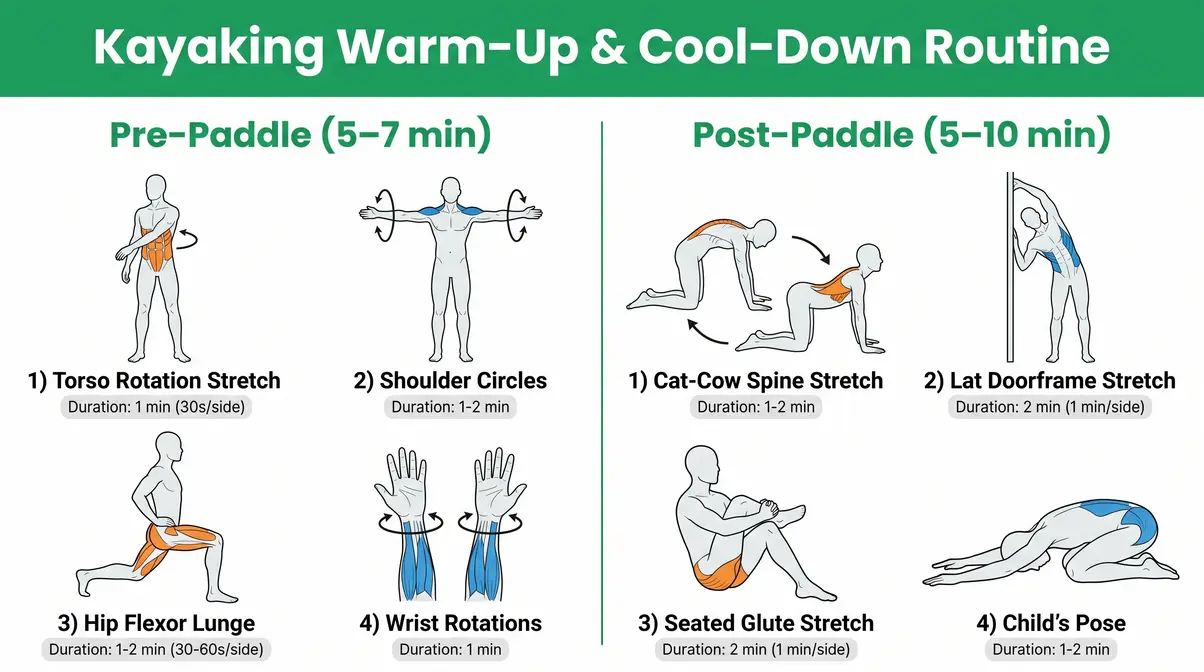
A targeted warm-up reduces injury risk and improves stroke quality from the first minute on the water. A cool-down accelerates recovery and reduces the severity of next-day soreness. For more comprehensive strategies, review these sore muscles recovery tips.
Pre-paddle warm-up (5–7 minutes):
- Torso rotation stretch — Stand with feet shoulder-width apart. Rotate your torso left and right 10 times each side, progressively increasing range of motion. Warms the obliques and erector spinae.
- Shoulder circles — 10 forward, 10 backward. Mobilizes the rotator cuff before load.
- Hip flexor lunge — Step forward into a low lunge, hold 20 seconds each side. Activates the glutes and opens hip flexors for better leg drive.
- Wrist rotations — 15 circles each direction. Prepares forearm flexors and extensors for grip work.
Post-paddle cool-down (5–10 minutes):
- Cat-cow spine stretch — 10 slow repetitions. Decompresses the spine after sustained seated posture.
- Lat doorframe stretch — Grip a fixed object at shoulder height, lean back and to the side. Hold 30 seconds each side.
- Seated glute stretch — Cross one ankle over the opposite knee, lean forward. Hold 30 seconds each side.
- Child’s pose — Hold 60 seconds to decompress the lower back and release erector spinae tension.
Kayaking vs. Rowing vs. Canoeing
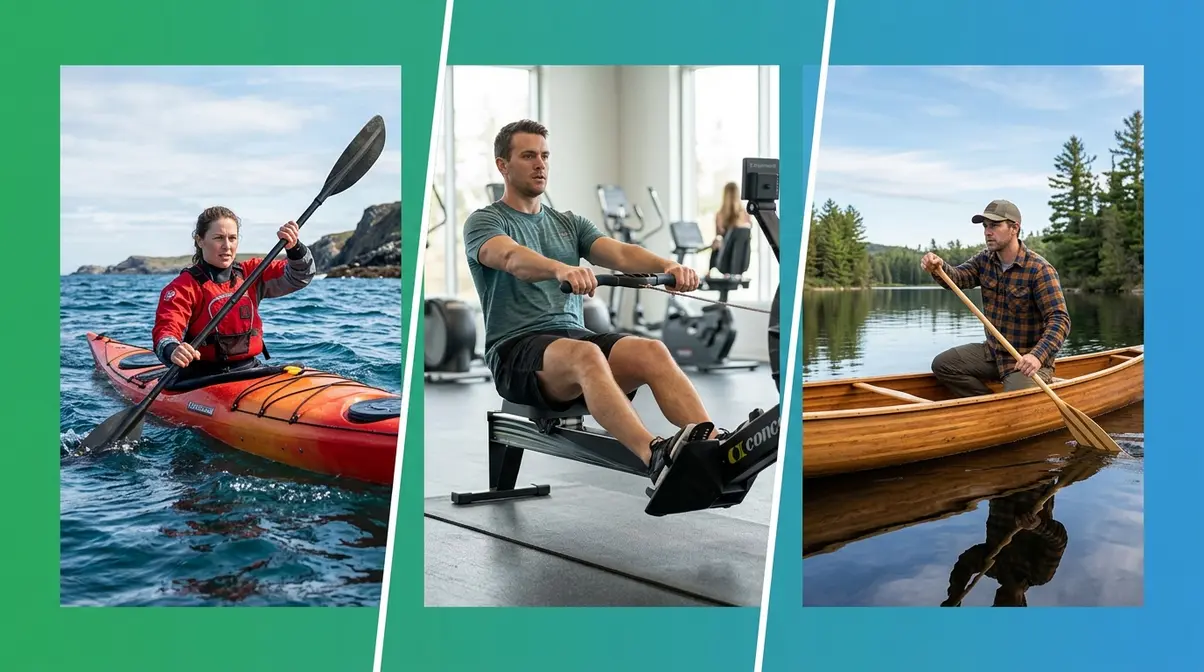
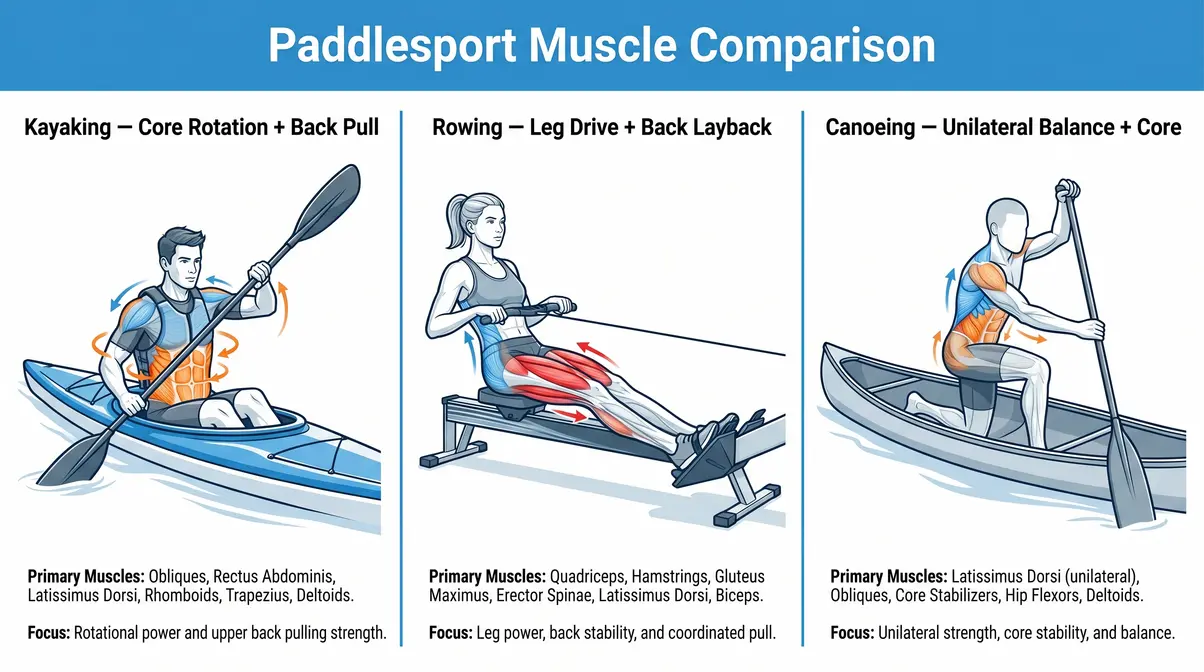
All three paddlesports are upper-body-dominant activities, but they recruit muscles in meaningfully different patterns. Knowing the differences helps you choose the right sport for your fitness goals — or understand why switching between them feels so different on your body. Understanding these biomechanical variations ensures you allocate your training time effectively.
Kayaking vs. Rowing Muscle Differences
Kayaking and rowing look similar from a distance, but the biomechanics are substantially different. In kayaking, you sit upright in a fixed seat and rotate your torso to drive a double-bladed paddle. In rowing (as in an ergometer or sweep boat), you slide back and forth on a seat, using powerful leg drive and a layback motion with a single blade. If you want to explore the ergometer further, read our breakdown of the muscles worked on a rowing machine.
| Feature | Kayaking | Rowing |
|---|---|---|
| Seat position | Fixed (no slide) | Sliding seat |
| Blade count | Double-bladed paddle | Single blade (oar) |
| Primary power source | Core rotation + back pull | Leg drive + back layback |
| Primary muscles | Obliques, lats, deltoids | Quadriceps, hamstrings, erector spinae |
| Glute activation | Moderate (stabilizing) | High (primary mover in drive) |
| Shoulder stress | Higher (wide arc, rotation) | Lower (more linear movement) |
| Cardiovascular intensity | Moderate–high | High (full leg drive adds output) |
Rowing produces higher total power output because the sliding seat allows the legs — the body’s largest muscles — to contribute as primary movers rather than stabilizers. Kayaking, by contrast, places more rotational demand on the core and more sustained load on the shoulders. The rotational torque in kayaking specifically targets the obliques differently than the linear pull of rowing. Neither is objectively better; they train different athletic qualities.
Where kayaking excels at developing rotational core strength and shoulder stability, rowing builds more raw leg and posterior chain power. Many competitive paddlers cross-train on rowing ergometers specifically to build the leg strength that transfers back to their kayak stroke.
Kayaking vs. Canoeing Muscle Focus
Canoeing uses a single-bladed paddle and requires a different stroke pattern than kayaking’s double-blade rhythm. In a canoe, you paddle on one side and use a J-stroke (a slight outward hook at the end of the pull) to maintain a straight line — or you switch sides periodically.
This creates an asymmetrical loading pattern. Canoeing works the same primary muscles — lats, obliques, deltoids — but engages them unilaterally rather than bilaterally. The muscles on your dominant paddle side develop greater endurance, while your core works harder to prevent lateral drift and compensate for the single-sided loading.
Kayaking’s bilateral stroke pattern is generally more beginner-friendly for muscle balance and symmetry. Canoeing, however, develops proprioception (your body’s sense of position and balance) more aggressively because managing a single blade in moving water demands constant micro-adjustments from your core stabilizers.
For beginners concerned about muscle imbalances, kayaking is typically the better starting point. For those who want to develop unilateral core strength and balance, canoeing offers a distinct challenge.
Which Paddlesport Fits Your Goals?
| Fitness Goal | Best Choice | Why |
|---|---|---|
| Full-body cardio | Rowing | Leg drive maximizes total calorie output |
| Rotational core strength | Kayaking | Bilateral rotation is constant and loaded |
| Shoulder stability | Kayaking | High shoulder demand builds rotator cuff endurance |
| Balance and proprioception | Canoeing | Single-blade demands constant stabilization |
| Low-impact leg workout | Rowing | Sliding seat recruits quads and hamstrings |
| Beginner-friendly muscle balance | Kayaking | Bilateral stroke promotes symmetry |
| Adventure + fitness combined | Kayaking | Widest range of water environments |
If your primary goal is cardiovascular fitness and raw calorie burn, rowing edges out kayaking due to full leg engagement. If you want rotational core development, shoulder strength, and the ability to explore open water, kayaking is the clear choice. Canoeing occupies a middle ground — excellent for developing balance and unilateral strength, but with a steeper initial learning curve. Alternatively, if you prefer standing, you might wonder what muscles does paddleboarding work compared to seated paddling.
Kayaking Safety: Essential Rules
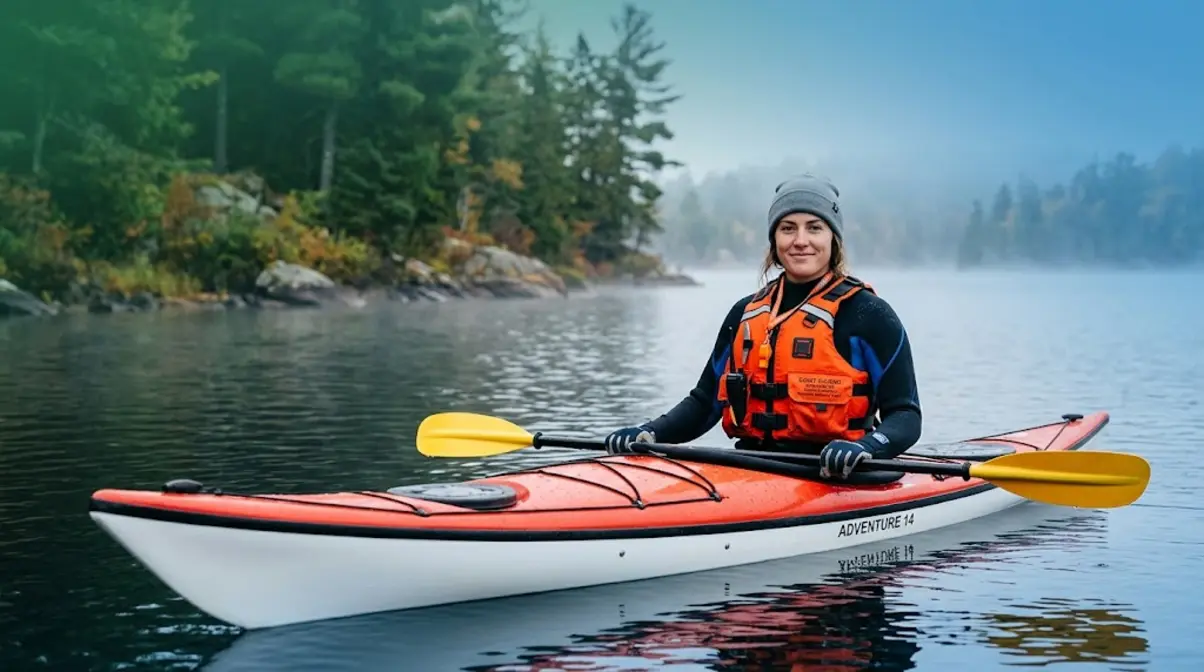
Safety knowledge is as important as physical preparation. The most common kayaking fatalities are preventable — and almost none of them are caused by physical exhaustion. Understanding the rules below before your first paddle could save your life. Having the right safety gear also directly impacts your ability to recover from muscle fatigue in cold water emergencies.
The 120-Degree Rule Explained
The 120 rule in kayaking states that if the air temperature (in °F) plus the water temperature (in °F) equals less than 120°F, you should wear a wetsuit or drysuit. For example, if the air is 65°F and the water is 50°F, that sum is 115 — below the 120 threshold, meaning cold-water immersion is a serious survival risk.
This rule exists because cold water shock and cold water incapacitation are the primary physiological threats when a kayaker capsizes in cold conditions. The National Weather Service notes that cold water (below 60°F) can cause gasping reflex, hyperventilation, and loss of swimming ability within minutes of immersion — regardless of air temperature. A sunny, mild day on the surface does not neutralize the danger of cold water below.
Practical application: always check both air and water temperatures before paddling. The 120 rule is a conservative minimum threshold, not a comfort guideline. Many experienced paddlers apply it as a hard rule — if the sum is under 120, they suit up, no exceptions.
The Leading Cause of Kayaker Fatalities
Drowning is the leading cause of death for kayakers — and the majority of drowning victims were not wearing a personal flotation device (PFD) at the time of the incident. U.S. Coast Guard recreational boating statistics consistently show that over 80% of boating fatality victims were not wearing a life jacket. Among kayakers specifically, capsizing in cold water while unprotected is the most common fatal scenario.
The data is unambiguous: wearing a properly fitted PFD is the single most effective safety measure available to any paddler. A PFD does not restrict paddle movement when fitted correctly, and modern kayaking-specific life jackets are designed for full arm mobility. There is no reasonable justification for paddling without one.
Secondary risk factors include paddling alone in remote areas, paddling in conditions beyond your skill level, and alcohol consumption — which is a contributing factor in a significant percentage of water recreation fatalities according to USCG annual reports.
Essential Safety Gear Checklist
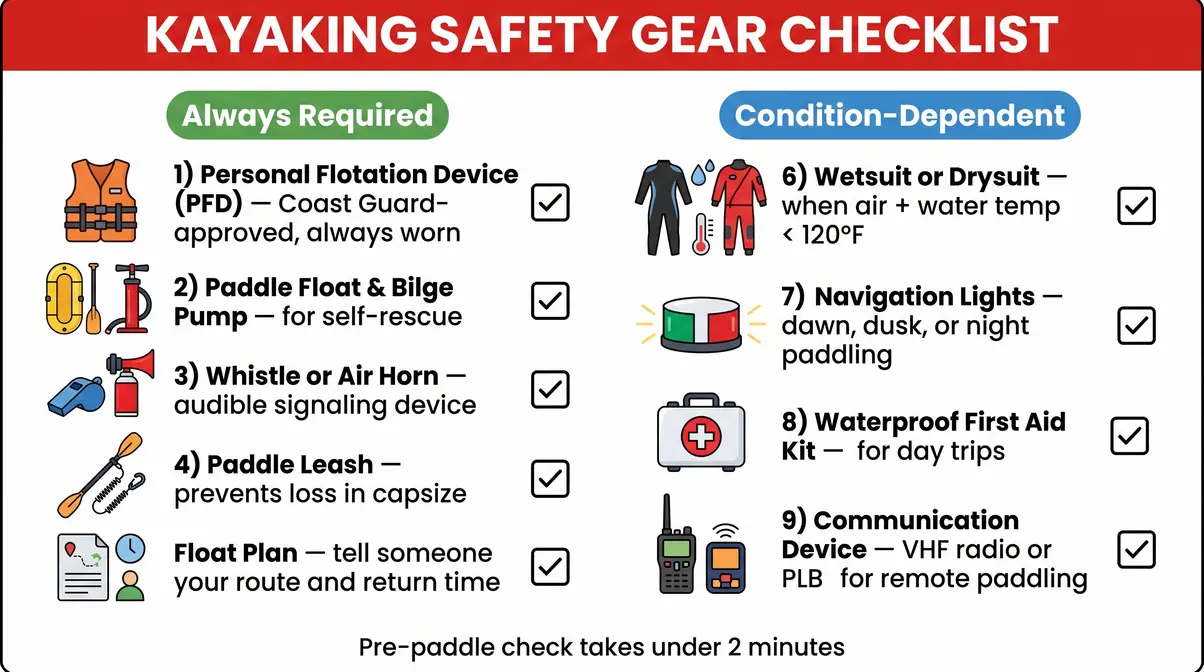
Before every paddle, verify you have the following:
- Personal Flotation Device (PFD) — properly fitted, Coast Guard–approved, always worn
- Paddle float and bilge pump — for self-rescue if you capsize
- Whistle or air horn — audible signaling device (legally required in many jurisdictions)
- Leash for your paddle — prevents losing your paddle in a capsize
- Wetsuit or drysuit — mandatory when air + water temperature sum is below 120°F
- Navigation lights — required if paddling at dawn, dusk, or after dark
- Float plan — tell someone where you’re going, your route, and when to expect you back
- First aid kit — waterproof-sealed, sized for day trips
- Communication device — waterproof phone case, VHF radio, or personal locator beacon (PLB) for remote paddling
Common Kayaking Injuries and How to Avoid Them
Kayaking is a relatively low-injury sport when practiced with proper technique — but certain injuries are common, particularly among beginners who rely on arm strength rather than torso rotation. Understanding these risks in advance is the most effective way to prevent them.
Most Frequent Kayaking Injuries
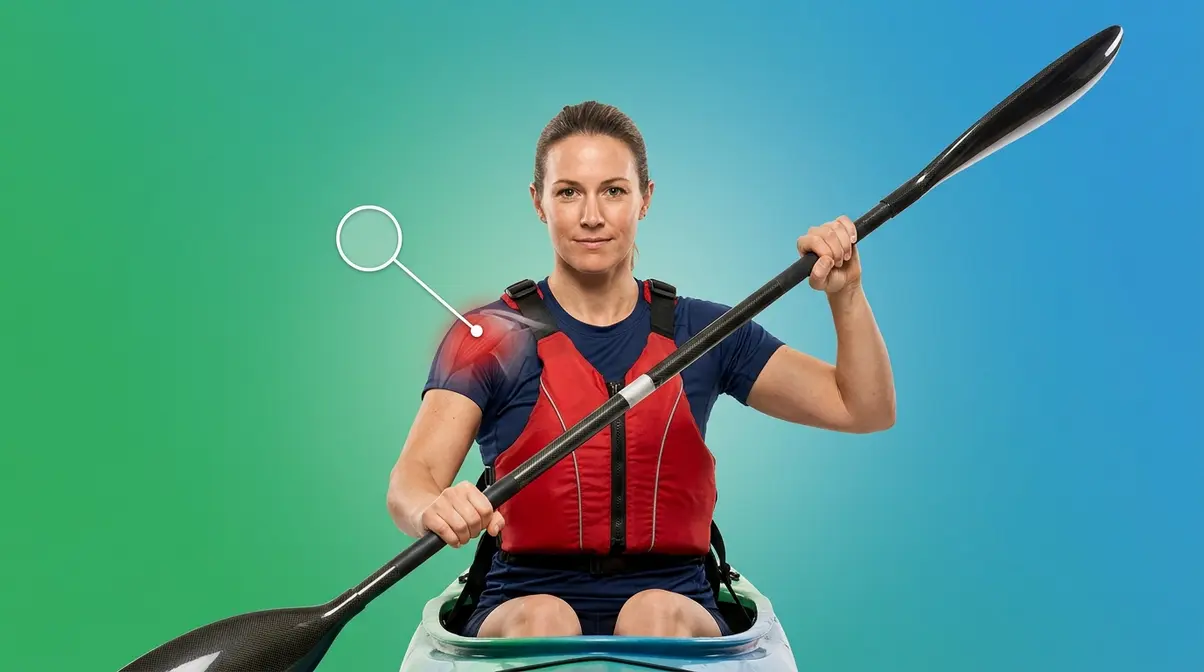
Shoulder impingement and rotator cuff strain are the most common kayaking injuries, according to research published in NCBI sports medicine databases. These injuries result from repetitive overhead loading with poor mechanics — specifically, paddling with a high elbow position and insufficient torso rotation. The fix is technique-first: lower your top hand to ear level during the stroke and drive rotation from your core, not your shoulder.
Wrist tendinitis (inflammation of the wrist tendons) affects paddlers who grip the paddle too tightly or use an incorrect feather angle. Symptoms include aching pain along the back of the wrist during and after paddling. Prevention: maintain a relaxed grip, check your paddle’s feather angle matches your wrist position, and rest at the first sign of persistent wrist pain.
Lower back pain is common in beginners who haven’t developed erector spinae endurance or who paddle with a rounded spine. Seated for extended periods in a fixed position with rotational loading is demanding on the lumbar spine. Strengthening the core off-water — particularly the erector spinae and obliques — significantly reduces this risk.
Golfer’s elbow (medial epicondylitis) can develop from repetitive grip and pull patterns with poor mechanics. It presents as pain on the inner elbow. Addressing it early with rest and technique correction prevents it from becoming a chronic issue.
If you experience sharp or persistent pain after kayaking, consult a sports medicine professional or physical therapist. Mild DOMS (muscle soreness) is normal; joint pain, sharp localized pain, or pain that persists beyond 72 hours warrants professional evaluation.
Is kayaking hard on your body?
Kayaking is generally low-impact and joint-friendly when practiced with correct technique. The seated position reduces lower-body joint stress compared to running or jumping activities. However, the repetitive rotational loading can stress the shoulders, wrists, and lower back — particularly in beginners who use arm strength rather than torso rotation. Sports medicine specialists note that most kayaking injuries are technique-related rather than inherent to the sport. Learning proper form from the start — specifically, driving rotation from your core — is the most effective protection.
When to Choose a Different Activity
Kayaking may not be the right choice if you have an existing rotator cuff tear or active shoulder impingement — the repetitive overhead loading can aggravate these conditions significantly. In those cases, swimming (specifically backstroke) or cycling offers cardiovascular conditioning without shoulder stress.
If you have chronic lower back issues, particularly disc herniation or spinal stenosis, the rotational demands of kayaking can be provocative. A physical therapist can assess whether core strengthening makes kayaking viable for you, or whether a lower-rotation activity like stand-up paddleboarding (with a more upright posture) is more appropriate.
For older adults or those returning from injury, Topendsports’ overview of canoeing and kayaking fitness provides a useful reference for understanding the physical demands before committing to the sport. Always consult your healthcare provider before beginning any new physical activity, particularly one with significant rotational and repetitive loading demands.
Frequently Asked Questions
What muscles will be sore after kayaking?
The lats, obliques, and deltoids are the most commonly sore muscles after kayaking. These three groups do the majority of work in every stroke — the lats pull the blade through the water, the obliques drive the rotation, and the deltoids stabilize the shoulder through hundreds of repetitions. Many beginners are surprised to also feel soreness in their glutes and forearms. Glute soreness comes from stabilizing your pelvis against rotational forces, while forearm soreness typically signals an overly tight grip on the paddle.
What is the 120 rule in kayaking?
The 120 rule states that when air temperature plus water temperature (both in °F) totals less than 120, you should wear a wetsuit or drysuit. Cold water immersion is a serious physiological threat — the National Weather Service notes that water below 60°F can cause gasping reflex and loss of swimming ability within minutes. A comfortable air temperature does not offset the danger of cold water. For example, 65°F air plus 50°F water equals 115 — below the threshold, meaning protective thermal gear is necessary.
Does kayaking build muscle?
Kayaking builds functional muscular endurance, particularly in the lats, obliques, deltoids, and forearms. It is not a hypertrophy (muscle-bulking) activity — the resistance isn’t progressive enough for significant size gains. However, beginners with lower baseline fitness typically see visible improvement in upper back definition and core stability within 8–12 weeks of regular paddling. For muscle building, combining kayaking with targeted resistance training produces the best results, as elite paddlers consistently do.
What muscles work while kayaking?
Kayaking engages more than 12 major muscle groups across five body zones. The primary movers are the external obliques and lats (generating rotation and pull), supported by the deltoids and rhomboids (shoulder stability), with the glutes and quadriceps providing the stabilizing platform through leg drive. Your biceps, triceps, and forearms act as connecting levers rather than primary power sources. The muscles worked during kayaking make it one of the most complete low-impact full-body exercises available.
What is the leading cause of death for kayakers?
Drowning is the leading cause of death for kayakers, and the majority of victims were not wearing a personal flotation device (PFD). U.S. Coast Guard recreational boating statistics show that over 80% of boating fatality victims were not wearing a life jacket. Cold water capsizing is the most common fatal scenario — cold water shock can impair swimming ability within minutes regardless of the paddler’s fitness level. Wearing a properly fitted, Coast Guard–approved PFD on every paddle is the single most effective safety measure available.
Does kayaking get you fit?
Yes — kayaking is an effective full-body fitness activity that builds cardiovascular endurance, functional strength, and core stability simultaneously. Harvard Medical School data shows a 155-lb person burns approximately 283 calories per hour at moderate intensity. Regular paddling (2–3 sessions per week) improves VO2 max, develops rotational core strength, and builds muscular endurance in the back and shoulders. It is particularly well-suited for people who find traditional gym cardio monotonous — the environmental engagement of paddling makes sustained effort feel significantly less effortful than equivalent treadmill or cycling work.
Is kayaking better than walking for weight loss?
Kayaking generally burns more calories than walking at a moderate pace, making it highly effective for weight loss. While a brisk walk burns roughly 150 calories in 30 minutes, kayaking can burn upwards of 200 calories in the same timeframe depending on water resistance. The added benefit of kayaking is the upper-body resistance, which builds muscle tone while you perform cardiovascular work. However, walking is more accessible for daily consistency. Combining both provides an excellent, well-rounded fitness routine.
Do you need strong arms to kayak?
You do not need strong arms to kayak effectively, as the power should come from your core and legs. Beginners often make the mistake of relying solely on their biceps and triceps, which leads to rapid fatigue. By utilizing the Kayaking Power Triangle—core rotation, leg drive, and torso unwind—you transfer the workload to your body’s largest muscle groups. As long as you focus on proper torso rotation, paddlers of any upper-body strength level can enjoy long sessions on the water.
Conclusion
Kayaking is a full-body workout that engages more than 12 major muscle groups — with your core, back, and legs doing far more work than most beginners expect. The muscles used in kayaking span from your obliques and lats down to your glutes and feet, and understanding that system changes everything about how you paddle, train, and recover. Research confirms that arm strength alone accounts for less than 30% of an efficient stroke’s power — the rest comes from The Kayaking Power Triangle of core rotation, leg drive, and torso unwind.
The Kayaking Power Triangle isn’t just an anatomical curiosity — it’s a practical framework for paddling smarter. When you feel your obliques loading and your opposite foot pressing into the footrest, you know you’re using the system correctly. That’s the shift from beginner to efficient paddler, and it happens faster than most people expect.
Your next step: before your next paddle, run through the 5-minute warm-up routine in this guide — torso rotations, shoulder circles, hip flexor lunges, and wrist prep. Then focus on one cue only: let your torso rotate before your arms pull. After your session, give the cool-down stretches 5 minutes. Your lats and obliques will thank you the next morning. If you’re new to paddling, check your local outfitter for beginner clinics — guided instruction from a certified paddling coach compresses the learning curve dramatically and establishes correct form before habits solidify.
Consult a healthcare professional before starting any new exercise routine. This article is for informational purposes only.