
Why Is Post-Workout Recovery Important? Complete Guide
Here’s a fact that changes everything about how you think about fitness: your muscles don’t grow during your workout. They grow afterward — during the hours and days of rest that follow.
Every time you skip proper recovery, you don’t just miss out on gains — you start accumulating what sports scientists call a Recovery Debt: a compounding physiological deficit where each missed rest session makes the next workout harder, more painful, and more likely to end in injury. If you are wondering why is post-workout recovery important, the answer lies in understanding the active biology of muscle adaptation. This invisible debt is often the real reason people quit, as progress stalls, mood crashes, and enthusiasm fades.
By the end of this guide, you’ll understand the active biology of recovery, how to recognize when you’re pushing past your limits, and how to apply structured, evidence-based frameworks — the 4 R’s, the 3-3-3 rule, and the 2-hour protein protocol — to build a routine that actually lets your hard work pay off. We’ll cover the science of muscle repair, the dangers of chronic under-recovery, and the practical sleep, nutrition, and movement strategies that accelerate healing.
Post-workout recovery is the biological mechanism that actually builds muscle, restores energy, and prevents injury — without it, training breaks your body down instead of building it up.
- Muscles repair during rest: Muscle Protein Synthesis (MPS) — the process that rebuilds muscle fibers — peaks in the recovery window, not during exercise.
- The Recovery Debt Cycle is real: Each skipped rest session compounds fatigue, reducing the effectiveness of every subsequent workout.
- The 4 R’s framework works: Rehydrate, Refuel, Repair, and Rest — the evidence-based protocol for complete post-exercise recovery, supported by sports nutrition research (PubMed, 2026).
- Timing matters: Glycogen resynthesis is most rapid in the first 5–6 hours after exercise (NIH PubMed Central, 2018) — making your immediate post-workout window critical.
- Rising trend: Fitness audiences are shifting from general rest advice to structured, numbered recovery frameworks like the 3-3-3 rule and the 4 R’s.
“Recovery is a two-stage process involving the reduction of fatigue and adapting to imposed training demands.”
— Sports science research consensus
Muscle Growth Happens During Rest
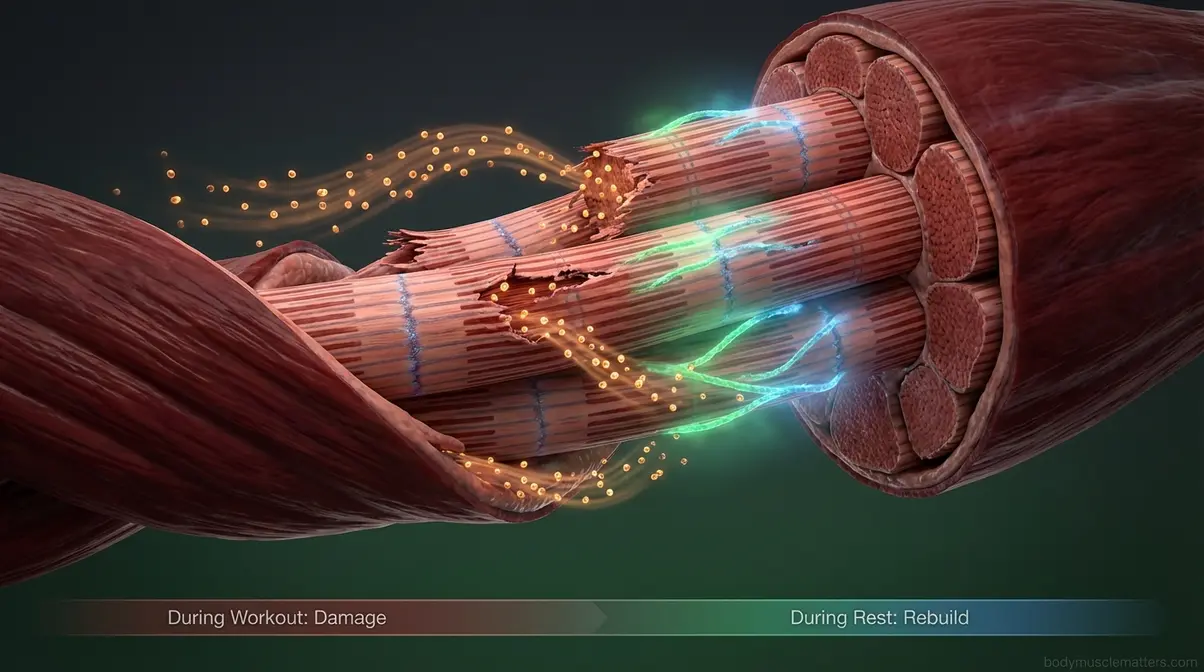
Post-workout recovery is when your body actually builds the strength and fitness you worked for in the gym. During exercise, intense effort causes microscopic tears in your muscle fibers. It is during rest that Muscle Protein Synthesis (MPS) — the cellular repair process — rebuilds those fibers stronger and thicker than before. Without adequate recovery, this rebuilding process cannot complete, and training stress accumulates without producing any meaningful fitness gain.
This is the core biological answer to why post-workout recovery is important: the workout is the stimulus, but rest is where the adaptation occurs. Skipping recovery is like pulling up a plant to check whether its roots are growing — you disrupt the very process you’re trying to encourage.
The Science of Muscle Repair
Think of your muscles like a brick wall. Your workout knocks out individual bricks, and recovery is the process of laying new, stronger ones back in their place. More precisely, intense training creates microscopic tears in your myofibrils (myofibrils — the tiny protein threads that make up each muscle fiber), triggering a cascade of biological events that ultimately leave you fitter than before.
Here is how that process works, step by step:
- Exercise creates microscopic muscle fiber damage. High-effort movement — lifting, sprinting, jumping — generates micro-tears in the myofibrils.
- Your body detects the damage and triggers an inflammatory response. This is why you feel sore 12–48 hours after a hard session: inflammation is the body’s alarm system, calling in repair resources.
- Muscle Protein Synthesis activates. Amino acids from the protein you eat are delivered to the damaged site, where they are used as building material for new, repaired tissue.
- Fibers rebuild thicker and stronger. This is the adaptation that makes you fitter — and it only happens when training stress is paired with adequate rest.
Research from NIH PubMed Central confirms that NIH research on rapid muscle glycogen resynthesis begins immediately following exercise, with the recovery window being the most critical period for physical restoration. For a deeper understanding of how muscles adapt during this window, see our guide on understanding physiological homeostasis during rest.
This entire sequence only occurs during rest — not during the workout itself. MPS takes 24–72 hours to complete, depending on training intensity and individual biology. If you train again before MPS finishes, you interrupt the rebuilding cycle and accumulate structural damage rather than structural gains.
Transition: Muscle fiber damage is only one part of what exercise depletes — your nervous system takes a hit too, and most people have no idea.
CNS vs. Peripheral Fatigue
Most people have one mental model of post-workout tiredness: sore muscles. But research shows there are actually two separate systems recovering after every session — and they require different strategies.
Peripheral fatigue is the soreness and weakness you feel directly in your muscles — the burn in your legs after a squat session, the ache in your chest the morning after bench press. This is what most people think of when they say they’re “sore.” Peripheral fatigue typically resolves within 24–48 hours for moderate training loads.
Central Nervous System (CNS) fatigue is different. It is the depletion of your nervous system’s capacity to transmit the electrical signals that make your muscles contract in the first place. CNS fatigue feels less like soreness and more like heavy limbs, brain fog, and a general sense of being “wrecked” even when your muscles don’t particularly ache. After extremely heavy or high-volume training, CNS fatigue can take 48–72+ hours — or longer — to resolve.
The diagram below illustrates how these two fatigue types feel, how long they last, and what recovery strategies address each.
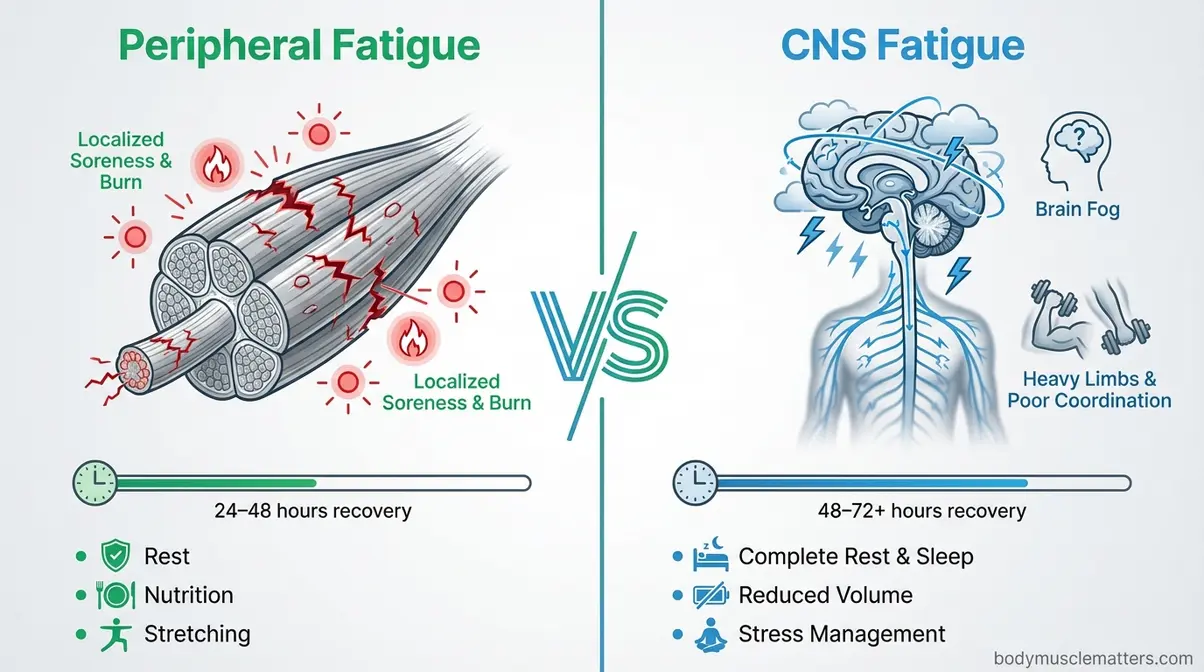
Caption: Understanding the difference between CNS and peripheral fatigue helps you choose the right recovery strategy — and avoid training yourself into a hole.
The practical consequence is significant. If you try to train through CNS fatigue, your technique breaks down, your force output drops, and injury risk spikes — even if your muscles “feel fine.” This is why powerlifters who perform heavy maximum-effort singles often need 3–4 days between sessions even when their legs feel recovered. Their nervous system is still rebuilding its capacity to fire at full intensity.
Physiological homeostasis — the state of internal balance your body works to restore after every workout — requires both peripheral and CNS recovery to be complete before peak performance returns. Training before either system is ready disrupts that balance and compounds the Recovery Debt Cycle.
Transition: Both peripheral and CNS fatigue deplete your energy reserves — specifically, the glycogen your muscles run on. Refilling those stores is the first job of recovery.
How Glycogen Powers Recovery
Glycogen is the stored form of carbohydrate your muscles use as their primary fuel source during exercise. Think of it like the battery in your phone: every workout drains the battery, and recovery is the time you plug it back in. When glycogen stores run low, performance drops, concentration fades, and the feeling of “hitting a wall” becomes unavoidable.
Glycogen depletion is one of the primary drivers of workout-to-workout fatigue. Critically, glycogen resynthesis is fastest in the first 5–6 hours after exercise — meaning what you eat and do in the hours immediately after training has an outsized impact on how quickly you recover (NIH PubMed Central, 2018). Research on post-workout glycogen metabolism and insulin sensitivity confirms that glycogen synthesis during recovery elevates insulin sensitivity for up to 48 hours post-workout, helping restore physiological homeostasis (NIH PubMed Central, 2018).
This elevated insulin sensitivity is a genuine performance window. After training, your muscles absorb carbohydrates and restore glycogen more efficiently than at any other point in the day. Eating carbohydrates during this window is biologically more effective than consuming the same foods 3+ hours later.
A practical example: a 45-gram serving of carbohydrates — roughly a banana and a slice of toast — consumed within 30 minutes of finishing your workout replenishes glycogen stores significantly faster than those same foods eaten at hour three. That simple timing choice accelerates your readiness for the next session.
Transition: Once you understand that the workout depletes and rest rebuilds, the next step is understanding the payoff — the super-compensation effect, which is what makes recovery the actual source of your fitness gains.
The Super-Compensation Effect
Here is the concept that reframes everything: your body doesn’t just repair back to where it was before the workout. It rebuilds slightly stronger, faster, or more enduring than before. This “upgrading” beyond baseline is called super-compensation, and it is the entire biological point of training.
The cycle works like this:
- Train → Your performance baseline temporarily drops due to fatigue and micro-damage.
- Recover → MPS rebuilds tissue, glycogen refills, CNS restores signal capacity.
- Adapt → Your body overshoots the previous baseline, reaching a new, slightly higher performance ceiling.
The timing of your next session relative to this cycle determines everything. If it hits at the super-compensation peak, your training compounds over time. If it hits too early — before recovery completes — you never rise above the depleted starting point. If it hits too late, after the super-compensation peak fades, the body returns to baseline and the window is wasted.
When you consistently train before super-compensation completes — which is exactly what happens without structured rest — you never allow your body to rise above its baseline. Each session starts from a depleted position. This is the Recovery Debt Cycle in its most fundamental form: compounding physiological liability that accumulates with every skipped or shortened rest period.
Elite athletes demonstrate this principle through planned deload weeks — deliberately reduced training periods that allow super-compensation to fully complete before the next performance peak. Sports science consensus supports this strategy as a primary tool for long-term progression (NIH PubMed Central, PMC5852829).
Transition: Understanding the biology of recovery is only half the story. The other half is understanding what happens when you ignore it — and the consequences are more serious than most people realize.
The Dangers of Skipping Recovery
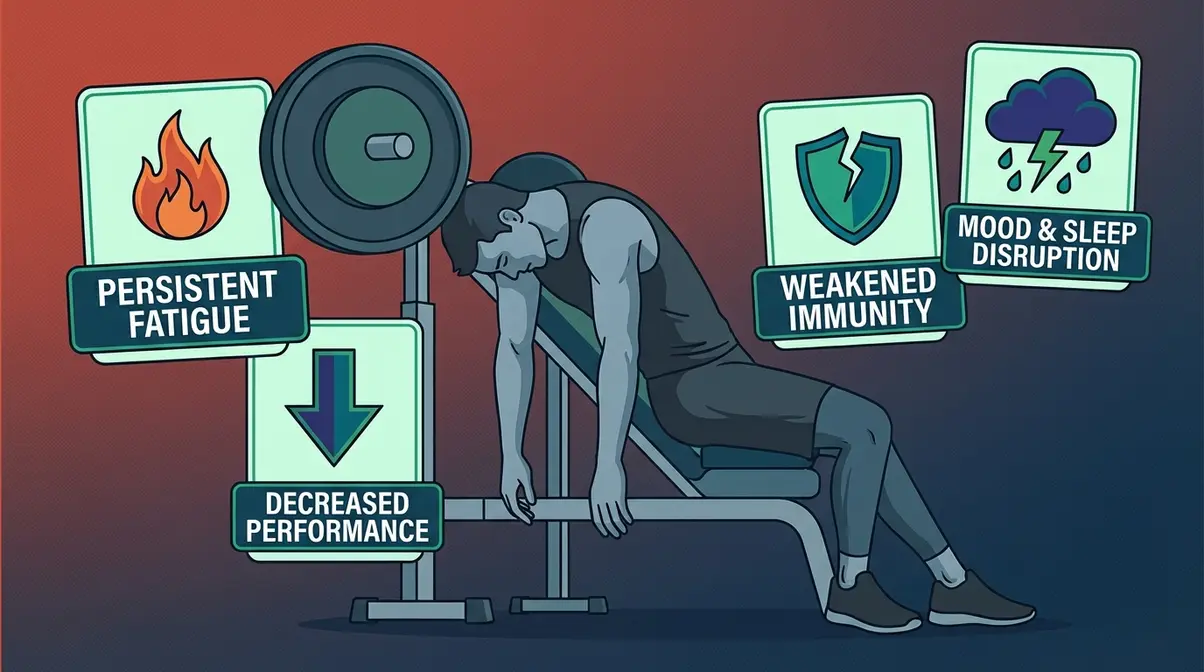
Skipping post-workout recovery doesn’t just pause your progress — it can trigger Overtraining Syndrome (OTS), a clinically recognized condition that affects the central nervous system, immune function, and mental health. According to the Cleveland Clinic, OTS can lead to systemic fatigue, anxiety, elevated resting heart rate, and persistent insomnia that significantly impairs athletic performance. If your workouts are leaving you more exhausted than energized, your body may be sending a clear signal — one that’s worth taking seriously.
4 Signs of Overtraining Syndrome
Overtraining Syndrome (OTS) — a clinically recognized condition that develops when exercise stimulus consistently exceeds the body’s capacity to recover — doesn’t announce itself dramatically. It accumulates quietly, week by week, as recovery debt compounds. Recognizing the warning signs early is what separates a brief setback from a months-long plateau.
The 4 primary symptoms to know:
- Persistent Muscle Fatigue
- You feel sore or heavy 3+ days after a workout that should have resolved in 48 hours. Normal delayed onset muscle soreness fades within two days; OTS-related fatigue lingers well beyond that window.
- Decreased Performance
- Your lifts feel heavier, your running pace drops, or your endurance decreases week over week despite consistent training. Progress going backward is a key diagnostic signal.
- Weakened Immune System
- You get sick more frequently — colds, minor infections — because chronic training stress suppresses immune function. Your body’s resources are redirected toward surviving training rather than defending against pathogens.
- Mood Changes and Sleep Disturbances
- Uncharacteristic irritability, anxiety, depression, or insomnia that you can’t attribute to other life stressors can appear. Research shows that OTS can severely impact the central nervous system, leading to systemic fatigue, anxiety, resting tachycardia, and persistent insomnia that significantly hinders athletic performance (Cleveland Clinic’s symptoms of overtraining syndrome, Cleveland Clinic).
OTS develops gradually — no single workout causes it. It is the accumulation of training load without adequate recovery: the Recovery Debt Cycle in clinical form. If 3 or more of these signs describe your last 2–3 weeks of training, you are likely experiencing the early stages of overtraining — and the solution is not to train harder.
To recognize the warning signs of overtraining syndrome in full clinical detail, including the three progression stages, our dedicated guide covers every symptom and the corresponding recovery protocols.
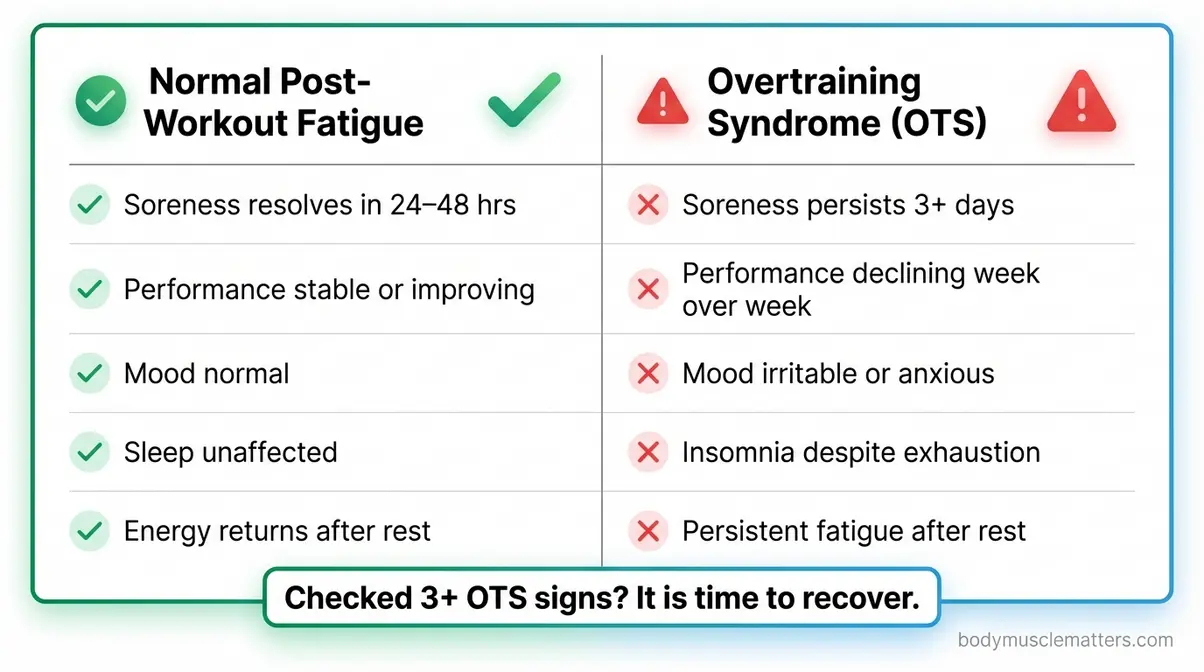
Caption: Normal fatigue resolves within 48 hours. When soreness, performance drops, and mood changes persist beyond that window, OTS may be developing.
Transition: OTS doesn’t develop overnight — it’s the endpoint of what happens when Recovery Debt is allowed to compound. And the numbers on how many people reach this point are sobering.
Why People Quit the Gym Early
The gym dropout problem is usually framed as a motivation issue. The science tells a different story. Research on early gym dropout risk factors confirms that a significant percentage of new gym-goers drop out within the first 3 to 6 months, with poor psychological wellness and lack of proper recovery habits identified as primary risk factors for membership termination (research on early gym dropout risk factors, NIH PubMed Central).
The mechanism is straightforward: chronic fatigue, persistent soreness, and stalled progress — all downstream of insufficient recovery after exercise — create a feedback loop where workouts feel punishing rather than rewarding. When every session starts from a depleted, unrecovered baseline, the effort required to complete it increases while the results visible from it decrease. Eventually, the brain — exhausted and demoralized — decides the effort simply isn’t worth the pain.
Quitting the gym is rarely a willpower problem. It is frequently a recovery problem. When the body receives adequate rest between sessions, workouts become energizing rather than depleting — and consistent attendance follows naturally.
The person who shows up enthusiastically for 6 weeks and then disappears is not lacking discipline. They are most likely experiencing the peak of their Recovery Debt: the point where compounded physiological deficit finally makes training feel impossible.
Transition: The good news is that OTS and the Recovery Debt Cycle are entirely reversible — but the first step is knowing whether you’re already in the danger zone.
Overtraining Self-Assessment
Take 60 seconds. Check any box that has been true in the past 2–3 weeks:
- ☐ I feel sore or fatigued for more than 3 days after a workout
- ☐ My performance (weight lifted, pace, reps) has decreased over the last 2–3 weeks
- ☐ I’ve caught a cold or minor illness in the last 4 weeks without obvious cause
- ☐ I feel irritable, anxious, or emotionally “flat” on most days
- ☐ I have trouble sleeping despite feeling exhausted
- ☐ The thought of going to the gym feels like a chore, not a choice
Scoring: If you checked 3 or more boxes, your body is showing clear signs of insufficient recovery. This is not a willpower issue — it’s a physiological signal. The Recovery Debt Cycle is at work, and the next section gives you the structured framework to reverse it.
Transition: If you recognized yourself in that checklist, the next section is exactly what you need — a structured, evidence-based framework that makes recovery as deliberate and systematic as the workouts themselves.
The Structured Recovery Blueprint
The most effective post-workout recovery plans follow a structured framework — and two protocols dominate sports science: the 4 R’s of recovery and the 3-3-3 rule. Together, these frameworks tell you both what to do after each workout (the 4 R’s) and how to structure your entire week (the 3-3-3 rule) to prevent overtraining while maximizing adaptation. These aren’t abstract concepts — they’re actionable systems you can implement starting with your next training session.
What Is the 3-3-3 Rule?
The 3-3-3 rule is a structured weekly training split that divides your active days across three categories: 3 strength training sessions, 3 cardiovascular workout days, and 3 active recovery days (gentle movement like walking, yoga, or light swimming). Together, these 9 sessions are distributed across a 7-day week, with some days serving dual purposes for those with higher fitness capacity.
This structure works because of the balance it enforces. The 3 strength + 3 cardio configuration ensures consistent muscle stimulus and energy expenditure, while the 3 built-in active recovery days prevent the accumulation of Recovery Debt — the compounding deficit that causes most beginners to burn out by month two or three. The 3-3-3 rule is specifically designed to break the Recovery Debt Cycle before it starts.
- A beginner’s 7-day example:
- Monday — Strength Training
- Tuesday — Cardiovascular (moderate pace walk, cycling, or swimming)
- Wednesday — Active Recovery (yoga or gentle stretching)
- Thursday — Strength Training
- Friday — Cardiovascular
- Saturday — Strength Training
- Sunday — Active Recovery
The rule is a framework, not a rigid prescription. A newer beginner might modify it to 2 strength + 2 cardio + 3 active recovery sessions, building toward the full 3-3-3 structure gradually as conditioning improves. Sports science scheduling research supports progressive load introduction as a key strategy for sustainable early-stage fitness adherence.
Transition: The 3-3-3 rule tells you when to recover. The R frameworks tell you how — starting with the original 3 R’s model.
The 3 R’s of Recovery Explained
The 3 R’s of recovery form the foundational framework that preceded modern sports nutrition protocols. Breaking down the 3 R’s of recovery reveals three essential post-exercise priorities:
- Refuel — Restore depleted glycogen stores with carbohydrates. Without refueling, your muscles lack the energy substrate to power the next session.
- Repair — Rebuild damaged muscle fibers with dietary protein. Amino acids are the raw material for MPS; without them, the repair process stalls.
- Rest — Allow MPS, CNS recovery, and hormonal rebalancing to occur through sleep and reduced activity. Rest is not the absence of productivity — it is the most productive phase of your training cycle.
If you follow only the 3 R’s, you are covering approximately 75% of optimal recovery. Sports nutrition researchers eventually identified a fourth critical component — intentional hydration — that the original model treated as implied rather than explicit. That addition created the 4 R’s framework now used in elite sports nutrition.
For a complete breakdown, see our guide on breaking down the 3 R’s of recovery with application to specific training styles.
Transition: Now, here’s the modern upgrade — the 4 R’s framework, backed by NIH research and used by professional athletes worldwide.
The 4 R’s: The Modern Upgrade
The 4 R’s of recovery — Rehydrate, Refuel, Repair, and Rest — form the modern evidence-based protocol for optimal post-exercise restoration. This framework, supported by sports nutrition research published in PubMed, addresses the four primary physiological needs that arise after every training session.
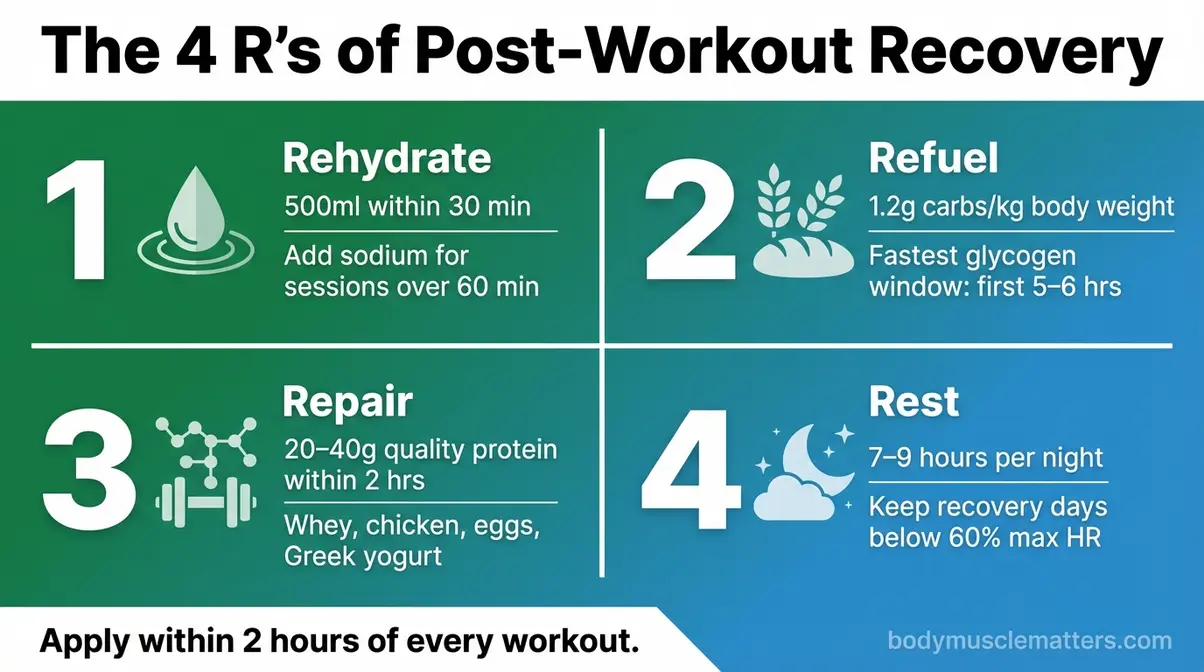
Caption: The 4 R’s give you a complete post-workout checklist — use it within the first two hours after every session for maximum recovery efficiency.
Here is each R with a specific, actionable implementation:
1. Rehydrate
Sweat losses during exercise can reach 1–2 liters per hour of intense activity. Dehydration of even 2% of body weight measurably impairs both physical performance and cognitive function. The target: drink 500ml (roughly 2 cups) of water or an electrolyte drink within 30 minutes of finishing your workout. For sessions lasting over 60 minutes, add sodium to your fluid intake to support fluid retention and restore electrolyte balance.
2. Refuel
Glycogen resynthesis is most rapid in the first 5–6 hours post-exercise (NIH PubMed Central, 2018). Consuming 1.2 grams of carbohydrates per kilogram of body weight per hour during this window maximizes glycogen restoration. For a 70 kg (154 lb) person, that’s approximately 84 grams of carbohydrates — equivalent to a medium banana, a cup of rice, and a sports drink.
3. Repair
Muscle protein synthesis requires amino acid availability. Research confirms that consuming 20–40 grams of protein after exercise significantly accelerates MPS and aids muscle repair (Frontiers in Nutrition). High-quality protein sources — whey, chicken, eggs, or Greek yogurt — provide the essential amino acids MPS requires.
4. Rest
This is the most undervalued R. Sleep, reduced activity, and psychological downtime allow the hormonal, neural, and structural repair processes to run without interruption. Target 7–9 hours of sleep per night. On recovery days, keep activity gentle enough that your heart rate stays below 60% of its maximum.
Transition: With the R’s covering your daily recovery, the next step is scheduling your week to make these strategies automatic.
Sample Weekly Recovery Schedule
Theory becomes habit when it has a structure. Here is a sample weekly schedule that integrates the 3-3-3 rule with the 4 R’s protocol:
| Day | Session Type | 4 R’s Priority |
|---|---|---|
| Monday | Strength Training | Rehydrate + Repair (protein within 2 hrs) |
| Tuesday | Cardiovascular (moderate) | Rehydrate + Refuel (carbs within 30 min) |
| Wednesday | Active Recovery (yoga/walk) | Rest + Rehydrate |
| Thursday | Strength Training | Rehydrate + Repair |
| Friday | Cardiovascular | Rehydrate + Refuel |
| Saturday | Strength Training | Rehydrate + Repair + Refuel |
| Sunday | Complete Rest | Rest (prioritize 8+ hrs sleep) |
This schedule builds structured recovery into the week before fatigue has a chance to compound. The result is a Training Week that consistently arrives at each session from a recovered, super-compensated baseline — the opposite of the Recovery Debt Cycle.
For a deep dive into each of the 3 R’s and how to apply them to your specific training style, read our complete breakdown on the 3 R’s of recovery.
Transition: The framework tells you what to do. Now let’s examine the specific protocols that make each element — nutrition, sleep, movement, and age-adjusted timing — as effective as possible.
Effective Recovery Protocols
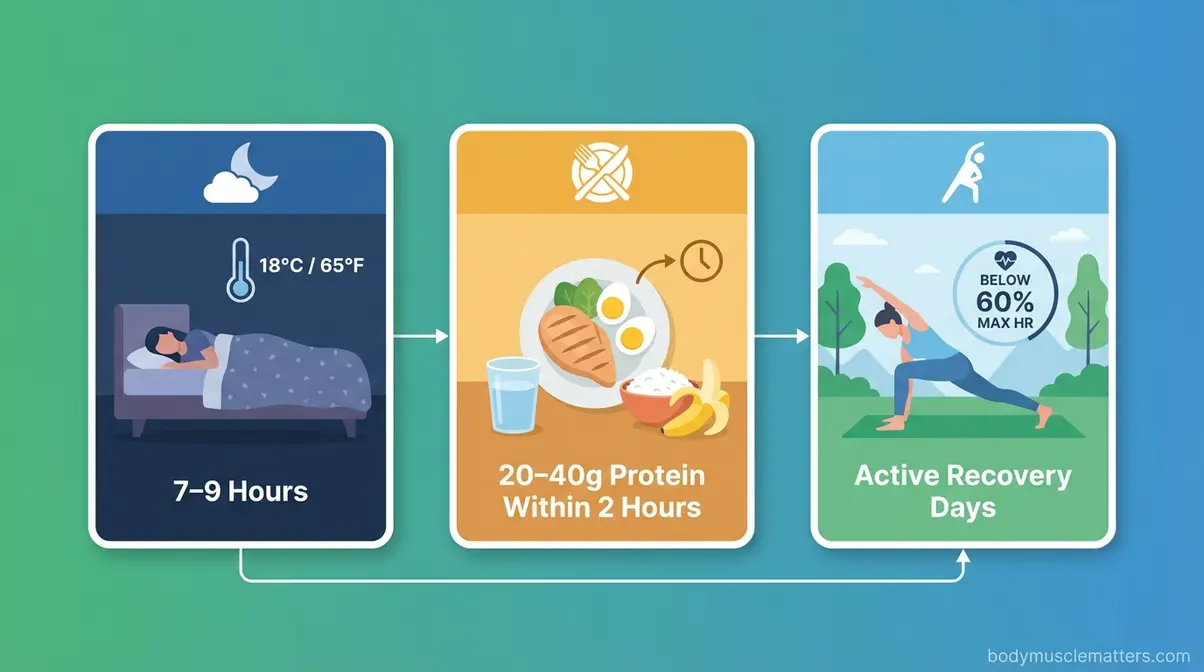
The most science-supported recovery protocols share one characteristic: they address specific physiological mechanisms, not just general wellness advice. The 2-hour protein window, structured sleep, strategic active recovery, and age-adjusted timelines each target a distinct biological process. Applied together, they form a complete recovery system far more effective than any single strategy. Evaluation of multiple NIH and PubMed studies reveals that combining nutrition timing with sleep quality and movement produces compounding benefits no single protocol achieves alone.
The 2-Hour Protein Rule
The 2-hour protein rule refers to the sports nutrition recommendation that consuming protein within approximately 2 hours of finishing a workout maximizes Muscle Protein Synthesis and supports faster recovery. But modern research has refined — and in some ways complicated — this picture.
The original anabolic window concept was built on the observation that MPS rates elevate dramatically after resistance exercise. Early research suggested a narrow 30–60 minute window for optimal protein delivery. More recent analysis presents a more nuanced view: the urgency of immediate post-workout protein depends heavily on your pre-workout nutritional state.
Research published in the Journal of the International Society of Sports Nutrition (2013, PMC3577439) found that if you trained fasted — meaning 3 or more hours after your last meal — the post-workout protein window is genuinely narrow and consuming protein quickly matters. If you ate a substantial protein-containing meal 1–2 hours before training, however, those amino acids are still circulating in your bloodstream post-workout, reducing the urgency of immediate intake.
The current consensus from sports nutrition researchers: total daily protein intake (1.6–2.2 grams per kilogram of body weight) matters more than precise post-workout timing for long-term muscle gains (PubMed meta-analysis). However, the 2-hour window remains a practical and reliable guideline — especially for beginners who train in a fasted or semi-fasted state.
The practical takeaway: Aim for protein supplementation timing guidelines of 20–40 grams of high-quality protein within 2 hours of your workout. Don’t stress if you miss it by 30 minutes. Do ensure you hit your daily protein target regardless. Here is a quick reference:
| Timing | Priority Level | Why It Matters |
|---|---|---|
| Within 30 min (fasted training) | High | Fastest MPS activation when amino acids are depleted |
| Within 2 hours (fed training) | Moderate | Reinforces MPS already triggered by pre-workout meal |
| 2–4 hours post-workout | Low-moderate | MPS elevated for 24+ hrs; total daily intake is the priority |
| Next meal (5+ hrs) | Low | MPS benefit largely captured by total daily protein |
“The most consistent predictor of muscle recovery and growth is total daily protein intake — not whether you hit a 30-minute post-workout window.” (Journal of Physiology)
Sleep: Your Secret Recovery Tool
Sleep is not a passive gap between workouts — it is the most anabolically active period of your 24-hour cycle. During deep sleep, your pituitary gland releases the majority of your daily growth hormone output. This hormone drives both MPS and fat metabolism, making sleep quality a direct determinant of whether your training produces the results you’re working toward.
One night of acute sleep deprivation reduced muscle protein synthesis by 18% in a controlled study of healthy adults — accompanied by a 21% increase in cortisol and a 24% decrease in testosterone (PMC7785053, NIH PubMed Central). A single missed night of quality sleep reduces your body’s ability to build muscle by nearly one-fifth. That loss compounds across consecutive poor nights.
Sleep architecture matters too. The deepest, most restorative sleep phases — slow-wave sleep (SWS) and REM — occur in the later sleep cycles of an 8-hour night. Cutting sleep to 5–6 hours eliminates these phases disproportionately, suppressing the hormonal recovery that makes those first hours of sleep valuable in the first place.
- Practical targets for recovery-optimized sleep:
- Duration: 7–9 hours per night (athletes in heavy training cycles benefit from the upper end)
- Timing: Consistent sleep and wake times reinforce circadian rhythms that govern hormonal release
- Environment: Dark, cool (65–68°F / 18–20°C), and quiet — conditions that support deep sleep entry
- Pre-sleep nutrition: Research shows that consuming 20–40 grams of slow-digesting protein (casein) before bed sustains overnight MPS, reducing overnight muscle protein breakdown (arXiv)
Heart Rate Variability (HRV) — a metric tracked by wearable devices that reflects how recovered your nervous system is — provides an objective window into sleep quality’s effect on readiness. When morning HRV is consistently low, it often correlates with inadequate or poor-quality sleep. Recent sports science research confirms that weekly HRV averages, rather than single-day measurements, provide the most actionable training guidance (PMC12787763).
Active Recovery vs. Complete Rest
One of the most common questions in recovery science is whether to move or stay still on off-days. The answer depends on what you’re recovering from.
Active recovery — defined as low-intensity movement at below 60% of maximum heart rate — accelerates lactate clearance, increases blood circulation to fatigued tissues, and reduces delayed onset muscle soreness more effectively than complete stillness. Research published in PMC (2016, PMC5051742) found that active recovery using different muscle groups from those trained facilitates faster metabolic byproduct clearance. According to UCHealth’s sports medicine guidance, active recovery increases blood circulation, which helps remove waste products from soft tissue broken down by intense exercise.
Complete rest provides the conditions necessary for deep tissue repair, hormonal rebalancing, and CNS recovery. After extremely high-intensity sessions — maximum-effort lifts, long-distance runs, or high-volume training days — complete rest allows the body to direct all resources toward structural repair rather than splitting attention between movement and recovery.
The research-supported recommendation:
| Your Training Load | Recommended Off-Day Type |
|---|---|
| Moderate (3–4 sessions/week) | Active recovery (walking, yoga, swimming) |
| High volume (5–6 sessions/week) | Mix: 1 complete rest + 1 active recovery per week |
| After maximum-effort session | Complete rest for 24–48 hrs, then active recovery |
| Signs of OTS present | Complete rest until symptoms resolve |
Appropriate active recovery exercises for beginners include: a 20–30 minute walk, gentle yoga or static stretching, light swimming, easy cycling, and foam rolling combined with mobility work. None of these should leave you more fatigued than when you started — that’s the defining line between active recovery and an additional training stimulus.
Age and Recovery Time
The relationship between age and recovery is more nuanced than most fitness content acknowledges. Conventional wisdom holds that older adults recover significantly more slowly than younger counterparts — but the research tells a more layered story.
A recent NIH PMC review on age-associated differences in recovery from exercise-induced muscle damage found that aged muscle displays “delayed, prolonged, and inefficient recovery” — attributing this primarily to anabolic resistance, where the muscle protein synthesis response to protein and exercise is blunted with age (PMC10854791, NIH). However, a comprehensive meta-analysis of 36 studies found that older adults (35+) actually experience similar or even less subjective muscle soreness than younger adults — with soreness approximately 34% lower at 48 hours and 62% lower at 72 hours — suggesting that perceived recovery differences may not always reflect physiological ones.
For practical purposes, here is the age-adjusted recovery guidance supported by research:
| Age Group | Recovery Consideration | Practical Adjustment |
|---|---|---|
| 20s–30s | Standard MPS response; full recovery in 24–72 hrs typical | 3-3-3 rule applies directly |
| 40s | Anabolic resistance begins; protein needs increase slightly | Increase protein to 1.8–2.2 g/kg/day; prioritize sleep |
| 50s+ | Slower muscle function recovery; 72+ hrs recommended between heavy sessions | Add an extra recovery day; prioritize strength training 2x/week |
| All ages | Sleep quality declines with age, amplifying recovery impact | Extend sleep window by 30–60 min; consider pre-sleep protein |
The overarching principle is the same at any age: recovery must match training load. The difference is that older adults may need to deliberately increase their recovery investment — more sleep, higher protein, and additional rest days — to achieve the same adaptive response that younger athletes achieve with less intervention.
Transition: Now that you have the frameworks and protocols, the final step is avoiding the mistakes that undermine all of them.
Common Mistakes and When to Get Help
The most common recovery mistakes are not dramatic errors — they are small, habitual oversights that quietly accumulate into the Recovery Debt Cycle over weeks and months. Recognizing them early is the difference between steady progress and a painful plateau.
The 5 Most Common Mistakes
1. Training at the Same High Intensity Every Day
More effort does not equal more progress when recovery hasn’t completed. Training at maximum intensity 5–7 days per week prevents super-compensation from occurring and steadily depletes CNS reserves. Fix: vary intensity deliberately — at least 2 sessions per week should be at moderate effort or lower.
2. Neglecting Protein After Workouts
Skipping post-workout nutrition leaves the MPS window partially empty. Without amino acid availability, muscle fibers cannot rebuild efficiently — regardless of how well you sleep. Fix: aim for 20–40 grams of quality protein within 2 hours of every session.
3. Treating Sleep as Optional
Sleep is when the majority of growth hormone is released and when MPS peaks. Consistently sleeping fewer than 7 hours reduces muscle protein synthesis by up to 18% per night (PMC7785053, NIH). Fix: protect your sleep window with the same priority you give your training sessions.
4. Skipping Hydration Post-Workout
Dehydration at the cellular level slows every recovery process — nutrient transport, waste removal, and glycogen synthesis all depend on adequate fluid balance. Fix: the first action after every workout should be drinking 500ml of water, before anything else.
5. Confusing Soreness With Productivity
Severe, persistent soreness is not a badge of effective training — it is a signal that recovery debt is accumulating. Athletes who train through 3+ day soreness repeatedly are borrowing against future performance capacity. Fix: if soreness persists beyond 72 hours, treat the session that caused it as a signal to add a recovery day, not train harder.
When to See a Physical Therapist
Recovery strategies are highly effective for managing normal training fatigue. However, certain situations require professional assessment — and recognizing the threshold is an important part of responsible training.
- Consult a doctor or certified physical therapist if you experience any of the following:
- Persistent fatigue that does not improve after 2+ full rest days
- Sharp, localized joint or bone pain (as distinct from diffuse muscle soreness)
- Chest pain, heart palpitations, or dizziness during or after exercise
- Mood disturbances (depression, anxiety, irritability) lasting more than 2 weeks without explanation
- Performance decline lasting more than 4 consecutive weeks despite adequate rest and nutrition
- Signs of overtraining syndrome that persist despite a full week of reduced training
Seeking professional help is not a sign of weakness — it is the decision that separates athletes who train for years from those who get sidelined. A physical therapist can identify movement dysfunctions, muscle imbalances, and structural vulnerabilities before they become injuries. A physician can rule out underlying medical conditions (thyroid dysfunction, iron deficiency anemia) that mimic OTS symptoms.
According to HSS health guidance on managing overtraining symptoms, OTS occurs when an athlete doesn’t adequately recover after repetitive intense training — and professional assessment is the appropriate response when symptoms persist beyond self-directed recovery efforts.
Frequently Asked Questions
How important is recovery?
Recovery after working out is not optional — it is the phase where fitness gains actually occur. Exercise creates the stimulus; recovery delivers the adaptation. During rest, Muscle Protein Synthesis rebuilds damaged muscle fibers stronger, glycogen stores refill, and the central nervous system restores its capacity to generate force. Without adequate recovery, training stress accumulates without producing fitness gains — a condition that progressively worsens as Recovery Debt compounds. Research consistently shows that athletes who structure recovery as deliberately as their training sessions see significantly better long-term results than those who prioritize training volume alone.
What is the 3-3-3 rule?
The 3-3-3 rule is a structured weekly training split designed to balance exercise and recovery. It features 3 strength training sessions, 3 cardiovascular workout days, and 3 active recovery sessions (walking, yoga, or gentle mobility work). Distributed across a 7-day week, this configuration ensures consistent training stimulus while building in enough structured rest to prevent the Recovery Debt Cycle from developing. Beginners can modify it to 2 strength + 2 cardio + 3 active recovery days, scaling toward the full 3-3-3 framework as conditioning improves. The key advantage is that recovery becomes non-negotiable — built into the week by design, not squeezed in when convenient.
What are the 4 R’s?
The 4 R’s of recovery are Rehydrate, Refuel, Repair, and Rest — the evidence-based protocol for complete post-exercise restoration. Rehydrate: replace fluid and electrolytes lost through sweat within 30 minutes. Refuel: consume carbohydrates within the first 5–6 hours post-workout to replenish glycogen stores at their fastest resynthesis rate. Repair: eat 20–40 grams of quality protein within 2 hours to fuel Muscle Protein Synthesis. Rest: prioritize 7–9 hours of quality sleep to allow hormonal and structural recovery to complete.
What is the 2-hour rule?
The 2-hour protein rule recommends consuming 20–40 grams of quality protein within 2 hours of finishing a workout. This practice maximizes Muscle Protein Synthesis during the post-exercise recovery window. The underlying biology is well established: MPS rates elevate significantly after resistance training and remain elevated for 24+ hours, but the window is most responsive when amino acids are available early. If you trained fasted (3+ hours after your last meal), timing matters more — aim for 30–60 minutes post-workout.
What are the 3 R’s?
The 3 R’s of recovery are Refuel, Repair, and Rest — the foundational sports nutrition framework that preceded the modern 4 R’s protocol. Refuel means restoring glycogen stores with carbohydrates in the hours following exercise. Repair means providing dietary protein to support Muscle Protein Synthesis and tissue rebuilding. Rest means allowing sleep and reduced activity to facilitate hormonal recovery and CNS restoration. The 3 R’s cover approximately 75% of optimal post-workout recovery.
Limitations and Common Pitfalls
Common Pitfalls to Avoid
Recovery strategies are effective — but they fail predictably when applied incorrectly. The most common scenario: a beginner reads about the 4 R’s, implements them for two weeks, sees initial improvement, then gradually drops the habits when life gets busy. Recovery is not a two-week intervention; it is an ongoing practice that compounds in effectiveness with consistent application.
A second frequent pitfall is applying one-size-fits-all recovery timelines. The 24–72 hour MPS window is an average, not a guarantee. Factors including training intensity, sleep quality, nutritional status, stress levels, and age all modify individual recovery timelines. If your body is still showing fatigue signals at 72 hours, that is a signal to extend recovery — not override it.
When to Choose Alternatives
The 3-3-3 rule is optimized for beginner-to-intermediate fitness levels. If you are an advanced athlete training 6+ days per week at high intensity, a more sophisticated periodization model (block periodization, undulating periodization) may provide better structure than the 3-3-3 framework. Similarly, the 4 R’s nutrition protocol is designed for general fitness contexts — competitive endurance athletes, bodybuilders in caloric deficit, or athletes with specific medical conditions may require individualized protocols developed with a registered sports dietitian.
When to Seek Expert Help
If overtraining symptoms persist for more than 2 weeks despite full rest, professional evaluation is warranted. A physician can rule out medical causes (anemia, thyroid dysfunction, vitamin D deficiency) that produce OTS-like symptoms. A certified physical therapist can identify biomechanical contributors to persistent soreness and injury risk. If you are over 50 and starting a new training program, a pre-exercise health screening with your doctor is strongly recommended before beginning any structured fitness protocol.
Conclusion
For beginner and intermediate fitness enthusiasts, post-workout recovery is not the passive downtime between workouts — it is the active, measurable biological process where every fitness gain actually occurs. Muscle Protein Synthesis rebuilds stronger tissue, glycogen resynthesis restores energy reserves, and CNS restoration returns your capacity to train at full intensity. Research consistently shows that athletes who structure recovery as deliberately as their training sessions — using frameworks like the 4 R’s and the 3-3-3 rule — outperform those who treat rest as optional (NIH PubMed Central; Cleveland Clinic). bodymusclematters.com’s synthesis of the current sports science literature points to one clear conclusion: the quality of your rest determines the quality of your results.
The Recovery Debt Cycle is the central concept that ties every section of this guide together. Each skipped rest session, each night of inadequate sleep, and each missed post-workout protein opportunity adds to a compounding physiological liability that progressively undermines the training you are working so hard to complete. The frameworks in this guide — the 4 R’s, the 3-3-3 rule, the 2-hour protein window — exist specifically to break that cycle before it starts.
Your next step is simple: apply the 4 R’s to your very next workout. Rehydrate within 30 minutes. Eat 20–40 grams of protein within 2 hours. Build 3 active recovery days into your weekly schedule using the 3-3-3 structure. Trial this system for 4 weeks before evaluating results — most athletes notice improved energy, reduced soreness, and measurably better performance within that window. Subscribe to our newsletter to stay updated on the latest evidence-based recovery frameworks, or read our active recovery guide to get moving properly today.
Related posts:
Benefits of Yoga for Fitness: The Science-Backed Guide
Home Workouts to Build Muscle Without Weights (2026)
CrossFit Strength Training for Beginners: 2026 Guide
Home Workout Plan for Beginners: 30-Day Step-by-Step
How to Self Massage Calves: The 4-Layer Method Guide
Strength Training for Beginners: Complete Workout Plan 2026

Callum
Hi, I'm Callum, the founder of Body Muscle Matters. I'm not a certified trainer, I'm a self taught lifter who started this site to share what I've learned from my own training and a lot of trial and error. Everything here comes from real experience and honest research, written the way I'd explain it to a friend who is just getting started. My goal is simple: practical, no hype fitness advice you can actually use.