How Much Protein Should Teenagers Eat? The Real Number
Home ›Supplements and Nutrition
Most nutrition guidelines tell you teenagers need “46 to 52 grams of protein per day” — but that number tells you nothing about your 130-pound varsity soccer player or your 95-pound ninth-grader who barely exercises. The generic recommendation is a starting point, not the finish line.
Generic RDAs are calculated for the average teen — but there’s no such thing as an average teen. Without a weight-based calculation, parents and teens are left guessing, which means either under-fueling growth or unnecessarily loading up on protein supplements. When parents ask exactly how much protein should teenagers eat, the answer depends far more on what your teen weighs and how active they are than on their age alone.
In this guide, you’ll learn exactly how much protein teenagers need based on body weight and activity level, which foods deliver the most protein per dollar, and whether 100g of protein is safe — or a cause for concern. We cover daily requirements by age and gender, a step-by-step calculation method, the best food sources, and a myth-busting look at protein overconsumption.
⚠️ Medical Disclaimer: This article is for educational purposes only and does not constitute professional medical advice. Always consult your teen’s pediatrician or a registered dietitian before making significant changes to their diet, especially if your teen has a health condition or is involved in competitive athletics.
If you are wondering how much protein should teenagers eat, teenagers generally need 46–52g of protein per day at minimum, but The Weight-First Formula — calculating 0.45–0.8g per pound of body weight — gives a far more accurate personal target than age-group averages alone.
- Girls ages 14–18 need approximately 46g daily (RDA minimum); active girls need significantly more
- Boys ages 14–18 need approximately 52g daily (RDA minimum); athletes may need 60–100g
- Weight matters more than age: a 100 lb teen needs ~45–80g depending on activity level
- 100g of protein is NOT automatically too much — for large, highly active teens, it may be entirely appropriate
- Whole foods beat supplements: Greek yogurt, eggs, chicken, and beans cover most teens’ needs without the risks of unregulated powders
Daily Protein Requirements for Teenagers
Teenage girls ages 14–18 need at least 46 grams of protein daily, while teenage boys in the same age range need at least 52 grams — figures established by the Dietary Guidelines for Americans (U.S. Department of Health and Human Services, 2020–2025 edition). When determining how much protein should teenagers eat, remember that these numbers represent the Recommended Dietary Allowance, or RDA — the minimum daily protein intake established by the U.S. government to prevent deficiency, not to optimize athletic performance or support peak growth. For many teens, the actual optimal target is meaningfully higher. For adults and general protein needs beyond the teen years, see our complete guide to recommended daily protein intake.
“Teenage girls aged 14–18 require at least 46 grams of protein daily, while teenage boys in the same age range need at least 52 grams — figures established by the U.S. Dietary Guidelines for Americans.” (U.S. Department of Health and Human Services, 2020–2025 edition)
Understanding those numbers — and their limits — is the first step to fueling your teen correctly.
Why Protein Matters During Adolescence
Protein for teenagers isn’t optional — it’s foundational. Adolescence is one of the most protein-demanding periods of a person’s entire life. Teens are literally building new tissue, not just maintaining existing muscle the way adults do. Every growth spurt, every new pound of lean mass, every hormonal shift requires amino acids as raw material.
Beyond muscle, protein supports the repair of tissue after physical activity, the production of enzymes and growth hormones, and a well-functioning immune system. Most teens — and many parents — think of protein purely as a “muscle builder,” but it also plays a critical role in cognitive function, mood regulation, and recovery from everyday stress.
According to the recommended percentage of daily calories from protein established by the NCBI/NIH, protein should comprise 10% to 35% of a teenager’s total daily energy intake (NCBI/NIH, 2026). At a 2,000-calorie diet, that translates to a wide range of 50–175g per day — which makes the “just eat 46g” advice feel dangerously thin for an active teen.
A practical way to frame it: a teen who skips protein at breakfast is starting the school day already in a recovery deficit. Their muscles, brain, and immune system are all drawing from a depleted pool. For a more personalized target, The Weight-First Formula (introduced in the next section) takes your teen’s exact body weight into account.
How Much Protein Do Teenage Girls Need?
Girls between ages 9–13 need approximately 34 grams of protein per day, rising to 46 grams per day for girls ages 14–18, per the Dietary Guidelines for Americans (HHS, 2020–2025 edition). Critically, the 46g figure is the minimum for a sedentary girl — not an active one.
Active girls in sports like soccer, gymnastics, swimming, or track need 20–40% more protein to support muscle repair and growth. That means a competitive 15-year-old female athlete could need 55–65g or more daily. This is the gap that most nutrition websites miss entirely — they cite the RDA without acknowledging that it was never designed as a performance target.
The Academy of Nutrition and Dietetics, the world’s largest organization of nutrition professionals, reinforces that teen athletes have substantially elevated protein needs beyond the standard RDA. Clemson University Cooperative Extension also notes that teens ages 14–18 should consume about 5.5 ounces of protein-rich foods per day — a practical visual equivalent that can be helpful for meal planning.
The table below shows the full picture by age, gender, and activity level:
| Age Group | Gender | Daily RDA (grams/day) | Active Teen Target |
|---|---|---|---|
| 9–13 | Girls | 34g | 40–50g |
| 9–13 | Boys | 34g | 40–55g |
| 14–18 | Girls | 46g | 55–75g |
| 14–18 | Boys | 52g | 65–100g |
Sources: HHS Dietary Guidelines for Americans 2020–2025 edition; Academy of Nutrition and Dietetics
How Much Protein Do Teenage Boys Need?
Boys ages 9–13 need approximately 34 grams of protein per day. Once they hit 14, the RDA jumps to 52 grams daily — a meaningful increase that reflects the rapid muscle and bone growth typical of male puberty (HHS, 2020–2025 edition).
For active teenage boys, especially those involved in strength training, team sports, or endurance athletics, the RDA is often a significant underestimate. Research published in a PMC/NCBI research study found that the average protein intake for adolescent males ages 12–19 is approximately 85 grams per day — well above the RDA — suggesting that active boys naturally gravitate toward higher intake when food is available (NCBI, 2026). The RDA keeps deficiency away; it doesn’t optimize performance or support serious athletic development.
How Much Protein Can a 15-Year-Old Eat?
A 15-year-old’s protein needs depend almost entirely on two factors: body weight and activity level — not just their age. The RDA for a 15-year-old girl is 46g; for a 15-year-old boy, it’s 52g. However, these are floors, not ceilings.
A sedentary 15-year-old weighing 120 pounds might do well at 55–65g daily. A 15-year-old athlete at the same weight, training six days a week, may need 75–100g. The HealthyChildren.org pediatric guidelines resource from the American Academy of Pediatrics confirms that a teenager weighing 110 pounds needs about 50g at minimum — already above the flat RDA. The next section gives you the exact formula to calculate your teen’s personal target.
Calculating Teen Protein Needs by Weight
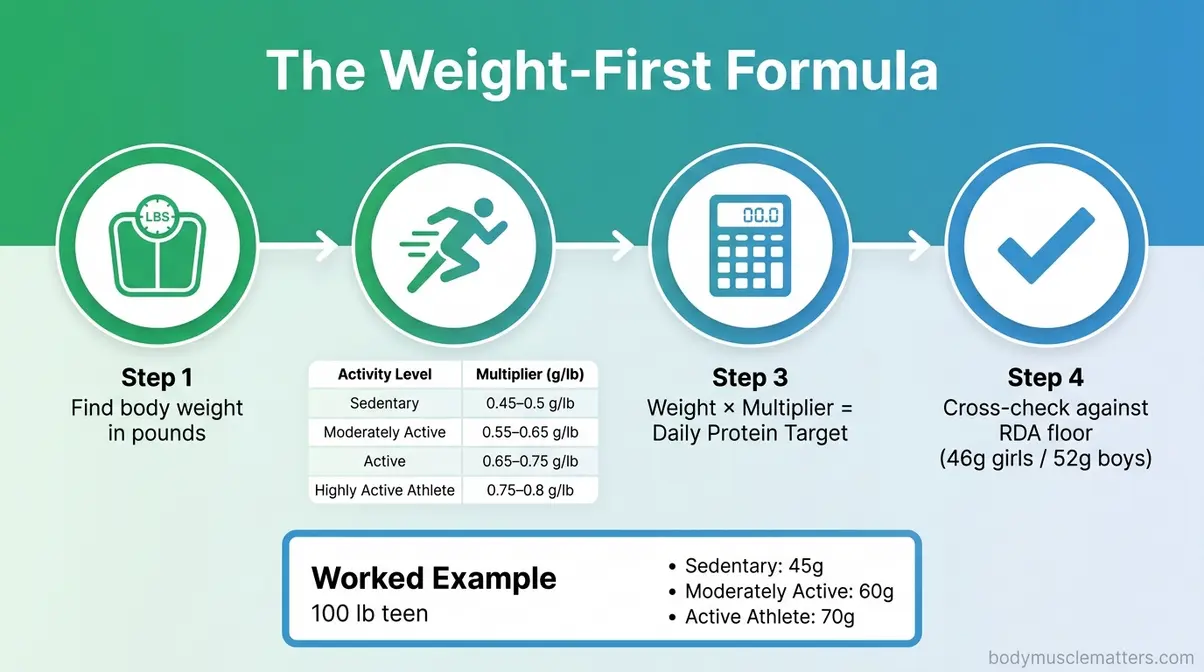
The most accurate way to determine a teenager’s protein requirement is to start with their body weight, not their age. The RDA provides a useful floor, but The Weight-First Formula — the evidence-based principle that protein targets should be anchored to body weight and activity level first — gives you a genuinely personalized number in under two minutes.
The Weight-First Formula: A Smarter Way to Calculate
The foundation of The Weight-First Formula is simple: multiply your teen’s body weight in pounds by a multiplier that reflects their activity level. This approach is backed by both pediatric nutrition research and sports science guidelines.
“As a rule, boys and girls between ages 11 and 14 need half a gram per pound of body weight daily. Thus, a young teenager weighing 110 pounds needs about 50 grams of protein daily.”
— HealthyChildren.org, American Academy of Pediatrics
This principle extends across all teen years and activity levels. Here’s how to apply it:
Step 1: Find your teen’s current body weight in pounds.
Step 2: Choose the multiplier that matches their activity level:
| Activity Level | Multiplier (g per lb) | Description |
|---|---|---|
| Sedentary | 0.45–0.5 g/lb | Mostly sitting; PE class only |
| Moderately active | 0.55–0.65 g/lb | 3–4 days/week recreational activity |
| Active | 0.65–0.75 g/lb | Daily sport or structured training |
| Highly active athlete | 0.75–0.8 g/lb | Competitive sport, strength training |
Step 3: Multiply weight × multiplier = daily protein target in grams.
Step 4: Cross-check against the RDA floor. If your result falls below the RDA (46g for girls, 52g for boys), use the RDA as your minimum.
This four-step process takes less than two minutes and produces a far more useful number than any generic recommendation. According to Texas Children’s Hospital, calculating protein needs at 0.5 to 0.8 grams per pound of body weight is the appropriate range for teen athletes — with the higher end reserved for strength-focused sports.
How Much Protein Should a 100 lb Teenager Eat?
A 100-pound teenager is one of the most common examples parents ask about — and it illustrates perfectly why weight-based calculation matters more than age.
Using The Weight-First Formula:
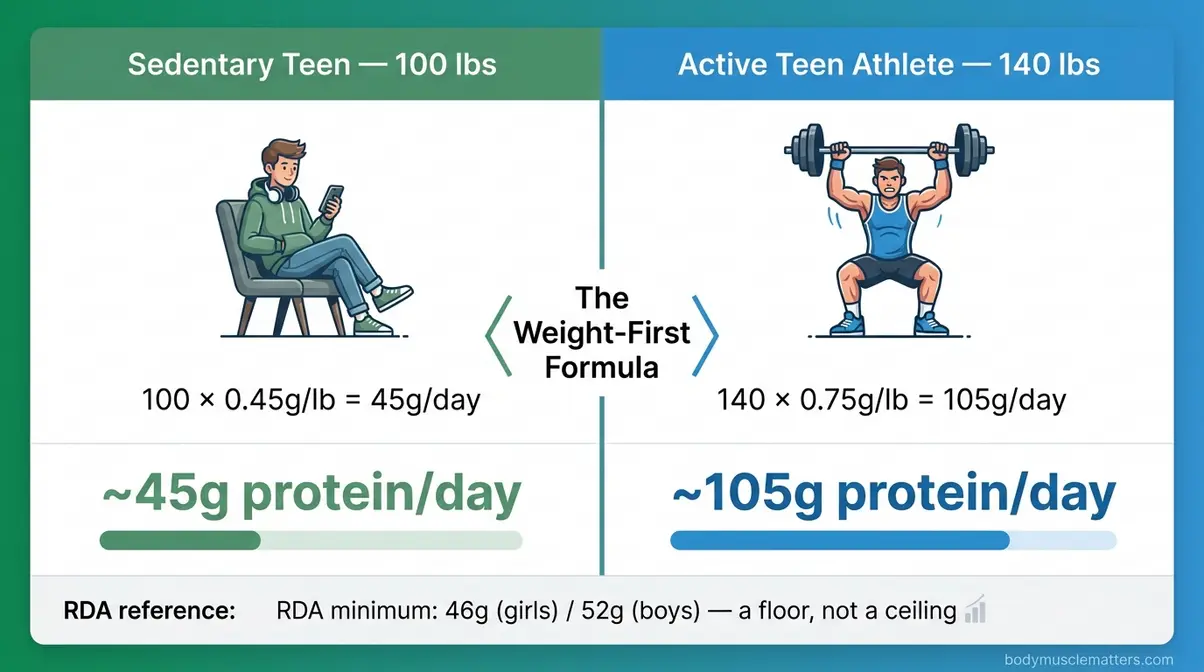
- Sedentary 100 lb teen: 100 × 0.45 = 45g/day (at or just below the RDA floor — bump to 46g minimum)
- Moderately active 100 lb teen: 100 × 0.6 = 60g/day
- Active 100 lb teen athlete: 100 × 0.7 = 70g/day
USA Lacrosse’s registered sports dietitian guidance states that young athletes should eat approximately 0.7 grams of protein per pound of body weight — meaning a 100-pound athlete needs roughly 70g daily. That’s 35–50% more than the flat RDA suggests. For this teen, following the generic “46g” recommendation would mean leaving real performance and recovery gains on the table.
Sedentary vs. Active Teens: Why Athletes Need More
The difference between a sedentary teen and a competitive athlete isn’t just calorie burn — it’s tissue turnover. Every training session creates microscopic muscle damage that protein must repair. Without adequate protein, teens don’t recover effectively between sessions, which limits both performance and long-term development.
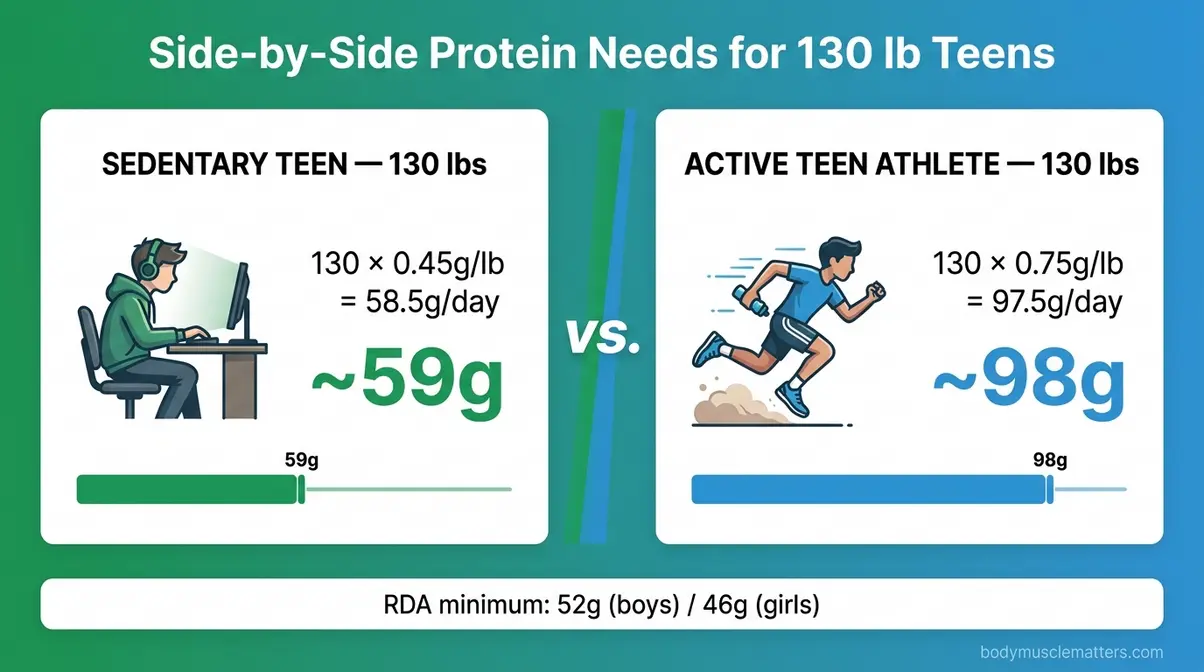
Research published in a 2026 sports nutrition journal found that adolescent athletes performing endurance sports need 1.2–1.6g of protein per kilogram of body weight daily, while strength and power athletes need 1.6–2.0g/kg — the equivalent of 0.7–0.9g per pound (EFSUPIT Journal, 2026). For a 130-pound competitive teen, that translates to 91–117g of protein daily — a far cry from the 52g RDA.
Best High-Protein Foods and Snacks for Teenagers
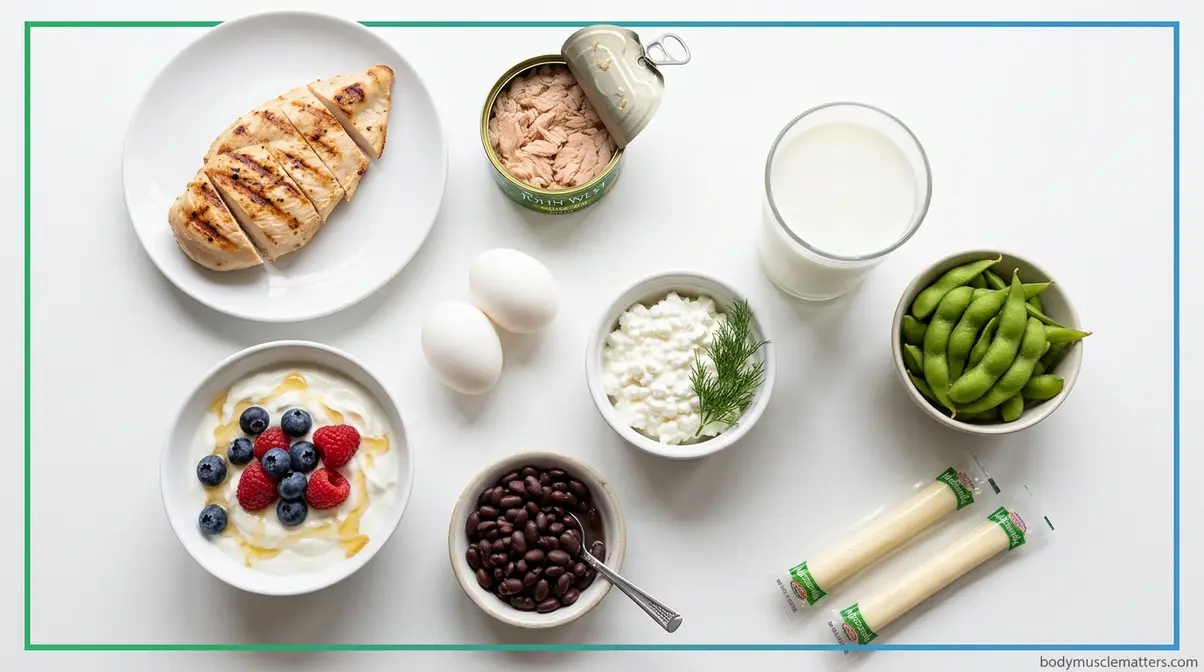
The best protein sources for teenagers are whole foods — not powders or bars. Registered dietitians consistently recommend food-first approaches because whole protein sources come packaged with other nutrients (iron, calcium, zinc, B vitamins) that teens also need during growth. Most teens can hit their protein targets without a single scoop of protein powder.
Top 10 High-Protein Foods for Teens
The table below covers the most practical, widely available high-protein foods for teen diets, with approximate protein content per standard serving (USDA FoodData Central):
| Food | Serving Size | Protein (grams) | Notes |
|---|---|---|---|
| Chicken breast | 3 oz cooked | ~27g | Lean, versatile, budget-friendly in bulk |
| Canned tuna | 3 oz (½ can) | ~22g | Cheap, no cooking required |
| Greek yogurt | 1 cup | ~17–20g | High due to straining; check for added sugar |
| Eggs | 2 large | ~12g | Complete protein, fast to prepare |
| Cottage cheese | ½ cup | ~14g | Underrated; high protein-to-calorie ratio |
| Lentils (cooked) | ½ cup | ~9g | Plant-based; pairs well with rice |
| Black beans | ½ cup | ~8g | Budget staple; add to any meal |
| Milk (whole or 2%) | 8 oz | ~8g | Calcium + protein in one glass |
| Edamame | ½ cup | ~8–9g | Easy snack; frozen is affordable |
| String cheese | 1 stick | ~7g | Portable, no prep needed |
According to HealthyChildren.org, approximately 22g of protein is found in 3 oz of meat, fish, or poultry — and an 8-oz glass of milk contains about 8g. Combining two or three of these sources across a day makes hitting 60–80g of protein entirely achievable through normal meals.
Quick and Easy High-Protein Snacks for Busy Teens
Snacking strategically is one of the most underused tools for hitting daily protein targets. Most teens eat 2–3 snacks per day; if each snack delivers 10–15g of protein, that’s 20–45 additional grams without changing a single main meal. If you need more inspiration, check out these high-protein snack ideas that work well for active schedules. While whole foods are preferred, occasionally relying on the best protein bars for muscle gain is fine when traveling to tournaments.
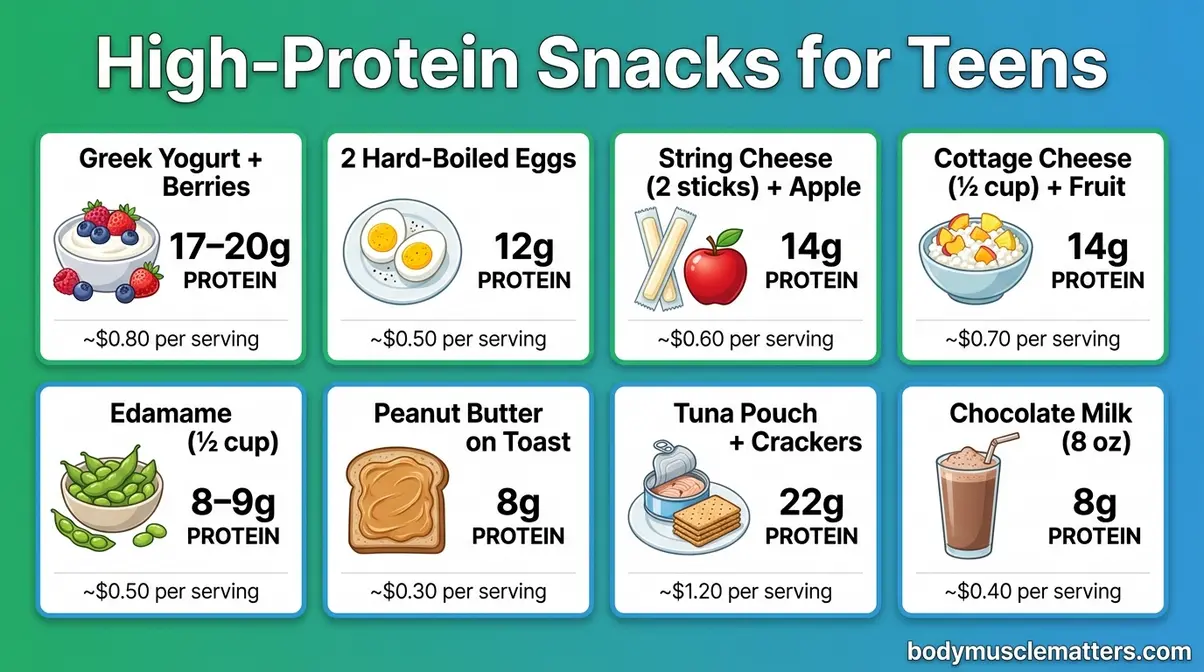
Here are the first five grab-and-go snack options with their protein content:
- Greek yogurt (1 cup) + berries — 17–20g protein; rich in calcium and probiotics
- 2 hard-boiled eggs — 12g protein; easy to prep in batches for the week
- String cheese (2 sticks) + apple — 14g protein; no refrigeration needed for short periods
- Cottage cheese (½ cup) + fruit — 14g protein; high satiety, low sugar
- Edamame (½ cup, salted) — 8–9g protein; sold frozen or ready-to-eat
And here are five more options that are easy to keep on hand:
- Peanut butter (2 tbsp) on whole-grain toast — 8g protein; also provides healthy fats
- Tuna pouch + crackers — 22g protein; shelf-stable, zero prep
- Chocolate milk (8 oz) — 8g protein; research supports post-exercise recovery benefits
- Handful of mixed nuts (1 oz) — 5–7g protein; calorie-dense, good for active teens
- Hummus (¼ cup) + veggie sticks — 5g protein; plant-based and fiber-rich
Timing matters too. Registered dietitians recommend distributing protein across 3–4 eating occasions rather than concentrating it in one large meal — the body can only utilize roughly 20–40g of protein for muscle synthesis at a single sitting. A teen who eats 15g at breakfast, 25g at lunch, 15g at a snack, and 25g at dinner will typically recover and grow better than one who skips breakfast and loads up at dinner.
Budget-Friendly Protein Sources That Won’t Break the Bank
Protein doesn’t have to be expensive. According to Harvard T.H. Chan School of Public Health’s nutrition guidance, plant-based protein sources offer some of the best value per gram of any food category — and several animal-based options are similarly affordable.
The most cost-effective protein sources for teen diets include:
- Eggs (~$0.20–0.30 per egg, ~6g protein each) — arguably the best value protein food available
- Canned beans and lentils (~$0.10–0.15 per serving, 8–9g protein) — shelf-stable and endlessly versatile
- Canned tuna (~$1–1.50 per can, 22g protein per half-can) — portable and requires no cooking
- Milk (~$0.25–0.35 per cup, 8g protein) — delivers calcium and vitamin D alongside protein
- Peanut butter (~$0.15–0.25 per 2-tbsp serving, 8g protein) — long shelf life, no refrigeration needed
- Frozen edamame (~$0.50 per serving, 8–9g protein) — easy to microwave, kid-friendly
A practical strategy: build a weekly “protein base” from eggs, beans, and milk (all under $0.35 per serving), then supplement with chicken or tuna 3–4 times per week. This approach can keep a teen’s protein needs fully covered for under $3–4 per day in protein-specific food costs.
Is 100g of Protein Too Much for a Teenager?
The short answer: it depends entirely on the teen. For a 90-pound sedentary middle schooler, 100g of protein per day is likely more than necessary and may crowd out other important nutrients. For a 160-pound high school football player in two-a-day summer practices, 100g may actually be too low. When asking how much protein should teenagers eat, context is everything — and the research supports this nuanced view. For a broader look at maximum thresholds across all ages, read our overview on safe protein intake limits.
What Happens When Teens Consume Too Much Protein?
Excess protein intake in teenagers carries real risks — particularly when it comes from protein supplements rather than whole foods. According to Texas Health, excessive protein consumption can strain the kidneys and may lead to dehydration if fluid intake is insufficient (Texas Health, 2026). The kidneys must work harder to filter the nitrogen waste products produced when the body processes excess protein.
Additional risks documented by the Mayo Clinic Health System and other Tier-1 sources include:
- Digestive distress: Nausea, constipation, diarrhea — particularly with rapid increases in intake
- Dehydration: Protein metabolism requires extra water; teens who don’t compensate with fluids are at risk
- Nutrient displacement: A teen fixated on protein may undereat carbohydrates, fiber, and micronutrients
- Weight gain: Excess protein calories not used for energy or muscle repair are stored as fat
- Kidney strain: Prolonged very high intake may stress developing kidneys, especially in teens with pre-existing conditions
Protein supplements carry an additional layer of risk: many are unregulated and have been found to contain heavy metals, added sugars, caffeine, and other compounds not appropriate for adolescents. The University of Michigan Mott Poll’s 2026 national survey on teens and protein found that extended periods of consuming too much protein can result in nausea, dehydration, stomach pain, or kidney problems (Michigan Medicine, 2026). Consult your teen’s pediatrician or a registered dietitian before introducing any protein supplement.
When Is 100g of Protein Appropriate? Athletes vs. Sedentary Teens
Using The Weight-First Formula, 100g of protein per day is appropriate — or even necessary — for specific teens. A 140-pound teen athlete training daily at 0.7g/lb needs 98g. A 130-pound strength-training teen at 0.8g/lb needs 104g. These aren’t extreme numbers for active adolescents; they reflect the actual tissue-repair demands of intensive training.
By contrast, a 100-pound sedentary teen at 0.45g/lb needs only 45g — less than half of 100g. Giving that teen 100g daily through supplements would provide roughly double their actual requirement, increasing kidney workload without any performance benefit.
The distinction isn’t just about weight and sport. It’s also about the protein source. Registered dietitians, including those at the Academy of Nutrition and Dietetics, consistently emphasize that whole food protein sources are preferable to supplements for adolescents — because food brings co-nutrients that support the very growth processes protein is meant to fuel.
Signs Your Teen May Be Getting Too Much Protein
Watch for these warning signs that protein intake may have crossed from helpful to harmful:
- Persistent bad breath (ketone production from high-protein, low-carb eating)
- Frequent thirst or urination (kidneys working overtime)
- Unexplained digestive issues — bloating, constipation, or diarrhea that appeared alongside a diet change
- Fatigue or mood changes — which can result from inadequate carbohydrate intake when protein displaces other macros
- Relying heavily on protein powders or bars rather than whole foods
If your teen shows any of these signs alongside high protein consumption, consult a registered dietitian or pediatrician promptly. These symptoms don’t always mean protein is the culprit — but they warrant professional evaluation.
Common Mistakes and When to See a Dietitian
Even well-intentioned parents and health-conscious teens make predictable errors when planning protein intake. Knowing the most common pitfalls helps you avoid them before they become problems.
Common Mistakes When Planning Teen Protein Intake
Mistake 1: Treating the RDA as the target, not the floor. The Recommended Dietary Allowance is designed to prevent deficiency in the average, sedentary teen. Using it as the goal for an active teen is like setting a 25 mph speed limit on a highway — it’s technically safe, but it’s not designed for those conditions.
Mistake 2: Relying on protein supplements instead of whole foods. Most teens who think they need supplements can hit their protein targets with two eggs at breakfast, chicken at lunch, Greek yogurt as a snack, and beans or fish at dinner — no powder required.
Mistake 3: Ignoring protein distribution. Eating most of the day’s protein in one sitting (typically dinner) is less effective than spreading it across 3–4 meals and snacks. Research consistently shows that distributed protein intake supports better muscle protein synthesis throughout the day.
Mistake 4: Applying adult protein formulas to teens. Standard adult recommendations (0.36g/lb for sedentary adults) are too low for growing teenagers, who are building tissue rather than just maintaining it. Always use teen-specific multipliers.
Mistake 5: Forgetting hydration. Higher protein intake requires more water to process. Teens eating 80–100g of protein daily need to be consistently well-hydrated — especially during training.
When to Consult a Registered Dietitian or Pediatrician
Some situations genuinely require professional guidance — and recognizing them is a mark of good parenting, not a failure of research.
Seek professional consultation if your teen:
- Is involved in competitive athletics and is unsure how to fuel training and recovery
- Is following a vegetarian or vegan diet and needs help meeting protein needs from plant sources
- Has a diagnosed health condition (kidney disease, diabetes, eating disorder) that affects dietary planning
- Is using or considering protein supplements, pre-workouts, or other sports nutrition products
- Has shown signs of disordered eating, including obsessive calorie or macro tracking
- Is significantly underweight or overweight, which changes protein calculation baselines
A registered dietitian (RD) with experience in pediatric or sports nutrition can calculate a precise protein target, review your teen’s current diet for gaps, and recommend practical changes without unnecessary supplementation. Your teen’s pediatrician can also refer you to an RD and rule out any underlying conditions affecting nutrient needs.
Frequently Asked Questions
Is 100g of protein too much for a 14-year-old?
100g of protein is not automatically too much for a 14-year-old — it depends on their body weight and activity level. A sedentary 14-year-old weighing 90 pounds needs only about 40–45g daily, making 100g excessive. However, a 140-pound 14-year-old athlete in daily training may need 95–112g using The Weight-First Formula (0.7–0.8g/lb). The key variable is always weight and activity, not age alone. Consult a registered dietitian to determine the right target for your specific teen.
How much protein should a 100 lb teenager eat?
A 100-pound teenager needs approximately 45–70g of protein per day, depending on activity level. Using The Weight-First Formula: a sedentary 100 lb teen needs about 45g (0.45g/lb), a moderately active teen needs around 55–60g, and a 100 lb teen athlete needs 65–70g daily (USA Lacrosse Sports Dietitian guidance, 2026). The flat RDA of 46–52g applies only as a minimum floor. Active teens at this weight consistently need more to support muscle repair and growth.
What snacks are high in protein?
The best high-protein snacks for teenagers include Greek yogurt (17–20g per cup), hard-boiled eggs (12g for two), cottage cheese (14g per ½ cup), and tuna pouches (22g). String cheese, edamame, peanut butter on whole-grain toast, and chocolate milk are also practical grab-and-go options delivering 7–12g each. Registered dietitians recommend targeting 10–15g of protein per snack to make a meaningful contribution toward daily totals without relying on supplements.
Is 2 eggs a day enough protein for a teenager?
Two eggs per day provide approximately 12g of protein — which is not enough on its own, but a solid contribution toward daily goals. Most teenagers need 46–100g daily depending on weight and activity. Two eggs cover roughly 15–25% of a typical teen’s requirement. They work best as part of a protein-rich breakfast alongside milk (8g) or Greek yogurt (17–20g). Eggs are an excellent whole-food protein source, but teens should not rely on them as their only protein throughout the day.
How much protein can a 15-year-old eat?
A 15-year-old can safely eat anywhere from 46g (sedentary girl) to 100g or more (competitive male athlete), based on body weight and training demands. The RDA sets a minimum of 46g for girls and 52g for boys at this age (HHS, 2020–2025 edition). However, the upper safe range for healthy teens without kidney conditions is not firmly established — most pediatric nutrition experts focus on whole-food sources and appropriate weight-based targets rather than strict upper limits. Excessive intake from supplements carries more risk than equivalent amounts from food.
Is 100g of protein too much for a teenager generally?
For most teenagers, 100g of protein from whole foods is within a reasonable range for active individuals, but may be excessive for sedentary or smaller teens. The National Poll on Children’s Health (University of Michigan Mott Poll, 2026) notes that extended periods of very high protein intake can cause nausea, dehydration, stomach pain, or kidney problems. The Weight-First Formula provides the clearest guidance: calculate 0.45–0.8g per pound of body weight based on activity level, and compare the result against 100g before assuming it’s appropriate for your teen.
What are 7 foods rich in protein?
Seven of the best protein-rich foods for teenagers are: (1) Chicken breast (~27g per 3 oz), (2) Canned tuna (~22g per 3 oz), (3) Greek yogurt (~17–20g per cup), (4) Eggs (~6g each), (5) Cottage cheese (~14g per ½ cup), (6) Black beans (~8g per ½ cup), and (7) Milk (~8g per 8 oz glass). These foods are widely available, affordable, and provide additional nutrients — calcium, iron, zinc, and B vitamins — that support overall teen health alongside protein.
What is a cheap protein snack?
The cheapest high-protein snacks for teenagers are hard-boiled eggs (~$0.25–0.30 each, 6g protein), canned beans (~$0.15 per serving, 8g protein), and peanut butter on toast (~$0.20–0.30 per serving, 8g protein). Milk and cottage cheese are also cost-effective at under $0.35 per serving. According to Harvard nutrition guidance, plant-based proteins like lentils and beans offer some of the best protein value per dollar of any food category. For families watching budgets, a week’s worth of quality teen protein can be built almost entirely from eggs, beans, milk, and peanut butter.
Putting It All Together: Fueling Your Teen’s Growth
For parents and teenagers seeking clarity on daily protein needs, the answer is more precise than the generic 46–52g recommendation suggests. Protein requirements for teenagers are driven primarily by body weight and activity level — not age alone. The Weight-First Formula (0.45–0.8g per pound of body weight) produces a personalized target in under two minutes, and the evidence from sources including the NIH, HHS, and the American Academy of Pediatrics consistently supports this weight-based approach over flat age-group averages.
The Weight-First Formula isn’t just a calculation tool — it’s a framework for thinking about teen nutrition more accurately. The RDA is a deficiency floor, not a growth ceiling. Most active teens need 20–60% more protein than the RDA suggests, and most can hit that target through whole foods alone: eggs, Greek yogurt, chicken, beans, and milk. Supplements are rarely necessary and carry risks that whole foods do not.
If you’re uncertain about your teen’s specific needs — particularly if they’re a competitive athlete, following a plant-based diet, or dealing with any health condition — the most practical next step is a single consultation with a registered dietitian. Many offer one-time assessments, and your teen’s pediatrician can provide a referral. Armed with The Weight-First Formula and a few high-protein food swaps, most teens can optimize their protein intake within a week — no supplements required. Always consult your teen’s pediatrician or a registered dietitian before making significant dietary changes.
Related posts:
Best Protein Powder for Muscle Growth: Tested (2026)
Best High Protein Meal Delivery Services 2026: Top 7
Protein Powder Without Artificial Sweeteners: 10 Best Picks
Can You Eat Too Much Protein? Symptoms & Safe Limits
Best Protein Powder for Weight Loss: 10 Expert Picks
What Are Macros? A Plain Guide to Protein, Carbs and Fat

Callum
Hi, I'm Callum, the founder of Body Muscle Matters. I'm not a certified trainer, I'm a self taught lifter who started this site to share what I've learned from my own training and a lot of trial and error. Everything here comes from real experience and honest research, written the way I'd explain it to a friend who is just getting started. My goal is simple: practical, no hype fitness advice you can actually use.