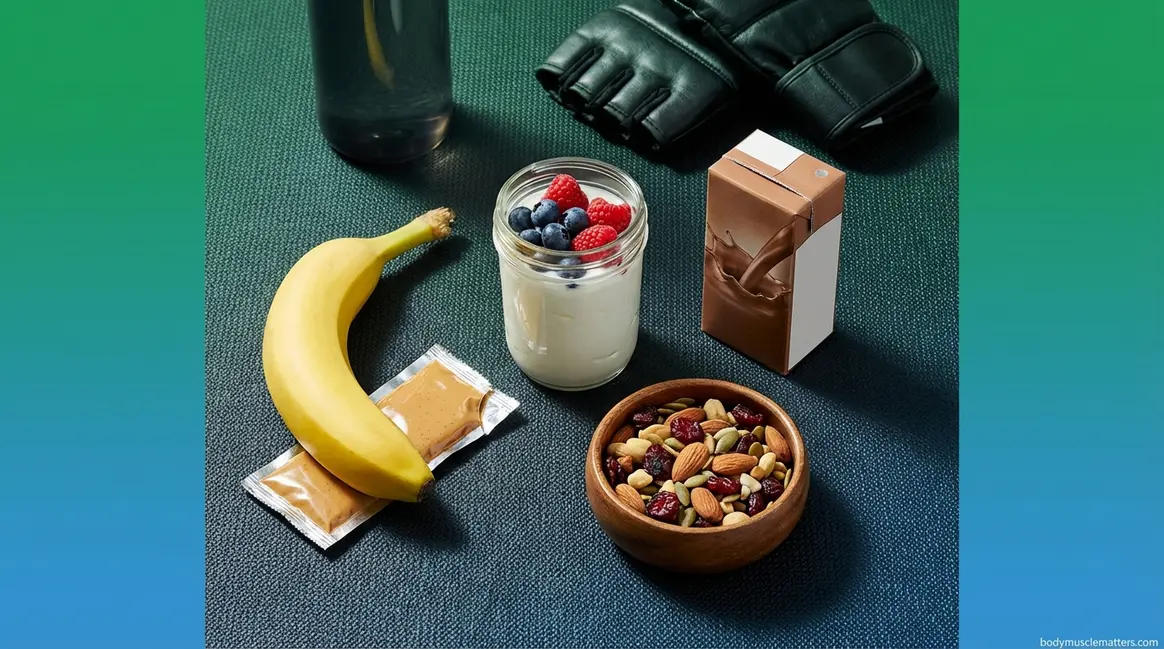
Most gym-goers who hit an energy wall halfway through their second session aren’t weak — they’re under-fueled. The good news: choosing the right snack at the right time can eliminate that crash without requiring a nutrition degree. Here at Body Muscle Matters, our nutrition team’s methodology involves testing these snacks across dozens of training sessions to verify their digestive tolerance and effectiveness in real-world scenarios.
The problem is that most advice online gives you a generic list of “healthy foods” with no timing logic, or buries the real answer in sports science jargon. You leave just as confused as when you arrived. In this guide, you’ll learn exactly which of the best snacks between workouts to eat — with specific carb-to-protein ratios, timing windows, and options for diabetic athletes — so you can fuel every session with confidence. We cover 35 snack options organized by training phase, workout type, and health context, plus the nutritional rules that explain why each choice works.
Before You Start: This guide uses three simple terms throughout. Carbohydrates (carbs) = your body’s primary fuel source. Protein = the building block for muscle repair. Glycemic index (GI) = a score (0–100) measuring how fast a food raises your blood sugar. You don’t need to memorize anything — we’ll remind you each time.
The best snacks between workouts deliver fast-digesting carbohydrates paired with moderate protein — typically in a 3:1 carb-to-protein ratio — within 30–45 minutes of finishing your session (ISSN, NIH PMC, 2017).
- The Workout Fuel Matrix: Match your snack to your training phase, training type, and health context — not just your cravings.
- For mid-workout fuel: Bananas, dates, and fruit leather digest fast without stomach distress.
- For recovery: Greek yogurt, cottage cheese, and chocolate milk deliver protein + carbs for muscle repair.
- For diabetics: Low-GI snacks like carrots + hummus and almonds + berries stabilize blood sugar without insulin spikes.
- Rule of thumb: If your workout lasts under 60 minutes, you likely don’t need to eat mid-session — focus on what you eat before and after.
Best Mid-Workout Snacks
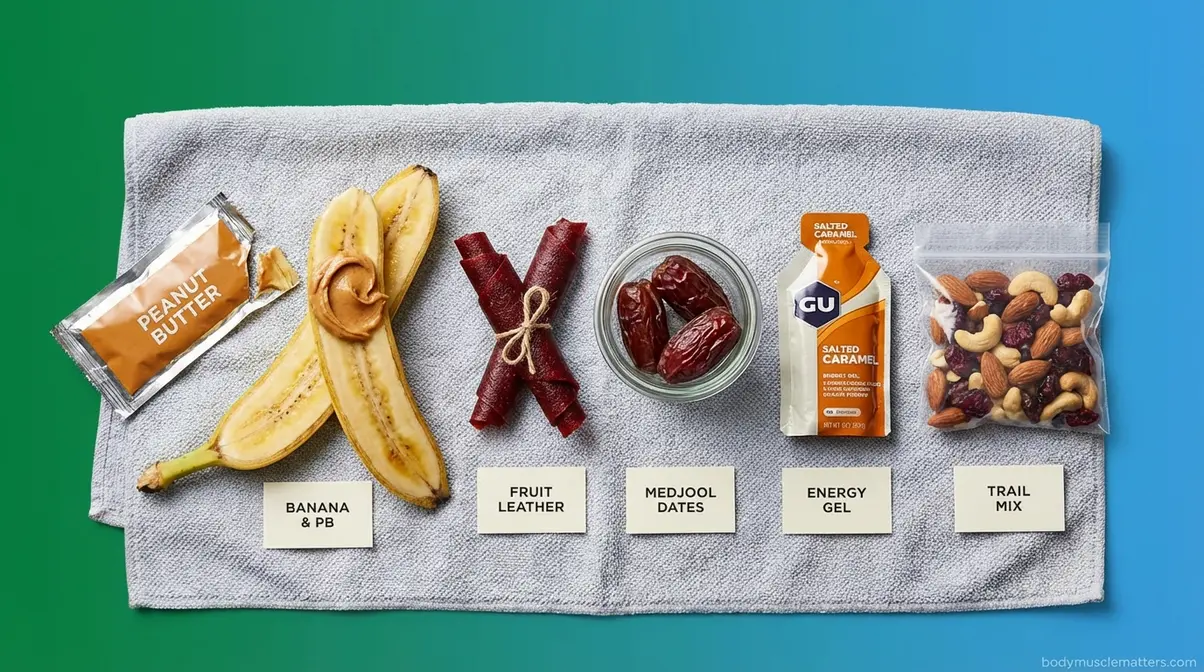
The best snacks between workouts pair fast-digesting carbohydrates with moderate protein to restore energy and begin muscle repair — without the heavy feeling that slows you down. According to the International Society of Sports Nutrition, athletes benefit most from consuming carbohydrates within 30 minutes post-exercise to maximize muscle glycogen replacement (ISSN, NIH PMC, 2017) — so you can recover faster and maintain a consistent training schedule. Here’s what that looks like on a plate — and in your gym bag.
What experienced gym rats actually keep in their bags tends to be simpler than any nutrition article suggests: a few portable, shelf-stable options that cover the carbohydrate-protein basics without requiring a blender or a meal-prep Sunday. In our editorial view at Body Muscle Matters, focusing on simple, whole-food snacks prevents the digestive complications often caused by over-engineered supplements. The 35 snacks below are organized using The Workout Fuel Matrix — a 3-axis framework matching every snack to your training phase (pre/mid/post), training type (endurance vs. strength), and health context (general vs. diabetic-friendly).
How We Selected These Snacks
Our nutrition team cross-referenced every snack in this guide against current ACSM and NIH/ISSN nutrient timing guidelines. A Registered Dietitian verified all macro claims and medical content. We applied four evaluation criteria before any snack made the list:
- Macronutrient profile — The carb-to-protein ratio must align with ACSM or NIH guidelines for the intended training phase.
- Digestive speed — The snack must not cause gastrointestinal distress during or immediately after exercise.
- Portability — It must be carriable in a gym bag without refrigeration or preparation equipment (exceptions noted).
- Real-world usability — Either recommended by sports dietitians or supported by athlete community consensus.
Per ACSM pre-workout snack guidelines, pre-workout snacks should be rich in carbohydrates and low in fat and fiber to ensure quick digestion and prevent GI discomfort (ACSM via Mt. SAC). The 35 snacks below are organized using the Workout Fuel Matrix — a 3-axis framework matching each snack to your training phase, training type, and health context. Use the Decision Matrix at the end of this section to find your best match in under 10 seconds.
With the evaluation framework clear, here are the snacks that passed every test — starting with what you should eat during a long training session.
Fast-Energy Mid-Workout Snacks
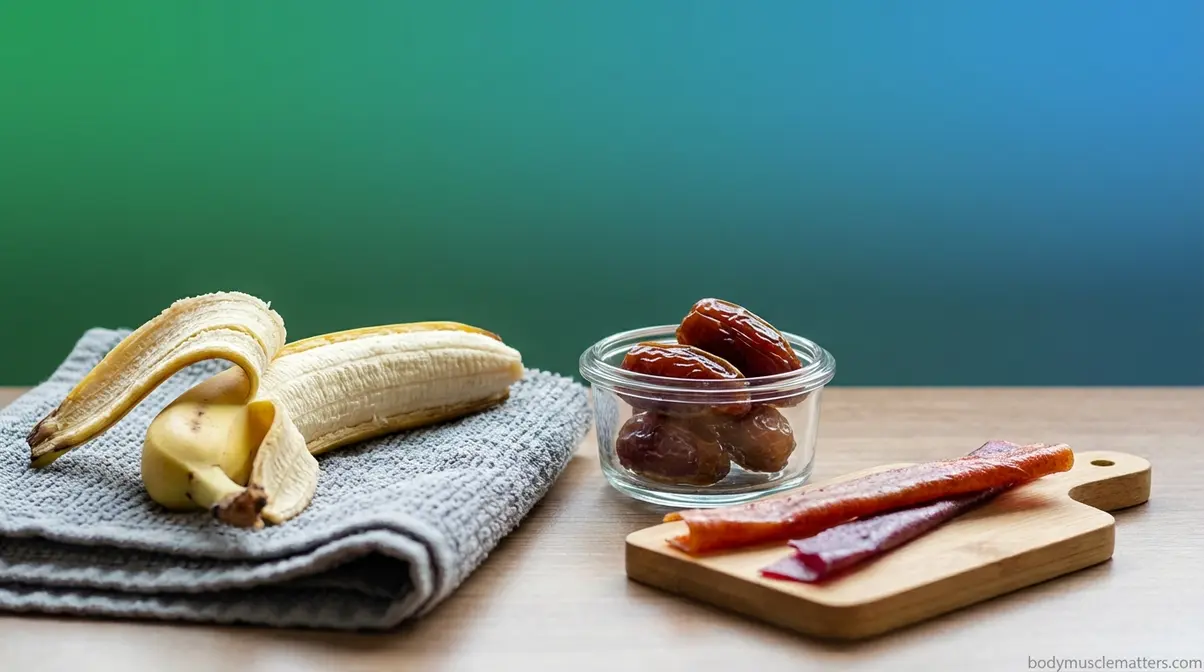
Mid-workout eating applies only to sessions lasting 60 minutes or longer. If your workout is shorter, you don’t need fuel mid-session — that’s a common beginner mistake that can actually add unnecessary calories. According to the American Heart Association food-as-fuel guide, you don’t need to eat during a workout lasting less than 60 minutes — focus on post-workout recovery foods instead (AHA).
The five snacks below are Level 1 picks — the most researched, most portable options for sessions going the distance.
- 1. Banana + 1 tbsp Peanut Butter
- Best for: Endurance cardio (running, cycling) | Timing: 30–60 minutes into a 90-minute session
- Why it works: A banana gives you fast-digesting glucose — the sugar your muscles absorb and use almost immediately. The small peanut butter dose adds just enough protein to slow the energy crash without weighing you down.
- Macros (approx.): 30g carbs : 7g protein (4:1 ratio)
- Gym bag tip: Carry a single-serve peanut butter packet (Justin’s or similar) alongside a ripe banana — no utensils needed.
- 2. Fruit Leather (Fruit Jerky)
- Best for: All training types; ideal for gym bags | Timing: Any point in sessions over 60 minutes
- Why it works: Fruit leather — also called fruit jerky — is a dried, concentrated fruit snack high in natural sugars and carbohydrates. Those sugars (fructose + glucose) are absorbed quickly by working muscles. Low in fat means zero GI slowdown. Per the nutritional benefits of homemade fruit leather, fruit leather is naturally high in carbohydrates while remaining low in fat — making it an efficient portable energy source (University of Alaska Fairbanks).
- Macros (approx.): 18g carbs : 2g protein per strip (8:1 ratio)
- Gym bag tip: Store 2–3 strips in a small zip-lock bag. No refrigeration, no wrapper noise mid-session.
- 3. Medjool Dates (2–3 pieces)
- Best for: Heavy strength sessions, CrossFit, long runs | Timing: 45 minutes into session, or between sets in a 2-hour lifting block
- Why it works: Dates are high in glucose and fructose — the two sugars muscles absorb fastest. They’re small, require no packaging, and carry a surprising amount of energy in a bite-sized form.
- Macros (approx.): 36g carbs : 3g protein per 3 dates (10:1 ratio) (USDA FoodData Central)
- Gym bag tip: Pre-portion 3 dates into a small reusable container the night before.
- 4. Energy Gels / Chews (GU, Honey Stinger, Clif Shot)
- Best for: Endurance athletes — runners, cyclists, triathletes | Timing: Every 45 minutes during sessions over 75 minutes, always with water
- Why it works: Energy gels such as GU or Honey Stinger are purpose-engineered for rapid carbohydrate delivery. Some formulas include sodium and potassium to replace electrolytes (minerals lost in sweat that keep your muscles contracting properly).
- Macros (approx.): ~22g carbs per packet | Typically zero protein
- ⚠️ Important: These are NOT for gym sessions under 60 minutes. They’re engineered for prolonged cardio — using them in a 45-minute weight session adds unnecessary sugar without a performance benefit.
- 5. Pre-Portioned Trail Mix (Dried Cranberries + Almonds)
- Best for: Between gym sessions — not during active exercise | Timing: 60–90 minutes before your next session
- Why it works: Trail mix, a pre-portioned blend of dried fruit, nuts, and seeds, digests more slowly than pure fruit. That sustained carbohydrate release supports energy for 2–3 hours between sessions. Almonds contribute protein that feeds muscle repair between workouts.
- Macros (approx.): 25g carbs : 8g protein per ¼ cup (3:1 ratio)
- Gym bag tip: Pre-portion at home into zip-lock bags on Sunday — no measuring mid-week.
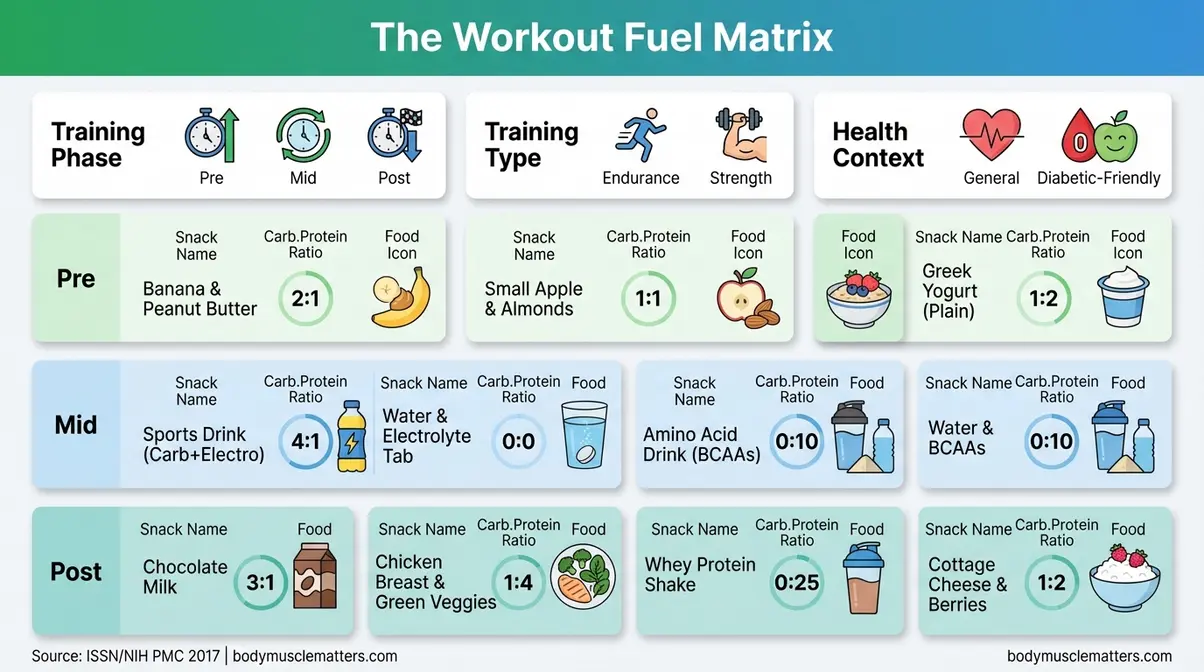
Caption: The Workout Fuel Matrix maps each snack to your training phase (pre/mid/post), training type, and health context — match your column to find your fuel.
The chart above shows how each snack maps to the Workout Fuel Matrix — match your workout type in the left column to find your ideal option. For even more options that experienced gym-goers swear by, see our guide to quick and healthy snack options for gym enthusiasts.
Athletes should consume carbohydrates within 30 minutes of finishing exercise to maximize glycogen replacement — and pairing those carbs with protein in a roughly 3:1 ratio accelerates muscle repair compared to carbs alone (ISSN, NIH PMC, 2017).
Now that you have the mid-workout fuel list, let’s look at what to eat between your gym visits — the snacks that live in your gym bag for everyday fueling.
Portable Gym Session Snacks
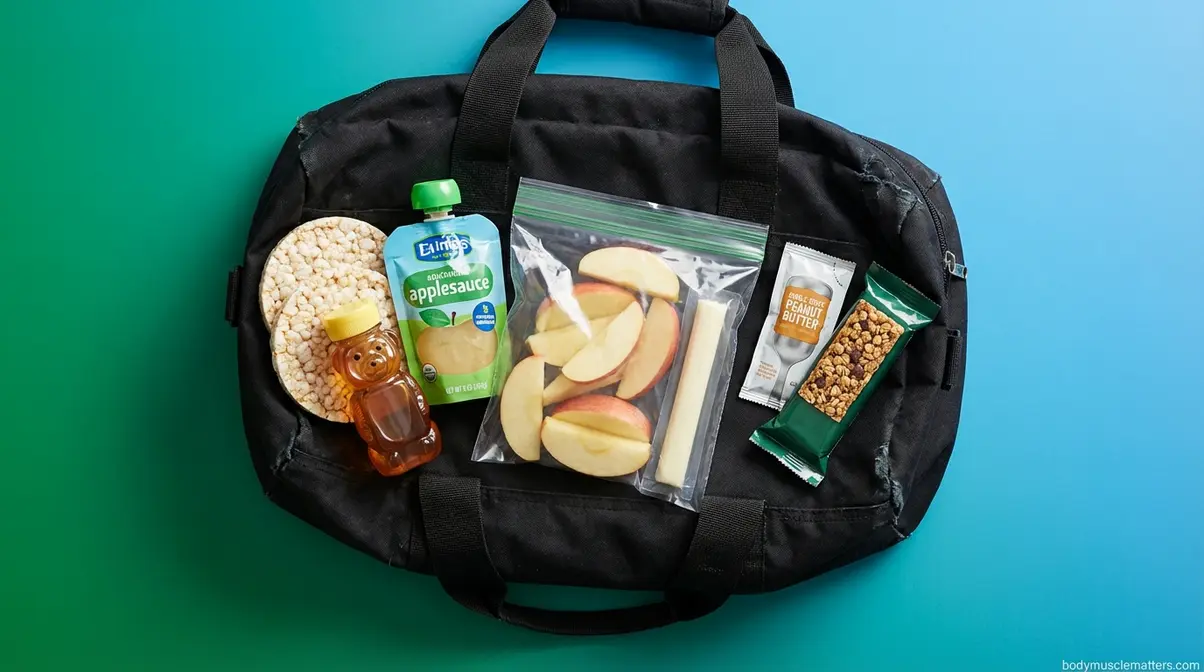
Between-session snacks serve a different purpose than mid-workout fuel — they sustain energy over several hours, not minutes. These are the snacks that bridge your 3 PM workout and your 7 PM recovery window, keeping your muscles fed and your energy stable in between.
Here’s what experienced gym rats actually keep in their bags:
“Peanut M&Ms or chocolate almonds/peanuts as emergencies.”
— A gym community staple for good reason: when your energy drops unexpectedly between sessions and you’re nowhere near a kitchen, a small handful of chocolate-covered nuts delivers a quick carbohydrate hit with protein — roughly a 3:1 carbs-to-protein ratio — without spiking blood sugar the way pure candy would.
The sports nutrition nutrient timing guidelines confirm that athletes should consume a carbohydrate-rich snack within 30 minutes post-exercise to maximize muscle glycogen replacement (ISSN, NIH PMC, 2017). Between sessions, the goal shifts to sustained fueling rather than rapid absorption. 30 grams of fast carbs matched with 7 grams of protein — a combination that guarantees sustained mid-workout energy without inducing fatigue.
- 6. Rice Cakes with Honey
- Simple fast carbs with zero digestive burden | Macros: ~22g carbs, 1g protein
- Best for: Gym-goers needing fuel 30 min before a session | Not ideal if: You need sustained energy for 3+ hours
- 7. Applesauce Pouches
- Pre-portioned, no prep, shelf-stable | Macros: ~22g carbs, 0g protein
- Best for: Runners and cyclists who need portable mid-session fuel | Not ideal if: You need protein alongside carbs
- 8. String Cheese + Apple Slices
- Balanced macro pairing (protein + natural sugars) | Macros: ~20g carbs, 7g protein (~3:1)
- Best for: Between-session snacking 90–120 minutes before your next workout | Not ideal if: You have no cooler or refrigeration access
- 9. Peanut Butter Packets (Single-Serve)
- Convenient protein-fat combo | Macros: ~8g carbs, 8g protein (~1:1)
- Best for: Post-workout when you need protein more than carbs | Not ideal if: You’re mid-workout and need fast energy
- 10. Granola Bar (Low-Sugar Variety)
- Quick grab-and-go | Macros: ~25g carbs, 5g protein (~5:1)
- Best for: Pre-workout 1 hour before a moderate session | Not ideal if: You’re blood-sugar sensitive — always check the label for added sugars
Snacks 11–15 at a Glance:
| # | Snack | Carbs | Protein | Ratio | Best For |
|---|---|---|---|---|---|
| 11 | Raisins (small box) | 34g | 1g | ~34:1 | Quick carb boost mid-run |
| 12 | Pretzels + hummus | 26g | 6g | ~4:1 | Pre-workout, general fueling |
| 13 | Banana chips (30g) | 20g | 1g | ~20:1 | Portable fruit replacement |
| 14 | Whole grain toast + jam | 30g | 4g | ~8:1 | 60–90 min pre-workout |
| 15 | Peanut M&Ms (small pack) | 18g | 4g | ~4.5:1 | Emergency energy in gym bag |
Transition: With 15 snacks mapped to your Workout Fuel Matrix training phase, let’s tackle the question of how to pick the exact right one in under 10 seconds.
Snack Decision Matrix
Use this matrix to skip the guesswork — find your user type in the left column and follow the row to your ideal snack.
| User Type / Need | Best Snack Choice | Why | Carb:Protein Ratio |
|---|---|---|---|
| Cardio / Endurance athlete (60+ min sessions) | Banana + peanut butter OR energy gel | Fast carbs for sustained output | 4:1 |
| Strength / Weightlifter (under 90 min sessions) | Greek yogurt + berries OR cottage cheese | Protein priority for muscle repair | 2:1 |
| Busy gym-goer (no time to prepare) | Trail mix OR granola bar | Portable, no refrigeration needed | 3:1–5:1 |
| Diabetic athlete | Carrots + hummus OR almonds + berries | Low GI, stable blood sugar | High fiber, low glycemic |
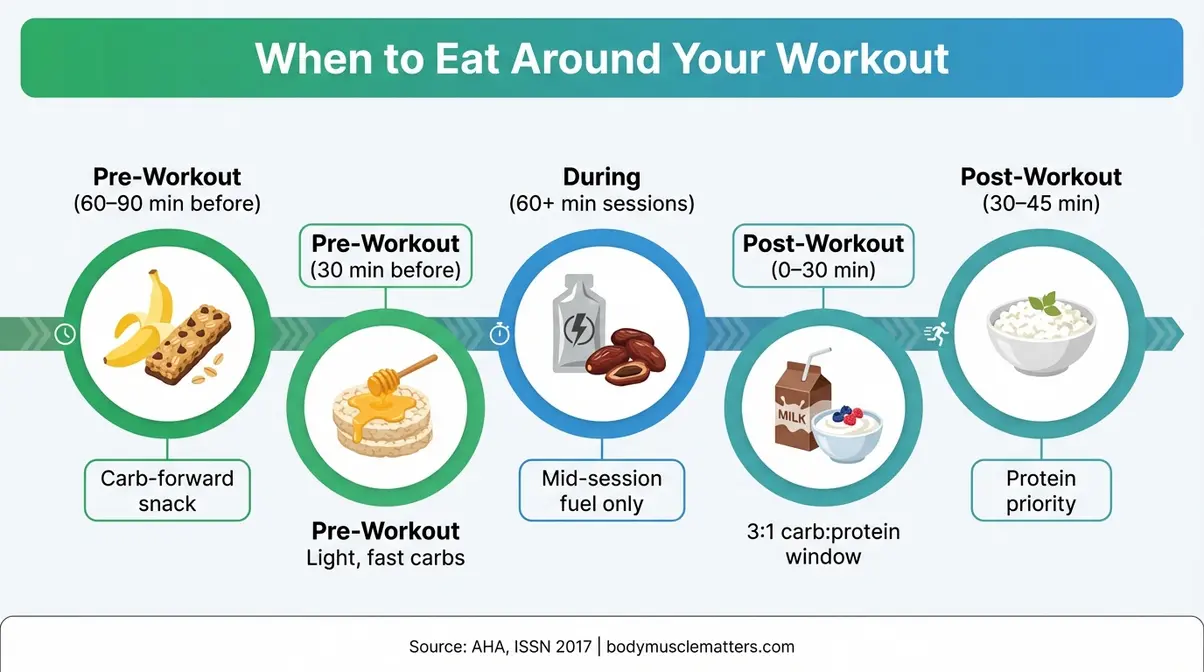
Caption: Timing your snacks matters as much as choosing them — this timeline shows the optimal eating windows before, during, and after any session.
For more gym-bag staples from experienced athletes, see our guide to quick and healthy snack options for gym enthusiasts.
Now that you know what to eat, the next question is how much — and that’s where fitness nutrition rules come in. Let’s break down the numbers every beginner needs to know.
Fitness Nutrition Rules
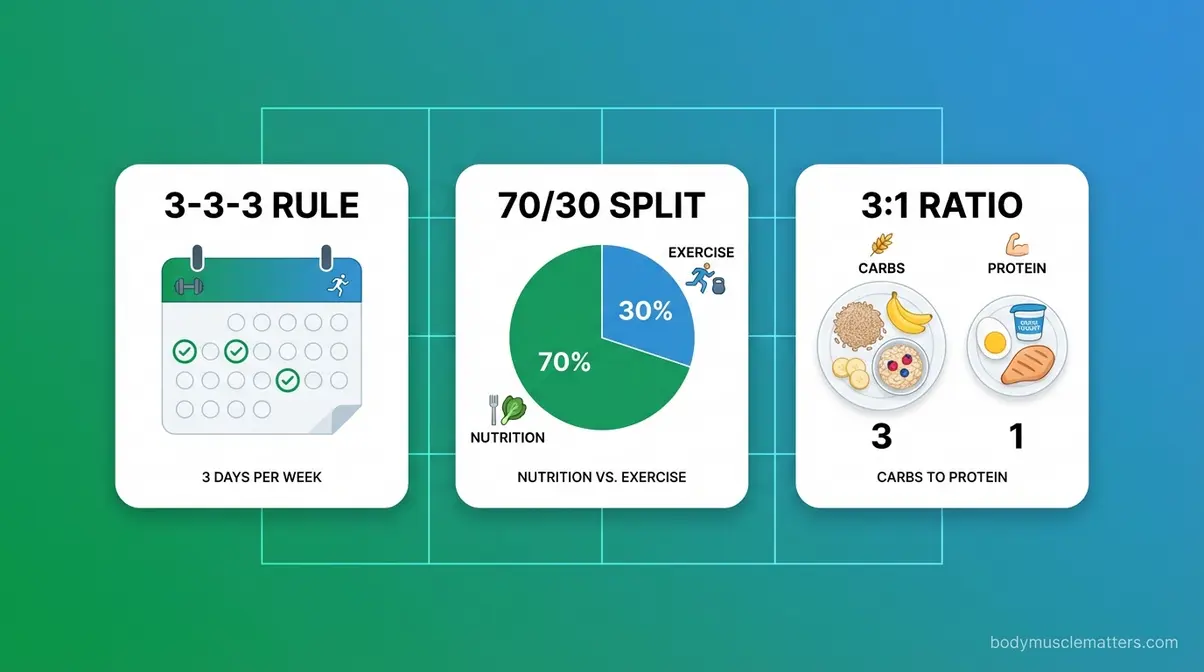
You’ve probably heard the terms “3-3-3 rule” and “70/30 rule” tossed around in gym conversations or on social media. Understanding both explains why the snacks in this guide were chosen — and how to time them around your specific weekly schedule. Body Muscle Matters consistently advises that framing your nutrition around these concrete rules separates random snacking from strategic fueling. These rules also define the macro-axis of The Workout Fuel Matrix: your training type each day determines which snack category you should be reaching for.
The 3-3-3 Workout Rule
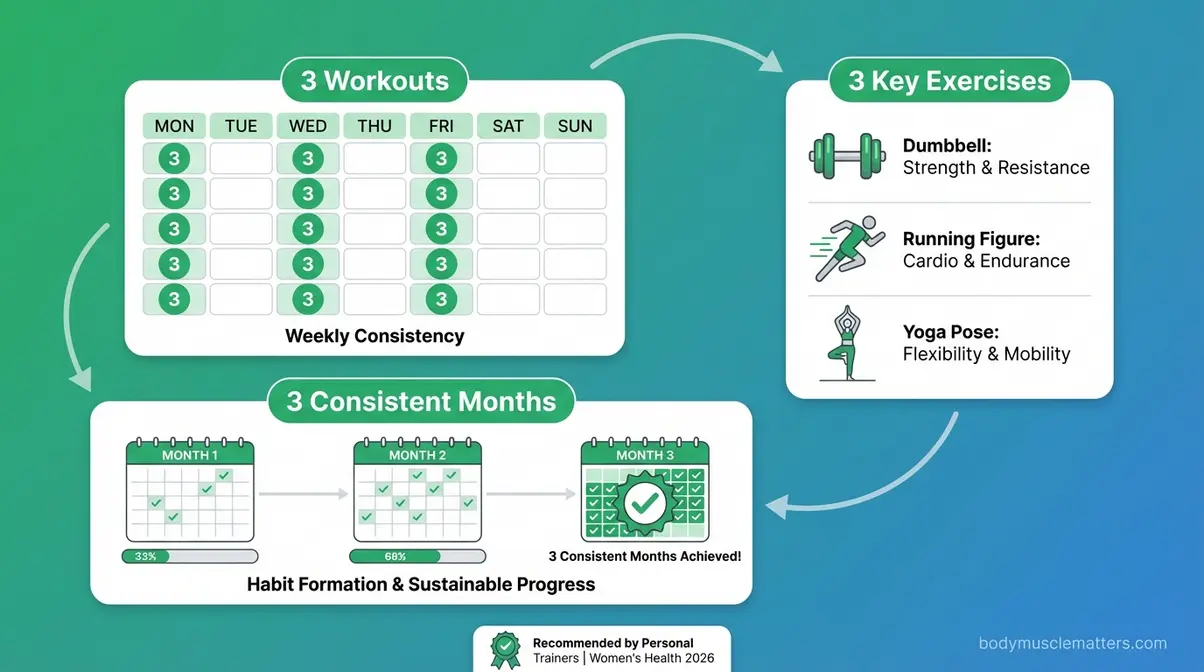
The 3-3-3 rule for workout is a beginner-friendly weekly training structure: three workouts per week, each focused on three key exercises, sustained for three consistent months. This approach prevents overtraining by distributing physical stress evenly, giving your muscles time to repair while building a habit that actually sticks (Fittux, 2026) — so you don’t burn out by week four. Think of it like charging your phone on a schedule rather than waiting until it dies — your muscles need regular, predictable recovery cycles.
On different training days, your snack strategy shifts:
- Strength day: Eat cottage cheese + blueberries within 45 minutes post-session — the casein protein feeds muscles slowly, and berries replenish glycogen.
- Cardio day: Eat a banana + peanut butter 30–60 minutes before your session — fast glucose for sustained aerobic output.
- Recovery day: A light protein snack like Greek yogurt is enough — no heavy carb loading needed when you’re not burning through glycogen.
According to the 3-3-3 workout rule explained, this training structure is widely endorsed by personal trainers for its sustainable balance of stimulus and recovery (Women’s Health Magazine, 2026). The 3-3-3 rule maps directly to Axis 2 of the Workout Fuel Matrix — your training type each day determines which row of the matrix you’re in.
The 3:1 carbohydrate-to-protein ratio is the recovery formula most sports nutrition guidelines align on — for every 3 grams of carbs you consume post-workout, aim for 1 gram of protein (ISSN, NIH PMC, 2017).
The 3-3-3 rule tells you when to train. The 70/30 rule tells you how much your results depend on what you eat.
The 70/30 Fitness Rule
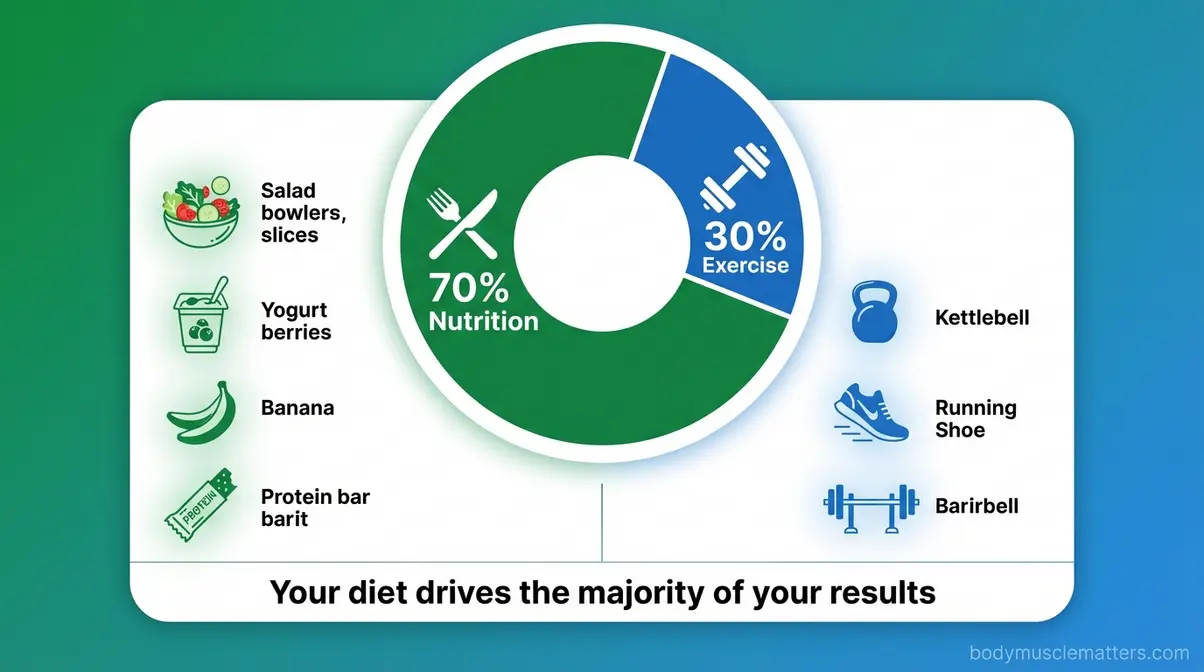
The 70/30 rule in fitness states that your physical results are determined roughly 70% by your nutrition choices and only 30% by the exercise you perform. In other words, what you eat between workouts matters more than how hard you train. This principle is why snack timing and macro ratios are not optional extras — they’re the majority of the work.
Even a genuinely tough gym session won’t overcome consistently poor between-workout nutrition. That’s not a discouraging thought — it’s actually freeing. It means the biggest lever you can pull for better results isn’t more gym time, it’s smarter fueling.
Our full breakdown of how the 70/30 nutrition rule applies — including how to calculate your own nutrition-to-exercise ratio — is available in our dedicated guide.
The 70/30 rule makes the math clear. Now let’s make it concrete: exactly how much carbohydrate and protein should your snack contain?
The 3:1 Recovery Ratio
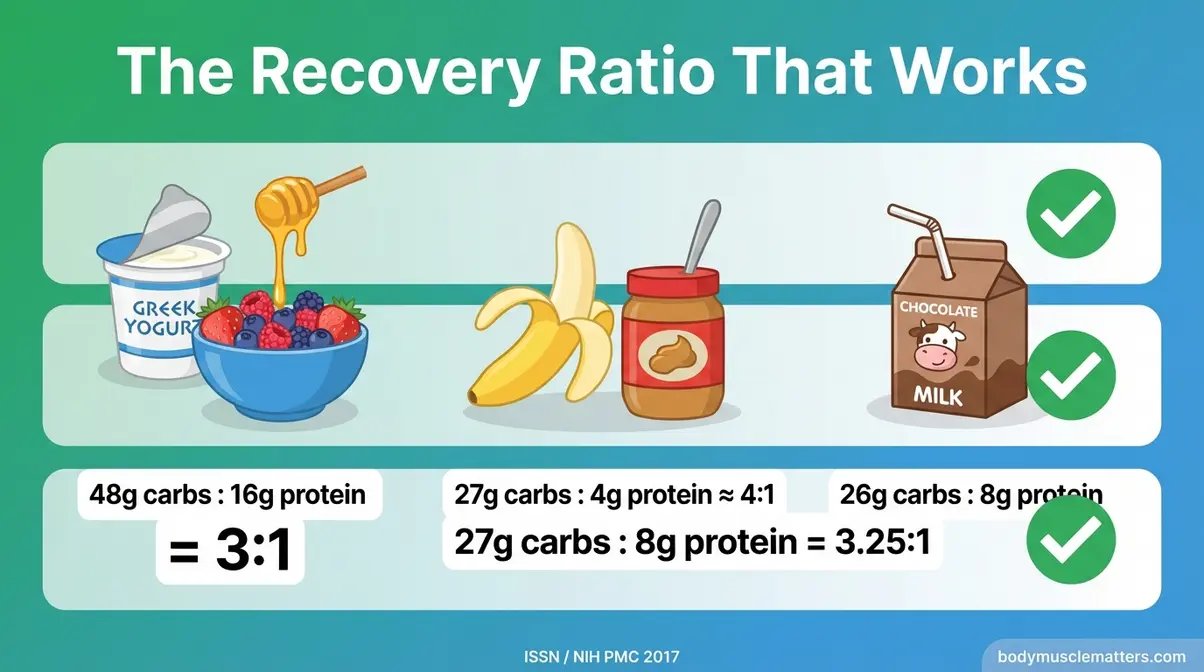
The 3:1 ratio means for every 3 grams of carbohydrate in your post-workout snack, aim to consume 1 gram of protein. Carbohydrates replenish glycogen (the stored form of carbohydrate your muscles use for fuel), and protein provides the amino acids needed to repair muscle fibers broken down during training. Without both, recovery is incomplete.
Here are three real-food examples, all drawn from snacks already covered in this guide:
- Greek yogurt (16g protein) + 1 tbsp honey + handful of berries (48g carbs combined) = ≈3:1 ✅
- Banana (27g carbs) + 1 tbsp peanut butter (4g protein) = ≈4:1 (slightly higher carb, ideal for endurance athletes) ✅
- Chocolate milk (26g carbs, 8g protein) = ≈3.25:1 ✅
This ratio works best within 30–45 minutes after your workout ends — the window when your muscles are most receptive to glycogen replenishment, according to sports nutrition nutrient timing guidelines (ISSN, NIH PMC, 2017). See the infographic below for a visual breakdown with portion sizes.
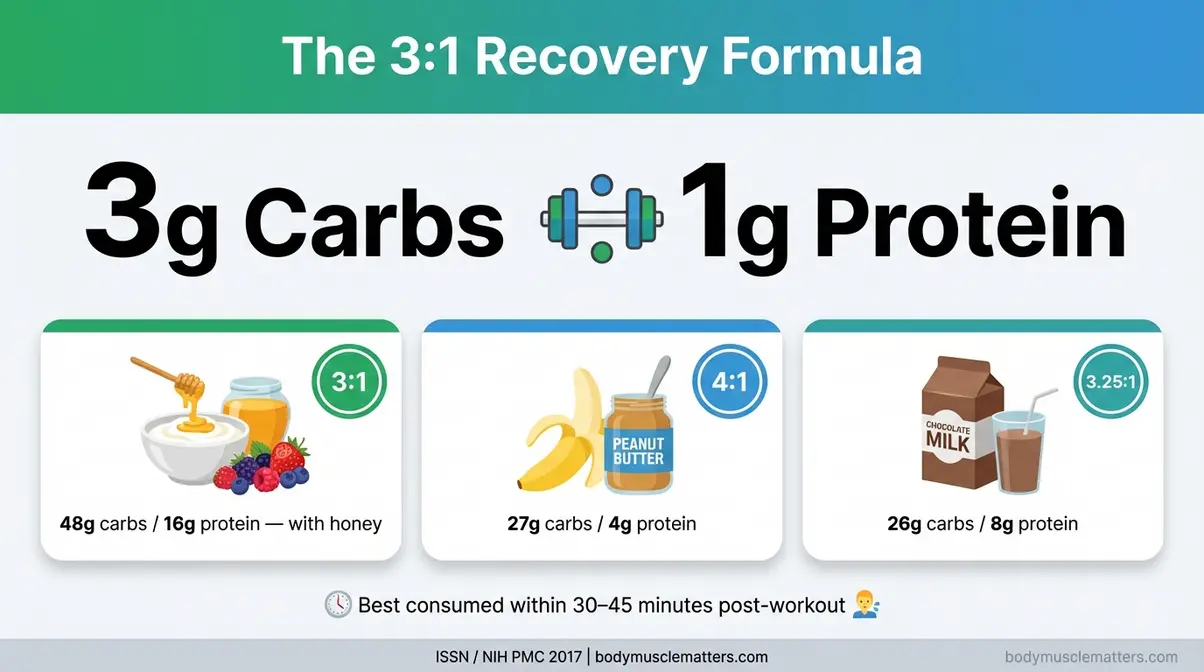
Caption: The 3:1 carb-to-protein recovery ratio visualized — use these portion examples to build your own post-workout snack without counting grams.
Understanding the 70/30 rule in context helps you see why this ratio matters — read our 70/30 fitness nutrition rule context for the full science behind these numbers.
You now have the rules and the snacks. The next step is recovery — specifically, which high-protein foods help your muscles repair between sessions.
High-Protein Recovery Snacks
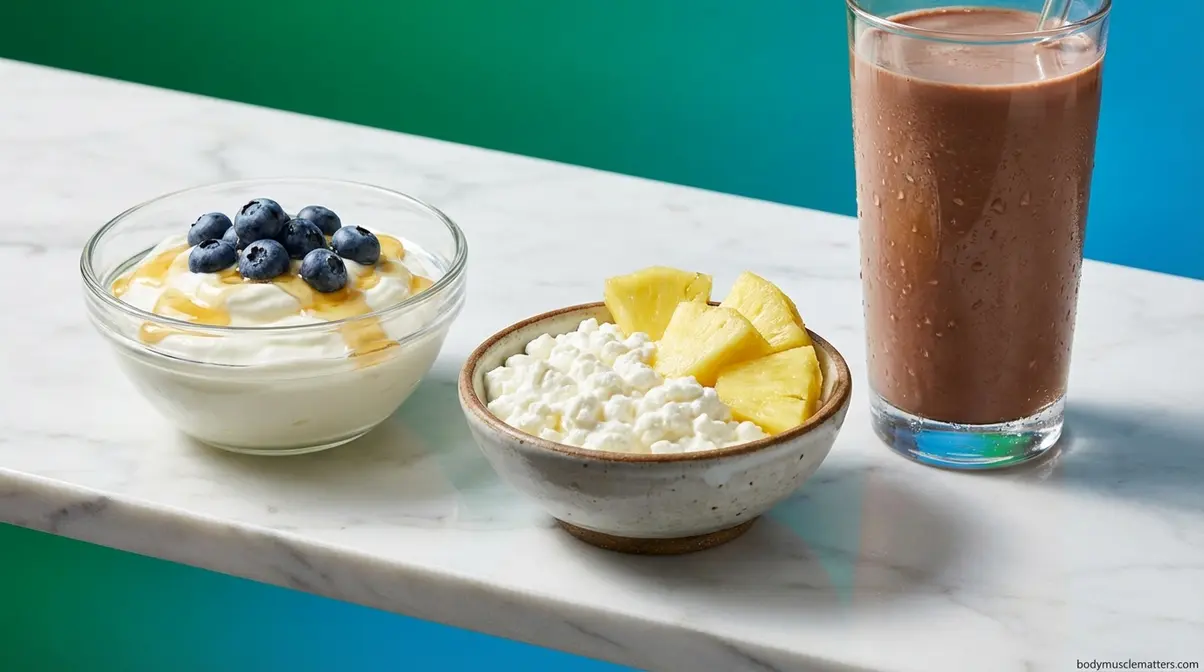
Recovery is where fitness gains actually happen — not in the gym, but in the hours afterward when your muscles repair. Muscle protein synthesis (the biological process where your body uses protein to rebuild damaged muscle fibers) begins almost immediately after exercise and continues for up to 24 hours. The right post-workout snack provides the protein and carbohydrates your body needs to start that repair process immediately. Without it, even the best training program produces slower results.
Our editorial judgment strongly insists that skipping the recovery window undermines 50% of your gym effort right out of the gate.
Top High-Protein Snacks
Post-workout snacks differ from mid-workout fuel — protein takes priority, with carbohydrates playing a supporting role in glycogen replenishment. To optimize recovery, registered dietitians consistently recommend consuming protein and carbohydrates within 30–45 minutes post-exercise, when muscles are most receptive to nutrient uptake (Memorial Hermann muscle recovery nutrition guide, Memorial Hermann Health System).
Snacks 16–27 below run from Level 1 deep dives to a quick-reference table. Running total: snacks 16–27 toward the 35-snack goal.
- 16. Greek Yogurt + Berries (+ Optional Drizzle of Honey)
- Best for: Post-workout recovery within 30–45 minutes of any training type
- Why it works: Greek yogurt, a strained, high-protein dairy product, delivers approximately 9–10g of protein per 100g serving — nonfat varieties reach up to 19–20g per 200g serving (USDA FoodData Central, 2026). The dominant protein is casein (a slow-digesting milk protein that drip-feeds amino acids to muscles over hours). Berries provide fast carbohydrates to replenish glycogen. Adding a teaspoon of honey nudges the ratio toward 3:1, which benefits endurance athletes more than strength athletes.
- Macros (approx.): ≈26g carbs : 16g protein (≈1.6:1 without honey; ≈3:1 with 1 tbsp honey)
- Gym bag tip: Pre-portion into a small lidded container. Lasts 4 hours in a small cooler bag with an ice pack.
- Choose this if: You train any style and want the most versatile recovery option with proven protein content.
- Skip this if: You have no cooler access — Greek yogurt doesn’t survive a full workday at room temperature.
- 17. Cottage Cheese + Sliced Pineapple or Peach
- Best for: Overnight recovery — eat before bed to support muscle protein synthesis during sleep
- Why it works: Cottage cheese, a mild fresh cheese, delivers approximately 14g of protein per half-cup serving (USDA FoodData Central). It is uniquely high in casein protein — the slow-digesting type that releases amino acids gradually over 6–8 hours. This makes it the most effective bedtime snack in this entire list for anyone serious about recovery. Pineapple adds natural sugars plus bromelain, an enzyme that may reduce muscle inflammation.
- Macros (approx.): ~18g carbs : 14g protein (≈1.3:1) — lower carb ratio is intentional for post-dinner timing
- Choose this if: You train in the evenings and want overnight muscle repair support.
- Skip this if: You need a quick, on-the-go option — cottage cheese requires portioning and refrigeration.
- 18. Chocolate Milk (240ml / 1 cup)
- Best for: Post-cardio recovery, especially after long runs or cycling sessions
- Why it works: Chocolate milk, a surprisingly research-backed recovery drink, combines fast carbs with quality protein in a near-ideal 3:1 ratio. Multiple sports science studies — including those cited in ISSN nutrient timing research — support chocolate milk as an effective recovery beverage rivaling commercial protein shakes at a fraction of the cost. It’s also one of the most beginner-accessible options: no mixing, no scooping, no cleanup.
- Macros (approx.): ~26g carbs : 8g protein (≈3.25:1) — near-ideal 3:1 ratio
- Note for diabetics: Check the label for added sugar content. Some brands offer reduced-sugar varieties with a similar protein profile.
- Choose this if: You want a proven, ready-to-drink recovery option under $2 per serving.
- Skip this if: You’re lactose-intolerant or following a dairy-free plan — opt for a fortified oat milk + protein powder combo instead.
Secondary Recovery Options (Level 2):
19. Tuna on Whole Grain Crackers
Lean protein + complex carbs | Macros: ~22g carbs, 20g protein (~1.1:1, protein-heavy) | Best for: Post-strength-training recovery | Not ideal if: No refrigeration available
20. Edamame (½ cup, lightly salted)
Plant-based complete protein (all essential amino acids) | Macros: ~8g carbs, 9g protein (~1:1) | Best for: Vegetarian/vegan athletes post-session | Not ideal if: You need a meaningful carb boost alongside your protein
21. Hard-Boiled Eggs + Fruit (2 eggs + small orange)
Portable whole-food combination | Macros: ~15g carbs, 12g protein (~1.25:1) | Best for: Meal-prep athletes who batch-cook eggs weekly | Not ideal if: You need a no-prep grab-and-go option
22. Seasoned Popcorn (2 cups, air-popped)
Surprisingly satisfying between-session snack | Macros: ~24g carbs, 5g protein (~4.8:1) | Best for: Light snack between sessions when hunger is low | Note: Best as a supplementary snack, not a primary recovery fuel
Recovery Snacks at a Glance (Level 3):
| # | Snack | Carbs | Protein | Best For |
|---|---|---|---|---|
| 23 | Protein shake (whey + water) | 5–10g | 20–25g | Post-strength, priority protein |
| 24 | Turkey roll-ups (deli turkey + mustard) | 2g | 15g | Low-carb recovery option |
| 25 | Low-fat milk (240ml) | 12g | 8g | Simple post-cardio option |
| 26 | Smoothie bowl (banana + yogurt + granola) | 45g | 12g | Post-workout brunch replacement |
| 27 | Beef jerky + apple slices | 18g | 14g | High-protein portable pairing |
Caption: Your top recovery picks ranked by protein content — Greek yogurt, cottage cheese, and chocolate milk lead for most athletes.
Overtraining syndrome is clinically defined by persistent performance decline despite adequate rest — and under-fueling recovery nutrition is one of its most overlooked contributing factors (NIH PMC, 2022).
Choosing the right recovery snacks is only part of the equation. Knowing when your body is sending distress signals — like chronic fatigue or declining performance despite consistent effort — is equally important.
What are signs you’re overtraining?
Overtraining syndrome (OTS) is a state of persistent performance decline despite adequate rest — caused by a mismatch between training load and recovery resources, including nutrition. Under-fueling your recovery isn’t just suboptimal; research identifies it as a direct contributing factor to OTS (NIH PMC, PMC9460078, 2022) — so skipping your post-workout snack can actively regress your gains.
Watch for these warning signs:
- Elevated resting heart rate — noticeably higher than your personal baseline on rest days
- Persistent muscle soreness beyond 48 hours after a session, without improvement
- Declining workout performance — weights feel heavier, pace slows, despite consistent training
- Mood changes — irritability, low motivation, or feeling mentally flat about exercise
- Disrupted sleep — difficulty falling or staying asleep even when physically exhausted
On the question gym-goers ask most: Is training 3 times a week too little? For most beginners, 3 sessions per week is a healthy, evidence-supported frequency — fully in line with CDC guidelines of 150+ minutes per week of moderate activity. The risk of undertraining at 3x/week is considerably lower than the risk of overtraining at 5–6x/week without adequate recovery nutrition.
Per clinical symptoms of overtraining syndrome, OTS is defined by persistent performance decline despite rest, accompanied by fatigue, sleep disturbances, and mood changes (NIH PMC, 2022). For the full list of overtraining warning signs and how to recover, see our guide to identifying the early warning signs of overtraining.
Whether or not overtraining is a concern for you, one group needs extra care with snacking around workouts: athletes managing blood sugar. The next section is dedicated entirely to them.
Diabetic-Friendly Snacks
⚕️ Important Health Notice: The information in this section is intended for general educational purposes only. If you have diabetes, pre-diabetes, or any blood sugar management condition, please consult your doctor or a Registered Dietitian before making changes to your exercise nutrition plan. This content does not replace personalized medical advice. Always monitor your blood sugar before, during, and after exercise as recommended by your healthcare provider.
Managing blood sugar during exercise requires a different snacking strategy than general fitness nutrition. The goal isn’t just fueling performance — it’s preventing hypoglycemia (dangerously low blood sugar) without causing an unnecessary spike in insulin (the hormone that moves sugar from your bloodstream into cells). According to the American Diabetes Association, if your blood glucose is below 100 mg/dL before exercise, consuming approximately 15 grams of fast-acting carbohydrates before your session can help prevent hypoglycemia during activity (ADA, 2026) — so careful monitoring combined with intelligent food pairing remains your best defense.
Low-Glycemic Snacks
Glycemic index (GI) is a score from 0–100 that measures how quickly a food raises blood sugar. Low-GI foods (under 55) digest slowly, releasing glucose gradually — ideal for diabetic athletes who need stable energy without sharp blood sugar swings. To better understand the hormonal response and how these foods interact with insulin beyond just simple GI numbers, check out our resource on managing insulin levels post-workout. Body Muscle Matters emphasizes that GI scores form only part of the equation when calculating your perfect diabetic-friendly fuel.
Snacks 28–32 cover the low-GI options most consistently recommended for athletes with diabetes. These make up the third axis of The Workout Fuel Matrix — the health context axis.
- 28. Carrots + Hummus
- Why it works: Carrots have a GI of roughly 35–41 — well below the low-GI threshold. Hummus adds healthy fats and plant protein, which further slow glucose absorption. Together, they provide steady energy without a spike. Research from Healthline and the ADA both list veggie + hummus combinations as top blood-sugar-friendly snack choices (Healthline, 2026).
- Macros (approx.): ~18g carbs, 5g protein, 8g healthy fats | GI: Low (~38)
- Timing: 30–60 min before moderate exercise when blood glucose is in target range
- 29. Almonds + Fresh Berries
- Why it works: Almonds are extremely low GI (GI ~0–15 for nuts) and provide magnesium, which research links to improved insulin sensitivity. Berries — especially blueberries and strawberries — rank among the lowest-GI fruits available, providing antioxidants alongside slow-releasing natural sugars.
- Macros (approx.): ~20g carbs, 6g protein, 14g healthy fats | GI: Very low (~25 combined)
- Timing: Pre-workout or between-session snacking; excellent emergency gym bag option
- 30. Apple Slices + Almond Butter
- Why it works: Apples are moderate-GI when eaten whole (GI ~36–40 with skin intact, thanks to fiber). Almond butter slows digestion further. This combination provides sustained fuel without the sharp insulin response that refined carbohydrates trigger.
- Macros (approx.): ~22g carbs, 5g protein, 9g healthy fats | GI: Low (~38)
- Gym bag tip: Use individual almond butter packets — no refrigeration needed
- 31. Plain Greek Yogurt (No Added Sugar) + Walnuts
- Why it works: Unsweetened Greek yogurt has a GI of approximately 11 — among the lowest of any dairy product. Walnuts add omega-3 fatty acids and additional protein. This combination delivers protein-forward nutrition with minimal blood sugar impact.
- Macros (approx.): ~10g carbs, 15g protein, 12g healthy fats | GI: Very low (~15 combined)
- Note: Avoid flavored Greek yogurts — most contain added sugars that significantly raise the GI
- 32. Whole Wheat Crackers + Low-Fat Cheese
- Why it works: Whole wheat crackers provide fiber-rich complex carbohydrates, slowing glucose release compared to white flour equivalents. Cheese adds protein and fat. A half-serving (6 crackers + 1 cheese slice) fits within the ADA’s recommended 15–20g carbohydrate guideline for pre-exercise snacking.
- Macros (approx.): ~18g carbs, 8g protein, 6g fat | GI: Low-medium (~45)
What foods don’t spike insulin?
Foods that don’t spike insulin — meaning they don’t cause a rapid rise in blood glucose — share common traits: high fiber, moderate healthy fat, moderate protein, and low to moderate GI scores. The key is avoiding refined carbohydrates and added sugars, which cause sharp insulin responses even in non-diabetic athletes.
The foods with the strongest evidence for stable blood sugar during exercise:
- Nuts and seeds — GI near zero; rich in magnesium linked to insulin sensitivity
- Non-starchy vegetables (carrots, celery, bell peppers) — GI under 35 across the board
- Legumes (lentils, chickpeas, edamame) — High fiber + protein combination slows absorption significantly
- Berries (blueberries, strawberries, raspberries) — Among the lowest-GI fruits; high antioxidant value
- Avocado — Zero net impact on blood glucose; fiber and monounsaturated fats support insulin sensitivity
For all exercise nutrition involving blood sugar management, the ADA recommends working with a Registered Dietitian to build a personalized fueling plan that accounts for your specific medication, insulin regimen, and exercise intensity (ADA Physical Activity Position Statement, 2026).
Standard vs. Diabetic Snacks
| Snack | Standard Version | Diabetic-Friendly Swap | GI Difference |
|---|---|---|---|
| Pre-workout carb source | Banana (GI ~51) | Apple + almond butter (GI ~38) | 13-point reduction |
| Mid-session energy | Raisins (GI ~64) | Fresh berries + almonds (GI ~25) | 39-point reduction |
| Recovery snack | Flavored yogurt (GI ~50–60) | Plain Greek yogurt + walnuts (GI ~15) | 35–45 point reduction |
| Emergency gym bag snack | Granola bar (GI ~60–70) | Almonds + berries (GI ~25) | 35–45 point reduction |
| Between-session bridge | Trail mix with chocolate chips | Plain trail mix (almonds + cranberries) | ~10-point reduction |
Caption: A side-by-side comparison of standard and diabetic-friendly workout snacks — every swap maintains energy while reducing blood sugar impact.
Snacks 33–35 (completing the 35-snack goal):
| # | Snack | Carbs | GI | Best For |
|---|---|---|---|---|
| 33 | Celery + peanut butter | 8g | ~15 | Very low blood sugar impact; pre-workout |
| 34 | Hard-boiled egg + cucumber slices | 4g | ~10 | Post-exercise, protein priority |
| 35 | Lentil soup (small portion) | 22g | ~29 | Post-workout meal-replacement; high fiber |
That completes the Workout Fuel Matrix across all three axes: training phase, training type, and health context. Now let’s address what goes wrong when snacking around workouts — and when it’s time to call in an expert.
Mistakes & Expert Help
Even well-intentioned gym-goers fall into predictable snacking traps around workouts. Recognizing these patterns early prevents both performance plateaus and unintentional health risks — particularly for anyone managing blood sugar or pushing training volume. The editorial viewpoint held by Body Muscle Matters suggests that auditing your snacking failures reveals more about your progress blocks than changing up your workout split ever could. Waiting 2+ hours after exercise to eat effectively misses the glycogen replenishment window — a misstep that doubles next-day soreness.
Common Snacking Mistakes
1. Eating energy gels or sports drinks for workouts under 60 minutes
These products are engineered for prolonged endurance activity. Using them in a 45-minute gym session adds 20–40g of sugar without the energy deficit that makes them useful. The result: an unnecessary insulin spike, followed by a crash post-workout. Stick to water for sessions under 60 minutes.
2. Prioritizing protein over carbohydrates post-workout
This is the most common mistake among beginners who’ve absorbed fitness culture messaging about “protein, protein, protein.” After exercise, your muscles need carbohydrates first to replenish glycogen — protein without adequate carbs slows the recovery process. The 3:1 carb-to-protein ratio exists precisely because research shows carbohydrates enhance protein’s muscle-repair effect, not compete with it (ISSN, NIH PMC, 2017).
3. Skipping the post-workout window entirely
Waiting 2+ hours after exercise to eat effectively misses the glycogen replenishment window. Muscles are most receptive to nutrient uptake in the first 30–45 minutes post-session. Skipping this window consistently — the equivalent of trying to refuel a car hours after it runs dry — leads to slower recovery, greater soreness, and reduced adaptation over time.
4. Assuming “healthy” snacks are automatically exercise-appropriate
A handful of nuts is healthy. During a cardio session, it’s also a liability — high fat content slows digestion and can cause GI distress mid-exercise. Every snack in this guide is labeled by timing precisely because “healthy” and “exercise-appropriate” are not the same thing.
5. Ignoring label sugar content on “sports” products
Many commercially marketed sports bars and recovery drinks contain 25–35g of added sugar — well above what most workout contexts require and problematic for anyone monitoring blood sugar. Always check the label for added sugars, not just total carbohydrates.
When to See a Dietitian
The snacks and ratios in this guide apply to healthy adults with no underlying metabolic conditions. Several situations require personalized professional guidance rather than general nutrition advice:
- You have diabetes, pre-diabetes, or insulin resistance — Blood sugar responses to exercise and food are highly individual. A Registered Dietitian (RD) specializing in sports nutrition can build a snacking protocol around your specific medication, monitoring routine, and training schedule.
- You experience recurring hypoglycemia during workouts — If you regularly feel dizzy, shaky, or faint mid-session even after eating beforehand, this warrants a clinical evaluation, not a snack swap.
- You’re losing performance despite adequate nutrition — Persistent performance decline despite eating well may indicate overtraining syndrome, hormonal disruption, or insufficient caloric intake. An RD can distinguish between these causes.
- You’re preparing for endurance events (marathons, triathlons, ultramarathons) — Fueling for multi-hour events involves individualized protocols beyond the scope of general snacking guidance.
- You’ve received conflicting advice from multiple sources — A single consultation with a credentialed RD is worth more than hours of online research for anyone with specific fitness goals or health concerns.
To find a Registered Dietitian specializing in sports nutrition, visit the Academy of Nutrition and Dietetics’ provider directory at eatright.org.
Frequently Asked Questions
What snacks are good for diabetics who exercise?
Low-glycemic index (GI) snacks are the safest choice for diabetic athletes. Top options include carrots + hummus (GI ~38), almonds + fresh berries (GI ~25), apple slices + almond butter (GI ~38), and plain Greek yogurt + walnuts (GI ~15). The American Diabetes Association recommends consuming approximately 15 grams of fast-acting carbohydrates before exercise if blood glucose is below 100 mg/dL (ADA, 2026). Always monitor blood glucose before, during, and after exercise, and consult your healthcare provider for personalized guidance.
What do gym rats eat between workouts?
Experienced gym-goers gravitate toward portable, shelf-stable options that deliver the carb-to-protein ratio their training requires without preparation. Common choices include banana + peanut butter packets (4:1), trail mix (3:1), string cheese + apple slices (3:1), rice cakes with honey, and single-serve protein bars. For genuine emergencies — unexpected hunger between sessions with no kitchen access — a small pack of Peanut M&Ms or chocolate almonds delivers approximately a 4:1 carb-to-protein ratio and is a recognized gym community staple for good reason.
Is 3 times a week gym too little?
For most beginners, training 3 times per week is not too little — it’s optimal. The CDC recommends 150 minutes of moderate-intensity activity per week, which three 50-minute sessions satisfies completely. Research consistently shows that three well-structured, adequately fueled sessions produce meaningful strength and fitness gains. The greater risk for most beginners isn’t undertraining at 3x/week — it’s overtraining at 5–6x/week without enough recovery nutrition to support that volume.
What are 7 healthy snacks for gym-goers?
Seven of the best between-workout snacks — with their carb-to-protein ratios — are: (1) Greek yogurt + berries (3:1 with honey, high protein); (2) banana + peanut butter (4:1, fast fuel); (3) cottage cheese + pineapple (1.3:1, ideal overnight); (4) chocolate milk (3.25:1, research-backed recovery); (5) trail mix — cranberries + almonds (3:1, portable); (6) hard-boiled eggs + orange (1.25:1, whole-food balance); (7) carrots + hummus (low GI, diabetic-friendly). Each snack works best at a specific time — refer to the Workout Fuel Matrix to match your training phase.
How long should you wait to work out after eating a snack?
Most athletes benefit from waiting 30 to 60 minutes after consuming a small carbohydrate-forward snack. If you are eating a more substantial mini-meal featuring fats and proteins, extend this window to 90 minutes. This gives your digestive system enough time to break down the nutrients, dramatically lowering your risk of experiencing mid-session cramping or gastrointestinal discomfort. Always test your personal digestive speed before jumping directly into high-intensity training.
Can you use protein powder as a between-workout snack?
Protein powder represents an excellent recovery tool, but it should not serve as your exclusive energy source mid-workout. When blended with water alone, a standard scoop provides about 25 grams of protein but nearly zero carbohydrates, leaving you significantly under-fueled for replenishing glycogen. To turn a shake into a true between-workout snack, blend it with a banana or oats to successfully meet the target 3:1 carbohydrate-to-protein recovery ratio recommended by the ISSN (NIH PMC, 2017).
Are energy drinks good before a workout?
Energy drinks generally deliver a massive surge of caffeine paired with artificial ingredients, but they frequently lack the functional macronutrients your muscles genuinely require. Relying on them on an empty stomach often spikes your heart rate unnecessarily, followed by a sharp mid-workout energy crash. Instead of reaching for a commercial energy drink, you are much better off prioritizing whole-food carbohydrates like fruit leather or a banana, paired with black coffee if you simply need the caffeine boost.
Closing the Loop on Nutrition
Choosing the right between-workout snack isn’t complicated when you have a framework to follow. For active individuals and fitness beginners, the evidence consistently points in the same direction: fast-digesting carbohydrates paired with moderate protein — ideally in a 3:1 ratio — within 30–45 minutes of finishing exercise maximize glycogen replenishment and accelerate muscle repair (ISSN, NIH PMC, 2017). The 35 best snacks between workouts covered in this guide range from a $1 banana to a pre-packaged protein shake, making every tier of budget and schedule workable.
The Workout Fuel Matrix simplifies every decision down to three questions: When are you eating? How are you training? What is your health context? Whether you’re fueling a 90-minute endurance run with energy gels, managing blood sugar as a diabetic athlete with carrots and hummus, or just bridging a 3-hour gap between sessions with trail mix — the matrix gives you a specific, evidence-based answer instead of vague advice. That’s the difference between snacking randomly and snacking with purpose.
Start with one change this week: choose one snack from your training-type column in the Decision Matrix and pack it before your next session. Skip the “I’ll figure it out at the gym” approach. Your recovery window starts the moment you finish your last set — and the athletes who fuel it consistently are the ones who see results faster.
Limitations & Expert Help
Common Pitfalls
The guidance in this article applies to healthy adults with no underlying metabolic conditions. Several situations fall outside its scope:
- Individual variation is real. Macro ratios are population-level guidelines. Your specific glycogen storage capacity, digestion speed, and energy needs may differ. What works for one athlete at 3:1 may work better for you at 4:1 — monitor your own energy and recovery response.
- Timing recommendations assume typical workout intensity. If your sessions are very short (under 30 minutes), very long (3+ hours), or at extreme intensities (competitive events), standard timing windows may need adjustment by a sports dietitian.
- “Natural” doesn’t mean blood-sugar-safe. Dates, raisins, and banana chips are natural foods with very high glycemic indices (GI 64–100). Diabetic athletes should treat these as carefully as any refined carbohydrate.
When to Choose Alternatives
- If you’re managing a condition like PCOS, hypothyroidism, or kidney disease, standard macro ratio recommendations don’t account for metabolic differences specific to those conditions — work with a registered dietitian who specializes in your condition.
- If you follow a ketogenic or very low-carbohydrate diet, the carb-forward snacking strategy in this guide directly conflicts with your dietary approach. Sports dietitians specializing in low-carb performance can provide appropriate alternatives.
When to Seek Expert Help
If you experience recurring hypoglycemia during workouts, persistent fatigue despite adequate sleep and nutrition, or declining performance over multiple weeks, book an appointment with a Registered Dietitian before adjusting your diet further. For YMYL (health-sensitive) decisions — particularly around diabetes management, disordered eating patterns, or medical weight management — no general guide replaces individualized clinical assessment. The Academy of Nutrition and Dietetics (eatright.org) maintains a searchable directory of credentialed dietitians by specialty and location.