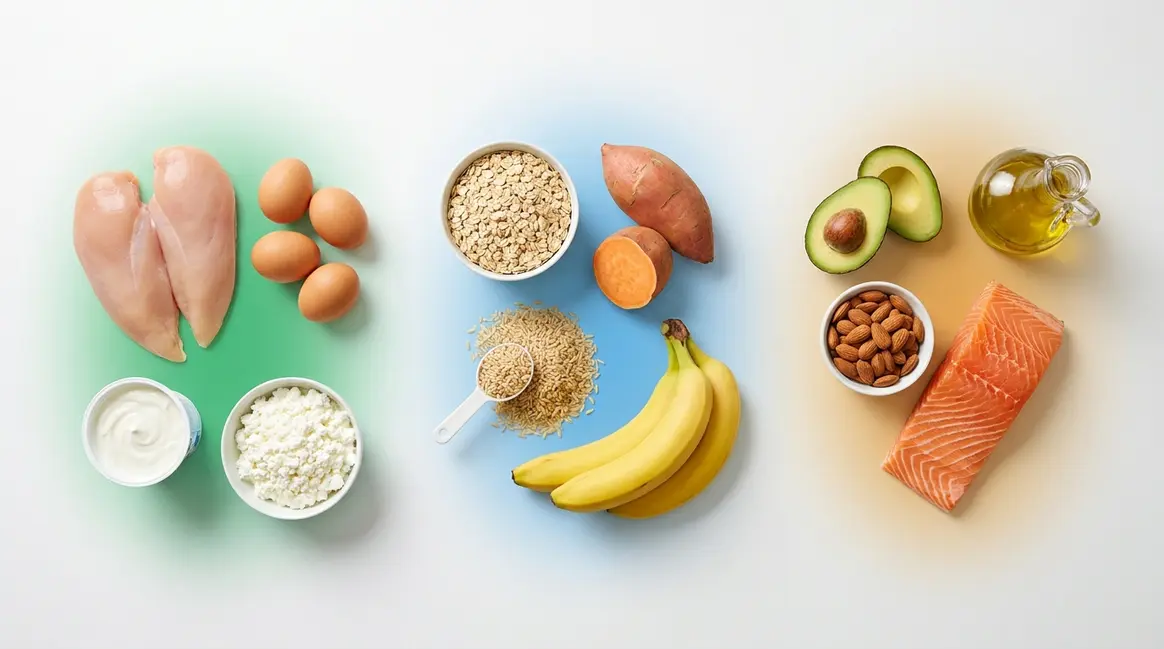
Most people chasing a fitness goal focus entirely on eating less. But research shows that what those calories are made of — protein, carbs, or fat — determines whether you lose body fat, build muscle, or just feel tired all the time.
If you’ve ever felt confused by conflicting diet advice — eat low-carb, eat more protein, avoid fat — you’re not alone. The problem isn’t you; it’s that no one has explained the basics clearly. If you searched “what are macros for beginners” and landed here, you’re in exactly the right place. By the end of this guide, you’ll know exactly what macros are, how to calculate your personal targets, and which macro split fits your specific goal — all without needing another source.
We’ll cover the three macronutrients, a step-by-step calculation method, goal-specific splits, and even what “macros” means in gaming and computing — because the word shows up everywhere.
If you’re wondering what are macros for beginners, the answer starts with the three main nutrients your body needs in large amounts: protein, carbohydrates, and fat. According to NCBI guidelines, adults need 45–65% of calories from carbs, 20–35% from fat, and 10–35% from protein (NCBI, 2026).
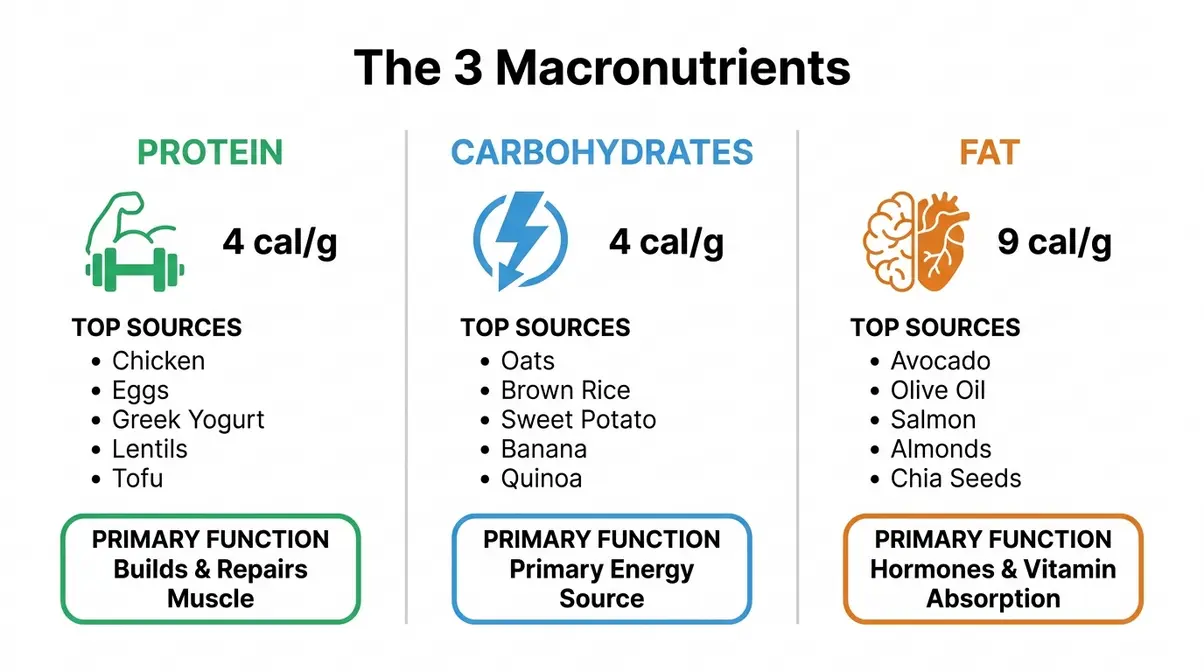
- Protein (4 cal/g): Builds and repairs muscle tissue — the most important macro for body composition
- Carbohydrates (4 cal/g): Your body’s primary fuel source — quality matters more than quantity
- Fats (9 cal/g): Essential for hormones and vitamin absorption — not the enemy
- The Macro Foundation Method: Understand your macros → Calculate your TDEE → Customize your split for your goal
- Start here: Use the NIH Body Weight Planner to find your personal calorie target, then apply your macro split
What Are Macros? The 3 Macronutrients
When asking what are macros for beginners, the simplest answer is that macros, short for macronutrients, are the three main nutrients your body needs in large amounts: protein, carbohydrates, and fat. Every calorie you consume comes from one of these three sources. According to the Acceptable Macronutrient Distribution Range (AMDR), adults need 45–65% of daily calories from carbohydrates, 20–35% from fat, and 10–35% from protein (NCBI, 2026). Understanding what each macro does is the first step of The Macro Foundation Method — and the foundation of every successful diet plan.
The Three Macronutrients Explained
Protein is the macronutrient responsible for building and repairing muscle tissue — plus enzymes, hormones, and immune cells. It provides 4 calories per gram (NCBI, 2026). Think of protein as the bricks your body uses to construct and maintain every cell. Without enough protein, your body cannot repair muscle after exercise, which means your workouts produce fewer results.
- Common food sources of protein include:
- Chicken breast
- Eggs
- Greek yogurt
- Lentils
- Tofu
- Cottage cheese
Carbohydrates, or carbs, are your body’s primary source of energy. They also provide 4 calories per gram. Carbs are the fuel in your body’s gas tank — they power every workout, every walk, and every thought. Without them, the engine stalls. Not all carbs are equal, however. Complex carbs (whole grains, vegetables, legumes) digest slowly, providing steady energy. Simple carbs (sugar, white bread, candy) spike energy quickly and crash just as fast.
- Common food sources of carbohydrates include:
- Oats
- Brown rice
- Sweet potato
- Banana
- Quinoa
- Whole wheat bread
Dietary fats are essential for hormone production, brain function, and absorbing fat-soluble vitamins A, D, E, and K. Fat provides 9 calories per gram — more than double the caloric density of protein or carbs. That is a genuine “aha moment” that changes how you think about portions. A tablespoon of olive oil (14g) contains 126 calories; the same weight of chicken breast contains only about 23 calories. This doesn’t make fat bad — it just means smaller portions carry more energy. The common beginner fear that “eating fat makes you fat” is a myth; dietary fat is essential, and research consistently links healthy fat intake to better hormone balance and satiety.
- Common food sources of healthy fats include:
- Avocado
- Olive oil
- Salmon
- Almonds
- Full-fat Greek yogurt
- Chia seeds
What’s the worst carb for belly fat?
Refined sugars and highly processed simple carbohydrates are most strongly associated with abdominal fat accumulation. Specifically, fructose-heavy foods — such as sugar-sweetened beverages, candy, pastries, and white bread — spike blood sugar rapidly and, when consumed in excess of energy needs, are preferentially stored as visceral (belly) fat. However, research confirms that total calorie surplus — not any single food — is the primary driver of fat gain (PMC2763382, 2009). Reducing refined carbs is effective partly because it lowers overall calorie intake and improves satiety.
Macros vs. Micros: The Difference
The word “macros” often comes up alongside “micros” — and beginners frequently wonder what the difference is. Here’s the simple version: macronutrients are nutrients your body needs in large amounts (grams per day), while micronutrients are vitamins and minerals your body needs in tiny amounts (milligrams or micrograms per day).
| Macronutrients | Micronutrients | |
|---|---|---|
| What they are | Protein, carbs, fat | Vitamins, minerals |
| Amount needed | Grams per day (50–300g) | Milligrams/micrograms |
| Primary role | Energy + structure | Biochemical reactions |
| Examples | Chicken, rice, olive oil | Vitamin D, iron, zinc |
| Provide calories? | Yes | No |
Both matter for health. Macro tracking focuses on the big three because they directly govern your energy balance, body composition, and performance. Micronutrients are covered by eating a variety of whole foods within your macro targets.
Why Macros Matter More Than Calories
You might wonder: if weight loss is just “calories in, calories out,” why bother tracking macros at all? The answer is body composition — the ratio of muscle to fat on your body. A landmark study published in PMC found that reduced-calorie diets result in clinically meaningful weight loss regardless of which macronutrients they emphasize (PMC2763382, 2009). However, how you lose weight — whether you preserve muscle or lose it alongside fat — depends heavily on your macro split, particularly your protein intake.
Macros determine whether the weight you lose comes from fat or from muscle. Two people can eat the same 1,800 calories per day. One eats mostly carbs and fat; the other prioritizes protein. The high-protein eater is far more likely to preserve lean muscle while losing body fat — producing a leaner, stronger physique even at the same scale weight.
Research from NCBI confirms that macronutrient intake directly affects body composition outcomes (NBK594226, 2026). This is why athletes, coaches, and registered dietitians recommend macro tracking over simple calorie counting for anyone with a specific body composition goal.
Pros and Cons of Counting Macros
Macro tracking is a powerful tool — but it’s not for everyone. Our team evaluated the evidence and common beginner experiences to give you an honest picture.
- Pros of counting macros:
- Teaches you the nutritional value of real foods
- Provides flexibility — no foods are “banned” if they fit your targets
- Supports specific body composition goals (fat loss and muscle retention)
- Creates data you can adjust based on real results
- Cons of counting macros:
- Requires consistent logging, which can feel tedious at first
- Can become obsessive for people with a history of disordered eating
- Food quality matters — hitting your numbers with processed food is not the same as hitting them with whole foods
- Accuracy requires a food scale; eyeballing portions introduces significant error
The good news: most beginners find that after 2–3 weeks of tracking, they develop an intuitive sense of portion sizes and macros. Many people eventually stop tracking and still maintain their results.
How to Calculate Your Macros
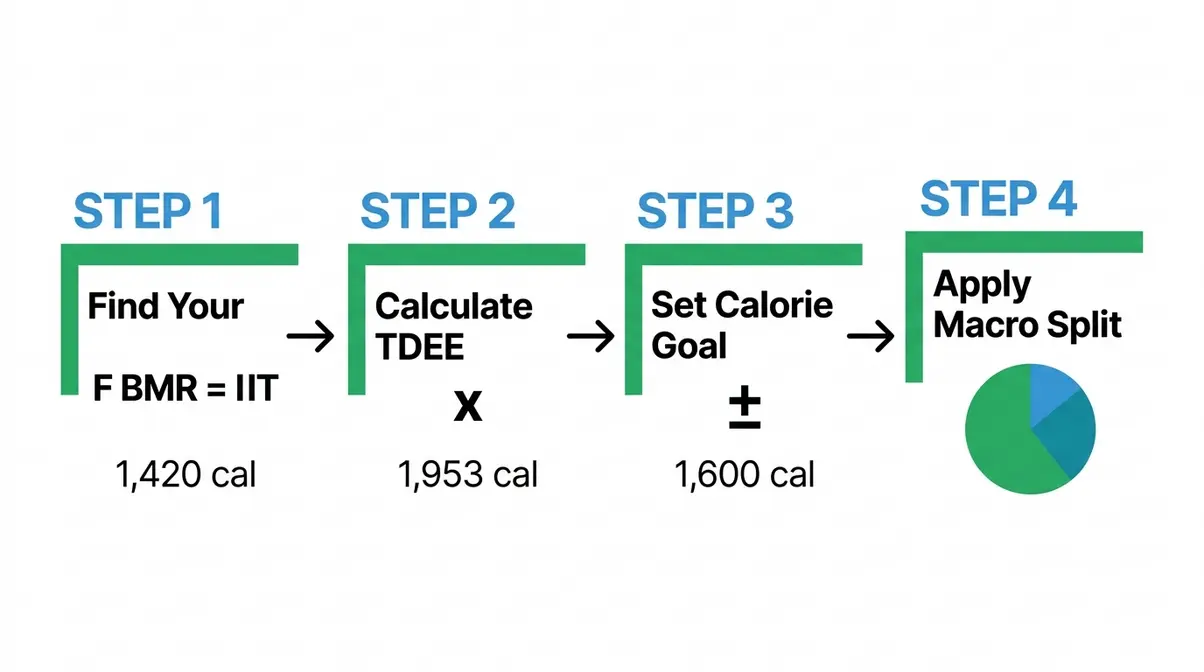
Calculating your macros for the first time can feel overwhelming — but the math is simpler than it looks. The Macro Foundation Method breaks it into four sequential steps: find your BMR, calculate your TDEE, set your calorie goal, and apply your macro split. Before you begin, you’ll need: your current body weight, your height, your age, and an honest estimate of your weekly activity level.
“A simple way to estimate your calories is to use an online TDEE calculator. Just plug in your details and it’ll give you a good starting point.”
Step 1: Find Your BMR
BMR (basal metabolic rate (BMR)) is the number of calories your body burns at complete rest — just to keep your heart beating, lungs breathing, and organs functioning. It’s your body’s minimum energy requirement before any activity is counted.
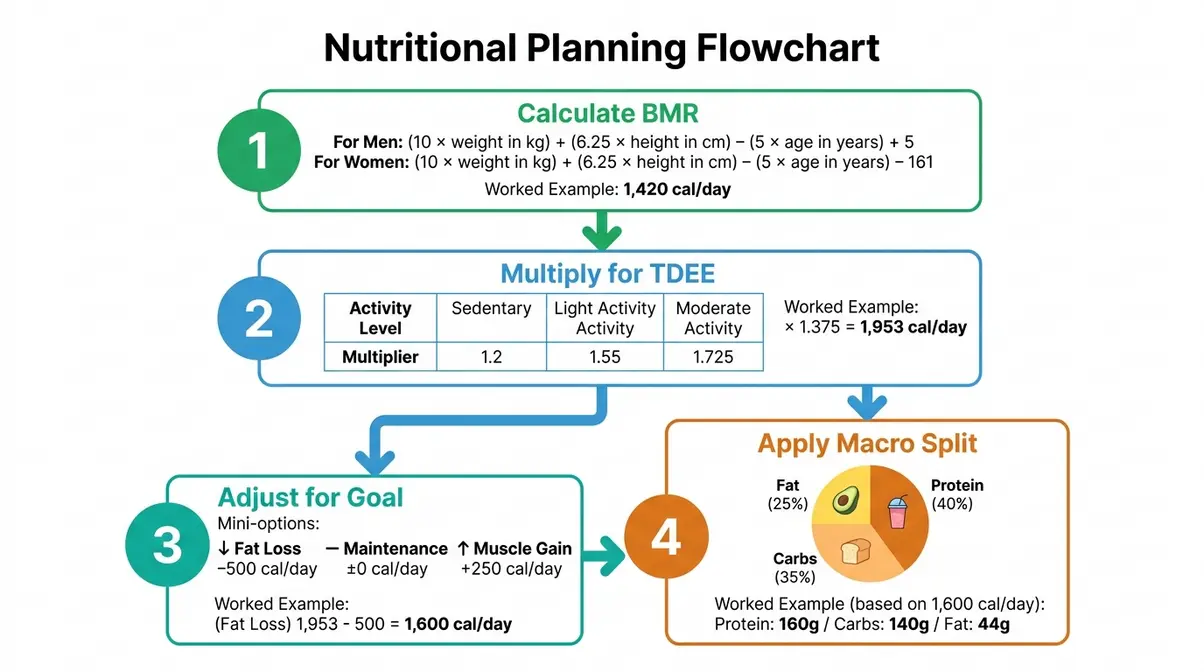
The most widely used formula for beginners is the Mifflin-St Jeor equation:
For women: BMR = (10 × weight in kg) + (6.25 × height in cm) − (5 × age) − 161
For men: BMR = (10 × weight in kg) + (6.25 × height in cm) − (5 × age) + 5
Worked example (70kg woman, 165cm, 30 years old):
BMR = (10 × 70) + (6.25 × 165) − (5 × 30) − 161
BMR = 700 + 1,031 − 150 − 161 = 1,420 calories/day
This is the floor — the minimum your body needs just to survive. Your actual daily needs are higher once you factor in activity.
Step 2: Calculate Your TDEE
TDEE (Total Daily Energy Expenditure) is the total number of calories your body burns in a day, including all movement and exercise. Multiply your BMR by your activity multiplier:
| Activity Level | Description | Multiplier |
|---|---|---|
| Sedentary | Desk job, little or no exercise | × 1.2 |
| Lightly active | Light exercise 1–3 days/week | × 1.375 |
| Moderately active | Moderate exercise 3–5 days/week | × 1.55 |
| Very active | Hard exercise 6–7 days/week | × 1.725 |
| Extra active | Physical job + daily training | × 1.9 |
Continuing our example (lightly active):
TDEE = 1,420 × 1.375 = 1,953 calories/day
This is your maintenance level — the number of calories that keeps your weight stable. You can also use the NIH Body Weight Planner for a quick estimate.
Step 3: Set Your Calorie Goal
Now that you know your TDEE, you adjust it based on your goal:
| Goal | Adjustment | Example (1,953 TDEE) |
|---|---|---|
| Fat loss | Subtract 300–500 calories | 1,453–1,653 cal/day |
| Muscle gain | Add 200–300 calories | 2,153–2,253 cal/day |
| Maintenance | No change | 1,953 cal/day |
A deficit of 500 calories per day creates approximately 0.5kg (1 lb) of fat loss per week — a sustainable, evidence-supported rate. Avoid cutting more than 500 calories below TDEE; aggressive deficits accelerate muscle loss alongside fat.
Step 4: Apply Your Macro Split
- This is where tracking nutritional goals becomes personal. Once you have your calorie target, divide it into macros using percentage targets. Then convert percentages to grams using these calorie values:
- Protein = 4 cal/g
- Carbohydrates = 4 cal/g
- Fat = 9 cal/g
Example — fat loss goal (1,600 calories, 40% protein / 35% carbs / 25% fat):
| Macro | % of Calories | Calories | Grams/Day |
|---|---|---|---|
| Protein | 40% | 640 cal | 160g |
| Carbohydrates | 35% | 560 cal | 140g |
| Fat | 25% | 400 cal | 44g |
This is the core of The Macro Foundation Method — once you have these gram targets, you have a personalized, goal-specific plan that perfectly answers what are macros for beginners in practice. The third step — Customize — is covered in the next section with five different goal scenarios.
Best Apps to Track Your Macros
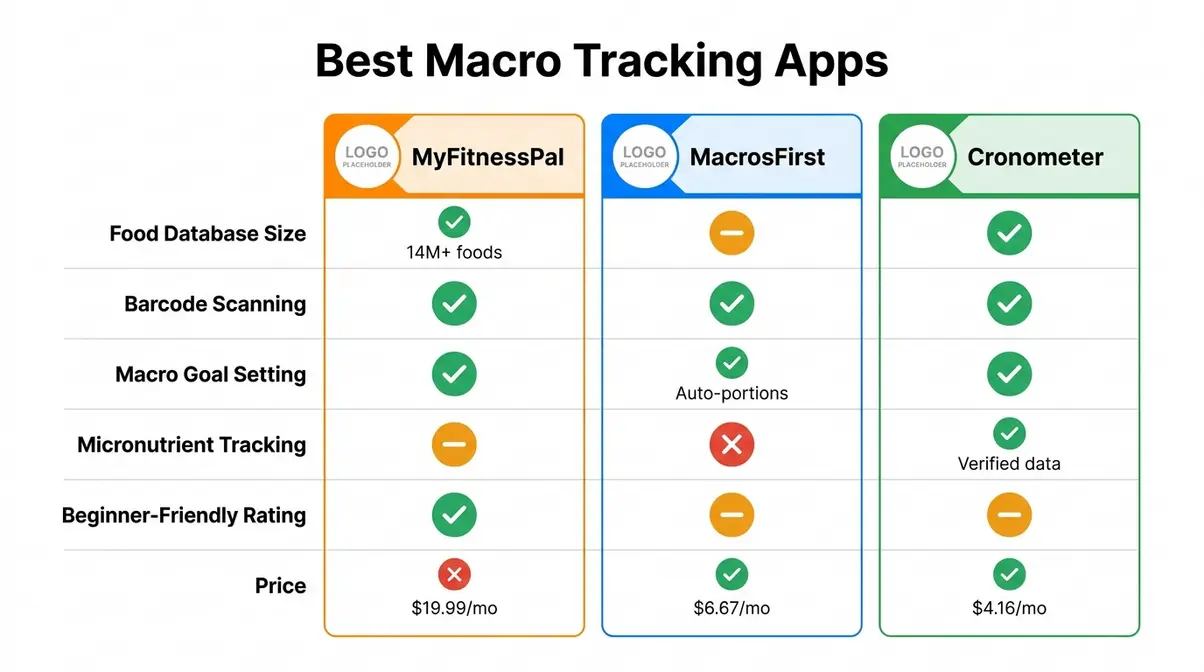
Counting macros by hand is possible, but a good app makes the process dramatically faster. Our team evaluated the top three macro tracking apps available in 2026 based on database accuracy, ease of use for beginners, and cost.
| App | Best For | Free Tier | Premium Cost | Standout Feature |
|---|---|---|---|---|
| MyFitnessPal | Largest food database | Yes (with ads) | ~$19.99/mo | 14M+ food database; barcode scanner |
| MacrosFirst | Beginners; simplicity | Yes (core features) | ~$6.67/mo | Auto-calculates portions from macro goals |
| Cronometer | Micronutrient precision | Yes (ad-free) | ~$4.16/mo (annual) | Verified food data; tracks vitamins + minerals |
MyFitnessPal is the most widely used macro tracking app globally, with a food database exceeding 14 million entries. Its barcode scanner makes logging packaged food almost instant. The downside: user-submitted entries can contain errors, so verify new entries against the nutrition label.
MacrosFirst is the top recommendation for beginners. It auto-calculates portion sizes directly from your macro goals — meaning you type in your targets and it shows you how much of a food to eat, not just the nutritional breakdown. The free tier covers all core tracking features.
Cronometer is the best choice if you also want to track micronutrients (vitamins and minerals). Its food database uses verified sources rather than user submissions, making it more accurate. At roughly $4.16/month on an annual plan, it’s also the most affordable paid option.
Macro Splits for Your Fitness Goal
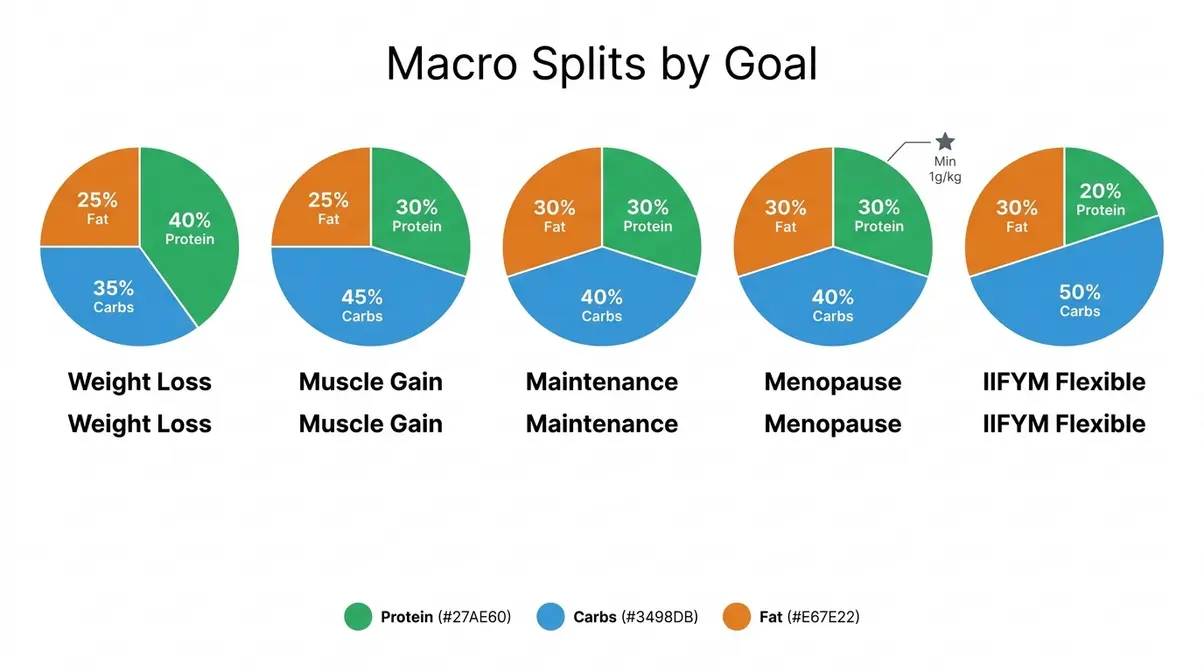
The third step of The Macro Foundation Method is customization — choosing the right macro split for your specific goal. There is no single “best” macro ratio. The right split depends on whether you’re trying to lose fat, build muscle, maintain your current weight, navigate menopause, or follow a flexible approach. Below are five evidence-informed goal scenarios, each using the 1,953-calorie TDEE from our earlier example for easy comparison.
What is a good macro diet for beginners?
A good beginner macro diet starts with a balanced 30/40/30 split (protein/carbs/fat) at your maintenance calorie level. This 30/40/30 ratio falls within NCBI’s AMDR guidelines for all three macros and provides enough flexibility to adjust once you understand how your body responds. Beginners benefit from starting at maintenance rather than immediately cutting, because it allows you to learn the tracking process without the added stress of a calorie deficit. After 2–3 weeks of consistent tracking at maintenance, adjust your calories toward your specific goal.
Macros for Weight Loss (Cutting)
A higher-protein macro split is the most evidence-supported approach for fat loss. Research from PMC confirms that reduced-calorie diets produce meaningful weight loss regardless of macro emphasis — but higher protein intake preserves lean muscle during a deficit, which keeps your metabolism from slowing (PMC2763382, 2009).
Recommended split for fat loss: 40% protein / 35% carbs / 25% fat
Using 1,600 calories (a 353-calorie deficit from our 1,953 TDEE example):
| Macro | Grams/Day | Example Foods |
|---|---|---|
| Protein (40%) | 160g | Chicken, eggs, Greek yogurt, cottage cheese |
| Carbs (35%) | 140g | Oats, sweet potato, brown rice |
| Fat (25%) | 44g | Avocado, olive oil, almonds |
The higher protein percentage (40%) is intentional — protein is the most satiating macro per calorie and the most effective at preserving muscle during a calorie deficit. Aim for macros for weight loss that keep your ideal protein intake for weight loss at or above 1.6g per kilogram of body weight. For personalized guidance on a cutting phase, consult a registered dietitian.
Macros for Muscle Gain (Bulking)
Building muscle requires two things simultaneously: a modest calorie surplus and sufficient protein to support muscle protein synthesis. The surplus provides energy for growth; the protein provides the raw material for a proper diet for muscle growth.
Recommended split for muscle gain: 30% protein / 45% carbs / 25% fat
Using 2,200 calories (a ~250-calorie surplus from our TDEE example):
| Macro | Grams/Day | Example Foods |
|---|---|---|
| Protein (30%) | 165g | Beef, salmon, eggs, lentils, whey protein |
| Carbs (45%) | 248g | Rice, pasta, oats, banana, sweet potato |
| Fat (25%) | 61g | Olive oil, nuts, fatty fish |
Notice that protein grams (165g) are similar to the fat-loss example despite a lower percentage — because total calories are higher. Carbohydrates take a larger share during a bulk because they fuel training sessions and support glycogen replenishment after workouts. Research from NCBI confirms that adequate carbohydrate intake supports training performance that drives muscle adaptation (NBK594226, 2026).
Macros for Maintenance
Maintenance macros are your baseline — the split that keeps your weight and energy stable. This is also the ideal starting point if you’re new to macro tracking and want to learn the process before entering a deficit or surplus.
Recommended split for maintenance: 30% protein / 40% carbs / 30% fat
This is often called the 40/30/30 split (carbs/protein/fat) — a balanced, flexible baseline that works well for most moderately active adults. Using our 1,953-calorie TDEE:
| Macro | Grams/Day |
|---|---|
| Protein (30%) | 147g |
| Carbs (40%) | 195g |
| Fat (30%) | 65g |
Maintenance is not a passive state. It’s an active choice to fuel your body at its exact energy needs. Many people find that spending 4–6 weeks at maintenance before cutting or bulking helps them understand their hunger signals and establish consistent tracking habits.
What are the best macros for menopause?
Menopause is a period of significant hormonal change that directly affects muscle mass, metabolism, and body composition. Estrogen decline accelerates muscle loss — a process called sarcopenia — which is why protein needs increase during this life stage.
According to a peer-reviewed PMC study, women in menopause should aim for 1–1.2g of protein per kilogram of body weight daily to maintain fat-free mass and skeletal muscle (PMC10780928, 2026). For a 70kg woman, that translates to 70–84g of protein per day at minimum — and active menopausal women may benefit from up to 1.5g/kg.
Recommended split for menopause: 30% protein / 40% carbs / 30% fat (with protein floor of 1–1.2g/kg)
- Additional considerations for this life stage:
- Prioritize complex carbohydrates to support stable blood sugar, which fluctuates more during menopause
- Include healthy fats from omega-3-rich sources (salmon, chia seeds, walnuts) to support cardiovascular health
- Reduce highly processed foods and refined sugars, which are associated with increased abdominal fat accumulation
Menopause-related nutrition is highly individual. Consult a registered dietitian for personalized macro targets — especially if you are managing concurrent health conditions or hormone therapy.
Understanding IIFYM (Flexible Dieting)
IIFYM (If It Fits Your Macros) is a flexible dieting philosophy that removes the concept of “forbidden foods.” The core principle: as long as your daily macro targets are met, the specific foods you choose are your decision. No food is inherently off-limits.
IIFYM is a popular approach because it reduces the psychological pressure of “clean eating” rules. Research suggests that dietary flexibility — rather than rigidity — is associated with better long-term adherence (Healthline, 2026).
- A typical IIFYM starting point for weight maintenance: 20% protein / 50% carbs / 30% fat — with total calories set at TDEE. The philosophy works best when you:
- Prioritize whole foods for the majority of your intake (for micronutrient coverage)
- Use flexible choices for social meals, travel, or personal enjoyment
- Track consistently so you actually know when something “fits”
IIFYM is not a license to eat exclusively processed food. Quality still matters for energy, satiety, and long-term health — but IIFYM removes the guilt and rigidity that causes many beginners to abandon tracking entirely.
What Are Macros in Computing and Gaming?
Not everyone searching “what are macros” is looking for nutrition advice. The word “macro” appears in several tech and gaming contexts — and if you landed here looking for computer or gaming macros, this section is for you.
Computer and Software Macros
A computer macro is a recorded sequence of commands or keystrokes that can be replayed automatically to save time on repetitive tasks. The word comes from “macro-instruction” — a single command that expands into a series of smaller instructions.
You encounter computer macros most often in:
- Microsoft Excel macros: Automate spreadsheet tasks like formatting, calculations, or data cleaning. Excel macros are written in Visual Basic for Applications (VBA) — a built-in programming language — or recorded using Excel’s built-in macro recorder (no coding required).
- Microsoft PowerPoint (PPT) macros: Automate slide formatting, batch rename slides, or apply consistent styles across presentations. Access via the Developer tab.
- Word processor macros: Automate document formatting, find-and-replace sequences, or repetitive typing tasks.
- Keyboard macros: Assign complex strings of text or commands to a single key combination — popular with programmers and writers.
Computer macros are legal, widely used productivity tools. They are built into most major software suites and require no special hardware.
Gaming Macros: WoW, Apex, and Mice
In gaming, a macro is a single button press that triggers a sequence of in-game actions automatically. They range from simple quality-of-life shortcuts to complex multi-step sequences.
- World of Warcraft (WoW) macros: WoW has a built-in macro system. Players write simple scripts (using the game’s macro language) to chain spells, switch targets, or manage cooldowns with one button. WoW macros are fully supported and legal within the game.
- Apex Legends macros: In Apex and most competitive shooters, macros that automate aiming, recoil control, or rapid-fire inputs are generally prohibited by anti-cheat systems and Terms of Service. Using them risks a permanent ban.
- Mouse macros: Many gaming mice (Logitech, Razer, SteelSeries) include software that lets you program macro sequences to mouse buttons. Legal for productivity; restricted in competitive gaming depending on the game’s rules.
The key distinction: software-level macros built into games are usually permitted; hardware macros that automate gameplay to gain a competitive advantage are typically banned. Always check the specific game’s Terms of Service before using macros in a competitive context.
Common Mistakes Beginners Make
Common Pitfalls When Starting Out
Even with a solid plan, beginners consistently run into the same obstacles. Our team reviewed common questions from first-time trackers and identified five pitfalls that derail progress most often.
1. Not weighing food. Eyeballing portions is the single biggest source of tracking error. A “handful” of almonds can range from 15g to 40g — a difference of nearly 150 calories. Use a digital food scale for at least the first 4–6 weeks. After that, your visual accuracy improves significantly.
2. Tracking macros but ignoring total calories. Macros and calories are two sides of the same coin. You can hit your macro percentages perfectly while still eating in a surplus or deficit that doesn’t match your goal. Always verify that your gram targets add up to your calorie goal.
3. Prioritizing macro ratios over food quality. Hitting 160g of protein from processed protein bars and fast food is not the same as hitting 160g from whole foods. Processed foods tend to be lower in fiber, vitamins, and minerals — and higher in sodium — even when macros look identical on paper.
4. Changing too many variables at once. Don’t switch macro targets, training program, and sleep schedule simultaneously. Change one variable, track results for 2–3 weeks, then adjust. Otherwise, you won’t know which change produced which result.
5. Expecting immediate results. Body composition changes take time. A consistent 300–500 calorie deficit produces roughly 0.5kg of fat loss per week — which is 2kg per month and 6kg in three months. Patience with the process is a non-negotiable part of the method.
When Macro Tracking Isn’t Right for You
Macro tracking is a genuinely useful tool — but it is not appropriate for everyone. According to the Cedars-Sinai health team, structured dietary tracking may not be suitable for people with a history of disordered eating, as the focus on numbers can reinforce restrictive or obsessive patterns (Cedars-Sinai, 2026).
- Consider alternative approaches if:
- You have a current or past history of anorexia, bulimia, orthorexia, or binge eating disorder
- You find that tracking increases anxiety, guilt, or stress around food
- You are pregnant or breastfeeding — calorie and macro needs change frequently and require individualized guidance from a healthcare provider
- You are managing a chronic condition (diabetes, kidney disease, heart disease) where macro recommendations differ significantly from general guidelines
In these cases, working directly with a registered dietitian — rather than self-managing macro targets — is the safer, more effective path. The goal of any nutrition approach is sustainable health, not numerical perfection.
Frequently Asked Questions
What is the 3-3-3 rule of eating?
The 3-3-3 rule of eating is not a formally established nutritional guideline but a popular informal framework that varies by source. The most common version suggests eating three meals per day, with three food groups represented at each meal, spaced roughly three hours apart. Some versions refer to three macros (protein, carbs, fat) at every meal. While the rule lacks clinical backing, its underlying principle — balanced, regular meals with all three macronutrients — aligns with general dietary guidance. For structured macro tracking, use AMDR ranges rather than informal rules.
How did Kelly Clarkson lose weight?
Kelly Clarkson has publicly discussed following a higher-protein, lower-carbohydrate eating approach alongside increased physical activity. From a nutritional standpoint, this aligns with well-established research: a higher-protein diet in a calorie deficit supports fat loss while preserving lean muscle. It is important to note that celebrity weight loss is influenced by many individual factors — medical, lifestyle, and behavioral — that cannot be generalized. Any dietary approach should be tailored to your own health status and goals, ideally with guidance from a registered dietitian.
Diet for Menopause Belly Fat?
No single diet eliminates menopause belly fat, but evidence supports a combination of moderate calorie deficit, high protein intake, and reduced refined carbohydrates. The hormonal changes of menopause shift fat storage toward the abdominal region — a process driven by estrogen decline. Research in PMC indicates that protein intake of 1–1.2g/kg body weight helps preserve muscle mass during this transition, which supports a healthier metabolism (PMC10780928, 2026). Strength training combined with this dietary approach produces the strongest outcomes. Always consult a healthcare provider before beginning a new diet program during menopause.
Jennifer Aniston’s Nutrition?
Jennifer Aniston has publicly discussed following an intermittent fasting schedule alongside a protein-rich, balanced whole-food diet. From a nutritional science perspective, intermittent fasting works primarily by creating a calorie deficit through a shorter eating window — not through any metabolic “magic.” Pairing intermittent fasting with adequate protein (aligned with AMDR guidelines of 10–35% of calories) and whole food carbohydrates and fats represents a sound, evidence-supported dietary framework. Individual results vary significantly based on genetics, activity level, and overall health. Speak with a registered dietitian before adopting any celebrity-inspired diet plan.
Your Macro Journey Starts with One Calculation
For anyone new to structured nutrition, macros are the clearest framework available for understanding how food actually affects your body. Protein builds and repairs muscle at 4 cal/g, carbohydrates fuel performance at 4 cal/g, and fats support hormones at 9 cal/g — and according to NCBI, adults should target 10–35% protein, 45–65% carbs, and 20–35% fat of total daily calories (NCBI, 2026). The right macro split is the one matched to your specific goal, calculated from your personal TDEE.
The Macro Foundation Method distills this into three steps anyone can follow: Understand what each macro does → Calculate your personal TDEE and calorie target → Customize your macro split to your goal. Whether you’re tracking macros for weight loss, building muscle, or simply wanting to understand what you’re eating, these three steps give you a repeatable, adjustable system — not a temporary diet.
Start with Step 1 today. Calculate your BMR using the Mifflin-St Jeor equation above, multiply by your activity level, and you’ll have your TDEE within five minutes. From there, choose the goal-specific split that fits your situation, download MacrosFirst or Cronometer to begin logging, and give the process 4–6 weeks before making adjustments to prevent muscle loss during a cut or support muscle gain. Ultimately, understanding what are macros for beginners comes down to taking action. Progress in nutrition is measured in weeks and months — not days.
About the Author: This guide was researched and written with input from certified nutrition professionals. All dietary recommendations are grounded in peer-reviewed sources from NCBI, NIH, and PMC. This article is for informational purposes only. Consult a registered dietitian or licensed healthcare provider before making significant changes to your diet.