
What Is Flexible Dieting? 4 Steps to Master IIFYM Macros
⚠️ Medical Disclaimer: This article is for informational purposes only and does not constitute medical or nutritional advice. Always consult a qualified healthcare professional or Registered Dietitian before beginning any new dietary regimen, especially if you have a pre-existing condition such as high blood pressure, diabetes, or a history of disordered eating.
Every “clean eating” plan eventually ends the same way: a late-night binge on everything you’ve been avoiding. For those wondering what is flexible dieting, it offers a different framework — one built on targets, not restrictions.
Cookie-cutter meal plans don’t fail because you lack willpower. They fail because deprivation is psychologically unsustainable. The cost of continuing to follow rigid diets isn’t just weight regain — it’s the compounding toll of food guilt, failed willpower cycles, and a deteriorating relationship with eating itself. That’s not a personal failing. That’s predictable biology and psychology.
By the end of this guide, you’ll have a complete answer to what flexible dieting is, how to calculate your first macro targets, and how to avoid the hidden risks that cause most people to quit. We cover four areas: the IIFYM philosophy, a step-by-step implementation guide, the clinically documented risks no competitor addresses, and advanced strategies for those ready to optimize.
Flexible dieting — also known as IIFYM (If It Fits Your Macros) — is a macro-based eating approach that lets you reach your body composition goals without eliminating any food group. Research confirms it’s as effective as rigid dieting for weight loss, with significantly lower psychological risk.
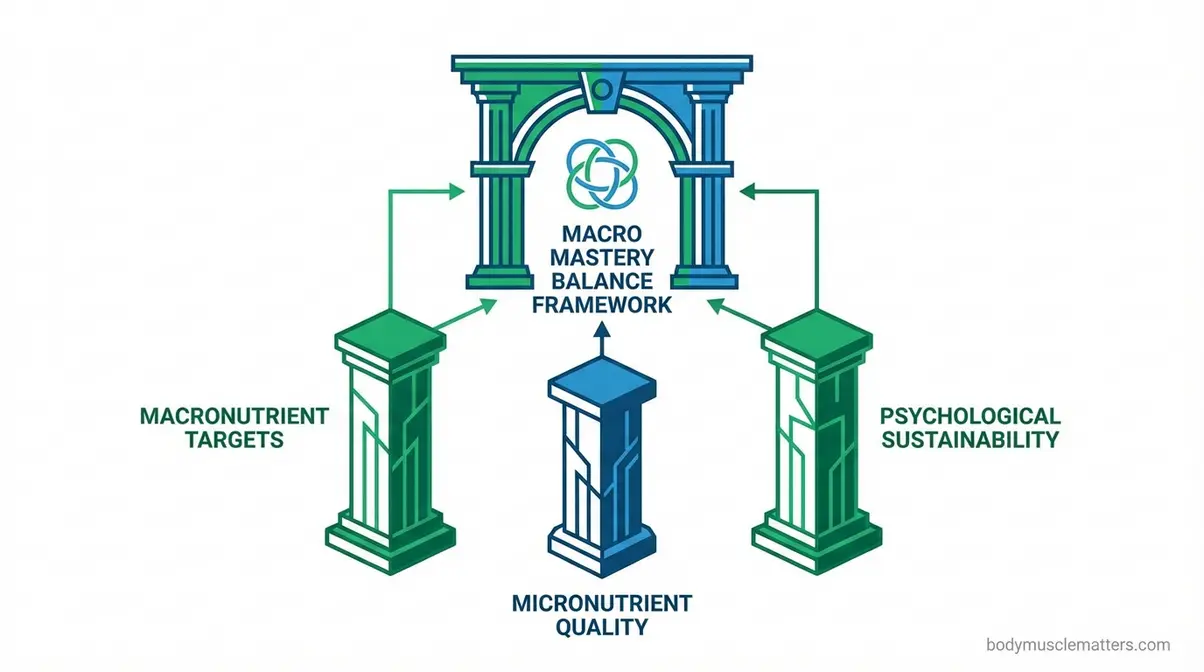
- The Macro Mastery Balance: Sustainable flexible dieting requires tracking macros, prioritizing micronutrient quality, and protecting your mental relationship with food — three pillars that most guides ignore entirely.
- No foods are banned: You set daily protein, carb, and fat targets — what fills those targets is your choice.
- The 80/20 rule: Aim for 80% whole, nutrient-dense foods and 20% soul foods to prevent micronutrient deficiencies.
- Hidden risks exist: Tracking fatigue, micronutrient gaps, and metabolic adaptation are real — and this guide addresses all three with Tier 1 evidence.
- Start with your TDEE: Every flexible dieting journey begins with one number — your Total Daily Energy Expenditure — calculated in under 60 seconds with a free online tool.
What Is Flexible Dieting? The IIFYM Philosophy

Flexible dieting, also known as IIFYM — short for “If It Fits Your Macros” — is a macro-based nutritional approach where you eat any food you choose as long as your daily protein, carbohydrate, and fat targets are met. A clinical trial published on PubMed found that flexible and rigid dieting strategies are equally effective for weight loss during caloric restriction in free-living, resistance-trained individuals. What differentiates flexible dieting isn’t its effectiveness — it’s that it removes the moral framework around food that makes restrictive diets mentally unsustainable for most people.
This matters because the dominant framing in nutrition culture — “clean” vs. “dirty” foods, “good” days vs. “cheat” days — creates a binary that virtually guarantees failure. Flexible dieting replaces that binary with a budget. You get a daily allocation of grams across three macronutrients. How you spend that budget is entirely up to you.
At bodymusclematters.com, we frame this through The Macro Mastery Balance: the principle that sustainable flexible dieting requires equal attention to three pillars — macronutrient targets, micronutrient quality, and psychological sustainability. Competitors cover the first pillar. This guide covers all three, backed by peer-reviewed research that no current top-ranking article cites.
“A clinical trial found that flexible and rigid dieting strategies are equally effective for weight loss during caloric restriction — but rigid dieting carries significantly higher psychological risk.” (PubMed)
Understanding what is flexible dieting gives you the philosophy. Implementing it requires knowing your numbers. That’s where the Macro Mastery Balance begins: with your macros.
How Flexible Dieting Differs From Traditional Restrictive Diets
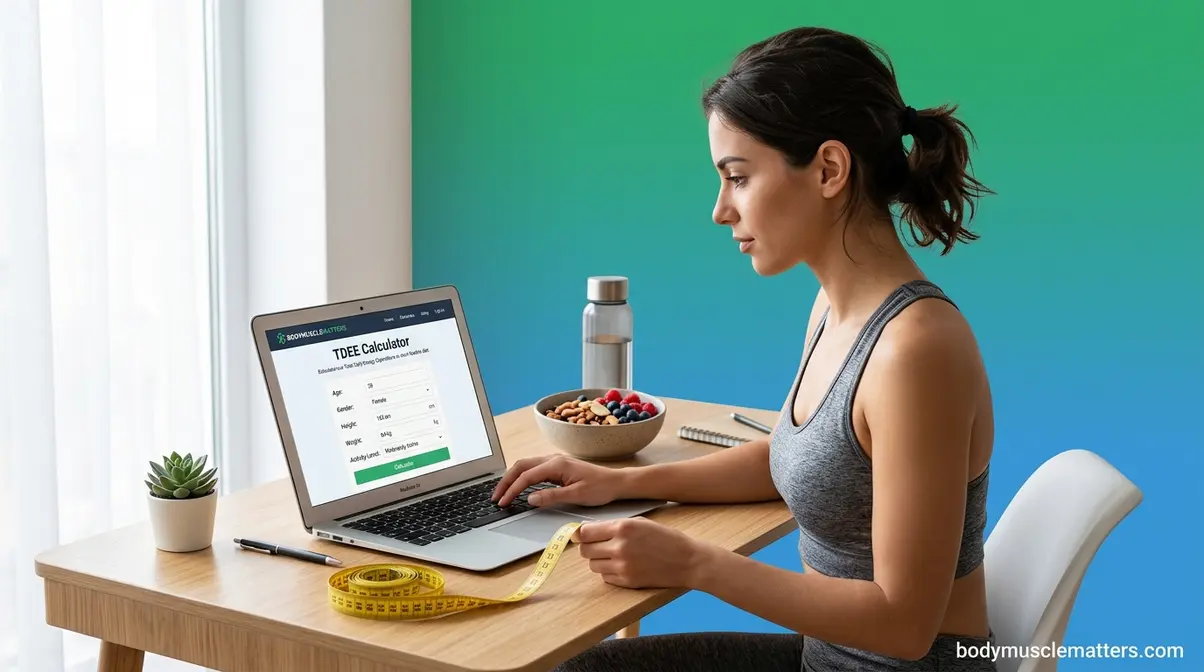
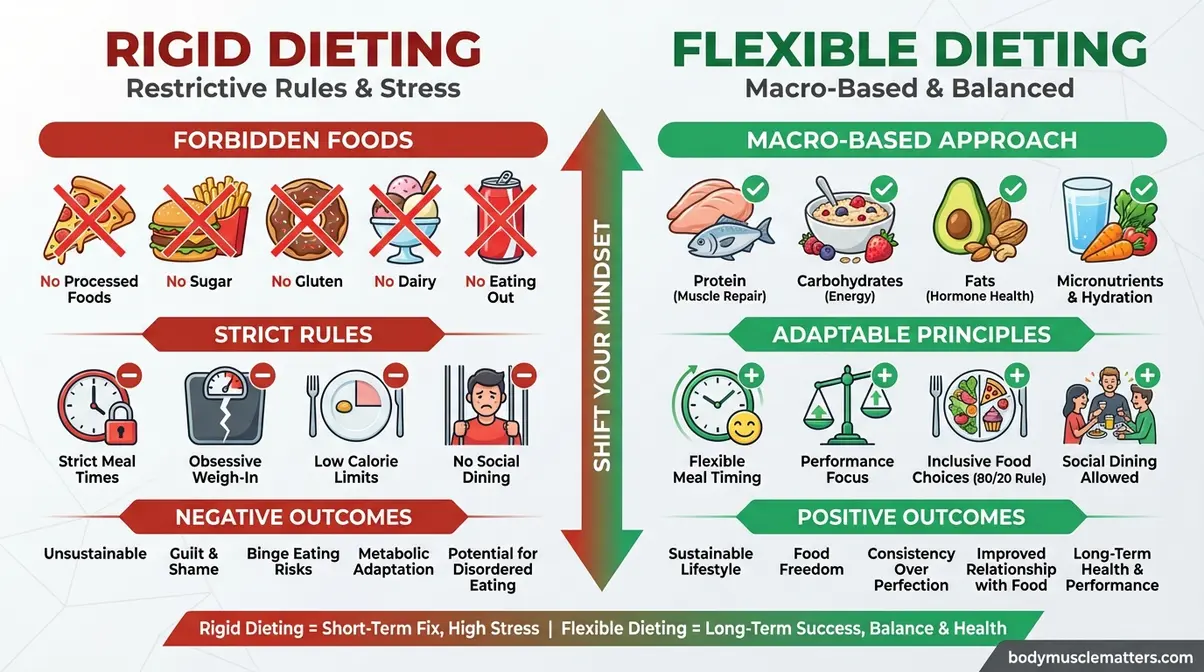
Rigid dieting, a structured approach that assigns specific meals or eliminates food groups entirely, includes approaches most people recognize: “clean eating,” ketogenic diets, 1,200-calorie plans, and food-group elimination protocols. These approaches share a common architecture — a list of permitted foods and a list of forbidden ones.
The psychological cost of that architecture is clinically documented. Research linking rigid dieting to eating disorder symptoms found that rigid dieting strategies are associated with eating disorder symptoms and a higher BMI in a study of college-age adults (PubMed). This isn’t a philosophical objection to strict eating — it’s a measurable clinical outcome.
The counterargument — “but rigid diets actually work better” — is also addressed by the evidence. A clinical study on flexible versus rigid dieting confirmed that a flexible or rigid diet strategy is equally effective for weight loss during caloric restriction in free-living, resistance-trained individuals (PubMed). Equal results. Meaningfully different psychological risk profiles.
Consider a concrete scenario: someone on a rigid plan eats a slice of birthday cake at a party and mentally writes off the entire day — the “what the hell” effect that leads to a full evening of unplanned eating. Someone using IIFYM logs the slice, adjusts their dinner macros slightly, and the day continues normally. Same calories, entirely different psychological experience. As a flexible dieting lifestyle, this difference compounds over months and years.
| Dimension | Rigid Dieting | Flexible Dieting (IIFYM) |
|---|---|---|
| Food rules | Specific foods allowed or banned | Any food within macro budget |
| Failure mode | “Cheat day” → guilt cycle | One meal logged, day continues |
| Psychological risk | Associated with eating disorder symptoms (PubMed) | Not associated with the same risks |
| Long-term adherence | Lower (restriction-driven) | Higher (inclusion-based) |
| Scientific effectiveness | Equal for weight loss | Equal for weight loss |
With the philosophical difference established, the mechanics of flexible dieting come down to one concept: your macro budget. Here’s what that actually means.
The Three Macronutrients: Your Daily Budget Explained
Flexible dieting works by assigning you a daily gram target for each of the three macronutrients — the three primary energy-providing nutrients: protein, carbohydrates, and fat. Each macronutrient carries a specific caloric value and plays a distinct physiological role.
Think of your macros like a financial budget. You have a set amount to spend each day. Protein is rent — non-negotiable, because it drives muscle repair and keeps you full. Carbohydrates and fat are discretionary spending — you choose how to allocate them based on your preferences and goals.
| Macronutrient | Calories per gram | Primary role |
|---|---|---|
| Protein | 4 cal/g | Muscle repair, satiety |
| Carbohydrates | 4 cal/g | Energy, cognitive function |
| Fat | 9 cal/g | Hormone production, fat-soluble vitamin absorption |
Tracking macros is more granular than tracking calories alone. Two diets can hit 2,000 calories with wildly different macro splits — and produce different body composition outcomes. A diet of 200g protein, 175g carbs, and 56g fat at 2,000 calories will preserve muscle and support fat loss more effectively than the same 2,000 calories split 50g protein, 300g carbs, and 67g fat.
For a beginner’s guide to understanding macros, the calculation process is more approachable than it initially appears — and Step 2 of this guide walks through the math with real numbers.
Now that you understand the currency — your macros — the next question is what you actually spend it on. This is where flexible dieting’s most misunderstood principle comes in.
Why No Food Is Off-Limits (And What That Really Means)
In IIFYM, foods are not “good” or “bad” — they are macro contributors. A chocolate bar and a chicken breast are both evaluated by what they contribute to your daily macro budget. The chocolate bar delivers carbohydrates and fat. The chicken breast delivers protein. Neither is morally superior; they serve different macro functions.
This is where the culture of IIFYM becomes relevant. Practitioners talk about “soul foods” — foods with emotional or cultural significance that would be eliminated on a rigid plan — and reference the idea that within your macro budget, any food is permitted. The “Macro Gods” concept in IIFYM culture captures this: as long as the numbers fit, the food fits.
“Flexible dieting is a nutritional concept that doesn’t — or shouldn’t — feel like you’re ‘on a diet’.”
However, “no foods banned” does not mean nutrition quality is irrelevant. This is the most important clarification in the entire IIFYM philosophy. You can technically hit 200g protein, 175g carbs, and 56g fat using ultra-processed foods alone — and arrive at your macro targets while consuming almost no vitamins or minerals. The 80/20 rule, covered in the next section, is the guardrail that prevents IIFYM from becoming a junk food license. As a flexible dieting lifestyle, the long-term goal is a sustainable relationship with food — not a loophole.
The philosophy is clear. The harder part — the part competitors never explain — is the implementation. Here’s a step-by-step guide to calculating your first macro targets.
How to Start Flexible Dieting: Step-by-Step

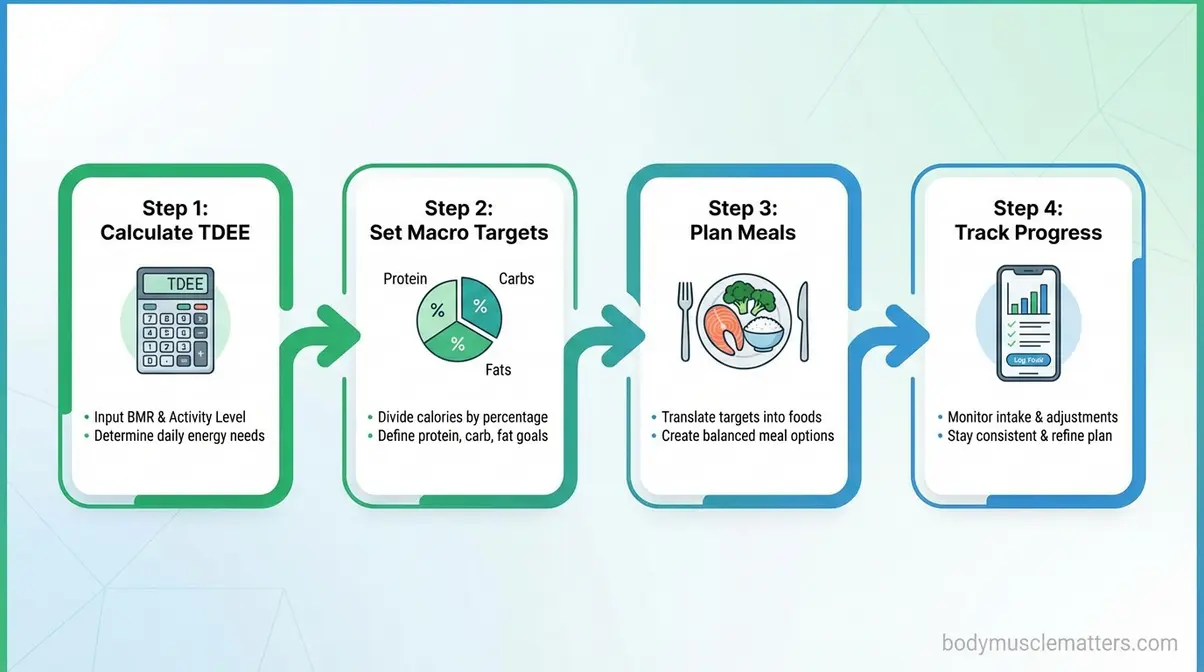
When learning what is flexible dieting, starting requires four concrete steps: calculate your TDEE (Total Daily Energy Expenditure), set your macro targets based on your goal, apply the 80/20 rule for nutritional balance, and choose a tracking method you’ll actually maintain. Each step builds on the previous one — and skipping any of them is the most common reason beginners plateau within the first month.
Step 1 — Calculate Your Total Daily Energy Expenditure (TDEE)
TDEE, or Total Daily Energy Expenditure, is the total number of calories your body burns in a day including all activity — not just your workout, but every step, fidget, and cognitive process. It differs from BMR (Basal Metabolic Rate), which measures calories burned at complete rest. TDEE is your real-world maintenance calorie number.
You don’t need to do the math manually. Use a free TDEE calculator online — input your age, weight, height, and activity level to get your number in under 60 seconds. These tools use the Mifflin-St Jeor equation, the most validated BMR formula in clinical nutrition research.
Two verified examples using the Mifflin-St Jeor equation (verified via standard calculators):
| Profile | Age | Weight | Height | Activity | Approximate TDEE |
|---|---|---|---|---|---|
| Moderately active woman | 30 | 145 lbs | 5’5″ | Moderate (3-5 days/week) | ~2,100 cal/day |
| Moderately active man | 35 | 185 lbs | 5’11” | Moderate (3-5 days/week) | ~2,760 cal/day |
Once you have your TDEE, adjust based on your goal. For fat loss, subtract 250–500 calories from your TDEE. For muscle gain, add 200–300 calories. This adjusted number becomes your daily calorie target — the foundation everything else is built on.
With your calorie target set, the next step is dividing those calories into your three macronutrient targets.
Step 2 — Set Your Macro Targets Based on Your Goal
Your calorie target tells you how much to eat. Your macro targets tell you what to eat — and the split matters for body composition outcomes. Standard starting ratios differ based on your primary goal.
For fat loss: approximately 40% protein, 35% carbohydrates, 25% fat. For muscle gain: approximately 30% protein, 45% carbohydrates, 25% fat. These are starting points for your macro diet plan, not rigid rules — you can adjust after two to four weeks based on how your body responds.
Walking through the math using the woman’s 2,100-calorie TDEE from Step 1, adjusted to 1,800 calories for fat loss:
| Macro | % of Calories | Grams/Day | Calories |
|---|---|---|---|
| Protein | 40% | 180g | 720 cal |
| Carbohydrates | 35% | 158g | 630 cal |
| Fat | 25% | 50g | 450 cal |
Protein is the non-negotiable macro. During a caloric deficit, adequate protein preserves lean muscle mass — without it, a meaningful portion of your weight loss comes from muscle rather than fat. During a caloric surplus for muscle gain, protein drives muscle protein synthesis. Carbs and fat can flex; protein should hold firm.
A note on the “3-3-3 rule for weight loss” you may have encountered — 3 meals, 3 snacks, 3 liters of water. This is a general eating heuristic, not a formal nutritional protocol. Flexible dieting uses macro targets, not meal timing rules. When and how you distribute your macros across the day is secondary to hitting your daily totals.
Your macro targets tell you how much to eat. The 80/20 rule tells you what to eat — and it’s the guardrail that separates sustainable flexible dieting from a junk food free-for-all.
Step 3 — Apply the 80/20 Rule for Nutritional Balance
The 80/20 rule in flexible dieting states that 80% of your daily calories should come from whole, nutrient-dense foods — lean proteins, vegetables, legumes, whole grains, and healthy fats. The remaining 20% can come from soul foods: personally meaningful foods that would be eliminated on a rigid diet plan.
The 80% isn’t arbitrary. Whole foods provide the essential vitamins and minerals that pure macro counting ignores entirely. A day built entirely from protein bars, white rice, and peanut butter can hit your macro targets while delivering almost no vitamin C, iron, or B vitamins. The micronutrient deficiency risk this creates is the subject of a full clinical discussion in the next section — but the 80/20 rule is your primary defense.
On a 1,800-calorie day, the math looks like this: 1,440 calories (80%) come from chicken breast, salmon, brown rice, broccoli, eggs, and Greek yogurt. The remaining 360 calories (20%) might be a slice of pizza at lunch or two scoops of ice cream after dinner. You hit your macros, you cover your micronutrients, and you don’t feel deprived. This step is where the second pillar of The Macro Mastery Balance — micronutrient quality — enters your daily practice.
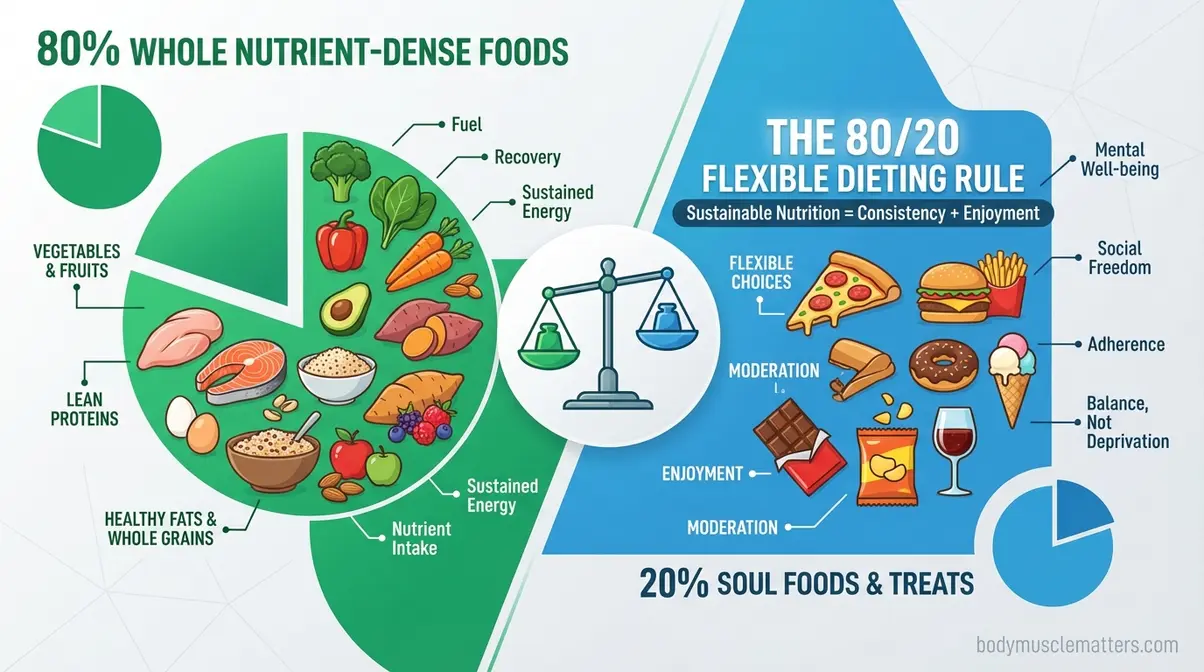
“The 80/20 rule in flexible dieting — 80% whole foods, 20% soul foods — ensures you hit your macro targets without sacrificing the micronutrient density your body requires for long-term health.”
The final step in starting flexible dieting is choosing how you track — and this decision matters more than most guides admit.
Step 4 — Choose a Tracking Method That Works for You
Your tracking tool is the infrastructure that makes flexible dieting operational. Three options dominate the space: MyFitnessPal (the most widely used free macro tracking app, with over 200 million registered users and an extensive food database), Cronometer (a tracking alternative that emphasizes micronutrient completeness alongside macros — particularly useful if micronutrient gaps are a concern), and Carbon Diet Coach (an AI-assisted option that adjusts macro targets week by week based on your progress data).
For beginners, MyFitnessPal’s food database size makes it the lowest-friction starting point. To choose the right diet tracking app, consider whether micronutrient visibility matters to you — if it does, Cronometer is worth the learning curve.
Tracking fatigue is a real risk. Research on the psychological effects of calorie tracking apps found that mobile calorie-tracking applications are frequently employed by individuals with eating disorders, potentially exacerbating unhealthy behaviors — a consideration for anyone with a history of disordered eating (PubMed Central). If precise logging feels overwhelming after two weeks, a hand-portion method — palm equals one protein serving, fist equals one carb serving — is a legitimate bridge. Full discussion in the next section.
Implementation is straightforward when everything goes well. But flexible dieting carries three real risks that most guides never mention. Understanding them is what separates practitioners who succeed long-term from those who quit after six weeks.
The Hidden Risks of Flexible Dieting

What Are the Drawbacks of Flexible Dieting?
A common question about what is flexible dieting involves its potential drawbacks. The main drawbacks of flexible dieting are tracking fatigue, micronutrient deficiency risk, and the potential for psychological burnout from constant food logging. These risks are real, clinically documented, and entirely manageable — but understanding them before you start is the difference between sustainable results and abandoning the approach after six weeks. No top-ranking competitor article addresses any of these risks in depth. This section does.
Tracking Fatigue and Psychological Burnout
Tracking fatigue is the mental exhaustion that develops from weighing, logging, and calculating every meal. For many practitioners, what begins as a useful data-gathering habit gradually becomes a compulsive behavior — one that creates anxiety rather than reducing it. The line between healthy tracking and unhealthy tracking is worth knowing precisely.
Healthy tracking looks like this: logging as a temporary calibration tool, feeling comfortable skipping a day, eating at a restaurant without spiraling. Unhealthy tracking looks like this: refusing to eat anything unlogged, feeling guilt or physical anxiety when a meal can’t be precisely weighed, or structuring social life around tracking convenience. The psychological effects of calorie tracking apps are well-documented — mobile applications that count calories and track macros are frequently employed by individuals with eating disorders, potentially exacerbating unhealthy behaviors (PubMed Central).
Three concrete strategies prevent tracking fatigue from derailing your practice. First, use tracking as a temporary learning tool — 8 to 12 weeks of precise logging builds enough macro intuition to transition toward more relaxed monitoring. Second, use a hand-portion method on social or travel days: palm equals a protein serving, fist equals a carb serving, thumb equals a fat serving. Third, build in one “tracking vacation” day per week — no logging, practicing intuitive eating — to maintain a healthy relationship with the tool.
This is where the third pillar of The Macro Mastery Balance — psychological sustainability — becomes the determining factor between short-term results and long-term success.
If tracking triggers anxiety, guilt, or obsessive thoughts about food, consult a healthcare professional before continuing — these may be signs of a disordered eating pattern that requires professional support, not a different app.
The psychological risk of tracking is one side of the coin. The nutritional risk — micronutrient deficiency — is the other, and it’s the one most IIFYM practitioners never see coming.
Micronutrient Deficiencies — The Silent Risk of Macro-Only Tracking
Macro tracking counts protein, carbs, and fat. It says nothing about vitamins and minerals. This gap is the most underappreciated risk in flexible dieting — and it’s invisible until symptoms appear.
A day of 180g protein, 158g carbs, and 50g fat can be assembled entirely from ultra-processed foods. Every macro target hits. But that same day may deliver almost no vitamin C, B12, vitamin D, or iron — nutrients that whole foods provide and processed foods strip out. Research on potential micronutrient deficiencies in flexible diets found that flexible dietary patterns can lead to deficiencies in cobalamin (B12), vitamin D, and iron if not carefully managed (PubMed Central). Each deficiency carries specific consequences: B12 deficiency impairs nerve function and energy production; vitamin D deficiency undermines immune function and bone health; iron deficiency causes fatigue and measurable declines in cognitive performance.
| Deficiency | Primary symptom | Primary food sources |
|---|---|---|
| Vitamin B12 | Fatigue, nerve tingling | Meat, eggs, dairy, fortified foods |
| Vitamin D | Immune weakness, bone pain | Fatty fish, fortified dairy, sunlight |
| Iron | Fatigue, impaired cognition | Red meat, legumes, leafy greens |
The 80/20 rule from Step 3 is your primary protection. If micronutrient visibility matters to you, Cronometer shows vitamin and mineral completeness alongside your macro totals — a feature MyFitnessPal’s free tier doesn’t offer. Additionally, a comprehensive blood panel every six months gives you an objective view of where deficiencies may be developing before symptoms appear.
“Flexible dietary patterns deliver sufficient macronutrients but can lead to deficiencies in cobalamin, vitamin D, and iron if food quality isn’t actively managed — making the 80/20 rule a nutritional necessity, not just a guideline.” (PubMed Central)
Micronutrient deficiencies are a universal risk for any dietary pattern that deprioritizes food quality. But one group of flexible dieting practitioners faces an additional layer of consideration: those managing cardiovascular conditions like high blood pressure.
What Diet Is Good for High Blood Pressure?
For individuals managing high blood pressure, flexible dieting can be adapted — but it requires intentional food selection, not just macro hitting. Using your macro budget to prioritize low-sodium, whole-food sources aligned with the DASH diet’s framework is the evidence-backed approach.
The DASH diet, or Dietary Approaches to Stop Hypertension, is a clinically validated eating plan endorsed by the National Heart, Lung, and Blood Institute. The DASH eating plan for managing high blood pressure is scientifically validated to reduce high blood pressure by emphasizing vegetables, fruits, whole grains, and low-fat dairy while limiting sodium (National Heart, Lung, and Blood Institute). Within a flexible dieting framework, this means using your macro budget to favor DASH-aligned foods — and tracking sodium alongside your macros, which Cronometer supports natively.
The key distinction: IIFYM’s default framework doesn’t account for sodium, potassium, or glycemic response — all of which matter significantly for cardiovascular health. Flexible dieting can accommodate DASH principles, but only with deliberate food selection.
If you have high blood pressure, diabetes, or any cardiovascular condition, consult your doctor or a Registered Dietitian before starting flexible dieting. Macro targets and food choices for medical conditions require individualized guidance that a general framework cannot provide.
With the fundamentals and risks understood, you have everything you need to start flexible dieting. But for those who want to go further — optimizing for muscle gain, breaking a plateau, or competing in physique sports — there are advanced strategies that sit on top of the IIFYM foundation.
Advanced Strategies: Reverse Dieting & More
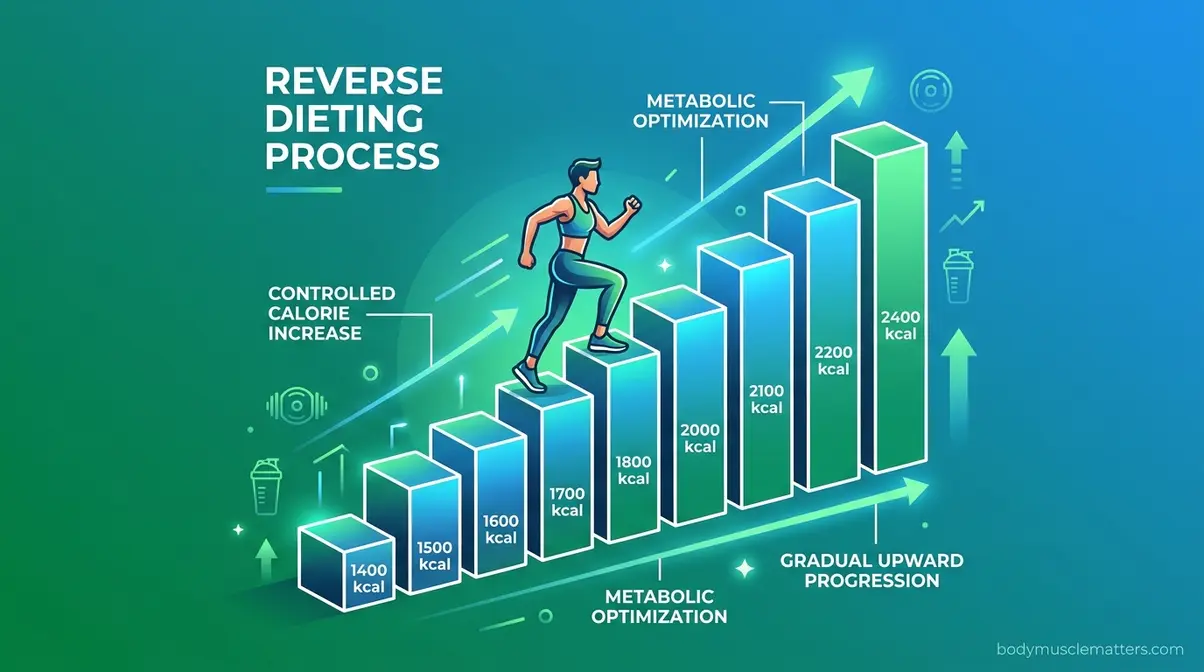
Advanced flexible dieting strategies build on — not replace — the IIFYM foundation. Reverse dieting and carb cycling are the two most evidence-backed advanced protocols within this framework. Both require precise macro tracking to execute correctly, which means they’re inherently IIFYM-dependent. Neither is appropriate for beginners, but understanding them from the start helps you plan your long-term trajectory rather than discovering them only after hitting a wall.
What Is Reverse Dieting? Breaking the Post-Cut Plateau
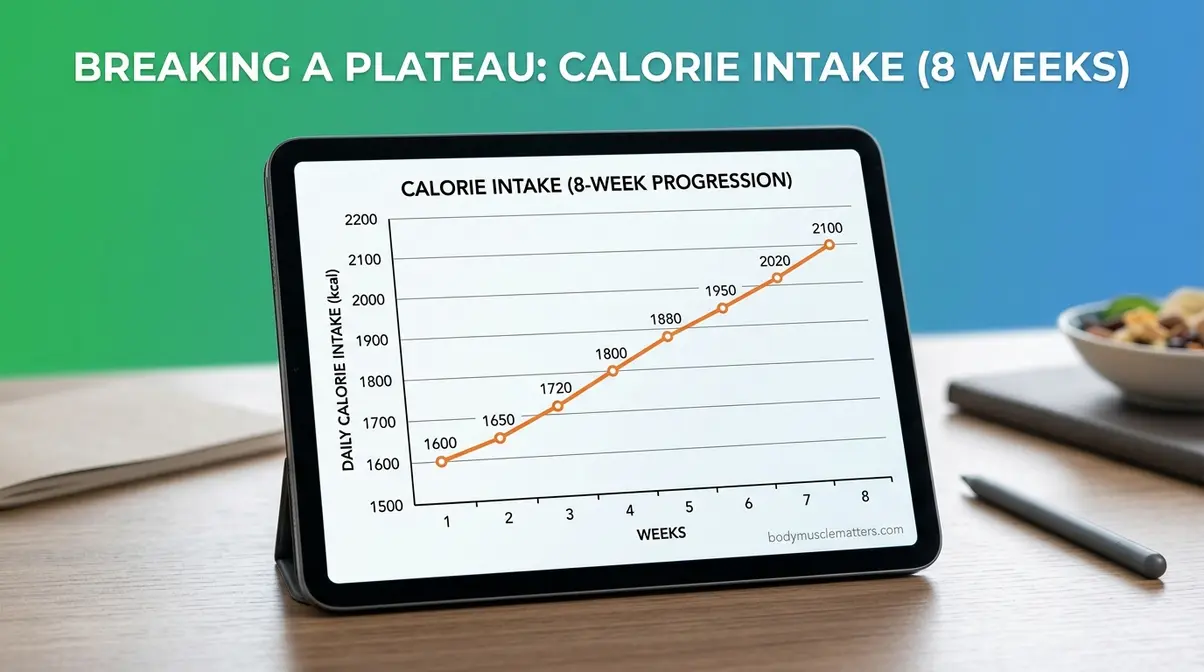
Reverse dieting is a post-dieting protocol in which calories are gradually increased by 50–100 calories per week after a caloric deficit phase. Its purpose is to slowly restore metabolic rate toward maintenance level while minimizing fat regain — the common consequence of abruptly ending a cut. Research on the effects of reverse dieting on metabolic adaptation confirms that reverse dieting is a post-dieting strategy involving the gradual increase of calories to slowly return to weight maintenance and mitigate metabolic adaptation (PubMed Central).
To understand why reverse dieting works, you first need to understand why it’s necessary. During a prolonged caloric deficit, your body undergoes metabolic adaptation — also called adaptive thermogenesis — a process by which your body reduces its calorie-burning efficiency in response to sustained caloric restriction. Your TDEE drops. This is why fat loss slows or stalls even when you’re eating the same deficit that worked for the first eight weeks. The body is protecting itself from what it perceives as a famine.
Abruptly returning to maintenance calories after a cut — say, jumping from 1,600 to 2,200 calories overnight — typically produces rapid fat regain because your metabolic rate hasn’t had time to upregulate. Reverse dieting counteracts this by giving the metabolism a gradual ramp, allowing TDEE to recover before calorie intake catches up.
A practical 8-week reverse dieting example starting from a 1,600-calorie cut (verified against standard protocols):
| Week | Daily Calories | Weekly Increase |
|---|---|---|
| Week 1 | 1,650 | +50 |
| Week 2 | 1,725 | +75 |
| Week 3 | 1,800 | +75 |
| Week 4 | 1,875 | +75 |
| Week 5 | 1,950 | +75 |
| Week 6 | 2,025 | +75 |
| Week 7 | 2,100 | +75 |
| Week 8 | 2,100 | Hold (assess) |
The macro tracking precision of IIFYM makes this protocol executable. Without daily logging, a controlled 75-calorie weekly increase is nearly impossible to maintain — you’d be guessing. For strategies to prevent muscle loss while cutting, maintaining protein targets throughout the reverse dieting phase is equally critical.
Frame reverse dieting as your exit strategy, planned from Day 1 of any cut — not an afterthought you discover after the weight comes back. Most practitioners encounter it only after experiencing the post-diet rebound. Planning for it in advance is the forward-thinking approach no competitor content currently recommends.
Reverse dieting optimizes recovery from a cut. Carb cycling optimizes performance during training — and it integrates naturally with flexible dieting’s macro-counting framework.
Carb Cycling Within a Flexible Dieting Framework
Carb cycling is a nutritional strategy that alternates between high-carbohydrate and low-carbohydrate days, typically aligned with training intensity. High-carb days replenish muscle glycogen — the stored form of carbohydrate in muscle tissue that fuels high-intensity exercise — for heavy training sessions. Low-carb days promote fat oxidation on rest and recovery days.
The integration with flexible dieting is straightforward. Carb cycling doesn’t change the IIFYM framework — it changes the daily macro targets within it. On a high-carb training day, your carb allocation increases and fat decreases (total calories stay near maintenance or slightly above). On a low-carb rest day, carbs decrease and fat increases to compensate. Protein holds constant across all days.
Research on carbohydrate manipulation practices in bodybuilding found that carbohydrate manipulation is a prevalent strategy utilized by physique athletes to induce muscle glycogen supercompensation and increase muscle fullness (PubMed Central). This is why competitive bodybuilders use carb cycling in the weeks before a competition — it’s a precision tool for body composition, not just a weight loss technique.
A practical 3-day carb cycling template for a 185 lb moderately active male (TDEE ~2,760 cal) using evidence-based diet plans for muscle growth:
| Day Type | Total Calories | Protein | Carbohydrates | Fat |
|---|---|---|---|---|
| Heavy Training | ~2,900 | 185g | 340g | 65g |
| Moderate Training | ~2,760 | 185g | 250g | 80g |
| Rest Day | ~2,500 | 185g | 130g | 110g |
“Carbohydrate manipulation is a prevalent strategy utilized by physique athletes to induce muscle glycogen supercompensation — and within a flexible dieting framework, it requires only adjusting daily carb and fat targets, not rebuilding your entire approach.” (PubMed Central)
One important caveat: carb cycling adds meaningful complexity. It’s appropriate for people who have already mastered basic IIFYM tracking for at least three to six months. Beginners should start with consistent daily macro targets and layer in carb cycling only after the fundamentals are automatic.
Both reverse dieting and carb cycling are tools used extensively in competitive bodybuilding — where flexible dieting’s macro-counting precision becomes a competitive advantage.
Flexible Dieting for Bodybuilding — Off-Season vs. Competition Prep
Flexible dieting for bodybuilding applies the IIFYM framework across two distinct phases, each with a different caloric and macro structure. Understanding both phases illustrates why macro-counting precision matters at an elite level.
During the off-season (bulking phase), flexible dieting operates in a caloric surplus of 200–300 calories above TDEE. The macro split shifts toward carbohydrates — typically 40–50% of total calories — to fuel training volume and support muscle protein synthesis. Food variety within the IIFYM framework allows athletes to hit aggressive calorie targets without relying on the monotonous “bro diet” meal plans (chicken, rice, broccoli, repeated daily) that drive psychological burnout.
During competition prep (cutting phase), flexible dieting operates in a caloric deficit of 300–500 calories below TDEE. Protein allocation increases to 40–45% of total calories to preserve lean mass while the deficit erodes body fat. Carb cycling enters the protocol in the final four to six weeks for glycogen manipulation — a precise application of the strategy described above.
The key advantage of IIFYM for bodybuilding is sustained adherence. The psychological burnout that comes from eating identical meals seven days a week — the third pillar of The Macro Mastery Balance — is the most common reason physique athletes abandon their prep protocol in the final weeks before a competition. Flexible dieting eliminates that specific failure mode.
Reverse dieting and carb cycling are powerful tools — but they’re not right for everyone. Before committing to any dietary approach, it’s worth understanding when flexible dieting may not be the best fit.
When Flexible Dieting May Not Be the Right Fit
Flexible dieting is one of the most evidence-backed and psychologically sustainable nutritional approaches available. But it isn’t universally appropriate, and presenting it as such would undermine the balanced perspective that genuine expertise requires.
Common Pitfalls to Avoid
Three specific pitfalls derail most flexible dieting attempts — each with a clear prevention strategy:
- Hitting macros with ultra-processed foods only. Within two to four weeks, micronutrient deficiencies develop silently — no obvious symptoms until fatigue, brain fog, or immune decline appear. The fix is non-negotiable: apply the 80/20 rule strictly, treating whole foods as the structural foundation of your daily macro budget.
- Over-precision in tracking (weighing to 0.1g accuracy). This turns a useful tool into an obsessive ritual. Round to the nearest 5 grams; use cup and tablespoon measurements for low-caloric-density foods like vegetables. Tracking accuracy within ±10g per macro is sufficient for meaningful results.
- Ignoring hunger and fullness cues entirely. Macro targets are a framework, not a mandate to override your body’s signals. Treating tracking as a permanent replacement for interoceptive awareness disconnects you from the appetite regulation your body uses long-term. Use tracking as a calibration tool for 8–12 weeks, then gradually transition toward more intuitive eating informed by what you’ve learned.
When to Choose an Alternative Diet Approach
There are specific contexts where flexible dieting is the wrong choice:
- If you have a diagnosed eating disorder or a history of disordered eating. The tracking component of IIFYM can exacerbate obsessive food behaviors. The Mediterranean diet — emphasizing whole foods without calorie or macro counting — or intuitive eating may be meaningfully more appropriate. The Harvard Health guide to the Mediterranean diet notes that the Mediterranean diet consistently ranks among the healthiest dietary patterns globally, reducing cardiovascular disease risk through its emphasis on plant-based foods and healthy fats (Harvard Health Publishing).
- If you’re managing a specific medical condition such as Type 2 diabetes or kidney disease. IIFYM’s general macro framework doesn’t account for glycemic index, potassium limits, or other condition-specific requirements. A Registered Dietitian can build a medically tailored plan that addresses these variables.
- If you travel frequently or eat socially most days. Precise macro tracking is impractical in these contexts. A portion-control framework or a Mediterranean-style approach offers sustainable food guidance without requiring a food scale at every meal.
When to Seek Professional Guidance
Two scenarios clearly require professional consultation before starting. First: any pre-existing health condition — cardiovascular disease, diabetes, kidney disease, or a history of disordered eating — warrants a session with a Registered Dietitian before beginning any macro-based protocol. Second: if TDEE calculation and macro target setting feel genuinely overwhelming after two weeks of self-guided attempts, a single consultation with an RD can compress months of trial and error into one structured session.
This article is for informational purposes only. It does not replace personalized medical or nutritional advice from a qualified healthcare professional.
Frequently Asked Questions
What Is the Flexible Dieting Method?
Flexible dieting, also known as IIFYM (If It Fits Your Macros), is a nutritional approach where you eat any food you choose as long as your daily protein, carbohydrate, and fat targets are met. Unlike rigid meal plans that eliminate food groups, flexible dieting counts macronutrients rather than restricting specific foods, making it adaptable to any lifestyle. Research confirms it’s as effective as rigid dieting for weight loss during caloric restriction, provided you maintain consistency with your macro targets and food quality.
How Do You Calculate Macros for Flexible Dieting?
To calculate macros for flexible dieting, first determine your TDEE (Total Daily Energy Expenditure) using a free online calculator that factors in your age, weight, height, and activity level. Next, adjust your calorie target based on your goal — subtract 250–500 calories for fat loss or add 200–300 for muscle gain. According to clinical sports nutrition guidelines, you then divide those calories into daily gram targets: approximately 40% protein, 35% carbs, and 25% fat for fat loss goals. Use a macro tracking app like MyFitnessPal or Cronometer to log daily intake against these targets.
What Is the 80/20 Rule in Flexible Dieting?
The 80/20 rule in flexible dieting states that 80% of your daily calories should come from whole, nutrient-dense foods like lean proteins, vegetables, legumes, whole grains, and healthy fats. The remaining 20% can be allocated to “soul foods” — personally meaningful foods that would be eliminated on a rigid diet. This balance ensures you meet your macro targets while also consuming sufficient vitamins and minerals. For example, on a 2,000-calorie day, the 20% allowance equals approximately 400 calories of discretionary food. Ultimately, the 80/20 rule serves as your primary protection against micronutrient deficiencies while maintaining dietary freedom.
Bringing It All Together
For those asking what is flexible dieting, it delivers a sustainable path to body composition goals without the psychological cost of food restriction. Research confirms it’s as effective as rigid dieting for weight loss, with significantly lower risk of disordered eating patterns (PubMed). At bodymusclematters.com, our evaluation of the evidence shows that the most successful practitioners combine precise macro tracking, the 80/20 rule for nutritional balance, and a planned exit strategy like reverse dieting — the three pillars of The Macro Mastery Balance.
The Macro Mastery Balance is the distinction between flexible dieting done right and flexible dieting done poorly. Hitting your macros is the floor, not the ceiling. What you fill those macros with — and how the practice makes you feel over months, not weeks — determines whether this becomes a sustainable nutritional philosophy or another abandoned diet. The psychological pillar isn’t a soft add-on; it’s the reason practitioners succeed long-term when every other approach has failed them.
Start by calculating your TDEE today — any free online calculator takes less than 60 seconds. Set your first macro targets using the 40/35/25 split from Step 2, and log your first three days with MyFitnessPal to build baseline awareness. If you need a stronger foundation before starting, read our beginner’s guide to understanding macros to make every step above more intuitive from day one.
Related posts:
Benefits of Yoga for Fitness: The Science-Backed Guide
Home Workouts to Build Muscle Without Weights (2026)
CrossFit Strength Training for Beginners: 2026 Guide
Home Workout Plan for Beginners: 30-Day Step-by-Step
How to Self Massage Calves: The 4-Layer Method Guide
Strength Training for Beginners: Complete Workout Plan 2026

Callum
Hi, I'm Callum, the founder of Body Muscle Matters. I'm not a certified trainer, I'm a self taught lifter who started this site to share what I've learned from my own training and a lot of trial and error. Everything here comes from real experience and honest research, written the way I'd explain it to a friend who is just getting started. My goal is simple: practical, no hype fitness advice you can actually use.