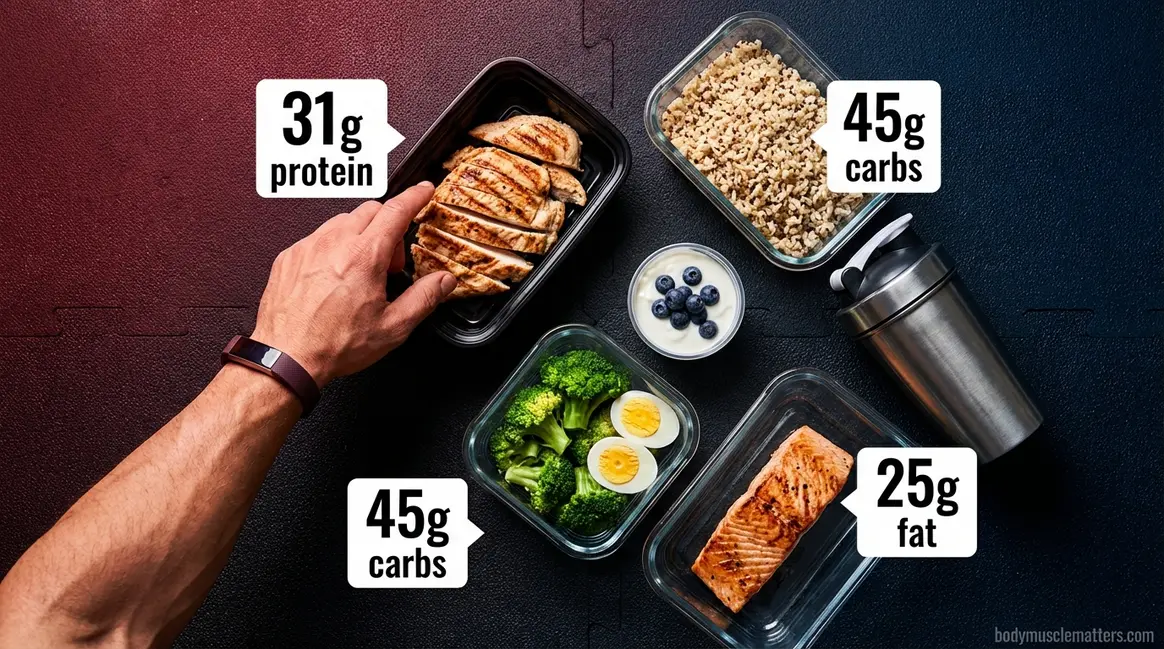
Best Diet for Muscle Growth: 7 Meal Plans That Work
⚕️ Medical Disclaimer: This article is for informational and educational purposes only. It does not constitute medical or nutritional advice. Consult a qualified healthcare professional or Registered Dietitian before beginning a new diet or supplement regimen, especially if you have a medical condition or are taking prescription medications.
Your muscles grow exactly as well as your nutrition allows — and the gap between frustrating plateaus and consistent hypertrophy usually comes down to three variables: calories, protein, and timing. Most guides stop at “eat more chicken and rice.” That leaves out the 40% of gym-goers who stall after six to eight weeks, the growing number of people building muscle on GLP-1 medications, and anyone over 40 fighting the physiological headwind of sarcopenia.
The best diet for muscle growth isn’t a single meal plan. It’s a layered system — what this guide calls The Muscle Growth Nutrition Matrix: a four-layer framework that sequences calories → macros → food selection → meal timing to maximize hypertrophy based on your specific goals and physiology. Research confirms the framework works: a 2026 consensus across multiple studies shows optimal protein intake sits at 1.6–2.2 g per kilogram of body weight daily, and macro distribution matters nearly as much as total calories (PubMed, 2004).
This guide covers everything from the foundational science to the top 20 muscle-building foods, protein source comparisons, seven actionable meal plans, and specialized strategies for body recomposition, lean bulking, and populations with unique physiological needs.
The best diet for muscle growth requires a caloric surplus plus at least 1.6 g of protein per kilogram of body weight daily — the evidence-based minimum validated by current research for meaningful muscle and strength gains.
- Protein target: 1.6–2.2 g/kg/day distributed across 4+ meals to maximize muscle protein synthesis
- Use the 40-40-20 rule as your macro starting point: 40% carbs, 40% protein, 20% healthy fats
- The Muscle Growth Nutrition Matrix — calories → macros → food selection → timing — is the systematic framework that separates consistent gainers from chronic plateauers
- Lean bulking (200–300 calorie surplus) outperforms dirty bulking for long-term body composition
- GLP-1 users and older adults need elevated protein targets (1.8–2.4 g/kg/day) to protect lean tissue during weight loss or aging
The Nutritional Foundations of Muscle Growth
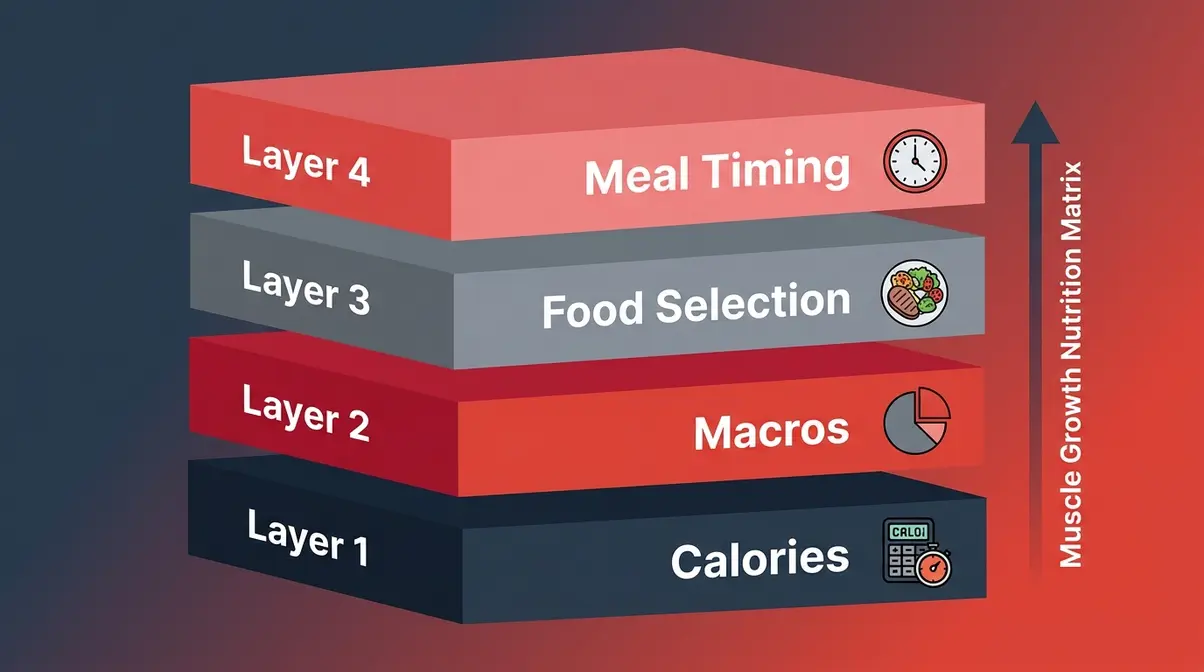
Understanding the nutritional foundations of muscle growth means accepting one uncomfortable truth: protein alone won’t get you there. Caloric surplus, macro balance, and meal timing work as a system — Layer 1 through Layer 4 of The Muscle Growth Nutrition Matrix. Skip any layer and you leave gains on the table.
Why Calories Come First
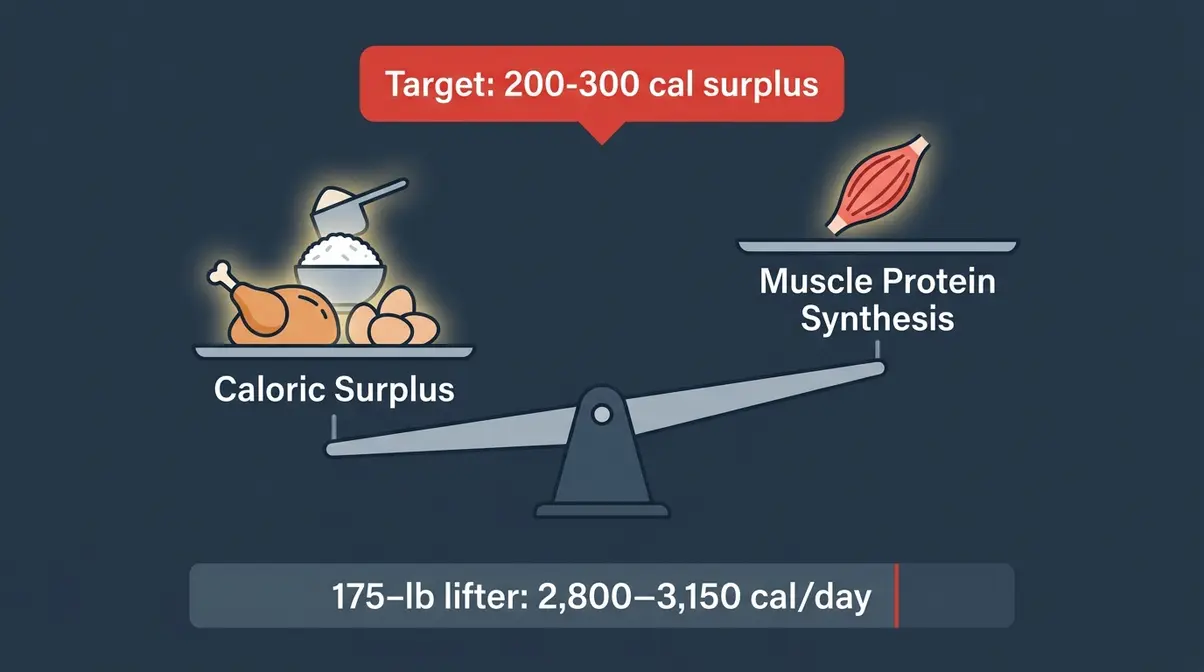
Muscle protein synthesis requires energy. Without a caloric surplus, your body prioritizes survival over hypertrophy — meaning even optimal protein intake produces minimal new muscle tissue. Research on bodybuilder macronutrient distribution recommends a moderate surplus above total daily energy expenditure (TDEE), not an unlimited food license (PubMed, 2004).
A practical starting point: multiply your body weight in pounds by 16–18 to estimate your muscle-building calorie target. A 175-pound lifter should aim for 2,800–3,150 calories daily. Adjust up or down based on weekly weight change — you’re targeting 0.25–0.5 lbs of gain per week for lean results.
The 40-40-20 Macro Rule Explained
The 40-40-20 rule — 40% of calories from carbohydrates, 40% from protein, and 20% from healthy fats — is one of the most widely used macro frameworks in applied sports nutrition. At 3,000 calories daily, this translates to 300g carbs, 300g protein, and 67g fat.
However, research suggests a slightly different optimal split for most lifters: 55–60% carbohydrates, 25–30% protein, and 15–20% fat for maximizing both performance and muscle recovery (PubMed, 2004). The 40-40-20 rule works well for intermediate lifters and is easier to track — think of it as a practical approximation rather than a clinical mandate.
“A macronutrient distribution of 55–60% carbohydrates, 25–30% protein, and 15–20% fat is the evidence-based split for optimizing bodybuilder performance and recovery” (PubMed, 2004).
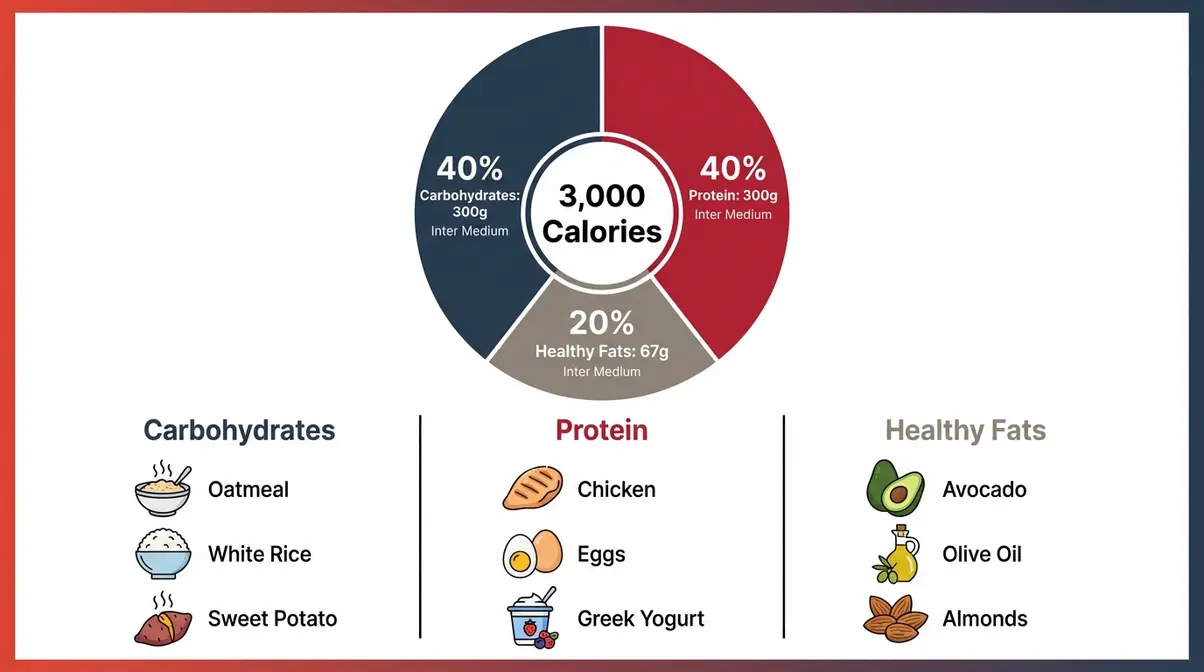
Caption: The 40-40-20 macro framework translates a 3,000-calorie muscle-building diet into concrete gram targets — 300g carbs, 300g protein, 67g fat.
What Carbs and Fats Do for Muscle
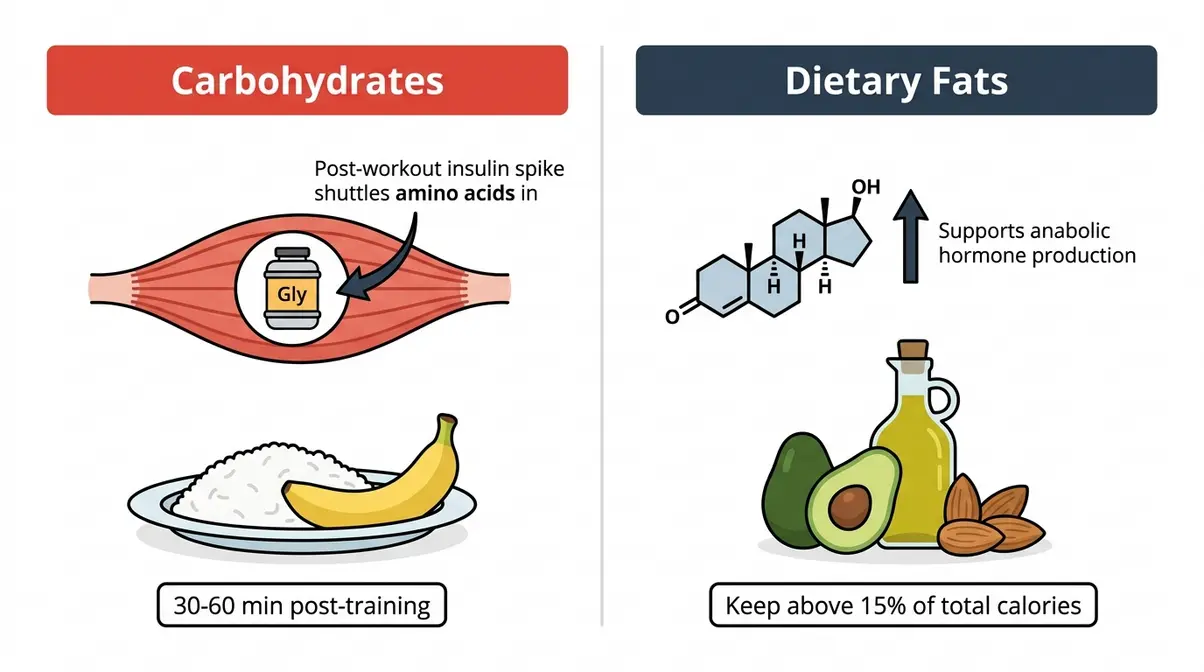
Carbohydrates are your primary fuel for resistance training. Post-exercise carbohydrate intake stimulates insulin release, which shuttles amino acids into muscle cells and suppresses protein breakdown — a mechanism confirmed by NIH-backed research on post-exercise nutrient administration (NIH PMC3761704). Practically speaking, eat your largest carb serving within 30–60 minutes after training.
Dietary fats support muscle growth indirectly through testosterone and anabolic hormone production. Dropping fat intake below 15% of total calories measurably suppresses testosterone levels — a documented risk in very-low-fat diets. Prioritize unsaturated fats (olive oil, avocado, nuts) while keeping saturated fat moderate.
The #1 Mistake That Kills Muscle Gains
Insufficient protein distribution — not total protein — is the single most common dietary error that stalls muscle growth. Eating 200g of protein in two large meals produces far less muscle protein synthesis than the same 200g spread across five meals of 40g each. Research consistently shows that spreading protein intake across four or more meals maximizes anabolic signaling throughout the day.
For a deeper look at the behaviors that sabotage your results, see our guide on common mistakes that kill muscle gains.
What Is the 40-40-20 Bodybuilding Rule?
The 40-40-20 rule allocates 40% of daily calories to carbohydrates, 40% to protein, and 20% to healthy fats. For a 3,000-calorie muscle-building diet, this translates to 300g carbs, 300g protein, and 67g fat daily. It’s a practical starting framework for intermediate lifters, though research suggests a slightly carb-heavier split (55–60% carbs) may better optimize training performance and recovery (PubMed, 2004). Use 40-40-20 as your starting point and adjust based on how your training feels after four weeks. See the full breakdown in the FAQ section below.
The Top 20 Muscle-Building Foods
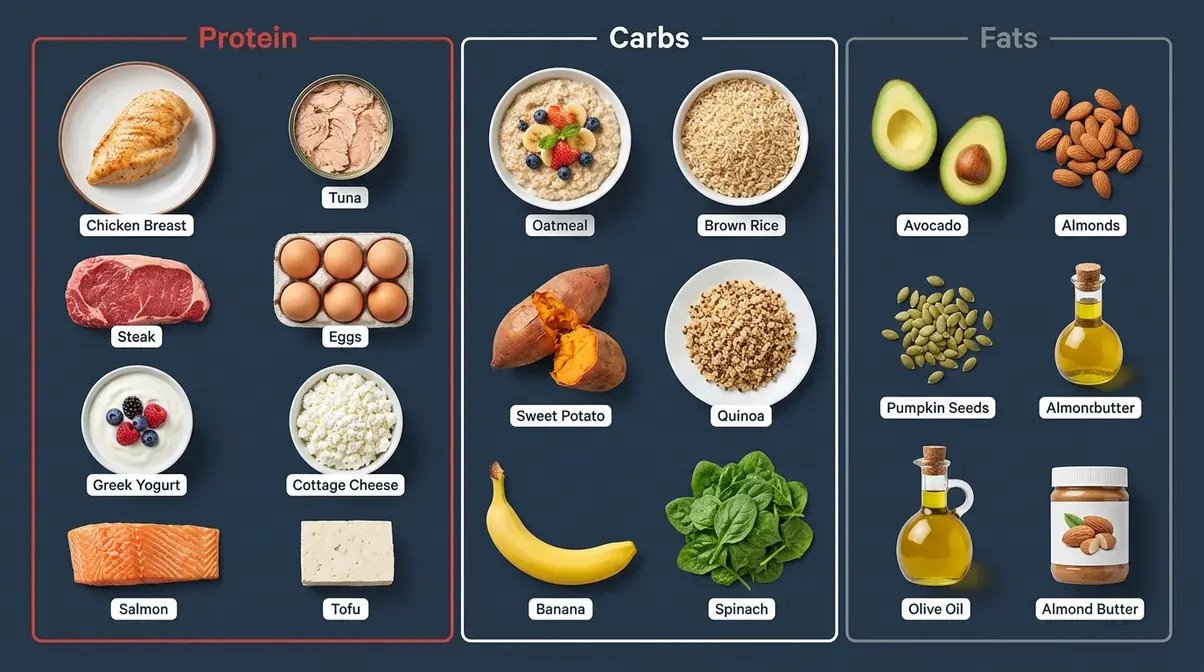
The best diet for muscle growth starts at the grocery store. Food selection is Layer 3 of The Muscle Growth Nutrition Matrix — and making smart choices here determines whether your calorie surplus is productive or just fattening. Competitors typically list 5–10 foods with no nutritional breakdown. This section covers 20 with specific protein values and practical context.
How We Evaluated These Foods
Our evaluation prioritized three criteria: protein density per 100g serving, research backing for muscle-building efficacy, and practical accessibility for everyday meal prep. Foods were ranked within their macronutrient category, not against each other, since a complete muscle-building diet requires all three categories working together.
“Pick quality, calorie-dense foods: eggs, fattier cuts of meat, cheese, nut butters, Greek yogurt. Be mindful of the added saturated fats to your diet.” — Community consensus from natural bodybuilding forums
This mirrors the clinical guidance from Harvard Health: beyond protein, micronutrients like vitamin D, magnesium, and omega-3 fatty acids play a measurable role in muscle preservation and synthesis (Harvard Health, 2024).
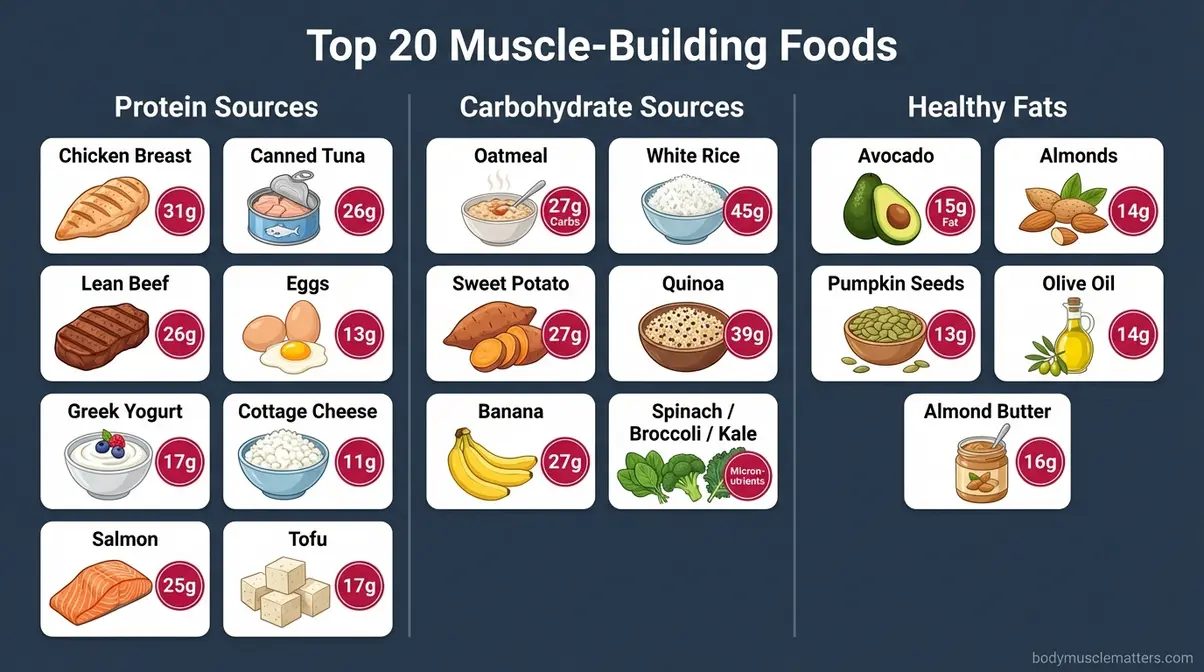
Caption: Twenty foods organized by macronutrient role — each with protein grams per serving — make grocery planning for muscle growth systematic rather than guesswork.
Best Protein Foods for Muscle Gain
These foods form the backbone of any effective muscle-building diet. Prioritize variety across the week to ensure a complete amino acid profile.
| Food | Protein per 100g | Best Use |
|---|---|---|
| Chicken breast | 31g | Lunch/dinner staple |
| Canned tuna | 26g | Quick prep, high yield |
| Lean beef (93% lean) | 26g | Iron + creatine source |
| Eggs (whole) | 13g | Breakfast, snacks |
| Greek yogurt | 17g/serving | Post-workout snack |
| Cottage cheese | 11g | Pre-sleep casein source |
| Salmon | 25g | Omega-3 + protein combo |
| Tofu (firm) | 17g | Plant-based anchor |
Salmon and eggs deserve special mention — both deliver protein alongside fat-soluble vitamins (D, K2) that support testosterone and bone density, making them more valuable than their protein numbers alone suggest.
Best Carb and Vegetable Sources
Carbs fuel training sessions and drive post-workout recovery. Choose complex sources that also supply fiber and micronutrients.
- Oatmeal — 27g carbs per half-cup; slow-digesting, ideal pre-workout
- White rice — 45g carbs per cup (cooked); fast-digesting, ideal post-workout
- Sweet potato — 27g carbs per medium; rich in potassium and vitamin A
- Quinoa — 39g carbs per cup (cooked); complete protein at 8g per cup
- Banana — 27g carbs; portable, fast-digesting pre-workout option
- Spinach, broccoli, kale — Low-calorie micronutrient density; add volume without significant macro impact
For practical morning meal ideas that combine these sources effectively, explore our healthy breakfast ideas for bodybuilders.
Best Healthy Fats for Muscle Growth
Fat intake shouldn’t be minimized — it should be optimized. These sources support hormonal health without excess saturated fat:
- Avocado — 15g healthy fat per half; monounsaturated-dominant, anti-inflammatory
- Almonds — 14g fat per ounce; magnesium-rich for sleep and recovery
- Pumpkin seeds — 13g fat per ounce; zinc content supports testosterone
- Olive oil — 14g fat per tablespoon; oleic acid supports hormone synthesis
- Nut butters (almond, peanut) — 16g fat per 2 tbsp; calorie-dense for hard gainers
Best Fast Food Options for Muscle Gain
Life doesn’t always allow for meal prep. These options minimize dietary damage when you’re eating on the go:
- Chipotle chicken bowl (no sour cream): ~50g protein, ~65g carbs
- Subway 6-inch turkey breast on whole wheat: ~24g protein, ~46g carbs
- McDonald’s Egg McMuffin (2x): ~30g protein, ~60g carbs
- Panera Bread Mediterranean grain bowl: ~28g protein, ~55g carbs
The key principle: prioritize protein-forward items and skip high-fat sauces that add calories without nutritional value.
Protein Sources and Supplements
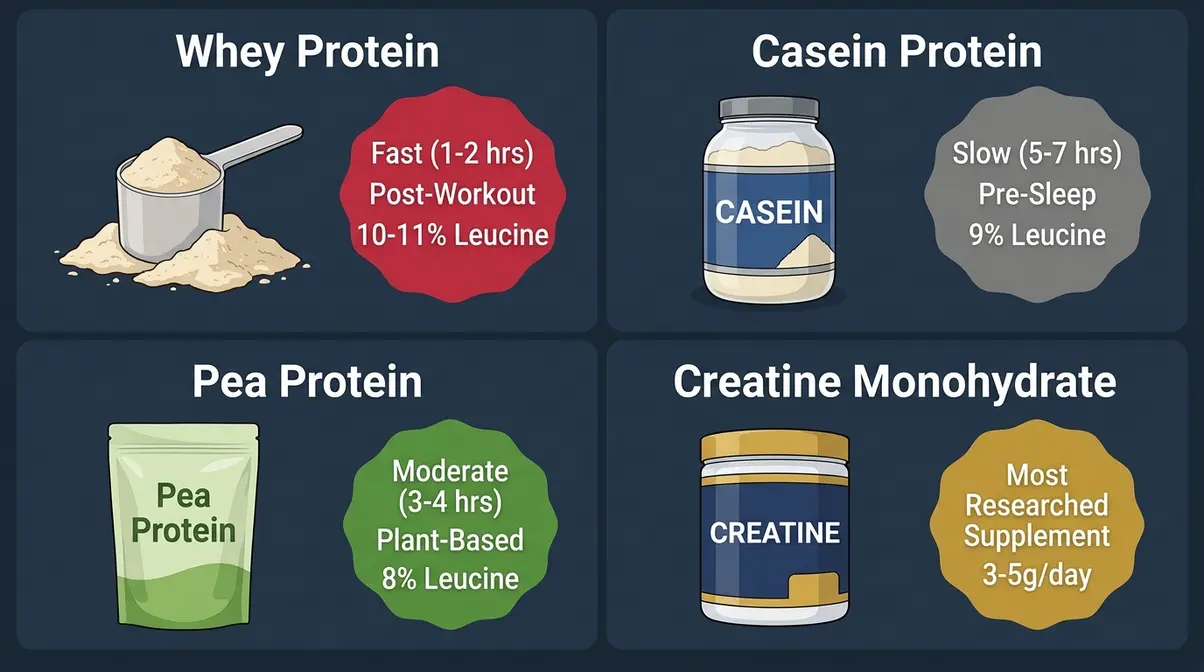
Choosing the right protein source and supplement stack is Layer 2 of The Muscle Growth Nutrition Matrix — and the decision matrix is more nuanced than “drink whey after your workout.” Protein source, timing, and distribution all interact to determine how effectively your body builds new muscle tissue.
Our review of peer-reviewed protein timing research, including the JISSN meta-analysis on per-meal protein distribution and NIH studies on post-exercise nutrient administration, informed the recommendations in this section.
Whey vs. Casein vs. Plant Protein
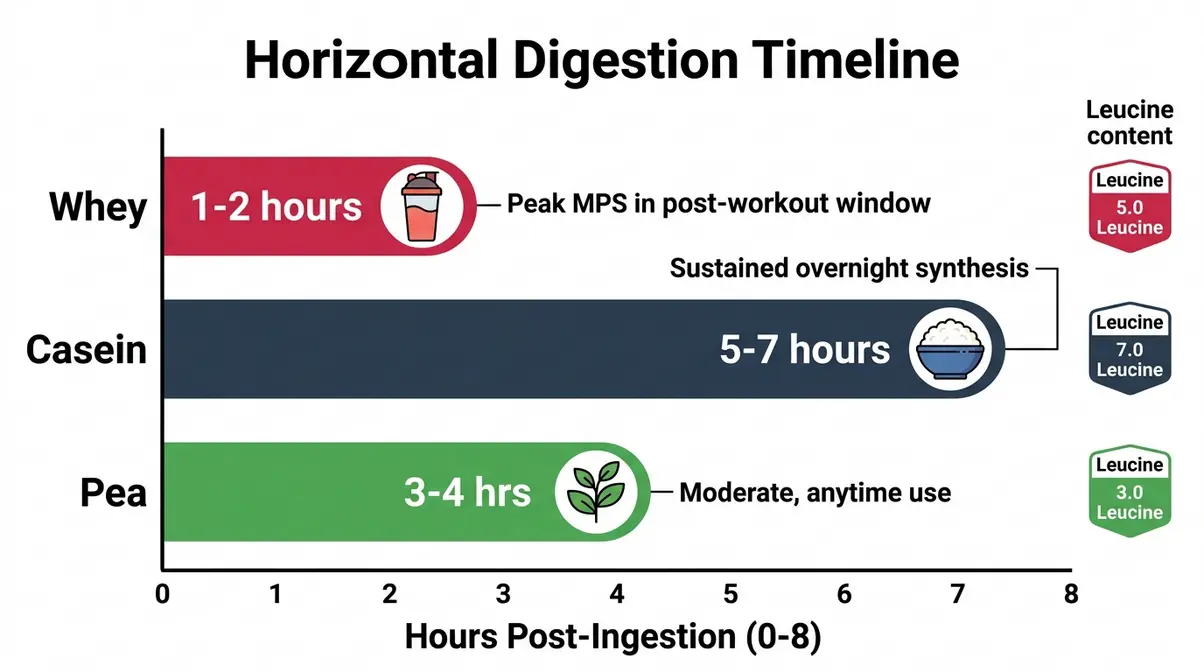
Each protein type has a distinct role based on its digestion rate and amino acid profile:
| Protein Type | Digestion Rate | Best Timing | Leucine Content | Ideal For |
|---|---|---|---|---|
| Whey | Fast (1–2 hrs) | Post-workout | High (10–11%) | Muscle repair, post-training |
| Casein | Slow (5–7 hrs) | Pre-sleep | Moderate (9%) | Overnight muscle synthesis |
| Pea protein | Moderate (3–4 hrs) | Anytime | Moderate (8%) | Plant-based athletes |
| Soy protein | Moderate | Anytime | Moderate (7–8%) | Complete plant source |
Whey produces significantly greater muscle protein synthesis than casein in the immediate post-workout window — making it the superior choice for post-training nutrition. However, casein’s slow-release profile makes it uniquely valuable before sleep, when the body enters a prolonged fasting state.
“To maximize anabolism, consume 0.4 g of protein per kilogram of body weight per meal across at least four meals daily” (JISSN, 2018).
For a full comparison of current protein powders with testing data, see our guide to the best protein powder for muscle gain.
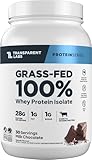
Pros
- 28g protein per serving — one of the highest ratios available
- Third-party tested with no artificial ingredients
- Fast, convenient way to hit daily protein targets
Cons
- A supplement, not a replacement for whole-food protein
- Premium price versus basic whey blends
Best Milk for Building Muscle
Whole milk has a long history in muscle-building nutrition — and the research largely supports its reputation. A 12-oz serving of whole milk provides approximately 9g protein, 12g carbs, and 8g fat, creating an ideal post-workout macro ratio without supplementation.
Whole milk vs. skim milk for muscle gain: Studies consistently show whole milk produces greater lean mass gains than skim milk post-workout, attributed to the fat content enhancing amino acid uptake. For hard gainers struggling to hit calorie targets, whole milk is one of the most efficient calorie-dense foods available. Lactose-intolerant individuals can substitute lactose-free whole milk or fortified soy milk with comparable results.
Creatine and Other Key Supplements
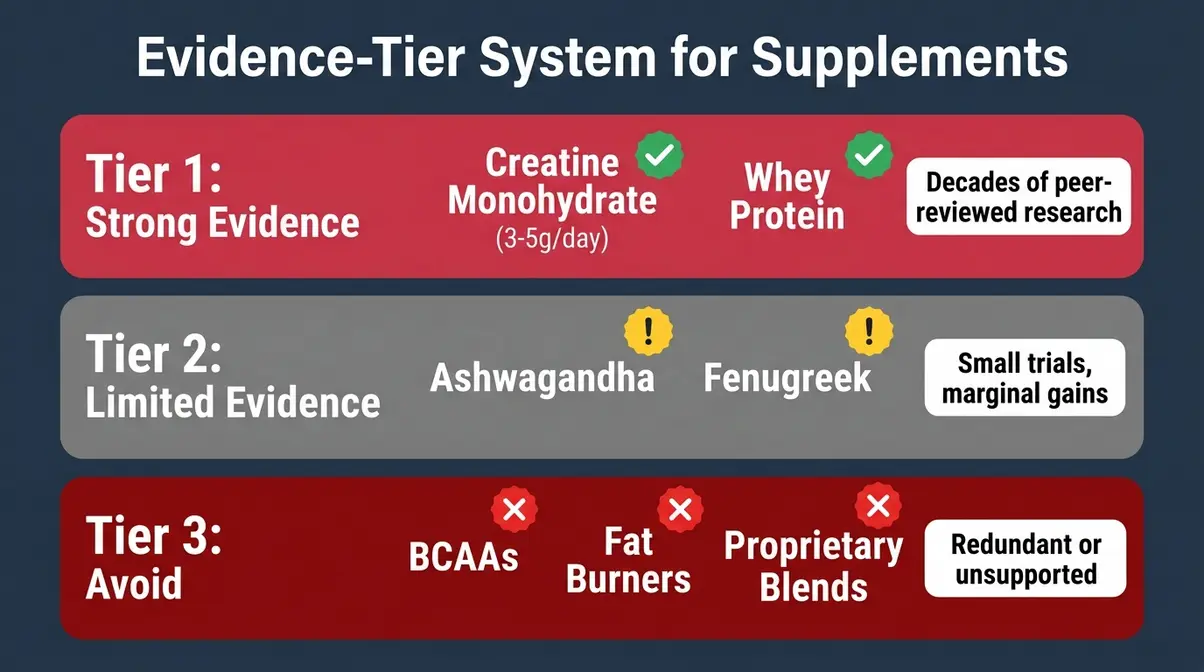
Most supplements don’t live up to their marketing. A short list actually has peer-reviewed support for muscle growth:
Creatine monohydrate is the most researched sports supplement in existence. Consistent daily supplementation (3–5g/day) increases phosphocreatine stores, enabling higher training volumes and greater hypertrophic stimulus. It’s the only supplement with near-universal expert consensus for muscle-building efficacy.
Whey protein is food, not a supplement in the traditional sense — but it’s the most practical way to hit protein targets when whole food isn’t available.
Herbs with supporting evidence: Ashwagandha has shown modest improvements in muscle recovery and testosterone levels in small trials. Fenugreek may support anabolic hormone levels. Neither is a replacement for progressive overload and adequate protein — treat them as marginal additions, not foundations.
Avoid: BCAAs (redundant if protein targets are met), “fat burner” blends, and proprietary blends with undisclosed dosages.
Creatine monohydrate is the most research-backed supplement for muscle growth and strength — 3–5g daily is the standard, well-studied dose.

Pros
- The most evidence-backed supplement for strength and muscle gain
- Third-party tested, pure micronized creatine monohydrate
- No loading phase needed — just 3–5g daily
Cons
- May cause minor water retention in the first few weeks
- Premium price versus generic creatine brands
Best Supplement for Muscle Gain?
Creatine monohydrate is the most evidence-supported supplement for muscle gain, with decades of peer-reviewed research confirming its efficacy. A daily dose of 3–5g increases phosphocreatine stores, enabling higher training volumes that produce greater hypertrophic stimulus over time. Whey protein is the second most practical addition — not because it’s magic, but because it makes hitting daily protein targets easier. See the full FAQ answer below for a complete breakdown of what to avoid.
The Best Diet and Meal Plans for Muscle Growth
Layer 4 of The Muscle Growth Nutrition Matrix is meal timing — and structuring your food around training is what separates adequate nutrition from optimized nutrition. Competitors average 1.4 meal plan examples. This section delivers seven distinct daily frameworks you can implement immediately.
The 7-Day Muscle-Building Meal Plan
This framework assumes a 175-lb (79 kg) male lifter targeting 3,100 calories/day with 1.8 g/kg protein (~142g daily). Adjust portions proportionally for your body weight and calorie target.
| Day | Calories | Protein | Carbs | Fat | Training Focus |
|---|---|---|---|---|---|
| Mon | 3,100 | 145g | 370g | 70g | Push (chest/shoulders/triceps) |
| Tue | 3,100 | 145g | 370g | 70g | Pull (back/biceps) |
| Wed | 2,800 | 145g | 310g | 70g | Legs |
| Thu | 2,700 | 145g | 285g | 70g | Rest / Active recovery |
| Fri | 3,100 | 145g | 370g | 70g | Push |
| Sat | 3,100 | 145g | 370g | 70g | Pull |
| Sun | 2,700 | 145g | 285g | 70g | Rest |
Key principle: Carbohydrates are periodized around training days. Training days carry higher carb loads to fuel performance; rest days reduce carbs by ~15% while keeping protein constant.
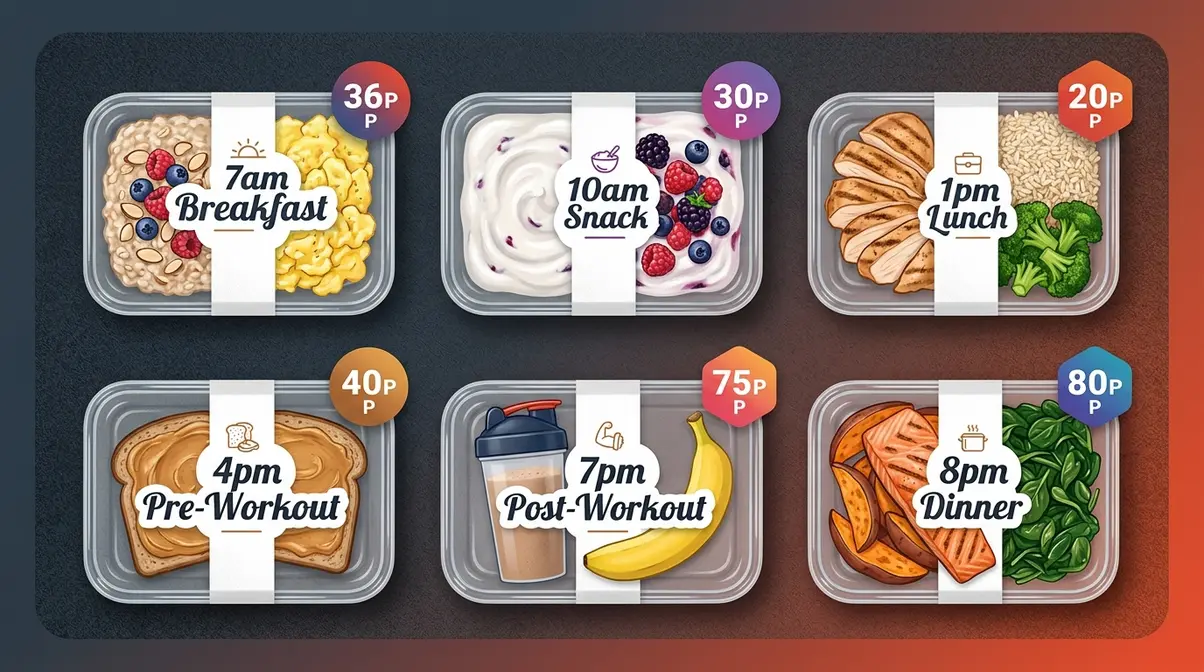
- Sample Training Day (Monday, 3,100 cal):
- Breakfast (7am): Oatmeal (1 cup dry), 4 whole eggs scrambled, 1 banana — ~650 cal / 38g protein
- Mid-morning (10am): Greek yogurt (200g), mixed berries, 1 oz almonds — ~350 cal / 20g protein
- Lunch (1pm): Chicken breast (200g), white rice (1.5 cups cooked), broccoli (1 cup) — ~650 cal / 52g protein
- Pre-workout (4pm): Whole wheat toast (2 slices), peanut butter (2 tbsp) — ~350 cal / 12g protein
- Post-workout (7pm): Whey shake (40g protein) + banana — ~300 cal / 40g protein
- Dinner (8pm): Salmon (200g), sweet potato (medium), spinach salad — ~750 cal / 45g protein
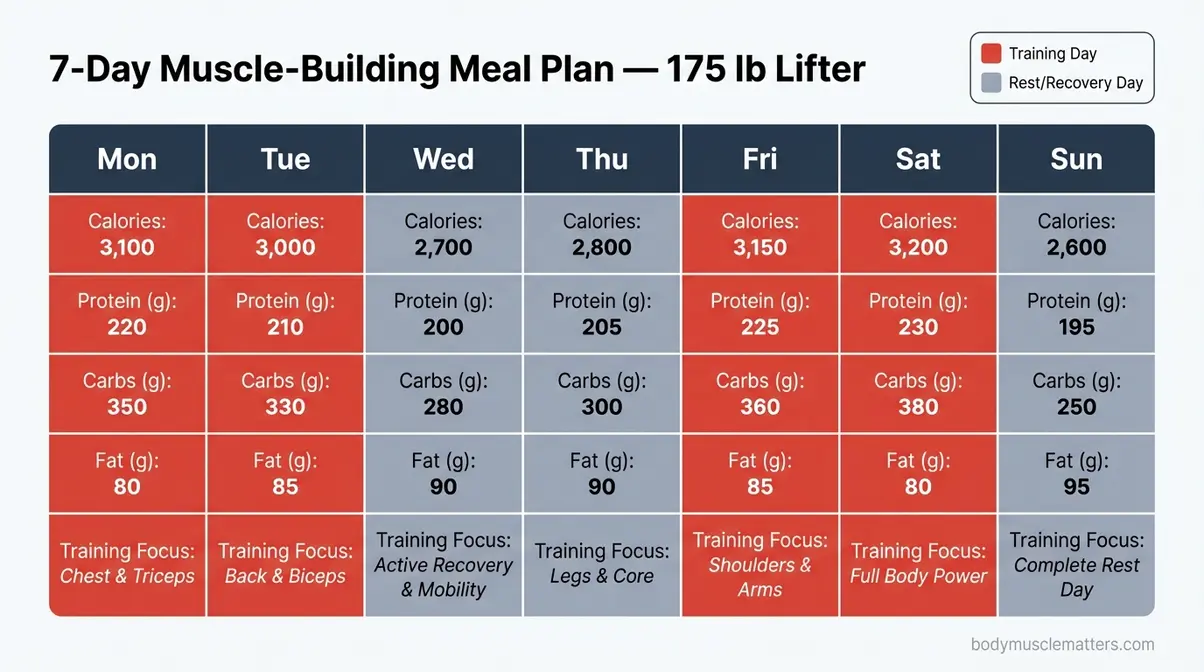
Caption: Carbohydrate periodization — higher on training days, reduced on rest days — is the key structural difference between a meal plan and a muscle-building system.
For a complete guide to implementing this type of plan, see our full walkthrough on following the best diet for muscle growth.
High-Carb vs. Low-Carb for Muscle
The low-carb debate in muscle building is largely settled by research, but personal context matters. Here’s how the two approaches compare for hypertrophy:
| Factor | High-Carb (55–60% carbs) | Low-Carb (< 25% carbs) |
|---|---|---|
| Training performance | Superior — glycogen fuels high-intensity sets | Reduced — glycogen depletion limits output |
| Muscle protein synthesis | Higher — insulin supports amino acid uptake | Adequate if protein is very high |
| Fat gain risk | Moderate with carb periodization | Lower, but often at cost of training intensity |
| Best for | Natural lifters, high-volume training | Endurance athletes, those with insulin resistance |
| Sustainability | High for most gym-goers | Challenging for high-volume strength training |
The research verdict: High-carbohydrate diets consistently outperform low-carb diets for strength training performance and muscle mass accrual in natural lifters. Low-carb approaches can work if protein is elevated to 2.0–2.4 g/kg/day to compensate for reduced insulin-driven anabolism.
Meal Timing Around Your Training
Timing matters — but less than total daily intake. The anabolic window (the period immediately post-workout) is real but wider than once believed: research suggests a 2-hour window for post-workout protein and carbs, not the 30-minute urgency popularized in the early 2000s (NIH, 2013).
- Practical timing framework:
- Pre-workout (60–90 min before): 30–40g protein + 50–70g complex carbs — fuels the session
- Post-workout (within 2 hours): 40g fast-digesting protein (whey) + 50–70g fast carbs (banana, white rice) — maximizes recovery
- Pre-sleep (30 min before bed): 30–40g casein protein (cottage cheese, casein shake) — sustains overnight synthesis
- Between meals: 20–30g protein every 3–4 hours to maintain elevated muscle protein synthesis throughout the day
How to Build Lean Muscle Without Gaining Fat
Lean muscle growth — building muscle mass without significant fat accumulation — requires a precise caloric surplus of 200–300 calories above maintenance. This approach, known as a clean bulk, produces a muscle-to-fat ratio of approximately 70–80% muscle gain versus 20–30% fat gain, compared to 40–60% muscle gain in a dirty bulk. The 200–300 calorie surplus is the evidence-based sweet spot that provides enough energy for hypertrophy without triggering excessive fat storage mechanisms. Precision in Layer 1 (calories) of The Muscle Growth Nutrition Matrix is what makes the difference between productive and counterproductive bulking.
Clean Bulk vs. Dirty Bulk
The dirty bulk trap is appealing: eat everything, gain fast. The problem is that excess calories beyond what muscle tissue can absorb get stored as fat — and no amount of training fully reverses that during a bulk phase. Here’s how the two approaches actually compare:
| Factor | Clean Bulk | Dirty Bulk |
|---|---|---|
| Caloric surplus | +200–300 cal/day | +500–1,000+ cal/day |
| Weekly weight gain | 0.25–0.5 lbs | 0.5–1.5 lbs |
| Muscle-to-fat ratio | Favorable (70–80% muscle) | Unfavorable (40–60% muscle) |
| Food quality | Whole foods, nutrient-dense | Unrestricted, often processed |
| Cutting phase needed | Shorter, less aggressive | Longer, more disruptive |
| Health markers | Stable (cholesterol, insulin) | Often worsened with extended dirty bulk |
| Ideal for | Most natural lifters | Underweight beginners only |
A conservative 200–300 calorie daily surplus above maintenance maximizes lean muscle gain while limiting fat accumulation during a clean bulk phase. Research confirms that dirty bulking hasn’t been shown to improve performance over clean bulking approaches — and the extended cutting phase required afterward costs you months of potential lean-muscle time (Cleveland Clinic, 2023).
Caption: The muscle-to-fat ratio gap between clean and dirty bulking widens significantly after 12 weeks — making the moderate surplus approach the clear long-term winner.
Foods and Habits to Avoid
These specific behaviors stall lean muscle progress more reliably than anything else:
- Ultra-processed foods in large quantities: Displace nutrient-dense calories, elevate inflammation markers, and reduce training recovery quality
- Alcohol (>2 drinks/day): Directly suppresses muscle protein synthesis for up to 24 hours post-consumption and disrupts sleep-phase recovery
- Skipping post-workout nutrition: The 2-hour recovery window is real — missing it consistently reduces weekly muscle protein synthesis accumulation
- Chronic sleep deprivation (<7 hours): Growth hormone secretion — essential for muscle repair — occurs primarily in deep sleep stages
- Excessive cardio without compensatory calorie increases: Cardio doesn’t prevent muscle growth, but uncompensated energy deficits do
For strategies on preserving muscle during fat-loss phases, read our guide on preventing muscle loss while cutting.
Body Recomposition: Build Muscle, Lose Fat
Body recomposition — the simultaneous process of losing fat and gaining muscle — is achievable for three specific populations: true beginners (under 6 months of consistent training), significantly detrained individuals returning after 6+ months off, and those with higher body fat percentages (above 25% for men, 32% for women). For those seeking the best diet for muscle growth and fat loss simultaneously, body recomposition offers a third path beyond the traditional bulk-cut cycle. For these groups, stored body fat provides sufficient energy to fuel muscle growth even at calorie maintenance, making the traditional bulk-cut cycle unnecessary.
Who Can Recomp (and Who Can’t)
Body recomposition works reliably for three specific populations:
- True beginners (< 6 months consistent training): Novice neural adaptations and high anabolic sensitivity allow simultaneous fat loss and muscle gain even at calorie maintenance
- Significantly detrained individuals (returning after 6+ months off): Muscle memory accelerates regrowth while fat stores remain available for energy
- Individuals with higher body fat (>25% BF for men, >32% for women): Stored fat provides sufficient energy substrate to fuel muscle growth even in a slight deficit
For intermediate and advanced lifters with normal body fat percentages, true recomposition is largely theoretical — the metabolic conditions simply don’t support it at meaningful rates. These lifters should choose either a clean bulk or a structured cut, not both simultaneously.
“Body recomposition is reliably achievable for beginners, significantly detrained individuals, and those with higher body fat percentages — for everyone else, the evidence for simultaneous muscle gain and fat loss at meaningful rates is limited.”
Macros for Body Recomposition
Recomposition requires a specific macro strategy that differs meaningfully from both bulking and cutting:
| Variable | Recomp Target |
|---|---|
| Calories | Maintenance TDEE (±100 calories) |
| Protein | 2.0–2.4 g/kg/day (elevated to preserve muscle in deficit) |
| Carbs | 35–45% of calories (fuel training without surplus) |
| Fat | 20–25% of calories |
| Training | Resistance training 3–5x/week is non-negotiable |
The elevated protein target (vs. a standard bulk) compensates for the absence of an insulin-driven anabolic surplus. Without the extra calories to drive growth, protein becomes the primary anabolic lever.
For guidance on protein choices during a weight-loss phase that preserves muscle, see our article on protein for weight loss and muscle retention.
Caption: Three questions — training experience, body fat percentage, and timeline — determine whether body recomposition is a realistic strategy or a detour.
Specialized Diets for Specific Goals
Layer 2 of The Muscle Growth Nutrition Matrix adapts for specific populations — and the adaptations aren’t minor adjustments. Plant-based athletes, women, GLP-1 medication users, and older adults all require meaningfully different protein targets, food selections, and timing strategies to achieve the same hypertrophic outcomes as the general population.
The Best Plant-Based Muscle Diet
Plant-based diets can fully support muscle growth — with one critical requirement: protein completeness. Most plant proteins are low in one or more essential amino acids, particularly leucine, which is the primary trigger for muscle protein synthesis.
The solution is strategic food combining and higher total protein intake. NIH research confirms that plant-based diets can achieve equivalent muscle mass outcomes when protein intake is elevated to compensate for lower leucine density (NIH PMC11054926):
- Complete plant proteins: Quinoa, soy (tofu, edamame, tempeh), hemp seeds — use as daily anchors
- Complementary combining: Rice + beans, oats + pea protein — creates complete amino acid profiles
- Protein target adjustment: Increase to 1.8–2.2 g/kg/day to account for lower digestibility of plant proteins
- Leucine supplementation: Consider adding 2–3g leucine per meal if MPS response feels blunted
A well-structured plant-based approach using these strategies closes the muscle-building gap with omnivorous diets within 8–12 weeks of consistent implementation.
Muscle Building for Women
Female physiology doesn’t require a fundamentally different diet — but the numbers shift meaningfully. Women typically carry 10–15% more body fat than men at equivalent fitness levels, and estrogen’s anabolic signaling is less potent than testosterone, meaning protein targets need to be proportionally higher relative to lean body mass.
- Key adjustments for women:
- Protein target: 1.8–2.2 g/kg/day (vs. 1.6–2.0 g/kg for men at equivalent training levels)
- Iron intake: Critical for women who menstruate — aim for 18mg/day from lean red meat, legumes, and fortified grains to support training recovery
- Calcium and vitamin D: Support both bone density and muscle contraction; 1,000mg calcium + 600–800 IU vitamin D daily
- Caloric surplus: Women typically need a smaller surplus (150–250 cal/day) than men for equivalent lean muscle gain rates, given lower absolute muscle mass
The fear of “bulking up” from strength training and adequate protein is physiologically unfounded — women lack the testosterone levels required for the hypertrophy patterns seen in male physiology.
Building Muscle on GLP-1 Medications
GLP-1 receptor agonists — including tirzepatide (Zepbound) and semaglutide (Ozempic/Wegovy) — are transforming weight loss outcomes, but they introduce a specific muscle preservation challenge. Research indicates that 15–25% of total weight lost on GLP-1 medications comes from lean muscle mass, not fat — a figure that demands a deliberate counter-strategy (UC Davis Health, 2025).
“Combining a high-protein diet with consistent resistance training provides the greatest benefit for preserving bone and muscle mass during GLP-1-assisted weight loss” (Massachusetts General Hospital, 2024).
The appetite suppression that makes GLP-1 medications effective also makes it harder to hit protein targets. Practical counter-strategies:
- Elevate protein to 1.8–2.4 g/kg/day — the highest end of recommendations — to offset the muscle-catabolic pressure of rapid weight loss
- Prioritize protein in every meal: When appetite is suppressed, protein-first eating ensures the most critical macro is captured before satiety signals stop intake
- Resistance training is non-negotiable: 3–4 sessions per week of progressive overload is the strongest single predictor of muscle preservation during GLP-1-assisted weight loss (NIH, 2026)
- Consider casein before sleep: Slow-digesting protein during the overnight fast counteracts catabolic signaling from the medication’s appetite suppression
Sarcopenia: Protecting Muscle After 40
Sarcopenia — the age-related progressive loss of muscle mass and strength — begins as early as the mid-30s, with losses accelerating after 60. The good news: it’s largely preventable with the right nutritional intervention. NIH research on mitigating sarcopenia with diet and exercise confirms that higher protein intake combined with resistance training is the most effective intervention available (NIH PMC10487983).
Key nutritional adjustments for adults over 40:
- Protein target: 1.6–2.0 g/kg/day (higher than the general adult RDA of 0.8 g/kg) — with an emphasis on leucine-rich sources at each meal
- Creatine monohydrate: Evidence supports 3–5g/day for older adults specifically — it helps maintain phosphocreatine stores that decline with age
- Vitamin D + calcium: Muscle function and bone density are interdependent; deficiencies in either accelerate sarcopenic progression
- Meal frequency: 4–5 protein-containing meals per day helps overcome the “anabolic resistance” older muscles show to smaller protein doses
For a comprehensive approach to tracking macros across all these specialized contexts, see our guide on flexible dieting and macro tracking.
Common Pitfalls and When to See a Professional
Even a well-designed muscle-building diet fails when execution errors compound over weeks. These are the specific mistakes that stall progress most reliably — and the circumstances where professional guidance becomes genuinely necessary rather than optional.
Mistakes That Stall Muscle Growth
Undereating protein while overeating calories is the most common error among gym-goers who “eat a lot” but don’t gain muscle. Hitting your calorie target with carbs and fats while falling short on protein produces fat gain, not muscle gain. Track protein first; fill remaining calories with carbs and fats.
Ignoring micronutrient intake is the silent progress killer. Magnesium deficiency impairs sleep quality and muscle recovery. Zinc deficiency suppresses testosterone. Vitamin D deficiency reduces muscle fiber recruitment. NIH research identifies multiple micronutrients beyond protein that directly affect muscle preservation — including omega-3s, vitamin D, and magnesium (NIH PMC10487983).
Inconsistent meal timing over weeks undermines the compounding effect of muscle protein synthesis. A perfect week of nutrition followed by two chaotic weeks resets the anabolic clock. Consistency over 8–12 weeks matters more than perfection in any single day.
Neglecting hydration reduces training performance by 2–3% per 1% body weight loss through sweat — a seemingly small deficit that meaningfully reduces training volume and thus hypertrophic stimulus. Target 0.5–1 oz of water per pound of body weight daily.
When to Consult a Professional
Seek a Registered Dietitian (RD) or certified sports nutritionist if:
- You’re on GLP-1 medications: The interaction between appetite suppression, rapid weight loss, and protein requirements is complex enough to warrant individualized guidance
- You’re over 50 with a chronic health condition: Kidney disease, diabetes, or cardiovascular conditions can make high-protein diets contraindicated — professional oversight is essential
- You’ve been stuck at a plateau for 8+ weeks despite consistent training: A systematic dietary audit by a professional often reveals the specific gap that self-directed approaches miss
- You’re experiencing fatigue, mood changes, or hormonal irregularities: These may signal macro imbalances, micronutrient deficiencies, or relative energy deficiency in sport (RED-S) — all requiring clinical assessment
Frequently Asked Questions
What kills muscle gains the most?
Insufficient protein distribution kills muscle gains more reliably than any other nutritional factor. Eating total daily protein in one or two large meals produces far less muscle protein synthesis than the same amount spread across four to five meals. Beyond protein timing, chronic sleep deprivation (under 7 hours), alcohol consumption exceeding two drinks per day, and large caloric deficits all directly suppress muscle protein synthesis. Research consistently shows that consistency over 8–12 weeks — not perfection on any single day — determines outcomes.
What Is the 40-40-20 Bodybuilding Rule?
The 40-40-20 rule allocates 40% of daily calories to carbohydrates, 40% to protein, and 20% to healthy fats. For a 3,000-calorie muscle-building diet, this translates to 300g carbs, 300g protein, and 67g fat daily. It’s a practical starting framework for intermediate lifters, though research suggests a slightly carb-heavier split (55–60% carbs) may better optimize training performance and recovery (PubMed, 2004). Use 40-40-20 as your starting point and adjust based on how your training feels after four weeks.
What should I eat to get ripped?
Getting ripped requires a slight caloric deficit combined with high protein intake (2.0–2.4 g/kg/day) to preserve muscle while losing fat. Prioritize lean protein sources — chicken breast, egg whites, Greek yogurt, and white fish — alongside fibrous vegetables that add volume without significant calories. Reduce processed carbohydrates while keeping complex carbs (oatmeal, sweet potato) around training sessions to maintain performance. The biggest mistake people make when getting ripped is cutting calories too aggressively, which accelerates muscle loss alongside fat loss.
Best Supplement for Muscle Gain?
Creatine monohydrate is the most evidence-supported supplement for muscle gain, with decades of peer-reviewed research confirming its efficacy. A daily dose of 3–5g increases phosphocreatine stores, enabling higher training volumes that produce greater hypertrophic stimulus over time. Whey protein is the second most practical addition — not because it’s magic, but because it makes hitting daily protein targets easier. Everything else — BCAAs, “anabolic” blends, fat burners — lacks the research backing to justify prioritizing over whole food protein sources and creatine.
Can I build muscle while on Zepbound?
Yes — but it requires a deliberate counter-strategy beyond the standard muscle-building protocol. GLP-1 medications like Zepbound (tirzepatide) suppress appetite significantly, making it harder to reach the protein targets needed for muscle preservation. Research indicates 15–25% of weight lost on GLP-1 medications comes from lean tissue (UC Davis Health, 2025). To protect muscle, elevate protein intake to 1.8–2.4 g/kg/day, prioritize protein at every meal before other macros, and maintain 3–4 resistance training sessions per week. Consulting a Registered Dietitian familiar with GLP-1 therapy is strongly recommended.
Building Your Muscle-Growth Diet: The Bottom Line
For fitness-active adults targeting consistent hypertrophy, the best diet for muscle growth is not a single meal plan — it’s a systematic, layered approach. The evidence is clear: a moderate caloric surplus of 200–300 calories above maintenance, combined with 1.6–2.2 g of protein per kilogram of body weight distributed across four or more daily meals, produces the most favorable muscle-to-fat ratio of any dietary strategy (PubMed, 2004; NIH, 2026). Carbohydrates fuel the training sessions that create the hypertrophic stimulus; fats support the hormonal environment that allows muscle tissue to grow.
The Muscle Growth Nutrition Matrix — the four-layer framework running through this guide — exists because individual layers fail when implemented in isolation. Calories without protein distribution produces fat. Protein without a surplus produces maintenance. Food selection without meal timing produces suboptimal synthesis rates. The matrix works because it sequences these variables in the order that actually matters: establish your surplus, hit your protein target, select the right foods, and time your meals around training. That sequence is what separates the lifters who gain consistently from those who spin their wheels for years.
Start with the 7-day meal plan framework in this guide, apply it for four weeks, and track weekly weight change. If you’re gaining less than 0.25 lbs per week, add 100–150 calories from complex carbs. If you’re gaining more than 0.5 lbs per week, reduce carbs by the same amount. That feedback loop — applied consistently over 12 weeks — is how the best diet for muscle growth becomes your personal muscle-building system.
Related posts:
StrongLifts 5x5 for Beginners: Complete Guide 2026
How to Get a Bigger Bum Without Exercise: 3-Tier Guide
What Muscles Does the StairMaster Work? 6 Groups
Olympic Weightlifting vs Powerlifting: 2026 Guide
What Kills Muscle Gains? 7 Proven Saboteurs to Fix Now
Best Strength Training Apps for Women: Top 7 Picks

Callum
Hi, I'm Callum, the founder of Body Muscle Matters. I'm not a certified trainer, I'm a self taught lifter who started this site to share what I've learned from my own training and a lot of trial and error. Everything here comes from real experience and honest research, written the way I'd explain it to a friend who is just getting started. My goal is simple: practical, no hype fitness advice you can actually use.