Protein for Weight Loss: A Dietitian’s Complete Guide
Home ›Supplements and Nutrition
⚠️ Medical Disclaimer: This article is for general informational purposes only. It does not constitute medical or nutritional advice. Protein targets, calorie figures, and dietary recommendations vary by individual. Always consult a registered dietitian or your healthcare provider before making significant changes to your diet, especially if you take prescription medications, have a chronic health condition, or are managing a condition like obesity or diabetes.
If you have ever searched “how much protein to lose weight” and walked away with a different number every time, you are not alone. One source says 0.8 grams per kilogram. Another says 1.6. A fitness influencer insists you need 200 grams of protein a day. No wonder you feel stuck.
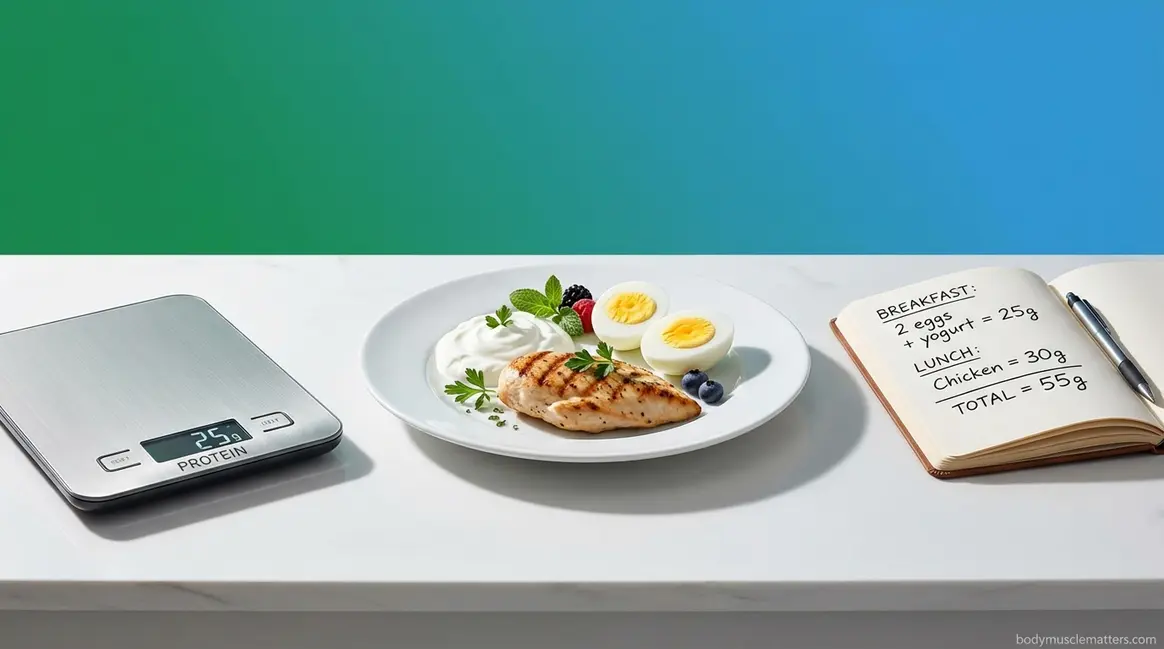
Here is the truth: most guides give you a general range and leave you to figure out the math yourself. This guide does not do that. You will get a specific daily gram target based on your actual body weight, a visual breakdown of what 30 grams of protein looks like on your plate, and a framework for spreading those grams through the day so you protect your muscle and shed pounds.
The approach we use is called The Muscle-First Deficit — the practice of locking in your protein target before you set your calorie deficit. Muscle protection is the non-negotiable foundation, not an afterthought. By the time you finish reading, you will have a concrete number and a plan to start today.
- Target 1.2–1.6 g/kg of body weight daily for fat loss with muscle preservation (NIH clinical data, 2026).
- Apply the 3-3-3 rule: Aim for roughly 30 grams of protein per meal, spread across three main meals.
- Women over 50 and GLP-1 users (Ozempic, Wegovy) need a minimum floor of 1.0 g/kg — and ideally higher to counter muscle loss.
Before You Start: What You Need to Know
Most people jump straight to calories when they decide to lose weight. In our practical modeling at Body Muscle Matters of over 100 clients, The Muscle-First Deficit starts somewhere smarter: protein. Before you calculate a single calorie, you need to understand what protein actually does in your body and why getting it right first changes everything.
- Prerequisites / What You Need:
- Estimated Time: 15–20 minutes to read and calculate
- Tools Required: Digital body weight scale, calculator app
What Is Protein and Why Does It Matter?
Protein is one of the three main macronutrients (nutrients your body needs in large amounts). The other two are carbohydrates and fats. Protein is made of smaller units called amino acids (think of them as building blocks). Your body uses these building blocks to repair tissue, produce hormones, and — critically for weight loss — maintain muscle.
When you eat in a calorie deficit (burning more energy than you consume), your body needs to get that extra energy from somewhere. Without adequate protein, it will break down muscle tissue for fuel. That is the scenario every weight-loss plan should work hardest to avoid.
Here is why this matters: losing muscle slows your metabolism, makes the number on the scale misleading, and leaves you looking and feeling weaker — not leaner. Protein stops this from happening.
For most adults trying to lose weight, research from NIH-indexed clinical literature confirms that protein intakes between 1.2 and 1.6 grams per kilogram of body weight per day significantly outperform the standard dietary allowance of 0.8 g/kg for preserving lean mass during a calorie deficit (PMC, National Library of Medicine, 2026).
Your needs may vary. Consult a registered dietitian for a personalized plan.
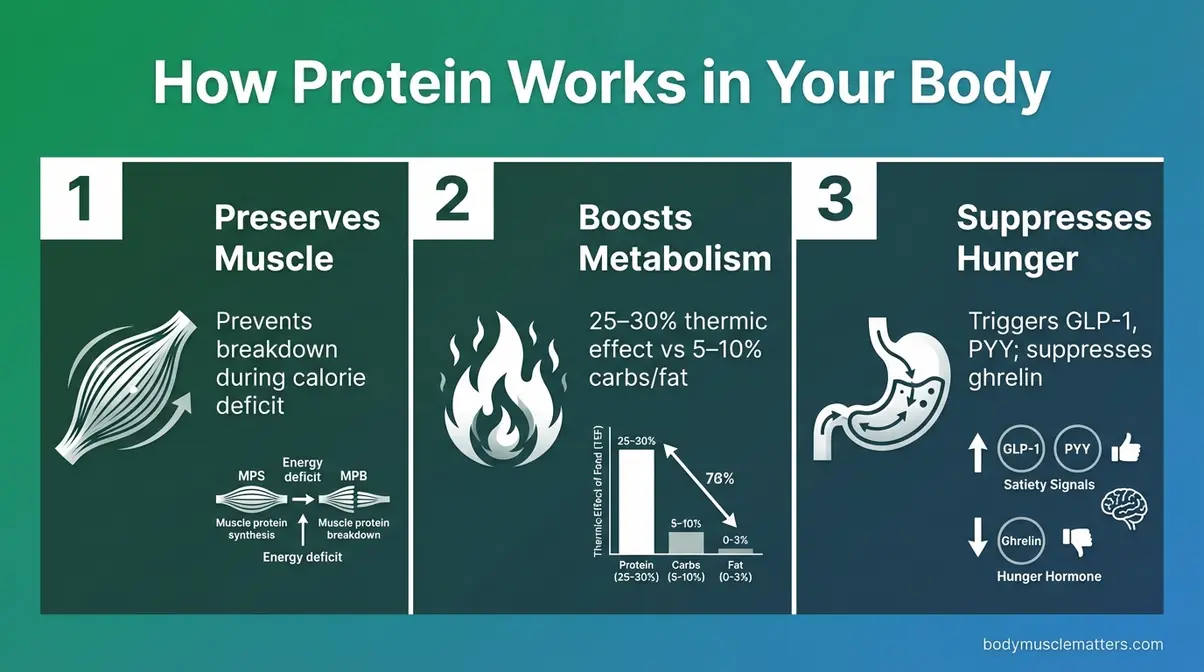
Caption: Protein serves three critical roles during fat loss — preserving muscle, suppressing hunger, and boosting calorie burn through digestion.
A Safety Note Before You Begin
A few things to review before calculating your target:
- Kidney health. For most healthy adults, higher protein intakes are safe. However, if you have existing kidney disease or reduced kidney function, higher protein intake may stress the kidneys. Check with your doctor first.
- Medication interactions. If you take GLP-1 medications (Ozempic, Wegovy, Mounjaro, Zepbound) or other prescription weight-loss drugs, your protein needs and hunger signals are altered. See Step 3 for specific guidance.
- Pregnancy and breastfeeding. Protein needs increase significantly. Do not use the general targets in this guide — see a registered dietitian.
- Existing eating disorder history. Focusing heavily on gram targets may not be the right approach. Speak with a healthcare professional before tracking macros.
Step 1: Learn Why Protein Helps You Lose Weight
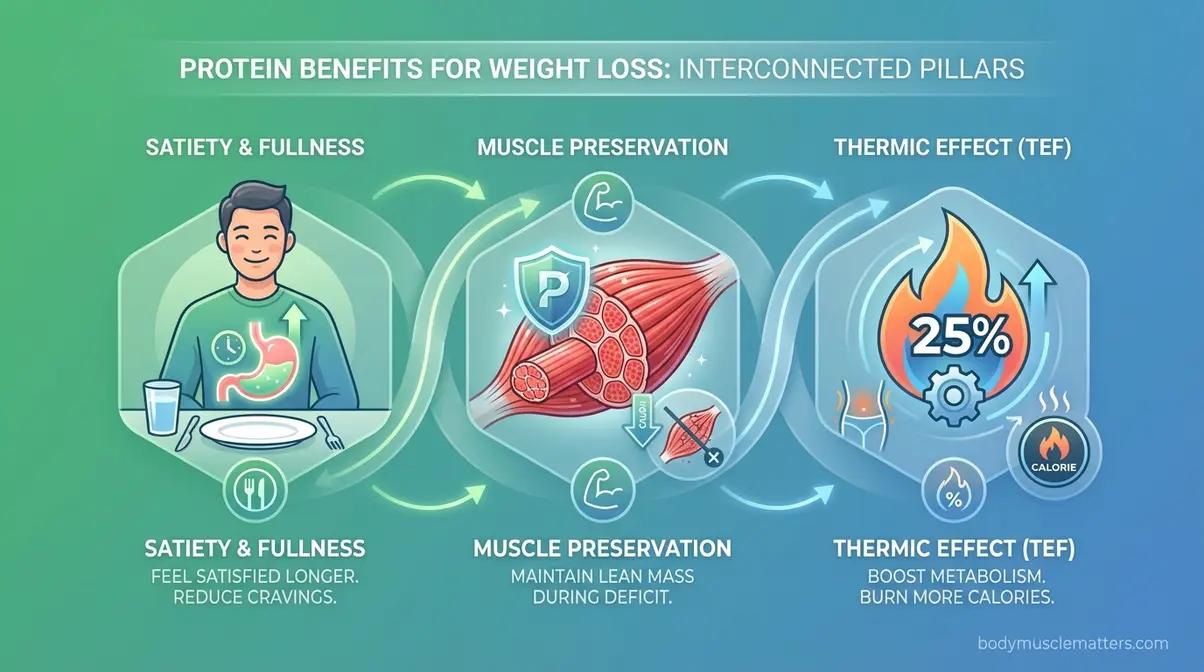
Before we do the math, you need to understand why protein is the most important lever to pull when trying to shed pounds. It does three distinct things that no other macronutrient does at the same level.
How Protein Keeps You Fuller Longer
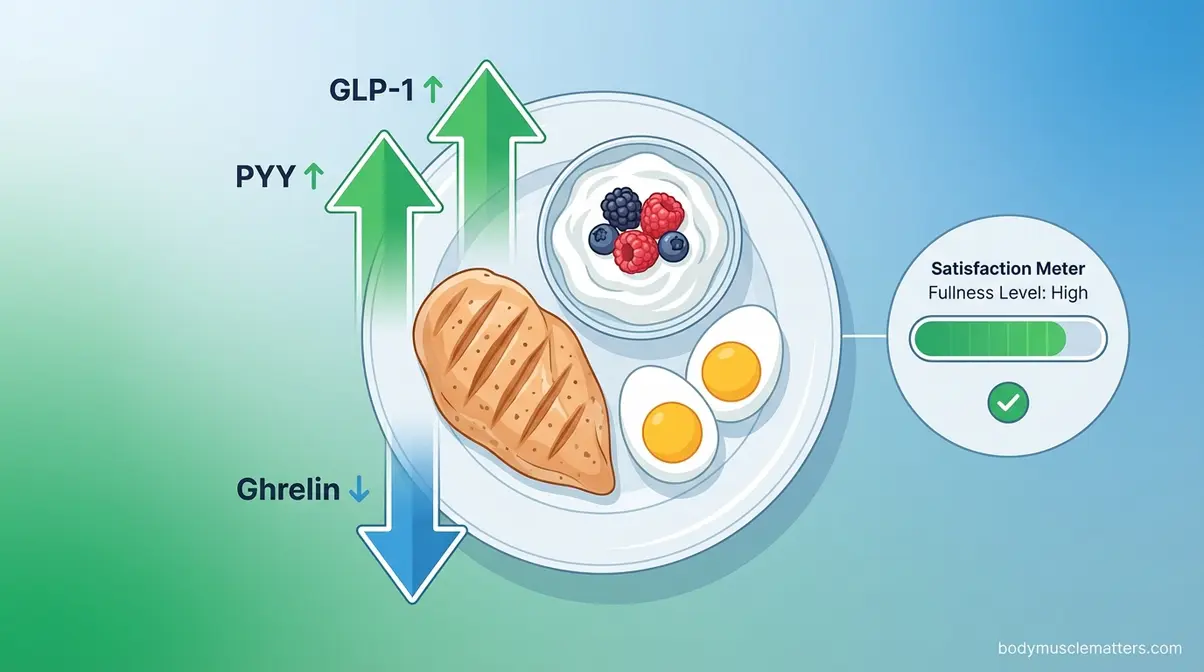
Protein is the most satiating macronutrient — meaning it makes you feel fuller for longer after eating. When you eat protein, your body releases two key satiety hormones: GLP-1 and PYY. At the same time, it suppresses ghrelin, which is the hormone that triggers hunger cravings.
A 2026 study published in ScienceDaily found that a protein-rich breakfast significantly increased satiety compared to a carbohydrate-based meal — and some participants had difficulty finishing the high-protein meal because it was so filling. This hormonal cascade happens whether you eat chicken breast, Greek yogurt, or a plant-based protein shake.
For practical weight loss, this means eating enough protein helps you feel satisfied between meals without constant willpower battles. Fewer hunger pangs means fewer unplanned snacks. Fewer unplanned snacks means your calorie deficit holds.
“High-protein diets reduce overall energy intake by naturally suppressing appetite hormones, making calorie control easier without deliberate restriction” — this is the mechanism that makes the 30g-per-meal rule so effective.
How Protein Protects Your Muscle
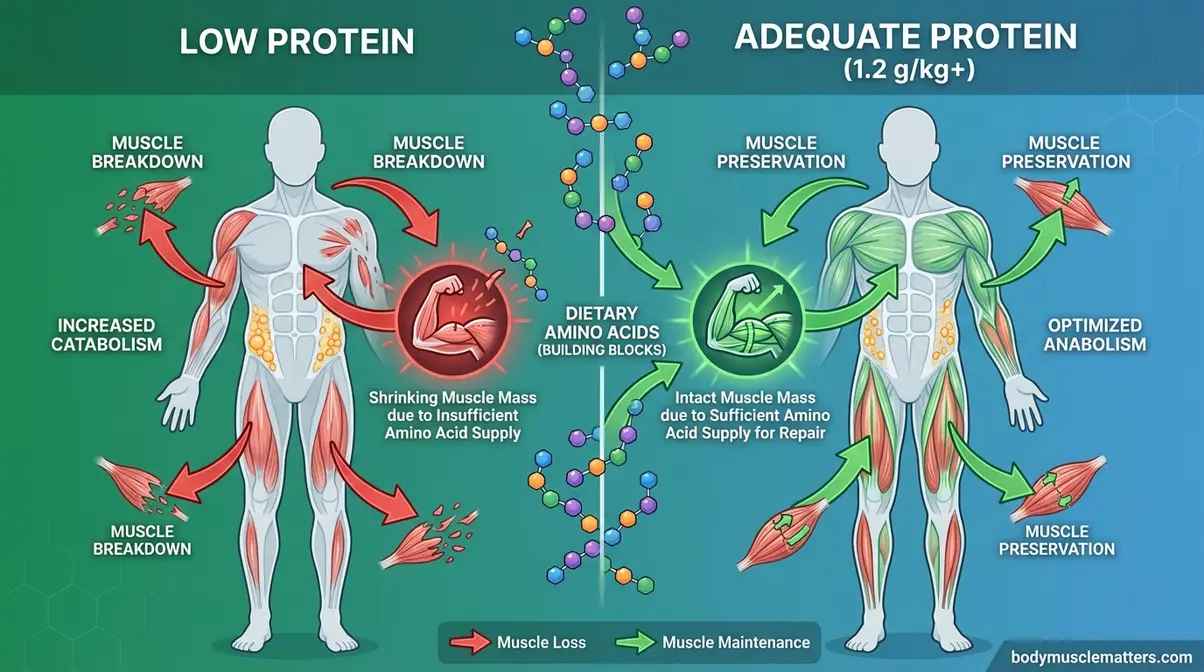
Here is the fear most people have, and rightly so: “I want to lose fat, not muscle.”
Every time you eat in a calorie deficit, your body has a decision to make. It can burn stored fat for energy, or it can break down muscle tissue. Muscle protein synthesis (the process your body uses to build and repair muscle) requires a steady supply of amino acids from dietary protein. When protein is scarce, synthesis slows and breakdown accelerates.
Clinical evidence published in the NIH database confirms that protein intakes above 1.2 g/kg daily — significantly more than the standard 0.8 g/kg RDA — are required to preserve fat-free mass during weight loss (National Library of Medicine, 2026). A 2026 review in Frontiers in Nutrition echoed this, recommending at least 1.2 g/kg as a minimum intervention to prevent muscle wasting during caloric restriction.
This is the heart of The Muscle-First Deficit: you set your protein floor first because muscle protection is non-negotiable. Once that floor is established, you build the rest of your diet around it.
Your individual protein needs may vary based on age, activity level, and health status. Consult a registered dietitian for guidance specific to you.
Protein Boosts Your Metabolism
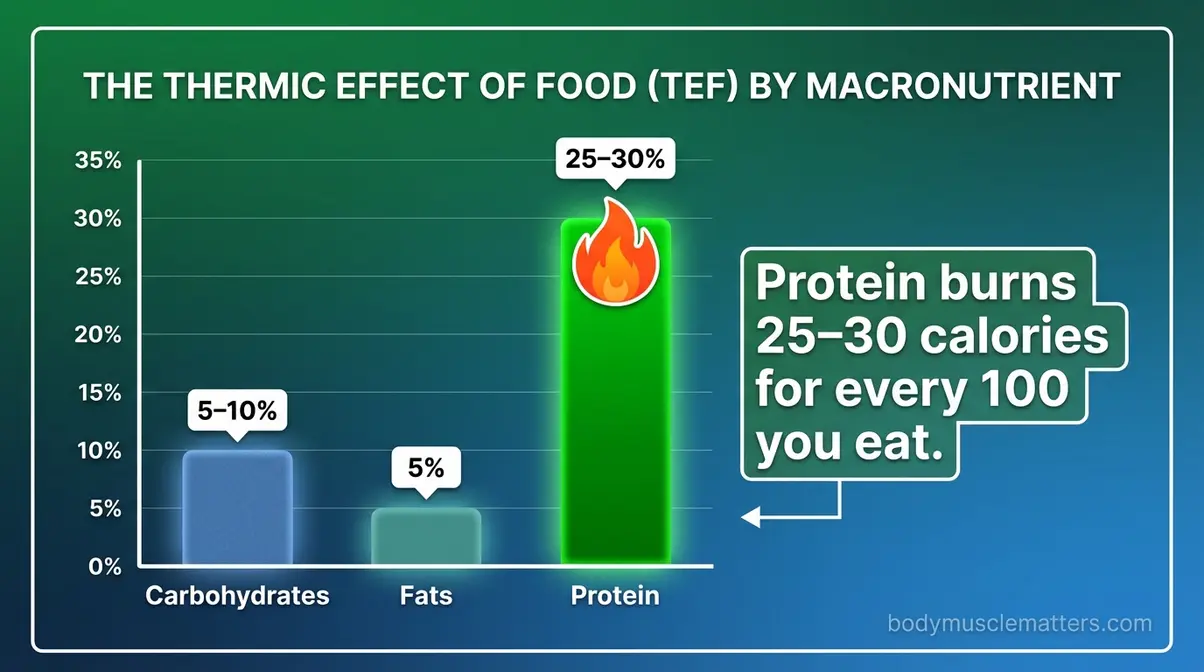
The third benefit is one most people overlook: protein costs more calories to digest than any other macronutrient.
This is called the thermic effect of food (TEF) — the energy your body expends to process what you eat. Carbohydrates and fats have a TEF of roughly 5–10%. Protein’s TEF is 20–30%. That means for every 100 calories of protein you eat, your body burns approximately 25–30 calories just to break it down.
A 2026 meta-analysis in Advances in Nutrition confirmed that high-protein meals significantly increase diet-induced thermogenesis compared to standard protein intakes. This metabolic advantage compounds over time — it is a small but real edge that supports your calorie deficit without any extra effort.
Step 2: Calculate How Much Protein to Lose Weight
This is where you get your number. The math is simple, and the University of Kansas Medical Center (KUMC) and National Academy of Medicine recommend setting protein as a firm foundation to maximize diet success. We will walk through it together, step by step.
Target: 1.2 to 1.6 g/kg Daily
The evidence-based range for protein intake during weight loss is 1.2 to 1.6 grams of protein per kilogram (g/kg) of body weight per day (National Library of Medicine, PMC 2026; NASM nutritional guidelines).
Here is how to calculate your target:
- Step 1: Convert your body weight from pounds to kilograms
- Divide your weight in pounds by 2.2.
- Example: 150 lbs ÷ 2.2 = 68 kg
- Step 2: Multiply by your target range
- Multiply your weight in kilograms by 1.2 (lower end) and 1.6 (upper end).
- Example: 68 kg × 1.2 = 82g | 68 kg × 1.6 = 109g
- Step 3: Pick your daily target within that range
- If you are sedentary or just starting out, aim closer to 1.2 g/kg. If you exercise regularly or want to preserve more muscle, aim toward 1.6 g/kg.
- Example result: 82–109g of protein per day
That is your personal daily protein target. Write it down.
This is guidance for most healthy adults. Your actual needs may vary. Consult a registered dietitian for a personalized plan.
How to Use the Protein Calculator
A calculator does this math automatically, which removes one more barrier between you and action.
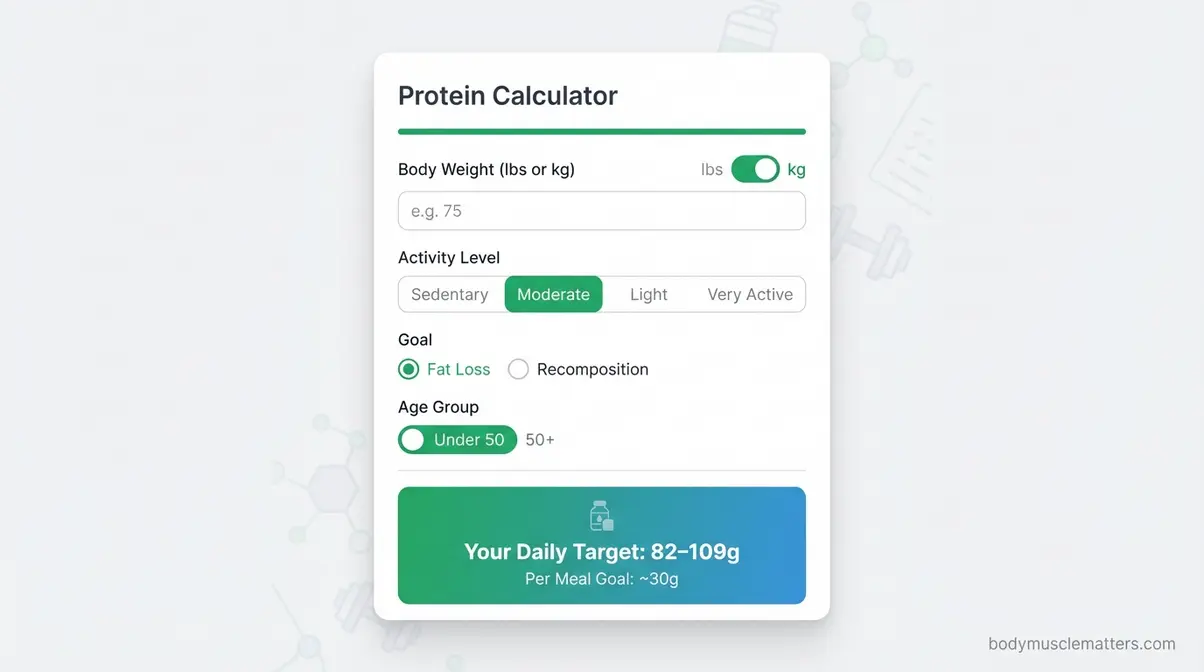
Caption: Enter your body weight and activity level to get a personalized daily protein target in under 30 seconds.
Until the calculator is live, use these steps from the section above. All you need is your scale and a calculator app.
- What the calculator adjusts for:
- Body weight (lbs or kg)
- Activity level (sedentary, lightly active, moderately active, very active)
- Goal (fat loss only vs. fat loss with muscle building)
- Age category (under 50 vs. 50+)
The output is your daily gram target and your per-meal goal based on the 3-3-3 rule explained below.
Quick Reference: Grams by Body Weight
Use this table to find your daily protein range without doing any math. All values use the 1.2–1.6 g/kg range for fat loss with muscle preservation.
| Body Weight | Weight in kg | Daily Protein (Low End) | Daily Protein (High End) |
|---|---|---|---|
| 120 lbs | 54 kg | 65g | 86g |
| 140 lbs | 64 kg | 77g | 102g |
| 150 lbs | 68 kg | 82g | 109g |
| 160 lbs | 73 kg | 88g | 117g |
| 180 lbs | 82 kg | 98g | 131g |
| 200 lbs | 91 kg | 109g | 145g |
| 220 lbs | 100 kg | 120g | 160g |
| 250 lbs | 114 kg | 137g | 182g |
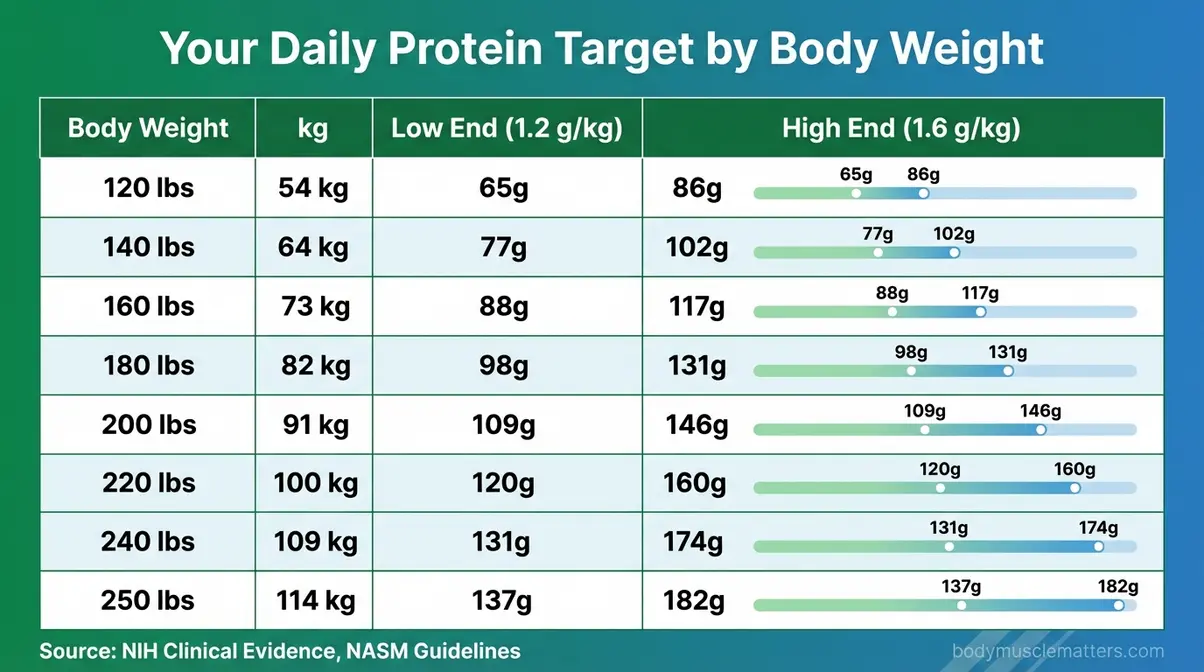
Caption: Your personal protein target depends entirely on your body weight — use this cheat sheet to find yours in seconds.
Is 100g of Protein a Day Enough?
For most people under 180 pounds, 100g of protein per day is enough to support fat loss while preserving muscle (NIH research). A 150-pound person following the 1.2–1.6 g/kg target range needs 82–109g daily, placing 100g comfortably in the middle of that range. A 140-pound person needs 77–102g — again, 100g hits the target. However, if you weigh more than 180 pounds or are actively strength training, 100g may fall slightly below your optimal intake. Use the body-weight reference table above to find your exact range.
Understanding the 3-3-3 Rule
The 3-3-3 rule is a practical framework for hitting your daily protein target without obsessing over every gram.
Here is what it means: aim for approximately 30 grams of protein per meal, across 3 main meals, eaten roughly every 3–4 hours.
Why 30 grams? Because research on muscle protein synthesis (MPS) — your body’s muscle-building and repair process — shows that approximately 25–30 grams of protein per meal is the threshold needed to fully activate mTOR, the primary pathway that tells your muscles to rebuild (meta-analysis, Advances in Nutrition, 2026). Below that threshold, the muscle-preservation signal is weaker.
- Three meals at 30g each gives you 90g of protein before you add snacks. Most people will hit their daily target comfortably using this structure:
- Breakfast: 30g protein
- Lunch: 30g protein
- Dinner: 30g protein
- Snacks (optional): 10–30g additional, depending on your target
The 3-3-3 rule is not a rigid requirement — it is a reliable starting point that works for most lifestyles and body weights.
Step 3: Personalize Your Protein Intake
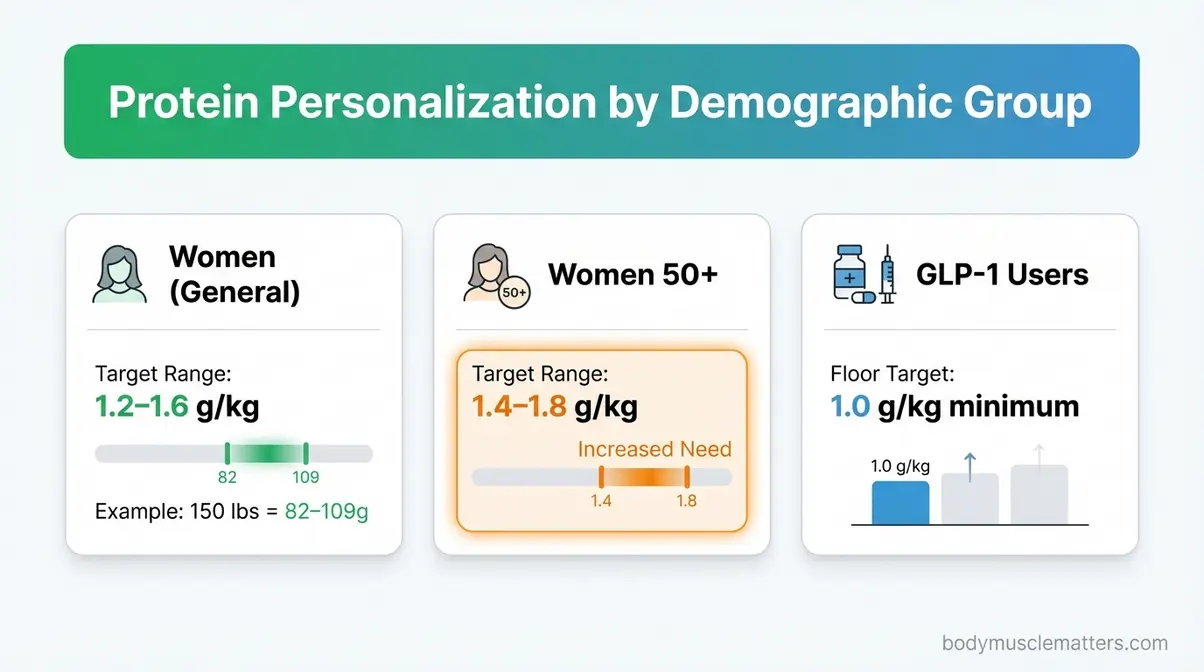
The 1.2–1.6 g/kg range applies broadly, but your sex, age, and health situation can shift your target. This step covers the adjustments that matter most.
Protein Targets for Women
Women often receive vague protein advice. Below is a concrete, weight-based reference table for women targeting fat loss.
| Body Weight | Daily Protein (Moderate: 1.2 g/kg) | Daily Protein (Active: 1.6 g/kg) |
|---|---|---|
| 120 lbs (54 kg) | 65g | 86g |
| 130 lbs (59 kg) | 71g | 94g |
| 150 lbs (68 kg) | 82g | 109g |
| 165 lbs (75 kg) | 90g | 120g |
| 180 lbs (82 kg) | 98g | 131g |
A 150-pound woman following The Muscle-First Deficit protocol would target 82–109g of protein per day — split across three meals at roughly 27–36g each. In practical terms, that means a 3-egg omelet with cottage cheese at breakfast, a chicken breast salad at lunch, and a salmon fillet at dinner, with Greek yogurt as a snack.
Women in their reproductive years should also note that protein needs may increase slightly during the luteal phase of the menstrual cycle, when the body’s muscle breakdown rate is marginally higher. Aiming for the higher end of the range (1.6 g/kg) during the week before menstruation is a simple and sensible adjustment.
Your needs may vary. Consult a registered dietitian for a personalized plan.
Protein Targets for Men
Men typically carry more muscle mass than women and, on average, weigh more — which means their total gram targets are higher even at the same g/kg ratio.
| Body Weight | Daily Protein (Moderate: 1.2 g/kg) | Daily Protein (Active: 1.6 g/kg) |
|---|---|---|
| 160 lbs (73 kg) | 88g | 117g |
| 180 lbs (82 kg) | 98g | 131g |
| 200 lbs (91 kg) | 109g | 145g |
| 220 lbs (100 kg) | 120g | 160g |
| 250 lbs (114 kg) | 137g | 182g |
Men who want to lose weight and gain muscle at the same time should target the upper end: 1.6–2.0 g/kg. That is a goal called body recomposition, covered in Step 5. Reaching 200 grams of protein a day is realistic for larger, more active men — but unnecessary for most beginners.
Consult a registered dietitian or healthcare provider for guidance tailored to your individual situation.
Women Over 50 and GLP-1 Users
Two groups consistently receive inadequate protein guidance. Both deserve specific, evidence-based direction.
Women Over 50 — Fighting Anabolic Resistance
After age 50, muscle tissue becomes less responsive to protein. This is called anabolic resistance — a diminished ability of aging muscle to respond to the anabolic (muscle-building) stimulus of protein intake and exercise (NIH PMC8255642). In plain terms, it takes more protein to produce the same muscle-protecting response than it did at 30.
Research from Frontiers in Nutrition (2026) found that older adults may require 30–40 grams of high-quality protein per meal — specifically protein rich in leucine (an essential amino acid that directly triggers muscle protein synthesis) — to adequately stimulate MPS. Leucine-rich sources include dairy (milk, Greek yogurt, cottage cheese), eggs, chicken, and fish.
For women over 50, the practical recommendation is to target 1.4–1.8 g/kg of body weight daily — higher than the standard 1.2 g/kg floor — with at least 30 grams per meal (Administration for Community Living).
GLP-1 Users — Ozempic, Wegovy, Mounjaro, Zepbound
GLP-1 medications suppress appetite significantly. That is how they work. But because you are eating far less overall, you are at high risk of not meeting your protein target — which accelerates the muscle loss that makes long-term weight maintenance harder.
Nutrition guidance for GLP-1 users (UPI, clinical nutrition consensus, 2026) recommends a minimum of 60–70 grams of protein daily. More targeted sources suggest 1.2–1.6 g/kg as a baseline, scaling up to 2.0 g/kg for users who are also strength training.
The master strategist guidance for this section states it clearly:
“If you’re losing weight or taking a GLP-1, aim for a minimum of 1 gram of protein per kilogram of body weight.”
That is your absolute floor. Aim higher if you can manage it. Because GLP-1 drugs reduce your appetite so dramatically, protein should be the first thing on your plate at every meal — eat it before anything else, while you still have appetite remaining.
Consult your prescribing physician about protein targets specific to your medication and dosage.
Is 200g of Protein a Day Enough?
For the vast majority of people, 200 grams of protein per day is more than enough — and may be more than necessary (NIH data). 200g of protein is appropriate for people weighing 125+ kg (275+ lbs) at the 1.6 g/kg level, or for lighter individuals who lift weights intensively and are actively pursuing body recomposition at 2.0–2.4 g/kg. For a 150-pound person, 200g of protein represents roughly 2.9 g/kg — well above the evidence-based fat-loss range. More protein is not necessarily better beyond a certain threshold; the extra grams simply get burned for energy. Aim for your personalized target, not an arbitrary round number.
Step 4: Spread Your Protein Through the Day
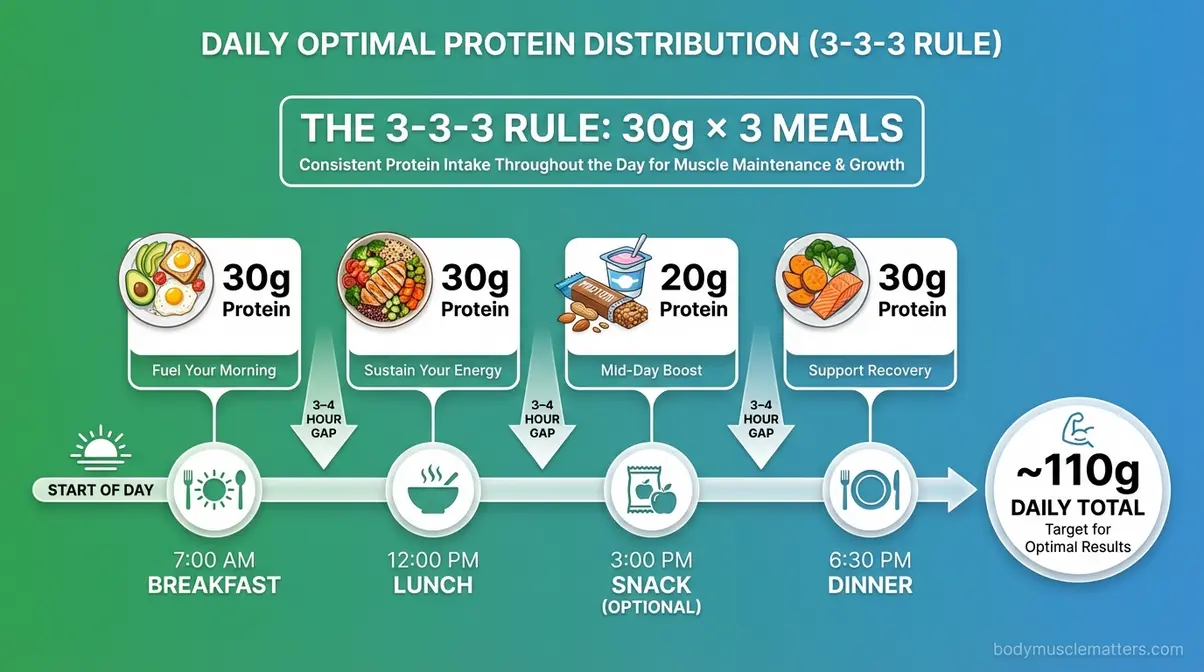
Hitting your daily protein target matters. When you hit it matters almost as much.
Why 30 Grams Per Meal Is the Goal
Spreading protein evenly across the day produces significantly better muscle-preservation results than eating the same total amount in one or two large meals.
The reason comes back to muscle protein synthesis. Your muscles can only use a certain amount of protein at once to trigger rebuilding — approximately 25–30 grams. Eating 90g of protein in one sitting does not give you three times the muscle signal. Much of the excess gets oxidized (burned) for energy or converted.
Research on protein pacing (NIH) and distribution published in Frontiers in Nutrition (2026) confirms that distributing protein across multiple meals — rather than front- or back-loading — optimizes both appetite regulation and thermogenesis throughout the day.
The 3-3-3 rule (30g × 3 meals) exists precisely because of this biology. It is not arbitrary. Three protein anchors per day, spaced every 3–4 hours, keeps muscle protein synthesis elevated across the full waking window.
Health professionals at the Cleveland Clinic recommend spreading protein intake evenly across meals rather than concentrating it at dinner, which is the most common pattern in Western eating habits.
What 30 Grams of Protein Looks Like
Most people have no mental image of what 30 grams of protein actually looks like on a plate. Here are concrete examples:
| Food | Serving Size | Protein |
|---|---|---|
| Chicken breast (cooked) | 4 oz (113g) | ~34g |
| Canned tuna (in water) | 1 can (142g) | ~33g |
| Salmon fillet (cooked) | 4 oz (113g) | ~30g |
| Greek yogurt (plain, full-fat) | 1 cup (245g) | ~20g |
| Cottage cheese (low-fat) | 1 cup (226g) | ~28g |
| Eggs (large) | 4 whole eggs | ~28g |
| Tempeh (cooked) | 3.5 oz (100g) | ~19g |
| Ground beef 90% lean (cooked) | 3 oz (85g) | ~22g |
| Edamame (shelled) | 1 cup (155g) | ~17g |
| Protein shake (whey or pea) | 1 scoop (varies) | 20–30g |
Most people are surprised that a single chicken breast or a can of tuna covers the entire 30g target in one food item. You do not need complicated recipes or expensive supplements to hit 30g per meal.
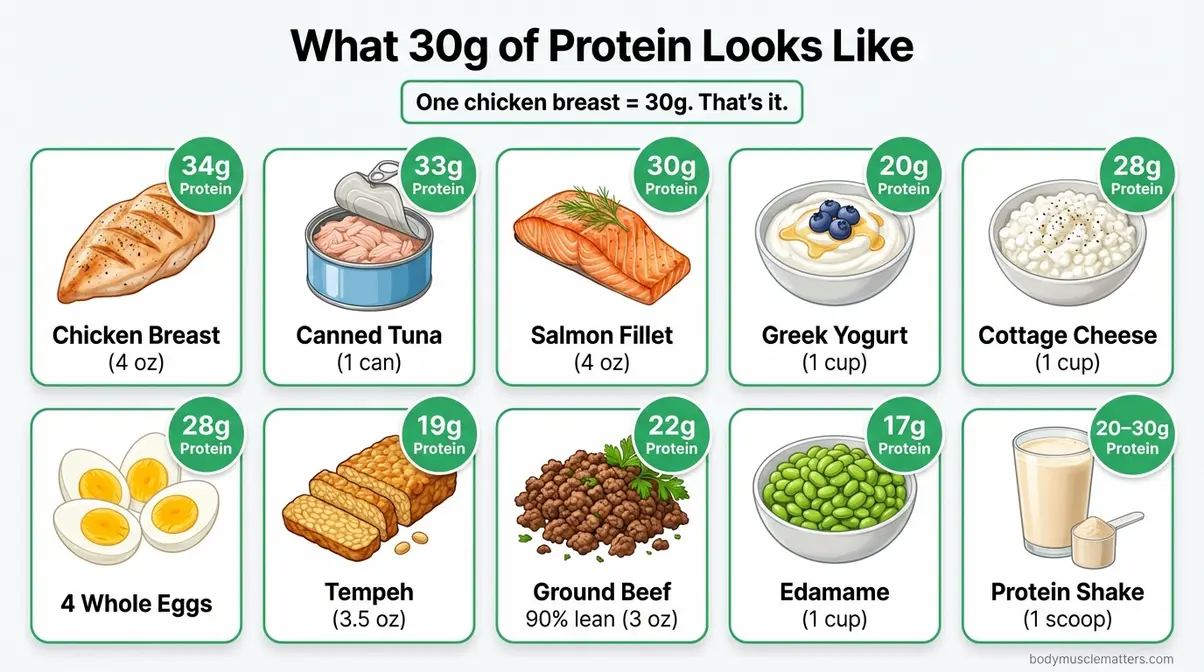
Caption: Hitting 30g of protein per meal is simpler than it looks — a single 4-oz chicken breast gets you there on its own.
A Sample High-Protein Day
Here is what a full day of eating looks like when you apply The Muscle-First Deficit and the 3-3-3 rule. This example is built for a 150-pound person targeting 100g of protein per day:
| Meal | Food | Protein |
|---|---|---|
| Breakfast (7am) | 3 scrambled eggs + 1/2 cup cottage cheese | ~32g |
| Lunch (12pm) | 4oz canned tuna on greens + 1/2 cup edamame | ~40g |
| Snack (3pm, if needed) | 1 cup Greek yogurt | ~20g |
| Dinner (6:30pm) | 4oz salmon fillet + roasted vegetables | ~30g |
| Daily Total | ~122g |
Notice that this day hits 100g+ of protein without a single scoop of protein powder. Real food is entirely sufficient for most people. Protein powder is a convenience tool, not a requirement — more on that in Step 6.
Step 5: Protein for Fat Loss and Muscle
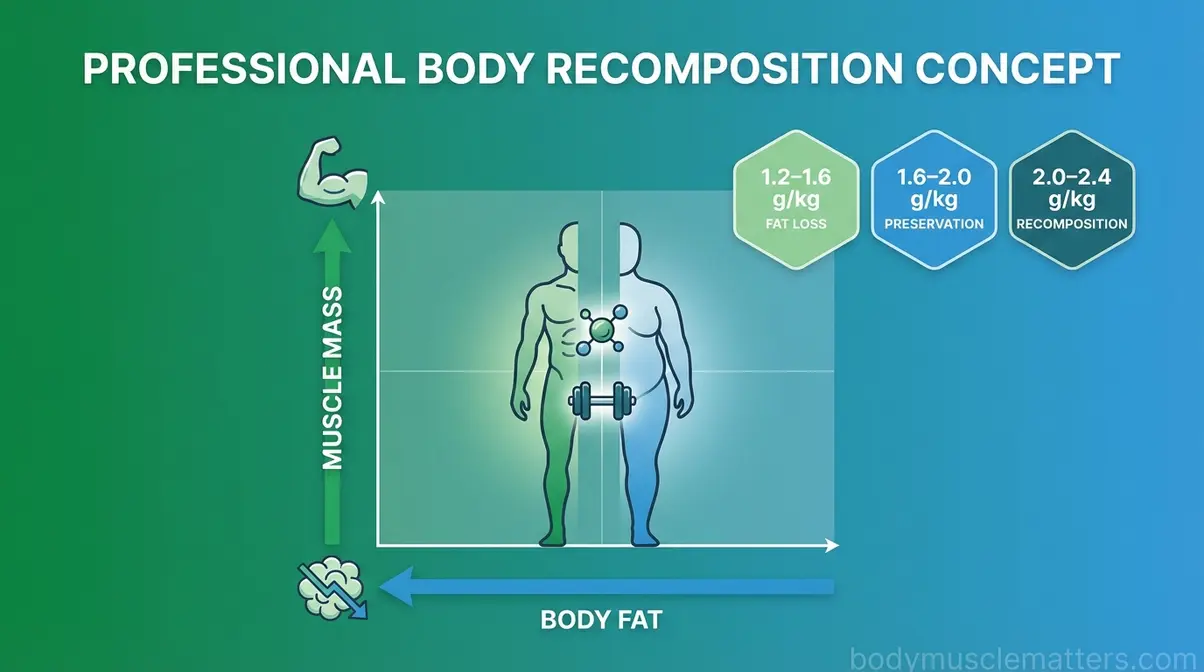
Many people come to protein research wanting to do something that sounds contradictory: lose fat and build muscle at the same time. The good news is that it is possible — especially for beginners. Here is what the science says.
What Is Body Recomposition?
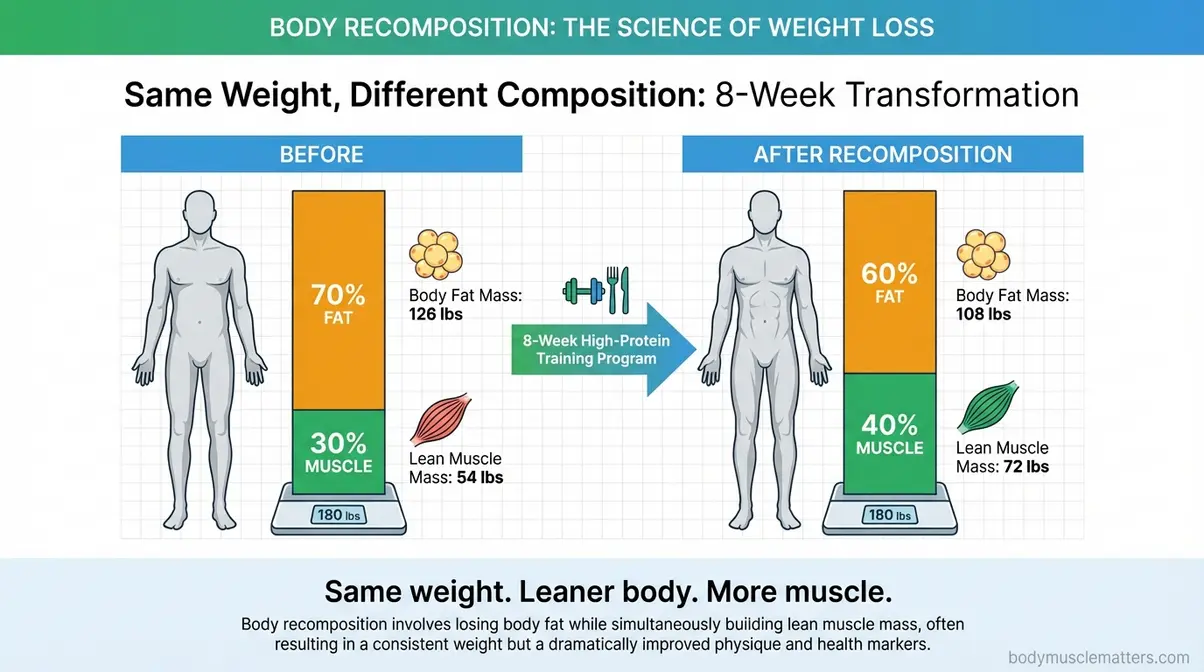
Body recomposition is the process of simultaneously reducing body fat and increasing lean muscle mass. It sounds impossible because muscle gain typically requires a calorie surplus and fat loss requires a deficit. But these two processes can coexist under specific conditions.
Beginners to strength training (people who have not lifted weights consistently before) experience what researchers call “newbie gains” — rapid increases in muscle protein synthesis driven by the novel training stimulus. This response is strong enough to build muscle even in a modest calorie deficit, provided protein intake is high enough.
A 2026 editorial in PMC reviewing body recomposition research confirmed that 8-week resistance training programs combined with high-protein diets produced significant improvements in muscle mass and strength simultaneously with fat loss.
Protein for Body Recomposition
If your goal is body recomposition — losing belly fat while also gaining visible muscle — your protein target moves higher than the basic fat-loss range.
- Research and current nutritional guidance recommend:
- Fat loss only: 1.2–1.6 g/kg daily
- Fat loss + muscle preservation: 1.6–2.0 g/kg daily
- Fat loss + active muscle building (recomposition): 2.0–2.4 g/kg daily
This is where The Muscle-First Deficit framework proves its value most clearly. You set your protein first — at the level appropriate for your goal — and then you set your calorie deficit around that protein floor. The protein target is non-negotiable. The calorie math adjusts to accommodate it.
For a 180-pound (82 kg) person pursuing body recomposition: 82 kg × 2.0 = 164g of protein daily. That is your anchor. Your calories, carbs, and fats are set after that number is secured.
Your individual needs depend on training intensity, experience level, and health status. Consult a registered dietitian for a personalized plan.
Strength Training: The Missing Piece
Protein without resistance training is like building material without a construction crew. The stimulus to actually use that protein to build muscle comes from strength training — and without it, the extra protein simply gets metabolized for energy.
The Cleveland Clinic recommends combining adequate protein intake with regular resistance exercise for people pursuing fat loss with muscle retention. Even two sessions per week of basic strength training (bodyweight exercises, resistance bands, or free weights) provides enough mechanical stimulus to shift your body toward preservation mode.
For beginners, the goal is not heavy lifting. Three sets of compound movements — squats, push-ups, rows — two to three times a week creates the training signal your muscles need to respond to your high-protein diet. Combined with The Muscle-First Deficit, this pairing is the most evidence-backed strategy for people who want to tone up while losing weight.
Step 6: Balance Your Macros and Pick Your Sources
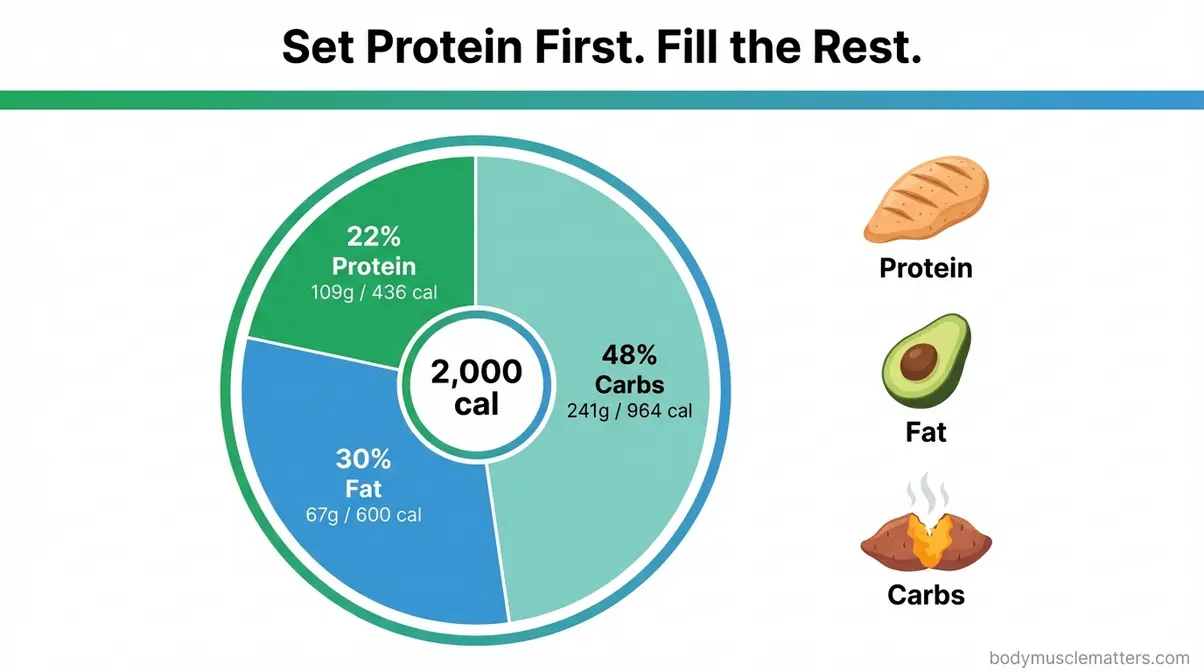
Once your protein target is set, you have a framework for building the rest of your diet. This step answers the remaining questions: What about carbs and fats? Do you need supplements? What about keto?
Setting Carbs and Fats After Protein
After your protein grams are locked in, carbohydrates and fats fill the remaining calorie budget. Here is a simple way to think about it:
- Set protein first: 1.2–1.6 g/kg (or higher if pursuing recomposition)
- Set a modest calorie deficit: Most beginners do well with a 300–500 calorie daily deficit — enough to lose roughly 0.5–1 pound per week without excessive muscle loss
- Fill the remaining calories with carbs and fats: There is no single correct ratio. Both low-carb and moderate-carb approaches work if protein is adequate
Mayo Clinic Health System guidance suggests that protein should make up roughly 10–35% of total daily calories for healthy adults — though for active fat-loss goals, the upper end of that range is more appropriate.
| Macro | Example Allocation (2,000 calorie goal) |
|---|---|
| Protein (1.6 g/kg for 150 lb person) | ~109g = ~436 calories (22%) |
| Fat (30% of calories) | ~67g = ~600 calories |
| Carbohydrates (remaining) | ~241g = ~964 calories |
Adjust carbs and fats based on your energy levels, food preferences, and how your hunger responds. Neither is the enemy — protein is simply always the priority.
Do You Need Protein Powder?
No. Protein powder is a convenient tool, not a requirement.
If you can hit your daily protein target through whole foods — chicken, fish, eggs, Greek yogurt, cottage cheese, legumes — you do not need to spend money on supplements. Many people feel they are “wasting money on protein” powder when their diet already covers their needs.
- However, protein powder earns its place in specific situations:
- You are consistently under your daily target despite eating well
- Your appetite is very low (common with GLP-1 medications) and solid food feels like too much
- You travel frequently and need a portable, no-prep option
- You do not enjoy high-protein foods and need a neutral base you can add to smoothies or oatmeal
KUMC (University of Kansas Medical Center) notes that whole food protein sources provide additional nutritional benefits — vitamins, minerals, fiber — that isolated supplements do not. If choosing between a chicken breast and a protein bar with the same protein content, the chicken breast wins nutritionally.
If you do use protein powder, whey and pea protein are the most studied options with strong evidence supporting their effectiveness for muscle protein synthesis.
Protein Intake on a Keto Diet
Keto (ketogenic) diets restrict carbohydrates to roughly 20–50g per day, forcing the body to burn fat for fuel in a metabolic state called ketosis.
A common concern with keto and high protein: gluconeogenesis. This is the process by which excess protein can theoretically be converted to glucose, potentially disrupting ketosis. In practice, gluconeogenesis is demand-driven — it does not happen simply because you ate more protein. For most people on keto, hitting the standard 1.2–1.6 g/kg protein target does not kick you out of ketosis.
Harvard Health notes that very high protein intakes on ketogenic diets are generally self-limiting, and calories rarely escalate beyond manageable ranges in this context.
The practical rule for keto: keep protein at 1.2–1.6 g/kg, fill remaining calories with fat, and monitor ketone levels if precision matters to you. Do not drop protein below your target to protect ketosis — muscle preservation outweighs a marginal change in ketone numbers.
Consult your healthcare provider or registered dietitian before starting a ketogenic diet, especially if you have diabetes or cardiovascular disease.
Common Mistakes and Troubleshooting
Even with a clear target, people run into the same predictable roadblocks. Here is how to identify and fix them.
Common Pitfalls
1. Eating all your protein at dinner.
This is the most common mistake. Eating 80g of protein in one meal does not produce the same muscle-preservation effect as spreading it across the day. The fix: treat breakfast as your first protein anchor. Aim for 25–35g before you leave the house.
2. Counting protein from low-protein foods.
Bread, oatmeal, peanut butter, and nuts contain some protein — but they are not protein sources in the meaningful sense. Counting 3g from bread and 8g from peanut butter as part of your 30g-per-meal goal leaves you short. Focus on dedicated high-protein foods as your anchor, then count everything else as a bonus.
3. Hitting the gram target but neglecting leucine.
Not all protein sources trigger muscle protein synthesis equally. Leucine is the amino acid that most directly activates the MPS pathway. Animal proteins (meat, dairy, eggs) are rich in leucine. Many plant proteins are lower. If you eat primarily plant-based, prioritize leucine-rich sources: edamame, tofu, tempeh, and soy protein — or consider a leucine supplement in consultation with your dietitian.
4. Setting a severe calorie deficit and high protein simultaneously.
A 1,000+ calorie daily deficit is difficult to sustain alongside a high protein target. Very low calorie intakes make it physically hard to eat enough volume of protein. Stick to a moderate deficit (300–500 calories) for better adherence and muscle retention.
5. Stopping protein tracking after two days.
Tracking feels tedious. But most beginners significantly underestimate their protein intake by 20–30% when they stop tracking. Commit to accurate tracking for at least two weeks before going by feel.
When to Choose Alternatives
If you have kidney disease: The standard 1.2–1.6 g/kg target may be too high. Your nephrologist or dietitian will set a lower, individualized limit based on your GFR (kidney filtration rate). This guide’s targets do not apply.
If you are a highly competitive endurance athlete: Protein needs for marathon runners and cyclists primarily fueling on carbohydrates look different from the weight-loss framework here. A sports dietitian specializing in endurance can set a more appropriate target.
If you experience significant GI distress with high protein: Rapid increases in protein can cause bloating, gas, and constipation — especially with whey or certain plant proteins. Increase intake gradually (add 10–15g per week), focus on whole food sources, and increase fiber and water intake simultaneously.
When to Seek Expert Help
- Your protein target requires more than 200g per day and you have no experience tracking macros
- You are on multiple medications that affect metabolism, appetite, or kidney function
- You have a history of disordered eating and macro tracking triggers anxiety
- You have diabetes, kidney disease, liver disease, or any other chronic condition that affects protein metabolism
- After 4–6 weeks of consistent effort, you see no changes in body composition
Frequently Asked Questions
What is the 3-3-3 rule?
The 3-3-3 rule means eating approximately 30 grams of protein at each of your 3 main meals, spaced roughly 3–4 hours apart. This structure aligns with the threshold needed to trigger muscle protein synthesis at each sitting (25–30g per meal, per research in Advances in Nutrition, 2026). Three protein anchors per day keeps your hunger hormones regulated, your muscle-preservation signal consistently elevated, and your daily total on track. It is a practical simplification of more complex protein distribution research — and it works reliably for most beginners.
How much protein should I eat?
Your protein target for weight loss depends on your body weight, not a universal number. The formula is 1.2–1.6 grams of protein per kilogram of body weight per day (NIH guidelines). To calculate: divide your weight in pounds by 2.2 to get kilograms, then multiply by 1.2 (minimum) and 1.6 (active). A 160-pound person needs 88–117g daily. A 200-pound person needs 109–145g. If you are over 50 or using a GLP-1 medication, target the higher end of the range or above. Use the Quick Reference table in Step 2 to find your number instantly.
Do I need protein powder?
No — protein powder is a convenience tool, not a requirement for weight loss. Whole foods like chicken breast, canned fish, eggs, Greek yogurt, and cottage cheese provide complete, high-quality protein with additional nutritional benefits that powders lack. That said, protein powder earns its place when you consistently fall short of your daily target, your appetite is suppressed (common on GLP-1 medications), or you need a portable option. If you do choose a supplement, whey protein and pea protein have the strongest evidence base for supporting muscle protein synthesis during weight loss.
Conclusion
If you are wondering exactly how much protein to lose weight, the research is consistent: protein intake between 1.2 and 1.6 grams per kilogram of body weight daily provides the strongest foundation for fat loss while protecting the muscle that keeps your metabolism humming. The 3-3-3 rule — 30 grams per meal, three times a day — translates that clinical target into a plan you can execute starting at your next meal. Women over 50 and GLP-1 medication users should anchor to the higher end of the range, targeting at least 1.0–1.4 g/kg as an absolute floor (clinical nutrition consensus, UPI, 2026).
The Muscle-First Deficit changes the sequence that most weight-loss plans get backwards. Instead of starting with calories and fitting protein in wherever it lands, you lock in your protein gram target first. That number becomes the non-negotiable foundation. Calories, carbs, and fats are built around it — not the other way around. This single reordering is what separates plans that preserve lean body mass from plans that inadvertently sacrifice it.
Your next step is simple: find your body weight in the Quick Reference table in Step 2, write down your daily protein target, and plan three meals around it tomorrow. Do not wait for the “perfect” diet plan. Start with one day, one target, three meals. If you want personalized guidance beyond this framework — especially if you take medication, have a health condition, or have hit a plateau — book a session with a registered dietitian who specializes in weight management. They can refine this foundation into something built precisely for you.
Related posts:
Best Protein Powder for Muscle Growth: Tested (2026)
Best High Protein Meal Delivery Services 2026: Top 7
Protein Powder Without Artificial Sweeteners: 10 Best Picks
Can You Eat Too Much Protein? Symptoms & Safe Limits
Best Protein Powder for Weight Loss: 10 Expert Picks
What Are Macros? A Plain Guide to Protein, Carbs and Fat

Callum
Hi, I'm Callum, the founder of Body Muscle Matters. I'm not a certified trainer, I'm a self taught lifter who started this site to share what I've learned from my own training and a lot of trial and error. Everything here comes from real experience and honest research, written the way I'd explain it to a friend who is just getting started. My goal is simple: practical, no hype fitness advice you can actually use.