
Basal Metabolic Rate Explained (and How to Raise It)
Right now, without lifting a finger, your body is burning calories at a rate most people never learn about. According to published clinical data, the average adult burns between 1,400 and 2,000 calories per day simply by existing — no exercise required (PubMed, 2005).
Yet most people cutting calories have no idea what their body’s minimum fuel requirement actually is. They accidentally eat below it, triggering a biological survival response that slows their metabolism. That is not a willpower failure. It is a physics problem you were never given the equation for.
In this guide, you will learn exactly what basal metabolic rate is, how to calculate your personal number, and how to use it to lose weight safely — without slowing down your body’s engine. We will cover the definition, how it compares to similar terms, what controls it, normal ranges, how to calculate it, and how to apply it to your weight-loss plan.
⚕️ MEDICAL DISCLAIMER: The information on this page is for educational purposes only and does not constitute professional medical advice. BMR calculations are estimates based on population averages and may not reflect your individual physiology.
Your basal metabolic rate (BMR) is the minimum calories your body burns at complete rest to keep you alive — accounting for 60–75% of your total daily energy expenditure (Cleveland Clinic, 2026).
- BMR ≠ RMR: Resting Metabolic Rate (RMR) is ~10–15% higher than BMR and more practical to measure day-to-day
- Top BMR driver: Muscle mass — more lean tissue means a higher calorie burn at rest
- Average BMR ranges: Men ~1,600–2,000 kcal/day; Women ~1,300–1,500 kcal/day
- The BMR Floor Rule: Never eat at or below your BMR — this triggers metabolic adaptation, your body’s built-in defense against starvation
What Is Basal Metabolic Rate (BMR)?

Basal metabolic rate (BMR) is the minimum number of calories your body burns at complete rest to keep you alive. It powers essential functions including breathing, blood circulation, cell repair, and body temperature regulation. For most adults, BMR accounts for 60–75% of all daily calorie burn — even on days when you do nothing at all (Cleveland Clinic, 2026).
What Does BMR Mean in Simple Terms?
If you are wondering what is basal metabolic rate in simple terms, the word “basal” simply means “at baseline” — the absolute minimum your body needs to operate. Think of it like the fixed monthly rent you pay regardless of how much else you spend. It is non-negotiable and never drops to zero.
A helpful everyday analogy: imagine your laptop closed and in sleep mode. It is not running any apps, but it is still using power to keep the clock ticking, maintain the battery, and run background processes. Your body works the same way. Even while you are asleep, your heart is beating, your lungs are breathing, and your cells are repairing themselves — all burning fuel.
If you stayed in bed all day, watched no TV, and moved as little as humanly possible, your body would still burn between 1,300 and 2,000 calories just to keep you alive. That number is what is meant by your basal metabolic rate.
Knowing your BMR in theory is just the start. Your body uses that baseline energy to power four essential life-sustaining processes — and understanding them helps explain why your daily calorie needs are never zero.
What Functions Does BMR Support?
Your BMR powers four core biological functions that run continuously, 24 hours a day:
- Breathing — your diaphragm contracts 12–20 times per minute without conscious effort
- Blood circulation — your heart beats approximately 100,000 times every single day
- Cell production and repair — your body replaces millions of cells every second to maintain healthy tissue
- Body temperature regulation — homeostasis (your body’s process of maintaining stable internal conditions like temperature, kept near 98.6°F/37°C) requires a constant stream of energy
Your basal metabolic rate accounts for 60–75% of your Total Daily Energy Expenditure (TDEE — the total calories you burn across an entire day, including all activity). That means even a completely sedentary person burns the vast majority of their daily calories through these four automatic functions. You are already doing more than you think.
The CDC formally calls this your Basal Energy Expenditure (BEE) — the clinical term for the same concept. According to the CDC energy expenditure definition, Basic Energy Expenditure accurately reflects the basal metabolic rate, representing the daily energy needed to sustain essential cell metabolism extrapolated over a full 24-hour period (CDC, 2006).
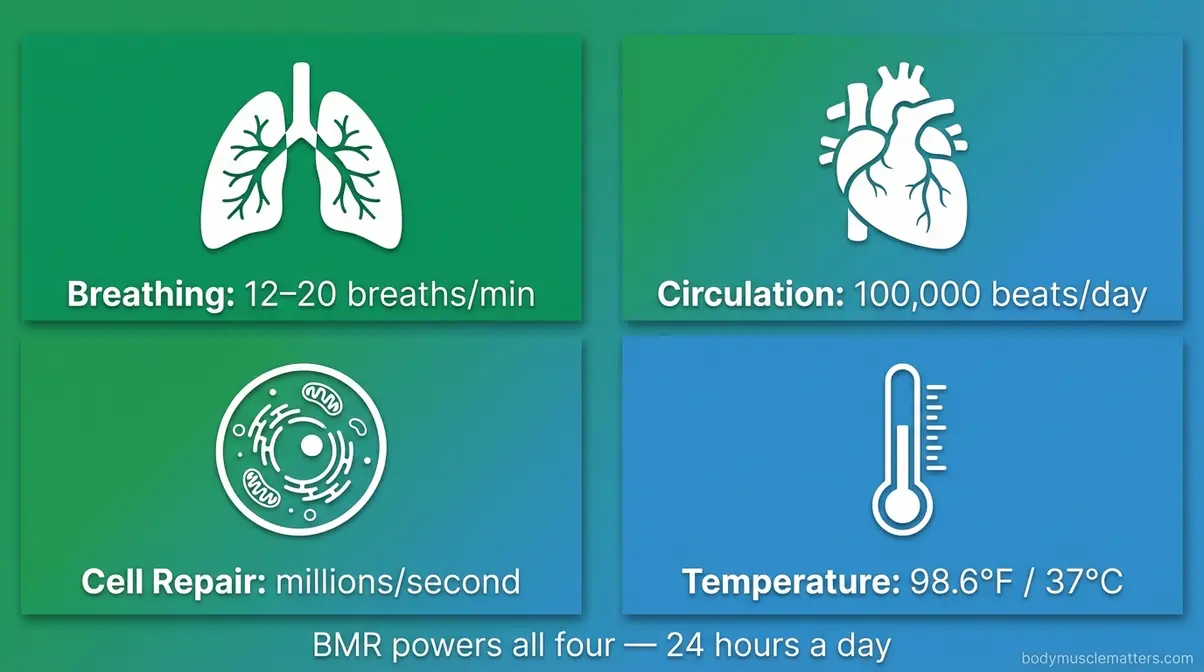
Caption: The four biological processes that your basal metabolic rate powers continuously — even during sleep.
Now you know what BMR powers. But there is one common point of confusion that trips up nearly every beginner — and it is worth clearing up before going further.
How BMR Differs from General Metabolism
Your metabolic rate (SV: 1,300) refers to the entire biological process of converting food into energy. It is a broad umbrella that covers everything your body does with the fuel you consume. BMR is just one component of your total metabolism — specifically, the resting portion. Think of total metabolism as your monthly spending; BMR is only your fixed rent.
The other components of total metabolism include the Thermic Effect of Food (TEF) — the energy your body uses to digest meals, roughly 10% of your daily burn — and Non-Exercise Activity Thermogenesis (NEAT), which covers all movement that is not formal exercise: fidgeting, walking to the kitchen, shifting in your chair. BMR is the largest share by far. These terms are not interchangeable.
Your BMR is your floor, not your target — a concept we call the BMR Floor Rule, which we will explore fully in the weight-loss section below.
With the definition clear, the next question almost every beginner asks is: “Wait, isn’t BMR the same as resting metabolic rate?” The answer is no — and the difference matters more than most websites admit.
BMR vs. Resting Metabolic Rate (RMR)
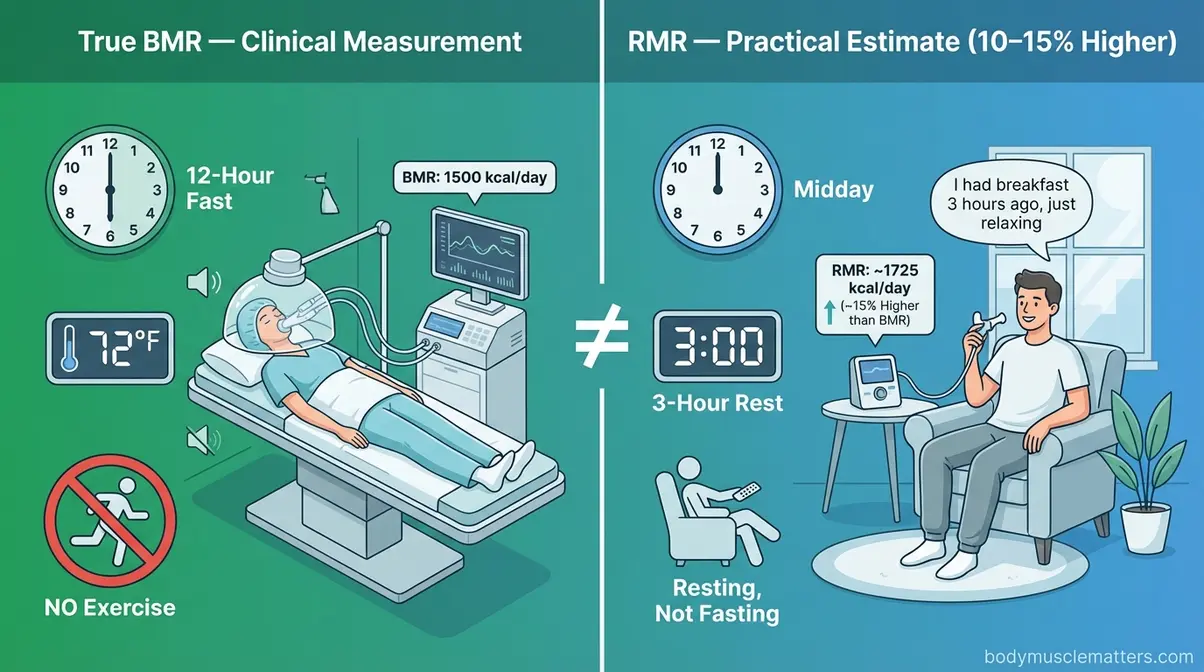
BMR and Resting Metabolic Rate (RMR) are closely related but are measured very differently — and most fitness apps use RMR, not true BMR, even when they label it “BMR.” Understanding this distinction helps you use your calorie data accurately.
Here is a side-by-side breakdown of how these three metrics compare, because knowing the difference is what makes your calorie tracking actually work:
| Feature | BMR | RMR | TDEE |
|---|---|---|---|
| Full Name | Basal Metabolic Rate | Resting Metabolic Rate | Total Daily Energy Expenditure |
| Measurement Conditions | 12-hr fast, morning, no prior exercise, 68–77°F room | Less strict; 3–4 hr fast, any time of day | Calculated (not directly measured) |
| What It Measures | Absolute minimum calories to survive | Calories burned at rest (practical estimate) | Total daily calories including activity |
| Typical Value (Adult) | Lower baseline | ~10–15% higher than BMR | BMR × activity multiplier |
| Used In Practice By | Clinical labs and research | Fitness apps, metabolic testing, calculators | Diet planning and weight loss |
| Best For | Research and clinical settings | Personal fitness tracking | Setting daily calorie goals |
How BMR and RMR Are Measured Differently
True BMR measurement requires strict clinical conditions that are essentially impossible to replicate outside a research lab. The NIH clinical BMR vs. RMR study confirms that BMR is strictly measured in the morning after an overnight fast with no prior exercise, making it slightly lower than RMR (NIH, 2015). Specifically, the requirements include: a 12-hour overnight fast, no strenuous exercise for 12–24 hours prior, complete physical rest while lying down, and a thermally neutral environment of 68–77°F (20–25°C).
RMR, by contrast, is measured under relaxed conditions — typically after a 3–4 hour fast, at any time of day. This is what commercial metabolic testing (InBody scans, gym assessments) and nearly all online calculators actually produce. It is a practical stand-in for BMR.
When your fitness tracker, MyFitnessPal account, or doctor’s office gives you a “BMR” reading, it almost certainly means RMR. The distinction matters for accuracy, but for practical weight-loss planning, RMR is actually the more useful number anyway.
So if RMR is easier to measure, why bother with the distinction at all? Because the difference in numbers — about 10–15% — actually matters when you are setting a calorie target.
Why RMR Is Typically Higher Than BMR
Resting Metabolic Rate (RMR) is typically 10–15% higher than true BMR because it is measured under less restrictive conditions (NIH, 2015). The energy cost of digesting your last meal (Thermic Effect of Food), minor postural adjustments, and light muscular tension all contribute to RMR but are deliberately excluded from a true BMR measurement.
For practical purposes, the two numbers are close enough that most people and tools use them interchangeably. However, when setting a weight-loss floor — the number you should never eat below — always use the higher RMR figure. It is the safer, more conservative threshold.
One important caution: never attempt to calculate your “true BMR” at home. The required conditions cannot be replicated in a normal living environment. A validated formula (like the Mifflin-St Jeor equation in this guide) estimates RMR — and that is precisely what you need for practical planning.
Both your BMR and RMR represent minimum floors — never cut below either one. This is the core of what we call the BMR Floor Rule.
Given that both metrics are so closely related, the practical question becomes: which one should you actually use?
Which Metric Should You Actually Use?
The answer is straightforward. Use RMR for day-to-day tracking and fitness apps. Use TDEE (your RMR multiplied by your activity level) for setting your actual daily calorie goals.
True BMR is primarily a research tool. Do not stress about measuring it precisely — it is impractical outside a clinical setting, and the difference from RMR is small enough to be irrelevant for everyday nutrition planning.
Quick Rule: If your fitness app says “BMR,” treat it as your RMR. Set your daily calorie floor at least 10–15% above that number to stay safe.
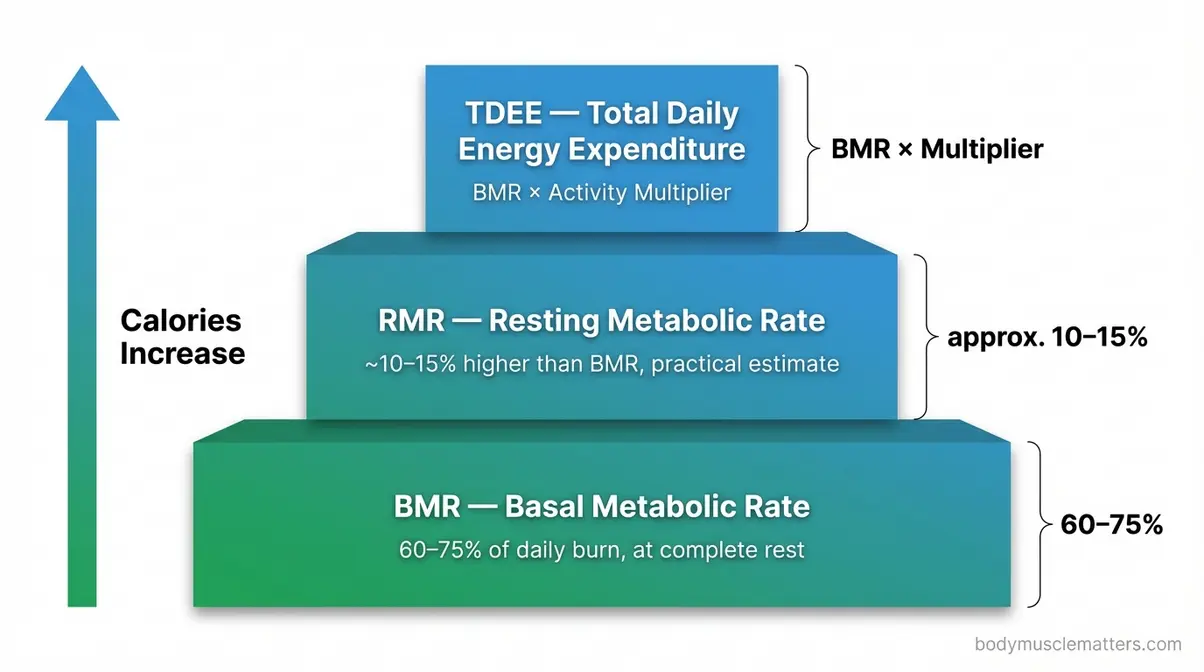
Caption: The metabolism pyramid — BMR sits at the base, RMR builds slightly above it, and TDEE reflects your total daily burn including all activity.
Now that you understand what BMR is and how it is measured, the next question is: why is your BMR different from your neighbor’s? Five key factors determine your personal baseline — and understanding them tells you which ones you can actually change.
What Factors Control Your Basal Metabolic Rate?

Your basal metabolic rate is not fixed forever. Several biological and lifestyle factors push it up or down — and knowing which ones are modifiable gives you a real lever to pull. Research identifies five primary drivers, with muscle mass leading the list.
Body Composition and Muscle Mass
Muscle mass is the single most powerful determinant of your basal metabolic rate. Lean muscle tissue burns significantly more calories at rest than fat tissue does — roughly 6 calories per pound of muscle per day, compared to approximately 2 calories per pound of fat (Cleveland Clinic, 2026). This means two people who weigh exactly the same can have dramatically different BMRs if their body composition differs.
This is clinically important because it tells you something actionable: resistance training (weightlifting, bodyweight exercises) directly raises your BMR over time by preserving and building lean muscle. User consensus across fitness communities and clinical evidence both confirm that people who maintain higher lean mass burn more calories at rest — even on rest days.
The practical consequence is significant. A 30-year-old woman with 35% body fat and a 30-year-old woman of the same weight with 22% body fat may have a BMR difference of 200–300 calories per day. Over a year, that gap compounds meaningfully. Building even modest amounts of lean muscle is one of the most evidence-backed strategies for a higher resting calorie burn.
Age and Sex: Two Key BMR Factors
Age and sex are two of the most consistent BMR influences documented in clinical literature. Men generally have a higher BMR than women of the same age and weight because they tend to carry more muscle mass and less body fat. The average male BMR is approximately 1,696 kcal/day; the average female BMR is approximately 1,410 kcal/day (Cleveland Clinic, 2026).
Age works against BMR in a predictable pattern. After age 30, most adults experience an age-related decline in basal metabolic rate as they lose 3–8% of muscle mass per decade — a process called sarcopenia. As lean tissue declines, the resting calorie burn declines with it. This is the primary biological reason BMR tends to decrease with age and is why the same 2,000-calorie diet that maintained your weight at 25 may cause gradual gain by 45.
The important reassurance here: age-related BMR decline is not inevitable or irreversible. Adequate protein intake and consistent resistance training measurably slow muscle loss and preserve metabolic rate well into later decades. Your biology is a factor, but not a sentence.
Hormones, Medical Conditions, and BMR
Hormones act as the control knobs for your metabolic engine. Two glands in particular — the thyroid and adrenal glands — have an outsized impact on how many calories your body burns at rest.
Thyroid hormones are the most clinically documented BMR regulators. Research confirms that hypothyroidism (an underactive thyroid) significantly reduces BMR — patients with hypothyroidism show a mean BMR of approximately 1,210 kcal/day, considerably lower than the 1,400 kcal/day average for healthy controls. Hyperthyroidism, conversely, raises BMR above normal, often causing unintended weight loss even with adequate food intake, according to a scientific review of BMR prediction equations.
Other medical conditions that measurably affect BMR include Cushing’s syndrome (excess cortisol slows metabolism), polycystic ovary syndrome (PCOS), and insulin resistance. Emerging research also examines how GLP-1 weight-loss medications (like semaglutide) affect muscle mass — a key concern because medications that suppress appetite without supporting muscle preservation can inadvertently lower BMR over time.
If you suspect a hormonal issue is affecting your metabolism, this is precisely the scenario where a physician or endocrinologist — not a calorie calculator — needs to be your first resource. Standard BMR formulas are not calibrated for thyroid dysfunction or metabolic disease.
Normal BMR: Average Ranges by Age and Sex
There is no single “good” BMR because it is entirely unique to you — shaped by your age, sex, height, weight, and body composition. That said, population averages give you a useful benchmark for comparison. Men typically fall higher than women, and BMR tends to decrease with age, so a higher BMR for your age group generally reflects better metabolic health.
“There’s no single ‘good’ BMR because it’s unique to you, depending on age, sex, height, and weight, but averages are around 1,400–1,800 calories, with men typically higher than women, and BMR tends to decrease with age, so a higher BMR for your age group generally means better metabolic health.”
Average BMR for Men vs. Women
According to the Cleveland Clinic (2026), the average male BMR is approximately 1,696 calories (7,100 kJ) per day, while the average female BMR is approximately 1,410 calories (5,900 kJ) per day. These are population averages — your actual number will differ based on your individual stats.
| Sex | Average BMR (kcal/day) | Typical Range |
|---|---|---|
| Male | ~1,696 | 1,600–2,000 |
| Female | ~1,410 | 1,300–1,500 |
The gap between male and female averages is primarily explained by differences in lean muscle mass. Men typically carry proportionally more muscle, which raises their resting calorie burn. This does not mean women have “slower” metabolisms in any broken sense — it simply reflects a difference in average body composition.
Caption: Average BMR ranges by sex — men’s higher muscle mass drives the gap, not a fundamental metabolic difference.
What Is a Good BMR for Your Age?
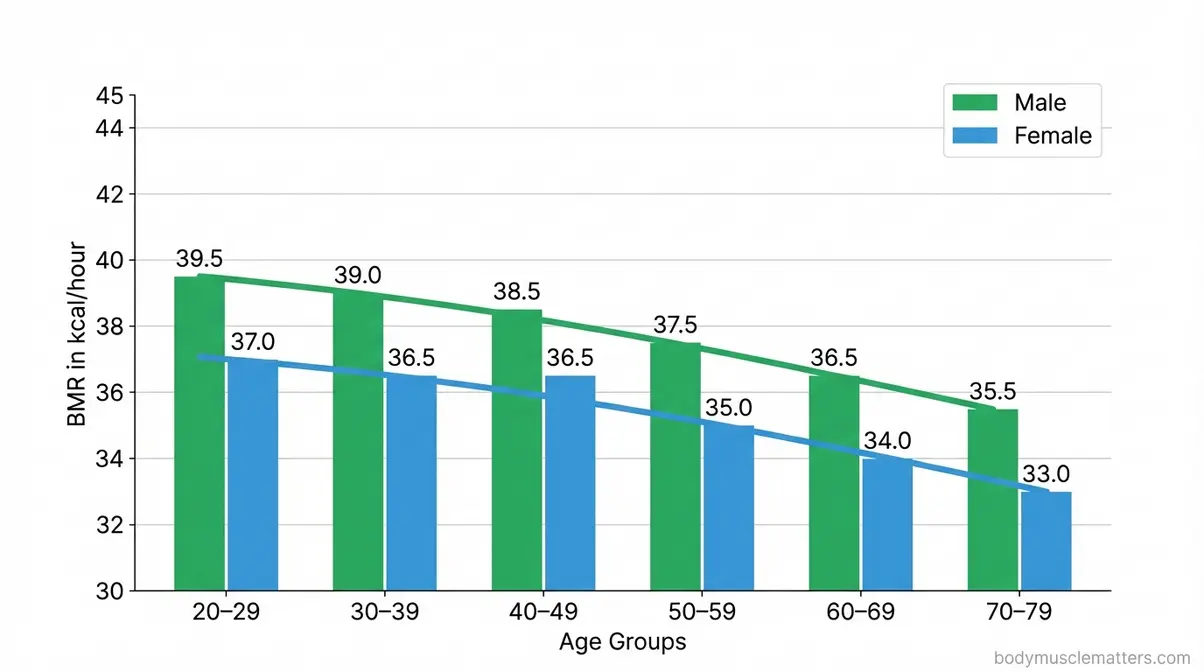
BMR declines predictably with age, primarily because lean muscle mass decreases as we get older. Here is how average hourly calorie burn shifts across the adult lifespan, based on published reference data:
| Age Group | Male (kcal/hour) | Female (kcal/hour) |
|---|---|---|
| 20–29 | ~39.5 | ~37.0 |
| 30–39 | ~39.0 | ~36.5 |
| 40–49 | ~38.5 | ~36.5 |
| 50–59 | ~37.5 | ~35.0 |
| 60–69 | ~36.5 | ~34.0 |
| 70–79 | ~35.5 | ~33.0 |
If your calculated BMR falls within the range for your age and sex, your metabolism is functioning normally. If it falls noticeably below the range, that is a conversation worth having with a physician — it may reflect a correctable issue like low muscle mass, hormonal imbalance, or inadequate calorie intake causing metabolic adaptation.
The anxiety many beginners feel about having an “abnormal” metabolism is understandable, but rarely warranted. Most people’s BMR is simply lower than expected because they have lost muscle mass from years of sedentary habits — a fixable problem, not a broken one.
How to Calculate Your Basal Metabolic Rate
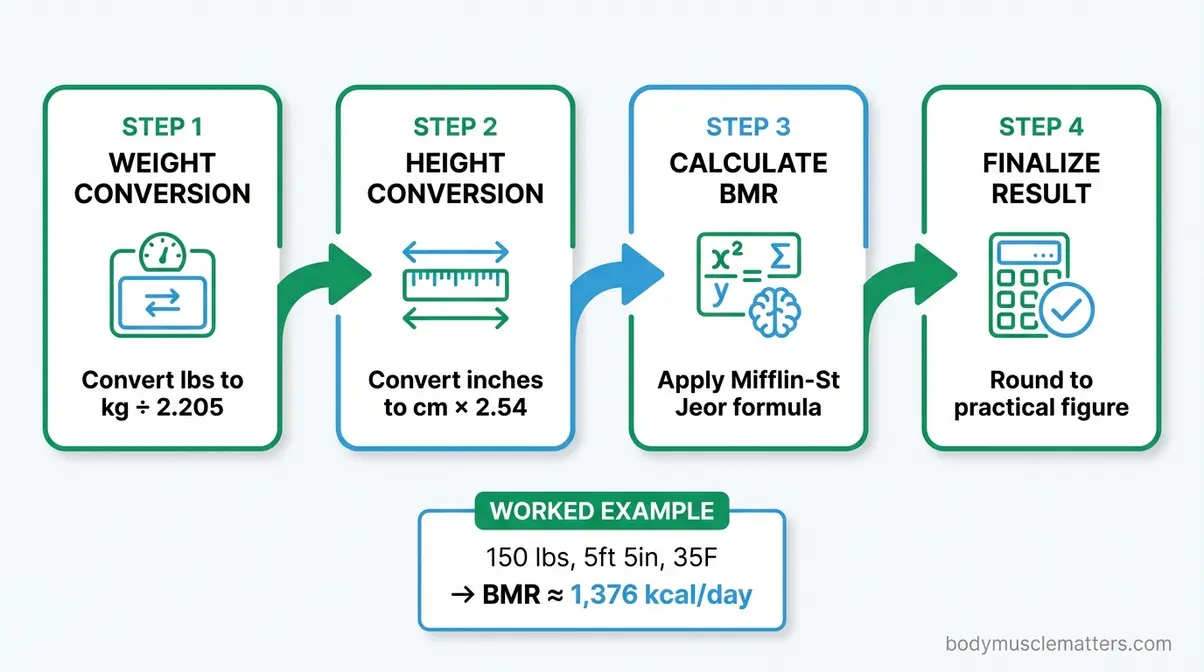
Your BMR is an estimate, not an exact measurement — but a well-validated formula gets you close enough for practical weight-loss planning. Here is how to find your number using the most accurate method available.
The Mifflin-St Jeor Formula Explained
The Mifflin-St Jeor equation is the gold standard for estimating BMR and RMR. A systematic review published in the Journal of the American Dietetic Association found that the Mifflin-St Jeor equation was the most reliable predictive formula for resting metabolic rate — accurate within 10% of measured values for 82% of non-obese adults (PubMed, 2005). Registered dietitians and the American Dietetic Association widely recommend it over the older Harris-Benedict equation.
The formulas are:
| Sex | Mifflin-St Jeor Formula |
|---|---|
| Male | (10 × weight in kg) + (6.25 × height in cm) − (5 × age in years) + 5 |
| Female | (10 × weight in kg) + (6.25 × height in cm) − (5 × age in years) − 161 |
- Two important inputs require unit conversion if you use imperial measurements:
- Weight: divide pounds by 2.205 to get kilograms
- Height: multiply inches by 2.54 to get centimeters
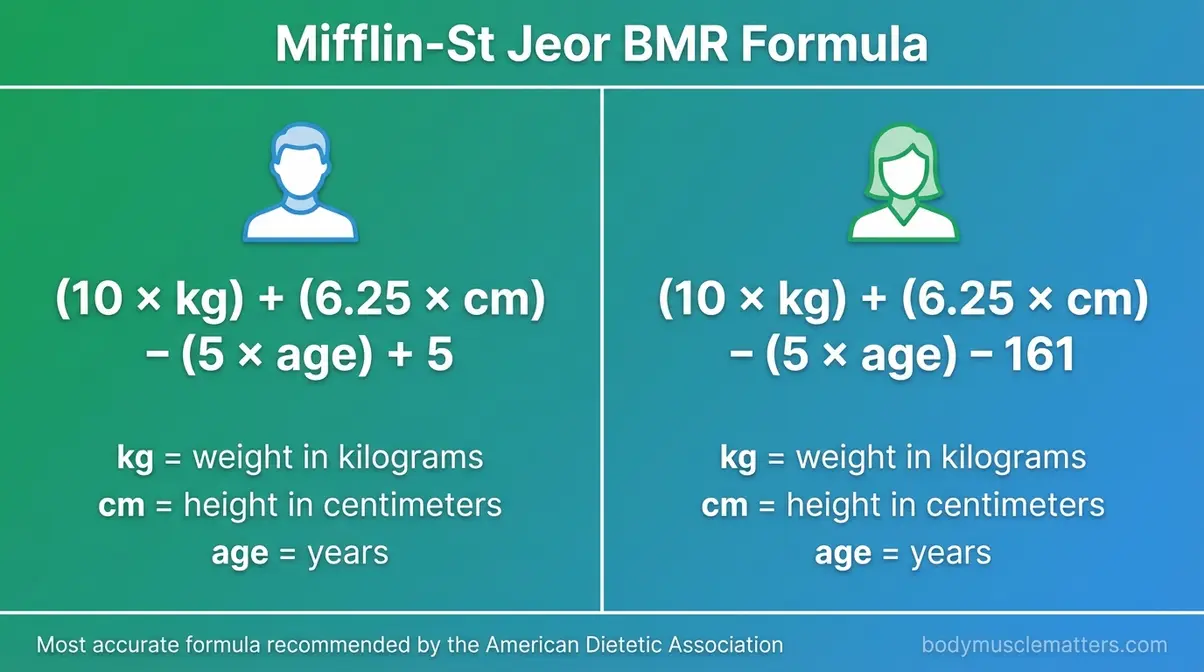
Caption: The Mifflin-St Jeor formula — the most clinically validated method for estimating BMR at home without lab equipment.
A Step-by-Step BMR Calculation Example
Let us walk through a real calculation so you can see exactly how the math works.
Example Profile: 35-year-old woman, 150 lbs (68.1 kg), 5’5″ (165.1 cm)
You will need: A calculator, your weight in pounds, your height in inches, and your age in years. Estimated time: approximately 3 minutes.
Step 1 — Convert weight to kilograms
150 lbs ÷ 2.205 = 68.0 kg
Step 2 — Convert height to centimeters
65 inches × 2.54 = 165.1 cm
Step 3 — Apply the female Mifflin-St Jeor formula
(10 × 68.0) + (6.25 × 165.1) − (5 × 35) − 161
= 680 + 1,031.9 − 175 − 161
= 1,375.9 kcal/day
Step 4 — Round to practical figure
BMR ≈ 1,376 calories/day
This means that if this woman stayed completely still for 24 hours — no movement, no digestion of food beyond baseline — her body would still burn approximately 1,376 calories. That number is her absolute biological floor. Eating at or below it, as we will cover in the next section, triggers a measurable metabolic defense response.
From BMR to TDEE: Activity Multipliers
Your BMR tells you what you burn at rest. Your TDEE (Total Daily Energy Expenditure) tells you what you actually burn each day — the number you need for real-world calorie planning.
To find your TDEE, multiply your BMR by the activity multiplier that matches your lifestyle:
| Activity Level | Description | Multiplier | Example |
|---|---|---|---|
| Sedentary | Desk job, little or no exercise | × 1.2 | Office worker, minimal walking |
| Lightly Active | Light exercise 1–3 days/week | × 1.375 | 30-min walks, light yoga |
| Moderately Active | Exercise 3–5 days/week | × 1.55 | Regular gym, recreational sports |
| Very Active | Hard exercise 6–7 days/week | × 1.725 | Athletes, labor-intensive jobs |
Continuing the example above:
Woman with BMR of 1,376 kcal/day, moderately active lifestyle:
1,376 × 1.55 = 2,132 calories/day (TDEE)
That 2,132-calorie TDEE is her maintenance level — the number where her weight stays stable. To lose weight, she needs a calorie deficit (eating fewer calories than she burns) below this number — but always, critically, above her BMR of 1,376. That gap between BMR and TDEE is her safe operating zone.
⚠️ YMYL Advisory: Always consult a registered dietitian or physician before creating a significant calorie deficit. TDEE multipliers are estimates — individual variation is real and meaningful.
How to Use Your BMR for Safe Weight Loss
Knowing your BMR is only useful if you know what to do with it. This section bridges the gap between the number on your screen and an actionable, safe weight-loss plan — including the most common mistake beginners make and the concept that prevents it.
Why Extreme Diets Slow Metabolism
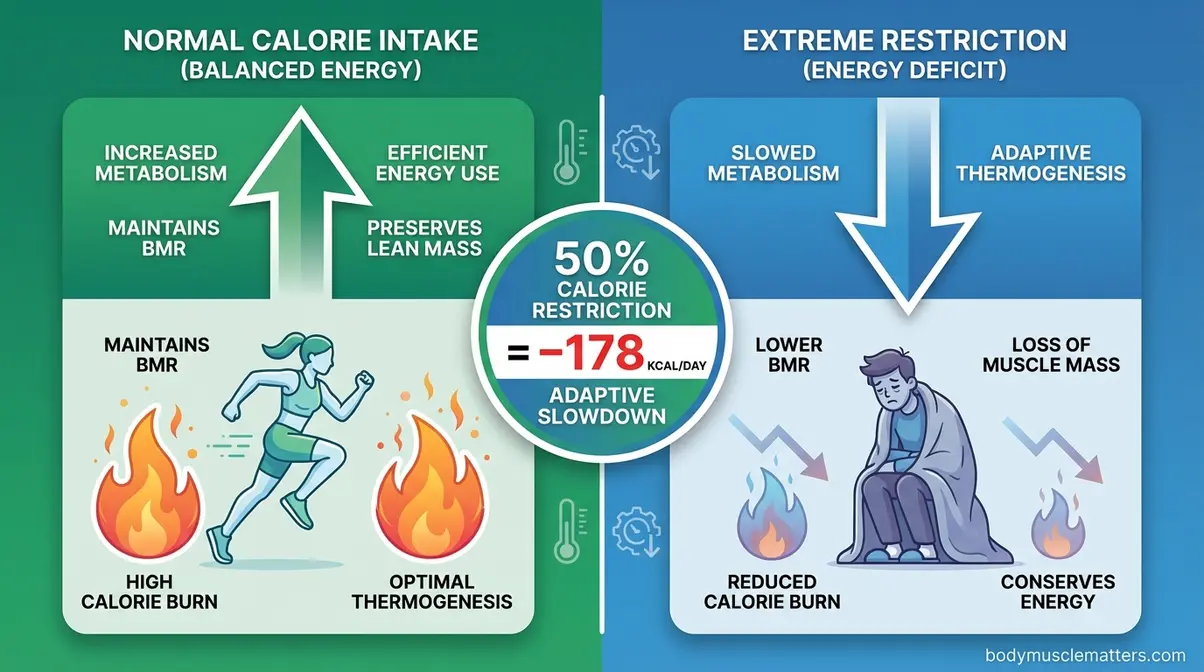
When you eat significantly below your body’s energy needs for a sustained period, your body does not simply keep burning fat at the same rate. It adapts. This process is called adaptive thermogenesis — your body’s built-in biological response to what it perceives as a starvation threat.
Research published on metabolic adaptation during weight loss found that 50% caloric restriction triggered an average reduction in 24-hour energy expenditure of approximately 178 kcal/day within the first week alone — before meaningful fat loss had even occurred. This means extreme dieting starts working against you almost immediately.
The mechanisms are measurable: your thyroid output drops, your non-exercise movement decreases (you fidget less, you move less without realizing it), and your body preserves fat stores by slowing cellular energy use. A 2023 study in the Applied Physiology, Nutrition, and Metabolism journal confirmed that weight loss from caloric restriction reduces resting energy expenditure beyond what fat and muscle loss alone would predict — the “extra” slowdown is adaptive thermogenesis itself (Canadian Science Publishing, 2023).
The practical consequence: Someone who crashes their calories to 800 per day may lose weight fast at first — then plateau frustratingly, feel exhausted, and regain rapidly when they resume normal eating. Common concerns reported by people beginning weight loss include exactly this pattern: the “afterburn” stops, the scale stops moving, and hunger becomes overwhelming. This is metabolic adaptation in action, not a character flaw.
Two evidence-backed strategies preserve metabolic rate during a deficit: adequate protein intake (which signals the body to protect muscle tissue) and resistance training (which directly maintains lean mass — the primary driver of BMR).
The BMR Floor Rule: Your Safe Zone
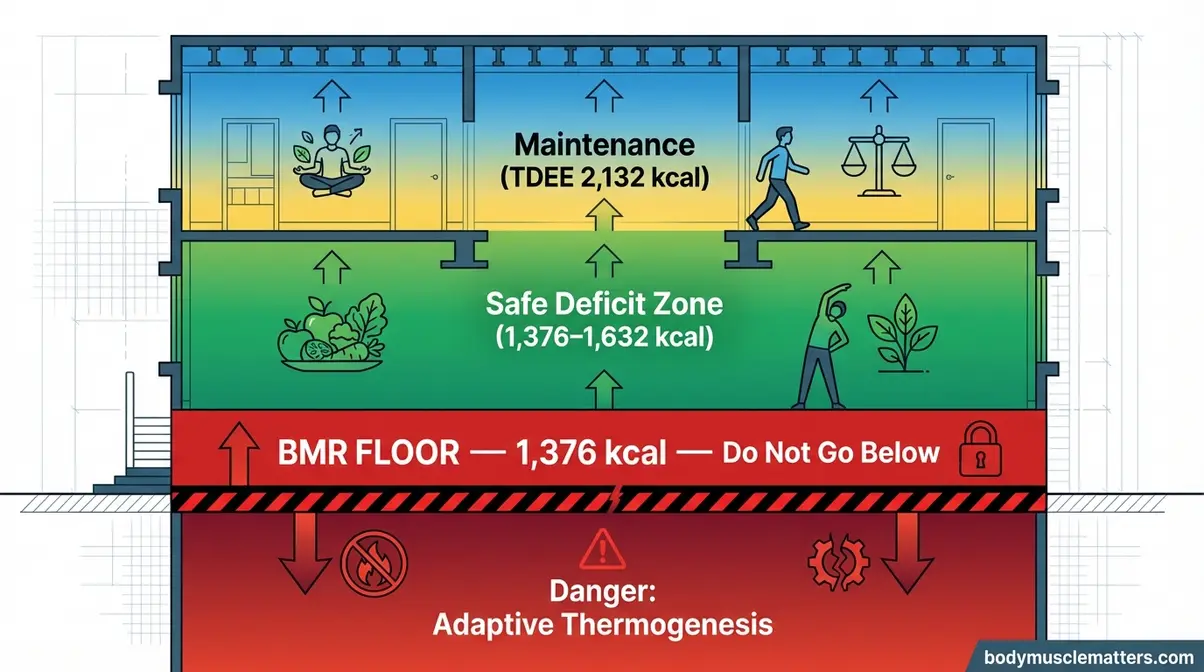
The BMR Floor Rule is this: your BMR is an absolute caloric floor, not a weight-loss target. Eating at or below your BMR does not speed weight loss — it triggers the biological defense mechanism described above, which reduces your metabolism, increases hunger hormones, and makes fat loss progressively harder.
Every credible clinical framework for weight loss — including guidance from the Mayo Clinic on calorie-based weight loss — recommends a moderate daily deficit of approximately 500 calories below TDEE, which produces roughly 0.5–1 pound of fat loss per week without triggering severe metabolic adaptation (Mayo Clinic, 2026). This safe deficit zone sits entirely above your BMR.
Here is how the math frames it:
Safe deficit = TDEE − 500 calories
Hard floor = Your BMR (never go below this)
Safe operating range = Between your BMR and your TDEE
If your TDEE is 2,132 calories and your BMR is 1,376 calories, your safe deficit target is approximately 1,632 calories per day (2,132 − 500). Your floor — the number you never drop below — is 1,376. The range between them (1,376 to 1,632) is your working zone. Eating at 800 calories does not give you a larger deficit in practice; it gives you metabolic adaptation and a harder plateau.
“Should you eat your BMR to lose weight?” is one of the most searched questions on this topic — and the clear answer is no. Your BMR is what keeps you alive. Weight loss should happen above that floor, not at it.
5 Real-World BMR Scenarios Solved
These five user-avatar scenarios show exactly how to translate a BMR into a safe weight-loss plan. Each one addresses a real question that beginners commonly search.
- Scenario 1: “My BMR is 1,400. What should I eat to lose weight?”
- Profile: 42-year-old woman, sedentary office job, BMR = 1,400 kcal
- TDEE: 1,400 × 1.2 (sedentary) = 1,680 kcal/day
- Safe deficit target: 1,680 − 500 = 1,180 kcal/day
- Floor: 1,400 kcal (BMR) — do not go below this
- Problem: Her safe deficit (1,180) is below her BMR floor (1,400). This is a common trap. At a sedentary level with a low BMR, a 500-calorie deficit pushes below the floor.
- Solution: Add light movement (a 30-minute daily walk) to shift activity multiplier to 1.375, raising TDEE to ~1,925. Safe deficit target becomes 1,425 — just above the BMR floor. Adding exercise is not optional for this profile; it is a metabolic necessity.
- Scenario 2: “My BMR is 1,500. How many calories should I eat?”
- Profile: 28-year-old man, light exerciser, BMR = 1,500 kcal
- TDEE: 1,500 × 1.375 = 2,063 kcal/day
- Safe deficit target: 2,063 − 500 = 1,563 kcal/day
- Floor: 1,500 kcal (BMR)
- Assessment: 1,563 sits safely above the 1,500 floor. This plan works and follows the BMR Floor Rule. Expected loss rate: ~0.5 lb/week — slower but sustainable and metabolism-protective.
- Scenario 3: “I’m 55 and my BMR dropped. How do I lose weight?”
- Profile: 55-year-old woman, post-menopausal, moderately active, BMR = 1,250 kcal (lower due to age-related muscle loss)
- TDEE: 1,250 × 1.55 = 1,938 kcal/day
- Safe deficit target: 1,938 − 500 = 1,438 kcal/day
- Floor: 1,250 kcal (BMR)
- Assessment: Safe zone intact (1,438 > 1,250). But the priority here is raising the BMR itself — strength training twice weekly to rebuild lean mass, combined with a protein intake of at least 1.2g per kg of body weight. Addressing the root cause (muscle loss) is more impactful long-term than calorie counting alone.
Scenario 4: “What is the 3-3-3 rule for losing weight?”
The 3-3-3 rule is a simplified weight-loss guideline: eat 3 structured meals per day, maintain a deficit for 3 days before reassessing, and limit calorie cuts to no more than 300–500 per day. It is not a clinical protocol, but it aligns with the BMR Floor Rule principle — small, consistent deficits above the metabolic floor. Applied here: a person with a BMR of 1,600 and TDEE of 2,300 would cut 300–500 calories to eat 1,800–2,000 daily. That keeps them safely above their 1,600 floor with a manageable, sustainable approach.
Will 1,200 Calories Slow Metabolism?
- Profile: 33-year-old woman, lightly active, BMR = 1,380 kcal, TDEE = 1,898 kcal
- Current intake: 1,200 calories — below her BMR of 1,380
- What happens: Eating 180 calories below her biological floor triggers adaptive thermogenesis. Her body will down-regulate non-exercise movement, reduce thyroid output, and preserve fat more aggressively. The short answer is yes — eating 1,200 calories when your BMR is 1,380 will measurably slow your metabolism over time. The solution is to raise intake to at least 1,400–1,500 (above the BMR floor) and create a safer deficit from her TDEE level instead.
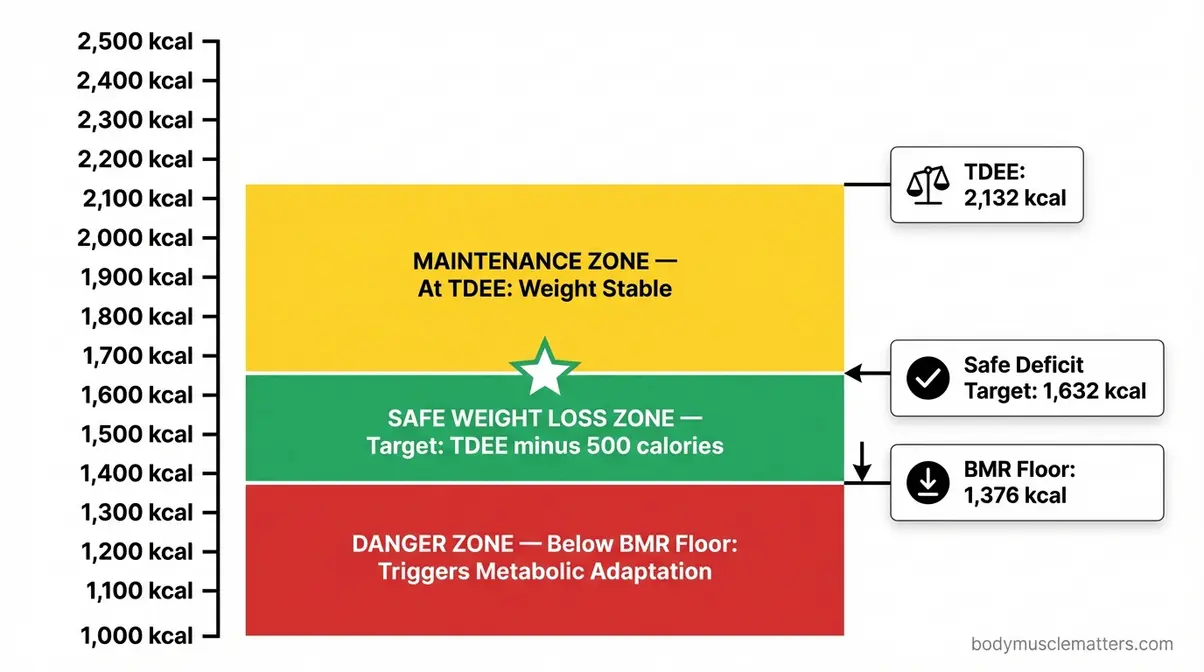
Caption: The BMR Floor Rule in action — safe weight loss happens in the zone between your BMR floor and your TDEE maintenance level.
Limitations: When BMR Calculations Fall Short
Common Pitfalls
Pitfall 1: Treating your BMR estimate as an exact number. The Mifflin-St Jeor formula is accurate within 10% for approximately 82% of non-obese adults — which means for roughly 1 in 5 people, the estimate may be off by more. Do not micromanage calories to the last digit based on a formula. Use it as a directional guide, adjusted over time by your real-world results.
Pitfall 2: Applying a standard formula when a medical condition exists. If you have hypothyroidism, Cushing’s syndrome, PCOS, or insulin resistance, standard BMR formulas are not calibrated for your physiology. Using them without medical oversight can place your calorie floor too low.
Pitfall 3: Underestimating activity level to create a larger apparent deficit. Selecting “sedentary” when you are actually lightly active lowers your TDEE artificially — but your body still burns at the higher rate. The result is a smaller real deficit than calculated, and frustration when weight loss stalls.
When to Choose Alternatives
- If you plateau after 4–6 weeks on a BMR-calculated deficit: Your metabolic rate may have adapted. A registered dietitian can perform indirect calorimetry — the clinical measurement of actual metabolic rate — rather than relying on a formula.
- If you have a history of disordered eating: Calorie-focused approaches may not be appropriate. A clinician-supported, intuitive-eating framework may serve you better than numeric targets.
When to Seek Expert Help
Always consult a registered dietitian or physician before creating a significant calorie deficit if you have a diagnosed medical condition, are pregnant or breastfeeding, are under 18, or if your calculated safe deficit places your intake below 1,200 calories (women) or 1,500 calories (men). These thresholds represent clinical minimums that require professional supervision to go below safely.
Frequently Asked Questions
What is a normal BMR for a woman?
A normal BMR for a woman is typically between 1,300 and 1,500 calories per day, with an average of approximately 1,410 kcal/day (Cleveland Clinic, 2026). Your individual BMR depends on your weight, height, age, and body composition — particularly lean muscle mass. Women tend to have lower BMRs than men of similar weight because they carry proportionally less muscle tissue. A BMR below 1,200 kcal/day may warrant investigation by a physician, especially if accompanied by fatigue or unexplained weight changes.
What is a good BMR for my age?
A good BMR for your age falls within the average range for your sex and decade of life. For a woman in her 30s, a BMR around 1,350–1,500 kcal/day is typical; for a man in the same decade, roughly 1,600–1,900 kcal/day is normal. BMR naturally declines by approximately 1–2% per decade after age 30 as lean muscle mass decreases. Maintaining muscle through resistance training and adequate protein intake (~1.2g per kg of body weight) is the most evidence-backed way to preserve your BMR as you age.
Will eating 1,200 calories slow my metabolism?
Eating 1,200 calories per day may slow your metabolism if that number falls below your individual BMR. When caloric intake drops below the body’s resting energy requirements, adaptive thermogenesis kicks in — your body reduces non-exercise movement, lowers thyroid output, and preserves fat stores as a biological defense against starvation (NIH PMC, 2020). If your BMR is 1,350 and you eat 1,200, you are violating the BMR Floor Rule. Raise your intake above your calculated BMR and create your deficit from your TDEE instead.
Should you eat your BMR to lose weight?
No — you should eat above your BMR and below your TDEE to lose weight safely. Your BMR is the minimum energy your body needs to survive at complete rest. Eating at your BMR leaves zero fuel for any activity — walking, digestion, and even light movement require additional calories above that floor. The evidence-backed approach (Mayo Clinic, 2026) is a 500-calorie daily deficit from your TDEE, which consistently sits well above your BMR and produces sustainable fat loss of roughly 0.5–1 pound per week.
How many calories should I eat if my BMR is 1,500?
If your BMR is 1,500 calories, your daily calorie intake for weight loss should be based on your TDEE — not your BMR directly. Multiply your BMR by your activity multiplier (1.2 for sedentary, 1.375 for lightly active) to find your TDEE. For a lightly active person, that gives a TDEE of approximately 2,063 calories. Subtract 500 for a safe deficit: target approximately 1,563 calories per day. That is 63 calories above your 1,500 BMR floor — a safe, sustainable approach that honors the BMR Floor Rule.
For complete beginners navigating metabolic science, your basal metabolic rate is the single most important number to understand before you adjust a single calorie. It represents your body’s non-negotiable biological baseline — the minimum energy cost of being alive. Research confirms it accounts for 60–75% of everything you burn daily, making it the foundation every weight-loss calculation must be built on (Cleveland Clinic, 2026).
The BMR Floor Rule exists because biology does not negotiate. When you eat below your resting energy needs, your body responds with adaptive thermogenesis — a measurable, documented defense mechanism that slows metabolism, increases fat retention, and makes sustained weight loss progressively harder. Every scenario in this guide illustrates the same principle: sustainable fat loss happens above the BMR floor, not at or below it.
Your next step is concrete. Calculate your BMR using the Mifflin-St Jeor formula, multiply by your honest activity level to find your TDEE, then subtract 300–500 calories for a safe, sustainable deficit. If that deficit number falls below your BMR — as it can for sedentary individuals with lower metabolic rates — add light daily movement before cutting calories further. Trial this approach for 4–6 weeks, adjust based on real results, and if you are unsure, bring your numbers to a registered dietitian who can validate the math against your individual physiology.
Related posts:
Benefits of Yoga for Fitness: The Science-Backed Guide
Home Workouts to Build Muscle Without Weights (2026)
CrossFit Strength Training for Beginners: 2026 Guide
Home Workout Plan for Beginners: 30-Day Step-by-Step
How to Self Massage Calves: The 4-Layer Method Guide
Strength Training for Beginners: Complete Workout Plan 2026

Callum
Hi, I'm Callum, the founder of Body Muscle Matters. I'm not a certified trainer, I'm a self taught lifter who started this site to share what I've learned from my own training and a lot of trial and error. Everything here comes from real experience and honest research, written the way I'd explain it to a friend who is just getting started. My goal is simple: practical, no hype fitness advice you can actually use.