What Is Gym Chalk Made Of? Chemistry & Safety Guide
Home ›Fitness Accessories and Technology
You’ve watched athletes rub their hands in a cloud of white powder before a heavy deadlift or a gymnastics routine. Most people assume it’s the same chalk that teachers use on blackboards — but it isn’t even close. If you’ve ever wondered what is gym chalk made of, whether it’s safe to breathe, and why some gyms ban it outright, you’re asking exactly the right questions.
Using the wrong type of chalk doesn’t just cost you grip — it can actually make your hands more slippery when they sweat. And the science behind why gym chalk works is more interesting than most people realize. This guide covers the chemistry, the safety research, gym policies, and even the viral ASMR trend — so you can use gym chalk with full confidence.
Gym chalk is made of magnesium carbonate (MgCO₃) — a mineral compound that repels moisture to create a dry, friction-enhancing grip. Unlike school chalk, it doesn’t get slippery when wet.
- The active ingredient is magnesium carbonate (MgCO₃), not calcium carbonate
- The Repulsion Effect: MgCO₃ repels sweat rather than absorbing it — creating a superior friction bond
- Pure gym chalk is non-toxic for skin contact; it is not safe to consume in quantity
- Liquid chalk adds isopropyl alcohol to MgCO₃ for mess-free, gym-compliant application
- Inhaling loose chalk dust can affect lung function — ventilation matters (PubMed pilot study, 2016)

What Is Gym Chalk Made Of? The Chemistry Explained
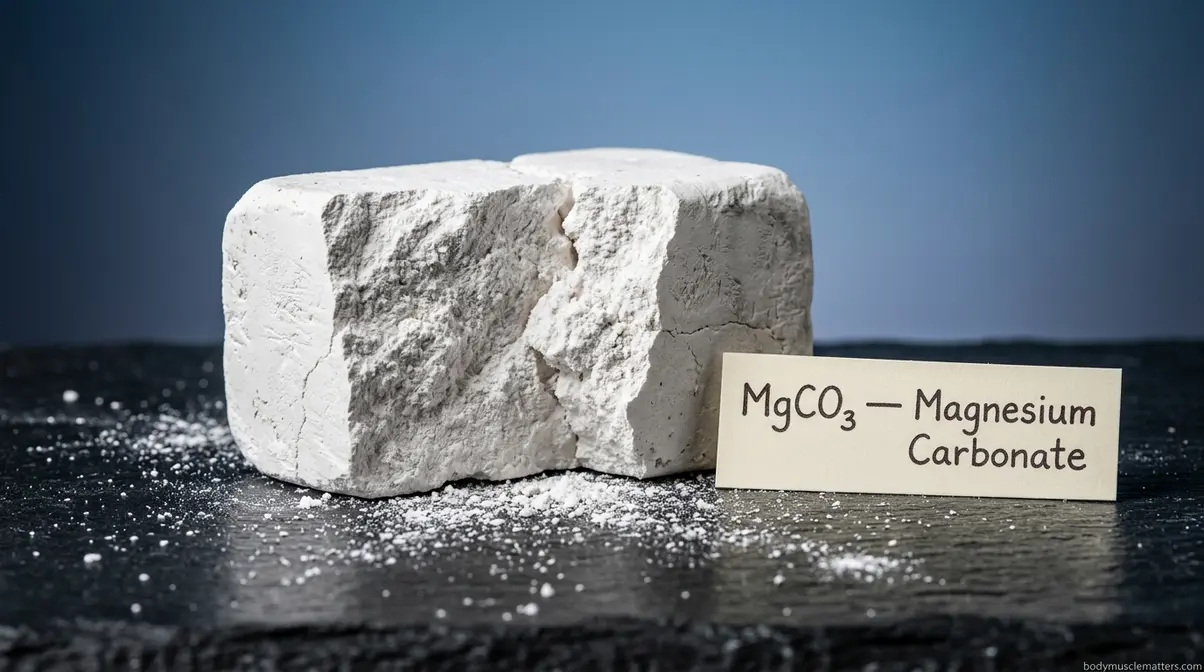
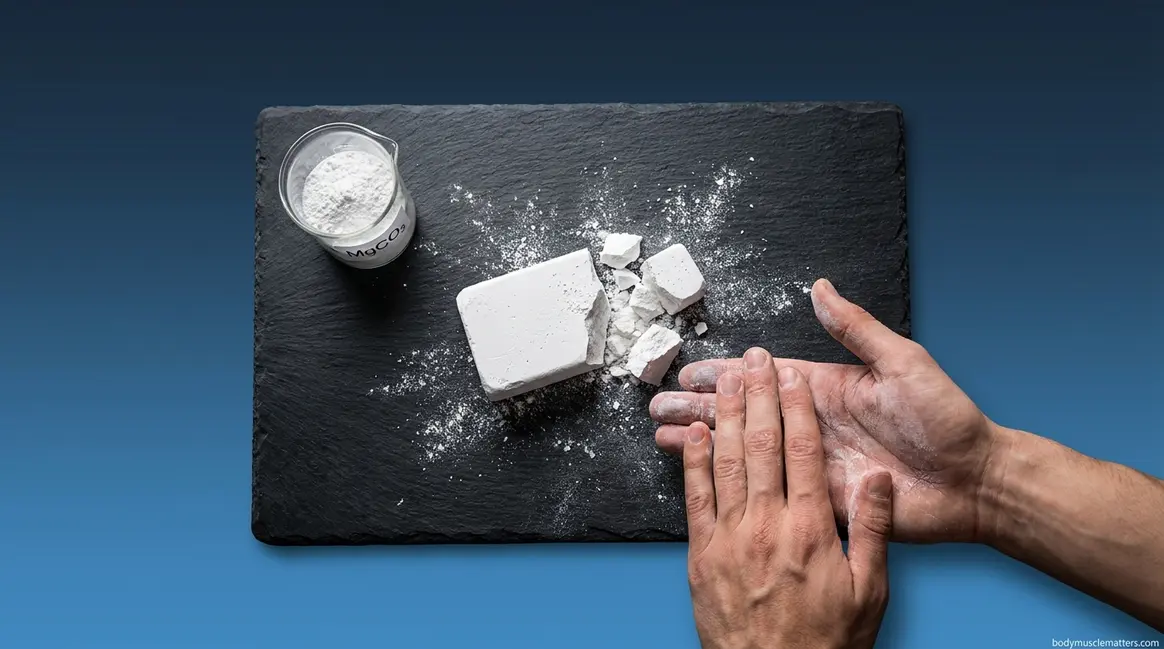
Gym chalk is made of magnesium carbonate (MgCO₃), a naturally occurring mineral compound that repels moisture and increases friction between your hands and a bar, rope, or climbing hold. Unlike the calcium carbonate (CaCO₃) in school chalk, MgCO₃ doesn’t dissolve or become slippery when wet. The result is a dry contact layer that gives you a reliable grip — whether you’re pulling a one-rep-max deadlift or navigating an overhang at a climbing gym.
What is gym chalk used for? Athletes across weightlifting, powerlifting, gymnastics, rock climbing, and pole fitness use it to reduce slippage during high-load or technical movements. What is gym chalk made out of at its core is a single mineral compound — though some formulas add secondary ingredients for specific performance goals. More on those shortly.
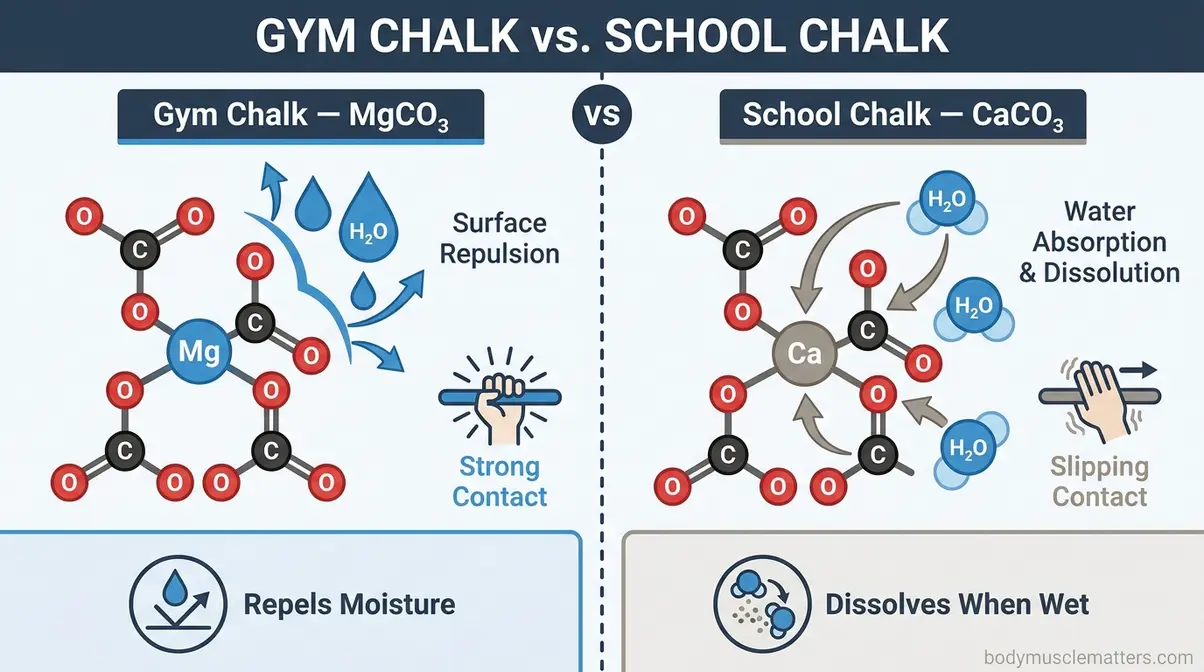
Magnesium Carbonate (MgCO₃): The Core Ingredient
Magnesium carbonate (MgCO₃) is a white, odorless mineral powder derived from the naturally occurring mineral magnesite. It belongs to the carbonate mineral family — the same geological group that includes dolomite (a calcium-magnesium carbonate) and calcite (a crystalline form of calcium carbonate). Its molar mass is 84.31 g/mol, and it is almost completely insoluble in water, which is the key to everything.
Here’s where most explanations get it wrong. People say gym chalk “absorbs” sweat — but that’s not quite the full picture. MgCO₃ is hygroscopic, meaning it does absorb water vapor from the air around your hand. However, its primary grip mechanism is something different: it actively repels liquid moisture at the skin-chalk interface, creating a dry contact surface that dramatically increases friction. This is The Repulsion Effect — and it’s why gym chalk outperforms every sweat-absorbing glove or towel on the market.
“It doesn’t absorb water — it repels it like it owes money.”
That’s The Repulsion Effect in action. Northern Michigan University research confirms that magnesium carbonate effectively dries the hands and improves the coefficient of friction between the hands and a gripping surface (NMU, 2017). You can also explore the composition and purpose of gym chalk for a deeper breakdown of why gymnasts and lifters rely on it.
Now that you know what the core ingredient is, let’s look at why your gym teacher’s chalk would make your deadlift worse — not better.
How Gym Chalk Differs from School Chalk
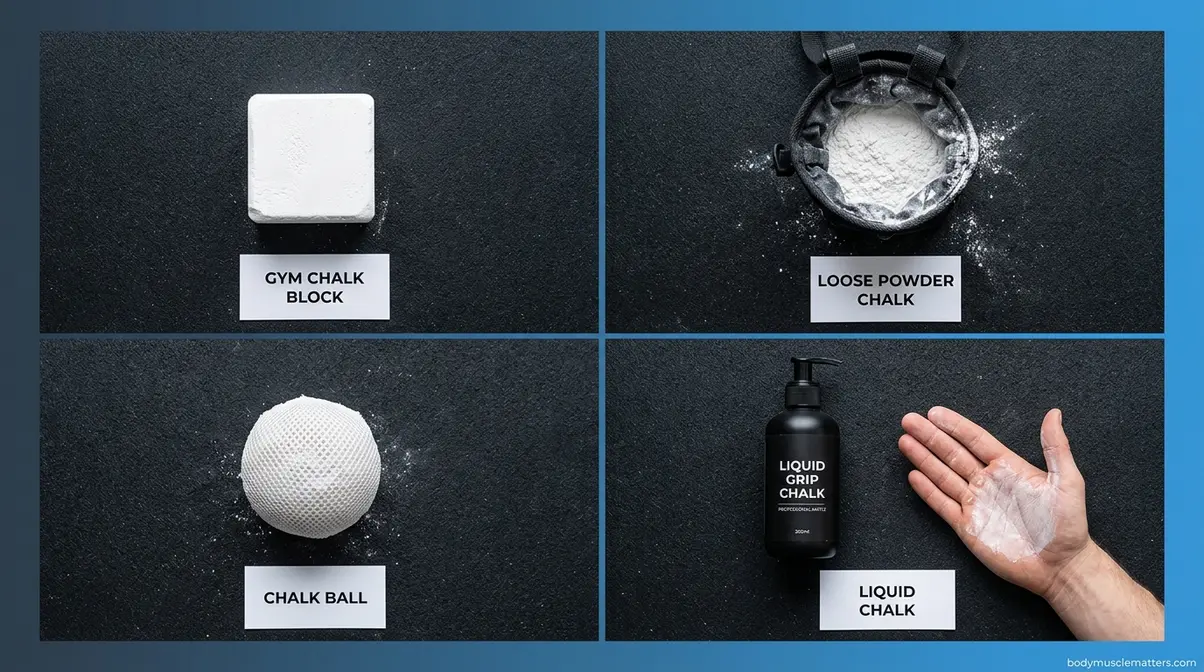
School chalk is made of Calcium Carbonate (CaCO₃) — or sometimes gypsum (calcium sulfate dihydrate). When it gets wet, it partially dissolves and becomes slippery. Think about wet sidewalk chalk on a rainy day: it smears, smudges, and creates a paste. That’s the last thing you want on your hands mid-lift.
Gym chalk, or lifting chalk, is a completely different compound. Magnesium carbonate (MgCO₃) maintains its friction-enhancing properties even as your hands sweat, because its molecular structure does not dissolve under liquid contact. The distinction matters enormously for performance and safety.
| Property | Gym Chalk (MgCO₃) | School Chalk (CaCO₃) |
|---|---|---|
| Chemical name | Magnesium Carbonate | Calcium Carbonate |
| Behavior when wet | Repels moisture | Dissolves, becomes slippery |
| Grip effect | Increases friction | Reduces friction |
| Safe for skin (short-term) | Yes | Generally yes |
| Used in | Weightlifting, climbing, gymnastics | Blackboards, art |
According to chemistry resources from the Royal Society of Chemistry, magnesium carbonate shares some visual similarities with natural chalk — both are white, soft solids — but their chemical behaviors are fundamentally different (RSC, 2025). That visual similarity is the source of almost all the confusion beginners have about gym chalk.
Common Additives and Fillers in Gym Chalk
Pure MgCO₃ is effective on its own, but many brands — especially those marketed as “super chalk” — add secondary ingredients to boost performance or skin comfort. Here’s what you’ll commonly find:
- Drying agents (such as silica): Accelerate moisture absorption from skin surface, extending the dry window between applications
- Talc (magnesium silicate): Reduces clumping and improves powder flow — common in budget-grade blends
- Skin conditioners (such as aloe vera or glycerin): Counteract the drying effect on skin, particularly useful for climbers with sensitive hands
- Resin (rosin or pine rosin): Added to some super chalk formulas to increase tackiness and extend grip duration on smooth bars
- Fragrance: Found in some consumer-facing products; purely cosmetic and has no grip function
The quality of MgCO₃ itself varies significantly between brands. FrictionLabs popularized what they call a “3 Ps” framework for evaluating chalk quality: Purity (fewer mineral impurities), Particle Size (finer particles coat the hand more evenly), and pH Balance (neutral pH is gentler on skin). Lower-grade chalk sourced from raw magnesite ore may contain traces of calcium, iron, or silica that reduce performance and irritate skin with prolonged use.
Forms of Gym Chalk: Block, Powder, Liquid, and Chalk Balls
Gym chalk comes in four main delivery formats. Each has a specific use case, and gyms often have policies that restrict which formats are allowed.
Block chalk is compressed MgCO₃ in solid form. Athletes break pieces off and crush them between their palms. It’s the most economical option and produces the most airborne dust — which is why many gyms restrict it to designated chalk areas or ban it entirely.
Loose powder chalk is pre-crushed MgCO₃ kept in a chalk bag. It applies quickly and evenly, but like block chalk, it generates significant airborne particulate matter. Climbers and gymnasts typically prefer this format for precise application.
Chalk balls are mesh bags filled with loose chalk powder. They release chalk gradually with each squeeze, producing somewhat less airborne dust than open powder — though research from UKClimbing forum consensus and PubMed studies suggests chalk balls do not meaningfully reduce dust concentrations compared to liquid chalk (PubMed, 2012).
Liquid chalk is a suspension of MgCO₃ in isopropyl alcohol (typically 70% concentration). You rub a small amount into your palms, let the alcohol evaporate in 10–20 seconds, and a thin, uniform layer of chalk remains. Liquid chalk produces virtually no airborne dust, which is why it has become the standard format in commercial gyms. An added benefit: the isopropyl alcohol component has mild antiseptic properties, killing surface bacteria on contact.
What Makes Japanese Chalk Different?
Among serious climbers and gymnasts, Japanese chalk — particularly from Tokyo Powder Industries — has developed a near-legendary reputation. The reason is chemistry and sourcing, not marketing.
Most commercial MgCO₃ chalk is mined from magnesite ore deposits, primarily from China, which supplies roughly 70% of global magnesite (Wikipedia, 2026). Mining introduces mineral impurities — calcium, iron, and silica — that reduce grip performance and can irritate skin. Tokyo Powder sources its MgCO₃ as a by-product of the Japanese salt industry, producing a synthetically precipitated compound with substantially higher purity and a more uniform, ultra-fine particle size.
The practical difference is real. Finer, purer particles coat the hand more evenly, adhere longer to skin, and create a more consistent dry interface. According to Gripstone’s analysis of Tokyo Powder, the brand’s manufacturing process results in a chalk that performs more consistently across humidity levels than standard mined alternatives (Gripstone, 2026). For everyday gym use, the performance difference is modest. For high-level climbing or gymnastics where every milligram of grip matters, it can be significant.
Is Gym Chalk Safe to Use, Inhale, or Consume?
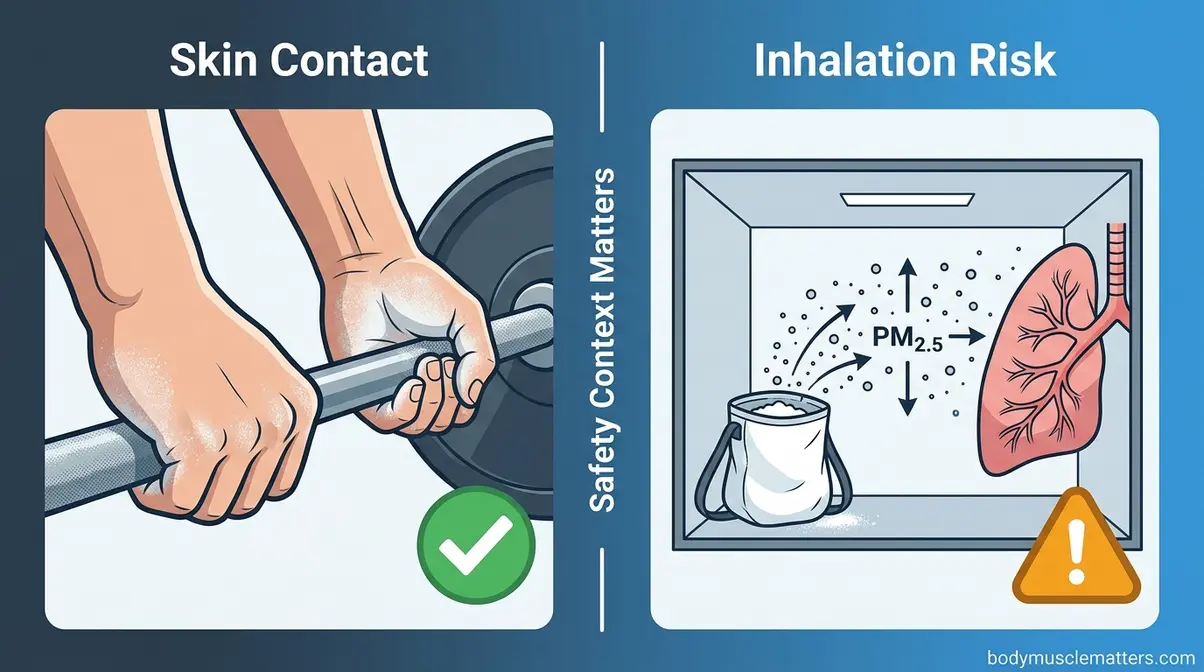
Gym chalk is generally safe for its intended use — applied to dry hands for grip enhancement — but the safety picture changes significantly depending on how you’re exposed to it. Skin contact, inhalation, and ingestion each carry different risk profiles. Research from sports medicine and environmental health literature confirms that context is everything here.
Is Gym Chalk Safe for Skin Contact?
For most people, gym chalk is safe for short-term skin contact. The Royal Society of Chemistry’s educational resource on MgCO₃ classifies magnesium carbonate as a low-hazard substance for topical use (RSC, 2025). However, prolonged or frequent exposure does have a documented side effect: desiccation — the drying out of skin tissue.
MgCO₃ works by drawing moisture away from the skin surface. Used occasionally, this is exactly what you want. Used daily without skin care, it can cause:
- Dry, cracked skin on the palms and fingers
- Fissures around the fingertips (particularly common in climbers)
- Contact dermatitis in people with pre-existing skin sensitivities
The fix is straightforward: moisturize after every session. Climbers often apply a hand balm or salve after training to replenish the skin’s moisture barrier. If you notice persistent redness, peeling, or cracking that doesn’t resolve with moisturizing, consult a dermatologist — this may indicate a sensitivity to one of the additive ingredients in your chalk blend rather than to MgCO₃ itself.
What Happens If You Inhale Gym Chalk Dust?
This is where the safety picture becomes more nuanced — and where the research is clear enough to take seriously.
Loose chalk and block chalk generate airborne particulate matter classified as PM2.5 and PM10 (particles smaller than 2.5 and 10 micrometers in diameter, respectively). A 2016 PubMed pilot study on lung function in climbing halls found that climbers experienced an acute decline in lung function immediately after chalk dust exposure, likely due to protective bronchial muscle reflexes (PubMed, 2016). The effect was more pronounced in individuals with pre-existing airway inflammation.
A separate 2008 PubMed study on dust exposure in indoor climbing halls confirmed that the use of magnesium carbonate chalk is a strong source of particulate matter in enclosed spaces (PubMed, 2008). PM2.5 particles can penetrate deeply into the lungs, irritate the alveolar wall, and impair lung function with repeated exposure, according to NIH/PMC research on PM2.5 health impacts (PMC/NIH, 2016).
Practically speaking:
- Occasional gym-goers in well-ventilated spaces face minimal risk from chalk dust
- Regular climbers and gymnasts in enclosed, poorly ventilated gyms face meaningful cumulative exposure
- People with asthma, COPD, or other respiratory conditions should be especially cautious with loose chalk formats and prioritize liquid chalk
Good ventilation is the most effective mitigation. Research published in PubMed (2012) found that liquid chalk is the most effective low-cost option for reducing dust concentrations in climbing facilities — chalk balls do not provide equivalent protection (PubMed, 2012).
Is It Safe to Consume Gym Chalk?
No. Gym chalk is not safe to eat. While MgCO₃ is classified as a low-toxicity substance for skin contact, ingesting it — even in small amounts — can cause gastrointestinal distress, including nausea, vomiting, and stomach cramps. Magnesium in excess doses acts as a laxative; larger quantities can disrupt electrolyte balance.
Accidentally ingesting trace amounts (for example, chalk residue on your hands before eating) is unlikely to cause harm in healthy adults. However, deliberately eating chalk is a different matter entirely — and if you find yourself craving chalk or any non-food substance, that craving has a clinical name and deserves medical attention. We cover this in detail in the Pica section below.
The Flashed Health Effects resource on climbing chalk summarizes the consensus position: gym chalk is safe for its intended external use, but ingestion is not recommended and should be avoided (Flashed, 2024).
Why Do Gyms Ban Chalk — and What Are the Alternatives?
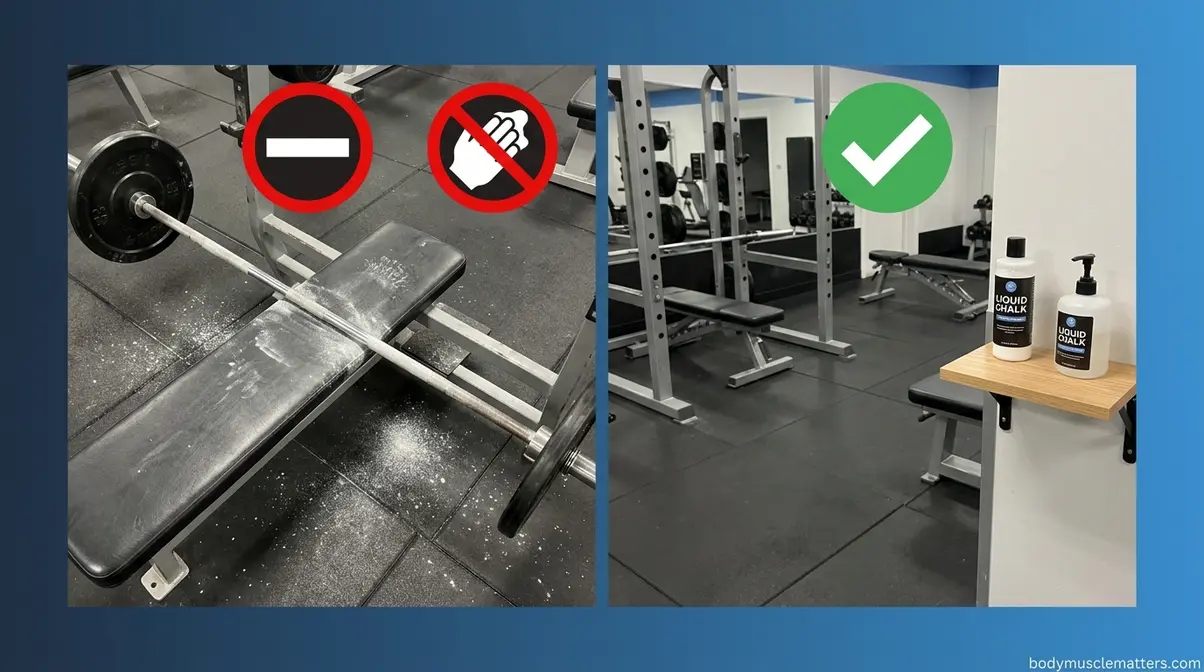
More gyms are restricting or outright banning loose chalk than ever before. This isn’t arbitrary rule-making. There are real reasons — air quality, cleaning costs, equipment damage, and environmental concerns — driving the shift. Understanding these reasons helps you work within gym policies rather than against them.
Why Gyms Restrict Loose Chalk: Air Quality and Cleanup
The primary reason gyms ban loose chalk is air quality and facility maintenance. In an enclosed gym, repeated chalk application creates a persistent cloud of PM2.5 and PM10 particles that settles on equipment, mirrors, floors, and HVAC filters. Cleaning chalk residue from barbells, benches, and lifting platforms is labor-intensive. Clogged HVAC filters reduce air circulation and increase maintenance costs.
A 2024 Climbing Wall Association Pro guide on chalk dust strategies outlines the operational challenge: chalk accumulates on holds, reduces grip surface texture over time, and requires specialized cleaning protocols to remove safely without damaging equipment (CWA Pro, 2024). Commercial gyms — particularly those without dedicated lifting platforms or chalk areas — cannot absorb these costs.
Secondary reasons include:
- Aesthetic concerns: Chalk dust on mirrors, benches, and cardio equipment creates a poor first impression for non-lifting members
- Equipment damage: Chalk residue can accelerate corrosion on steel bars and cables if not cleaned regularly
- Liability: Chalk on hard floors creates slip hazards outside the lifting area
The practical solution most gyms have landed on: liquid chalk only in the main gym floor, with loose chalk permitted only in designated power lifting or Olympic lifting areas — if at all.
Liquid Chalk vs. Chalk Balls vs. Block Chalk
If your gym restricts loose chalk, here’s how the alternatives stack up:
| Format | Dust Level | Gym Compliance | Grip Duration | Best For |
|---|---|---|---|---|
| Block chalk | High | Often banned | Long | Dedicated lifting areas, outdoor climbing |
| Loose powder chalk | High | Often banned | Long | Chalk bags, climbing gyms with ventilation |
| Chalk balls | Medium | Sometimes allowed | Medium | Gyms with partial chalk restrictions |
| Liquid chalk | Minimal | Almost always allowed | Medium-long | Commercial gyms, indoor climbing gyms |
Liquid chalk, as Wikipedia’s composition entry confirms, is a suspension of MgCO₃ in isopropyl alcohol (70% concentration is standard), sometimes with a thickener, resin, or fragrance added (Wikipedia, 2025). The alcohol evaporates within 20 seconds of application, leaving a thin, uniform chalk layer. Because no loose powder is released, it generates virtually no airborne dust.
The antiseptic property of the isopropyl alcohol component is a genuine secondary benefit — it sanitizes the skin surface on application. A US patent for antimicrobial chalk compositions (US20160289480A1) specifically identifies isopropyl alcohol concentrations of 65–75% as the active antimicrobial agent in liquid chalk formulas (USPTO, 2016). This makes liquid chalk the only chalk format that simultaneously improves grip and reduces surface bacteria — a meaningful advantage in shared gym environments.
Where liquid chalk falls short: it can be harder to reapply quickly mid-workout compared to block or powder chalk, and some athletes find the residue slightly tacky on smooth bars. For most commercial gym users, though, it’s the clear compliance choice.
The Environmental Cost of Chalk Mining
The environmental impact of gym chalk is a topic that virtually no competitor article addresses — but it’s increasingly relevant as sustainability becomes a factor in purchasing decisions.
Most commercial MgCO₃ chalk is produced from mined magnesite ore. China dominates global supply, accounting for approximately 70% of world production (Wikipedia, 2026). Magnesite mining involves open-pit extraction, which disrupts local ecosystems, generates mineral waste, and consumes significant energy in processing. The Climbing.com investigation into the hidden environmental cost of climbing chalk documents how chalk residue on outdoor rock faces can alter the surface pH of sandstone and limestone, affecting the micro-ecosystems that depend on those surfaces (Climbing.com, 2024).
Chalk dust that settles on rock holds changes the texture athletes depend on — and repeated application can gradually alter the surface structure of natural rock. This is why many outdoor climbing areas have implemented chalk restrictions or bans, particularly on sandstone routes where the rock is more chemically reactive.
The shift toward synthetically produced MgCO₃ — like Tokyo Powder’s salt-industry by-product sourcing — represents a lower-impact alternative. Liquid chalk also reduces total chalk consumption per session compared to loose powder, meaning less cumulative mining demand over time.
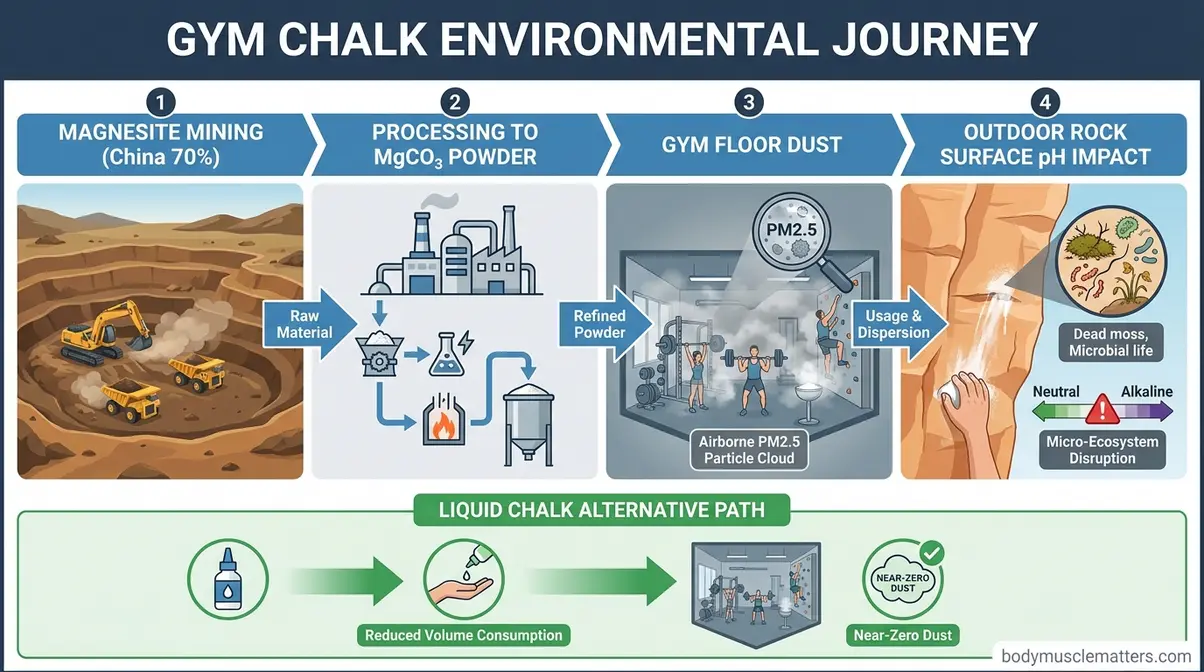
Where liquid chalk’s environmental story gets complicated: the isopropyl alcohol component is a petroleum-derived solvent, adding its own production footprint. No chalk format is entirely without environmental trade-offs — but liquid chalk’s reduced volume consumption and near-zero dust output make it the better choice for indoor environments.
Gym Chalk ASMR and Chalk Cravings: What You Need to Know
Two topics sit at the edges of the gym chalk conversation — and both generate significant search traffic. One is a harmless internet trend. The other is a genuine medical concern that deserves careful attention.
Why Gym Chalk Is Popular in ASMR
Gym chalk has found an unexpected second life in the ASMR (Autonomous Sensory Meridian Response) community. ASMR refers to the tingling, relaxing sensation some people experience in response to specific sounds and textures. Gym chalk delivers several ASMR-friendly triggers at once: the sharp crack of breaking a chalk block, the dry scraping sound of chalk rubbing against hands, the visual cloud of white powder dispersing, and the fine crumble texture of chalk breaking apart.
The search term “what is gym chalk ASMR” reflects genuine curiosity from people who’ve encountered gym chalk content on YouTube or TikTok and want to understand what they’re watching. The chalk used in ASMR videos is standard MgCO₃ gym chalk — the same compound used in lifting and climbing. The appeal is purely sensory; there’s no performance claim involved. Some ASMR creators specifically prefer block chalk over powder for its more satisfying break sound and crumble texture.
Chalk Cravings and Pica: When Cravings Become a Health Concern
⚠️ Medical Disclaimer: This section is not medical advice. If you experience persistent cravings to eat chalk or any non-food substance, consult a healthcare professional immediately.
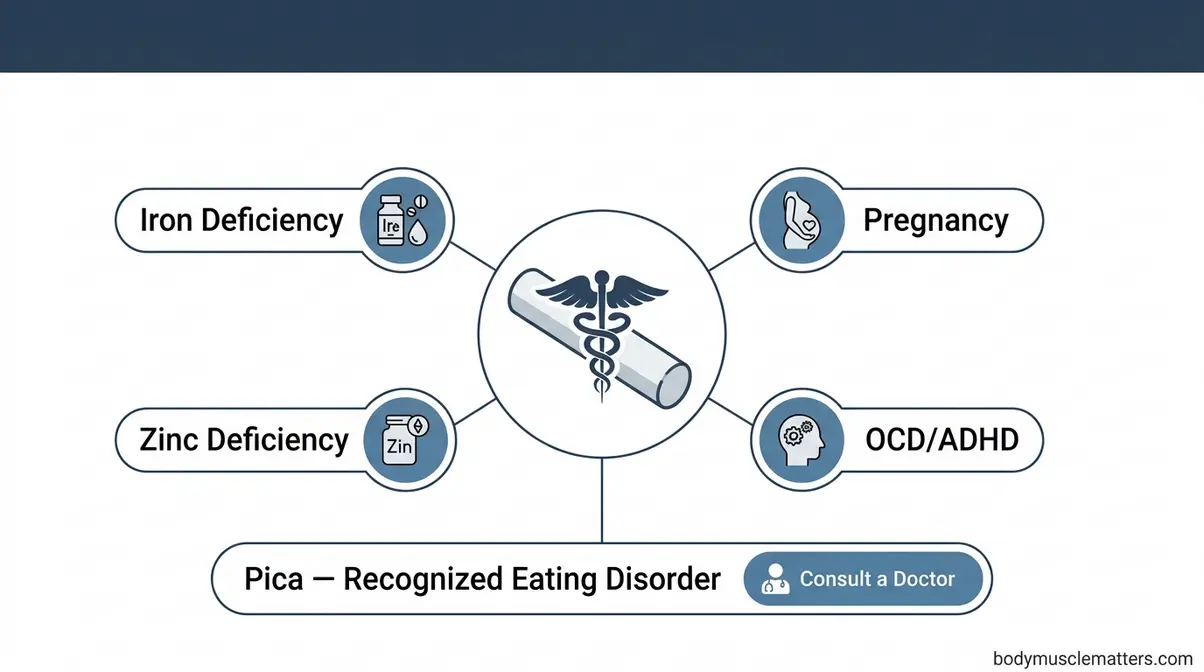
If you find yourself craving chalk — not just noticing its texture, but genuinely wanting to eat it — that craving has a clinical name: Pica (pronounced “pie-kah”). Pica is an eating disorder defined as the compulsive and repeated ingestion of non-nutritive, non-food substances for a period of at least one month (StatPearls/NCBI Bookshelf, 2023). Chalk is one of the most commonly craved substances in Pica presentations, alongside clay, ice, and soil.
The global prevalence of Pica is higher than most people realize. A meta-analysis of 70 studies, published in PMC/NIH (2024), estimated an aggregate worldwide prevalence of 27.8%, with significant variation across regions and populations. Pica is particularly common in:
- Pregnant women — often linked to iron or zinc deficiency
- Children — especially those under age 6, where it may be developmental
- People with iron deficiency anemia (IDA) — research associates Pica with a 2.35-fold increased odds of anemia (PMC/NIH, 2025)
- People with OCD, ADHD, or autism spectrum disorders — Pica frequently co-occurs with these conditions (StatPearls/NCBI, 2023)
How do you stop craving chalk? Treatment depends on the underlying cause. If a nutritional deficiency (particularly iron or zinc) is driving the craving, supplementation often resolves the Pica symptoms within weeks. Behavioral therapy is the most broadly effective treatment approach. A physician will typically order blood panels to identify deficiencies before recommending a treatment path.
Steps to take if you experience chalk cravings:
- Do not dismiss the craving as a quirk or habit — it is a recognized medical symptom
- Schedule an appointment with your primary care physician or a mental health professional
- Request blood work to check iron, zinc, and other micronutrient levels
- Inform your doctor of how long the cravings have been present and their frequency
- Do not self-treat with supplements without professional guidance — excess iron or zinc supplementation carries its own health risks
The Cleveland Clinic’s Pica overview and the National Eating Disorders Association both provide free resources for people seeking support. If cravings are severe or accompanied by distress, seek professional medical advice promptly — this is a treatable condition with established clinical pathways.
Limitations and Precautions When Using Gym Chalk
Gym chalk is a powerful performance tool, but it comes with real limitations. Understanding them helps you use it safely and avoid the most common mistakes.
Common Pitfalls
Over-chalking your hands. More chalk does not mean more grip. Excess chalk creates a loose, granular layer between your skin and the bar that actually reduces friction. The optimal application is a thin, even coat — just enough to cover the palm and fingers. If you’re leaving thick white deposits on equipment, you’re using too much.
Relying on chalk to compensate for technique. Chalk improves the friction coefficient of an already solid grip. It cannot fix a fundamentally incorrect hand position or a grip that’s mechanically disadvantaged. If you’re chalk-dependent to the point where you can’t train without it, it’s worth addressing grip strength and technique directly.
Using chalk without skin care. Regular chalk use without moisturizing creates a cycle of skin damage — cracked skin reduces grip quality, which leads to more chalk use, which causes more cracking. Apply a hand balm or climbing-specific salve after every session.
Using loose chalk in a poorly ventilated space. As the respiratory research makes clear, repeated exposure to chalk dust in enclosed environments carries real lung function risks. If your training space lacks adequate ventilation, switch to liquid chalk.
When to Choose Alternatives
If your gym bans loose chalk entirely: Liquid chalk is the practical answer. It’s allowed in virtually every commercial gym, produces no airborne dust, and delivers comparable grip performance for most lifting and climbing applications.
If you have a diagnosed respiratory condition (asthma, COPD, chronic bronchitis): Liquid chalk is the only chalk format that carries minimal inhalation risk. Consult your physician about your specific exposure limits before training in any chalk-heavy environment.
If you train primarily on smooth bars (like a pull-up bar or gymnastics bar): Some athletes find that chalk alone is insufficient and opt for leather grips or rubber-grip gloves in combination with liquid chalk. Chalk is not a universal solution for every grip scenario.
When to Seek Expert Help
Consult a dermatologist if skin cracking and dryness persists despite consistent moisturizing — you may have a sensitivity to a chalk additive. Consult a respiratory physician if you experience persistent cough, wheezing, or shortness of breath after sessions in chalk-heavy environments. And as noted above, consult a healthcare professional immediately if you experience cravings to eat chalk — this is a medical concern, not a lifestyle choice.
Frequently Asked Questions
What are the ingredients in gym chalk?
Gym chalk’s primary ingredient is magnesium carbonate (MgCO₃), a white mineral powder derived from magnesite ore. Some formulas add secondary ingredients including drying agents (silica), talc, skin conditioners, resin for extra tackiness, or fragrance. Liquid chalk adds isopropyl alcohol (typically 70% concentration) as a carrier that evaporates on contact, leaving a chalk layer. Pure gym chalk contains only MgCO₃ with no additives. The exact formula varies by brand and intended use (lifting vs. climbing vs. gymnastics).
Is gym chalk non-toxic?
Gym chalk (MgCO₃) is classified as a low-toxicity substance for skin contact and incidental exposure. Existing health guidelines do not classify magnesium carbonate as a hazardous material under normal use conditions (RSC, 2025). However, “non-toxic” applies specifically to skin contact — not to inhalation of large quantities of chalk dust, and not to deliberate ingestion. For most athletes using chalk as intended, toxicity is not a meaningful concern.
Is it safe to consume gym chalk?
No — consuming gym chalk is not safe. While trace ingestion (chalk residue on hands before eating) is unlikely to cause harm in healthy adults, deliberately eating MgCO₃ can cause nausea, vomiting, gastrointestinal cramping, and electrolyte disruption. Magnesium in excess acts as a laxative. More importantly, a persistent desire to eat chalk is a symptom of Pica, a recognized eating disorder linked to nutritional deficiencies. If you experience chalk cravings, consult a healthcare professional — this is not medical advice, but a strong recommendation to seek evaluation.
Why do gyms not allow chalk?
Gyms restrict chalk primarily because loose chalk creates significant air quality and maintenance problems. Airborne MgCO₃ particles accumulate on equipment, mirrors, and HVAC filters, increasing cleaning costs and reducing air quality for all members. Chalk residue on hard floors creates slip hazards. Many commercial gyms allow liquid chalk as a compliant alternative because it produces virtually no airborne dust, as confirmed by PubMed research on dust reduction strategies (PubMed, 2012). The ban is about facility management, not performance.
Why is chalk banned in gyms?
Chalk is banned in many gyms for a combination of air quality, liability, and aesthetic reasons. PM2.5 and PM10 particles from loose chalk can trigger respiratory irritation in sensitive members and degrade HVAC system performance. Liability for slip-and-fall incidents from chalk on hard floors is a real concern. Some gyms also find that chalk residue on cardio equipment and benches creates a poor experience for non-lifting members. The solution most gyms have adopted is permitting liquid chalk while restricting or banning loose powder and block chalk.
Why is Japanese chalk so good?
Japanese chalk — particularly from Tokyo Powder Industries — is considered superior because of its production method and purity. Rather than mining magnesite ore (which introduces mineral impurities), Tokyo Powder synthesizes MgCO₃ as a by-product of the Japanese salt industry, producing an ultra-pure compound with a finer, more uniform particle size. According to Gripstone’s comparative analysis, this results in more consistent performance across humidity levels and gentler behavior on skin (Gripstone, 2026). For serious climbers and gymnasts, the difference in grip consistency is measurable.
How do you stop craving chalk?
Stopping chalk cravings requires identifying and treating the underlying cause — this is a medical process, not a willpower challenge. The most common causes are iron deficiency anemia, zinc deficiency, or pregnancy-related nutritional changes. Treatment typically involves blood work to identify the deficiency, followed by targeted supplementation under medical supervision. Behavioral therapy is effective when cravings persist after nutritional correction. A meta-analysis in PMC/NIH (2024) estimates worldwide Pica prevalence at 27.8% — you are far from alone. Please consult a healthcare professional if cravings are persistent or distressing.
What is gym chalk ASMR?
Gym chalk ASMR refers to videos featuring the sensory sounds and textures of gym chalk — the crack of breaking a block, the dry scrape of chalk on hands, the visual cloud of dispersing powder. ASMR (Autonomous Sensory Meridian Response) is the tingling, relaxing sensation triggered by specific sounds and visuals. Gym chalk is popular in this genre because it delivers multiple triggers simultaneously: sound, texture, and visual. The chalk used is standard MgCO₃ lifting chalk. The videos have no performance claim — the appeal is purely sensory and recreational.
The Chemistry, the Safety, and the Smart Choice
Gym chalk is made of magnesium carbonate (MgCO₃) — a mineral compound whose grip-enhancing power comes not from absorbing sweat, but from The Repulsion Effect: actively repelling liquid moisture to create a dry friction interface. As Northern Michigan University research confirms, MgCO₃ measurably improves the coefficient of friction between hands and a gripping surface (NMU, 2017). No glove, towel, or absorption-based product replicates that mechanism.
The Repulsion Effect is what separates gym chalk from every alternative — and understanding it helps you choose the right format for your training environment. For open lifting areas with good ventilation, block or powder chalk delivers maximum grip. For commercial gyms, liquid chalk gives you the same MgCO₃ chemistry with zero dust and full policy compliance. For anyone with respiratory sensitivities, liquid chalk isn’t just the polite choice — it’s the medically supported one.
Your next step is straightforward: if you train in a standard commercial gym, pick up a bottle of liquid chalk (look for 70% isopropyl alcohol and pure MgCO₃ on the label), try it for two weeks, and compare your grip consistency to what you had before. If you train in a dedicated lifting space with chalk access, experiment with block chalk and a thin application — less is more. And if you’ve been dismissing chalk cravings as a quirk, make that doctor’s appointment. The chemistry is fascinating. Your health is what matters most.
Related posts:
Best Protein Tracker App: Tested & Compared for 2026
Best Muscle Building App 2026: 7 Expert-Tested Picks
How to Use Resistance Bands for Beginners: Full Guide
Best Food Tracking App for Beginners: Top 5 of 2026
Best Home Workout App 2026: Top 10 Tested & Ranked
Gym Equipment Names and Uses: A Beginner Guide

Callum
Hi, I'm Callum, the founder of Body Muscle Matters. I'm not a certified trainer, I'm a self taught lifter who started this site to share what I've learned from my own training and a lot of trial and error. Everything here comes from real experience and honest research, written the way I'd explain it to a friend who is just getting started. My goal is simple: practical, no hype fitness advice you can actually use.