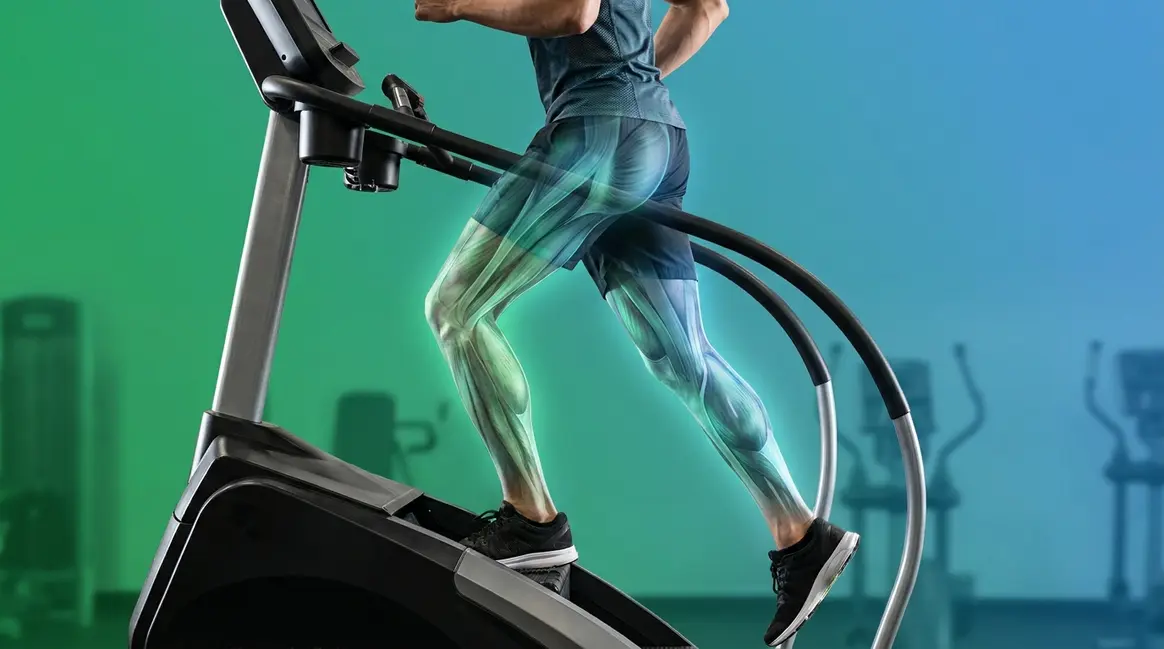
What Muscles Does the StairMaster Work? 6 Groups
⚠️ Fitness Disclaimer: The information in this article is for educational purposes only and does not constitute medical or fitness advice. Consult a licensed physician or certified personal trainer before beginning any new exercise program, especially if you have existing injuries, cardiovascular conditions, or joint issues.
The StairMaster works six major muscle groups — glutes, quadriceps, hamstrings, calves, hip flexors, and core — on every single step. But most gym-goers only activate three or four of them because of one fixable form mistake. Understanding what muscles the StairMaster works, and how posture controls which ones fire, turns a generic cardio session into a targeted training tool.
Most people step on, grip the handrails, and start climbing — never realizing that leaning forward even slightly shifts the entire load from their quads to their glutes, or that a single step-height change can significantly increase hamstring demand. That’s why so many people plateau on the StairMaster despite using it consistently.
By the end of this guide, you’ll know exactly which muscles the StairMaster targets on every step and how to adjust your form, step height, and workout structure to hit your specific fitness goals. You’ll get a full anatomical breakdown, science-backed technique tips, a guide to popular workout protocols including the viral 45:7:6 rule, and answers to the most common StairMaster questions.
When asking exactly what muscles does the stairmaster work, remember that it targets six primary muscle groups — glutes, quadriceps, hamstrings, calves, hip flexors, and core — making it one of the most comprehensive lower-body cardio machines available.
- Glutes and quads are the primary drivers, activated on every step during the loading and propulsion phases
- The Muscle Shift Principle: small posture changes — forward lean angle, step height, handrail use — dramatically change which muscles fire on each step
- Calorie burn: a 155-lb person burns approximately 216 calories in 30 minutes (Harvard Health, 2021)
- Endurance vs. hypertrophy: the StairMaster builds muscular endurance and tone, not significant muscle mass — pair it with strength training for size
- Form matters more than duration: correct posture and avoiding handrail support determine whether you’re training effectively or just walking upstairs
StairMaster Muscles Worked: A Breakdown
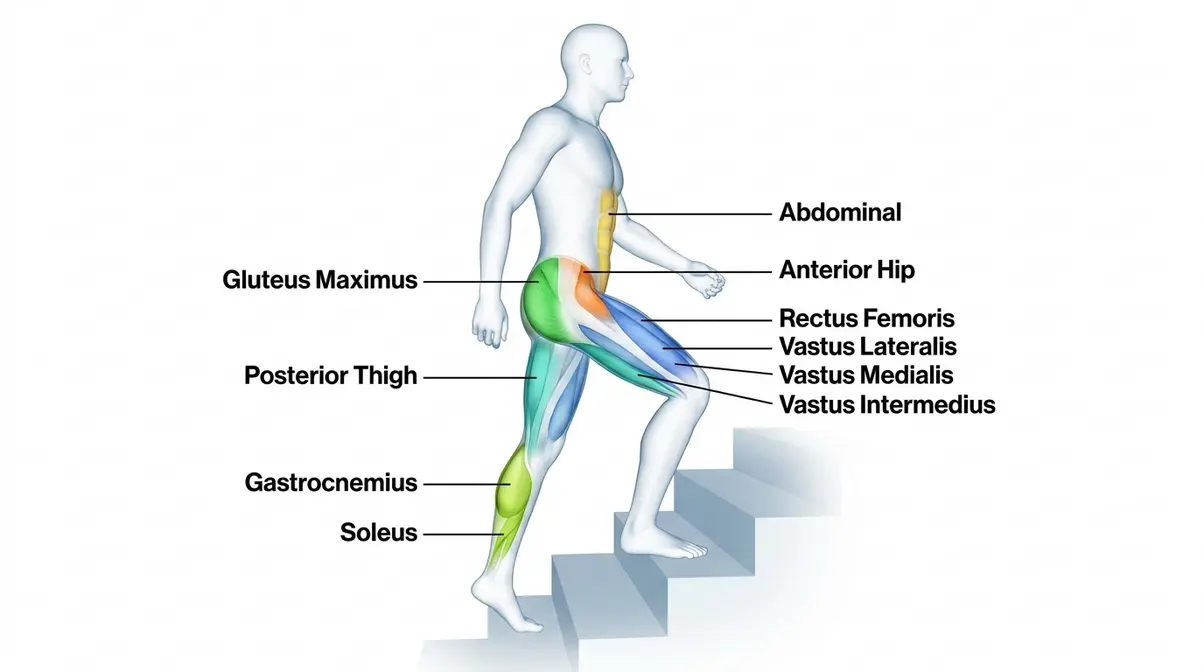
The StairMaster works six major muscle groups — gluteus maximus, quadriceps, hamstrings, calves, hip flexors, and core — on every single step. EMG studies of stair climbing confirm that the quadriceps and glutes work in coordinated activation to generate propulsion and maintain lateral stability, making the StairMaster one of the most muscle-dense cardio options available. But only when your form allows those muscles to actually fire. To compare this machine’s lower-body engagement with other popular options, consider exploring what muscles a treadmill works and how to target them.
Primary Lower Body Muscles
Every step you take on the StairMaster recruits four primary muscle groups in a tightly coordinated sequence. Understanding what each one does — and why — connects anatomy directly to your fitness goals.
Gluteus Maximus
The gluteus maximus — the largest muscle in the body and the primary driver of stair climbing — powers hip extension on every step. During the loading response phase of stair ascent, the glute fires to extend the hip and propel your body upward. A 2020 systematic review in the International Journal of Sports Physical Therapy found that step-up exercises, which closely mimic stair climbing, produce some of the highest gluteus maximus EMG activation levels among common gym exercises (Macadam et al., IJSPT, 2020). For anyone targeting glute development, this makes the StairMaster a genuinely useful tool — provided your form allows the glute to do the work.
Quadriceps
The quadriceps — a four-headed muscle group on the front of the thigh, comprising the rectus femoris, vastus lateralis, vastus medialis, and vastus intermedius — provide the largest support contribution during stair ascent. Biomechanical research published in PubMed shows that peak external knee flexion moments during stair climbing reach approximately three times those seen in level walking, driving high quadriceps activation throughout the movement (McCurdy et al., PLoS One, 2015). In practical terms: your quads are working hard on every single step, whether you feel it or not.
Hamstrings
The hamstrings — biceps femoris, semitendinosus, and semimembranosus — act as hip extensors and knee flexors during stair ascent, assisting the glutes in generating upward propulsion. EMG sequencing research shows that the semitendinosus fires among the earliest muscles in the ascent cycle, helping to control the transition from the swing phase to the loading response (Li et al., BMC Musculoskeletal Disorders, 2024). Hamstring demand increases noticeably when you skip steps or increase step height, as the hip moves through a greater range of extension.
Calves
The calf complex — gastrocnemius and soleus — manages ankle plantarflexion and provides the final push-off on each step. Research on heel-contact versus heel-off stair climbing strategies shows that technique directly affects how much calf demand you generate: keeping your heel in full contact with the step increases quadriceps activation, while rising onto the ball of your foot shifts demand toward the plantarflexors (Kim et al., Medicine, 2024). If calves are a priority, staying on the balls of your feet increases their workload.
Secondary and Stabilizing Muscles
Beyond the primary movers, the StairMaster activates a full set of secondary and stabilizing muscles that determine your balance, posture, and joint health during every session.
Core Muscles
Your core — rectus abdominis, obliques, and erector spinae — works continuously on the StairMaster to maintain an upright or slightly forward-leaning torso against the movement of your legs. This is isometric stabilization, not dynamic contraction, which is why the StairMaster builds core endurance rather than visible core strength. Removing your hands from the handrails increases this stabilization demand significantly, as your trunk must now counteract the rotational forces from each alternating leg drive.
Hip Flexors
The hip flexors — primarily the iliopsoas — lift each leg to initiate the next step. They work eccentrically to control the lowering phase and concentrically to drive the knee upward. Hip flexors are often the first muscle group to fatigue in longer sessions, which causes compensatory leaning on the handrails — a pattern that reduces overall training stimulus.
Tibialis Anterior
The tibialis anterior, the muscle running along the front of the shin, controls dorsiflexion (pulling the toes up) during foot clearance on each step. It works hardest at higher step speeds, when the foot must clear the step quickly. Many gym-goers experience shin soreness after early StairMaster sessions precisely because this muscle is underused in daily life and adapts slowly.
Gluteus Medius
The gluteus medius — on the outer hip — provides mediolateral (side-to-side) stability on every step. EMG research on stair climbing in patellofemoral pain populations specifically highlights the gluteus medius as a key stabilizer for controlling hip drop and maintaining knee alignment (Li et al., BMC Musculoskeletal Disorders, 2024). Weakness here often shows up as knee cave (valgus collapse) during each step.
The Muscle Shift Principle
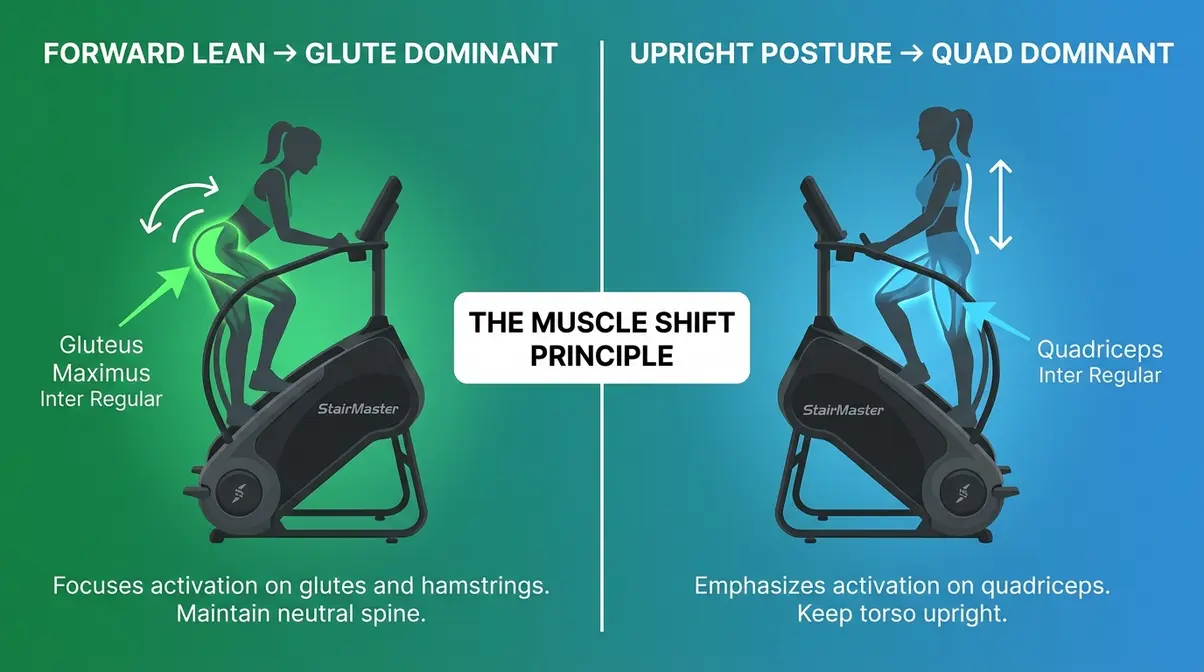
Here is the core concept most StairMaster guides miss entirely: The Muscle Shift Principle — the idea that small adjustments in posture (forward lean vs. upright), step height (standard vs. skip-a-step), and handrail use fundamentally alter which muscles are recruited on each step.
This is not a minor nuance. It determines whether you’re primarily training your quads or your glutes.
Forward Lean vs. Upright Posture
Leaning slightly forward from the hips — not the waist — increases hip flexion at the top of each step. This places the gluteus maximus in a more lengthened position before it contracts, which research suggests enhances its activation during hip extension. Staying perfectly upright keeps the torso over the hips, reducing hip flexion range and shifting more demand to the quadriceps.
A 2025 biomechanical analysis published in Frontiers in Public Health found that increasing step length and hip mobility during stair walking — which a forward lean facilitates — significantly increased quadriceps muscle force while maintaining knee joint reaction forces (Zhu et al., Frontiers in Public Health, 2025). Applied to the StairMaster: lean forward slightly for glute emphasis, stay upright for quad emphasis.
Step Height: Skip-a-Step Effect
Using a double-step pattern — skipping every other step — increases peak hip flexion and peak knee flexion compared to single-step climbing. That same 2025 Frontiers in Public Health study found that double-step mode produced significantly greater quadriceps muscle force across all four quadriceps heads (p < 0.001) without increasing knee joint reaction forces. This makes skip-a-step training a viable technique for increasing lower-body demand safely.
Handrail Use
Gripping the handrails reduces core engagement, decreases the metabolic cost of each session, and allows compensatory leaning that offloads the primary movers. A 2024 BMC Musculoskeletal Disorders study on stair climbing muscle sequencing found that proper gluteus maximus activation requires an uncompensated movement pattern — exactly what handrail gripping disrupts (Li et al., 2024). Release the rails to maximize muscle activation.
Most Activated Muscles
The quadriceps and gluteus maximus are the dominant muscles during stair ascent, but which one leads depends on your speed, technique, and posture. At standard step speeds with an upright posture, the quadriceps carry the largest support contribution due to the high external knee flexion moment. At higher speeds, or with a forward lean that increases hip range of motion, gluteus maximus activation scales upward significantly — research from PubMed confirms that increasing stair climbing speed elevates peak gluteus maximus activation above baseline levels (McCurdy et al., PLoS One, 2015).
For goal-oriented training: if glute development is the priority, lean forward, skip steps, and increase speed. If quad strengthening is the goal, stay upright and use standard step height.
What Does the StairMaster Do for Your Body?
The StairMaster delivers measurable benefits across cardiovascular fitness, body composition, bone health, and mental wellbeing — but the degree of each benefit depends on how you train. In fact, it ranks highly among the best cardio exercises for weight loss and overall health. This section covers what the research actually shows, so you can match your sessions to your goals.
Cardio and Calorie Burn
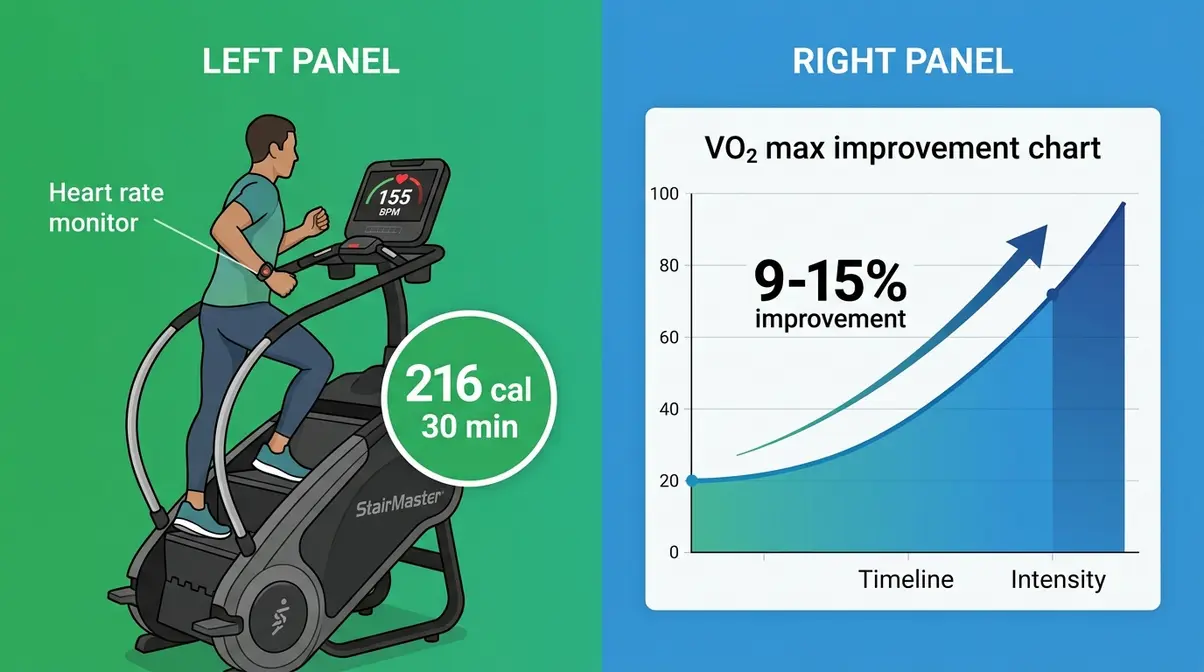
Stair climbing is a high-efficiency cardiovascular exercise. A 2023 review of stair climbing research, summarized by Marie Claire, found that regular stair climbing improved aerobic capacity (VO₂ max) by 9–15% after several weeks of consistent training, alongside improvements in blood pressure, cholesterol, and insulin sensitivity. These are not trivial numbers — a 9–15% VO₂ max improvement is comparable to outcomes from structured running programs.
For calorie burn, Harvard Health Publishing’s verified activity chart shows that a 155-pound person burns approximately 216 calories in 30 minutes on a stair-step machine at moderate intensity. Heavier individuals or higher intensities push this figure upward, while lighter individuals or lower speeds reduce it.
The StairMaster is also a legitimately effective LISS (low-intensity steady-state) cardio tool. For endurance and cardiovascular fitness, a steady 20–30 minute session at a moderate level keeps heart rate in the aerobic zone without the joint impact of running. This makes it a strong option for gym-goers who need high-volume cardio without accumulating running mileage.
Quotable fact: Regular stair climbing improves VO₂ max by 9–15% in several weeks — comparable to structured running programs for cardiovascular adaptation.
Does the StairMaster actually build muscle?
The StairMaster can contribute to fat loss — but it cannot spot-reduce belly fat. No exercise can. Fat loss occurs systemically when total energy expenditure consistently exceeds calorie intake. The StairMaster supports this process by elevating heart rate, burning calories, and increasing weekly energy expenditure. The 45-7-6 protocol (45 minutes, level 7, six days per week), for example, could add 1,200–1,800 calories of weekly expenditure for a 155-pound person — a meaningful contribution to a fat-loss program when paired with appropriate nutrition.
Does the StairMaster build muscle? It builds muscular endurance and may contribute to muscle tone, but it does not produce significant hypertrophy (muscle growth). The repetitive, lower-load nature of stair climbing is ideal for Type I (slow-twitch) muscle fiber development — the fibers responsible for endurance. For visible muscle size, particularly in the glutes and quads, you need progressive overload through resistance training. As gym communities consistently observe:
“Stairmaster is great for LISS/cardio and endurance, and heavy weights are good for building stronger and bigger glutes.”
This is not a limitation of the machine — it’s a feature. The StairMaster excels at what it’s designed for. Pair it with strength training for fat loss for the best body composition results.
Bone, Joint, and Mental Health
Stair climbing is a weight-bearing exercise, meaning it applies mechanical stress to bones that stimulates bone remodeling and supports bone density. This makes it a useful tool for long-term bone health — particularly relevant for women approaching menopause, when bone density loss accelerates, as noted by Healthline’s review of StairMaster benefits.
The joint-friendliness of the StairMaster is a genuine advantage over running. Because each step is controlled and the machine provides a stable surface, the impact forces are significantly lower than those in running or jumping. The 2025 biomechanical analysis cited earlier confirmed that double-step stair climbing increased quadriceps demand without increasing knee joint reaction forces — a meaningful finding for gym-goers managing knee discomfort.
On the mental health side, aerobic exercise consistently produces acute improvements in mood, reduces cortisol, and may reduce anxiety symptoms with regular practice. The rhythmic, predictable nature of stair climbing — combined with the option to use it as a meditative LISS session or a challenging HIIT workout — makes it adaptable to different psychological needs on different training days.
Targeting Glutes and Core
Most gym-goers want two things from the StairMaster: better glutes and a stronger core. Both are achievable — but both require deliberate technique, not just more time on the machine. If you’re wondering what muscles does the stairmaster work during different step patterns, the answer lies in your technique. This section explains the biomechanics and gives you five specific step variations to maximize activation. This makes the StairMaster an excellent finisher for any lower body home workout if you have the equipment.
Does the StairMaster Work Your Core?
The StairMaster works your core as a stabilizer, not as a prime mover. Your rectus abdominis, obliques, and erector spinae engage isometrically to keep your torso stable against the alternating forces of each leg drive. This is functional core strength — the kind that improves posture and reduces lower back fatigue — rather than the dynamic contraction that builds visible abs.
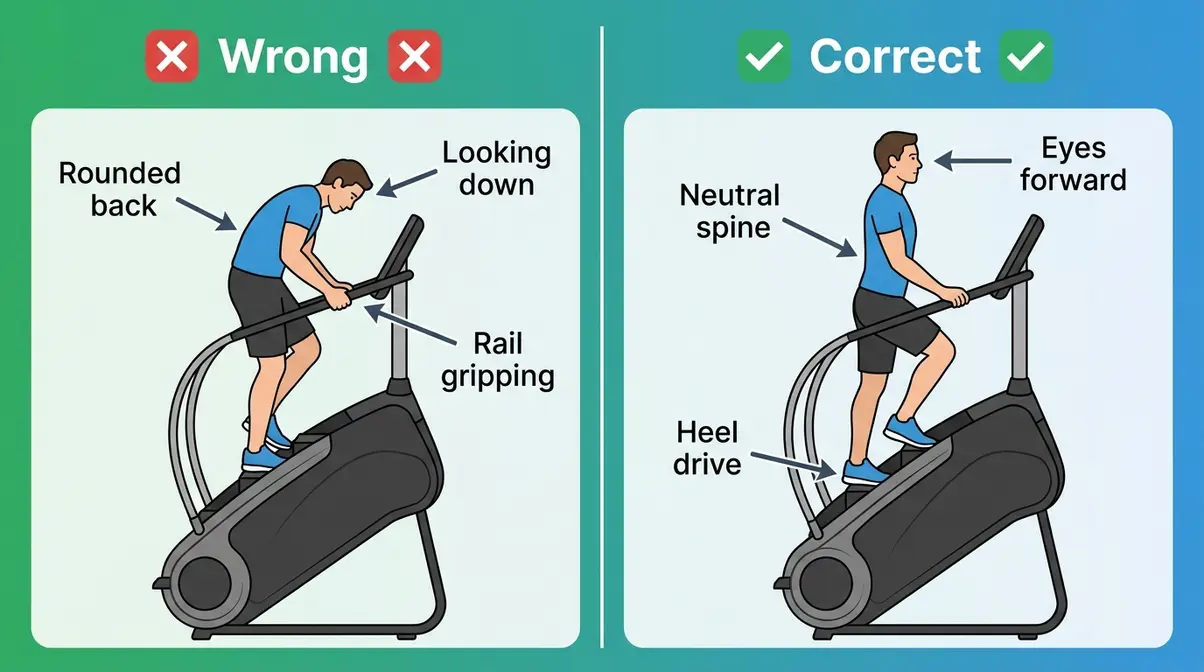
Releasing the handrails significantly increases core demand. When you hold the rails, your arms take over much of the stabilization work, reducing the load on your trunk muscles. Research on stair climbing muscle sequencing consistently shows that compensation strategies — like gripping rails or leaning — redistribute load away from the intended primary movers (Cleveland Clinic, StairMaster Benefits and Workouts).
For core-focused sessions: stand tall, release the rails, and focus on keeping your hips level on every step. Your obliques will engage to prevent hip drop, your erector spinae will maintain spinal extension, and your deep stabilizers will work continuously throughout the session.
Glute Activation
The StairMaster activates the gluteus maximus during every hip extension cycle — but how much it activates depends entirely on your technique. The Muscle Shift Principle applies directly here: a slight forward lean from the hips, combined with a full push-through at the bottom of each step, creates a longer range of hip extension and greater glute recruitment.
The key biomechanical cue is pushing through the heel rather than the ball of the foot. Heel drive keeps the hip in extension longer, placing more demand on the glute rather than transferring it to the calf and quad. A 2024 BMC Musculoskeletal Disorders study found that targeted gluteal activation training during stair climbing increased integrated EMG of the gluteus maximus by 118 ± 67 μVs — a significant increase driven entirely by technique change, not added load (Li et al., 2024).
Quotable fact: A 6-week gluteal activation program increased gluteus maximus EMG during stair climbing by 118 μVs — a technique-driven change requiring no added external load.
For maximum glute activation: lean slightly forward, push through the heel, take full steps, and release the handrails.
Step Variations for Glutes
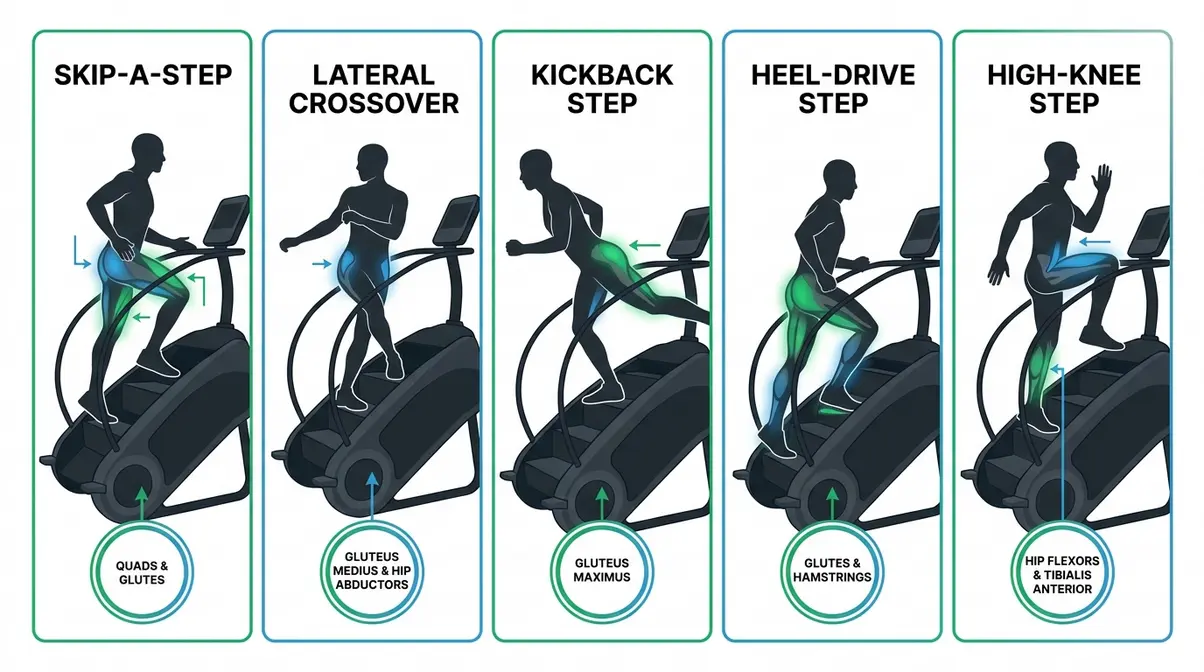
These five variations apply The Muscle Shift Principle in practice. Each shifts muscle recruitment in a distinct way. Add them to your sessions progressively, starting with one variation per workout before combining.
1. Skip-a-Step (Double-Step)
Step up two stairs at a time instead of one. This increases peak hip flexion and quadriceps force — biomechanical research confirms significantly greater activation across all four quad heads versus single-step climbing (Zhu et al., 2025). It also requires greater glute involvement to complete the larger hip extension. Best for: quad and glute hypertrophy stimulus.
2. Lateral Crossover Step
Face sideways on the machine and cross one foot over the other on each step. This recruits the gluteus medius and hip abductors far more than forward-facing climbing, targeting the outer glute and improving hip stability. Alternate directions each set. Best for: outer glute development and hip stabilizer strength.
3. Kickback Step
At the top of each step, pause briefly and extend the stepping leg behind you before placing it on the next step. This adds an isolated glute contraction at peak hip extension — exactly the range where gluteus maximus activation is highest. Best for: glute isolation and mind-muscle connection.
4. Heel-Drive Step
Take standard steps but consciously push through the heel of the planted foot rather than the ball. This keeps the hip in extension longer and reduces quad dominance. Research on heel-contact strategies confirms this shifts demand toward hip extensors (Kim et al., 2024). Best for: glute emphasis without changing step height.
5. High-Knee Step
Exaggerate the knee lift on each step, driving the knee up toward hip height before placing the foot. This increases hip flexor demand and tibialis anterior activation, while also increasing the cardiovascular intensity. Best for: hip flexor strength and conditioning at higher heart rates.
StairMaster Workout Protocols
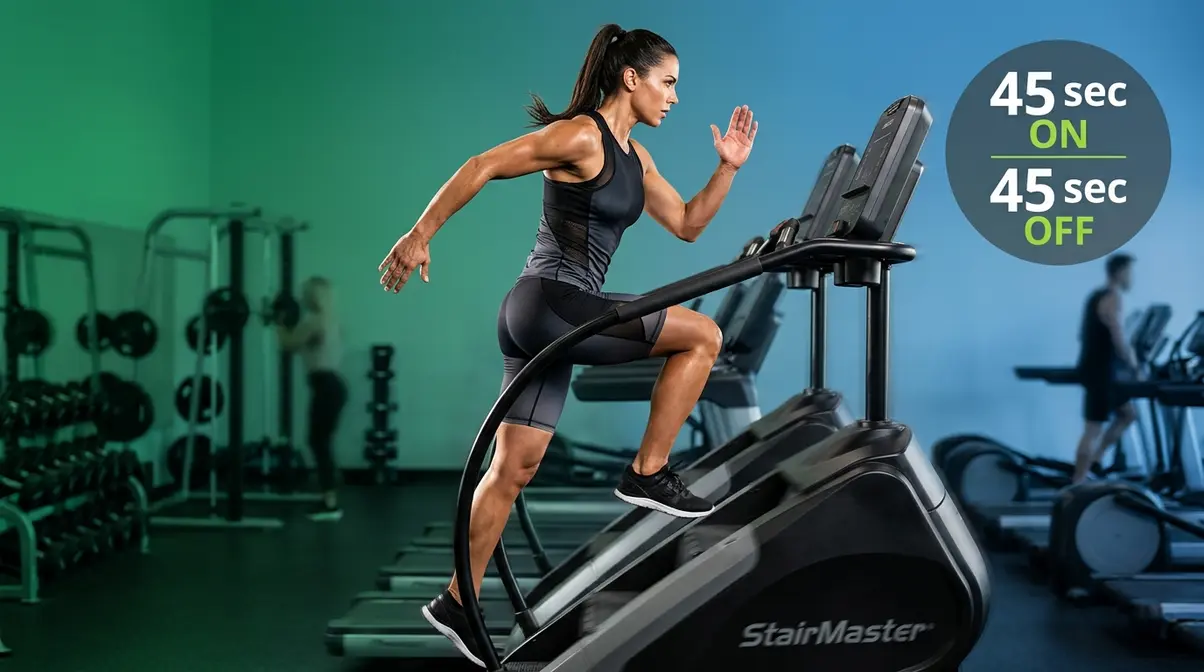
Understanding exactly what muscles does the stairmaster work is only half the equation; you also need proper programming to see results. Here is what the evidence says about duration, intensity, and the viral protocols currently circulating online. You can also adapt these principles to reap the benefits of high intensity interval training by alternating sprint and recovery steps.
Is 20 minutes on the StairMaster enough cardio?
Whether 10 or 20 minutes is enough depends entirely on your goal.
10 minutes is a meaningful cardiovascular stimulus, particularly at higher intensities. Research on stair climbing shows that even short bouts of vigorous stair climbing produce acute improvements in heart rate, oxygen consumption, and post-exercise calorie burn. For gym-goers adding the StairMaster as a warm-up or finisher, 10 minutes at level 6–8 is a legitimate training stimulus — not a throwaway effort.
20 minutes enters the range where steady-state cardiovascular adaptations begin to accumulate. At a moderate level (6–8), 20 minutes on a StairMaster keeps most gym-goers in the aerobic zone for long enough to meaningfully improve cardiovascular endurance over weeks of consistent training. A 155-pound person burns approximately 144 calories in 20 minutes at this intensity, based on Harvard Health’s verified calorie data.
For fat loss specifically, 20–30 minutes at a moderate-to-high intensity is generally the sweet spot for maximizing calorie burn without generating excessive fatigue that compromises strength training later in the session. The Cleveland Clinic’s StairMaster guidance recommends building to 20–30 minute sessions as a baseline for cardiovascular benefit.
The 45:7:6 Rule Explained
The 45:7:6 rule is a viral workout protocol — 45 minutes at level 7, six days per week — that gained traction on TikTok as a structured approach to high-volume stair climbing. It evolved from the earlier 25-7-2 protocol (25 minutes at level 7, twice per week), which was popularized by TikTok creator @shutupcamilla and marketed as a way to “build abs fast.”
What the science says:
Both protocols are structurally sound cardio programs that can improve cardiovascular fitness and contribute to calorie expenditure. A 2023 review of stair climbing research found that regular stair climbing improved aerobic capacity by 9–15% and produced measurable improvements in body composition, blood pressure, and insulin sensitivity after several weeks of consistent training.
However, neither protocol is a special “ab hack.” Exercise scientists quoted by Women’s Health and Fit&Well are consistent: core engagement during hands-free stair climbing is stabilization work, not the kind of dynamic contraction that builds visible abdominal muscles. Visible abs require a combination of resistance training, cardiovascular exercise, and a calorie deficit — no single protocol delivers them independently.
The 45:7:6 protocol specifically: Six days per week at 45 minutes is a high training volume. For a conditioned gym-goer, this can add 1,200–1,800 calories of weekly expenditure — meaningful for fat loss. For someone new to regular exercise, jumping straight to 45 minutes, six days per week risks overuse fatigue and reduces the quality of each session. A smarter progression starts with the 25-7-2 structure and builds volume over 4–6 weeks.
Bottom line: Both viral protocols are legitimate cardio frameworks. They work because stair climbing itself works — not because of any special mechanism unique to those specific numbers.
Sample Workout Structures
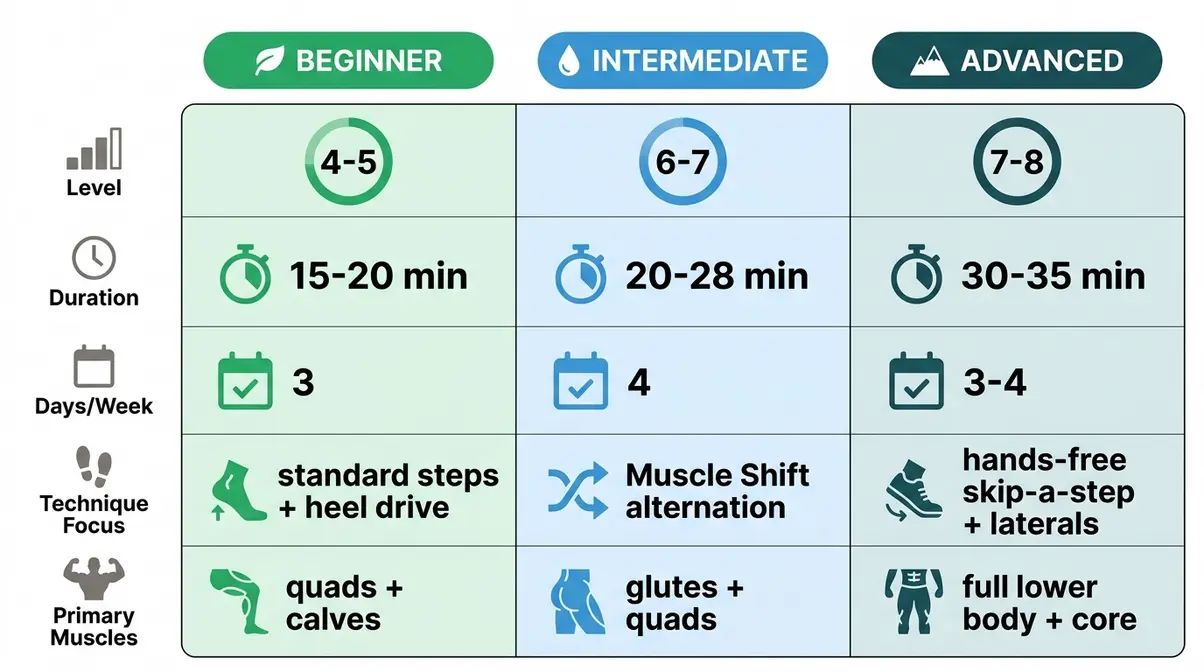
These three structures apply The Muscle Shift Principle to real session designs. Each specifies level, duration, technique focus, and goal.
Beginner: Foundation Builder (3 days/week)
- Warm up at level 2–3 for 5 minutes, hands on rails for balance
- Step at level 4–5 for 15 minutes, upright posture, standard steps
- Release rails for the final 5 minutes and focus on heel drive
- Cool down at level 2 for 3 minutes
Goal: Build cardiovascular base and learn proper form. Estimated calorie burn: ~110–130 calories.
Intermediate: Glute & Cardio Hybrid (4 days/week)
- Warm up at level 3 for 5 minutes
- Perform 20 minutes alternating: 3 minutes standard upright (quad focus) + 2 minutes forward lean with heel drive (glute focus)
- Add 1 set of 3-minute skip-a-step intervals at level 6
- Cool down at level 2 for 3 minutes
Goal: Apply Muscle Shift Principle to shift between quad and glute emphasis. Estimated burn: ~175–200 calories.
Advanced: 25-7-2 Modified (3–4 days/week)
- Warm up at level 3 for 5 minutes
- Climb at level 7 for 25 minutes, hands-free, alternating every 5 minutes between: upright standard steps / forward lean skip-a-step / lateral crossovers
- Final 2 minutes at level 8–9 for metabolic finish
- Cool down at level 2–3 for 3 minutes
Goal: High-intensity cardiovascular conditioning with targeted muscle variation. Estimated burn: ~220–250 calories.
Bonus: 15-Minute HIIT Protocol
- Warm up at level 3 for 3 minutes
- Perform 10 rounds of: 45 seconds at level 10–12 (sprint pace), followed by 45 seconds at level 3 (recovery pace)
- Cool down at level 2 for 2 minutes
Goal: Maximize EPOC (excess post-exercise oxygen consumption) and cardiovascular output in minimal time.
Common Mistakes That Kill Your StairMaster Results
Even experienced gym-goers make form errors on the StairMaster that reduce muscle activation, increase injury risk, and turn a high-quality training tool into an overpriced walk upstairs. Here are the most common ones — and how to fix them.
Common Form Mistakes
Leaning on the handrails
This is the single most common error. When you support your bodyweight through your arms, you reduce the load on your legs and core — potentially cutting effective training intensity by 20–40%. Use the rails for balance only, or release them entirely once you’re comfortable at your working speed.
Hunching at the waist instead of hinging at the hips
Rounding the lower back shifts stress away from the glutes and onto the lumbar spine. A forward lean should come from the hips — a slight anterior tilt that positions your chest over your knees — not from collapsing your upper back. If you’re rounding, slow down and reset your posture before increasing speed.
Short, choppy steps
Taking very shallow steps reduces range of motion at the hip and knee, limiting glute and hamstring engagement. Full steps — where the stepping foot lands flat and you push through the heel — maximize the hip extension range needed for glute activation.
Looking down at the steps
Dropping your gaze to the machine causes the neck to flex forward, which cascades into thoracic rounding and reduced core engagement. Keep your gaze forward and slightly upward to maintain a neutral spine.
Ignoring rate of perceived exertion
The StairMaster can be deceptively easy at low levels. If you can hold a full conversation without any effort, you’re likely not in a training zone that produces meaningful cardiovascular or muscular adaptation. Target a pace where speaking in full sentences requires effort.
Adding Strength Training
The StairMaster is an exceptional cardiovascular and muscular endurance tool — but it has a ceiling for muscle hypertrophy. If your primary goal is building larger, stronger glutes or quads, cardio alone cannot deliver that outcome. Muscle hypertrophy requires progressive overload: incrementally increasing the mechanical stress on a muscle over time, typically through resistance training.
Research is consistent on this point: the StairMaster develops Type I (slow-twitch) muscle fibers for endurance, while significant size increases require high-tension work that recruits Type II (fast-twitch) fibers — the domain of squats, hip thrusts, Romanian deadlifts, and leg presses.
A practical framework: use the StairMaster 3–4 days per week for cardiovascular fitness, calorie burn, and muscular endurance. Add 2–3 lower-body strength sessions per week for hypertrophy. Exercises like barbell squats, walking lunges, and Romanian deadlifts perfectly complement the StairMaster by building the raw strength and muscle mass that the cardio machine then conditions. The two modalities complement each other — the endurance base from StairMaster training can improve work capacity in your strength sessions, while resistance training increases the muscle mass that makes cardio more metabolically demanding over time.
If you’re consistently using the StairMaster for 6+ weeks without visible changes in lower-body muscle size or strength, that’s a clear signal to add structured resistance training.
Frequently Asked Questions
Does StairMaster burn belly fat?
The StairMaster can contribute to fat loss, but it cannot selectively burn belly fat. No exercise targets fat reduction in a specific body area — this concept, known as “spot reduction,” is not supported by exercise science. Fat loss occurs systemically when total calorie expenditure exceeds intake over time. The StairMaster supports fat loss by burning approximately 216 calories per 30 minutes for a 155-pound person (Harvard Health, 2021), contributing to the calorie deficit required for body fat reduction. Consistent sessions combined with a nutrition strategy that supports a moderate deficit will reduce overall body fat, including abdominal fat, over time.
Is 10 minutes on the StairMaster enough?
Ten minutes on the StairMaster is a legitimate training stimulus at higher intensities, though it’s better suited as a warm-up or finisher than a standalone session. At level 7–9, 10 minutes produces a meaningful cardiovascular response and elevates post-exercise calorie burn. For gym-goers adding the StairMaster to a strength training session, 10 minutes before or after lifting can improve cardiovascular conditioning over time without generating significant fatigue. For dedicated cardio goals, building toward 20–30 minutes will produce more substantial adaptation.
What is the StairMaster 45:7:6 rule?
The 45:7:6 rule is a viral workout protocol: 45 minutes at level 7, six days per week. It evolved from the earlier 25-7-2 trend (25 minutes, level 7, twice per week) popularized on TikTok. Both protocols are structurally sound cardio programs — stair climbing research supports improvements in VO₂ max, body composition, and cardiometabolic markers with consistent training. However, neither is a special mechanism for “building abs” as viral marketing suggests. The 45:7:6 protocol is best suited to conditioned gym-goers; beginners should start with 25-7-2 and build volume progressively over 4–6 weeks.
How can I lose 10 pounds in 3 weeks by walking?
Losing 10 pounds in 3 weeks through walking alone is not a realistic or safe target for most people. A pound of fat represents approximately 3,500 calories. Losing 10 pounds in 21 days would require a daily deficit of roughly 1,667 calories — far beyond what walking or StairMaster sessions alone can create for most individuals. Sustainable fat loss is typically 0.5–2 pounds per week, achieved through a combination of moderate calorie reduction and increased physical activity. The StairMaster can meaningfully support a fat-loss program as part of a consistent exercise routine, but extreme short-term targets increase the risk of muscle loss and metabolic adaptation.
How many stair steps equal 10,000 walking steps?
Approximately 1,000–1,300 stair steps are generally considered equivalent to 10,000 walking steps in terms of cardiovascular exertion, though direct equivalency depends on step height, speed, and individual fitness level. Stair climbing is significantly more metabolically demanding than level walking — Harvard Health data shows it burns roughly twice as many calories per minute as walking at a moderate pace. This means a 20–30 minute StairMaster session can deliver cardiovascular benefits comparable to a much longer walking session, making it a time-efficient alternative for gym-goers with limited cardio time.
Is the StairMaster bad for your knees?
The StairMaster is generally low-impact and joint-friendly compared to running, but it can aggravate existing knee issues if used incorrectly. Because your feet never leave the pedals, it eliminates the harsh impact forces associated with jogging on pavement. However, leaning heavily on the handrails or allowing your knees to cave inward (valgus collapse) can place undue stress on the patellar tendon. Individuals with healthy knees usually find it comfortable, but those with pre-existing patellofemoral pain should consult a physical therapist before using it extensively.
Can I do the StairMaster every day?
While you can safely use the StairMaster every day at a low intensity, doing high-intensity sessions daily increases the risk of overtraining. For general cardiovascular health, 20 to 30 minutes of moderate climbing daily is sustainable for most conditioned individuals. However, if you are incorporating skip-a-step variations, high levels (8+), or long durations (45+ minutes), your leg muscles and central nervous system require recovery time. A balanced approach of three to four challenging sessions per week is generally more effective for long-term progress than daily exhaustive efforts.
Putting It All Together
When considering what muscles does the stairmaster work, remember that it targets six primary muscle groups — gluteus maximus, quadriceps, hamstrings, calves, hip flexors, and core — on every step, making it one of the most muscle-dense cardio machines available. A 155-pound person burns approximately 216 calories in 30 minutes (Harvard Health, 2021), and consistent training produces VO₂ max improvements of 9–15% alongside meaningful cardiometabolic benefits. For intermediate gym-goers, the key insight is that technique determines results more than duration.
The Muscle Shift Principle is the practical framework that makes this actionable: forward lean shifts load to the glutes, upright posture emphasizes the quads, skip-a-step increases total lower-body demand, and releasing the handrails recruits the core. These aren’t advanced techniques — they’re adjustments you can make in your next session.
Start by applying one change at your next StairMaster session: release the handrails and focus on heel drive for the final five minutes. If your goal is glute development, add a slight forward hip hinge. If you’re chasing cardiovascular endurance, try the 25-7-2 structure before progressing to higher volumes. Add two lower-body strength sessions per week if muscle size is the goal — the StairMaster builds the endurance base; resistance training builds the size. Apply The Muscle Shift Principle consistently, and the StairMaster becomes a far more targeted tool than most gym-goers ever realize.
Related posts:
StrongLifts 5x5 for Beginners: Complete Guide 2026
How to Get a Bigger Bum Without Exercise: 3-Tier Guide
Olympic Weightlifting vs Powerlifting: 2026 Guide
What Kills Muscle Gains? 7 Proven Saboteurs to Fix Now
Best Strength Training Apps for Women: Top 7 Picks
HASfit Home Workouts: Free Guide for All Fitness Levels

Callum
Hi, I'm Callum, the founder of Body Muscle Matters. I'm not a certified trainer, I'm a self taught lifter who started this site to share what I've learned from my own training and a lot of trial and error. Everything here comes from real experience and honest research, written the way I'd explain it to a friend who is just getting started. My goal is simple: practical, no hype fitness advice you can actually use.