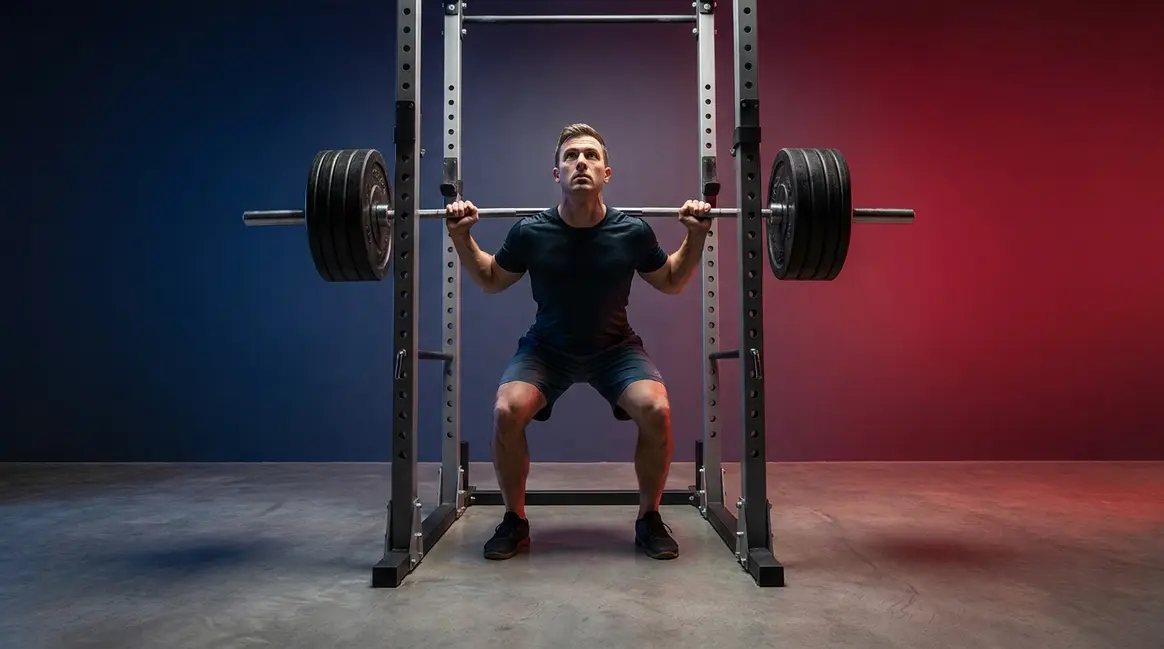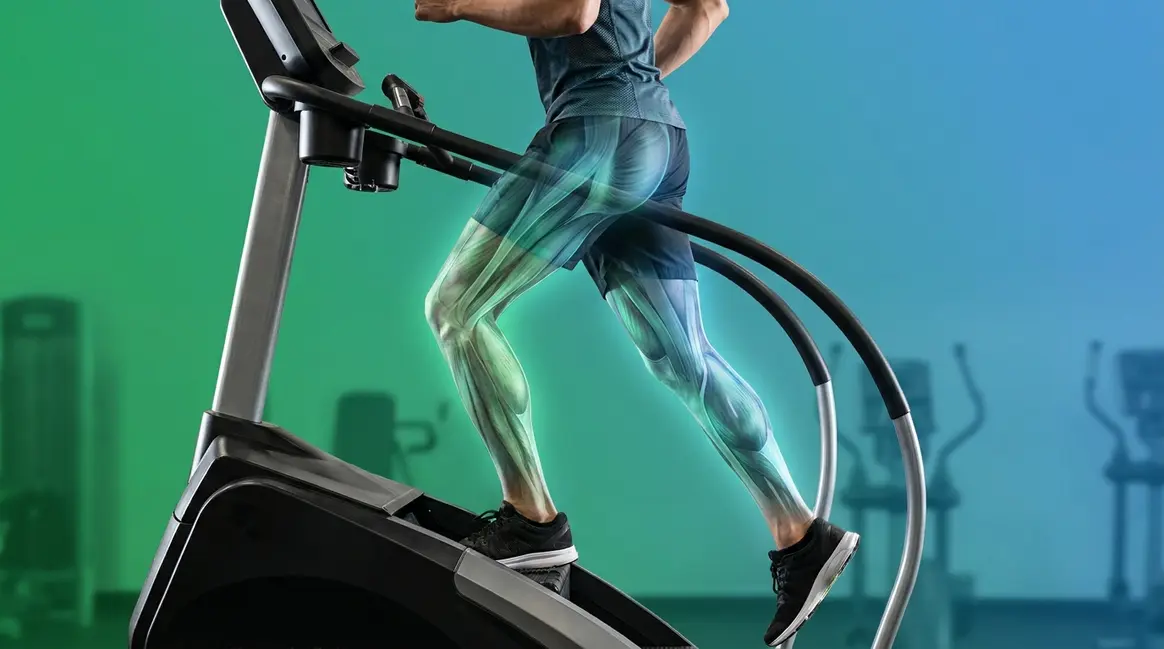
How to Look Bigger: Train, Dress & Pump the V-Taper
⚠️ Medical Disclaimer: The information in this guide is for educational purposes only. Always consult a qualified healthcare professional or certified personal trainer before starting a new exercise or nutrition program — especially if you have any pre-existing health conditions or injuries.
About the Author: This guide was developed by our team of certified personal trainers and strength coaches. We draw on over a decade of hands-on experience helping clients build muscle mass, optimize their physical proportions, and achieve their ideal physique.
You’re putting in the work at the gym. But somehow, your friend who lifts half the weight looks twice as big.
“I have friends who lift significantly lower numbers but look a lot wider and in better shape…”
That frustration is real — and it’s more common than you think. Without the right strategy, you could spend years training the wrong muscles, wearing the wrong clothes, and missing the tricks that make all the difference — all while watching others get the results you want. The gap between training hard and looking bigger comes down to three specific things most people never learn.
In this guide, you’ll learn exactly how to look bigger — through targeted muscle training, science-backed clothing illusions, and instant physiological hacks you can use today. We cover everything in four clear steps, from building your long-term frame to looking bigger in photos tonight.
To look bigger, combine three strategies — muscle growth, clothing illusions, and instant physiological tricks — using what we call The V-Taper Triangle.
- Train the “Yoke”: Shoulders, lats, and traps create the V-taper that makes you look wider and more dominant
- Dress strategically: Well-fitted layers and horizontal stripes add instant visual bulk without a single rep
- Activate the pump: Glycogen loading and posture corrections add noticeable size before any event
- The V-Taper Triangle works for everyone: men, women, skinny builds, and curvier frames alike
What Muscles Actually Make You Look Bigger?
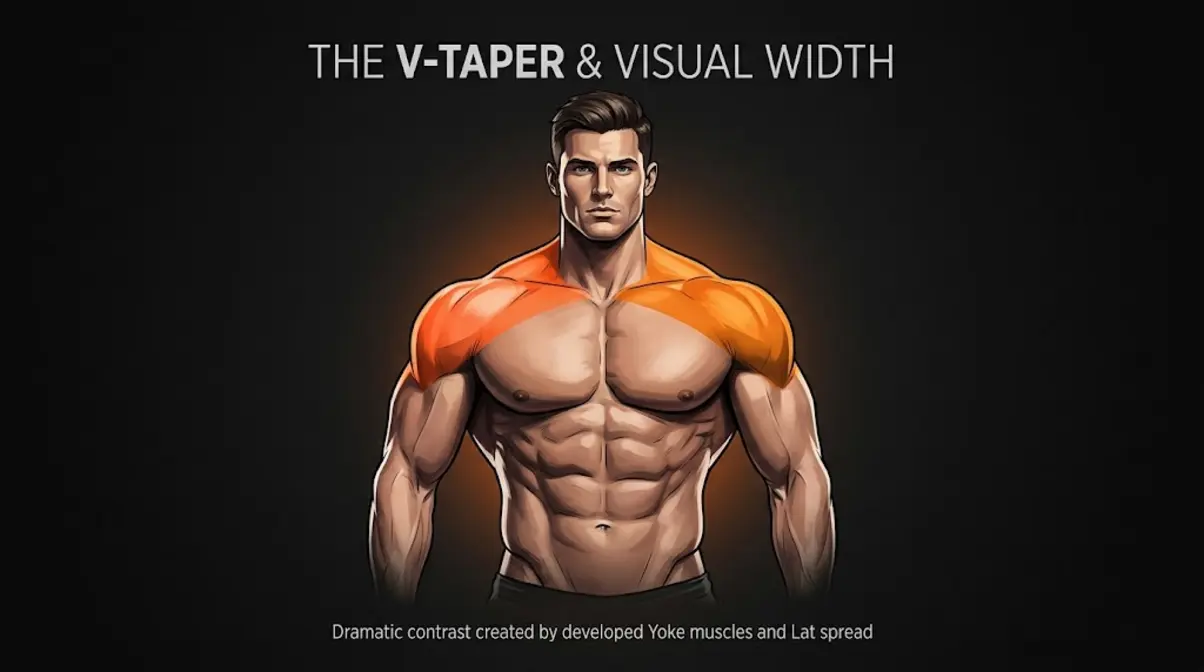
Looking bigger is primarily about visual proportions — specifically, the width of your shoulders relative to your waist. Anatomical studies on shoulder width confirm that hypertrophy in the lateral deltoids and upper trapezius disproportionately increases biacromial breadth (shoulder width), creating a dramatically larger upper body silhouette (PubMed, 2026). This means training specific muscles — not just any muscles — delivers the fastest visual results.
Most people hit the gym and do a little of everything. Chest press, bicep curls, leg day — a broad mix that builds general fitness but doesn’t necessarily create the look of size. The reason your gym friend appears wider despite lifting less isn’t luck or genetics alone. Almost always, it comes down to which muscles they’ve prioritized. As the diagram below shows, three muscle groups form the visual “frame” of your upper body.
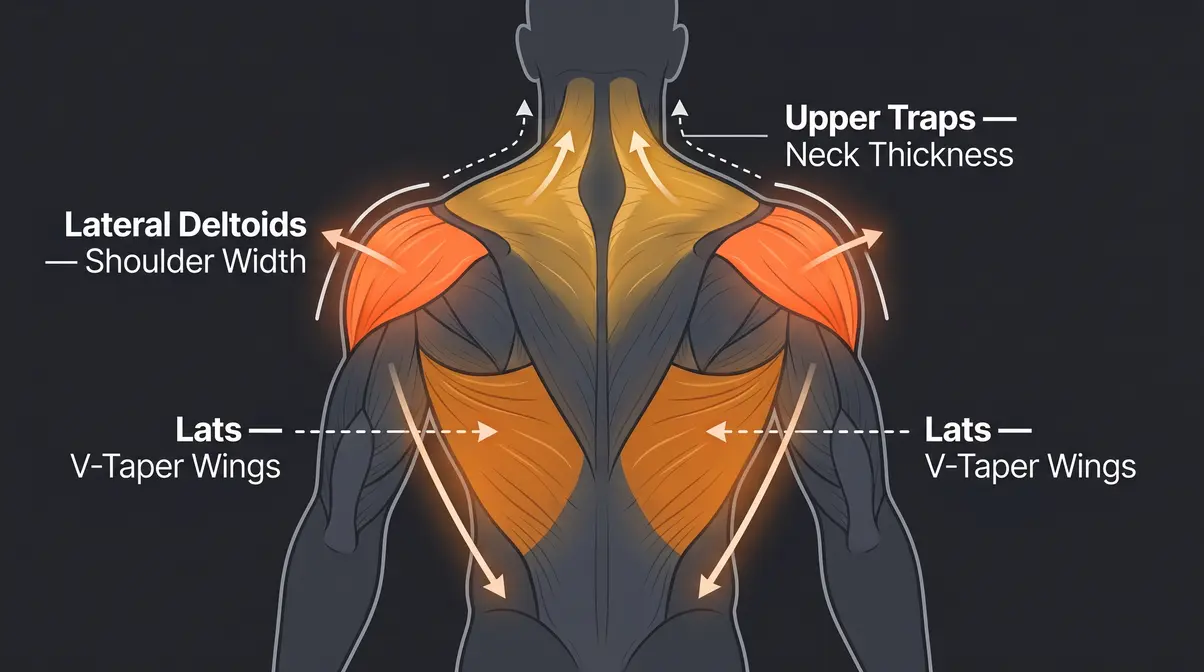
The Yoke: Shoulders, Lats, Traps
Strength coaches use the term “the Yoke” to describe the shoulder-and-trap region that frames the upper body. Develop these three muscles and you’ll look bigger in a T-shirt, in a dress shirt, and in every photo you take. Neglect them and even years of hard training can leave you looking flat.
Lateral deltoids — the side muscles of your shoulders — are responsible for shoulder width, not the front or rear delts that most beginners overtrain. The lateral delt is the part that sticks out when you look at someone from the front. It is the single biggest contributor to that wide, powerful silhouette.
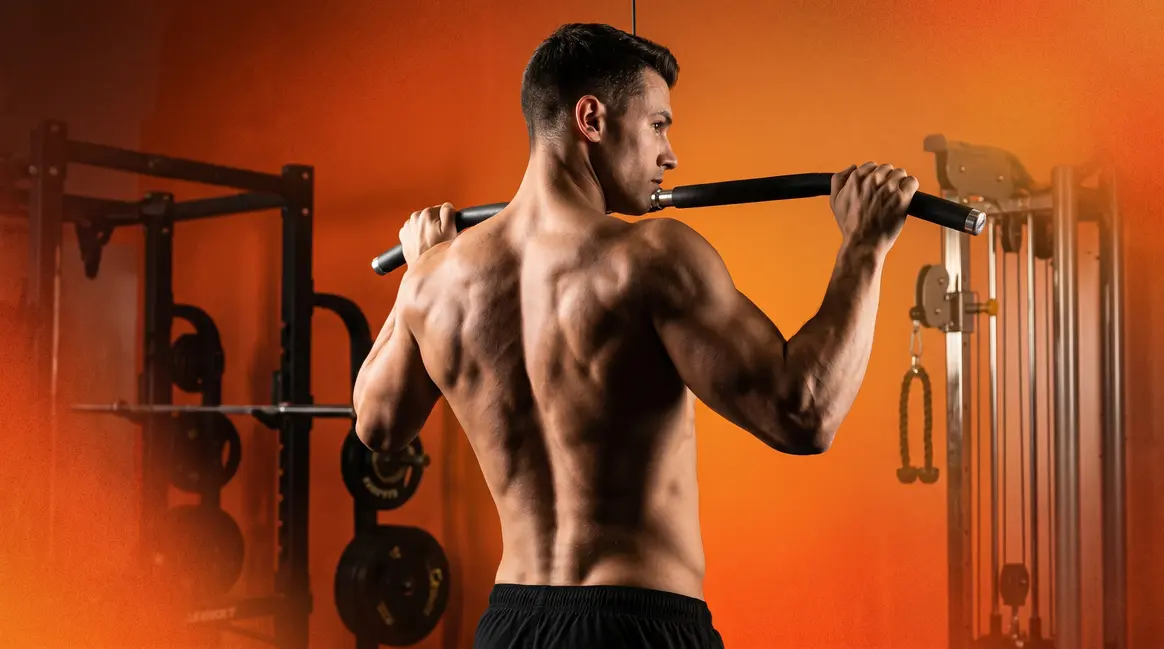
Latissimus dorsi (lats) — the broad muscles of your back — create the “wings” that taper your waist. When your lats are developed, your back becomes wide and your waist looks narrow by comparison. That contrast is the core of the V-taper shape.
Upper trapezius (traps) — the muscles between your neck and shoulders — fill out the space that separates a powerful frame from a narrow one. Developed traps make you look thick and dominant even in a plain T-shirt.
Think of your shoulders as coat hangers: the wider the hanger, the bigger the jacket looks. These three muscle groups are your hanger. The people at your gym who look bigger despite lifting less almost always have more developed Yoke muscles — they’ve simply been training the right targets.
The V-Taper Triangle Framework
The V-Taper Triangle is the organizing framework for this entire guide. It’s a three-pronged system that combines all the strategies for looking bigger into one practical approach:
- Build the Frame — Train the Yoke muscles (lateral deltoids, lats, traps) to create permanent, structural width
- Dress the Illusion — Use strategic clothing choices to amplify your frame visually, starting today
- Activate the Pump — Apply instant physiological tricks (glycogen loading, posture, pre-event pump) for same-day results
Training alone takes months to show results. Clothing and pump tricks work tonight. The combination is what creates the fastest, most sustainable path to looking bigger. Each step of this guide covers one side of the triangle — and you can apply all three simultaneously.
Let’s start with Step 1 — the long-term foundation that makes everything else more effective.
Step 1: Train Your Yoke Muscles
The fastest way to look bigger long-term is to train the muscles that create visual width — not just overall mass. Research from Verywell Fit and professional strength coaches consistently identifies the same cluster of muscles: lateral deltoids, lats, traps, upper chest, forearms, and neck. Muscles that make you look big share one thing in common — they are visible from the front, rear, or side, and they create the shoulder-to-waist contrast that the brain reads as “large” (Verywell Fit, 2026).
Lateral Deltoids: The #1 Size Muscle
If you could only train one muscle group to look wider, it would be the lateral deltoids. Most beginners default to overhead presses and front raises — exercises that build the front of the shoulder. But front delts already get hit during chest pressing. The side of your shoulder, the lateral delt, is what creates the width you actually see from the front.
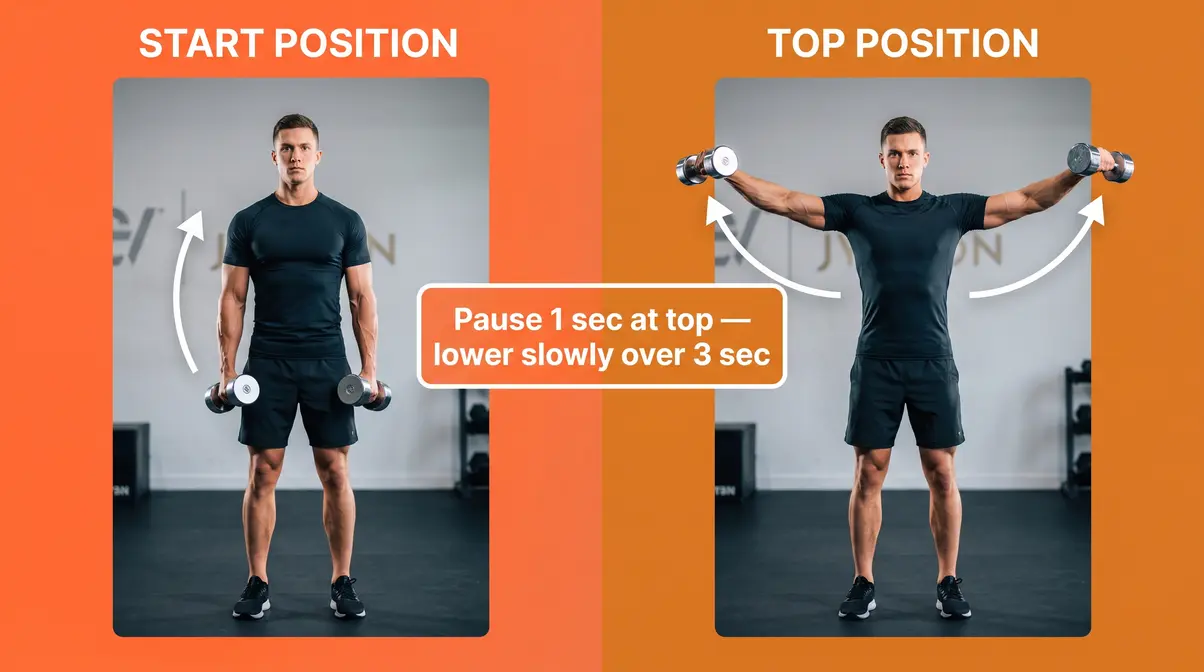
The key exercise: Lateral raises. Lateral raises are an isolation exercise that specifically targets the side of your shoulder. Here’s how to do them:
- Stand holding a light dumbbell in each hand (start lighter than you think — 8–12 lbs is fine for beginners)
- Keep a slight bend in your elbows
- Raise both arms out to the side until they reach shoulder height
- Pause for one second at the top — squeeze the muscle
- Lower slowly over 3 seconds (the slow lowering is where the growth happens)
Why this works: Lateral raises isolate the one part of your shoulder responsible for width. Overhead presses train the whole shoulder but emphasize the front. Lateral raises are the reason some people look wide from the front even without a huge chest.
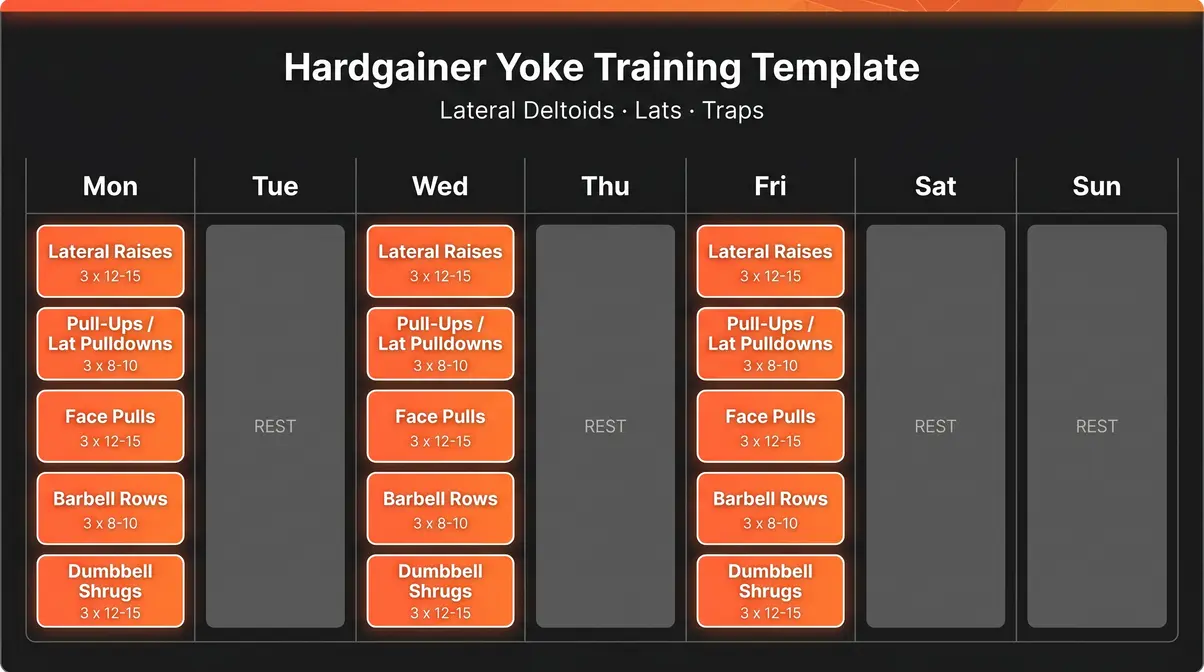
Programming tip: Do 3–4 sets of 15–20 reps, two to three times per week. Use a lighter weight and focus on form over ego. Sloppy lateral raises are one of the most common training mistakes — your traps will take over if the weight is too heavy.
Lats and Traps: Building V-Taper Width
Your lats are the second pillar of the V-Taper Triangle. Wide lats create the “wings” that taper your waist and make you look bigger from every angle. Traps fill the space between your neck and shoulders — essential for looking thick and powerful in everyday clothing.
For lats, prioritize these three movements:
- Pull-ups or lat pulldowns — Grip slightly wider than shoulder-width. Pull your elbows down and back (not just pull your hands down). This is the most direct lat builder available.
- Barbell rows — A compound back exercise that builds lat thickness and overall back density. Hinge at the hips, keep your back flat, and pull the bar to your lower chest.
- Dumbbell single-arm rows — Allow a greater range of motion than barbell rows. Brace one knee on a bench and pull the dumbbell to your hip.
For traps, use these movements:
- Face pulls — A cable exercise that develops the rear delts and upper traps simultaneously. Attach a rope to a cable machine at face height, pull toward your nose, and flare your elbows out. This also protects shoulder health.
- Barbell or dumbbell shrugs — Simple but effective. Hold heavy dumbbells at your sides, shrug your shoulders straight up toward your ears, hold for one second, lower slowly.
Programming tip: Train back and traps two to three times per week. Lat pulldowns and rows can be done on the same day. Face pulls are excellent as a warm-up or finisher — 3 sets of 15 reps every training session.
Upper Chest, Forearms, and Neck
These three areas won’t make or break your V-taper — but they add the finishing details that separate “looks fit” from “looks jacked.”
Upper chest: The upper chest (clavicular head of the pectoralis major) is visible above a neckline and creates the “shelf” look when viewed from the front or in photos. Train it with incline barbell or dumbbell press — set the bench to 30–45 degrees and press upward. Standard flat-bench pressing emphasizes the mid and lower chest, which is less visible.
Forearms: Thick forearms signal strength and add visible size when your sleeves are rolled up or you’re wearing short sleeves. Train them with wrist curls (palms up, curl the wrists), reverse curls (palms down, curl the wrists), and farmer’s carries (walk holding heavy dumbbells at your sides for 30–60 seconds).
Neck: A thick neck is one of the most underrated size signals. It makes you look powerful even in casual clothes. Train it carefully with neck flexion (chin to chest with gentle resistance) and neck extension (head back against gentle resistance). Start very light — the neck responds quickly but is sensitive to overuse.
Skinny Guy Tips for Hardgainers
If you have a naturally thin frame — what the fitness community calls a “hardgainer” — the rules above still apply, but a few adjustments make a big difference.
Eat more than you think you need. Hardgainers typically underestimate their calorie intake. To build the Yoke muscles that create width, you need a caloric surplus — meaning you eat slightly more calories than you burn each day. A target of 300–500 extra calories per day is a sustainable starting point.
Prioritize compound movements first. As a beginner, exercises like pull-ups, rows, and overhead pressing recruit the most muscle fibers and produce the fastest size gains. Save isolation work (lateral raises, curls) for after your main compound sets.
Track your progress. Skinny guys often quit too early because they don’t see immediate results. Muscle growth is slow — but consistent. Take monthly photos from the front and side. Width changes are often visible in photos before they’re visible in the mirror.
Protein matters. Research consistently supports a target of 0.7–1.0 grams of protein per pound of bodyweight per day for muscle growth. Prioritize chicken, eggs, Greek yogurt, fish, and legumes.
To maximize these results, discover which muscles create the most visual bulk and follow a comprehensive blueprint for building muscle mass.
Step 2: Clothes That Add Visual Size
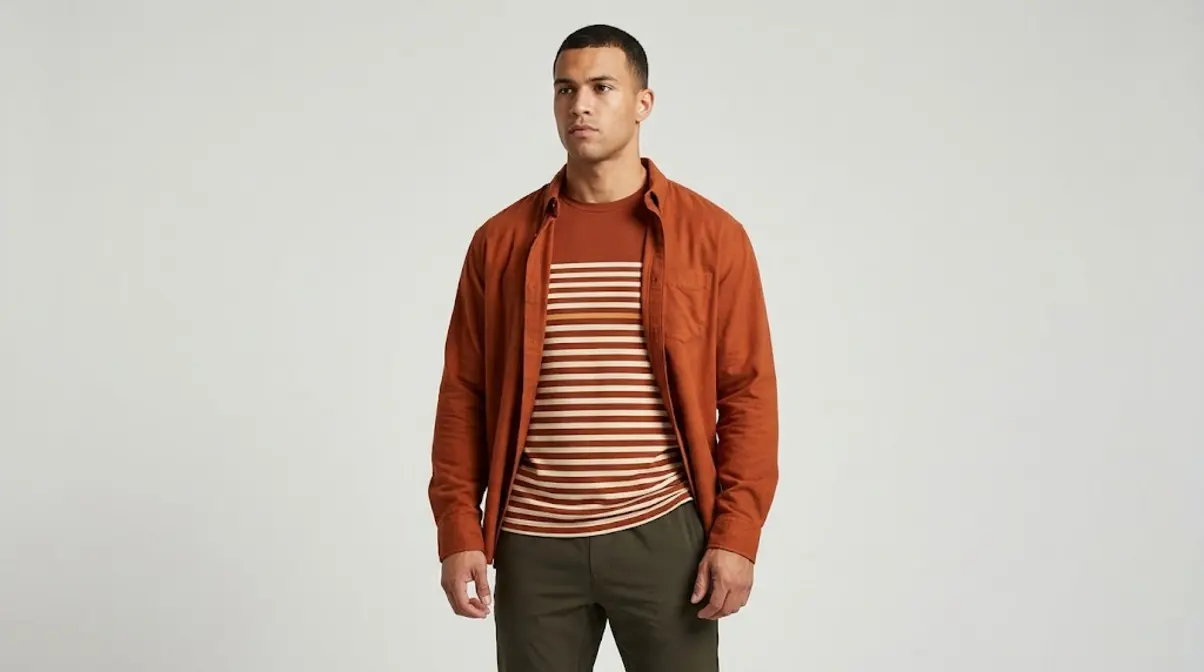
You can look bigger in clothing today — no gym required. The science of visual perception shows that clothing fit, layering, fabric choice, and color patterns all influence how large or small a body appears. According to research on clothing and perceived body size, style tips for looking more muscular consistently point to fit as the single most powerful variable (Tapered Menswear, 2026). This is the second side of the V-Taper Triangle — and it works immediately.
Why Baggy Clothes Shrink You
This is the most counterintuitive truth in men’s and women’s style: baggy clothes make you look smaller, not bigger. When clothing hangs loose from your frame, the eye reads the fabric’s edge — not your body’s edge. You disappear inside the garment.
Well-fitted clothes, on the other hand, trace the contours of your shoulders and chest. The eye follows the actual shape of your body. If you have any shoulder or back development, fitted clothes reveal it. If you don’t yet, fitted clothes at least show your true proportions rather than hiding them under excess fabric.
The fit formula for looking bigger:
- Shoulders: The shoulder seam of a shirt or jacket should sit exactly at the edge of your shoulder bone — not drooping down your arm, not pulling inward toward your neck
- Chest: The fabric across your chest should be smooth, not bunched or pulled. If it pulls, size up. If it bunches, size down or try a different cut.
- Waist: Shirts should taper slightly at the waist. A straight-cut shirt worn untucked creates a boxy silhouette that hides your V-taper.
- Sleeves: T-shirt sleeves should hit mid-bicep, not elbow. This is the single fastest sleeve adjustment you can make to look more muscular.
If standard sizes don’t fit your proportions — wide shoulders and narrow waist, or vice versa — consider brands that offer athletic or tapered fits, or invest in basic alterations for dress shirts and blazers.
Layering, Fabrics, and Stripes
Layering is one of the most effective tools for adding perceived upper body size. A fitted T-shirt under an open button-down shirt, or a fitted crewneck under a structured jacket, creates visual layers that add depth and width to your torso. The outer layer frames your shoulders; the inner layer adds texture and fills in your chest.
Fabrics matter more than most people realize. Structured, medium-weight fabrics — like Oxford cotton, denim, or ponte knit — hold their shape and maintain the silhouette of your shoulders. Thin, flimsy fabrics cling and collapse, revealing every narrow angle. When buying T-shirts, feel the weight of the fabric. Heavier is almost always better for looking bigger.
Horizontal stripes are backed by an actual perceptual phenomenon: the Helmholtz illusion, first described by physicist Hermann von Helmholtz in the 19th century and validated in modern visual perception research. Contrary to popular belief, horizontal stripes on a body make it appear wider, not taller. Vertical stripes elongate. If your goal is to look wider and more muscular, horizontal stripes — especially across the chest and shoulders — work in your favor.
Color strategy: Darker colors on the bottom, lighter or brighter colors on top draw the eye upward and emphasize shoulder width. A light-colored fitted shirt or structured jacket on top with dark jeans or trousers creates a natural V-taper visual even before your training has had time to show.
Style Tips for Women
The V-Taper Triangle applies equally to women who want to look stronger, more athletic, or simply more defined. The principles of visual proportion work the same way — it’s all about shoulder width relative to the waist.
Key style strategies for women:
- Structured blazers and padded-shoulder jackets add immediate width to the shoulder line — the single most effective clothing piece for a broader, more powerful look
- Off-the-shoulder tops and wide-neck necklines expose the actual width of your shoulders and collarbones, which reads as broader and more athletic
- Horizontal stripes across the chest and shoulders work the same way for women as for men — they widen the visual plane
- High-waisted bottoms create a natural waist definition that amplifies the contrast between shoulder width and waist, enhancing the V-taper silhouette
- Avoid oversized, boxy cuts — they hide muscle definition and create a shapeless silhouette. Opt for athletic fits that follow your body’s contours
For women who train the Yoke muscles — particularly lateral deltoids and upper traps — fitted sleeveless tops and tank tops in structured fabric showcase that development most effectively.
Step 3: Accentuate Bust and Glutes
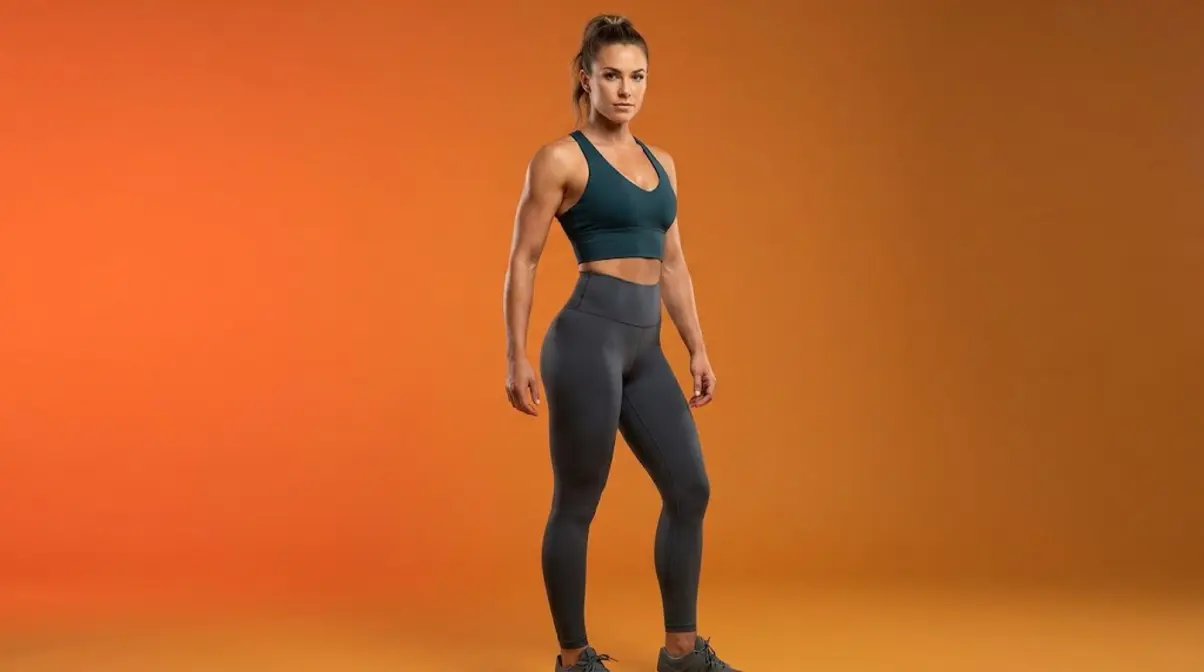
The V-Taper Triangle isn’t only about the upper body. For many people — particularly women — looking bigger means building and showcasing fuller glutes and a more defined bust. This cluster of strategies covers both training and styling approaches to enhance these areas. Research consistently shows that targeted glute training produces measurable hypertrophy in the gluteus maximus and medius, contributing to a rounder, fuller appearance (National Strength and Conditioning Association, 2026).
Exercises for a Bigger Butt
The glutes are the largest muscle group in the body. They respond well to training — but only if you train them with the right exercises and enough volume. Many people spend years doing squats and wondering why their glutes aren’t growing. The reason is often that squats are a quad-dominant movement. Glute-specific exercises load the gluteus maximus more directly.
The five best glute-building exercises:
- Hip thrusts — Sit with your upper back against a bench, a barbell across your hips. Drive your hips straight up until your body forms a straight line from knees to shoulders. Squeeze hard at the top. Lower slowly. This is the most direct glute exercise available — EMG studies show it activates the gluteus maximus more than any squat variation (Journal of Strength and Conditioning Research, 2026).
- Romanian deadlifts (RDLs) — Hold a barbell or dumbbells in front of your thighs. Hinge at the hips (push them back) while keeping your back flat, lowering the weight along your legs until you feel a deep hamstring stretch. Drive your hips forward to return. RDLs build the lower glute and hamstring tie-in that creates a round, full shape.
- Bulgarian split squats — Stand facing away from a bench, one foot elevated behind you. Lower your back knee toward the floor, keeping your front shin vertical. This single-leg exercise hits the glute of the front leg hard and builds symmetry.
- Cable kickbacks — Attach an ankle strap to a low cable pulley. Standing upright, kick one leg back and up, squeezing the glute at the top. Isolates the gluteus maximus without loading the spine.
- Sumo squats — Take a wide stance with toes pointed outward at 45 degrees. Lower until thighs are parallel to the floor. The wide stance shifts emphasis from quads to inner thighs and glutes.
Programming: Train glutes two to three times per week. Hip thrusts and RDLs work well together on one day; split squats and cable kickbacks pair well on another. Aim for 3–4 sets of 10–15 reps per exercise. For a complete routine, try these effective bodyweight exercises for glute development.
Clothing to Enhance Your Bust
Building the bust through training is a slow process — chest tissue itself doesn’t respond to exercise the way muscle does. But clothing and undergarment choices can create a dramatically fuller, more defined appearance immediately.
Five effective strategies:
- A well-fitted, supportive bra is the foundation. A bra that fits correctly lifts, centers, and shapes — creating a fuller profile. Research from the British School of Fashion found that up to 80% of women wear the wrong bra size (British School of Fashion, 2026). A professional fitting is the single fastest change you can make.
- Push-up or plunge bras with structured padding add visible fullness and lift. The key is choosing a style that fits your clothing — a plunge bra works under V-necks and wrap tops; a push-up works under fitted T-shirts.
- Wrap tops and V-neck necklines draw the eye toward the center of the chest and create the visual impression of depth and fullness. The wrap style also cinches the waist, amplifying the bust-to-waist contrast.
- Ruching and texture across the chest add visual volume. Gathered fabric, ruffles, or textured panels in the chest area of a top create the perception of more fullness than a flat, plain fabric.
- Avoid high necklines and boxy cuts when you want to emphasize the bust — these flatten and conceal rather than reveal. Boat necks and cowl necks draw the eye outward across the shoulders, which can be flattering but minimizes bust emphasis.
Jeans That Enhance Your Glutes
Jeans are the most common everyday garment — and the right pair can dramatically change how your glutes look, regardless of your current training level.
Five jean-styling tips for a fuller, rounder glute appearance:
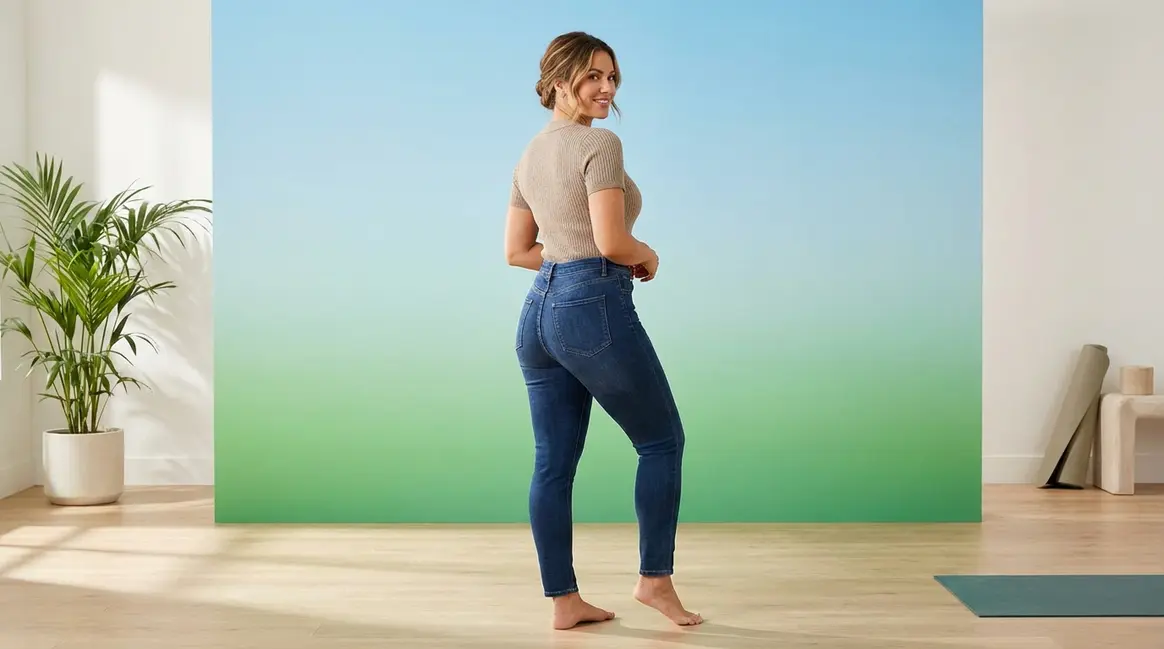
- High-rise or high-waisted jeans lift the glutes by anchoring the waistband above the hip bone, which positions the fabric to support and push up rather than hang loose. This is the single most effective jean choice for glute enhancement.
- Stretch denim with a slight compression conforms to the shape of your glutes rather than hanging away from the body. Look for fabrics with 2–4% elastane or spandex content.
- Rear-pocket placement matters. Pockets positioned slightly higher and toward the center of the seat visually lift the glute. Pockets that are too large, too low, or absent entirely make the seat area look flat.
- Avoid wide-leg or straight-cut jeans if your goal is glute emphasis — these cuts conceal the shape of the lower body. Skinny, slim-straight, or bootcut styles that follow the leg’s contour are more flattering.
- Color and wash: Medium to light washes on the seat area create a visual highlight that adds perceived fullness. Dark, uniform washes recede. A subtle fade across the seat is a classic technique used in denim design specifically to enhance glute shape.
Combine these wardrobe choices with strategies to make your glutes look bigger without hitting the gym for maximum effect.
Step 4: The Instant Pump
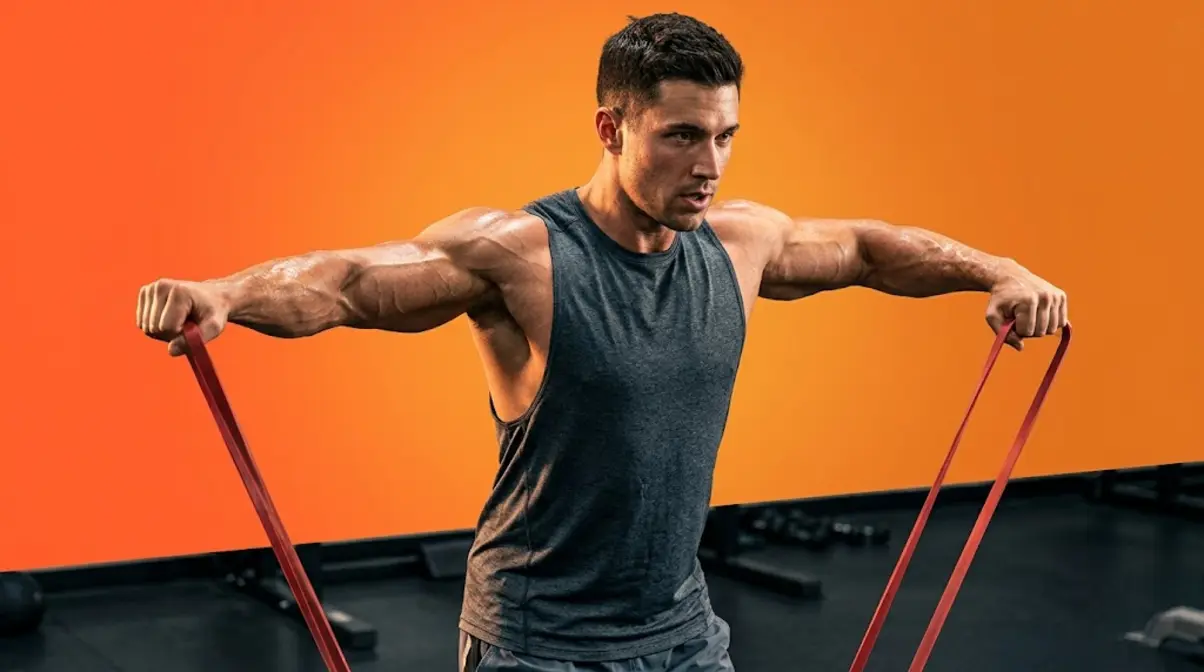
The first three steps of the V-Taper Triangle build lasting size — but what if you need to look bigger tonight? This is where the physiology of “the pump” and a few strategic tricks come in. Nutritional strategies to look bigger instantly include glycogen loading, sodium management, and strategic hydration — all of which influence how full your muscles appear within hours (Muscle & Fitness, 2026).
What Is “The Pump” and Why It Works?
“The pump” refers to the temporary increase in muscle size that occurs during and immediately after exercise. When you work a muscle, blood rushes in to deliver oxygen and nutrients. The muscle cells swell with fluid — a process called transient hypertrophy (temporary muscle swelling). This can add a visible, measurable increase in muscle circumference for 30–60 minutes post-exercise.
Beyond the pump itself, glycogen loading — consuming carbohydrates in the 12–24 hours before an event — fills your muscle cells with glycogen (stored glucose) and the water that binds to it. Each gram of glycogen holds approximately 3–4 grams of water inside the muscle cell. This intracellular water retention makes muscles appear fuller and rounder without the bloated look of subcutaneous (under-skin) water retention.
Sodium also plays a role. A moderate sodium intake in the days before an event helps your body retain water inside the cells rather than flushing it out. Extreme sodium restriction causes the body to hold water subcutaneously — which blurs muscle definition rather than enhancing it.
A 10-Minute Pre-Event Pump Routine
This routine requires no equipment beyond resistance bands or light dumbbells. Do it 20–30 minutes before any event, photo, or occasion where you want to look your best.
Step 1 — Shoulders (3 minutes):
Do 3 sets of 15 lateral raises with light dumbbells or a resistance band. Rest 30 seconds between sets. You want a moderate burn — not failure. This pumps blood directly into the lateral deltoids and makes your shoulders visibly wider.
Step 2 — Back (3 minutes):
Do 3 sets of 15 resistance band pull-aparts. Hold the band at shoulder height with straight arms, pull it apart until your hands reach your sides, squeeze your shoulder blades together. This pumps the upper back and traps.
Step 3 — Chest (2 minutes):
Do 3 sets of 15 push-ups with a 2-second pause at the bottom. This pumps the chest and upper body, adding visible fullness to the pectoral area.
Step 4 — Biceps (2 minutes):
Do 2 sets of 20 band curls. Pumped biceps add visual arm size immediately — especially noticeable in short sleeves or sleeveless tops.
Nutrition timing: In the 2–3 hours before your event, eat a moderate-carbohydrate meal — rice, pasta, oats, or sweet potato. Avoid high-fiber foods that cause bloating. Drink water consistently — dehydration makes muscles look flat, not lean.
Posing Tricks for Photos
Five ways to look bigger than you are consistently include posture and posing as the most immediate, zero-cost tools available (Men’s Journal, 2026). These work in person and in photos.
Posture correction — do this right now:
- Pull your shoulders back and down (not up toward your ears — down and back)
- Lift your chest slightly — imagine a string pulling your sternum upward
- Tighten your core gently — this prevents your lower back from arching
- Keep your chin parallel to the floor — not tilted down
This single posture change can add 1–2 inches of apparent shoulder width by fully extending the shoulder girdle. Slouching compresses the shoulders inward and makes you look narrower than you actually are.
For photos specifically:
- Turn slightly to a 3/4 angle rather than facing the camera straight on. A slight turn shows your shoulder depth and makes you appear wider.
- Position the camera at chest height or slightly below. A camera angled up at you emphasizes your upper body and makes you look larger. A camera angled down does the opposite.
- Spread your lats — a technique bodybuilders use. Take a deep breath, push your chest out slightly, and try to push your elbows away from your body as if you’re trying to touch the walls with your elbows. This flares the lats and adds visible width.
- Wear your best-fitting top for photos — the one with the shoulder seam sitting exactly at your shoulder edge.
Common Mistakes That Make You Look Smaller
Even with the right training and the right framework, certain mistakes can undo your progress visually. Research across fitness communities and professional coaches consistently identifies the same recurring errors — the ones that keep dedicated gym-goers looking smaller than they should.
Clothing Pitfalls That Shrink Your Frame
Wearing clothes that are too large is the most common mistake. Many people believe a larger shirt will hide a smaller frame — it does the opposite. The eye follows the edge of the fabric, not your body. Oversized clothing signals “small person swimming in a big shirt,” not “big person in casual clothes.”
Wearing clothes that are too tight creates a different problem — pulling and bunching across the chest or back reveals proportional weaknesses rather than strengths. The goal is fitted, not compression.
All-dark outfits from head to toe can look sharp, but they don’t emphasize shoulder width. If you want to look bigger, use lighter or brighter tones on top to draw the eye upward and outward.
Training Mistakes to Avoid
Training the wrong muscles for visual size is the most expensive mistake in terms of time. Years of heavy bench pressing with no lateral raise work produces a strong chest and narrow shoulders — the opposite of the V-taper you want.
Training with too much ego weight — using loads so heavy that you can’t control the movement — means your supporting muscles (traps, neck, lower back) take over from the target muscle. Lateral raises with 30 lbs of sloppy swinging do less for shoulder width than 12 lbs of controlled, full-range motion.
Neglecting progressive overload — gradually increasing the challenge over time — means your muscles have no reason to grow. Add weight, reps, or sets every 1–2 weeks to keep making progress.
When to Seek Professional Guidance
If you experience joint pain during any of the exercises in this guide — especially shoulder or lower back pain — stop and consult a certified personal trainer or physiotherapist before continuing. The shoulder joint is complex and sensitive to improper loading. Similarly, if you have a history of lower back issues, get clearance before performing barbell rows or Romanian deadlifts with significant weight.
A qualified personal trainer can assess your current movement patterns, identify muscular imbalances, and design a program specific to your body. This is especially valuable for beginners who are building their movement foundation — poor technique habits formed early are harder to correct later.
Frequently Asked Questions
How do I make myself look bigger?
The fastest way to make yourself look bigger combines three strategies simultaneously. First, train the “Yoke” muscles—lateral deltoids, lats, and upper traps—which create shoulder width and the V-taper silhouette. Second, wear well-fitted clothes with correct shoulder seam placement to visually enhance your frame. Third, use posture correction and a pre-event pump routine for same-day results. The V-Taper Triangle framework in this guide covers all three of these essential pillars in sequence.
What muscle makes you look big?
The lateral deltoid—the side muscle of your shoulder—is the single biggest contributor to looking bigger because it creates shoulder width when viewed from the front. Anatomical studies on shoulder width confirm that hypertrophy in these specific muscles, along with the lats and traps, disproportionately increases your upper body silhouette (PubMed, 2026).
What clothes make you look bigger?
Well-fitted clothes in structured fabrics make you look bigger, whereas baggy clothes do the exact opposite. Specifically, you should opt for fitted T-shirts with sleeves hitting mid-bicep, layered outfits, and horizontal stripes across the chest. Always ensure the shoulder seam of any shirt or jacket sits exactly at the edge of your shoulder bone. These fundamental style principles apply equally to both men and women.
Look Bigger Without Gaining Weight?
Yes, posture, clothing, and pre-event pump techniques all add visible size without changing your body weight. Correct posture alone can visually add 1-2 inches of apparent shoulder width by fully extending the shoulder girdle. Additionally, well-fitted clothes reveal the muscle you already have, acting as an immediate, zero-cost tool available to anyone right now.
Skinny Guy Instant Size Tips?
A skinny guy can look bigger instantly by combining posture correction, a pre-event pump routine, and well-fitted clothes in structured fabrics. Stand tall with your shoulders back and down, keeping your chest lifted. Do 10 minutes of lateral raises and band pull-aparts before any event to drive blood into the muscles. Wear a fitted shirt—not oversized—with the shoulder seam at the exact edge of your shoulder. Long-term, prioritize lateral raises, pull-ups, and rows to build the Yoke muscles that create permanent width.
Your Path to Looking Bigger Starts Now
For anyone who feels frustrated by their size, the answer isn’t just more reps or heavier weights — it’s training the right muscles, dressing strategically, and using instant physiological tools that work the same day. The V-Taper Triangle — Build the Frame, Dress the Illusion, and Activate the Pump — gives you all three simultaneously. Research from PubMed confirms that lateral deltoid and upper trap hypertrophy disproportionately increases biacromial breadth, creating a larger silhouette faster than general training (PubMed, 2026). The clothing and posture strategies work tonight.
The V-Taper Triangle is your system. Not a single tip, not a quick fix, but a complete framework that compounds over time. Your training builds permanent width. Your clothing amplifies what you’ve built. Your posture and pump techniques let you show it off on any given day.
Start with one thing from each side of the triangle this week: add lateral raises to your next workout, try a fitted shirt with correct shoulder seam placement, and practice the posture correction right now. Take action today, bookmark this guide for your next workout, and start building the powerful physique you deserve.
Related posts:
StrongLifts 5x5 for Beginners: Complete Guide 2026
How to Get a Bigger Bum Without Exercise: 3-Tier Guide
What Muscles Does the StairMaster Work? 6 Groups
Olympic Weightlifting vs Powerlifting: 2026 Guide
What Kills Muscle Gains? 7 Proven Saboteurs to Fix Now
Best Strength Training Apps for Women: Top 7 Picks
Callum
Hi, I'm Callum, the founder of Body Muscle Matters. I'm not a certified trainer, I'm a self taught lifter who started this site to share what I've learned from my own training and a lot of trial and error. Everything here comes from real experience and honest research, written the way I'd explain it to a friend who is just getting started. My goal is simple: practical, no hype fitness advice you can actually use.