

You want to build muscle but every gym session feels like guesswork. One fitness influencer says lift heavy for low reps. Another claims high reps build more size. You see conflicting advice about meal timing, protein shakes, and whether machines or free weights work better. Meanwhile, you show up, do some exercises, and wonder if anything is actually working.
Building muscle as a beginner requires just three things done consistently: lift weights with progressive resistance, eat enough protein and calories, and recover between sessions. That’s it. No fancy supplements, no complicated splits, no perfect timing. The fundamentals work when you apply them correctly over weeks and months.
This guide walks you through exactly how to start building muscle from scratch. You’ll learn what beginners must understand before picking up weights, how to structure simple workouts that deliver results, which exercises to prioritize, how to progressively challenge your muscles each week, what and how much to eat for growth, and how to track progress so you know what’s working. By the end, you’ll have a clear plan that eliminates the confusion and gets you building strength.

- 10 pound dumbbell (set of 2) for exercise and strength training
- Neoprene texture in Navy Blue offers long lasting durability
- Hexagon shaped ends prevent dumbbells from rolling away and offer stay-in-place storage
- Nonslip grip promotes a comfortable, secure hold
- Available in multiple sizes to mix and match for specific workout needs and to expand on over time


- WHAT’S INCLUDED – 10lb pair, 25lb pair and a 45lb pair of Economy bumper weight plate in black; Designed to accommodate Olympic barbells (with 2-inch center hole)
- CONSTRUCTION – Proprietary manufactoring method coated in virgin and recycled rubber with a reinforced steelhub; All weights are uniform in diameter; 30-day manufacturer
- FEATURES – CAP’s Proprietary construction offers a balanced weight; Rubber coating prevents damage to equipment; Steel insert offers a secure fit and prevent damage to the bars.
- VERSATILE – Extremely durable design makes these great for any home gym; Add weight plates to any fitness routine to increase calorie burn and muscle mass. **For home use only.
- This set ships in multiple boxes, they may arrive on different days.

- 3 pairs of dumbbells in 2-pound, 3-pound, and 5-pound sizes. Ideal for resistance and other trainings
- The durable, neoprene material coated cast iron is great for indoor and outdoor workouts
- Neoprene coating on weights allow for a secure grip. The Hex shape of the dumbbells prevents them from rolling
- Easy to Assemble. Weight stand is included. A Assembly tool is included for your Convenience too
- 【5 Weights in 1 Set】Adjustable weights for every fitness goal! Customize your routine effortlessly. Whether toning (2-4 lbs), burning fat (4-6 lbs), or building strength (6-10 lbs), this adjustable set adapts to your needs. Easily achieve your fitness goals with just one set of FEIERDUN dumbbells.
- 【Just 1S & Quick Adjustment】1S Quick Adjustment for Seamless Workouts: Effortlessly switch from 2LB to 10LB in just one second. Our Adjustable Dumbbells keep your workout flowing, saving time and helping you stay focused on your fitness routine. Ideal for those looking to maximize their workout efficiency without interruptions.
- 【Comfortable Grip】The 4.5-inch handle is designed to fit most hand sizes and is made from soft TPU material. The raised dot texture enhances grip, allowing you to maintain a firm hold with every movement—even during your sweatiest workouts. No matter how intense your training gets, you’ll stay confident and in control.
- 【Storage Space<0.2FT²】Compact Design for Anywhere Workouts! Our dumbbells occupy just 0.2FT²,our dumbbells fit easily into your gym bag. Whether you’re at home, in the office, or on a rehab journey, they effortlessly blend into your daily routine. Stay fit and healthy on the go with this these versatile weights.
- 【No More Rolling】Our square-shaped design ensures stability and prevents slipping. Makes your home gym safer while also making it easy to switch to push-up mode. Enjoy the convenience and enhanced functionality that takes your workout to the next level.
- Faster Fitness Gains: Zelus weighted vests (6/8/12/16/20/25/30 lb) feature evenly distributed iron sand to add extra resistance to your daily workout. They provide a simple way to push yourself harder without the need for bulky gear in your routine
- One Size Fits Most: Our weighted vest for women and men is equipped with adjustable buckle straps that offer a snug fit for chest sizes between 31.5″ and 45″. No matter your body type, it stays securely in place as you work to improve your strength
- Comfort That Lasts: Enjoy lasting comfort with the soft yet wear-resistant spandex fabric, designed to endure even the toughest workouts. For optimal care, just wipe down this weighted vest for walking with a damp cloth after use for extended longevity
- Convenient & Safe to Use: Bring along your keys, wallet, phone, or energy-boosting snacks in the provided armband pouch or the rear mesh pocket. Plus, the reflective strips of this running weighted vest ensure you’re easily seen while out and about
- Level Up Your Workouts: Enhance your performance in yoga, jogging, weightlifting, rope skipping, and more exercises with this weight vest. If you’re just starting out, begin with lighter weights to progressively build your strength
What beginners must know before lifting
You can’t build muscle by randomly picking up weights and hoping for the best. Understanding how muscle growth works and what your body needs to respond will save you months of wasted effort. Most beginners jump straight into workouts without grasping the basic principles that make training effective. This section covers the essential knowledge you need before your first rep, so you build muscle efficiently from day one instead of spinning your wheels for weeks.
Understanding muscle growth mechanics
Your muscles grow through a process called hypertrophy, which happens when you challenge them with resistance they’re not used to handling. When you lift weights, you create microscopic tears in your muscle fibers. Your body repairs these tears during rest periods, making the fibers slightly larger and stronger to handle future stress. This cycle of damage, repair, and adaptation is how you build muscle size and strength over time.
The key word here is “challenge.” Your muscles only grow when you force them to do something difficult. Lifting the same light weight for the same reps every session won’t trigger growth because your body has already adapted to that stress. Learning how to build muscle for beginners starts with understanding that progress requires progressively harder workouts, not just showing up and going through the motions.
Your body needs time to adapt
Muscle growth doesn’t happen in the gym. It happens during the 48 to 72 hours after your workout when your body repairs damaged muscle tissue. You need to give each muscle group adequate rest before working it again, which is why training the same muscles every single day actually prevents growth rather than accelerating it.
Beginners often make the mistake of thinking more training equals faster results. Overtraining leads to fatigue, poor performance, and increased injury risk. Your body has limited recovery resources, and pushing too hard without rest means you’re breaking down muscle faster than you can rebuild it. Stick to working each muscle group two to three times per week with rest days in between.
Form beats weight every time
Perfect technique with lighter weight builds more muscle than sloppy form with heavy weight. Poor form shifts the work to the wrong muscles, increases injury risk, and teaches your nervous system bad movement patterns that become harder to fix later. You want to feel the target muscle working throughout each rep, not just moving weight from point A to point B.
Focus on controlling the weight through the full range of motion, especially during the lowering phase where most muscle damage occurs.
Start every new exercise with a weight that feels easy. Master the movement pattern first, then gradually add resistance. Your ego will tempt you to load up the bar, but smart beginners prioritize learning proper mechanics before chasing bigger numbers.
Step 1. Set a realistic muscle building goal
Setting a specific goal gives your training direction and helps you measure progress. Most beginners start lifting without defining what success looks like, which makes it impossible to know if their program works. You need a clear target that keeps you motivated through the weeks when progress feels slow. Learning how to build muscle for beginners starts with understanding what your body can realistically achieve and setting goals that match those capabilities.
Define your timeline and expectations
Your body can build muscle at a predictable rate based on your training age and genetics. Beginner males can gain approximately 1 to 2 pounds of muscle per month during their first year of consistent training, while beginner females can expect 0.5 to 1 pound per month. These numbers assume you’re following a solid program, eating properly, and recovering well between sessions.
You won’t see dramatic changes overnight, but you will notice strength improvements within your first two weeks and visible muscle growth after six to eight weeks of consistent work.
Don’t set goals like “get huge” or “look like that influencer.” Instead, aim for specific targets like gaining 10 pounds of muscle over six months or increasing your squat by 30 pounds in three months. Timebound goals with measurable outcomes keep you accountable and help you adjust your approach when progress stalls.
Choose measurements that matter
Tracking the right metrics shows whether your muscle building plan actually works. Body weight alone doesn’t tell the full story because you might gain muscle while losing fat, leaving the scale unchanged. You need multiple data points to understand what’s happening in your body.
Use these tracking methods to monitor your progress:
- Strength gains: Record the weight, sets, and reps for your main lifts each week
- Body measurements: Measure your arms, chest, waist, and thighs monthly with a tape measure
- Progress photos: Take front, side, and back photos in the same lighting every two weeks
- Body composition: Get a DEXA scan or use a body fat caliper every six to eight weeks
Pick three to four metrics from this list and check them consistently. When your measurements plateau for more than two weeks, you know it’s time to adjust your training volume, intensity, or nutrition. Beginners often see the fastest gains during their first six months, so documenting your progress helps you stay motivated when results slow down later.
Step 2. Learn the basics of strength training
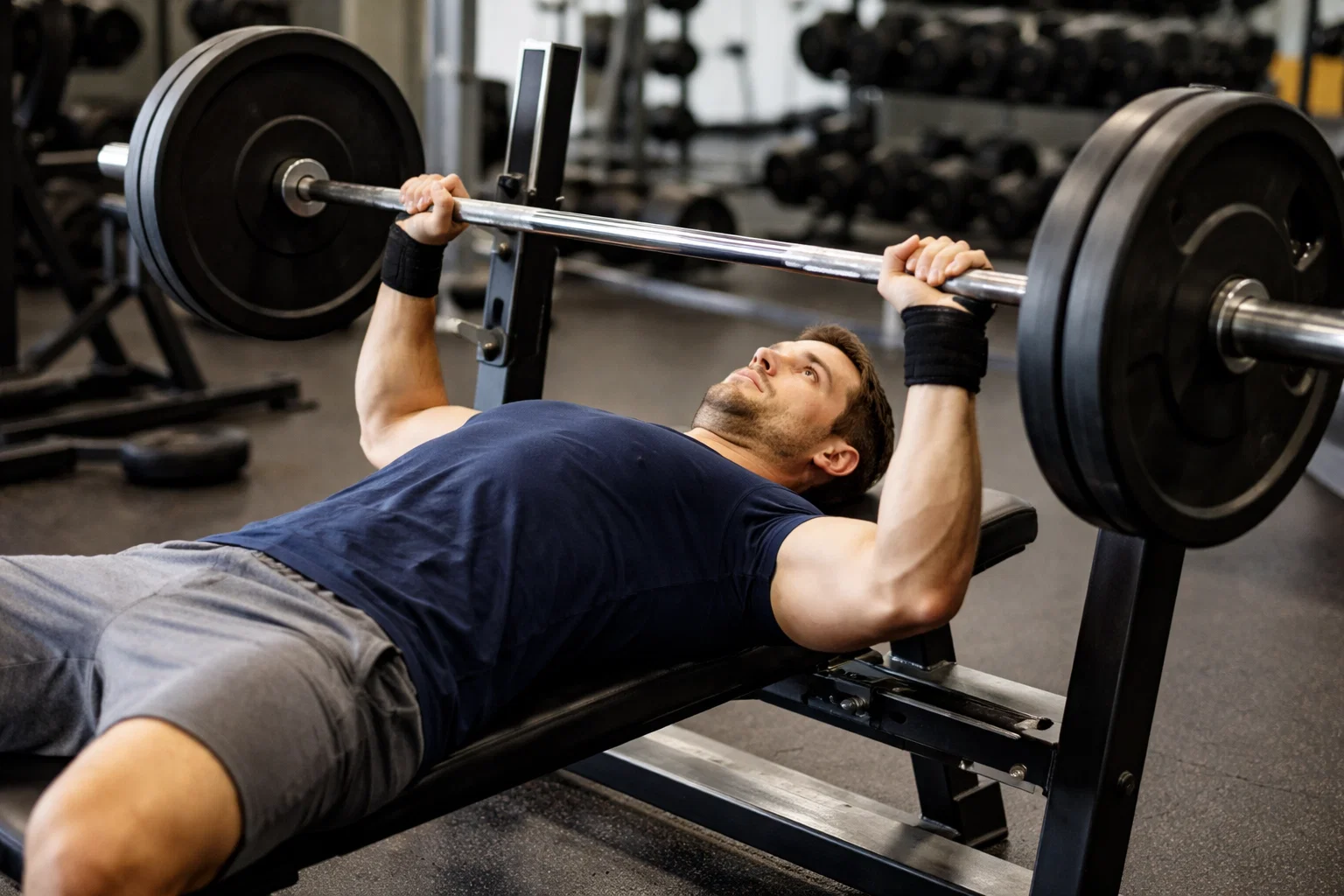
Strength training follows specific principles that determine whether you build muscle or waste time in the gym. You can’t just pick random exercises and hope they work together. Understanding how to structure your training around proven methods helps you build muscle efficiently from your first workout. This section breaks down the fundamental concepts every beginner needs to master before designing a workout program.
Master compound movements first
Compound exercises work multiple muscle groups and joints simultaneously, making them the foundation of any muscle building program. Exercises like squats, deadlifts, bench presses, and rows recruit more muscle fibers than isolation exercises, which means you stimulate more growth with fewer movements. Beginners should spend 80% of their training time on compound lifts before adding isolation work for smaller muscles.
Your nervous system adapts to compound movements by learning to coordinate multiple muscle groups at once. This coordination builds functional strength that carries over to daily activities and creates a solid base for more advanced training later. Isolation exercises like bicep curls and calf raises have their place, but they come after you’ve built a foundation with the big movements.
Compound exercises deliver the most muscle growth per minute spent training, which makes them essential when you’re learning how to build muscle for beginners.
Understand sets, reps, and rest periods
Sets and reps determine the training stimulus your muscles receive. A rep (repetition) is one complete movement from start to finish, while a set is a group of consecutive reps performed without rest. The number of reps you perform changes the adaptation your body makes to training.
Use this rep range guide for muscle building:
- 6 to 8 reps: Builds both strength and size with heavier weight
- 8 to 12 reps: Optimal range for muscle growth (hypertrophy)
- 12 to 15 reps: Builds muscular endurance with lighter weight
Beginners should perform 3 to 4 sets per exercise in the 8 to 12 rep range for maximum muscle growth. Rest periods matter too. Rest 2 to 3 minutes between sets of compound exercises to allow your muscles to recover enough for the next set. Shorter rest periods (60 to 90 seconds) work fine for isolation exercises that don’t tax your entire body.
Choose the right starting weight
Starting weight should let you complete all your planned reps with good form while feeling challenged on the last two to three reps. If you can easily do more than 12 reps, the weight is too light. If your form breaks down before reaching 8 reps, the weight is too heavy.
Most beginners should start with these weights:
- Barbell exercises: Empty bar (45 pounds) or lighter fixed barbell
- Dumbbell exercises: 10 to 20 pounds depending on the movement
- Machine exercises: One plate (usually 10 to 20 pounds) on the stack
Test different weights during your first few sessions to find your starting point. Your muscles will adapt quickly, so expect to increase weight every one to two weeks as a beginner. The weight that feels challenging today will feel easy in a month if you’re training and eating correctly.
Step 3. Follow a simple beginner workout plan

You need a structured workout plan that targets all major muscle groups without overwhelming your recovery capacity. Random workouts produce random results, while a consistent routine builds strength predictably over time. The best beginner programs use simple exercises you can perform safely while learning proper form. This section gives you a complete workout template you can start using today to build muscle systematically.
Choose between full-body or split routines
Full-body workouts train all major muscle groups in a single session, making them ideal for beginners who can only train three times per week. You’ll perform one to two exercises per body part each workout, hitting each muscle group with adequate volume while allowing enough recovery time between sessions. This approach matches perfectly with how to build muscle for beginners because it keeps training simple while maximizing growth stimulus.
Split routines divide your body into sections trained on different days, like an upper/lower split or push/pull/legs split. These work well if you can train four to six days per week, but they require more time commitment and planning. Most beginners see better results with full-body routines because they can maintain consistency more easily with three weekly sessions.
Start with a full-body routine for your first three to six months, then consider splitting your training once you’ve built a solid strength foundation.
Your 3-day full-body workout template
Monday, Wednesday, and Friday (or any three non-consecutive days) follow this exact structure, performing each exercise in the order listed:
| Exercise | Sets | Reps | Rest |
|---|---|---|---|
| Barbell Squat or Goblet Squat | 3 | 8-12 | 2-3 min |
| Bench Press or Push-ups | 3 | 8-12 | 2-3 min |
| Barbell Row or Dumbbell Row | 3 | 8-12 | 2-3 min |
| Overhead Press or Dumbbell Shoulder Press | 3 | 8-12 | 2-3 min |
| Romanian Deadlift or Leg Curl | 3 | 10-12 | 2 min |
| Plank | 3 | 30-60 sec | 1 min |
Each workout takes approximately 45 to 60 minutes including warm-up and rest periods. Pick one exercise from each row based on your equipment access and comfort level. Stick with the same exercises for at least four weeks before switching variations, as consistency helps you track progress and perfect your form.
Structure each training session properly
Begin every workout with a 5 to 10 minute warm-up consisting of light cardio and dynamic stretching. Your warm-up should elevate your heart rate, increase blood flow to your muscles, and prepare your joints for the work ahead. Jumping jacks, arm circles, leg swings, and bodyweight squats work perfectly for this purpose.
Perform your working sets with full focus on the target muscle. Each rep should move through the complete range of motion at a controlled speed, taking approximately two seconds to lift the weight and three seconds to lower it. Don’t rush through your sets just to finish faster. Quality reps build more muscle than sloppy reps performed quickly.
Finish with a 5 to 10 minute cool-down featuring static stretches for all major muscle groups you trained. Hold each stretch for 20 to 30 seconds without bouncing. This cool-down period reduces muscle soreness and helps maintain flexibility as you build strength. Many beginners skip stretching and pay the price with tight, uncomfortable muscles that limit their performance in subsequent workouts.
Step 4. Apply progressive overload each week
Your muscles stop growing when they stop facing new challenges. Progressive overload means systematically increasing the demands you place on your muscles over time, forcing them to adapt by getting bigger and stronger. Without this principle, you’ll plateau within weeks and waste months doing workouts that produce zero results. Understanding how to build muscle for beginners requires mastering progressive overload because it’s the single most important factor determining whether your training actually works.
Track your lifts in a training log
Write down every workout with the date, exercise name, weight used, sets completed, and reps performed. Your training log serves as your roadmap for progression, showing you exactly what you need to beat next session. Memory fails, especially when you’re tracking multiple exercises across several workouts each week. A simple notebook or phone app removes all guesswork from your progression strategy.
Your log reveals patterns that tell you when to increase weight and when to adjust your program. If you completed 3 sets of 10 reps at 135 pounds last week, your log shows you need to aim for 3 sets of 11 or 12 reps this week. Consistent tracking transforms random gym sessions into a structured progression that builds muscle predictably over months.
Add weight when you hit your rep target
Increase the weight once you complete all sets at the top of your target rep range with good form. For example, if your goal is 3 sets of 8 to 12 reps and you hit 3 sets of 12 reps on bench press, add weight next session. The new weight should drop you back down to around 8 to 10 reps, giving you room to progress again over the following weeks.
Small, consistent increases in weight or reps build more muscle than trying to make huge jumps that compromise your form or prevent you from completing your sets.
Most beginners can increase weight on lower body exercises like squats and deadlifts by 5 to 10 pounds per week during their first few months. Upper body exercises progress more slowly, typically adding 2.5 to 5 pounds per week. These increases slow down after your first three to six months of training, but the principle stays the same throughout your lifting career.
Use micro-loading for steady gains
Micro-plates weighing 0.5 to 1.25 pounds let you make smaller weight jumps when standard 2.5 or 5 pound increases feel too large. Upper body pressing movements like bench press and overhead press benefit most from micro-loading because they involve smaller muscle groups that can’t handle big jumps as easily. Adding just one pound to each side of the bar still counts as progressive overload if it challenges your muscles more than last week’s workout.
You can also progress without adding weight by increasing reps, adding sets, or slowing down your rep tempo. If you performed 3 sets of 10 reps last week, doing 3 sets of 11 reps this week with the same weight still represents progression. Multiple progression methods give you options when one approach stalls, keeping your muscles growing even when you can’t immediately add more weight to the bar.
Step 5. Eat for muscle growth, not just weight gain

Eating more food doesn’t automatically build muscle. You need the right amount of calories combined with adequate protein to fuel muscle growth without gaining excessive body fat. Many beginners either eat too little and wonder why they’re not growing, or eat too much and gain unnecessary fat alongside their muscle. Understanding how to build muscle for beginners means learning to calculate your nutrition needs precisely and tracking your food intake to ensure you’re hitting your targets consistently.
Calculate your daily calorie needs
Start with your maintenance calories, which is the amount of food required to keep your current weight stable. Multiply your body weight in pounds by 15 to get a rough estimate of your maintenance calories. A 160-pound person needs approximately 2,400 calories per day to maintain their weight without gaining or losing.
Add 300 to 500 calories above your maintenance level to create a caloric surplus that supports muscle growth. This surplus gives your body extra energy to build new muscle tissue without causing rapid fat gain. A 160-pound beginner would aim for 2,700 to 2,900 calories daily, adjusting based on weekly weigh-ins and measurements.
Track your actual results by weighing yourself at the same time each week under identical conditions. Aim to gain 0.5 to 1 pound per week for males and 0.25 to 0.5 pounds per week for females. Gaining weight faster than this typically means you’re accumulating more fat than muscle. If the scale doesn’t move for two consecutive weeks, add another 200 calories to your daily intake.
Hit your protein target every day
Protein provides the amino acids your body uses to repair and build muscle tissue after training. Without adequate protein, your muscles can’t grow regardless of how well you train. Research shows you need approximately 0.7 to 1 gram of protein per pound of body weight daily for optimal muscle building.
Spread your protein intake across four to five meals throughout the day rather than consuming it all in one or two sittings. Your body processes protein more efficiently when you feed it consistently. A 160-pound beginner needs 112 to 160 grams of protein daily, which breaks down to roughly 25 to 35 grams per meal if eating four times per day.
Quality protein sources deliver all the essential amino acids your muscles need without excessive calories from fat or carbohydrates.
Use this protein reference guide for meal planning:
| Food | Serving Size | Protein Content |
|---|---|---|
| Chicken breast | 4 oz cooked | 35g |
| Ground beef (90% lean) | 4 oz cooked | 30g |
| Salmon | 4 oz cooked | 25g |
| Greek yogurt | 1 cup | 20g |
| Eggs | 3 large | 18g |
| Protein powder | 1 scoop | 20-25g |
Time your meals around training
Eat a meal containing protein and carbohydrates 2 to 3 hours before training to fuel your workout with adequate energy. This pre-workout meal should include 25 to 40 grams of protein and 40 to 60 grams of carbohydrates from sources like rice, oatmeal, or potatoes. Solid digestion takes time, so eating too close to training often causes stomach discomfort during your workout.
Consume another protein-rich meal within 2 hours after finishing your workout to support recovery and muscle growth. Your post-workout meal doesn’t need to happen immediately, despite what supplement companies claim. The total amount of protein you eat throughout the entire day matters more than precise timing around your workouts. Focus on hitting your daily protein target first, then optimize meal timing once you’ve mastered consistent intake.
Step 6. Recover well with rest, sleep, and light cardio
Recovery determines whether your training builds muscle or breaks down your body. Your workouts create the stimulus for growth, but the actual muscle building happens during the hours and days between sessions when your body repairs damaged tissue. Beginners often obsess over training intensity while ignoring recovery, then wonder why their strength plateaus or regresses after a few weeks. Understanding how to build muscle for beginners includes recognizing that rest days deserve the same attention as training days.
Your body has limited resources for recovery, and pushing too hard without adequate rest depletes these resources faster than they can replenish. This leads to chronic fatigue, decreased performance, poor sleep quality, and increased injury risk. Smart recovery strategies keep your body in an anabolic state where muscle growth happens optimally rather than a catabolic state where you’re breaking down more tissue than you’re building.
Schedule proper rest days between workouts
Take at least one full rest day between training sessions that work the same muscle groups. Your muscles need 48 to 72 hours to repair and grow after a challenging workout, which is why training the same muscles on consecutive days prevents growth rather than accelerating it. A beginner following a full-body routine three times per week gets adequate recovery by training Monday, Wednesday, and Friday with complete rest on the other days.
Active recovery days differ from complete rest days by including light movement that increases blood flow without creating additional muscle damage. Walking, gentle yoga, swimming, or cycling at an easy pace helps remove metabolic waste products from your muscles while maintaining mobility. These activities should feel effortless and never interfere with your ability to perform your next scheduled workout.
Rest days aren’t wasted time. They’re when your body transforms the work you did in the gym into actual muscle growth and strength gains.
Prioritize sleep above everything else
Sleep provides the optimal environment for muscle recovery and growth because your body releases growth hormone during deep sleep stages. This hormone directly stimulates muscle protein synthesis and tissue repair. Getting less than seven hours per night significantly impairs your body’s ability to build muscle regardless of how well you train or eat.
Aim for seven to nine hours of quality sleep every night, maintaining consistent sleep and wake times even on weekends. Your body thrives on routine, and irregular sleep patterns disrupt the hormonal environment needed for muscle growth. Create a sleep-friendly environment by keeping your bedroom cool, dark, and quiet, and avoid screens for at least one hour before bed since blue light interferes with melatonin production.
Add light cardio strategically
Light cardiovascular exercise supports recovery by improving blood circulation to your muscles without creating significant fatigue. Walking for 20 to 30 minutes on rest days increases nutrient delivery to recovering muscle tissue while burning a few extra calories. This low-intensity activity won’t interfere with your muscle building goals when kept moderate and doesn’t replace your scheduled rest days.
Avoid high-intensity cardio like sprinting, intense cycling, or long-distance running during your muscle building phase because these activities compete with your recovery resources. Your body can’t simultaneously optimize for endurance adaptations and muscle growth when you’re providing conflicting training signals. Save intense cardio for after you’ve built your desired muscle base or limit it to one short session per week if cardiovascular fitness matters for your goals.
Step 7. Track progress and adjust your plan
Tracking your results separates beginners who build muscle from those who waste months spinning their wheels. You can’t improve what you don’t measure, and gut feelings about whether you’re growing lead to missed opportunities for adjustment. Learning how to build muscle for beginners requires establishing a measurement system that tells you objectively whether your program works or needs modification.
Measure these key performance indicators
Record your strength levels for your main compound exercises every single workout. Write down the weight, sets, and reps you completed for exercises like squats, bench press, and rows. Strength gains serve as your most reliable indicator of muscle growth because bigger muscles produce more force. If your squat increases from 95 pounds to 185 pounds over six months, you’ve definitely built muscle in your legs.
Take body measurements with a fabric tape measure every two weeks, recording your arms, chest, shoulders, waist, hips, and thighs in inches. Measure at the same time of day under identical conditions, such as first thing in the morning before eating. These measurements reveal where you’re growing even when the scale doesn’t move much. Your arms growing from 12 to 13.5 inches proves you’re adding muscle regardless of what your body weight says.
Photograph yourself from the front, back, and side every two weeks in the same lighting, wearing minimal clothing, and using the same poses. Visual progress shows changes that measurements and weight can miss, especially in areas like your back and shoulders. Keep these photos private in a folder where you can review them monthly to see how your physique transforms over time.
Consistent tracking reveals patterns that show you exactly which parts of your program work and which need adjustment.
Adjust when progress stalls for two weeks
Change your program when your strength plateaus for two consecutive weeks despite proper effort, nutrition, and recovery. Add one extra set to your main exercises first, as increasing volume often breaks through plateaus. If adding volume doesn’t work after another two weeks, try increasing your calorie intake by 200 calories per day since insufficient fuel commonly limits muscle growth.
Switch exercise variations when you’ve milked all the progress from a particular movement. Replace barbell bench press with dumbbell bench press, or swap back squats for front squats. These variations target the same muscles differently, providing a fresh stimulus that reignites progress. Keep the fundamental movement patterns but change the specific exercise every eight to twelve weeks to prevent adaptation.
Start your muscle journey
You now understand how to build muscle for beginners through consistent training, proper nutrition, and adequate recovery. Your success depends on showing up three times per week, progressively challenging your muscles with heavier weights or more reps, and eating enough protein to support growth. These fundamentals work for everyone willing to apply them patiently over months rather than expecting overnight transformations.
Start with your first workout this week rather than waiting for the perfect moment or spending more time researching additional information. Pick the three-day full-body routine from this guide, calculate your calorie and protein targets, and commit to following the plan for at least eight weeks before making major changes. Progress happens through consistent action, not perfect knowledge or endless planning.
Track everything, adjust when necessary, and remember that building muscle rewards persistence above all else. Explore more practical fitness guides and muscle-building strategies that will support your journey from beginner to confident lifter.
