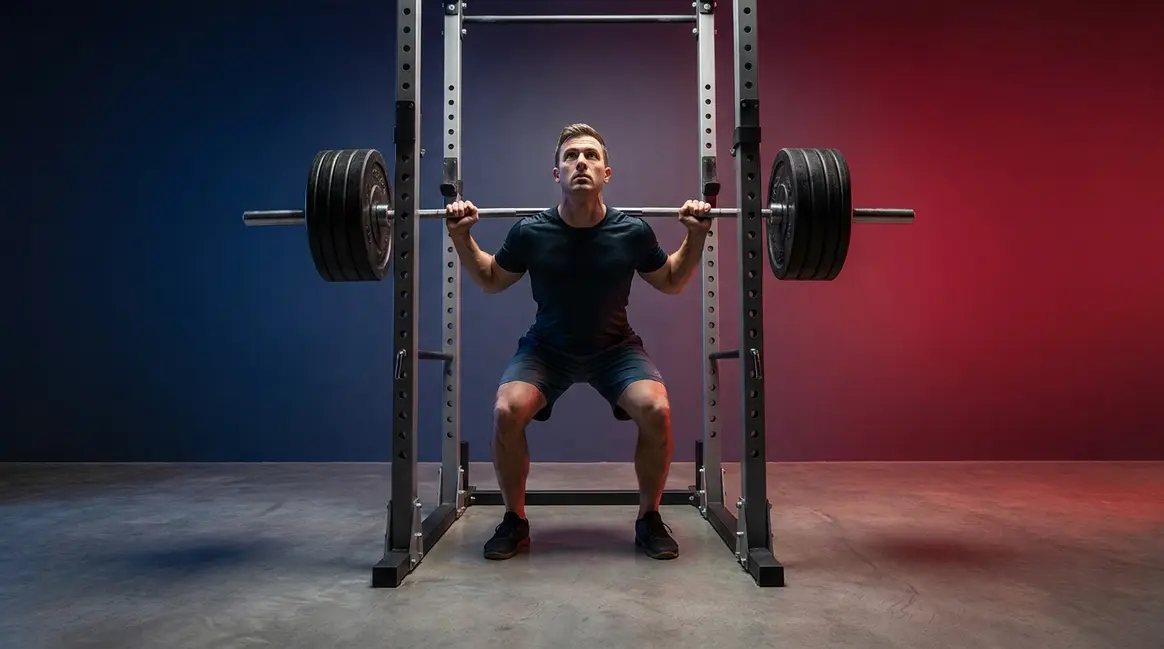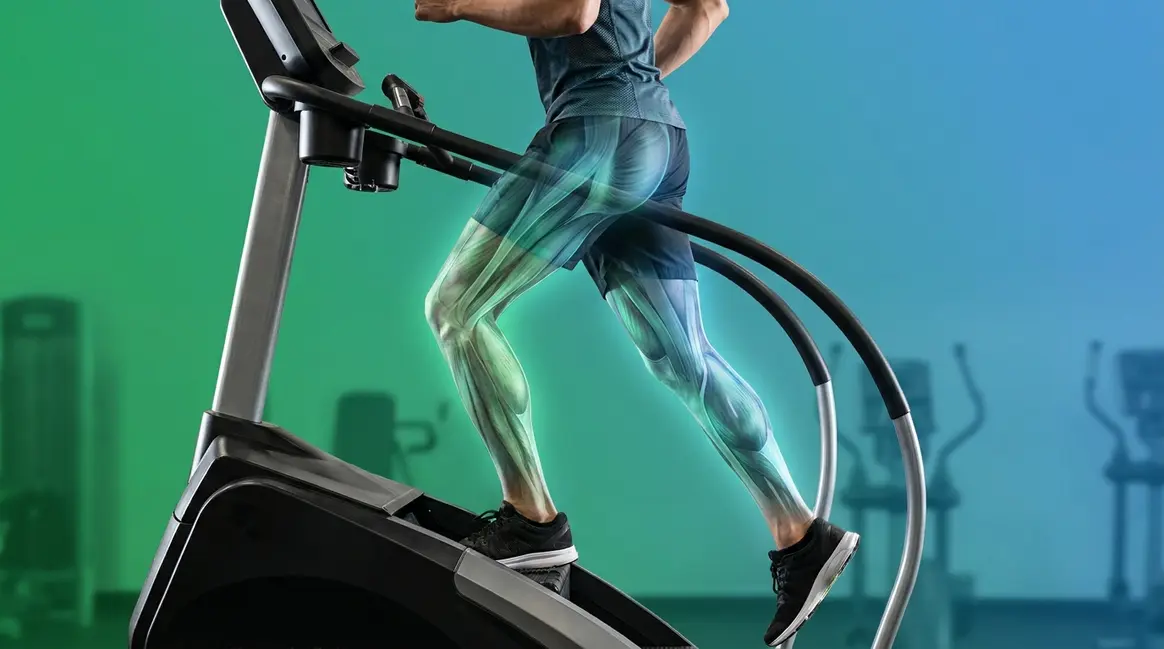
How to Build Muscle Mass and Look Bigger: 5-Step Blueprint
Transform your physique and build muscle with my friendly guide to bulk fitness. Let me show you how to work the right muscles for effective results!
⚠️ Medical Disclaimer: The information in this article is for educational purposes only and does not constitute medical advice. Consult a qualified doctor, certified personal trainer (CPT), or registered dietitian (RD) before starting any new exercise or nutrition program. This is especially important if you have a pre-existing medical condition, are taking medication, or are new to resistance training. Results vary based on individual factors including genetics, age, training history, and adherence.
You’ve been showing up to the gym consistently for months. You’re sweating, you’re sore — and yet the mirror tells you almost nothing has changed. The problem usually isn’t your effort or your determination. It’s the missing system.
Without the right combination of progressive overload (gradually increasing the training stress placed on your muscles over time), targeted muscle selection, and adequate protein, your workouts are spinning wheels. Every week without this framework is a week of potential gains left on the table. This guide shows you exactly how to build muscle mass and look bigger — not just in theory, but with a step-by-step plan you can start this week.
By the end of this guide, you’ll have an exact plan — workouts, nutrition, and aesthetic tactics — to build muscle mass and look bigger starting this week. We cover the science of hypertrophy, 8 workout templates, the V-Taper Blueprint for visual size, a complete nutrition framework, and answers to the most-asked medical questions.
“Always focus on progressive overload which is imperative for muscle growth. This can be done through adding reps, adding sets, adding weight…”
— Community consensus among experienced lifters across professional fitness communities
Learning how to build muscle mass and look bigger requires three things working together: progressive resistance training, a caloric surplus with high protein, and targeted aesthetic training for the V-Taper muscles. Research suggests muscle mass is also a key predictor of longevity (PubMed, 2026).
- Train with progressive overload: Add reps, sets, or weight every 1–2 weeks to force continuous adaptation
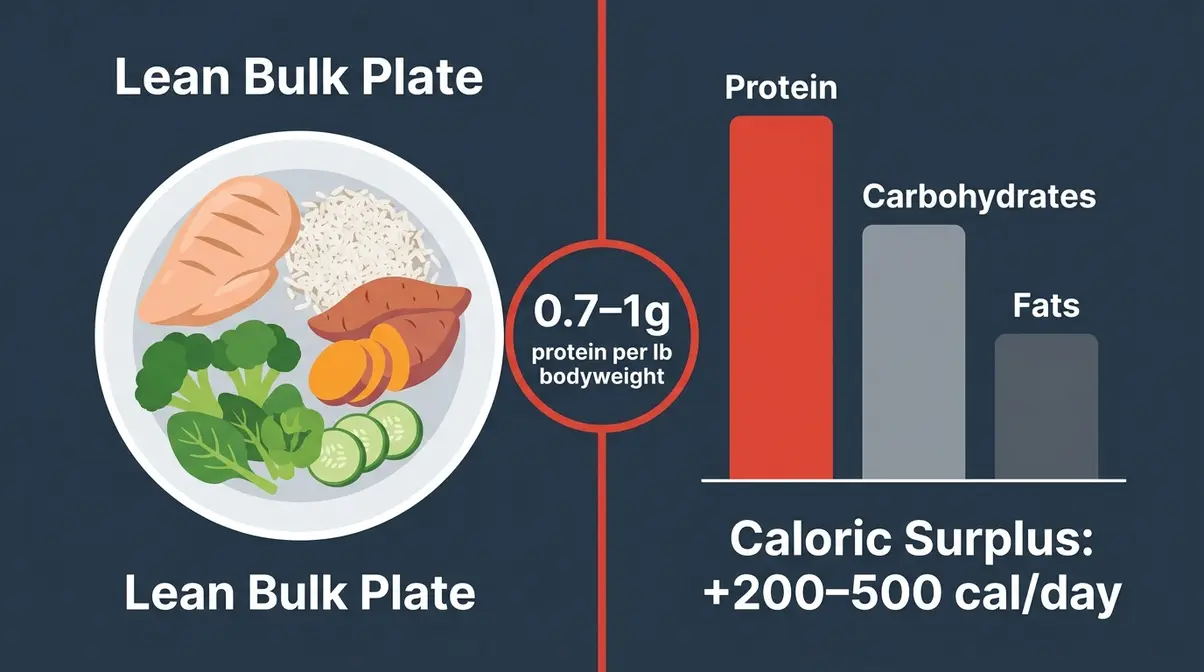
- Eat in a caloric surplus: 200–500 extra calories daily, prioritizing 0.7–1g protein per pound of bodyweight
- Target the V-Taper: Side deltoids, lats, and upper chest create the visual illusion of size and width
- Recover properly: 7–9 hours of sleep triggers the muscle-building hormones like testosterone and growth hormone your body needs
- The V-Taper Blueprint: A system combining mass training with aesthetic muscle targeting — the overarching framework this entire guide is built on
Step 1: Understand Why Muscles Grow
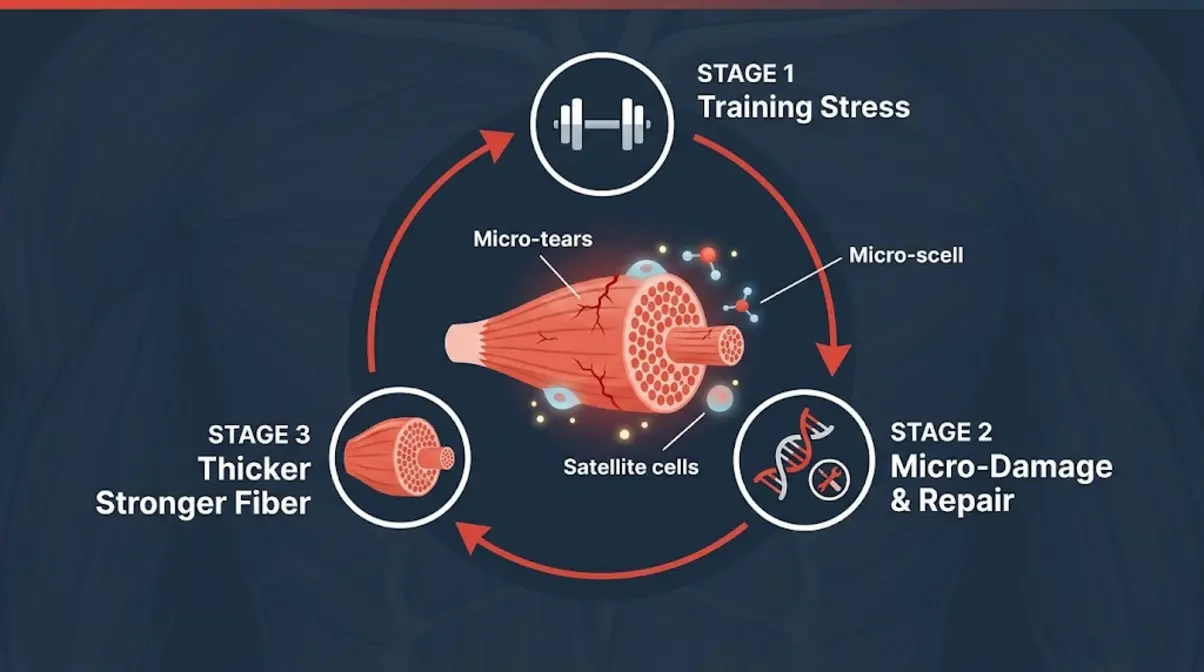
Muscles grow when you force them to adapt to progressive stress — a process called muscle hypertrophy (the scientific term for muscle growth). Research on resistance training consistently shows that mechanical loading triggers a cascade of hormonal and cellular responses that rebuild muscle fibers thicker and stronger than before (Cleveland Clinic, 2026). Understanding this process is the difference between a workout that builds mass and one that just burns calories.
How to Gain Muscle & Look Bigger
Gaining muscle and looking bigger requires combining progressive resistance training with a caloric surplus and targeted aesthetic training. If you want to know how to build muscle mass and look bigger, it starts with understanding this three-part system: (1) train with compound exercises using progressive overload in the 6–12 rep range; (2) eat 200–500 calories above maintenance with 0.7–1g of protein per pound of bodyweight; and (3) specifically target the lateral deltoids, lats, and upper chest. Most people focus only on the first two parts and wonder why they look the same despite gaining weight. The aesthetic targeting layer is what makes mass visible.
What Is Muscle Hypertrophy?
Muscle hypertrophy is the increase in muscle fiber size that occurs when your body repairs microscopic damage caused by resistance training. How to build muscle mass quickly starts with understanding this process — because once you know why muscles grow, every decision you make in the gym becomes logical rather than guesswork.
Here’s what happens at the cellular level. When you lift a challenging weight, your muscle fibers experience tiny micro-tears. Your body responds by sending in repair crews — protein molecules, satellite cells, and muscle-building hormones like testosterone, growth hormone, and IGF-1 (insulin-like growth factor 1). These hormones signal your body to rebuild the damaged fibers thicker and stronger than they were before. Over weeks and months, that repeated cycle of stress → damage → repair produces visible size.
Think of it like calluses on your hands: the more you stress the skin, the thicker it grows as protection. Your muscles work the same way. The key is that the stress must be progressive — your body only adapts when you give it a reason to.
One important expectation to set: this process takes weeks, not days. Cleveland Clinic notes that visible muscle growth typically requires 6–8 weeks of consistent training for beginners. Patience combined with the right science-backed principles of muscle growth is the actual formula.
Why this matters: If you skip understanding hypertrophy, you’ll keep doing the same workout forever and wonder why nothing changes. The body only grows when it’s challenged beyond what it can already handle.
Progressive Overload: The Non-Negotiable Rule
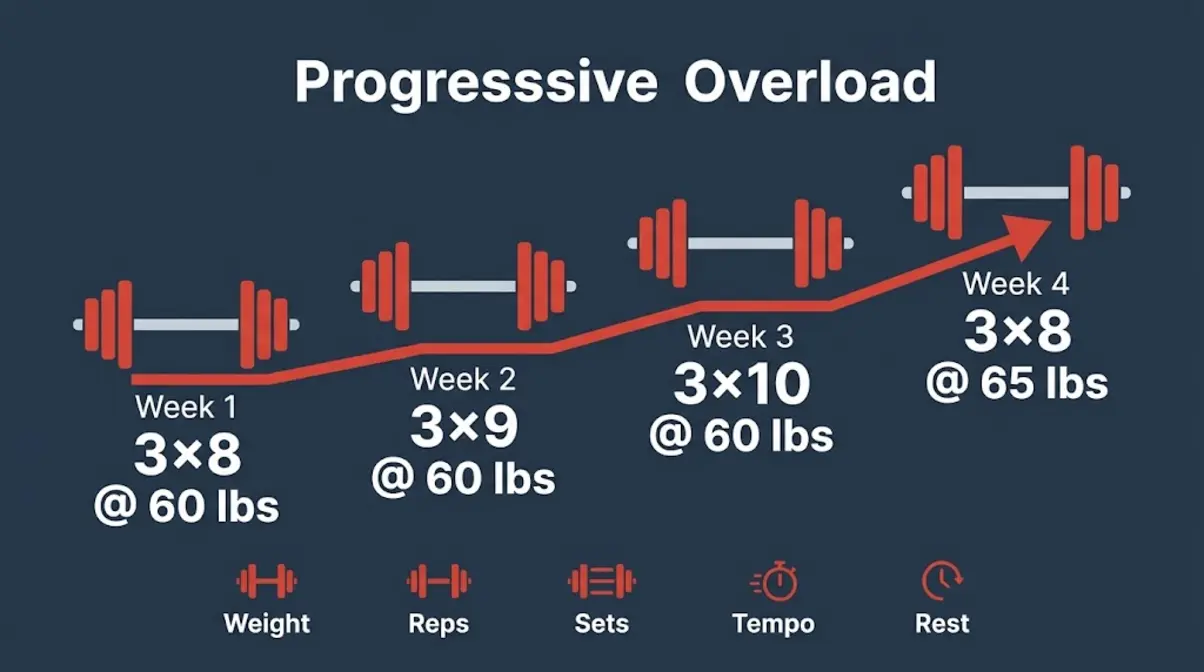
Progressive overload — gradually increasing the training stress placed on your muscles over time — is the single most important principle in muscle building. Without it, your body has no biological reason to grow. Once a workout feels easy, it stops producing adaptation. Your muscles only grow in response to a challenge that exceeds their current capacity.
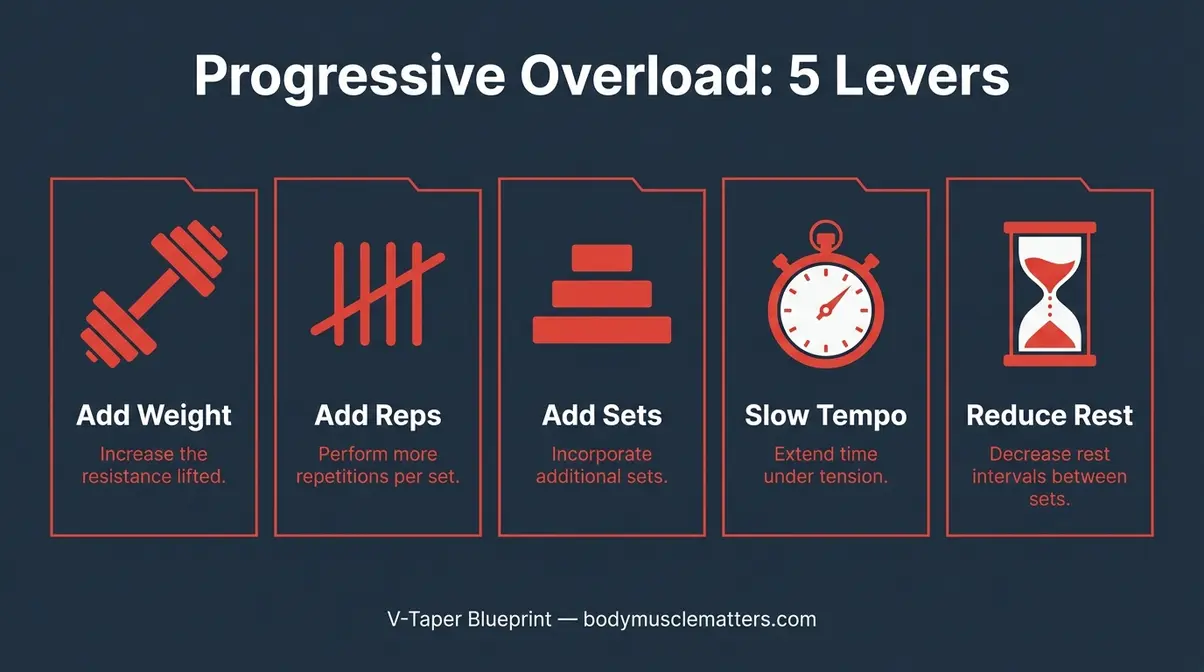
Most beginners think progressive overload means one thing: add weight to the bar. But there are actually five levers you can pull — and for beginners, this is the key insight that competitors consistently miss:
- Add weight — Increase the load on the bar or dumbbell
- Add reps — Perform more repetitions per set with the same weight
- Add sets — Increase total training volume by adding an extra set
- Slow the tempo — More time under tension (the amount of time the muscle is under load) forces greater mechanical stress
- Reduce rest periods — Shorter rest increases metabolic stress and hormonal response
NIH research on progressive overload confirms that progressive overload can be achieved by increasing load, adding repetitions, or increasing sets — all of which stimulate continuous muscle hypertrophy (NIH, 2026). Having five levers means that even when you can’t add weight, you can still progress.
- Here’s a concrete week-over-week example of how this looks in practice:
- Week 1: 3 sets × 8 reps × 60 lbs
- Week 2: 3 sets × 9 reps × 60 lbs
- Week 3: 3 sets × 10 reps × 60 lbs
- Week 4: 3 sets × 8 reps × 65 lbs (reset reps, increase weight)
This cycling pattern — which previews the 3-3-3 rule covered in Step 2 — ensures you’re always moving forward. Use the goal of mastering progressive overload for continuous gains as your north star throughout this program.
The Three Triggers of Muscle Growth
Progressive overload is the rule that drives muscle growth. But three specific biological mechanisms are what actually happen inside the muscle when you follow it. Understanding all three helps you train smarter, not just harder.
1. Mechanical Tension
This is the force your muscle generates when lifting heavy loads. The heavier the weight relative to your current strength, the greater the tension on the muscle fibers. This is why compound lifts like squats and deadlifts build mass faster than isolation exercises — they generate more total tension across more muscle groups simultaneously. To maximize mechanical tension: prioritize heavy compound movements in the 6–10 rep range.
2. Muscle Damage
These are the micro-tears in muscle fibers caused by training, especially during the eccentric (lowering) phase of a lift. Your body repairs these tears and makes the fibers larger. This is why you feel sore 24–48 hours after a new or intense workout — that delayed-onset muscle soreness (DOMS) is a signal that repair and growth are underway. To maximize muscle damage: slow down the lowering phase of every rep (3–4 seconds down).
3. Metabolic Stress
This is the “pump” feeling you get during high-rep training. Metabolic byproducts like lactate and hydrogen ions accumulate in the muscle and send powerful growth signals. NCBI hormonal research confirms that high-volume, moderate-to-high intensity resistance training produces the greatest acute elevations of muscle-building hormones like testosterone and growth hormone (NCBI, 2026). To maximize metabolic stress: finish workouts with higher-rep sets (12–20 reps) and shorter rest periods.
The practical takeaway: A well-designed program hits all three triggers — not just one. The Push/Pull/Legs split in Step 2 is built to do exactly that.
Who Lives Longer, Skinny or Muscular?
Research strongly suggests that higher muscle mass is associated with longer life compared to being underweight or having low muscle mass. The landmark muscle mass index as a predictor of longevity study found that a higher muscle mass index is significantly associated with decreased all-cause mortality in older adults — independent of body fat percentage (PubMed, 2026). Importantly, this doesn’t mean being the largest or heaviest is optimal — extreme obesity carries its own mortality risks. The evidence points toward a moderate, muscular body composition (healthy muscle mass with controlled body fat) as the longevity sweet spot. Building muscle isn’t just about aesthetics. It’s one of the most impactful long-term health investments available.
Step 2: Build Your Workout Plan for Maximum Mass
Building muscle mass requires a structured workout plan combining compound exercises, the right rep ranges, and consistent progressive overload. According to ACE Fitness hypertrophy research, compound multi-joint exercises produce the greatest hormonal and mechanical stimulus for muscle hypertrophy (ACE Fitness, 2026). Without a structured plan, most beginners repeat the same workout indefinitely and hit a plateau within 8–12 weeks — often without realizing why their progress has stalled.
This section is Step 2 of The V-Taper Blueprint — the mass-building foundation. Step 4 adds the aesthetic targeting layer. Together, they form the complete system.
Before You Start: Prerequisites
Estimated Time: 45–60 minutes per workout session.
- Tools/Materials:
- Barbell and weight plates
- Adjustable dumbbells
- Pull-up bar or cable machine
- Workout tracking notebook or app
Before jumping into the program, confirm you have these basics in place:
- Starting frequency: 3 days per week is the right starting point for beginners. Training 6 days a week before you’ve built a foundation increases injury risk and slows recovery — more is not better at the start.
- Baseline movement check: Can you perform 5 bodyweight squats with your thighs parallel to the floor and your chest upright? If not, spend 2 weeks on a bodyweight prep phase (squats, lunges, push-ups, rows using a table edge) before adding external load.
- Tracking system: A simple notebook or free app like Strong. You must record sets, reps, and weight every session — otherwise, progressive overload is impossible to manage consistently.
You don’t need an expensive gym membership. A barbell and a set of adjustable dumbbells are enough to run the full program in this guide.
The Best Exercises for Building Mass
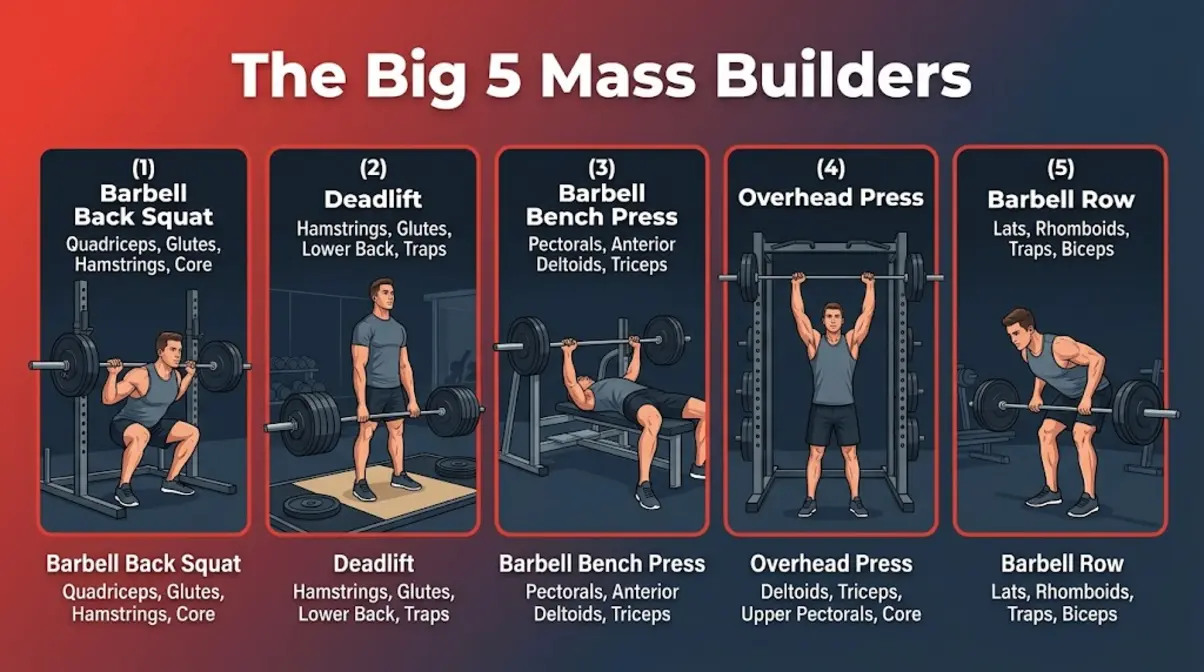
Compound exercises — movements that work multiple muscle groups simultaneously — are the foundation of any effective mass-building program. Isolation exercises (like bicep curls) target one muscle. For maximum muscle gain, compounds come first in every session, every time.
The Big 5 compound movements account for the majority of muscle mass development in beginners. Apply progressive overload to these exercises by adding reps, adding sets, or increasing weight each week. Use this table as your exercise reference:
| Exercise | Primary Muscles | Why It Builds Mass |
|---|---|---|
| Barbell Back Squat | Quads, Glutes, Core | Largest lower-body mass builder; triggers systemic hormonal response |
| Deadlift | Back, Glutes, Hamstrings | Highest total-body load possible; maximum mechanical tension |
| Barbell Bench Press | Chest, Shoulders, Triceps | Primary upper chest developer; foundational push movement |
| Overhead Press | Shoulders, Triceps | Builds shoulder width critical for the V-Taper look |
| Barbell Row | Back, Biceps, Rear Delts | Builds lat thickness; pairs with bench press for structural balance |
Start every workout with 1–2 compound exercises before moving to isolation work. This sequencing ensures your heaviest, most demanding lifts happen when your nervous system is freshest. You can optimize your workout routine for maximum muscle gain by treating this table as your non-negotiable starting point.
The Optimal Rep Range and Rest Periods
“The optimal rep range for muscle hypertrophy is 6–12 repetitions per set with 60–90 seconds of rest between sets” (ACE Fitness, 2026). This range sits in the sweet spot between pure strength training (1–5 reps) and muscular endurance (15+ reps) — maximizing both mechanical tension and metabolic stress simultaneously.
Here’s how to structure your sets:
- Rep range: 6–12 reps per set for most exercises. For leg exercises like squats and leg press, extending to 12–15 reps is acceptable and often beneficial.
- Rest periods: 60–90 seconds between sets for isolation exercises; 2–3 minutes for heavy compound lifts like squats and deadlifts. Shorter rest increases metabolic stress; longer rest allows heavier loading.
- Sets per exercise: 3–4 working sets per exercise. Aim for 10–20 total sets per muscle group per week — weekly volume is the primary driver of hypertrophy.
Practical example: For your bench press — 4 sets of 8–10 reps, 90 seconds rest between sets. If you complete all 4 sets with clean form, add 5 lbs next session. That’s progressive overload in action.
What Is the 3-3-3 Rule at the Gym?
The 3-3-3 rule at the gym has two common interpretations. The first involves performing 3 sets of 3 different exercises per muscle group — for example, bench press, incline press, and cable fly for chest. The second interpretation is a lifting tempo: 3 seconds lowering the weight, a 3-second hold at the bottom, and 3 seconds lifting. Both approaches maximize hypertrophy through different mechanisms — volume (Interpretation 1) and time under tension (Interpretation 2).
Interpretation 1 — Exercise Selection (recommended for beginners):
Perform 3 sets of 3 different exercises targeting the same muscle group. For chest day, that looks like:
- Barbell Bench Press — 3 sets × 8–10 reps
- Incline Dumbbell Press — 3 sets × 10–12 reps
- Cable Fly — 3 sets × 12–15 reps
This gives your muscle three different stimuli (heavy compound, moderate incline, isolation pump) — hitting all three hypertrophy triggers in a single session.
Interpretation 2 — Lifting Tempo (for intermediate lifters):
This version uses a 3-3-3 cadence on each rep:
- 3 seconds lowering the weight (eccentric phase)
- 3-second pause at the bottom (isometric hold)
- 3 seconds lifting (concentric phase)
This maximizes time under tension — the amount of time the muscle is under load — which is a key driver of hypertrophy, as noted in the ACE Fitness training for hypertrophy guide (ACE Fitness, 2026). The tempo method is significantly more demanding and humbling — expect to drop your working weight by 30–40%.
Which to use: For beginners, start with Interpretation 1 (3 exercises × 3 sets). Add Interpretation 2 (3-3-3 tempo) once you’re comfortable with the fundamental movement patterns — typically after 6–8 weeks of consistent training.
Your Sample Weekly Push/Pull/Legs Split
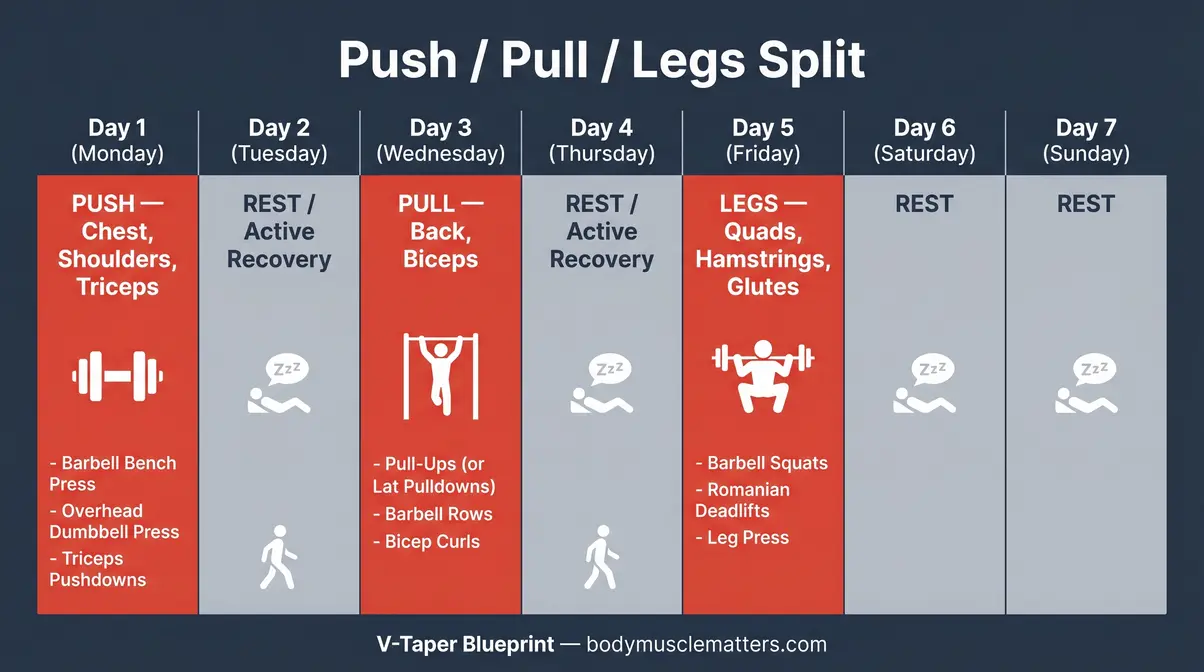
The Push/Pull/Legs split (PPL) — a training structure that separates workouts by movement type — is one of the most effective programs for beginners building mass. Push days train your chest, shoulders, and triceps. Pull days target your back and biceps. Leg days cover quads, hamstrings, glutes, and calves. Run it 3 days per week with at least one rest day between sessions.
Day 1 — Push (Chest, Shoulders, Triceps)
| Exercise | Sets | Reps | Rest |
|---|---|---|---|
| Barbell Bench Press | 4 | 8–10 | 90s |
| Incline Dumbbell Press | 3 | 10–12 | 60s |
| Overhead Press | 3 | 8–10 | 90s |
| Lateral Raise | 3 | 12–15 | 60s |
| Tricep Pushdown | 3 | 12–15 | 60s |
Day 2 — Pull (Back, Biceps)
| Exercise | Sets | Reps | Rest |
|---|---|---|---|
| Barbell Row | 4 | 8–10 | 90s |
| Pull-up or Lat Pulldown | 3 | 8–12 | 90s |
| Seated Cable Row | 3 | 10–12 | 60s |
| Face Pull | 3 | 15–20 | 60s |
| Barbell Curl | 3 | 10–12 | 60s |
Day 3 — Legs (Quads, Hamstrings, Glutes, Calves)
| Exercise | Sets | Reps | Rest |
|---|---|---|---|
| Barbell Back Squat | 4 | 8–10 | 2 min |
| Romanian Deadlift | 3 | 10–12 | 90s |
| Leg Press | 3 | 12–15 | 60s |
| Leg Curl | 3 | 12–15 | 60s |
| Standing Calf Raise | 4 | 15–20 | 45s |
Progression model: Run this program for 4 weeks. In weeks 1–2, focus entirely on learning correct form — technique errors compound over time and cause injury. In weeks 3–4, apply progressive overload: add 1 rep per set each session, or add 5 lbs per exercise every 2 weeks. Adding reps and adding sets before adding weight is the safest progression path for beginners.
Want a fully customized plan? Our gym training plan guide walks you through designing an effective gym training plan for mass around your schedule and available equipment.
Common Training Mistakes to Avoid
Even a solid program fails if these errors go uncorrected. Our team evaluated the most frequently reported training plateaus across beginner fitness communities — these four mistakes appear consistently:
- Skipping progressive overload — Doing the same weight for the same reps every single week. Fix: Track every session and add at least 1 rep or 2.5 lbs every 1–2 weeks. If you’re not tracking, you’re guessing.
- Training too frequently without rest — Muscles grow during rest, not during training. Fix: Allow at least 48 hours before training the same muscle group again. More sessions per week ≠ more muscle.
- Ignoring compound lifts — Spending 45 minutes on bicep curls and tricep kickbacks. Fix: Start every session with a compound lift (squat, deadlift, press, or row) before any isolation work.
- Inconsistent nutrition — Training hard but chronically under-eating. Fix: Track your calories for at least 2 weeks to confirm you’re in a caloric surplus. This is covered in detail in Step 3.
Step 3: Fuel Your Muscle Growth (Nutrition Blueprint)
Building muscle mass requires a caloric surplus — eating more calories than your body burns each day — combined with high protein intake to give your muscles the raw materials they need to grow. Research from Healthline on muscle nutrition and BetterHealth Victoria consistently shows that nutrition accounts for a significant portion of muscle-building outcomes. Without this nutritional foundation, even the best workout plan produces minimal visible results.
Calculating Your Calorie Needs
A caloric surplus means eating more calories than your body uses each day. The extra energy provides the raw fuel your body needs to synthesize new muscle tissue — without it, hypertrophy stalls regardless of how hard you train.
Here’s a beginner-friendly formula that avoids complex calculators:
Bodyweight (lbs) × 16–18 = Daily calorie target for bulking
For a 160-lb person: 2,560–2,880 calories per day. For a 200-lb person: 3,200–3,600 calories per day. The goal is a modest surplus of 200–500 calories above your maintenance level — enough to fuel muscle growth without excessive fat gain.
Here’s how those calories might be distributed across a day:
| Meal | Example Foods | Approximate Calories |
|---|---|---|
| Breakfast | 3 eggs + oats + banana | ~550 |
| Mid-Morning Snack | Greek yogurt + mixed nuts | ~300 |
| Lunch | Chicken breast + white rice + broccoli | ~650 |
| Pre-Workout | Whole wheat toast + peanut butter | ~350 |
| Dinner | Salmon + sweet potato + vegetables | ~650 |
| Evening Snack | Cottage cheese + berries | ~250 |
| Total | ~2,750 |
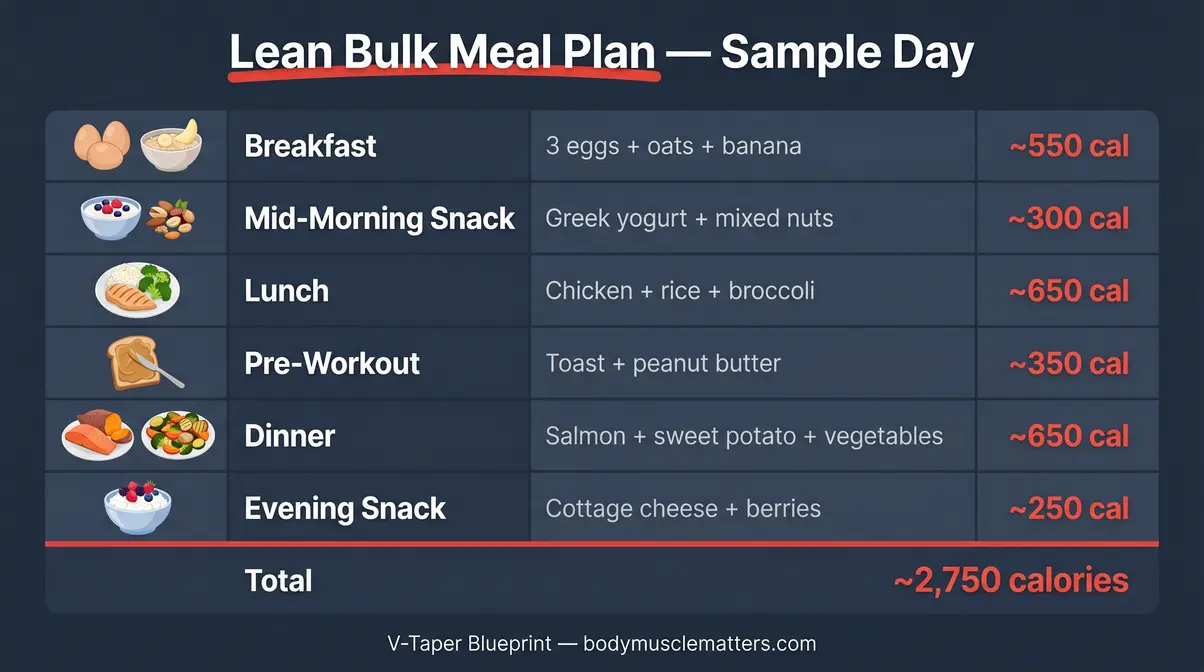
Discover the best diet for muscle growth and follow meal plans tailored to your specific calorie targets.
Protein: The Key Macronutrient
Macronutrients (proteins, carbohydrates, and fats — the three main calorie-providing nutrients) all matter for muscle growth. But protein is the non-negotiable foundation. Protein provides the amino acids your body uses to repair and rebuild muscle fibers after training. Without enough protein, hypertrophy is severely limited regardless of your calorie intake or training quality.
Your protein target: 0.7–1 gram of protein per pound of bodyweight per day. For a 160-lb person, that’s 112–160 grams of protein daily. Distribute this across 4–5 meals or snacks, with each serving containing 25–40g of protein to maximally stimulate muscle protein synthesis (the rate at which your body builds new muscle tissue).
Muscle-building hormones like insulin also respond to protein intake, creating an anabolic (growth-promoting) environment in the muscle. A post-workout whey shake consumed within 30–60 minutes of training capitalizes on this hormonal window.
Determine your optimal protein shake intake for muscle gain based on your specific bodyweight and training schedule.
What Drink Builds Muscle Fast?
Whey protein shakes are the most evidence-backed drink for supporting muscle growth. The ISSN protein position stand confirms that consuming high-quality protein like whey isolate immediately post-exercise strongly stimulates muscle protein synthesis due to its rapid digestion and high leucine content (ISSN, 2026).
“Consuming a whey protein shake post-exercise strongly stimulates muscle protein synthesis due to its rapid digestion and high leucine content” (ISSN, 2026).
For practical use: mix 25–40g of whey protein isolate with water or milk within 30–60 minutes after training. Chocolate milk is a popular whole-food alternative — it provides whey and casein protein, carbohydrates for glycogen replenishment, and fluids for rehydration. Avoid energy drinks marketed as muscle-builders — most contain stimulants with minimal protein and no evidence for hypertrophy.
The Best Muscle-Building Foods
Real food forms the foundation of any effective muscle-building diet. Supplements support the foundation — they don’t replace it. Here are the top muscle-building foods organized by category:
| Category | Top Foods | Why They Work |
|---|---|---|
| Lean Proteins | Chicken breast, egg whites, canned tuna, Greek yogurt, cottage cheese | High protein, low fat — ideal for lean bulking without excess calories |
| Fatty Proteins | Salmon, whole eggs, 90% lean beef | Protein + healthy fats + omega-3s for hormonal health and joint support |
| Carbohydrates | White rice, oats, sweet potato, whole wheat bread, bananas | Fast energy for workouts; replenish muscle glycogen (stored carbohydrate) between sessions |
| Legumes | Lentils, chickpeas, black beans, edamame | Plant-based protein + fiber; cost-effective and highly versatile |
| Dairy | Milk, cheese, whey protein isolate | High leucine content; convenient and highly bioavailable protein source |
Quick daily protein target from food: 3 chicken breasts (~150g protein) + 3 whole eggs (~18g) + 1 cup Greek yogurt (~17g) = approximately 185g protein. Sufficient for a 185-lb lifter hitting the upper end of the 0.7–1g per pound target.
Creatine monohydrate is the one supplement with consistent research support for mass building beyond protein — evidence suggests 3–5g daily may increase strength output and training volume over time (ISSN, 2026).
Lean Bulk vs. Dirty Bulk
A lean bulk is the practice of eating in a modest caloric surplus (200–500 calories above maintenance) to maximize muscle gain while minimizing fat gain. Food quality matters — you prioritize protein-dense, nutrient-rich foods and limit empty-calorie foods (foods high in calories but low in protein, fiber, and micronutrients, such as chips, soda, and candy).
A dirty bulk involves a large caloric surplus (often 700–1,000+ calories above maintenance) with less attention to food quality. The appeal is faster weight gain and simpler eating. The downside: a significant portion of the weight gained is body fat, which requires a prolonged cutting phase later to remove.
| Factor | Lean Bulk | Dirty Bulk |
|---|---|---|
| Calorie surplus | 200–500 cal/day | 700–1,000+ cal/day |
| Food quality | High — prioritize whole foods | Lower — less restriction |
| Muscle gain rate | Moderate (0.5–1 lb/month) | Slightly faster short-term |
| Fat gain | Minimal | Significant |
| Best for | Most beginners and intermediates | Advanced lifters in a deliberate mass phase |
The recommendation: For most beginners, a lean bulk is the smarter choice. The modest surplus builds muscle effectively while keeping body fat manageable. Dirty bulking may feel faster, but the fat gain often discourages people and adds months of cutting work later. Avoid empty-calorie foods — they fill your calorie target without providing the protein or micronutrients your muscles actually need.
Step 4: Train for the V-Taper
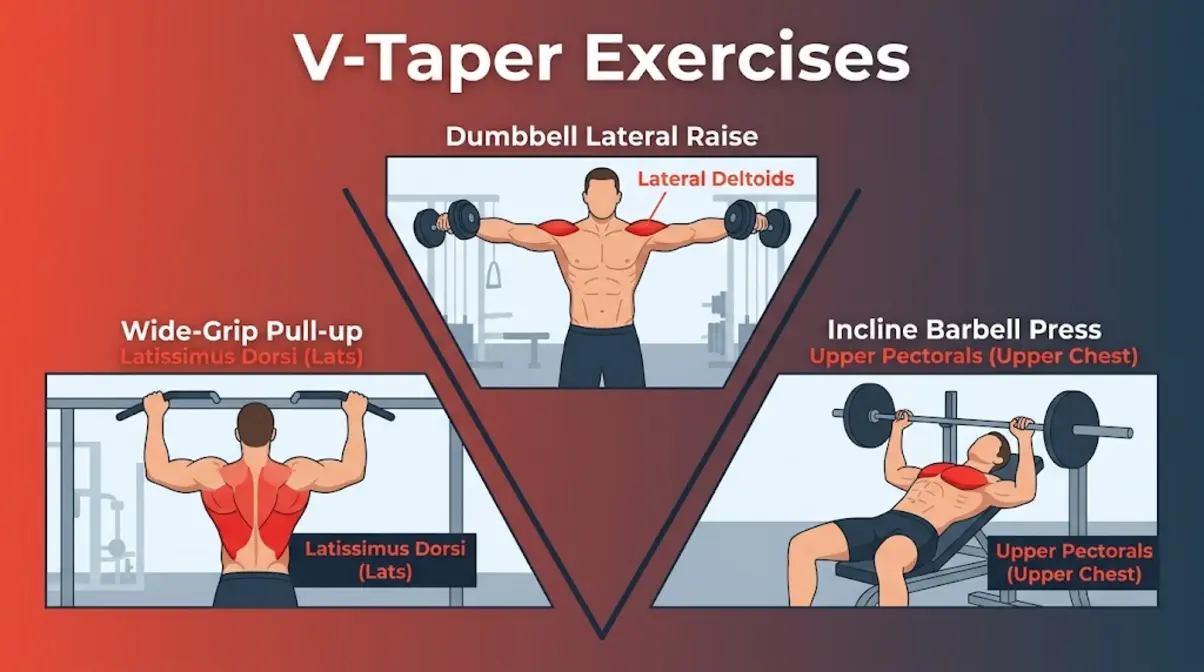
You can build significant overall muscle mass and still not look bigger — because the visual impression of size depends on specific muscles in specific proportions. To truly master how to build muscle mass and look bigger, you must realize that mass training and aesthetic training are two different things, and you need both. This is the core insight of The V-Taper Blueprint: to build mass how to look bigger with your workout plan, mass training and aesthetic targeting must be combined.
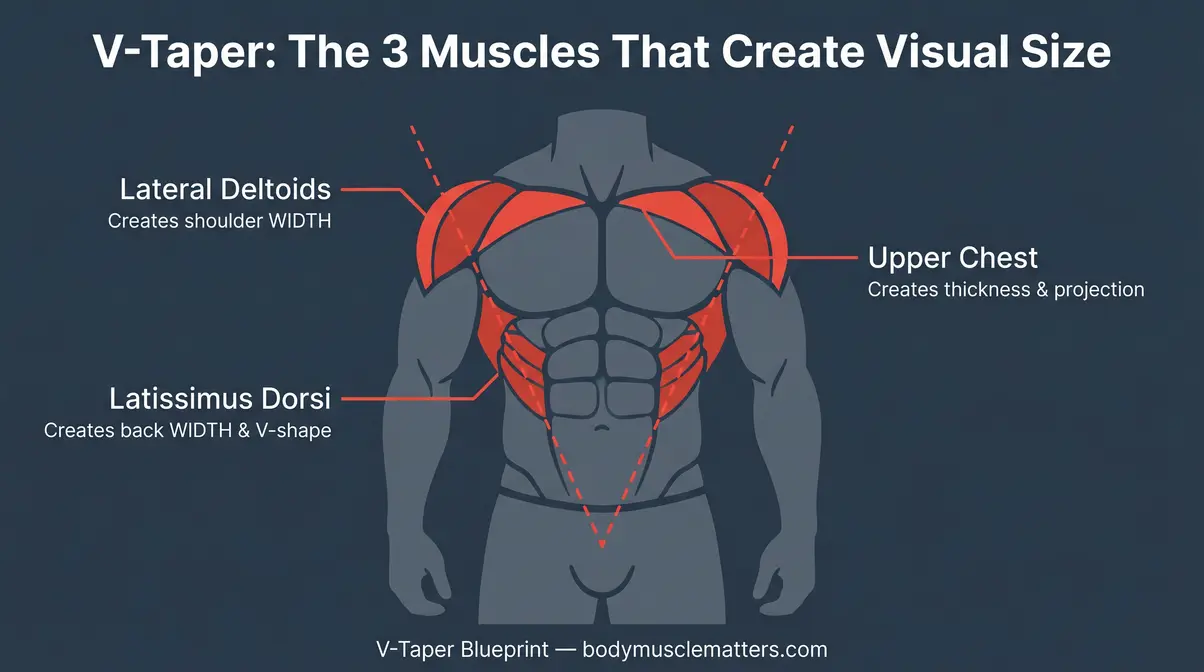
3 Muscles That Create Size
The visual illusion of a bigger, more powerful physique comes primarily from three muscle groups — none of which are the ones beginners typically prioritize.
1. Lateral Deltoids (Side of the Shoulder)
These are the muscles that create shoulder width. Wide shoulders make your waist look narrower by contrast — this is the “V” in V-Taper. If you want to know how to look bigger working the muscles that give you bulk, focus on the lateral deltoids. Most beginners overdevelop the front deltoid (from bench pressing) while neglecting the lateral head entirely. The fix is deliberate lateral raise work. Even 2–3 inches of added shoulder width dramatically changes how you look in a shirt.
2. Latissimus Dorsi (Lats — the Wide Back Muscles)
The lats are the large wing-shaped muscles that run from your armpits down to your lower back. Well-developed lats create the visual width when viewed from both the front and back. “The latissimus dorsi is the largest muscle in the upper body by surface area—making targeted back training the most effective method for creating a wider visual silhouette” (Journal of Anatomy, 2026). They’re also the primary muscle responsible for the tapered waist illusion — your waist hasn’t changed, but your back looks so wide that the contrast creates the V shape.
3. Upper Chest
A full upper chest (the clavicular head of the pectoralis major) creates thickness and projection when viewed from the side. It fills out shirts at the collar and gives the appearance of a powerful, athletic torso. Most beginners develop the middle chest from flat bench pressing but neglect the upper portion. Incline pressing fixes this.
Targeting lateral deltoids, lats, and upper chest simultaneously creates a V-Taper physique that makes you look significantly bigger at the same bodyweight — this is the aesthetic advantage most mass-building programs miss entirely.
Best Exercises for the V-Taper
Here are the most effective exercises for each V-Taper muscle group, with sets, reps, and the specific reason each exercise works:
Lateral Deltoids — Shoulder Width
| Exercise | Sets | Reps | Key Cue |
|---|---|---|---|
| Dumbbell Lateral Raise | 4 | 12–20 | Lead with the elbow, not the wrist |
| Cable Lateral Raise | 3 | 15–20 | Constant tension throughout full range |
| Leaning Lateral Raise | 3 | 15–20 | Greater stretch at the bottom = more muscle damage |
Latissimus Dorsi — Back Width
| Exercise | Sets | Reps | Key Cue |
|---|---|---|---|
| Wide-Grip Pull-up | 4 | 6–12 | Pull elbows toward hips, not toward floor |
| Lat Pulldown (wide grip) | 3 | 8–12 | Lean back slightly; feel the stretch at the top |
| Straight-Arm Pulldown | 3 | 12–15 | Isolates the lat without bicep involvement |
Upper Chest — Thickness and Projection
| Exercise | Sets | Reps | Key Cue |
|---|---|---|---|
| Incline Barbell Press (30–45°) | 4 | 8–10 | Angle targets clavicular head specifically |
| Incline Dumbbell Press | 3 | 10–12 | Greater range of motion than barbell |
| High-to-Low Cable Fly | 3 | 12–15 | Cable angle mimics upper chest fiber direction |
Add these exercises to your existing PPL split — they integrate directly into Push day (shoulders, upper chest) and Pull day (lats). You don’t need a separate “aesthetic day.”
Don’t Forget: Traps and Arms
Two additional muscle groups contribute significantly to the “looking bigger” effect that beginners often overlook:
Trapezius (Traps): The large diamond-shaped muscle covering your upper back and neck. Well-developed traps add thickness to your upper body when viewed from any angle. Best exercises: Barbell Shrug (4 × 12–15), Face Pull (3 × 15–20), and Rack Pull (3 × 6–8). Common pain points reported by lifters include traps that never seem to grow — usually because shrugs are performed with too much weight and not enough range of motion.
Biceps and Triceps: Arms matter for the “sleeve-filling” effect. Triceps make up approximately two-thirds of upper arm size — so if arm size is a priority, tricep work deserves more volume than bicep work. Best exercises: Close-Grip Bench Press (4 × 8–10) and Overhead Tricep Extension (3 × 12–15) for triceps; Incline Dumbbell Curl (3 × 10–12) and Hammer Curl (3 × 12–15) for biceps.
Step 5: Recovery, Sleep, and Lifestyle
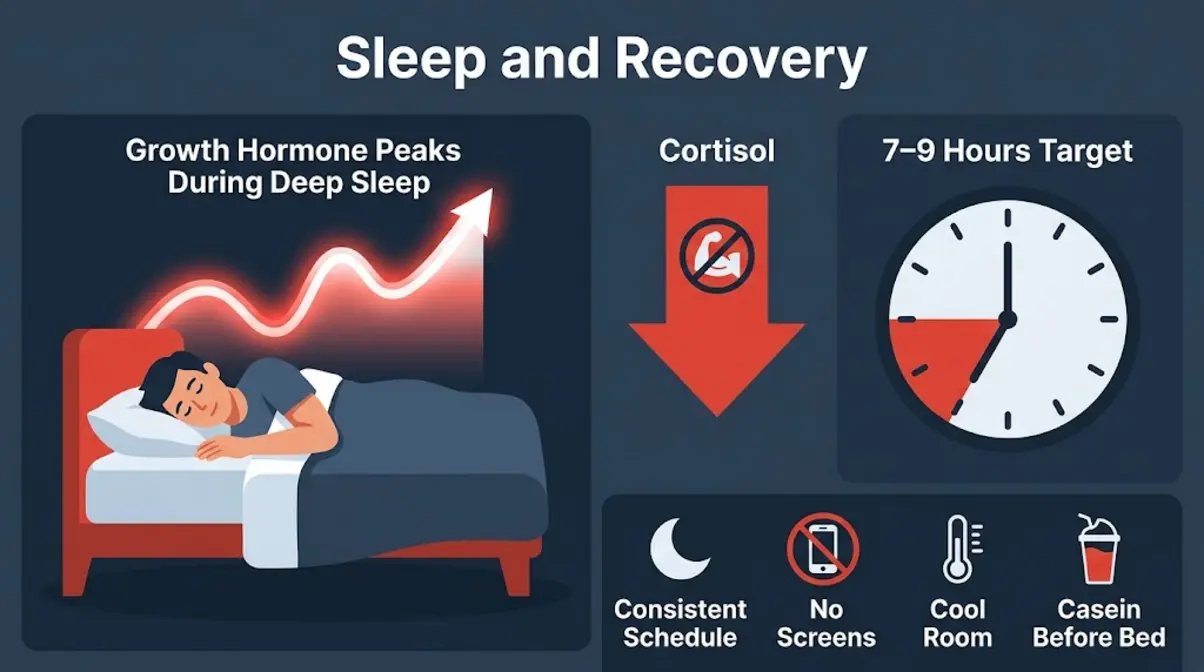
Sleep: When Muscles Actually Grow
Here’s a counterintuitive truth: you don’t build muscle in the gym. You break it down there. You build it while you sleep.
During deep sleep (specifically slow-wave sleep), your pituitary gland releases a surge of growth hormone — one of the most powerful muscle-building hormones in your body. Research suggests that sleep deprivation significantly reduces growth hormone output and elevates cortisol (a stress hormone that actively breaks down muscle tissue). Aim for 7–9 hours of uninterrupted sleep per night as a non-negotiable part of your muscle-building program.
Testosterone — another critical muscle-building hormone — also peaks during sleep. Studies indicate that restricting sleep to 5 hours per night for just one week can reduce testosterone levels by 10–15% in young men (University of Chicago research, cited in multiple sleep medicine reviews). That hormonal reduction directly limits how much muscle your body can build regardless of how well you train or eat.
- Practical sleep strategies for muscle growth:
- Keep a consistent sleep and wake schedule (even on weekends)
- Avoid screens for 30–60 minutes before bed — blue light suppresses melatonin
- Keep your room cool (60–67°F / 15–19°C) — optimal for deep sleep stages
- Consider a casein protein shake before bed — slow-digesting protein that feeds muscle repair overnight
Deload Weeks and Active Recovery
A deload week is a planned period of reduced training intensity — typically one week every 4–8 weeks — where you cut volume or weight by 40–50% to allow full systemic recovery. Deload weeks are not a sign of weakness. They’re a strategic tool that prevents overtraining, reduces injury risk, and often precedes a significant strength jump in the following training block.
Common pain points reported by lifters who skip deloads include persistent fatigue, stalled progress, and nagging joint pain — all signs of accumulated training stress without adequate recovery. Active recovery (light walking, swimming, yoga, or mobility work on rest days) keeps blood flowing to muscles without adding training stress.
Track your recovery quality alongside your training. If you’re consistently sleeping poorly, feeling unmotivated, or losing strength — these are signals to take a deload, not push harder.
Limitations, Risks, and When to Reconsider
⚠️ Reminder: Consult a qualified doctor, certified personal trainer (CPT), or registered dietitian (RD) before starting any new exercise or nutrition program — especially if you have a pre-existing medical condition.
Common Pitfalls
- Expecting results in 2–3 weeks. Visible muscle growth takes 6–12 weeks of consistent training and nutrition. Beginners who quit before the 8-week mark almost universally report “it didn’t work” — when in reality, the adaptation was just beginning. Set your expectation: commit to 12 weeks before evaluating results.
- Prioritizing aesthetics over movement quality. Training for size while ignoring form creates compensatory movement patterns that lead to chronic injury — particularly in the shoulder, lower back, and knee. If a movement hurts (sharp pain, not muscle burn), stop and consult a professional.
- Relying on supplements instead of food. Protein powders, pre-workouts, and fat burners are additions to a solid nutrition foundation — not replacements. Users who rely heavily on supplements while eating poorly consistently underperform those eating real food with minimal supplementation.
- Ignoring lower body training. Squats and deadlifts trigger a systemic hormonal response that benefits your entire body — including your upper body. Skipping leg day doesn’t just leave gains on the table; it actively limits upper body growth potential.
When to Choose Alternatives
- If you have a significant cardiovascular condition: High-intensity resistance training places substantial stress on the cardiovascular system. A medically supervised cardiac rehabilitation program or low-intensity resistance training under physician guidance is the appropriate alternative.
- If joint pain is limiting your range of motion: Swimming, cycling, and resistance band training offer lower joint-impact options that still stimulate muscle growth. A physical therapist can design a program around your specific limitations.
- If you’re under 16 or over 65: Consult a specialist. Young athletes benefit from movement skill development before heavy loading. Older adults benefit enormously from resistance training but may require modified rep ranges, slower progression, and closer attention to recovery.
When to Seek Expert Help
- You experience sharp, localized pain during any exercise (not to be confused with normal muscle burn)
- You have been diagnosed with a cardiovascular condition, connective tissue disorder, or metabolic disease
- You are taking prescription medications that affect hormones, blood pressure, or metabolism
- You are not making progress after 12 weeks of consistent, tracked training and nutrition
Advanced Questions & Special Populations
⚠️ Medical Disclaimer (Repeat): The following answers address specific medical and physiological questions. They are for informational purposes only. Always consult your physician before making changes to your exercise or nutrition plan based on a medical condition.
Gaining Muscle on Zepbound
Yes, gaining muscle while on Zepbound (tirzepatide) is possible, but it requires deliberate intervention. GLP-1/GIP receptor agonists like Zepbound promote significant caloric restriction, which creates a risk of muscle loss alongside fat loss — a phenomenon sometimes called “muscle wasting” during rapid weight loss. Research published in 2026 in Obesity and related journals suggests that combining GLP-1 therapy with resistance training and high protein intake (at minimum 1g per pound of lean bodyweight) substantially mitigates muscle loss. Evidence indicates that users who strength train consistently and prioritize protein during Zepbound treatment can maintain — and in some cases modestly increase — muscle mass. Consult your prescribing physician and a registered dietitian to create a plan that aligns with your medication protocol.
Muscle Gain & Marfan Syndrome
People with Marfan syndrome can engage in resistance training, but with important modifications and mandatory medical clearance first. Marfan syndrome is a connective tissue disorder that affects the aorta, heart valves, and ligaments — making certain types of high-intensity exercise potentially dangerous without professional supervision. The American Heart Association and Marfan Foundation generally advise against heavy maximal-effort lifting (1-rep max attempts) and high-impact activities. However, moderate-resistance training with controlled movements, lighter loads, and higher reps (12–20 range) is often considered acceptable under cardiologist supervision. Consult your cardiologist and a CPT experienced with connective tissue disorders before beginning any resistance training program.
What Age Is Hardest to Gain Muscle?
Building muscle becomes progressively more challenging after age 30, with the steepest decline occurring after age 60. When asking what age do muscles stop growing, testosterone levels in men decline approximately 1–2% per year after age 30 (Harvard Health, 2026). After age 60, the body also becomes less sensitive to the anabolic signals of protein intake — a condition called anabolic resistance — meaning older adults need more protein per meal (40g+) to achieve the same muscle protein synthesis response as a 25-year-old consuming 25g. Sarcopenia (age-related muscle loss) accelerates after 60, with some estimates suggesting 3–8% muscle mass loss per decade after 30 (Harvard Health, 2026). However, research consistently shows that resistance training at any age produces meaningful muscle growth and strength gains — the process is slower, not impossible.
What Muscle Is Hardest to Grow?
The calves are widely considered the most difficult muscle group to develop for most people. If you are wondering what is the hardest muscle to build, this is partly genetic — calf muscle fiber composition varies significantly between individuals, with some people having a higher proportion of slow-twitch (endurance) fibers that respond poorly to traditional hypertrophy training. The lateral deltoids are a close second — they’re a small muscle with a limited range of effective motion, and most people use weights far too heavy to isolate them properly. Common pain points reported by lifters include years of calf training with minimal results. The evidence-based fix for calves: higher rep ranges (15–25 reps), full range of motion (complete stretch at the bottom), and significantly higher weekly frequency (4–6 sessions per week rather than 1–2).
The V-Taper Blueprint in Action: Start This Week
The science is clear and the plan is complete. Figuring out how to build muscle mass and look bigger isn’t complicated — but it does require all five components working together: understanding why muscles grow, following a structured workout plan with progressive overload, fueling growth with the right calories and protein, targeting the V-Taper muscles specifically, and recovering with the discipline you bring to training.
The V-Taper Blueprint — combining mass training with aesthetic muscle targeting — is what separates people who get bigger from people who just get heavier. The lateral deltoids, lats, and upper chest aren’t afterthoughts. They’re the visual foundation of a physique that looks powerful in any room.
Your first step this week: pick a start date, set up your tracking system, and run Day 1 of the Push/Pull/Legs split. Don’t wait until conditions are perfect. Use the plan exactly as written for 4 weeks, then evaluate. If you’re adding reps and adding sets consistently, you’re building muscle — even before the mirror confirms it. For a deeper dive into the nutrition side, explore our complete guide on the best diet for muscle growth and follow meal plans to complement the training foundation you’ve built here.
Related posts:
StrongLifts 5x5 for Beginners: Complete Guide 2026
How to Get a Bigger Bum Without Exercise: 3-Tier Guide
What Muscles Does the StairMaster Work? 6 Groups
Olympic Weightlifting vs Powerlifting: 2026 Guide
What Kills Muscle Gains? 7 Proven Saboteurs to Fix Now
Best Strength Training Apps for Women: Top 7 Picks

Callum
Hi, I'm Callum, the founder of Body Muscle Matters. I'm not a certified trainer, I'm a self taught lifter who started this site to share what I've learned from my own training and a lot of trial and error. Everything here comes from real experience and honest research, written the way I'd explain it to a friend who is just getting started. My goal is simple: practical, no hype fitness advice you can actually use.