
How to Optimise Workout Routine for Muscle Gain: 3 Secrets
You already know the basics — you’re showing up, lifting weights, and tracking your sessions. But if your muscle gains have stalled, the problem almost certainly isn’t effort — it’s programme design.
Most workout advice online is either too generic to apply or buried in academic language too dense to use. The result: you’re training consistently but leaving serious muscle growth on the table.
This guide shows you exactly how to optimise your workout routine for muscle gain — from choosing the right split for your level, to applying progressive overload systematically, to navigating nutrition and recovery for continuous growth. We’ll cover the three core pillars of The Hypertrophy Trifecta — split selection, training variables, and lifestyle optimisation — plus the emerging questions competitors aren’t answering, including how to build muscle while on GLP-1 medications.
Learning how to optimise workout routine for muscle gain requires three simultaneous pillars — the right split, systematic progressive overload, and a calorie surplus — what we call The Hypertrophy Trifecta. Miss any one, and growth stalls.
- Best split for intermediates: Push/Pull/Legs (PPL) trains related muscles together for maximum hypertrophy stimulus
- Progressive overload rule: Increase load or reps by no more than 10% per week to avoid overtraining
- Protein target: 1.4–2.0g per kg of bodyweight daily is the evidence-based range for muscle growth
- GLP-1 users: You can build muscle on Zepbound — but protein and resistance training must be non-negotiable priorities
Disclaimer: The information in this article is intended for general educational purposes only and does not constitute medical advice. Always consult a qualified healthcare provider or certified fitness professional before beginning any new exercise programme, particularly if you have an underlying health condition or are taking prescription medications such as GLP-1 receptor agonists (e.g., Zepbound/tirzepatide). Individual results will vary.
Prerequisites: Before You Optimise
- Estimated Time: 8-12 weeks for visible results
- Tools/Materials Needed:
- Gym access (barbells, dumbbells, machines)
- Workout tracking app or notebook
- Protein-rich foods or supplements
The Hypertrophy Trifecta — our evidence-based framework for simultaneous muscle growth across three pillars — is the foundation for everything in this guide. Most programmes fail not because they’re poorly designed in isolation, but because they optimise one pillar while ignoring the others. This section helps you understand the framework and honestly assess your current training level before you choose a split in Step 1.
Evaluation Methodology Note: The programming recommendations throughout this guide are drawn from a synthesis of peer-reviewed hypertrophy research, including a 2026 narrative review published in Sports Medicine (PMC) examining time-efficient strength training, and guidelines from UCLA Health on protein requirements for muscle growth. All rep ranges, rest periods, and volume targets reflect current evidence-based consensus across Tier 1 and Tier 2 sources.
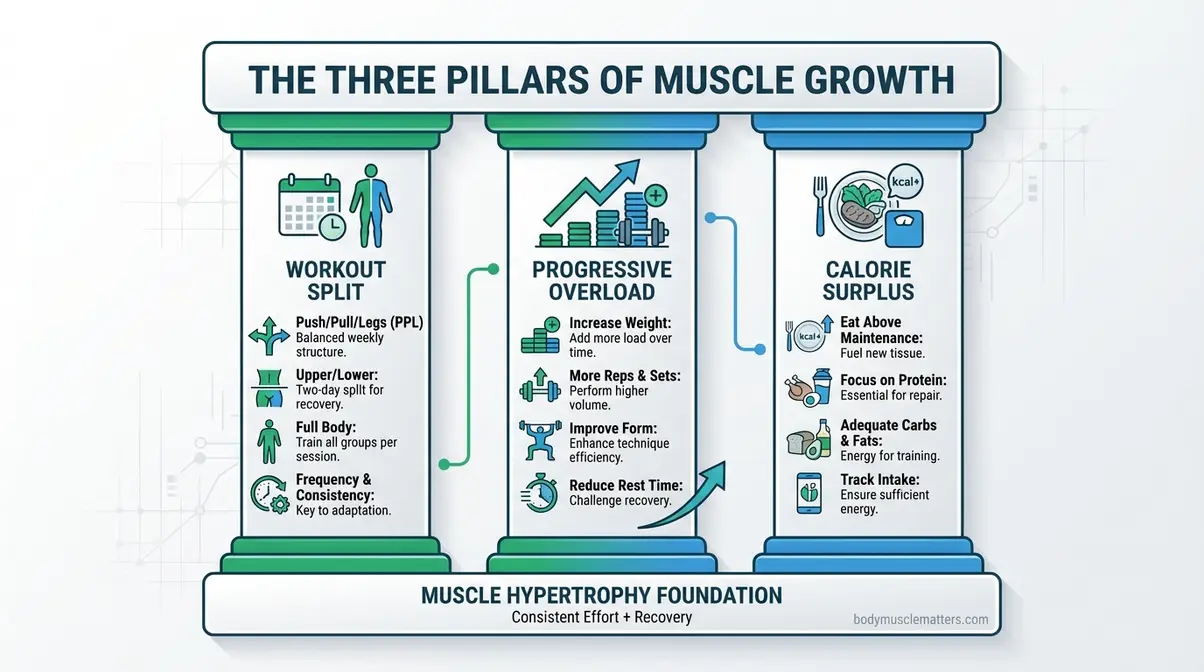
Caption: The Hypertrophy Trifecta: all three pillars must be active simultaneously for continuous muscle gain.
The Hypertrophy Trifecta
Muscle growth requires three non-negotiable pillars working in parallel — split selection, progressive overload, and nutritional surplus — and most gym-goers are missing at least one.
The Hypertrophy Trifecta consists of three interdependent pillars:
- Pillar 1 — Optimal split structure: The right training frequency and muscle grouping to deliver a sufficient hypertrophy stimulus
- Pillar 2 — Progressive overload: Systematically increasing training stress so muscles have a reason to adapt and grow
- Pillar 3 — Calorie and protein surplus: The raw nutritional materials your body uses to repair and build new muscle tissue
These pillars don’t operate in isolation. Progressive overload without a calorie surplus produces minimal growth because the body lacks the fuel to repair damaged muscle fibres. A perfect split without overload produces stagnation — you’re maintaining, not building. Consider this scenario: if you’re training Push/Pull/Legs three times per week but eating at maintenance calories, you’re delivering the stimulus without the raw materials for growth. All three must be in place simultaneously.
Assess Your Current Training Level
Before selecting a split, classify yourself honestly. The programming in Steps 1–3 is calibrated for intermediate lifters, with beginner and advanced callouts where relevant:
- Beginner: Training for fewer than 6 months, or inconsistently; still learning compound movement patterns
- Intermediate: Training consistently for 6–24 months; comfortable with squat, deadlift, bench press, and barbell row — but applying progressive overload inconsistently
- Advanced: Training for 2+ years on a structured programme; approaching the limits of beginner and intermediate adaptation
Most readers of this guide fall into the intermediate category. If that’s you, the templates in Step 1 are built for your level.
With your level confirmed, here’s exactly which split to use — and why the science backs it.
Step 1: Choose the Right Workout Split
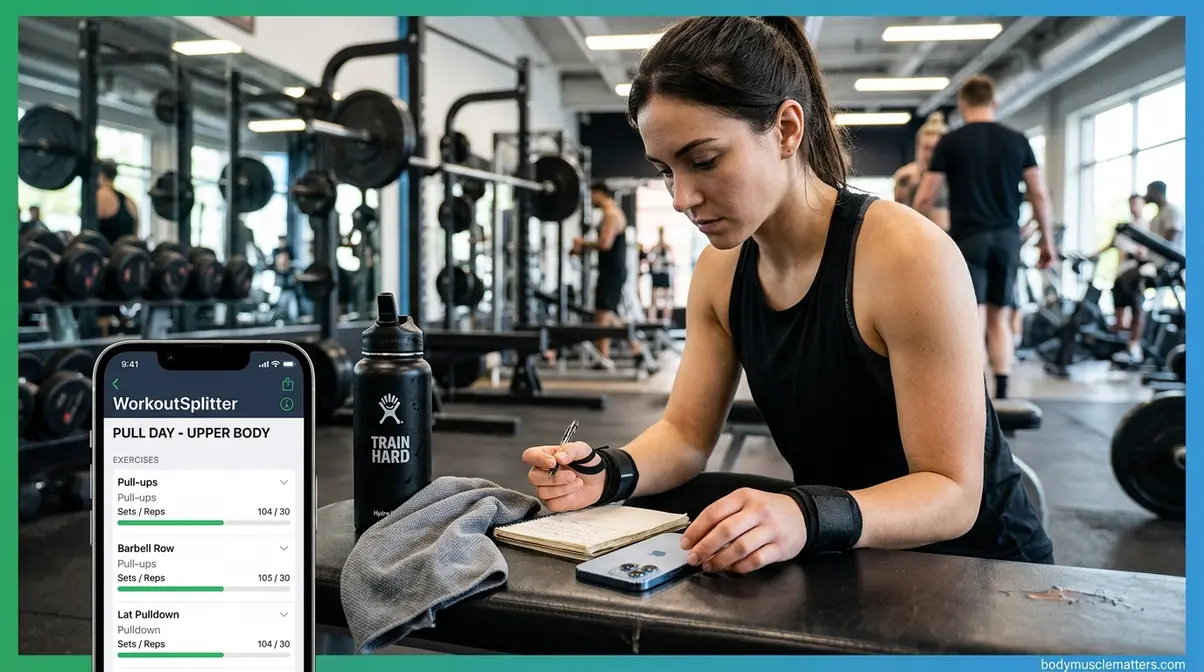
When determining how to optimise workout routine for muscle gain, split selection is Pillar 1 of The Hypertrophy Trifecta — and choosing the wrong split for your training age is the single most common cause of stalled progress among motivated gym-goers. Research supports training each muscle group at least twice per week for optimal hypertrophy stimulus, meaning high-frequency splits consistently outperform once-per-week “bro splits” for muscle gain (PMC, 2026). This step compares five structured splits — Push/Pull/Legs, Full-Body, Upper/Lower, the 3-3-3 rule, and 5/3/1 — with specific templates so you can choose and act at your next session.
Push/Pull/Legs (PPL) Split
Push/Pull/Legs is a 6-day training split that groups related muscle groups into dedicated sessions — and it’s the gold standard for intermediate hypertrophy. The structure is straightforward: Push day targets chest, shoulders, and triceps; Pull day targets back and biceps; Legs day targets quads, hamstrings, glutes, and calves. Running the cycle twice per week means each muscle group receives two high-quality training sessions in 7 days.
Why it works: Related muscle groups share neural pathways and recover together. This prevents the overlap fatigue you experience when training full-body every day, and it allows you to accumulate significantly more volume per muscle group per session.
“The push/pull/legs split is probably the most efficient workout split there is because all related muscle groups are trained together in the same workout.”
- PPL 6-Day Template:
- Day 1 — Push: Bench Press 4×8, Overhead Press 3×10, Lateral Raise 3×15, Tricep Pushdown 3×12
- Day 2 — Pull: Barbell Row 4×8, Lat Pulldown 3×10, Face Pull 3×15, Bicep Curl 3×12
- Day 3 — Legs: Squat 4×8, Romanian Deadlift 3×10, Leg Press 3×12, Calf Raise 4×15
- Days 4–6: Repeat the cycle. Day 7: Rest.
Ideal candidate: Intermediate lifters training 5–6 days per week who want maximum muscle stimulus per session. For a deeper breakdown of pairing muscle groups effectively, explore proven workout splits like Push/Pull/Legs.
PPL is ideal if you can train 5–6 days per week. If your schedule only allows 3–4 sessions, a Full-Body or Upper/Lower split delivers comparable results with fewer sessions.
Caption: A visual breakdown of how to structure your training week using the 3-3-3 rule for muscle gain.
Full-Body Splits for Beginners
Full-body training is the most effective approach for beginners and those returning after a break. The core logic: practising a squat three times per week builds technique and neural efficiency far faster than once per week. Early gains in new trainees are driven primarily by neurological adaptations — the nervous system learns to recruit muscle fibres more efficiently — not by hypertrophy itself. That said, full-body training still drives hypertrophy as frequency and load increase.
- 3-Day Full-Body Template:
- Day 1 (Mon): Squat 3×8, Bench Press 3×8, Barbell Row 3×8, Overhead Press 3×10
- Day 2 (Wed): Deadlift 3×5, Incline Press 3×10, Lat Pulldown 3×10, Leg Press 3×12
- Day 3 (Fri): Front Squat 3×8, Dumbbell Press 3×10, Cable Row 3×10, Romanian Deadlift 3×10
Each session hits all major muscle groups. Rotate exercise variations across the three days to manage fatigue and prevent monotony — this is the key to making full-body training sustainable over 8–12 weeks.
As training age increases and you’re handling heavier loads, full-body sessions become harder to recover from. That’s when the Upper/Lower split bridges the gap.
Upper/Lower Split
The Upper/Lower split offers four training sessions per week — two upper-body days and two lower-body days — making it the natural progression from full-body training and an efficient alternative to PPL for lifters with a 4-day schedule. Each muscle group is trained twice weekly, matching the frequency of PPL with lower total session volume.
- 4-Day Upper/Lower Template:
- Day 1 (Mon) — Upper Strength: Bench Press 4×5, Barbell Row 4×5, Overhead Press 3×8
- Day 2 (Tue) — Lower Strength: Squat 4×5, Romanian Deadlift 3×8, Leg Press 3×10
- Day 3 (Thu) — Upper Hypertrophy: Incline DB Press 3×10, Cable Row 3×12, Lateral Raise 3×15
- Day 4 (Fri) — Lower Hypertrophy: Front Squat 3×10, Leg Curl 3×12, Calf Raise 4×15
This split suits intermediate lifters who find PPL’s 6-day volume too fatiguing, or anyone who can commit to only 4 days per week without sacrificing muscle frequency.
All three splits above are frequency-based. The 3-3-3 rule takes a different approach — structuring your week around training TYPE rather than muscle group.
What is the 3-3-3 rule at the gym?
The 3-3-3 split is a weekly training framework — not a muscle-group split — built around three distinct categories of physical activity. Specifically: 3 strength training sessions, 3 cardio sessions, and 3 active recovery days per week. This structure prevents overtraining while maintaining cardiovascular health alongside muscle building. Evidence-based frequency guidance from Stronger by Science supports this balanced approach to training stimulus and recovery.
- Sample 3-3-3 Week:
- Mon / Wed / Fri: Strength training (use a PPL or Upper/Lower structure within these sessions)
- Tue / Thu / Sat: Cardio (30–45 minutes at moderate intensity)
- Sun: Active recovery (walking, yoga, or mobility work)
Who benefits: People who want a clear, sustainable weekly schedule that prevents overtraining while maintaining cardiovascular fitness alongside muscle building. The key limitation: three strength sessions per week is sufficient for beginners and early intermediates, but advanced lifters typically need 4–5 sessions for continued hypertrophy stimulus.
For lifters whose primary goal is strength-driven size — not just hypertrophy — the 5/3/1 programme offers a proven, periodised approach.
The 5/3/1 Programme
The 5/3/1 programme is a 4-week strength-led hypertrophy cycle developed by Jim Wendler, built around four core compound lifts: squat, bench press, deadlift, and overhead press. Each week follows a progressively heavier rep scheme:
- Week 1: 3 sets × 5 reps at 65%, 75%, and 85% of your 1-rep max (1RM)
- Week 2: 3 sets × 3 reps at 70%, 80%, and 90% of 1RM
- Week 3: 1 set × 5, 1 set × 3, 1 set × 1+ at 75%, 85%, and 95% of 1RM
- Week 4: Deload — 3 sets × 5 reps at 40%, 50%, and 60% of 1RM
The “+” in Week 3’s final set means performing an AMRAP (As Many Reps As Possible) set — completing as many reps as you can with good form. This AMRAP set is the primary progressive overload mechanism in 5/3/1, pushing past the prescribed minimum and generating maximum adaptive stimulus.
Ideal user: Intermediate to advanced lifters who want to build strength as the foundation for long-term hypertrophy. Not the optimal choice for pure bodybuilding goals where isolation volume is the priority.
Workout Split Comparison:
| Split | Sessions/Week | Best For | Muscle Groups Per Session | Ideal Training Age |
|---|---|---|---|---|
| Push/Pull/Legs | 6 | Intermediates wanting maximum volume | Related groups (push/pull/legs) | 6+ months |
| Full-Body | 3 | Beginners and returners | All major groups | 0–6 months |
| Upper/Lower | 4 | Intermediates with 4-day schedule | Upper or lower body | 6–18 months |
| 3-3-3 Rule | 3 strength + 3 cardio + 3 recovery | Those needing a balanced weekly structure | Varies by strength day | Any |
| 5/3/1 | 4 | Strength-focused intermediates/advanced | Compound-lift focused | 12+ months |
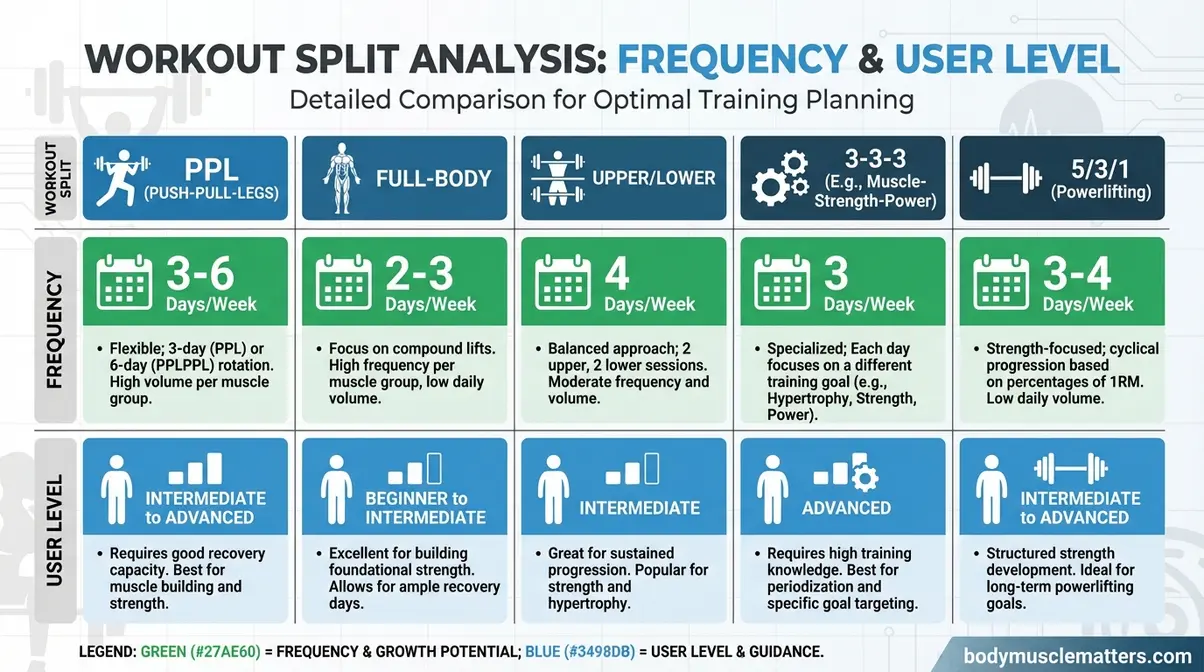
Caption: Five evidence-based workout splits compared by weekly frequency, ideal user, and training age.
Choosing the right split delivers the stimulus your muscles need. But stimulus alone doesn’t build muscle — you need to systematically increase that stimulus over time. That’s where Step 2 comes in: mastering the training variables that turn your chosen split into a continuous muscle-growth engine.
Step 2: Master Training Variables

If you want to know how to optimise workout routine for muscle gain, mastering progressive overload is mandatory. Choosing the right split from Step 1 delivers the stimulus — but without systematically increasing that stimulus, muscles have no reason to grow. This is Pillar 2 of The Hypertrophy Trifecta, and it’s where most intermediate lifters stall. A 2026 narrative review published in Sports Medicine found that 3–5 sets of 6–12 reps with 2–3 minute rest periods represents the optimal combination for hypertrophy in trained individuals (Sports Medicine review, PMC, 2026). This step gives you the exact numbers — no more guessing on weight, reps, or rest.
Set and Rep Ranges for Hypertrophy
The primary hypertrophy rep range is 6–12 reps per set. This range produces sufficient mechanical tension from heavier loads AND enough metabolic stress from the rep volume to drive muscle fibre growth. For sets per exercise, target 3–5. For weekly volume, aim for 10–20 sets per muscle group — beginners start at the lower end (10 sets), while more advanced lifters work toward 15–20 sets per muscle per week.
Lower rep ranges (1–5 reps) build strength with hypertrophy as a secondary benefit. Higher rep ranges (15–30 reps) can build muscle, but you must take those sets closer to failure for them to be effective. The Sports Medicine review (PMC, 2026) confirms that rep range flexibility exists — what matters most is proximity to failure and sufficient weekly volume.
RIR (Reps in Reserve) refers to how many reps you could still complete at the end of a set. An RIR of 2 means you stop two reps before true failure. Tracking RIR keeps your effort calibrated without requiring you to grind to failure on every set.
| Goal | Rep Range | Sets | RIR Target | Weekly Volume |
|---|---|---|---|---|
| Hypertrophy (primary) | 6–12 | 3–5 | 1–3 | 10–20 sets/muscle |
| Strength + Size | 3–6 | 4–6 | 2–3 | 8–15 sets/muscle |
| Muscular Endurance + Size | 12–20 | 2–4 | 0–2 | 12–25 sets/muscle |
Knowing your target rep range is the starting point. The next challenge is ensuring those numbers get harder over time — that’s the job of progressive overload.
Applying Progressive Overload
Progressive overload — the principle of systematically increasing training stress to force continuous muscle adaptation — is the engine behind all long-term muscle gain. The Hypertrophy Trifecta’s second pillar is where most intermediate lifters fail, not because they don’t know the concept, but because they’ve never applied it with a specific formula.
The 10% Rule: Increase your total training load (sets × reps × weight) by no more than 10% per week. Exceeding this threshold increases injury risk and impairs recovery. For example: if you bench press 60 kg × 3 sets × 8 reps this week (total volume: 1,440 kg), next week’s target is no more than 1,584 kg total volume.
Load vs. Rep Progression Equivalence: When you can’t add weight to the bar, add reps instead. The practical equivalence: adding 2.5 kg ≈ completing 2 additional reps at the same weight. So if you’re stuck at 80 kg × 8 reps, performing 80 kg × 10 reps is equivalent to progressing to 82.5 kg × 8 reps. This is the load-to-rep conversion no competitor currently explains with this specificity.
The Double Progression Method is the most reliable system for applying this in practice:
- Set a target rep range — for example, 8–12 reps
- Begin at the lower end: 8 reps per set
- Each session, add 1–2 reps until you reach 12 reps across all sets
- Once you hit 12 reps, add 2.5 kg and reset to 8 reps
- Repeat the cycle — this is progressive overload compounding over weeks and months
To understand the principles of hypertrophy and progressive overload in greater depth, including how load progression interacts with muscle fibre type recruitment, that resource covers the physiological detail this guide intentionally keeps practical.
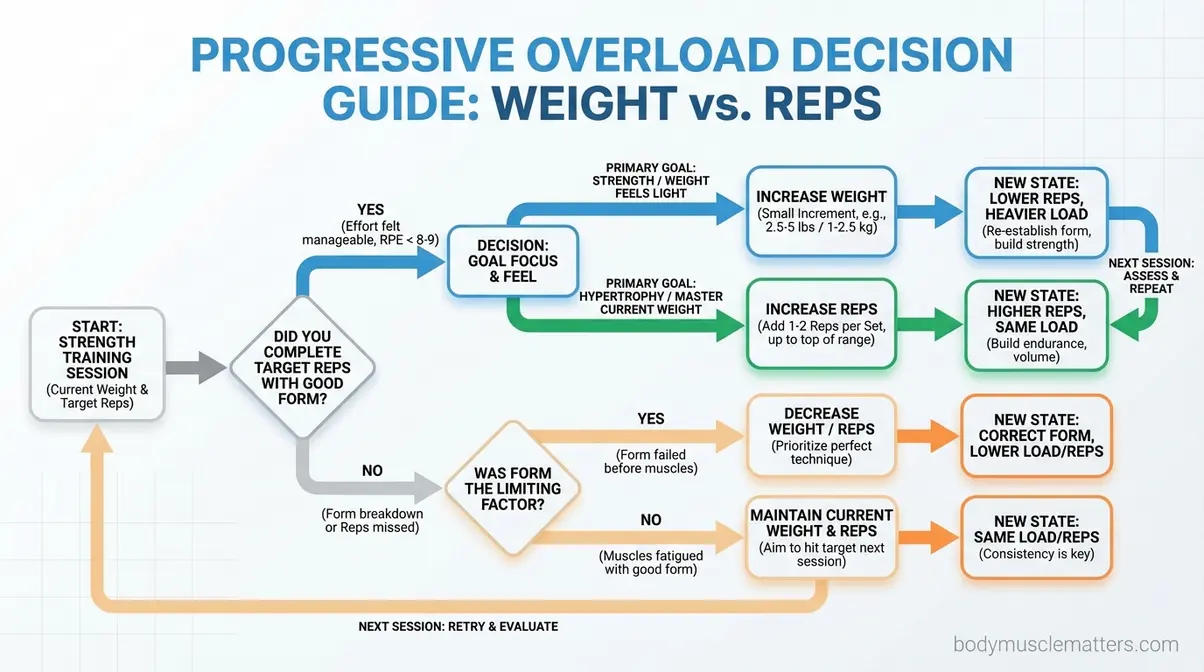
Caption: Use this decision flowchart to determine whether to add weight or reps at each session.
Progressive overload determines how hard you train. Rest periods determine how well you recover between sets — and the research on this is more conclusive than most gym-goers realise.
Optimal Rest Periods for Muscle Growth
For hypertrophy, 2–3 minute rest periods between sets produce significantly greater muscle growth than 60-second rest intervals. The mechanism is straightforward: longer rest allows full phosphocreatine replenishment in the working muscles, enabling heavier loads on subsequent sets. Evidence-based analysis from Stronger by Science, referencing the Henselmans and Schoenfeld meta-analyses, confirms this finding consistently across trained populations (2026).
A common counterargument is that shorter rest periods spike growth hormone, creating a superior anabolic environment. Research has largely debunked this. The transient hormonal spike from short rest does not translate to greater long-term muscle growth — the mechanical tension generated by heavier loads (only possible with adequate rest) is the primary hypertrophy driver.
- Practical rest targets:
- Compound lifts (squat, deadlift, bench press, barbell row): 2–3 minutes
- Isolation exercises (curls, lateral raises, tricep pushdowns): 60–90 seconds
- AMRAP sets: 3–5 minutes before the next working set
Once your rest periods are optimised, advanced training techniques can help you accumulate more volume in less time — without sacrificing recovery.
Advanced Training Techniques
Advanced training methods increase volume and intensity without requiring additional sessions. Apply them only after 8+ weeks of consistent training on your chosen split, and limit their use to 1–2 exercises per session maximum to avoid excessive fatigue accumulation.
Supersets pair two non-competing exercises back-to-back — for example, bench press immediately followed by barbell row. Because these exercises target different muscle groups, one recovers while the other works. Research cited in the PMC 2026 review confirms supersets reduce session time by 20–30% without compromising hypertrophy stimulus when exercises are non-competing.
Drop Sets extend a set beyond failure by immediately reducing the weight by 20–30% and continuing for additional reps. This maximises metabolic stress in a single set and is particularly effective for isolation exercises. Use sparingly — 1–2 drop sets per session prevents excessive fatigue from compounding across your training week.
Rest-Pause involves performing a set to near-failure, resting 10–15 seconds, then squeezing out 2–3 additional reps. This technique is effective for breaking through a sticking point on a specific exercise. Reserve it for the final working set only.
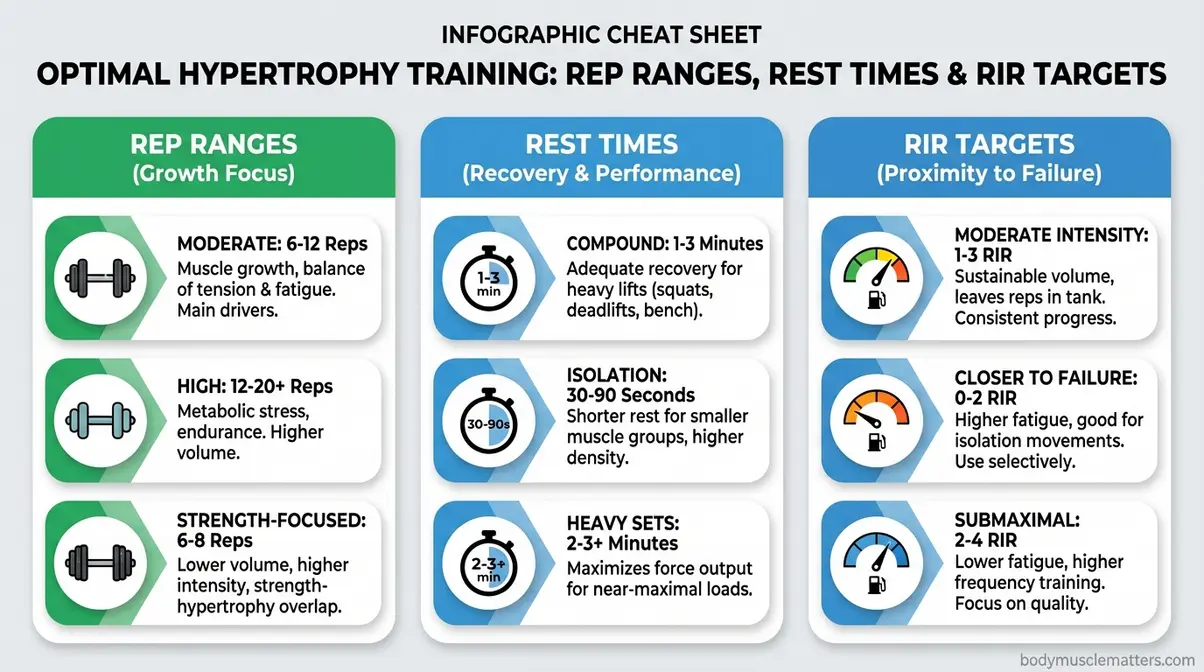
Caption: Reference this cheat sheet when programming sets, reps, and rest intervals for maximum muscle growth.
Steps 1 and 2 cover the training side of The Hypertrophy Trifecta. Step 3 addresses the recovery side — because without the right timing, nutrition, and lifestyle support, your training stimulus won’t convert into muscle.
Step 3: Optimise Timing, Nutrition, and Recovery

Training creates the stimulus for muscle growth — but nutrition and recovery are what the body uses to actually build that muscle. Without Pillar 3, the first two pillars produce diminishing returns. This step covers three evidence-based factors: training timing, your nutritional targets (calorie surplus and protein), and the emerging question of building muscle while on GLP-1 medications like Zepbound.
Morning vs Evening Training
Evening training — specifically the window between 16:00 and 20:00 — is associated with marginally greater strength and power output compared to morning sessions. A 2026 narrative review on circadian regulation and exercise performance (PMC, 2026) confirms that peak core body temperature, neuromuscular force production, and muscle clock gene expression all occur in the late afternoon and early evening. In practical terms, grip strength peaks at approximately 17:30, and maximal strength output is measurably lower in the early morning hours.
However, the performance advantage of evening training is typically 1–3%. The practical conclusion is clear: the best time to train is the time you can train consistently. A morning session you never miss outperforms an evening session you frequently skip. Consistency is the dominant variable, not circadian timing.
One practical note for morning trainers: allow 30–60 minutes after waking before beginning high-intensity sessions. Core body temperature and cortisol levels need time to stabilise, and early-morning training without this buffer is associated with greater perceived exertion on the same relative load.
Timing matters less than you think. What matters far more is the nutritional environment you create around your training — starting with your calorie target.
Calorie Surplus and Protein Targets
For muscle gain, a lean bulk calorie surplus of 200–500 kcal above your Total Daily Energy Expenditure (TDEE) is the evidence-based target. A larger surplus (500+ kcal) accelerates muscle gain but increases fat accumulation proportionally. Most intermediate lifters do well at 250–350 kcal above maintenance — enough to fuel growth without excessive fat gain over a 12–16 week bulk.
Protein target: 1.4–2.0g per kilogram of bodyweight per day. UCLA Health recommends this range for individuals actively pursuing muscle growth — roughly double the standard dietary reference intake. For a 75 kg person, that translates to 105–150g of protein daily. Distribute intake across 3–4 meals, targeting 30–40g per meal to maximise muscle protein synthesis throughout the day.
Practical protein sources: chicken breast, eggs, Greek yoghurt, cottage cheese, lean beef, fish, and protein shakes as a supplement to whole foods — not a replacement.
- Sample daily intake for a 75 kg intermediate lifter:
- Breakfast: 40g protein
- Lunch: 35g protein
- Dinner: 40g protein
- Post-workout shake: 25g protein
- Total: 140g (within the 105–150g target range)
For further guidance on optimizing your nutrition and maintaining a calorie surplus alongside your training schedule, that resource covers meal timing, tracking tools, and surplus management across a full training cycle.
For most lifters, the calorie surplus strategy above is straightforward to implement. But for those using GLP-1 medications like Zepbound, the picture is more complex — and no other guide currently addresses it.
Can I build muscle while on Zepbound?
Yes, building muscle on Zepbound is possible — but it requires deliberate, non-negotiable attention to protein and resistance training.
GLP-1 receptor agonists — a class of medications including tirzepatide (Zepbound) and semaglutide (Ozempic/Wegovy) — suppress appetite significantly. This creates a specific challenge for muscle building: maintaining a calorie surplus becomes difficult when hunger signals are blunted, and hitting protein targets requires active effort rather than intuitive eating.
The core risk is significant. Without adequate protein and resistance training, a meaningful portion of weight lost on GLP-1 medications comes from muscle tissue rather than fat alone. Research published in PMC (2026) and corroborated by PubMed (2026) indicates that lean mass can account for 25–40% of total weight lost on GLP-1 receptor agonists without intervention. The American Heart Association’s analysis (AHA Journals, 2026) found semaglutide associated with lean mass loss of up to 40% of total weight loss.
The muscle-preservation protocol for GLP-1 users — three non-negotiable actions:
- Prioritise protein above all other macros: Target the upper end of the evidence-based range — a minimum of 2.0g per kg of bodyweight daily. With appetite suppressed, hitting this target requires deliberate planning, not intuition.
- Never skip resistance training: Progressive overload signals the body to retain and build muscle even when in a caloric deficit. This is the single most powerful counter to GLP-1-driven lean mass loss, confirmed by Massachusetts General Hospital’s endocrinology guidance (Mass General Advances, 2026).
- Track your food intake actively: Appetite suppression from Zepbound can cause significant under-eating without you realising it. A food tracking app removes the guesswork and ensures you’re consistently hitting protein targets.
Medical Disclaimer: If you are taking Zepbound or any GLP-1 receptor agonist medication, consult your prescribing physician before significantly changing your exercise intensity or caloric intake. The guidance above is educational and does not constitute medical advice.
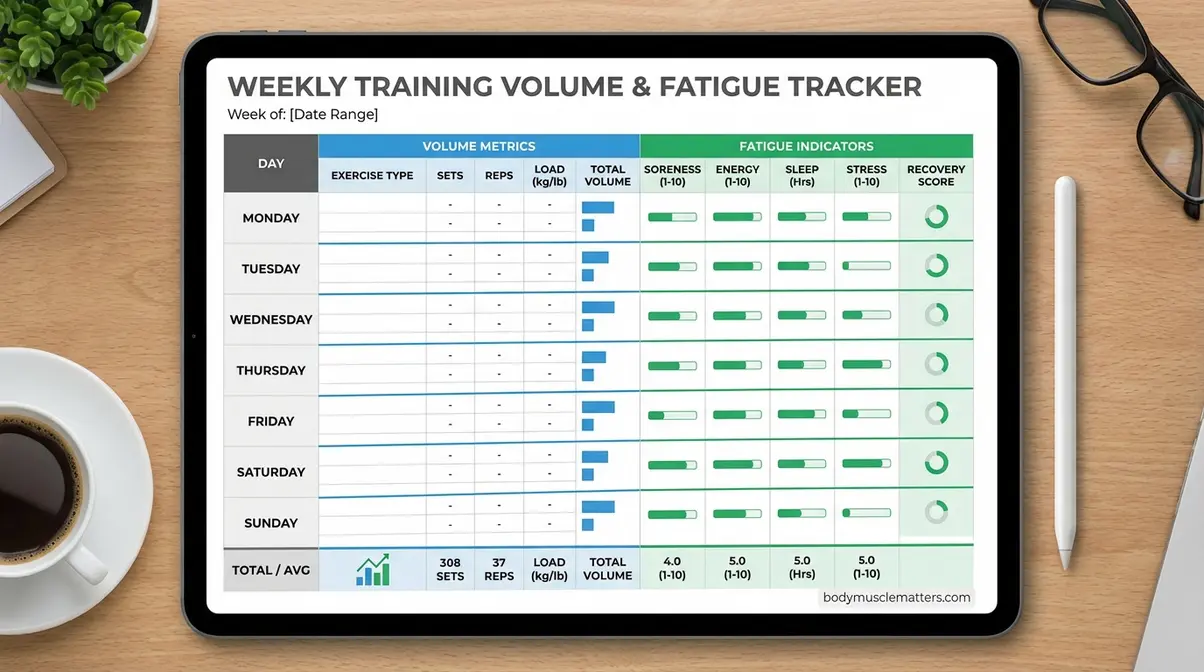
Caption: Track weekly training volume and fatigue signals to avoid overtraining and ensure consistent progressive overload.
The three steps of The Hypertrophy Trifecta are now complete. Before you start, there are a few common mistakes that derail even well-designed programmes — knowing them in advance will save you weeks of stalled progress.
Common Mistakes That Stall Muscle Growth

Even a technically sound programme fails when specific behavioural patterns undermine it. These aren’t generic warnings — they’re the specific scenarios that most frequently derail intermediate lifters who are otherwise doing everything right.
Pitfall 1: Chasing Programme Variety
The scenario: you switch from PPL to 5/3/1 to a YouTube influencer’s programme every 3–4 weeks because “it’s not working yet.”
What goes wrong: muscle growth requires 8–12 weeks of consistent stimulus before meaningful hypertrophy becomes visible. Switching programmes resets the neurological adaptation period and prevents progressive overload from compounding. You’re essentially starting over each time — never letting any system run long enough to produce results.
How to avoid it: commit to any structured programme for a minimum of 8 weeks before evaluating results. Use objective metrics — are your lifts increasing? Are you adding reps or weight each week? If yes, the programme is working, even if the mirror doesn’t show it yet.
Programme consistency solves the first pitfall. The second is more technical — and more common among experienced lifters.
Pitfall 2: Inconsistent Overload
Progressive overload done inconsistently is the most common reason trained lifters plateau. The scenario: lifting the same weight for the same reps for months because “I’m maintaining my strength.”
What goes wrong: muscles only grow in response to a stimulus that exceeds what they’ve previously adapted to. Maintenance training maintains muscle — it does not build it. Your body is extraordinarily efficient at doing the minimum required.
How to avoid it: track every session in a notebook or app. If you can’t beat last week’s reps or weight on a given exercise, that’s a signal to review your sleep, nutrition, or cumulative fatigue — not to accept the plateau as permanent. The Double Progression Method from Step 2 gives you a specific system for this.
For most readers, consistent application of Steps 1–3 will deliver steady progress. Certain situations, however, require personalised guidance that a general article cannot provide.
When to Seek Professional Guidance
Three scenarios where professional input is essential:
- You’re on prescription medication — especially GLP-1 medications, immunosuppressants, or cardiac medications. Consult your physician before increasing training intensity or changing caloric intake significantly.
- You have a pre-existing musculoskeletal injury — a physiotherapist or sports medicine professional should clear you before adding load to the affected area.
- You’ve followed a structured programme for 12+ weeks with zero measurable progress — a certified personal trainer (CSCS or equivalent) can assess form, programming, and nutrition gaps that a self-directed approach cannot identify.
Frequently Asked Questions
Which workout routine is best for muscle gain?
The Push/Pull/Legs (PPL) split is widely considered the most effective workout routine for intermediate lifters targeting muscle gain. Beginners typically see the fastest results from a 3-day full-body routine, while intermediates training 4 days per week often benefit from an upper/lower split. Whichever split you choose, the best routine is ultimately the one you can follow consistently for 8–12 weeks with progressive overload applied every session.
What is the 5-3-1 rule in gym?
The 5/3/1 programme is a 4-week strength training cycle built around four core compound lifts: squat, bench press, deadlift, and overhead press. Each week follows a progressively heavier rep scheme to systematically build strength over time. Week 1 uses 3 sets of 5 reps, Week 2 uses 3 sets of 3 reps, Week 3 uses 5, 3, and 1+ reps, and Week 4 is a deload at reduced intensity. The final set of Week 3 is performed as an AMRAP (As Many Reps As Possible) set to drive progressive overload beyond the prescribed minimum. It suits intermediate to advanced lifters focused on building strength as the foundation for long-term hypertrophy.
Your Next Step Starts at Your Next Session
For intermediate lifters looking to learn how to optimise workout routine for muscle gain, The Hypertrophy Trifecta provides a complete, actionable system: choose a structured split — PPL, Upper/Lower, or 5/3/1 — apply the 10% progressive overload rule consistently, and support your training with 1.4–2.0g of protein per kg of bodyweight daily (UCLA Health). Research confirms that 3–5 sets of 6–12 reps with 2–3 minute rest periods is the optimal combination for hypertrophy in trained individuals (PMC, 2026). All three pillars must be active simultaneously — removing any one stalls results.
Most gym-goers optimise one pillar — usually training — while neglecting the other two. That’s where The Hypertrophy Trifecta framework earns its value: it makes all three pillars non-negotiable and gives you a diagnostic tool when progress stalls. Ask yourself which pillar is weakest — split selection, progressive overload consistency, or nutrition — and address that first. The answer is almost always the one you’ve been avoiding.
Start this week by selecting your split from Step 1 — most intermediate lifters do best beginning with a 4-day Upper/Lower split before progressing to Push/Pull/Legs. Track your first three sessions, apply the Double Progression Method to one exercise per day, and audit your protein intake against the 1.4–2.0g/kg target. These three actions, done consistently, are where muscle growth actually begins.
Related posts:
StrongLifts 5x5 for Beginners: Complete Guide 2026
How to Get a Bigger Bum Without Exercise: 3-Tier Guide
What Muscles Does the StairMaster Work? 6 Groups
Olympic Weightlifting vs Powerlifting: 2026 Guide
What Kills Muscle Gains? 7 Proven Saboteurs to Fix Now
Best Strength Training Apps for Women: Top 7 Picks

Callum
Hi, I'm Callum, the founder of Body Muscle Matters. I'm not a certified trainer, I'm a self taught lifter who started this site to share what I've learned from my own training and a lot of trial and error. Everything here comes from real experience and honest research, written the way I'd explain it to a friend who is just getting started. My goal is simple: practical, no hype fitness advice you can actually use.