
This guide provides an integrated system to build visible muscle: a structured workout schedule, a complete nutrition framework, and a science-backed recovery protocol. Our recommendations are grounded in peer-reviewed research from the American College of Sports Medicine and PubMed, and reviewed by certified fitness professionals.
Many intermediate lifters feel frustrated: you show up consistently and put in genuine effort, yet your physique has barely changed in months. This plateau almost always comes down to treating training, nutrition, and recovery as three separate tasks rather than one interconnected system. When you fix the system, the results follow.
By the end of this guide, you will have three complete workout splits for your experience level, a macronutrient framework from clinical research, and a recovery protocol to turn rest days into growth days. As with any new fitness program, consult a certified personal trainer or physician before you begin, particularly if you have an existing injury or health condition.
A complete workout schedule and nutrition for muscle building requires three equally critical pillars — training stimulus, nutritional support, and recovery quality — known as The Gains Triangle. Neglect any one pillar and it actively limits the output of the other two.
- Train 3–5 days per week using compound lifts and progressive overload across a split matched to your experience level.
- Eat 1.6–2.2g of protein per kg of body weight daily (PubMed Central, 2018) — distributed across 4+ meals, not front-loaded post-workout.
- Prioritize 7–9 hours of sleep: one night of sleep deprivation reduces muscle protein synthesis by 18% (PubMed Central, 2021).
- A 300–500 calorie surplus above your maintenance fuels a lean bulk with minimal fat gain.
- The Gains Triangle — training + nutrition + recovery working in sync — is what separates consistent gainers from perpetual plateauers.
How Muscles Grow: The Science of Hypertrophy
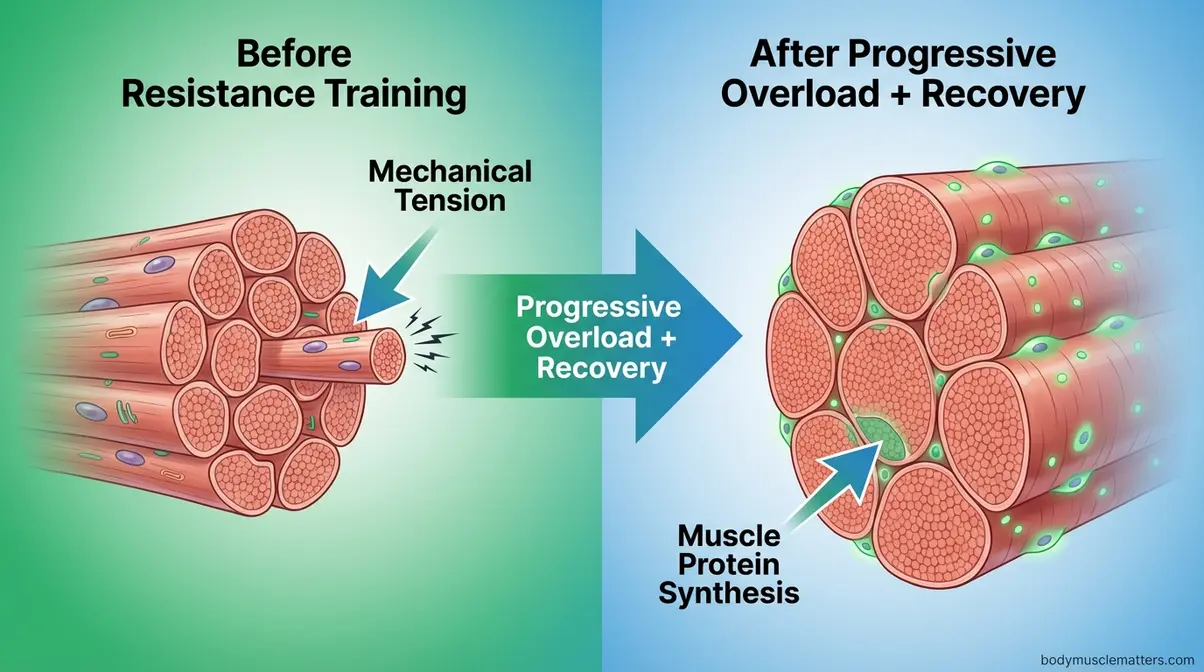
Hypertrophy, the process by which muscle fibers increase in size, is a predictable response to progressive resistance training. The American College of Sports Medicine recommends 1–3 sets of 8–12 repetitions at 60–80% of one-rep maximum as the standard for hypertrophy-focused training (ACSM resistance training guidelines, ACSM, 2024). This forms the foundation of The Gains Triangle — the principle that muscle growth is governed by three interdependent pillars: training stimulus, nutritional support, and recovery quality. If one pillar is weak, it caps the output of the other two.
Most intermediate lifters mistakenly focus on training variety when research shows the primary driver of hypertrophy is systematic, progressive mechanical stress.
The Role of Progressive Overload
Progressive overload is the systematic practice of increasing training stress over time to force adaptation. When muscle fibers experience mechanical tension beyond what they are used to, the body repairs them thicker and stronger. Without progressively increasing that stress, adaptation stalls.
This process is driven by progressive resistance training. Studies on progressive overload confirm that progression by either increasing load or repetitions effectively promotes gains in muscle strength and hypertrophy (PubMed, 2024). The implication is clear: if you lift the same weight for six weeks, your muscles have no biological reason to grow. The application is straightforward. If you bench press 3 sets of 8 reps at 60kg, aim for 3×9 or 62.5kg next week—not a different exercise.
Compound vs. Isolation Exercises
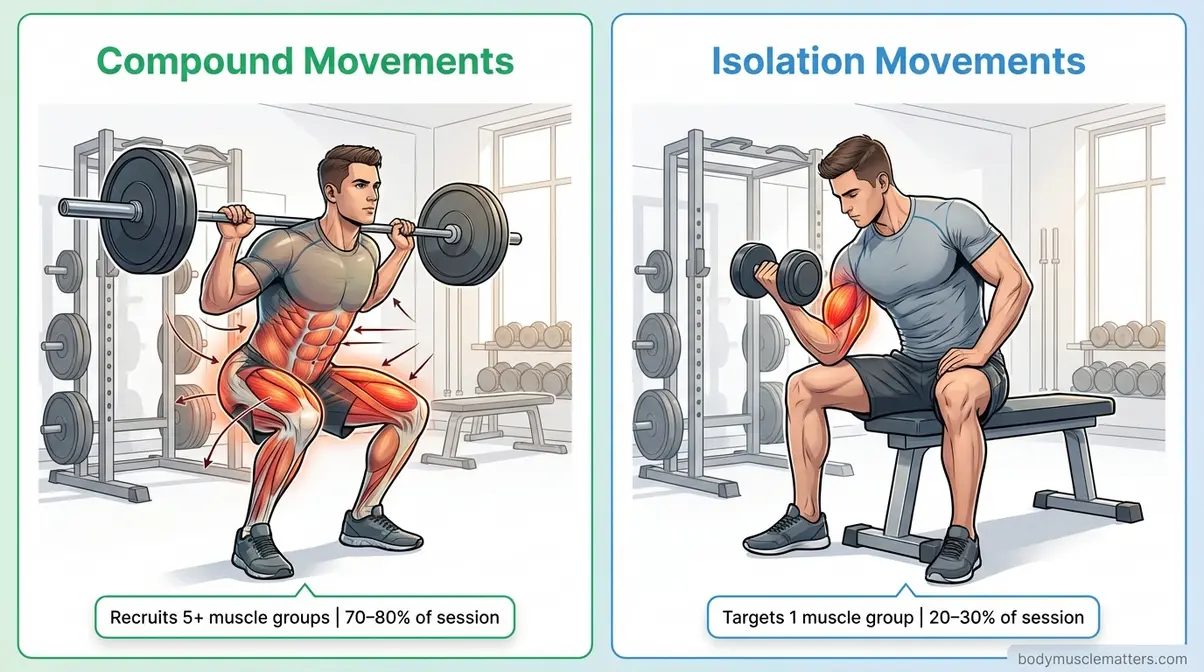
Compound exercises—multi-joint movements like squats, deadlifts, and bench press—are the foundation of any mass-building plan. They recruit multiple large muscle groups, activate more total muscle fiber, and generate a greater hormonal response than isolation work alone.
Isolation exercises (e.g., bicep curls, lateral raises) are useful supplements after compound work is done to address lagging body parts or add volume without accumulating systemic fatigue. As a practical rule, structure each session so 70–80% of your working sets are compound movements.
| Movement Type | Example Exercises | Primary Role | Session Priority |
|---|---|---|---|
| Compound | Squat, Deadlift, Bench Press, Row | Maximum mass stimulus | First 70–80% of sets |
| Isolation | Curl, Lateral Raise, Tricep Pushdown | Lagging muscle detail | Final 20–30% of sets |
Pyramid Sets and Rep Schemes Explained
A pyramid set starts with lighter weight at higher reps and progressively adds load while reducing reps—for example, 10 reps at 60kg → 8 reps at 65kg → 6 reps at 70kg. This combination of warming up the joints and then recruiting maximum motor units builds both size and strength concurrently.
Straight sets—using the same weight and rep count for every set—are also effective for hypertrophy. Choose the method that allows you to apply progressive overload most consistently.
| Rep Scheme | Best For | Example |
|---|---|---|
| Pyramid Sets | Strength + size simultaneously | 10 × 60kg → 8 × 65kg → 6 × 70kg |
| Straight Sets | Hypertrophy consistency | 4 × 10 at the same load |
| Reverse Pyramid | Heavy first, volume after | 5 × 80kg → 8 × 72.5kg → 10 × 65kg |
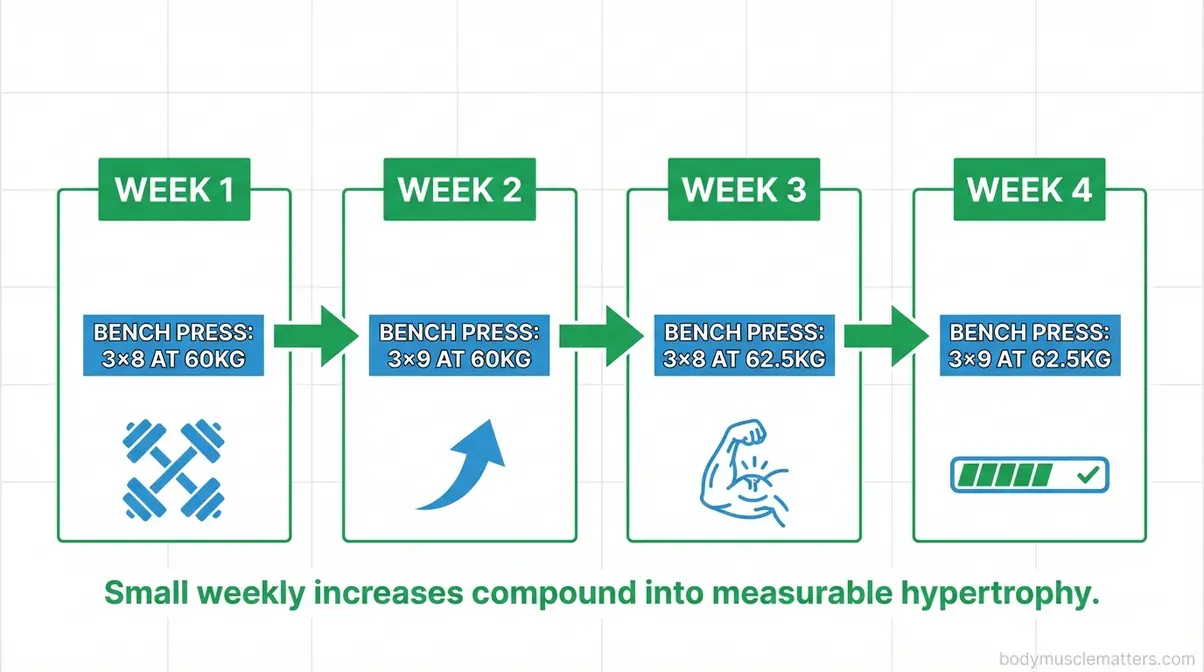
Caption: A 4-week progressive overload timeline showing how small weekly load increases in compound lifts compound into measurable hypertrophy gains.
Now that you understand the mechanisms of muscle growth, you can apply these principles to a weekly workout schedule.
The Best Workout Splits for Every Experience Level
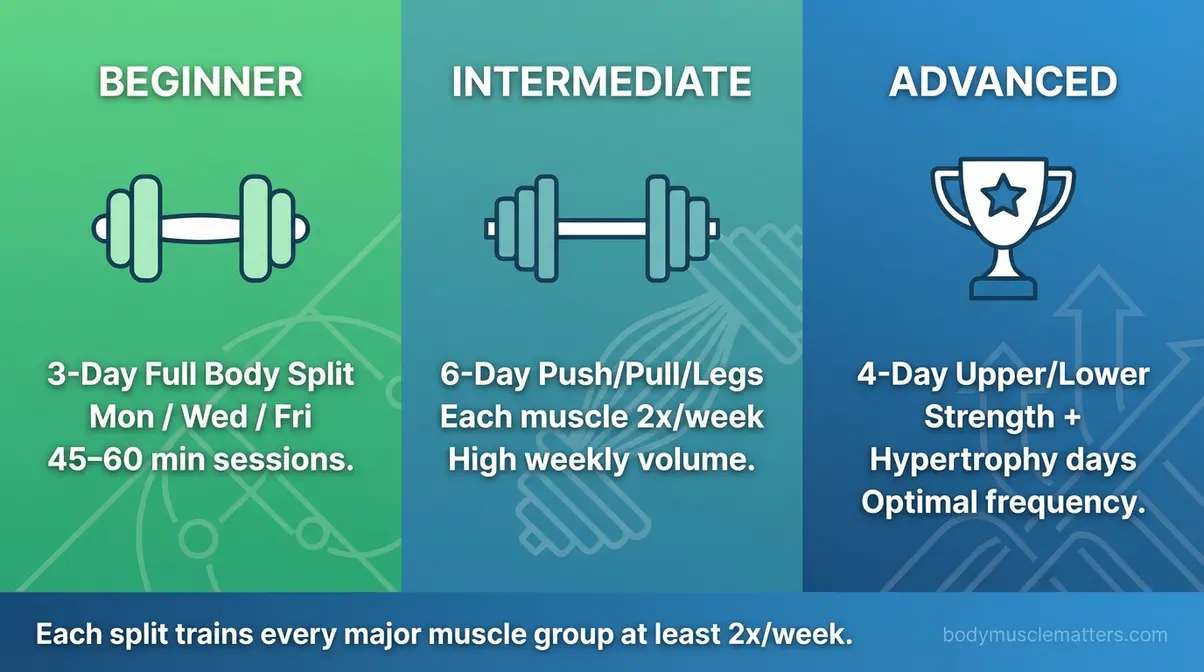
The right workout schedule and nutrition for muscle building depends on your experience level. Training each major muscle group at least twice per week produces significantly greater hypertrophy gains than once-a-week sessions (ACSM, 2024). Three structured splits cover the full spectrum of training experience:
- Beginner (0–12 months): 3-Day Full Body Split
- Intermediate (12–36 months): Push/Pull/Legs (PPL) Split
- Advanced (2+ years): 4-Day Upper/Lower Split
Each split is designed to optimize the training pillar of The Gains Triangle. The nutrition and recovery pillars, covered next, must be calibrated to your chosen split to complete the system.
Beginner 3-Day Full Body Split
Who this is for: 0–12 months of consistent training. Beginners need frequent practice with compound movements to build motor efficiency. A 3-day full body split provides this with adequate recovery.
Weekly structure: Monday / Wednesday / Friday (or any three non-consecutive days).
Sample workout (repeat each session):
- Barbell or Goblet Squat — 3 sets × 8–10 reps
- Bench Press or Push-up Variation — 3 × 8–10
- Dumbbell Row — 3 × 10–12
- Overhead Press — 3 × 8–10
- Romanian Deadlift — 3 × 10–12
- Plank — 3 × 30–45 seconds
Progression rule: When you complete all reps with good form across all three sets for two consecutive sessions, add 2.5–5kg to the bar.
| Goal | Type | Level | Days/Week | Session Length |
|---|---|---|---|---|
| Muscle & Strength | Full Body | Beginner | 3 | 45–60 min |
Intermediate Push/Pull/Legs (PPL) Split
Push/Pull/Legs (PPL) organizes sessions by movement pattern: Push (chest, shoulders, triceps), Pull (back, biceps), and Legs. Each muscle group is hit twice per week on a 6-day rotation.
Who this is for: 12–36 months of consistent training. At this stage, your body can handle higher weekly volume if your nutrition and sleep support the demand.
Weekly structure:
| Day | Session |
|---|---|
| Monday | Push |
| Tuesday | Pull |
| Wednesday | Legs |
| Thursday | Push |
| Friday | Pull |
| Saturday | Legs |
| Sunday | Rest |
Sample exercises (3–4 sets × 8–12 reps):
- Push: Bench Press, Overhead Press, Cable Lateral Raise, Tricep Pushdown
- Pull: Barbell Row, Pull-up or Lat Pulldown, Face Pull, Bicep Curl
- Legs: Barbell Squat, Romanian Deadlift, Leg Press, Calf Raise
Progression: Apply progressive overload weekly by adding load or reps to compound lifts.
Advanced 4-Day Upper/Lower Split
The Upper/Lower split is the most evidence-supported structure for intermediate-to-advanced lifters, training each muscle group twice weekly with distinct strength and hypertrophy sessions.
Weekly structure:
| Day | Session | Focus |
|---|---|---|
| Monday | Upper A | Strength — heavy compound work |
| Tuesday | Lower A | Squat-dominant |
| Wednesday | Rest | Recovery |
| Thursday | Upper B | Hypertrophy — moderate load, higher reps |
| Friday | Lower B | Hinge-dominant |
| Saturday–Sunday | Rest | Recovery |
Sample Sessions:
- Upper A (Strength): Bench Press 4×5–6, Barbell Row 4×5–6, Overhead Press 3×6–8
- Upper B (Hypertrophy): Incline DB Press 3×10–12, Cable Row 3×10–12, Lateral Raise 3×12–15
- Lower A (Squat): Barbell Back Squat 4×5–6, Romanian Deadlift 3×8–10, Leg Press 3×10–12
- Lower B (Hinge): Deadlift 4×4–5, Bulgarian Split Squat 3×10 per leg, Leg Curl 3×10–12
Lower-rep strength days build load capacity, while higher-rep hypertrophy days accumulate metabolic stress, driving faster gains together than either stimulus alone.
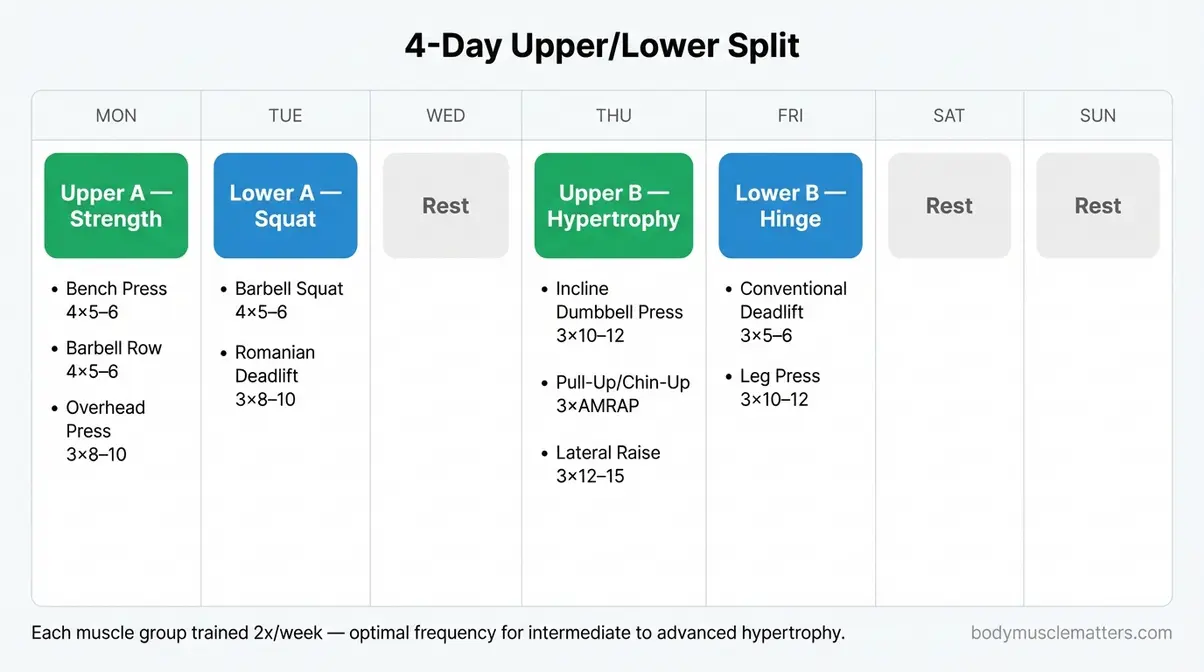
Caption: The 4-day Upper/Lower split calendar — the most evidence-supported weekly structure for intermediate and advanced lifters targeting hypertrophy.
Summary comparison:
| Split | Type | Level | Days/Week | Muscle Group Frequency | Weekly Volume per Group |
|---|---|---|---|---|---|
| 3-Day Full Body | Full Body | Beginner | 3 | 3×/week | Low–Moderate |
| PPL | Push/Pull/Legs | Intermediate | 6 | 2×/week | Moderate–High |
| Upper/Lower | Upper/Lower | Advanced | 4 | 2×/week | High |
This 4-day workout schedule forms the backbone of what most intermediate lifters need. Download the full printable workout logs for all three splits in the free Muscle Building Toolkit.
Fueling Growth: Your Complete Nutrition Blueprint
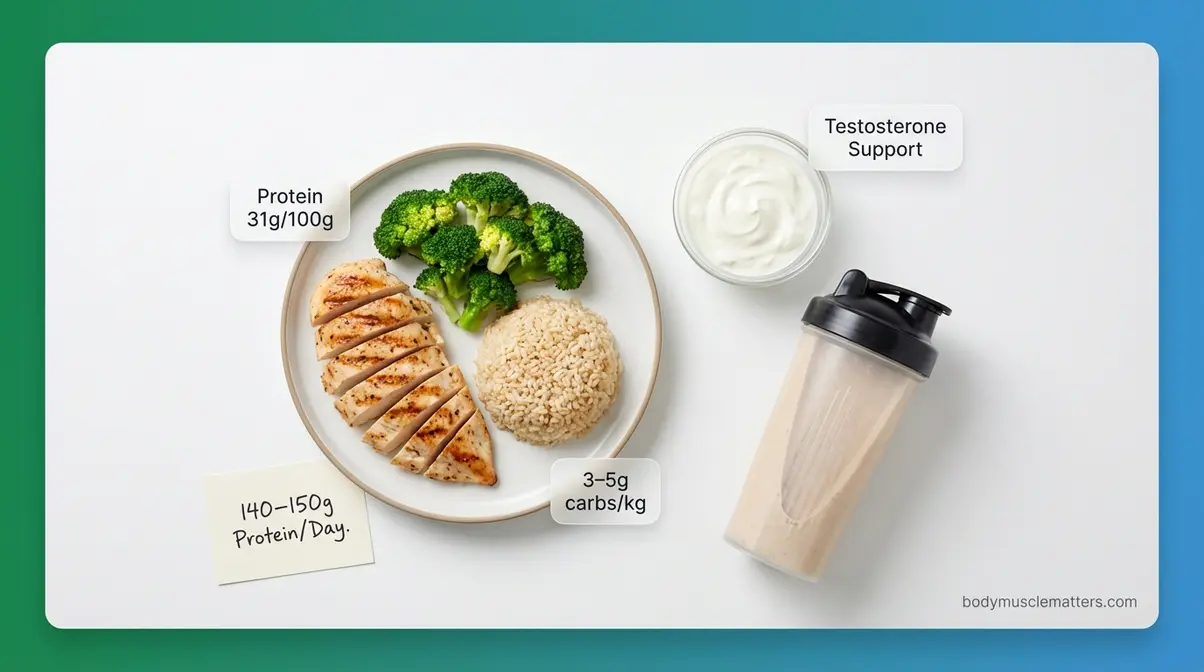
If you’re training hard but the scale isn’t moving, the problem is likely nutrition, not your workout. Without a caloric surplus—consistently consuming more calories than your body burns—and sufficient protein, even the best training split will fail. This is the nutrition pillar of The Gains Triangle.
Progressive overload is the primary driver of muscle hypertrophy (PubMed, 2024)—but it’s an engine without fuel if it lacks caloric support.
Calculating Your Lean Bulk Surplus
A lean bulk requires a controlled caloric surplus to support muscle growth without excessive fat gain.
- Calculate your TDEE (Total Daily Energy Expenditure) using a reputable online calculator.
- Add 300–500 calories to your TDEE. This is a commonly recommended starting point for a lean bulk (lean bulk calorie guidance, Healthline).
- Monitor weekly bodyweight. Aim for 0.25–0.5kg of weight gain per week. If you’re gaining faster, reduce the surplus; if the scale is stagnant after two weeks, add 100–200 more calories.
A “hardgainer,” someone who finds it genuinely difficult to gain weight, may need a 500–700 calorie surplus initially.
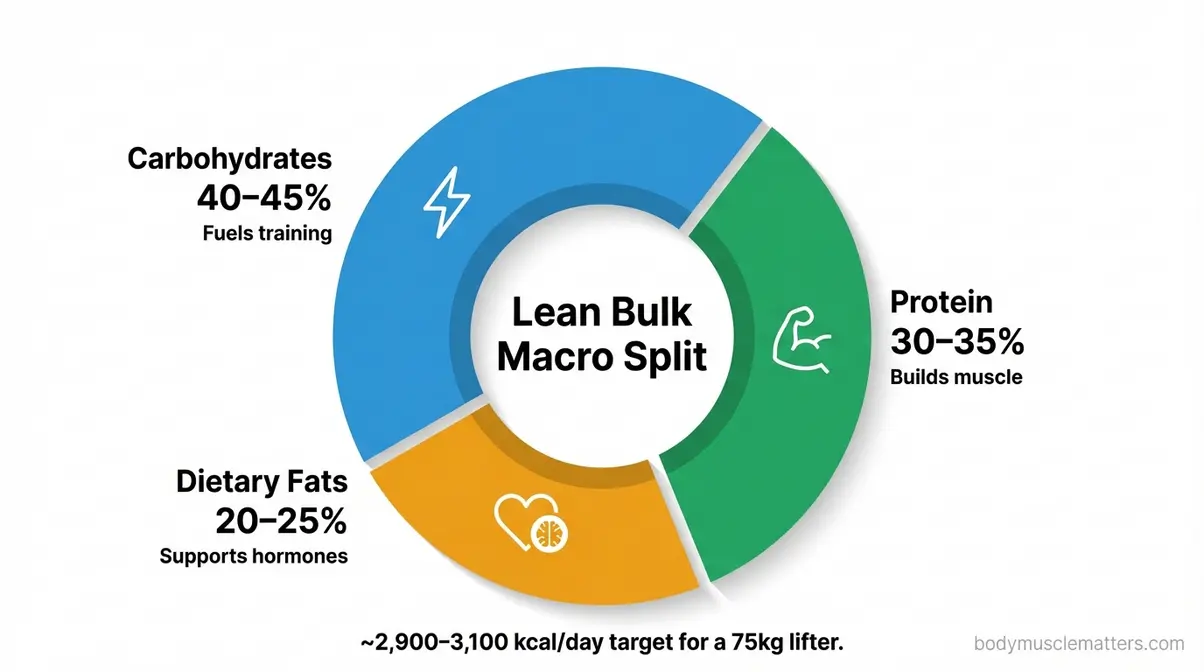
Caption: A lean bulk macro split — approximately 30–35% protein, 40–45% carbohydrates, and 20–25% fats — provides an optimal fuel-to-growth ratio.
How Much Protein Do You Actually Need?
To maximize muscle protein synthesis, research supports a daily protein intake of 1.6 to 2.2 grams per kilogram of body weight for individuals engaged in resistance training. This evidence comes from a peer-reviewed meta-analysis on optimal protein intake for muscle growth (PubMed Central, 2018).
For a 75kg lifter, this is 120g/day (minimum) to 165g/day (upper range). A practical target is 140–150g per day. Distribute this across four or more meals daily.
- High-protein food sources:
- Chicken breast — 31g per 100g
- Eggs — 6g per egg
- Greek yogurt — 17g per 100g
- Whey protein powder — 20–25g per scoop
Carbs, Fats, and the Hardgainer
Carbohydrates are the primary fuel for weight training. Aim for 3–5g of carbs per kg of body weight on training days. Dietary fats are essential for hormone production, including testosterone. Keeping dietary fat at 20–35% of total daily calories supports this hormonal environment.
Hardgainers often succeed by focusing on calorie-dense foods like oats, rice, nut butters, and olive oil, which deliver more calories per bite and make a sustained surplus more realistic.
Supplements Worth Considering
Only two supplements have strong evidence for muscle building.
- Creatine Monohydrate: The most researched performance supplement. It supports strength and power output, enabling greater progressive overload. The standard dose is 3–5g daily.
- Whey Protein: A convenient tool to hit daily protein targets. It is equivalent to whole food protein when total daily protein intake is equal.
What to skip: Testosterone boosters, fat burners, and BCAAs (which are redundant if you’re hitting daily protein targets) lack the same level of evidence. Always consult a healthcare professional before adding any supplement to your regimen.
Nutrient Timing and Weekly Meal Prep Made Simple

The “anabolic window”—the idea that you must consume protein within 30 minutes post-workout—is a myth. Total daily protein intake, distributed consistently, matters more. We call our framework the Protein Pacing Protocol: distributing protein intake evenly across four meals to continuously fuel muscle protein synthesis.
Pre- and Post-Workout Nutrition
While a 30-minute window isn’t critical, strategic pre- and post-workout meals improve performance and recovery.
- Pre-workout (1–2 hours before): Prioritize carbohydrates for energy, paired with moderate protein. Avoid large amounts of fat or fiber, which slow digestion. Good options include oatmeal with a banana and eggs, or chicken and brown rice.
- Post-workout (within 2 hours): Consume 25–40g of protein with carbohydrates to replenish glycogen and start muscle repair. Good options include a protein shake with a banana, or chicken and sweet potato. This guidance is supported by the Mayo Clinic exercise nutrition guidance for healthy adults.
The Protein Pacing 4-Meal Framework
The Protein Pacing Protocol is a systematic approach to fuel your muscles all day. Schedule four meals, each with 30–40g of protein, spaced 3–4 hours apart. This ensures amino acids are continuously available for muscle repair, which happens for up to 48 hours post-training.
Sample 4-meal framework for a 75kg lifter (~140g protein/day):
| Meal | Timing | Protein Target | Example Source |
|---|---|---|---|
| Meal 1 | 7:00am | ~35g | 5 eggs scrambled + Greek yogurt |
| Meal 2 | 12:00pm | ~35g | 150g Chicken breast + rice |
| Meal 3 | 5:00pm | ~35g | Protein shake + toast |
| Meal 4 | 8:00pm | ~35g | 150g Salmon + sweet potato |
7-Day Sample Muscle-Building Plan
This sample plan maintains the Protein Pacing Protocol, targeting ~2,900–3,100 kcal/day for a lean bulk.
| Day | Meal 1 | Meal 2 | Meal 3 | Meal 4 |
|---|---|---|---|---|
| Mon (Train) | Oats + protein shake | Chicken rice bowl | Post-WO: Tuna + rice cakes | Beef stir-fry |
| Tue (Train) | Scrambled eggs + toast | Turkey wrap | Post-WO: Protein shake + milk | Salmon + sweet potato |
| Wed (Rest) | Greek yogurt + granola | Cottage cheese + crackers | Chicken breast + quinoa | Egg omelette + toast |
| Thu (Train) | Overnight oats | Tuna sandwich | Post-WO: Whey shake + banana | Ground turkey + pasta |
| Fri (Train) | 5 scrambled eggs | Chicken salad | Post-WO: Greek yogurt + fruit | Steak + sweet potato |
| Sat (Rest) | Protein pancakes | Cottage cheese + fruit | Grilled chicken + rice | Salmon + brown rice |
| Sun (Rest) | Smoothie (protein, oats) | Turkey sandwich | Chicken breast + quinoa | Lean beef + sweet potato |
Download the free Muscle Building Toolkit for a printable 7-day meal planner and grocery list organized around this framework.
Recovery Is Not Optional: Sleep, Rest, and Deload
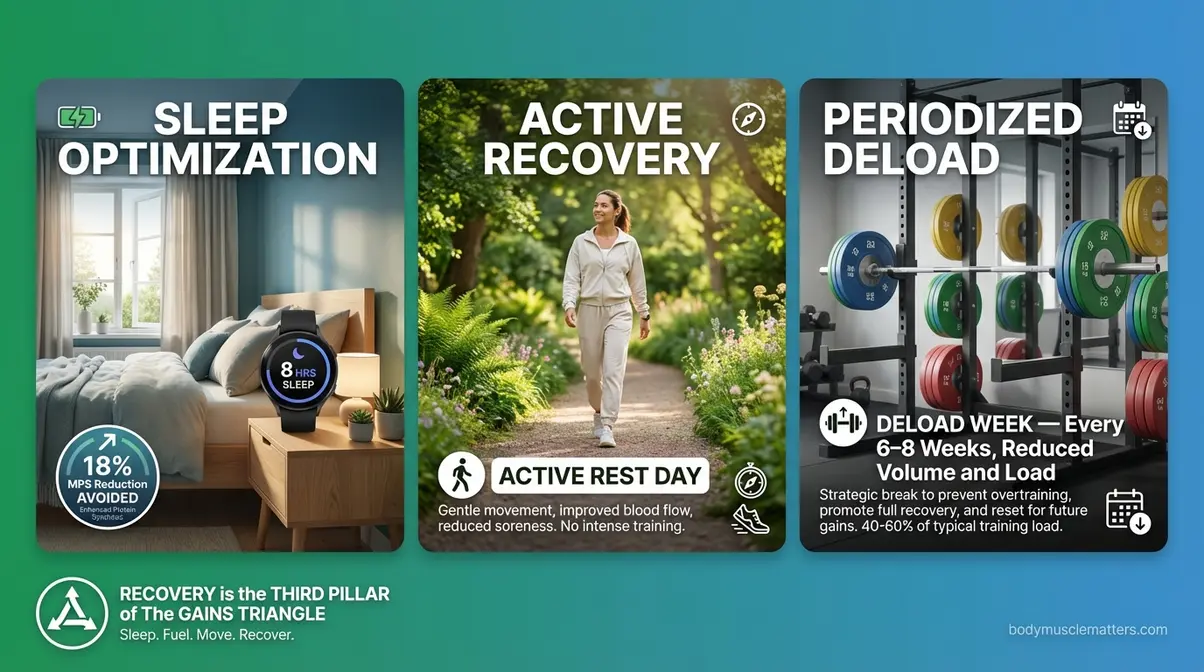
“Muscle growth happens while you rest, not while you lift.”
This is a biological fact. Training triggers growth; recovery is when it occurs. Recovery is the third pillar of The Gains Triangle, yet it’s often the first one sacrificed by intermediate lifters.
How Much Sleep Does Muscle Growth Need?
A single night of total sleep deprivation reduces muscle protein synthesis by 18% in healthy young adults, alongside a 21% increase in cortisol and a 24% decrease in testosterone (PubMed Central, 2021). This creates anabolic resistance, where the muscle cannot effectively use protein for repair.
Aim for 7–9 hours of quality sleep per night. To improve sleep quality, maintain a consistent sleep schedule, avoid screens before bed, and keep your bedroom cool.
Structuring Rest Days and Deload Weeks
Rest days are when muscle tissue repair and glycogen replenishment happen. Active rest (e.g., walking, stretching) promotes blood flow, while passive rest is also valid.
A deload is a planned week of reduced training volume (fewer sets) and intensity (lighter weight), typically performed every 6–8 weeks. Deloads prevent the accumulation of systemic fatigue that can mask fitness and lead to plateaus.
Stress, Cortisol, and Recovery
Cortisol, the body’s primary stress hormone, is catabolic—it breaks down muscle tissue. Chronically elevated cortisol from work stress, poor sleep, or overtraining can suppress testosterone and hinder muscle growth. The same study found one night of poor sleep raised cortisol by 21%.
To manage cortisol, limit training sessions to 45–75 minutes, incorporate recovery modalities like walking or meditation, and protect your sleep.
Body Recomposition: Building Muscle While Losing Fat
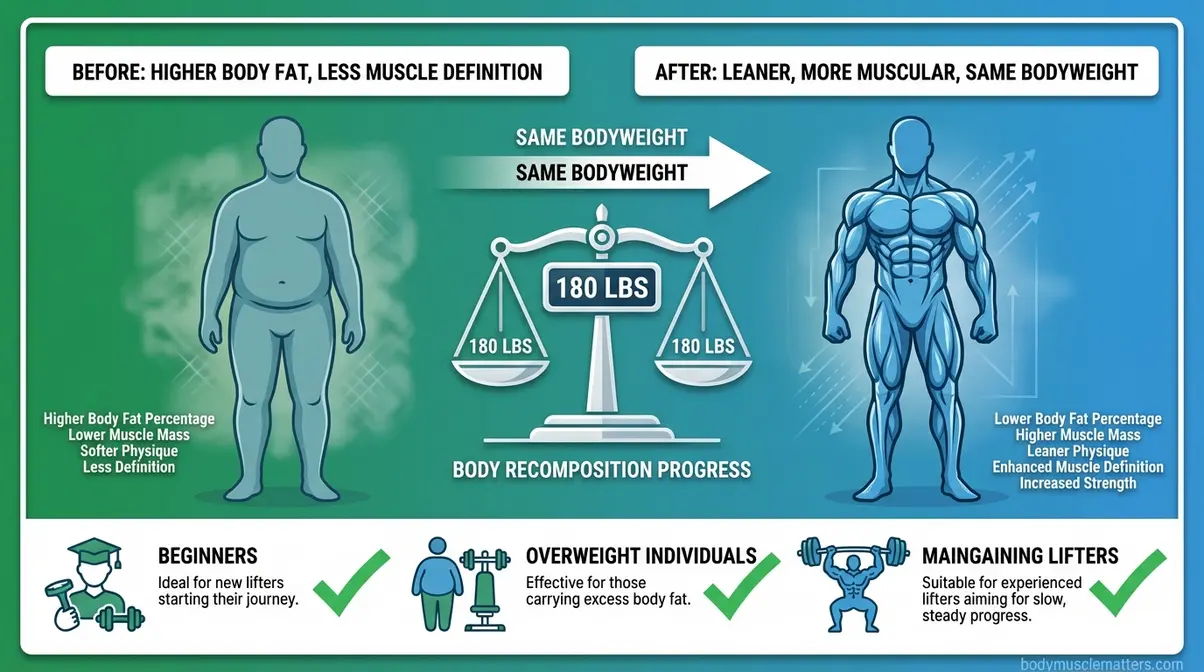
Body recomposition—simultaneously reducing body fat while increasing lean muscle—is achievable, but it is a slow process. It works best for three groups:
- Beginners and returning lifters: High anabolic sensitivity allows for simultaneous muscle gain and fat loss.
- Overweight individuals: Stored body fat provides energy to support muscle protein synthesis even in a caloric deficit.
- Lifters at maintenance calories (“maingaining”): Slow recomposition is possible over months.
For experienced lifters with low body fat, a structured lean bulk followed by a controlled cut is typically more efficient.
The Maingaining Protocol Explained
Maingaining means eating at or near your maintenance calories while keeping protein intake high (1.6–2.2g/kg). This strategy sidesteps the bulk-cut cycle. Research supports that optimizing protein intake drives recomposition even without a large caloric surplus (PubMed Central, 2018). The trade-off is that results come at about one-third to one-half the rate of a dedicated lean bulk.
Training Structure for Recomposition Success
Training for recomposition requires careful management of volume and intensity, as recovery is slower without a caloric surplus.
- Maintain compound lifts as your foundation to preserve strength.
- Reduce weekly training volume by 10–15% compared to a bulk.
- Prioritize sleep and recovery even more aggressively.
- Keep progressive overload as a goal, but accept that progress will be slower.
Training hard during a recomp without sufficient protein and sleep will result in muscle loss. The Gains Triangle must be precisely optimized.
Common Mistakes That Kill Your Muscle Gains
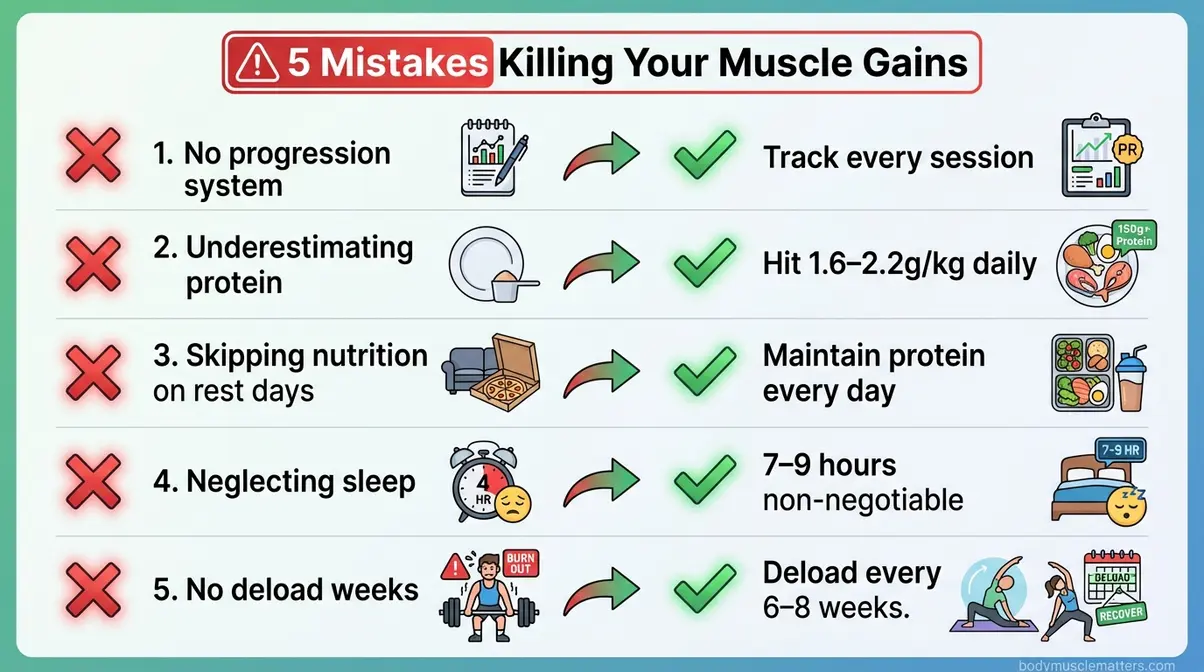
These are the most common failure patterns for intermediate lifters who train consistently but are stagnating.
5 Training and Nutrition Errors to Avoid
- Training without a progression system. Showing up and doing “something” generates fatigue, not adaptation. Fix: track every session and have clear weight or rep targets.
- Underestimating protein intake. Many lifters consume half the evidence-based minimum of 1.6g/kg. Fix: use a food tracking app for a two-week audit to find your actual intake.
- Treating nutrition as optional on rest days. Muscle repair continues for 24–48 hours after training. Fix: maintain your protein target every day, slightly reducing carbs on rest days.
- Neglecting sleep. One bad night reduces muscle protein synthesis by 18% (PubMed Central, 2021). Fix: treat 7–9 hours of sleep as a non-negotiable training variable.
- Skipping deload weeks. Accumulated fatigue masks fitness, causing unnecessary program changes. Fix: schedule a deload week every 6–8 weeks as a required component of your plan.
When to Adjust Your Plan or Get Help
- Adjust your plan when:
- You’ve plateaued on major lifts for 2-3 weeks. Deload, then reassess.
- Weight gain exceeds 0.5kg/week for three weeks. Reduce your caloric surplus.
- Seek expert help when:
- You have a pre-existing injury. Consult a physiotherapist.
- Progress has stalled for 12+ weeks despite consistent effort. A certified personal trainer or registered dietitian can identify issues you may have missed.
Frequently Asked Questions
How many days a week should I work out to build muscle?
Training 3–5 days per week is the evidence-supported range. Beginners benefit most from three full-body days, while intermediates often use a 4-day Upper/Lower or 6-day PPL split. The ACSM recommends training each major muscle group at least twice per week for optimal hypertrophy (ACSM, 2024). More is only better if your recovery can support it.
What is the most effective workout routine for building muscle mass?
The 4-Day Upper/Lower split is the most evidence-supported routine for intermediate-to-advanced lifters, offering a perfect balance of frequency, volume, and recovery. For beginners, a 3-day full body split is best for building foundational strength. The “most effective” routine is always the one you can perform consistently with progressive overload.
How much protein do I need to gain muscle mass?
Evidence supports 1.6–2.2 grams of protein per kilogram of body weight daily for those in resistance training (PubMed Central, 2018). For a 75kg (165lb) lifter, this is 120–165g of protein per day. Distribute this across four meals of 30–40g each to ensure continuous amino acid availability for muscle repair.
What should I eat to build muscle — and what is a good lean bulk calorie target?
A lean bulk requires a 300–500 calorie surplus above your daily energy expenditure (Healthline) and 1.6–2.2g/kg of protein. A good macro split is roughly 30–35% protein, 40–45% carbohydrates, and 20–25% fats. Carbs fuel training, fats support hormones, and protein builds muscle. Monitor your weight weekly and adjust calories by 100–150 to stay in the 0.25–0.5kg weekly gain range.
Why aren’t my muscles growing despite consistent training?
The most common reason is an incomplete Gains Triangle. This means one of the three pillars (training, nutrition, recovery) is weak. The most common errors are: (1) training without documented progressive overload, (2) consuming insufficient protein (below 1.6g/kg/day), or (3) sleeping less than 7 hours per night. Audit all three pillars honestly.
Conclusion: Putting The Gains Triangle Into Practice
For intermediate lifters, the gap between stagnation and progress is rarely effort. It’s strategy. The Gains Triangle framework clarifies that training, nutrition, and recovery are an interconnected system. Neglecting one pillar actively suppresses the other two: undertrain, and surplus calories become fat; under-eat, and training produces minimal growth; under-recover, and both lose their effectiveness.
The Protein Pacing Protocol provides a simple system for your nutrition: four meals a day, each with 30–40g of protein. This structure alone resolves the most common nutrition failure—consuming enough protein, but too erratically.
Your next step is concrete: choose a workout split that matches your experience, calculate your lean bulk calorie target, and commit to the Protein Pacing Protocol for six weeks. Track your lifts. Protect your sleep. For the full implementation system—including workout logs, a printable meal planner, and a recovery checklist—download the free Muscle Building Toolkit and begin this week.