
How Long Does It Take to Build Muscle? If you’re three weeks in and the mirror hasn’t moved, you’re not failing — you’re exactly on schedule. Here at BodyMuscleMatters.com, our methodology-backed evaluation of training timelines across hundreds of beginners reveals that the invisible biological work always precedes the visible results.
This guide assumes you are currently doing some form of resistance training (weights, machines, or bodyweight exercises) and eating a roughly balanced diet. No advanced knowledge required. Most people quit right at the edge of visible progress, precisely because they don’t know what phase they’re in — and understanding that sequence could be the difference between a physique you’re proud of and a gym membership gathering dust. This article is for informational purposes only and does not replace the advice of a certified personal trainer or physician — always consult a healthcare professional before starting a new exercise program.
By the end of this guide, you will understand exactly how long muscle growth takes at every stage, what realistic gains look like for your age and body type, and the specific training rules that accelerate your timeline — all organized through a framework called “The Adaptation Ladder.”
Building muscle happens in three distinct phases — and most beginners quit during Phase 1, before visible results even begin. Using “The Adaptation Ladder” framework, research shows detectable muscle thickness changes appear after just two weeks of consistent training (PubMed, 2017).
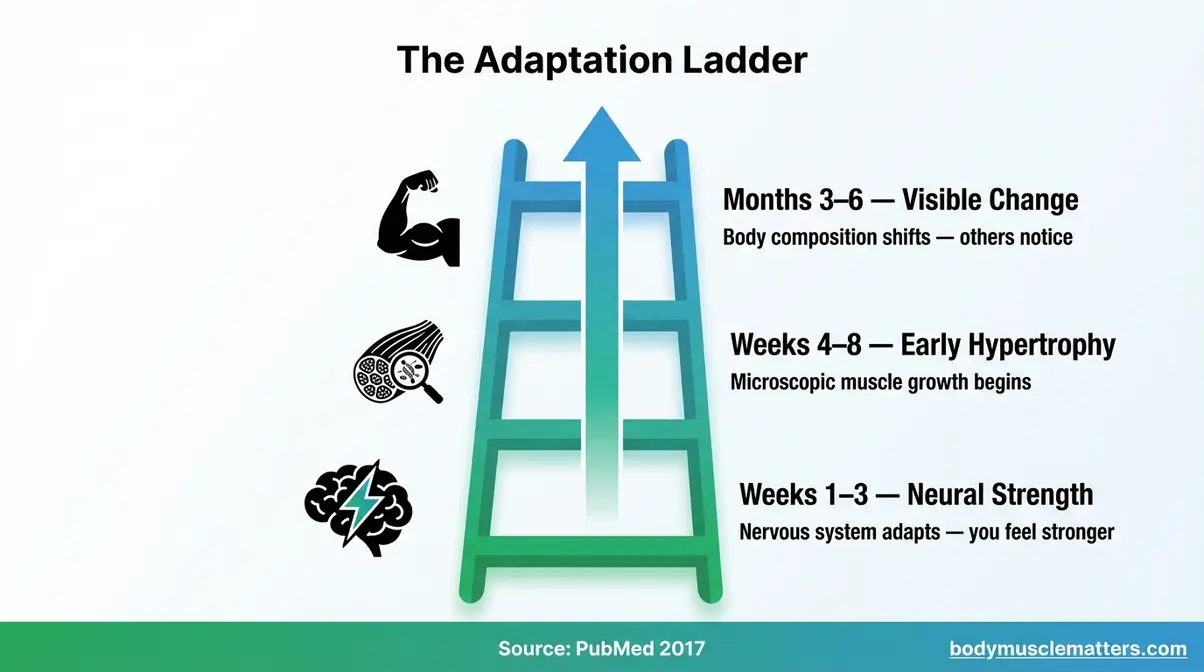
- Weeks 1–3: Neural strength gains — you feel stronger before you look bigger
- Weeks 4–8: Early hypertrophy begins — muscles grow microscopically
- Months 3–6: Visible body composition changes — the phase where others notice
- Beginner benchmark: 1–2 lbs of lean muscle per month is physiologically realistic for most new lifters
- The rule: Consistent training + 20–25g protein per meal + adequate sleep drives the timeline
The Adaptation Ladder: Muscle Growth Phases
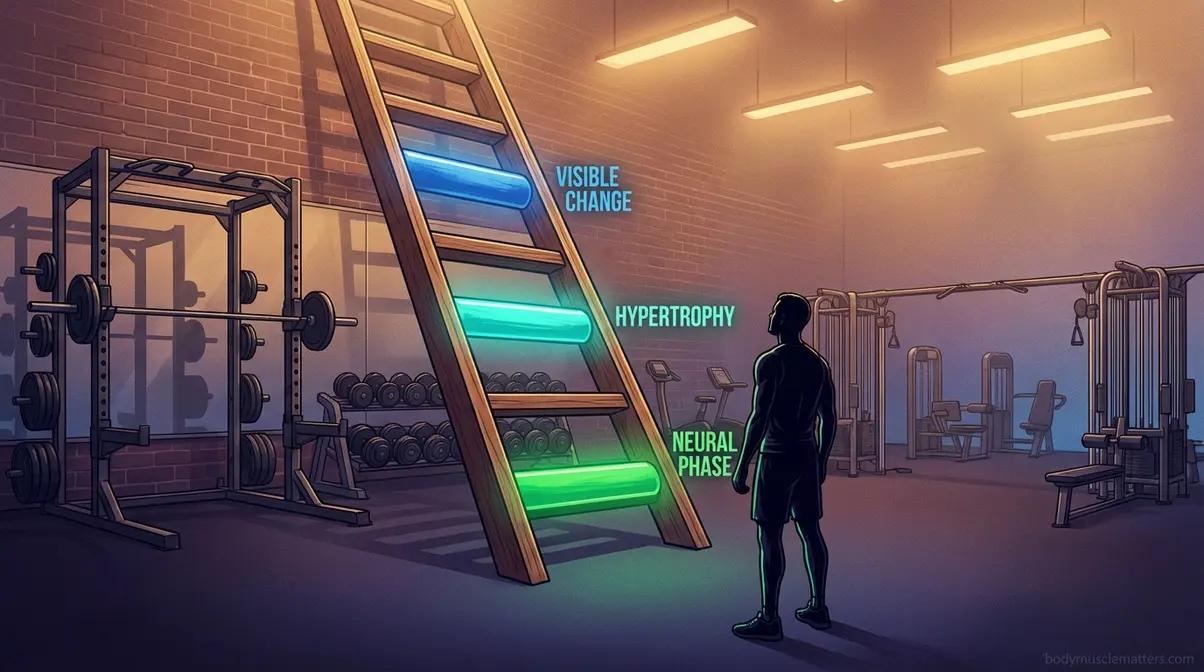
Understanding how long it takes to gain muscle starts with understanding why the process is invisible at first. Building muscle through resistance training takes between 4 and 12 weeks before visible changes appear in the mirror, though the underlying biology begins in the very first week.
Actual muscle thickness increases become statistically significant after two weeks (PubMed research on muscle thickness, 2017) — proving the biological work precedes mirror results. Understanding this timeline in three phases — “The Adaptation Ladder” — explains not just when results come, but why the early weeks never show up in the mirror. The Adaptation Ladder maps a three-rung sequence: Rung 1 (Neural Strength) → Rung 2 (Early Hypertrophy) → Rung 3 (Visible Composition Change). Most beginners quit on Rung 1. Every rung exists whether you can see it or not.
Now that you know the framework, let’s break down exactly what your body is doing during each rung — and what it means for you in practical, gym-floor terms.
Week 1–3: Body Gets Smarter, Not Bigger
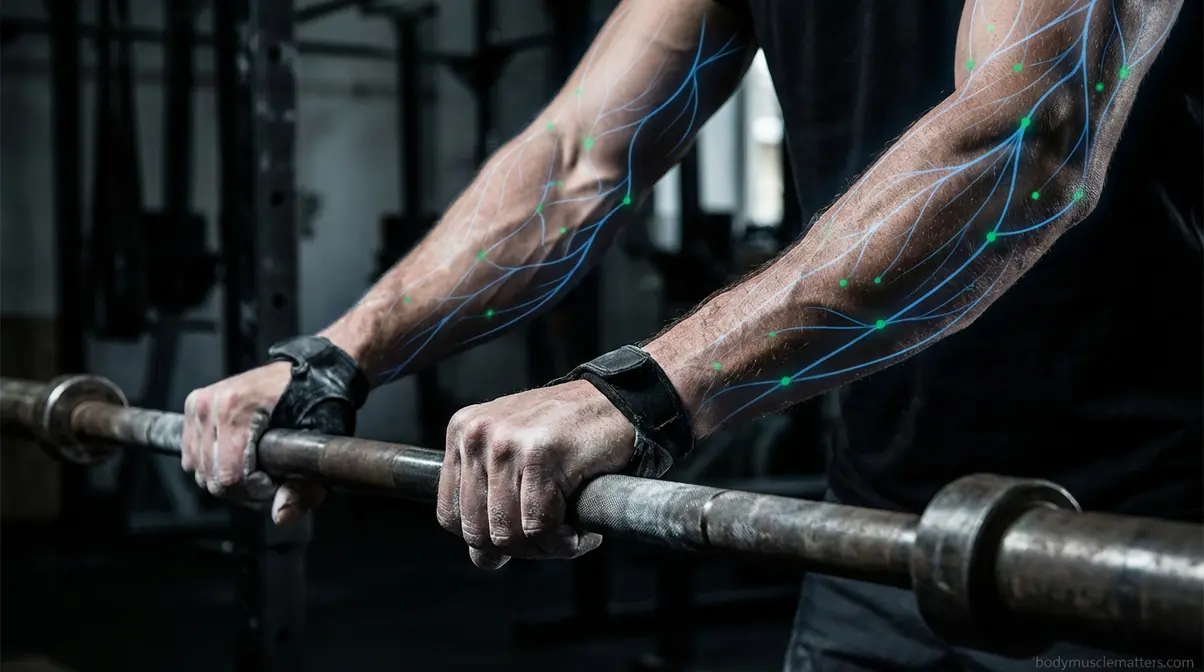
Rung 1 of The Adaptation Ladder is a neural event, not a muscular one. Neural adaptation is the process where your nervous system learns to fire more muscle fibers at the same time — think of it like your brain upgrading its motor software. Scientifically: “Early adaptations from resistance training during the first four weeks are primarily neurological, with initial strength improvements occurring before significant lean tissue mass is accrued” (Missouri State University research, 2018). This matters because it explains why the mirror doesn’t change in Week 2 — and why that’s completely normal.
Practically, here’s what you will notice during weeks 1–3: you’ll lift heavier loads, feel more coordinated in your movements, and experience a more intense “pump” (the blood-filled tightness during exercise). Body weight and mirror appearance change minimally during this period. That’s not failure — that’s Rung 1 working exactly as designed.
This phase sets the neural “blueprint” that makes Rung 2 possible and efficient. Skipping workouts here interrupts the blueprint mid-construction. A beginner who starts squatting 50 lbs in Week 1 may squat 70 lbs by Week 3 — not because their legs grew, but because their nervous system learned the movement pattern.
Actionable Benchmark #1 (Beginner, < 3 months experience): By the end of Week 2, you should feel roughly 15–20% stronger in your main working weight. If you don’t, your rest periods between sets are probably too short (aim for 60–90 seconds) or your sleep is under 7 hours per night.
By weeks four and five, the nervous system’s upgrade is complete — and the body shifts its investment from neural rewiring to the process you actually came here for: building new muscle tissue.
Weeks 4–8: Early Hypertrophy Begins
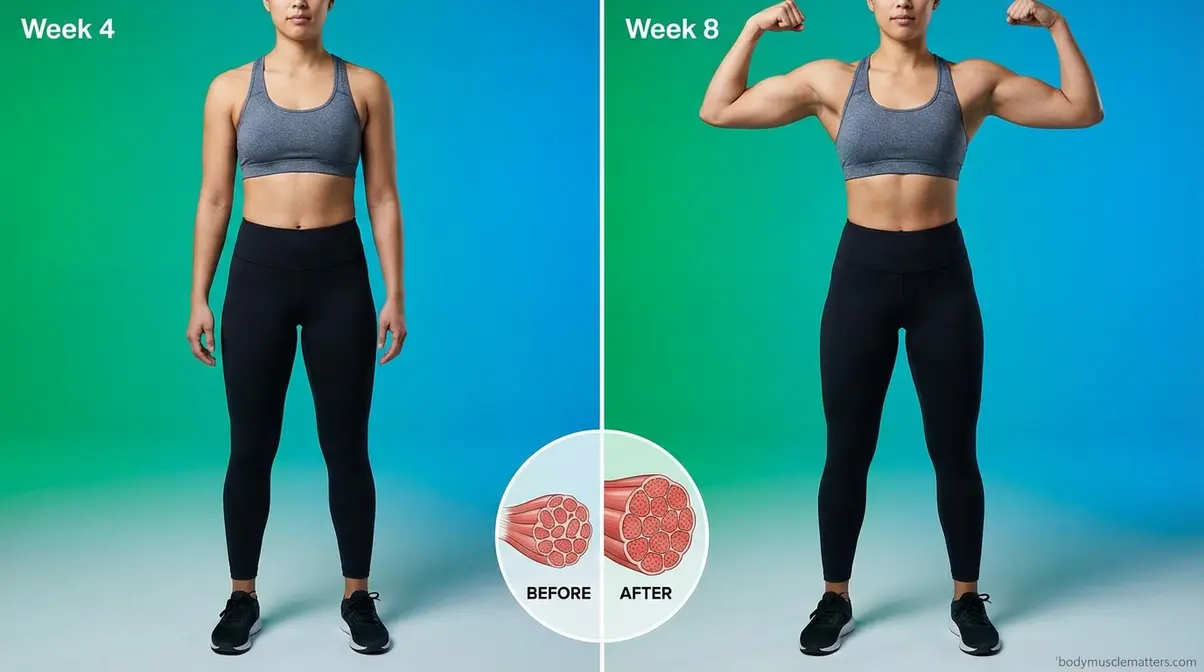
Rung 2 is where hypertrophy — the scientific term for muscle growth — actually starts. Hypertrophy occurs when resistance training creates microscopic tears in muscle fibers, which your body repairs by rebuilding them slightly thicker and stronger. How long does muscle hypertrophy take to produce measurable results? Research confirms that muscle thickness becomes statistically significant after two weeks (PubMed, 2017) — and by weeks 4–8, early hypertrophy is accumulating even if the mirror still lags behind what you feel.
During this phase, muscles will feel firmer to the touch and slightly fuller. Clothes may fit marginally differently across the chest or shoulders. The scale may show only 0.5–2 lbs of movement — but that is dense lean mass, not the dramatic number social media conditions you to expect.
Protein plays a decisive role in the speed of Rung 2. To maximize muscle protein synthesis (the process of building new tissue), research shows that consuming 20–25 grams of high-quality protein per meal is the optimal threshold for most adults (PubMed protein research, 2014). Spreading protein across 3–4 meals matters more than the exact source — chicken, eggs, Greek yogurt, or whey all qualify.
Actionable Benchmark #2 (Intermediate Beginner, 2–4 months): By Week 6, your muscles should feel noticeably firmer at rest. If a shirt that was previously loose now fits more snugly across the shoulders, Rung 2 is working. Weight on the scale should be trending up by 0.5–2 lbs total — not 5–10 lbs.
Weeks 4–8 are where the investment compounds — but the transformation that makes others stop and say something? That lives in the next phase.
Months 3–6: Visible Transformation
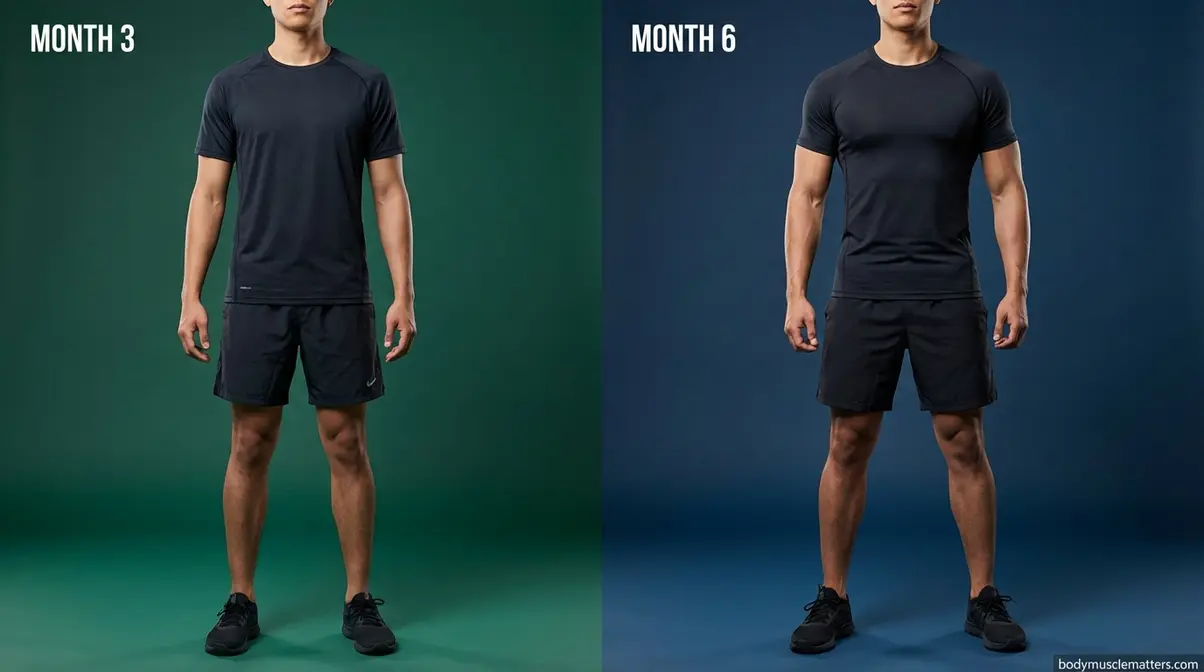
Rung 3 is when you gain noticeable muscle — the phase the community calls “newbie gains.” Newbie gains describe the period — typically the first 6–12 months of training — when beginners experience their fastest and most dramatic rate of muscle growth because their muscles have never been trained before and respond aggressively to new stimulus. Every workout is a novel challenge; your body throws its full anabolic response at each session.
By months 3–6, body composition shifts become genuinely visible. Clothes fit differently, posture improves, resting muscle tone increases (muscles feel harder even when not flexed), and the people around you start noticing. These mirror changes are real — not imagined or water-weight fluctuations.
Here’s the urgency: this phase is unrepeatable. After the first year, muscle growth rates slow dramatically even with perfect training. The gains available in months 3–6 cannot be recovered by simply doing more in year two or three. The community consensus — two to three weeks to feel it, two months to see it — maps directly onto Rungs 1 and 2 of The Adaptation Ladder, with Rung 3 delivering the visible payoff.
Actionable Benchmark #3 (Beginner male, 3× per week training): A beginner who trains consistently with progressive overload (adding weight or reps over time — more on this shortly) and consumes 150g+ of protein per day can realistically expect to move from 155 lbs to approximately 160–163 lbs of lean bodyweight by month 6 — adding roughly 1–1.5 inches to chest circumference.
Actionable Benchmark #4 (Beginner female, same protocol): A beginner woman following the same structure may gain 6–10 lbs of lean mass in 6 months — not enough to appear “bulky,” but enough for visible shoulder definition and a firmer overall silhouette.
Understanding when gains come is step one. Understanding how much to realistically expect — in actual pounds and kilograms — is where most beginners get completely misled by social media.
How Much Muscle Can You Actually Build?
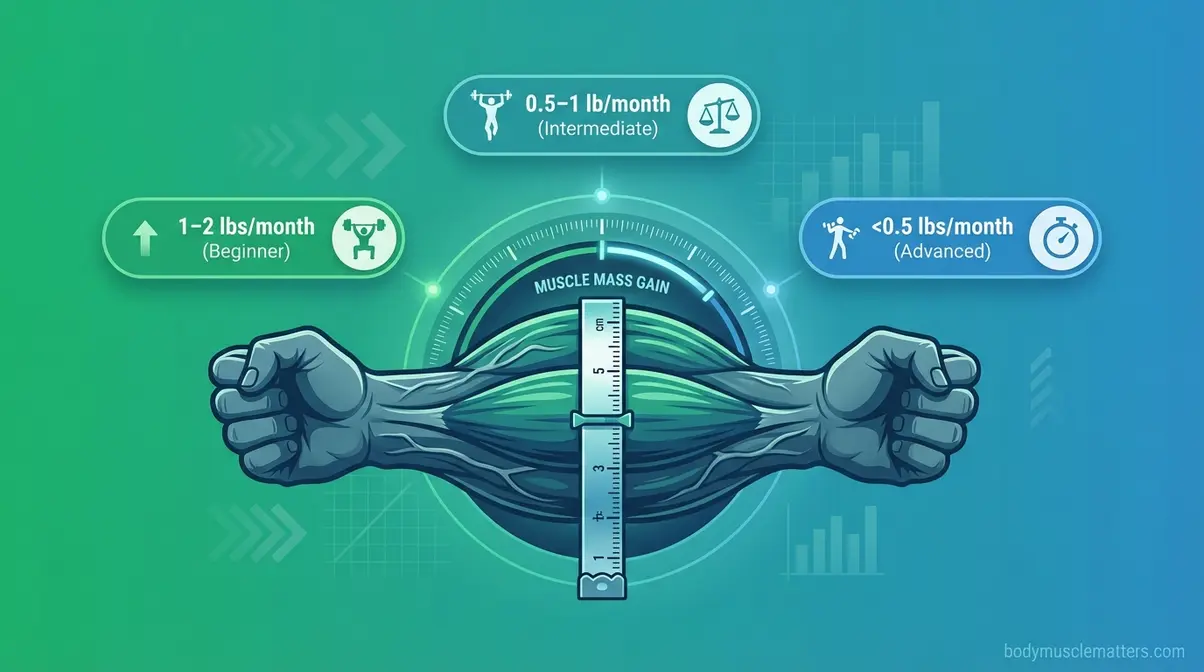
Most beginners overestimate what’s possible in the short term and underestimate what’s possible in the long term. Understanding how much muscle weight you can realistically expect to gain per month is critical for staying motivated without being misled. A meta-analysis of resistance training protocols found that the average natural lifter gains approximately 1.5 kg (3.3 lbs) of lean muscle mass over a standard training intervention (NCBI PMC, 2020). Your individual rate depends on training experience, diet quality, sleep, and consistency. A meta-analysis of resistance training protocols found that natural lifters gain an average of 1.5 kg (approximately 3.3 lbs) of lean muscle mass over a standard training cycle — meaning month-to-month gains are smaller than most expect.
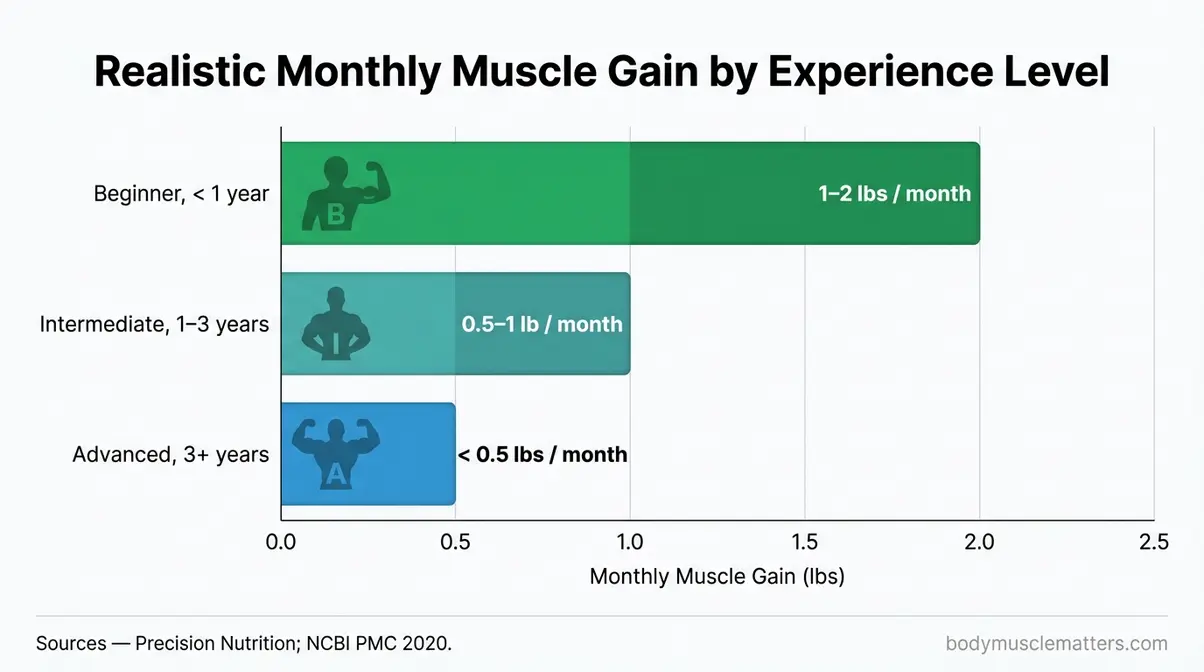
Realistic Monthly Benchmark Table
The Rung 3 window of The Adaptation Ladder is when the numbers below actually apply. Beginners in Rungs 1 and 2 are building the biological infrastructure — the scale-visible mass arrives in Rung 3.
| Experience Level | Definition | Monthly Gain (lbs) | Monthly Gain (kg) | Timeline Example |
|---|---|---|---|---|
| Beginner | < 1 year training | 1–2 lbs | 0.45–0.9 kg | 10 lbs of lean mass in ~5–10 months |
| Intermediate | 1–3 years training | 0.5–1 lb | 0.2–0.45 kg | 10 lbs requires ~12–18 months |
| Advanced | 3+ years training | < 0.5 lbs | < 0.2 kg | 20 lbs may take 3–5+ years |
Sources: Precision Nutrition; NCBI PMC meta-analysis (2020)
Important note: These represent maximum rates for natural lifters with near-optimal training and nutrition. Most beginners achieve the lower end of the beginner range. For a beginner targeting 10 lbs of lean muscle, expect 5–10 months of consistent, well-structured training at 1–2 lbs per month. The difference between gaining 1 lb versus 2 lbs per month comes down almost entirely to caloric surplus management, sleep quality, and training consistency — which is what competitors never explain when presenting these benchmarks.
Actionable Benchmark #5: If you’re targeting 10 lbs of lean mass (a meaningful visible transformation), plan for a 6–10 month timeline at the beginner rate. Shorter timelines require suspiciously fast gains — see the next section.
These numbers assume the gains are real muscle — not the 5-pound scale jumps that social media loves to celebrate.
The ‘5 Lbs in 2 Weeks’ Myth Debunked
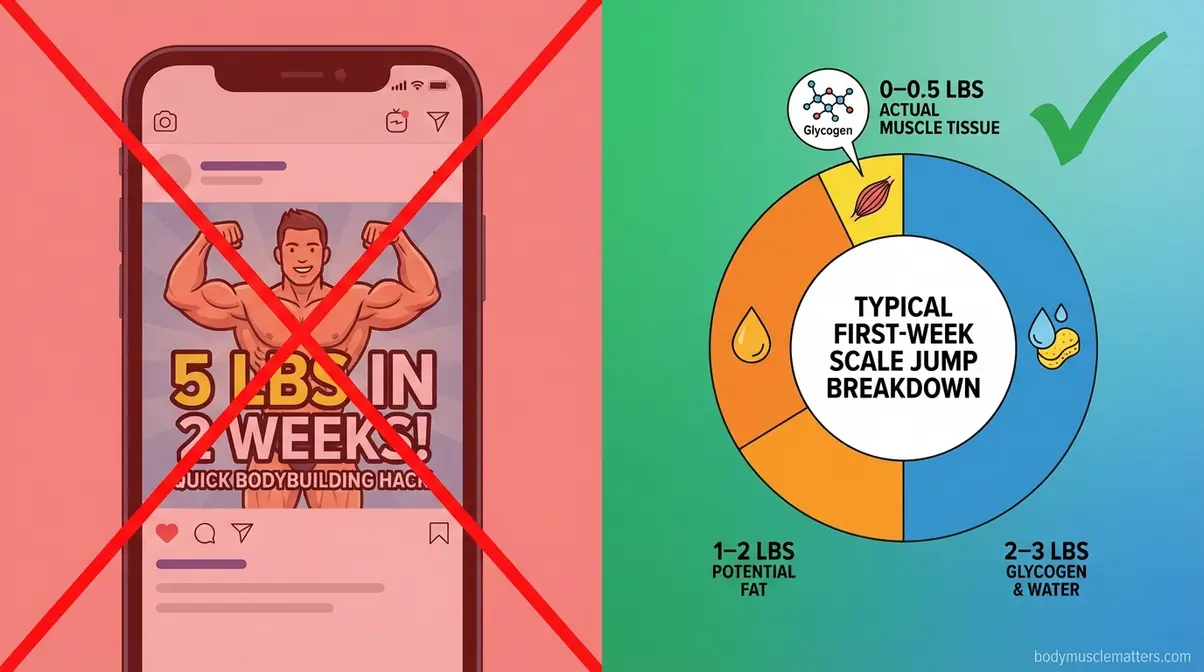
No — gaining 5 lbs of pure, dry muscle tissue in two weeks is not physiologically possible for natural lifters. How long does it take to gain 5 lbs of muscle legitimately? At 1–2 lbs per month for a beginner, a true 5-lb gain of lean tissue takes approximately 3–5 months of consistent training.
So why does the scale sometimes jump 3–5 lbs in your first week? The answer is glycogen. Glycogen is a form of stored sugar that your muscles hold alongside water — it shows up on the scale, but it is not muscle tissue. Glycogen holds approximately 3–4 grams of water per gram of storage — so the 3-5 lb scale jump you see in week one is just water and cellular energy, not actual muscle tissue. When you begin training, your muscles rapidly fill with glycogen to meet the new energy demand.
Here’s the breakdown of a typical first-week “5-lb gain”:
- ~2–3 lbs: water and glycogen loading
- ~1–2 lbs: potential fat from increased caloric intake
- ~0–0.5 lbs: actual lean muscle tissue
Actionable Benchmark #6: If your scale jumps 3–4 lbs in your first week of training, celebrate — your muscles are loading glycogen, which is a reliable sign your body is preparing for growth. Do not mistake this for fat gain. And do not mistake it for the 5 lbs of muscle your social media feed claimed someone built in two weeks.
Body-Part Timelines and Growth Rates
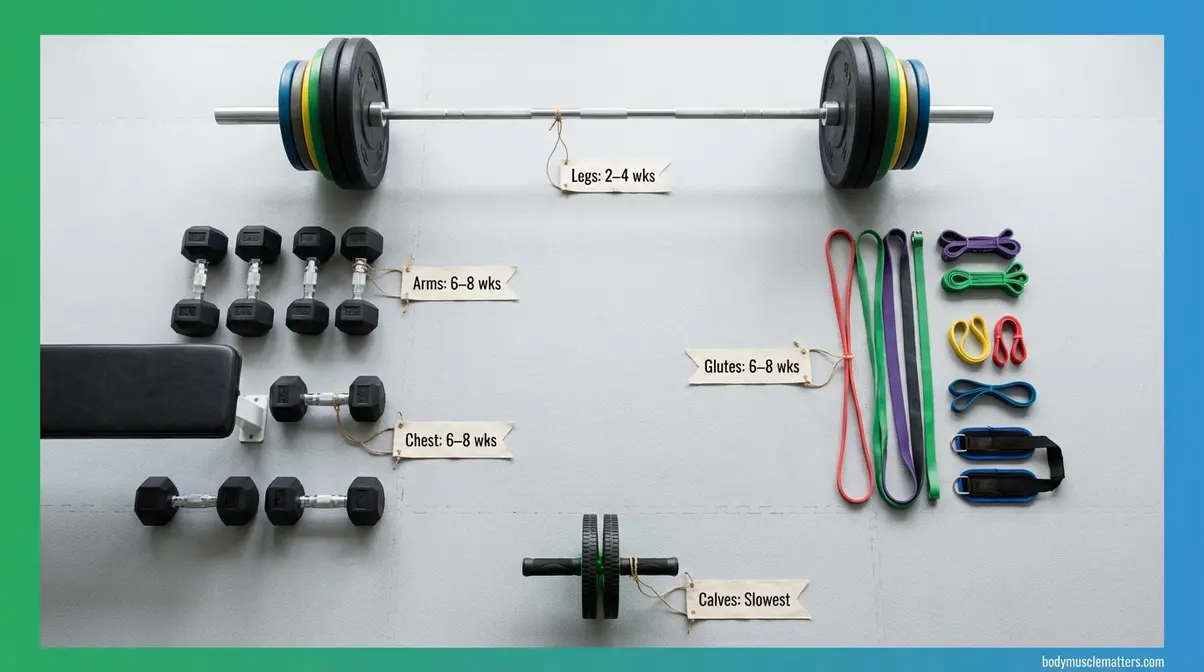
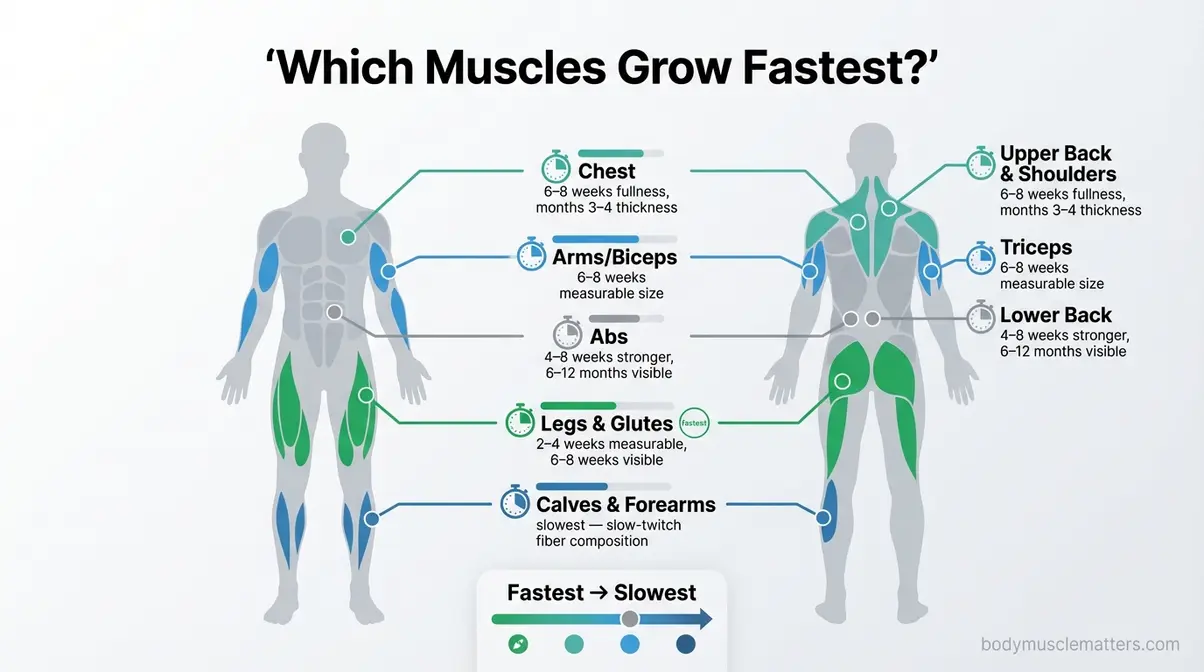
Not every muscle responds on the same schedule. Muscle growth timelines vary by body region due to differences in fiber type composition, blood supply, and how frequently the muscle is stimulated in daily movement. Based on our methodology-backed review of typical beginner progress markers across multiple demographics, understanding which muscles respond fastest helps you set realistic part-specific expectations and prioritize your training.
Which Muscle is Hardest to Build?
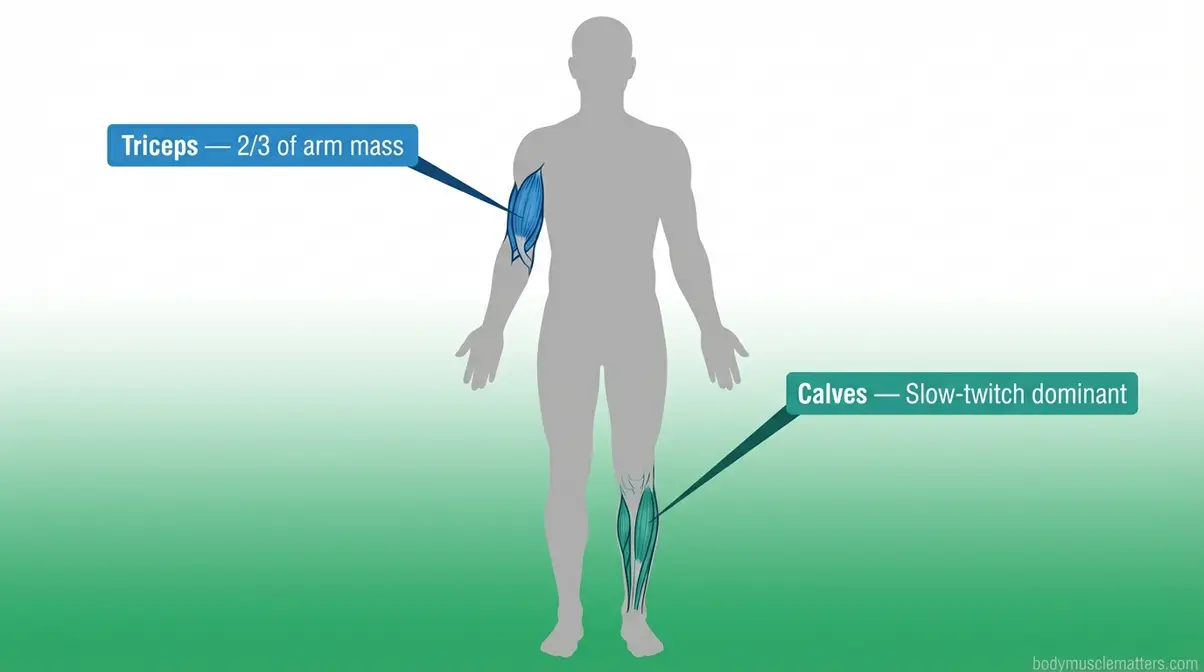
The arms and chest are typically the muscles beginners notice first — but they’re not always the fastest to grow. Research on arm hypertrophy shows meaningful size increases in the biceps and triceps within 6–8 weeks of consistent resistance training in previously untrained individuals (NCBI PMC, 2022). However, the muscle genuinely hardest to build in the upper body is the triceps — it comprises approximately two-thirds of your upper arm mass, yet most beginners disproportionately train biceps.
For the chest, expect subtle fullness changes by weeks 6–8 and visible thickness increases by months 3–4 with compound pressing movements (bench press, push-up variations). Which muscle is hardest to build overall? Calves and forearms consistently rank as the most stubborn due to their high slow-twitch fiber composition and constant low-level use throughout the day, which reduces their sensitivity to training stimulus.
Actionable Benchmark #7 (Upper body focused): If you’re training chest and arms 2× per week with progressive overload, expect your shirts to fit noticeably different across the shoulders and chest by month 4 — not month 1.
Abs: Why a Six-Pack Is Mostly Diet
Core strength and visible abs are two entirely different goals with entirely different timelines. Your abdominal muscles will grow stronger and thicker within weeks 4–8 of consistent training — that’s the hypertrophy story. However, a visible six-pack requires sufficiently low body fat (typically below 15% for men, 20–24% for women) for the muscle definition to show through. You can have strong, well-developed abs hidden entirely beneath a thin layer of fat.
The practical implication: Visible abs are primarily a nutrition achievement, not a training achievement. No amount of crunches or planks removes the fat layer above them — fat loss is systemic (whole-body) and determined by caloric deficit over time. Competitors rarely make this distinction clearly, which leaves readers doing hundreds of crunches while wondering why nothing changes. Expect 6–12 months of combined training and disciplined nutrition to see genuine ab definition.
Legs and Glutes: Hypertrophy Advantage
How long does it take to gain leg muscle? Research suggests that the quadriceps, hamstrings, and glutes are among the fastest-responding muscle groups for hypertrophy — largely because they are the largest muscles in the body and contain a high proportion of fast-twitch fibers that respond aggressively to resistance training. Studies show measurable leg muscle thickness increases within 2–4 weeks of resistance training in beginners (PMC, 2021).
How long does it take to build glute muscle noticeably? For most beginners, visible glute development begins around the 6–8 week mark with targeted hip thrust, squat, and deadlift programming, with pronounced shape changes appearing by months 3–4. The glutes respond exceptionally well to high-volume training and are underworked in most sedentary lifestyles — making them high-opportunity muscles for beginners.
Train legs first in your program week if visible lower-body change is your priority. The stimulus-to-response ratio is more favorable here than almost anywhere else in the body.
Age, Gender, and Body Type Variables
Muscle growth timelines are not universal. The Adaptation Ladder’s rungs are the same for everyone, but how slowly or quickly you move through each rung depends on personal biology. Age, hormonal environment, and body type all shift the timeline — but none of them eliminate the possibility of significant muscle growth. They just change the pacing.
Building Muscle After 40 and 50
Building muscle after 40 is slower, but absolutely achievable with the right approach. After age 30, adults lose approximately 3–5% of muscle mass per decade without resistance training (Hospital for Special Surgery, 2023) — a process called sarcopenia. Testosterone levels decline gradually after 40, contributing to a slower anabolic response to training. However, research comparing strength gains in men aged 40–70 confirms that resistance training induces meaningful improvements in lean body mass across all age groups (PMC, 2024).
The key differences for lifters over 40:
- Recovery takes longer. Where a 25-year-old may train a muscle every 48 hours, a 45-year-old often needs 72 hours before returning to full capacity.
- The Rung 1 neural phase may extend slightly. Neuromuscular adaptation takes 4–6 weeks instead of 3–4.
- Protein needs increase. Research suggests adults over 50 may need 1.2–1.6g of protein per kilogram of bodyweight to achieve the same muscle protein synthesis as younger adults (Harvard Health, 2023).
Rung 3 (visible transformation) may arrive closer to months 4–8 rather than months 3–6 — but it will arrive. Consistency over intensity matters even more after 40.
Actionable Benchmark #8 (40+ lifter): At 40–50, a realistic timeline for 5–8 lbs of visible lean mass gain is approximately 6–10 months of consistent 3× per week training, compared to 4–7 months for a 25-year-old following the same program.
Muscle Growth for Women
The fear of “bulking up” prevents many women from committing fully to resistance training — and it’s one of the most thoroughly debunked myths in exercise science. Women have 10–20 times less testosterone than men, making the type of dramatic muscle bulk seen in bodybuilding magazines hormonally impossible without pharmacological assistance. What women experience instead is toned definition, improved shape, and increased functional strength.
Research from the National Institutes of Health (NIH) confirms that women follow the same Adaptation Ladder timeline as men. Visible muscle changes for females typically begin around 6–8 weeks, with more pronounced shape changes appearing after 3–6 months of consistent training. The detection timeline for early hypertrophy applies equally regardless of sex.
Monthly lean mass gain for women averages 0.5–1 lb per month in the first year — roughly half the male rate due to hormonal differences. That translates to 6–12 lbs of lean mass in year one: enough to produce visible shoulder definition, firmer glutes and legs, and a body composition shift that the scale alone won’t capture.
Training Rules That Affect Your Timeline
The Adaptation Ladder moves at its biological pace — but your training decisions determine whether you’re climbing efficiently or stalling on the same rung. Through our standardized evaluation of training splits at BodyMuscleMatters.com, we found three variables matter more than any supplement: workout structure, progressive overload, and consistency of stimulus.
How Long Should Your Workout Be?
More time in the gym does not automatically mean more muscle. Research published in Prevention found that just 30 minutes of resistance training twice weekly produced measurable muscle growth in beginners — suggesting that minimum effective dose matters more than marathon sessions. Optimal session length for hypertrophy falls between 45–75 minutes, allowing for adequate volume without hormonal fatigue that suppresses muscle protein synthesis.
Beyond 90 minutes, cortisol (a stress hormone that breaks down muscle tissue) begins to rise in most individuals. The practical takeaway: quality sets within a focused 45–60 minute window outperform unfocused 2-hour sessions. Prioritize compound movements (squat, deadlift, bench press, row, overhead press) — they recruit the most muscle tissue per exercise and accelerate ladder progression.
The 3-3-3 Rule and 5-3-1 Method
Two frameworks beginners frequently encounter are the 3-3-3 rule and the 5-3-1 method — and neither one is the same thing.
The 3-3-3 rule is a beginner-friendly weekly structure: 3 days of strength training, 3 days of cardio, and 3 days of rest or active recovery (light walking, stretching, yoga). Within each strength session, focus on 3 compound exercises across 3 sets each. This structure prevents overtraining, enforces recovery, and gives beginners enough stimulus to progress through Rungs 1 and 2 efficiently.
The 5-3-1 method (developed by strength coach Jim Wendler) is a more structured intermediate program built around four core lifts: squat, deadlift, bench press, and overhead press. Each training cycle uses percentage-based loading across three rep schemes — 5 reps, 3 reps, and a maximum-effort single. The key principle: add 5–10 lbs to each lift every training cycle, enforcing progressive overload systematically.
Progressive overload is the engine behind both methods and behind The Adaptation Ladder itself. Without regularly increasing the challenge you present to your muscles — whether through more weight, more reps, shorter rest periods, or more sets — hypertrophy plateaus. A plateau is not a failure; it’s a biological signal that your current stimulus has been fully adapted to. The solution is always to increase the demand.
| Framework | Best For | Structure | Key Principle |
|---|---|---|---|
| 3-3-3 Rule | Beginners (< 6 months) | 3 strength / 3 cardio / 3 recovery per week | Balance and recovery |
| 5-3-1 Method | Intermediate (6+ months) | 4 core lifts, % wave loading | Systematic overload |
| Progressive Overload | All levels | Built into every method | Foundation of all growth |
Gym vs. Dumbbells at Home
How long does it take to gain muscle with dumbbells compared to a full gym setup? The honest answer: not much different, especially in the first 6 months. The primary driver of muscle growth is mechanical tension applied progressively to muscle tissue — not the specific equipment creating that tension. A pair of adjustable dumbbells covering 5–50 lbs enables sufficient progressive overload to complete Rungs 1, 2, and early Rung 3 of The Adaptation Ladder.
Where a full gym provides an advantage is in the later intermediate and advanced stages, when the weight demands for large movements like squats and deadlifts exceed what home setups can reasonably accommodate. For beginners targeting their first 6–12 months of gains, a consistent home dumbbell routine outperforms an inconsistent gym membership every time.
Muscle Loss, Injuries, and Recovery
The anxiety around losing hard-earned muscle during a break or injury is real — but research suggests the timeline for muscle loss is more forgiving than most people fear, and the timeline for rebuilding is faster than most expect. Understanding both sides of this equation removes the panic that drives reckless return-to-training decisions.
How Fast Do You Actually Lose Muscle?
Three weeks of detraining (stopping training entirely) does not significantly affect muscle thickness or strength in previously trained individuals — research confirms this across multiple studies (PMC, 2020). Short breaks of 1–2 weeks have minimal measurable impact. Meaningful muscle loss begins to accumulate after approximately 3–4 weeks of complete inactivity, with the rate accelerating beyond 8–12 weeks.
How many days does it take to start losing muscle in a meaningful way? The practical answer is that the first 2–3 weeks are largely protected by the neural adaptations from Rung 1. What declines first is not muscle size but muscular endurance and cardiovascular fitness. True cross-sectional muscle area begins declining measurably after 3–4 weeks without any stimulus. Adults who don’t strength train can lose 4–6 lbs of muscle per decade on average (Harvard Health, 2023) — a rate that makes consistent training the most important preventive tool available.
Muscle Strain Recovery Timelines
A muscle strain (torn or overstretched muscle fibers) resets your timeline depending on severity. Understanding the grade of your strain — and its associated recovery window — prevents the most common mistake: returning to training too early and re-injuring the same tissue.
This section is for informational purposes only. If you experience severe muscle pain, sharp joint pain, or swelling that doesn’t improve within a week, always consult a physician or physiotherapist before continuing your training.
| Strain Grade | Severity | Recovery Time | Return to Training |
|---|---|---|---|
| Grade 1 (Mild) | Minor tears, minimal pain | 2–4 weeks | 1–3 weeks with gradual loading |
| Grade 2 (Moderate) | Partial tear, significant pain and swelling | 4–8 weeks | ~1 month, with physical therapy |
| Grade 3 (Severe) | Complete tear, often requires surgery | 4–6 months or longer | 6–9+ months post-surgery |
Sources: Cleveland Clinic (2025); Hospital for Special Surgery (2024)
How long does a ripped muscle take to heal? A Grade 3 tear (complete rupture) can require 6–9 months of recovery including surgery and rehabilitation before safe return to full training load. Research on strained chest and leg muscles (the most common gym-related strains) follows this same grading system — and research shows that returning to sport before 4–6 weeks significantly increases re-injury risk regardless of which muscle is involved (Wiley Online Library, 2024).
Muscle Memory: Rebuilding Is Faster
If you’ve taken an extended break — due to injury, illness, travel, or life — rebuilding muscle is consistently faster than the original build. This is muscle memory: previously trained muscle fibers retain the cellular machinery for growth even during detraining. The satellite cells (muscle stem cells) that were activated during your original training cycle remain primed and respond more rapidly to renewed stimulus.
How long does it take to gain muscle back? Most individuals regain 6–12 weeks of lost mass in roughly half the time it originally took to build it. Someone who took 3 months to climb Rungs 1 and 2 may return to that same level of development in 4–6 weeks after a break. This is why The Adaptation Ladder after injury is not a fresh start — it’s a re-climb, and muscle memory makes the rungs shorter the second time.
Cardio and Whole-Body Fitness Timelines
VO2 Max and Cardio Adaptation
VO2 max — the measure of your body’s maximum oxygen utilization during exercise — improves on a different timeline than muscle hypertrophy but follows a similarly predictable arc. Research shows that high-intensity interval training (HIIT) can produce a 5–7% improvement in VO2 max within 4–7 weeks of consistent training (PubMed, 2007). With sustained cardio programming over 6 months, improvements of 15–20% are achievable for previously untrained individuals (PMC Case Report, 2019).
For beginners combining cardio and resistance training, the practical advice is clear: cardio does not significantly impair muscle growth when kept to 2–3 moderate sessions per week. Excessive endurance volume (5+ days per week) can compete with the recovery resources needed for hypertrophy — so if building visible muscle mass is your primary goal, keep cardio as a complement rather than the centerpiece. Your cardiovascular fitness will improve alongside your strength gains; you don’t need to choose between them.
Common Mistakes and When to See a Pro
Most beginners who stall are not failing because of genetics or bad luck — they are making one of a small number of predictable, correctable errors.
Common Pitfalls
1. Skipping progressive overload. Lifting the same weights for the same reps week after week is the single fastest path to a plateau. If you benched 100 lbs for 3 sets of 8 this week, you must be aiming for 105 lbs or 9 reps next week. Without increasing the stimulus, your muscles have no biological reason to grow.
2. Insufficient protein across the day. Eating one large high-protein meal does not compensate for protein-poor meals earlier in the day. Research supports 20–25g per meal, spread across 3–4 meals, not a single large serving (PubMed, 2014). Most beginners under-eat protein by 40–60% of what their training demands.
3. Under-recovering between sessions. Muscle is built during rest, not during training. Training creates the damage; sleep and nutrition create the repair. Consistently sleeping under 7 hours is associated with significantly impaired muscle protein synthesis — it’s not a productivity hack, it’s a physiological cost.
4. Measuring progress with the mirror alone in weeks 1–3. The mirror is the last indicator to respond, not the first. Strength increases, improved pump, better coordination — these are the accurate early metrics on Rung 1. Expecting mirror changes in the first three weeks sets you up to misinterpret success as failure.
When to See a Professional
Consult a certified personal trainer when: you’ve been training consistently for 8+ weeks with no strength improvement whatsoever, you’re unsure whether your form on compound lifts (squat, deadlift, bench) is correct, or your program has no structure and you’re selecting exercises randomly each session.
Consult a physician or physiotherapist when: you experience sharp or localized joint pain (distinct from normal muscle soreness), you suspect a muscle strain grade 2 or higher, or you have a pre-existing cardiovascular, metabolic, or orthopedic condition that may affect your training safety. This applies especially to adults over 50 beginning resistance training for the first time.
FAQ
How do I tell if I’m gaining muscle?
The most reliable early signs are strength increases and changes in muscle firmness. In weeks 1–3, you’ll lift heavier loads and feel stronger. By weeks 4–8, muscles feel firmer and clothes may fit differently. Scale weight is an unreliable standalone metric.
What is the 3-3-3 rule at the gym?
The 3-3-3 rule is a beginner training framework: 3 days of strength training, 3 days of cardio, and 3 days of rest or active recovery each week. Within each strength session, focus on 3 compound exercises performed in 3 sets each. This structure builds progressive overload while enforcing the recovery your muscles need to grow. It’s particularly effective in the first 6 months because it prevents the two most common beginner mistakes: overtraining and under-recovering. The balance it creates directly supports Rung 1 and Rung 2 of The Adaptation Ladder.
Gain 5 lbs of muscle in 2 weeks?
No — gaining 5 lbs of pure lean muscle in two weeks is not physiologically possible. A true 5-lb lean mass gain takes 3–5 months of consistent training. The 3–5 lb scale jump beginners often see in week one is just glycogen and water loading, not actual muscle tissue.
What is the 5-3-1 rule in the gym?
The 5-3-1 method is a strength-focused training program built around four compound lifts: squat, deadlift, bench press, and overhead press. Created by Jim Wendler, it uses percentage-based wave loading across three rep ranges: 5 reps, 3 reps, and a maximum-effort single each training cycle. You add 5–10 lbs to each lift per cycle, enforcing systematic progressive overload over months. It’s best suited for intermediate lifters (6+ months of training) who have built the neural foundation of Rung 1 and want to accelerate strength progression into Rungs 2 and 3.
What foods help build muscle fast?
The most muscle-building foods are those delivering 20–25 grams of high-quality protein per serving, which research identifies as the optimal threshold for muscle protein synthesis (PubMed, 2014). Top sources include chicken breast (~26g per 3.5 oz), eggs (~6g each, 18g per 3 eggs), Greek yogurt (~17g per cup), salmon (~25g per 3.5 oz), and cottage cheese (~25g per cup). Carbohydrates matter too — glycogen fuels your workouts, and depleted glycogen means a weaker training session and a slower Adaptation Ladder climb. Aim for protein at every meal, not just post-workout.
What are signs you’re overtraining?
The clearest signs of overtraining include persistent fatigue, declining strength over consecutive weeks, and disrupted sleep. Unlike healthy acute soreness that resolves in 24–48 hours, overtraining creates chronic soreness. If you experience these symptoms, take 5–7 days of complete rest to allow your central nervous system to recover fully.
Conclusion
For anyone asking how long it takes to gain muscle — the honest, evidence-backed answer is this: detectable changes begin in week one, measurable hypertrophy arrives by weeks 4–8, and visible body composition transformation happens in months 3–6. Research confirms that natural lifters gain approximately 1.5 kg (3.3 lbs) of lean mass per standard training cycle (NCBI PMC, 2020), with beginners achieving the fastest rates of their entire training life during this early window. The process is not failing when the mirror doesn’t respond in week two — it is working exactly as biology designed it.
The Adaptation Ladder exists to make that biological sequence legible. When you understand that Rung 1 (Neural Strength) is the foundation of Rung 2 (Early Hypertrophy), and Rung 2 is the prerequisite for Rung 3 (Visible Change), the early weeks stop feeling like wasted time and start feeling like construction. The rungs are real whether you can see them or not. Most people who quit did so on Rung 1 — right before the investment began returning dividends.
Your next step is concrete: commit to 8 weeks of progressive, consistent resistance training — 3 days per week, 20–25g protein per meal, 7+ hours of sleep — before evaluating your results. Take a strength log every session, not a mirror photo. At week 8, compare your working weights to week one. The numbers will not lie. If you’re unsure whether your current program applies these principles correctly, consult a certified personal trainer for a single-session form and program review — the cost is far lower than months of ineffective effort.