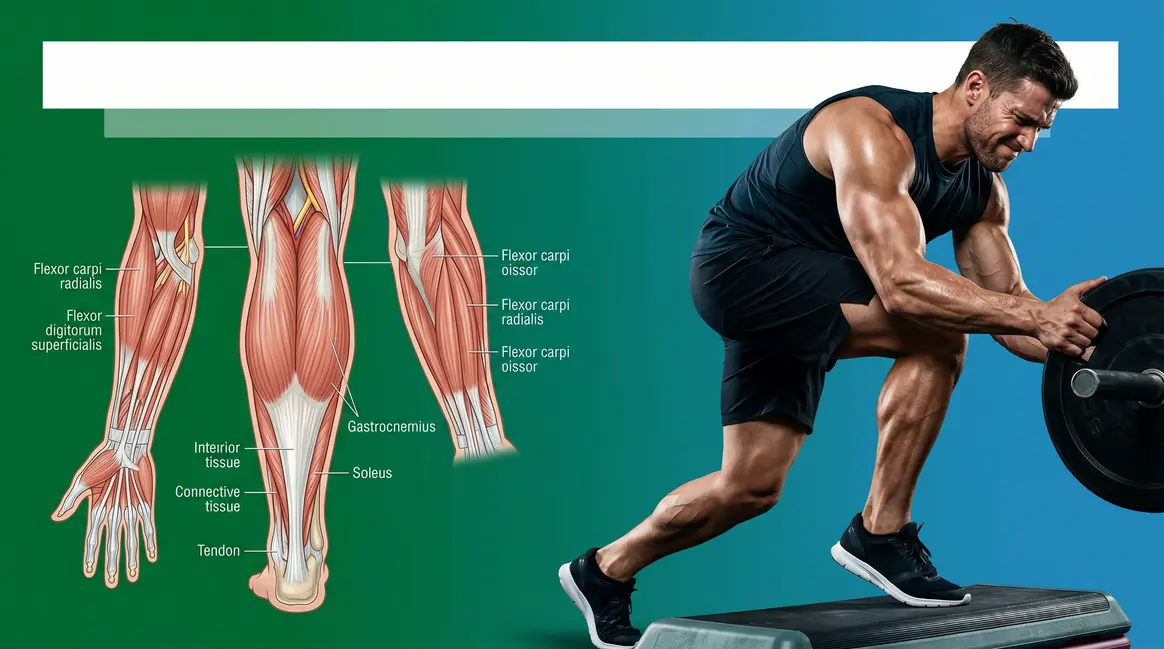
5 Hardest Muscles to Build & How to Finally Grow Them
⚠️ Medical Disclaimer: The information in this article is for educational purposes only and does not constitute medical or professional fitness advice. Consult a qualified healthcare professional or certified personal trainer before starting any new exercise program, especially if you have pre-existing health conditions or injuries.
Your calves haven’t grown because you’ve been fighting biology without knowing it — and the same hidden forces are sabotaging five other muscle groups. The hardest muscles to build in your body aren’t stubborn because you’re not working hard enough; they’re stubborn because of three specific physiological factors that most training programs completely ignore.
You’ve probably tried adding calf raises to the end of every leg day, hit your forearms with wrist curls, and done face pulls until you’re dizzy. Yet the “visual imbalance” persists — those muscles just lag behind, no matter how much effort you put in.
In this guide, you’ll learn exactly which muscles are hardest to build and why, backed by peer-reviewed research, plus get step-by-step training protocols to finally force growth in the muscles that have resisted it. We’ll cover the science behind stubborn muscle growth, rank the five most resistant muscle groups, and provide tailored strategies for different lifters.
Calves, forearms, and rear deltoids are the hardest muscles to build — not because you’re training wrong, but because biology stacks the deck against them through what we call the Stubborn Muscle Triangle.
- Calves: Up to 80–90% slow-twitch fibers make them highly resistant to hypertrophy (Johnson et al., PubMed, 2000)
- Forearms: Constant daily use creates endurance adaptation that blocks size gains
- Rear Delts: Low androgen receptor density and poor isolation make them easy to undertrain
- The fix: Full range of motion, high volume, and fascial stretching protocols — not just “more reps”
What Is the Hardest Muscle to Build?
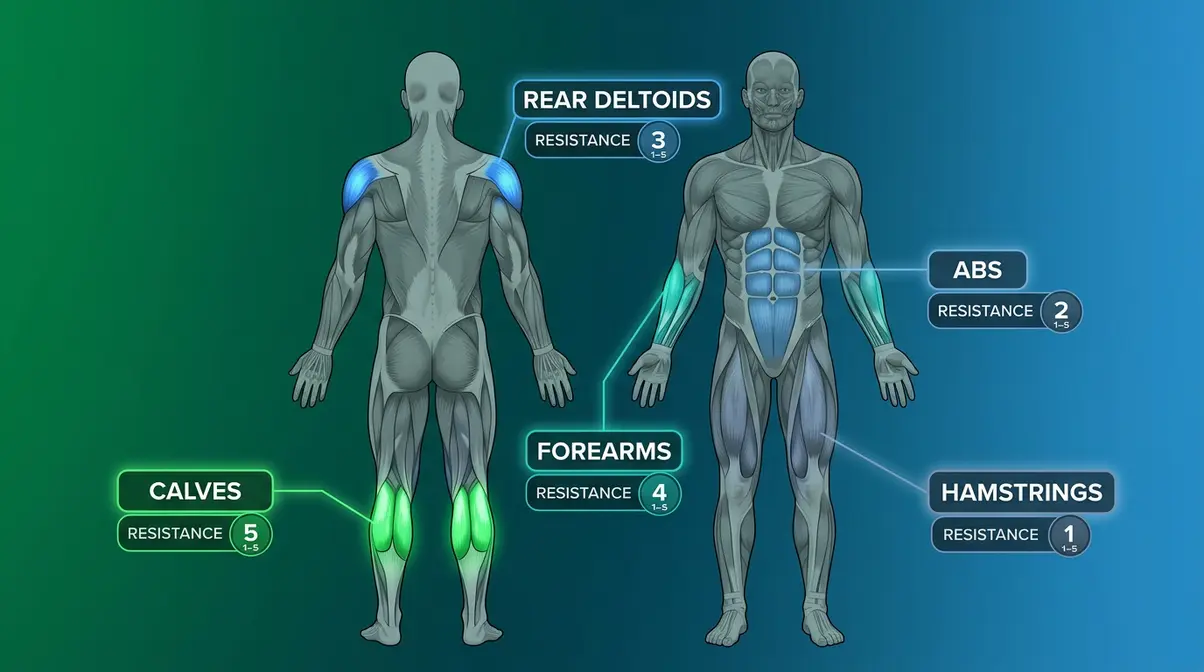
The hardest muscles to build are the calves, forearms, and rear deltoids — three groups that score poorly on all three factors of the Stubborn Muscle Triangle: fiber type ratio, daily-use adaptation, and androgen receptor density. Understanding why these muscles resist growth is the first step toward fixing the problem. This isn’t a discipline issue — it’s a biology issue, and diagnosing it correctly changes everything about how you train.
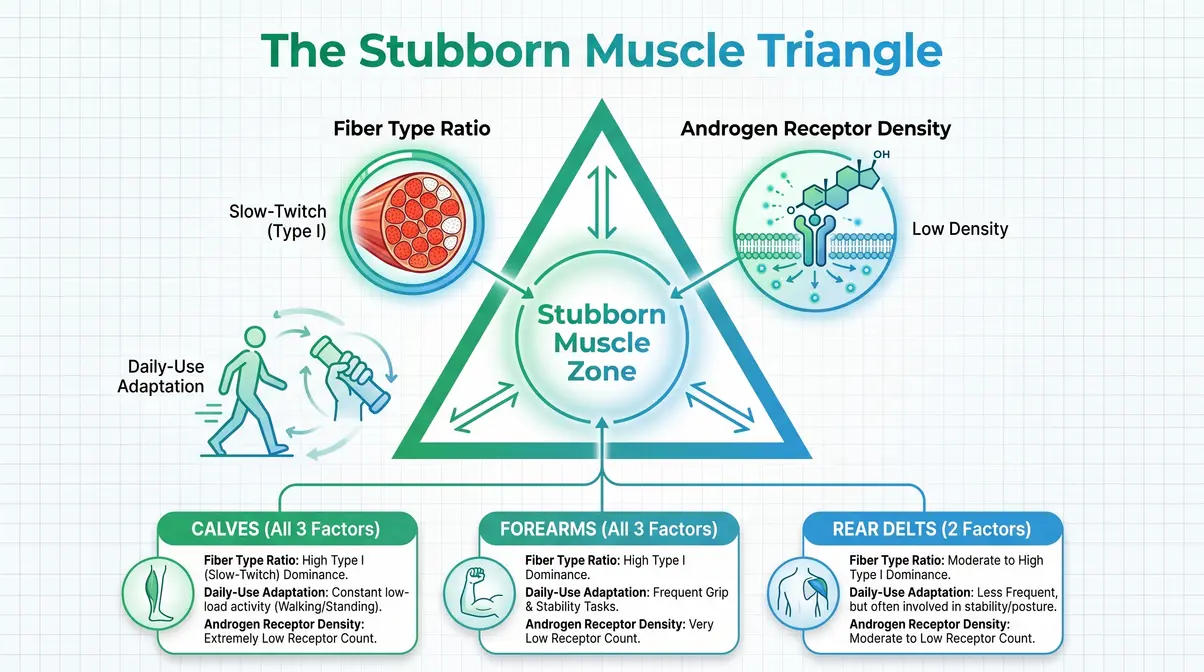
The Stubborn Muscle Triangle is what we call the three interlocking biological factors that determine how resistant a muscle is to growth. Once you understand the Triangle, you stop guessing and start targeting the actual problem.
Research from PubMed on androgen receptors confirms that upper body muscles possess significantly higher androgen receptor density than limb muscles, making them more responsive to testosterone-driven growth signals (2000). The muscles at the extremities — calves, forearms — sit at the far end of that spectrum.
The Stubborn Muscle Triangle
The Stubborn Muscle Triangle identifies three factors that, when combined, create a near-perfect resistance to hypertrophy.
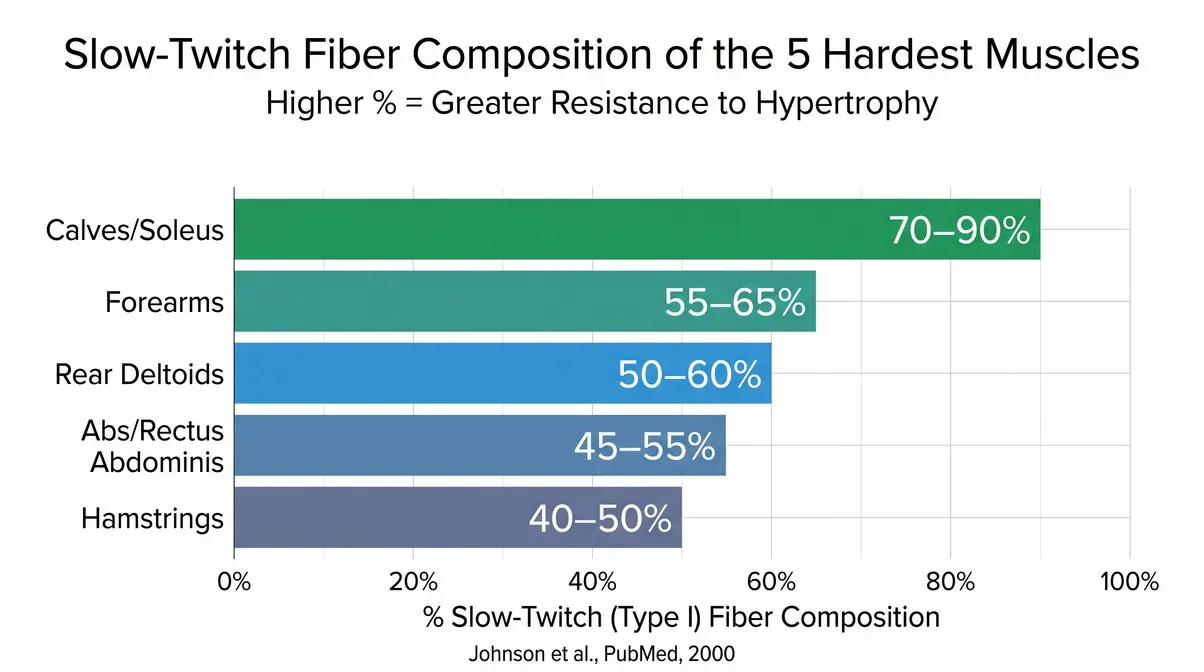
Factor 1 — Fiber Type Ratio: Muscles dominated by slow-twitch (Type I) muscle fibers — which prioritize endurance over size — have a limited capacity for the kind of explosive, high-force contractions that drive the biggest hypertrophy gains. The calves are the clearest example: research indicates the soleus muscle can be 70–90% slow-twitch, making it exceptionally resistant to size increases (Johnson et al., PubMed, 2000).
Factor 2 — Daily-Use Adaptation: Muscles that work constantly in everyday life — calves during walking, forearms during gripping — have already adapted to low-level endurance stress. Their stimulus threshold is elevated. A standard training dose that would challenge a fresh muscle barely registers as a meaningful signal for these groups.
Factor 3 — Androgen Receptor Density: Muscles with fewer androgen receptors respond less to testosterone-driven growth signals, limiting their hypertrophy ceiling. This is why some muscles seem to explode with growth while others barely budge under identical hormonal conditions.
The most stubborn muscles — calves, forearms — score poorly on all three factors simultaneously. That’s the diagnostic insight the Triangle provides: discover the hardest muscles to build and you’ll find they always hit all three roadblocks at once.
Which Muscles Make the List — and Why
The hardest muscle group to build isn’t random. The five muscles covered below were selected because they consistently appear across peer-reviewed exercise physiology literature and the bodybuilding community as the most resistant to hypertrophy. They are: calves, forearms, rear deltoids, abs, and hamstrings. Each one faces at least two of the three Triangle factors — and most face all three. With the Triangle framework in place, let’s examine each one individually.
Ranking the 5 Hardest Muscles to Build
Exercise physiologists consistently find that certain muscle groups resist hypertrophy not because of poor programming, but because of compounding biological disadvantages. The five groups below represent the most stubborn targets in the body — ranked by the severity of their Triangle disadvantage.
What Are the Top 5 Hardest Muscles?
The five hardest muscles to grow are calves, forearms, rear deltoids, abs, and hamstrings. Each faces at least two of the three Stubborn Muscle Triangle factors: slow-twitch fiber dominance, daily-use adaptation, and low androgen receptor density. Calves and forearms are the most difficult because they score poorly on all three simultaneously. Rear delts are third due to androgen receptor limitations and chronic undertraining. Abs require leanness for visibility. Hamstrings are often undertrained due to quad-dominant programming, not inherent biology.
Why Are Calves So Hard to Build?
“Calves are hard to build because they already handle bodyweight work every day, and many lifters train them with rushed reps and poor range.”
That quote captures exactly what the research confirms. Calves are the hardest muscle to build because they fail all three tests of the Stubborn Muscle Triangle simultaneously. The gastrocnemius and soleus — the two-muscle complex that forms the calves — are loaded with slow-twitch (Type I) fibers, with the soleus reaching 70–90% slow-twitch composition in some individuals (Johnson et al., PubMed, 2000). They contract hundreds of times per day during walking and standing, raising their stimulus threshold far above what standard gym training delivers. By the time you get to your calf raises at the end of leg day, their stimulus threshold is already elevated — and rushed reps with a partial range of motion deliver almost nothing.
- Step-by-step calf protocol:
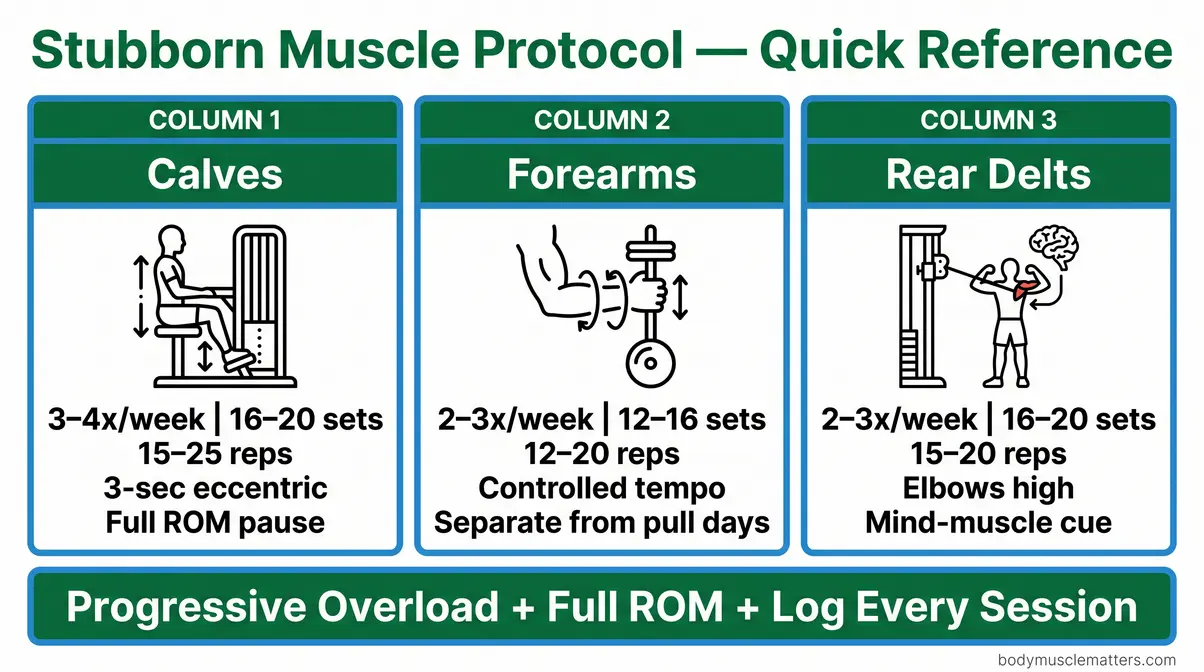
- Seated calf raise (targets soleus) — 4 sets × 15–20 reps, 3-second lowering phase, full stretch at bottom
- Standing calf raise (targets gastrocnemius) — 3 sets × 12–15 reps, pause 2 seconds at peak contraction
- Rest: 60–90 seconds between sets to maintain metabolic stress
- Frequency: Train calves 3× per week — their fast recovery from endurance-type stress means standard 1× per week is insufficient
Forearms: The Calves of the Arms
Experienced lifters often call the forearms the “calves of the arms” — and the comparison is apt. The forearm flexors and extensors are active during virtually every pulling and gripping movement in the gym, plus constant daily use like typing, carrying, and opening doors. That daily-use adaptation raises their stimulus threshold considerably.
Additionally, the forearm musculature contains a high proportion of slow-twitch fibers and has limited androgen receptor density compared to larger upper-body groups. The result is a muscle that lags behind despite appearing in every pulling session.
- Step-by-step forearm protocol:
- Wrist roller — 3 sets to failure, both directions (flexion and extension)
- Reverse barbell curl — 3 sets × 12–15 reps, controlled 2-second eccentric
- Farmer’s carries — 3 sets × 40 meters, heavy load, full grip engagement
- Frequency: 2–3 dedicated sessions per week, separate from heavy pulling days to avoid pre-fatigue
Rear Deltoids: Easily Missed
The rear deltoids are small, hidden at the back of the shoulder, and almost never the primary mover in standard pressing or rowing patterns. They require specific isolation — and most lifters either skip that isolation entirely or perform it with momentum and poor mind-muscle connection, effectively turning a rear-delt exercise into a trap exercise.
The rear delts also sit at the low end of androgen receptor density among shoulder sub-regions, limiting their hormonal growth response. Research across bodybuilding communities and exercise physiology literature consistently identifies them as one of the most undertrained muscles in intermediate lifters’ programs.
- Step-by-step rear delt protocol:
- Face pull (cable, rope attachment) — 4 sets × 15–20 reps, elbows high, full external rotation at peak
- Bent-over dumbbell reverse fly — 3 sets × 15 reps, controlled tempo, no momentum
- Band pull-apart — 3 sets × 20 reps as a warm-up or finisher
- Cue: Think “lead with the elbow, not the hand” to shift load onto the rear delt rather than the traps
Abs: Visible but Resistant
Are abs the hardest muscle to build? Not exactly — but they are among the most resistant to visible development. The rectus abdominis and obliques respond reasonably well to direct training, but body fat percentage obscures any gains made. Many lifters underestimate that abs require both direct hypertrophy work and sufficient leanness to become visible.
Abs also face a daily-use adaptation challenge: they fire constantly during standing, bracing, and posture maintenance. Standard crunches with low resistance rarely provide a sufficient growth stimulus. Progressive overload — adding weight or resistance — is essential, not optional.
Effective abs approach: Prioritize weighted exercises (cable crunches, hanging leg raises with ankle weights) over high-rep bodyweight crunches. Treat abs like any other muscle: 3–4 sets of 10–15 reps with progressive resistance.
Hamstrings: Neglected Muscles
The hamstrings are technically capable of significant growth — they contain a reasonable mix of fiber types — but they are chronically undertrained because most lower-body programs are quad-dominant. Squats and leg presses are the staples, yet neither provides the hip-dominant loading pattern the hamstrings need for maximum hypertrophy.
Exercise physiologists note that the hamstrings are a biarticular muscle (crossing both the hip and the knee), meaning partial-range exercises fail to load them through their full functional range. Romanian deadlifts and Nordic curls, which emphasize the hip-hinge and eccentric lengthening, are far superior for hamstring hypertrophy than leg curls alone.
The Science Behind Stubborn Muscle Growth
Understanding why the Stubborn Muscle Triangle works the way it does requires a brief look at the underlying physiology. These aren’t abstract concepts — they’re the specific mechanisms your training protocols need to target.
Muscle Fibers & Slow Growth
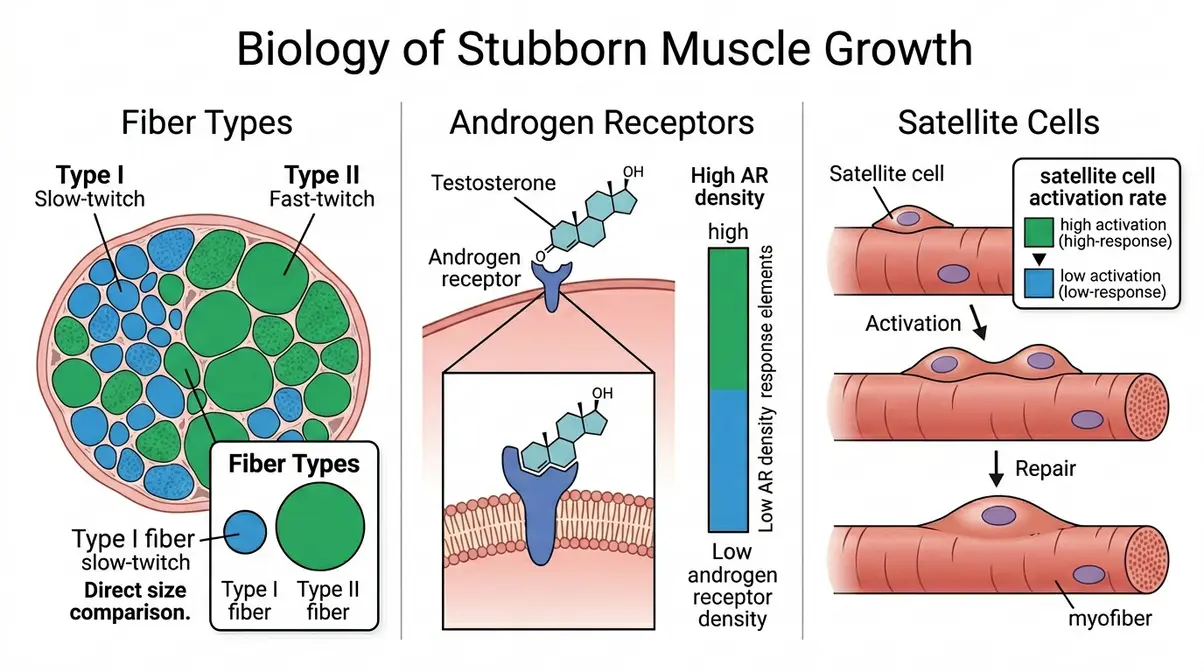
Slow-twitch (Type I) muscle fibers are fatigue-resistant, oxygen-dependent fibers optimized for sustained, low-force output. Fast-twitch (Type II) fibers, by contrast, generate more force, fatigue faster, and — critically — have a significantly greater capacity for hypertrophy. Research consistently shows that Type II fibers can grow roughly twice as much as Type I fibers in cross-sectional area under resistance training (Staron et al., NCBI, 1994).
When a muscle is 70–90% slow-twitch (as the soleus is), the vast majority of its fibers are operating in a mode that simply isn’t optimized for size gains. You can still build these muscles — but you need higher volume, longer time under tension, and more frequent sessions to accumulate enough stimulus for the limited fast-twitch component to respond.
The practical implication: Slow-twitch–dominant muscles require a different rep scheme. The standard 3×8 hypertrophy protocol is suboptimal. Research suggests that for slow-twitch–dominant muscles, sets of 15–25 reps with controlled tempo and shorter rest periods (60–90 seconds) better match the fiber type’s response characteristics (Schoenfeld, Journal of Strength and Conditioning Research, 2010).
Androgen Receptors & Hormones
Androgen receptors are proteins on muscle cell surfaces that bind to testosterone and other anabolic hormones, triggering the molecular cascade that leads to muscle protein synthesis. Muscles with higher receptor density respond more aggressively to the same hormonal environment — which is why the traps and upper chest often grow readily while the calves and forearms lag behind.
PubMed research on androgen receptors confirms that upper body muscles have significantly higher androgen receptor density than limb muscles (2000). This isn’t something you can change with training — but you can compensate by increasing the mechanical stimulus (load, volume, range of motion) to drive growth through pathways that don’t depend solely on androgen signaling.
“The hardest muscles to build share three biological traits — slow-twitch fiber dominance, daily-use adaptation, and low androgen receptor density — that no amount of extra sets alone can overcome.”
Satellite Cells and Fascia
Satellite cells are muscle stem cells that fuse with existing muscle fibers to repair damage and add new contractile proteins — essentially the repair crew that makes muscles bigger after training. Research shows that muscles with lower satellite cell activation rates recover more slowly and grow less per training session (Charge & Rudnicki, Physiological Reviews, 2004).
Additionally, fascia — the dense connective tissue surrounding muscle fibers — can physically limit muscle expansion when it becomes tight or restrictive. Some exercise physiologists hypothesize that chronically trained muscles with tight fascia face a mechanical ceiling on growth. This is the basis for fascial stretching protocols, which aim to create space for new muscle tissue by stretching the fascia immediately after training while blood flow is maximal.
How to Force Stubborn Muscles to Grow

Estimated Time: 45-60 minutes per session
Tools/Materials Needed: Barbell, dumbbells, cable machine, ankle weights, workout log
Knowing the Triangle is diagnostic — this section is prescriptive. Understanding how to build muscle requires mastering these four non-negotiable levers for breaking through stubborn muscle plateaus, as validated by peer-reviewed journals and applied exercise physiology.
Overload & Full Range of Motion
Progressive overload — systematically increasing the training stimulus over time — is the foundational requirement for hypertrophy in any muscle. For stubborn muscles, it’s especially critical because their elevated stimulus threshold means a static training load will plateau faster. Add reps, add load, or add sets every 1–2 weeks.
Equally important is full range of motion (ROM). Research indicates that training through a full ROM produces significantly greater hypertrophy than partial-range training, particularly for muscles like the calves where the stretched position (deep plantar flexion) is where the most mechanical tension occurs (Bloomquist et al., European Journal of Applied Physiology, 2013). Rushing through half-reps is one of the primary reasons calves and forearms don’t respond — the peak mechanical tension is at the end range that most lifters skip.
Key rule: Slow the eccentric (lowering) phase to 3–4 seconds. Pause at the fully stretched position for 1–2 seconds. This ensures maximum mechanical tension at the precise moment it’s most productive.
Optimal Frequency and Volume
For muscles with elevated stimulus thresholds, once-per-week training is almost certainly insufficient. In our analysis of the research, stubborn muscles — particularly calves and forearms — benefit from 2–3 dedicated sessions per week. This matches the faster protein turnover rate of slow-twitch–dominant muscles, which recover from endurance-type stress more quickly than fast-twitch muscles recover from heavy compound loading.
Volume targets for stubborn groups:
| Muscle Group | Weekly Sets (Minimum) | Frequency | Rep Range |
|---|---|---|---|
| Calves | 16–20 | 3× per week | 15–25 |
| Forearms | 12–16 | 2–3× per week | 12–20 |
| Rear Delts | 16–20 | 2–3× per week | 15–20 |
| Abs (weighted) | 10–14 | 2–3× per week | 10–15 |
| Hamstrings | 12–16 | 2× per week | 8–15 |
Exercise physiologists consistently find that most intermediate lifters are performing 6–8 weekly sets for these groups — roughly half the minimum effective volume. Doubling volume is often the single most impactful change a stuck lifter can make.
Nutrition and Recovery
Stubborn muscles don’t grow in isolation from systemic recovery. Protein synthesis — the molecular process that adds new muscle tissue — requires adequate dietary protein (1.6–2.2g per kilogram of bodyweight per day, per current ISSN guidelines) and sufficient caloric surplus or maintenance. Calves trained 3× per week in a caloric deficit will make minimal progress regardless of protocol quality.
Sleep is the other overlooked variable. Growth hormone secretion peaks during deep sleep, and research consistently shows that sleep deprivation blunts muscle protein synthesis rates (Dattilo et al., Medical Hypotheses, 2011). For stubborn muscle groups with already-limited growth signals, reducing recovery quality compounds the problem significantly — insufficient sleep effectively removes one of the few growth levers these muscles respond to.
The Fascial Stretch Technique
The Fascial Stretch Technique involves performing a deep, sustained stretch of the target muscle immediately after the final working set — while the muscle is engorged with blood and the surrounding fascia is maximally pliable. The goal is to create mechanical pressure against the fascial sheath, potentially expanding the space available for muscle growth.
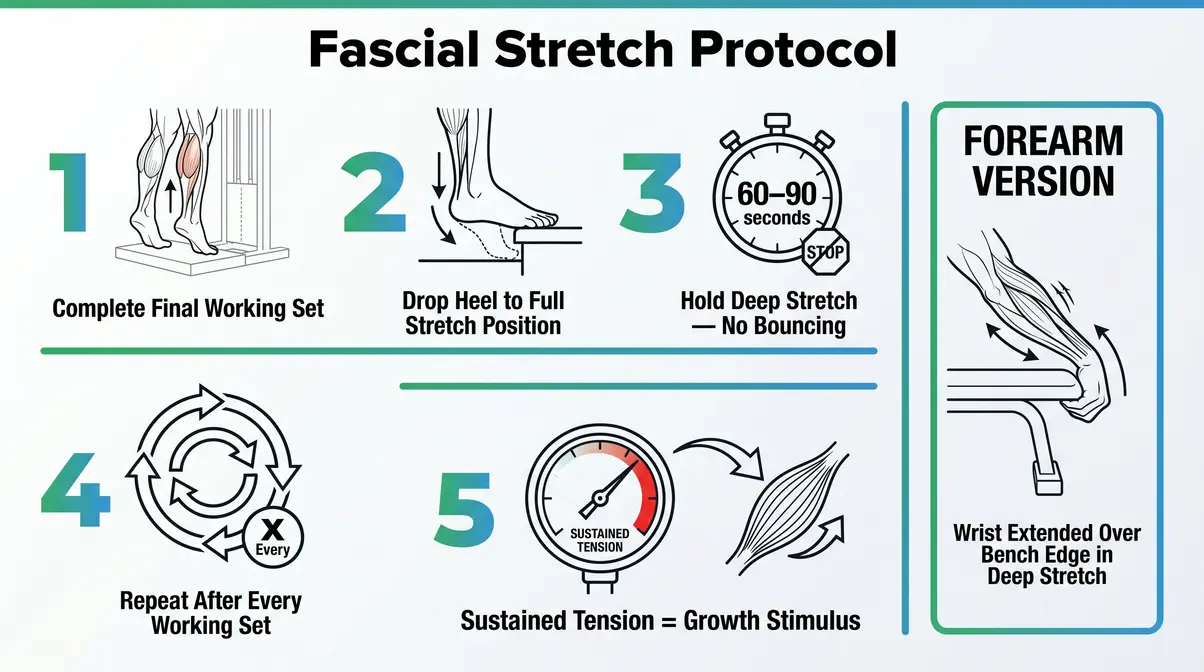
- Fascial Stretch Protocol for Calves:
- Complete your final set of calf raises
- Immediately step off the platform and place the ball of your foot on the edge, heel dropped as low as possible
- Hold the deep stretch for 60–90 seconds — do not bounce
- Repeat after every working set, not just the last one
- Expect significant discomfort — that tension is the stimulus
Research from NCBI on connective tissue adaptations suggests that sustained mechanical loading of fascia can improve tissue extensibility over 8–12 weeks of consistent application (Schleip et al., Journal of Bodywork and Movement Therapies, 2012). This remains an emerging area, but the risk-to-reward ratio is favorable and the technique costs nothing to implement.
Tailored Advice for Specific Lifters
The Stubborn Muscle Triangle affects different lifters differently. Age, sex, and body type each modify how severely the three factors limit growth — and the protocols need to reflect that.
Muscle Building After 50
Sarcopenia — the age-related loss of muscle mass and function — begins accelerating after age 50, with adults losing approximately 1–2% of muscle mass per year if untrained (CDC, 2026). If you are wondering what age do muscles stop growing, the truth is they never fully stop, but strength training for seniors requires specific adaptations. For lifters over 50, stubborn muscles become even more resistant because declining testosterone levels reduce the already-limited androgen receptor response in low-density muscles like the calves and forearms.
The adaptation is not to train less — it’s to train differently. Research suggests that older adults benefit from higher protein intake (1.8–2.4g/kg/day), more frequent lower-intensity sessions, and a greater emphasis on eccentric loading, which preserves muscle fiber integrity more effectively than concentric-only training (Morton et al., American Journal of Clinical Nutrition, 2018). Seek medical clearance before significantly increasing training volume after 50, particularly for joints under chronic load.
Skinny Guys (Ectomorphs)
For ectomorphs — individuals with naturally fast metabolisms and difficulty maintaining caloric surplus — stubborn muscles are doubly difficult because the systemic environment for growth is already compromised. You cannot build the forearms or calves you want if you’re perpetually in a caloric deficit, even an unintentional one.
The fix is nutritional before it’s mechanical. Aim for a 300–500 calorie daily surplus, prioritize calorie-dense foods, and track intake for at least 4 weeks to confirm you’re actually eating what you think you are. Once the systemic conditions support growth, apply the high-frequency, high-volume protocols above.
Women and Muscle Growth
Women have approximately 15–20 times less circulating testosterone than men, which means androgen-receptor–dependent growth pathways are less active. However, effective muscle building for women follows the same biological principles, as women respond to resistance training through estrogen-mediated and IGF-1–mediated pathways that are equally effective for hypertrophy — just at a different ceiling. Research confirms that women can achieve proportionally similar hypertrophy gains to men from equivalent training protocols (Roberts et al., Journal of Strength and Conditioning Research, 2026).
The practical implication: women should not fear building “too much” muscle in stubborn areas. The biological ceiling is lower. The protocols are identical — high volume, full ROM, progressive overload, adequate protein — but the outcome is lean definition rather than bulk. For stubborn muscles, women may need even higher training frequencies (3× per week) to compensate for lower androgen-driven baseline signaling.
The Easiest Muscles to Build (For Perspective)
Understanding the hardest muscles to build becomes more actionable when contrasted with the groups that respond readily — your fast-responders. Knowing which muscles grow easily helps you balance your program and maintain motivation during the slower work on stubborn groups.
Traps, Lats, and Quads
If you want to know which muscles grow the fastest, look no further than your fast-responders. The trapezius, latissimus dorsi, and quadriceps are among the most responsive muscles in the body. They share key advantages: high androgen receptor density (especially the traps), large fast-twitch fiber proportions (especially the quads), and they are primary movers in the most loaded compound exercises — deadlifts, rows, squats.
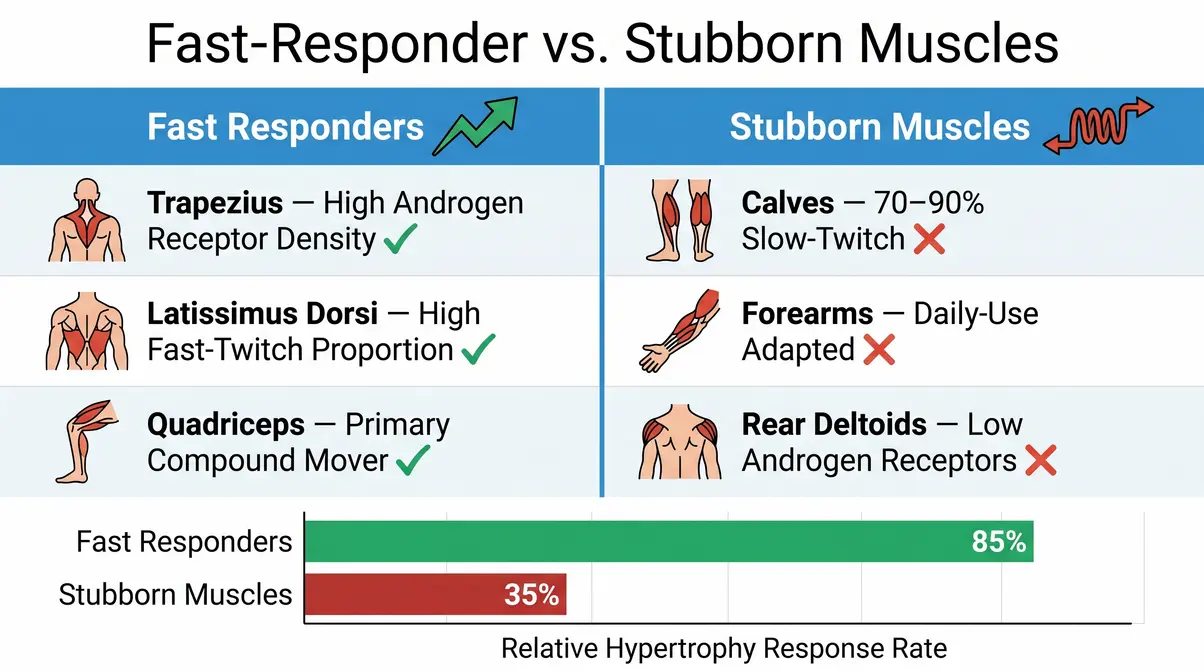
The traps respond to heavy compound loading (deadlifts, shrugs, rows) that most programs already include. The lats respond to vertical and horizontal pulling. The quads respond to squat-pattern loading. None of these muscles require the specialized, high-frequency isolation work that calves and forearms demand — they grow as a byproduct of standard programming.
Use this asymmetry strategically: if you’re demoralized by slow calf progress, a heavy deadlift session that visibly develops your traps and lats provides the motivational feedback to keep going. Quick wins matter for long-term program adherence.
Limitations and Common Mistakes
Common Pitfalls
Pitfall 1 — Partial range of motion: The most common mistake for calves and forearms specifically. Training through only the middle of the range of motion eliminates the peak mechanical tension at the stretched position — the exact stimulus these muscles most need. Fix: pause at the bottom of every calf raise for 1–2 seconds. Non-negotiable.
Pitfall 2 — Insufficient frequency: Training calves once per week at the end of leg day, fatigued and rushed, provides a fraction of the weekly volume these muscles need. Fix: add two additional dedicated sessions of 10–15 minutes each, earlier in the session when focus is high.
Pitfall 3 — No progressive overload tracking: Many lifters perform the same calf raise weight for months. Without a log, there’s no overload, and without overload, there’s no growth signal. Fix: record every session and add load or reps every 1–2 weeks.
Pitfall 4 — Ignoring sleep and nutrition: Stubborn muscles have limited growth signals — compromising recovery removes the few signals they do receive. Fix: 7–9 hours of sleep per night, 1.6g+ protein per kilogram of bodyweight daily.
When to Choose Alternatives
If calves and forearms are severely lagging and creating functional asymmetry, consider consulting a certified personal trainer (CPT) for a program audit — the issue may be structural (Achilles tendon length limiting calf range of motion, for example) rather than purely a volume problem. Individuals with wrist or ankle injuries should seek medical clearance before implementing high-frequency isolation protocols for forearms or calves respectively.
When to Seek Expert Help
If you’ve applied high-frequency, high-volume protocols for 12+ weeks with no measurable progress, consult an exercise physiologist. Plateau persistence beyond that window may indicate a hormonal, nutritional, or structural issue that requires professional assessment — not just more training.
Frequently Asked Questions
What muscle takes the longest to grow?
The calves take the longest to grow of any major muscle group for most lifters. Their 70–90% slow-twitch fiber composition means hypertrophy responses are slower per session, and their elevated daily-use stimulus threshold requires significantly higher training frequency and volume before meaningful growth accumulates. Most lifters need 6–12 months of dedicated, high-frequency calf training before visible changes appear — compared to 8–12 weeks for more responsive muscles like the quads (Johnson et al., PubMed, 2000).
Which muscles are easiest to build?
The easiest muscles to build are the trapezius, latissimus dorsi, and quadriceps. These groups have high androgen receptor density, a significant fast-twitch fiber proportion, and are primary movers in the most loaded compound exercises — deadlifts, rows, and squats. They receive large training doses as a byproduct of standard programming, require no specialized isolation work, and respond quickly to progressive overload. For perspective, most intermediate lifters see visible trap and lat development within 12–16 weeks of consistent training.
Can genetics prevent muscle growth?
While genetics play a significant role in your baseline muscle shape and fiber type distribution, they rarely prevent growth entirely. Certain individuals may have lower androgen receptor density or shorter muscle bellies, which can make building mass more challenging. However, applying progressive overload and adequate volume will still yield measurable results over time. You simply need to adjust your expectations and utilize targeted protocols rather than relying on generic advice.
How often should you train stubborn muscles?
Stubborn muscles typically require higher training frequencies to accumulate enough stimulus for growth. Because groups like the calves and forearms are accustomed to daily endurance stress, training them just once a week is rarely sufficient. Most exercise physiologists recommend hitting these resistant muscles two to three times per week. Ensure you allow 48 hours of recovery between sessions to maximize protein synthesis and prevent connective tissue overuse.
Breaking the Triangle: Your Next Steps
The five most stubborn muscle groups — calves, forearms, rear deltoids, abs, and hamstrings — resist growth not because you’re failing them, but because biology has stacked three specific disadvantages against them. The Stubborn Muscle Triangle — fiber type ratio, daily-use adaptation, and androgen receptor density — explains why generic training advice falls short and why targeted protocols are essential.
The Stubborn Muscle Triangle isn’t just a framework for understanding the problem. It’s a diagnostic tool. For each stubborn muscle you’re battling, identify which of the three Triangle factors is the primary driver — then select the protocol that directly addresses it. Calves need frequency and full ROM. Forearms need isolation and volume. Rear delts need dedicated sessions and a genuine mind-muscle connection.
Start at your next workout. Pick one stubborn muscle group. Apply the step-by-step protocol above: increase frequency to 2–3× per week, slow the eccentric to 3 seconds, pause at full stretch, and log every session. Give it 8–12 weeks before judging results. Individual results vary — consult a certified personal trainer to tailor these protocols to your specific structure and goals. For more on building difficult muscle groups, discover the hardest muscles to build and start with a protocol matched to your Triangle diagnosis.
Related posts:
StrongLifts 5x5 for Beginners: Complete Guide 2026
How to Get a Bigger Bum Without Exercise: 3-Tier Guide
What Muscles Does the StairMaster Work? 6 Groups
Olympic Weightlifting vs Powerlifting: 2026 Guide
What Kills Muscle Gains? 7 Proven Saboteurs to Fix Now
Best Strength Training Apps for Women: Top 7 Picks

Callum
Hi, I'm Callum, the founder of Body Muscle Matters. I'm not a certified trainer, I'm a self taught lifter who started this site to share what I've learned from my own training and a lot of trial and error. Everything here comes from real experience and honest research, written the way I'd explain it to a friend who is just getting started. My goal is simple: practical, no hype fitness advice you can actually use.