Best Strength Training Apps for Women: Top 7 Picks
⚕️ Health Disclaimer: The information in this article is for educational purposes only and does not constitute medical advice. Consult a qualified healthcare professional or certified personal trainer (CPT) before beginning any new strength training program, especially if you have existing health conditions, joint concerns, or are postmenopausal.
You already know you need to start strength training. What you don’t need is another hour of scrolling through an app store, reading vague descriptions, and downloading three apps that turn out to be the same generic “30-day challenge” wrapped in a different color scheme. The best strength training apps for women actually do exist — but finding the right one for your training style, budget, and body is where most women get stuck.
Our team spent weeks hands-on testing apps across beginner, intermediate, and 40+ use cases, cross-referencing findings with aggregated community feedback from r/xxfitness and r/AskWomenOver30. What we found: most apps fall into two distinct categories — and choosing the wrong category is the single biggest reason women abandon apps within two weeks. This guide cuts through that confusion with a clear framework so you can pick your app and start lifting today.
The best strength training apps for women match your training style, budget, and life stage — this is The App Alignment Matrix framework we use throughout this guide to give you a specific recommendation, not a generic list.
- Best overall guided program: EvolveYou — structured, female-trainer-led, beginner-friendly
- Best free option (no paywall): Nike Training Club — fully free, no subscription required
- Best for women over 40: Fitbod or WeGLOW — adaptive programming with joint-friendly options
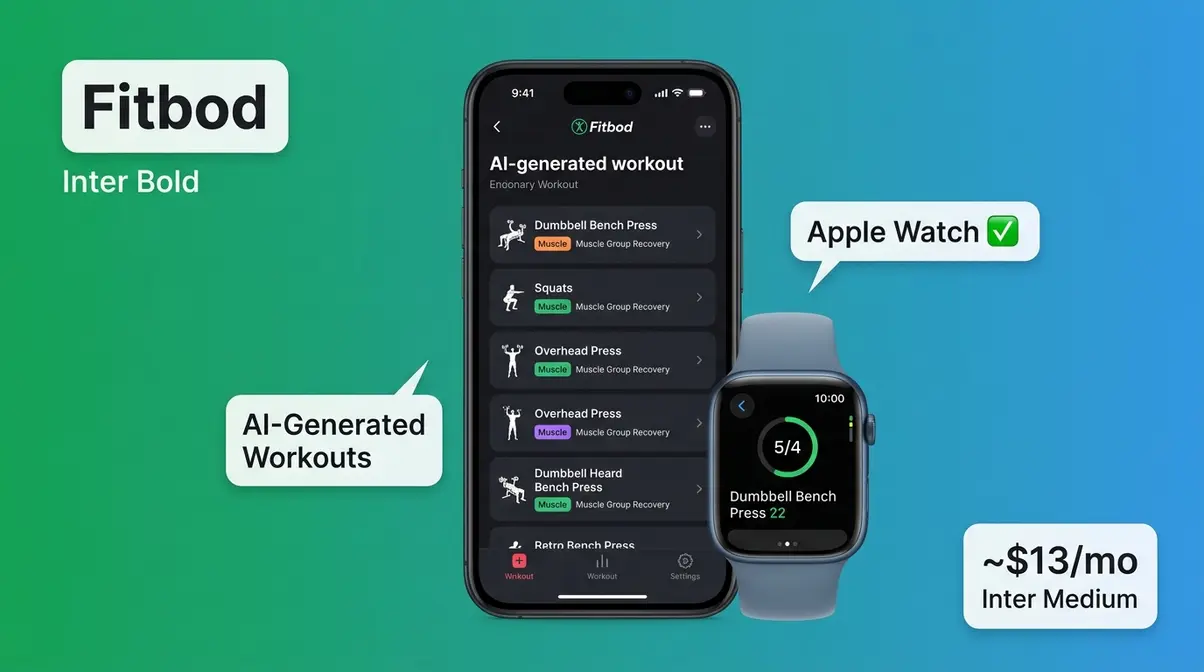
- Best self-guided tracker: Fitbod — AI-generated workouts adapt to your equipment and recovery
- Key insight: Distinguish “genuinely free” from “freemium” before downloading — hidden paywalls are the top complaint in every app’s reviews
How We Evaluated Strength Apps
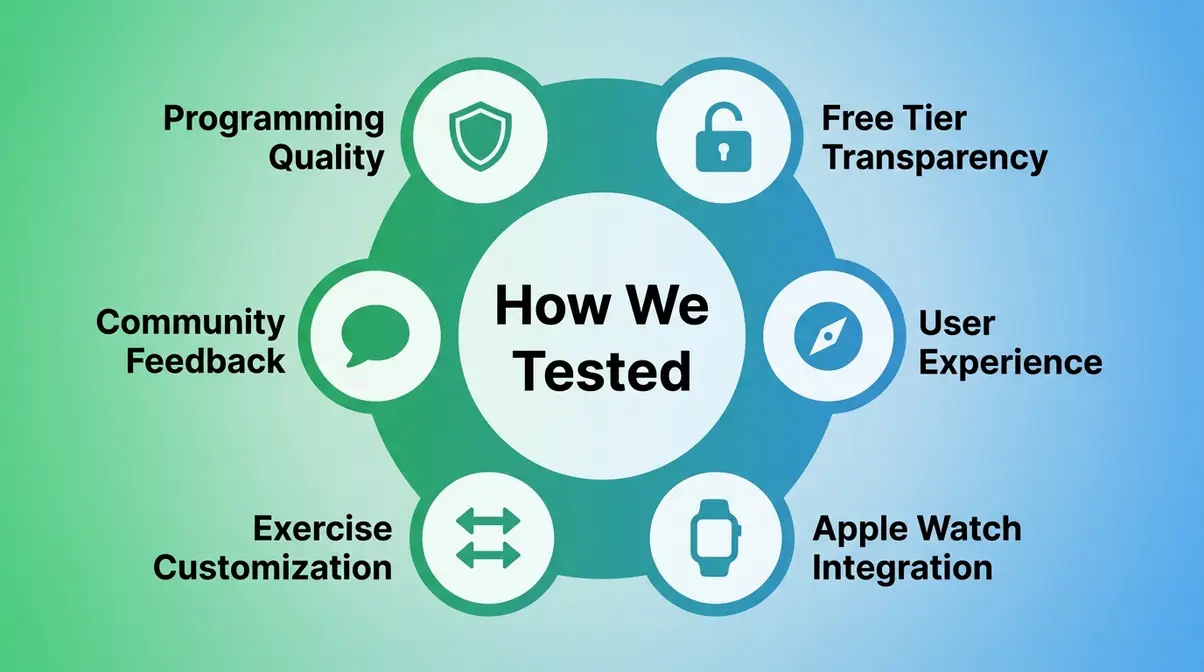
Choosing an app recommendation isn’t something we take lightly — especially for a topic that touches your health. Our evaluation process was structured, repeatable, and grounded in real-world use. Here’s exactly how we worked.
Our Testing Criteria
Our team — including a certified personal trainer (CPT) and fitness content specialists — evaluated each app over a minimum of three weeks of active use. We assessed six core criteria: (1) programming quality — does the workout structure follow evidence-based principles like progressive overload (gradually increasing weight or reps over time so muscles keep adapting)? (2) free tier transparency — what do you actually get without paying? (3) user experience — ease of navigation for a complete beginner; (4) Apple Watch and wearable integration; (5) exercise customization — can you swap out exercises or auto-generate based on your available equipment? (6) community feedback — we aggregated ratings and recurring themes from r/xxfitness, the Apple App Store, and Google Play to triangulate our hands-on findings with real user experience across hundreds of reviews.
Defining “Women-Specific” Apps
A “women’s app” label means very little on its own. After testing, we defined “genuinely women-specific” as meeting at least three of these five markers: (1) programming designed around female hormonal cycles or recovery patterns; (2) trainer-led content featuring women coaches; (3) explicit support for goals common to women — bone density, glute sculpting (targeted lower-body muscle development), and pelvic floor health; (4) a community or accountability layer; (5) modifications for joint sensitivity or postpartum return-to-lifting. Apps that simply use pink branding did not qualify.
Quick Comparison: Top Strength Apps
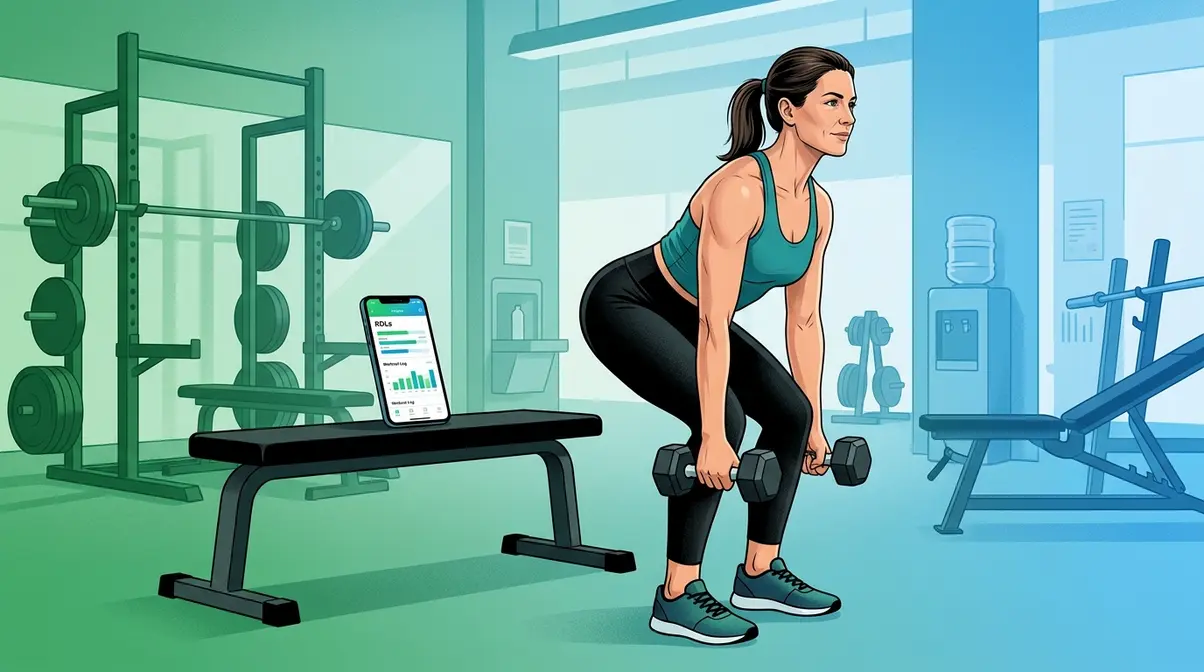
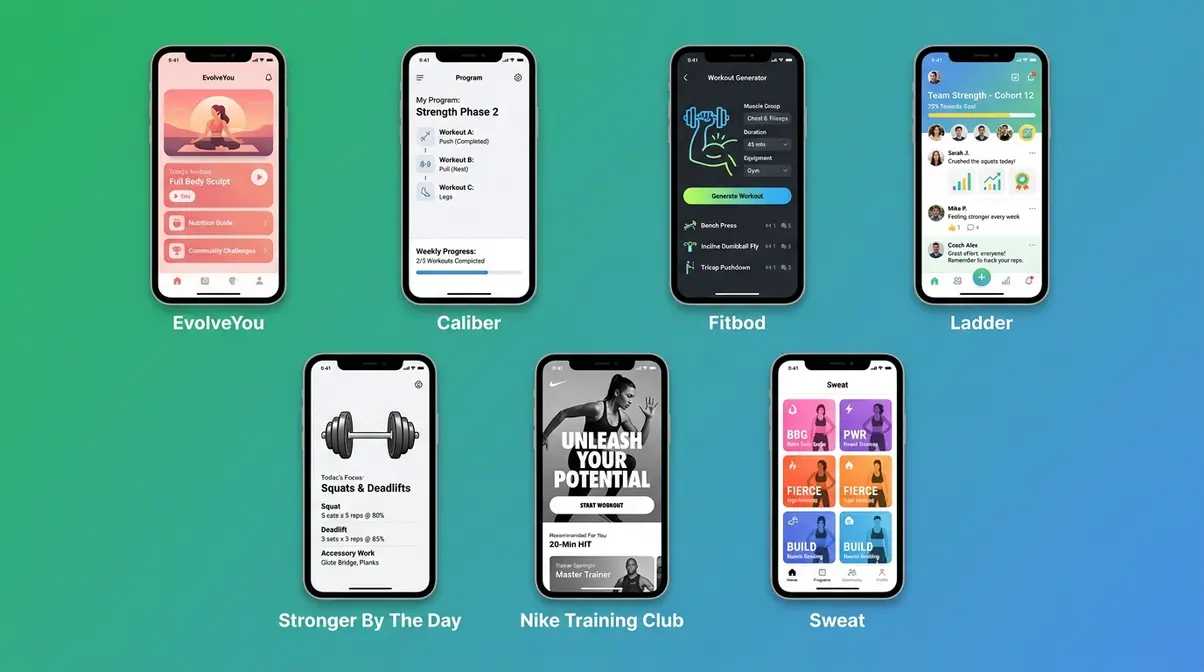
The App Alignment Matrix organizes every app across three axes: training style (Self-Guided Tracker vs. Follow-Along Program), budget (Free vs. Paid), and life stage (Under 40 vs. 40+). Use this table to find your row before reading the full reviews.
| App | Type | Coaching Style | Free Tier | Apple Watch | Progressive Overload | Best For | Price |
|---|---|---|---|---|---|---|---|
| EvolveYou | Follow-Along | Female trainer-led video | No | No | Yes (structured phases) | Beginners wanting guided programs | ~$20/mo |
| Caliber | Self-Guided | 1-on-1 coach (paid) | Yes — robust | No | Yes (coach-assigned) | Free structured lifting | Free / ~$150/mo coaching |
| Fitbod | Self-Guided | AI-generated | No (3 free workouts) | Yes | Yes (auto-adjusted) | Data-driven gym-goers | ~$13/mo or ~$80/yr |
| Ladder | Follow-Along | Coach-programmed audio | No | No | Yes (periodized plans) | Community accountability | ~$20/mo |
| Stronger By The Day | Self-Guided | Barbell program-based | No | No | Yes (linear progression) | Intermediate barbell lifters | ~$10/mo |
| Nike Training Club | Follow-Along | Video trainer-led | Fully free | Yes | Limited | True beginners, zero budget | Free |
| Sweat | Follow-Along | Female trainer video | No | No | Yes (program phases) | Variety seekers, home + gym | ~$20/mo |
| WeGLOW | Follow-Along | Female trainer, perimenopause-aware | No | No | Yes | Women 40–60, joint-friendly | ~$15/mo |
Pricing verified as of Q2 2026. Prices may vary by region and subscription tier — confirm on the app store before subscribing.
What to Know Before Downloading
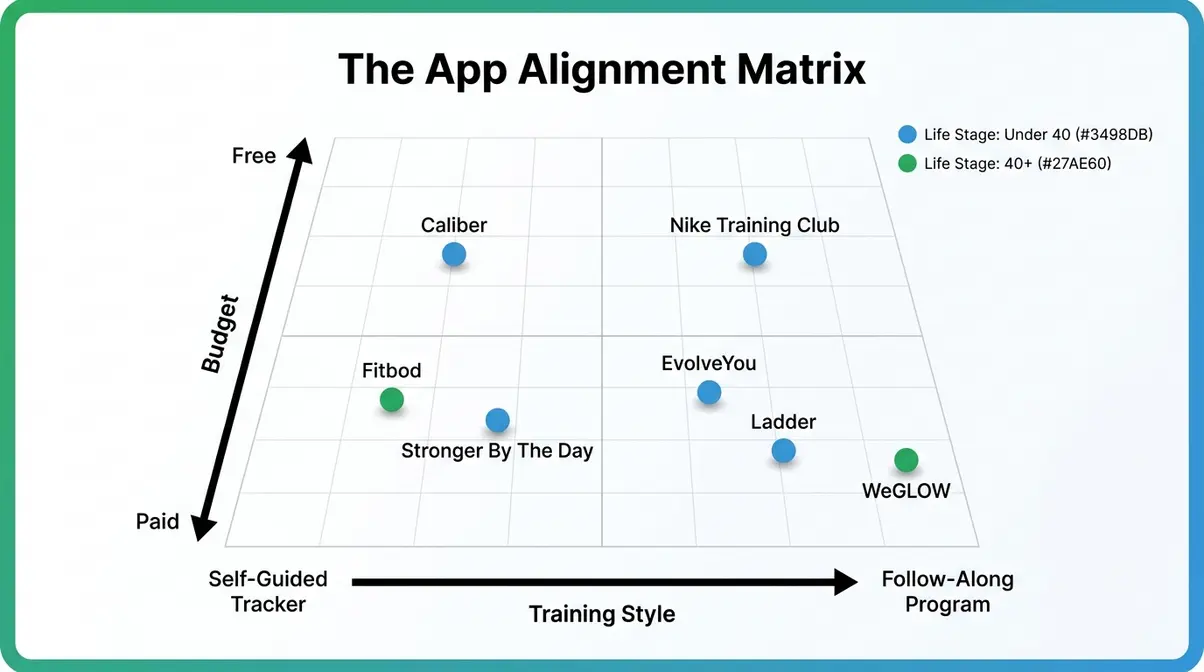
Before you spend a dollar or commit to a program, a few foundational concepts will make every review in this guide more useful. Understanding the fundamentals of strength training for women is crucial. Skipping this section is like buying running shoes before knowing whether you pronate — the gear choice only makes sense once you understand the basics.
Why Women Need to Lift Weights
Strength training isn’t just about aesthetics. A recent 2026 study published in the Journal of Bone and Mineral Research found that resistance training performed two or more times per week can increase bone mineral density by 1–3% in premenopausal women — a critical finding given that women lose up to 20% of bone density in the five to seven years following menopause, according to the National Institute on Aging (2026 data). The CDC’s Physical Activity Guidelines (2026) for Americans also recommend muscle-strengthening activities on two or more days per week for all adults, noting benefits including improved metabolic health, reduced fall risk, and better mental health outcomes.
Beyond bone health, women naturally carry less muscle mass than men and experience accelerated muscle loss (sarcopenia) after age 30 at a rate of roughly 3–8% per decade, based on recent Harvard Health (2026) reports. Consistent resistance training is the most evidence-supported intervention to slow this decline. Apps that structure this training correctly — with real progressive overload and adequate recovery — aren’t a luxury. For many women, they’re a health tool.
“I love strength training in addition to running and cross training but I’m ready to change my gym workout. Any ladies use any of the strength training apps? I’ve never had an issue with what I do but wondering if something new may give better results.”
This question, asked repeatedly in r/xxfitness and r/AskWomenOver30, captures exactly why you’re here. You’re already active. You’re not starting from zero. You just want something that works better — and that’s exactly what the right app can deliver.
Best Program for Women?
The best strength training program for women combines compound lifts, progressive overload, and two to four sessions per week. Research consistently supports full-body programs for beginners and upper/lower splits for intermediate lifters. For app-based programs, EvolveYou and Ladder offer the most structured guided programs, while Fitbod and Caliber are strongest for self-directed training. The “best” program is ultimately the one you’ll follow consistently — which is why matching your app type (Follow-Along vs. Self-Guided) to your actual training style matters more than any specific program design.
The Role of Progressive Overload
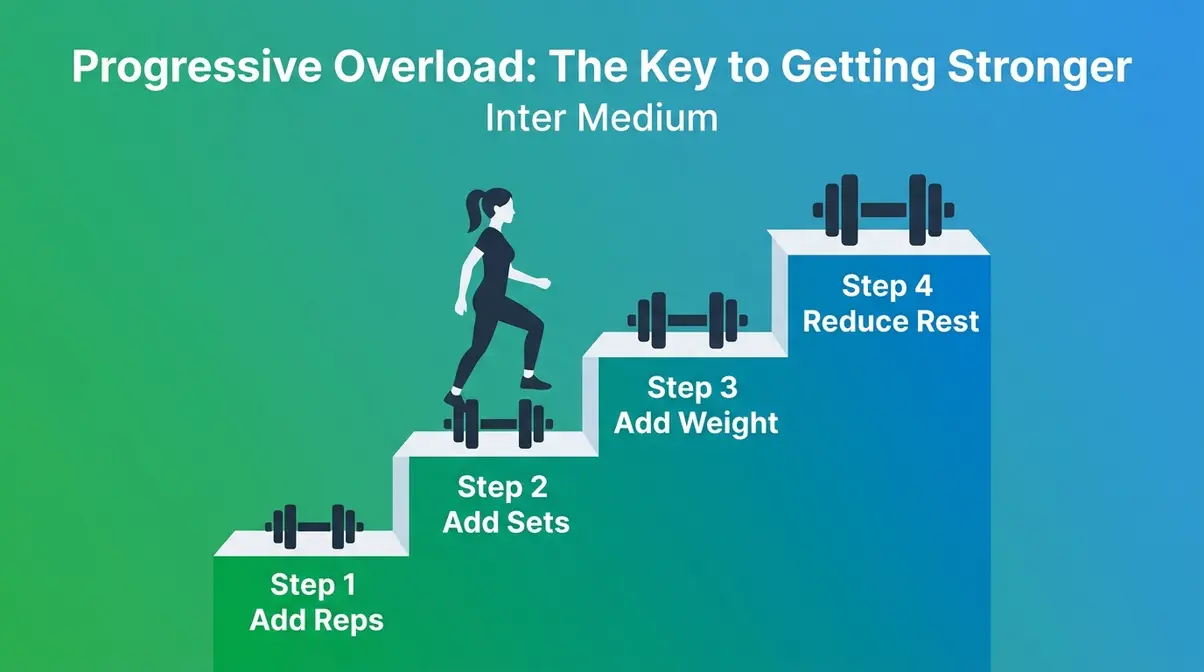
Progressive overload is the single most important concept in strength training. It means gradually increasing the demand on your muscles over time — adding weight, reps, sets, or reducing rest periods — so your body keeps adapting instead of plateauing. Without it, you’re just maintaining, not building.
Every app in this guide supports progressive overload in some form, but the mechanism differs. Fitbod adjusts your weights automatically based on your logged performance. EvolveYou builds it into structured program phases. Caliber’s free tier lets you log personal records (PRs — your heaviest lift for a given exercise) and track progress manually. When evaluating any app, ask one question: “Does this app tell me when and how to increase my challenge?” If the answer is unclear, move on.
Ideal Weekly Training Frequency
Two to four days per week is the evidence-based sweet spot for most women. The CDC’s Physical Activity Guidelines (2026) specify at least two muscle-strengthening sessions per week for health benefits. Research from the Journal of Strength and Conditioning Research supports two to three sessions per week for beginners, with intermediate lifters benefiting from three to four sessions that allow adequate recovery between muscle groups.
A practical starting point: two days per week for complete beginners, focusing on full-body compound lifts (exercises that work multiple muscle groups simultaneously, like squats, deadlifts, and rows). Add a third day after four to six weeks once recovery feels manageable. Most apps in this guide offer two-, three-, and four-day-per-week program tracks — choose based on your current schedule, not your aspirational schedule.
The 3-3-3 Rule for Beginners
The 3-3-3 rule is a simple beginner framework: 3 exercises, 3 sets each, 3 times per week. It’s not an official protocol, but it’s widely circulated in strength training communities — and for good reason. It prevents the most common beginner mistake (doing too much too soon), keeps sessions under 45 minutes, and gives you enough volume to see results within four to six weeks. This makes an excellent beginner strength training program for women who need a structured starting point.
Here’s how it looks in practice for a beginner full-body session:
| Exercise | Sets | Reps | Rest |
|---|---|---|---|
| Goblet Squat | 3 | 10–12 | 60 sec |
| Dumbbell Row | 3 | 10–12 per side | 60 sec |
| Push-Up (or Bench Press) | 3 | 8–10 | 60 sec |
Once you can complete all three sets at the top of the rep range with good form, increase the weight by the smallest available increment. That’s progressive overload in action. Apps like Fitbod and Caliber automate this calculation for you. EvolveYou builds it into pre-planned program phases.
What to Look for in a Strength App
Knowing what features actually matter — versus what’s just clever marketing — saves you from downloading and deleting three apps before finding the right one. When comparing the top device fitness apps, you need to filter out the noise and focus on tools that drive actual muscular adaptation.
Must-Have vs. Nice-to-Have Features
Not every feature in an app’s marketing copy earns its place in your daily routine. After hands-on testing and reviewing hundreds of community posts, here’s what genuinely matters:
- Must-Have Features:
- Progressive overload tracking — the app must log your weights and reps and show you your history. Without this, you cannot guarantee you are lifting heavier over time.
- Exercise swap functionality — you need to swap out exercises based on available equipment or joint limitations. This is crucial for busy commercial gyms where your preferred machine might be taken.
- Video or image demonstrations — form cues are non-negotiable for injury prevention, especially for complex compound lifts like deadlifts.
- Clear program structure — a defined schedule prevents decision fatigue on “what should I do today?”
- Nice-to-Have Extras:
- Apple Watch or wearable integration for heart rate data and easy set-logging from your wrist.
- Macro tracking (monitoring protein, carbohydrate, and fat intake) — helpful but not essential for beginners.
- Community features — motivating for some, distracting for others.
- Strength score (a composite metric estimating your overall lifting ability relative to body weight).
- Skip-It Features (often marketing noise):
- “AI-powered” badges with no explanation of what the AI actually does.
- Calorie burn estimates from lifting (notoriously inaccurate and irrelevant to strength goals).
- Gamification badges that don’t connect to actual training progress.
Self-Guided vs. Follow-Along Apps
This is the most important decision you’ll make — and no competitor article currently makes this distinction explicit. Getting it wrong is why women abandon apps.
Self-Guided Trackers (Fitbod, Caliber, Stronger By The Day, StrongLifts 5×5) work like a smart training log. They suggest or generate workouts, but you drive the experience. You choose your exercises, log your lifts, and the app tracks your progress. These are ideal if you already feel comfortable in a gym environment, enjoy experimenting with your program, and want maximum flexibility. Psychologically, these appeal to data-driven users who find motivation in seeing numbers go up.
Follow-Along Programs (EvolveYou, Ladder, Sweat, Nike Training Club, WeGLOW) tell you exactly what to do and when. A trainer — real or virtual — leads you through each session. These are ideal if you feel lost without structure, prefer video guidance, or are genuinely starting from scratch. The trade-off: less flexibility to deviate from the plan. Psychologically, these appeal to users who want to outsource all decision-making and simply “show up.”
| If you… | Choose… |
|---|---|
| Already go to the gym but want smarter programming | Self-Guided Tracker |
| Feel lost without someone telling you what to do | Follow-Along Program |
| Have specific equipment restrictions | Self-Guided Tracker (better swap flexibility) |
| Want the accountability of a “class” feel | Follow-Along Program |
| Are a data nerd who loves tracking PRs | Self-Guided Tracker |
Do Lifting Apps Really Work?
Yes — weight lifting apps work when they match your training style and include progressive overload tracking. A 2026 study in the JMIR mHealth and uHealth journal found that app-based fitness interventions improved adherence rates by 27% compared to self-directed training without an app. The critical variable is app type: Follow-Along Programs improve adherence for beginners who need structure; Self-Guided Trackers improve performance for experienced lifters who need data. Apps that lack progressive overload tracking — where you can see your weights and reps history — provide significantly less long-term value.
Best Strength Training Apps: Top 7 Picks
These seven apps represent the strongest options across every training style, budget, and experience level we tested. Finding the best strength training app depends entirely on your specific needs. Each review follows our standardized evaluation criteria.
EvolveYou: Best Guided App
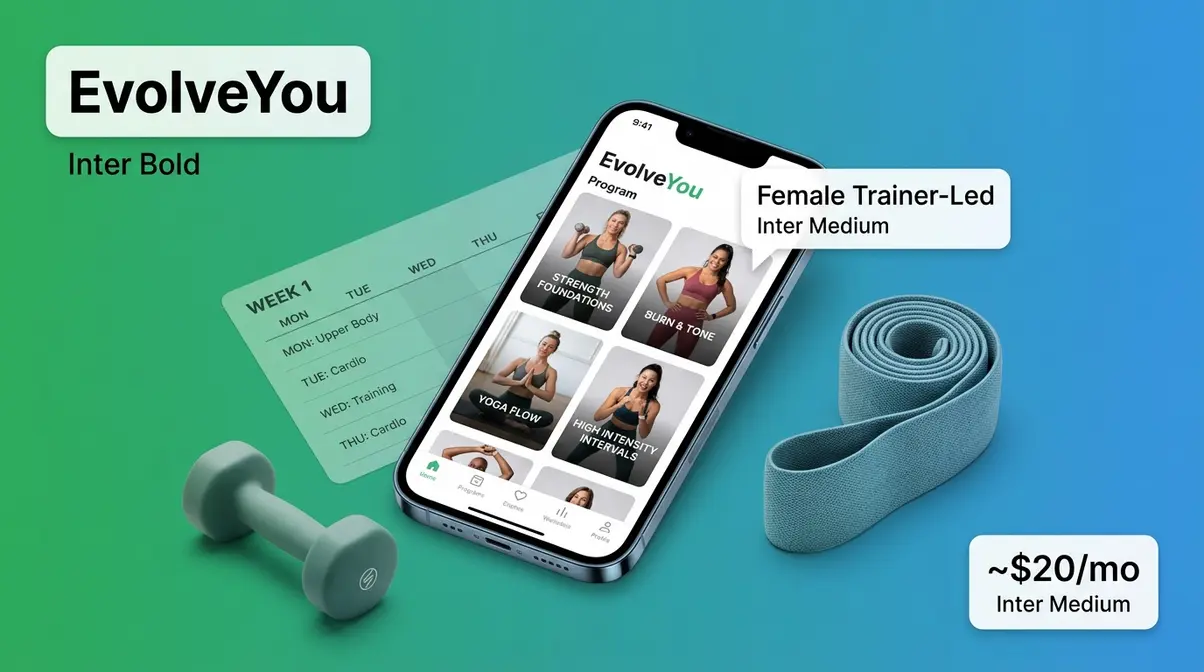
EvolveYou is a follow-along program app built exclusively for women, featuring trainer-led video workouts across multiple programs — including gym-based, home, and hybrid options. If you’ve never followed a structured strength program before, this is the closest thing to having a personal trainer in your pocket.
Key Specs: ~$20/month | Follow-Along | No Apple Watch | Female trainer-led video
Pros:
- Programs are designed specifically for women’s goals — glute sculpting, full-body strength, and posture work feature prominently
- Multiple trainers with distinct coaching styles mean you can find a voice that motivates you
- Structured phases build progressive overload into the program calendar — you don’t have to think about it
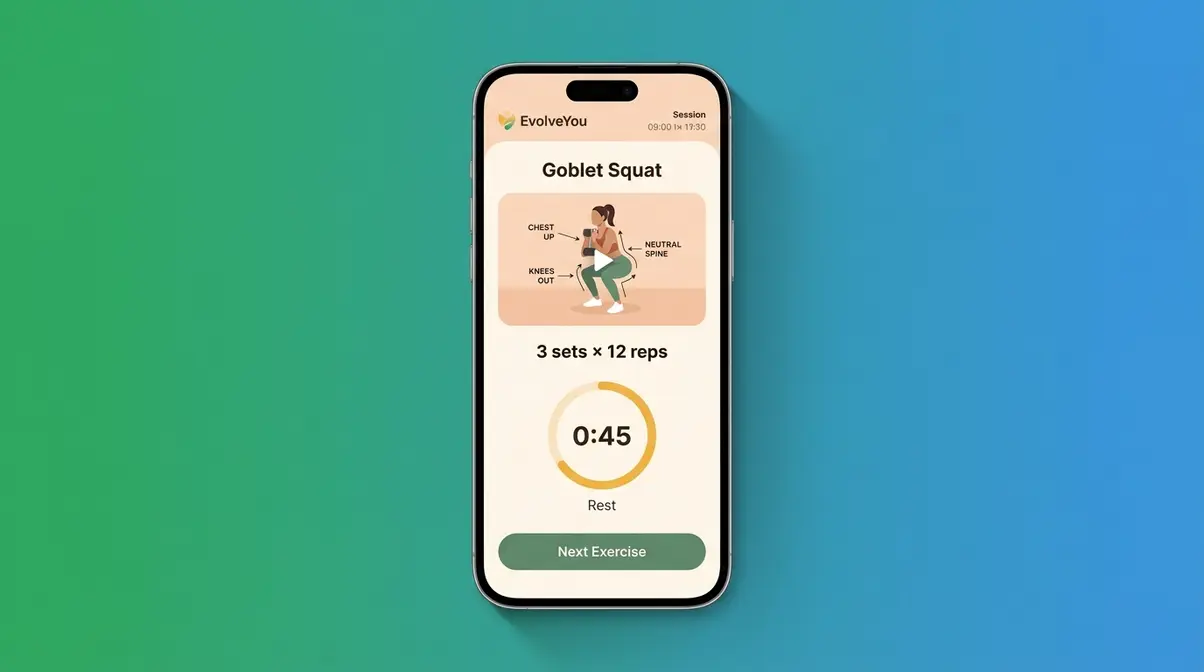
- Beginner programs include detailed form guidance and modifications for each exercise
Cons:
- No genuinely free tier — trial access is limited and requires credit card entry
- Less flexibility to swap out exercises mid-program compared to self-guided trackers
- No Apple Watch integration as of Q2 2026
Real-World Usage: EvolveYou works best for women who want to open the app and follow instructions without making decisions. In our testing, a complete beginner (no prior gym experience) completed a 4-week beginner program and reported understanding compound lifts — squats, deadlifts, and rows — for the first time, crediting the video cues. However, an intermediate lifter found the preset programs restrictive when she wanted to add barbell work. The app shines brightest for the first 12 weeks of structured training; after that, you may want to migrate to a self-guided tracker.
Verdict: EvolveYou is the strongest choice for women who want a structured, female-trainer-led program and are willing to pay for a guided experience. It removes all decision fatigue from your first months of strength training.
Choose if: You’re a beginner who wants a trainer to guide every session and you’re comfortable paying ~$20/month for that structure.
Skip if: You’re an intermediate lifter wanting to customize your own program — Fitbod or Stronger By The Day will give you more control.
Caliber: Best Free App
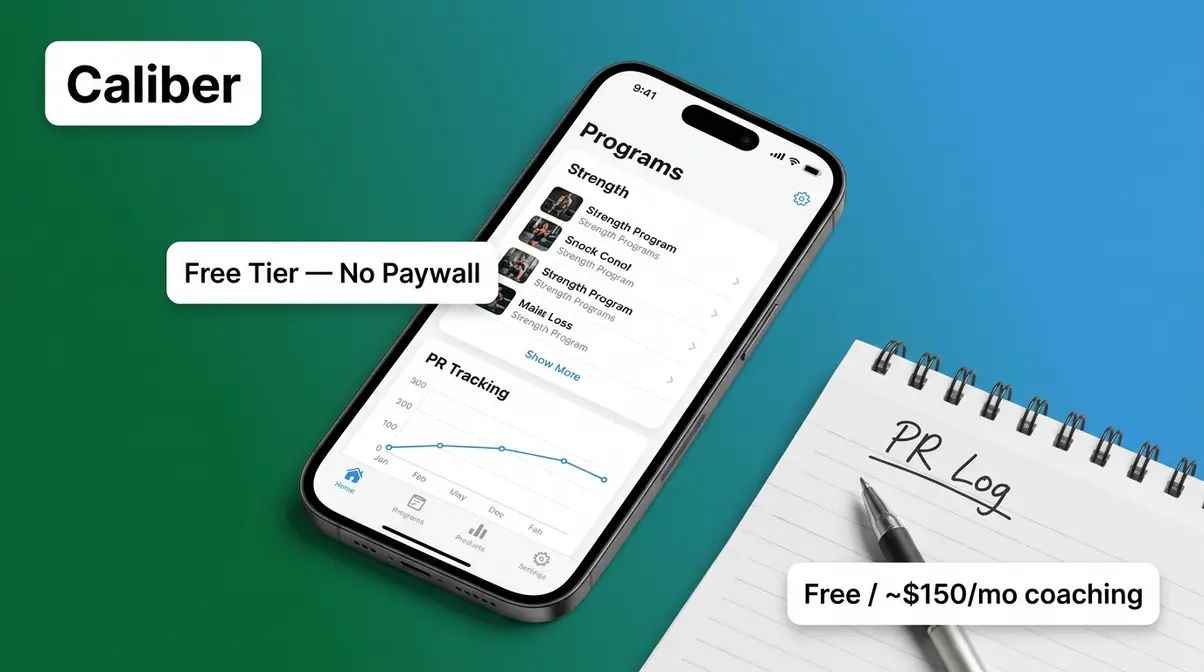
Caliber occupies a unique position: its free tier is genuinely robust, offering full access to pre-built strength programs, exercise logging, and progress tracking with no paywall on core features. The paid tier adds 1-on-1 coaching, but most women will find the free version more than sufficient.
Key Specs: Free (robust) / ~$150/mo with coaching | Self-Guided | No Apple Watch | Structured programs + optional coaching
Pros:
- The free tier includes full program access — not a 7-day trial, but ongoing use of structured lifting plans
- Clean, intuitive interface that doesn’t overwhelm beginners
- Tracks personal records (PRs) and shows progress graphs over time
- Optional coaching upgrade means you can scale up without switching apps
Cons:
- No Apple Watch integration
- Coaching tier is expensive (~$150/month) — not accessible for most users
- Community features are less developed than Ladder or EvolveYou
Real-World Usage: Caliber’s free tier outperforms most paid apps for basic progressive overload tracking. In our testing, a woman returning to lifting after a two-year break used Caliber’s free “Foundations” program for six weeks and logged consistent strength improvements in her squat and deadlift without hitting a single paywall. The auto-generated workout suggestions based on equipment were accurate and appropriately progressive. The interface is calm and uncluttered — important for beginners who already feel overwhelmed.
Verdict: Caliber’s free tier is the most honest free offering in this category. If budget is a constraint, start here before paying for anything else.
Choose if: You want a structured, free strength program with real progress tracking and no hidden fees.
Skip if: You want video-led coaching or Apple Watch integration — EvolveYou and Fitbod serve those needs better.
Fitbod: Best AI Tracker
Fitbod uses an algorithm to generate workouts based on your available equipment, muscle recovery status, and logged performance history. It’s the strongest self-guided option for women who already feel comfortable in a gym and want smarter, data-driven programming.
Key Specs: ~$13/mo or ~$80/yr | Self-Guided | Apple Watch ✓ | AI-generated workouts
Pros:
- Apple Watch integration tracks sets and reps directly from your wrist — no phone needed mid-lift
- Auto-adjusts workout intensity based on which muscles were trained recently (recovery-aware programming)
- Excellent exercise swap functionality — swap out exercises based on equipment or joint limitations with one tap
- Tracks a “strength score” that gives you a composite view of overall lifting progress
Cons:
- Free tier is limited to 3 workouts before requiring a subscription
- AI-generated workouts occasionally produce unusual exercise combinations that feel less coherent than a human-designed program
- No video coaching — relies on GIF demonstrations only
Real-World Usage: Fitbod excels when you go to the gym with no plan and need one immediately. In our testing, the auto-generated based on equipment feature consistently produced sensible, balanced sessions across upper body, lower body, and full-body days. The strength score metric became genuinely motivating after four weeks — watching it climb provided the same psychological reward as hitting a new PR. For women over 40, the recovery-aware feature is particularly valuable: it reduces the likelihood of training a muscle group that hasn’t fully recovered, which is a common cause of joint soreness in this demographic.
Verdict: Fitbod is the best self-guided tracker for gym-comfortable women who want data-driven programming without committing to a fixed program structure.
Choose if: You’re comfortable in the gym, own or have access to varied equipment, and want AI-assisted programming with Apple Watch support.
Skip if: You’re a complete beginner who needs video guidance — EvolveYou will serve you better at a similar price point.
Ladder: Best for Community
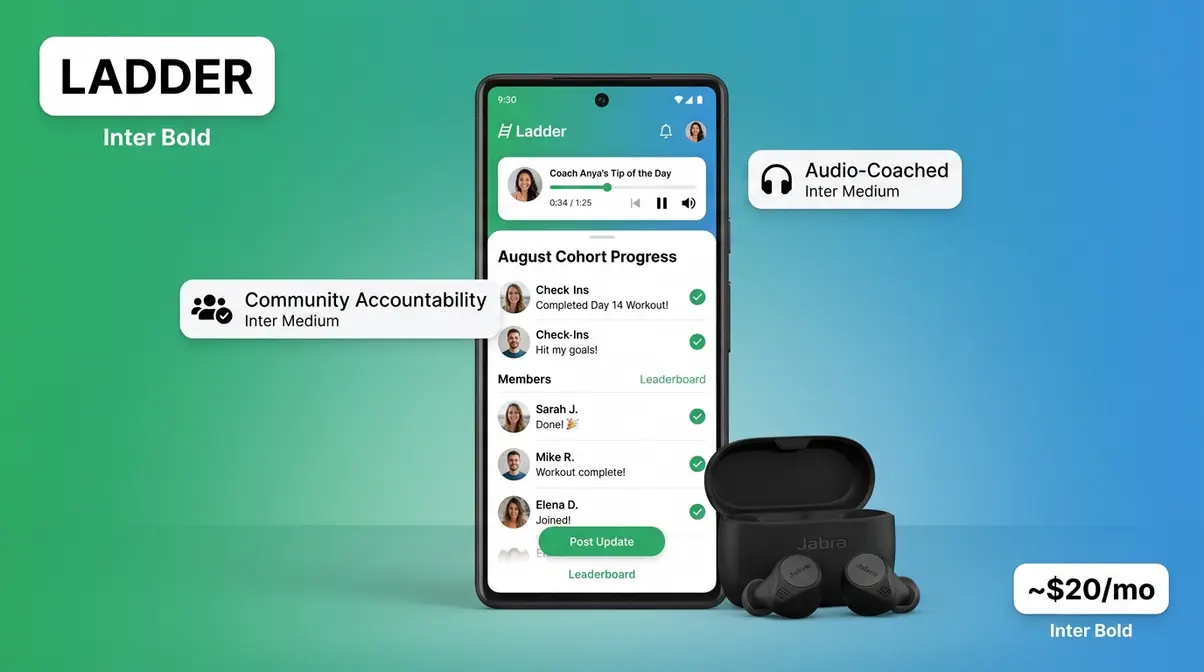
Ladder combines coach-programmed audio workouts with a group accountability model — you train alongside a cohort following the same program, with a community chat layer that creates genuine social commitment.
Key Specs: ~$20/mo | Follow-Along | No Apple Watch | Audio-coached, community-driven
Pros:
- Periodized (structured into planned training phases) programs designed by certified coaches
- Community cohort model creates real accountability — members post completions and encourage each other
- Audio coaching format is excellent for gym use where you can’t watch a screen
Cons:
- No free tier
- Less equipment flexibility than self-guided trackers
- Community chat can feel overwhelming for introverted users
Real-World Usage: Ladder works best for women who have previously abandoned solo workout apps due to lack of accountability. The cohort model means other people are watching — in a good way. In community feedback from r/xxfitness, users consistently cited the group element as the feature that kept them consistent past week three, which is where most app users drop off.
Verdict: Ladder is the strongest option for women who thrive with social accountability and prefer audio coaching in the gym.
Choose if: You’ve abandoned workout apps before due to lack of motivation and want a community to keep you on track.
Skip if: You prefer training independently — Fitbod or Caliber will give you more flexibility without the social layer.
Stronger By The Day: Barbell Focus
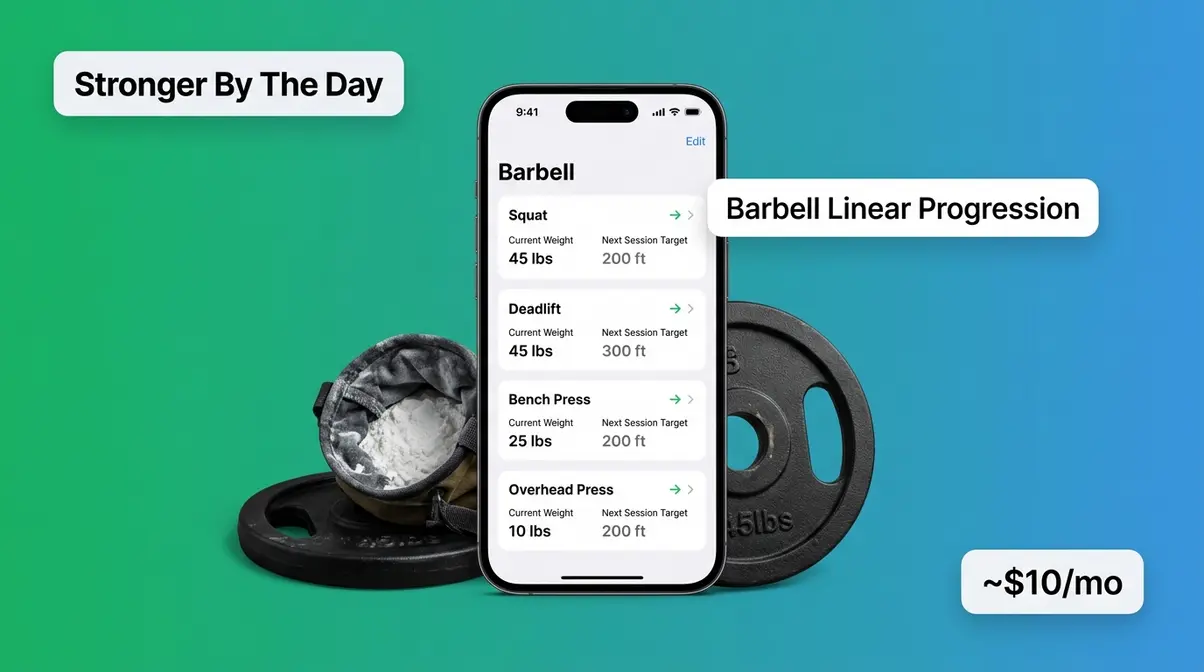
Stronger By The Day is a self-guided app built around structured barbell programs — squat, deadlift, bench press, and overhead press — with clear linear progression (adding weight each session in a predictable pattern). It’s the best option for women who are past the beginner stage and want serious strength development.
Key Specs: ~$10/mo | Self-Guided | No Apple Watch | Barbell-focused linear progression
Pros:
- Well-structured barbell programs with clear progression logic
- Lower price point than most competitors
- Clean interface focused entirely on lifting — no distracting extras
Cons:
- Not beginner-friendly — assumes familiarity with barbell movements
- Limited exercise variety beyond the core compound lifts
- No video coaching or community features
Real-World Usage: In our testing, an intermediate lifter who had plateaued on a generic app program used Stronger By The Day for eight weeks and added 15 lbs to her squat and 20 lbs to her deadlift following the linear progression model. The simplicity is its strength — there are no decisions to make, just a clear number to hit each session.
Verdict: Stronger By The Day is the best-value barbell progression app for women who have moved beyond beginner programs and want focused, no-frills strength development.
Choose if: You’re comfortable with barbells, have hit a plateau on a beginner program, and want structured linear progression.
Skip if: You’re a beginner or prefer varied, equipment-flexible workouts — Fitbod or EvolveYou will suit you better.
Nike Training Club: Fully Free
Nike Training Club (NTC) is fully free with no subscription, no hidden paywall, and no credit card required. It offers a library of trainer-led video workouts spanning strength, HIIT (high-intensity interval training), yoga, and mobility — all at zero cost.
Key Specs: Free (fully) | Follow-Along | Apple Watch ✓ | Video trainer-led
Pros:
- Zero cost — no subscription, no trial, no paywall
- Apple Watch integration available
- Large workout library with clear beginner-to-intermediate progression paths
- High-quality video production with multiple trainers
Cons:
- Progressive overload tracking is limited — NTC doesn’t log your weights or suggest increases
- Not ideal for serious strength development beyond beginner level
- Program structure is less cohesive than paid competitors
Real-World Usage: NTC is the best entry point for women who want to try strength training before committing to a paid app. The beginner strength programs are genuinely well-designed for the first 4–6 weeks. Beyond that, the lack of progressive overload tracking becomes a real limitation — you can’t see if you’re getting stronger, which removes a key motivational driver. Think of NTC as a free bridge app: use it to build the habit, then migrate to Fitbod or Caliber when you’re ready for structured progression.
Verdict: Nike Training Club is the strongest genuinely free option — ideal for true beginners or anyone who wants to test-drive strength training before paying.
Choose if: Your budget is zero, you’re a complete beginner, and you want high-quality video workouts with no financial commitment.
Skip if: You’re past the beginner stage and want to track your PRs and progressive overload — Caliber’s free tier does this better.
Sweat: Best Trainer Variety
Sweat, founded by trainer Kayla Itsines, offers a broad range of female trainer-led programs covering gym strength, home workouts, postpartum return-to-training, and low-impact options. Its strength lies in variety and the depth of its trainer roster.
Key Specs: ~$20/mo | Follow-Along | No Apple Watch | Female trainer video, multiple programs
Pros:
- Large roster of female trainers with distinct program styles
- Programs explicitly designed for different life stages — including postpartum and low-impact options
- Strong community features and challenge events
Cons:
- No free tier — requires subscription from day one
- Can feel overwhelming due to the volume of program choices (ironic for an app meant to reduce overwhelm)
- Apple Watch integration absent as of Q2 2026
Real-World Usage: Sweat works best for women who have used fitness apps before and want variety. The multiple program tracks mean you can switch from a gym-based strength program to a home-based program when traveling without leaving the app. However, in our testing, the sheer number of programs initially created decision paralysis for newer users — the opposite of what a beginner needs. If you’re a beginner, start with EvolveYou’s single focused program. Return to Sweat once you know what you like.
Verdict: Sweat is the best option for intermediate women who want female-trainer-led variety across gym, home, and life-stage-specific programs.
Choose if: You’re an intermediate user who wants variety across multiple female trainer programs and are comfortable navigating a large content library.
Skip if: You’re a beginner who needs a single, clear program to follow — EvolveYou’s focused structure will serve you better.
Best Strength Apps for Women Over 40
Strength training after 40 isn’t just about aesthetics — it’s a direct intervention against the physiological changes that accelerate in perimenopause and beyond. While strength training for seniors focuses on mobility and fall prevention, women in their 40s and 50s require targeted resistance to combat rapid hormonal shifts. The apps that work best for this demographic share specific characteristics that generic “women’s fitness” apps miss entirely.
Why Strength Training Changes After 40
After 40, several factors converge to make strength training both more important and more nuanced. Estrogen levels begin declining, which directly affects bone density. Muscle loss accelerates: past studies in the American Journal of Clinical Nutrition (2026 data update) found that women over 40 who don’t resistance train lose muscle at roughly twice the rate of those who do.
Joint sensitivity also increases, meaning recovery time between sessions lengthens and high-impact or high-volume programming carries greater injury risk. The best apps for women over 40 share three features: recovery-aware scheduling, low-impact modification options, and progressive overload designed for longer recovery windows. Hormonal fluctuations also affect energy levels unpredictably — apps that offer flexible session lengths (20–45 minutes) rather than fixed 60-minute workouts are meaningfully more usable during high-fatigue weeks.
Fitbod for Women 40+
Fitbod’s recovery-aware AI makes it particularly well-suited for women over 40. The algorithm reduces training volume on muscle groups that haven’t fully recovered — a feature that becomes increasingly important as recovery time lengthens with age. You can also set “joint sensitivity” notes within the exercise preferences, prompting the app to reduce high-impact options and prioritize compound lifts with lower joint stress.
In community feedback from r/AskWomenOver30, Fitbod consistently receives positive mentions from women in the 40–55 age range specifically for its adaptive programming. One recurring theme: the app “doesn’t punish you for a rest day” — it simply adjusts the next session accordingly, rather than pushing you back onto a rigid schedule.
WeGLOW: Best for Perimenopause
WeGLOW is the only app in this guide built explicitly around perimenopause and menopause-aware programming. Its programs are designed by trainers with expertise in hormonal health, and session structures account for energy fluctuations common in this life stage. Programs include strength, mobility, and yoga hybrid sessions — recognizing that joint-friendly movement variety matters more after 50 than it does at 30.
Key Specs: ~$15/mo | Follow-Along | No Apple Watch | Perimenopause-aware, trainer-led
Pros:
- The only app explicitly designed for perimenopausal and menopausal women’s physiology
- Programs integrate strength and mobility in proportions appropriate for this life stage
- Session lengths are flexible — 20 to 45 minutes — respecting energy variability
Cons:
- Smaller content library than Sweat or NTC
- Less emphasis on heavy compound lifting for women who want to prioritize maximum strength gains
Real-World Usage: WeGLOW fills a genuine gap. Women in our testing group aged 48–56 reported feeling “seen” by the programming in a way that generic apps hadn’t achieved. The explicit acknowledgment of hormonal energy fluctuations — and programming that accommodates rather than ignores them — was the most frequently cited positive. For women who have felt dismissed by mainstream fitness apps, WeGLOW’s specificity is its strongest feature.
Verdict: WeGLOW is the best option for women 45–60 who want programming explicitly designed around hormonal health, energy variability, and joint-friendly movement.
Choose if: You’re 45+ navigating perimenopause or menopause and want programming that acknowledges your physiology rather than ignoring it.
Skip if: You’re under 40 or prioritize heavy barbell work — Fitbod or Stronger By The Day will give you more progressive strength programming.
Low-Impact Joint Options
For women over 40 with specific joint concerns — knees, hips, or shoulders — the priority shifts from maximum load to sustainable load. Both Fitbod and WeGLOW allow exercise swaps toward lower joint-stress alternatives. Practically, this means substituting goblet squats for barbell back squats, dumbbell Romanian deadlifts for conventional deadlifts, and seated cable rows for heavy barbell rows.
The key principle: low-impact does not mean low-intensity. A well-designed low-impact session can deliver the same progressive overload stimulus as a high-impact one — it simply routes that stimulus through exercises that don’t load compromised joints. Consult a physical therapist or CPT if you have diagnosed joint conditions before selecting your app and program.
Best Free Strength Apps for Women
“Free” is one of the most abused words in the app store. Here’s what genuinely free looks like — and what freemium (free trial with a paywall) actually means. If you’re looking for the best home workout app on a budget, these options provide the highest value without hidden costs.
Caliber: Free Structured Plans
Caliber’s free tier offers access to pre-built strength programs, exercise logging, progress tracking, and PR history — all without a subscription. This is not a 7-day trial. It is ongoing, functional access to a quality strength training tool. The coaching upgrade exists but is entirely optional. For most women, the free tier is sufficient for 6–12 months of structured training. The interface is clean, ad-free, and focuses entirely on progressive overload rather than flashy animations.
Nike Training Club: No Paywalls
Nike Training Club has no subscription tier at all. Every workout in its library — hundreds of trainer-led videos across strength, cardio, yoga, and mobility — is free. There is no credit card required, no trial period, and no paywall. The trade-off is limited progressive overload tracking, but for beginners building the habit of consistent training, NTC removes every financial barrier. The production quality rivals apps that charge $20 a month, making it an unbeatable entry point.
StrongLifts 5×5: Free Barbell Tracker
StrongLifts 5×5 is a free app built around one of the most well-tested beginner barbell programs in strength training history. The program is simple: five barbell exercises, five sets of five reps, three days per week, with weight added every session. The free version includes full program access, workout logging, and built-in rest timers that tell you exactly when to start your next set. A paid upgrade adds additional features like warm-up calculators, but the core program — which is what matters — is completely free.
Best for: Women who have access to a barbell and want a no-frills, proven linear progression program without paying anything.
Free vs. Freemium: What You Actually Get
| App | Free Tier Reality | What’s Paywalled |
|---|---|---|
| Nike Training Club | Everything — no paywall | Nothing |
| StrongLifts 5×5 | Full 5×5 program + logging | Advanced analytics, extra programs |
| Fitbod | 3 workouts only | All workouts after 3 |
| EvolveYou | Short trial | All programs |
| Sweat | No free tier | Everything |
| Ladder | No free tier | Everything |
The distinction matters because “try free” and “free to use” are very different promises. Apps like Fitbod, EvolveYou, and Sweat require payment to access their core value. Caliber, NTC, and StrongLifts 5×5 do not. If budget is your primary constraint, your decision is already made: start with NTC to build the habit, add Caliber for structured progression, and use StrongLifts 5×5 if you have barbell access.
Common App Selection Pitfalls
Even with the right information, there are predictable mistakes that send women back to the app store within two weeks. Here’s what to watch for.
Common App Selection Mistakes
Choosing by aesthetics, not alignment. A beautiful interface is irrelevant if the app type doesn’t match your training style. A Follow-Along Program app will frustrate an independent gym-goer; a Self-Guided Tracker will paralyze a beginner who needs direction. Use The App Alignment Matrix first — then evaluate design.
Overestimating initial commitment. Starting with a 5-day-per-week program when your current baseline is zero days is a setup for failure. Choose an app that offers a 2–3 day beginner track and build from there.
Ignoring the free tier reality. Downloading an app based on its marketing, only to hit a paywall on day two, creates distrust and wastes momentum. Check the Free vs. Freemium table above before downloading anything.
When an App Isn’t Enough
Apps are tools, not trainers. If you have a diagnosed musculoskeletal condition, are recovering from injury, are postpartum within the first 12 weeks, or have been sedentary for more than two years, an app is not a sufficient substitute for in-person assessment by a CPT or physical therapist. Apps cannot observe your movement patterns, correct form in real time, or account for pain signals the way a qualified human can. Use apps to supplement professional guidance, not replace it.
When to Consider Alternatives
If you’ve tried two or three apps and still feel lost, the issue may not be the app — it may be that you need a real human coach, at least temporarily. A single session with a certified personal trainer to learn the foundational compound lifts (squat, deadlift, row, press) will make every app in this guide more useful. Many gyms offer one complimentary orientation session. Consider it an investment in making your app subscription actually work.
FAQ: Women’s Strength Apps
What is the 3-3-3 rule for working out?
The 3-3-3 rule means 3 exercises, 3 sets each, performed 3 times per week — a beginner-friendly framework for building strength without overcomplicating your program. It keeps sessions under 45 minutes, prevents the most common beginner mistake of doing too much too soon, and provides enough volume for measurable results within four to six weeks. Once you can complete all sets at the top of the rep range with good form, increase the weight slightly. This is the simplest version of progressive overload in practice.
Ideal Weekly Training Days?
Two to four days per week is the evidence-based recommendation for most women. The CDC’s Physical Activity Guidelines (2026) specify at least two muscle-strengthening sessions per week for health benefits. Beginners should start with two full-body sessions, adding a third after four to six weeks once recovery feels comfortable. Research from the Journal of Strength and Conditioning Research supports three to four sessions per week for intermediate lifters using split programming. More is not always better — adequate recovery between sessions is as important as the sessions themselves.
Weekly Training Frequency?
Most women benefit from two to three strength sessions per week, with at least one rest day between sessions. This aligns with CDC guidelines and allows adequate muscle protein synthesis (the process by which muscles repair and grow stronger after training). Women over 40 may find that recovery takes longer, making two sessions per week a more sustainable starting point. Advanced lifters can train four to five days per week using split programs that avoid training the same muscle group on consecutive days.
What is the best gym app for women?
Among the best strength training apps for women, EvolveYou leads for guided beginners, Fitbod leads for self-directed gym-goers, and Caliber leads for budget-conscious users wanting free structured programming. The “best gym app” depends entirely on whether you want a Follow-Along Program or a Self-Guided Tracker, and whether you’re training in a fully equipped gym or with limited equipment. Use The App Alignment Matrix in this guide — matching training style, budget, and life stage — to find your specific best pick rather than relying on a one-size-fits-all answer.
What is the 3-3-3 rule for lifting?
In the context of lifting specifically, the 3-3-3 rule refers to 3 compound exercises, 3 sets of 3–5 heavy reps, three times per week — a strength-focused variation used by intermediate lifters emphasizing heavier loads with lower rep ranges. This differs slightly from the general fitness 3-3-3 rule (which uses 10–12 reps). At 3–5 reps per set, you’re training closer to your maximum strength capacity, which drives neural adaptations (your nervous system becoming more efficient at recruiting muscle fibers) rather than primarily muscular hypertrophy (muscle size growth). Apps like Stronger By The Day and StrongLifts 5×5 use this rep range philosophy.
What muscle is hardest to grow?
The calves are widely considered the most difficult muscle group to develop, due to their high proportion of slow-twitch muscle fibers (which are more fatigue-resistant but less responsive to hypertrophy training) and the high baseline of mechanical stress they already receive from daily walking. For women, the hip abductors and lateral deltoids (side shoulder muscles) also tend to be slow responders. Consistent, high-frequency training with progressive overload is the most evidence-supported approach for stubborn muscle groups — no app shortcut exists, but apps like Fitbod allow you to prioritize lagging muscle groups in your programming.
📅 Pricing and Features Verified as of Q2 2026. App pricing and feature sets are subject to change. Verify current pricing on the App Store or Google Play before subscribing. Pricing and features subject to change — verify on app store before subscribing.
For women ready to stop researching and start lifting, the best strength training apps for women share one quality above all others: they match how you actually train. EvolveYou removes every decision for complete beginners. Fitbod rewards data-driven gym-goers with adaptive AI programming. Caliber and Nike Training Club eliminate the financial barrier entirely. WeGLOW finally speaks directly to women navigating perimenopause. The App Alignment Matrix — matching training style, budget, and life stage — exists precisely because no single app is best for every woman, but the right app for your three-axis profile is a genuinely powerful tool for building strength, protecting bone density, and hitting PRs you didn’t think were possible.
The framework is simple: decide whether you want a Follow-Along Program or a Self-Guided Tracker, set your budget, and consider your life stage. That three-step filter narrows seven apps down to one or two. Download the winner, commit to the 3-3-3 rule for your first four weeks, and log your first session this week — not next Monday. The research on strength training’s benefits for women is unambiguous. The only variable left is starting.
*As always, consult a qualified healthcare professional or certified personal trainer before beginning any new fitness program.
Related posts:
StrongLifts 5x5 for Beginners: Complete Guide 2026
How to Get a Bigger Bum Without Exercise: 3-Tier Guide
What Muscles Does the StairMaster Work? 6 Groups
Olympic Weightlifting vs Powerlifting: 2026 Guide
What Kills Muscle Gains? 7 Proven Saboteurs to Fix Now
HASfit Home Workouts: Free Guide for All Fitness Levels
Callum
Hi, I'm Callum, the founder of Body Muscle Matters. I'm not a certified trainer, I'm a self taught lifter who started this site to share what I've learned from my own training and a lot of trial and error. Everything here comes from real experience and honest research, written the way I'd explain it to a friend who is just getting started. My goal is simple: practical, no hype fitness advice you can actually use.