Beginner Strength Training Program for Women: 2026 Guide
That’s exactly what this guide delivers. Every month without a program means muscle mass slipping away, bone density declining, and your metabolism slowing — changes that compound quietly and are harder to reverse the longer you wait. The good news: you don’t need to figure this out alone.
By the end of this guide, you’ll have a complete 3-day beginner strength training program for women — with exact starting weights, step-by-step exercise instructions, and a free printable PDF calendar. We’ll start by busting the biggest myth in women’s fitness, cover everything you need to know before your first session, then hand you the full program.
⚠️ Medical Disclaimer
This article is for informational purposes only and does not constitute medical advice. Consult your doctor or a qualified healthcare professional before starting any new exercise program, especially if you have a pre-existing health condition, injury, or are pregnant. Stop exercising and seek medical attention if you experience pain, dizziness, or shortness of breath. The author’s credentials are listed in the author bio below.
A beginner strength training program for women needs just 3 days a week — and research shows it can increase resting metabolic rate, improve bone density, and build a lean, toned physique without adding bulk (PubMed, 2012).
- The Bulky Myth is false: Women produce approximately 15–20x less testosterone than men, making large muscle bulk physiologically unlikely without extreme protocols.
- The RPE Confidence Method: Use the Rate of Perceived Exertion (RPE) scale to choose your starting weight on Day 1 — no guessing, no intimidation required.
- 3 days per week (Mon/Wed/Fri) is the ACSM-recommended frequency for beginners to build strength and allow full muscle recovery.
- Women over 40 gain the most from strength training — it directly counteracts the 3–5% muscle mass loss per decade that begins at age 30 (Harvard Health, 2023).


Why Women Should Start Strength Training
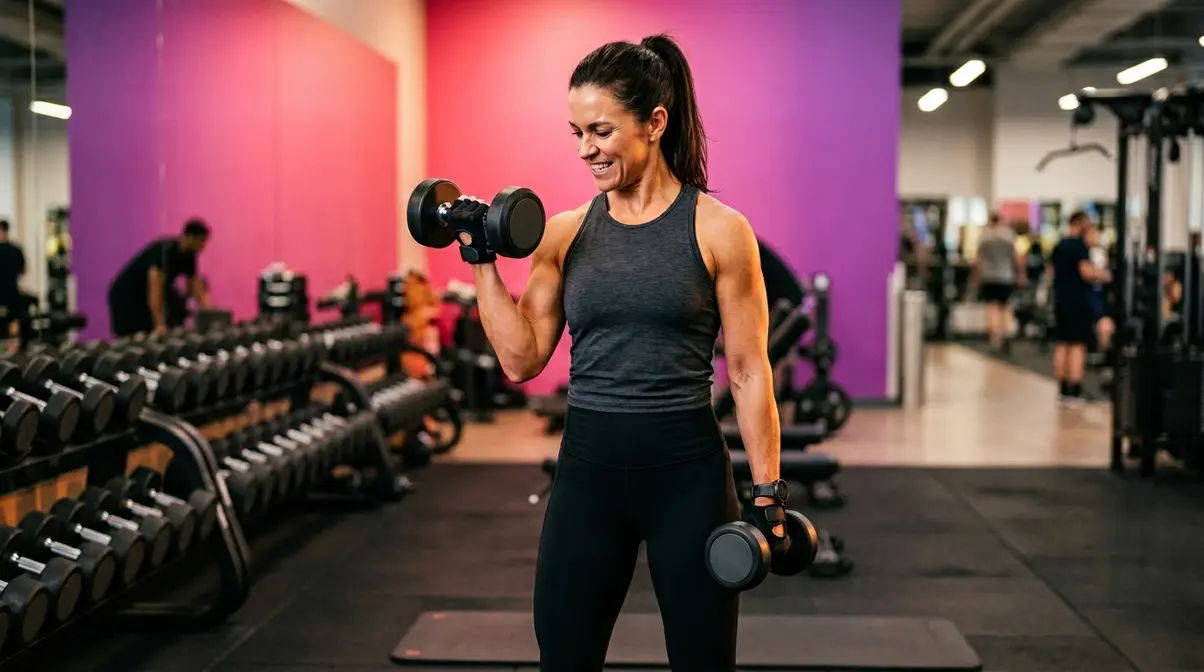
Strength training is one of the most effective fitness strategies for women, regardless of age or fitness level. NIH-published research confirms that regular resistance exercise increases resting metabolic rate and improves body composition — without causing the bulk most beginners fear (PubMed, 2012). For women starting from zero, it is the single best long-term investment in health, confidence, and physical independence.
Women who strength train 2–3 times per week can increase their resting metabolic rate and improve body composition without gaining significant muscle bulk, according to NIH-published research (PubMed, 2012). That is the science. The experience of thousands of women in strength communities confirms it: the result is not a bigger body — it is a stronger, more capable one.
Will Lifting Weights Make Me Bulky?
The bulky myth is the most persistent fear in women’s fitness — and the most thoroughly disproven. The short answer: no, lifting weights will not make you bulky. The physiological reason matters, so let’s walk through it.
Women produce approximately 15–20 times less testosterone (the hormone primarily responsible for large muscle hypertrophy, or growth) than men. Testosterone is the primary driver of the large, bulky muscle mass you see in male bodybuilders. Without high circulating testosterone levels, women’s muscles respond to training by becoming denser, more defined, and stronger — not dramatically larger. This is a fundamental difference in physiology, not a matter of training style (Endocrine Society, 2023).
Here is the second thing worth knowing: “toned” is not a separate physiological outcome — it is simply the visible result of having muscle beneath reduced body fat. Strength training builds the muscle. As your body composition shifts, that muscle becomes visible. The “toned look” you want is the result of strength training.
The rare “bulky” physiques you may see on social media are the product of years of very high-volume training, significant calorie surpluses, and in many cases, performance-enhancing substances. That outcome does not happen accidentally from three 45-minute sessions per week with dumbbells.
Reframe the fear: the body you are hoping for is built exactly the way this program works.
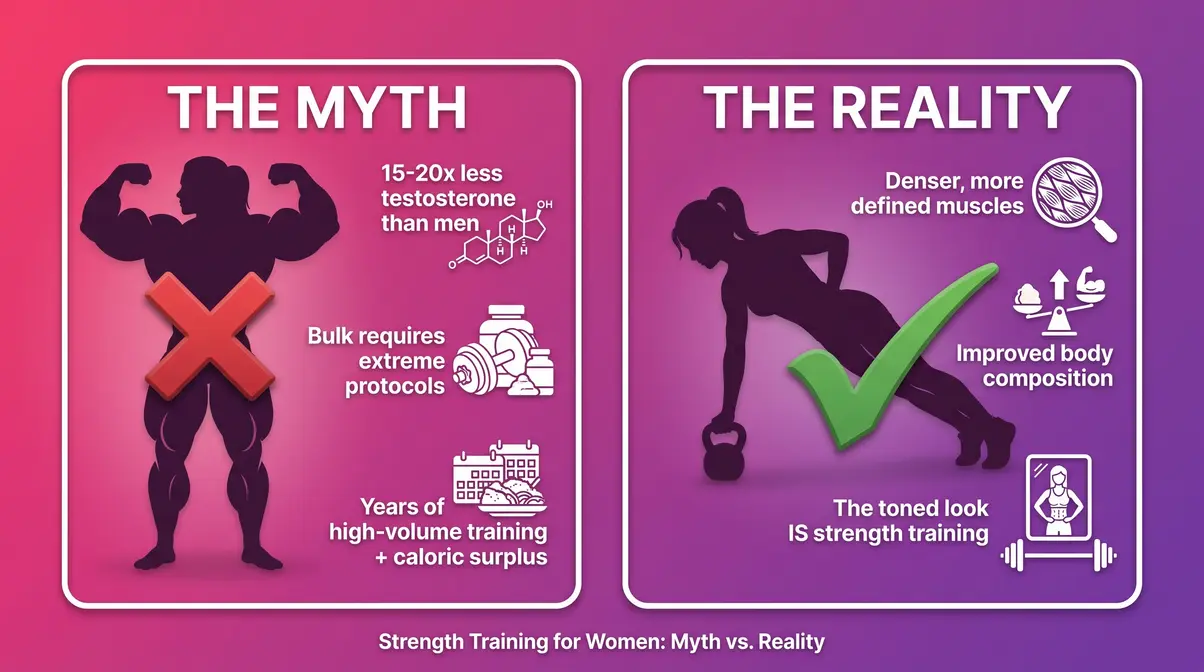
NIH-published research on resistance training in women confirms: resistance training improves body composition and increases resting metabolic rate without causing bulk (PubMed, 2012). You can also explore muscle building for women without getting bulky for a deeper look at the physiology.
4 Science-Backed Benefits of Lifting Weights for Women
These are not abstract promises. Each benefit below is supported by research and — more importantly — has a direct, practical impact on your daily life.
- Boost Metabolism — Muscle tissue burns more calories at rest than fat tissue does. Building more muscle raises your resting metabolic rate (the number of calories your body burns while you are not exercising). This means you burn more calories all day, not just during workouts. For women managing weight, this is one of the most powerful long-term tools available.
- Strengthen Bone Density — Lifting weights creates mechanical stress on your bones, which stimulates bone remodeling and increases bone density over time. This matters enormously for women: adults lose 3–5% of muscle mass per decade after age 30, and bone density follows a similar decline without intervention (Harvard Medical School, 2023). Strength training is one of the few interventions proven to slow and partially reverse that trend.
- Build Confidence in the Weight Room and Beyond — Research in sports psychology consistently shows that physical strength gains translate to psychological confidence. Women who complete a structured strength program report feeling more capable in everyday life — carrying groceries, climbing stairs, keeping up with their kids. This is what fitness professionals call “functional strength,” and it changes how you move through the world.
- Improve Overall Tone and Health — Regular resistance training is associated with improved insulin sensitivity (how efficiently your body processes blood sugar), reduced risk of type 2 diabetes, better sleep quality, and reduced symptoms of anxiety and depression (ACSM, 2022). These benefits compound over time and begin appearing within the first 4–6 weeks of consistent training.
Explore the full picture of benefits of strength training for women if you want to go deeper into the research behind each of these outcomes.
These benefits don’t stop at age 40 — in fact, they become more important. Here’s a quick preview of why women over 40 have the most to gain from lifting weights.
A Quick Note for Women Over 40
If you are over 40 or 50, this program was built with you in mind. Perimenopause and menopause accelerate the natural decline in muscle mass and bone density — making the window for intervention both more urgent and more rewarding. Research from the National Institute on Aging confirms that strength training at any age preserves functional independence and reduces fall risk. The full Age-Defying section in the next chapter covers exactly what changes — and what stays the same — so you can train with complete confidence.
In the next section, you’ll also get the RPE Confidence Method — a simple formula that tells you exactly what weight to pick up on Day 1, no matter your starting point.
Before You Begin — Foundational Principles for a Safe Start
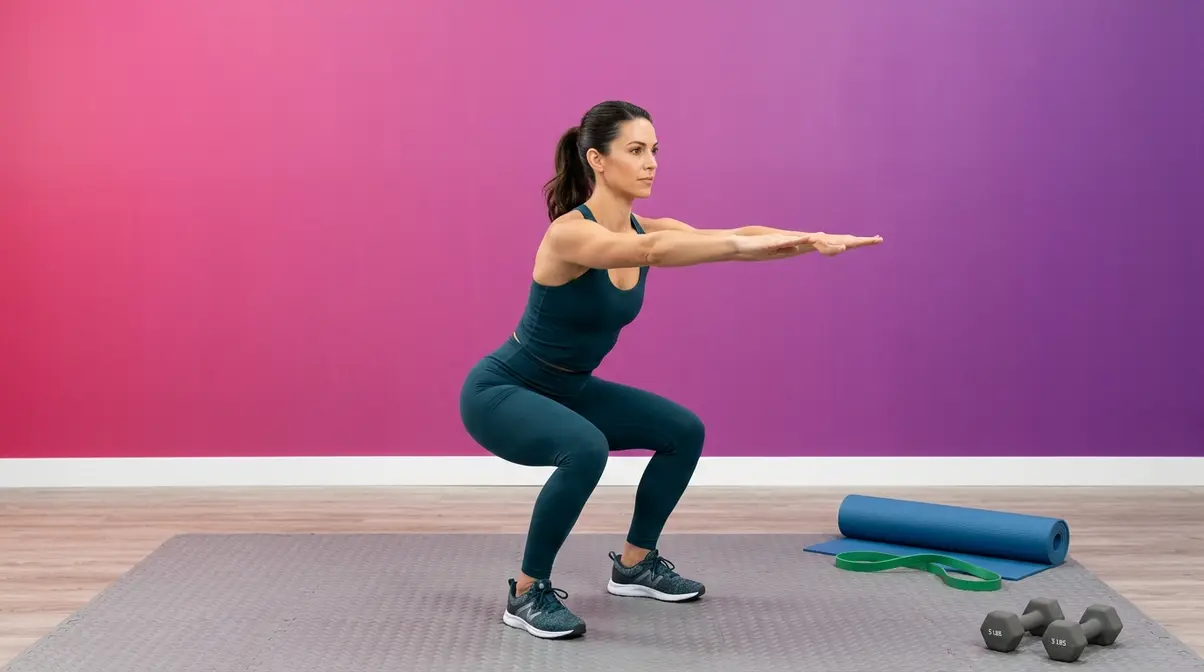
Before you load a barbell or pick up a dumbbell, a few foundational principles will protect you from injury, eliminate the guesswork, and set you up for consistent progress. This section covers the four things every beginner needs to know before Day 1.
How to Choose Your Starting Weights: The RPE Confidence Method
The number-one question beginners ask — and the one almost no fitness guide actually answers — is: “How do I know what weight to use?”
Here is the answer: The RPE Confidence Method.
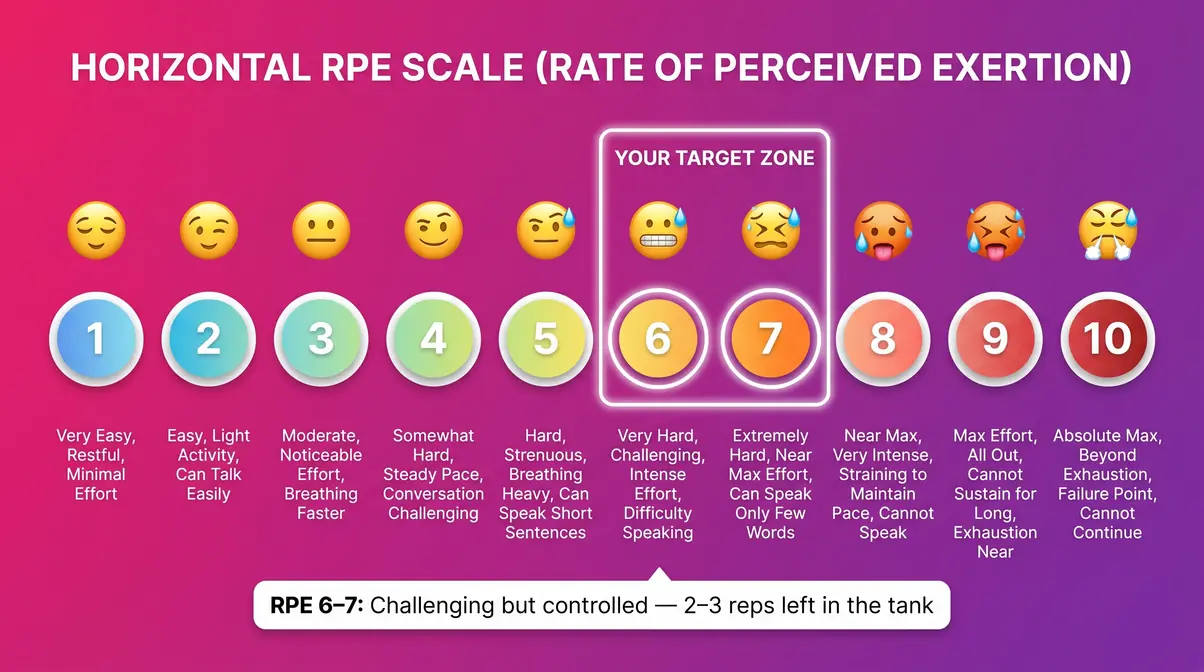
RPE stands for Rate of Perceived Exertion — a scale from 1 to 10 that measures how hard an exercise feels, where 1 is effortless and 10 is maximum effort. Originally developed for cardiovascular research, the RPE scale is now a standard tool in strength programming used by certified personal trainers and coaches worldwide (ACSM, 2022).
The RPE Confidence Method works like this:
Your target RPE for every beginner set is 6–7 out of 10. This means the weight feels moderately challenging — you could do 2–3 more reps if you had to, but you’re working with intention. Not too easy, not dangerously hard.
How to calibrate on Day 1 — 10 concrete examples:
| Exercise | Starting Weight (Beginner) | Target RPE | What RPE 6–7 Feels Like |
|---|---|---|---|
| Goblet Squat | 8–12 kg (18–26 lb) dumbbell | 6–7 | Last rep feels moderate effort; form stays clean |
| Romanian Deadlift | 10–15 kg (22–33 lb) dumbbells | 6–7 | Hamstrings feel loaded; no lower-back strain |
| Dumbbell Bench Press | 5–8 kg (11–18 lb) per hand | 6–7 | Chest works; can complete all reps with control |
| Bent-Over Dumbbell Row | 6–10 kg (13–22 lb) per hand | 6–7 | Back engages; no momentum or swinging |
| Glute Bridge | Bodyweight or 10–15 kg plate | 6–7 | Glutes activate; hips fully extend at top |
| Dumbbell Shoulder Press | 4–7 kg (9–15 lb) per hand | 6–7 | Shoulders burn slightly on last 2 reps |
| Lat Pulldown (cable) | 20–30 kg (44–66 lb) | 6–7 | Lats pull; elbows drive down and back |
| Dumbbell Lunges | 5–8 kg (11–18 lb) per hand | 6–7 | Quads and glutes work; balance is maintained |
| Plank (isometric) | Bodyweight | 6–7 | Core braces fully; can hold 20–30 seconds |
| Dumbbell Bicep Curl | 5–8 kg (11–18 lb) per hand | 6–7 | Biceps fatigue by rep 10; no swinging |
The self-calibration rule: If you finish your last rep and feel like you could do 5 more easily (RPE 4 or below), the weight is too light — go up by 2 kg (5 lb). If you cannot complete the set with good form (RPE 9–10), the weight is too heavy — go down immediately. This is not failure. This is smart training.
Why this method works for beginners: It removes the ego from weight selection and replaces it with honest self-assessment. You are not competing with anyone. You are calibrating to your own body on that specific day — which is exactly what certified trainers do with every new client.
Mastering Proper Form Before You Add Weight
Form comes before weight. Always. Lifting with poor technique is the fastest route to injury — and injury is the fastest route to losing all your progress. The good news: proper form for the foundational movements is learnable in a single session.
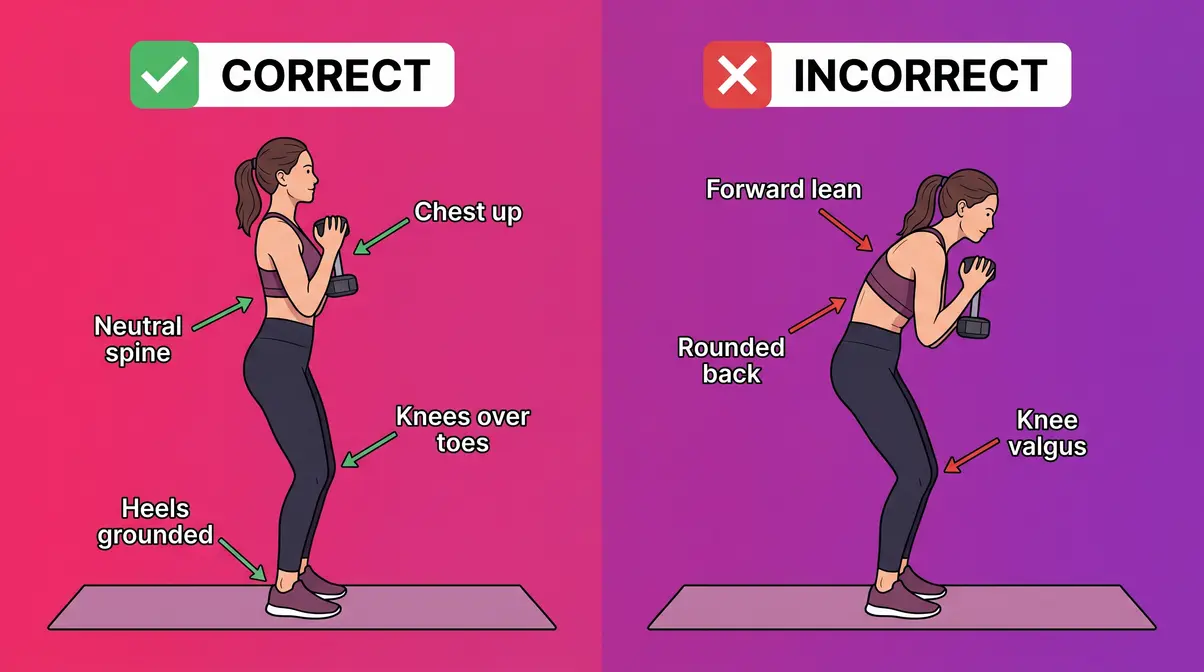
The three non-negotiable form principles for every exercise:
- Neutral spine — Your back should maintain its natural curve during all lifts. No rounding of the lower back, especially during squats, deadlifts, and rows. Think: “tall posture, proud chest.”
- Controlled tempo — Lower the weight slowly (2–3 seconds down), pause briefly, then lift with intention. Gravity is not your training partner. Slow, controlled reps build more muscle and reduce injury risk.
- Full range of motion — Move through the complete intended range of each exercise. Half-reps reduce effectiveness and can create muscle imbalances over time.
Before adding any weight, practice each movement with just your bodyweight or an empty bar. Film yourself from the side if possible — even your phone camera reveals form issues that are invisible in the mirror. If something hurts (not “burns” — hurts), stop and consult a certified personal trainer or physical therapist before continuing.
Your 5-Minute Pre-Workout Warm-Up
Skipping your warm-up is the most common beginner mistake — and the easiest to fix. A proper warm-up raises your core temperature, activates the muscles you are about to use, and reduces injury risk. Research from the University of Maryland Medical System supports warm-up as a standard preparation protocol before resistance training.
Complete this 5-minute routine before every session:
- Arm Circles — 30 seconds forward, 30 seconds backward. Warms up shoulder joints.
- Hip Circles — 30 seconds each direction. Activates hip flexors and glute medius.
- Bodyweight Squat — 10 slow reps. Primes knees, hips, and ankles.
- Glute Bridge — 10 reps, 2-second hold at top. Activates glutes before lower-body work.
- Band Pull-Apart (or arm swing) — 15 reps. Opens chest and activates upper back.
- World’s Greatest Stretch — 5 reps per side. A full-body mobility movement that prepares hips, thoracic spine, and ankles simultaneously.
Total time: 4–6 minutes. Do not rush it. Consider the warm-up the first investment you make in every session.
Strength Training Over 40 and 50: What Changes and What Doesn’t
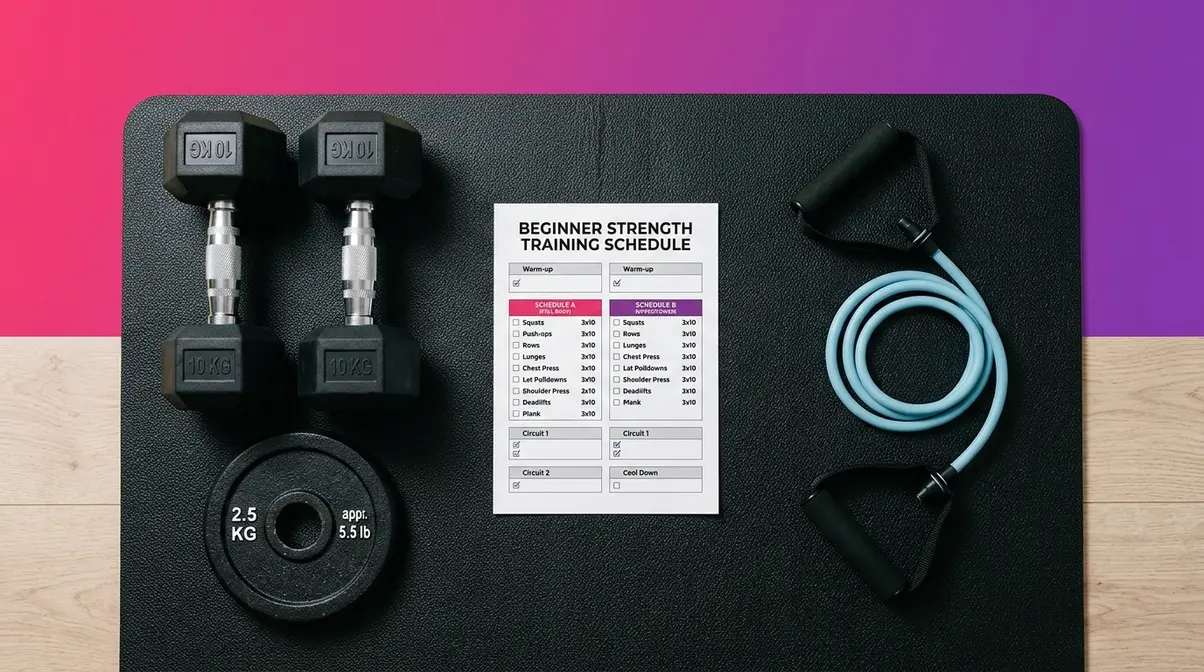
Women over 40 are not a special-needs category — they are the group with the most to gain from a consistent strength program. However, understanding the physiological shifts that occur in perimenopause and beyond helps you train smarter, not just harder.
What changes after 40:
- Estrogen decline accelerates muscle loss. Estrogen plays a protective role in muscle preservation. As levels drop during perimenopause, women can lose muscle mass at an accelerated rate — up to 1% per year after age 50 without intervention (Endocrine Society, 2023).
- Bone density decreases faster. The Mayo Clinic identifies postmenopausal women as the highest-risk group for osteoporosis (a condition of weakened, brittle bones). Bone mineral density can decline by 1–2% per year in the first decade after menopause.
- Recovery takes slightly longer. Hormonal changes affect how quickly muscle tissue repairs after training. This is why rest days in this program are non-negotiable — they are not optional for any age group, but they are especially important over 40.
What does NOT change:
- Your capacity to build strength. The National Institute on Aging confirms that adults in their 60s, 70s, and even 80s demonstrate measurable strength gains from resistance training. You are never too old to begin.
- Your ability to build lean muscle. Research published in the Journal of Strength and Conditioning Research confirms that postmenopausal women respond to progressive resistance training with significant increases in lean mass and bone mineral density (JSCR, 2021).
- The core program structure. The 3-day A/B split in this guide is appropriate for women of all ages. Women over 40 may simply choose to start at the lower end of the RPE Confidence Method’s weight recommendations (RPE 5–6 instead of 6–7) and progress slightly more conservatively.
The practical adjustments for women over 40:
| Factor | Standard Beginner | Women Over 40 |
|---|---|---|
| Starting RPE | 6–7 | 5–6 (slightly more conservative) |
| Rest between sets | 60–90 seconds | 90–120 seconds |
| Progression rate | Every 1–2 weeks | Every 2–3 weeks |
| Warm-up length | 5 minutes | 7–10 minutes |
| Recovery days | 1 day between sessions | 1–2 days between sessions |
A note on bone density: Mayo Clinic research and NIH guidelines both identify weight-bearing resistance exercise as one of the most effective non-pharmaceutical interventions for maintaining and improving bone density. If you have been diagnosed with osteopenia (low bone density, a precursor to osteoporosis) or osteoporosis, consult your physician or a physical therapist before beginning this program — certain exercises may need modification.
Women over 40 who experience joint discomfort during any exercise in this program should substitute or modify before pushing through pain. Pain is not progress. A certified personal trainer can provide age-appropriate exercise substitutions for any movement in this guide.
Your Complete 3-Day Beginner Strength Training Program for Women
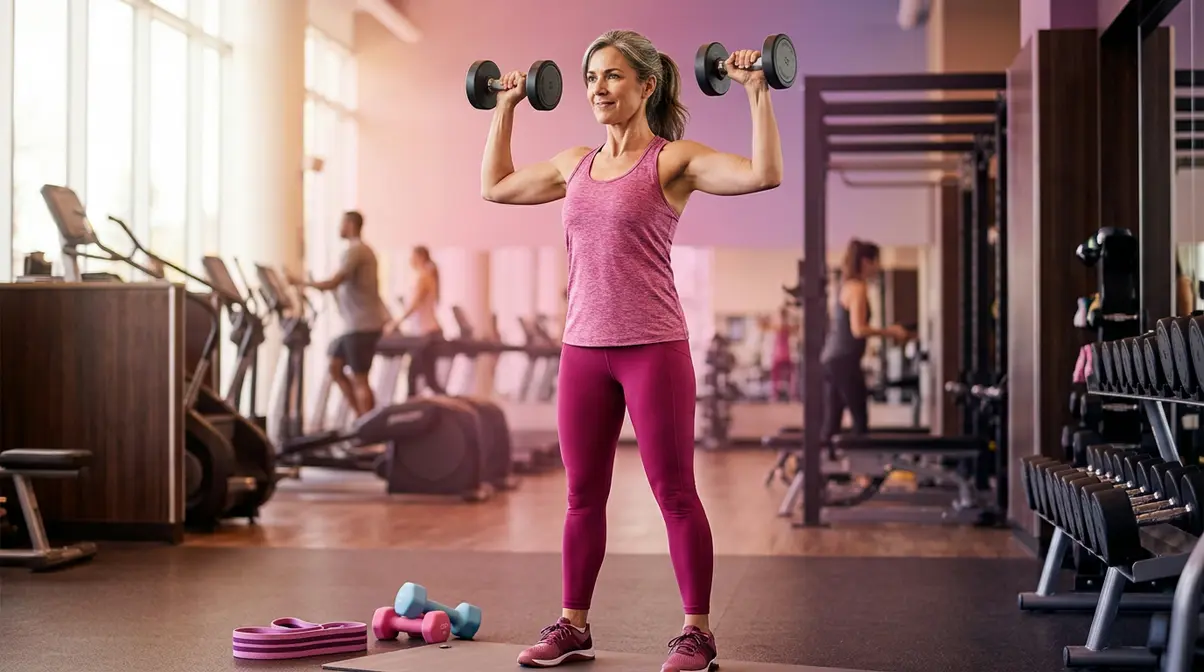
This is the program. Everything above was preparation — this is where your results begin. The following 3-day beginner strength training program for women uses a simple A/B split: two alternating workouts, three days per week, with full rest or light activity between sessions.
How This Program Works (Sets, Reps, and Rest)
Sets: A “set” is one group of repetitions. For example, “3 sets of 10” means you perform 10 reps, rest, then repeat that sequence twice more.
Reps: A “rep” (repetition) is one complete movement — one squat, one press, one row.
Rest: Rest between sets is not laziness — it is physiology. Your muscles need time to clear metabolic byproducts and partially recover before the next set. Skipping rest reduces the quality of subsequent sets significantly.
Your beginner parameters (based on ACSM guidelines for novice lifters):
| Parameter | Weeks 1–4 | Weeks 5–8 |
|---|---|---|
| Sets per exercise | 2–3 | 3 |
| Reps per set | 10–12 | 8–12 |
| Rest between sets | 60–90 seconds | 60–90 seconds |
| Rest between exercises | 90–120 seconds | 60–90 seconds |
| Sessions per week | 3 | 3 |
| RPE target | 6–7 | 7–8 |
Apply the RPE Confidence Method to every set. If the last two reps of your final set feel easy (RPE below 6), add weight next session. If you cannot complete the set with good form (RPE above 8), reduce the weight.
Workout A — Legs, Chest, and Back
Equipment needed: Dumbbells (light, medium, and one heavier set), a bench or sturdy chair, and a mat.
Estimated session time: 40–50 minutes including warm-up.
Complete your 5-minute warm-up before beginning. Perform exercises in the order listed.
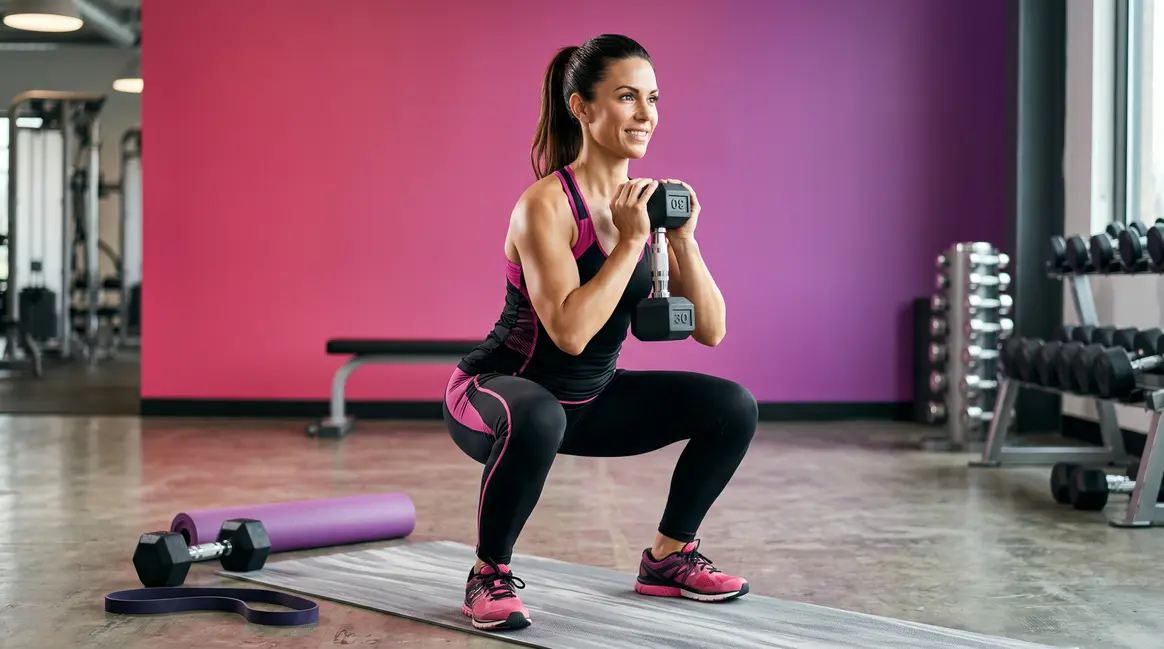
- 1. Goblet Squat
- Sets/Reps: 3 × 10–12
- Starting Weight: 8–12 kg dumbbell (RPE 6–7)
- Form Cues: Hold the dumbbell vertically at your chest. Feet shoulder-width apart, toes slightly out. Sit your hips back and down — chest stays tall, knees track over toes. Drive through your heels to stand.
- Why it’s here: Squats are the most functional lower-body movement. They train quads, glutes, and core simultaneously.
- 2. Romanian Deadlift (RDL)
- Sets/Reps: 3 × 10–12
- Starting Weight: 10–15 kg dumbbells (RPE 6–7)
- Form Cues: Stand with dumbbells in front of your thighs. Hinge at the hips (not the waist) — push your hips back while keeping your back flat and dumbbells close to your legs. Feel a stretch in your hamstrings (the muscles on the back of your thighs), then drive your hips forward to stand.
- Why it’s here: RDLs train the posterior chain (hamstrings, glutes, lower back) — the muscles most women underuse and most need to strengthen.
- 3. Dumbbell Bench Press
- Sets/Reps: 3 × 10–12
- Starting Weight: 5–8 kg per hand (RPE 6–7)
- Form Cues: Lie on a bench with dumbbells at chest height, elbows at 45 degrees from your body. Press up until arms are nearly straight (do not lock elbows), then lower slowly (2–3 seconds) back to start. Keep your feet flat on the floor.
- Why it’s here: The bench press develops chest, front shoulders, and triceps — building upper-body pushing strength.
- 4. Bent-Over Dumbbell Row
- Sets/Reps: 3 × 10–12 per arm
- Starting Weight: 6–10 kg per hand (RPE 6–7)
- Form Cues: Hinge forward at the hips until your torso is roughly parallel to the floor. Hold a dumbbell in one hand, brace your core, and pull the dumbbell toward your hip — elbow drives back, not out to the side. Lower slowly. Keep your back flat throughout.
- Why it’s here: Rows balance the pressing movements and strengthen your upper back, improving posture significantly.
- 5. Plank (Isometric Hold)
- Sets/Duration: 3 × 20–30 seconds (build toward 45 seconds by Week 4)
- Starting Load: Bodyweight
- Form Cues: Forearms on the floor, elbows under shoulders. Body forms a straight line from head to heels — do not let your hips sag or rise. Breathe steadily. Brace your abs as if bracing for a punch.
- Why it’s here: A strong core protects your spine during every other lift and transfers force between your upper and lower body.
Workout B — Glutes, Shoulders, and Core
Equipment needed: Dumbbells (light and medium), a resistance band (optional but recommended), and a mat.
Estimated session time: 40–50 minutes including warm-up.
Complete your 5-minute warm-up before beginning. Perform exercises in the order listed.
- 1. Glute Bridge
- Sets/Reps: 3 × 12–15
- Starting Weight: Bodyweight, or a 10–15 kg plate across your hips (RPE 6–7)
- Form Cues: Lie on your back, knees bent, feet flat on the floor hip-width apart. Drive your hips toward the ceiling by squeezing your glutes — hold 2 seconds at the top. Lower slowly. Your body forms a straight line from shoulders to knees at the top.
- Why it’s here: Glute bridges directly activate the gluteus maximus (your largest glute muscle) with zero spinal compression — ideal for beginners.
- 2. Dumbbell Shoulder Press
- Sets/Reps: 3 × 10–12
- Starting Weight: 4–7 kg per hand (RPE 6–7)
- Form Cues: Sit or stand with dumbbells at shoulder height, palms facing forward. Press directly overhead until arms are nearly straight. Lower slowly back to shoulder height. Keep your core braced — do not arch your lower back.
- Why it’s here: Overhead pressing builds shoulder strength and stability, which supports every pushing and carrying movement in daily life.
- 3. Dumbbell Reverse Lunge
- Sets/Reps: 3 × 10 per leg
- Starting Weight: 5–8 kg per hand, or bodyweight (RPE 6–7)
- Form Cues: Stand tall, step one foot straight back until your rear knee nearly touches the floor. Front knee stays directly above your front ankle — do not let it drift forward past your toes. Push through your front heel to return to standing.
- Why it’s here: Lunges train each leg independently, correcting muscle imbalances and building glute and quad strength simultaneously.
- 4. Lat Pulldown (cable machine) or Resistance Band Pulldown
- Sets/Reps: 3 × 10–12
- Starting Weight: 20–30 kg on cable (RPE 6–7); medium resistance band if training at home
- Form Cues: Grip the bar slightly wider than shoulder-width, palms facing away. Lean back slightly (10–15 degrees), then pull the bar to your upper chest — drive your elbows down and back. Squeeze your lats (the large muscles on the sides of your back) at the bottom. Return slowly.
- Why it’s here: Pulling movements build the upper back and lats, improving posture and balancing the shoulder press.
- 5. Dead Bug (Core)
- Sets/Reps: 3 × 8 per side
- Starting Load: Bodyweight
- Form Cues: Lie on your back, arms pointing toward the ceiling, knees bent at 90 degrees (tabletop position). Slowly lower one arm overhead and extend the opposite leg toward the floor — keep your lower back pressed into the mat throughout. Return and repeat on the other side.
- Why it’s here: The dead bug trains deep core stability without loading the spine — one of the safest and most effective core exercises for beginners.
Download Your Free PDF Workout Calendar
Your free printable PDF workout calendar includes the full 8-week A/B schedule, a weight and RPE tracking log for every exercise, and a progress check-in at Week 4. Print it, hang it, and check off each session as you go. Tracking is one of the strongest predictors of long-term exercise adherence (ACSM, 2022).
[Download the Free PDF Workout Calendar →] (Insert download link here)
How to Structure Your Week and Keep Making Progress
Knowing the exercises is only half the equation. How you arrange your training week — and how you challenge yourself over time — determines whether you make consistent progress or plateau after four weeks.
Sample Weekly Training Schedule
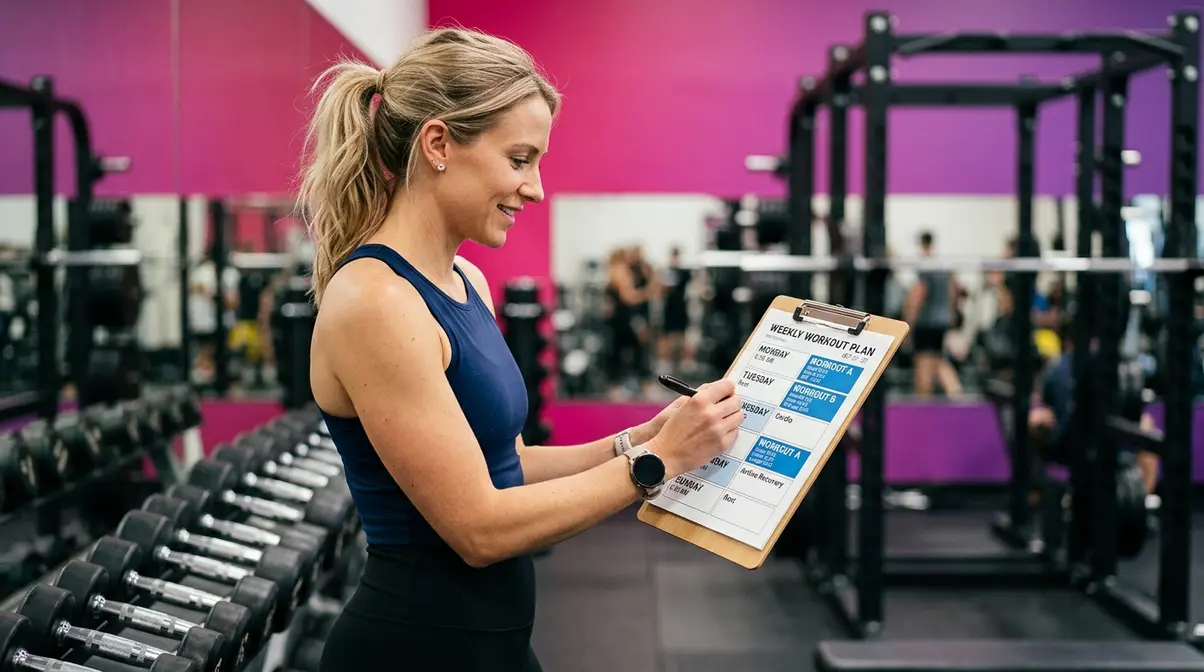
3 days per week is the ACSM-recommended minimum for beginners to develop strength while allowing full muscle recovery between sessions. Here is the recommended schedule:
| Day | Activity | Notes |
|---|---|---|
| Monday | Workout A | Legs, Chest, Back |
| Tuesday | Rest or light walk | 20–30 minutes easy walking is ideal |
| Wednesday | Workout B | Glutes, Shoulders, Core |
| Thursday | Rest or yoga/stretching | Focus on hip flexors and upper back |
| Friday | Workout A | Same as Monday |
| Saturday | Optional light activity | Walk, swim, or recreational sport |
| Sunday | Full rest | Complete recovery |
In Week 2, swap the workouts: Monday = B, Wednesday = A, Friday = B. Alternate each week so both workouts receive equal training frequency across the month.
Why not train 5–6 days per week? Muscle growth (hypertrophy) happens during recovery, not during the workout itself. Training the same muscle groups without adequate rest produces diminishing returns and increases injury risk. More is not better — more consistent is better.
What Is Progressive Overload?
Progressive overload (gradually making your workouts harder over time) is the foundational principle behind every effective strength program. Without it, your body adapts to the current challenge and stops changing.
Progressive overload does not mean adding weight every single session. It means applying a slightly greater stimulus over time through one of these methods:
- Adding weight (the most common method)
- Adding reps (e.g., moving from 10 to 12 reps at the same weight)
- Adding sets (e.g., moving from 2 sets to 3 sets)
- Reducing rest time between sets
- Improving your form and range of motion
For beginners, the most straightforward approach is to focus on completing all prescribed reps with excellent form before adding weight. This alone drives significant progress for the first 8–12 weeks.
When to Increase Your Weight: The 2-for-2 Rule
The 2-for-2 Rule gives you a clear, objective signal for when to add weight — no guesswork required. Here is how it works:
If you can complete 2 extra reps above your target rep count on your last set, for 2 consecutive sessions — add weight at the next session.
Example: Your target is 3 × 10 goblet squats at 10 kg. In Session 5, you complete 12 reps on your last set. In Session 6, you complete 12 again. At Session 7, increase to 12 kg.
- How much weight to add:
- Upper body exercises: 1–2 kg (2–5 lb) per increment
- Lower body exercises: 2–4 kg (5–10 lb) per increment
This rule works because it requires your body to demonstrate consistent mastery before the challenge increases — which is exactly how certified trainers program progression for new clients. Pair the 2-for-2 Rule with the RPE Confidence Method: if your RPE on the last set drops to 5 or below across two sessions, that is your green light to progress.
Common Mistakes and When to Seek Help
Even with a clear program, beginners encounter predictable friction points. Knowing the most common mistakes in advance means you can avoid them — or recognize and correct them quickly.
5 Form Mistakes Beginners Make (and How to Fix Them)
1. Rounding the lower back during deadlifts or rows
What goes wrong: Spinal flexion under load increases injury risk significantly.
Fix: Before each rep, take a breath, brace your core (like you are about to be pushed), and think “chest up” before initiating the movement.
2. Knees caving inward during squats (valgus collapse)
What goes wrong: Medial knee stress accumulates over time and can cause pain.
Fix: Place a resistance band just above your knees during squats. The band provides feedback — actively push your knees outward against it throughout the movement.
3. Using momentum instead of muscle
What goes wrong: Swinging weights, bouncing at the bottom of a squat, or jerking during rows removes the load from the target muscle and transfers it to your joints.
Fix: Slow down. Use a 2-second lowering tempo on every rep. If you cannot lower the weight slowly, it is too heavy.
4. Skipping the warm-up
What goes wrong: Cold muscles and joints are less pliable and more prone to strains.
Fix: The 5-minute warm-up in this guide is non-negotiable. Set a timer.
5. Progressing weight too quickly
What goes wrong: Ego-driven weight selection leads to form breakdown and overuse injuries within the first month.
Fix: Apply the RPE Confidence Method and the 2-for-2 Rule. Earn every weight increase.
When This Program May Not Be Right for You
This program is appropriate for the vast majority of healthy women with no significant medical conditions. However, it may require modification or medical clearance in the following situations:
- Active or recent injury (back, knee, shoulder, or hip) — consult a physical therapist before beginning
- Diagnosed osteoporosis — certain exercises (like high-impact jumping or loaded spinal flexion) may be contraindicated; work with a physical therapist for a modified program
- Pregnancy or recent postpartum (within 6 weeks) — exercise during and after pregnancy requires specific medical guidance; consult your OB-GYN or midwife
- Uncontrolled cardiovascular condition — get medical clearance before any new exercise program
This is not an exhaustive list. If you have any doubt about whether this program is appropriate for your health situation, consult your physician before your first session.
When to See a Professional
Seek guidance from a certified professional in these situations:
- Pain (not muscle burn) during any exercise — stop the exercise and consult a physical therapist or sports medicine physician before continuing
- You want personalized programming beyond the first 8 weeks — a certified personal trainer can design a program specific to your goals and limitations
- You are new to any loaded exercise and want hands-on form coaching — even two sessions with a CPT at the start of your program can prevent months of bad habits
- Any dizziness, chest pain, or shortness of breath during exercise — stop immediately and seek medical evaluation
Strength training is extraordinarily safe when performed correctly. The investment in one or two professional sessions at the start pays dividends across years of injury-free training.
Frequently Asked Questions
How many days a week should a beginner woman do strength training?
Beginners should strength train 3 days per week, with at least one rest day between sessions. The ACSM recommends a minimum of 2 non-consecutive days per week for novice lifters to develop strength while allowing full muscle recovery. Three days (such as Monday, Wednesday, Friday) is the optimal starting frequency — enough stimulus to drive adaptation, enough recovery to prevent overtraining. After 8–12 weeks, you can evaluate whether adding a fourth day is appropriate for your goals and recovery capacity.
Will strength training make me bulky?
No — strength training will not make you bulky. Women produce approximately 15–20 times less testosterone than men, making large muscle hypertrophy physiologically unlikely without extreme training volumes, very high calorie surpluses, and in most cases, pharmacological assistance. What strength training does produce in women is increased muscle density, improved body composition, and the “toned” appearance most beginners are specifically seeking. The toned look is not separate from strength training — it is the direct result of it (PubMed, 2012).
How do I know what weight to start with?
Use the RPE Confidence Method: aim for a weight that feels like a 6–7 out of 10 on the Rate of Perceived Exertion scale. At RPE 6–7, the weight is challenging enough to stimulate adaptation but not so heavy that your form breaks down. On your first session, pick up a weight, perform 5 reps, and assess honestly: could you do 4–5 more with good form? If yes, go heavier. If you struggled to complete the set with good form, go lighter. Recalibrate each session using this same self-assessment. The table in the program section gives concrete starting weight ranges for every exercise.
How long before I see results from strength training?
Most beginners notice measurable strength improvements within 2–4 weeks, and visible body composition changes typically appear between weeks 6 and 12. The early gains (weeks 1–4) are primarily neurological — your nervous system becomes more efficient at recruiting muscle fibers. Visible muscle development follows as the weeks progress. Consistency matters more than intensity at this stage: three reliable sessions per week over 8 weeks will produce far better results than sporadic intense workouts (ACSM, 2022).
Is strength training safe for women over 50?
Yes — strength training is not only safe for women over 50, it is strongly recommended by leading medical institutions. The National Institute on Aging and Mayo Clinic both identify resistance training as a primary intervention for maintaining bone density, preserving muscle mass, and reducing fall risk in older adults. Women over 50 should begin at a slightly more conservative RPE (5–6), allow slightly longer recovery between sessions, and consult their physician if they have been diagnosed with osteoporosis or any cardiovascular condition. The program structure in this guide is appropriate for women of all ages with standard modifications.
This beginner strength training program for women gives you everything you need to walk into the gym — or your living room — with clarity and confidence. Research consistently confirms that women who follow a structured resistance program 3 days per week improve body composition, bone density, and metabolic rate without unwanted bulk (PubMed, 2012; Harvard Health, 2023). The combination of the RPE Confidence Method for weight selection and the 2-for-2 Rule for progression removes the two biggest sources of beginner uncertainty in a single framework.
The RPE Confidence Method is what separates this program from a generic exercise list. It gives you a repeatable, self-calibrating system for every session — one that grows with you as your strength develops. No more guessing. No more standing frozen in the weights section.
Your next step: download the free PDF calendar, schedule your first three sessions this week, and complete your Day 1 warm-up before anything else. Start conservative — RPE 6 is perfectly appropriate for Week 1. Earn the weight increases through the 2-for-2 Rule. If anything causes sharp pain (not muscle burn), stop and consult a professional before your next session. Three consistent sessions per week, applied over 8 weeks, will produce a version of you that is measurably stronger, more capable, and more confident in the weight room than the person reading this sentence right now.
Related posts:
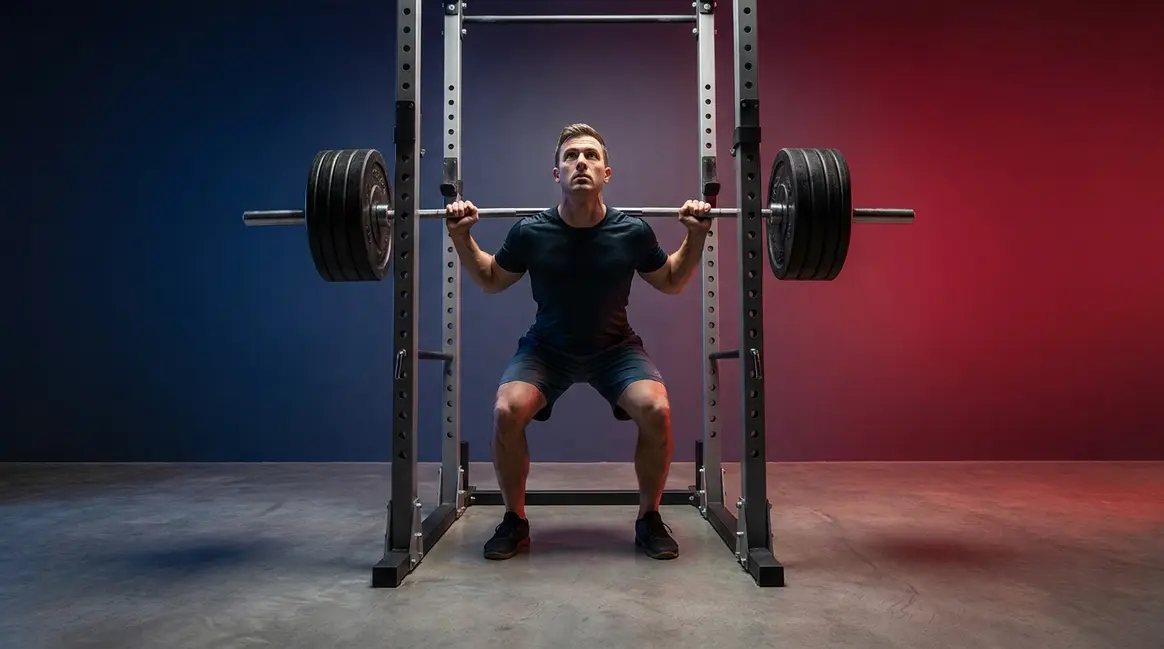
StrongLifts 5x5 for Beginners: Complete Guide 2026
How to Get a Bigger Bum Without Exercise: 3-Tier Guide
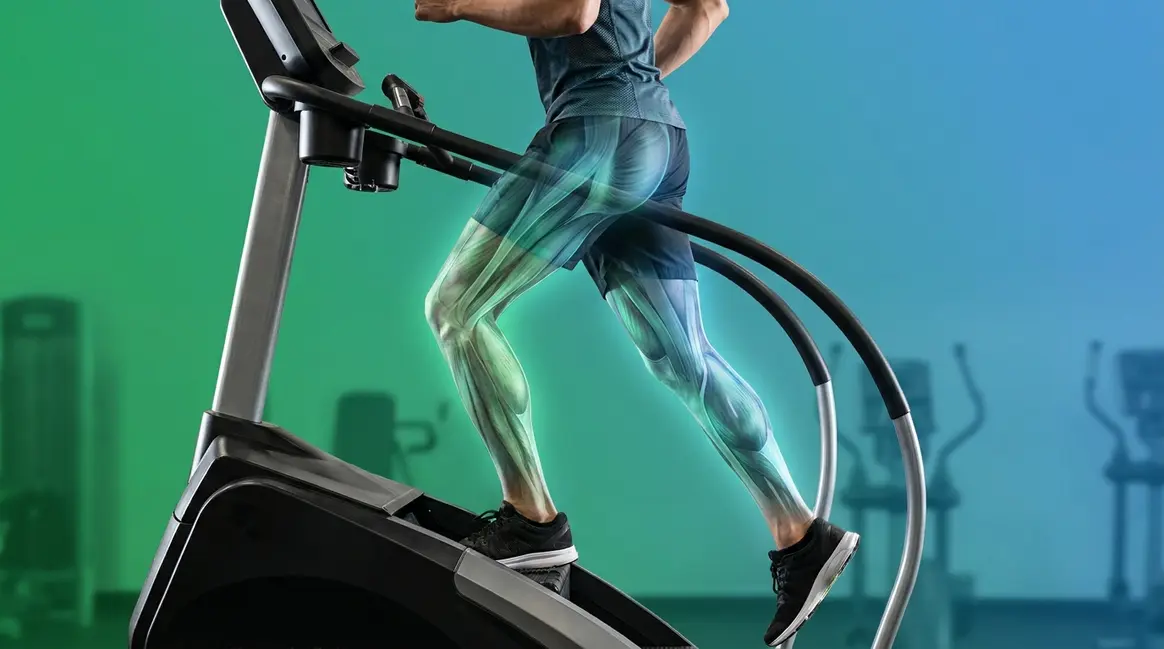
What Muscles Does the StairMaster Work? 6 Groups
Olympic Weightlifting vs Powerlifting: 2026 Guide
What Kills Muscle Gains? 7 Proven Saboteurs to Fix Now
Best Strength Training Apps for Women: Top 7 Picks
Callum
Hi, I'm Callum, the founder of Body Muscle Matters. I'm not a certified trainer, I'm a self taught lifter who started this site to share what I've learned from my own training and a lot of trial and error. Everything here comes from real experience and honest research, written the way I'd explain it to a friend who is just getting started. My goal is simple: practical, no hype fitness advice you can actually use.