StrongLifts 5×5 for Beginners: Complete Guide 2026
Before starting any new exercise program, consult a qualified healthcare professional, especially if you have pre-existing injuries, medical conditions, or have been sedentary for an extended period. The information in this guide is educational and does not constitute medical advice.
Most beginners start a strength training programme, follow it for two weeks, then quit — not because it was too hard, but because no one explained the rules clearly. The StrongLifts 5×5 programme for beginners changes that: five exercises, three days a week, and a dead-simple rule for getting stronger every single session.
Without a clear starting point, you risk wasting months on random workouts that don’t build real strength — or worse, injuring yourself with poor form in your first week. By the end of this guide, you’ll know exactly which exercises to do, how much weight to start with, and what to do the moment progress stalls — so you can build a real foundation of strength from your very first session.
We’ll cover the programme structure, form fundamentals, progression rules, and how to handle the inevitable plateaus every beginner faces.
StrongLifts 5×5 is a three-days-a-week beginner strength programme built on five barbell exercises — and it works because every session, you add a little more weight to the bar.
- Start light: Begin with the empty 20 kg bar to master form before adding load
- The Two-Stall System: When progress stops, diagnose whether it’s a technical stall (form breakdown) or a recovery stall (rest/nutrition) before deloading
- Strength first, size second: Research confirms heavy loads maximise strength gains; hypertrophy follows as a secondary benefit
- Three workouts a week: Workout A and Workout B alternate — you never train the same session twice in a row
- Modifications exist: Women and older adults can adjust starting loads and progressions without losing the programme’s core benefits
What Is StrongLifts 5×5?
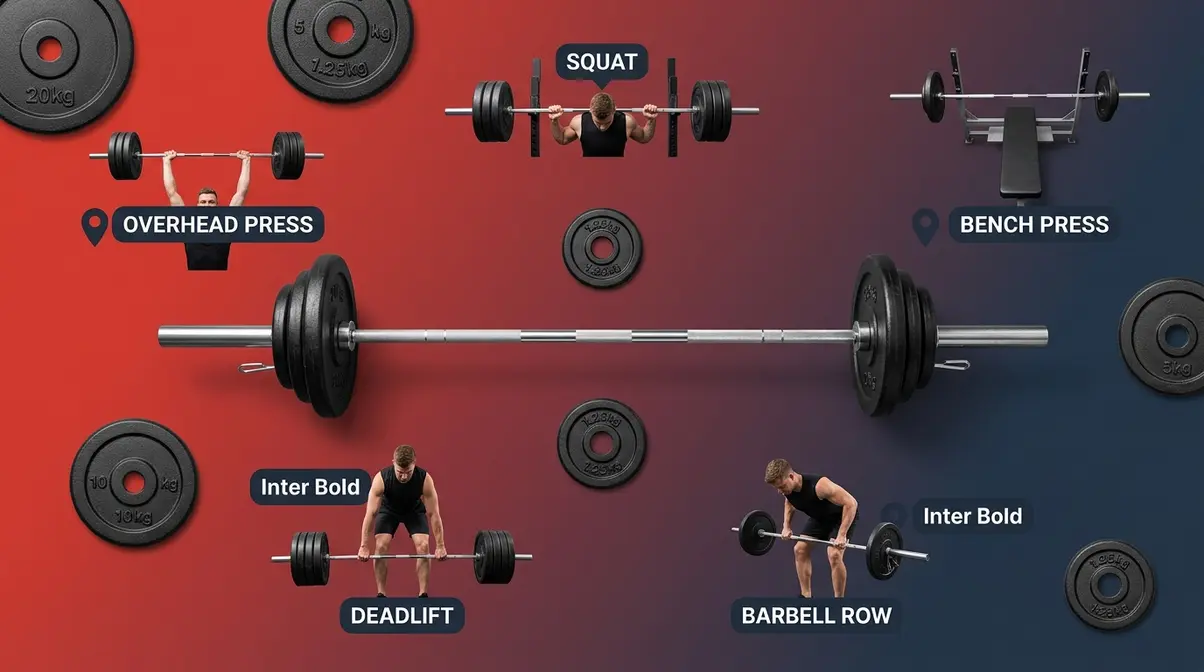
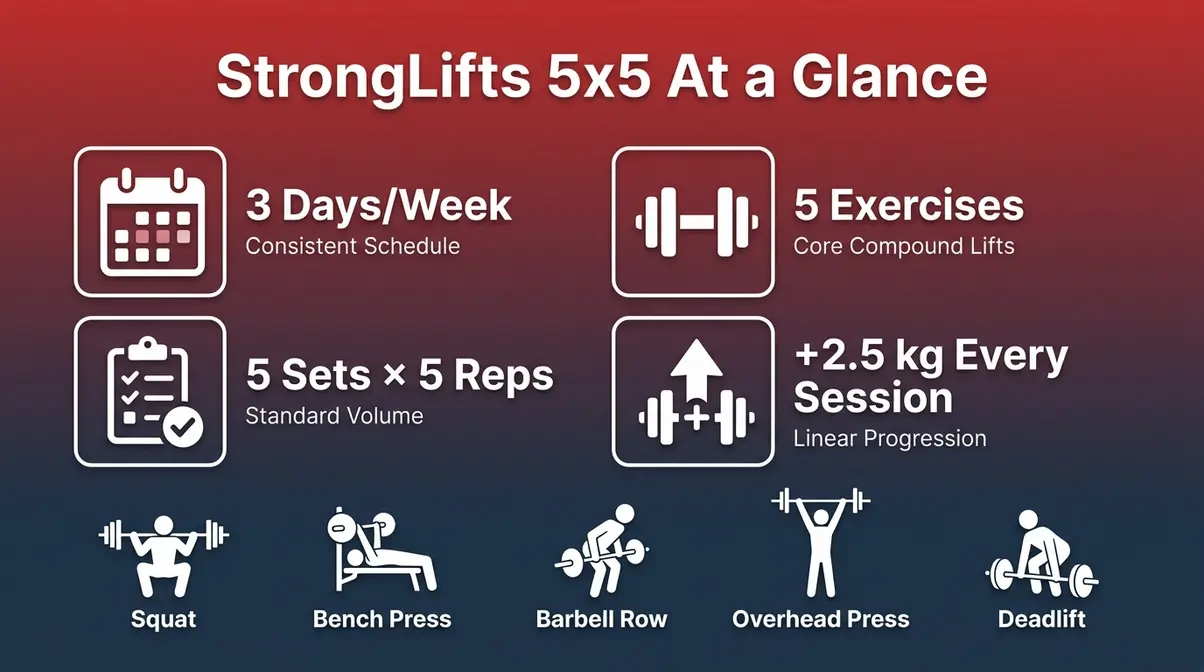
StrongLifts 5×5 is a beginner strength training programme built around five compound barbell exercises, performed three days a week. Each exercise is done for 5 sets of 5 repetitions. The core mechanism is progressive overload — adding 2.5 kg to the bar every single session. As outlined on StrongLifts.com, the programme is built for new or returning lifters who want to get stronger and build muscle using a minimal, structured approach.
Most beginners see several months of rapid strength progress before gains slow — typically three to eight months of consistent linear progression before an intermediate programme is needed.
The Three Core Principles That Make It Work
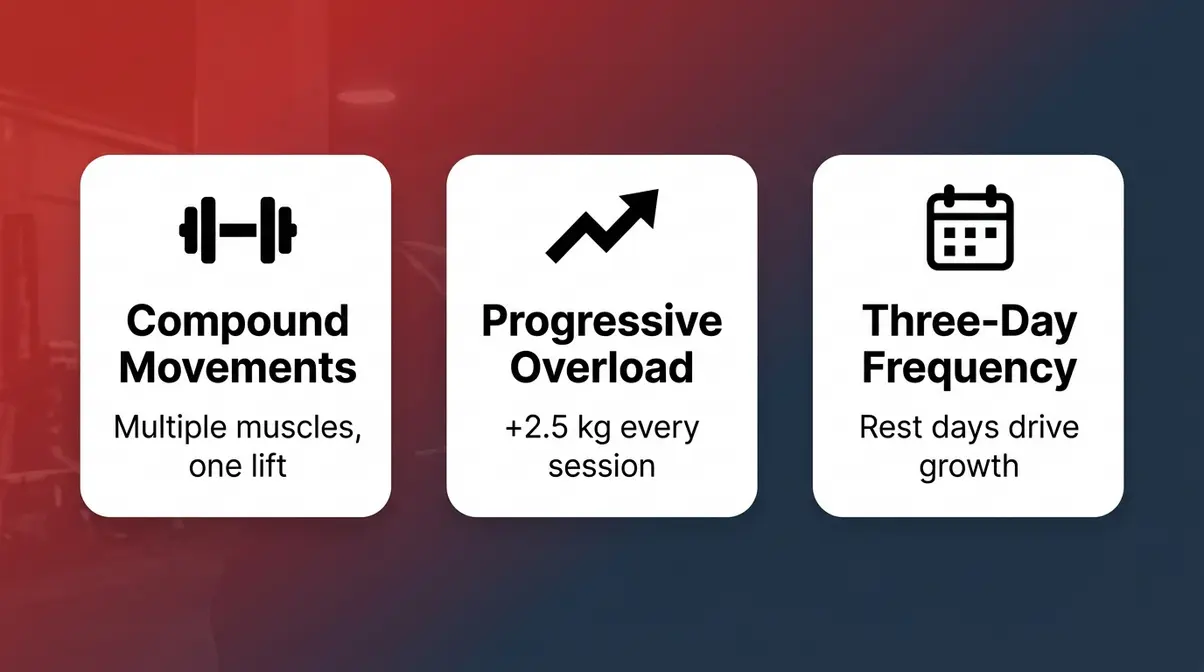
Principle 1 — Compound Movements: Compound exercises are movements that work multiple muscle groups at the same time. A squat, for example, trains your legs, glutes, lower back, and core simultaneously. Think of it this way: a squat is like doing a leg press, a core exercise, and a balance drill all at once. This is why beginners benefit far more from compounds than isolation exercises like a bicep curl — you build more total strength per session.
Principle 2 — Progressive Overload: Progressive overload means adding a small amount of weight — typically 2.5 kg — to every exercise in every session. This is the engine of the whole programme. Beginners can progress this rapidly because of neurological adaptation: your brain is learning to recruit more muscle fibres efficiently. In the first four to six weeks, most of your strength gains come from your nervous system getting better at the movements, not just from muscle growth.
Principle 3 — Three-Day Frequency: You train Monday, Wednesday, and Friday — or any three non-consecutive days. The rest days between sessions are not laziness. They are when your muscles repair and grow stronger. Without them, you accumulate fatigue faster than you recover, and progress stalls.
These three principles only work when applied to the right exercises — and StrongLifts 5×5 uses five specific compound lifts chosen for maximum beginner return.
The Five Compound Lifts: Your Complete Exercise List
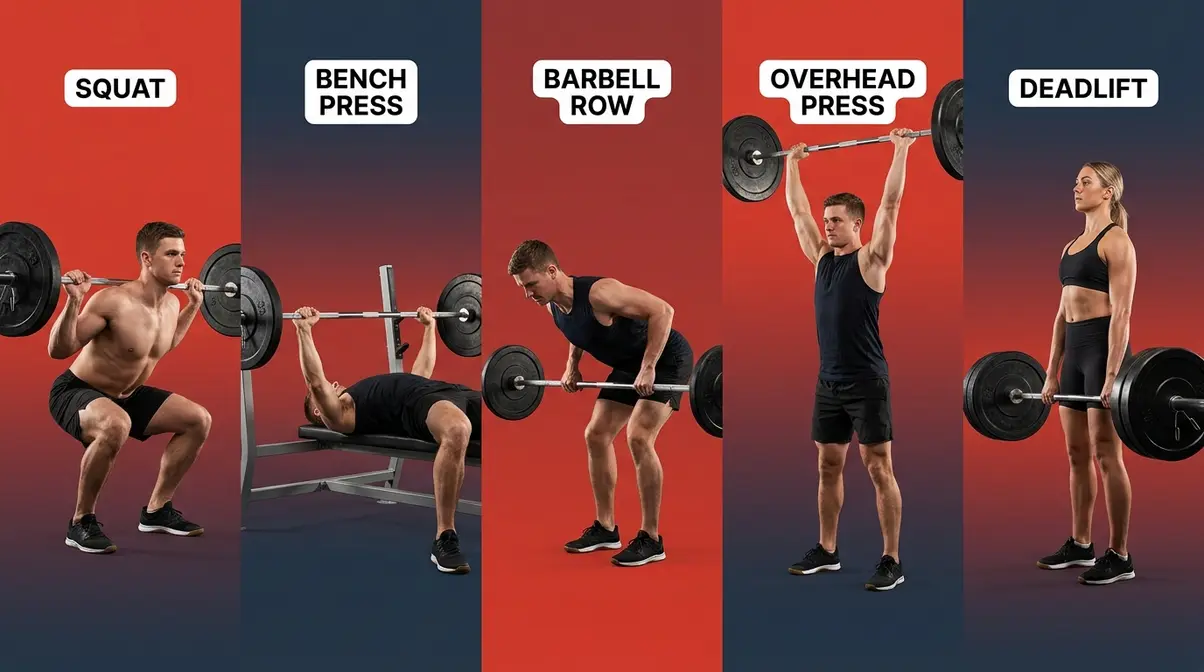
Before you set foot in the gym, you need to know exactly what you’re committing to. Here are all five lifts, in order of importance:
- Squat — the foundation of the programme, performed in every single session. Trains your quads (front thigh muscles), hamstrings, glutes, and core.
- Bench Press — the primary upper-body push. Trains your chest, front shoulders (anterior deltoids), and triceps.
- Barbell Row — the primary upper-body pull. Trains your upper back, lats (the large muscles on the sides of your back), and biceps.
- Overhead Press (OHP) — a standing press that builds shoulder and upper-body pressing strength, and challenges your core stability.
- Deadlift — the most demanding lift. Trains your entire posterior chain (hamstrings, glutes, lower back) and builds total-body strength.
When you eventually hit a plateau — and every beginner does — a clear diagnostic framework makes the difference between a one-week setback and months of frustration. We’ll cover that in Step 4 with The Two-Stall System.
Step 1 — The Workout Structure: Workout A and Workout B
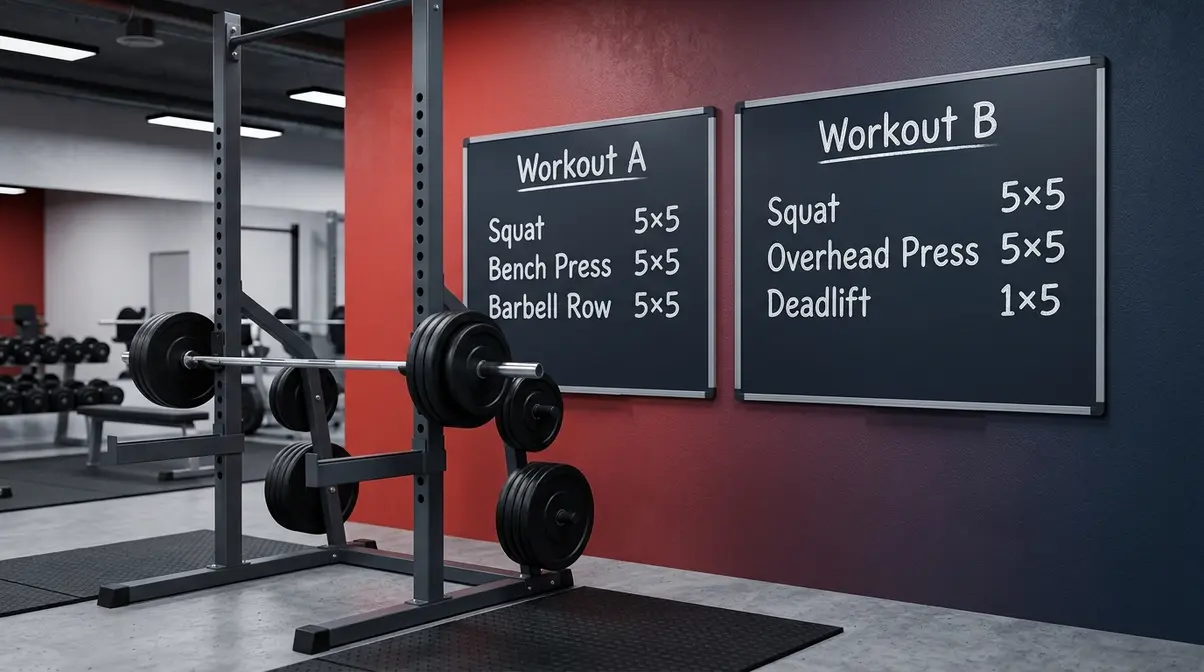
The programme alternates between two workouts — Workout A and Workout B — three times per week. You never perform the same session twice in a row. This rotation ensures every lift gets adequate frequency while allowing enough recovery between identical sessions. The structure is simple to follow, even if you’ve never been inside a gym.
Workout A: Squat, Bench Press, and Barbell Row
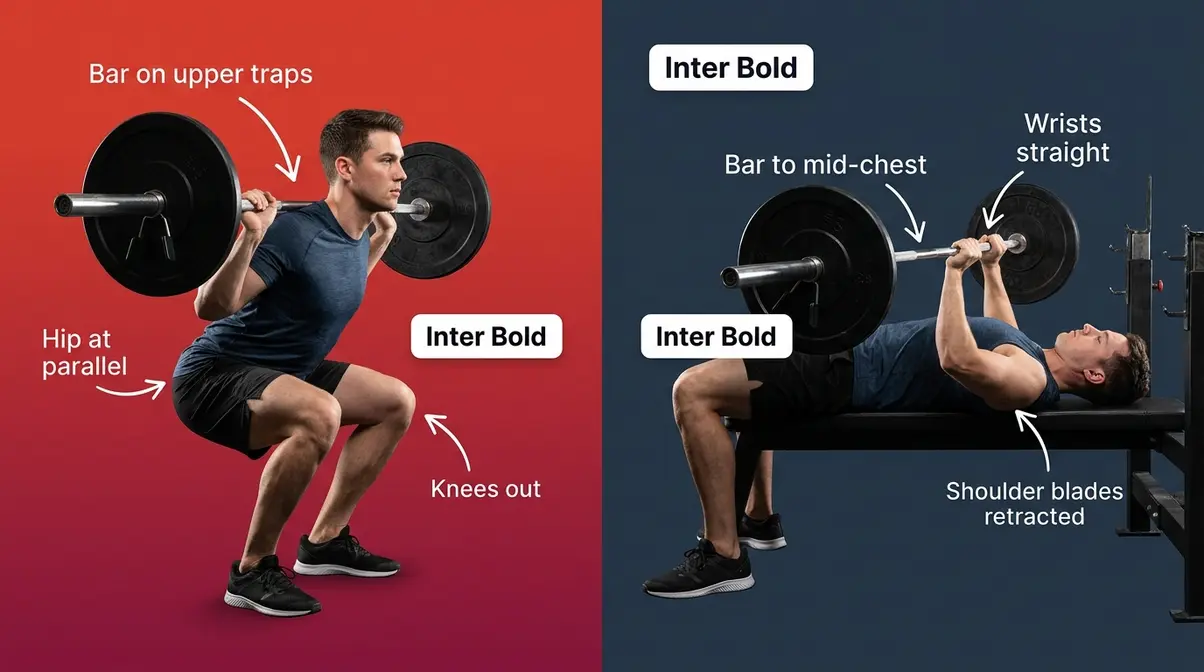
Workout A contains three exercises, performed in this exact order:
| Exercise | Sets | Reps |
|---|---|---|
| Squat | 5 | 5 |
| Bench Press | 5 | 5 |
| Barbell Row | 5 | 5 |
Always squat first. The squat is the most demanding lift and requires the most energy and focus. Performing it while fresh reduces injury risk and produces better results. The bench press follows as your primary upper-body push. The barbell row finishes the session as your upper-body pull — it directly counters the bench press muscles, creating balanced development.
Workout B: Squat, Overhead Press, and Deadlift
Workout B swaps the bench press and barbell row for the overhead press and deadlift:
| Exercise | Sets | Reps |
|---|---|---|
| Squat | 5 | 5 |
| Overhead Press | 5 | 5 |
| Deadlift | 1 | 5 |
Notice that the deadlift is performed for only one set of five. This is intentional. The deadlift is so taxing on your central nervous system (CNS) — the network controlling your muscles — that one heavy, focused set is sufficient. More sets at this stage would compromise recovery without adding meaningful benefit.
Your Weekly Training Schedule (The A-B-A Rotation)
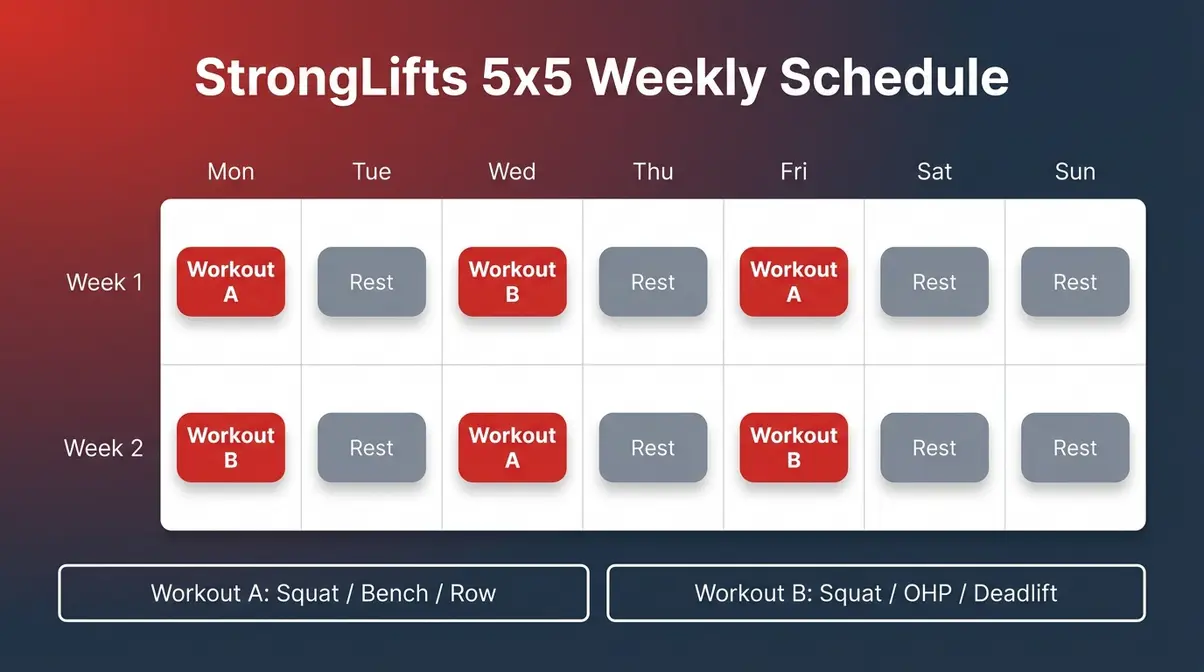
The rotation works like this across your first two weeks:
| Week | Monday | Wednesday | Friday |
|---|---|---|---|
| Week 1 | Workout A | Workout B | Workout A |
| Week 2 | Workout B | Workout A | Workout B |
The pattern then repeats indefinitely. You always train on non-consecutive days — Monday, Wednesday, Friday works for most people, but Tuesday/Thursday/Saturday is equally valid. Never train two days in a row. The 48-hour gap between sessions is when adaptation happens.
Step 2 — Starting Weights, Progression, and Rest Periods
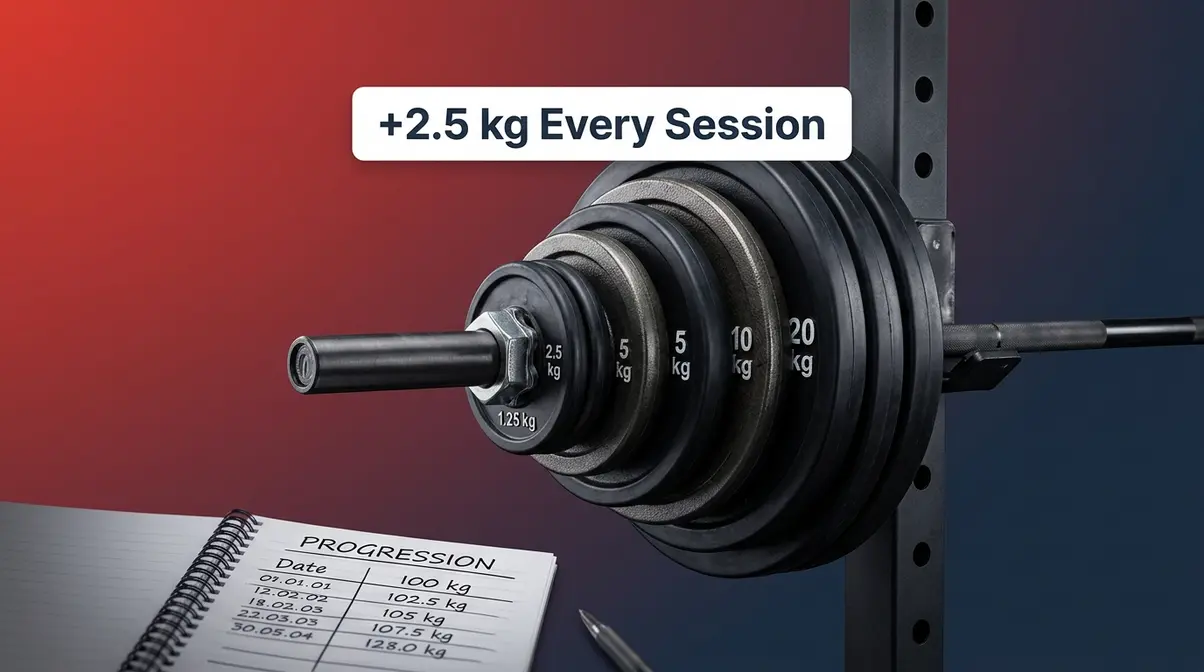
The most common beginner mistake is starting too heavy. Starting light protects your joints, gives you time to groove correct movement patterns, and allows the programme’s linear progression to work for the maximum number of weeks. This section covers the three rules that govern your loading strategy for the entire programme.
How Much Weight to Start With (The Empty Bar Rule)
For the squat, bench press, and overhead press, start with the empty bar — a standard Olympic barbell weighs 20 kg (44 lb). For the barbell row, start with 30 kg (60 lb). For the deadlift, start with 40–60 kg (90–135 lb), depending on your build and mobility.
This will feel embarrassingly easy. That is the point. Your nervous system needs repetitions at manageable weights to encode the correct movement patterns. Starting with 70 kg on your first squat because “it feels too light” is one of the most reliable ways to plateau within four weeks.
Starting Weight Reference:
| Exercise | Starting Weight |
|---|---|
| Squat | 20 kg (empty bar) |
| Bench Press | 20 kg (empty bar) |
| Overhead Press | 20 kg (empty bar) |
| Barbell Row | 30 kg |
| Deadlift | 40–60 kg |
How to Add Weight: The Linear Progression System
After every successful session — meaning you completed all 5 sets of 5 reps with good form — add weight to the bar before your next workout:
- Upper body lifts (bench press, overhead press, barbell row): add 2.5 kg
- Lower body lifts (squat, deadlift): add 2.5–5 kg
This is linear progression (adding the same increment after every session). For a beginner, this produces rapid strength gains. Research confirms that training in the strength zone — roughly 1 to 5 repetitions with heavy loads — produces greater 1RM (one-repetition maximum, the most weight you can lift once) improvements than higher-rep training (PMC7927075, 2021).
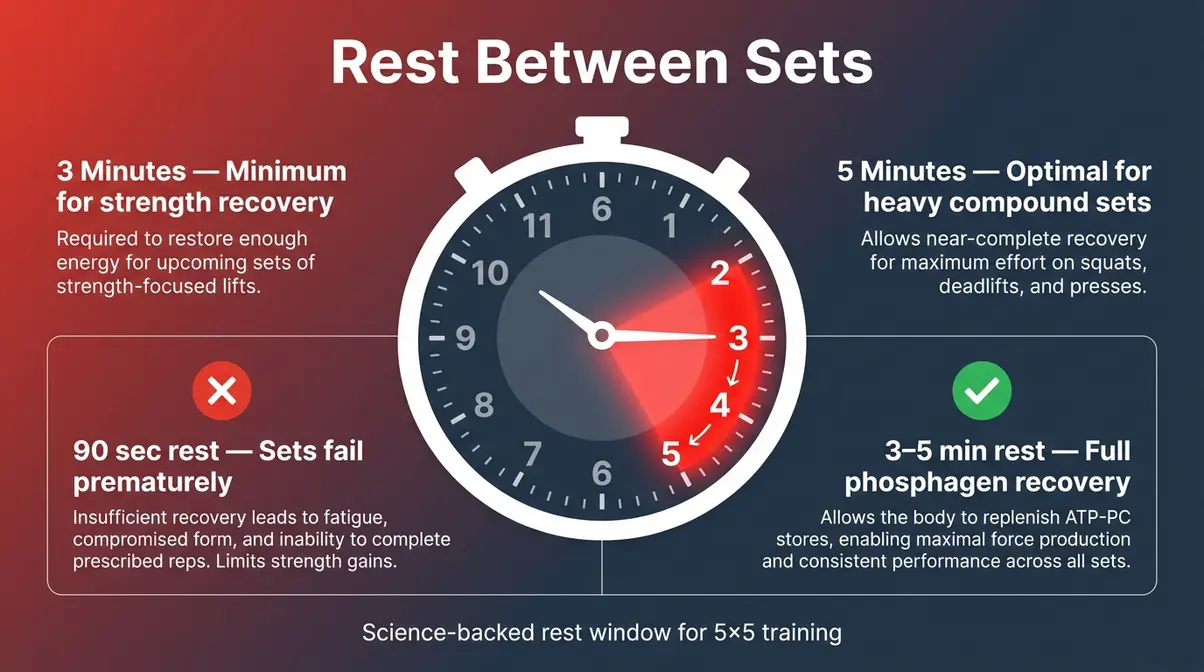
Rest Periods Between Sets: Why 3–5 Minutes Matters
Rest periods are not optional. A landmark study published in the Journal of Strength and Conditioning Research found that longer rest periods — specifically three minutes compared to one minute — produced greater increases in both muscle strength and hypertrophy in resistance-trained individuals (Schoenfeld et al., PubMed 26605807, 2016). A separate 2020 PubMed study confirmed three minutes as the most advantageous rest interval for maintaining technical efficiency and reducing fatigue during heavy compound lifts (PubMed 30138239).
For StrongLifts 5×5, rest 3–5 minutes between every set. This feels long. Use a timer. Cutting rest to 90 seconds because you’re impatient is one of the fastest ways to fail your sets unnecessarily.
Step 3 — Mastering Form for the 5 Core Lifts
Form is the foundation of the entire programme. Poor technique doesn’t just risk injury — it limits how much weight you can lift and reduces how effectively the exercise trains the target muscles. Our team evaluated beginner form errors across all five lifts and found that the squat and deadlift account for the majority of technique breakdowns in the first four weeks of training. This section gives you the essential cues for each lift.
Squat and Bench Press Form Fundamentals
Squat — Essential Cues:
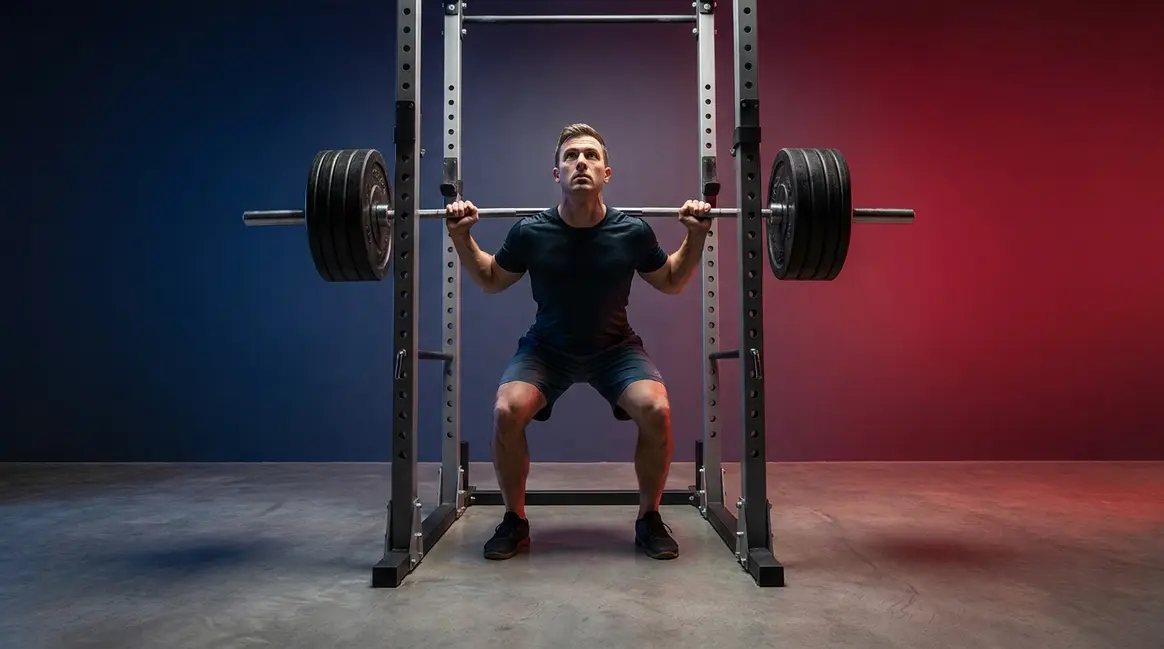
- Stand with the bar resting across your upper traps (the shelf of muscle at the top of your back), feet shoulder-width apart, toes pointed slightly outward.
- Take a deep breath into your belly (not your chest) to create intra-abdominal pressure — this is called bracing, and it protects your lower back.
- Push your knees out in the direction of your toes as you descend.
- Squat until your hip crease is at or below the top of your knee — this is called “parallel” (reaching the depth where your thighs are at least horizontal to the floor).
- Drive through your whole foot to stand up, keeping your chest tall.
Common error: Knees caving inward on the way up. Fix: actively push your knees out throughout the entire movement.
Bench Press — Essential Cues:
- Lie on the bench with your eyes directly under the bar.
- Grip the bar slightly wider than shoulder width, with your wrists straight (not bent back).
- Retract your shoulder blades (squeeze them together and down) to create a stable base.
- Lower the bar to your mid-chest — not your neck, not your stomach.
- Press in a slight arc back toward the rack as you push up.
Common error: Bouncing the bar off your chest. Lower it under control, pause briefly, then press.
Overhead Press and Barbell Row Form Fundamentals
Overhead Press — Essential Cues:
- Stand with the bar at collarbone height, gripped just outside shoulder width.
- Brace your core and squeeze your glutes — this prevents your lower back from arching excessively.
- Press the bar straight up. As the bar passes your face, push your head slightly forward so the bar ends up directly over your mid-foot.
- Lock out your elbows at the top. Lower under control.
Common error: Pressing the bar forward instead of straight up, which loads the front shoulder unevenly. Think “bar goes up, head moves forward.”
Barbell Row — Essential Cues:
- Stand with the bar over mid-foot, grip just outside shoulder width, palms facing down.
- Hinge at the hips until your torso is roughly 45 degrees from the floor (or more horizontal for advanced lifters).
- Pull the bar to your lower chest/upper stomach — not your neck.
- Lower the bar completely to the floor between each rep (this is a “dead stop” row, which is the StrongLifts standard).
Common error: Using momentum to swing the bar up. The row should be controlled and deliberate. If you’re swinging, the weight is too heavy.
Deadlift Form: The Most Important Lift to Get Right
The deadlift is the highest-risk lift for beginners who skip form practice — and the most rewarding when done correctly. It trains your entire posterior chain (the muscles running up the back of your body), and a single heavy set per session is enough stimulus to drive significant strength gains.
Deadlift — Essential Cues:
- Stand with the bar directly over your mid-foot, feet hip-width apart.
- Hinge at the hips and bend your knees to grip the bar just outside your legs.
- Before you pull: drop your hips slightly, lift your chest, brace your core. Your spine should be neutral — not rounded, not hyperextended.
- Push the floor away with your legs as you pull the bar up. Think “leg press the floor” rather than “lift the bar.”
- Lock out by squeezing your glutes at the top. Do not lean back excessively.
- Lower the bar by hinging at the hips first, then bending your knees once the bar passes your knees.
Common error: Rounding the lower back under load. This is the most common cause of deadlift-related injury. If your lower back rounds when you pull, reduce the weight immediately.
The Warm-Up Protocol Before Every Session
Never walk up to a loaded bar cold. A proper warm-up takes five to ten minutes and dramatically reduces injury risk. Use this protocol before every session:
- General warm-up (3–5 minutes): Light cardio — rowing machine, stationary bike, or brisk walking. Get your heart rate up and your joints moving.
- Mobility work (2–3 minutes): Hip circles, shoulder rotations, and ankle rolls. Pay particular attention to hip and ankle mobility for the squat.
- Warm-up sets for your first exercise: Before your first working set, perform:
- 2 × 5 reps with the empty bar
- 1 × 5 reps at 50% of your working weight
- 1 × 3 reps at 75% of your working weight
- Begin your 5 working sets
For subsequent exercises in the same session, one or two warm-up sets at 50% working weight is sufficient — your body is already warm.
Step 4 — Breaking Through Stalls (The Two-Stall System)
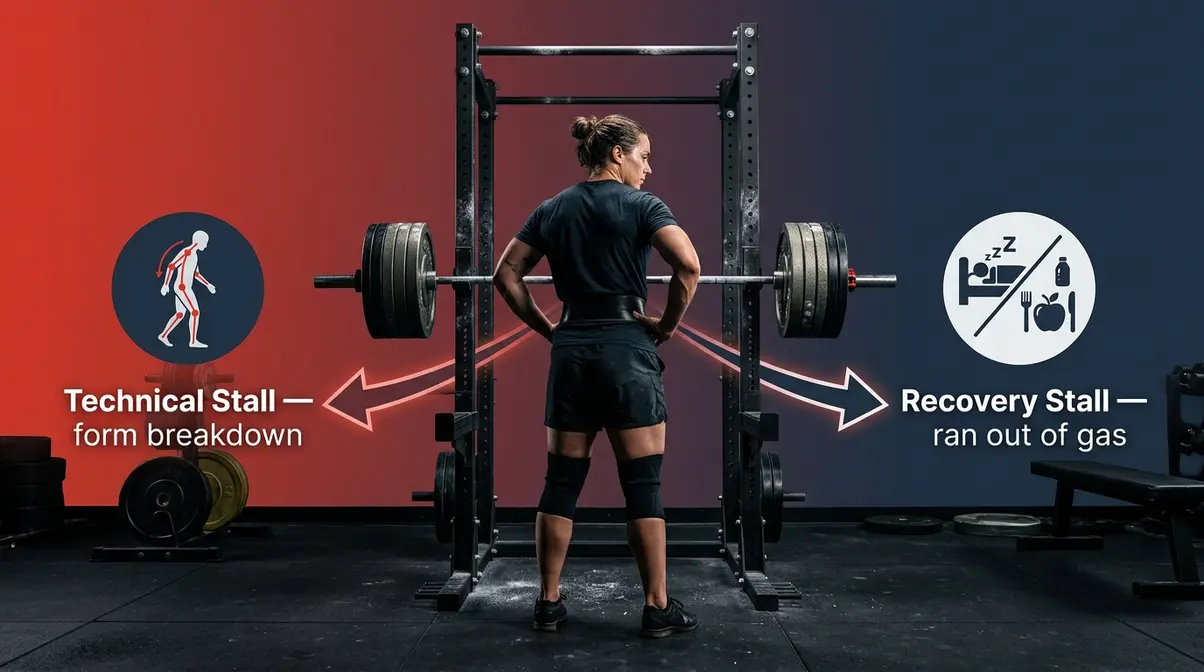
Every beginner on StrongLifts 5×5 will eventually fail to complete all 5 sets of 5 reps. This is not failure — it is a signal. The critical question is: what kind of signal? Treating all stalls the same way is one of the most common and costly mistakes beginners make. The Two-Stall System is a diagnostic framework that separates stalls into two distinct categories, each with a different solution.
Technical Stalls vs. Recovery Stalls: How to Tell the Difference
The Two-Stall System divides all programme stalls into two categories:
Technical Stall: Your form breaks down before your muscles give out. You fail the rep because your technique collapsed — your knees caved, your back rounded, or you lost your brace — not because you were physically exhausted. This is a skill problem, not a strength problem.
Recovery Stall: Your form stays solid, but you simply run out of gas. You hit 5, 5, 5, 4, 3 with good technique throughout. This is a recovery problem — your body hasn’t had enough time, sleep, or nutrition to produce more strength output.
The Two-Stall System Decision Tree:
Failed to complete 5×5?
 |
 ↓
Was your form solid throughout ALL failed reps?
 |
 YES ─────────────────────────────────→ RECOVERY STALL
 | → Check: sleep (7–9 hrs?),
 | calories (eating enough?),
 | stress levels
 | → Retry the same weight next session
 | → If fails 3× in a row → Deload
 |
 NO ──────────────────────────────────→ TECHNICAL STALL
 → Drop weight 10–15%
 → Film your next session
 → Focus on form cues before adding load again
The Deload Protocol: What to Do After Three Consecutive Failures
If you fail the same weight three sessions in a row — and it’s a recovery stall, not a technical one — it’s time to deload. A deload means temporarily reducing the weight to allow your body to reset and adapt.
Standard Deload Protocol:
- Reduce the weight by 10% on the failing lift only.
- Continue adding 2.5 kg per session as normal from the deloaded weight.
- You will surpass your previous stall point within two to three weeks.
For example: if you stall at 80 kg on the squat, deload to 72 kg. Add 2.5 kg each session. You’ll reach 80 kg again in roughly three sessions — but this time, your body will be better prepared to push past it.
Do not deload all five lifts simultaneously. Deload only the lift that stalled. Other lifts may still be progressing normally.
Advanced Plateau Adjustments (3×5, 3×3, 1×5)
If you deload and stall again at the same weight twice, a simple 10% reset is no longer sufficient. This is when you adjust the rep scheme to extract more progress from the programme:
| Adjustment | When to Use | What Changes |
|---|---|---|
| 3×5 | After second stall at same weight | Reduce to 3 sets of 5 reps; add weight faster |
| 3×3 | After stalling on 3×5 | Reduce to 3 sets of 3 reps; heavier load, less volume |
| 1×5 | After stalling on 3×3 | Single top set; near-maximal effort |
Each step down in volume allows you to use heavier weights, which continues driving strength adaptation. Most beginners won’t need to go beyond 3×5 before transitioning to an intermediate programme. If you’ve cycled through all adjustments and still can’t progress, it’s a clear sign you’ve outgrown the beginner linear progression model.
Is StrongLifts 5×5 Right for You? Pros, Cons, and Who It’s Best For
StrongLifts 5×5 is one of the most well-regarded beginner strength programmes available — but it is not the right tool for every goal. This section gives you an honest assessment so you can decide whether it matches what you’re actually trying to achieve. Across fitness communities, the consistent feedback is that the programme excels at building foundational strength and teaching the five core lifts, but has real limitations for those primarily chasing muscle size.
What StrongLifts 5×5 Does Well
The programme has a short list of genuine strengths, and they are significant:
- Simplicity: You never have to guess what to do. The same five exercises, the same rep scheme, the same progression rule. This removes decision fatigue — a major reason beginners quit.
- Frequency: Each major muscle group gets trained three times per week. This frequency is optimal for motor learning (the process of ingraining movement patterns into muscle memory).
- Strength gains: The 5×5 rep scheme uses heavy loads, which research consistently links to superior maximal strength development. Multiple studies and PMC reviews confirm that training in the 1–5 rep range produces greater 1RM improvements than higher-rep protocols (PMC7927075, 2021).
- Foundation building: “True blue beginners” who commit to this programme for three to six months build a foundation — in technique, movement patterns, and raw strength — that every other programme they run afterward will benefit from.
The Real Limitations of StrongLifts 5×5
No programme is perfect. Here is what the research and community consensus tell us honestly:
“Good for starters looking to learn moves and get strong. You’ll gain muscle but not as much if you were doing higher reps and more volume.”
This captures the core trade-off precisely. The programme is excellent for what it sets out to do — build strength — but it is not optimised for maximum muscle size. If your primary goal is hypertrophy (maximising muscle growth), you will eventually need more volume (total sets and repetitions per muscle per week) than 5×5 provides.
Additional limitations to consider:
- No upper-body pull variety: The barbell row is the only pulling movement. Over time, this can create imbalances if not supplemented.
- Low total volume: Five sets of five reps per exercise is relatively low volume for hypertrophy. Research shows that 10–20 weekly sets per muscle group may be needed for optimal size gains.
- Not sport-specific: If you play a sport that demands agility, power, or endurance, this programme does not address those qualities.
Strength vs. Muscle Size: What the Research Shows
This is the question most beginners ask: will I actually get bigger, or just stronger?
The honest answer is both — but with a clear priority. A landmark meta-analysis (Schoenfeld et al., PubMed 28834797, 2017) found that “maximal strength benefits are obtained from the use of heavy loads while muscle hypertrophy can be equally achieved across a spectrum of loading ranges.” A related study (PubMed 25853914, 2015) confirmed that high-load training produced significantly greater 1RM strength gains (squat: +19.6% vs +8.8%) compared to lower-load, higher-rep training — with similar muscle size outcomes when effort was matched.
The practical conclusion: StrongLifts 5×5 will make you noticeably stronger and will produce meaningful muscle growth, particularly for true beginners who have never trained with barbells. However, if you’re primarily chasing a bodybuilder physique, you’ll need to add accessory volume or transition to a higher-rep programme after your beginner gains plateau.
Modifications for Women and Older Adults
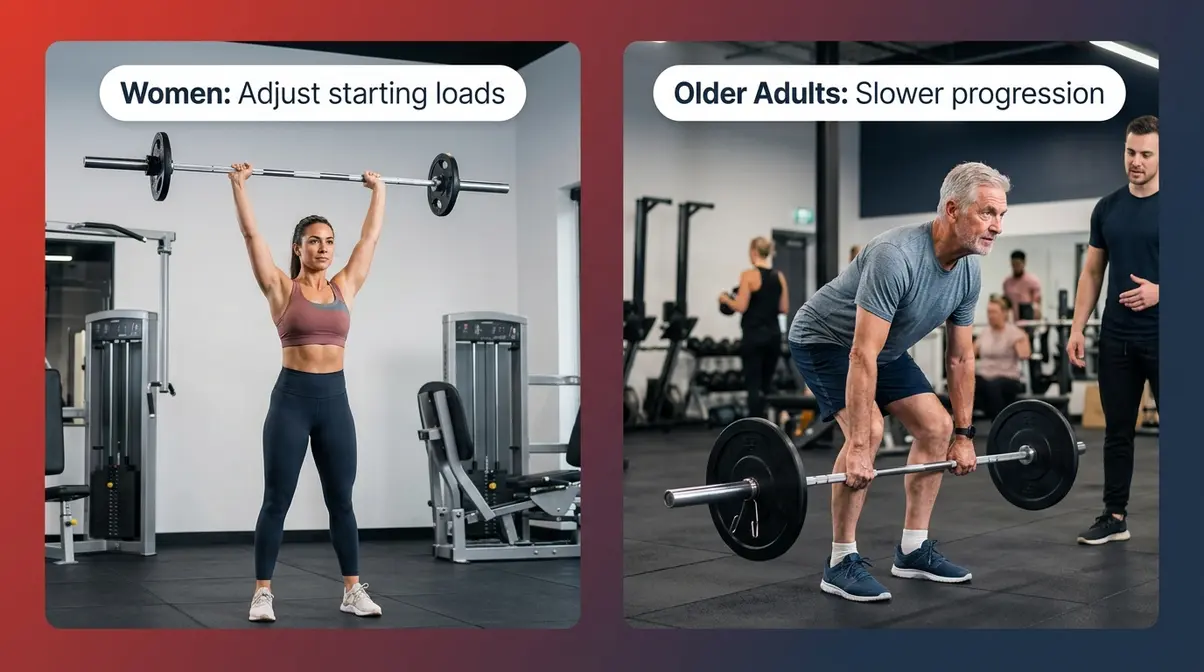
StrongLifts 5×5 is not exclusively a programme for young men. Research confirms that resistance training benefits people across all demographics — but smart adjustments to starting loads and progression rates make the programme safer and more effective for women and older adults. These modifications preserve the programme’s core structure while respecting physiological differences.
StrongLifts 5×5 for Women: Adjusted Starting Loads and Progressions
Women can and should run StrongLifts 5×5. The programme’s compound lifts and progressive overload principles are equally valid regardless of gender. However, a few practical adjustments improve the experience:
Starting loads: Women typically have less upper-body muscle mass than men relative to body weight. The overhead press and bench press, in particular, may require starting below the 20 kg empty bar. A 10–15 kg training bar is a practical alternative for the first two to four weeks.
Progression rate: The standard 2.5 kg increment per session works well for lower-body lifts. For upper-body lifts, consider using 1.25 kg increments (micro-plates) once the empty bar feels genuinely challenging — this extends the linear progression phase.
Body composition: Women who follow StrongLifts 5×5 consistently report significant improvements in body composition (reduced body fat, increased muscle tone) alongside strength gains. The heavy compound lifts are particularly effective at this.
What doesn’t change: The 5×5 structure, the exercise selection, the rest periods, and the progression logic remain identical. The only adjustments are starting load and increment size.
StrongLifts 5×5 for Older Adults: Safety, Load Adjustments, and Alternatives
Resistance training is not just safe for older adults — it is one of the most evidence-backed interventions for healthy ageing. A 2025 PMC study (PMC12003923) on heavy strength training in older adults confirmed significant benefits for physical function and muscle strength. A separate 2024 PMC review (PMC11091347) found that substantial benefits from resistance training in older adults can appear in as few as eight weeks, with training frequencies of just two sessions per week.
Practical modifications for adults over 55:
- Slower progression: Extend the increment cycle. Instead of adding 2.5 kg every session, add 2.5 kg every two sessions. This gives your connective tissue (tendons and ligaments, which adapt more slowly than muscles) more time to catch up.
- Mobility prerequisites: Hip and ankle mobility are essential for safe squatting. Spend five to ten minutes daily on hip flexor stretches and ankle mobility work before attempting heavy squat loads.
- Deadlift alternative: If the conventional deadlift causes lower back discomfort, the Romanian deadlift (RDL) or trap bar deadlift are safer alternatives that train similar muscle groups with less spinal loading.
- Medical clearance: Adults over 60 who have been sedentary, or who have cardiovascular or metabolic conditions, should obtain clearance from a physician before beginning this programme.
As a safety precaution, older adults are advised to use more moderate resistance initially and increase intensity progressively, as noted in PMC guidance on initiating resistance training in older populations (PMC2709760).
Common Mistakes and When to Move On
The gap between beginners who succeed on StrongLifts 5×5 and those who quit within six weeks usually comes down to a handful of avoidable errors. Our team evaluated the most common beginner pain points reported across fitness communities, and the same mistakes appear repeatedly. Recognising them now saves you weeks of frustration.
The 5 Mistakes Beginners Make in Their First Month
- Starting too heavy. The empty bar feels embarrassing. Do it anyway. Beginners who start with 60 kg on the squat because “it feels too light” plateau within a month. Beginners who start light progress for six months or more.
- Skipping rest days. Training four or five days a week does not make you progress faster on this programme. It makes you recover slower. The programme is three days a week by design.
- Cutting rest periods short. Resting 90 seconds between sets instead of three to five minutes means your muscles aren’t recovered for the next set. You’ll fail sets you should have completed. Set a timer.
- Ignoring form until the weight gets heavy. Form errors that are invisible at 40 kg become dangerous at 100 kg. Film yourself from the side on your very first session. You will be surprised.
- Treating all stalls the same. Automatically deloading every time you miss a rep — without diagnosing whether it was a technical stall or a recovery stall — wastes weeks of potential progress. Use The Two-Stall System before touching the weight.
What Programme to Do After StrongLifts 5×5
You’ll know it’s time to move on when linear progression becomes impossible — when you’re regularly failing the same weight even after deloads and rep-scheme adjustments. For most beginners, this happens after three to eight months of consistent training.
Recommended next programmes:
- Madcow 5×5: The natural progression from StrongLifts. Uses weekly rather than session-by-session progression — ideal for intermediate lifters.
- GZCLP or GZCL Method: More volume and exercise variety, while maintaining a structured progression model.
- Texas Method: Higher weekly volume with a dedicated intensity day — suitable for those who have built a solid strength base.
If your goal shifts toward muscle size after building your strength foundation, a hypertrophy-focused programme with 8–15 rep ranges and higher weekly volume per muscle group will serve you better than continuing to chase linear progression.
Frequently Asked Questions
How long does it take to see results on StrongLifts 5×5?
Most beginners notice strength improvements within two to three weeks of starting StrongLifts 5×5. Early gains are primarily neurological — your brain is getting better at recruiting muscle fibres — rather than from muscle growth itself. Visible physical changes typically become apparent after six to eight weeks of consistent training. User reports and programme reviews consistently describe several months of rapid, measurable progress before linear progression slows, typically around the three-to-eight-month mark (CharacterStrength.co.uk review, 2026).
How much weight should I start with?
Start with the empty 20 kg bar for the squat, bench press, and overhead press. Use 30 kg for the barbell row and 40–60 kg for the deadlift, depending on your build and mobility. This feels very light — intentionally so. The first two to four weeks are about encoding correct movement patterns, not testing your limits. Beginners who start too heavy plateau significantly earlier than those who follow the empty bar rule, as outlined on StrongLifts.com.
Can women do StrongLifts 5×5?
Yes — StrongLifts 5×5 is equally effective for women. The compound lifts, progressive overload principles, and three-day structure work regardless of gender. Women may benefit from using a 10–15 kg training bar for upper-body lifts in the first few weeks if the 20 kg empty bar is too challenging, and from using 1.25 kg micro-plate increments for upper-body progression. The programme consistently produces strength gains and body composition improvements in female trainees.
What should I eat on StrongLifts 5×5?
Adequate protein and total calories are essential for the programme to work. Aim for approximately 1.6–2.2 g of protein per kilogram of bodyweight daily — a range supported by sports nutrition research as optimal for muscle protein synthesis. Total calorie intake should at minimum meet your maintenance level (the calories needed to maintain your current weight). If you are underweight or find progression stalling despite good sleep and recovery, a modest caloric surplus of 200–300 calories above maintenance will support faster strength gains.
Is StrongLifts 5×5 good for building muscle?
StrongLifts 5×5 builds meaningful muscle, particularly for true beginners — but it is not optimised for maximum hypertrophy. Research published in the Journal of Strength and Conditioning Research (Schoenfeld et al., PubMed 28834797, 2017) found that heavy-load training produces superior strength gains, while muscle hypertrophy can be achieved across a wide spectrum of rep ranges. For beginners, the stimulus from heavy compound work is sufficient to produce noticeable muscle growth. For those primarily chasing size after the beginner phase, a higher-volume, moderate-rep programme will produce better hypertrophy results.
Building Your Foundation — And Knowing When to Level Up
StrongLifts 5×5 is a three-days-a-week beginner strength programme that has helped hundreds of thousands of people learn the five foundational barbell lifts and build real strength from scratch. Research confirms that training in the strength zone produces superior maximal strength gains, and the programme’s progressive overload structure aligns with how beginner neurological adaptation works — rapid early gains driven by your nervous system, followed by genuine muscle development over months of consistent training.
The Two-Stall System gives you a diagnostic edge that most beginner guides don’t provide: the ability to distinguish a technical breakdown from a recovery deficit before you reflexively deload and waste three sessions of progress. That distinction alone can extend your linear progression by weeks.
Your next step is concrete: choose your three training days, gather your equipment (a barbell, a rack, and plates), and complete your first session with the empty bar on all three lifts. Film it from the side. Watch the footage. Fix what you see before you add weight. Three sessions in, you’ll understand why this programme works — because every session, you’re a little stronger than you were before.
Frequently Cited Sources
- StrongLifts 5×5 Workout Program — StrongLifts.com
- StrongLifts 5×5 Review — Legion Athletics
- 5×5 Workout Overview — Healthline
- Schoenfeld et al. — Longer Rest Periods Enhance Strength and Hypertrophy, PubMed 26605807
- Schoenfeld et al. — Strength and Hypertrophy Across Loading Ranges, PubMed 28834797
- Effects of Low vs High Load Resistance Training, PubMed 25853914
- Heavy Strength Training in Older Adults, PMC12003923
- Task-Specific Resistance Training Adaptations in Older Adults, PMC11091347
Related posts:
How to Get a Bigger Bum Without Exercise: 3-Tier Guide
What Muscles Does the StairMaster Work? 6 Groups
Olympic Weightlifting vs Powerlifting: 2026 Guide
What Kills Muscle Gains? 7 Proven Saboteurs to Fix Now
Best Strength Training Apps for Women: Top 7 Picks
HASfit Home Workouts: Free Guide for All Fitness Levels

Callum
Hi, I'm Callum, the founder of Body Muscle Matters. I'm not a certified trainer, I'm a self taught lifter who started this site to share what I've learned from my own training and a lot of trial and error. Everything here comes from real experience and honest research, written the way I'd explain it to a friend who is just getting started. My goal is simple: practical, no hype fitness advice you can actually use.