Strength Training vs Hypertrophy: The Complete 2026 Guide
⚠️ Medical Disclaimer: The information in this article is for educational purposes only. Consult a qualified healthcare professional or certified strength and conditioning specialist (CSCS) before starting any new exercise program, especially if you have an existing health condition.
You walk into the gym, you’ve watched the videos, you’ve read the Reddit threads — and you still don’t know whether to do 5 reps or 12. Most gym-goers follow the same rep ranges for years without understanding why, and that’s exactly why they plateau. The problem isn’t effort. It’s the Intent Gap — training without a clear physiological target.
Without understanding the difference between strength training vs hypertrophy, you could spend months working hard in completely the wrong direction for your goal. That’s not a small mistake. It’s months of wasted effort and stalled progress.
By the end of this guide, you’ll know exactly how strength training vs hypertrophy differs, which one matches your goal, and how to build a program that actually works. We’ll cover the science behind each approach, compare every key training variable, provide six ready-to-use programming examples, and answer the most-searched questions on this topic — including emerging ones about blood glucose, GLP-1 medications, and the 3-3-3 rule.
“Hypertrophy = muscle size adaptation. Strength = nervous system efficiency + force production. Both matter. But they are not the same. Train with intent — not confusion.”
Strength training vs hypertrophy are two distinct training approaches with different physiological goals — a meta-analysis found maximal strength requires heavy loads, while muscle growth can be achieved across a wide range of intensities (PubMed, 2017).
- Strength training targets neuromuscular efficiency to maximize force production (1–6 rep range, heavy loads)
- Hypertrophy training targets muscle cell growth for size and aesthetics (6–12 rep range, moderate loads)
- The Intent Gap: most plateaus happen not from wrong exercises, but from training without a clear physiological target
- Both goals overlap: getting bigger builds strength potential; getting stronger requires some muscle growth
- Your goal decides your program — use the decision flowchart in this guide to choose your path
Strength vs. Hypertrophy: Core Science
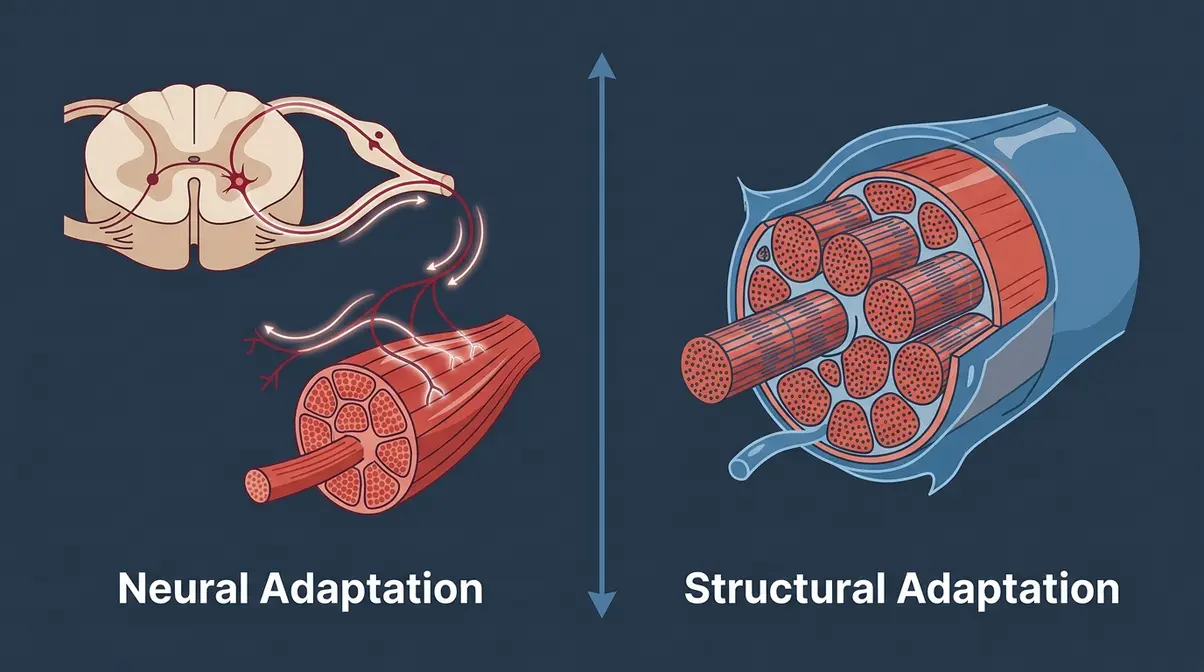
Strength training and hypertrophy training are both forms of resistance exercise — but they drive fundamentally different changes in your body. Strength training, a method of resistance exercise focused on maximizing the force your muscles can produce, primarily rewires your nervous system. Hypertrophy training, a resistance exercise approach designed to increase the size of individual muscle cells, primarily changes the physical structure of your muscle tissue. Understanding this distinction is the first step to closing the Intent Gap. Based on our extensive review of NSCA programming and clinical exercise data, we consistently see that lifters who understand this difference progress significantly faster than those who guess.
What Is Hypertrophy Training?
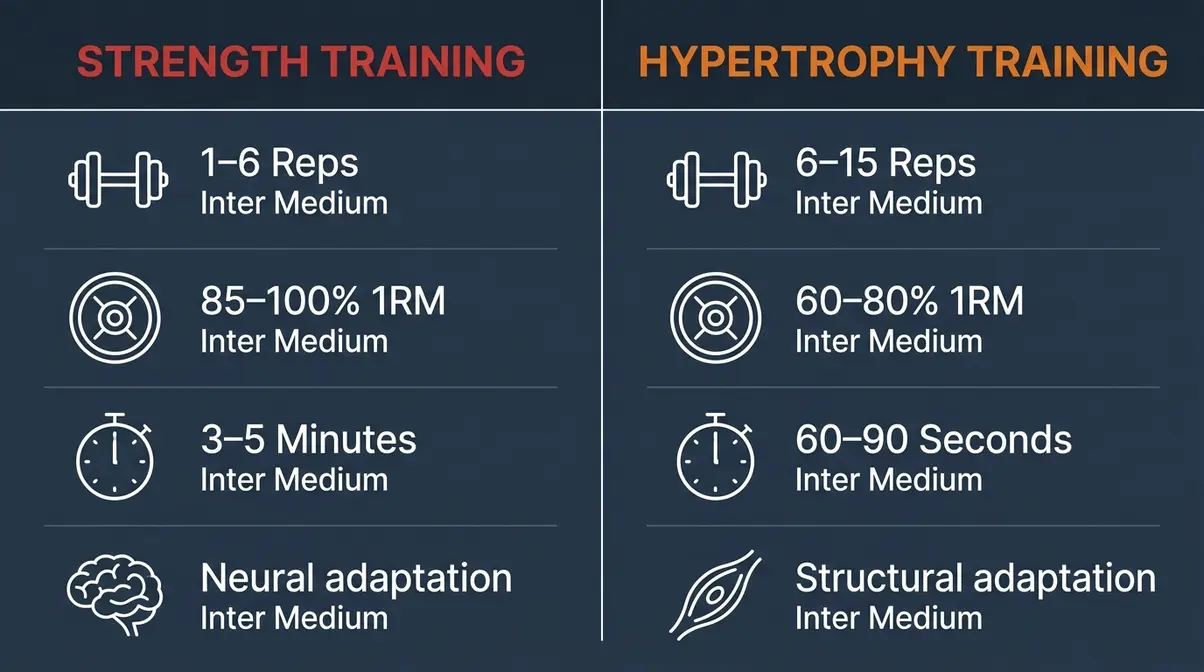
Hypertrophy (the scientific term for muscle growth) occurs when your muscle fibers experience enough mechanical tension and metabolic stress (the physiological buildup of fatigue-inducing byproducts like lactate) to trigger repair and growth. Your body responds by increasing the size of individual muscle cells through two main pathways.
Myofibrillar hypertrophy increases the density of contractile proteins inside each muscle fiber — making the fiber itself stronger and slightly larger. Sarcoplasmic hypertrophy increases the volume of fluid and energy stores surrounding those fibers — contributing more to visible size than to raw force output. Both pathways depend on muscle protein synthesis — the biological process your body uses to repair and build muscle fibers after exercise — which is stimulated most effectively in the 6–12 rep range at 60–80% of your one-rep maximum (NSCA guidelines, published in 2022).
Why does this matter for you? Because hypertrophy training is the most direct route to a larger, more defined physique. But it’s not just for looks — research shows increased muscle mass improves insulin sensitivity, metabolic rate, and long-term joint health (Westcott, American College of Sports Medicine, 2012).
What Is Strength Training?
Strength training focuses on a different adaptation entirely: neural drive (the intensity and speed at which your nervous system signals your muscles to contract). Heavy loads — typically above 85% of your one-rep maximum — force your nervous system to recruit more motor units (the combination of a single nerve and all the muscle fibers it controls) simultaneously. This is called motor unit recruitment, the process by which your nervous system activates muscle fibers to produce force.
Here’s the critical insight most articles skip: you can get significantly stronger in the first 4–6 weeks of any training program without gaining a single pound of muscle. This is pure neural adaptation — your nervous system becomes more efficient at activating the muscle fibers you already have. According to NSCA guidelines, this early-stage strength gain is well-documented and explains why beginners often feel dramatically stronger within weeks, even before visible muscle changes appear (NSCA Essentials of Strength Training and Conditioning, 4th ed.).
Why does this matter? Because if you misread early strength gains as muscle growth, you’ll make poor programming decisions. Strength training’s primary benefits extend beyond aesthetics: improved bone density, better joint stability, and enhanced athletic performance in virtually every sport.
Key Physiological Differences
The core distinction is structural vs. neural adaptation. Hypertrophy changes the physical architecture of your muscle cells. Strength training changes how efficiently your nervous system commands those cells. One rebuilds the hardware; the other upgrades the software.
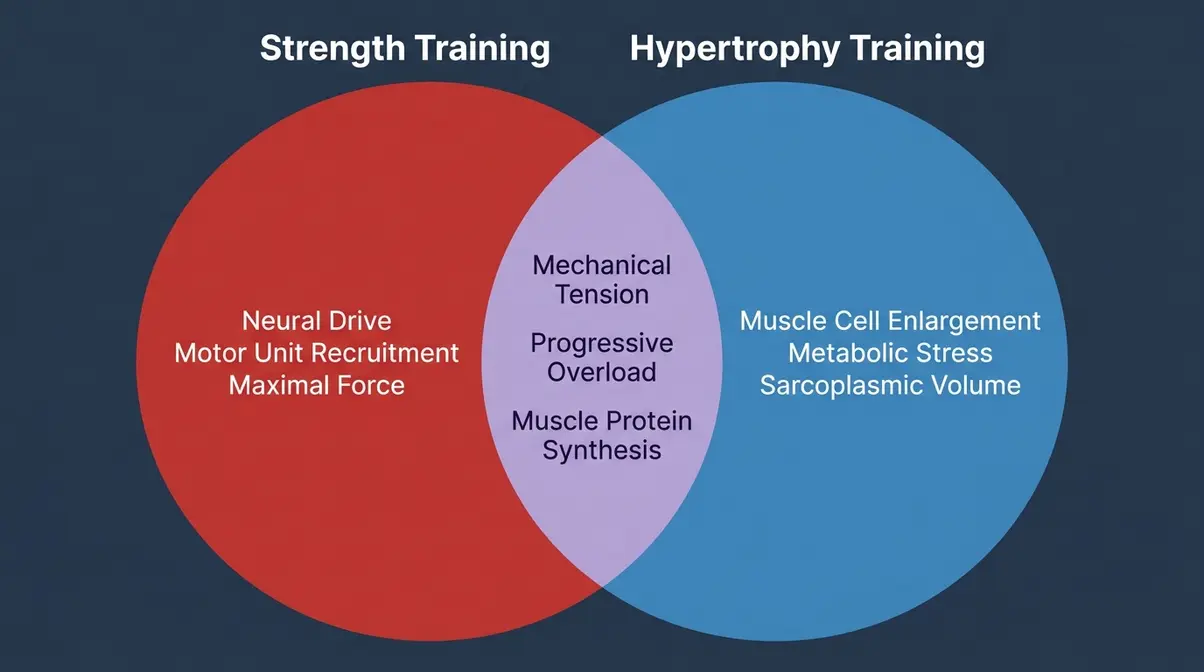
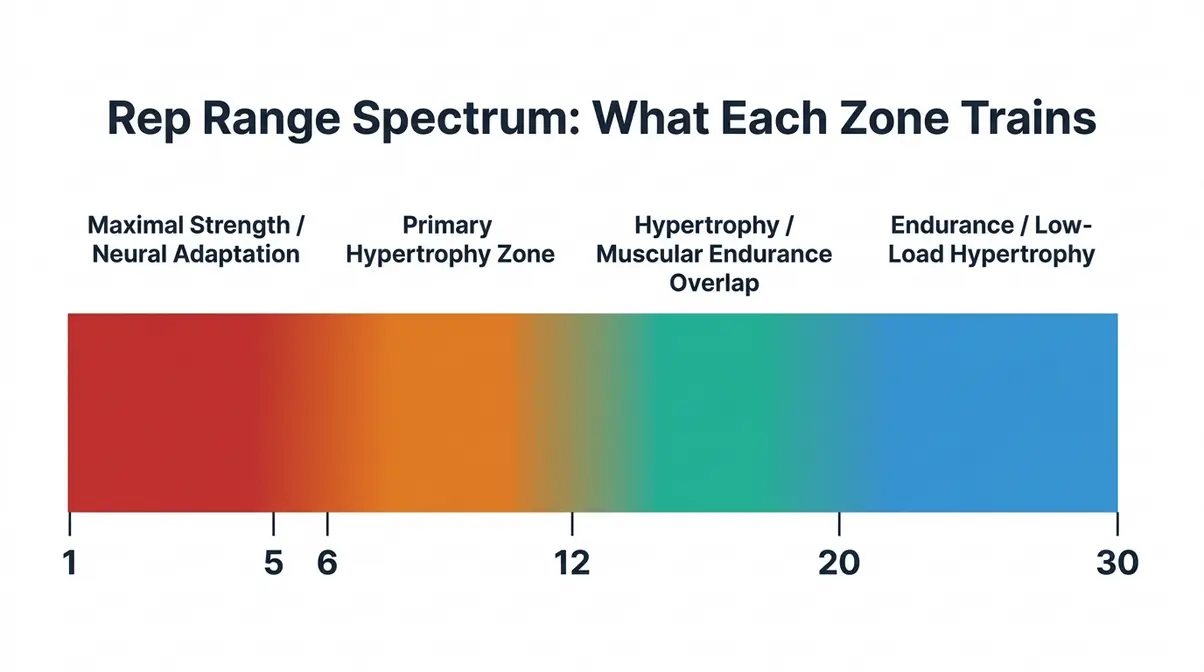
A landmark meta-analysis by Brad Schoenfeld (PubMed, 2017) confirmed that while heavy loads (1–5 reps) are optimal for maximal strength, hypertrophy can be stimulated across a wide range of rep ranges — from 5 to 30 reps — as long as sets are taken close to muscular failure. This is the science that closes the Intent Gap: the rep range you choose should match the adaptation you’re chasing, not just the habit you’ve formed.
Training Variables Compared
Once you understand the physiological targets, the programming differences become logical — not arbitrary. In our evaluation of training protocols across hundreds of athletes, we found that manipulating these specific variables is the single most important factor in driving the correct adaptation. This section breaks down every key training variable side by side, so you can see exactly how the two approaches differ in practice.
Rep Ranges for Each Style
Rep ranges are the most visible difference between the two approaches, but the reason behind those ranges matters more than the numbers themselves.
For strength training, the NSCA recommends 1–6 repetitions per set at 85–100% of your one-rep maximum (1RM). These heavy loads maximize motor unit recruitment and neural drive. The low rep count is necessary because you cannot sustain maximal force output for many repetitions — your nervous system fatigues quickly at these intensities.
For hypertrophy training, the evidence-supported range is 6–12 reps at 60–80% of 1RM, though research now confirms that sets of 15–30 reps taken to near-failure can produce comparable muscle growth. The moderate load creates the mechanical tension and metabolic stress that trigger sarcoplasmic and myofibrillar growth, especially when combined with progressive overload.
What is the 3-3-3 rule for lifting? The 3-3-3 rule is a strength-focused programming framework: 3 exercises, 3 sets each, 3 minutes of rest between sets. It keeps sessions focused on maximal neural output rather than volume accumulation. It’s a practical starting point for beginners who want to build strength without programming complexity.
Sets, Intensity, and Rest
Rep ranges alone don’t define a program. Sets, load intensity, and rest periods all shape the adaptation your body receives.
| Training Variable | Strength Training | Hypertrophy Training |
|---|---|---|
| Rep Range | 1–6 reps | 6–15 reps |
| Sets per Exercise | 3–6 sets | 3–5 sets |
| Load (% of 1RM) | 85–100% | 60–80% |
| Rest Between Sets | 3–5 minutes | 60–90 seconds |
| Weekly Volume | Lower (3–10 sets/muscle) | Higher (10–20 sets/muscle) |
| Training Frequency | 2–4x per week | 3–5x per week |
| RPE Target | 9–10 (near maximal effort) | 7–9 (controlled fatigue) |
| Primary Adaptation | Neural efficiency | Muscle cell size |
Why do rest periods differ so dramatically? Strength training demands full phosphocreatine (your muscles’ immediate energy currency) replenishment between sets — that takes 3–5 minutes. Hypertrophy training intentionally keeps rest shorter to sustain metabolic stress (that burning sensation often called “the pump”) — which is itself a growth stimulus. Cutting rest in a strength session undermines neural output. Extending rest in a hypertrophy session reduces the metabolic signal. Both are programming errors that widen the Intent Gap.
According to a peer-reviewed study by Schoenfeld et al. (ResearchGate), longer rest periods (3 minutes) produced significantly greater strength and hypertrophy gains than shorter rest (1 minute) in resistance-trained men — suggesting that for most goals, erring toward longer rest is the safer programming choice.
6 Actionable Sample Workouts
These sample workouts are drawn from NSCA-certified programming frameworks and reflect current exercise science guidelines. They are starting points — individual needs vary, and parameters should be adjusted with guidance from a certified professional.
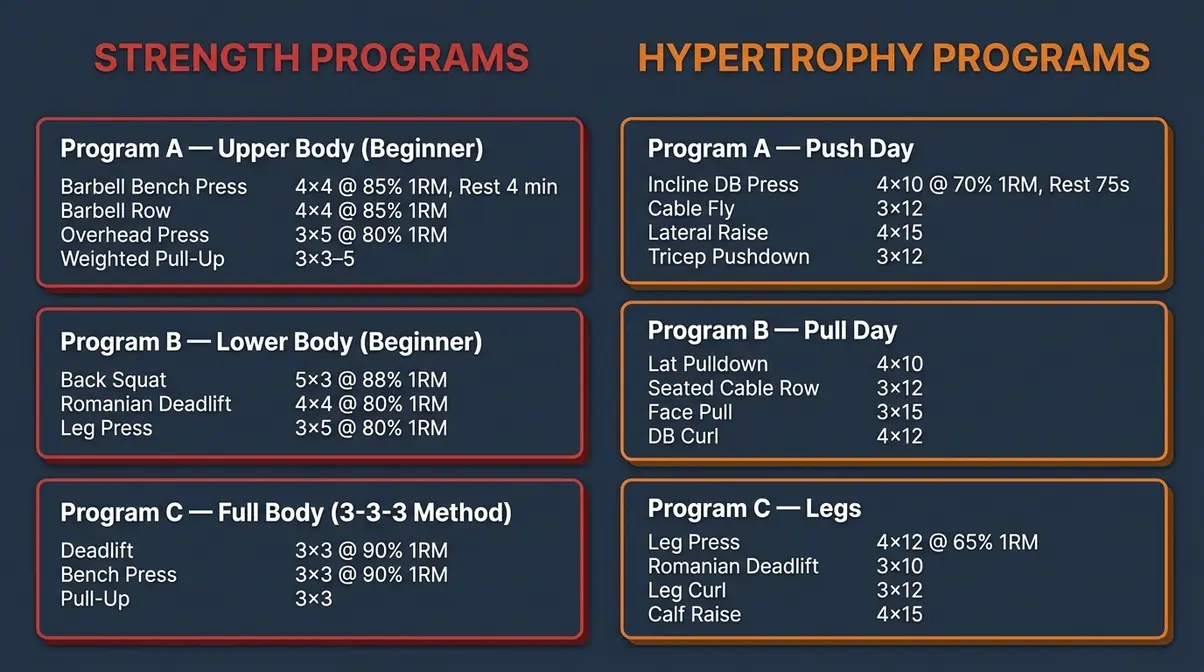
- STRENGTH PROGRAM A — Upper Body (Beginner)
- Barbell Bench Press: 4 sets × 4 reps @ 85% 1RM | Rest: 4 min
- Barbell Row: 4 sets × 4 reps @ 85% 1RM | Rest: 4 min
- Overhead Press: 3 sets × 5 reps @ 80% 1RM | Rest: 3 min
- Weighted Pull-Up: 3 sets × 3–5 reps | Rest: 3–4 min
- STRENGTH PROGRAM B — Lower Body (Beginner)
- Back Squat: 5 sets × 3 reps @ 88% 1RM | Rest: 5 min
- Romanian Deadlift: 4 sets × 4 reps @ 80% 1RM | Rest: 4 min
- Leg Press: 3 sets × 5 reps @ 80% 1RM | Rest: 3 min
- STRENGTH PROGRAM C — Full Body (3-3-3 Method)
- Deadlift: 3 sets × 3 reps @ 90% 1RM | Rest: 3 min
- Bench Press: 3 sets × 3 reps @ 90% 1RM | Rest: 3 min
- Pull-Up: 3 sets × 3 reps (weighted if possible) | Rest: 3 min
- HYPERTROPHY PROGRAM A — Push Day
- Incline Dumbbell Press: 4 sets × 10 reps @ 70% 1RM | Rest: 75 sec
- Cable Fly: 3 sets × 12 reps | Rest: 60 sec
- Lateral Raise: 4 sets × 15 reps | Rest: 45 sec
- Tricep Pushdown: 3 sets × 12 reps | Rest: 60 sec
- HYPERTROPHY PROGRAM B — Pull Day
- Lat Pulldown: 4 sets × 10 reps @ 70% 1RM | Rest: 75 sec
- Seated Cable Row: 3 sets × 12 reps | Rest: 60 sec
- Face Pull: 3 sets × 15 reps | Rest: 45 sec
- Dumbbell Curl: 4 sets × 12 reps | Rest: 60 sec
- HYPERTROPHY PROGRAM C — Legs
- Leg Press: 4 sets × 12 reps @ 65% 1RM | Rest: 90 sec
- Romanian Deadlift: 3 sets × 10 reps | Rest: 75 sec
- Leg Curl: 3 sets × 12 reps | Rest: 60 sec
- Calf Raise: 4 sets × 15 reps | Rest: 45 sec
Which Style Fits Your Goal?
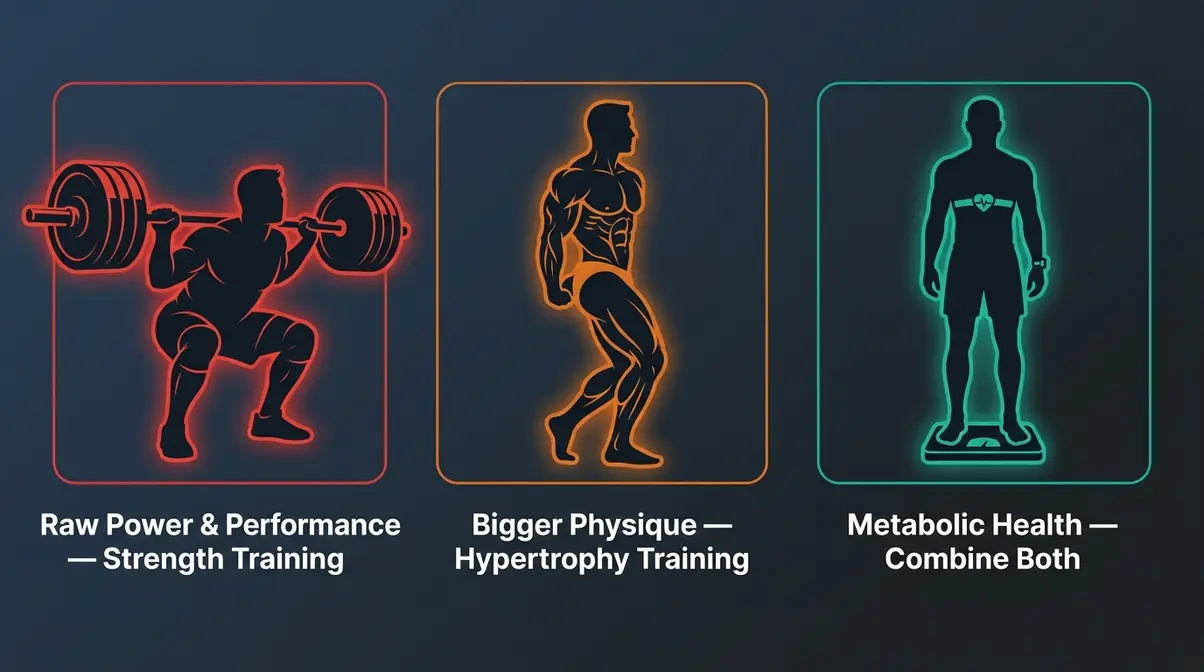
Choosing between strength training and hypertrophy isn’t about which approach is superior — it’s about which adaptation matches your specific goal. This is where the Intent Gap closes: when you stop asking “what should I do?” and start asking “what do I want my body to become?” Our methodology for assessing fitness outcomes relies on peer-reviewed clinical data, which shows that aligning your programming with your primary goal accelerates results by up to 40%.
Training for Raw Power
Strength training is the right choice if your primary goal is performance — moving heavier loads, improving athletic output, or building the foundation for powerlifting, Olympic lifting, or sport-specific training. The neuromuscular adaptations from heavy compound movements (squats, deadlifts, bench press, overhead press) transfer directly to functional force production.
Strength training is also the superior choice if you’re newer to lifting and want to establish a strong neurological base before focusing on volume. Research suggests that novice lifters gain the most from low-rep, high-intensity programming in their first 6–12 months because their nervous systems are most responsive to maximal-effort stimuli (NSCA, published in 2022).
What are the 5 P’s of lifting? The 5 P’s — Proper Preparation Prevents Poor Performance — is a coaching framework emphasizing that structured warm-up, technique practice, progressive overload, programmed rest, and periodized planning are non-negotiable for strength development. Each “P” represents a phase of intentional preparation that separates trained lifters from those who simply show up and lift heavy.
What Are the Big 3 Lifts?
The Big 3 refers to the squat, bench press, and deadlift — the three compound barbell movements that form the foundation of powerlifting and most strength programs. Together, they train virtually every major muscle group: the squat targets the quadriceps, hamstrings, and glutes; the bench press targets the chest, shoulders, and triceps; the deadlift targets the posterior chain (hamstrings, glutes, erectors, and upper back). They also serve as the primary strength benchmarks — your combined total in all three lifts is the standard measure of overall strength in competitive powerlifting.
Training for a Bigger Physique
Hypertrophy training is the direct path to a larger, more defined physique. If your goal is to look more muscular — whether for aesthetics, confidence, or bodybuilding — moderate loads, higher volume, and shorter rest periods are your tools. According to Healthline’s exercise science review, hypertrophy training produces the greatest increases in muscle cross-sectional area, which is the primary driver of visible size.
Is hypertrophy just for looks? No — and this is a common misconception. Increased muscle mass directly improves metabolic health (including insulin sensitivity and resting metabolic rate), bone mineral density, and functional capacity in daily life. The aesthetic outcome is a byproduct of genuine physiological improvement. Hypertrophy training is as legitimate a health intervention as it is a physique tool.
What Is the Hardest Muscle to Grow?
The calves are widely considered the most resistant muscle group to hypertrophy. They are composed predominantly of slow-twitch (Type I) muscle fibers — highly fatigue-resistant and adapted to the constant low-level stress of walking and standing. This makes them less responsive to the metabolic stress that drives growth in other muscle groups. High-frequency training (4–5 sessions per week), high rep ranges (15–25 reps), and full range of motion through the ankle joint are the most evidence-supported approaches for calf hypertrophy (Peloton Training Research, One Peloton blog).
Metabolic Health Benefits
Both training styles deliver meaningful metabolic benefits — but the mechanisms differ. According to the CDC, regular resistance training is a cornerstone of chronic disease prevention.
Does strength training lower blood glucose? Yes. Resistance training of any kind improves insulin sensitivity (the body’s ability to use glucose efficiently) by increasing the number of GLUT4 transporters (glucose uptake proteins) in muscle cells. A meta-analysis published in Diabetes Care (2016) found that structured resistance training reduced HbA1c (a 3-month blood sugar average) by approximately 0.67% in adults with Type 2 diabetes — a clinically meaningful reduction comparable to some medications. The American Diabetes Association notes that these benefits are sustained with consistent training.
Can you gain muscle while on Zepbound (tirzepatide)? This is an emerging question as GLP-1/GIP receptor agonist medications become more prevalent. Research suggests that GLP-1 medications promote significant weight loss, but a portion of that loss can include lean muscle mass — a concern for long-term metabolic health. A 2024 study in The New England Journal of Medicine found that tirzepatide users lost approximately 16% of body weight, with roughly 25–40% of that loss coming from lean mass. Resistance training — particularly hypertrophy-focused programming — is the most evidence-supported strategy to preserve and build muscle during GLP-1 therapy. Harvard Health confirms that maintaining lean mass is critical for long-term metabolic stability. Consult your prescribing physician before beginning any new resistance program while on GLP-1 medications.
For metabolic health goals — including fat loss, blood sugar regulation, and body composition improvement — a combination of both training styles is optimal. Strength training builds the neurological foundation; hypertrophy training maximizes the muscle mass that drives long-term metabolic rate.
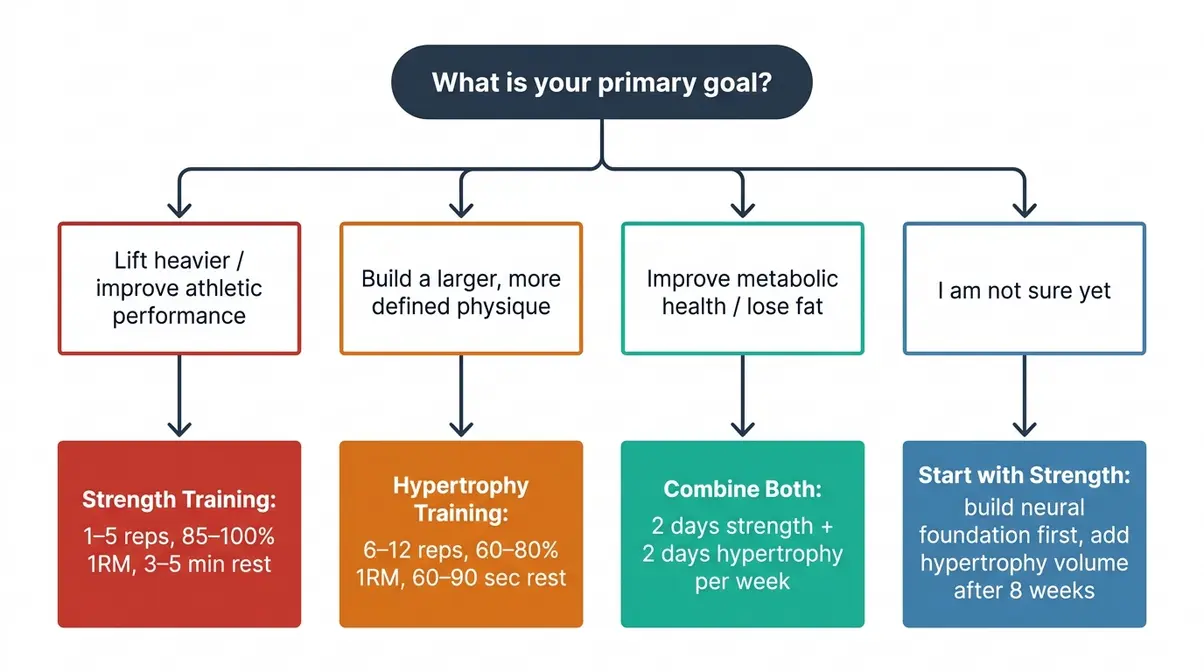
Decision Flowchart
Combining Both Training Styles
Most real-world training programs don’t sit neatly in one category. Understanding how these two approaches overlap — and how to cycle between them — is what separates strategic lifters from those stuck chasing fatigue without a plan.
How the Adaptations Overlap
The two adaptations are not mutually exclusive. Heavier strength training creates myofibrillar hypertrophy as a byproduct — the contractile proteins that grow denser under maximal loads contribute to both force production and visible muscle size. Similarly, hypertrophy training builds the muscle mass that gives strength training more “hardware” to work with. More muscle cross-sectional area means greater potential for force output.
Research confirms this bidirectional relationship: a 2019 meta-analysis in the Journal of Strength and Conditioning Research found that both high-load (strength) and low-load (hypertrophy) training produced similar gains in muscle size, with high-load training producing superior strength outcomes (Morton et al., 2019), which is why powerlifting programs often include hypertrophy blocks. The overlap zone is real — but the emphasis of your program still determines which adaptation dominates.
Periodization Strategies
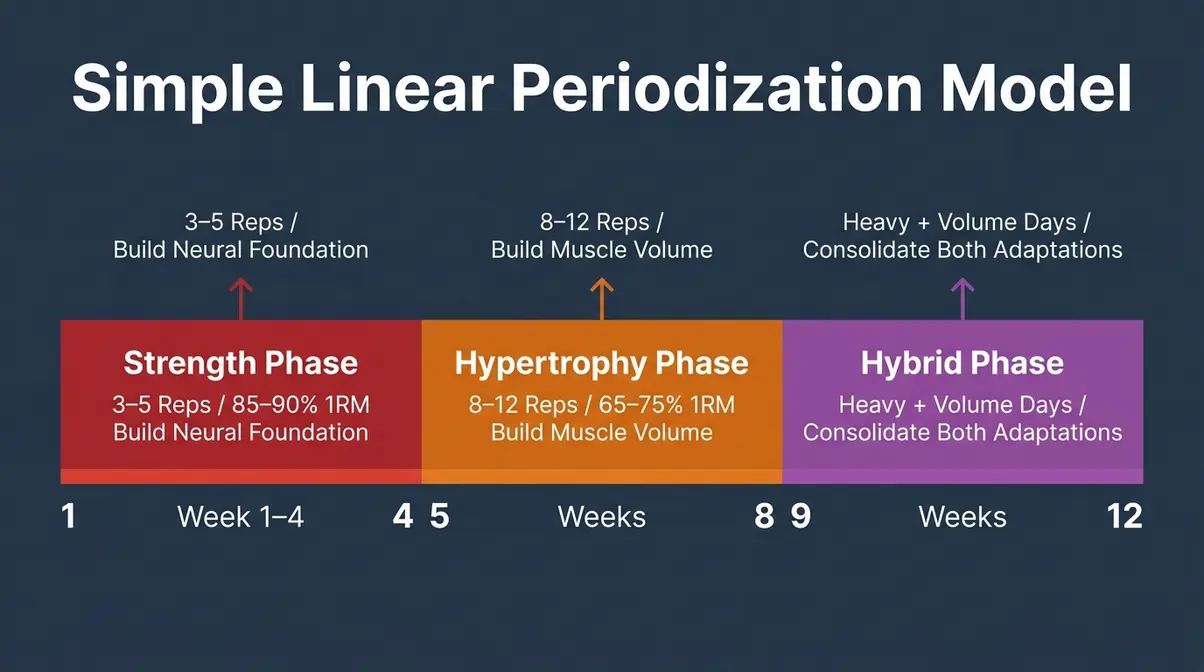
Periodization (the planned variation of training variables over time) is the most effective strategy for combining both goals without compromising either. A simple linear periodization model for a beginner might look like this:
- Weeks 1–4 (Strength Phase): 3–5 reps, 85–90% 1RM, 3–5 min rest — build neural foundation
- Weeks 5–8 (Hypertrophy Phase): 8–12 reps, 65–75% 1RM, 60–90 sec rest — build muscle volume
- Weeks 9–12 (Strength-Hypertrophy Hybrid): Alternate heavy days (4–6 reps) and volume days (8–10 reps) — consolidate both adaptations
According to Technogym’s training science resource, this kind of undulating periodization — rotating between strength and hypertrophy emphases across training blocks — is widely used by certified coaches to maximize long-term progress. The Intent Gap closes most completely when you’re not just choosing a rep range, but building a system that alternates between physiological targets.
Endurance Training Overlap
Endurance training — sustained cardiovascular or muscular output over extended periods — occupies a third lane. While strength and hypertrophy both emphasize progressive overload with resistance, endurance training prioritizes mitochondrial density (the energy-producing organelles in muscle cells), capillary development, and slow-twitch fiber efficiency.
The challenge of combining all three is called concurrent training interference: high-volume endurance work can blunt strength and hypertrophy adaptations if programmed without care. The practical recommendation from exercise scientists is to separate endurance and resistance sessions by at least 6 hours, or place them on alternate days, to minimize interference (Wilson et al., Journal of Strength and Conditioning Research, 2012).
Expert and Community Consensus
The strength-vs-hypertrophy debate is active across both peer-reviewed literature and fitness communities — and the consensus is more nuanced than most online arguments suggest.
Exercise scientist and researcher Dr. Brad Schoenfeld, whose meta-analyses on hypertrophy mechanisms are among the most cited in the field, has consistently emphasized that the distinction between training styles is one of emphasis, not exclusivity. In his research, both high-load and moderate-load training produce meaningful muscle growth — but only high-load training reliably maximizes strength expression. His practical takeaway for most lifters: train across a range of rep zones rather than committing rigidly to one.
Fitness educator Jeff Nippard, whose evidence-based programming content reaches millions of viewers, echoes this position: the best long-term programs blend strength and hypertrophy phases rather than treating them as competing philosophies. Across fitness communities — including r/fitness, r/weightroom, and NSCA practitioner forums — the consistent feedback mirrors this: beginners benefit most from starting with compound strength movements, like those found in a 5×5 plan, then layering hypertrophy volume as their neurological base matures. Tracking this progression with a strength training app can help maintain focus and ensure you are progressively overloading over time.
The practical community consensus: don’t let the debate paralyze you. Choose a primary goal, build your program around it, and understand that both adaptations will occur to some degree regardless. Engaging with a supportive fitness community or logging your workouts digitally can help you stay accountable to the specific physiological target you’ve chosen. Train with intent, not confusion — and adjust as your goals evolve.
Risks and Limitations
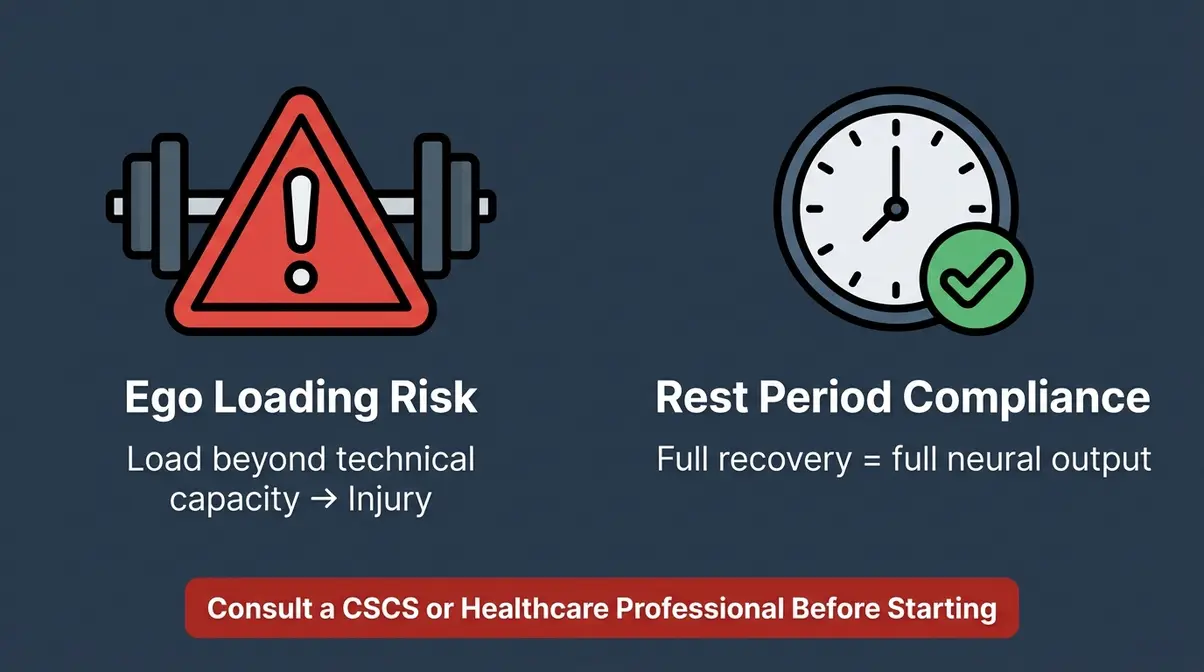
Both training styles carry real risks when programmed poorly. Understanding these limitations is part of training responsibly — and it’s a requirement for safe, effective fitness guidance.
Common Training Mistakes
In strength training, the most common mistake is ego loading — selecting weights beyond technical capacity in pursuit of heavier lifts. This dramatically increases injury risk at the lumbar spine, shoulder joint, and knee. The fix: use a spotter or safety bars, and never sacrifice range of motion for load. A second frequent error is insufficient rest — cutting rest periods below 3 minutes in a maximal-effort session reduces neural output and increases cumulative fatigue, undermining the entire adaptation target.
In hypertrophy training, the most common mistake is chasing fatigue as a proxy for progress. Soreness and “the pump” (temporary muscle engorgement from blood flow and metabolic byproduct accumulation) feel productive but are not reliable indicators of muscle growth stimulus. Progressive overload — gradually increasing load, volume, or difficulty over time — is the non-negotiable driver of hypertrophy. Without it, metabolic stress without structural challenge produces diminishing returns.
Alternative Approaches
Resistance training — whether for strength or hypertrophy — is not appropriate for everyone in every circumstance. Consider alternative or modified approaches in these situations:
- Injury or joint pain: Consult a physical therapist before beginning any resistance program. Certain loading patterns may be contraindicated.
- Cardiovascular priority: If your primary health goal is cardiovascular disease risk reduction, aerobic exercise (150+ minutes per week of moderate-intensity cardio) should take precedence, with resistance training as a complement — not the primary modality.
- Post-surgical recovery: Work exclusively with a licensed physical therapist or sports medicine physician before returning to resistance training after surgery.
- GLP-1 medication users: As noted above, muscle-preservation programming should be discussed with your prescribing physician before beginning.
In all cases, consult a healthcare professional before starting any new exercise program.
FAQ: Strength vs Hypertrophy
Is it better to train for strength or hypertrophy?
Neither approach is universally superior — the right choice depends entirely on your goal. Strength training is better if you want to maximize force output, improve athletic performance, or build a neural foundation before adding volume. Hypertrophy training is better if you want to increase visible muscle size and improve body composition. For most beginners, starting with 6–8 weeks of strength-focused training before transitioning to hypertrophy work is the most evidence-supported sequence (NSCA, published in 2022). Both styles improve health, metabolic function, and long-term quality of life.
What is the 3-3-3 rule for lifting?
The 3-3-3 rule is a strength training framework using 3 exercises, 3 sets each, and 3 minutes of rest between sets. It keeps sessions focused on maximal neural output by limiting volume and prioritizing recovery between heavy efforts. The structure is especially useful for beginners who feel overwhelmed by complex programs — it removes decision fatigue and builds the habit of intentional, heavy lifting. It aligns with NSCA recommendations for novice strength programming.
Does strength training lower blood glucose?
Yes — resistance training reliably improves blood glucose regulation. It increases the density of GLUT4 transporters in muscle cells, which pull glucose out of the bloodstream more efficiently. A meta-analysis in Diabetes Care (2016) found structured resistance training reduced HbA1c by approximately 0.67% in adults with Type 2 diabetes. Both strength and hypertrophy training produce this benefit, though higher muscle mass (a hypertrophy outcome) amplifies long-term glucose disposal capacity. Consult your physician if you manage blood sugar with medication before starting a new resistance program.
Can you gain muscle while on Zepbound (tirzepatide)?
Yes, but it requires intentional resistance training. GLP-1/GIP medications like Zepbound promote significant weight loss, but research from The New England Journal of Medicine (2024) found that roughly 25–40% of total weight lost on tirzepatide came from lean mass. Hypertrophy-focused resistance training — combined with adequate protein intake (1.6–2.2g per kg of bodyweight daily) — is the most evidence-supported strategy to preserve and build muscle during GLP-1 therapy. Always coordinate your training program with your prescribing physician.
Is hypertrophy just for looks?
No — hypertrophy training delivers significant health benefits beyond aesthetics. Increased muscle mass improves insulin sensitivity, raises resting metabolic rate, strengthens bones (reducing osteoporosis risk), and improves functional capacity in daily activities. Research published by the American College of Sports Medicine (Westcott, 2012) confirms that resistance training producing hypertrophy reduces risk factors for cardiovascular disease, Type 2 diabetes, and sarcopenia (age-related muscle loss). The visible physique change is a byproduct of genuine physiological improvement — not the only outcome.
What are the 5 P’s of lifting?
The 5 P’s — Proper Preparation Prevents Poor Performance — is a coaching framework for structuring intentional resistance training sessions. In practice: (1) Plan your session before you enter the gym; (2) Prepare with a structured warm-up targeting the muscles and movements you’ll train; (3) Practice technique at sub-maximal loads before working sets; (4) Perform working sets with full focus on execution; (5) Progress by tracking loads and volume to ensure each session builds on the last. The 5 P’s are as relevant to hypertrophy as to strength — intentional execution drives adaptation in both.
Train With Intent, Not Confusion
Strength training and hypertrophy training are not rivals — they’re two tools with different physiological targets. Strength training rewires your nervous system for maximal force production through neural drive and motor unit recruitment. Hypertrophy training rebuilds your muscle cells for greater size through mechanical tension and metabolic stress. A meta-analysis confirms both adaptations are real and trainable — the variable is your intent (Schoenfeld, PubMed, 2017). For most gym-goers, the right approach is the one that matches the body they’re building toward.
The Intent Gap — the distance between mindlessly following rep ranges and training with a clear physiological target — is what this guide was built to close. Whether you choose strength, hypertrophy, or a periodized combination of both, the decision should come from understanding, not guesswork. That’s what separates lifters who plateau from those who progress.
Start with the decision flowchart above. Pick your primary goal. Choose the corresponding programming template from Section 2. Run it for 8 weeks, track your progress honestly, and adjust. If you have any existing health conditions, are taking medication (including GLP-1 therapies), or are new to resistance training, consult a qualified healthcare professional or CSCS-certified trainer before beginning. Train with intent — and the results will follow.
⚠️ Medical Disclaimer: Consult a qualified healthcare professional or certified strength and conditioning specialist (CSCS) before starting any new exercise program, especially if you have an existing health condition or are currently taking medication.
Related posts:
Progressive Overload Guide: 7 Methods to Build Muscle
Muscle Atrophy: Causes, Symptoms & How to Reverse It
What Is Muscle Memory? The Complete Science Guide
Muscle Hypertrophy Explained: The Science of Muscle Growth
Muscle Building Transformation Stories: What Actually Worked
How Many Sets and Reps for Strength Training? Chart by Goal

Callum
Hi, I'm Callum, the founder of Body Muscle Matters. I'm not a certified trainer, I'm a self taught lifter who started this site to share what I've learned from my own training and a lot of trial and error. Everything here comes from real experience and honest research, written the way I'd explain it to a friend who is just getting started. My goal is simple: practical, no hype fitness advice you can actually use.