Muscle Hypertrophy Explained: The Science of Muscle Growth
Medical Disclaimer: The information in this article is for educational purposes only and does not constitute medical advice. Consult a qualified healthcare professional or certified exercise specialist before beginning any new resistance training program, especially if you have pre-existing health conditions.
Medically Reviewed by a Certified Strength and Conditioning Specialist (CSCS) | Updated: Q1 2026
Most people who train consistently still don’t understand why their muscles grow. If you are looking for muscle hypertrophy explained: the science of how muscles grow, this guide closes that knowledge gap between effort and results.
Without understanding the science of muscle hypertrophy, you’re making training decisions based on guesswork. You might be leaving months of potential progress on the table by misjudging your volume, nutrition timing, or recovery strategy. In this guide, you’ll discover exactly how muscle hypertrophy works at the cellular level — and how to use that science to train, eat, and recover more effectively.
We cover the scientific definition of muscle growth, the biological mechanisms (including the mTOR pathway and satellite cells), evidence-based training principles, and the key factors — nutrition, sleep, and genetics — that determine your results.
For those wanting muscle hypertrophy explained: the science of how muscles grow, the process occurs when mechanical tension and metabolic stress trigger protein synthesis to exceed protein breakdown, causing muscle fibers to repair larger and stronger.
- The Hypertrophy Triangle: Muscle growth requires three pillars working together: Training Stimulus, Biological Response, and Recovery Optimization. Remove any one side and progress stalls.
- Primary drivers: Mechanical tension (lifting load) and metabolic stress (muscle fatigue) are the two key signals that initiate the growth response.
- Optimal rep range: Research supports 6–12 reps at 70–85% of your one-rep max for maximum hypertrophic stimulus (Schoenfeld, Journal of Strength and Conditioning Research, 2010).
- Critical equation: Muscle grows only when protein synthesis exceeds protein breakdown — nutrition and sleep directly control this balance.
- Beginners: Studies indicate noticeable changes typically occur within 8–12 weeks of consistent resistance training with adequate protein intake (ISSN Position Stand, 2017).
What Is Muscle Hypertrophy?
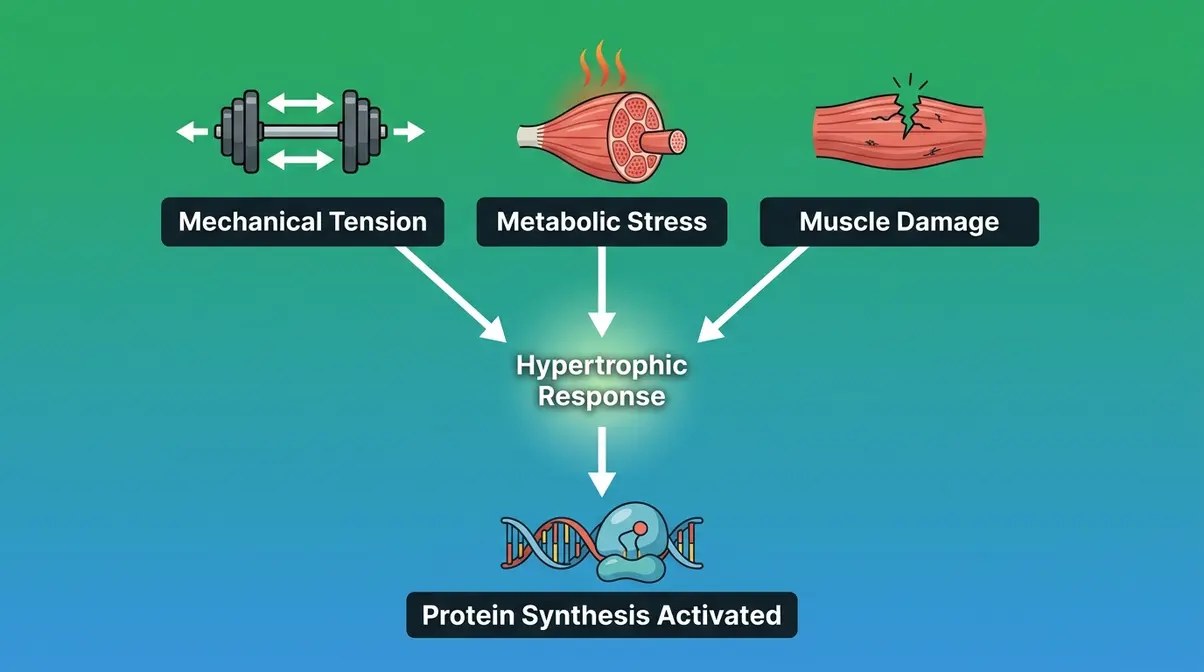
Muscle hypertrophy is the scientific process by which muscles increase in size and cross-sectional area through resistance-based mechanical stress. Specifically, individual muscle fibers grow thicker — not more numerous. Your muscles don’t produce new fibers; each existing fiber expands its diameter in response to repeated training demands. Understanding this distinction matters practically: it tells you that how you train each fiber determines your results, not simply how often you show up.
Think of muscle growth as a triangle with three sides: Training Stimulus, Biological Response, and Recovery Optimization. This is The Hypertrophy Triangle — the original framework at the core of this guide. Remove any one side and the triangle collapses. You can train hard but sleep poorly and see minimal gains. You can sleep well but undereat protein and stall. All three sides must work together. The following sections break each side down in detail.
Hypertrophy at Its Core
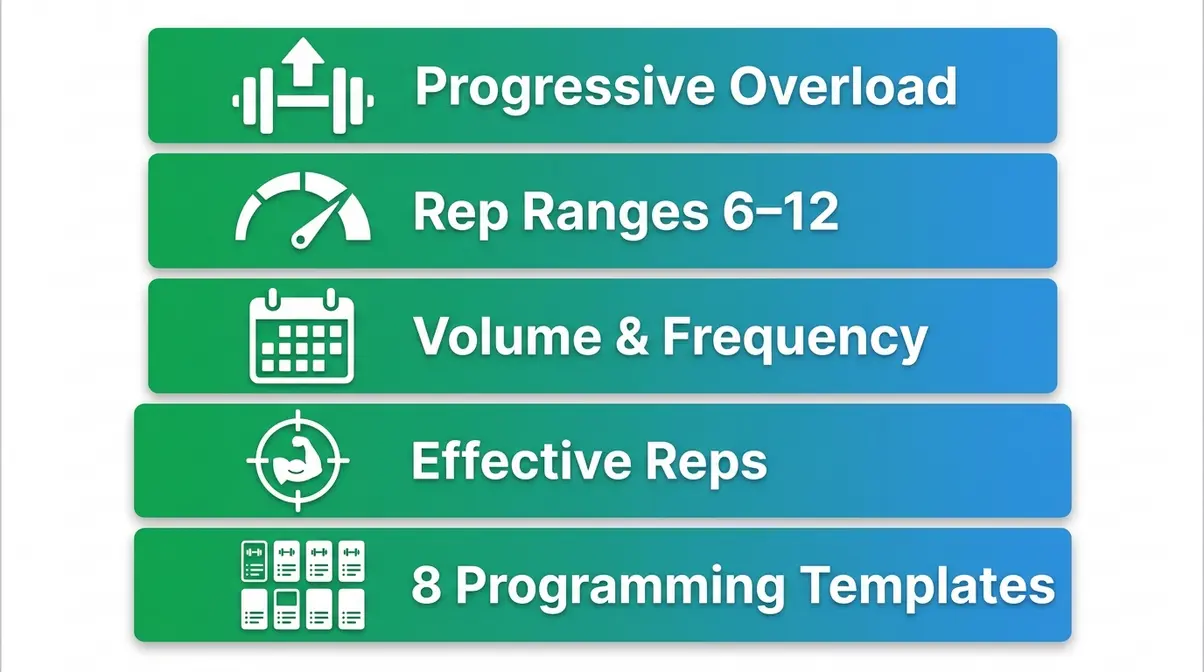
Muscle hypertrophy, at its most fundamental level, is an increase in the size of individual muscle fibers — not an increase in the number of fibers. This distinction is one of the most common misconceptions in recreational weight training. A common myth holds that resistance training creates new muscle fibers (a process called hyperplasia). However, research consistently indicates that hyperplasia contributes minimally, if at all, to muscle size gains in humans (Healthline, 2020). The growth you see in the mirror comes from each existing fiber growing thicker and denser. If you want to know how to build muscle effectively, you must understand this foundational principle.
Why does this matter for your training? Because it means your goal is to stress each fiber sufficiently — not to simply accumulate fatigue. Research from the University of New Mexico confirms that muscle fibers increase in cross-sectional area when exposed to progressively greater mechanical loads over time (Lkravitz, UNM). In plain terms, this means that strategic, progressive stress — not random effort — is the actual driver of visible results.
Studies indicate that beginners can expect noticeable changes in muscle size within 8–12 weeks of consistent resistance training combined with adequate protein intake (ISSN Position Stand, 2017). That timeline gives you a concrete benchmark: if you’re past 12 weeks and seeing no change, something in your Hypertrophy Triangle is broken.
Sarcoplasmic vs. Myofibrillar
Not all muscle growth is identical. Exercise scientists distinguish two primary subtypes — and understanding which one your training produces changes how you program your workouts. When comparing strength training vs hypertrophy, this distinction is critical.
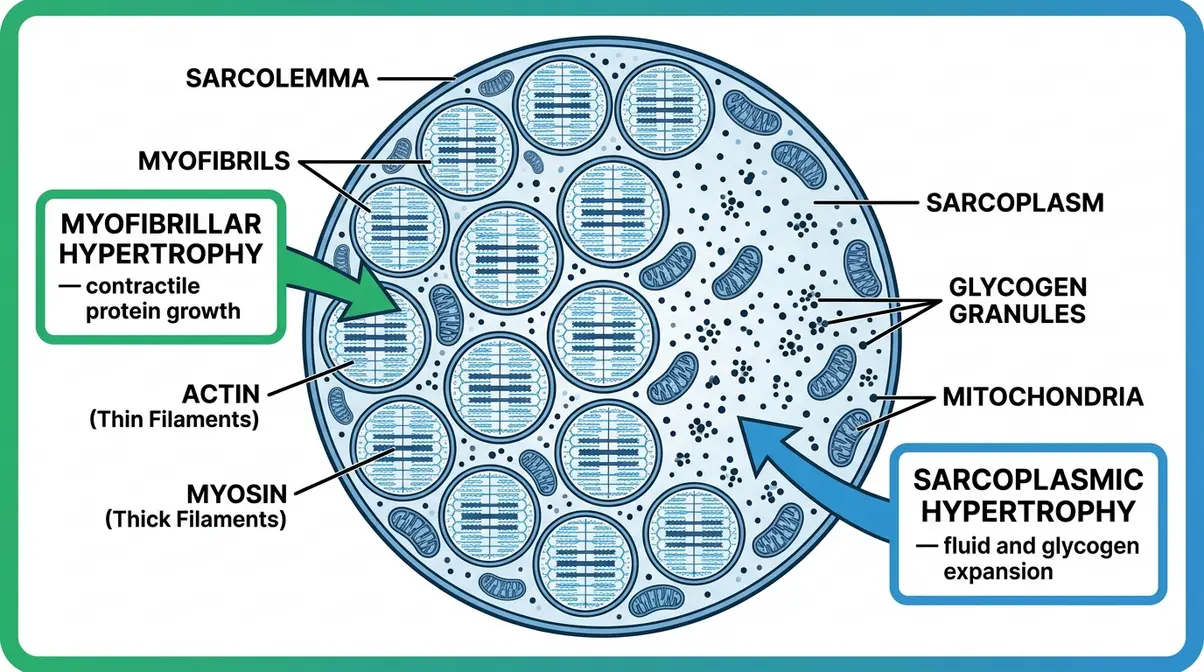
Myofibrillar hypertrophy is growth in the contractile proteins — actin and myosin — that generate muscular force. Actin and myosin are the tiny protein filaments inside each muscle fiber that literally pull against each other to create movement. When these proteins increase in number and density, your muscle becomes both larger and stronger. This is the type of hypertrophy most associated with heavy, lower-rep strength training (typically 1–6 reps at 85–100% of one-rep max).
Sarcoplasmic hypertrophy is an increase in the fluid, glycogen, and energy stores within the muscle cell — specifically in the sarcoplasm (the semi-fluid cytoplasm surrounding the myofibrils). Put simply, the muscle’s “fuel tank” expands. This creates visible size without a proportional increase in contractile strength. Higher-rep, moderate-load training (12–20 reps) tends to emphasize this pathway.
Why does this distinction matter for your training goals?
| Goal | Subtype to Emphasize | Typical Rep Range | Load |
|---|---|---|---|
| Maximum size (bodybuilding) | Both — sarcoplasmic + myofibrillar | 6–20 reps | 60–85% 1RM |
| Maximum strength | Myofibrillar | 1–6 reps | 85–100% 1RM |
| Endurance/conditioning | Sarcoplasmic | 15–25+ reps | 40–60% 1RM |
| General hypertrophy | Both | 6–12 reps (primary) | 70–85% 1RM |
Most evidence-based hypertrophy programs target both subtypes by varying rep ranges across training sessions — a strategy called “rep range periodization” (Schoenfeld, Journal of Strength and Conditioning Research, 2010).
Muscle Anatomy Basics
Before exploring the mechanisms of growth, you need a mental model of what a muscle actually is. Visualize a bundle of cables inside a protective sheath — that’s essentially your muscle structure.
Each muscle is made up of muscle fibers (also called myocytes — the individual cells). Each fiber contains hundreds of myofibrils, which are the rod-like structures responsible for contraction. Inside each myofibril are repeating units called sarcomeres — the actual contractile machinery. A sarcomere contains interleaved filaments of actin (thin filaments) and myosin (thick filaments). When your nervous system signals a contraction, myosin heads grab actin filaments and pull — this is the “sliding filament theory” of muscle contraction.
These are your contractile proteins — the component cells of force production. When hypertrophy occurs, it’s largely because the number and size of these myosin and actin filaments increases, making each sarcomere thicker and more powerful. Surrounding all of this is the sarcoplasm, filled with glycogen, mitochondria, and metabolic enzymes.
Muscle hypertrophy, in anatomical terms, means more and larger sarcomeres, more contractile proteins, and an expanded sarcoplasm — all packed into a thicker fiber cross-section.
The Science Behind Muscle Growth
Muscle growth is not a single event — it’s a cascade of biological signals. When you lift a weight, your body doesn’t immediately add muscle. Instead, it triggers a coordinated response involving mechanical sensors, chemical messengers, cellular repair crews, and protein synthesis machinery. Understanding this cascade helps you make smarter decisions about every variable in your training. Evidence from PMC-indexed research confirms that three primary mechanisms initiate the hypertrophic response: mechanical tension, metabolic stress, and muscle damage (Schoenfeld, PMC6950543, 2019).
Mechanical Tension
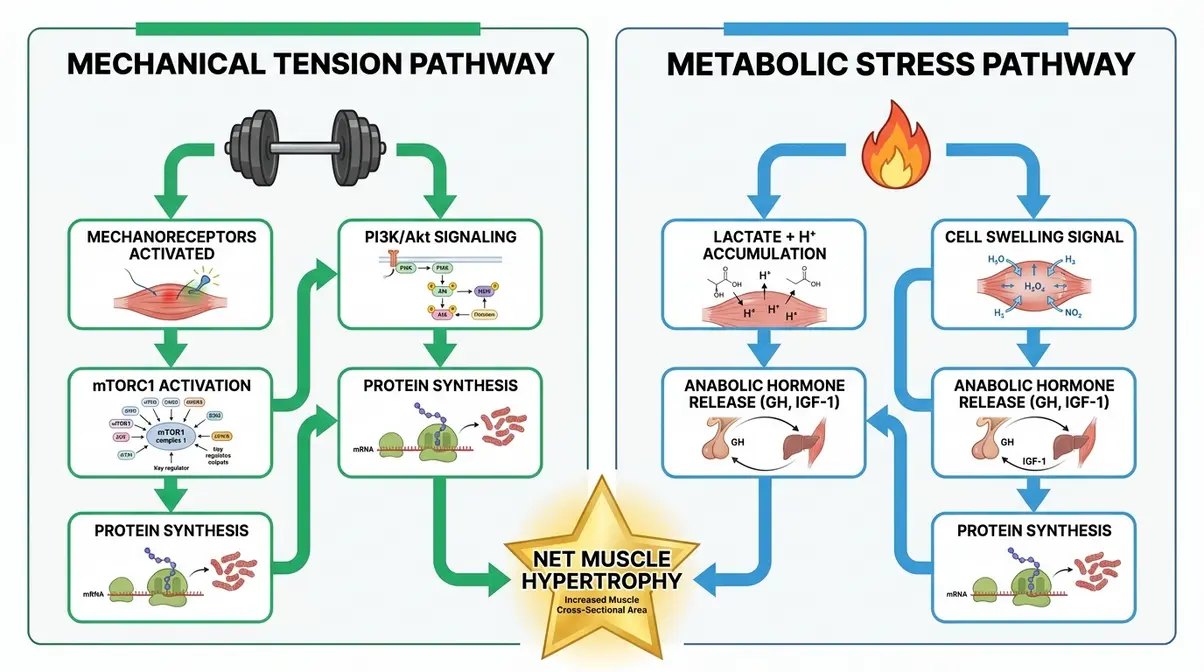
Mechanical tension is the force generated within a muscle fiber when it contracts against a load — and research consistently identifies it as the most important driver of muscle hypertrophy. When you lift a heavy weight, each muscle fiber experiences tension along its length. This tension is detected by specialized proteins called mechanoreceptors (sensors embedded in the muscle membrane that detect physical force). These receptors trigger a signaling cascade that ultimately tells the muscle cell to build more protein.
Studies indicate that mechanical tension stimulates hypertrophy through two pathways: the stretch of the muscle under load (passive tension) and the active contraction against resistance (active tension). A 2019 systematic review published in Frontiers in Physiology confirmed that both components contribute to the anabolic (muscle-building) response (PMC6950543). In plain terms, this means that both the lowering phase and the lifting phase of every rep matter for muscle growth. Understanding how fast-twitch vs slow-twitch fibers respond to this mechanical tension is key to maximizing your results.
Practical implication: Controlling the eccentric (lowering) portion of each rep — typically 2–3 seconds — maximizes the mechanical tension your fibers experience. This is why simply dropping the weight after lifting it reduces your hypertrophic stimulus. Progressive overloading (adding weight or reps over time) continuously increases mechanical tension, which is why it’s non-negotiable for long-term muscle growth.
Metabolic Stress
Metabolic stress refers to the accumulation of metabolic byproducts — including lactate, hydrogen ions, and inorganic phosphate — inside the muscle cell during high-rep, moderate-load training. You know this feeling: it’s the burning sensation and swelling (“the pump”) that builds during sets of 12–20 reps. That pump isn’t just satisfying — it’s a genuine biological signal. Developing a solid grasp of understanding muscle burn will help you gauge if you are achieving adequate metabolic stress during your workouts.
Research suggests metabolic stress promotes hypertrophy through several mechanisms: increased production of anabolic hormones (including growth hormone and IGF-1), cellular swelling that triggers protein synthesis, and the activation of fast-twitch muscle fibers that fatigue quickly (Schoenfeld, Journal of Strength and Conditioning Research, 2013). The cellular swelling itself — the muscle “pumping up” with fluid — appears to act as a mechanical signal that the cell interprets as a threat to structural integrity, triggering a protective growth response.
Put simply: when your muscle cell swells with metabolic byproducts, it responds by building more protein to reinforce its structure. This is why moderate-rep, higher-volume training produces significant hypertrophy even at loads that wouldn’t qualify as “heavy” by powerlifting standards. Metabolic stress and mechanical tension work synergistically — programs that combine both (as most evidence-based hypertrophy programs do) produce superior results to programs emphasizing either mechanism alone.
Protein Synthesis vs. Breakdown
Every moment of every day, your body is simultaneously building and breaking down muscle protein. This constant turnover is called protein metabolism, and the balance between its two sides determines whether your muscles grow, shrink, or stay the same.
- Muscle Protein Synthesis (MPS): The process by which your cells build new muscle proteins from amino acids. MPS is elevated for 24–48 hours following a resistance training session.
- Muscle Protein Breakdown (MPB): The process by which old or damaged proteins are dismantled and recycled. MPB also rises after training, but to a lesser degree than MPS in a well-nourished athlete.
“Muscle growth occurs whenever the rate of muscle protein synthesis is greater than the rate of muscle protein breakdown.”
This equation is the central principle of hypertrophy science. Training triggers both sides, but nutrition — specifically adequate dietary protein and caloric intake — determines which side wins. Evidence from the International Society of Sports Nutrition indicates that consuming 0.25–0.40 g of high-quality protein per kilogram of bodyweight within two hours post-training maximally stimulates MPS (ISSN Position Stand, 2017). In plain terms: your post-workout meal is not optional if muscle growth is your goal.
- The growth equation in practice:
- MPS > MPB = Net muscle gain (hypertrophy)
- MPS = MPB = Maintenance (no change)
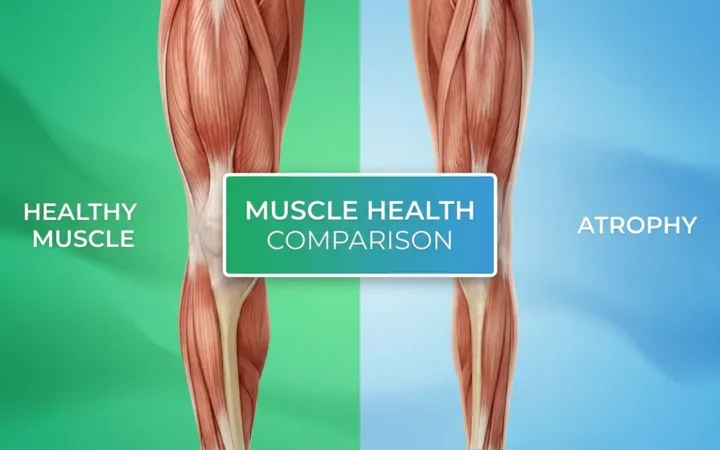
- MPS < MPB = Net muscle loss (atrophy)
The mTOR Pathway
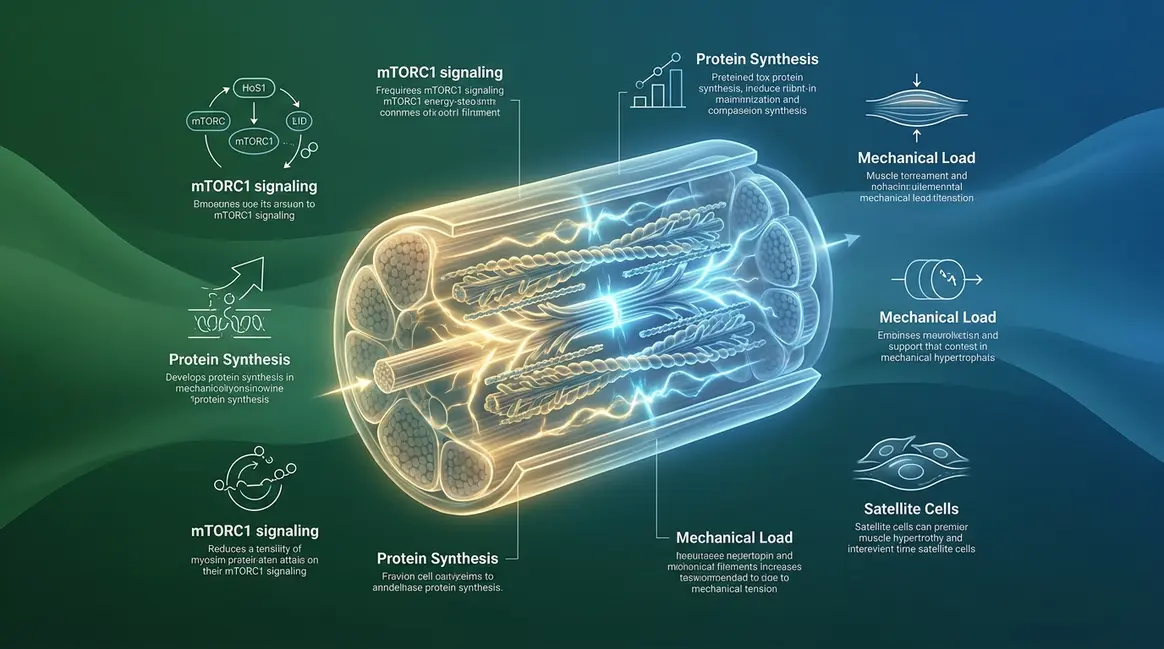
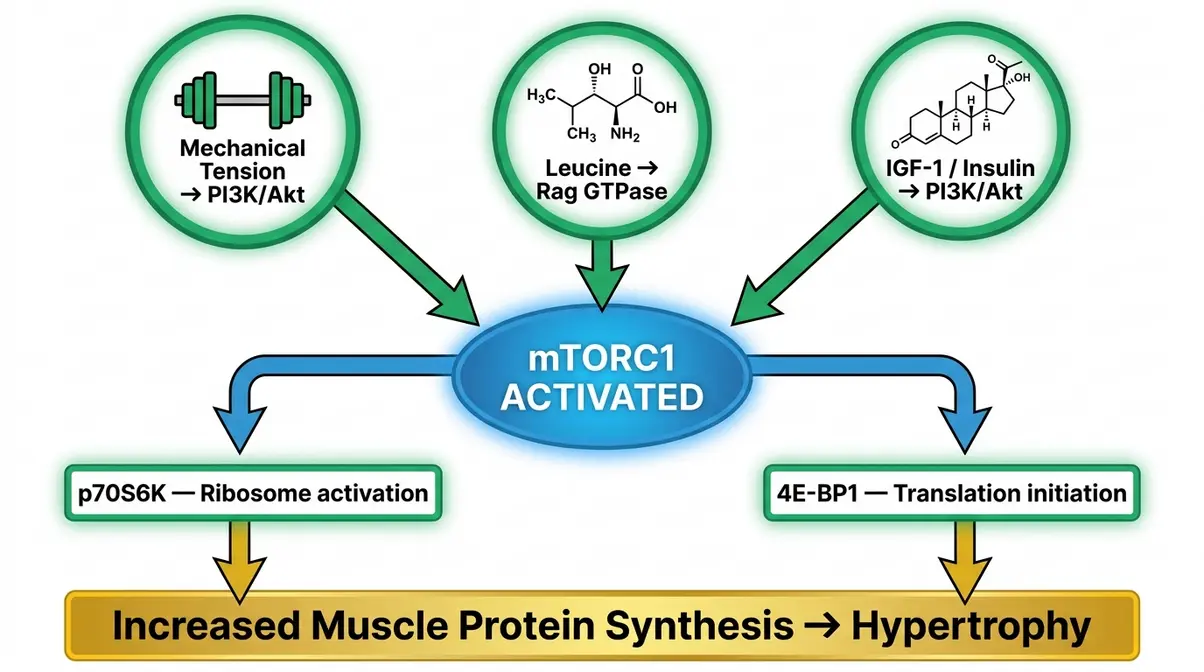
The mechanistic target of rapamycin (mTOR) is a protein kinase (an enzyme that activates other proteins) that acts as the master regulator of muscle protein synthesis. Think of mTOR as a master switch: when it’s activated, your muscle cells shift into building mode. When it’s suppressed — by inadequate nutrition, excessive stress, or overtraining — growth stalls.
mTOR sits at the intersection of multiple upstream signals:
- Mechanical tension activates mTOR through a pathway involving the protein PI3K and its downstream effector Akt.
- Amino acids — particularly the essential amino acid leucine — directly stimulate mTOR through a separate sensor called Rag GTPase.
- Growth factors like IGF-1 and insulin activate mTOR through the PI3K/Akt pathway.
When mTOR is activated, it phosphorylates (activates) two key downstream targets: p70S6K and 4E-BP1. These molecules directly accelerate ribosomal activity — the cellular machinery that assembles new muscle proteins from amino acids. Research published in Cell Metabolism confirms that mTOR complex 1 (mTORC1) activation is necessary and sufficient to drive skeletal muscle hypertrophy.
Put simply: mTOR is the biological reason why lifting weights AND eating adequate protein are both required for muscle growth. You need the mechanical signal (training) to activate mTOR, and you need the amino acid signal (protein intake) to give mTOR the raw materials to work with.
Satellite Cells
Satellite cells are muscle stem cells (undifferentiated cells capable of becoming muscle cells) that reside on the outer surface of each muscle fiber. Under normal resting conditions, they remain dormant. When a muscle fiber experiences significant mechanical stress or damage, satellite cells activate, proliferate (multiply), and migrate to the site of damage.
- Once there, they do one of two things:
- Fuse with the damaged fiber to donate their nuclei, increasing the fiber’s nuclear content and its capacity to produce muscle proteins.
- Differentiate into new myofibrils, directly adding contractile material to the fiber.
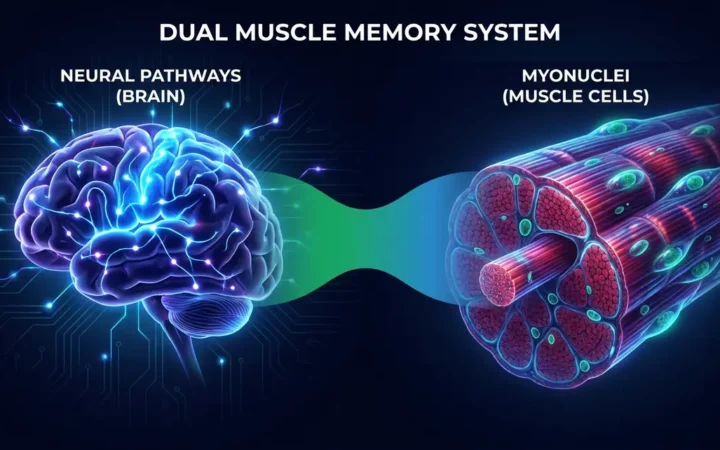
This process — called satellite cell donation — is central to the concept of muscle memory. When you train consistently for years, your muscle fibers accumulate extra nuclei donated by satellite cells. If you stop training and lose muscle mass (atrophy), those extra nuclei persist. When you resume training, the elevated nuclear content allows faster re-synthesis of muscle proteins — which is why returning athletes regain muscle far faster than beginners.
Research from PubMed indicates that satellite cell activation is most strongly stimulated by high-volume, moderate-to-heavy resistance training with substantial muscle damage — particularly exercises involving long muscle lengths under load (such as deep squats and full-range Romanian deadlifts). This finding connects directly to the emerging research on stretch-mediated hypertrophy discussed in the next section.
Emerging Hypertrophy Science
Two areas of hypertrophy research have gained significant momentum in recent years, and they represent a genuine competitive advantage for anyone who understands them.
Stretch-Mediated Hypertrophy
Emerging evidence suggests that training muscles at long muscle lengths — when the muscle is fully stretched under load — produces superior hypertrophic outcomes compared to training at shortened positions. A 2022 study published in the Journal of Strength and Conditioning Research found that exercises performed at long muscle lengths (e.g., deep squats, incline curls, deficit RDLs) produced significantly greater muscle growth than matched-volume exercises at short muscle lengths. The proposed mechanism involves greater passive tension on the titin protein (a giant elastic protein within the sarcomere) activating mTOR independently of active contraction force.
Practical application: Prioritize exercises that load the muscle in its stretched position. For biceps, incline dumbbell curls outperform preacher curls. For hamstrings, Romanian deadlifts outperform leg curls in the shortened position.
The Leucine Threshold
Leucine is an essential branched-chain amino acid (BCAA) that directly activates mTOR — but it appears to operate with a threshold effect. Research from the University of Texas Medical Branch suggests that a minimum of approximately 2–3 grams of leucine per meal is required to maximally stimulate mTOR and trigger a robust MPS response. Below this threshold, the MPS response is blunted regardless of total protein intake.
Practical application: Ensure each protein-containing meal includes a leucine-rich source. Whey protein, eggs, chicken breast, and beef are all leucine-dense foods that reliably cross the threshold. Plant-based athletes may need higher total protein quantities per meal to achieve the same leucine dose, as plant proteins generally contain lower leucine concentrations.
How to Train for Hypertrophy
Evidence-based hypertrophy training rests on five principles — and most recreational lifters violate at least two of them. Research from PMC-indexed meta-analyses consistently shows that training volume, load, frequency, and exercise selection all independently contribute to hypertrophic outcomes. This section translates that research into specific, actionable programming decisions you can implement immediately. The Training Stimulus side of the Hypertrophy Triangle lives here.
Progressive Overload
Progressive overload is the systematic increase of training stress over time — and it is the single most important principle for long-term muscle hypertrophy. Without it, your muscles adapt to a fixed stimulus and stop growing. Your body is extraordinarily efficient: it will do exactly as much as it needs to and no more.
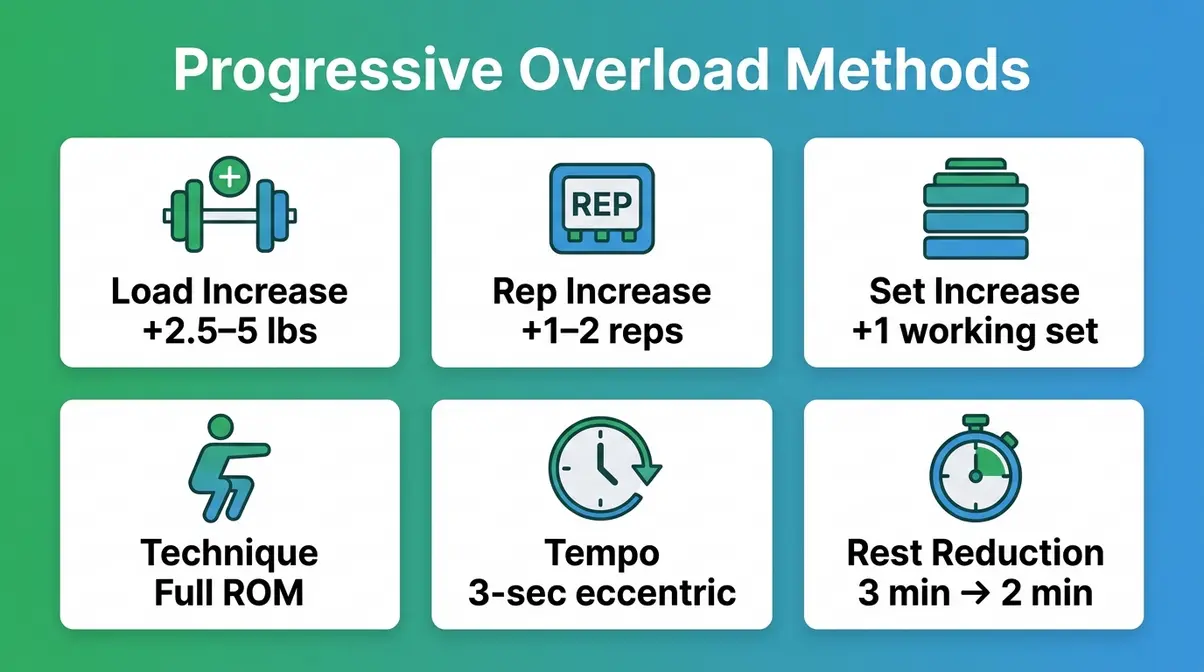
Progressive overload can be applied through multiple methods:
| Method | Example | Best Applied When |
|---|---|---|
| Load increase | Add 2.5–5 lbs to the bar | Strength is the primary limiter |
| Rep increase | Add 1–2 reps at the same weight | Near the top of your rep range |
| Set increase | Add 1 working set per session | Volume tolerance is the goal |
| Technique improvement | Full range of motion on squats | Form was previously limiting depth |
| Tempo manipulation | Slow eccentric to 3 seconds | Maximizing mechanical tension |
| Rest period reduction | Decrease rest from 3 min to 2 min | Metabolic conditioning goal |
Research from the National Strength and Conditioning Association indicates that small, consistent load increases (2–5% per week for upper body; 2–10% for lower body) are sustainable and minimize injury risk while maintaining hypertrophic stimulus (NSCA Position Statement, 2009). The key word is systematic — random increases don’t build the progressive stimulus your muscle fibers require. Implementing progressive overload for muscle growth continuously increases mechanical tension over time.
Track your lifts. Every session. Without a training log, progressive overload is impossible to verify.
Rep Ranges and Load
For decades, the “hypertrophy rep range” was defined as 8–12 reps at moderate loads. More recent evidence has significantly expanded this picture — and the update is worth understanding. Knowing how many sets and reps for strength training versus hypertrophy is essential for optimizing your routine.
A landmark 2017 study by Schoenfeld et al., published in the Journal of Strength and Conditioning Research, found that trained men achieved similar muscle hypertrophy whether they trained at low loads (25–35 reps to failure) or high loads (8–12 reps to failure), provided total training volume was equated. The critical finding: proximity to failure matters more than the specific rep range, particularly for hypertrophy-focused training.
Evidence-based rep range guidance:
| Rep Range | Load (% 1RM) | Primary Stimulus | Best For |
|---|---|---|---|
| 1–5 reps | 85–100% | Myofibrillar (strength) | Neural adaptations + strength base |
| 6–12 reps | 70–85% | Both subtypes (primary hypertrophy zone) | Maximum hypertrophic stimulus |
| 12–20 reps | 50–70% | Sarcoplasmic + metabolic stress | Volume accumulation, metabolic stress |
| 20–30 reps | 30–50% | Sarcoplasmic + endurance | Finishers, high-rep specialization |
Reps in Reserve (RIR): Research supports leaving 0–3 reps in reserve (RIR) on most working sets for hypertrophy. Sets ending 4+ reps from failure are largely ineffective for muscle growth. RIR 0–1 (taking sets to or near failure) is appropriate for isolation exercises; RIR 2–3 is recommended for compound movements to manage fatigue accumulation.
Volume and Frequency
Training volume — defined as total sets × reps × load, or more practically as weekly sets per muscle group — is the primary dose-response variable for hypertrophy. More volume (up to a point) produces more muscle growth.
A meta-analysis found that multiple sets per exercise produced 40% more hypertrophy than single-set protocols. More recent evidence suggests that 10–20 weekly sets per muscle group represents the effective range for most trained individuals. Below 10 sets per week, growth is sub-optimal. Above 20 sets, recovery capacity is often exceeded and returns diminish.
Training frequency determines how those sets are distributed across the week. Evidence indicates that training each muscle group 2× per week produces superior hypertrophy compared to 1× per week (Schoenfeld et al., Journal of Strength and Conditioning Research, 2016), primarily because more frequent protein synthesis spikes accumulate over the week. Training 3× per week may provide a small additional benefit for advanced lifters.
Practical weekly volume targets:
| Muscle Group | Maintenance Volume | Minimum Effective Volume | Maximum Adaptive Volume |
|---|---|---|---|
| Chest | 8 sets/week | 10 sets/week | 20 sets/week |
| Back | 10 sets/week | 12 sets/week | 22 sets/week |
| Quads | 8 sets/week | 10 sets/week | 20 sets/week |
| Hamstrings | 6 sets/week | 8 sets/week | 16 sets/week |
| Shoulders | 8 sets/week | 10 sets/week | 20 sets/week |
| Biceps/Triceps | 6 sets/week | 8 sets/week | 18 sets/week |
Source: Israetel, Renaissance Periodization Volume Landmarks, 2020
Effective Reps vs. Junk Volume
Not all training volume is equal. Effective reps are the reps performed close to muscular failure — roughly the last 5 reps of any set taken to 0–2 RIR. These are the reps that maximally recruit high-threshold motor units (the fast-twitch fibers with the greatest growth potential). Junk volume, by contrast, refers to sets performed so far from failure that they generate insufficient mechanical tension to stimulate growth — while still accumulating fatigue.
Research indicates that high-threshold motor unit recruitment — the primary trigger for myofibrillar hypertrophy — only occurs when the muscle is approaching fatigue. A set of 12 reps stopped at rep 8 (4 reps in reserve) is largely junk volume for hypertrophy purposes, even if the load feels moderate.
Exercise selection principles for hypertrophy:
- Prioritize compound movements (squats, deadlifts, rows, presses) for maximum motor unit recruitment and hormonal response
- Include isolation exercises to target muscles that are secondary in compounds (biceps, lateral deltoids, calves)
- Choose exercises that load the muscle at long lengths (stretch-mediated hypertrophy principle from emerging research)
- Match the exercise to the joint’s natural range of motion — exercises that cause joint discomfort at the target load are contraindicated
8 Programming Templates
Estimated Time: 45–60 minutes per session.
Tools Needed: Barbell, dumbbells, weight plates, adjustable bench, cable machine.
The following templates translate evidence-based principles into specific, ready-to-implement workout structures. Each template specifies sets, reps, RIR, and load guidance.
Template 1: Beginner Full-Body (3×/week)
Goal: Build training habit + initial hypertrophic stimulus
- Squat variation: 3 sets × 8–10 reps | Load: 65–70% 1RM | RIR: 2–3
- Horizontal push (bench press or push-up): 3 sets × 8–10 reps | Load: 65–70% 1RM | RIR: 2–3
- Horizontal pull (dumbbell row): 3 sets × 10–12 reps | RIR: 2–3
- Hip hinge (Romanian deadlift): 3 sets × 10–12 reps | Load: 60–65% 1RM | RIR: 3
- Overhead press: 2 sets × 10–12 reps | RIR: 2–3
- Rest: 2–3 minutes between sets | Weekly volume: ~15 sets total
Template 2: Intermediate Upper/Lower Split (4×/week)
Goal: Increased frequency + volume per muscle group
Upper A (Monday): Bench Press 4×6–8 (RIR 1–2) | Barbell Row 4×6–8 (RIR 1–2) | Incline DB Press 3×10–12 (RIR 2) | Cable Row 3×12–15 (RIR 2) | Lateral Raise 3×15–20 (RIR 1)
Lower A (Tuesday): Squat 4×6–8 (RIR 1–2) | Romanian Deadlift 3×10–12 (RIR 2) | Leg Press 3×12–15 (RIR 2) | Leg Curl 3×12–15 (RIR 1–2) | Calf Raise 4×15–20 (RIR 1)
Upper B (Thursday): Overhead Press 4×6–8 (RIR 1–2) | Weighted Pull-Up 4×6–8 (RIR 1–2) | Cable Fly 3×12–15 (RIR 1) | Face Pull 3×15–20 (RIR 1) | Bicep Curl 3×12–15 (RIR 1)
Lower B (Friday): Deadlift 3×4–6 (RIR 2) | Bulgarian Split Squat 3×10–12/leg (RIR 2) | Leg Extension 3×15–20 (RIR 1) | Seated Leg Curl 3×12–15 (RIR 1) | Calf Raise 4×15–20 (RIR 1)
Template 3: Push/Pull/Legs (PPL) — 6×/week
Goal: High frequency + high volume for intermediate-to-advanced lifters
Push (Mon/Thu): Bench Press 4×6–10 (RIR 1–2) | Incline DB Press 3×10–12 | Overhead Press 3×8–10 | Lateral Raise 4×15–20 | Tricep Pushdown 3×12–15
Pull (Tue/Fri): Barbell Row 4×6–10 (RIR 1–2) | Pull-Up 3×8–10 | Cable Row 3×12–15 | Face Pull 3×15–20 | Bicep Curl 4×12–15
Legs (Wed/Sat): Squat 4×6–10 (RIR 1–2) | Romanian Deadlift 3×10–12 | Leg Press 3×12–15 | Leg Extension 3×15–20 | Leg Curl 3×12–15 | Calf Raise 4×15–20
Template 4: Chest Specialization (4-week block)
Goal: Lagging chest — increased chest volume within full-body program
- Incline Barbell Press: 5×6–8 (RIR 1) — long muscle length emphasis
- Flat DB Press: 4×10–12 (RIR 1–2)
- Cable Fly (arms extended, stretched position): 4×15–20 (RIR 1)
- Dip (chest-forward lean): 3×8–12 (RIR 2)
- Weekly chest volume: 16 sets | Progressive overload: Add 1 rep per set per session before adding load
Template 5: Arm Hypertrophy Finisher
Goal: Add 15–20 minutes of arm-specific volume to any session
- Incline DB Curl (long-length bicep emphasis): 3×12–15 (RIR 1)
- Hammer Curl: 3×10–12 (RIR 1–2)
- Overhead Tricep Extension (long-head stretch): 3×12–15 (RIR 1)
- Tricep Pushdown: 3×15–20 (RIR 1)
- Rest: 60–90 seconds between sets | Metabolic stress emphasis
Template 6: High-Rep Metabolic Stress Protocol
Goal: Emphasize sarcoplasmic hypertrophy and metabolic stress response
- Select 4–5 compound or isolation exercises. For each:
- Set 1: 15 reps at 50% 1RM (RIR 2)
- Set 2: 20 reps at 45% 1RM (RIR 1)
- Set 3: 25 reps at 40% 1RM (RIR 0–1)
- Rest: 60 seconds between sets | Target: maximal pump + lactate accumulation
Template 7: Mechanical Drop Set (Stretch-Mediated Focus)
Goal: Apply emerging stretch-mediated hypertrophy research
- Example for biceps:
- Incline DB Curl (long length): 10 reps (RIR 1) → immediately drop to
- Standing DB Curl (neutral position): 8 reps (RIR 1) → immediately drop to
- Preacher Curl (shortened position): 6 reps (RIR 0)
- No rest between drops. 3 total mechanical drop sets. Rest 2–3 minutes between sets.
Template 8: 6-Week Progressive Overload Block
Goal: Systematic load progression for compound movements
| Week | Sets | Reps | RIR | Load (% 1RM) |
|---|---|---|---|---|
| 1 | 3 | 12 | 3 | 65% |
| 2 | 3 | 11 | 2 | 67.5% |
| 3 | 4 | 10 | 2 | 70% |
| 4 | 4 | 9 | 1–2 | 72.5% |
| 5 | 4 | 8 | 1 | 75% |
| 6 | 4 | 7 | 0–1 | 77.5% |
| Week 7: Deload (reduce volume 40%, maintain load). Reassess 1RM. Restart cycle. |
Key Factors for Muscle Growth
The Biological Response and Recovery Optimization sides of the Hypertrophy Triangle depend on factors outside the gym. Research consistently shows that training stimulus accounts for only a portion of your hypertrophic outcome — nutrition, sleep, and biological variables like age and genetics powerfully modulate the rate and ceiling of your muscle growth. This section covers the factors that most recreational lifters underestimate or ignore entirely.
Nutrition for Hypertrophy
Nutrition is the raw material side of the MPS equation. Learning how much protein to build muscle is the first step toward optimizing your recovery. Without adequate protein and calories, mTOR activation from training cannot produce net muscle gain — your body simply lacks the amino acid building blocks to construct new contractile proteins.
Protein intake:
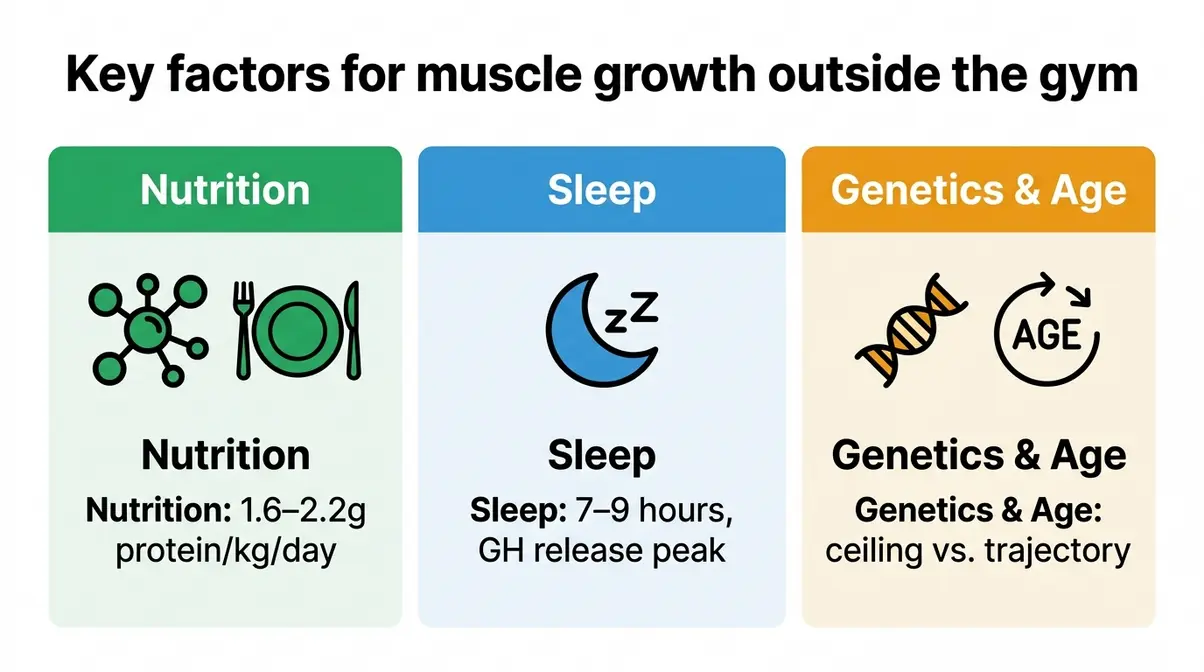
The International Society of Sports Nutrition (ISSN) Position Stand recommends 1.4–2.0 g of protein per kg of bodyweight per day for individuals engaged in resistance training, with 2.0–2.4 g/kg/day being optimal for maximizing muscle hypertrophy during a caloric surplus (ISSN Position Stand, 2017). For a 75 kg (165 lb) individual, that translates to 150–180 g of protein daily.
Caloric surplus:
Building muscle requires a caloric surplus — consuming more energy than you expend. Research suggests a modest surplus of 250–500 kcal/day above maintenance minimizes fat gain while supporting hypertrophy. Aggressive bulking (1,000+ kcal surplus) produces faster fat gain without proportionally faster muscle gain.
Nutrient timing:
Evidence from the ISSN indicates that consuming 0.25–0.40 g/kg of high-quality protein within 2 hours post-training maximally stimulates the MPS response. Distributing total daily protein across 4–5 meals (rather than 1–2 large meals) maintains a consistently elevated MPS rate throughout the day.
Carbohydrates and fats:
Carbohydrates replenish muscle glycogen (the primary fuel for resistance training) and have a protein-sparing effect — when carbohydrate intake is sufficient, dietary protein is directed toward muscle building rather than energy production. Dietary fats support testosterone and IGF-1 production, both of which are anabolic hormones that activate the mTOR pathway.
Sleep and Recovery
Sleep is where the majority of muscle protein synthesis and tissue repair actually occurs. Balancing sleep, muscle growth, and recovery is essential for maximizing your gains. During slow-wave (deep) sleep, the pituitary gland releases the largest pulse of growth hormone (GH) of the 24-hour cycle. Growth hormone directly stimulates IGF-1 production in the liver, which in turn activates the mTOR pathway and satellite cell proliferation.
Research published in Annals of Internal Medicine found that restricting sleep to 5.5 hours per night (vs. 8.5 hours) in subjects on a calorie-restricted diet reduced the proportion of weight lost as fat by 55% and increased muscle protein breakdown (Nedeltcheva et al., Annals of Internal Medicine, 2010). Put simply: sleeping less than 7 hours per night actively works against your hypertrophy goals, even if your training and nutrition are perfect.
- Evidence-based sleep recommendations for hypertrophy:
- Duration: 7–9 hours per night
- Consistency: Fixed sleep and wake times regulate circadian GH release patterns
- Pre-sleep protein: Consuming 40 g of casein protein 30–60 minutes before bed has been shown to increase overnight MPS rates by approximately 22%
- Alcohol: Even moderate alcohol consumption (2–3 drinks) suppresses post-exercise GH release by up to 70%
Recovery between sessions also matters. Research indicates that most muscle groups require 48–72 hours of recovery between direct training sessions to allow full MPS completion and satellite cell repair. This is the biological rationale behind training each muscle group 2–3× per week rather than daily.
Genetics, Age, and Sex
Biological factors place a ceiling and a floor on your hypertrophic potential — but they don’t determine where within that range you land. That part is controlled by your training, nutrition, and recovery.
Genetics:
Genetic variation affects muscle fiber type distribution (fast-twitch vs. slow-twitch), myostatin levels (a protein that inhibits muscle growth), androgen receptor density, and satellite cell concentration. Research suggests that genetic factors account for approximately 50–80% of the variance in muscle mass between individuals under similar training conditions (Arden & Spector, American Journal of Human Genetics, 1997). However, studies consistently show that even genetically “disadvantaged” individuals achieve substantial hypertrophy with well-structured training — genetics determines your ceiling, not your trajectory.
Age:
People often wonder what age do muscles stop growing. Muscle protein synthesis rates decline gradually after age 40 in a process called anabolic resistance — where the MPS response to a given protein dose or training stimulus is blunted compared to younger adults. Research indicates that older adults (50+) require higher total protein intake (2.0–2.4 g/kg/day) and potentially higher training volumes to achieve equivalent hypertrophy. The good news: resistance training remains the most effective intervention to attenuate age-related muscle loss (sarcopenia) at any age.
Sex differences:
Males typically have 10–20× higher testosterone concentrations than females, which translates to a greater absolute capacity for muscle hypertrophy. However, research indicates that relative hypertrophy rates (muscle gain as a percentage of initial muscle mass) are similar between males and females with matched training protocols (Roberts et al., Journal of Applied Physiology, 2020). Females do not become “bulky” from resistance training without deliberate, sustained effort over years — a common misconception that the evidence does not support.
Common Hypertrophy Training Mistakes to Avoid
The most common reason people don’t see results from resistance training isn’t a lack of effort — it’s a systematic error in one or more sides of the Hypertrophy Triangle. Research from exercise science consistently identifies a predictable cluster of programming, nutrition, and recovery mistakes that stall progress. Recognizing them is the first step to correcting them.
Mistakes That Stall Growth
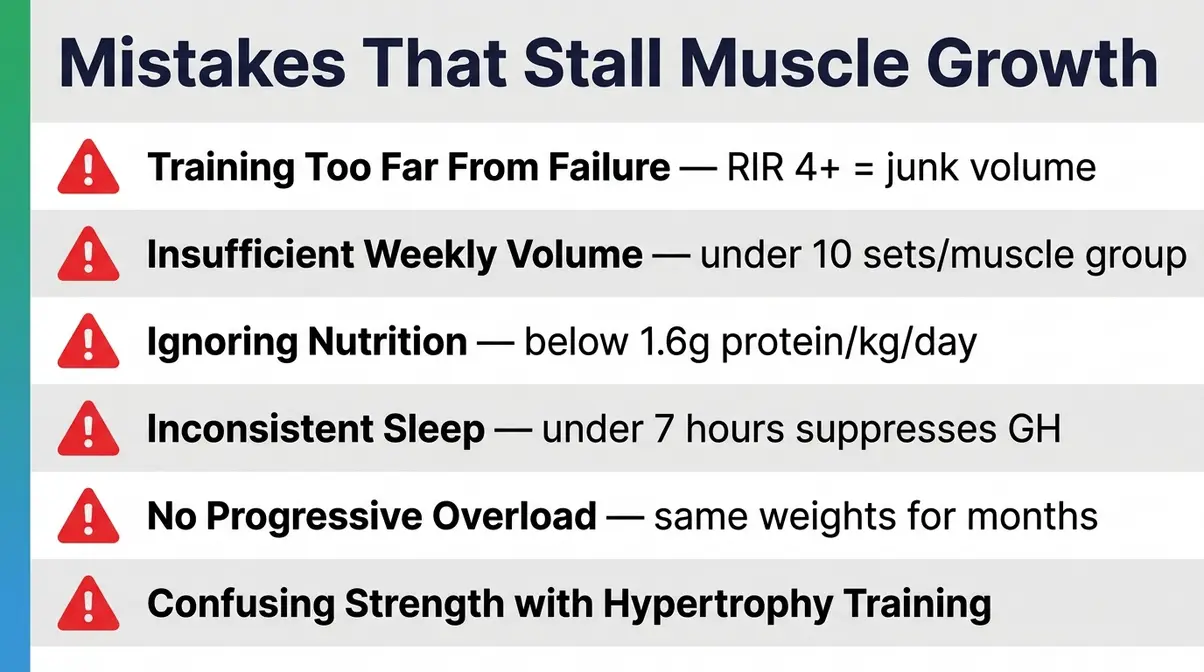
Mistake 1: Training Too Far From Failure
As covered in the Effective Reps section, sets ending 4+ reps from failure fail to recruit high-threshold motor units — the primary targets for hypertrophy. Most recreational lifters dramatically underestimate how hard “working sets” need to be. Evidence suggests leaving 0–3 RIR on most sets.
Mistake 2: Insufficient Weekly Volume
Performing 3–5 sets per muscle group per week is below the minimum effective volume for most trained individuals. Research supports 10–20 sets per muscle group per week for optimal hypertrophy. Audit your training log: how many direct sets does each muscle group actually receive?
Mistake 3: Ignoring Nutrition
Training breaks muscle down. Nutrition builds it back up. Without a protein intake of at least 1.6 g/kg/day and a caloric surplus, the MPS equation cannot tip toward net growth regardless of training quality.
Mistake 4: Inconsistent Sleep
Sleeping under 7 hours per night suppresses GH release and elevates cortisol (a catabolic hormone that promotes muscle protein breakdown). This is one of the most overlooked variables in recreational training.
Mistake 5: No Progressive Overload
Running the same workout with the same weights for months produces no new stimulus for hypertrophy. If your training log from 3 months ago looks identical to today’s, you are not progressively overloading.
Mistake 6: Confusing Strength Training With Hypertrophy Training
Heavy singles and triples build neural efficiency and strength. They are not optimal hypertrophy stimuli unless volume is sufficiently high. Conversely, high-rep metabolic work without sufficient load fails to recruit fast-twitch fibers. Effective hypertrophy training deliberately targets both mechanisms.
When to Shift Priorities

Hypertrophy training is not universally appropriate. Consider alternative training priorities in these scenarios:
- Injury or joint pain: Resistance training with compromised joints can worsen structural damage. Consult a sports medicine physician or physiotherapist before continuing to ensure proper injury prevention during resistance training.
- Sport-specific performance: Athletes in endurance sports (marathon, cycling) may find that heavy hypertrophy training impairs performance economy. Concurrent training interference is a documented phenomenon.
- Cardiovascular risk: Individuals with unmanaged hypertension or cardiac conditions should obtain physician clearance before beginning resistance training. The medical disclaimer at the top of this article applies in full.
- Caloric deficit (weight loss phase): Hypertrophy is significantly blunted in a large caloric deficit. Body recomposition (simultaneous fat loss and muscle gain) is possible but slower — and is more realistic for untrained individuals than for experienced lifters.
Muscle Hypertrophy FAQs
How long to see results?
Noticeable muscle hypertrophy typically becomes visible within 8–12 weeks of consistent resistance training combined with adequate protein intake. Initial gains (weeks 1–4) are primarily neural adaptations — your nervous system becomes more efficient at recruiting existing muscle fibers. Structural hypertrophy (actual fiber thickening) becomes measurable around weeks 6–8 and visually apparent by weeks 10–12 in most individuals (ISSN Position Stand, 2017). Consistency is the single most important factor — sporadic training resets the adaptation timeline repeatedly.
Hypertrophy vs. Hyperplasia?
Muscle hypertrophy refers to an increase in the size of existing muscle fibers, while muscle hyperplasia refers to an increase in the number of muscle fibers. In humans, hyperplasia contributes minimally to muscle growth under normal training conditions — the vast majority of resistance-training-induced size gains come from hypertrophy of existing fibers (Healthline, 2020). Animal studies have demonstrated hyperplasia under extreme conditions, but this has not been reliably replicated in human resistance training research.
How much protein is needed?
The ISSN recommends 1.6–2.2 g of protein per kg of bodyweight per day for individuals focused on maximizing muscle hypertrophy (ISSN Position Stand, 2017). For a 75 kg (165 lb) person, that means approximately 120–165 g of protein daily. Spreading intake across 4–5 meals of 30–40 g each maintains elevated muscle protein synthesis throughout the day. Leucine-rich protein sources — whey, eggs, chicken, beef — are most effective at triggering the mTOR pathway’s MPS response.
Building muscle without failure?
Yes — research indicates that stopping 1–3 reps short of failure (RIR 1–3) produces comparable hypertrophy to training to absolute failure for most muscle groups. Taking every set to complete muscular failure is not required and may increase injury risk and recovery time on compound movements. However, sets ending 4+ reps from failure (RIR 4+) are significantly less effective for hypertrophy, as they fail to recruit high-threshold motor units. The practical recommendation: train close to failure on isolation exercises; leave 2–3 RIR on compound lifts.
Is training different for women?
The fundamental mechanisms of muscle hypertrophy are identical in women and men — mTOR activation, satellite cell recruitment, and the MPS-to-MPB balance function the same way regardless of sex. Research shows that relative hypertrophy rates (muscle gained as a percentage of baseline) are similar between sexes with matched training protocols (Roberts et al., Journal of Applied Physiology, 2020). Women have lower absolute testosterone levels, which limits the total ceiling for muscle mass, but does not prevent significant hypertrophy from evidence-based training. Women should apply the same progressive overload, volume, and nutrition principles described in this guide.
The Hypertrophy Triangle in Practice
Every mechanism covered in this guide — mTOR activation, satellite cell recruitment, the leucine threshold, stretch-mediated hypertrophy — feeds back into the same framework: The Hypertrophy Triangle. Muscle hypertrophy is not the result of any single variable. It’s the intersection of Training Stimulus (sufficient mechanical tension, volume, and progressive overload), Biological Response (mTOR activation, MPS exceeding MPB, satellite cell donation), and Recovery Optimization (adequate protein, 7–9 hours of sleep, and structured deloads). Research from PubMed and the ISSN confirms that all three sides must be present simultaneously for consistent, measurable muscle growth.
The Hypertrophy Triangle framework also explains why most training programs fail: they optimize one side while neglecting the others. A lifter can follow perfect programming (Training Stimulus) but chronically undersleep (breaking Recovery Optimization) and see minimal results. Another might eat perfectly but train with insufficient intensity (breaking Training Stimulus). The framework isn’t just conceptual — it’s a diagnostic tool. When your progress stalls, audit each side of the triangle and identify the weakest link.
Your next step is concrete. Choose one of the eight programming templates from this guide that matches your current training frequency and experience level. Audit your weekly protein intake against the 1.6–2.2 g/kg/day evidence-based target. Commit to 7–9 hours of sleep for the next 8 weeks. Then track your results. When you have muscle hypertrophy explained: the science of how muscles grow, you can stop guessing and start progressing. Evidence-based training delivers measurable results within 8–12 weeks — and bodymusclematters.com’s full library of exercise guides, nutrition plans, and recovery protocols gives you every tool you need to keep progressing.
Related posts:
Muscle Atrophy: Causes, Symptoms & How to Reverse It
What Is Muscle Memory? The Complete Science Guide
Strength Training vs Hypertrophy: The Complete 2026 Guide
Muscle Building Transformation Stories: What Actually Worked
How Many Sets and Reps for Strength Training? Chart by Goal
Muscles Used in Rock Climbing: All 20+, Not Just Forearms

Callum
Hi, I'm Callum, the founder of Body Muscle Matters. I'm not a certified trainer, I'm a self taught lifter who started this site to share what I've learned from my own training and a lot of trial and error. Everything here comes from real experience and honest research, written the way I'd explain it to a friend who is just getting started. My goal is simple: practical, no hype fitness advice you can actually use.