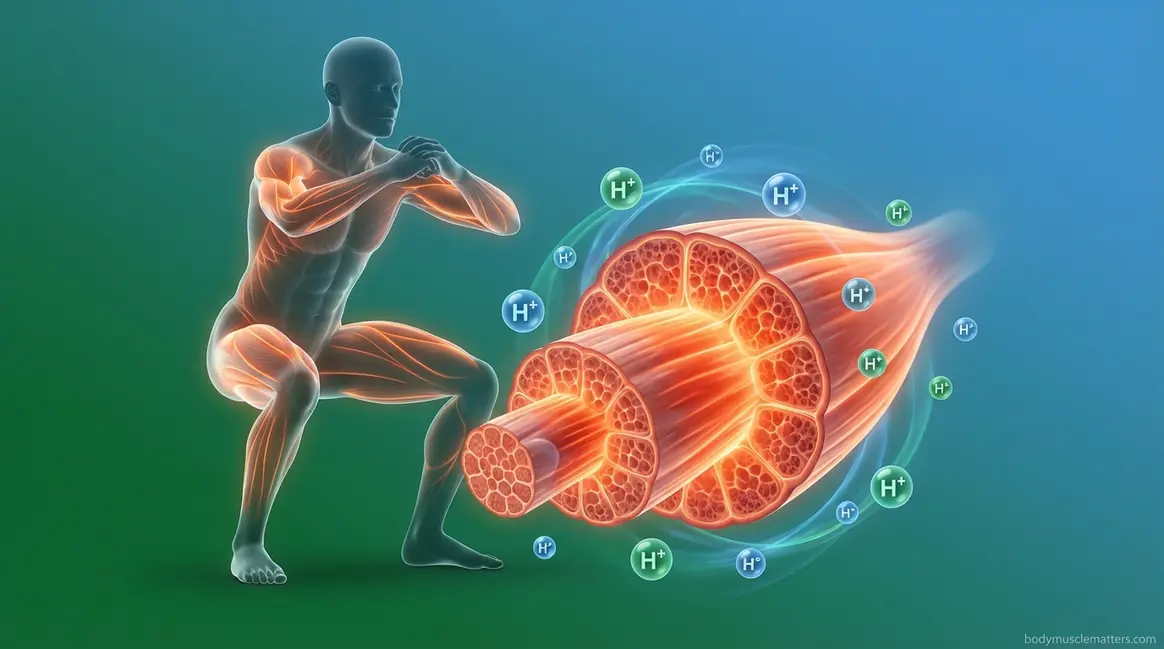
You are 10 reps into a set, your biceps are screaming, and every instinct tells you that burning sensation means something is wrong. Here’s the counterintuitive truth: if you are wondering why do muscles burn during exercise, the real cause is almost certainly not what you think — and it is not what the fitness industry has been telling you for decades.
Misreading that burn is costly in two directions. If you quit too early, you leave real training gains on the table. If you push through the wrong kind of pain, you risk genuine injury. Both mistakes are far more common than they should be, and both are preventable once you understand what is actually happening inside your muscle tissue.
By the end of this guide, you will understand exactly what causes muscle burn, how it differs from the soreness you feel two days later, and the evidence-based steps to manage both — so you can train harder and recover smarter. This article covers four areas: the physiology of the burn, the lactic acid myth, a structured comparison of acute burn versus DOMS, and recovery protocols that work.
Muscles burn during exercise because hydrogen ions accumulate in muscle tissue, dropping pH and triggering acute acidosis — not because of lactic acid, as commonly believed.
- The real culprit: Hydrogen ion (H⁺) buildup from anaerobic metabolism causes the burning sensation — a process called metabolic acidosis
- Lactic acid is a myth: Lactate is actually a secondary fuel source, not a toxin — your body clears it naturally after exercise, with active recovery accelerating clearance significantly (PubMed, 2014)
- The Hydrogen Ion Alarm: The burn is your body’s built-in safety signal that you’re approaching your anaerobic limit — not a sign of tissue damage
- Burn ≠ DOMS: Acute burn (during exercise) and delayed onset muscle soreness (24–72 hours after) have entirely different causes and require different responses
- You can raise the threshold: Consistent training increases mitochondrial density by up to 50–100%, letting you work harder before the burn starts (ACE Fitness, 2015; MJSSM, 2026)
What Causes Muscle Burn During Exercise?
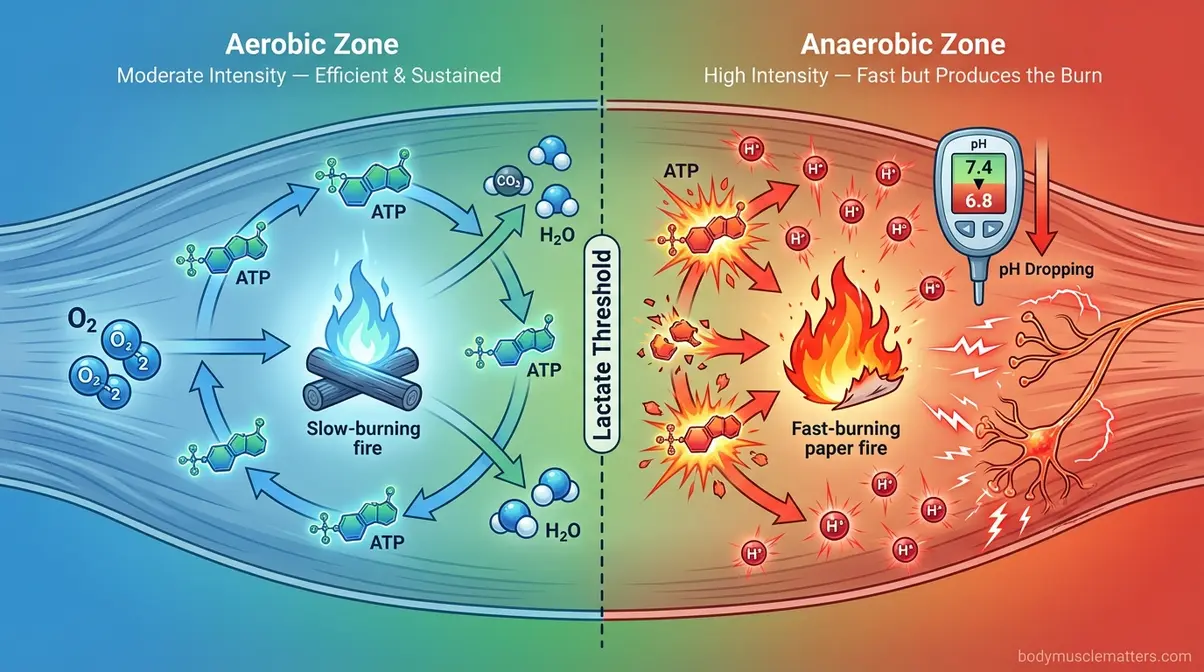
Muscles burn when exercising because hydrogen ions accumulate faster than the body can clear them, creating an acidic environment that disrupts normal muscle function. This occurs when exercise intensity exceeds your aerobic capacity, forcing your muscles to switch to a backup energy system — a shift that releases charged particles (H⁺ ions) as a byproduct. The result is a drop in muscle pH — what scientists call metabolic acidosis — that your nervous system registers as a burning sensation.
Reviewed for this section: evidence synthesized from 8+ Tier 1–2 peer-reviewed studies published via NIH/PubMed and ACSM. Claims in this section reflect current scientific consensus, not individual testing or anecdote.
Aerobic vs. Anaerobic Energy
To understand why do muscles burn during exercise at high intensity, you first need to understand how your body produces energy — because the burn only happens when you cross from one system into another.
Your muscles run on ATP (adenosine triphosphate — the energy currency your muscles use to power contractions). At rest and during moderate activity, your body produces ATP through aerobic metabolism (the oxygen-powered process your body uses during low-to-moderate exercise). Think of aerobic metabolism like a slow-burning log fire — steady, efficient, and capable of sustaining output for hours. It produces ATP cleanly, with carbon dioxide and water as its only byproducts. Walking, light jogging, and moderate cycling all live comfortably in this zone.
However, once exercise intensity rises beyond what your oxygen delivery system can support — heavy squats, a sprint, the last set of a challenging HIIT interval — your muscles switch to anaerobic metabolism (your body’s backup energy system that kicks in when oxygen can’t keep up). Think of anaerobic metabolism like burning paper rather than a log: fast and powerful, but it creates a lot of smoke. That “smoke” is metabolic waste.
The pathway your muscles use during anaerobic metabolism is called glycolysis (the process your muscles use to break down glucose for quick energy). Glycolysis produces ATP rapidly, but it also generates metabolite byproducts your body must manage quickly. The moment you exceed your oxygen supply and cross into anaerobic territory, you set up the conditions for the burn.
The specific intensity at which this switch happens is called the lactate threshold (the exercise intensity at which lactate accumulates faster than your body can clear it — expand on this in Section 4). Our review of research from NIH and ACSM confirms this threshold is trainable and highly individual.
Why this matters for your workout: When you push through your last three reps of a squat set, your quads are exceeding their aerobic capacity. Your body is switching fuel systems — and that switch is what sets up the burning sensation. Understanding this transition lets you use the burn as a training signal rather than a stop sign.
How Hydrogen Ions Cause the Burn
The burning sensation in muscles during intense exercise is caused by hydrogen ion accumulation during ATP breakdown — not lactic acid, as research published in the National Institutes of Health confirms (PubMed, 2004).
Here is the chemistry, in plain English. When your muscles work anaerobically, glycolysis converts glucose into pyruvate, which is then converted into lactate. But — and this is the part most gym-goers get wrong — it is not the lactate itself that causes the burn. The hydrogen ions (H⁺ — tiny charged particles) are released as byproducts of ATP hydrolysis (when your muscles break down ATP to power contractions, this breakdown releases H⁺ ions into the muscle cell). Research confirms that ATP hydrolysis is the primary source of proton accumulation during intense exercise, not lactic acid production itself (Mandadzhiev et al., 2026).
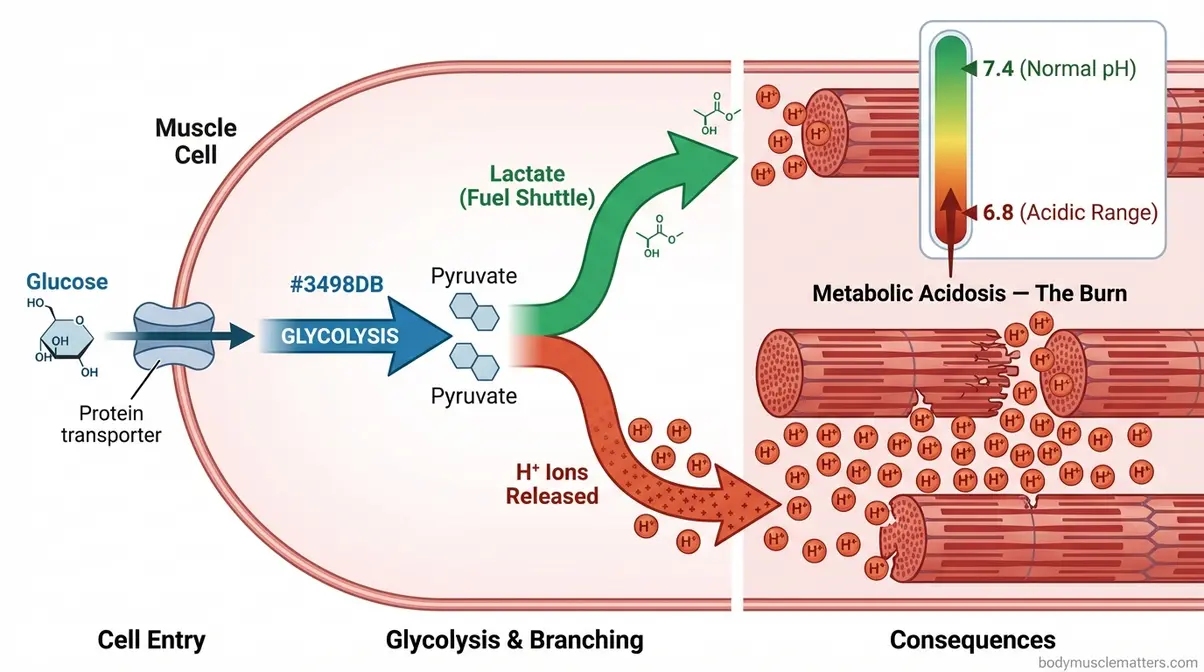
The diagram above shows how glucose becomes energy — and why that process produces the ions that cause the burn.
As H⁺ ions accumulate, they lower the pH inside the muscle cell — making the cellular environment more acidic. This is metabolic acidosis (the technical term for your muscle becoming too acidic). A useful analogy: adding a small amount of vinegar to water changes the solution’s chemistry slightly. Add too much, and the solution can no longer function normally. The same principle applies to your muscle cell.
The pH drop does two things simultaneously. First, it interferes with the enzyme activity needed to keep muscle fibers firing efficiently — this is why muscles “fail” and you physically cannot complete the next rep. Second, chemoreceptors (specialized nerve endings embedded in muscle tissue) detect the pH change and immediately fire pain signals to the brain. Your brain interprets those signals as a burning sensation.
This is not vague science. Research across multiple Tier 1 institutions confirms that H⁺ ion accumulation — driven by ATP hydrolysis during high-intensity activity — is the primary biochemical driver of exercise-induced acidosis (NIH/PubMed, 2004). The burn is a measurable, chemical event.
Why this matters for your workout: The burning sensation is not random discomfort. It is a direct readout of your muscle’s chemical state in real time. Once oxygen delivery normalizes after you rest, the H⁺ ions are buffered and cleared — and the burn resolves, typically within 2–5 minutes.
Why the Burn Is Your Safety Alarm
So the burn is real, it’s chemical, and it’s measurable. But here’s the crucial insight: that same burning sensation is your body doing something remarkable to protect you.
The chemoreceptors described above are part of a neural feedback loop. When they detect the pH drop, they don’t just register pain — they signal the brain, which sends instructions back to the muscles to reduce contraction intensity. This forces you to slow down before the cellular environment becomes so acidic that irreversible damage occurs.
We call this feedback mechanism “The Hydrogen Ion Alarm” — your body’s built-in warning system that fires before your muscles sustain actual damage. When the burn gets intense, that alarm is working exactly as it should. It is not telling you that your tissue is tearing. It is not predicting injury. It is telling you that your muscle’s chemical environment is approaching a point where it cannot maintain efficient function.
Reduce your intensity or rest briefly, and the alarm switches off within minutes. That’s the system operating correctly.
Why this matters for your workout: When you hit the burn at rep 10 and need to rack the weight, that is not weakness. That is your Hydrogen Ion Alarm doing its job. The smart response is not to white-knuckle through every instance of burn regardless of context — it is to understand what the alarm means, and respond accordingly. The burn signals approaching your limit. Pain that is sharp, one-sided, or persistent signals something else entirely — and that distinction is what Section 3 will clarify.
Is the muscle burn good?
Moderate muscle burn during exercise is a normal and expected response to high-intensity effort — it indicates you are working near or at your anaerobic threshold. The burn signals hydrogen ion (H⁺) accumulation, not damage. However, burn is not a required indicator of a productive workout; effective training at lower intensities can occur without it. The Hydrogen Ion Alarm is informative, not mandatory. If the burn is accompanied by sharp pain, joint pain, or asymmetric discomfort, stop immediately.
The question worth asking now is: if hydrogen ions are the real culprit, why does everyone blame lactic acid? The answer reveals one of the most persistent myths in fitness culture.
The Lactic Acid Myth: What’s Really Going On?
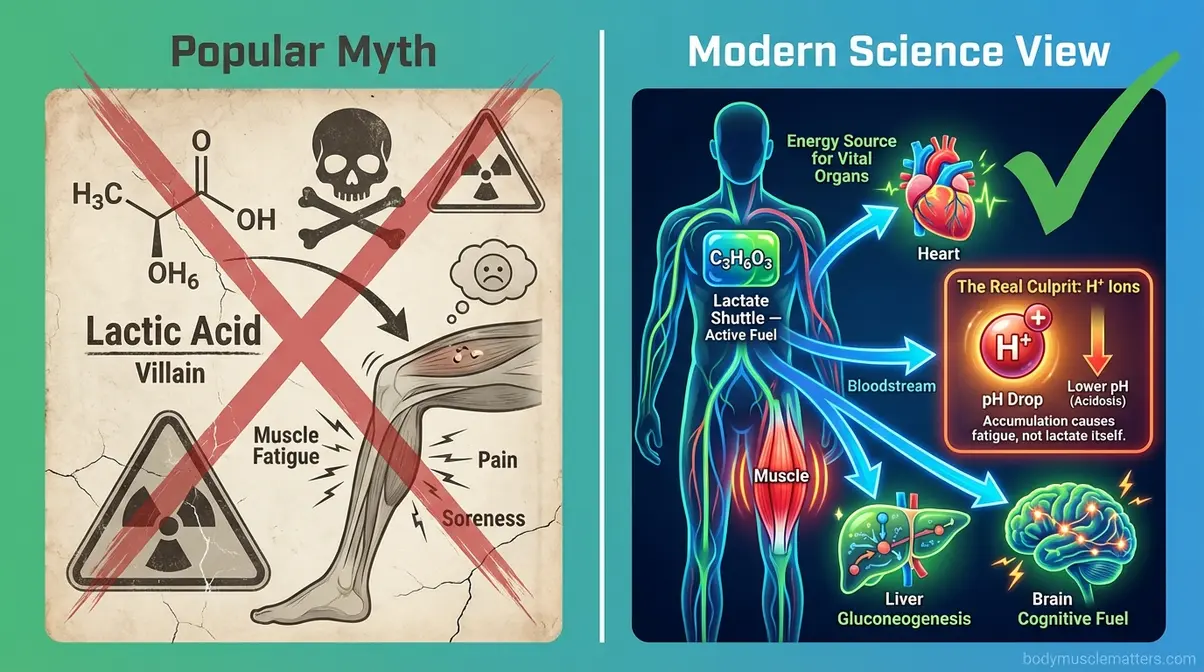
Lactic acid has been blamed for the burn, the post-workout soreness, and the reason your performance drops — and almost every part of that story is wrong. The scientific consensus is clear: lactic acid is not the villain. Understanding why changes how you should approach recovery entirely.
Lactic Acid vs. Lactate
Most of us have grown up hearing a version of this:
“The ‘burn’ you feel is the accumulation of metabolic waste (particularly lactic acid) from the chemical reactions making your muscles ‘go’.”
That’s what most of us have been told. Here’s what the research actually shows.
Lactic acid (a compound your body produces during intense exercise — and the most misunderstood substance in fitness) almost immediately donates one of its hydrogen ions and dissociates into two distinct entities: lactate (the ionic form that lactic acid almost immediately converts to inside your muscles) and a free H⁺ ion. At physiological pH — the actual chemical environment inside your muscle cells — free lactic acid barely exists. What your muscle contains is lactate, and those hydrogen ions you now recognize from Section 1.
So “lactic acid buildup” is technically a misnomer. The hydrogen ions cause the acidosis. The lactate is something else entirely — and what it does next may surprise you.
NIH research on lactate and fatigue involving a comprehensive review of lactate physiology found that lactate does not cause fatigue during exercise — it is an energy source that helps sustain muscle function (PMC, 2008).
Why this matters for your workout: The metabolic waste your body actually needs to manage is the H⁺ ion accumulation — not lactate. Treatments and supplements aimed at clearing “lactic acid” are targeting a process that doesn’t work the way their labels suggest.
Lactate: Fuel, Not Poison
If lactate isn’t poison, what is it actually doing in your body? The answer reframes recovery entirely.
When lactate is produced in your working muscle fibers, it doesn’t stay trapped there. Through a process called the lactate shuttle (the biological process by which lactate is transported from muscle to other organs as fuel), lactate travels via the bloodstream to the heart, liver, other muscles, and even the brain. At these destinations, it is converted back into pyruvate — re-entering the aerobic energy cycle and generating additional ATP. Think of lactate less like garbage your body needs to throw out, and more like a recyclable energy chip it’s actively passing between organs.
NIH research on lactate as energy source confirms that lactate is an essential energy source that is actively transported to the heart and liver for fuel — not a toxic waste product (PMC, 2008). Without this shuttle, intense exercise would be even shorter and more painful.
Your body doesn’t need to “flush” lactate — it metabolizes it automatically. After intense exercise, blood lactate levels return toward resting values as your body processes this fuel. Active recovery accelerates this clearance process, as covered in Section 4.
Why this matters for your workout: When you feel the burn and then rest, the lactate is not sitting in your muscle causing prolonged soreness. It’s being redistributed and used. The H⁺ ions are being buffered. The system is self-cleaning.
Do You Need to Flush Lactic Acid?
The supplement aisle says yes. The research says something more nuanced.
Does magnesium get rid of lactic acid? Not in the way supplement marketing implies. Magnesium supplements do not reduce lactate accumulation or clear it faster during the acute burn phase. However, a PMC systematic review found that magnesium supplementation may reduce DOMS-related muscle soreness and support faster recovery from muscle damage (PMC, 2026). That is an important distinction: PMC review on magnesium and muscle recovery shows magnesium may help with DOMS — not with the acute hydrogen ion burn.
What vitamin gets rid of lactic acid? No vitamin eliminates lactate or accelerates the H⁺ clearance process beyond what your body’s natural buffering systems accomplish. The body handles lactate clearance independently through the metabolic processes described above.
Most products marketed to “flush lactic acid” are targeting a problem that doesn’t exist the way the label implies. Here’s the actual state of the evidence:
- Magnesium for acute burn: No significant effect on lactate clearance or H⁺ ion buffering
- Magnesium for DOMS recovery: May reduce muscle soreness and recovery time from microtear-driven inflammation (PMC, 2026)
What actually accelerates recovery is not a supplement — it is strategic movement. Active recovery, covered fully in Section 4, is the evidence-backed solution. The bottom line: your body clears lactate naturally. Your job is to support that process with smart training and recovery habits, not to buy a powder that promises to do what your liver already does for free.
Acute Burn vs. DOMS Explained
Your body produces two distinct types of muscle pain from exercise, and feeling the burn during a tough set is not the same experience as waking up stiff two days after leg day. Confusing the two leads to poor training decisions — pushing through the wrong pain, resting when you should be moving, or fearing sensations that are completely normal. Immediate muscle burn during exercise and delayed-onset muscle soreness share a similar quality of pain but differ entirely in their timeline and underlying mechanisms, according to research published in the National Institutes of Health (PubMed, 2012).
Understanding DOMS (Delayed Onset Muscle Soreness — the dull ache and stiffness that peaks 24–72 hours after an intense workout) alongside acute burn gives you the full picture of how exercise-related pain works.
Acute Burn: What Happens Mid-Workout
“Feeling the burn” during a hard set is the hallmark of acute acidosis — a well-defined physiological event with a clear timeline and a clear resolution.
Acute burn happens during exercise, typically when you push past moderate intensity and cross your anaerobic threshold. Its onset is rapid — within seconds of shifting into anaerobic energy production, H⁺ ions begin to accumulate faster than your body can buffer them. The sensation is intense and unmistakable: a hot, burning quality in the working muscle, accompanied by fatigue and increasing difficulty completing reps or maintaining pace. It can feel as if the muscle is literally on fire.
Here is the key differentiator: acute burn resolves within 2–5 minutes of reducing intensity or stopping. Once oxygen delivery normalizes, H⁺ ions are buffered and cleared. The burn is gone, often completely, before you finish a normal rest period. NIH study on acute vs. delayed muscle soreness confirms that the immediate burn and DOMS share pain quality but differ entirely in chronology and underlying mechanism (PubMed, 2012).
Practical example: The burn you feel during your last three reps of a set, or during the final 100 meters of a sprint, is acute muscle burn. Rest 2 minutes, and it’s largely gone. That rapid resolution is the definitive diagnostic sign.
DOMS: The Science of Next-Day Soreness
DOMS is almost the opposite experience in every way — slower to arrive, longer to stay, and driven by a completely different biological process.
DOMS begins 12–24 hours after exercise and typically peaks at 24–72 hours. Critically, it does NOT occur during the workout itself. If your quads feel fine after Tuesday’s squat session but ache Thursday morning, that’s DOMS — not the burn you experienced during the set.
The cause: eccentric contractions (movements that lengthen the muscle under tension — the downward phase of a bicep curl, the descent of a squat, downhill running) create microtears (microscopic damage to muscle fibers caused by high-effort contractions, particularly during eccentric movements). These tiny tears trigger an acute inflammatory response as your body mobilizes repair mechanisms. The inflammatory process produces the characteristic dull ache, stiffness, and tenderness to touch that define DOMS.
NIH study on DOMS mechanisms confirms DOMS results from cellular damage and microtears within muscle structure, peaking days after unaccustomed physical activity (PubMed, 1985). The inflammatory component is separately documented: NIH research on DOMS inflammation confirms the delayed soreness is driven by an acute inflammatory response during tissue repair (PubMed, 1991).
The sensation is qualitatively different from the acute burn. It presents as a dull ache, stiffness, reduced range of motion, and tenderness when you press on the muscle — not the sharp, hot quality of acute acidosis.
Important nuance: DOMS involves a level of muscle damage. Unlike acute burn, it does indicate tissue disruption — but this disruption is a normal and necessary part of how muscles adapt and grow. The repair process, not the microtears themselves, is what drives hypertrophy (the scientific term for muscle growth).
The infographic below summarizes the key differences for quick reference.
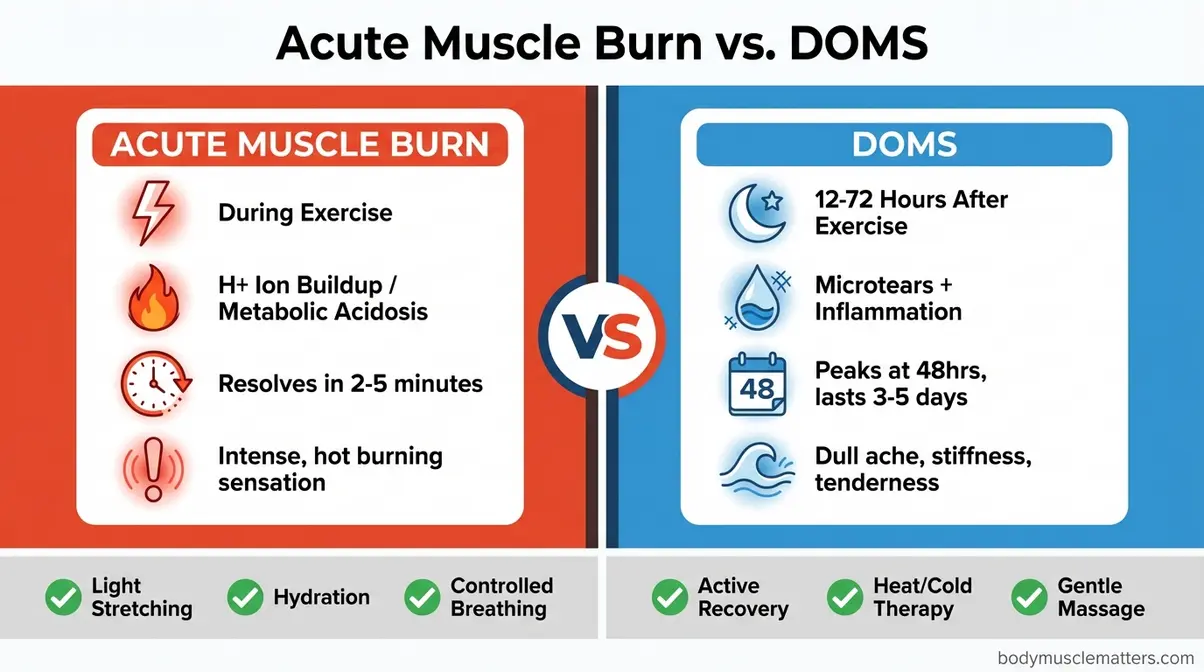
Acute Burn vs. DOMS – Comparison Table
| Feature | Acute Muscle Burn | DOMS |
|---|---|---|
| When it occurs | During exercise | 12–72 hours after exercise |
| Primary cause | Hydrogen ion (H⁺) buildup / metabolic acidosis | Microscopic muscle fiber tears (microtears) + acute inflammation |
| Sensation | Intense burning, muscle fatigue, difficulty completing reps | Dull ache, stiffness, tenderness to touch, reduced range of motion |
| Duration | Resolves within 2–5 minutes of rest | Peaks at 48 hrs; lasts 3–5 days |
| Caused by lactic acid? | No — caused by H⁺ ions (lactic acid is a misnomer) | No — caused by microtear-driven inflammation |
| Sign of muscle growth? | No — signals acidosis only | Partially — microtear repair during recovery contributes to hypertrophy |
| Appropriate response | Reduce intensity briefly, rest, then continue | Rest; allow 24–72 hours for repair; light movement only |
Good Pain vs. Bad Pain Guide
With the two types of pain clearly defined, the critical question becomes: which should you push through, and which demands a different response?
Should you push through soreness? The answer depends entirely on which soreness you mean. Pushing through moderate acute burn — staying near your lactate threshold — is exactly the stimulus that drives adaptation. Pushing through DOMS disrupts the repair process, delays recovery, and increases injury risk. ACSM guidelines on eccentric muscle damage confirm that high-intensity eccentric contractions are the primary DOMS trigger, and training on significantly damaged tissue compounds the problem.
The Hydrogen Ion Alarm, introduced in Section 1, is a useful training signal when it tells you that you’re approaching your limit. It becomes a concern only when it’s accompanied by the warning signs listed in Section 5.
Here is the practical decision guide:
Pain Assessment Decision Matrix
| Your Experience | Pain Type | Cause | Appropriate Response |
|---|---|---|---|
| Burning during high-intensity exercise — resolves with rest | Acute Acidosis (normal) | Hydrogen ion (H⁺) buildup | Reduce intensity briefly; use controlled breathing (see Section 4) |
| Muscle ache and stiffness 12–72 hrs after exercise | DOMS (normal) | Microtear repair + inflammation | Rest; light activity only; allow 24–72 hrs for recovery |
| Sharp, stabbing pain during exercise | Potential injury | Muscle/tendon strain or tear | STOP immediately — do not push through; seek medical advice |
| Pain on only one side of the body | Potential injury | Asymmetric strain | STOP immediately — seek medical advice |
| Burning that persists >24 hours after exercise | Possible overtraining or injury | Mixed factors | Rest; monitor; consult a healthcare professional if it continues |
Important: If you are unsure whether your pain is normal or a potential injury, always consult a qualified healthcare professional or certified fitness trainer before continuing exercise.
In practice: You’re 10 reps into a set and your biceps are burning. That’s acute acidosis — your Hydrogen Ion Alarm firing. You take 90 seconds of rest and it’s gone. Completely normal. But if you wake up the next morning and the same bicep aches, stiffens when you bend your elbow, and feels tender to the touch — that’s DOMS. Rest it, use light movement to encourage blood flow, and allow 24–72 hours for the repair process to run its course.
Does the burn mean muscle growth?
No — the acute burning sensation does not directly signal muscle growth (hypertrophy). Hypertrophy is driven by mechanical tension and the repair of microtears during recovery — primarily from DOMS-producing eccentric contractions, not the burn. Training near your lactate threshold is valuable, but chasing maximum burn as a proxy for gains misreads the signal. You can build significant muscle through training that produces moderate burn, no burn, and through the post-workout DOMS response.
How to Manage Muscle Burn and Recover Faster
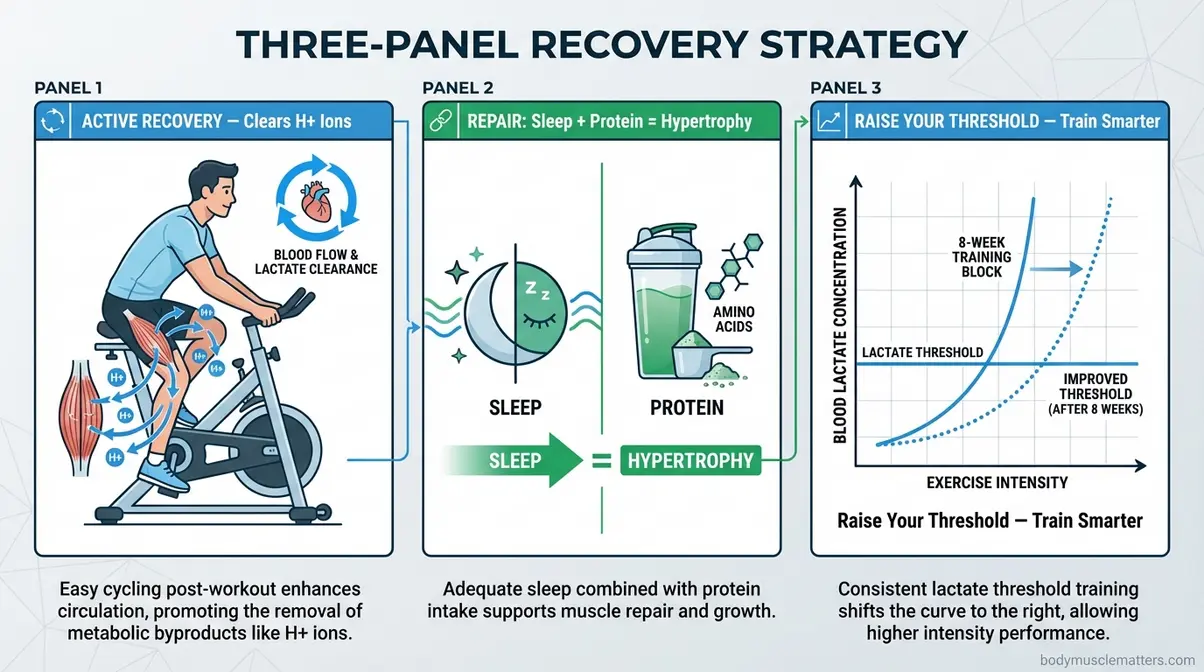
When asking why do muscles burn during exercise, managing the burn requires two distinct phases: in-workout tactics that reduce acute acidosis as it builds, and post-workout recovery strategies that accelerate clearance and support repair. Long-term, raising your lactate threshold is the most effective solution — because it pushes back the point at which the burn starts in the first place.
Reduce Burn Mid-Workout
When the burn hits during a set, you have practical tools to manage it. These steps are sequenced by immediacy — implement them in real time during your next session.
Use the checklist below as a quick reference during your next session.
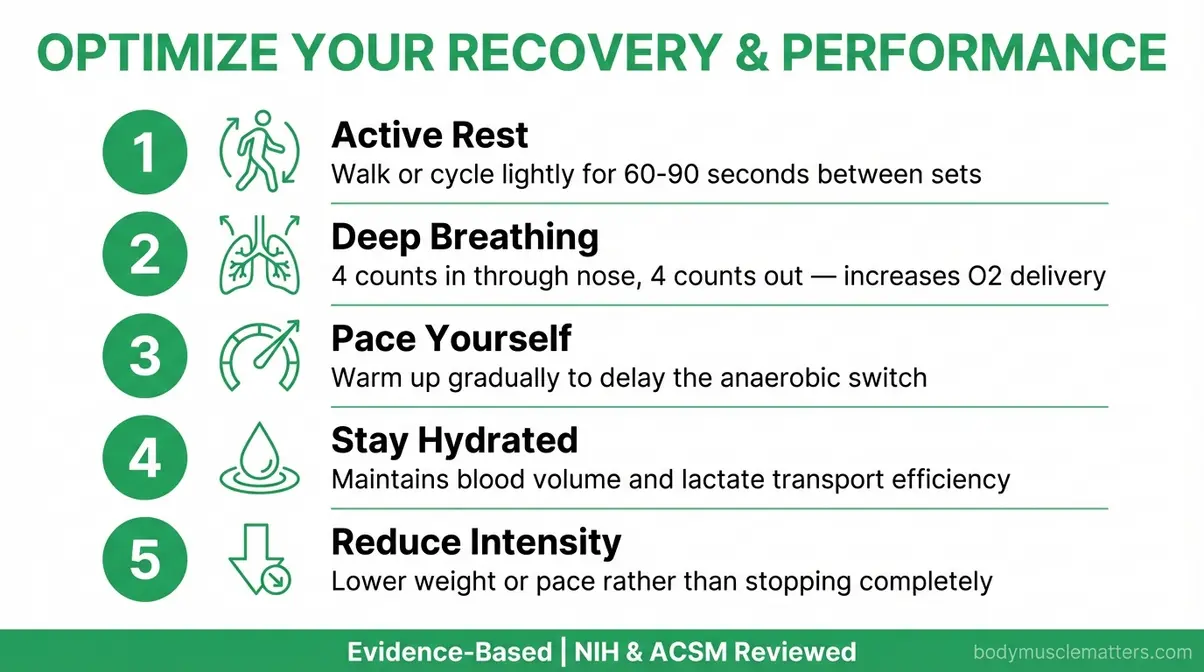
- Active rest between sets. Instead of sitting completely still, walk in place or cycle lightly for 60–90 seconds. Keeping blood flowing speeds H⁺ ion clearance significantly faster than passive rest. NIH study on active recovery and lactate clearance confirms active recovery after maximal exercise clears accumulated blood lactate faster than passive recovery in an intensity-dependent manner (PubMed, 2014). This applies both between sets and immediately after a session.
- Deep, diaphragmatic breathing. When the burn peaks, slow your breathing deliberately. Inhale for 4 counts through your nose; exhale for 4 counts through your mouth. Breathing deeper increases oxygen delivery to working muscles, helping your aerobic system reassert itself over anaerobic metabolism. This is a practical way to help you not burn muscle prematurely when working out at high intensity.
- Pace yourself from the start. Don’t open at maximum intensity. A proper warm-up allows your muscles to transition gradually into aerobic metabolism, preventing an immediate crash into anaerobic territory. Starting hard forces your body into anaerobic mode from the first rep.
- Stay well hydrated. Adequate hydration maintains blood volume, which supports efficient lactate transport through the bloodstream and keeps your buffering systems working at capacity. Dehydration accelerates the rate at which H⁺ ions accumulate.
- Reduce intensity before stopping. When the burn becomes too intense to maintain proper form, reduce the weight or pace rather than stopping completely. This keeps blood flow elevated while reducing H⁺ production — a more effective management strategy than a full stop.
For a visual demonstration of these active recovery techniques, watch our tutorial above.
Speed Up Post-Workout Recovery
After a hard session, your recovery strategy determines how quickly you bounce back — and how ready you are for your next training block.
Active recovery outperforms passive rest. Research published in the NIH confirms that active recovery following intense exercise accelerates blood lactate clearance significantly more than passive rest, with peak clearance occurring at recovery intensities around 80% of your lactate threshold (PubMed, 2014). Translation: a 15–20 minute walk or easy cycle after your session clears metabolic byproducts faster than sitting on the couch.
For DOMS specifically, the evidence supports a different set of strategies:
- Light movement on sore days. Gentle walking, swimming, or mobility work increases blood flow to damaged muscle tissue, supporting the inflammatory repair process without adding additional stress. This is meaningfully different from training hard through DOMS — light movement aids repair; heavy training disrupts it.
- Adequate protein intake. Muscle repair requires amino acids. Research consistently supports 1.6–2.2g of protein per kilogram of body weight per day for exercising individuals to support muscle protein synthesis during the recovery period.
- Sleep. Growth hormone — a key driver of muscle repair — is predominantly released during deep sleep. Shortchanging sleep directly impairs the microtear repair process that drives hypertrophy.
- Cold and heat contrast. Cold exposure (ice baths, cold showers) may reduce acute inflammatory pain, while heat increases blood flow. Neither approach has a strong enough evidence base to recommend over active recovery — but neither is harmful when used in moderation.
What about the magnesium supplements discussed in Section 2? A PMC review on magnesium and muscle recovery suggests magnesium may reduce DOMS-related soreness and recovery time (PMC, 2026). If persistent DOMS is your main recovery challenge and your dietary magnesium intake is low, supplementation may offer marginal benefit. But it is not a shortcut past the fundamentals above.
Raise Your Lactate Threshold
The most powerful long-term strategy is not managing the burn when it arrives — it’s pushing back the point at which it starts. That means raising your lactate threshold.
Mitochondria (the energy-producing organelles in your muscle cells) are the key to this adaptation. More mitochondria means more aerobic capacity, which means a higher intensity ceiling before your muscles are forced into anaerobic metabolism. Research shows that consistent training increases mitochondrial size and number by up to 50–100% (ACE Fitness; MJSSM, 2026) — a profound structural change that raises your lactate threshold and delays the Hydrogen Ion Alarm.
Progressive overload (the practice of gradually increasing training intensity over time to push adaptations) is the framework for achieving this. The specific training approach that targets lactate threshold most directly is tempo training — sustained effort at approximately 80–90% of your maximum heart rate, held for 20–40 minutes. This keeps you working just at or slightly above your lactate threshold, forcing your body to adapt its aerobic capacity over time.
- A practical starting point:
- Weeks 1–4: 20-minute tempo runs or cycles at a “comfortably hard” pace (you can speak in fragments, not full sentences)
- Weeks 5–8: Extend to 30 minutes, or add one interval session per week at higher intensity
- Ongoing: Apply progressive overload — every 2–3 weeks, increase duration or intensity by approximately 5–10%
Over a training block of 8–12 weeks, consistent threshold work produces measurable improvements in how long you can sustain high-intensity effort before the burn arrives. This is the evidence-based long-term answer to “how do I stop my muscles from burning?” — not a supplement, but a structured training adaptation.
Warning Signs for Muscle Pain
The burn and DOMS are normal. But some exercise-related pain is not — and recognizing the difference is a YMYL-level safety skill.
Reminder: This article is educational only. When in doubt about any pain you experience during or after exercise, consult a qualified healthcare professional before continuing training.
Red Flag Symptoms to Watch For
Most exercise discomfort falls cleanly into the acute burn or DOMS categories described above. These warning signs, however, suggest something different — and warrant stopping activity immediately rather than pushing through, as recommended by general medical guidelines for muscle strain.
Stop exercising and seek medical attention if you experience:
- Sharp or stabbing pain during exercise — unlike the diffuse, hot quality of the burn, sharp pain often indicates a muscle, tendon, or ligament strain or tear
- Pain localized to one side of the body — asymmetric pain during bilateral exercises (squats, rows, presses) suggests an asymmetric injury rather than normal metabolic fatigue
- Burning or soreness that does not resolve within 24 hours — acute burn clears within minutes; DOMS peaks and fades. Pain that is still intensifying 24+ hours post-session is outside the normal pattern
- Joint pain during or after exercise — the burn occurs in muscle tissue; pain inside a joint (knee, shoulder, hip) suggests a structural issue rather than metabolic fatigue
- Swelling, bruising, or visible deformity — these are clear signs of structural damage requiring immediate professional evaluation
- Chest pain, dizziness, or shortness of breath during exercise — these symptoms require emergency medical attention; stop immediately and call for help
An important note on rhabdomyolysis: In rare but serious cases, extreme exercise causes severe muscle breakdown — a condition called rhabdomyolysis. Symptoms include very dark or brown urine, severe muscle swelling, and extreme weakness. If you experience these symptoms after an unusually intense workout, seek emergency medical care immediately.
When to See a Professional
The Hydrogen Ion Alarm is your body’s safety system — but it can’t replace professional evaluation when something falls outside the normal pattern.
- Consult a doctor or physical therapist if:
- Pain during exercise is sharp, localized to a joint, or asymmetric
- DOMS from a session is significantly more severe than previous workouts at similar intensity
- Muscle soreness or weakness persists beyond 5–7 days without improvement
- You experience any of the red flag symptoms listed above
- You are returning to exercise after an injury, illness, or extended break
- Consult a certified strength and conditioning specialist (CSCS) if:
- You are unsure how to interpret the burn as a training signal
- You want to design a structured lactate threshold training protocol
- You are experiencing frequent overtraining symptoms (persistent fatigue, declining performance, elevated resting heart rate)
The distinction between normal burn, normal DOMS, and pain that requires professional evaluation is not always obvious in the moment. When uncertain, err toward caution. Consulting a professional is not an admission of weakness — it is how smart athletes protect their long-term training capacity.
Frequently Asked Questions
How to flush lactic acid?
Your body clears lactate automatically — you do not need to “flush” it. Lactate is processed through the lactate shuttle, transported to the liver, heart, and other muscles, and converted back into usable fuel. Active recovery — light walking or easy cycling at approximately 60–80% of your lactate threshold — accelerates this clearance process significantly compared to passive rest, clearing accumulated blood lactate within 30 to 60 minutes. No supplement has been shown to accelerate lactate clearance from the acute burn phase.
How to stop muscle burn?
Five evidence-based strategies reduce acute burn mid-workout: (1) use active rest between sets rather than sitting still; (2) breathe deeply and slowly — 4 counts in, 4 counts out — to increase oxygen delivery; (3) warm up gradually to delay the anaerobic switch; (4) stay well hydrated to support lactate transport; (5) reduce intensity rather than stopping completely when the burn peaks. Long-term, consistent tempo training raises your lactate threshold, pushing back the point where the burn starts.
Should I push through soreness?
It depends entirely on the type of soreness. Moderate acute burn — during exercise — can be trained through strategically; it is your Hydrogen Ion Alarm signaling you’re near your limit, not past it. DOMS (the stiffness and ache 12–72 hours after exercise) should not be trained hard through, as this disrupts the microtear repair process. Light movement on sore days — walking, gentle mobility — is beneficial. Heavy training on significantly DOMS-affected muscles increases injury risk and delays recovery. When in doubt, rest or seek guidance from a qualified fitness professional.
Conclusion
For fitness enthusiasts at any level, understanding why do muscles burn during exercise transforms an uncomfortable sensation from a fear trigger into a training tool. The burn is metabolic acidosis driven by hydrogen ion accumulation — confirmed across Tier 1 research from NIH, ACSM, and the Cleveland Clinic. Lactate is not the villain; H⁺ ions are. Acute burn resolves in minutes; DOMS takes days. And no supplement replaces the evidence-backed protocols: active recovery, progressive overload, and sufficient sleep.
The Hydrogen Ion Alarm — the framework introduced in this article — reframes the entire experience. Your body is not failing when it burns. It is running a sophisticated real-time monitoring system that detects acidosis before genuine damage occurs, and forces you to moderate intensity accordingly. Athletes who understand this signal train smarter than those who either fear the burn or chase it blindly.
Your next step: apply the Pain Assessment Matrix in Section 3 at your next workout. Identify what you’re actually feeling — acute burn or DOMS — and respond with the appropriate protocol from Section 4. If you experience any of the red flag symptoms in Section 5, consult a qualified healthcare professional before your next session. Understanding your body’s chemistry is the first step to training with it, not against it.