
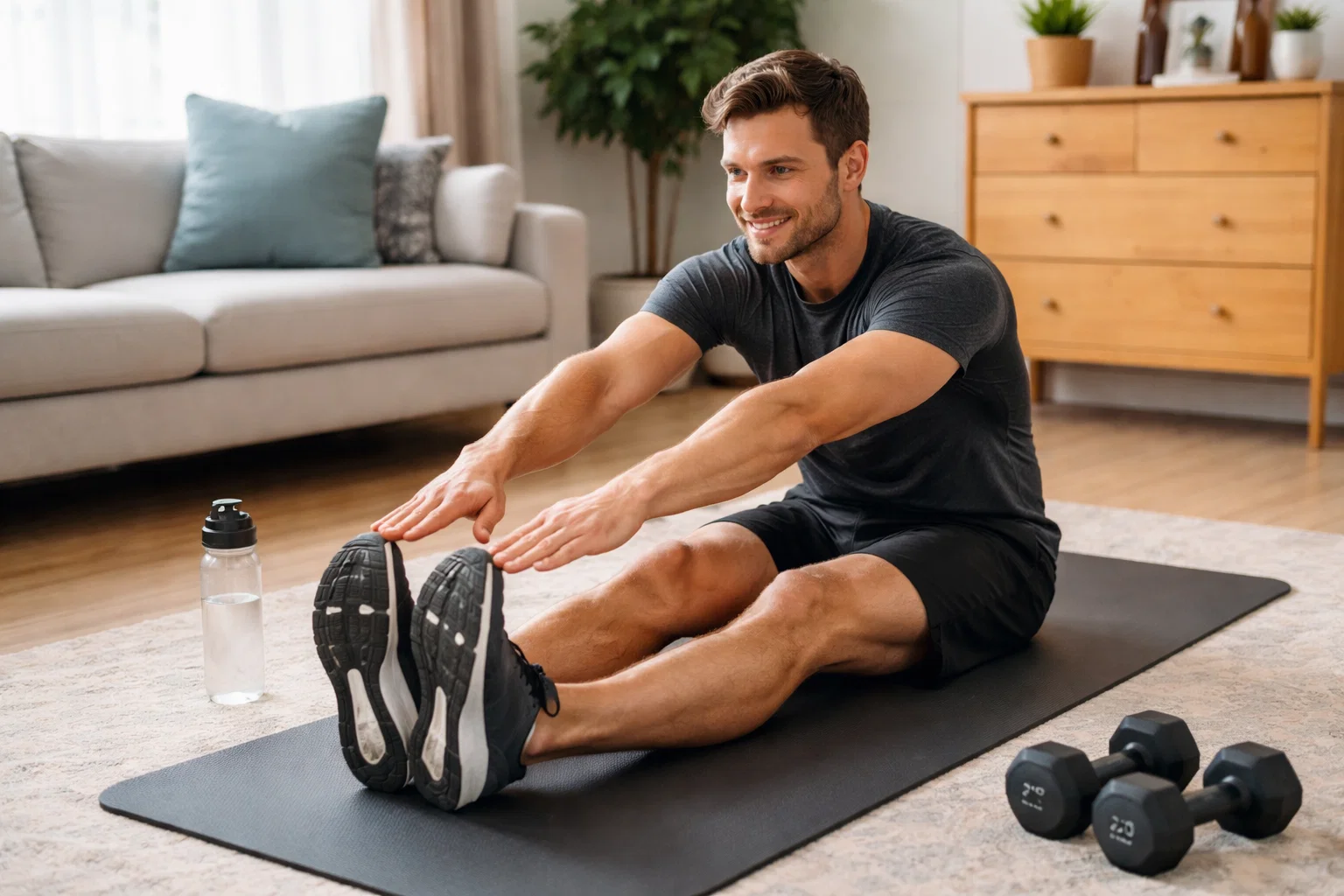
You want to build muscle and get stronger at home, but gym memberships cost too much and fancy equipment drains your wallet fast. Quality home workout gear can run hundreds or thousands of dollars, and that keeps many people from starting their fitness journey. The good news is you don’t need to spend a fortune to create an effective home gym that delivers real results.
This guide covers 15 affordable home workout equipment picks for 2025 that give you serious value without the premium price tag. You’ll find practical options ranging from adjustable dumbbells and resistance bands to compact cardio machines and recovery tools. Each recommendation includes what to look for, how to use the equipment effectively, and where you can save money without sacrificing quality. Whether you’re working with 50 square feet or 500, these budget picks help you build strength and stay consistent with your training.

- 【Workout Equipment System】Portable Exercise Pack is used with various workout equipment attachments:Foldable Push up board,3-section Bar,6 Resistance Bands, 2 Ankle Strap,Door nachor,Ab roller wheel,Which can fulfill most of your workout needs in the gym.
- 【Unique Push Up Board】The unique appearance of custom design is fashionable and efficient. Working out the right muscle groups according to the color area improves exercise efficiency by 80%. Target (chest, triceps, shoulders, back) for maximum effect.
- 【Portable Home Gym】Designed to replace bulky equipment and machines in gyms and combine them into one creative workout concept. It’s a home gym that you can take anywhere, Work your whole body out, Take up no space, and save you the expensive cost of a gym.
- 【Fitness System for Anyone】Versatile home portable fitness device, We’ve kept the professional push up straining, Added foldable fitness bars and wrist/ankle straps, Ab roller wheel and 6 resistance bands so You can perform more exercises. Light but stable enough. You can choose the intensity according to your ability.
- 【Service】Share this push up board with your friends and everyone who loves to exercise!Help you with upper or lower body exercise, Strength training or aerobic exercise, You can exercise and burn calories anytime, Anywhere. If you have any problem, Please contact us and we will give you the solution within 24 hours.

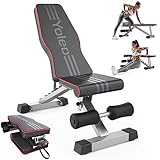
- 【Yoleo】is a fitness equipment brand that aims to provide affordable, durable and effective weight bench for the home
- 【Stable Structure】Heavy duty steel makes this weight bench a sturdy support for the toughest workouts. Mechanics construction based on the double-triangle structure and double supports create the best stability
- 【84 Adjustable Options& Fast Adjustment】 This workout bench offers 7 back adjustments, 4 seat adjustments and 3 leg adjustments. So this adjustable weight bench is also an incline, decline, or flat bench. It means you can perform movements on any of those planes. The ladder-style adjustment is fast and secure because a user can adjust it in a few seconds
- 【Portable&Compact Design】This bench press bench measures 31.5″L x 12.6″W x 13″ H when folded, making it highly portable and comfortably small. It weighs about 23.1 pounds. When unfolded, it stands at 41″ L x 12.6″ W x 42.5″ H —small enough to fit into tight workout spaces
- 【High-quality Materials】1.4″ thickness back pad and seat pad are made from high-density foam, composite board and PU leather cover. They can run smoothly to ensure a great exercise experience. And 2.4″ thickness leg foam also improves leg drive

- MINI LOOP BANDS FOR LOWER BODY ACTIVATION: Joey Thurman mini loop resistance bands are designed to target glutes, hips, thighs, and legs, making them ideal resistance bands for legs and lower-body activation; use these loop bands for exercise such as squats, lateral steps, bridges, kickbacks, and core work for fast activation in any home gym
- COMPACT RESISTANCE BAND SET FOR ANY ROUTINE: This mini resistance band set easily fits into warmups, circuits, and finishers, pairing well with home workout equipment and other exercise equipment for home; a simple and effective home gym upgrade without bulky machines
- BOOTY BANDS FOR WOMEN AND MEN: These booty bands for workouts provide steady tension and controlled resistance for glute-focused routines; great for hip band movements and resistance band exercises such as bridges, pulses, abductions, step-outs, and lower-body conditioning
- STRETCHING, MOBILITY, AND RECOVERY SUPPORT: Use these resistance bands for stretching, warmups, and cooldowns to improve flexibility and range of motion; also suitable as resistance bands for physical therapy and therapy band routines focused on stability, control, and injury prevention
- PORTABLE HOME GYM ACCESSORIES: Mini resistance bands pack and store easily, making them practical home gym accessories and home gym essentials; use exercise bands resistance at home or on the go and keep them with your home exercise equipment for quick workouts anytime
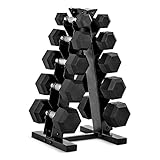
- SET INCLUDES – A pair of 5-pound, 10-pound, 15-pound, 20-pound, and 25-pound rubber hex dumbbells with a black A-frame dumbbell rack to store the weights. E-commerge packaging. This set ships in multiple boxes.
- SPACE-SAVING DESIGN – The A-frame design of this rack maximizes floor space by storing dumbbells in an “A” shape, or vertical fashion. Easily access and store dumbbells. Rubber inserts prevent dumbbells and rack from scratches
- DURABLE AND RELIABLE – Rack is made with steel and finished with durable black powder coat. Heads are made from ASTM A48 Class 20 grey iron and joined together by a 1018 cold rolled solid steel handle (sizes 15-120lb) with an extreme durable rubber coating.
- VERSATILE – Dumbbells offer the ability to target specific muscle groups or perform a full body workout. Perfect for isolations, functional and HIIT workouts, and strength training routines
- FEATURES – The original hex shaped heads prevent rolling. The medium depth knurling on the handle provides essential grip and security during use. Rubber coating is a durable and effective finish

- 【Original Stepper 】The Sunny Mini Steppers for exercise at home: Perfect for portable, sleek, and compact stair stepping. Achieve your cardio goals anytime, anywhere. Backed by a legacy of over 30,000 reviews, we are the trusted choice of more than a million satisfied customers. Sunny is the authentic brand for quality exercise steppers
- 【Quality Frame & Upgraded Weight Capacity】Built with heavy-duty 2.5mm thick commercial steel, Sunny steppers deliver unwavering stability and now feature an upgraded, certified 300 lb weight capacity for enhanced strength and performance. Step confidently, knowing you’re using a rigorously tested, reliable exercise machine.
- 【Full Body Workout】Engage your core, glute, and legs with this low-impact stepper, promoting fat burning and muscle strengthening. Add removable resistance bands to enhance exercise for your chest, back, and shoulders, targeting the upper body effectively
- 【High-Resistance Cardio Workout】Experience effective cardio burns with Sunny’s high-quality hydraulic system, designed to offer high resistance and intense workout
- 【Adjustable Intensity】Use the height adjustment knob to easily switch between short, intense bursts and longer, steady strides, tailoring the intensity to suit your workout mood
1. Body Muscle Matters workout guides
You don’t need expensive personal training or monthly app subscriptions when free workout programs already exist on Body Muscle Matters. These guides give you structured training plans that work with minimal equipment, and they cost you absolutely nothing. Starting your fitness journey with proven workout templates helps you stay consistent without gambling on equipment you might not use.
What Body Muscle Matters offers
Body Muscle Matters provides complete workout routines designed for different experience levels and goals. You’ll find programs for building muscle mass, burning fat, and improving strength that tell you exactly which exercises to perform, how many sets and reps to complete, and when to rest. The guides include exercise demonstrations and form tips so you train safely from day one.
How these guides stretch your budget
Free workout plans save you hundreds of dollars annually compared to gym memberships or coaching services. You avoid buying random affordable home workout equipment because each guide specifies what tools you actually need for that program. This approach lets you invest strategically in one or two key items rather than filling your space with unused gear.
When you follow a structured plan, you buy equipment with purpose instead of collecting dust catchers.
Best ways to use the plans at home
Pick one complete program and commit to finishing it before switching to another routine. Most guides work in small spaces and require only bodyweight exercises or basic equipment like dumbbells or bands. Set up a dedicated workout zone in your home where you can access the guide on your phone or printed sheet, and schedule training sessions like appointments you can’t skip.
2. Adjustable dumbbells set
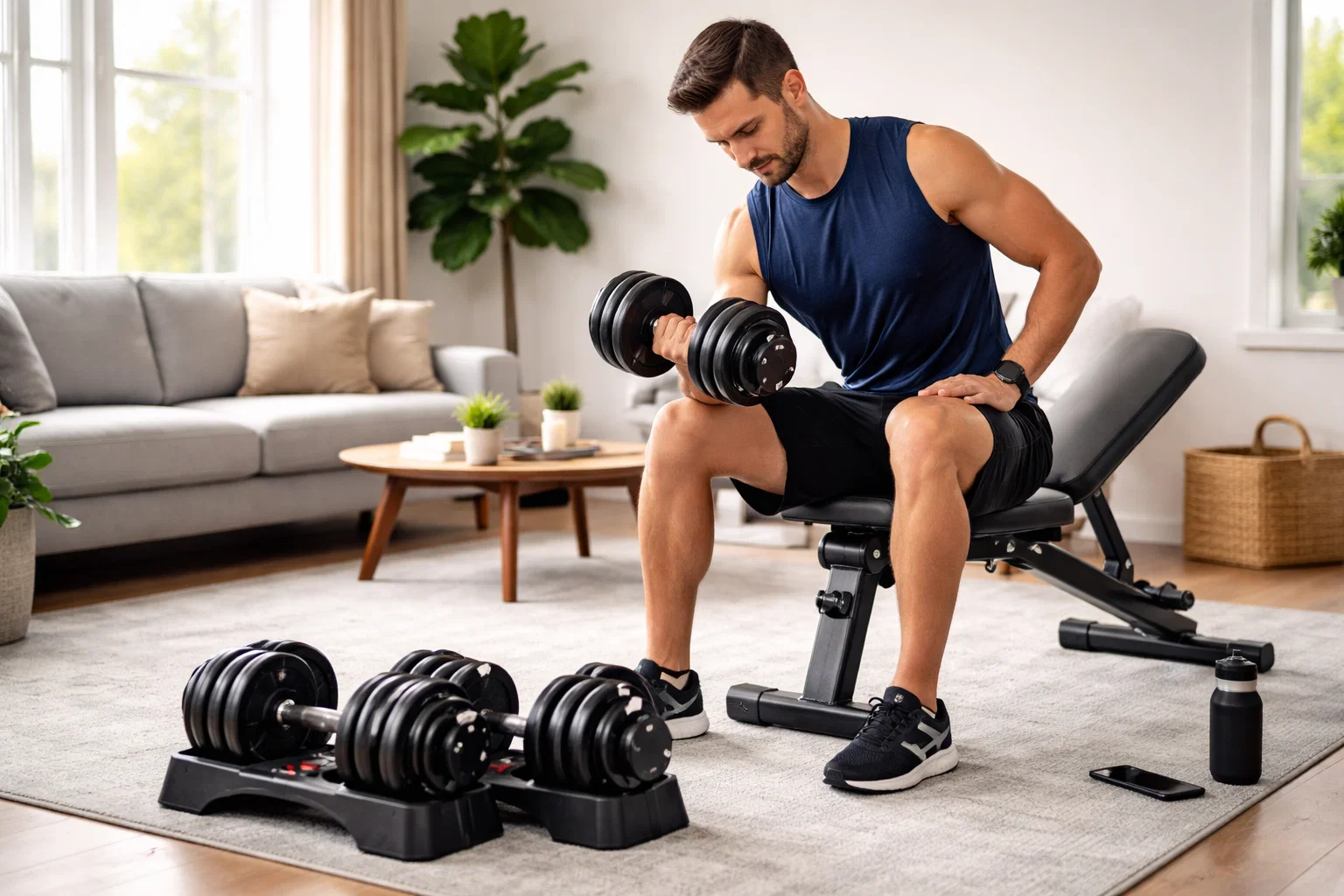
Adjustable dumbbells give you multiple weight options in one compact package, making them the smartest first purchase for affordable home workout equipment. Instead of buying 10 or 15 pairs of fixed dumbbells that cost hundreds of dollars and eat up floor space, you twist a dial or move a pin to switch between 5 to 50 pounds or more. This single investment replaces an entire dumbbell rack and lets you progress through different strength levels without buying new weights every few months.
Why adjustable dumbbells beat big racks
Fixed dumbbell sets require dedicated storage space and cost significantly more when you factor in the price per pound across multiple pairs. You’ll spend $500 to $1,000 for a complete fixed dumbbell rack, while quality adjustable sets run $200 to $400 and fit in a closet or under your bed. The space savings matter especially in apartments or small homes where every square foot counts for daily living.
Key exercises you can do with one set
Your adjustable dumbbells work for upper body pressing movements like bench press variations, shoulder presses, and chest flyes when you pair them with a simple bench. You can target your back with rows and pullovers, build your legs with goblet squats and lunges, and hammer your arms with curls and tricep extensions. Core work gets more challenging when you hold dumbbells during Russian twists or weighted crunches, giving you a true full body training tool.
One pair of adjustable dumbbells replaces dozens of fixed weights and handles every major muscle group in your home gym.
How to choose a durable budget friendly pair
Look for metal construction rather than plastic components that crack or break after repeated weight changes. The adjustment mechanism should feel smooth and lock securely at each weight setting without wobbling or slipping during your exercises. Check user reviews specifically for complaints about handle comfort and whether the weights balance properly, since some cheaper models feel awkward or uneven when you lift them.
Typical price range and where to save
Budget friendly adjustable dumbbells start around $150 for sets that go up to 25 pounds per hand, while mid-range options that reach 50 pounds typically cost $250 to $350. You’ll find the best deals during major shopping events like Black Friday or when fitness brands run seasonal promotions. Buying directly from manufacturer websites often saves you money compared to third party retailers, and you can sometimes find open box or refurbished sets that work perfectly for 20 to 30 percent less than new prices.
3. Resistance bands kit
Resistance bands deliver progressive resistance training for a fraction of what you’d pay for weight plates or machines, making them essential affordable home workout equipment. A complete kit typically costs $20 to $50 and includes multiple resistance levels that challenge every major muscle group. These portable bands fit in a drawer or small bag, giving you a full gym experience anywhere you have a door anchor or stable attachment point.
What comes in a good resistance band kit
Quality resistance band kits include four to five bands with different resistance levels, usually color coded from light to heavy tension. You should get door anchors that let you secure bands at various heights, plus ankle straps and handles for comfortable gripping during exercises. Most kits throw in a carrying pouch and an exercise guide showing proper form for dozens of movements.
Strength and mobility benefits at home
Bands create constant tension throughout each exercise movement, which builds muscle endurance and strength differently than free weights. You can perform chest presses, rows, squats, and shoulder work with proper resistance while protecting your joints from the impact of heavy loads. The variable resistance pattern also improves your mobility and flexibility when you use lighter bands for stretching and warm up routines.
Resistance bands challenge your muscles through the entire range of motion instead of just at specific points like many machine exercises.
How to avoid flimsy or unsafe bands
Check that bands use natural latex rubber or high quality synthetic materials rather than cheap rubber that snaps easily. Look for reinforced stitching on handles and anchors, and avoid kits with thin bands that show visible wear or weak points. Read user reviews specifically mentioning durability after months of use, since some budget bands fail after just a few weeks of regular training.
Smart ways to combine bands with weights
Stack bands with your dumbbells during pressing movements to increase peak contraction resistance at the top of each rep. You can wrap bands around your adjustable dumbbells during squats or deadlifts to add accommodating resistance that gets harder as you stand up. This combination lets you create unique training stimulus without buying additional expensive equipment, and it teaches you how to generate more force through complete movement patterns.
4. Single kettlebell or pair
A single kettlebell gives you explosive power training and cardiovascular conditioning in one affordable home workout equipment piece that takes up less space than a basketball. Starting with just one 25 to 35 pound kettlebell costs $30 to $60 and lets you perform hundreds of exercises that build strength, burn fat, and improve your athletic performance. You can add a second kettlebell later when you master basic movements and want to progress to more advanced bilateral exercises.
Why kettlebells work for full body training
Kettlebells force you to stabilize the weight during dynamic movements like swings, cleans, and snatches that engage multiple muscle groups simultaneously. The off center weight distribution creates constant tension through your core and grip while challenging your legs, back, shoulders, and arms in functional movement patterns. This training style builds real world strength and burns significantly more calories than isolated machine exercises.
One kettlebell swing session works more muscles in 20 minutes than most people hit during an hour of traditional weight training.
How to pick the right weight to start
Men typically start with a 35 pound kettlebell for basic swings and movements, while women usually begin with a 25 pound option that allows proper form development. You want a weight that feels challenging during sets of 10 to 15 swings but doesn’t force you to compromise your hip hinge technique or lower back position. Starting lighter helps you master the movement patterns before adding heavier loads that increase injury risk.
Cast iron versus vinyl coated options
Cast iron kettlebells cost less and provide better durability than vinyl coated versions, but they can damage floors if you drop them during workouts. Vinyl coated options protect your flooring and reduce noise, though the coating sometimes cracks or peels after months of regular use. Choose cast iron if you train on rubber mats or in a garage, and pick vinyl coating when you work out on hardwood or tile surfaces in your home.
Sample workouts for small spaces
Perform kettlebell swings for 30 seconds followed by 30 seconds rest for 10 rounds to build power and conditioning in any 6 by 6 foot space. You can do goblet squats, single arm rows, overhead presses, and Turkish get ups in the same compact area without moving furniture or reorganizing your room. These movements require only enough clearance to swing the kettlebell safely without hitting walls or ceiling fixtures.
5. Foldable weight bench
A foldable weight bench transforms your affordable home workout equipment collection from basic to comprehensive by unlocking dozens of pressing and isolation exercises you can’t perform effectively on the floor. Quality foldable benches cost $80 to $200 and store vertically against a wall or slide under your bed when not in use. This single addition lets you maximize your dumbbells and resistance bands while targeting muscle groups that bodyweight training struggles to reach.
How a bench expands your exercise options
Your bench enables proper chest pressing angles for building your pecs with dumbbells or resistance bands anchored low to the ground. You can perform incline presses to hit your upper chest, flat presses for overall development, and decline variations when you flip the bench around. Back exercises like dumbbell rows become more effective when you brace against the bench pad, and you gain access to seated shoulder presses, tricep dips, and Bulgarian split squats that require stable elevation.
Flat versus adjustable bench on a budget
Flat benches cost $80 to $120 and give you one pressing angle plus a stable surface for rows and step ups. Adjustable benches run $150 to $200 but let you change the backrest to multiple incline positions that target different portions of your muscles. Choose flat if your budget stays tight and you primarily need horizontal pressing support, or invest in adjustable when you want maximum exercise variety from one piece of equipment.
An adjustable bench gives you three to five pressing angles instead of just one, multiplying your exercise options without buying additional gear.
Key specs to check before you buy
Look for benches rated to hold at least 600 pounds of combined user and weight capacity to ensure structural stability during heavy lifts. The pad should measure 10 to 12 inches wide with two to three inches of firm cushioning that supports your back without excessive sinking. Check that the frame uses steel tubing rather than thin metal that bends, and verify the folding mechanism locks securely in both open and closed positions.
Storage tips for tiny apartments
Fold your bench immediately after each workout and store it vertically behind a door or in a closet to reclaim floor space. You can slide most foldable benches under beds or couches when the clearance measures at least 8 inches. Wall mounting hooks let you hang lighter benches off the ground entirely, though you need to confirm your wall studs can handle the weight safely.
6. Suspension trainer straps
Suspension trainer straps turn any doorway or sturdy anchor point into a complete strength training station that challenges your entire body using only your weight and gravity. These affordable home workout equipment pieces cost $30 to $100 for quality options and pack into a bag smaller than your gym shoes. You can perform hundreds of exercises that build muscle, improve stability, and develop functional strength without buying weights or machines.
How suspension trainers use bodyweight
Suspension straps create instability during exercises that forces your core and stabilizer muscles to work harder than they would with fixed equipment. You adjust the difficulty by changing your body angle relative to the anchor point rather than adding weight plates or switching dumbbells. Leaning back further during rows makes the movement harder, while stepping closer to the anchor reduces resistance during push up variations.
Door anchor versus ceiling mount setups
Door anchors let you set up suspension trainers in seconds without drilling holes or permanently modifying your home. You wedge the anchor over any sturdy door, close it securely, and attach your straps to the loop that hangs on the other side. Ceiling or wall mounts provide more stability and exercise options at different heights, but they require installation and work best for homeowners who can modify their space.
Suspension trainers give you a gym’s worth of exercises in a package that fits in your backpack and sets up in under a minute.
Who benefits most from this tool
Suspension training works exceptionally well for people with limited space and budget who want comprehensive strength training without buying multiple pieces of equipment. Athletes and active individuals appreciate how the straps improve balance and coordination through unstable movement patterns. Beginners benefit from the scalable difficulty that lets you start easy and progress gradually.
Budget friendly brands and price range
Quality suspension trainers start around $30 for basic straps with handles and door anchors that handle most exercises effectively. Mid-range options cost $50 to $80 and include thicker webbing, padded handles, and sometimes foot cradles for advanced movements. Premium brands charge $100 or more but don’t always deliver significantly better performance for home users training three to five times weekly.
7. Doorway pull up bar
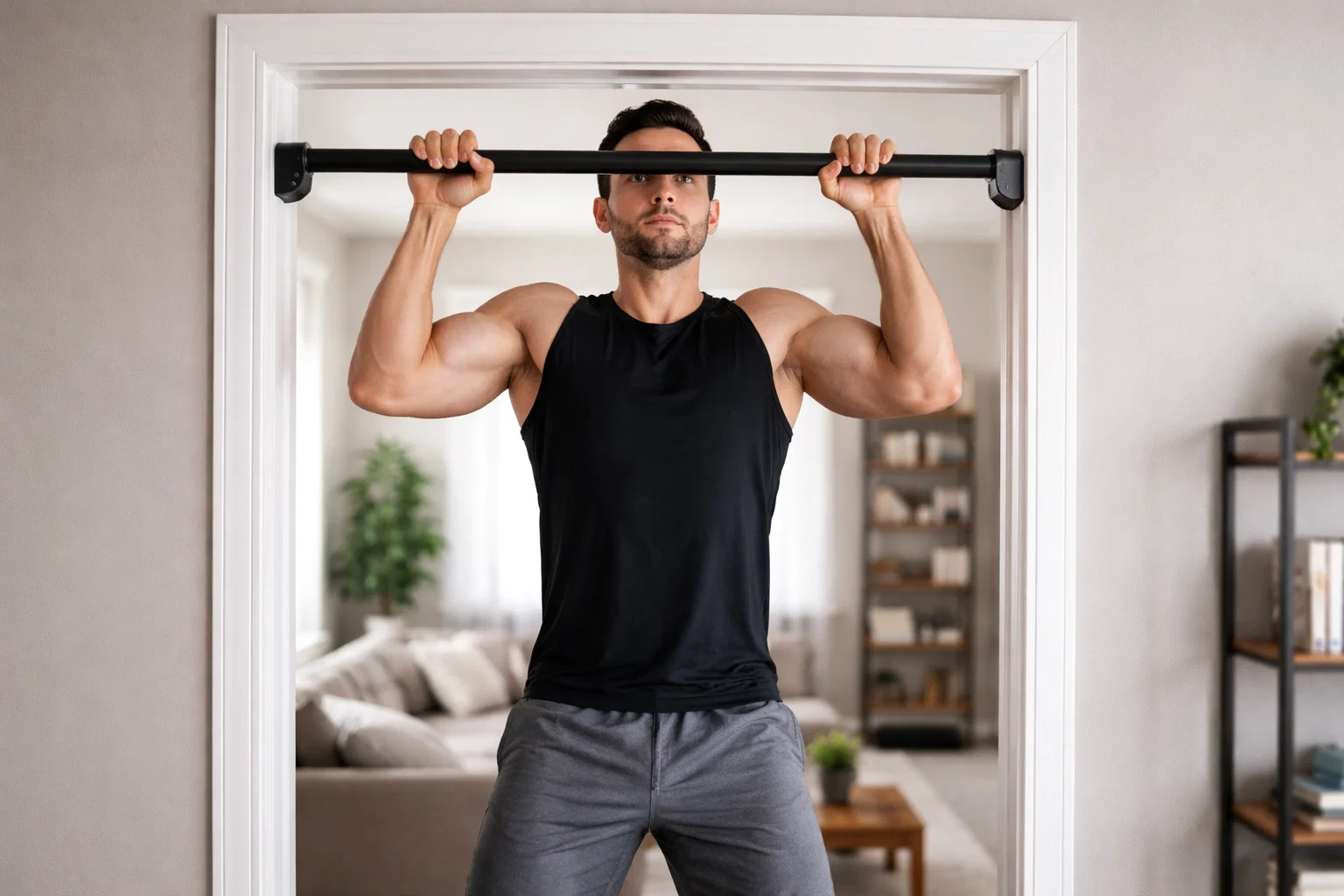
A doorway pull up bar gives you upper body pulling strength training for $20 to $40 without mounting anything permanently to your walls or ceiling. You can build your back, biceps, and grip strength with one piece of affordable home workout equipment that installs in seconds and removes just as quickly. This simple tool challenges your body in ways that dumbbells and bands struggle to match, especially for vertical pulling movements that develop width and thickness through your lats.
Pull up variations for every strength level
You start with assisted pull ups using a resistance band looped over the bar and under your feet to reduce the weight you need to lift. Negative pull ups work when you jump to the top position and lower yourself slowly over three to five seconds, building strength until you can perform full repetitions. Advanced lifters add weight with a backpack full of books or water bottles, or they switch to single arm progressions that demand exceptional pulling power.
Safety checks before installing a bar
Check that your door frame measures standard residential dimensions of 24 to 36 inches wide with solid wood or metal construction rather than hollow core material. You need at least one inch of clearance on both sides of the doorway for the bar to grip securely without damaging the frame. Test the installation by hanging from the bar with both hands before attempting exercises, and inspect the mounting points weekly for cracks or loosening.
Your door frame must support your full body weight plus any dynamic loading from pull up movements without flexing or shifting.
Multi grip versus straight bar choices
Straight bars cost $20 to $25 and provide one neutral grip position that works for basic pull ups and chin ups. Multi grip bars run $30 to $40 but offer parallel handles and angled grips that reduce wrist and elbow strain while targeting different portions of your back muscles. Choose multi grip when you want exercise variety and joint protection, or pick straight bars when budget matters most.
How to pair this with other cheap gear
Combine your pull up bar with resistance bands to create assisted pull up variations or add accommodating resistance at the top of each rep. You can hang your suspension trainer straps from the bar for rows and face pulls that complement your vertical pulling work. Stack these tools together for a complete back and biceps workout that costs under $100 total.
8. Jump rope for cardio
A simple jump rope delivers intense cardiovascular training for $10 to $30 and fits in your pocket when you travel or store it between workouts. You burn up to 10 calories per minute jumping rope at moderate intensity, matching or exceeding what you’d burn on cardio machines that cost hundreds or thousands of dollars. This piece of affordable home workout equipment requires only enough clearance to swing the rope over your head, making it perfect for small apartments or outdoor spaces.
Why jump rope beats many cardio machines
Jump ropes cost less than 5 percent of what you’d spend on a treadmill or stationary bike while providing comparable calorie burn and cardiovascular benefits. You can adjust intensity instantly by changing your jumping speed or style rather than programming machine settings or waiting for resistance to shift. The portability lets you maintain your cardio routine anywhere you travel, and you avoid the maintenance costs and repairs that expensive machines require over time.
Speed rope versus weighted rope
Speed ropes use thin cables or lightweight cords that spin fast for double unders and high intensity interval training that challenges your coordination. Weighted ropes add 1 to 3 pounds in the handles or cable to increase upper body engagement and build grip strength during longer steady state sessions. Choose speed ropes when you prioritize calorie burn and agility, or pick weighted versions when you want additional arm and shoulder conditioning.
Weighted ropes turn your cardio session into an upper body workout that builds muscular endurance while your heart rate climbs.
Technique tips to protect joints
Land on the balls of your feet with soft knees rather than slapping your heels down hard on each jump. Keep your elbows close to your body and rotate the rope using wrist motion instead of large arm circles that waste energy and increase impact. Start with 30 second intervals followed by equal rest periods to build conditioning gradually without overloading your ankles and knees.
What to look for in an affordable rope
Quality jump ropes feature adjustable length cables that you can customize to your height by cutting or repositioning the handles. Look for ball bearing handles that rotate smoothly rather than fixed grips that twist and tangle the cable during use. Choose ropes with comfortable grip material that doesn’t slip when your hands sweat, and verify the cable uses durable steel or coated wire that resists fraying.
9. Compact cardio machine
Compact cardio machines fill the gap when jumping rope or bodyweight circuits don’t provide enough low impact options for your joints or fitness level. These affordable home workout equipment pieces typically cost $100 to $400 and deliver consistent cardiovascular training without the space requirements or price tags of full sized treadmills and ellipticals. You get the convenience of indoor cardio workouts during bad weather or late night training sessions when outdoor running isn’t practical.
When a machine makes sense in a budget gym
Consider buying a compact cardio machine when you need joint friendly exercise that running and jumping can’t provide safely. These machines work well if you train early mornings or late evenings when your neighbors complain about footsteps from high impact movements. Budget machines also make sense when you live in extreme climates where outdoor cardio becomes uncomfortable or dangerous for months at a time.
Walking pad bike mini stepper and more
Walking pads cost $150 to $300 and let you walk at speeds up to 4 mph while watching television or working at a standing desk. Mini steppers run $80 to $150 and simulate climbing stairs in a footprint smaller than a laptop, providing intense lower body cardio without excessive joint stress. Under desk bikes start around $100 and keep your legs moving during long work sessions, though they typically deliver lighter intensity than dedicated cardio equipment.
Compact cardio machines let you maintain consistency when weather, schedules, or physical limitations prevent your usual outdoor training.
Space and noise considerations at home
Measure your available floor space before buying any machine, since most compact options still require 2 by 4 feet of clearance during use. Check customer reviews specifically mentioning noise levels if you live in apartments or share walls with neighbors. Machines with magnetic resistance systems typically run quieter than belt driven models that create friction sounds during operation.
How to spot real value in low cost models
Look for machines with weight capacity ratings above 250 pounds that indicate sturdy construction and reliable components. Quality budget machines include basic displays showing time, distance, and estimated calories rather than fancy programming you’ll never use. Read reviews from buyers who’ve owned the machine longer than six months to identify durability issues that don’t appear in the first few weeks of light use.
10. Exercise or yoga mat
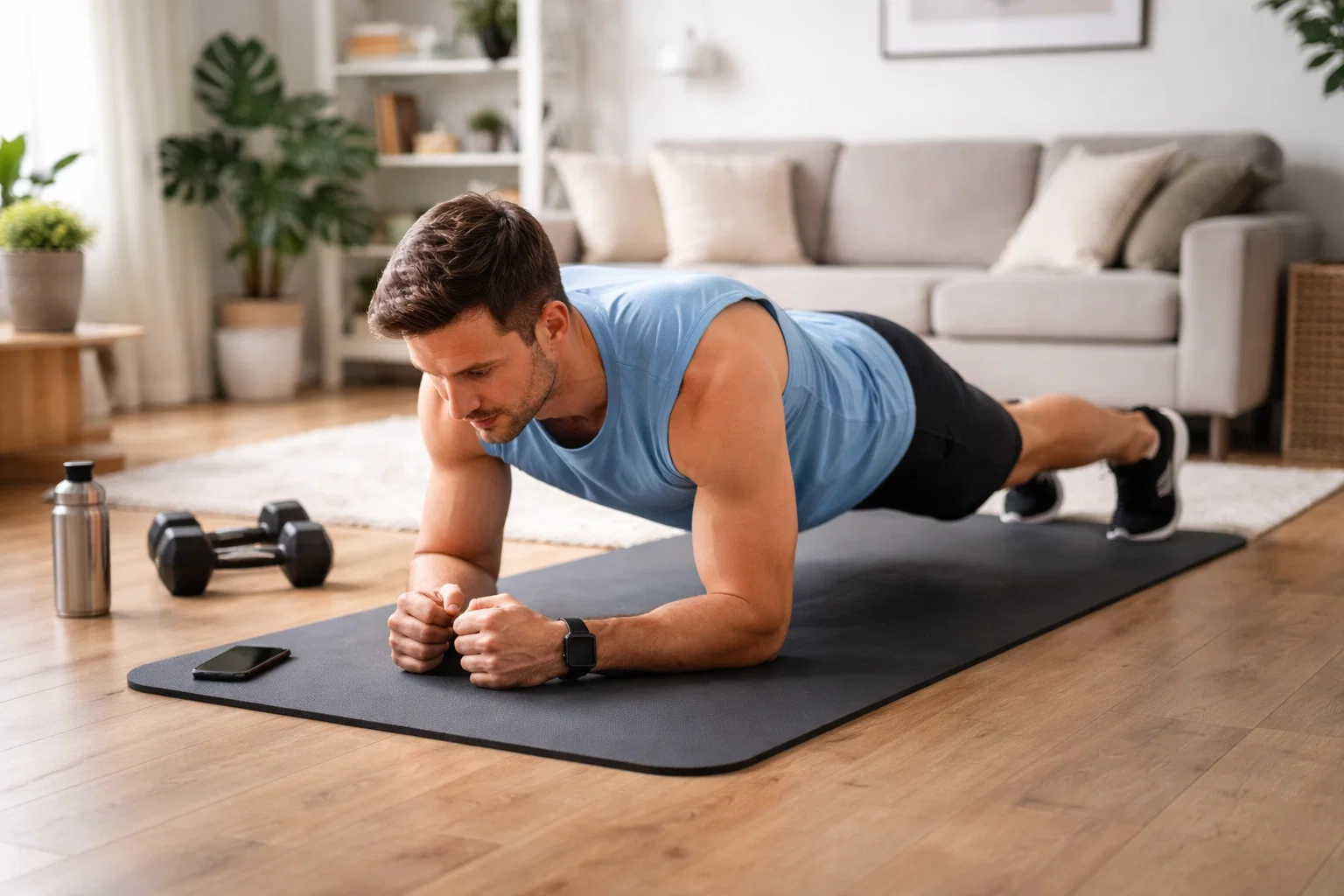
Exercise mats protect your floors and joints during floor-based movements while providing stable cushioning for bodyweight exercises, stretching, and core work. Quality mats cost $20 to $60 and last years when you maintain them properly, making them essential affordable home workout equipment that enhances comfort during every workout. You need proper padding under your back, knees, and elbows when performing planks, push ups, and stretching routines on hard surfaces.
Thickness grip and size considerations
Choose mats 6 to 8 millimeters thick for balanced cushioning that protects your joints without creating instability during standing exercises. Standard yoga mats measure 68 inches long and work for most people, though you need 72 to 84 inch lengths if you stand taller than 6 feet. Width matters less than length for basic exercises, but wider mats give you more space for movements that require lateral positioning.
How a mat supports strength and mobility work
Your mat creates a defined workout zone that keeps you focused and prevents slipping during dynamic movements like mountain climbers or burpees. The cushioning reduces pressure points during core exercises and makes hip stretches more comfortable when you hold positions for extended periods. Textured surfaces provide grip during plank variations and downward dog positions that challenge your stability.
Foam pvc and rubber material pros and cons
Foam mats cost $20 to $30 and offer lightweight portability but compress and wear out faster than other materials. PVC mats run $30 to $45 with better durability and moisture resistance, though some people dislike the chemical smell when new. Rubber mats provide superior grip and longevity at $40 to $60 but weigh more and require extra cleaning to prevent odor buildup.
Rubber mats grip better during sweaty workouts but need regular cleaning, while PVC options balance durability and maintenance requirements.
Cleaning and care tips to make it last
Wipe your mat with water and mild soap after each sweaty session to prevent bacteria growth and material breakdown. Roll your mat loosely rather than folding it to avoid permanent creases that create uneven surfaces during use. Store mats in cool, dry spaces away from direct sunlight that degrades rubber and PVC materials over time.
11. Ab wheel roller
An ab wheel roller costs $10 to $25 and delivers one of the most challenging core exercises you can perform with affordable home workout equipment. This simple device features two handles connected by a wheel that you roll forward while maintaining a plank position, creating intense tension through your entire anterior chain. You build serious abdominal strength and stability that transfers directly to compound lifts and everyday movements.
Why the ab wheel challenges more than your abs
The ab wheel forces your shoulders, chest, and lats to stabilize your body position while your core prevents your lower back from collapsing toward the floor. Your hip flexors and quadriceps work overtime to control the rolling motion, and your grip strength gets tested as you maintain proper hand position throughout each repetition. This full body engagement burns more calories and builds more functional strength than isolated crunches or sit ups.
Progressions from beginner to advanced
Start with wall rollouts where you roll the wheel up a wall from a kneeling position to reduce the resistance and learn proper form. Progress to kneeling rollouts on the floor when you can perform 10 to 15 wall reps without your hips sagging. Advanced lifters move to standing rollouts that require exceptional core strength and control.
Features that keep this tool safe
Look for wheels with rubberized surfaces that grip smooth floors without slipping during your rollouts. Quality ab wheels include padded handles that protect your hands during longer sets and prevent calluses from forming. Wider wheels provide better stability for beginners who struggle with balance.
Sample short ab wheel finishers
Perform 3 sets of 5 to 10 kneeling rollouts at the end of your regular workouts to build core strength without dedicating separate training days. You can alternate between rollouts and planks for a quick 5 minute core circuit that leaves your abs burning.
12. Foam roller for recovery
Foam rollers help your muscles recover faster after tough training sessions by increasing blood flow and reducing muscle tension for $15 to $40. This piece of affordable home workout equipment breaks up tight spots in your muscles and connective tissue through self-myofascial release, which you perform by rolling your body weight over the cylinder. You can target your legs, back, and shoulders in just 10 to 15 minutes to speed recovery between workouts.
How foam rolling speeds up recovery
Rolling your muscles increases circulation to damaged tissue and helps flush out metabolic waste products that build up during intense training. You reduce delayed onset muscle soreness by breaking up adhesions and knots that form after lifting heavy weights or performing high volume workouts. Regular foam rolling improves your mobility and flexibility, which helps you move better during your next training session and reduces injury risk over time.
Smooth versus textured roller choices
Smooth rollers cost $15 to $25 and provide consistent pressure that works well for beginners who find foam rolling uncomfortable at first. Textured rollers run $25 to $40 with raised bumps or ridges that dig deeper into muscle tissue for more aggressive treatment. Choose smooth options when you’re new to rolling or have sensitive muscles, and upgrade to textured versions when you need extra pressure to release stubborn tight spots.
Textured rollers deliver targeted pressure that reaches deeper muscle layers, while smooth versions provide gentler overall massage for daily recovery work.
When to use a roller in your routine
Roll your major muscle groups for 5 to 10 minutes after workouts when your muscles are warm and more responsive to pressure. You can foam roll before training as part of your warm up routine to improve tissue quality and prepare your body for movement. Spend 30 to 60 seconds on each muscle group, and avoid rolling directly over joints or bones that don’t benefit from this type of pressure.
Affordable ways to build a recovery kit
Pair your foam roller with a lacrosse ball or tennis ball for $5 to $10 that targets smaller muscles like your glutes and shoulders. Add a massage stick for another $15 to $20 that helps you reach areas like your calves and forearms where foam rollers don’t work effectively. This complete recovery setup costs under $75 total and addresses muscle soreness throughout your entire body.
13. Hip bands and mini loops
Hip bands and mini loops cost $10 to $25 and target your glutes, hips, and legs with focused resistance that dumbbells and barbells can’t replicate. These small fabric or latex circles fit around your thighs or ankles to add external resistance during squats, bridges, and side stepping movements that build hip strength. You get one of the most portable pieces of affordable home workout equipment that activates muscles traditional training often misses.
Glute and hip moves you can do anywhere
Place bands around your thighs just above your knees for lateral band walks that fire up your glute medius and improve hip stability. You can perform banded squats and bridges that force your knees outward against resistance, creating stronger glute activation than bodyweight versions. Loop bands around your ankles for fire hydrants and clamshells that isolate smaller hip muscles in any corner of your home.
Fabric versus latex bands for comfort
Fabric bands cost $15 to $25 and stay in place better than latex options while providing gentler contact against your skin during long training sessions. Latex bands run $10 to $15 with stronger elastic properties but can roll or pinch your legs during certain movements. Choose fabric when comfort matters most, or pick latex when you want maximum resistance in a compact package.
Fabric bands grip your legs without rolling or sliding, making them ideal for high rep circuits and activation work.
How to choose resistance levels
Start with light resistance bands that let you perform 15 to 20 reps of basic movements like lateral walks without your form breaking down. You need medium bands when light versions feel too easy, and heavy bands for advanced exercises or when you want extra challenge during warm ups. Most people benefit from buying a set with three resistance levels rather than guessing which single band works best.
Using bands for warm ups and activation
Perform 2 to 3 sets of 10 to 15 reps of lateral walks, squats, and bridges with light bands before your main workout to activate dormant glutes. You can use bands between heavy compound sets to maintain muscle engagement and improve blood flow to working tissues. This pre-workout activation takes only 5 minutes but dramatically improves your movement quality during subsequent exercises.
14. Storage hooks and racks
Storage hooks and racks keep your affordable home workout equipment organized and accessible while maximizing your limited floor space for actual training. You waste precious square footage when dumbbells, bands, and mats pile up in corners or get stuffed into closets where you forget about them. Simple wall mounted solutions cost $15 to $50 and transform cluttered workout areas into functional training spaces that motivate you to exercise consistently.
Why organization matters in a tiny gym
Your workout motivation drops when you spend 10 minutes searching for resistance bands or moving equipment around before each training session. Proper storage lets you grab what you need instantly and start exercising without friction or delays. Organized gear also lasts longer because you avoid tripping over dumbbells or stepping on bands that get left on the floor after workouts.
Simple wall and rack solutions under 50 dollars
Basic wall hooks cost $15 to $25 for sets of four to six that hold resistance bands, jump ropes, and suspension trainers off your floor. Vertical dumbbell racks run $30 to $50 and store three to five pairs of weights in less space than a shoe box. These simple additions keep your most used equipment within arm’s reach while your floor stays clear for movement.
DIY options for renters and homeowners
Command strips and removable hooks work for lightweight items like bands and yoga mats when drilling holes violates your lease agreement. Freestanding coat racks from discount stores hold suspension trainers and jump ropes for under $20 without permanent installation. Homeowners can install simple wooden pegs for a few dollars that support heavier gear like kettlebells and weight vests.
How to plan storage as your gear collection grows
Mount your storage solutions at different heights to accommodate various equipment sizes and leave room for future additions. Group similar items together so resistance bands live near your suspension trainer and weights stay clustered in one zone. Keep your most frequently used pieces at eye level or within easy reach, and store specialty items you use less often on higher or lower hooks.
Bring your budget gym to life
You now have 15 affordable home workout equipment options that deliver results without emptying your bank account. Start with two or three essential pieces that match your current fitness goals, whether that means dumbbells and a bench for strength training or bands and a jump rope for conditioning work. Your budget gym grows over time as you add one new tool every few months, giving you the variety you need to stay motivated and progress consistently.
The equipment matters far less than your commitment to showing up and training regularly. Check out our complete workout guides at Body Muscle Matters to find structured programs that work with whatever affordable home workout equipment you own. These free resources help you build muscle and strength without guessing which exercises to perform or how to structure your training sessions.
