
You know CrossFit builds strength. But when you scroll through endless WODs online, most seem focused on conditioning or speed. The classic girl workouts test your engine. The hero WODs push your mental limits. But where are the workouts that make you genuinely stronger? You need programming that prioritizes building absolute strength without losing what makes CrossFit effective. You want to add serious pounds to your lifts while maintaining your work capacity.
This guide delivers 14 strength-focused CrossFit workouts and programs you can start using today. Each one targets specific strength goals while keeping the intensity and variety that makes CrossFit work. You’ll find beginner progressions that teach proper movement patterns, heavy barbell days that build max strength, Olympic lifting complexes for explosive power, home dumbbell options when you can’t hit the gym, and complete four week programs that systematically develop strength. Every workout includes clear structure, practical scaling options, and guidance on exactly when to use it in your training cycle. Pick the ones that match your goals and equipment.

- 【Perfectly Weighted Pull-Up Dip Belt】The Seektop lifting belt is engineered for heavy-duty training. Supporting up to 350 lbs, it adds effective resistance to your weighted workouts—taking your training to the next level and helping you build real strength and muscle. This weight dip belt is compatible with a wide range of weighted movements, including dips, squats, weightlifting, CrossFit, and more, meeting all your diverse fitness needs.
- 【Ultimate Comfort & Support】Designed for maximum comfort under heavy loads, this chain weightlifting belt is made from military-grade 100% pure neoprene, which is softer and more skin-friendly than nylon. The 8mm cushioned support and streamlined back design effectively reduce pressure on the lower back and hips. Even during high-repetition, heavy-weight training, the dip belt stays securely locked around your waist—no slipping, no shifting—making every workout more efficient and focused.
- 【Heavy Duty 38″ Steel Chain】The Seektop weight lifting belt features a 38″ long, 5mm thick heavy-duty steel chain with two high-hardness carabiners, delivering 3x greater overall durability. The precision-polished chain surface is ultra-smooth, effectively eliminating the risk of skin friction and scratches. Scientific weight distribution and secure fit reduce pressure and distractions—so you can focus 100% on your strength. (Fits 22″ to 46.3″ waist)
- 【Safest Fitness Experience】Reinforced double-stitching at key stress points of this workout dip belt, combined with an anti-bending structural design, ensures reliable performance and long-lasting durability during high-load exercises such as squats, pull-ups, and belt squats.Additionally, this weight dip belt is made with odor-resistant materials and has been tested to meet relevant safety standards. You can train with confidence during every high-intensity workout.
- 【Customer Service Guarantee】Whether you’re a beginner just starting out or an experienced fitness veteran, the Seektop gym belt provides a comfortable and reliable experience. Discover the Seektop difference and take your fitness journey to the next level! We’re confident in our quality—if you have any issues, contact us for a direct refund, no return required. We respond within 24 hours.

- NEW SUPER STRETCHY GYM TAPE: Experience Goat Tape’s renowned adhesive now on our Super Stretchy cross training tape. Designed to be the top WODs tape, weightlifting tape, thumb tape, palm tape, cross training tape, athletic tape wrap, sports tape, gymnastics tape, gym tape & more ensuring full hand and finger protection with every stretch and flex.
- SWEAT & CHALK PROOF: This weightlifting thumb tape boasts 180% elasticity and remains firm against friction, tension, and sweat. It’s your ideal gym tape that doesn’t hold you back.
- FLEXIBLE PROTECTION: Primarily for thumbs and palms, our lifting tape prevents blisters, enhances grip, and shields joints. Reach your PR with the support of our athletic finger wrap.
- MULTI-SPORT VERSATILITY: Beyond being an excellent weightlifting thumb tape, Goat Tape is favored by pros in team sports, gymnastics, climbing, combat sports, and even dodgeball.
- EASY-TO-USE: Latex-free, and crafted from cotton fabric, this gym tape measures 15 feet x 1½ inches. It’s designed for easy tearing and application. Comes in packs of 2 and 4 and available in a variety of colors.
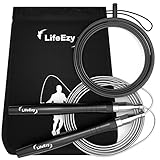
- Self-Locking Exciting? Definitely. With a unique self-locking design, you can adjust the 10 feet long rope to a suitable length just in seconds, without screws screwing it up!
- Faster and Smoother – Premium grade 360-degree ball bearings? You are right. Our newest speed jump rope built-in with high DOUBLE-BEARING SYSTEM, it ensures stable and fast rotation, tangle-free, which brings you smooth jump exercises.
- Adjustable Rope – We provide 1 steel cable cable, the crossfit jump rope is made of steel wires that are coated with wear-resistant PU material, which features durable and smooth, ensures the maximum service life and avoids cracking or breaking.
- Enhance Your Speed – Designed with serious athletes in mind, this weighted jump rope provides an easy 360° rotation.
- Quality & Service Satisfaction: We always take quality and service as our business philosophy, we believe you will like our products, if you have any questions please contact us, we will give you a satisfactory compensation within 24 hours!

- Upgraded Weightlifting Wrist Strap: Our lifting wrist straps are made of double layers soft leather which is high quality and ergonomically designed to fit your hands and provide better grip. Adding extra padding around the D-shaped metal ring clasp keep your wrist from being squeezed and feel painful. Weightlifting strap with high-density hook and loop can be easily worn on the wrist, and take off and put on freely by yourself. Widened neoprene pad makes you feel comfortable.
- Enhanced Grip: Professional leather deadlift straps can protect your hands from not only preventing calluses, but also peeling off existing calluses on your hands. Lifting straps take the pressure off your wrists and hands and help you lift heavier weights. More importantly, it improves your ability to exercise larger muscle groups.
- Perfect Size Weightlifting Wrist Straps: Leather of our gym wrist hooks straps is 8.46 inches long and fits Palm Circumference 8.11 inches and above. Leather with double layers of sewing design thickness of 0.19 inches, not only soft but also safe and comfortable. The neoprene padding is 7.48 inches long, 2.56 inches wide and 0.2 inches thick to better protect the wrist from injury. The adjustable high-density hook and loop length is 16.7 inches and fits wrist circumferences of 6.3 to 8 inches.
- Perfect fitness partner: Wrist workout straps are great for weightlifting, strength training, bodybuilding, pull-ups, hard pulls, shrugs, barbell rowing and upright rowing. Not only is the cow suede sweat-wicking and non-slip, but it is also constructed to last and resist up to 480 lbs without tearing. The wrist straps weighs only 0.5 pounds, so you can carry it with you, using it at home, in the gym or in the outdoors.
- Wrist Wraps Strap Brand: Our gym weight lifting straps includes 1 pair of weightlifting workout wrist strap, 1 Instruction Manual. We are committed to providing a satisfactory experience. If you have any questions, please feel free to reach out to us.

- Devotional, The 40 Day (Author)
- English (Publication Language)
- 91 Pages – 09/24/2025 (Publication Date) – Independently published (Publisher)
1. Body Muscle Matters strength WOD series
This exclusive series builds max strength through a structured three-week cycle that targets all major movement patterns. The program alternates between heavy barbell work and dynamic strength movements to develop both absolute strength and explosive power. You work through progressive loading schemes that add weight each week while maintaining proper form and intensity.
Goal and focus
Your primary objective centers on increasing your one-rep max across fundamental lifts while building work capacity. The series emphasizes compound movements that engage multiple muscle groups, creating maximum strength adaptation with efficient training time. You develop the strength foundation that supports all other CrossFit training.
Building absolute strength creates the base that makes everything else in CrossFit feel easier.
Structure and movements
Each workout contains four main lifts performed in a specific sequence: back squats, deadlifts, bench press, and overhead press. You complete five sets of three reps at 80-85% of your max, resting three minutes between sets. The final portion includes three accessory movements like weighted pull-ups, barbell rows, and dumbbell work for 3×8 reps to build supporting muscle groups.
How to scale and progress
Start at 70% of your max if you’re new to strength-focused crossfit strength training workouts and add 5 pounds weekly to upper body lifts, 10 pounds to lower body movements. Reduce the rep scheme to five sets of two if recovery becomes difficult. Advanced athletes can add one extra working set or increase the percentage to 85-90% after completing the base cycle.
When to use this workout or program
Run this program when you need to break through a plateau or establish new baseline strength numbers. Schedule these sessions twice weekly with at least 72 hours between heavy days, placing them early in your training week when you’re fresh and recovered.
2. Progressive beginner strength WOD
This workout introduces proper strength training mechanics while building confidence with fundamental movements. You master essential movement patterns through controlled progression that adds complexity gradually, ensuring you develop solid form before increasing load. The program prevents injury while establishing the technical foundation needed for advanced crossfit strength training workouts.
Goal and focus
You prioritize movement quality over weight or speed throughout this WOD. The workout develops neuromuscular coordination by teaching your body to recruit the right muscles at the right time. Building this foundation now prevents compensation patterns that limit your strength gains later and increases injury risk.
Perfect movement under light load builds more strength over time than sloppy reps with heavy weight.
Structure and movements
Complete three rounds of the following circuit with 90 seconds rest between rounds: 10 goblet squats with a light kettlebell, 8 push presses with an empty barbell, 6 ring rows, and 5 Romanian deadlifts. Focus on full range of motion and controlled tempo. Each movement takes 2 seconds down, 1 second pause, and 1 second up, creating constant tension that builds strength even with lighter loads.
How to scale and progress
Start with bodyweight movements if you struggle with the prescribed loading. Add 5 pounds weekly once you complete all three rounds with perfect form. Progress to barbell variations after four weeks of consistent training, replacing goblet squats with front squats and adding weight to the push press.
When to use this workout or program
Run this WOD during your first 4-6 weeks of CrossFit training or after extended breaks from the gym. Schedule it three times weekly on non-consecutive days, allowing full recovery between sessions. The workout prepares you for heavier strength programs while building work capacity.
3. Heavy day full body barbell WOD
This workout hits every major muscle group with heavy loads that force serious strength adaptation. You work through fundamental barbell movements at 85-90% intensity to build raw power while maintaining the metabolic challenge that defines effective crossfit strength training workouts. The session creates maximum strength gains through time-tested compound lifts performed with minimal rest.
Goal and focus
Your main aim centers on developing absolute strength across pushing, pulling, and squatting patterns in a single training session. The workout targets neuromuscular efficiency by challenging your body to produce maximum force repeatedly. You build the strength that carries over to every other aspect of your CrossFit training.
Structure and movements
Complete five rounds of this circuit with three minutes rest between rounds: 3 back squats at 85% of your max, 3 bench presses at 80%, 3 bent over rows at 80%, and 2 deadlifts at 90%. Load the barbell before starting each round to minimize transition time. The ascending load pattern builds strength while managing fatigue, starting with the technically demanding squat when you’re fresh and finishing with the more straightforward deadlift.
Heavy barbell work builds the foundation that makes bodyweight movements feel effortless.
How to scale and progress
Drop to 75-80% intensity if you can’t complete all prescribed reps with solid form. Reduce the rounds to three total while maintaining proper rest intervals. Advanced lifters can add one extra rep per movement or increase working percentages by 5% after completing four consecutive sessions successfully.
When to use this workout or program
Schedule this WOD when you need maximum strength development without complicated Olympic lifts. Place it once weekly at the start of your training cycle, allowing 72 hours before your next heavy session. The workout works best during strength-focused training blocks.
4. Olympic lifting strength complex
This workout develops explosive power through the snatch and clean & jerk, building strength that translates directly to dynamic movements. You perform multiple variations of Olympic lifts in a single training session to master technical positions while increasing force production. The complex format keeps you under tension longer, creating strength adaptation through volume and technical precision rather than pure load.
Goal and focus
Your primary target centers on improving power output and technical proficiency in the snatch and clean & jerk. The workout enhances speed under the barbell by forcing you to move efficiently through multiple reps without putting the bar down. You develop the explosive strength that makes crossfit strength training workouts more effective across all domains.
Olympic lifts build more explosive power in less time than any other strength training method.
Structure and movements
Complete four sets of this complex without dropping the barbell: 2 hang power snatches, 2 overhead squats, 2 hang power cleans, 2 front squats, and 1 split jerk. Use 60-65% of your max snatch weight for the entire complex. Rest exactly three minutes between sets to allow full recovery. The sequence builds from simpler positions to more technical movements, letting you maintain quality throughout.
How to scale and progress
Start with an empty barbell or PVC pipe if you struggle with proper positions. Break the complex into two separate pieces (snatch movements first, clean movements second) until your technique improves. Advanced athletes can increase weight by 5 pounds weekly or add one extra rep to each movement after four successful sessions.
When to use this workout or program
Schedule this complex when you need to refine Olympic lifting technique while building strength. Place it twice weekly with 48 hours between sessions, preferably at the start of your training day when you’re mentally fresh. The workout fits perfectly into technical skill development phases.
5. Deadlift and run strength couplet
This couplet combines heavy pulling strength with cardiovascular demand to build power that translates to real-world performance. You develop posterior chain strength through loaded deadlifts while maintaining the conditioning element that defines effective crossfit strength training workouts. The running component forces your body to produce power under metabolic stress, creating adaptations that improve both strength and work capacity simultaneously.
Goal and focus
Your primary objective targets hip extension power and the ability to maintain strength output when fatigued. The workout develops muscular endurance in your hamstrings, glutes, and lower back while challenging your cardiovascular system between lifting sets. You build the strength-endurance combination that carries over to daily activities and athletic performance.
Structure and movements
Complete five rounds for time: 10 deadlifts at 75% of your max and a 400-meter run. The deadlift weight stays challenging but manageable enough to complete all reps unbroken in early rounds. Load your barbell before starting and keep transitions tight between movements. Your target completion time falls between 18-25 minutes depending on running speed and deadlift efficiency.
Heavy deadlifts paired with running build the strength-endurance combination that most training programs ignore.
How to scale and progress
Reduce deadlift weight to 65% of your max if you break the first set into multiple pieces. Cut the run to 200 meters while maintaining intensity. Advanced athletes can increase deadlift weight to 80-85% or add two extra rounds after completing the base workout successfully twice.
When to use this workout or program
Schedule this couplet when you need to test strength under fatigue or prepare for competitions requiring mixed-modal performance. Place it once weekly during conditioning-focused training blocks, avoiding heavy lower body sessions for 48 hours afterward.
6. Push press and pull up strength ladder
This ladder workout builds overhead pressing strength and upper body pulling power through ascending rep schemes that challenge both muscular strength and mental toughness. You perform increasing reps of push presses and pull ups in each round, creating cumulative fatigue that forces your muscles to adapt. The format keeps you moving while building serious strength through volume and progressive overload within a single session.
Goal and focus
Your primary target centers on developing shoulder stability and back strength through complementary pushing and pulling movements. The workout creates muscular balance between your anterior and posterior chains while building work capacity in overhead positions. You develop the upper body strength that carries over directly to Olympic lifts, gymnastics movements, and everyday pressing tasks.
Structure and movements
Complete a ladder starting at 1 rep and climbing to 10 reps: 1 push press and 1 pull up, then 2 push presses and 2 pull ups, continuing until you reach 10 of each movement. Use 75-80% of your max push press weight loaded on a barbell. Complete all reps of each movement before moving to the next number in the ladder. Your total volume reaches 55 reps per movement, creating significant strength adaptation through accumulated tension.
Ladder workouts build strength through volume while keeping your mind engaged with changing rep targets.
How to scale and progress
Reduce push press weight to 65% of your max if you break sets before reaching round 7. Use band-assisted pull ups to maintain continuous movement. Advanced athletes can extend the ladder to 12 or 15 reps or add a descent back down after reaching the top.
When to use this workout or program
Schedule this ladder when you need upper body strength development within crossfit strength training workouts that maintain conditioning elements. Place it once weekly during phases emphasizing pressing strength, allowing 48 hours before other heavy upper body sessions.
7. Front squat and core strength chipper

This chipper combines front squats with demanding core movements to build strength in your anterior chain while developing midline stability. You work through a descending rep scheme that maintains intensity as fatigue accumulates, forcing your core to stabilize under load throughout the entire workout. The format creates the strength-endurance combination that defines effective crossfit strength training workouts while building the trunk stability needed for heavier lifts.
Goal and focus
Your primary objective centers on developing quad strength and core endurance through movements that challenge your anterior chain under progressively increasing fatigue. The workout targets anti-extension strength by forcing your abdominals to resist spinal movement while your legs push heavy loads. You build the midline stability that protects your back during heavy lifting while improving your front squat capacity.
Structure and movements
Complete the following for time: 30 front squats at 65% of your max, 30 toes to bar, 20 front squats at 75%, 20 V-ups, 10 front squats at 80%, and 10 GHD sit-ups. The ascending weight pattern forces you to produce power as your core fatigues. Rest only as needed between movements while maintaining proper form. Your target completion time falls between 15-20 minutes depending on front squat proficiency and core strength.
Front squats with fatigued abs build the midline strength that carries over to every other lift.
How to scale and progress
Reduce front squat percentages to 55-65-70% if you break early sets into multiple pieces. Replace toes to bar with hanging knee raises and substitute sit-ups for GHD work. Advanced athletes can increase the weight jumps to 70-80-85% or add 5 extra reps to each movement after completing the base chipper twice successfully.
When to use this workout or program
Schedule this chipper when you need to develop anterior chain strength while maintaining metabolic conditioning. Place it once weekly during phases emphasizing leg strength, avoiding other heavy squatting sessions for 48 hours before and after.
8. Upper body gymnastics strength WOD
This workout develops pulling and pushing strength exclusively through bodyweight gymnastics movements that build functional upper body power. You progress through strict variations of classic CrossFit gymnastics elements, creating strength gains through controlled movement rather than external load. The session eliminates barbells entirely while delivering serious strength adaptation through muscle-up progressions and challenging static holds.
Goal and focus
Your primary target centers on building relative strength through gymnastic movements that require complete body control. The workout develops shoulder stability and scapular strength by forcing you to move your bodyweight through space with precision. You create the upper body foundation that makes advanced gymnastics movements accessible while building muscle mass through progressive bodyweight training.
Structure and movements
Complete four rounds for quality: 5 strict muscle-ups, 10 strict pull-ups, 15 strict ring dips, 20 push-ups, and a 30-second hollow hold. Rest two minutes between rounds to maintain movement quality throughout all sets. The descending difficulty pattern keeps you working hard as fatigue builds. Each movement demands full range of motion and controlled tempo, eliminating momentum that reduces strength gains in typical crossfit strength training workouts.
Gymnastics strength builds muscle control that carries over to every movement pattern you’ll encounter.
How to scale and progress
Replace muscle-ups with 5 chest-to-bar pull-ups plus 5 dips if you lack the skill. Use band assistance for strict pull-ups and ring dips while maintaining proper mechanics. Advanced athletes can add weighted vests starting at 10 pounds or extend the hollow hold to 45 seconds after completing four consecutive sessions successfully.
When to use this workout or program
Schedule this WOD when you need upper body strength development without barbell work or during deload weeks. Place it twice weekly with 48 hours between sessions, positioning it away from other pulling-dominant training days.
9. Lower body kettlebell strength WOD
This workout builds leg strength and hip power exclusively through kettlebell movements that challenge your lower body without requiring barbells. You develop unilateral strength through single-leg patterns while heavy swings build explosive posterior chain power. The kettlebell format makes these crossfit strength training workouts accessible at home or in crowded gyms while delivering serious strength adaptation through progressive loading and volume.
Goal and focus
Your primary objective centers on developing unilateral leg strength and hip extension power through kettlebell-specific movement patterns. The workout targets balance and coordination by forcing each leg to work independently, eliminating compensation patterns that develop during bilateral barbell work. You build the functional strength that translates directly to running, jumping, and real-world activities.
Structure and movements
Complete five rounds for quality: 8 goblet squats with a heavy kettlebell, 6 Bulgarian split squats per leg, 10 kettlebell swings at maximum weight, and 12 walking lunges per leg. The descending rep scheme maintains intensity as your legs fatigue. Rest 90 seconds between rounds to allow partial recovery while keeping metabolic demand high. Choose kettlebell weights that challenge you on the final reps of each set while maintaining proper form throughout.
Kettlebell training builds the unilateral strength that barbells can’t develop as effectively.
How to scale and progress
Reduce goblet squat weight and perform box-supported split squats if balance becomes difficult. Cut swings to 6 reps while increasing weight. Advanced athletes can add weighted vests during bodyweight movements or increase rounds to six or seven after completing the base workout successfully three times.
When to use this workout or program
Schedule this WOD when you need lower body strength development without barbell access or during recovery weeks. Place it twice weekly with 48 hours between sessions, avoiding other heavy leg training for 24 hours before and after.
10. Dumbbell only strength WOD at home
This workout delivers complete strength development using nothing but dumbbells, making crossfit strength training workouts accessible anywhere you have minimal space. You target all major muscle groups through compound dumbbell movements that build functional strength without requiring barbells, racks, or specialty equipment. The session creates serious adaptation through strategic exercise pairing and progressive loading schemes you can execute in your garage or living room.
Goal and focus
Your primary objective centers on building total body strength through dumbbell-specific movement patterns that challenge stability and coordination. The workout develops muscle balance by forcing each side of your body to work independently, eliminating the compensation patterns that develop when one side dominates during barbell work. You create the foundation for continued strength gains while maintaining training consistency regardless of gym access.
Dumbbell training eliminates the excuses that keep most people from building consistent strength.
Structure and movements
Complete four rounds for quality: 8 dumbbell thrusters, 10 single-arm rows per side, 12 goblet squats, 8 dumbbell floor presses, and 10 Romanian deadlifts. Rest two minutes between rounds while maintaining proper form throughout every repetition. Choose weights that challenge you on the final reps of each movement. The alternating push-pull pattern manages fatigue while building comprehensive strength across all movement planes.
How to scale and progress
Reduce weights by 25% and focus on movement quality if you struggle with proper form. Increase rest to three minutes between rounds during initial sessions. Advanced athletes can add one extra round or increase dumbbell weight by 5 pounds after completing four consecutive sessions successfully.
When to use this workout or program
Schedule this WOD when you train at home or need effective strength work without barbell access. Place it twice weekly with 48 hours between sessions, using it as your primary strength stimulus during travel or equipment-limited periods.
11. Mixed modal strength benchmark WOD
This benchmark combines heavy strength elements with classic CrossFit movements to test your capacity across multiple domains simultaneously. You blend barbell work with gymnastics and monostructural cardio in a single timed effort that reveals true fitness gaps. The workout functions as both a training stimulus and assessment tool, showing exactly where your strength fails under metabolic stress.
Goal and focus
Your primary target centers on developing strength endurance across varied movement patterns while building the capacity to perform under fatigue. The workout challenges your ability to maintain power output when your cardiovascular system demands recovery. You develop the complete fitness that defines effective crossfit strength training workouts while creating measurable progress markers through repeatable benchmark testing.
Structure and movements
Complete the following for time: 30 clean and jerks at 135/95 pounds, 30 pull-ups, 800-meter run, 20 clean and jerks, 20 pull-ups, 400-meter run, 10 clean and jerks, and 10 pull-ups. The descending volume pattern keeps intensity high as fatigue builds. Your barbell weight stays moderate but challenging enough to force technical precision throughout all reps. Track your completion time to measure progress when you repeat this benchmark quarterly.
Benchmark workouts reveal your true fitness level by testing strength under real conditions.
How to scale and progress
Reduce barbell weight to 95/65 pounds if you break clean and jerks before round three. Use jumping pull-ups to maintain continuous movement. Advanced athletes can increase weight to 155/105 pounds or add 10 extra reps to each movement after beating their previous time by two minutes.
When to use this workout or program
Schedule this benchmark when you need to test overall fitness or establish baseline strength-endurance capacity. Place it once monthly during testing weeks, avoiding other high-intensity sessions for 48 hours before and after to ensure accurate results.
12. Hero style strength endurance WOD
This workout honors fallen heroes through high-volume strength work that tests your physical and mental limits simultaneously. You combine heavy loading with extended time domains that push far beyond typical crossfit strength training workouts, creating the grueling conditions that forge unbreakable mental toughness. The session demands sustained power output over 30-45 minutes while accumulating serious training volume that builds both strength and muscular endurance.
Goal and focus
Your primary objective centers on developing strength under extreme fatigue while building the mental fortitude to push through discomfort. The workout targets muscular endurance in all major movement patterns by forcing you to repeat heavy lifts dozens of times without adequate recovery. You create the grit and physical capacity that carries over to competition settings and life situations requiring sustained effort under stress.
Structure and movements
Complete the following for time: 100 thrusters at 95/65 pounds, 100 pull-ups, 100 sit-ups, 100 air squats, 800-meter run with a 45-pound plate, 50 wall balls at 20/14 pounds, and 50 box jumps at 24/20 inches. Break movements into manageable sets rather than attempting large unbroken chunks. The total volume creates cumulative fatigue that tests every energy system while building serious work capacity across varied movement domains.
Hero workouts build the mental strength that matters more than any physical adaptation.
How to scale and progress
Reduce thruster weight to 75/55 pounds and cut all movements to half volume if you’ve never attempted hero-style training. Use jumping pull-ups and lower wall ball targets. Advanced athletes can add weighted vests or increase plate weight during the run after completing the base workout twice within target time.
When to use this workout or program
Schedule this WOD when you need to test mental toughness or prepare for competition scenarios requiring sustained effort. Place it once monthly during peak training phases, clearing your schedule for 72 hours afterward to allow complete recovery from the accumulated volume and metabolic stress.
13. Four week strength bias CrossFit track
This program delivers systematic strength development across a full monthly cycle that prioritizes lifting over conditioning. You follow a structured progression through four distinct weeks, each building on the previous phase while managing fatigue through strategic deload periods. The track maintains enough metabolic work to preserve your conditioning base while directing most training energy toward building absolute strength through proven crossfit strength training workouts.
Goal and focus
Your primary objective centers on adding significant weight to your major lifts while maintaining the work capacity that defines CrossFit training. The program targets progressive overload through carefully planned volume and intensity increases that force adaptation without causing overtraining. You develop strength that carries over to every other aspect of your fitness while avoiding the conditioning losses that plague traditional strength programs.
Structure and movements
Week one establishes your baseline through three strength sessions featuring back squats, deadlifts, and overhead presses at 75% intensity for 5×5 sets, plus two shorter conditioning workouts. Week two increases volume to 5×3 at 80% while adding Olympic lift variations. Week three pushes intensity to 5×2 at 85-90% with minimal accessory work. Week four functions as active recovery with 60% loads and movement practice, preparing you for the next cycle.
A four week strength cycle builds more sustainable progress than random heavy days scattered through conditioning work.
How to scale and progress
Reduce starting percentages to 65-70-75-55% if you’re new to structured strength training. Add one extra strength session weekly after completing two full cycles successfully. Advanced lifters can extend week three to two sessions at peak intensity before entering the deload phase.
When to use this workout or program
Schedule this track when you need sustained strength development over multiple weeks without competing demands. Run it during off-season training blocks when competition preparation doesn’t require peak conditioning, repeating the cycle three to four times before transitioning back to balanced programming.
14. Westside inspired strength template
This template adapts Louie Simmons’ conjugate method to CrossFit training by separating max effort and dynamic effort days throughout your week. You rotate through different exercises every session to prevent accommodation while building strength across multiple movement patterns. The system delivers continuous strength gains by constantly challenging your nervous system with novel stimuli rather than repeating the same lifts until adaptation stops.
Goal and focus
Your primary objective centers on developing absolute strength through max effort work while building explosive power via dynamic effort training. The template targets both types of strength within a single week, creating comprehensive adaptation that carries over to all crossfit strength training workouts. You prevent plateaus by changing exercises every one to three weeks before your body adapts to any single movement pattern.
Structure and movements
Schedule two max effort sessions (Monday and Wednesday) plus two dynamic effort days (Friday and Sunday) weekly. Max effort days rotate through variations like floor press, box squats, rack pulls, and overhead squats for 3 rep maxes. Dynamic effort sessions feature speed work with 50-60% loads for 8-12 sets of 2-3 reps using barbells, bands, or chains. Complete each session with three accessory movements targeting weak points for 3 sets of 8-12 reps.
The conjugate method builds strength that never stops progressing because you never repeat the same training stimulus long enough to adapt completely.
How to scale and progress
Start with basic barbell variations if you lack experience with accommodating resistance methods. Replace chains and bands with straight weight while maintaining speed focus on dynamic days. Advanced athletes add more exercise variations to their rotation or increase accessory volume after completing eight weeks of consistent training.
When to use this workout or program
Run this template when you need year-round strength development without traditional periodization blocks. Schedule it during extended training cycles lasting 12-16 weeks, rotating exercise selections every training session to maintain constant adaptation and prevent accommodation.
Build your strength from here
You now have 14 proven workouts and programs that build serious strength through CrossFit methodology. Pick the options that match your current equipment, training experience, and specific strength goals. Start with the beginner progressions if you’re new to structured strength work, then advance to the heavier barbell days as your capacity grows. Mix different workout types throughout your training week to prevent accommodation while maintaining the variety that makes crossfit strength training workouts effective.
Your strength progress depends on consistent execution rather than perfect programming. Choose two or three workouts from this list and run them for at least four weeks before switching to new variations. Track your weights, times, and reps to measure real progress. Recovery matters as much as training intensity, so schedule adequate rest between heavy sessions.
Ready to take your training further? Explore more strength training strategies and muscle building guides to complement these workouts and accelerate your results.