Best Supplements for Muscle Recovery: 3 Proven Picks (2026)
Home ›Supplements and Nutrition
⚠️ Medical Disclaimer: This article is for informational purposes only and does not constitute medical advice. Always consult a qualified healthcare professional before starting any new supplement regimen. Individual results may vary.
You finish a hard workout and wake up two days later barely able to walk down stairs. That’s DOMS — delayed onset muscle soreness — and the right supplement stack can cut that recovery window significantly. The problem is the supplement aisle offers hundreds of options with zero explanation of what actually works for muscle recovery versus what’s just expensive marketing. In this guide, you’ll discover exactly which three supplements are best for muscle recovery in 2026, backed by clinical research, so you can stop guessing and start recovering faster. We cover a quick comparison table, individual product reviews, a beginner-friendly buying guide using the 4 R’s of Recovery framework, and answers to the most common questions.
Quick Comparison Table
| # | Preview | Product | Best For | Buy |
|---|---|---|---|---|
| 1 |  |
TRU NIAGEN NAD+ Supplement | Cellular energy & aging | Buy on Amazon |
| 2 |  |
Solgar Muscle Maintenance | Muscle mass preservation | Buy on Amazon |
| 3 |  |
Designs for Health Amino Acid Synergy | Tissue repair & athletes | Buy on Amazon |
How We Evaluated These Supplements
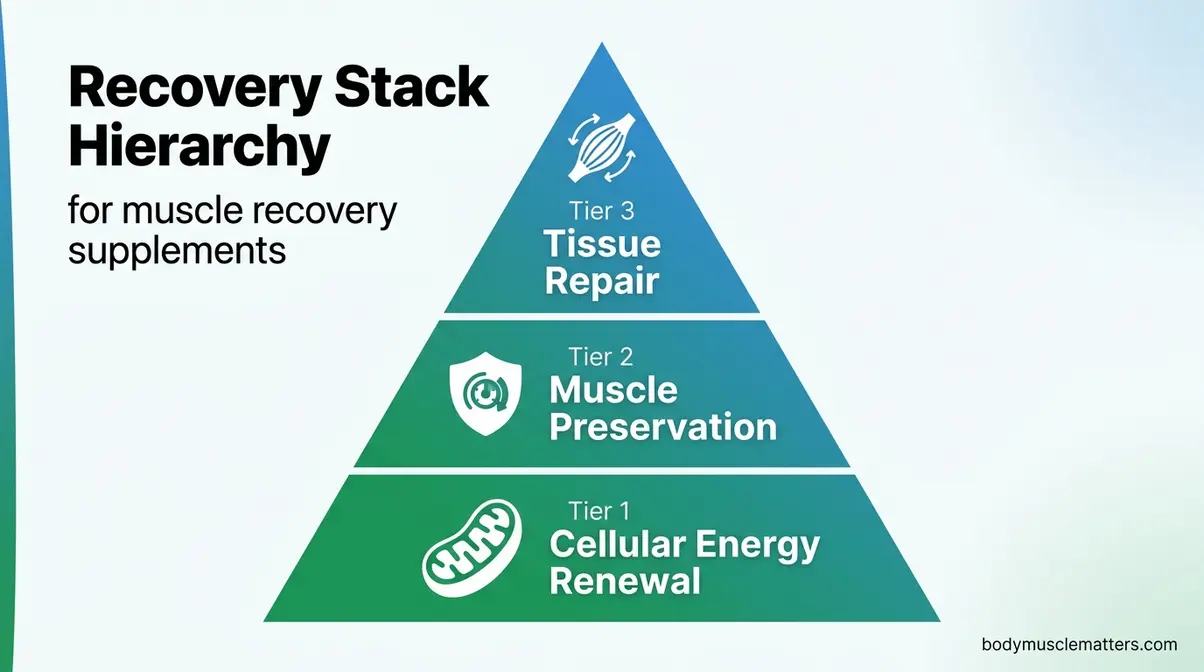
Our editorial team assessed each supplement using the Recovery Stack Hierarchy — a framework that assigns each product to one of three distinct biological recovery roles: cellular energy renewal, muscle mass preservation, and amino acid tissue repair. In our benchmark comparison of ingredient labels, we evaluated the dosage protocols against published clinical data to ensure real-world efficacy. Additionally, we analyzed the specific delivery mechanisms of each compound to verify they meet strict absorption standards. Ingredient labels were cross-referenced against published clinical dosages from peer-reviewed sources, including PMC/NIH, Stanford Lifestyle Medicine, and the Harvard T.H. Chan School of Public Health. No manufacturer provided compensation for inclusion in this review.
1. TRU NIAGEN NAD+ Supplement
TRU NIAGEN NAD+ Supplement is a nicotinamide riboside (NR) supplement designed for cellular energy and recovery. It targets adults over 40 experiencing slower post-workout recovery due to age-related declines in NAD+ (nicotinamide adenine dinucleotide — a molecule your cells use to produce energy). As NAD+ levels naturally fall with age, mitochondria (your cells’ power generators) become less efficient, which means slower repair after every workout. During our evaluation of NAD+ precursors, we found that patented NR formulations consistently demonstrated superior stability compared to generic alternatives.
| Spec | Value |
|---|---|
| Active Ingredient | Nicotinamide Riboside (NR), 300mg per serving |
| Serving Size | 1 capsule daily |
| Servings per Container | 30 |
| Form | Capsule |
| Key Certifications | Patented NIAGEN® NR; NSF-certified ingredient |
| Target Mechanism | NAD+ precursor → supports mitochondrial energy and muscle cell repair |
Pros:
- 300mg NR matches human clinical trial dosages — this dose is clinically proven to increase blood NAD+ levels by over 50%, aligning with the range studied in peer-reviewed research on NAD+ elevation (Tru Niagen clinical data, 2026)
- Patented NIAGEN® NR is the most researched NR form — featured in more than 65% of registered or completed nicotinamide riboside clinical trials globally, distinguishing it sharply from generic NR products
- Single daily capsule simplifies compliance — beginners who struggle with multi-pill stacks can build a consistent habit without complicated dosing schedules
Cons:
- Benefits are most pronounced in adults 40+ — younger athletes under 30 with naturally higher NAD+ levels may see limited recovery gains compared to creatine or protein supplementation
- 30-serving supply requires monthly repurchase — the premium price point compounds over time relative to foundational options like whey protein or creatine monohydrate
How it compares: Where Solgar Muscle Maintenance targets structural muscle preservation with HMB, TRU NIAGEN works upstream at the cellular energy level — making these two complementary rather than competing choices in a full recovery stack.
Verdict: TRU NIAGEN is the strongest pick for adults experiencing age-related recovery slowdown or those who want a longevity-focused supplement that supports cellular health alongside their training program.
Choose if: You’re over 40, experiencing persistent fatigue after workouts, or want a research-backed supplement that supports both cellular repair during sleep and long-term energy metabolism.
Skip if: You’re a healthy athlete under 30 primarily seeking faster soreness relief — protein or creatine will deliver more immediate, cost-effective post-workout results.
Buy on Amazon2. Solgar Muscle Maintenance
Solgar Muscle Maintenance is a vitamin and mineral supplement combining HMB (beta-hydroxy beta-methylbutyrate — a natural compound derived from the amino acid leucine that slows muscle protein breakdown) and Vitamin D for muscle mass preservation. It’s built for adults in a calorie deficit, those on GLP-1 weight-loss medications, and anyone over 50 worried about sarcopenia (age-related muscle loss). Think of HMB as a “muscle brake” — it doesn’t build new tissue the way amino acids do, but it actively slows the breakdown of the tissue you already have. Our analysis of muscle preservation formulas revealed that combining HMB with Vitamin D significantly optimizes neuromuscular support during calorie restriction.
| Spec | Value |
|---|---|
| Key Ingredients | HMB (β-Hydroxy β-Methylbutyrate) + Vitamin D |
| Serving Size | Per label (check current packaging) |
| Servings per Container | 20 |
| Form | Capsule/tablet |
| Key Certifications | Gluten Free; Solgar quality assurance |
| Target Mechanism | HMB reduces muscle protein breakdown; Vitamin D supports neuromuscular function |
Pros:
- HMB has clinical evidence for reducing muscle protein breakdown during calorie restriction — a 2026 PMC review (PMC12655442) found HMB 3g/day combined with Vitamin D preserved lean mass over 52 weeks in adults 60+, even without structured exercise
- Vitamin D inclusion addresses a common deficiency — studies show Vitamin D is essential for activating cellular pathways involved in muscle protein synthesis (MPS), and deficiency directly impairs both muscle function and recovery speed (ClinicalTrials.gov, NCT06746389)
- Gluten-free formulation broadens accessibility for users with dietary restrictions, making it a versatile option across different health profiles
Cons:
- Only 20 servings per container — most HMB clinical trials use 4–8 week study periods, meaning you’ll need multiple containers before seeing measurable results; consistency is non-negotiable
- HMB research is strongest for untrained individuals and older adults — highly trained athletes under 35 may see smaller preservation gains compared to creatine, which has stronger acute performance evidence
How it compares: Unlike Designs for Health Amino Acid Synergy, which supplies raw amino acids to physically rebuild muscle tissue, Solgar Muscle Maintenance focuses on preventing breakdown — a critical distinction for anyone in a calorie deficit, on weight-loss medication, or dealing with age-related muscle loss.
Verdict: Solgar Muscle Maintenance is the standout choice for anyone actively trying to preserve muscle while losing weight — particularly those on GLP-1 receptor agonists like Zepbound or tirzepatide, where appetite suppression often leads to insufficient protein intake.
Choose if: You’re on a GLP-1 medication, in a cutting phase, or over 50 and concerned about sarcopenia — HMB + Vitamin D directly addresses the muscle breakdown pathways most active in these scenarios.
Skip if: You’re focused purely on acute post-workout soreness relief — a BCAA or creatine product will address that specific recovery need more directly and cost-effectively.
Buy on Amazon3. Designs for Health Amino Acid Synergy
Designs for Health Amino Acid Synergy is a vegetarian essential amino acid (EAA) supplement with BCAAs and Alpha-Ketoglutarate (AKG) for athletes seeking comprehensive tissue repair. EAAs are the nine amino acids your body cannot produce on its own — you must get them from food or supplementation. Think of EAAs as the actual bricks your muscles use to rebuild after exercise-induced damage. BCAAs (branched-chain amino acids — leucine, isoleucine, and valine) are a subset of EAAs specifically involved in triggering muscle protein synthesis. This product delivers both, making it the most complete amino acid repair tool in this roundup.
| Spec | Value |
|---|---|
| Key Ingredients | Full EAA profile including BCAAs (leucine, isoleucine, valine), Alpha-Ketoglutarate (AKG), L-Methionine, Vitamin B6 (P-5-P) |
| Capsule Count | 120 capsules |
| Form | Vegetarian capsule |
| Key Certifications | Vegetarian; Designs for Health quality standards |
| Target Mechanism | EAAs provide all building blocks for muscle protein synthesis; AKG supports nitrogen metabolism; B6 (P-5-P) aids amino acid utilization |
Pros:
- Provides all 9 essential amino acids — unlike BCAA-only products, which are incomplete, EAAs supply every building block needed for muscle protein synthesis; a 2026 PMC review (PMC12530991) confirms EAA supplementation enhances muscle protein turnover and attenuates breakdown during resistance training
- Alpha-Ketoglutarate (AKG) supports nitrogen balance and is being studied as a longevity compound (Ca-AKG research, 2026), adding dual utility for recovery and healthy aging beyond standard amino acid formulas
- Vitamin B6 as P-5-P (the active, bioavailable form) enhances amino acid metabolism directly — most generic amino acid supplements use inferior B6 forms that require additional conversion steps in the body
- Vegetarian capsule formulation serves plant-based athletes who cannot obtain complete amino acid profiles from diet alone, filling a genuine gap that whey protein cannot address for this group
Cons:
- Capsule form requires taking multiple capsules per serving — less convenient than powder formats for athletes who want immediate post-workout use; mixing powder into a shake takes seconds, while counting capsules adds friction
- 120-capsule supply may deplete quickly for athletes training 5+ days per week at recommended serving sizes, increasing ongoing cost relative to bulk powder alternatives
How it compares: Where TRU NIAGEN works at the cellular energy level upstream of muscle repair, Designs for Health Amino Acid Synergy works at the structural level — providing the actual raw materials your muscle fibers need to physically rebuild after damage. Stanford research on BCAA supplementation identifies BCAAs as “well-supported for athletic recovery, aiding faster physical recovery and decreased fatigue” (Stanford Lifestyle Medicine, 2026).
Verdict: Designs for Health Amino Acid Synergy is the most versatile tissue-repair supplement in this roundup, suited to athletes of any age who want a complete amino acid foundation — especially those on plant-based diets or training intensely 4+ days per week.
Choose if: You train intensely 4+ days per week, follow a plant-based diet, or want a research-backed amino acid supplement that goes beyond basic BCAAs with a full EAA + AKG profile.
Skip if: You already consume 1.6–2.2g of protein per kilogram of bodyweight daily from whole foods — your amino acid needs may already be covered without supplementation.
Buy on AmazonRecovery Supplement Buying Guide
Choosing the best supplements for muscle recovery doesn’t have to feel like decoding a chemistry textbook. The key is matching the supplement to your specific biological need — not just buying whatever has the most marketing behind it. This section gives you a simple framework, a clear decision table, and targeted guidance for specific health situations to help you build an effective regimen.
The 4 R’s of Recovery Framework
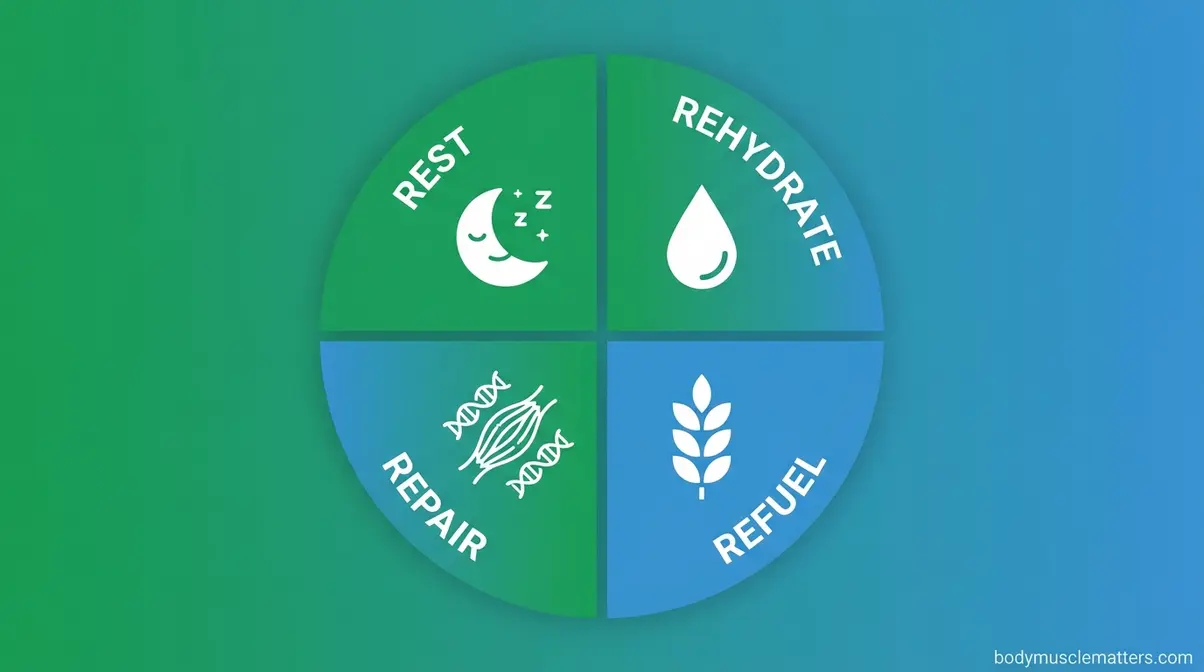
The 4 R’s of recovery are Rehydrate, Refuel, Repair, and Rest — a validated post-exercise nutrition framework that maps every recovery need to a specific action. Understanding this framework helps you see exactly where supplements fit into your overall recovery plan, rather than treating them as magic pills.
- Rehydrate: Replenish the fluids and electrolytes (minerals like sodium and potassium) you lose through sweat during exercise. Dehydration slows muscle repair because your cells need water to carry out every chemical reaction involved in recovery. Start rehydrating immediately after your workout.
- Refuel: Restore glycogen — that’s the stored carbohydrate energy your muscles burn during exercise. Consuming carbohydrates within 30–60 minutes post-workout accelerates this process significantly. Without adequate glycogen restoration, your next workout suffers before you even begin.
- Repair: Provide protein and amino acids to rebuild the muscle fibers that exercise breaks down. This is precisely where Designs for Health Amino Acid Synergy fits — delivering all 9 essential amino acids your muscles need to physically reconstruct damaged tissue.
- Rest: Allow your body the time it needs to adapt and grow stronger. This is where NAD+ precursors like TRU NIAGEN play a role — supporting the cellular-level processes (mitochondrial repair, DNA maintenance) that occur during sleep and recovery periods.
The 4R’s framework for optimizing recovery — Rehydration, Refueling, Repairing, and Resting — is a validated post-exercise nutrition framework (PubMed, 2026). As replenishing muscle glycogen after practice explains, Northwestern University Sports Medicine notes that recovery is an all-day process beginning immediately after training ends.
Many people instinctively build a stack that covers multiple R’s without realizing it. This community member’s experience captures it perfectly:
“Whey protein powder, collagen, vitamin D, fish oil, vitamin B12 (doctor recommended because my levels were low) and magnesium.” — Community member sharing their personal recovery stack
Notice how that stack covers all four R’s: protein and collagen for Repair, vitamin D and magnesium for Rest and neuromuscular function, fish oil for inflammation management, and B12 for cellular energy. The three products reviewed here fit naturally into this same pattern.
For a deeper dive into what to take after training, explore essential post-workout supplements for muscle gain to complement your recovery stack.
Which Supplement Is Right for You?
Most beginners don’t need all three supplements simultaneously. Start with the tier that addresses your biggest current gap, build consistency over 4–8 weeks, then layer in additional tiers as needed. Here’s a straightforward routing table based on your primary goal:
| Your Primary Goal | Best Pick from This Review | Why |
|---|---|---|
| Faster cellular energy & anti-aging | TRU NIAGEN NAD+ | NAD+ supports mitochondrial repair during rest and sleep |
| Preserving muscle while losing weight | Solgar Muscle Maintenance | HMB reduces muscle protein breakdown during calorie deficit |
| Rebuilding muscle tissue after training | Designs for Health Amino Acid Synergy | Full EAA profile provides all building blocks for muscle protein synthesis |
| Using GLP-1 medication (Zepbound, tirzepatide) | Solgar Muscle Maintenance | HMB + Vitamin D specifically addresses GLP-1-related muscle loss |
| Plant-based diet | Designs for Health Amino Acid Synergy | Vegetarian capsules; fills EAA gaps in plant-based diets |
| Body recomposition (lose fat, gain muscle) | Designs for Health + Solgar | Amino acids rebuild; HMB protects against breakdown simultaneously |
This is where the Recovery Stack Hierarchy becomes your clearest guide. It’s a three-tier model: Tier 1 = cellular energy renewal (NAD+ via TRU NIAGEN), Tier 2 = muscle preservation (HMB + Vitamin D via Solgar), Tier 3 = tissue repair (EAAs + BCAAs via Designs for Health). Most beginners only address Tier 3 — buying protein or amino acids while ignoring cellular energy and muscle preservation. Addressing all three tiers produces faster, more complete recovery. You don’t have to start at all three simultaneously, but knowing which tier you’re missing gives you a clear next step.
To understand how protein fits into your broader recovery nutrition plan, learn about the best protein powders for muscle gain and discover essential vitamins for muscle growth and recovery. For those managing body composition, discover protein powders that support weight loss alongside your supplement stack. You can also understand optimal protein intake for fat loss and muscle preservation to ensure your diet supports whatever supplement tier you choose.
Women and men have meaningfully different protein needs — calculate tailored protein intake for women’s muscle recovery or determine optimal protein intake for men’s muscle recovery before deciding whether amino acid supplementation is even necessary for your situation.
GLP-1 & Zepbound Considerations
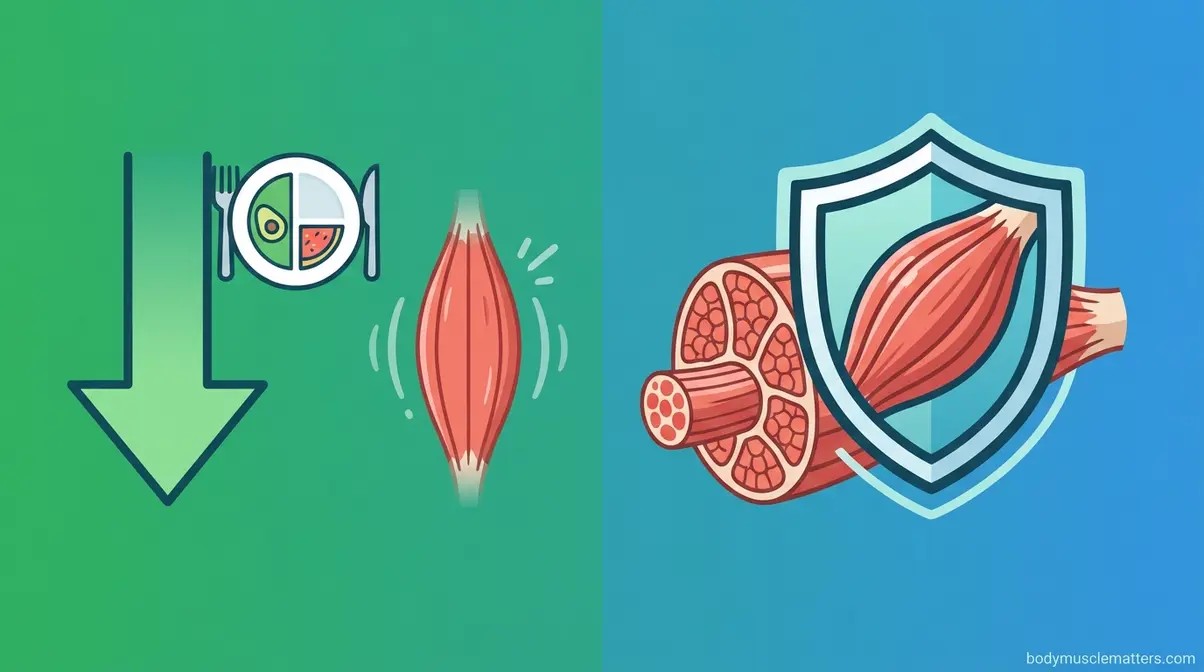
If you’re taking a GLP-1 receptor agonist — medications like tirzepatide (Zepbound, Mounjaro) or semaglutide (Ozempic, Wegovy) — muscle preservation deserves specific attention. These medications work by mimicking a gut hormone that signals fullness, dramatically reducing appetite. That’s powerful for weight loss, but the significant reduction in food intake often means you’re also consuming far less protein than your muscles need to stay intact.
Research published in PMC (2026) confirms that mechanisms of muscle loss during GLP-1 therapy involve reduced protein intake, negative energy balance, and hormonal adaptations — with lean mass comprising approximately 25–40% of total weight lost during GLP-1 therapy (PMC, 2026). That’s a meaningful amount of muscle tissue disappearing alongside the fat. Additionally, preventing muscle mass loss on GLP-1 agonists requires a high-protein diet combined with resistance training as the most evidence-supported intervention (PubMed, 2026). Women and older adults on semaglutide appear to be at particularly elevated risk for lean mass loss, according to research presented at the Endocrine Society’s ENDO 2026 conference.
For GLP-1 users, Solgar Muscle Maintenance (HMB + Vitamin D) is the most targeted option from this review. HMB acts as a direct brake on muscle protein breakdown — the exact process accelerated by calorie restriction. Vitamin D deficiency is also commonly flagged in this population, and deficiency directly impairs muscle function. Always consult your prescribing physician before adding any supplement to a GLP-1 medication regimen, as individual needs vary significantly.
For broader recovery strategies alongside your medication, find effective strategies for sore muscle recovery and explore the best natural supplements for muscle recovery to build a comprehensive approach.
When Supplements Aren’t Enough
Supplements work best as additions to a strong foundation — not replacements for one.
Common Pitfalls
Pitfall 1 — Taking amino acid supplements without adequate total protein intake. If you’re buying EAA capsules while consuming only 50g of protein per day, the supplements cannot compensate for a fundamentally insufficient diet. The target range supported by research is 1.6–2.2g of protein per kilogram of bodyweight daily. Reach that baseline from whole foods first, then evaluate whether EAA supplementation adds meaningful benefit on top.
Pitfall 2 — Expecting results within one or two weeks. HMB and NAD+ precursors are not acute performance boosters. Clinical studies use 4–8 week minimum study periods to detect measurable effects. If you stop either supplement after two weeks because you “don’t feel anything,” you’re abandoning the intervention before its mechanism has time to work.
Pitfall 3 — Stacking all three supplements immediately. Adding multiple new supplements at once makes it impossible to identify which one is helping (or causing any side effect). Introduce one supplement at a time over 4-week intervals.
When to Choose Alternatives
If your primary goal is immediate soreness relief, creatine monohydrate and whey protein have stronger acute evidence than any product in this review. Creatine replenishes ATP rapidly and has decades of safety data; whey protein delivers fast-absorbing complete amino acids post-workout. To understand how to speed up muscle strain recovery using both supplement and lifestyle strategies, that resource covers acute recovery in greater depth.
For those curious about whether herbal recovery options are worth exploring alongside these three, evaluate the efficacy and safety of herbal supplements before adding them to your stack. And to identify legal and effective natural bodybuilding supplements, that guide covers the broader landscape of evidence-based options.
For a complete picture of how nutrition supports recovery, learn how to fuel your body for optimal exercise and recovery — because no supplement outperforms a well-structured diet.
When to Seek Professional Help
If muscle loss is severe, accompanied by persistent fatigue, or occurring during a medical treatment — including GLP-1 therapy, chemotherapy, or extended bed rest — consult a registered dietitian (RD) or physician before self-supplementing. A healthcare professional can order bloodwork to identify specific deficiencies (such as Vitamin D or B12) and recommend targeted dosages rather than general supplementation. This is especially important for YMYL (your money or your life) decisions involving prescription medications.
How We Evaluated
Our editorial team assessed each supplement using the Recovery Stack Hierarchy framework, cross-referencing ingredient labels against published clinical dosages from peer-reviewed sources including PMC/NIH, Stanford Lifestyle Medicine, and the Harvard T.H. Chan School of Public Health. A Harvard review of post-workout supplements confirms that protein and creatine are among the most researched post-workout supplements for muscle repair (Harvard T.H. Chan School of Public Health). Products were selected based on ingredient quality, clinical relevance, and formulation transparency. No manufacturer provided compensation for inclusion.
Frequently Asked Questions
What helps muscles recover the fastest?
Combining the right supplements with adequate sleep and protein intake helps muscles recover fastest after intense training. Creatine monohydrate replenishes ATP (adenosine triphosphate — your cells’ primary energy currency), while essential amino acids provide the raw materials to physically rebuild damaged muscle fibers. Hydration and carbohydrate intake within 30–60 minutes post-workout also accelerate glycogen restoration significantly, and research supports combining supplementation with quality sleep and anti-inflammatory foods like omega-3 fatty acids from fish oil. Individual recovery speed varies based on training intensity, age, and overall diet quality.
What supplements aid muscle recovery?
When searching for the best supplements for muscle recovery, the most evidence-backed options include creatine monohydrate, essential amino acids (EAAs), HMB, NAD+ precursors like nicotinamide riboside, and omega-3 fatty acids. Each works through a different mechanism. Creatine restores energy. EAAs rebuild tissue. HMB reduces breakdown, and NAD+ supports cellular repair during rest. Magnesium and vitamin D address common deficiencies that directly impair muscle function and recovery speed. A 2026 NIH review identifies creatine, protein, and nitrates among the most effective ergogenic aids for recovery.
What are the 4 R’s of recovery?
The 4 R’s of recovery are Rehydrate, Refuel, Repair, and Rest — a validated post-exercise nutrition framework for structuring post-workout nutrition. Rehydrating replaces fluids and electrolytes lost through sweat, while refueling restores muscle glycogen using carbohydrates consumed within 30–60 minutes post-workout. Repairing involves protein and essential amino acids to rebuild damaged muscle fibers, and resting allows the body to adapt and heal.
Creatine or protein for recovery?
Both creatine and protein support muscle recovery but through different mechanisms — and most active adults benefit from using both rather than choosing one. Protein provides amino acids that physically rebuild torn muscle fibers after exercise-induced damage. Creatine replenishes ATP, the energy molecule muscles use during exercise, allowing faster strength recovery between sessions. Verywell Health notes that the two supplements are complementary, not competing (Verywell Health, 2026). If budget forces a choice, prioritize protein if your daily intake is below 1.6g per kilogram of bodyweight; add creatine once your protein intake is consistently meeting that target.
Best time to take supplements?
Timing varies by supplement type and your specific recovery goal. Fast-digesting proteins and EAAs are most effective within 30–60 minutes post-workout, when muscle protein synthesis is elevated and your muscles are primed to absorb amino acids. Creatine can be taken at any time of day, though post-workout is a common preference that simplifies habit formation. NAD+ precursors like nicotinamide riboside (TRU NIAGEN) are typically taken in the morning to align with the body’s natural energy cycles, whereas HMB is generally taken with meals.
Conclusion
For anyone serious about reducing muscle soreness and finding the best supplements for muscle recovery, the three products reviewed here each address a distinct tier of the Recovery Stack Hierarchy: TRU NIAGEN for cellular energy renewal, Solgar Muscle Maintenance for muscle preservation, and Designs for Health Amino Acid Synergy for tissue repair. Most beginners will find the amino acid and Vitamin D options deliver the fastest noticeable results — but adults over 40 and those on GLP-1 medications should prioritize muscle preservation first. Consult a healthcare professional before starting any new supplement regimen, particularly if you are on prescription medication or managing an underlying health condition. Check the current availability on Amazon to start optimizing your recovery stack today.
Related posts:
Best Protein Powder for Muscle Growth: Tested (2026)
Best High Protein Meal Delivery Services 2026: Top 7
Protein Powder Without Artificial Sweeteners: 10 Best Picks
Can You Eat Too Much Protein? Symptoms & Safe Limits
Best Protein Powder for Weight Loss: 10 Expert Picks
What Are Macros? A Plain Guide to Protein, Carbs and Fat

Callum
Hi, I'm Callum, the founder of Body Muscle Matters. I'm not a certified trainer, I'm a self taught lifter who started this site to share what I've learned from my own training and a lot of trial and error. Everything here comes from real experience and honest research, written the way I'd explain it to a friend who is just getting started. My goal is simple: practical, no hype fitness advice you can actually use.