Best Natural Supplements for Bodybuilding: Top 7 (2026)
We explore the benefits of natural supplements and highlight key options that can aid you in your bodybuilding journey.
Home ›Supplements and Nutrition
Walk into any supplement store as a natural bodybuilder — someone who competes or trains without anabolic steroids or banned substances — and you immediately face hundreds of products. Most are overpriced, under-dosed, or outright banned in natural federations. Many beginners report spending $100 or more in their first month on supps that produced zero measurable results beyond lighter wallets.
Social media doesn’t help. While influencers promise overnight gainz from mysterious “natty stacks,” the reality is that only a small handful of supplements have the clinical evidence to back up their claims — and getting your stack wrong means wasted money at best, a failed drug test at worst. The best natural supplements for bodybuilding aren’t chosen by marketing budget. They’re chosen by clinical evidence, dosing transparency, and verified WADA compliance.
By the end of this guide, you’ll know exactly which 7 natural bodybuilding supplements are worth your money, what the science actually says about each one, and how to stack them in the right order so you’re not overspending before you’ve mastered the basics. We’ll start with the foundational Big 3, move through performance and recovery supplements, and finish with a Quick Decision Matrix to match your goals to the right stack.
⚠️ Medical Disclaimer: This article is for informational purposes only and does not constitute medical advice. Consult a licensed healthcare professional before starting any supplement regimen. Always verify supplements against your federation’s prohibited substance list before competing.
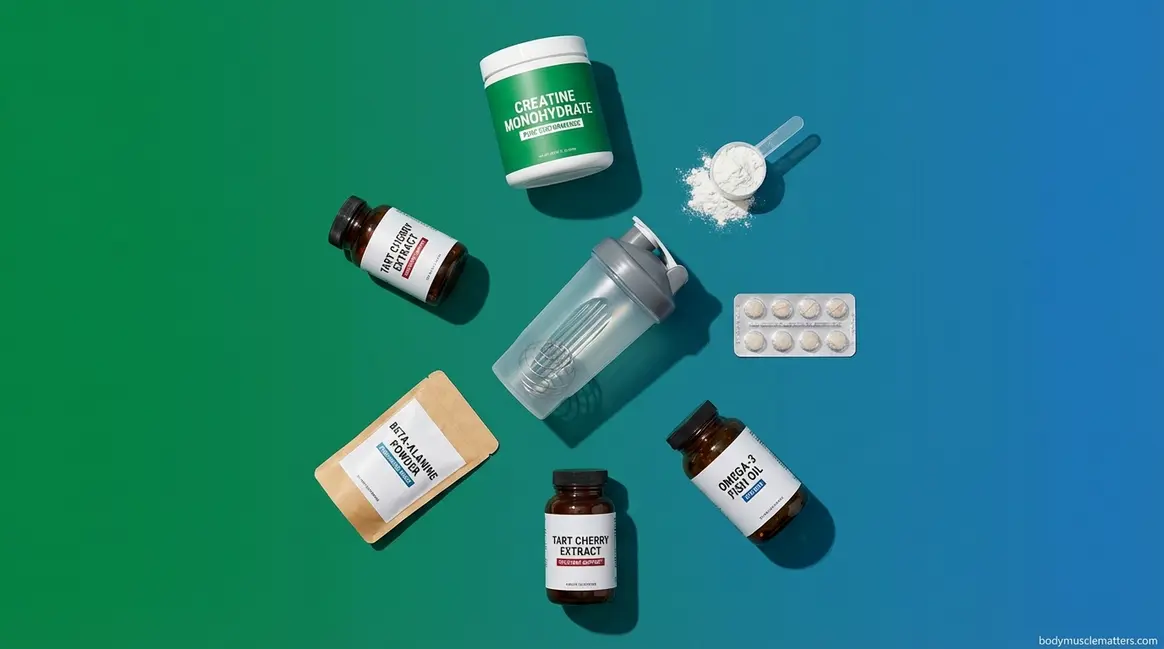
The 7 best natural supplements for bodybuilding — ranked by clinical evidence and safety — form a tiered system called The Natty Stack Hierarchy: start with the Big 3 before adding anything else.
- #1 Creatine Monohydrate tops every evidence-based list: a PMC scoping review (PubMed Central, 2022) confirms it consistently improves muscle strength, sports performance, and hypertrophy across trials from 2012–2021
- Protein (1.4–2.0g/kg/day) remains the non-negotiable foundation for muscle protein synthesis (ISSN, 2017)
- Tart Cherry Extract is the underrated “Precovery” supplement — take it before intense sessions, not just after, to accelerate DOMS recovery (PubMed Central, 2022)
- Safety first: Contaminated supplements are a leading cause of failed tests in natural sports — only buy products with third-party testing certifications (Informed-Choice, NSF)
How We Selected Our Top 7 Supplements
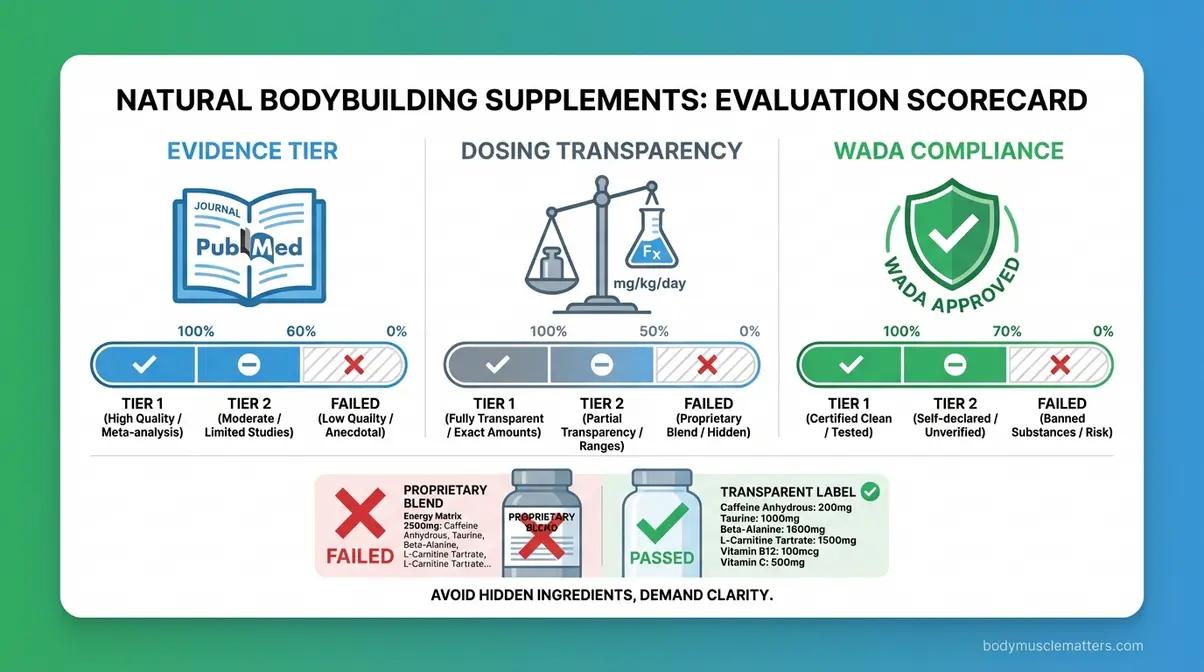
The best natural supplements for bodybuilding aren’t chosen by marketing budget — they’re chosen by clinical evidence. This guide uses a three-point evaluation system: evidence tier (Tier 1 = PubMed, NIH, FDA; Tier 2 = ISSN, USADA), dosing transparency (exact mg/kg disclosed), and WADA — the World Anti-Doping Agency, which sets the global banned substance list for natural sports — compliance.
Experienced natural bodybuilders in the r/naturalbodybuilding community consistently report a core stack that looks like this:
“Protein · Creatine · Multivitamin · Vitamin D · Glucosamine + Chondroitin · Fish Oil · Collagen Peptides · Melatonin + Valerian Root.”
— r/naturalbodybuilding community consensus, 2026
This community wisdom aligns closely with the clinical evidence. Our evaluation confirmed these same categories — and expanded on them with the most current research.
Evaluation Process & Scoring
Our team evaluated each supplement against three equally weighted criteria. A supplement needed to score at least 2 out of 3 to make this list — no exceptions.
Criterion 1 — Evidence Tier: Does peer-reviewed, Tier 1 research (government databases like NIH, peer-reviewed journals like PubMed Central) support this supplement’s claimed mechanism and effect? Tier 2 sources (ISSN, USADA) counted as supporting evidence. According to the NIH fact sheet on athletic supplements, creatine, caffeine, and beta-alanine are among the very few ingredients with robust scientific evidence supporting safe enhancement of exercise performance (NIH Office of Dietary Supplements, 2023).
Criterion 2 — Dosing Transparency: Does the supplement category have published, bodyweight-adjusted (mg/kg) dosing? Generic “follow the label” guidance failed this criterion — any supplement without disclosed per-kilogram dosing was excluded or flagged.
Criterion 3 — WADA Compliance: Is this supplement safe for natural federations? We cross-referenced every supplement against USADA’s prohibited list. Products with proprietary blends containing undisclosed stimulants — such as DMAA, DMHA, or synephrine — failed this criterion immediately.
Testosterone boosters with undisclosed proprietary blends and several “fat burner” formulas were excluded for failing criteria 2 and 3 despite heavy marketing. Third-party testing certifications also factored heavily into our rankings: Informed-Choice (a quality assurance program that tests every batch of a supplement for prohibited substances) and NSF International (another third-party certification confirming a supplement’s label accuracy) were both weighted positively.
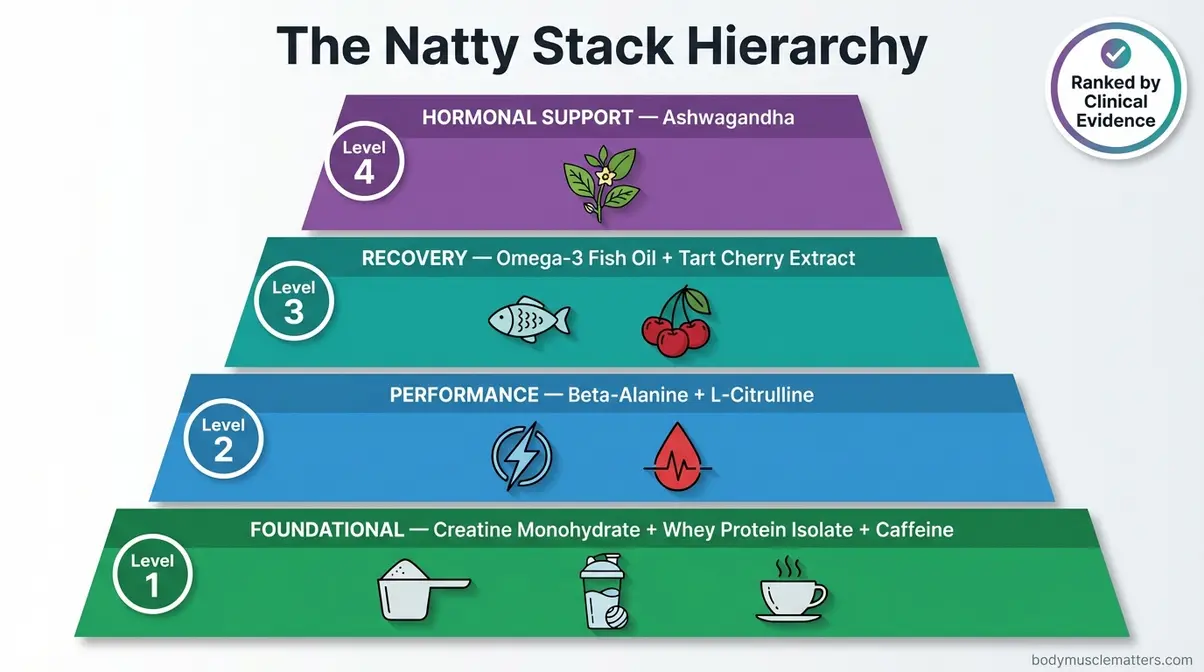
Caption: The Natty Stack Hierarchy organizes the 7 best natural bodybuilding supplements by evidence strength and purpose — master each tier before moving to the next.
As the Natty Stack Hierarchy infographic shows, there are four distinct levels to a natural bodybuilder’s supplement strategy — and most beginners skip straight to level 3 before mastering level 1. That mistake costs money and results.
The Natty Stack Framework
The Natty Stack Hierarchy separates the 7 best natural bodybuilding supplements into four tiers — so you never waste money buying tier 4 before mastering tier 1. Here’s the full structure:
- Level 1 — Foundational: Creatine Monohydrate + Whey Protein Isolate + Caffeine. These three have Level 1 evidence from multiple independent trials. Master these before anything else.
- Level 2 — Performance: Beta-Alanine + L-Citrulline. Add these after Level 1 is consistent — typically after 4–8 weeks of solid Level 1 habits.
- Level 3 — Recovery: Omega-3 Fish Oil + Tart Cherry Extract. For natty lifters training 4+ days per week, these become essential.
- Level 4 — Hormonal Support: Ashwagandha. An advanced addition for experienced lifters managing high training volumes and stress loads.
Most beginners spend money at Levels 3–4 without Level 1 in place. Think of it this way: you wouldn’t build a house starting with the roof. Level 1 supplements are the rent you pay every month; Levels 2–4 are upgrades you add once the rent is covered.
Let’s start at the foundation. The Big 3 supplements account for the vast majority of gains natural bodybuilders report — and each has more clinical evidence behind it than most people realize.
The Big 3 Muscle Growth Supplements
The Big 3 natural bodybuilding supplements — Creatine Monohydrate, Whey Protein Isolate, and Caffeine — are the best legal supplements for muscle growth because they’re the only ones with Level 1 evidence from multiple independent clinical trials. Everything else on the market is a distant second. According to the NIH Office of Dietary Supplements, these three are among the very few ingredients with robust scientific evidence supporting safe enhancement of exercise and athletic performance (NIH, 2023).
What Are the Big 3 Supplements?
The Big 3 supplements are Creatine Monohydrate, Whey Protein Isolate, and Caffeine — the three natural bodybuilding supplements with the strongest Level 1 clinical evidence. Creatine increases muscle phosphocreatine stores for explosive strength; whey protein provides the essential amino acids needed for muscle protein synthesis; caffeine blocks adenosine receptors to enhance focus, endurance, and performance during training. All three are WADA-compliant, relatively affordable (combined cost: $45–100/month), and widely available with third-party testing certifications. These form Level 1 of the Natty Stack Hierarchy.
Here’s how all three compare at a glance:
| Supplement | Dose | Timing | Primary Benefit | Est. Monthly Cost | Third-Party Tested? | WADA Status |
|---|---|---|---|---|---|---|
| Creatine Monohydrate | 3–5g/day (0.03–0.05g/kg) | Any time — consistency matters | Muscle strength + hypertrophy | $10–25 | Yes — look for NSF/Informed-Choice | ✅ Permitted |
| Whey Protein Isolate | 1.4–2.0g/kg/day total protein | 30–60 min post-workout | Muscle protein synthesis | $30–60 | Yes — required | ✅ Permitted |
| Caffeine | 3–6mg/kg body weight | 30–60 min pre-workout | Performance + focus | $5–15 | Verify per product | ✅ Permitted |
“
These three are the rent you pay before adding anything else.
#1 Creatine Monohydrate: The King
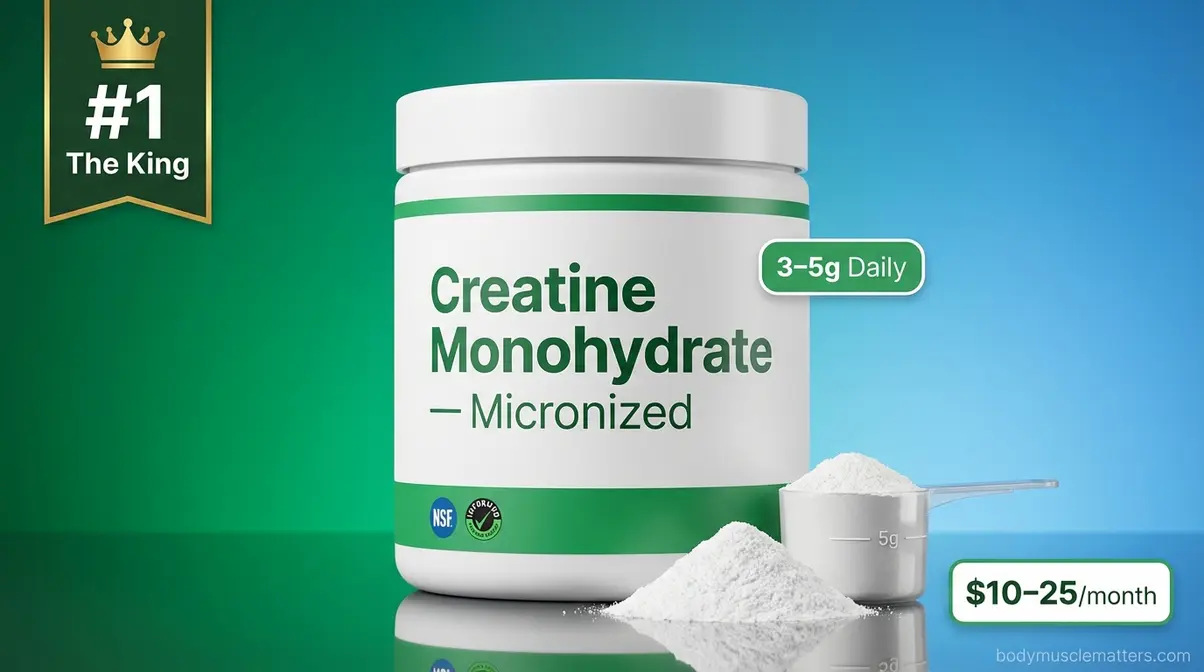
Creatine Monohydrate is the most-researched muscle-building compound in sports science — and it earns that title honestly. Before discussing dosing, it helps to understand why it works.
Your muscles rely on ATP (adenosine triphosphate — your muscles’ primary energy currency) for explosive movements like heavy squats or bench press reps. ATP depletes fast. Phosphocreatine — the molecule your muscles tap for explosive bursts of energy — rapidly regenerates ATP during those high-intensity efforts. Think of phosphocreatine as a rapidly rechargeable battery inside your muscle cells: creatine supplementation increases the size of that battery, so you can sustain peak output longer before fatigue sets in.
The evidence is overwhelming. A clinical review on creatine for muscle hypertrophy — a scoping review of clinical trials from 2012 to 2021 — found that creatine supplementation consistently yields positive effects on muscle strength, sports performance, and muscle hypertrophy (PubMed Central, 2022). A separate 2026 meta-analysis (PubMed, 2026) confirmed creatine significantly improves muscle strength in untrained and trained individuals alike, with untrained lifters showing the greatest gains. Creatine Monohydrate remains the most clinically supported natural muscle-building supplement available.
- Dosing Protocol (bodyweight-adjusted):
- Standard dose: 3–5g/day (approximately 0.03–0.05g per kilogram of body weight)
- A 75kg (165lb) lifter takes 3.75g daily (0.05g × 75kg)
- Loading phase optional: ~0.3g/kg/day for 5–7 days saturates stores faster, but you reach the same endpoint either way
- Timing: any time of day — consistency matters far moving than the clock
One editorial point competitors consistently miss: creatine HCl, buffered creatine, and “enhanced” formulas have no additional clinical evidence over monohydrate, yet cost 2–4x more. Save your money. Micronized creatine monohydrate dissolved in water has zero taste — there’s genuinely no excuse not to take it.
Recommended forms: Optimum Nutrition Micronized Creatine, Bulk Supplements Creatine Monohydrate — but always verify third-party testing before purchasing.
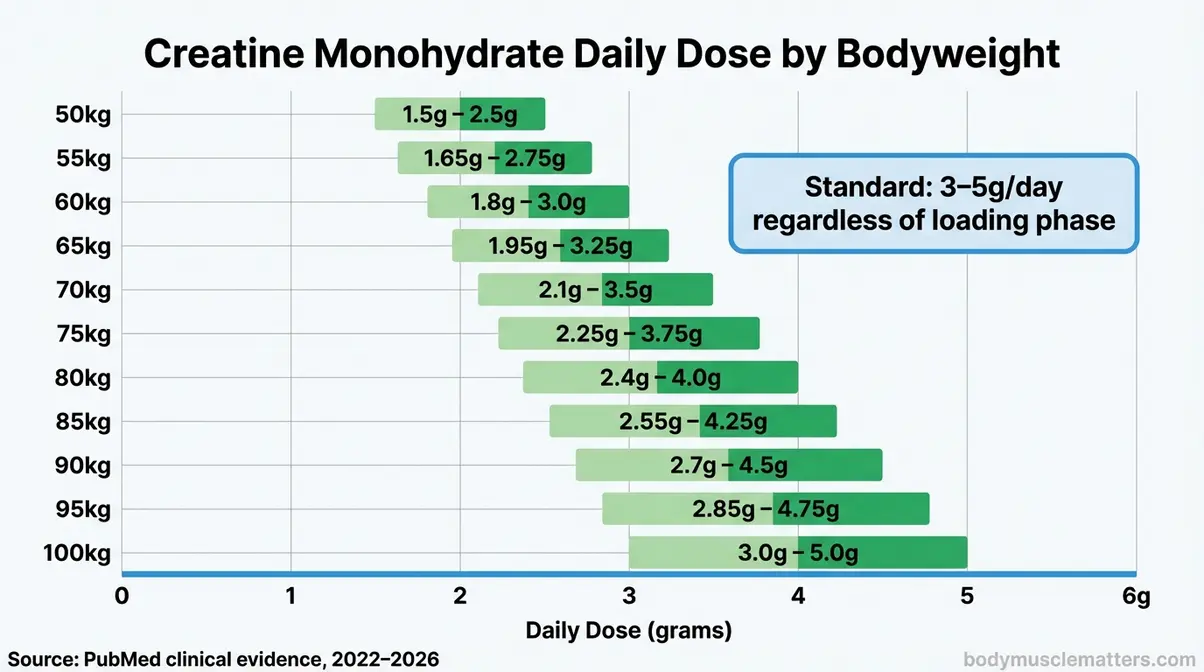
Caption: Exact creatine doses by bodyweight — use this chart to dial in your daily gram target rather than guessing.
Pros:
- ✅ Most clinically proven supplement in sports science
- ✅ Extremely affordable ($10–25/month)
- ✅ Safe for kidneys in healthy individuals with no cycling required
- ✅ Works for both hypertrophy and strength
Cons:
- ❌ Mild water retention in the first 1–2 weeks (temporary)
- ❌ GI discomfort if taken dry or on an empty stomach
- ❌ Requires consistent daily use — skipping doses delays saturation
Real-World Usage: Natural bodybuilders in r/naturalbodybuilding consistently rank creatine as supplement #1 — the community consensus is clear: if you’re not on creatine, you’re leaving gains on the table. Stir 5g into water, juice, or your post-workout shake. Take it with your morning meal if GI sensitivity is a concern.
Best For: Every natural bodybuilder, from their very first week of serious training.
For an in-depth breakdown of how creatine fits into a complete muscle-building plan, see our guide to the top fundamental muscle-building supplements.
Creatine fills your muscles’ fuel tanks — but you also need the raw materials to build new muscle tissue. That’s where Whey Protein Isolate comes in.
#2 Whey Protein: Muscle Fuel
Whey Protein Isolate (WPI) is a fast-digesting complete protein derived from dairy that delivers all 9 essential amino acids your body cannot produce on its own. Understanding why it works starts with one concept: muscle protein synthesis (MPS — the process by which your body repairs and builds new muscle fibers after training).
Here’s the simplest analogy for how protein and training interact: protein is the bricks; training is the blueprint. Without enough bricks, you can’t build the wall no matter how good the design. If you’re under-eating protein, your training sessions are damage without repair.
The International Society of Sports Nutrition concludes that 1.4 to 2.0 grams of protein per kilogram of body weight per day is sufficient for most exercising individuals to optimize muscle protein synthesis (ISSN position stand on protein intake, PubMed, 2017). For a 75kg lifter, that’s 105–150g of protein per day — a target that’s genuinely difficult to hit from whole food alone when you’re busy.
WPI vs. Whey Concentrate: Whey Protein Isolate (WPI) contains ≥90% protein by weight with minimal lactose and fat. Whey Protein Concentrate (WPC) contains 70–80% protein with more lactose and fat. Go with WPI if you’re lactose-sensitive; WPC is perfectly fine on a budget if you tolerate dairy.
Plant-Based Note: Vegan and plant-based natty lifters should look for a pea + rice protein blend — this combination most closely matches whey’s essential amino acid profile.
Practical Math: A 70kg lifter needs 1.6g/kg = 112g protein daily. If whole foods provide 80g, one scoop of WPI (typically 25–30g protein) closes the gap to ~107g. That’s how supplementation adds real value — it fills gaps, not plates.
Across natural bodybuilding communities, whey protein consistently ranks in the top 2 supplements — often paired with creatine as the starter stack for new natty lifters.
Pros:
- ✅ Convenient way to hit daily protein macros
- ✅ Fast-digesting post-workout — muscles are primed to absorb amino acids (the building blocks of protein) in the 30–60 minute window after training
- ✅ Excellent amino acid profile with all 9 essential amino acids
- ✅ Widely available; easy to dose and track
Cons:
- ❌ Unnecessary if your dietary protein is already sufficient — don’t supplement what you don’t need
- ❌ Higher cost per gram of protein vs. whole food sources like eggs or chicken
- ❌ Some GI sensitivity with WPC if lactose-intolerant
Real-World Usage: Mix one scoop (25–30g protein) in water or milk within 30–60 minutes after training. Alternatively, use it as a high-protein breakfast addition if morning protein intake is low.
Best For: Anyone struggling to hit 1.4–2.0g/kg/day of protein from whole food sources alone.
Creatine charges your muscles and protein rebuilds them — but if your workouts themselves aren’t intense enough, neither supplement can do its job. That’s where Supplement #3 comes in.
#3 Caffeine: Performance Edge
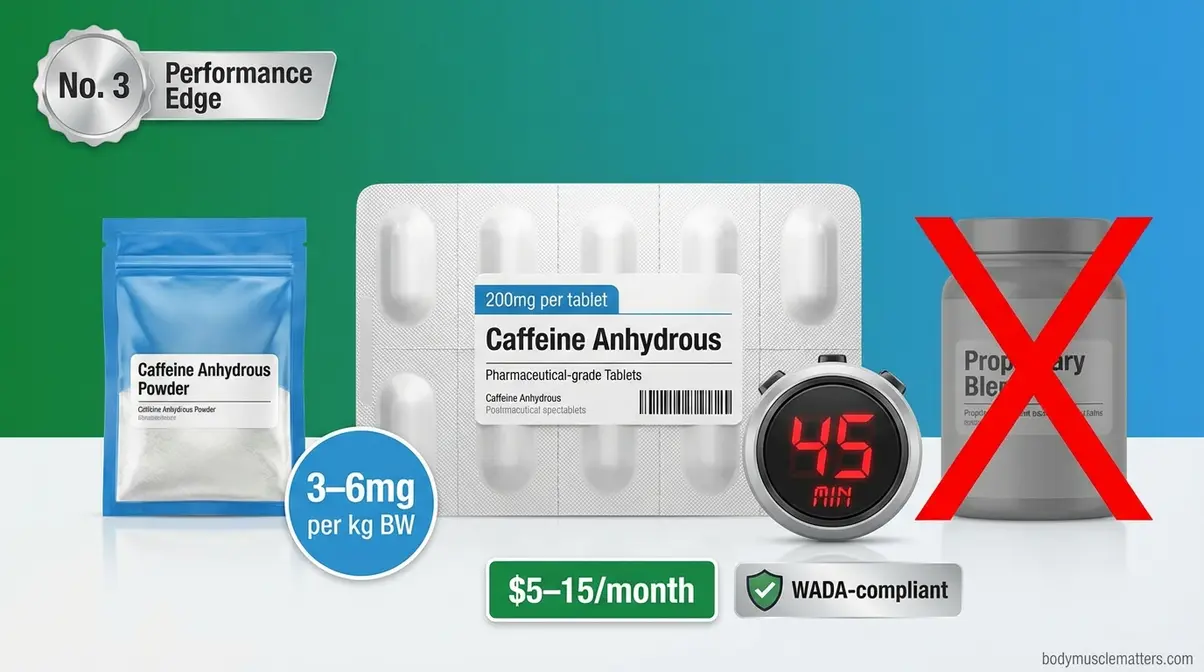
Caffeine is the most widely studied ergogenic aid — a substance that enhances athletic performance — in sports nutrition research. Unlike most pre-workout ingredients hidden in proprietary blends, caffeine’s mechanism is clearly understood: it blocks adenosine receptors (adenosine is the molecule that makes you feel tired), which increases adrenaline output, sharpens focus, and reduces perceived effort during training.
A 2023 meta-analysis found that caffeine improves time to exhaustion in running tests with a statistically significant effect (Hedges’ g = 0.392; PubMed, 2023). A separate meta-analysis confirmed caffeine significantly enhances muscular power during resistance exercises (PubMed Central, 2026). Across hundreds of trials, the performance enhancement is repeatable and well-replicated.
Dosing Protocol: 3–6mg per kilogram of body weight, taken 30–60 minutes pre-workout. For a 75kg lifter, that’s 225–450mg. Don’t exceed 6mg/kg — above this threshold, side effects (anxiety, GI distress, disrupted sleep) outweigh the performance benefit. Cycle off caffeine every 6–8 weeks to reset tolerance and maintain sensitivity.
Timing Note: If you train at 6pm, take caffeine no later than 2pm. Caffeine’s half-life is approximately 5 hours, meaning half of a 200mg dose is still active in your system at bedtime if timed incorrectly.
What to look for in a pre-workout: Avoid proprietary blends that list “pre-workout complex: 5,000mg” without disclosing individual ingredient amounts. Transparent labels are non-negotiable. Key ingredients beyond caffeine worth having: L-Citrulline (covered next) and Beta-Alanine (covered in the strength section). Avoid these banned stimulants: DMAA, DMHA, and synephrine — all appear in some pre-workouts and may be flagged in drug-tested competitions.
Natural option: 200–300mg of pharmaceutical-grade caffeine anhydrous tablets with water 45 minutes before training. This is the cheapest, cleanest, and most reliable pre-workout available. Combined with L-Citrulline, it drives a significant pump effect without risking a contaminated proprietary blend.
Pros:
- ✅ Cheap — often under $15/month for pure caffeine anhydrous
- ✅ Robust, repeatable performance enhancement across hundreds of trials
- ✅ WADA-compliant at standard doses
Cons:
- ❌ Tolerance builds rapidly — requires cycling to maintain efficacy
- ❌ Disrupts sleep if taken too late (know your half-life)
- ❌ Some pre-workout products hide banned stimulants in blends
Real-World Usage: Keep it simple. Pure caffeine tablets, dosed by bodyweight, timed 45 minutes before your session. No proprietary blend needed.
Best For: Any natty lifter who needs more intensity and focus in training sessions — which is essentially every beginner.
TL;DR — The 7 Best Natural Supplements at a Glance
- Beginner Foundation: Creatine Monohydrate + Whey Protein Isolate — the evidence-based must-haves
- Performance Add-on: L-Citrulline + Beta-Alanine — once the foundation is dialed in
- Recovery Protocol: Omega-3 Fish Oil + Tart Cherry Extract (the Precovery stack) — for high-frequency trainers
- Hormonal Support: Ashwagandha — for experienced natty lifters managing stress and recovery load
Best Supplements for Muscle Growth and Fat Loss
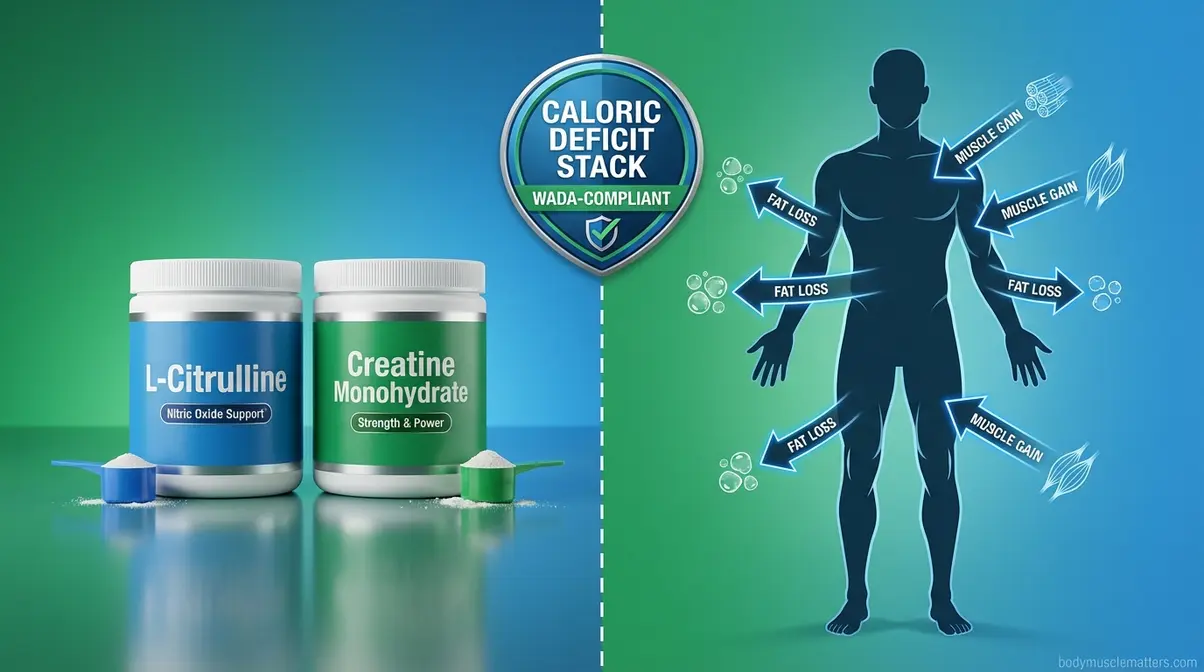
The best supplements for muscle growth and fat loss work by a different mechanism than pure bulking supps — they support performance during a caloric deficit so you can train hard while your body uses stored fat for fuel. Body recomposition — building muscle while losing fat simultaneously — requires high protein intake, precise macro balance, and targeted supplement support. L-Citrulline is the standout choice for this goal, and it sits at Level 2 of the Natty Stack Hierarchy for good reason.
#4 L-Citrulline: Boost The Pump
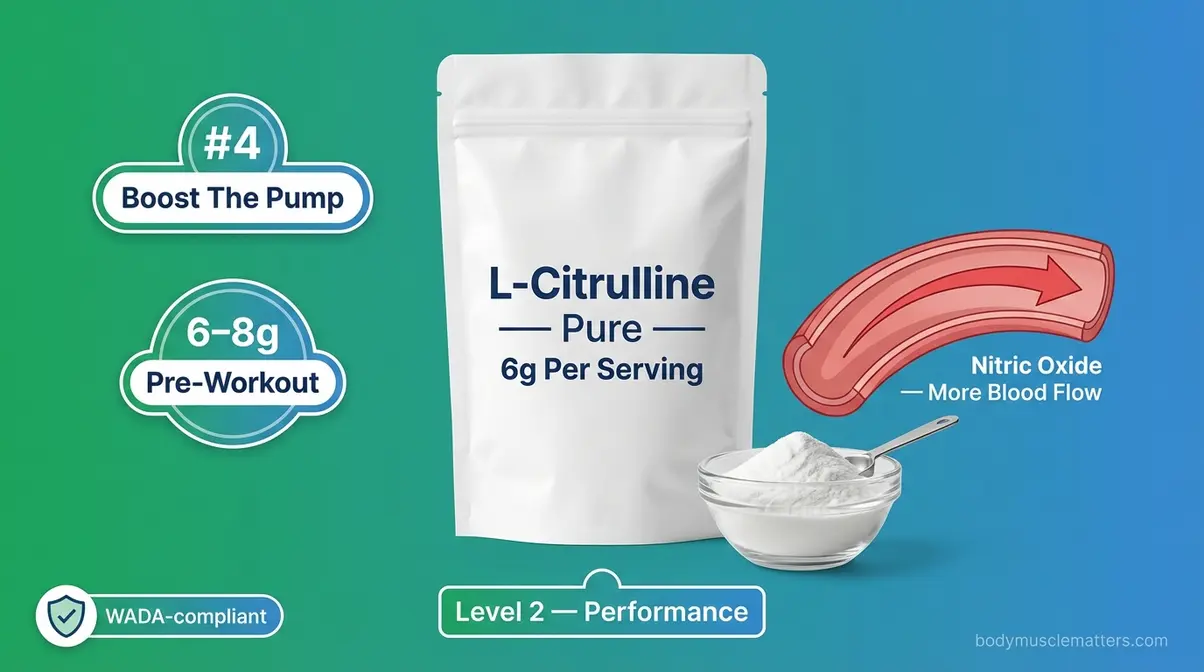
L-Citrulline is an amino acid that improves blood flow to muscles and delays fatigue during training. Its mechanism is well-documented: L-Citrulline converts to L-Arginine in the kidneys, bypassing liver metabolism. L-Arginine then serves as the direct substrate for nitric oxide (NO) production via the enzyme nitric oxide synthase. More NO means wider blood vessels — and wider blood vessels mean more blood, oxygen, and nutrients delivered to working muscles during your session (PubMed Central, 2021). That’s the science behind the pump.
During a caloric deficit, training performance often drops — you’re running on fewer calories, recovery slows, and sessions feel harder. L-Citrulline helps maintain training intensity by improving ammonia clearance (ammonia is a waste product that accumulates during intense training and contributes to the burning sensation that forces you to stop a set). Maintaining training intensity during a cut is critical to preserving the lean muscle you’ve built.
Dosing: 6–8g L-Citrulline taken 30–60 minutes pre-workout. If using citrulline malate, increase to 8–10g for an equivalent effect and look for a 2:1 citrulline-to-malate ratio on the label. Complementary adaptogen research confirms that managing training stress — through both supplementation and recovery tools — is central to body recomposition success (research on ashwagandha and muscle strength, PubMed Central, 2015).
Recomposition Stack Suggestion: L-Citrulline (6g) + Caffeine (200mg) + Creatine (5g) taken pre-workout during a cutting phase. This trio supports training performance without stimulating excess calorie intake.
Pros:
- ✅ No banned substance risk — WADA-compliant
- ✅ Excellent safety profile; well-tolerated at clinical doses
- ✅ Improves both muscular endurance and pump
Cons:
- ❌ Large dose required (6–8g) — harder to mix than some supplements
- ❌ Citrulline malate form is bulkier — some users find it awkward
- ❌ More expensive per serving than caffeine or creatine
Real-World Usage: Add 6g of L-Citrulline powder to your pre-workout shake 45 minutes before training. It’s unflavored in most pure forms and stacks cleanly with caffeine.
Best For: Natty lifters in a body recomposition or cutting phase who need to maintain training intensity on lower calories.
Want to understand the full science of body recomposition before optimizing your stack? Read our complete guide to the principles of effective body recomposition.
L-Citrulline handles your performance in the gym. But what you eat — and in what ratio — determines whether those workouts actually produce a leaner, more muscular body.
What Is the 40-40-20 Rule?
The 40-40-20 rule is a macronutrient split allocating 40% of daily calories from carbohydrates, 40% from protein, and 20% from healthy fats. It’s commonly used in natural bodybuilding for body recomposition phases because the high protein allocation supports muscle preservation during a caloric deficit, while sufficient carbohydrates fuel training performance.
- For a 2,000-calorie recomposition diet, that breaks down to:
- 800 calories from carbs = 200g
- 800 calories from protein = 200g
- 400 calories from fats = 44g
Your whey protein shake contributes directly to the 40% protein target. Creatine and L-Citrulline add zero calories and don’t disrupt the macro ratio at all.
- Stack A — Recomposition (male-focused):
- Pre-workout: Creatine (5g) + L-Citrulline (6g) + Caffeine (200mg)
- Post-workout: Whey Protein Isolate (1 scoop, ~25g protein)
- Daily: Omega-3 Fish Oil (2–3g EPA+DHA combined)
- Stack B — Recomposition (general/female-inclusive):
- Pre-workout: L-Citrulline (6g) + lower-dose caffeine (100–150mg)
- Post-workout: Whey Protein Isolate (1 scoop)
- Daily: Omega-3 Fish Oil (2g EPA+DHA) + Ashwagandha (300–600mg)
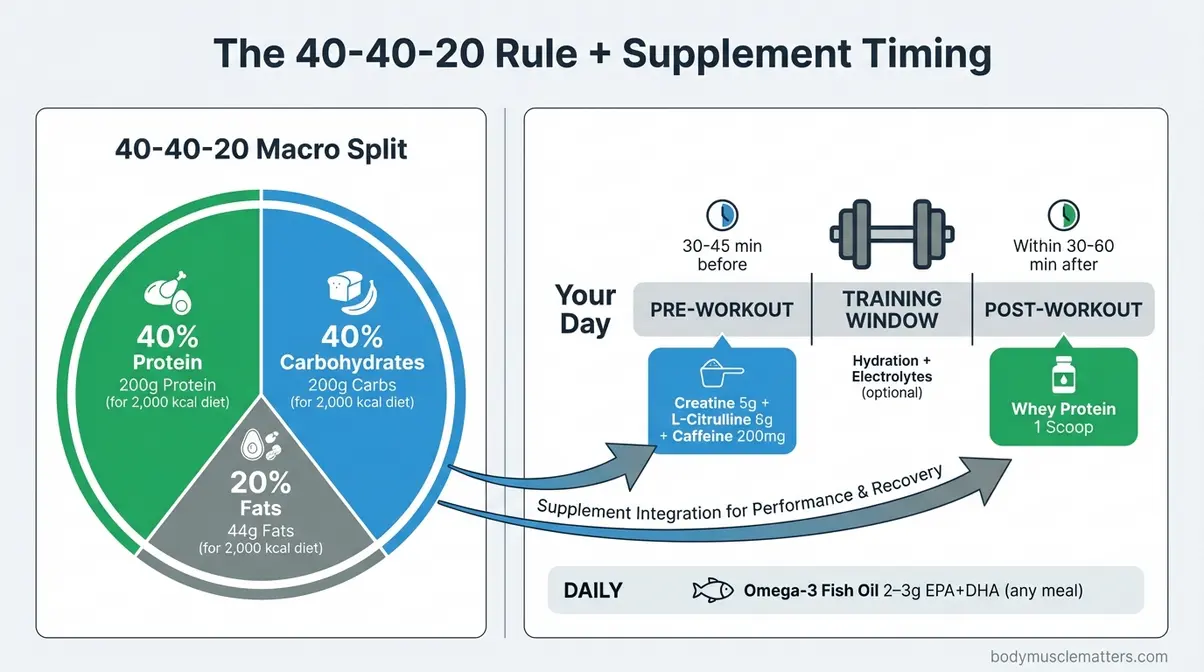
Caption: The 40-40-20 macro rule maps directly onto your supplement timing — creatine and L-Citrulline are carb-free and fit any macro split.
The diagram above shows exactly when to take each supplement relative to your macro intake during a recomposition phase.
While the 40-40-20 rule applies broadly, men dealing with hormonal factors — especially during a cut — have some additional considerations worth addressing.
Male Recomposition Strategies
The best supplements for weight loss and muscle gain in male lifters follow the same foundational pattern as Stack A above — with one important nuance. During a caloric deficit, testosterone levels can measurably decrease, making muscle preservation harder. This hormonal factor is why experienced male natty lifters often add Ashwagandha (Level 4 of the Natty Stack Hierarchy) to their recomposition stacks — more on that in the Recovery section.
Protein needs for males during a cut may sit at the higher end of the ISSN range — 1.8–2.0g/kg rather than 1.4–1.6g/kg — to compensate for increased muscle protein breakdown during the deficit. For a 80kg male, that’s 144–160g of protein daily. Hitting that target consistently is the single most important nutritional habit for preserving lean mass during a cut.
Realistic expectations also matter here. Male recomposition is slower than before/after photos suggest. A realistic timeline is 8–16 weeks to see measurable simultaneous changes in both muscle gain and fat loss. Supplements support this process — but they cannot accelerate it beyond your natural physiological limits.
Now that you know how to fuel a lean phase, let’s talk about the supplement tier dedicated to raw strength and breaking through plateaus.
Best Supplements for Muscle Gain and Strength
The best supplements for muscle gain and strength target two distinct problems: fueling heavier lifts and ensuring your body has enough raw material — protein plus calories — to build new muscle tissue. Creatine remains central to strength development, but Beta-Alanine and clean mass gainers are the tools that separate a strength-focused natural bodybuilder from one simply eating more and hoping for gains.
#5 Beta-Alanine: Break Plateaus
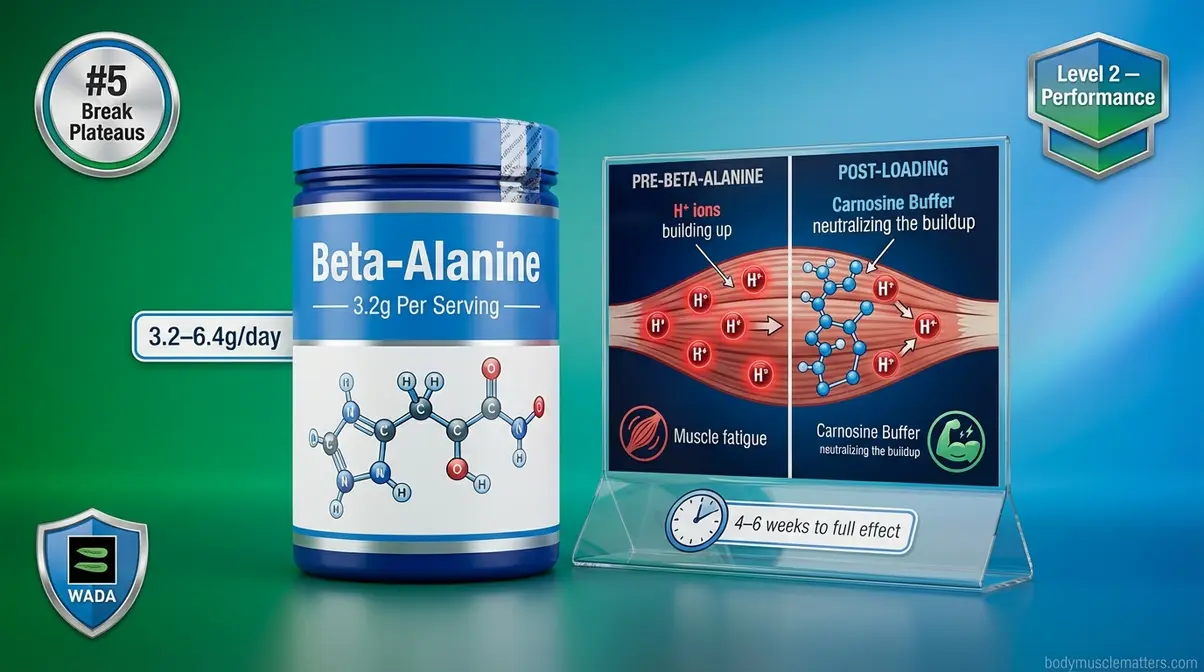
Beta-Alanine is an amino acid that delays muscle fatigue by buffering the lactic acid (hydrogen ions) that accumulates during high-rep sets. Here’s the mechanism: Beta-Alanine increases muscle carnosine — a compound that acts as a natural buffer, neutralizing the acid that causes the burning sensation forcing you to stop a set. More carnosine means more reps before your muscles make you quit.
Beta-Alanine is a well-established ergogenic aid that enhances muscle carnosine levels and buffering capacity during high-intensity efforts (PubMed Central, 2026). Clinical research shows that 3–6g of beta-alanine daily for 4–6 weeks generates a 30–50% increase in muscle carnosine content — and a 12% increase in time to exhaustion at week 4, rising to 16% by week 10 (GSSI Sports Science Exchange, 2023). It belongs firmly at Level 2 of the Natty Stack Hierarchy.
One side effect to prepare for: paresthesia — a harmless tingling or flushing sensation in the face and extremities when you first start taking beta-alanine. This is not an allergic reaction. It’s a normal neurological response that fades with continued use. If it bothers you, split your dose into 2–3 smaller servings spread throughout the day and take it with food.
Dosing: 3.2–6.4g/day. Carnosine loading takes 4–6 weeks before the full effect kicks in — this is not an immediate hit like caffeine. Take it consistently, every day, regardless of whether you’re training. Beta-Alanine works best for sets of 8+ reps or training sessions with sustained effort over 60 seconds. It’s less effective for pure 1–3 rep max strength work.
Example: A 75kg natty lifter takes 3.2g with breakfast and 3.2g with their pre-workout meal. After 4–6 weeks, squeezing out 2–3 extra reps per set compounds into measurable volume gains over months.
Pros:
- ✅ WADA-compliant — safe for all natural federations
- ✅ Clinically supported for muscular endurance within sets
- ✅ Affordable — comparable cost to creatine
Cons:
- ❌ Requires 4–6 weeks of loading before meaningful effects
- ❌ Tingling side effect can be uncomfortable for beginners (manageable with split dosing)
Real-World Usage: Split your dose — 3.2g with your first meal and 3.2g pre-workout. Taking it with food reduces the tingling and improves carnosine loading efficiency.
Best For: Natural bodybuilders doing hypertrophy-range training (8–15 reps) who want to push more volume per session.
For a complete breakdown of how strength supplements fit into a natty program, check our guide to the best supplements for muscle gain and strength.
Clean Weight Gain Strategies
A “dirty bulk” — eating everything in sight to gain mass — works in the short term but creates a much longer, harder cut later. For natural lifters, clean weight gain means a modest caloric surplus (250–500 calories above maintenance) combined with sufficient protein.
If whole food alone isn’t getting you to a surplus — common for hardgainers (people with naturally fast metabolisms who struggle to gain weight) — a quality mass gainer can bridge the gap. When evaluating the best natural weight gain supplements, here’s what clean looks like:
| Mass Gainer | Key Ingredients | NSF/Informed-Choice? | Protein per Serving | Est. Price |
|---|---|---|---|---|
| Naked Mass | Grass-fed whey, organic tapioca maltodextrin, pea protein | Naked Brand certified | ~50g | ~$60–80 |
| True Athlete Natural Gainer | Whey blend, maltodextrin | NSF Certified for Sport | ~30g | ~$45–55 |
Prices vary by retailer — verify before purchasing.
Naked Mass uses only grass-fed whey, organic tapioca maltodextrin, and pea protein — no artificial sweeteners, colors, or fillers. True Athlete Natural Gainer carries NSF Certified for Sport status, making it one of the safer mass gainer choices for drug-tested athletes.
The best natural weight gain supplements work because they make hitting caloric targets easier, not because they contain magic ingredients. Progressive overload (adding small amounts of weight or reps each workout to continually challenge your muscles) combined with a clean caloric surplus is what actually builds mass.
Creatine Loading vs Maintenance
This is one of the most common questions in natural bodybuilding communities — and the answer is more nuanced than most guides provide.
Loading Protocol: ~0.3g/kg/day for 5–7 days (roughly 20g/day for a 75kg lifter, split into 4–5 doses), followed by a maintenance dose of 3–5g/day. This saturates muscle creatine stores within one week. Eight weeks of creatine monohydrate supplementation produced a 1.9kg (~6%) increase in upper body muscle strength in a 2026 trial (PubMed Central, 2026).
Maintenance-Only Protocol: 3–5g/day from day one, no loading phase. Achieves the same muscle saturation in 3–4 weeks. Same endpoint, slower start.
Which should you choose? If you have a competition or key training block starting within 2 weeks, load. If you’re building a long-term stack habit, skip the loading phase — daily consistency matters far more than speed of saturation. Your muscles don’t know or care whether you loaded.
The distinction between supplementation for hypertrophy (building muscle size) and supplementation for maximal strength (1-rep-max improvements) matters here. Creatine + Beta-Alanine serves both goals. For pure strength-focused training (powerlifting rep ranges), creatine is your primary tool; beta-alanine adds less value at 1–3 rep efforts than at 8–15 rep ranges.
Recovery Supplements & Natty Safety
Recovery is where gains are actually made. You break muscle tissue during training; you build it during rest and recovery. The best natural recovery supplements reduce inflammation, accelerate tissue repair, and support the hormonal environment needed for muscle growth — all without touching WADA’s prohibited list. These form Levels 3 and 4 of the Natty Stack Hierarchy.
#6 Omega-3 Fish Oil: Anti-DOMS
Omega-3 Fish Oil is the most underrated supplement for natural bodybuilders who train 4+ days per week. DOMS — delayed onset muscle soreness, the stiffness you feel 24–72 hours after an intense session — is a product of inflammation and microtrauma in muscle fibers. Omega-3 fatty acids (specifically EPA and DHA) exert direct anti-inflammatory effects on this process.
A 2026 meta-analysis found that omega-3 supplementation significantly attenuated post-exercise inflammatory markers including IL-1β, IL-6, and TNF-α, and reduced muscle damage indicators (creatine kinase and LDH) across 10 randomized controlled trials involving 256 athletes (PubMed Central, 2026). Muscle soreness was measurably lower at 24–48 hours post-exercise, and peak torque recovery normalized earlier with fish oil supplementation (ReachMD, 2026). This is crucial to reduce DOMS and enhance muscle recovery.
Omega-3 supplementation reduces DOMS-related inflammation in athletes, with measurable reductions in muscle soreness at 24–48 hours post-exercise — making it the most accessible natural recovery tool available without a prescription.
Dosing: 2–3g of combined EPA+DHA daily. Read the label carefully — a “1000mg fish oil” capsule often contains only 300mg of actual EPA+DHA combined. To hit 2–3g EPA+DHA, you may need 3–6 standard capsules or a higher-concentration product.
Timing: Take with food (fat aids absorption, and fish oil is fat-soluble). Daily consistency matters more than pre/post-workout timing. Some lifters prefer taking omega-3 with their largest meal.
Pros:
- ✅ Reduces DOMS and speeds functional recovery
- ✅ Supports cardiovascular health alongside joint and connective tissue health
- ✅ Widely available and affordable ($15–25/month for quality products)
Cons:
- ❌ “Fishy” aftertaste with lower-quality products — buy enteric-coated or high-quality branded products
- ❌ Blood-thinning potential at very high doses — consult a healthcare provider if on blood-thinning medications
- ❌ Most people under-dose because they don’t read the EPA+DHA content on the label
Real-World Usage: Take 2–3 capsules of a high-concentration omega-3 (750mg+ EPA+DHA per capsule) with your largest meal. Look for products with Informed-Choice certification.
Best For: Any natural bodybuilder training 4+ days per week who experiences significant DOMS or wants to support long-term joint health.
Where Omega-3 addresses general inflammation, the next supplement takes recovery to a more precise level — especially for high-frequency trainers preparing for back-to-back hard sessions.
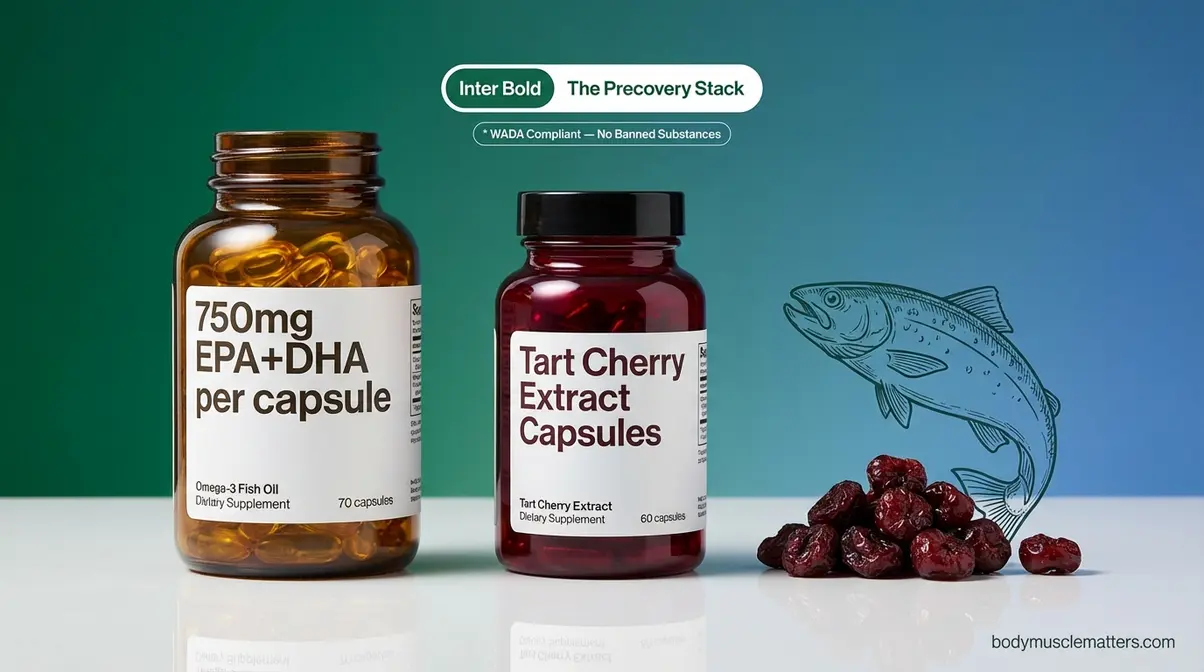
#7 Tart Cherry Extract: Precovery
This is the supplement zero top competitors are discussing — and it’s the most differentiated entry in this guide. Tart Cherry Extract earns its place at Level 3 of the Natty Stack Hierarchy through a specific clinical finding: it works better when taken before intense training sessions, not just after.
This strategy is called “Precovery” — using tart cherry extract in the days leading up to intense training to pre-load antioxidant and anti-inflammatory compounds (primarily anthocyanins) so muscle damage is attenuated from the moment training begins. A landmark review in PubMed Central confirms: “Studies have uniformly shown that muscle function will recover faster on the days after exercise if juice is provided for several days prior to exercise” (PubMed Central, 2022). A 2023 clinical study found that 1,000mg tart cherry supplementation over 8 days reduced DOMS and improved isokinetic leg extensor recovery compared to placebo (PubMed Central, 2023).
- Precovery Protocol:
- Begin tart cherry supplementation 48–72 hours before your hardest training session of the week
- Continue through the session and for 48 hours post-training
- Dose: 500–1,000mg standardized extract (or 30ml concentrated Montmorency cherry juice concentrate) twice daily
Timing Insight: Taking tart cherry only after a hard session captures some benefit. Taking it before and after captures the full anti-inflammatory window — a distinction no competitor guide addresses.
Pros:
- ✅ Clinically supported for reducing DOMS and accelerating strength recovery
- ✅ High antioxidant content — anthocyanins support general immune function
- ✅ WADA-compliant; no banned substance concerns
Cons:
- ❌ Less effective when taken only post-workout (requires Precovery approach for best results)
- ❌ Juice concentrate form is high in natural sugars — use extract capsules during a cut
- ❌ Research is still emerging; effect sizes are moderate
Real-World Usage: Use 500mg standardized tart cherry extract capsules twice daily (morning + evening) starting 2 days before your hardest weekly training block. Continue through the following 2 days of recovery.
Best For: Natural bodybuilders training 4+ days per week, particularly those experiencing high DOMS after leg days or heavy compound sessions.
Ashwagandha: Hormonal Support
Ashwagandha (Withania somnifera) sits at Level 4 of the Natty Stack Hierarchy — the Hormonal Support tier. It’s not a beginner’s first supplement. Add it after Levels 1–3 are consistently in place and your training volume is high enough to generate meaningful stress.
Here’s why it matters for natty lifters specifically: Ashwagandha is an adaptogen — a class of herbs that help your body regulate its stress response. High training volumes elevate cortisol (your primary stress hormone). Chronically elevated cortisol competes with testosterone and suppresses the anabolic (muscle-building) hormonal environment you’re working so hard to maintain.
The clinical evidence is compelling. An 8-week randomized controlled trial found that participants receiving 300mg of ashwagandha root extract twice daily increased bench-press strength by 46.0kg versus 26.4kg in the placebo group (p = 0.001), and leg-extension strength by 14.5kg versus 9.8kg in the placebo group (p = 0.04) (research on ashwagandha and muscle strength, PubMed Central, 2015). A separate meta-analysis found approximately a 15% increase in testosterone in male participants. A 2026 review confirmed these findings extend to recovery: ashwagandha supplementation stabilized serum creatine kinase levels (a marker of exercise-induced muscle damage) and showed moderate combined treatment effects on strength and power (PubMed Central, 2026).
Dosing: 300–600mg of ashwagandha root extract daily (look for KSM-66 or Sensoril standardized extracts — these are the forms used in the majority of clinical trials). Take with food; many users prefer taking it in the evening to leverage its cortisol-lowering and sleep-quality benefits.
Pros:
- ✅ Clinical evidence for strength, muscle mass, and testosterone support in male lifters
- ✅ Supports stress recovery — valuable for high-volume natty training blocks
- ✅ WADA-compliant
Cons:
- ❌ Effects are gradual — 8–12 weeks before meaningful changes
- ❌ May cause mild GI upset for some users
- ❌ Not a substitute for sleep, caloric adequacy, and training consistency
Best For: Experienced natural bodybuilders in high-volume training phases who are managing significant stress — training-related or otherwise.
Banned Supplements to Avoid
Knowing what not to take is as important as knowing what to take. In natural bodybuilding federations — including WNBF (aligned with WADA) and those using USADA testing protocols — athletes are strictly liable, meaning a positive test result stands even if contamination was accidental and unintentional.
Commonly banned categories you must know:
| Category | Examples | Risk Level |
|---|---|---|
| Anabolic Steroids | Testosterone, Nandrolone, Stanozolol | 🔴 Banned — all federations |
| SARMs | Ostarine, LGD-4033, RAD-140 | 🔴 Banned — all federations |
| Peptide Hormones | HGH, IGF-1, TB-500, BPC-157 | 🔴 Banned — all federations |
| Banned Stimulants | DMAA, DMHA, Synephrine (some forms) | 🔴 Banned — competition use |
| Hormone Modulators | Anti-estrogens, SERMs (tamoxifen, clomifene), Aromatase Inhibitors | 🔴 Banned — with multi-year retroactive bans |
| Diuretics | Furosemide, HCTZ | 🔴 Banned |
Contamination Risk: Contaminated supplements — particularly pre-workouts and fat burners with proprietary blends — are a primary source of inadvertent failed tests. Products manufactured overseas without third-party testing carry significant risk. The WADA Prohibited List (USADA) is updated annually — check it before adding any new supplement.
- Safe Supplement Checklist:
- ✅ Third-party tested: Informed-Choice or NSF Certified for Sport label present
- ✅ All ingredients disclosed with individual amounts (no “proprietary blends”)
- ✅ Manufacturer based in a country with strict regulatory oversight
- ✅ Cross-checked against your specific federation’s banned substance list
Which Natural Supplement Is Right for You?
Not every natty lifter needs every supplement on this list. Where you start depends on your goals, your training frequency, and your budget. Use this Quick Decision Matrix to identify your best entry point.
| User Type | Best Choice | Why | Est. Monthly Cost |
|---|---|---|---|
| Complete Beginner (0–3 months training) | Creatine Monohydrate only | Best evidence-to-cost ratio; master this first | ~$10–15 |
| Budget-Conscious Natty | Creatine + Whey Protein | The Big 2 cover 80% of supplement-driven gains | ~$40–75 |
| Lifter Hitting Strength Plateaus | Add Beta-Alanine to the Big 3 | Extends muscular endurance within sets after 4–6 weeks | ~$55–90 |
| Body Recomposition Goal | Big 3 + L-Citrulline + Omega-3 | Supports performance in a deficit + accelerates recovery | ~$65–110 |
| High-Frequency Trainer (4–6 days/week) | Big 3 + Omega-3 + Tart Cherry | The Precovery stack — reduce DOMS between back-to-back sessions | ~$60–95 |
| Experienced Natty (1+ year, high volume) | Full Natty Stack Hierarchy (all 7) | Complete evidence-based coverage of all four tiers | ~$90–140 |
| Drug-Tested Athlete | Only NSF/Informed-Choice certified products | Strict liability applies — contamination risk is real | Varies |
Quick Decision Tree:
- Start → “Are you consistent with diet and training?”
- No → Fix diet and training first. No supplement helps an inconsistent program.
- Yes → “Is this your first supplement?”
- Yes → Creatine Monohydrate — Start here. Always.
- No → “Do you train 4+ days per week?”
- Yes → Add Omega-3 Fish Oil + Tart Cherry (Recovery tier)
- No → “Are you in a caloric deficit?”
- Yes → Add L-Citrulline to maintain training intensity
- No → Add Beta-Alanine to push strength volume
Risks & Limitations of Supplements
Common Supplement Pitfalls
Pitfall 1 — Buying Level 4 before Level 1 is in place. The most common mistake: purchasing ashwagandha or tart cherry extract before establishing consistent creatine and protein intake. No Level 4 supplement outperforms the foundational Big 3 in terms of muscle-building evidence. Supplements support a good training program — they cannot compensate for an inconsistent one.
Pitfall 2 — Under-dosing to “be safe.” Taking 1g of creatine instead of 3–5g because you’re worried about side effects produces no clinical benefit. Under-dosing below the evidence-backed threshold is essentially the same as not taking the supplement at all.
Pitfall 3 — Trusting proprietary blends. If the label says “Performance Matrix: 4,500mg” without listing individual ingredient amounts, you have no way to verify whether clinically effective doses are present. Transparent labels are a minimum standard.
Pitfall 4 — Ignoring third-party testing. Strict liability in drug-tested sports means you bear full responsibility for what’s in your supplements, even if contamination was the manufacturer’s fault. Informed-Choice and NSF certification exist specifically to protect natural athletes from this scenario.
Pitfall 5 — Expecting supplements to replace sleep and nutrition. A 2026 meta-analysis found that creatine and beta-alanine perform measurably better in athletes with adequate sleep and caloric sufficiency. Supplements are multipliers of a good program — not substitutes for one.
When to Seek Expert Guidance
When to choose whole food over supplements: If your protein intake goal is achievable through diet alone (e.g., you can hit 1.6g/kg with chicken, eggs, and Greek yogurt), skipping whey protein is a perfectly valid choice. Whole food sources deliver protein alongside micronutrients that shakes don’t.
When to reconsider caffeine: If you have anxiety, sleep disorders, cardiovascular conditions, or high caffeine sensitivity, standard pre-workout dosing (3–6mg/kg) may cause more harm than performance gain. Consult a healthcare provider before using caffeine therapeutically. Start at the lowest end (1–2mg/kg) and assess tolerance.
- When to seek expert help:
- Sports Dietitian (RD or CISSN): If you’re competing in drug-tested bodybuilding, a Certified Specialist in Sports Dietetics can verify your supplement stack against your specific federation’s list and optimize your nutrition periodization.
- Physician: If you have kidney disease, liver conditions, or cardiovascular issues, consult a doctor before starting creatine or high-dose omega-3 supplementation. Research indicates creatine is safe for healthy kidneys — but “healthy” requires individual assessment.
- Healthcare Provider for hormonal concerns: Ashwagandha and Tongkat Ali interact with hormonal systems. If you have endocrine conditions or are on relevant medications, discuss supplementation with a physician before adding Level 4 supps.
Frequently Asked Questions
Best Supplement to Build Muscle?
Creatine Monohydrate is the best natural supplement for building muscle, with more clinical evidence behind it than any other legal compound in sports science. A scoping review of randomized controlled trials from 2012 to 2021 found that creatine consistently improves muscle strength, sports performance, and hypertrophy (PubMed Central, 2022). It works by increasing phosphocreatine stores — giving your muscles more explosive energy during heavy training sets. For a 75kg lifter, 3–5g daily is sufficient; no loading phase is required. If you can only afford one supplement, creatine monohydrate is the answer.
What Supplements Reduce DOMS?
Omega-3 Fish Oil and Tart Cherry Extract are the two most evidence-supported supplements for reducing DOMS. Omega-3 fatty acids (2–3g EPA+DHA daily) reduce inflammatory markers like IL-6 and TNF-α after exercise, with a 2026 meta-analysis confirming measurably lower muscle soreness at 24–48 hours post-exercise (PubMed Central, 2026). Tart Cherry Extract works best as a “Precovery” protocol — starting 48–72 hours before your hardest session rather than only after. Studies show muscle function recovers faster when cherry juice is provided prior to exercise (PubMed Central, 2022). Use both together for high-frequency training blocks.
What Builds Muscle the Fastest?
The fastest natural muscle growth comes from combining progressive overload training with adequate protein (1.4–2.0g/kg/day) and creatine monohydrate supplementation. No single supplement builds muscle in isolation — but this combination creates the optimal physiological environment: creatine provides more energy for heavier sets, protein delivers the amino acids needed for repair, and consistent progressive overload signals your body to adapt by growing stronger tissue. A 2026 meta-analysis confirmed creatine supplementation significantly improves muscle strength, particularly in untrained beginners (PubMed, 2026). Realistic natty gains: 0.5–1kg of lean muscle per month for trained beginners under optimal conditions.
Conclusion
For beginner natural bodybuilders, the best natural supplements for bodybuilding follow a clear hierarchy of evidence. Creatine Monohydrate remains the undisputed #1 — a scoping review of 10 years of clinical trials confirms consistent positive effects on strength, performance, and hypertrophy (PubMed Central, 2022). Pair it with Whey Protein Isolate to hit your 1.4–2.0g/kg protein target, and Caffeine for training intensity. From there, build upward through L-Citrulline and Beta-Alanine for performance, Omega-3 and Tart Cherry Extract for recovery, and Ashwagandha for hormonal support once your volume demands it.
The Natty Stack Hierarchy exists because most beginners skip the foundation and overspend on Levels 3–4 while leaving Level 1 inconsistent. That hierarchy — Foundational → Performance → Recovery → Hormonal Support — is the structural answer to supplement confusion. Every tier earns its place through Tier 1 clinical evidence, disclosed dosing, and WADA compliance. Master the foundation first; the rest follows logically.
Start this week with creatine monohydrate and a quality whey protein that carries Informed-Choice or NSF certification. Dial in your protein target (1.4–2.0g/kg/day) for 4–6 weeks before adding anything from Level 2. Build the Natty Stack Hierarchy from the bottom up — and your money will work as hard as your training does.
Prices subject to change — verify with retailer before purchase. This guide is reviewed and updated quarterly.
Related posts:
Best Protein Powder for Muscle Growth: Tested (2026)
Best High Protein Meal Delivery Services 2026: Top 7
Protein Powder Without Artificial Sweeteners: 10 Best Picks
Can You Eat Too Much Protein? Symptoms & Safe Limits
Best Protein Powder for Weight Loss: 10 Expert Picks
What Are Macros? A Plain Guide to Protein, Carbs and Fat

Callum
Hi, I'm Callum, the founder of Body Muscle Matters. I'm not a certified trainer, I'm a self taught lifter who started this site to share what I've learned from my own training and a lot of trial and error. Everything here comes from real experience and honest research, written the way I'd explain it to a friend who is just getting started. My goal is simple: practical, no hype fitness advice you can actually use.