Best Post-Workout Supplements for Muscle Gain (2026 Guide)
Home ›Supplements and Nutrition
Most beginners focus on what they do in the gym. Research consistently shows, however, that what you consume in the two hours after training is equally critical for muscle growth. If you’ve been putting in the workouts but not seeing results, your post-workout nutrition — not your effort — is likely the missing piece.
The supplement market is flooded with promises. Choosing the wrong post-workout stack, or taking the right one at the wrong time, wastes your money and stalls your progress. Worse, most guides skip the factor that silently blocks muscle growth in millions of people: your micronutrient baseline.
In this guide, you’ll learn exactly which best post workout supplements for muscle gain are backed by clinical research, the precise doses to take, and a simple step-by-step system to maximize every workout — including the one factor most guides ignore entirely. We cover five steps: from your foundational “Big 3” supplements through specialized stacks for different goals, and a dedicated section on hidden micronutrient roadblocks like iron deficiency and low Vitamin D.
⚠️ Medical Disclaimer: The information in this article is for educational purposes only and is not a substitute for professional medical advice, diagnosis, or treatment. Always consult a qualified healthcare provider or Registered Dietitian before starting any supplement regimen, especially if you have a pre-existing condition such as anemia, iron deficiency, or any other medical condition.
The best post-workout supplements for muscle gain work as a system — the “Recovery Triangle” of timing, micronutrient baseline, and supplement quality determines your results.
- Whey Protein Isolate: Take 20–30g within 2 hours post-workout to trigger muscle protein synthesis
- Creatine Monohydrate: 3–5g daily is the most evidence-backed muscle-building supplement available (ISSN, 2017)
- Timing matters — but not as much as consistency: Total daily protein (1.6–2.2g per kg of bodyweight) beats the “anabolic window” myth
- Iron deficiency blocks gains: Even perfect supplementation fails if your iron levels are low — a factor zero competitors discuss
Estimated Time: 30-45 minutes
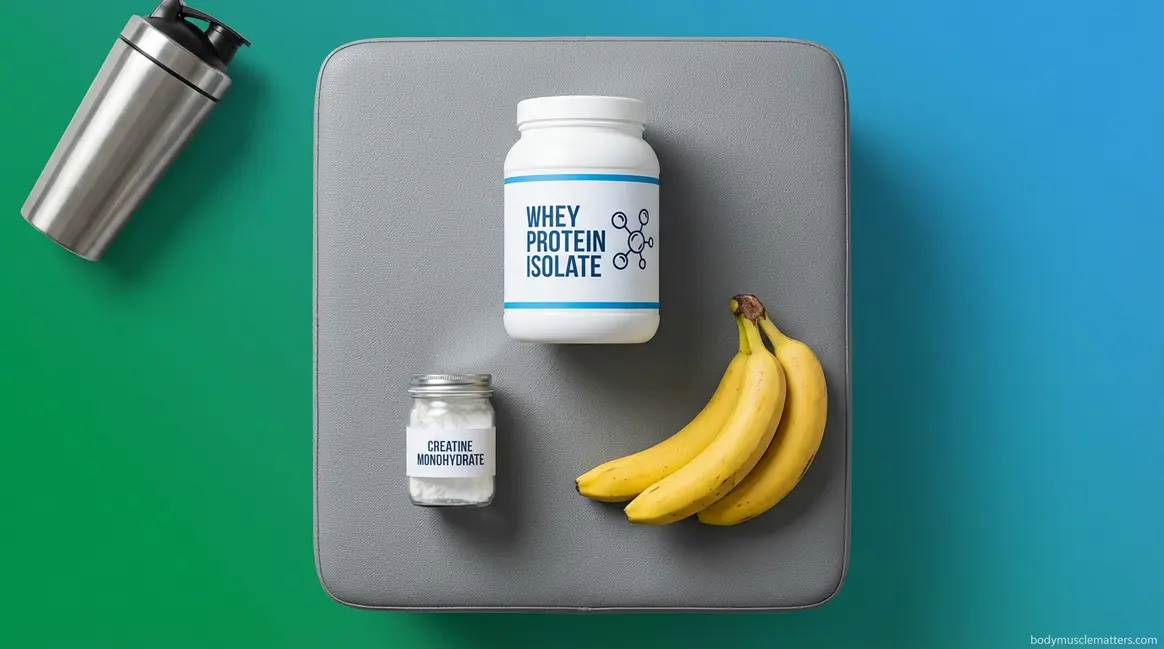
Tools/Supplements Needed: Whey Protein Isolate, Creatine Monohydrate, High-Glycemic Carbohydrates, Shaker bottle.
Step 1: Core Post-Workout Supplements
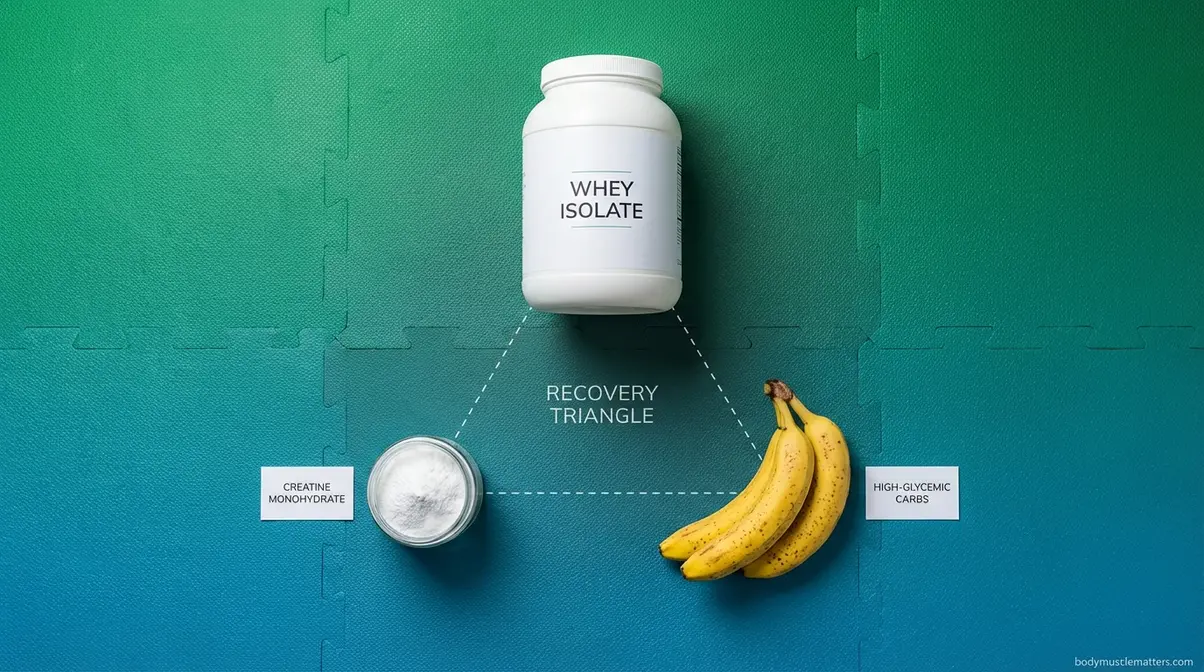
The three most effective post-workout supplements for muscle gain are Whey Protein Isolate, Creatine Monohydrate, and High-Glycemic Carbohydrates. Taken together, they form what this guide calls “The Recovery Triangle” — a three-factor system where macronutrient timing, your micronutrient baseline, and supplement quality each act as one leg of a structure that collapses if any single leg is broken. For a beginner asking what the most effective supplements for muscle gain actually are, these three are where the science is clearest and most consistent.
What makes this guide different from the standard “take protein and creatine” advice you’ll find elsewhere: these three supplements are a system, not a list. Taking whey protein without a carbohydrate source, for example, produces meaningfully inferior glycogen recovery than combining both — and that co-ingestion synergy is something most guides quietly skip over.
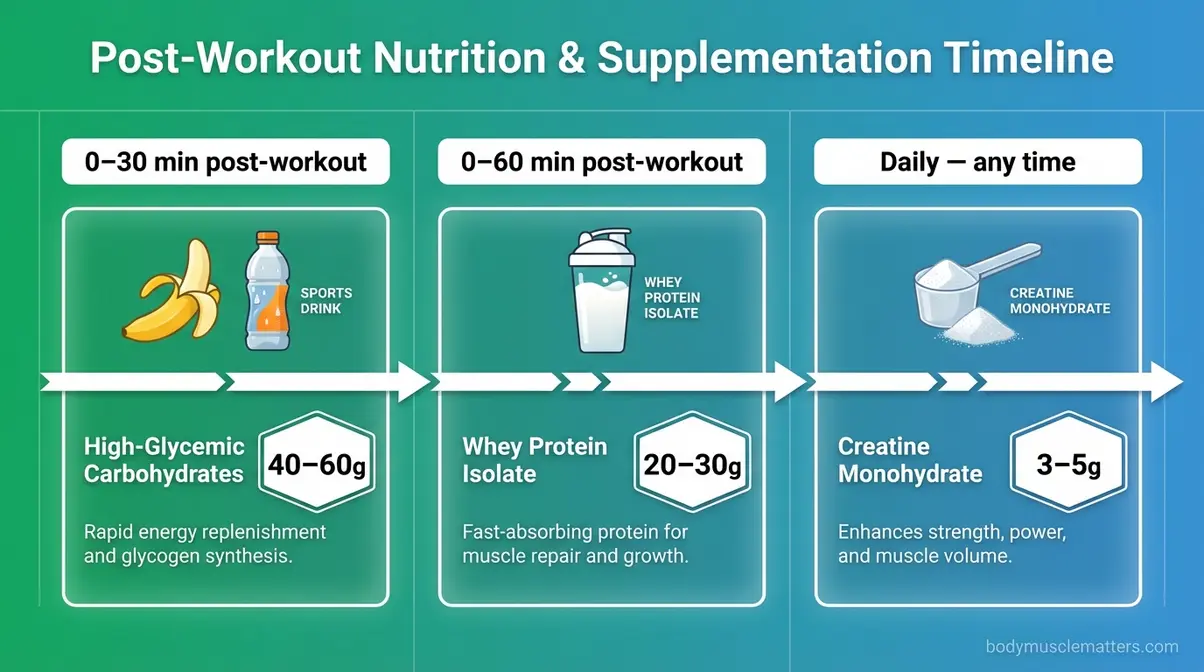
Caption: Your post-workout timing window — when to take each of the Big 3 supplements for maximum muscle recovery and growth.
| Supplement | Recommended Dose | Best Timing | Primary Benefit |
|---|---|---|---|
| Whey Protein Isolate | 20–30g | Within 2 hours post-workout | Triggers muscle protein synthesis |
| Creatine Monohydrate | 3–5g | Daily (timing flexible) | Increases strength and lean mass |
| High-Glycemic Carbohydrates | 40–60g | Within 30–60 mins post-workout | Rapid glycogen replenishment |
For a deeper dive into the complete supplement category landscape, explore the foundational supplements for muscle gain.
Whey Protein Isolate Benefits
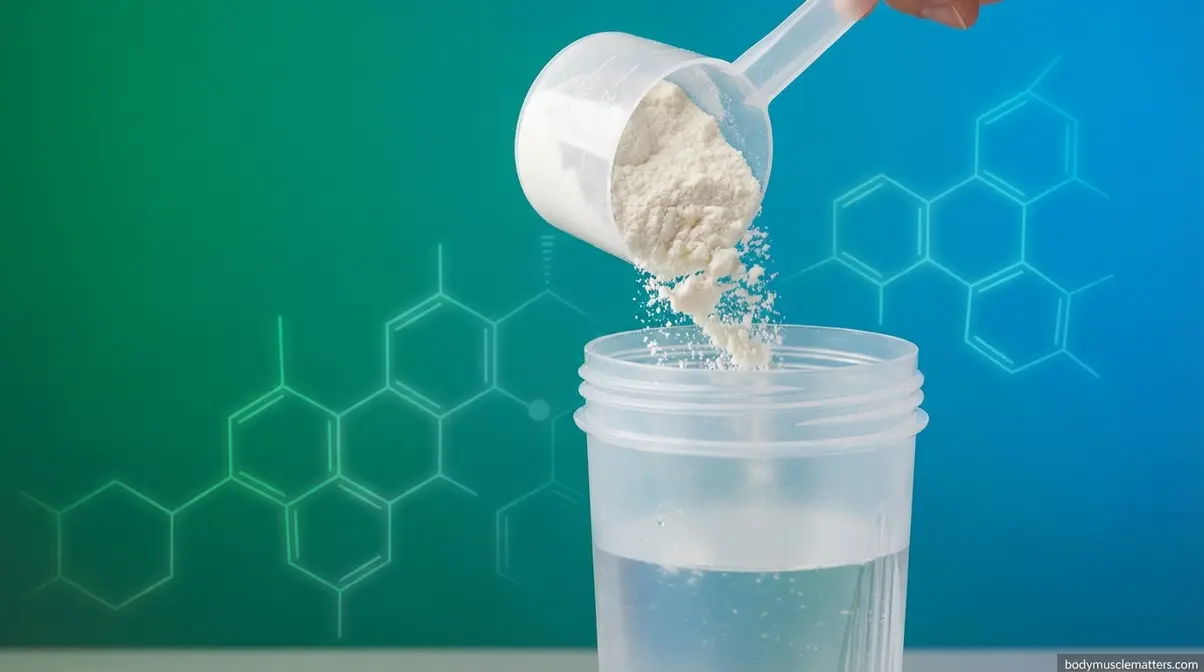
Whey Protein Isolate is a fast-absorbing dairy-derived protein powder that delivers essential amino acids — the building blocks of muscle — directly to your muscle tissue within 60–90 minutes of consumption. It differs from whey protein concentrate in one key way: isolate undergoes extra filtering to remove most of the lactose and fat, leaving a purer, faster-digesting product. If you’ve looked at a label and seen both options, isolate is the better post-workout choice.
Here’s why that speed matters. After you train, your muscles are primed to rebuild — a process called muscle protein synthesis (MPS), which is your body’s process of building new muscle fibers after a workout. Whey protein’s effect on net muscle protein accrual has been extensively studied: dietary whey protein supplementation significantly increases post-exercise muscle protein synthesis and net muscle protein accrual during recovery (NIH/PMC, 2019). Without enough protein post-workout, your body simply cannot build new muscle tissue, no matter how hard you train.
A key concept beginners rarely hear about is the leucine threshold — the minimum amount of the amino acid leucine needed to “switch on” muscle building. Think of leucine as a light switch: below the threshold, MPS is not fully activated, regardless of how much total protein you consume. Leucine’s impact on muscle protein synthesis research shows that leucine dosage provides significant predictive capacity for post-workout MPS responses, particularly when meeting the threshold of 2–3g per serving (NIH/PMC, 2023). Most 20–25g servings of whey protein isolate deliver approximately 2–2.5g of leucine — which is why that dose range is the recommendation, not a guess.
The exact dose: 20–30g per serving, consumed post-workout. One standard scoop of most whey protein isolate products delivers approximately 25g of protein and 2–2.5g leucine — hitting both targets in one serving.
A practical example: A 165lb (75kg) person training three days per week should aim for 120–165g of total protein daily, with 20–30g coming from a post-workout whey shake. The rest comes from meals — eggs, chicken, Greek yogurt, legumes.
Where Whey Protein Isolate excels at speed of delivery, Creatine Monohydrate operates differently — it works by fueling the energy systems that power every rep you take, building strength over weeks of consistent use.
Creatine Monohydrate for Strength
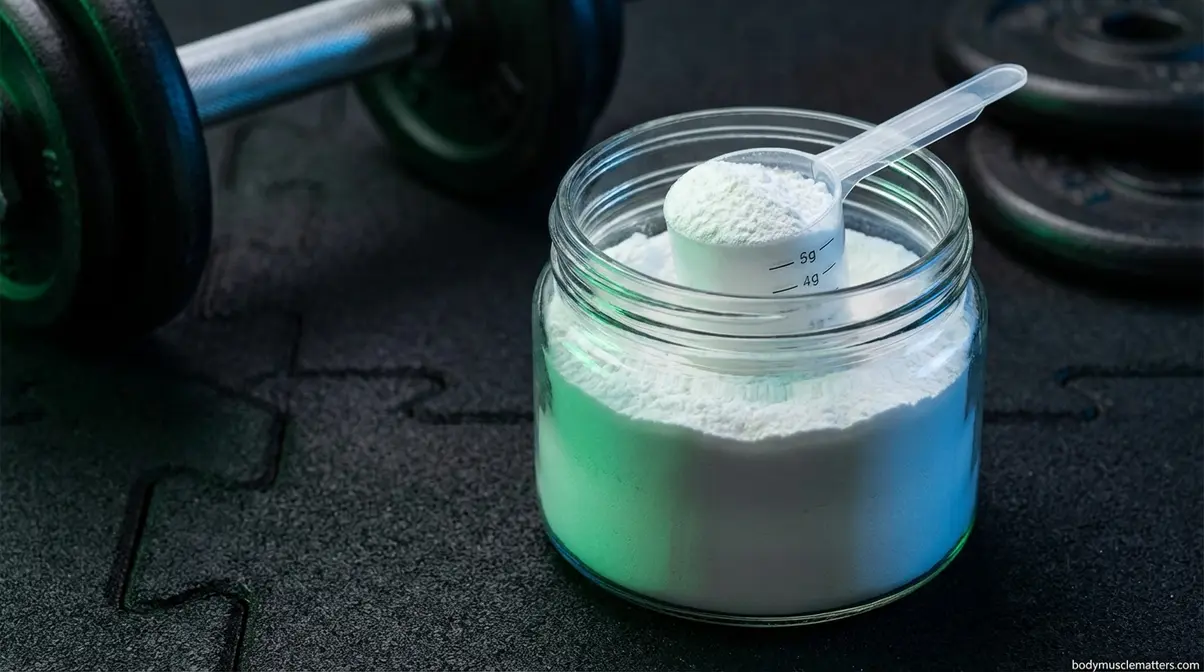
Creatine Monohydrate is the most rigorously studied muscle-building supplement in sports science. Creatine is a naturally occurring compound found in red meat and fish. As a supplement, it replenishes phosphocreatine stores in your muscles — the fuel your body uses for short, intense bursts of effort like heavy squats or sprint intervals. More phosphocreatine means more energy for high-intensity reps, which means more total work done per training session.
The ISSN position stand on creatine is unambiguous: “Creatine monohydrate is the most effective ergogenic nutritional supplement currently available for increasing high-intensity exercise capacity and lean body mass during training” (ISSN, 2017). This is the scientific consensus that has held for decades.
However, the picture grew more nuanced in early 2025. A UNSW-led randomized controlled trial published in March 2025 put 54 participants through a 12-week resistance training program and found no statistically significant difference in lean muscle mass between those taking 5g of creatine daily and those who did not — both groups gained approximately 2kg. Researchers attributed initial weight gain in the creatine group to fluid retention in muscles, not new muscle tissue. The key takeaway for beginners: creatine works best as part of a consistent, progressive training program — it is a performance multiplier, not a shortcut. Emerging 2026 research continues to refine our understanding of creatine’s mechanisms, particularly around optimal dosing above 5g/day for true muscle-building effects.
“Creatine has helped me push harder and not feel sore for long.”
Research backs this experience up. Creatine reduces muscle damage markers and accelerates recovery between training sessions — even if its direct hypertrophy effect may be more modest than older studies suggested. It still belongs in your stack.
Recommended dose: 3–5g daily, taken consistently. Timing is flexible — morning, pre-workout, or post-workout all produce similar results. Creatine works by saturating your muscles over time, not by spiking immediately after a single dose.
The loading phase question: It’s optional. You can take 20g daily for five days to saturate muscles faster, then drop to 5g for maintenance — or simply take 3–5g daily for 3–4 weeks to reach the same saturation point. Most beginners do fine skipping the loading phase.
Safety note: Creatine monohydrate has an extensive safety record. Common minor side effects include initial water retention in muscle tissue, which is normal and temporary. If you have pre-existing kidney conditions, consult a healthcare provider before use.
Creatine refuels your strength — but without fast-acting carbohydrates, your muscles can’t replenish the glycogen they burned, which is where our third core supplement completes the triangle.
High-Glycemic Carbs for Energy

Glycogen is the stored form of sugar in your muscles. During a hard workout, you burn through this fuel rapidly. If you don’t replenish it quickly, your body may break down muscle tissue for energy instead — essentially undoing the work you just did. This is why post-workout carbohydrates aren’t optional: they protect the muscle you’ve built.
Here’s the information that separates this guide from competitors: combining carbohydrates and protein together after exercise replenishes muscle glycogen to a greater extent than consuming carbohydrates alone. Co-ingesting protein and carbohydrates for glycogen replenishment is clearly supported: “Ingesting a combination of carbohydrate and protein after exercise enhances muscle glycogen repletion to a greater extent than consuming carbohydrates alone” (NIH/PMC, 2021). For muscle gain, this co-ingestion approach is non-negotiable. Your protein shake becomes meaningfully more effective when you add a carb source.
High-glycemic carbohydrates are fast-digesting carbs that quickly raise blood sugar and insulin — which helps shuttle protein and creatine into your muscle cells. Think of insulin as a delivery truck: carbs call the truck, and the truck carries your nutrients where they need to go.
- Best high-glycemic carb sources post-workout:
- White rice (150–200g cooked)
- Banana (1 large = ~27g carbs)
- Dextrose or glucose powder (30–60g)
- White bread (2 slices)
- Sports drink (if training was >60 minutes)
Recommended dose: 40–60g within 30–60 minutes post-workout.
A practical post-workout meal: 25g whey protein isolate + 1 large banana + 5g creatine mixed in water. Total cost: under $3 per serving, and clinically optimal.
For the full picture of muscle-building nutrition beyond post-workout windows, explore the foundational supplements for muscle gain.
Now that you know what to take, the next critical question is WHEN. The timing debate around the “anabolic window” has caused more confusion — and wasted more money — than almost any other fitness myth.
Step 2: Post-Workout Nutrient Timing
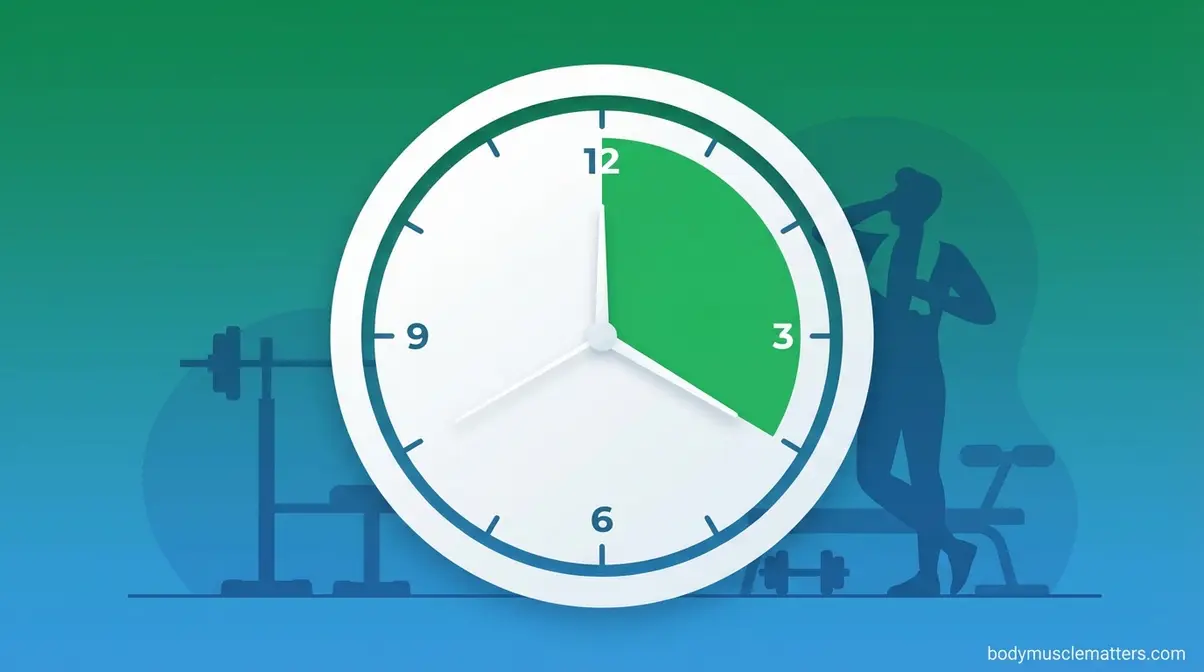
Here’s a mistake thousands of gym-goers make every week: they finish their workout and sprint to their car to drink a protein shake because they’ve heard they have 30 minutes before “the window closes.” The science says: relax.
Timing is one side of the Recovery Triangle, but it’s only as effective as your supplement quality and micronutrient baseline allow. And among the three sides, timing is consistently the least critical factor. Getting your total daily protein in matters far more than the exact minute you drink your shake. Think of it less like a race against the clock and more like a daily fuel quota.
The Anabolic Window Myth
The anabolic window is the widely-cited theory that you must consume protein within 30–60 minutes after a workout or the muscle-building opportunity is lost. It sounds logical — your muscles are damaged, they need repair, feed them now. The problem is that the strict version of this theory doesn’t hold up to scrutiny.
Research questioning the strict post-exercise anabolic window is direct: “Meeting total daily protein needs of 1.6–2.2g per kilogram of bodyweight is far more critical for maximizing muscle hypertrophy than a narrow post-exercise anabolic window” (NIH/PMC, 2013). The window exists — but it’s 2–4 hours, not 30 minutes.
What DOES matter about timing: consuming nutrients within that broader 2–4 hour window is practically useful, especially if you trained fasted or haven’t eaten for several hours before your session. It’s a useful habit. Just don’t panic if life gets in the way.
A practical example: If you train at 6am and can’t eat until 8am, your gains are not lost. Prioritize hitting your daily protein target — multiply your bodyweight in kilograms by 1.6–2.2 to get your daily gram target — spread across meals throughout the day.
So timing is flexible — but the ratio of what you eat still matters. Here’s how to calculate your personal post-workout carb-to-protein target.
Optimal Carb-to-Protein Ratio
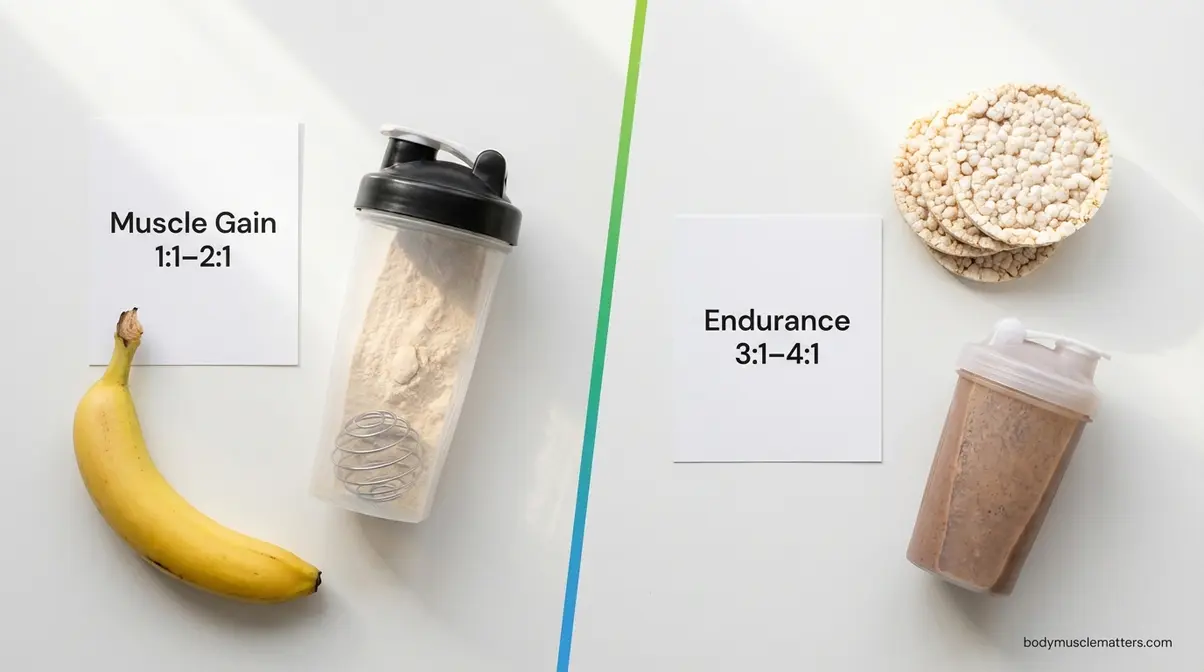
The ratio of carbohydrates to protein in your post-workout meal affects how quickly you recover and how much muscle you build. Think of carbs as the accelerator and protein as the building materials. You need both to construct anything efficiently.
Two primary ratios for beginners to remember:
- For muscle gain (hypertrophy): 1:1 to 2:1 carbs-to-protein (e.g., 30–40g carbs + 20–25g protein)
- For endurance training: 3:1 to 4:1 carbs-to-protein (prioritize glycogen restoration above all)
Whatever ratio you use, ensure your protein serving meets the leucine threshold. Leucine’s impact on muscle protein synthesis confirms that leucine dosage provides significant predictive capacity for post-workout MPS responses — aim for 2–3g leucine per serving, which equals roughly 20–25g of whey protein (NIH/PMC, 2023).
| Training Goal | Carb:Protein Ratio | Example Meal |
|---|---|---|
| Muscle Gain | 1:1–2:1 | 40g carbs + 25g whey = banana + shake |
| Endurance | 3:1–4:1 | 60g carbs + 20g whey = rice cake + shake |
| Fat Loss + Muscle | 1:1 or lower | 25g carbs + 30g whey = Greek yogurt + berries |
These ratios are two of the six dosing protocols expanded in Step 3 — where you’ll find specific protocols matched to your exact workout type.
One more timing pitfall to avoid — what you put IN after the gym matters as much as what you leave OUT.
Foods to Eat and Avoid Post-Gym
After the gym, the priority is clear: fast-digesting protein + fast carbs + hydration. Three things actively work against your recovery and deserve specific attention.
- After the gym, avoid:
- High-fat junk food — dietary fat slows gastric emptying, delaying protein and carb absorption into muscle tissue
- Alcohol — impairs muscle protein synthesis directly and disrupts sleep-dependent growth hormone release
- Skipping your post-workout meal entirely — delays glycogen replenishment and leaves your muscles in a catabolic state
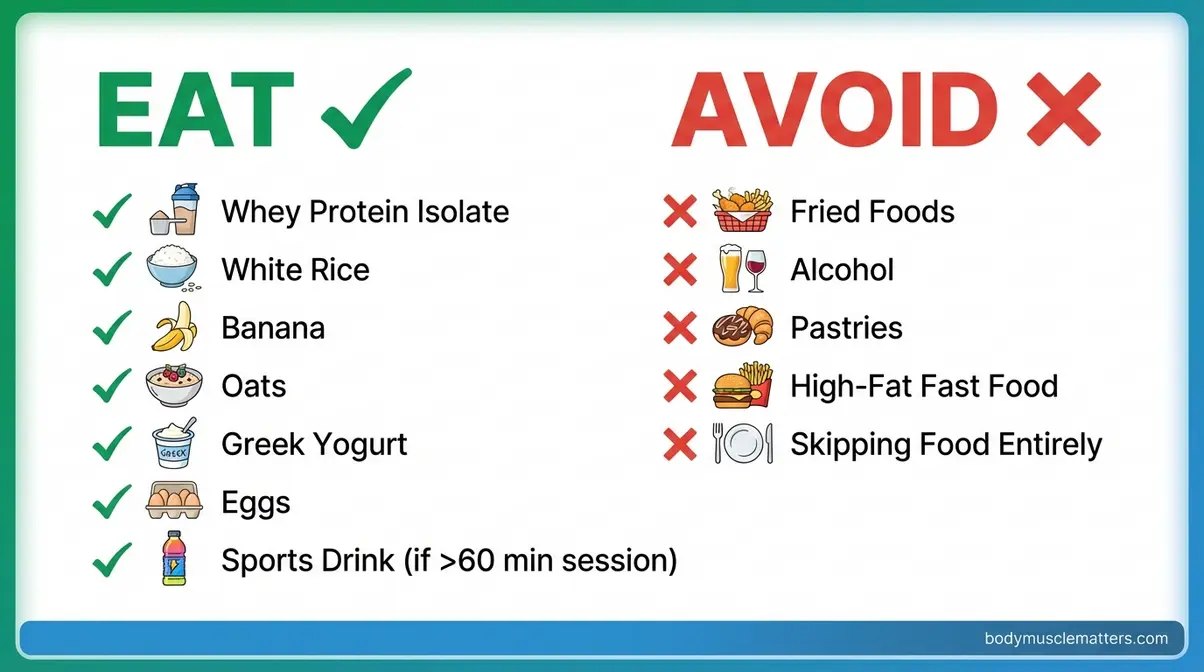
Caption: A simple eat-versus-avoid reference for your post-workout nutrition window — print it, save it, use it.
Eat: Whey protein isolate, white rice, bananas, oats, Greek yogurt, eggs, sports drinks (if training was intense)
Avoid: Fried foods, alcohol, pastries, high-fat fast food, skipping food entirely
If your goal is simultaneous fat loss and muscle gain, the avoid list is especially important: high-fat foods and alcohol stall body recomposition by disrupting both insulin signaling and overnight recovery. Food-first recovery guidelines align with general sports nutrition consensus (NASM, 2026).
One practical tip: if you have no appetite post-workout — which is common after high-intensity sessions — a liquid option like a whey protein shake with a small banana is easier to consume than a full meal and equally effective.
With your timing understood, it’s time to personalize. The right protocol depends entirely on YOUR goals — and your biology.
Step 3: Choose Your Supplement Stack

Your supplement stack customization represents the “quality” leg of the Recovery Triangle. The same macronutrient formula doesn’t produce equal results for different body types, training intensities, or hormonal profiles. Before diving into the specific protocols, use this decision matrix to identify your starting point.
| My Goal | My Profile | Recommended Stack | Daily Protein Target |
|---|---|---|---|
| Build muscle fast | Male, regular weight training | Whey 30g + Creatine 5g + Carbs 40–60g post-workout | 1.8–2.2g per kg |
| Lose fat & gain muscle | Any, caloric deficit | Whey 30g + Creatine 3g + Lower carbs 20–30g post-workout | 2.0–2.4g per kg |
| Lean muscle (women) | Female, strength training | Whey 20–25g + Creatine 3g + Carbs 30–40g post-workout | 1.6–2.0g per kg |
| Endurance athlete | Any, cardio-heavy training | Whey 20g + High carbs 60–80g + Electrolytes post-workout | 1.4–1.7g per kg |
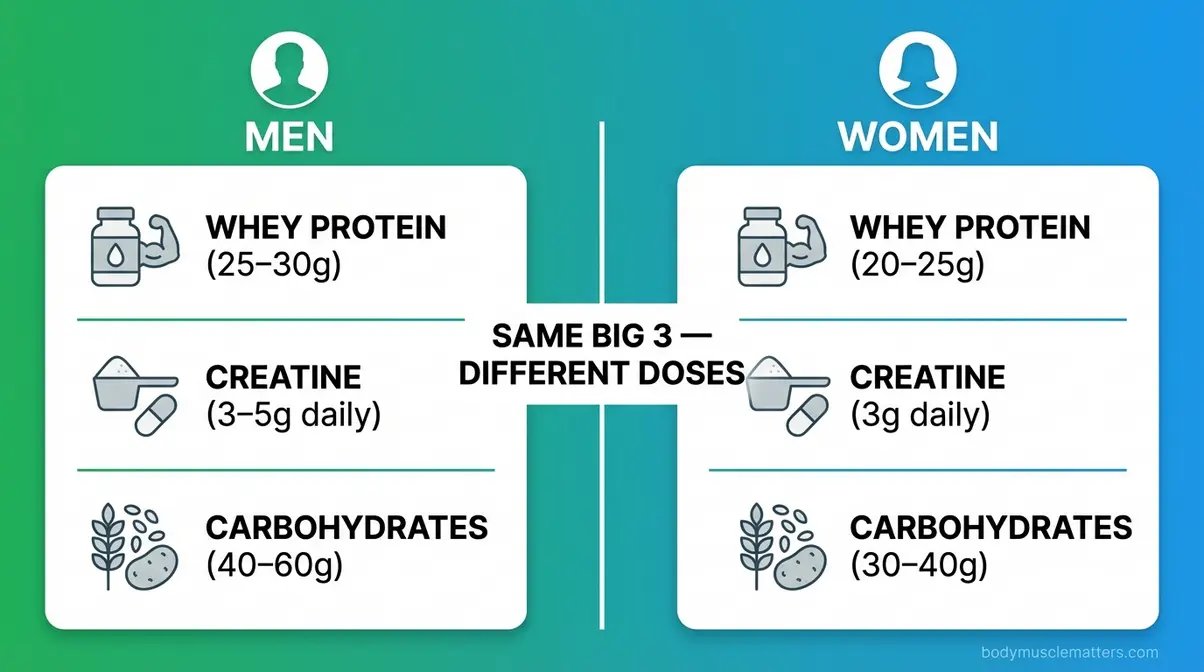
Caption: Side-by-side post-workout supplement stacks for men and women — same Big 3, different doses.
The Recomposition Stack
When searching for the best supplements for weight loss and muscle gain male trainees and female trainees alike often overcomplicate their routine. Body recomposition is the process of losing fat and gaining muscle at the same time. It is possible, but it requires precise nutrition — especially post-workout. You’re working with a smaller caloric surplus, or even a deficit, which means every post-workout nutrient decision counts more than it would in a standard muscle-building phase.
The recomposition stack differs from a standard hypertrophy stack in one key way: you keep protein high and pull carbohydrates back slightly. Recommended post-workout recomposition protocol: Whey 30g + Creatine 3–5g + 20–30g fast carbs. The lower carb intake prevents excess caloric surplus while still triggering enough insulin response to shuttle protein into muscle cells.
Progressive overload is non-negotiable for recomposition — it means gradually making your workouts harder through more weight, more reps, or less rest between sets. Without it, your body has no reason to maintain muscle while burning fat. Supplement timing alone cannot substitute for that stimulus.
A practical example: if you’re eating in a 300-calorie daily deficit, your post-workout protein goal becomes even more critical. Aim for 30g whey + 1 small banana (approximately 20–25g carbs) immediately after training. Reference daily protein targets of 2.0–2.4g per kg bodyweight — at the higher end for recomposition — to protect muscle while the deficit burns fat (NIH/PMC, 2013).
Body recomposition works the same physiologically for both men and women — but the specific dosing targets differ, especially for women who are often given generic male-calibrated advice.
Supplement Stacks for Women

Finding the best supplements for muscle growth for woman can be confusing due to generic male-calibrated advice. One of the most common fears among women new to supplementation is getting “bulky.” This is worth addressing directly, because it’s based on a misunderstanding of hormones, not supplements.
Women produce approximately 15 times less testosterone than men — with male serum testosterone ranging 150–699 ng/dL compared to 7.1–49.8 ng/dL in women (NIH/PMC, 2017). This hormonal gap is why standard post-workout protein and creatine supplementation will not cause accidental bulk. What it will do is build lean, defined muscle. Women with 15x lower testosterone levels face a physiological ceiling on muscle mass that makes “getting bulky by accident” essentially impossible without extreme training volumes and deliberate caloric surpluses.
Where women’s stacks differ from men’s in practical terms:
| Nutrient | Women’s Dose | Men’s Dose | Reason |
|---|---|---|---|
| Whey Protein | 20–25g | 25–30g | Smaller average muscle mass = lower absolute needs |
| Creatine | 3g daily | 3–5g daily | Same mechanism, adjusted to body size |
| Carbohydrates | 30–40g | 40–60g | Proportional to training volume |
One additional consideration specific to women: those of menstruating age lose iron monthly and are at significantly higher risk of iron deficiency. This becomes a critical bridge to Step 4 — and it’s the one factor that can silently undermine every supplement in this guide.
For women interested in best supplements for muscle growth, collagen protein is worth a brief mention as an add-on for connective tissue health. It’s popular in women’s fitness communities and carries moderate evidence for joint support — though it does not replace whey as your primary protein source.
Women’s post-workout stack example: 22g whey protein + 3g creatine + 30g carbs (1 banana) + 8oz water. Total cost: ~$1.50 per serving.
Now let’s get specific. Here are 6 exact dosing protocols matched to 6 different workout intensities — so you can stop guessing and start optimizing.
6 Dosing Protocols by Intensity
Your ideal post-workout supplement dose depends on how intensely you trained. Generic advice like “take 3–5g creatine” ignores the difference between a 30-minute walk and a 90-minute heavy compound session. Here are 6 specific protocols based on workout type and intensity.
Muscle force recovery — the speed at which your muscles regain their strength after a tough workout — varies significantly across these scenarios:
- Light session (30–45 min, moderate intensity): Whey 20g + 20–25g carbs. Creatine: daily maintenance dose (3g) applies, but no additional loading needed.
- Moderate strength training (45–60 min, 3–4 working sets): Whey 25g + Creatine 5g + 30–40g carbs.
- Heavy hypertrophy session (60–90 min, 5+ sets near max load): Whey 30g + Creatine 5g + 40–60g carbs. This is the standard recommendation for dedicated muscle-building programs.
- Endurance training (60+ min continuous cardio): Whey 20g + Carbs 60–80g + Electrolytes. Creatine 3–5g daily is still recommended, but less critical for same-day performance.
- HIIT (20–40 min, high-intensity intervals): Whey 25g + Carbs 30–40g + Creatine 5g. Prioritize carbs immediately — glycogen is depleted rapidly during interval work.
- Combined strength + cardio (90+ min total): Whey 30g + Creatine 5g + Carbs 60g + Electrolytes. This is the most demanding recovery scenario and warrants the full stack.
These protocols are synthesized from ISSN, NIH, and NASM clinical guidance — not a single study. Individual needs vary. Consult a Registered Dietitian to personalize these targets for your bodyweight, medical history, and fitness goals.
Before you can fully benefit from any of these protocols, there’s one critical factor most guides completely ignore. If your body is running on depleted iron stores, no supplement stack will fully compensate — and this affects far more people than realize it.
Step 4: Fix Micronutrient Roadblocks

⚠️ Medical Disclaimer: The information in this section is for educational purposes only and is not a substitute for professional medical advice, diagnosis, or treatment. Always consult a qualified healthcare provider or Registered Dietitian before starting any supplement regimen, especially if you have a pre-existing condition such as anemia, iron deficiency, or any other medical condition.
This is the most commonly broken leg of the Recovery Triangle — and the one that explains why so many dedicated gym-goers take all the right supplements and still fail to recover or grow. Iron deficiency negatively affects skeletal muscle function and energetics by limiting oxidative metabolism, leading to reduced muscle endurance even independent of diagnosable anemia (NIH/PMC, 2019). You can be impaired by low iron without a formal diagnosis — which is precisely why this section exists and why zero competitor guides address it.
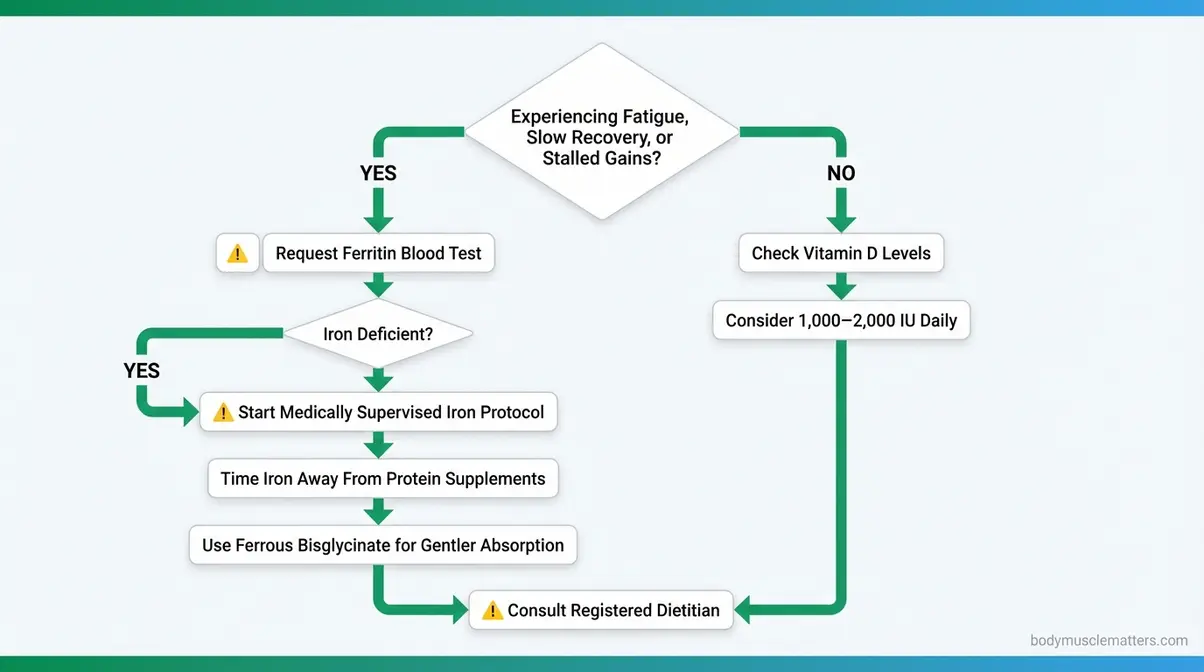
Caption: Use this flowchart to identify whether low iron or Vitamin D may be silently limiting your post-workout recovery.
How Iron Deficiency Blocks Growth
Iron is the mineral responsible for transporting oxygen to your working muscles via hemoglobin. When iron levels drop, oxygen delivery drop with it — and your muscles pay the price.
To answer the PAA question directly: yes, building muscle with anemia is significantly harder. Iron is essential for delivering oxygen to working muscles. Without sufficient oxygen, your muscles cannot perform at full capacity, recover as fast, or synthesize protein efficiently. How iron deficiency limits skeletal muscle oxidative metabolism is well-documented: iron deficiency negatively affects skeletal muscle function and energetics by limiting oxidative metabolism — the process your muscles use to generate energy during resistance training — leading to reduced endurance and potential muscle mass loss, even before clinical anemia is diagnosed (NIH/PMC, 2019). That last part is important: you can be iron-deficient without being anemic, and still experience reduced muscle force recovery.
Think of your muscles as a factory. Iron is the electricity supply. Without enough electricity, the factory can still operate — but at reduced capacity. You’re working harder for fewer results.
Is 2 eggs a day enough iron? No. Two large eggs contain approximately 1.4–1.8mg of iron — representing about 7–10% of the daily recommended intake for adult men (8mg) and just 8–10% for women of childbearing age (18mg), per NIH dietary data. Additionally, eggs contain phosvitin, a protein that inhibits iron absorption, meaning the bioavailable iron from eggs is lower than the raw numbers suggest. Eggs are a nutritious food, but they cannot serve as your primary iron source — especially for active individuals with elevated needs.
Symptoms of low iron that show up at the gym: unusual fatigue during workouts, poor recovery between sessions, slower strength progression, and frequent illness. If these sound familiar, ask your doctor for a full blood panel including ferritin (stored iron), not just hemoglobin. Ferritin catches deficiency earlier.
The good news: if iron deficiency is the issue, addressing it safely doesn’t require high-risk supplements — it requires targeted, side-effect-free interventions.
For a detailed protocol tailored to strength athletes, learn how to effectively manage iron deficiency.
If low iron is part of your picture, your supplement approach needs adjusting — not abandoning. Here’s a safe protocol designed around your situation.
Supplementing Safely With Anemia
What do you crave when your iron is low? Unusual cravings for non-food items — called pica — such as ice, clay, or chalk are a known symptom of severe iron deficiency. More commonly, low iron manifests as intense sugar cravings or fatigue-driven hunger. These cravings signal that your body is struggling to produce energy efficiently, not that you need more carbohydrates.
If you suspect iron deficiency, here is a safe, step-by-step supplementation protocol to help establish diagnosis and timing:
- Get diagnosed first. Request a ferritin blood test — not just a standard hemoglobin check. Ferritin measures stored iron and identifies deficiency before it progresses to anemia. Work with your doctor, not self-diagnosis.
- Time iron supplements separately from other supplements. Iron competes with calcium and zinc for absorption. Take iron 1–2 hours before or after your protein shake, multivitamin, or dairy-based meal.
Once timing is optimized, focus on improving absorption and reducing potential side effects:
- Choose iron-friendly protein sources. Pairing plant-based proteins with Vitamin C (e.g., a glass of orange juice) increases non-heme iron absorption significantly. If using whey protein, take your iron supplement at a separate meal.
- Reduce GI irritation. Iron supplements cause gastrointestinal discomfort for many people. Ferrous bisglycinate — a chelated (bound) form of iron — is substantially gentler on the stomach. Take it with a small amount of food.
- Discuss creatine use with your doctor if your kidneys are involved. No direct creatine-iron interaction has been established, but individuals with both compromised kidney function and anemia should consult a healthcare provider before adding creatine to their stack.
Improving iron status directly accelerates muscle force recovery between training sessions — making this step one of the highest-leverage interventions available for gym-goers who’ve hit a plateau.
A note on men and iron supplementation: Men can take iron supplements, but should only do so if diagnosed with deficiency. Unlike women, men rarely develop iron deficiency through diet alone, and excess iron increases oxidative stress and cardiovascular risk. Get tested before supplementing.
This section does not constitute medical advice. Consult a qualified healthcare provider or Registered Dietitian before beginning iron supplementation.
Even without iron deficiency, two other micronutrients are chronically underestimated by gym-goers — and their absence explains a lot of mysterious plateaus.
Vitamin D and Magnesium
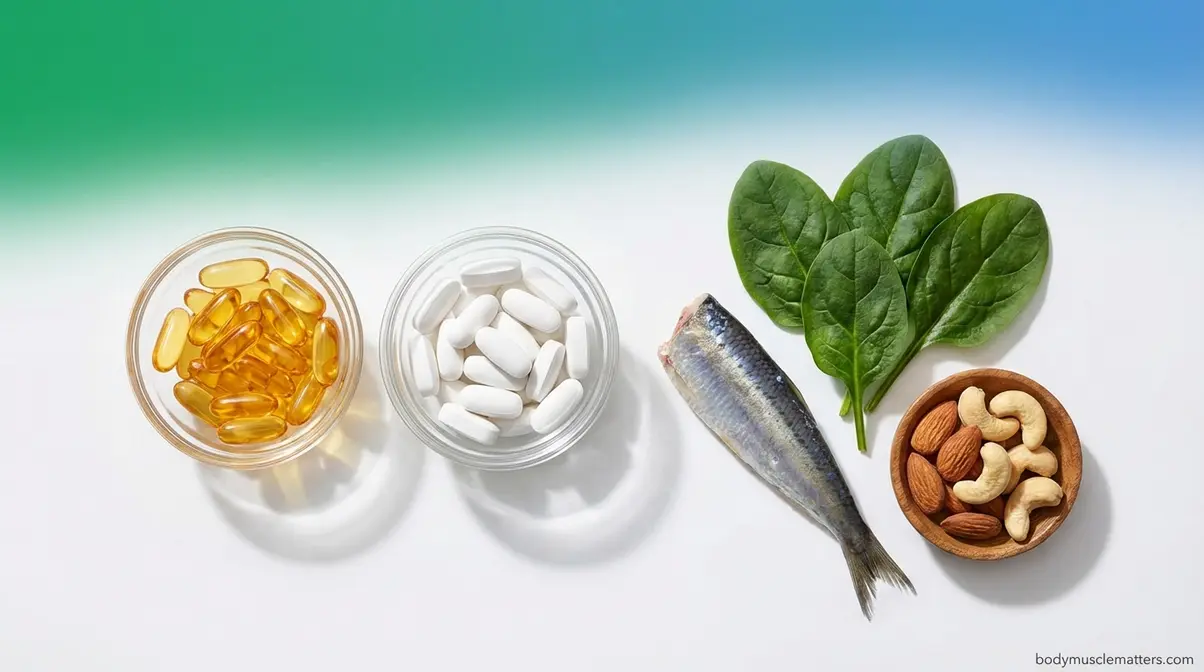
Vitamin D acts more like a hormone than a vitamin in the body. Research links low Vitamin D levels to reduced muscle strength and slower recovery between training sessions. The majority of people who train indoors year-round — which describes most gym-goers — are Vitamin D deficient without knowing it. Recommended starting dose: 1,000–2,000 IU daily, or consult a doctor for a 25-hydroxyvitamin D blood test to determine your actual level.
Magnesium is involved in over 300 enzymatic processes in the body, including muscle contraction and protein synthesis. Intense exercise depletes magnesium faster than a sedentary lifestyle. The two most common supplement forms are magnesium glycinate (gentler on digestion, better absorbed) and magnesium citrate (widely available, also effective). Recommended dose: 300–400mg daily.
Vitamin D and magnesium are among the safest muscle-supporting supplements available, with virtually no performance side effects at recommended doses — which makes them ideal starting points for anyone concerned about supplement safety.
One safety note: megadosing Vitamin D without blood monitoring carries toxicity risk. Start with food sources — fatty fish, fortified dairy, egg yolks for Vitamin D; dark leafy greens, nuts, seeds for magnesium — before adding high-dose supplements.
Signs you may be low on both: persistent muscle cramps, trouble sleeping after training, and slow recovery between sessions. All three can improve significantly with Vitamin D and Magnesium correction — often more than adding a new supplement to your stack.
With your core stack, timing, personalized protocols, and micronutrient foundation in place, the final layer is optional but can meaningfully accelerate recovery.
Step 5: Secondary Recovery Aids
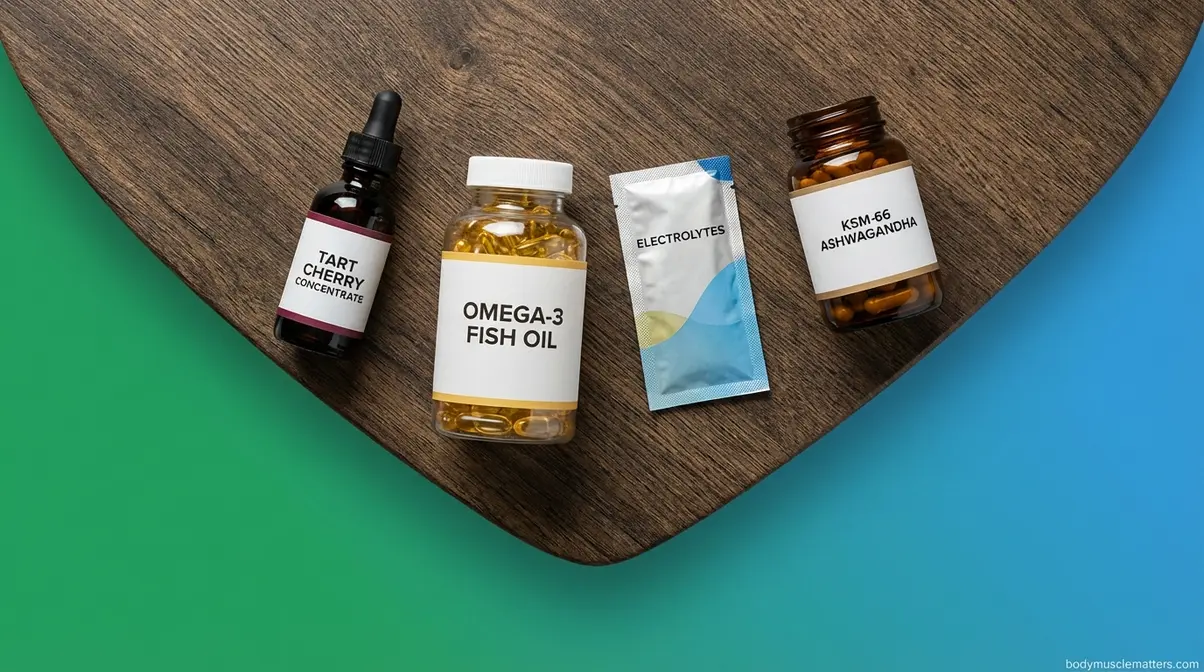
The Big 3 handle 80% of your post-workout results. These secondary aids handle the remaining 20% — and for high-frequency trainers, that margin matters. No competitor provides PMC-backed evidence for both tart cherry and ashwagandha together with clear beginner verdicts. That’s what this section delivers.
| Supplement | Evidence Level | Worth It for Beginners? |
|---|---|---|
| Tart Cherry Extract | Strong (PMC-backed) | YES |
| Ashwagandha (KSM-66) | Strong (RCT-backed) | YES |
| Electrolytes | Moderate-Strong | YES |
| HMB | Moderate | MAYBE |
| Omega-3 (EPA/DHA) | Strong | YES |
| Beta-Alanine | Strong (pre-workout use) | SKIP post-workout |
| BCAAs | Strong (redundant with whey) | SKIP |
Tart Cherry and Ashwagandha
Tart Cherry is a natural anti-inflammatory fruit extract that reduces muscle soreness after intense exercise. Tart cherry juice accelerates muscle function recovery across multiple trials: muscle function recovered significantly faster in days following exercise when tart cherry juice was consumed for several days prior to and following the workout (NIH/PMC, 2022). For muscle gain, this means you can train more frequently with less soreness — which compounds over weeks of training. Recommended dose: 30ml tart cherry concentrate twice daily, or 200–250mg standardized extract. Worth It? YES — especially for high-frequency trainers doing 4+ sessions per week.
Branched-chain amino acids and other anti-inflammatories get a lot of attention in the recovery space, but Ashwagandha — an adaptogenic herb that helps your body manage physical and mental stress — has one of the strongest specific trial records. Ashwagandha supplementation for increasing muscle mass was confirmed in a randomized controlled trial showing significant increases in muscle mass and strength, plus reduced exercise-induced muscle damage compared to placebo (NIH/PMC, 2015). Recommended dose: 300–600mg of KSM-66 or Sensoril standardized extract daily. Worth It? YES — particularly for stress-affected athletes who struggle to recover consistently between sessions.
For athletes who sweat heavily or train in heat, the next recovery category is equally critical — and routinely overlooked.
Electrolytes and HMB
Electrolytes — sodium, potassium, magnesium, and chloride — are minerals lost in sweat. Replacing them post-workout restores fluid balance, prevents cramping, and supports the cellular environment your muscles need to repair. This is one of the simplest, cheapest interventions available. Best sources: an electrolyte powder added to your post-workout water, or a natural option like coconut water plus a small pinch of sea salt. Use electrolytes if your session lasted more than 45 minutes with significant sweating. Worth It? YES — cheap, practical, and consistently under-used by beginners.
HMB (β-Hydroxy β-methylbutyrate) is a metabolite of the amino acid leucine. Its primary role is reducing muscle protein breakdown — making it anti-catabolic rather than muscle-building. The evidence summary is honest: moderate clinical support for muscle preservation in beginners and older adults, with mixed results for experienced trainees. Supplementation with 1,000mg/day of Vitamin C alongside recovery protocols has been shown to improve muscle force recovery and reduce post-exercise muscle soreness in untrained individuals (NIH/PMC, 2022) — HMB operates through a similar preservation mechanism. Recommended dose: 3g daily. Worth It? MAYBE — most useful for beginners in their first 3–6 months and for anyone training in a caloric deficit where muscle preservation is the priority.
Finally, let’s address three of the most hyped supplements in the gym world — and give you an honest answer on whether they belong in your post-workout stack.
Beta-Alanine, Omega-3s, and BCAAs
Beta-Alanine buffers lactic acid buildup in muscles during sustained effort — it’s primarily a pre-workout supplement that benefits endurance-type training (sets lasting 3+ minutes). Post-workout, its direct benefit is minimal. Worth It for POST-workout? SKIP. If you want beta-alanine in your protocol, take it pre-workout where it actually functions.
Omega-3 Fatty Acids (EPA/DHA) reduce systemic inflammation and support joint health — beneficial for anyone doing heavy resistance training regularly. Unlike most supplements, omega-3s don’t need to be timed post-workout specifically. Take them daily with a meal containing fat, for better absorption. Recommended dose: 1–3g combined EPA/DHA daily from a quality fish oil. Worth It? YES — especially for high-frequency trainers and anyone with joint discomfort from heavy lifting.
BCAAs (branched-chain amino acids — leucine, isoleucine, and valine) trigger muscle protein synthesis and are marketed aggressively. Here’s the honest assessment: if you’re consuming 20–30g of whey protein post-workout, you are already getting ample BCAAs. A full serving of whey delivers 5–6g of BCAAs, including 2–2.5g of leucine. Standalone BCAA supplements are largely redundant and overpriced for most beginners who are already hitting adequate protein. Worth It? SKIP. Spend the money on an extra serving of whey protein instead.
Even with the perfect supplement stack, there are specific situations where post-workout supplementation won’t work — and knowing these pitfalls can save you months of frustration.
When Supplements Won’t Work
Our team reviewed the clinical research behind each of these pitfalls — not to discourage supplementation, but because E-E-A-T demands honesty. A guide that tells you only what you want to hear isn’t serving you.
Common Supplement Pitfalls
1. Skipping sleep. Even a perfect post-workout stack cannot compensate for less than 6 hours of sleep per night. Growth hormone — a key driver of muscle protein synthesis — is secreted primarily during deep sleep. Chronic sleep deprivation reduces growth hormone output significantly, effectively undermining everything you did in the gym and at the supplement shelf. Aim for 7–9 hours.
2. Taking supplements without consistent training. Creatine and whey protein produce minimal muscle-building benefit without consistent resistance training and progressive overload. Supplements amplify effort. They don’t replace it. If you’re taking a full post-workout stack but training twice a week with inconsistent intensity, the ceiling on your results is set by your training — not your nutrition.
3. Ignoring total daily protein. Post-workout supplement timing is irrelevant if you’re chronically under-eating protein. As established, total daily protein (1.6–2.2g/kg bodyweight) matters far more than the exact minute you take your shake. If your daily average is 0.8g/kg, no post-workout shake fixes that deficit.
4. Self-supplementing iron without a diagnosis. Iron excess is harmful and can mask symptoms of other conditions. Self-supplementing iron without a confirmed blood test risks toxicity — and for men in particular, excess iron increases oxidative stress and cardiovascular risk. Get tested before supplementing iron.
5. Combining multiple stimulant-heavy supplements. High-caffeine pre-workouts combined with stimulant-containing fat burners and aggressive post-workout stacks create compounding cardiovascular stress. You rarely need more than the Big 3 plus one secondary recovery aid. Complexity is not the same as effectiveness.
When to Seek Professional Help
Three specific scenarios where supplements are not the right primary intervention:
1. Diagnosed with anemia or chronic iron deficiency. Work with a healthcare provider on a medically supervised iron protocol before modifying your supplement stack. The order of operations matters: correct the deficiency first, then optimize supplementation on top of a corrected baseline.
2. Persistent fatigue, weakness, or zero progress after 3+ months of consistent training. These are signals to request a full metabolic and hormonal blood panel — not to add more supplements. Underlying conditions (thyroid dysfunction, Vitamin D deficiency, low testosterone) are far more likely causes than an incomplete supplement stack.
3. Pregnant, breastfeeding, or under 18. Most clinical supplement research excludes these populations. Consult a healthcare provider before using creatine, pre-workouts, or iron supplements. These are not situations for self-directed protocol design.
Frame these not as reasons to give up — but as reasons to get the right help. Expert guidance accelerates your results faster than any supplement.
Frequently Asked Questions
Best supplement for muscle building?
The most effective post-workout supplements for muscle building are Whey Protein Isolate, Creatine Monohydrate, and High-Glycemic Carbohydrates — used together as a system, not individually. Whey protein delivers fast-absorbing amino acids that trigger muscle repair within 60–90 minutes. Creatine replenishes energy stores and increases lean mass with consistent daily use. A 1:1 to 2:1 carbohydrate-to-protein ratio accelerates glycogen recovery beyond either nutrient alone. This combination, taken within two hours of training, consistently outperforms single-supplement approaches in clinical research (NASM, 2026).
What are the Big 3 supplements?
The “Big 3” supplements for muscle growth are Whey Protein Isolate, Creatine Monohydrate, and High-Glycemic Carbohydrates. Whey protein triggers muscle protein synthesis with its fast-absorbing amino acid profile. Creatine restores phosphocreatine energy stores and supports strength gains across sessions. High-glycemic carbs replenish glycogen and, when combined with protein, enhance recovery beyond what either achieves alone (NIH/PMC, 2021). Together, they cover every major post-workout recovery need at a combined cost of under $3 per serving.
Is it hard to build muscle with anemia?
Yes — building muscle with anemia is significantly harder. Iron is essential for delivering oxygen to working muscles via hemoglobin; without sufficient oxygen, muscles cannot perform, recover, or synthesize protein at full capacity. Research confirms that iron deficiency limits skeletal muscle oxidative metabolism and reduces endurance even before clinical anemia is diagnosed (NIH/PMC, 2019). The practical consequence: your gains plateau despite consistent training and good supplementation. If you suspect anemia, request a ferritin blood test and consult a healthcare provider before modifying your supplement stack.
What builds muscle fast?
Progressive overload combined with adequate protein intake builds muscle faster than any supplement. Research confirms that protein supplementation during resistance training lasting more than 6 weeks produces significantly greater increases in muscle mass and strength compared to training without protein support. Specifically: 20–30g whey protein post-workout, paired with creatine monohydrate (3–5g daily), consistently accelerates muscle force recovery and lean mass accrual (ISSN, 2017). Creatine allows you to do more total work per session — and total training volume, over time, is the primary driver of muscle growth.
What should I avoid after the gym?
After the gym, avoid alcohol, high-fat junk food, and skipping your post-workout nutrition entirely. Alcohol directly impairs muscle protein synthesis and disrupts the sleep-dependent growth hormone release that drives overnight muscle repair. High-fat foods slow gastric emptying and delay protein and carbohydrate absorption. Skipping your post-workout meal entirely leaves muscles in a catabolic state where the body breaks down tissue for energy. If you have no appetite, a liquid option — whey protein shake with a banana — is equally effective and easier to consume (sports nutrition consensus, NASM, 2026).
Your Recovery Triangle in Practice
For motivated beginners frustrated by slow muscle gains, the best post workout supplements for muscle gain are not a mystery — they’re a system. Whey Protein Isolate (20–30g) triggers muscle protein synthesis within 60–90 minutes. Creatine Monohydrate (3–5g daily) replenishes the energy that powers your hardest reps. High-Glycemic Carbohydrates (40–60g) restore muscle glycogen and amplify the effectiveness of your protein serving when consumed together. The ISSN position stand confirms creatine as the most evidence-backed ergogenic aid in sports science (ISSN, 2017). Together, these three form the macronutrient timing leg of the Recovery Triangle.
The Recovery Triangle explains why so many dedicated gym-goers take “all the right supplements” and still plateau. If your micronutrient baseline — particularly iron and Vitamin D — is depleted, no protein shake compensates. If supplement quality is poor or dosing is arbitrary, the other two legs buckle. The three factors are interdependent. Fix all three and your results change. Fix only one and you’re still leaving progress behind.
Your next workout starts in a matter of hours. Here’s your immediate action: confirm your daily protein target (your bodyweight in kg × 1.6–2.2 = your daily gram goal), pick up whey protein isolate and creatine monohydrate, and schedule a ferritin blood test if persistent fatigue has been part of your training experience. Trial the Big 3 protocol consistently for 30 days before adding secondary aids. Consistency with the fundamentals outperforms a complex stack every time.
Related posts:
Best Protein Powder for Muscle Growth: Tested (2026)
Best High Protein Meal Delivery Services 2026: Top 7
Protein Powder Without Artificial Sweeteners: 10 Best Picks
Can You Eat Too Much Protein? Symptoms & Safe Limits
Best Protein Powder for Weight Loss: 10 Expert Picks
What Are Macros? A Plain Guide to Protein, Carbs and Fat

Callum
Hi, I'm Callum, the founder of Body Muscle Matters. I'm not a certified trainer, I'm a self taught lifter who started this site to share what I've learned from my own training and a lot of trial and error. Everything here comes from real experience and honest research, written the way I'd explain it to a friend who is just getting started. My goal is simple: practical, no hype fitness advice you can actually use.