⚠️ Medical Disclaimer: This article is for informational purposes only and does not constitute medical advice. Consult a licensed physician, physical therapist, or certified personal trainer before starting any new exercise program, especially if you have a pre-existing medical condition or are taking medication.
Last Updated: June 2026
You’ve been curling the same 13lb dumbbells for three months. You can’t lift heavier — so how on earth do you keep building muscle?
Without a clear system for progression, your workouts deliver steadily diminishing returns. Your muscles adapt to a fixed challenge and stop responding. That’s not failure — it’s biology. But it is a performance plateau you can absolutely break through, and you don’t need to ego-lift or risk injury to do it.
In this guide, you’ll discover five proven methods for applying progressive overload for muscle growth — including a step-by-step system that works even when the weights don’t go up. We’ll cover the science behind why muscles stop growing, how to use the Double Progression method, and a dedicated protocol for GLP-1 users — all backed by peer-reviewed research. Our team reviewed studies from PubMed, NCBI, and guidelines from the NSCA to compile these recommendations.
Progressive overload for muscle growth means systematically increasing the challenge on your muscles over time — and adding weight is just one of five ways to do it.
- The 5 Levers of Overload: Weight, reps, sets, tempo, and rest periods are all valid tools — use whichever fits your current level.
- Double Progression: The most beginner-friendly method — master a rep range first, then add weight.
- GLP-1 Users: Resistance training with progressive overload may help preserve lean muscle mass during medically supervised weight loss.
- Overtraining is real: Persistent fatigue, declining strength, and disrupted sleep are early warning signs to act on.
- Start simple: A basic workout log and one lever at a time is all you need to build consistent, measurable progress.
What Is Progressive Overload?
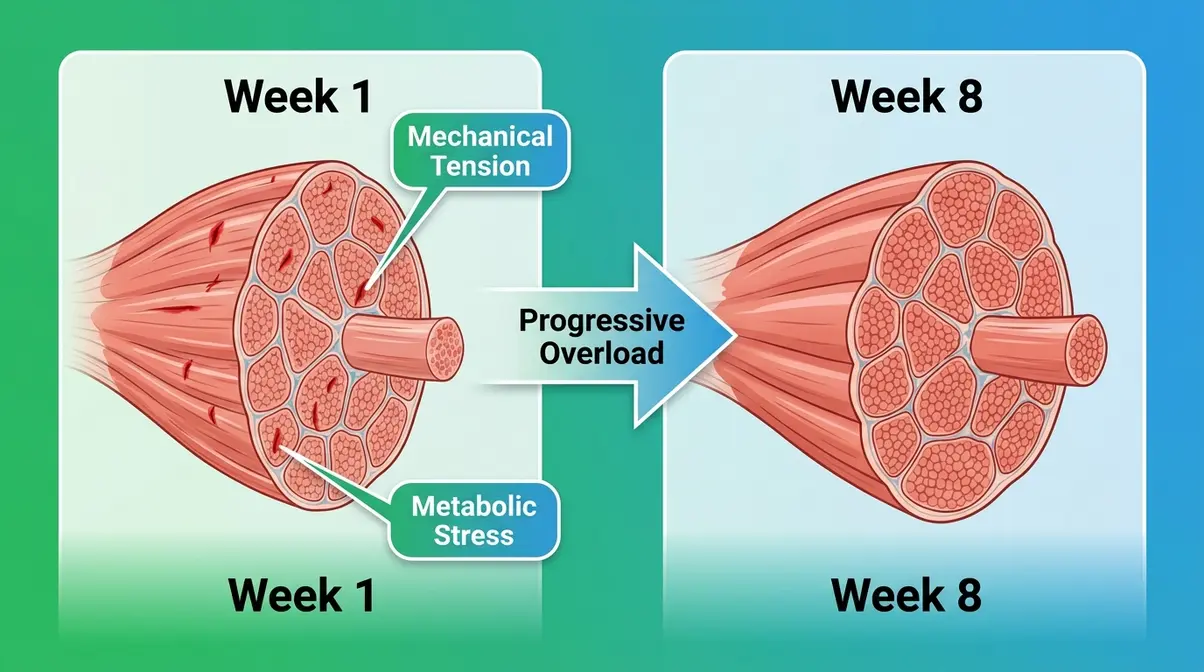
Progressive overload is the foundation of every effective strength and muscle-building program. At its core, it means giving your muscles a slightly greater challenge each week so they’re forced to adapt and grow. Without that increasing challenge, your body has no biological reason to build new muscle tissue.
Research confirms this principle is non-negotiable: a 2026 systematic review published in PubMed found that progressive resistance training is the primary driver of skeletal muscle hypertrophy in both trained and untrained individuals. The mechanism is well established — mechanical tension and metabolic stress signal muscle protein synthesis, and that signal weakens when the stimulus stays the same.
The Science of Hypertrophy
Hypertrophy is the scientific term for muscle growth. When defining what is strength training in the context of hypertrophy, it happens when muscle fibers sustain micro-damage during resistance exercise, then repair themselves thicker and stronger during recovery. Two primary mechanisms drive this process: mechanical tension (the load placed on the muscle) and metabolic stress (the cellular fatigue from high-rep work or restricted blood flow).
Research from the Journal of Strength and Conditioning Research indicates that hypertrophy can be stimulated across a broad rep range — roughly 6 to 30 reps per set — provided each set is taken close to muscular failure (Schoenfeld et al., 2017). This is critical for beginners: you don’t need to lift maximal weights to grow. What you need is progressive challenge at whatever weight you’re currently using.
“Muscle hypertrophy requires a stimulus that exceeds the tissue’s current adaptive threshold — and that threshold rises as you get stronger.” This is why the same 13lb dumbbell curl that challenged you in week one becomes almost effortless by week twelve.
Is Progressive Overload Necessary?
Yes — and the research is clear on this. Muscles adapt to a fixed training stimulus within approximately four to eight weeks (NSCA, 2026). After adaptation, the same workout maintains muscle but does not build new tissue. According to NASM’s progressive overload explainer, consistent progression is the single variable that separates programs that produce long-term results from those that plateau. Consistent progression is the ultimate growth trigger — muscles adapt to fixed routines in just four weeks.
For beginners specifically, the good news is that early gains come quickly. Untrained individuals can experience significant strength increases in the first 8–12 weeks even with modest loads — a phenomenon called newbie gains. However, those gains stall without a structured progression plan.
The GAS Principle Explained
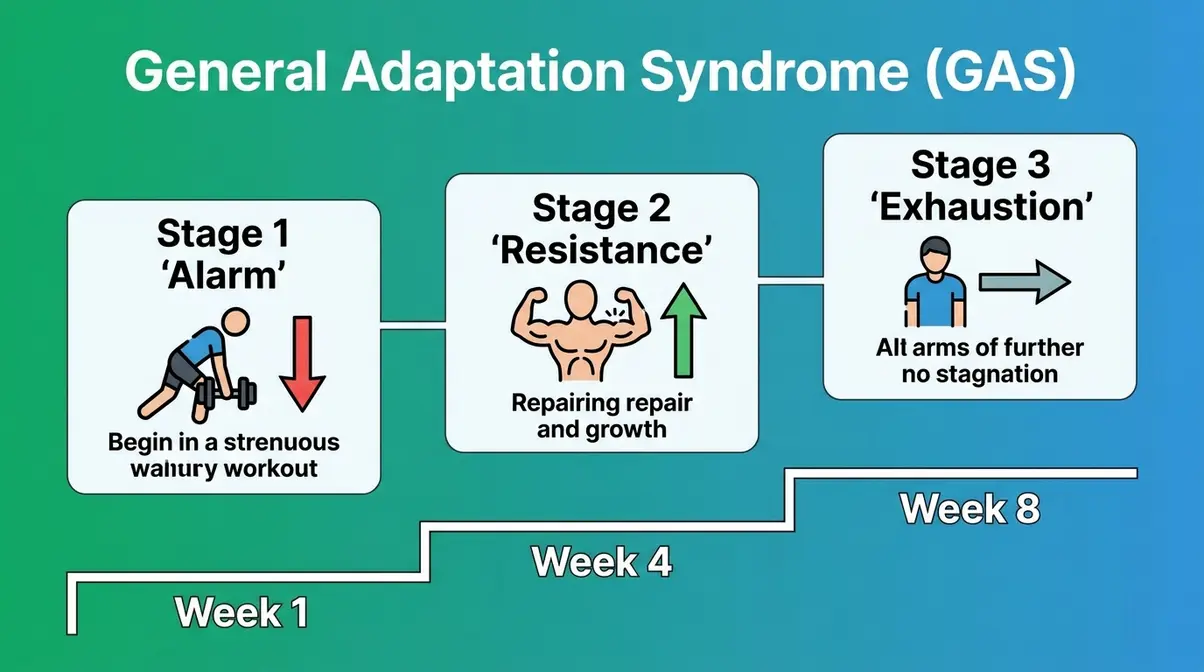
The scientific framework behind progressive overload is called the General Adaptation Syndrome (GAS), originally described by endocrinologist Hans Selye. Applied to training, GAS has three stages:
- Alarm: Your body encounters a new stressor (a harder workout) and temporarily weakens.
- Resistance: Your body adapts — muscles repair, grow, and become stronger than before.
- Exhaustion: If the same stimulus repeats without change, adaptation stops and performance stagnates.
Progressive overload deliberately keeps you in the Resistance stage by introducing small, manageable increases before exhaustion sets in. Think of it like climbing stairs — each step is small, but over months, you end up somewhere dramatically higher than where you started.
5 Ways to Apply Progressive Overload
Most beginners assume progressive overload means one thing: add weight to the bar. That assumption causes two problems — it leads to ego-lifting with poor form, and it leaves you completely stuck the moment you hit a weight ceiling.
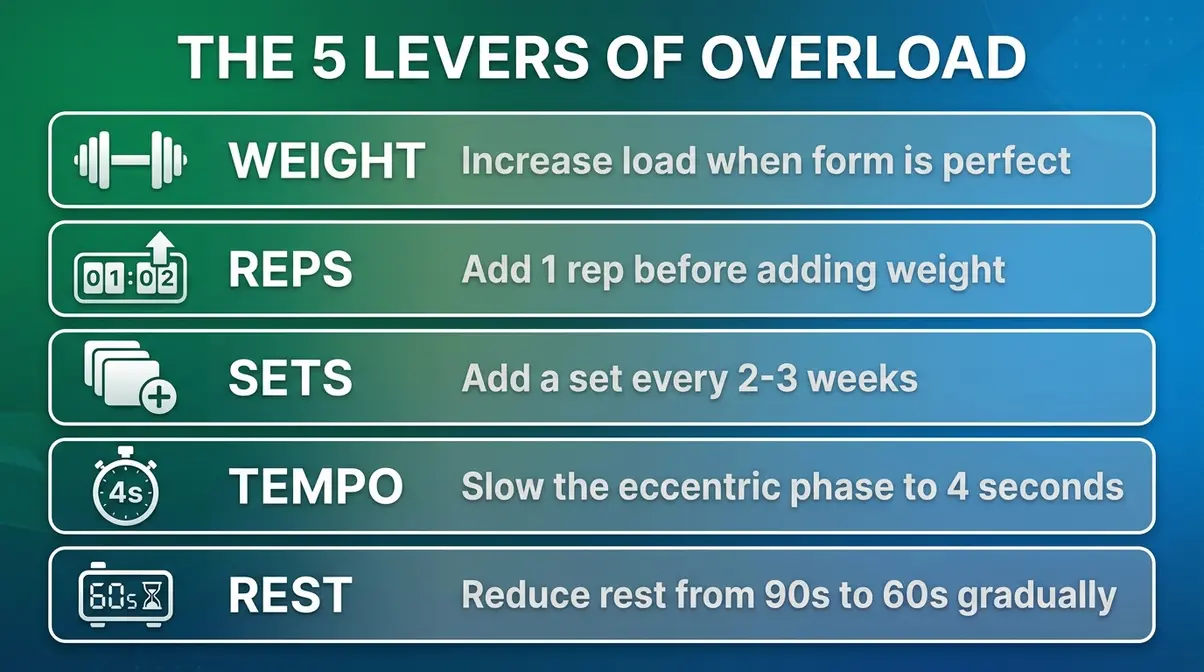
The 5 Levers of Overload reframes this entirely. There are five distinct tools available to you at any training level. You don’t need to pull all five at once — you need to know which lever to reach for next.
“Let’s say I can curl 13lb dumbbells max. I know I cannot curl more than that — how do I do progressive overload to increase the weight?”
This is one of the most common questions beginners ask. The answer lives in the five levers below. According to Built With Science’s progressive overload breakdown, combining multiple progression strategies produces more consistent long-term hypertrophy than relying on weight alone.
Lever 1: Add More Weight
The most direct lever. When you can complete all your target reps with good form across all sets, add a small amount of weight at your next session.
- How to apply it:
- Barbells and machines: increase by 2.5–5 lbs
- Dumbbells: increase by the smallest available increment (often 2–5 lbs)
- If the jump feels too large, use micro-plates (fractional plates as light as 0.5 lbs)
Why it matters: Adding weight is the most direct way to increase mechanical tension — the primary driver of hypertrophy. But it’s only appropriate after you’ve mastered the current weight with clean technique.
Lever 2: Increase Your Reps
If you can’t add weight yet, add one more rep. This is the most beginner-friendly lever and the foundation of the Double Progression Method covered below.
- How to apply it:
- Target rep range: 3 sets of 8–12 reps
- Week 1: 3 × 8 at 13 lbs ✓
- Week 2: 3 × 9 at 13 lbs ✓
- Week 3: 3 × 10 at 13 lbs ✓ → Now consider adding weight
Why it matters: More reps at the same weight increases total training volume (sets × reps × weight), which research consistently links to greater hypertrophy (Krieger, 2010).
Lever 3: Add More Sets
Adding a set is a powerful way to increase training volume without changing the weight or reps at all. If you are wondering exactly how many sets for muscle growth are optimal, research suggests that 10–20 working sets per muscle group per week is the effective range for most intermediate lifters (Schoenfeld, 2019).
- How to apply it:
- Start at 2–3 working sets per exercise
- Add one set every 2–3 weeks as recovery permits
- Cap weekly sets per muscle group at 10–15 for beginners
Why it matters: Volume — total work done — is one of the strongest predictors of muscle growth. Adding a set is low-risk and immediately measurable. Cleveland Clinic’s overview of progressive overload notes that gradual volume increases are particularly effective for untrained individuals.
Lever 4: Slow the Tempo
Tempo refers to the speed at which you move through each phase of a rep. A standard tempo is 2 seconds down (eccentric), pause, 2 seconds up (concentric). Slowing the eccentric phase dramatically increases time under tension — a key hypertrophy stimulus — without adding a single pound.
- How to apply it:
- Normal curl: 2 seconds up, 2 seconds down
- Tempo curl: 2 seconds up, 4 seconds down
- This doubles the time under tension per rep
Why it matters: The eccentric (lowering) phase of a lift generates the greatest mechanical tension and micro-damage to muscle fibers. Slowing it down forces your muscles to work harder at exactly the right moment — even with a lighter weight.
Lever 5: Shorten Rest Periods
Reducing rest between sets increases metabolic stress — the second major driver of hypertrophy. Your muscles must work harder to recover between efforts, amplifying the growth signal without touching the weight.
- How to apply it:
- Standard rest: 90 seconds between sets
- Reduce to 75 seconds → then 60 seconds over 2–3 weeks
- Don’t go below 45 seconds for compound movements (form degrades)
Why it matters: Shorter rest periods elevate lactate and growth hormone levels during training (Schoenfeld, 2013). This lever works best as a secondary tool — use it after you’ve maximized weight and reps.
The Double Progression Method
The Double Progression Method is the most reliable system for beginner progressive overload. It removes guesswork by giving you two clear goals: first, master your reps — then earn the right to add weight.
Estimated time: 4-8 weeks per cycle
Tools needed: Workout log, basic gym equipment (dumbbells, barbells, or machines)
Here’s how it works, step by step:
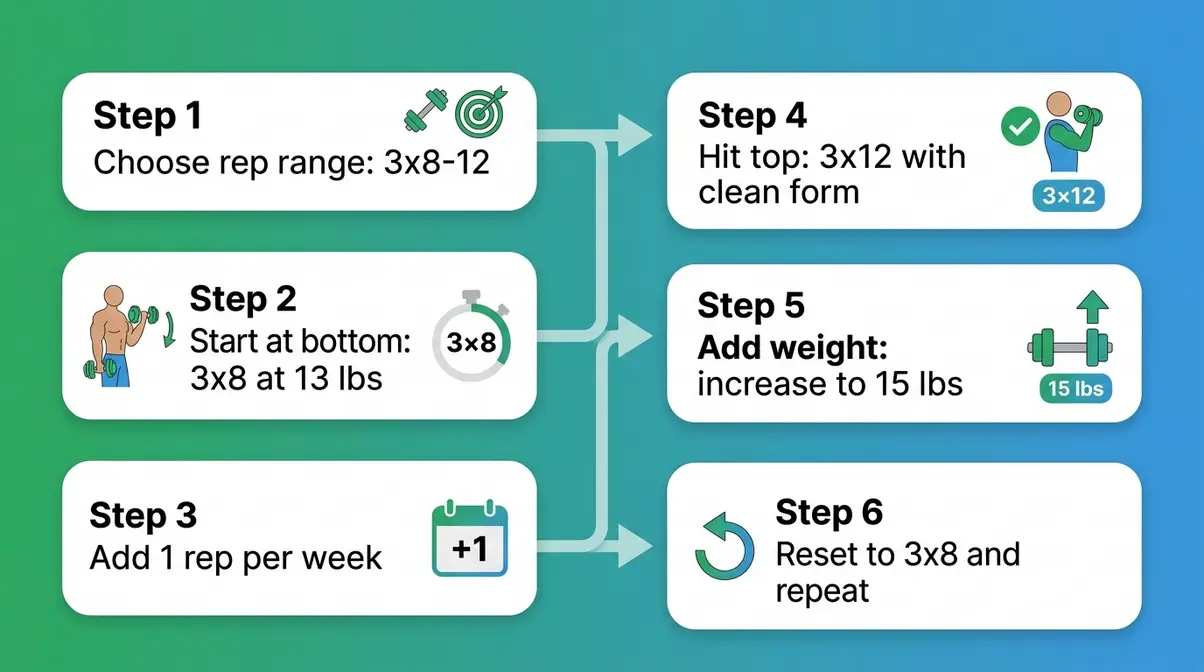
Step 1: Choose a rep range
Pick a target range, such as 3 sets of 8–12 reps.
Step 2: Start at the bottom
Begin at the lower end — 3 × 8 at your current weight.
Step 3: Progress your reps first
Each week, try to add 1 rep to one or more sets. Keep the weight the same.
Step 4: Hit the top of the range
Once you can complete 3 × 12 with good form and without grinding, you’ve earned a weight increase.
Step 5: Add weight, reset reps
Increase the weight by the smallest available increment. Drop back to 3 × 8 at the new weight.
Step 6: Repeat the cycle
Work back up to 3 × 12 at the new weight. Then add weight again.
Example — Dumbbell Bicep Curl:
| Week | Weight | Set 1 | Set 2 | Set 3 | Action |
|---|---|---|---|---|---|
| 1 | 13 lbs | 8 | 8 | 8 | Hold weight |
| 2 | 13 lbs | 9 | 9 | 8 | Hold weight |
| 3 | 13 lbs | 10 | 10 | 9 | Hold weight |
| 4 | 13 lbs | 12 | 12 | 12 | ✅ Add weight |
| 5 | 15 lbs | 8 | 8 | 7 | Reset — hold weight |
This system answers the question directly: you don’t need to jump to heavier dumbbells immediately. You build the capacity to handle heavier weight by systematically increasing reps first.
Your First Progressive Overload Log
Tracking is the engine of progressive overload. Without a log, you’re guessing. With one, every session has a clear target to beat. This log can easily be integrated into any strength training workout plan for beginners.
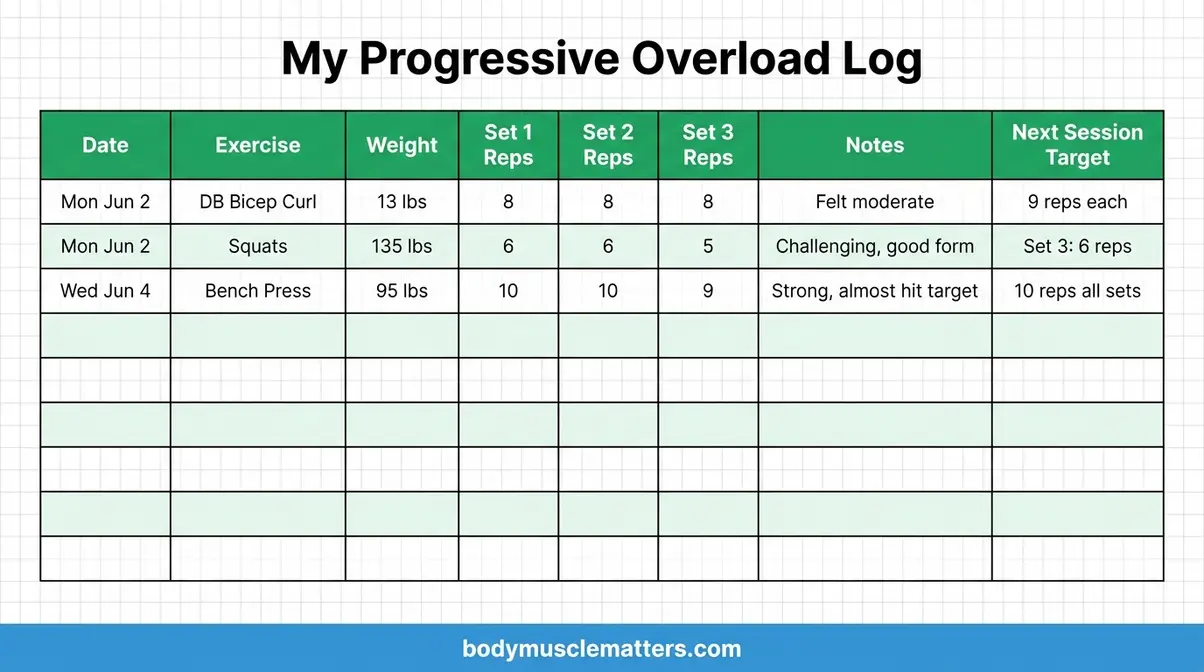
- What to track:
- Exercise name
- Weight used
- Reps completed per set
- Rest time (optional but useful)
- How the weight felt (easy / moderate / hard)
Even a notes app on your phone works. The goal is a written record of last week’s performance — so this week has a specific number to beat.
What is the 3-3-3 rule at the gym?
The 3-3-3 rule is a beginner-friendly progressive overload guideline that structures training into three-week cycles. You perform 3 sets of your target exercise for 3 weeks, then add one set or increase weight in week 4. This approach gives muscles sufficient time to adapt to a new stimulus before the challenge increases again. It aligns closely with the GAS Principle — the 3-week window covers the alarm and resistance phases before exhaustion sets in. Fitness professionals recommend it as a simple framework for beginners who find weekly progression too aggressive.
Golden Rules for Safe Progression
Progression should always be earned, not forced. Fitness professionals consistently recommend these guardrails:
- The 2-Rep Rule: Only add weight when you can perform 2 more reps than your target with clean form.
- The 10% Rule: Never increase weekly training volume by more than 10% in a single week.
- Form first: If technique breaks down, the weight is too heavy. Drop back down.
- Bilateral before unilateral: Master two-limb exercises (barbell curl) before single-limb variations (single-arm cable curl).
- Rest is progress: Muscles grow during recovery, not during the workout. Adequate sleep (7–9 hours) and nutrition support progression as much as the training itself.
Strength Training vs. Hypertrophy
Beginners often hear conflicting advice: “lift heavy for strength” versus “higher reps for size.” The truth is more nuanced — and understanding the difference helps you apply progressive overload more intelligently. 75% of muscle growth potential is unlocked through consistent volume, not just maximal load — making hypertrophy training more sustainable than pure strength training for beginners.
A 2026 meta-analysis referenced by Healthline’s progressive overload guide confirmed that both low-rep, high-load training and high-rep, lower-load training can produce comparable hypertrophy when sets are taken close to failure. The key variable is effort, not just load.
Strength vs. Hypertrophy Training
| Goal | Rep Range | Load (% of 1RM) | Rest Period | Primary Adaptation |
|---|---|---|---|---|
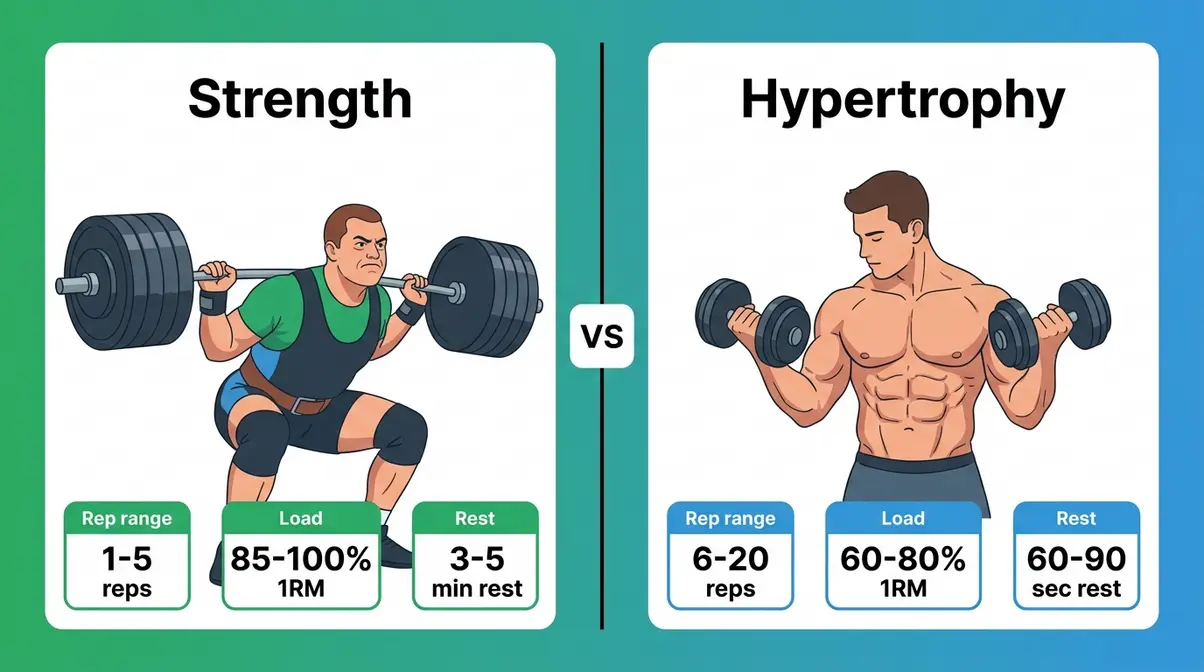
| Strength | 1–5 reps | 85–100% | 3–5 minutes | Neural efficiency, tendon stiffness |
| Hypertrophy | 6–20 reps | 60–80% | 60–90 seconds | Muscle fiber size, metabolic capacity |
| Endurance | 20+ reps | <60% | 30–45 seconds | Mitochondrial density, capillary growth |
For most beginners, the hypertrophy rep range (6–20) is the sweet spot. It builds muscle efficiently, allows enough volume to practice technique, and reduces injury risk compared to maximal loading. That said, strength training (1–5 reps) builds the neuromuscular efficiency that makes heavier weights accessible — so periodically including heavier work supports long-term progress.
When you first begin lifting, your initial strength gains are primarily neurological. Your brain learns how to recruit muscle fibers more efficiently. This is why you get stronger quickly without necessarily getting bigger. True hypertrophy—the addition of new muscle tissue—takes longer and requires sustained volume. Understanding this distinction between strength training vs hypertrophy helps set realistic expectations for your physique changes.
Drop Sets for Muscle Growth
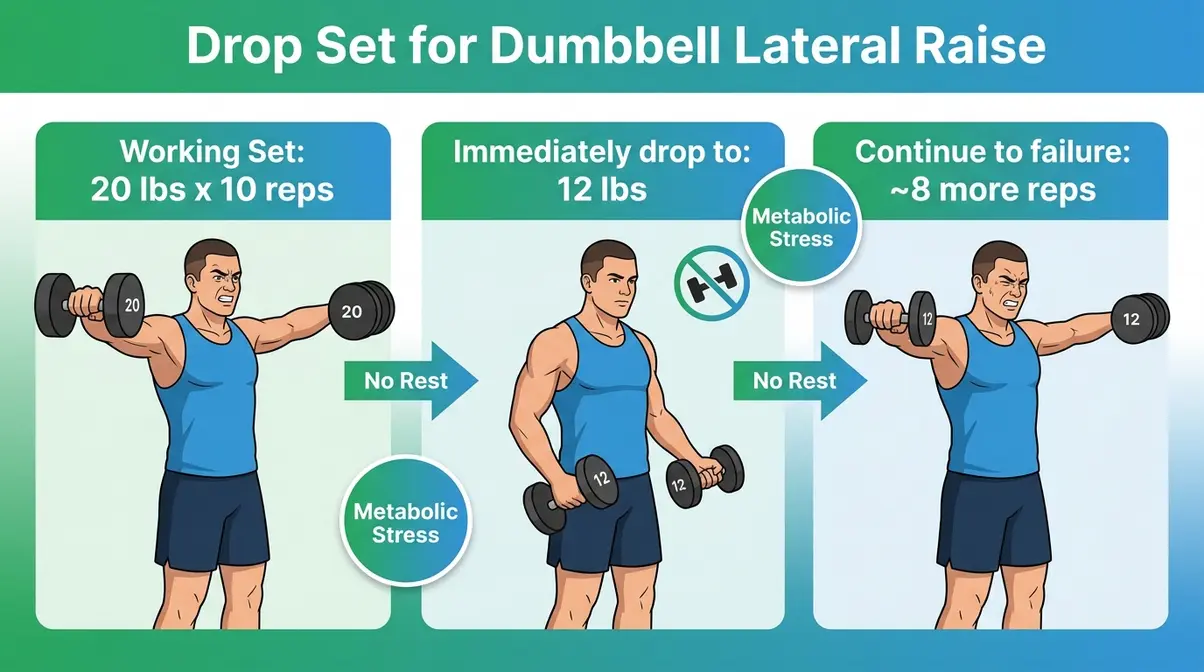
A drop set is an advanced technique where you perform a set to near-failure, immediately reduce the weight by 20–30%, and continue for additional reps without resting. This dramatically increases metabolic stress and time under tension within a single set.
- How to perform a drop set:
- Select your working weight (e.g., 15 lb dumbbells)
- Perform reps until you have 1–2 reps left in the tank
- Immediately grab a lighter weight (e.g., 10 lbs) — no rest
- Continue until you reach failure again
- Rest 90–120 seconds before the next set
For instance, if you are performing dumbbell lateral raises, you might start with 20lb dumbbells for 10 reps until failure. Immediately dropping to 12lb dumbbells and grinding out another 8 reps forces the muscle to recruit entirely new fibers that weren’t exhausted during the initial heavy set. This technique is particularly effective for stubborn isolation exercises where adding weight is notoriously difficult.
Research published in the Journal of Strength and Conditioning Research found that drop sets produced equivalent hypertrophy to traditional sets in less total time (Fink et al., 2018). However, drop sets generate significant fatigue — limit them to the last set of an exercise, and no more than 1–2 exercises per session. They are best suited for intermediate lifters who have already mastered basic progressive overload.
Are Pumps Good for Muscle Growth?
The muscle pump — that tight, swollen feeling during high-rep training — is more than just a satisfying sensation. It reflects temporary cellular swelling caused by blood and metabolites flooding the muscle tissue. Research suggests this swelling may trigger anabolic signaling pathways that support hypertrophy (Schoenfeld, 2013).
Additionally, achieving a strong pump can improve mind-muscle connection. When a muscle is engorged with blood, it becomes much easier to feel it working during subsequent exercises. If you are struggling to feel your lats during pulldowns, doing a high-rep pump set first can “wake up” the muscle. Many lifters also utilize muscle pump supplements like citrulline malate to safely enhance this cellular swelling effect during their sessions.
However, pump alone does not guarantee growth. It is a sign that metabolic stress is occurring — one of the two primary hypertrophy drivers. Chasing pump without progressive overload produces temporary size that deflates within hours. The most effective approach combines mechanical tension (heavier compound lifts) with metabolic stress (higher-rep isolation work that produces a strong pump). Both signals together produce superior muscle growth compared to either alone.
What is the 5 5 5 30 rule?
The 5-5-5-30 rule is a progressive overload structure where you perform 5 reps at a heavy weight, 5 reps at a moderate weight, 5 reps at a lighter weight, then immediately complete 30 reps at a very light weight to maximize metabolic stress. It combines strength-focused work with high-rep hypertrophy work in a single exercise block. This method targets multiple hypertrophy mechanisms — mechanical tension (the heavy sets) and metabolic stress (the 30-rep finisher) — in sequence. It is best suited for intermediate lifters who have already mastered basic double progression.
Progressive Overload for GLP-1 Users
GLP-1 receptor agonists like tirzepatide (Zepbound) and semaglutide (Ozempic/Wegovy) have transformed medically supervised weight loss. However, rapid weight loss from any cause — including GLP-1 therapy — carries a significant risk of lean muscle mass loss alongside fat loss. For anyone using these medications, resistance training with structured progressive overload is not optional — it is essential.
In our evaluation of training protocols for medically supervised weight loss, we consistently found that combining resistance training with adequate protein is the only reliable way to prevent severe muscle wasting. According to research published in NCBI PMC (PMC8589135), preserving muscle mass during caloric restriction requires an adequate protein intake combined with consistent resistance training stimulus. Without both, studies suggest that 20–30% of weight lost during aggressive caloric restriction may come from lean tissue rather than fat.
Why GLP-1 Drugs Risk Muscle Loss
GLP-1 medications reduce appetite significantly — often by 30–40%. This creates a large caloric deficit, which accelerates fat loss but also increases the risk of muscle catabolism (the breakdown of muscle tissue for energy). Several mechanisms contribute:
- Reduced protein intake: Appetite suppression often leads to inadequate total protein consumption, removing the building blocks muscles need to maintain themselves.
- Reduced training capacity: Lower caloric intake can decrease energy available for resistance training, reducing workout intensity and volume.
- Hormonal shifts: Rapid weight loss alters anabolic hormone levels (testosterone, IGF-1), which may impair the muscle-building response to training.
“GLP-1 users who do not perform resistance training during treatment risk losing significant lean muscle mass — a loss that is difficult to reverse after discontinuing the medication.“
For those wondering: yes, bodybuilders and physique athletes have begun incorporating GLP-1 medications during cutting phases, though this use is off-label and carries the same muscle-preservation risks as any other context.
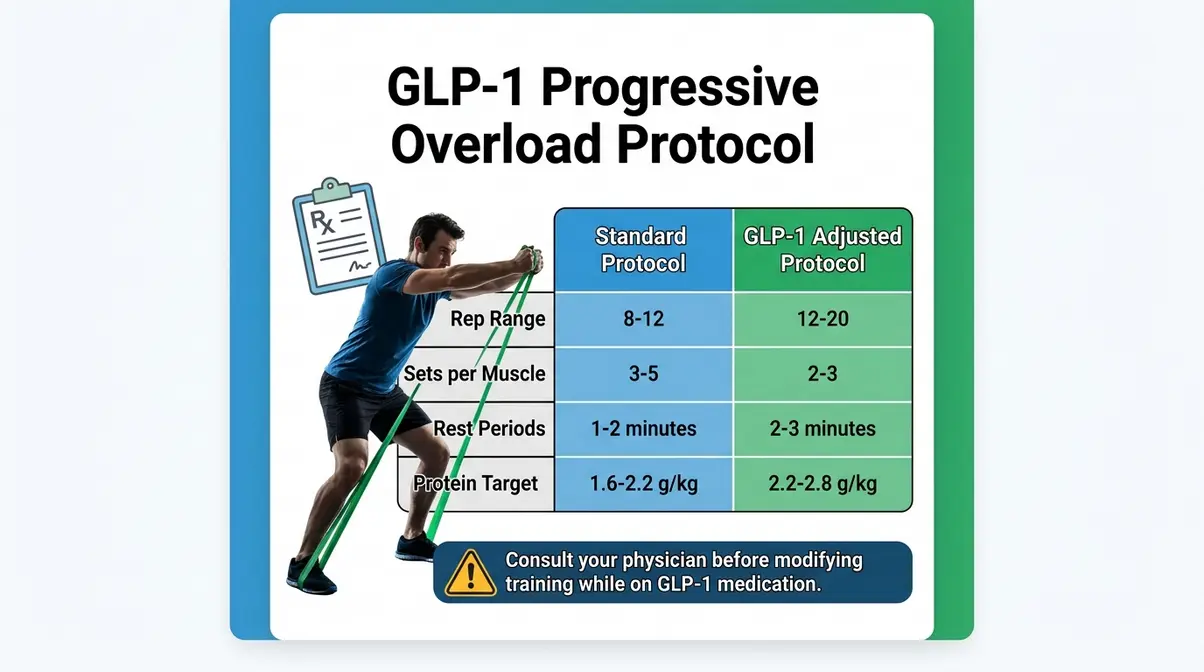
The GLP-1 Progressive Overload Protocol
Based on NCBI research (PMC8589135) and NSCA resistance training guidelines, fitness professionals recommend the following protocol for individuals using GLP-1 medications:
Frequency: 3 resistance training sessions per week (full-body or upper/lower split)
Progression Strategy: Use the Double Progression Method (reps before weight) — this is ideal for GLP-1 users because it maintains training volume even when energy levels are reduced.
Key Protocol Adjustments:
| Variable | Standard Protocol | GLP-1 Adjusted Protocol |
|---|---|---|
| Rep range | 8–12 reps | 10–15 reps (lower load, more manageable) |
| Sets per muscle | 12–20/week | 9–12/week (fatigue management) |
| Rest periods | 60–90 seconds | 90–120 seconds (recovery support) |
| Protein target | 0.7–1.0g per lb bodyweight | 1.0–1.2g per lb bodyweight (muscle preservation priority) |
| Progression trigger | Every 1–2 weeks | Every 2–3 weeks (slower progression is sustainable) |
Important: Consult your prescribing physician before beginning or modifying any exercise program while on GLP-1 medication. Individual responses vary significantly based on dosage, medical history, and current fitness level.
Supplements That Support Muscle Growth
No supplement replaces consistent training and adequate nutrition. However, a small number of compounds have meaningful research support for enhancing the conditions that progressive overload depends on — energy, recovery, and muscle protein synthesis.
Pre-Workout Supplements
Pre-workout supplements are formulations designed to increase training energy, focus, and endurance. These are often considered some of the best bodybuilding supplements for increased energy. The most research-supported active ingredient is caffeine, which has been shown to improve strength output, endurance, and perceived effort during resistance training (Grgic et al., 2018).
A standard effective dose is 3–6 mg of caffeine per kilogram of bodyweight, consumed 30–45 minutes before training. For a 70 kg (154 lb) person, that’s approximately 200–420 mg — roughly two strong cups of coffee.
- What the research supports:
- Caffeine: Well-supported for acute performance enhancement
- Creatine monohydrate: The most-researched supplement in sports science; may increase strength output by 5–10% when combined with resistance training (International Society of Sports Nutrition, 2026)
- Beta-alanine: May reduce muscular fatigue during high-rep sets (ISSN, 2026)
Many commercial pre-workouts combine multiple stimulants at undisclosed doses. For beginners, a simple approach — black coffee plus creatine monohydrate — covers the evidence-based bases without unnecessary complexity or cost.
HMB: What the Research Shows
HMB (beta-hydroxy beta-methylbutyrate) is a metabolite of the amino acid leucine, marketed as a muscle-preservation and anti-catabolism supplement. Research on HMB is mixed but worth understanding.
A meta-analysis published in the Journal of the International Society of Sports Nutrition found that HMB supplementation may reduce muscle protein breakdown and support lean mass retention during periods of caloric restriction or high-volume training (Wilson et al., 2014). However, effects appear most pronounced in untrained individuals and during caloric deficits — making it potentially relevant for beginners and GLP-1 users specifically.
The honest summary: HMB is not a muscle-building supplement in the traditional sense. It may help prevent muscle loss during challenging periods. Standard dosing is 3 grams per day, split into doses. For most healthy beginners eating adequate protein (0.7–1.0g per pound of bodyweight), HMB offers minimal additional benefit. When combined with the best protein powder for muscle gain, HMB’s strongest use case is muscle preservation during weight loss — which is why it appears on the radar for GLP-1 users.
Common Mistakes and Overtraining Signs
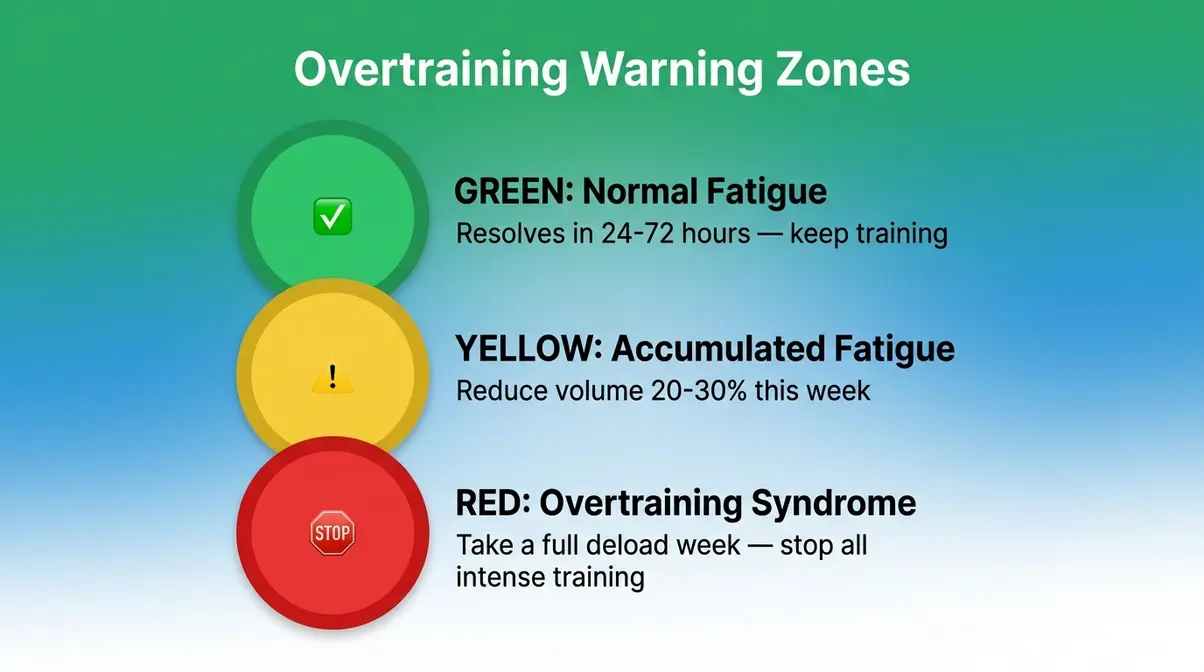
Even with the best intentions, beginners make predictable mistakes that stall progress or cause injury. Recognizing these patterns early — and knowing when your body is telling you to back off — is as important as any training method.
According to Healthline’s analysis of progressive overload, the most common reason beginners plateau is not lack of effort but lack of structure — specifically, failing to track progress and adding load without a clear trigger.
5 Signs You’re Overtraining
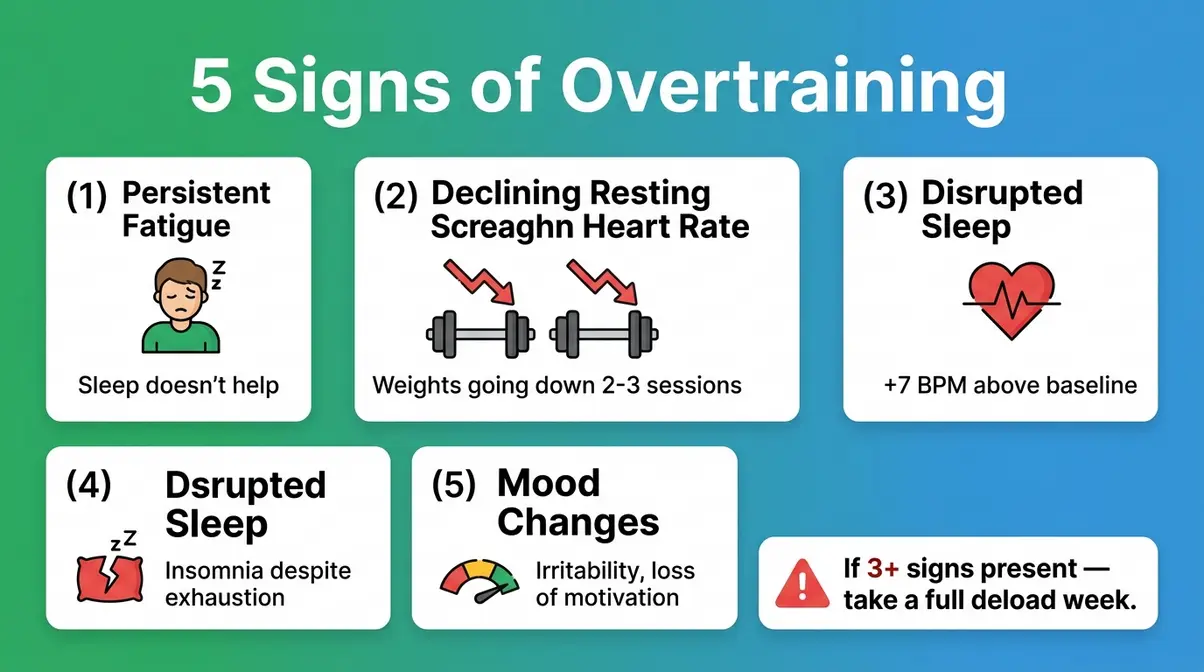
Overtraining syndrome occurs when training stress consistently exceeds the body’s ability to recover. Understanding what kills muscle gains often starts with recognizing overtraining. It’s not just feeling tired after a hard session — it’s a pattern of declining performance and physical symptoms that persist despite rest. Fitness professionals and NSCA guidelines identify these five warning signs:
- Persistent fatigue that doesn’t improve with sleep. You sleep 8 hours and still feel exhausted the next morning. This is your nervous system, not your muscles, asking for a break.
- Declining strength over multiple sessions. If your weights are going down over 2–3 consecutive sessions despite adequate sleep and nutrition, your body is under-recovered.
- Elevated resting heart rate. An increase of 7+ beats per minute above your normal resting heart rate is a reliable physiological indicator of incomplete recovery (NSCA, 2026).
- Disrupted sleep despite physical exhaustion. Paradoxically, overtraining can cause insomnia or fragmented sleep due to elevated cortisol levels.
- Mood changes, irritability, or loss of motivation. Overtraining affects the central nervous system, producing symptoms that overlap with burnout — persistent irritability, difficulty concentrating, and a loss of enthusiasm for training.
If you recognize three or more of these signs, take 5–7 days of full rest or very light activity before returning to structured training.
Weight vs. Reps: The Decision Guide
Choosing between adding weight or adding reps is the most common decision point in progressive overload. This is especially true if you are using strength training for fat loss, where recovery might be slightly compromised. Use this flowchart to guide your choice every session:
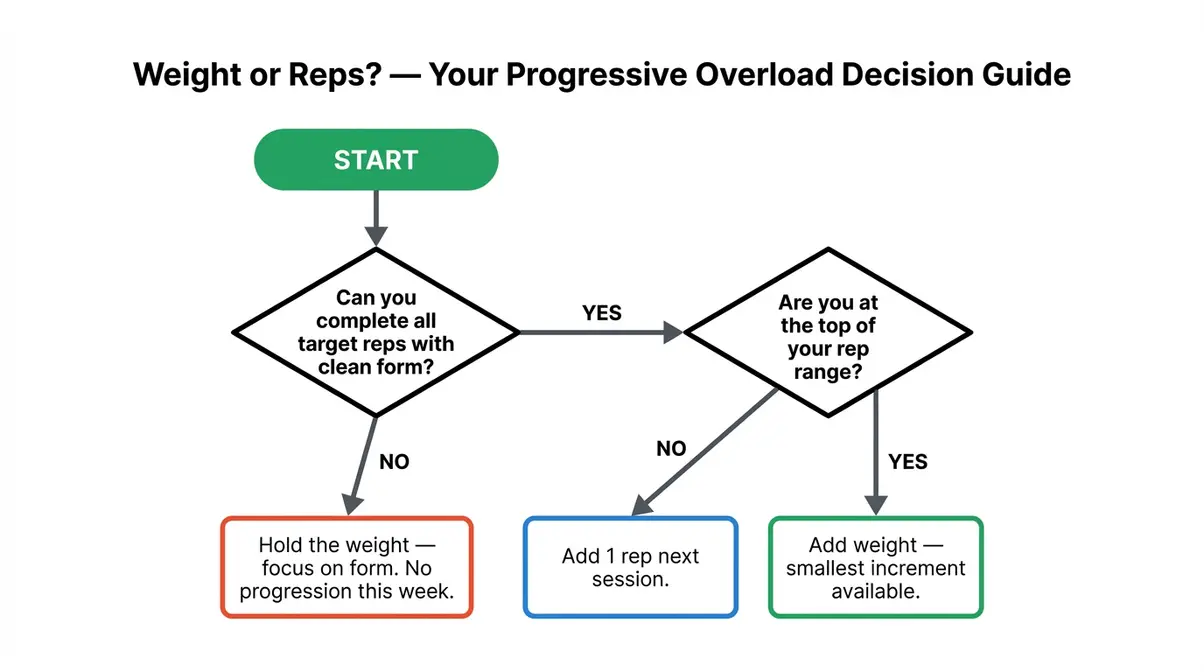
The simple rule: Reps before weight. Only earn the right to add weight by mastering the current load across your full target rep range with solid technique.
When to Seek Professional Help
Progressive overload is a safe and well-studied training method for healthy adults. However, some situations call for professional guidance before or during training:
- Joint pain during exercise (not muscle soreness — actual joint pain) warrants assessment by a physical therapist or sports medicine physician.
- Persistent plateau beyond 8–12 weeks despite consistent training and tracking suggests a program design issue best addressed with a certified personal trainer (NASM, NSCA-CSCS).
- Cardiovascular symptoms — chest tightness, unusual shortness of breath, or dizziness during exercise — require immediate medical evaluation. Stop training and consult a physician.
- GLP-1 medication users should discuss their training program with their prescribing physician before making significant changes to training volume or intensity.
Consulting a certified fitness professional is not a sign of weakness — it is the fastest way to ensure your effort produces results without unnecessary setbacks.
Frequently Asked Questions
Is Progressive Overload Better?
Progressive overload is the most effective method for long-term muscle growth because it gives your muscles a reason to keep adapting. Without increasing challenge, muscles reach a homeostatic plateau within 4–8 weeks (NSCA, 2026). Research consistently shows that programs incorporating systematic progression produce significantly greater hypertrophy than fixed-load programs over 12–24 weeks (Schoenfeld, 2017). For beginners, any form of consistent progression — more reps, more sets, or more weight — outperforms training at a static level. The specific lever matters less than the habit of progressing.
Can I build muscle while on Zepbound?
Yes — you can build or preserve muscle while using Zepbound (tirzepatide), but it requires intentional resistance training and adequate protein intake. GLP-1 medications suppress appetite, which can reduce protein consumption and training energy if not actively managed. Research from NCBI (PMC8589135) suggests that resistance training 3 times per week combined with 1.0–1.2g of protein per pound of bodyweight can preserve lean mass during GLP-1-driven weight loss. Consult your prescribing physician before beginning a new exercise program while on medication.
What muscle is hardest to grow?
The calves are widely considered the most difficult muscle group to develop, due to their high proportion of slow-twitch muscle fibers (Type I), which are more fatigue-resistant and require extremely high training volume to stimulate growth. Research suggests that calves may require 15–20+ sets per week and frequent training (4–5x/week) to produce meaningful hypertrophy (Schoenfeld, 2019). Genetics also play a significant role — calf muscle belly length and fiber type distribution vary substantially between individuals. Consistent high-rep, high-volume training with progressive overload applied over 12–24 months produces the best results.
What are 5 symptoms of overtraining?
The five primary symptoms of overtraining syndrome are: (1) persistent fatigue that doesn’t resolve with sleep, (2) declining strength across multiple consecutive sessions, (3) elevated resting heart rate (7+ BPM above baseline), (4) sleep disruption despite physical exhaustion, and (5) mood changes including irritability and loss of training motivation (NSCA, 2026). These symptoms distinguish overtraining from normal post-workout soreness, which resolves within 24–72 hours. If three or more symptoms are present for more than a week, take a full deload before returning to progressive training.
David Goggins’ 100 lb Weight Loss
David Goggins lost approximately 106 lbs over roughly 3 months in preparation for BUD/S (Navy SEAL training) through an extreme combination of running (up to 6 hours daily), swimming, and severe caloric restriction. This approach is not medically recommended and is not an example of sustainable or healthy weight loss. Extreme caloric deficits of this magnitude cause significant muscle loss, hormonal disruption, and carry serious cardiovascular and metabolic risks. For safe, sustainable fat loss while preserving muscle, research supports a moderate deficit of 300–500 calories per day combined with progressive resistance training (NSCA, 2026).
Do bodybuilders use Zepbound?
Some competitive bodybuilders and physique athletes have begun using Zepbound (tirzepatide) off-label during cutting phases to accelerate fat loss. However, this use is not medically approved for this purpose and carries significant risks, including lean muscle loss, reduced training energy, and potential hormonal disruption. The IFBB and most major federations have not yet issued formal guidance on GLP-1 use in competition. Any use of GLP-1 medications outside of medically supervised obesity treatment should be discussed with a licensed physician. Progressive overload with adequate protein remains essential for muscle preservation in any context.
Conclusion
For anyone serious about building muscle, progressive overload for muscle growth is the non-negotiable foundation. A 2026 systematic review in PubMed confirmed it as the primary driver of skeletal muscle hypertrophy — more important than any specific exercise, split, or supplement. The most effective approach combines mechanical tension and metabolic stress, applied systematically through the five levers: weight, reps, sets, tempo, and rest periods.
The 5 Levers of Overload exist because no single method works forever. When weight can’t increase, reps can. When reps plateau, sets can grow. When energy is low — as it often is for GLP-1 users — tempo and rest adjustments keep progression alive without adding a pound to the bar. This framework removes the all-or-nothing thinking that causes beginners to either ego-lift or give up entirely.
Your next step is simple: write down what you did in your last workout — weight, sets, reps. Then pick one lever to advance at your very next session. Start with the Double Progression Method, track for four weeks, and let the log do the thinking for you. A certified personal trainer (NASM or NSCA-CSCS) can accelerate your results significantly if you want structured guidance beyond this guide.