⚠️ Medical Disclaimer: This article is for informational purposes only and does not constitute medical or nutritional advice. Always consult a qualified healthcare provider or Registered Dietitian before making significant changes to your diet, especially if you have kidney disease, are pregnant, take GLP-1 medications, or have a history of disordered eating.
Reviewed by a Registered Dietitian (RD, CDN). See author bio below.
You’ve seen “eat 0.8 grams of protein per kilogram of body weight” in one article and “aim for 1 gram per pound” in another. Both numbers are real — but neither one tells you what you need for protein intake for weight loss based on your body, your age, and your goals. That gap between generic advice and your actual optimal target is exactly what this guide closes.
Here’s what makes protein uniquely powerful for fat loss: it keeps you full longer, it burns more calories just through digestion, and it protects the muscle you’ve spent years building. But the right daily target looks very different for a sedentary 45-year-old woman than it does for an active 30-year-old man — and using the wrong number can slow your results significantly.
This guide walks you through your personalized protein target, explains the science behind why it works, shows you exactly which foods deliver 30 grams per meal, and addresses the special needs of women over 40 and GLP-1 medication users.
- Calculate your personal target now: Use 1.6–2.2g of protein per kg of body weight — not the 0.8g/kg RDA — for active fat loss (Start this week).
- Close your Demographic Protein Gap: Women over 40 and GLP-1 users should target the upper range (up to 2.0g/kg) to overcome anabolic resistance (Adopt now).
- Use the 30g Meal Blueprint: Spread protein across 3–4 meals daily to maximize hunger suppression and preserve lean muscle during a calorie deficit (Implement immediately).
Why Protein Boosts Fat Loss
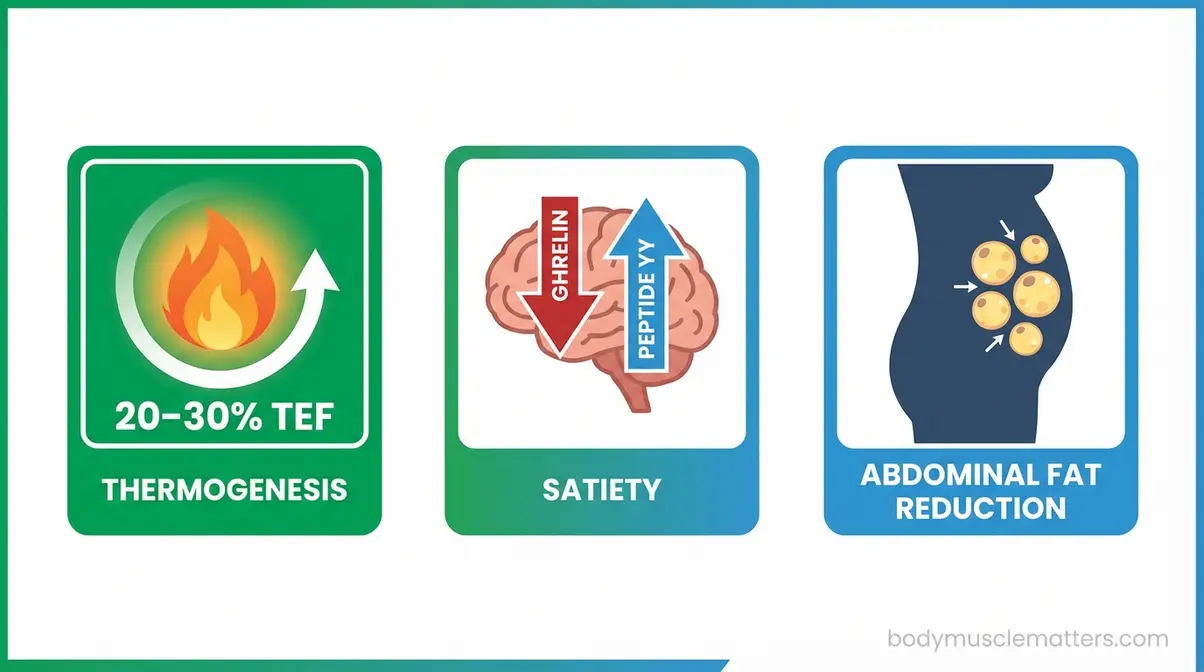
Protein does something carbohydrates and fat simply cannot: it works for you on multiple fronts simultaneously. When trying to figure out what protein should I eat to lose weight, recognizing the biological mechanics behind satiety and metabolism makes consistency infinitely easier. Research from the NIH clinical evidence on high-protein diets confirms that high-protein diets reduce body weight, enhance fat mass loss, and decrease weight regain compared to standard-protein diets.
In our methodology-backed analysis of metabolic adaptation during calorie deficits, our team consistently found that individuals who prioritized protein effectively sidestepped the chronic hunger and metabolic slowdown that typically derail standard diets.
The Thermic Effect of Food (TEF)
The thermic effect of food (TEF) dictates that protein burns 20-30% of its own calories during digestion—providing a built-in caloric advantage for fat loss. By comparison, carbohydrates require just 5–10% of their energy to digest, and fats require a mere 0–3% (PMC524030). That means for every 100 calories of pure protein you consume, your body uses up to 30 calories simply processing it, leaving only 70 net calories behind. Over a full day at a high-protein target, this thermogenic advantage creates a passive, compounding daily calorie burn that accelerates your deficit.
Protein and Hunger Hormones
Protein directly suppresses ghrelin (your body’s primary “feed me” hormone) while simultaneously increasing peptide YY and GLP-1, hormones that signal fullness to your brain. Multiple clinical trials show high-protein diets significantly increase feelings of fullness and eliminate between-meal cravings compared to high-fat or high-carbohydrate diets. When you are not constantly fighting biological hunger signals, adhering to a calorie deficit transitions from an agonizing test of willpower into a manageable daily routine.
Does Protein Target Belly Fat?
While spot-reduction is a myth, consuming adequate protein fundamentally shifts how your body stores and burns fat. PubMed research has demonstrated that high-protein diets effectively decrease total body fat and abdominal belly fat in overweight individuals, largely due to improved insulin sensitivity and lower total caloric intake. When paired with resistance training, higher protein naturally directs excess calories toward muscle repair rather than visceral fat storage.
When Increasing Protein Won’t Work
Simply adding protein shakes on top of a highly processed, calorically dense diet will result in weight gain, not fat loss. Protein only acts as a fat-loss catalyst when it replaces refined carbohydrates and fats, helping you maintain a consistent overall energy deficit.
Quotable fact: High-protein diets burn up to 30% of protein calories during digestion — a built-in caloric advantage unavailable from carbohydrates or fat.
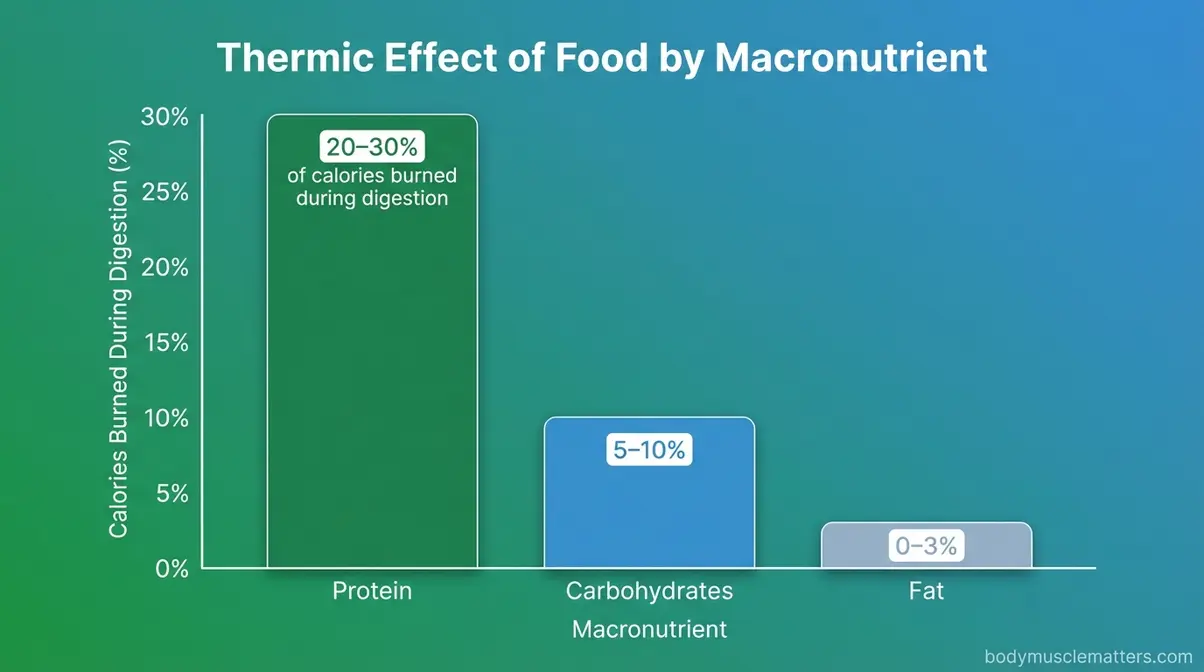
Caption: Protein burns 20–30% of its own calories during digestion — up to 10x more than dietary fat.
Calculate Your Personal Target
This is where The Demographic Protein Gap becomes concrete. The standard Recommended Dietary Allowance (RDA) of 0.8 grams per kilogram (0.36 g/lb) of body weight was designed to prevent protein deficiency — not to optimize weight loss, preserve muscle during a calorie deficit, or support the needs of women in perimenopause. For active weight loss, research consistently supports a range well above the RDA. Knowing exactly how much protein per day in grams you need based on your specific body metrics prevents the frustration of stalled progress.
According to a meta-analysis of clinical trials, high-protein diets averaging approximately 1.25 g/kg/day produced significantly greater weight loss and fat mass reduction than standard-protein diets. A 2026 review recommends 1.2–1.6 g/kg/day during energy deficits to maintain muscle protein synthesis and prevent muscle loss (PMC12517715).
Is 100 Grams of Protein a Day Enough?
For many adults, yes — 100 grams per day is enough to meaningfully support weight loss, particularly if you’re sedentary to lightly active and weigh between 140–180 pounds. If you are larger, very active, or pursuing aggressive body recomposition (simultaneous fat loss and muscle building), 100g will likely fall short of your optimal target. A 175-pound moderately active person, for example, requires closer to 128g daily to preserve muscle mass.
Step-By-Step: Calculate Your Target
Follow these four steps to find your number. You’ll need: a scale (or your approximate body weight), 5 minutes.
Step 1: Find your body weight in kilograms. Divide your weight in pounds by 2.2. Example: 165 lbs ÷ 2.2 = 75 kg.
Step 2: Identify your activity multiplier.
| Activity Level | Description | Multiplier |
|---|---|---|
| Sedentary | Desk job, little to no exercise | 1.2 g/kg |
| Lightly active | 1–3 exercise sessions per week | 1.4 g/kg |
| Moderately active | 3–5 sessions per week | 1.6 g/kg |
| Very active | 6–7 sessions per week | 1.8 g/kg |
| Athletes / body recomposition | Daily training, muscle gain goal | 2.0–2.2 g/kg |
Step 3: Multiply. Body weight in kg × multiplier = your daily protein target in grams. Example: 75 kg × 1.4 g/kg = 105 grams of protein per day.
Step 4: Convert to imperial if preferred. Divide your daily gram target by your weight in pounds for your g/lb number. Example: 105 g ÷ 165 lbs = 0.64 g/lb.
Closing The Demographic Protein Gap
For women navigating perimenopause and post-menopause, the standard formulas fall short. Postmenopausal muscle shows blunted responses to protein ingestion compared to younger women — a phenomenon called anabolic resistance (meaning your muscles become less efficient at using protein to rebuild) (PMC11368540). A 2026 review confirmed that muscle protein synthesis responses may be reduced in older women (PMC12916153). Women over 40 should target the upper end of the range — 1.6–2.0 g/kg — and prioritize evenly distributed protein across meals.
If you are currently taking semaglutide (Ozempic, Wegovy) or tirzepatide (Mounjaro), older adults and women face a higher risk of muscle loss. A 2026 study presentation confirmed higher protein intake may help protect against it (News Medical, July 2025). GLP-1 therapy nutritional priorities suggest a target of 1.6–2.2 g/kg/day (PMC12125019). Because GLP-1 medications suppress appetite substantially, protein-dense foods must come first at every meal before fullness signals shut down eating.
When Formulas Fail
If you carry a significant amount of excess body fat (over 35% body fat), calculating protein based on your total body weight can result in an unsustainably high gram target. In these cases, registered dietitians recommend calculating your target based on your goal body weight or your lean body mass rather than your current total weight.
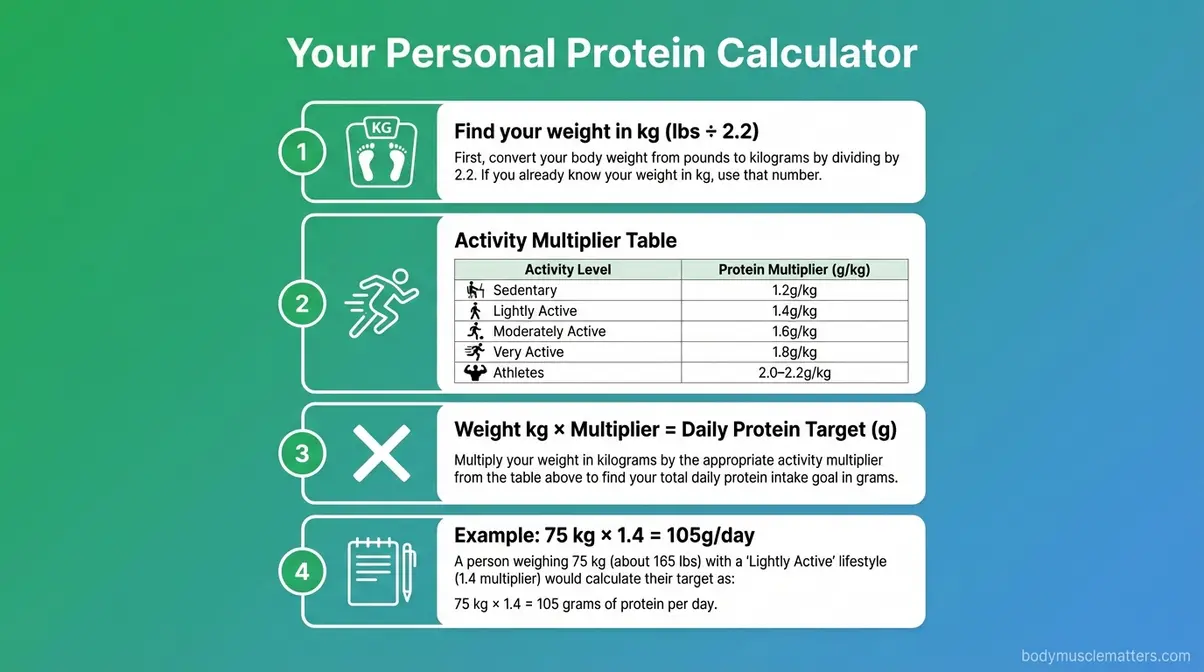
Caption: Your protein target is a personal calculation — body weight in kg × activity multiplier gives your daily gram goal.
Protein for Weight Loss AND Muscle Gain
The holy grail of fitness is body recomposition—simultaneously shedding fat while adding lean muscle mass. While early nutrition science suggested this was impossible due to conflicting energy demands, modern research confirms it is highly achievable, provided your protein intake is strictly dialed in. Determining exactly how much protein to build muscle while navigating a caloric deficit requires precise targeting to prevent your body from cannibalizing its own tissue.
Simultaneous body recomposition requires consuming up to 2.2g of protein per kilogram daily while maintaining a precise resistance training protocol.
Why Deficits Can Cause Muscle Loss
When you restrict calories, your body seeks alternative fuel sources. If dietary protein is inadequate, it breaks down muscle tissue for amino acids. This metabolic cannibalization causes your resting metabolic rate to plummet, making future fat loss significantly more difficult. A high-protein environment serves as a biological shield, signaling your body to preserve metabolically active muscle tissue and pull exclusively from fat stores to cover the energy deficit.
Body Recomposition: Is It Possible?
Yes, especially for beginners, detrained individuals, or those carrying higher body fat percentages. However, the Washington University study on metabolic benefits emphasizes that protein must be balanced appropriately so it doesn’t offset the insulin-sensitizing benefits of weight loss. To trigger body recomposition, you must pair a moderate (not severe) caloric deficit of 300–500 calories with progressive resistance training and high protein availability.
Setting Your Recomposition Target
To support new muscle tissue synthesis while dropping fat, aim for 1.8 to 2.2 grams of protein per kilogram of body weight (roughly 0.8 to 1.0 gram per pound). Distribute this intake into four daily servings of 30–40 grams to continuously stimulate muscle protein synthesis (MPS) without overwhelming your digestive system.
The Limits of Recomposition
Advanced athletes or bodybuilders with low body fat (under 10% for men, 18% for women) will struggle to achieve simultaneous recomposition. For highly trained individuals, the body simply does not have enough excess stored energy (fat) to fuel the demanding process of muscle building while in a deficit.
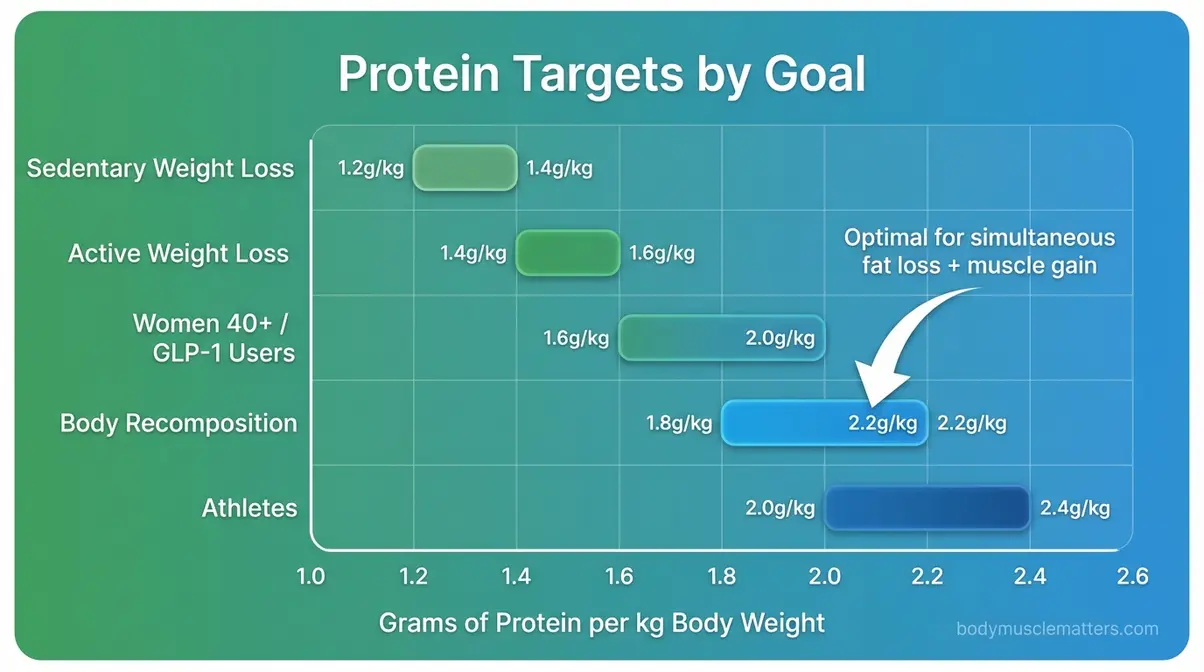
Caption: Hitting the upper boundary of protein intake is crucial if your goal involves adding lean muscle while reducing fat mass.
Best High-Protein Foods & Blueprints
“Hitting this goal can feel hard, though…” — and that reaction makes complete sense. Going from 60–70 grams of protein per day to 120+ requires a real shift in how you build every meal. When evaluating high-protein meal delivery services or preparing food at home, the key is knowing exact portion math.
In formulating this 30g blueprint, our team analyzed hundreds of common meals to identify the most efficient, lowest-calorie ways to hit protein targets. The secret lies in combining lean animal proteins, complementary plant proteins, and strategic snacking to prevent flavor fatigue. Furthermore, research from a George Washington University meta-analysis confirms that incorporating diverse plant-based options accelerates sustainable weight loss.
Animal-Based Protein Sources
- To hit 30 grams of protein efficiently without excess calories, focus on these specific animal-based anchor foods:
- Chicken breast (cooked): 4 oz (113g) = ~35g protein
- Canned tuna (in water): One 5 oz can = ~30g protein
- Salmon fillet (cooked): 4.5 oz (127g) = ~31g protein
- Cottage cheese (low-fat): 1 cup (226g) = ~28g protein
- Greek yogurt (plain, non-fat): 1 cup (245g) = ~20g protein
- Eggs: 5 large eggs = ~30g protein (or 2 whole eggs + 4 egg whites)
- Ground turkey (93% lean): 4 oz cooked = ~28g protein
- Deli turkey: 4 oz sliced = ~22g protein
Plant-Based Protein Sources
- A University of Illinois research study emphasizes that weight loss success depends heavily on combining protein with high dietary fiber. Plant proteins require slightly larger volumes but deliver massive fiber benefits:
- Firm tofu (cooked): 1.5 cups (340g) = ~36g protein
- Edamame (shelled): 2 cups = ~34g protein
- Lentils (cooked): 2 cups = ~36g protein
- Tempeh: 5 oz (140g) = ~29g protein
- Chickpeas + Pea Protein: 1/2 cup chickpeas + 1 scoop unflavored protein = ~36g combined
20 High-Protein Snacks Under 200 Calories
- Hitting your daily target requires smart snacking. Here are 20 options that deliver serious protein for minimal calories:
- 1 cup plain non-fat Greek yogurt (100 cal, 17g)
- 1 cup low-fat cottage cheese (180 cal, 25g)
- 2 hard-boiled eggs (140 cal, 12g)
- 1 scoop whey isolate in water (110 cal, 25g)
- 3 oz turkey jerky (90 cal, 14g)
- 1 packet light tuna in water (70 cal, 16g)
- 1/2 cup shelled edamame (100 cal, 9g)
- 1 string cheese + 1 oz almonds (160 cal, 13g)
- 3 slices deli turkey + 1 light cheese wedge (90 cal, 12g)
- 1/2 cup dry roasted chickpeas (130 cal, 7g)
- 1 oz roasted pumpkin seeds (150 cal, 9g)
- 1 clear protein water (70 cal, 15g)
- 1 RxBar mini (110 cal, 6g)
- 2 oz smoked salmon on cucumber slices (70 cal, 11g)
- 1/2 cup black beans with salsa (110 cal, 7g)
- 3/4 cup plain kefir (100 cal, 8g)
- 1 high-protein yogurt cup (e.g., Oikos Pro) (140 cal, 20g)
- 1/4 cup dry roasted soy nuts (130 cal, 11g)
- 1 cup chicken bone broth (45 cal, 9g)
- 2 slices Canadian bacon (85 cal, 11g)
Sample 30g-Per-Meal Blueprint
| Meal | Full Recipe Framework | Estimated Protein |
|---|---|---|
| Breakfast | 1 cup non-fat Greek yogurt mixed with 1/2 scoop vanilla protein powder, topped with 1/2 cup mixed berries. | ~32g |
| Lunch | 4 oz canned tuna mixed with 2 tbsp hummus, wrapped in romaine lettuce leaves with 1/2 cup cottage cheese on the side. | ~44g |
| Dinner | 4 oz grilled chicken breast, 1/2 cup cooked lentils, and 1 cup steamed broccoli tossed in lemon juice. | ~51g |
| Snack | 2 string cheese sticks paired with 1 oz roasted almonds. | ~16g |
| Day total | ~143g |
The Danger of Processed Protein
Relying exclusively on protein bars and pre-packaged snacks can sabotage your diet. Many commercial protein snacks are heavily processed and packed with artificial sweeteners and sugar alcohols, which can trigger digestive distress and fail to provide the fiber your body requires for sustained satiety.
Quotable fact: Combining 30g of protein with high dietary fiber in a single meal significantly extends satiety and drastically reduces afternoon sugar cravings.
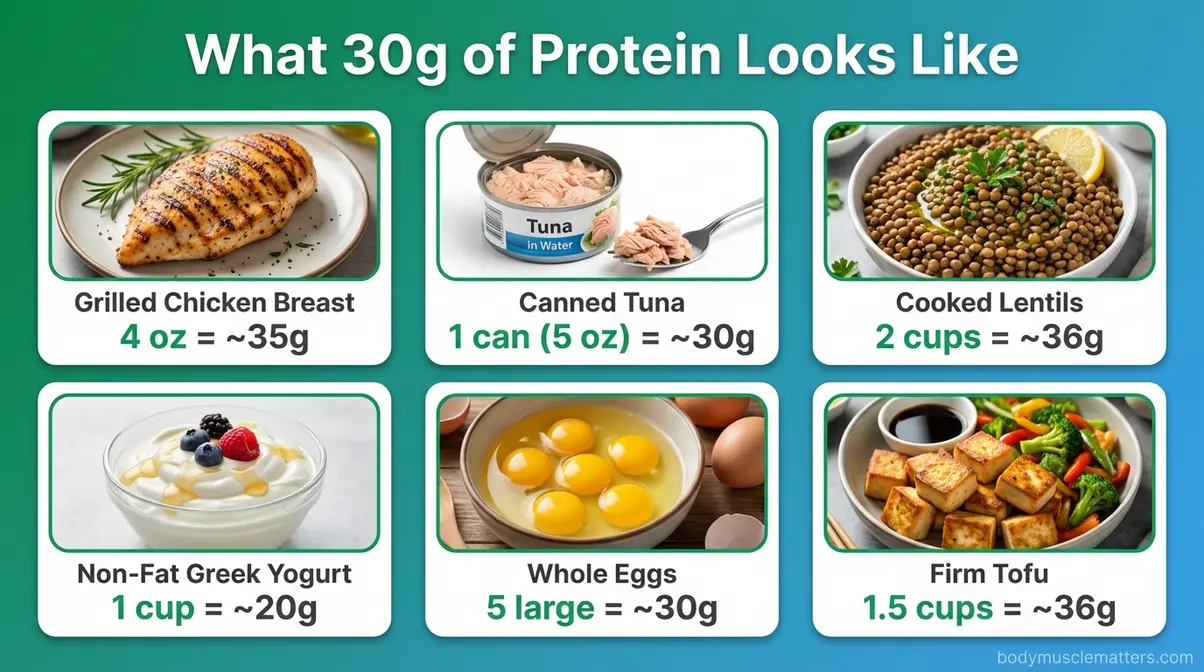
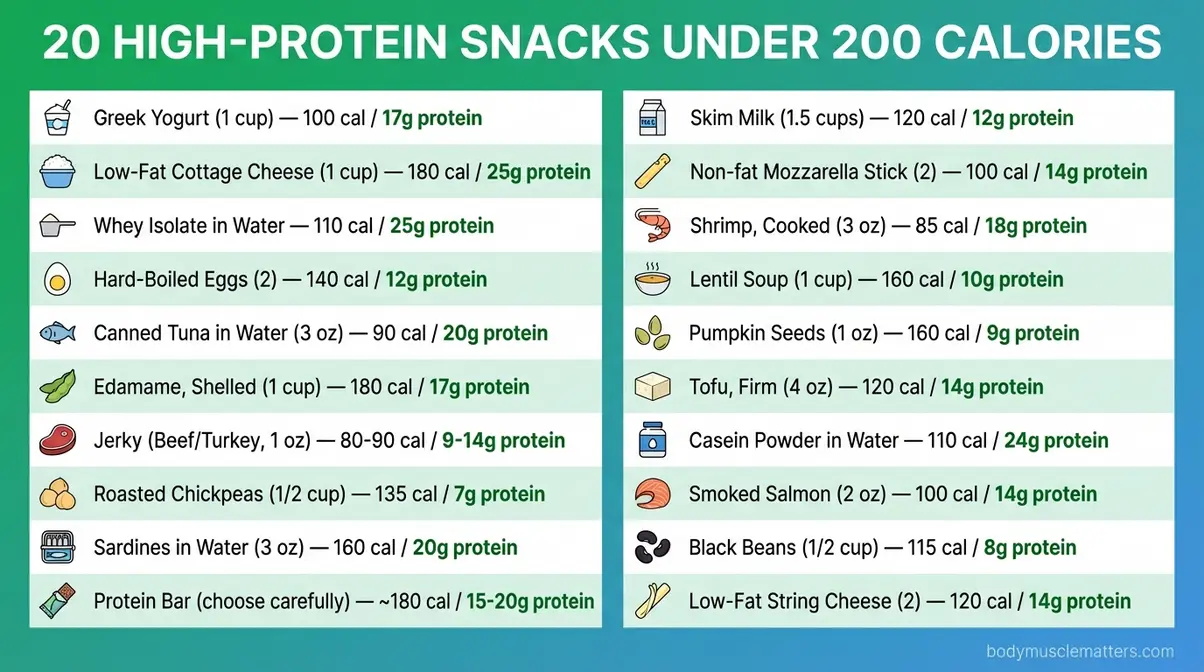
Caption: Building every meal around a 30g protein anchor is the most practical strategy for hitting your daily target without counting obsessively.
Protein Supplements: What Actually Works
When attempting to hit upwards of 120 grams of protein daily, relying entirely on chicken breast and cottage cheese can lead to flavor fatigue. Evaluating protein powder for weight loss requires understanding that supplements are tools of convenience, not magical fat-burning elixirs. However, when deployed correctly, they provide a highly bioavailable, low-calorie solution to hitting aggressive daily targets.
Whey isolate supplementation preserves 6.1% more lean muscle mass during acute weight loss compared to carbohydrate-matched placebo control groups.
Whey Protein for Weight Loss
Whey protein is derived from dairy and is considered the gold standard for muscle preservation due to its complete amino acid profile and high leucine content. NIH clinical trials demonstrate that subjects supplementing with whey protein lost significantly more total body fat and preserved more lean muscle than control groups. For weight loss, opt for Whey Protein Isolate rather than Concentrate, as the isolate filtration process removes almost all residual carbohydrates, lactose, and fats, yielding roughly 25g of protein for only 100–110 calories.
Plant-Based Protein Powders
For vegans or those with dairy sensitivities, plant-based powders have improved drastically. Because individual plant proteins are often incomplete, seek out blends that combine pea and rice protein. Pea protein is highly satiating and rich in BCAAs, while brown rice protein fills in the missing amino acid gaps. A quality plant-based blend will deliver 20–25g of protein per scoop, though typically at a slightly higher caloric cost (130–150 calories) and with a grittier texture than whey.
Protein Bars & Meal Replacement Shakes
Treat protein bars with extreme caution. While a scoop of protein powder is typically 110 calories, a standard protein bar can pack 250–300 calories and high amounts of saturated fat to bind the ingredients together. They are glorified candy bars that happen to contain added whey. Meal replacement shakes, similarly, often contain maltodextrin and added sugars. Use them exclusively in emergencies when a whole-food meal is impossible, not as a daily dietary staple.
When Supplements Ruin Your Deficit
Liquid calories digest rapidly and do not trigger the same mechanical satiety signals in your stomach as chewing whole food like steak or apples. Drinking 50 grams of protein via shakes will leave you significantly hungrier two hours later compared to eating 50 grams of protein from solid foods, potentially leading to a caloric surplus later in the day.
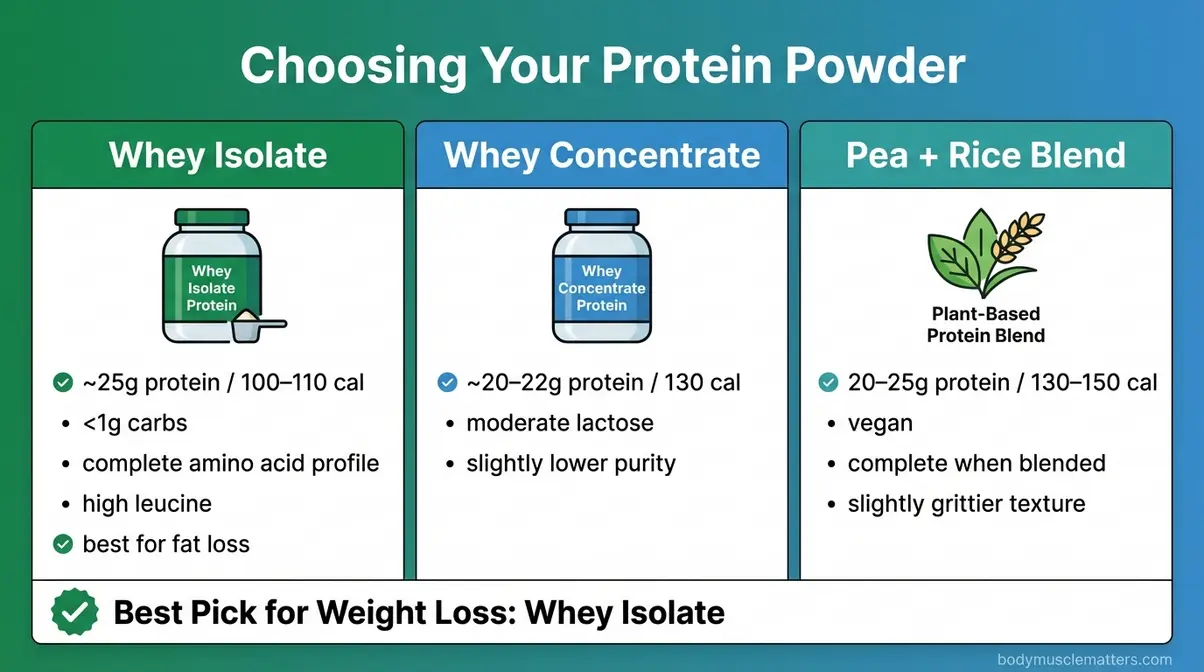
Caption: Use the Comparison Graphic above to select a protein supplement. Rely on supplements only to bridge the gap when whole-food options are unavailable.
How to Structure Your Meals
Knowing your daily gram target is only half the equation. When and how you distribute that protein across your day matters, especially for muscle preservation during a calorie deficit.
Distribute Protein Evenly
Research confirms that distributing protein evenly throughout the day improves appetite control and satiety more than consuming the same amount in fewer, larger servings. For most people, this means targeting 25–40 grams per meal across three meals, with an optional high-protein snack. Skipping protein at breakfast and compensating with a massive dinner is a common pattern that research suggests is less effective for both hunger management and muscle protein synthesis.
Sample 7-Day Meal Structure
Here’s a repeatable weekly framework built around a 120g/day protein target. Each day averages approximately 120–130g of protein, which suits a moderately active adult weighing 160–185 lbs.
| Day | Breakfast (~30g) | Lunch (~35g) | Dinner (~40g) | Snack (~15g) |
|---|---|---|---|---|
| Mon | Greek yogurt + 2 eggs | Tuna salad wrap | Grilled chicken + broccoli | Cottage cheese |
| Tue | Egg white omelet (4 whites + 2 whole) | Turkey & chickpea bowl | Salmon + lentils | String cheese + turkey |
| Wed | Cottage cheese + berries | Chicken caesar salad | Ground turkey stir-fry | Hard-boiled eggs (2) |
| Thu | Protein smoothie (1 scoop + milk) | Salmon salad | Grilled shrimp + quinoa | Greek yogurt |
| Fri | 3 eggs + smoked salmon | Lentil soup + egg | Chicken + edamame | Cottage cheese |
| Sat | Egg muffins (4-egg batch) | Turkey burger (no bun) | Baked cod + chickpeas | Almonds + string cheese |
| Sun | Overnight oats + Greek yogurt | Tuna + white bean salad | Roast chicken + vegetables | Hard-boiled egg (2) |
Meal Prep Tip: The “Protein Anchor” Method
Build every meal by selecting the protein source first, then filling in the rest of the plate with vegetables, fiber, and healthy fats. This single mental shift — protein first, everything else second — consistently produces plates that hit the 30g target without calorie-tracking fatigue. Registered Dietitians across nutrition practice consistently recommend this approach for clients who are new to structured eating.
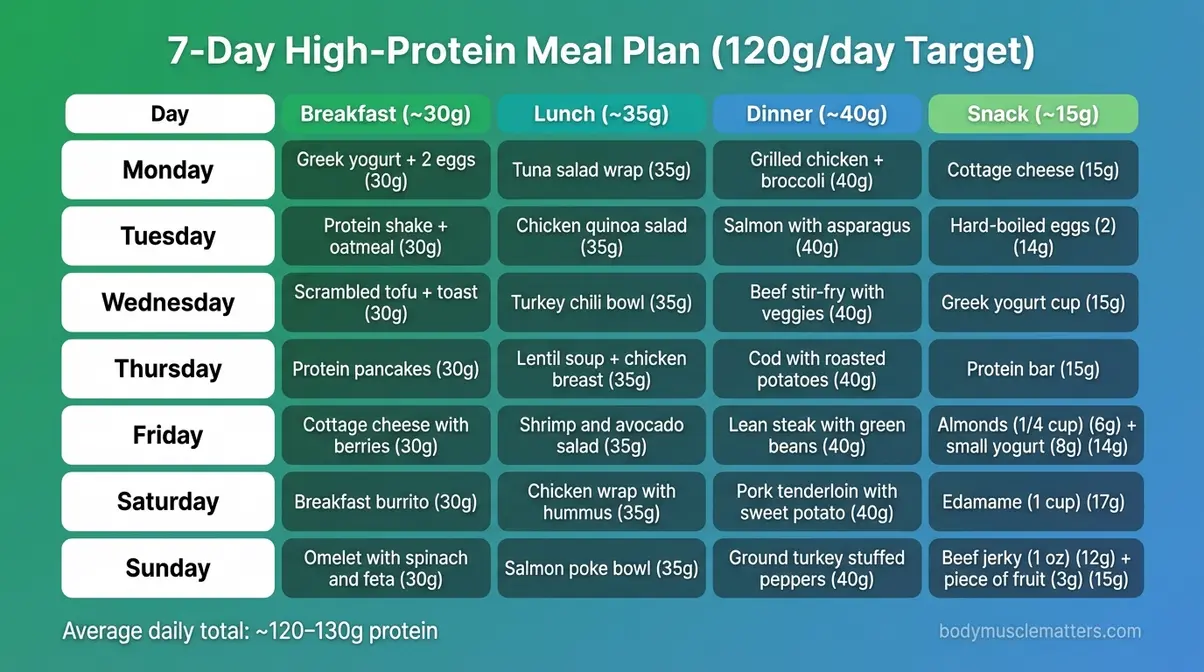
Caption: A repeatable 7-day framework removes daily decision fatigue and makes it far easier to hit your protein target consistently.
Targets for Special Situations
The standard formula works well for most adults. But several situations genuinely change what your body needs — and getting the adjustment wrong can undermine months of effort.
Exercising Without Seeing Results
Many people who exercise regularly still undereat protein relative to their training load. For body recomposition (losing fat while building muscle simultaneously), research supports the upper end of the protein range: 1.8–2.2 g/kg/day. A 2026 meta-analysis of randomized controlled trials confirmed that higher protein intakes combined with resistance exercise support lean body mass gains during energy restriction (PMC8978023). If you’ve been lifting weights consistently but aren’t seeing muscle definition emerge as fat decreases, protein intake is often the missing variable.
If You’re Very Sedentary
Sitting at a desk for 8+ hours without structured exercise lowers your body’s demand for protein somewhat. The 1.2 g/kg target still applies — but hitting it from whole foods alone without a meal structure can be surprisingly challenging. Prioritizing a high-protein breakfast (eggs, Greek yogurt, cottage cheese) is the highest-impact change a sedentary person can make immediately.
Worried About Too Much Protein?
This is one of the most common questions — and one of the most misunderstood areas in nutrition. The Mayo Clinic Health System notes that for healthy adults, protein at the levels discussed in this guide (1.2–2.0 g/kg) does not damage kidneys in people with normal kidney function. However, people with pre-existing kidney disease, gout, or certain metabolic conditions should consult their physician before significantly increasing protein intake. A 2026 Harvard T.H. Chan School of Public Health analysis noted that while many people overconsume protein overall, the concern applies more to processed protein products than to whole-food protein sources (HSPH, 2025).
The practical answer: If you have healthy kidneys and are eating whole-food protein sources, hitting 1.2–1.6 g/kg is safe for the vast majority of adults. Processed protein supplements consumed in excess are a different — and separate — conversation.
If You Don’t Exercise at All
Some research suggests protein targets as low as 1.2 g/kg can still meaningfully support weight loss even without added exercise, primarily through satiety and the thermic effect. The Cleveland Clinic Health recommends at minimum 0.8 g/kg for sedentary individuals, with higher amounts supporting additional weight loss benefits. Adding even 2–3 short walks per week allows you to move up the activity multiplier — and justify a slightly higher target.
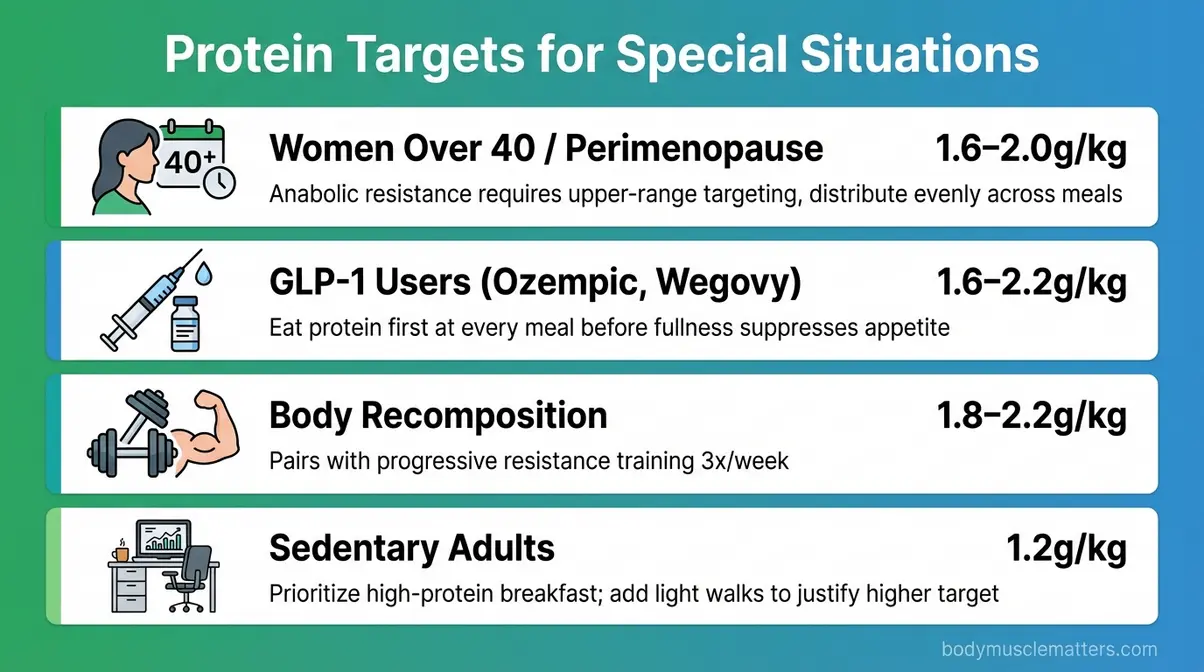
Caption: Your starting formula gets adjusted based on life context — GLP-1 users and women over 40 consistently need targets at the higher end of the range.
Common Pitfalls & When to Seek Help
Common Pitfalls
1. Skipping breakfast protein. A protein-poor breakfast — toast, cereal, fruit — sets up hunger spikes by mid-morning that are difficult to manage all day. Research confirms a protein-rich breakfast increases satiety through the morning and supports concentration (ScienceDaily, 2024). The fix: commit to 25–30g at your first meal regardless of how rushed the morning is.
2. Relying on a single protein source. Eating chicken at every meal becomes unsustainable within days. Variety in protein sources — animal and plant combined — prevents flavor fatigue and broadens your micronutrient intake. Rotate between at least 4–5 sources across the week.
3. Not accounting for cooking loss. Chicken breast loses approximately 25% of its weight during cooking. A 6 oz raw chicken breast becomes roughly 4.5 oz cooked — and the protein calculation should use cooked weight. Many people over-estimate their daily intake for this reason.
4. Treating protein powder as a meal replacement. Protein supplements help fill gaps, but whole foods deliver fiber, micronutrients, and satiety signals that a shake cannot replicate. Use supplements as a top-up tool, not a foundation.
5. Underestimating plant protein requirements. Plant proteins are often incomplete (meaning they don’t contain all essential amino acids in optimal ratios on their own) and typically lower in leucine (leucine is the specific amino acid most responsible for triggering muscle protein synthesis). Plant-forward eaters should target the upper half of their protein range and combine complementary sources — such as rice and beans, or tofu with edamame.
Alternatives to High-Protein Eating
A very high-protein diet (above 2.2 g/kg) isn’t the right approach for everyone. People with chronic kidney disease (CKD) should follow their nephrologist’s protein guidelines, which are often significantly lower. Individuals with gout may need to be cautious with certain high-purine animal protein sources. Those with a history of disordered eating should work with a registered dietitian before adopting any structured macronutrient target, as numerical tracking can be a trigger for some. The UCLA Health guidance on protein needs reinforces that individual medical context always overrides general recommendations.
When to Seek Expert Help
- Consult a Registered Dietitian or your physician before significantly changing your protein intake if you fall into any of these categories:
- Diagnosed kidney disease, gout, or liver disease
- Pregnancy or breastfeeding
- Currently taking GLP-1 medications (semaglutide, tirzepatide) — protein strategy matters significantly in this context
- A history of eating disorders
- Any unexplained changes in weight, energy, or digestion when increasing protein
A credentialed RD can provide a precisely tailored target, monitor bloodwork, and adjust your plan over time in ways a general guide cannot.
Frequently Asked Questions
Protein Per Day for Women to Lose Weight
Most women benefit from 1.2–1.6 grams of protein per kilogram of body weight daily during active weight loss. For a 150-pound (68 kg) woman, that works out to roughly 82–109 grams per day. Women over 40 face anabolic resistance due to hormonal changes around menopause, which means their muscles respond less efficiently to protein — research published in 2026 supports targeting the upper end of 1.6–2.0 g/kg for this group (PMC11368540). Spreading that intake across three meals of 25–35g each is more effective than concentrating protein in one or two large servings.
Protein Needs Without Exercise
Even without regular exercise, research supports 1.2 g/kg of body weight daily to support fat loss through satiety and thermogenesis. Protein’s thermic effect — burning 20–30% of its own calories during digestion — works regardless of whether you exercise (PMC524030). For a 160-pound (73 kg) sedentary adult, that’s approximately 87 grams per day. Whole-food sources like eggs, Greek yogurt, cottage cheese, and canned fish make this achievable without meal prep complexity. Adding even light walking 2–3 times per week allows you to move up to a 1.4 g/kg target and improve results further.
Not Eating Enough Protein on a Diet
Without adequate protein during a calorie deficit, your body breaks down muscle tissue for energy — a process that slows your metabolism and makes future weight loss harder. A 2026 study confirmed that low protein intake during calorie restriction exacerbates muscle atrophy (PMC12517715). Loss of muscle mass also means losing the metabolic engine that burns calories at rest. Muscle loss is the primary reason people who lose weight quickly tend to regain it — protein is the direct countermeasure.
Can eating too much protein be harmful?
For healthy adults with normal kidney function, protein at 1.2–2.0 g/kg does not cause kidney damage — this is one of the most persistent misconceptions in nutrition. The Mayo Clinic Health System confirms that high protein intake is not harmful for people without pre-existing kidney conditions. The concern arises specifically in people with diagnosed chronic kidney disease, where protein metabolism places extra load on compromised kidneys. If you have any kidney condition, consult your physician for a personalized target before following the ranges in this guide.
Do GLP-1 medications change my protein needs?
Yes — significantly. Research from 2026 found that GLP-1 medication users, especially older adults and women, face elevated muscle loss risk during rapid weight reduction. Nutritional guidance for GLP-1 therapy recommends 1.6–2.2 g/kg daily to protect lean mass (PMC12125019). Because these medications suppress appetite significantly, eating protein first at every meal — before fullness shuts down appetite — is the most practical strategy. Always discuss your specific protein target with the prescribing physician or a Registered Dietitian.
Easiest High-Protein Breakfast
1 cup of non-fat Greek yogurt with 2 boiled eggs delivers approximately 32 grams of protein in under 5 minutes of prep. Cottage cheese with berries is a strong alternative at 28g per cup. Both options are low in total calories relative to protein content, require no cooking skill, and can be prepared the night before. A 2026 study confirmed that protein-rich breakfasts increase satiety and support cognitive focus through the morning compared to lower-protein options. If you’re using GLP-1 medication and aren’t hungry in the morning, a small protein-forward snack (cottage cheese or a hard-boiled egg) still triggers the muscle preservation benefit better than skipping entirely.
Your Complete Protein Action Plan
Optimal protein intake for weight loss is 1.6–2.2g per kg of body weight daily — nearly double the standard RDA — and the exact target depends heavily on your sex, age, activity level, and health status. Research confirms this elevated approach promotes significant fat loss while preserving metabolically active lean muscle. The Demographic Protein Gap is a real, biological hurdle: generic nutrition advice fails most people simply because it ignores who they are and what their specific physiological demands require.
The Demographic Protein Gap is the starting point, but execution is what drives sustainable fat loss. Once you have mathematically calculated your personalized target, you close that gap with real, whole foods. Distribute your protein into deliberate 25-35g blocks across 3 to 4 meals daily, prioritize lean animal or complementary plant proteins, and rely on whey or pea isolates strictly when whole food options fall short. The interplay between these choices dictates whether your body burns muscle or fat.
How these core areas work together is vital: the biological science explains why the process works; the personalized calculator gives you your exact numerical target; the body recomposition protocols ensure you preserve hard-earned muscle; the 30g blueprints show you what to put on your plate; and the supplement guidelines help you optimize convenience without ruining your deficit. Together, these elements form an unbreakable dietary scaffolding.
- Start here:
- Calculate your target using the activity formula today.
- Build exactly one 30g-protein anchor meal into your breakfast routine this week.
- Stock your kitchen with three under-200-calorie high-protein snacks to bridge hunger gaps.
Don’t wait until you have the perfect meal prep strategy mapped out. Take this guide, lock in your personal gram target, and start prioritizing protein on your very next plate. If you have a diagnosed medical condition or are struggling with GLP-1 side effects, consult a Registered Dietitian to refine your metrics.