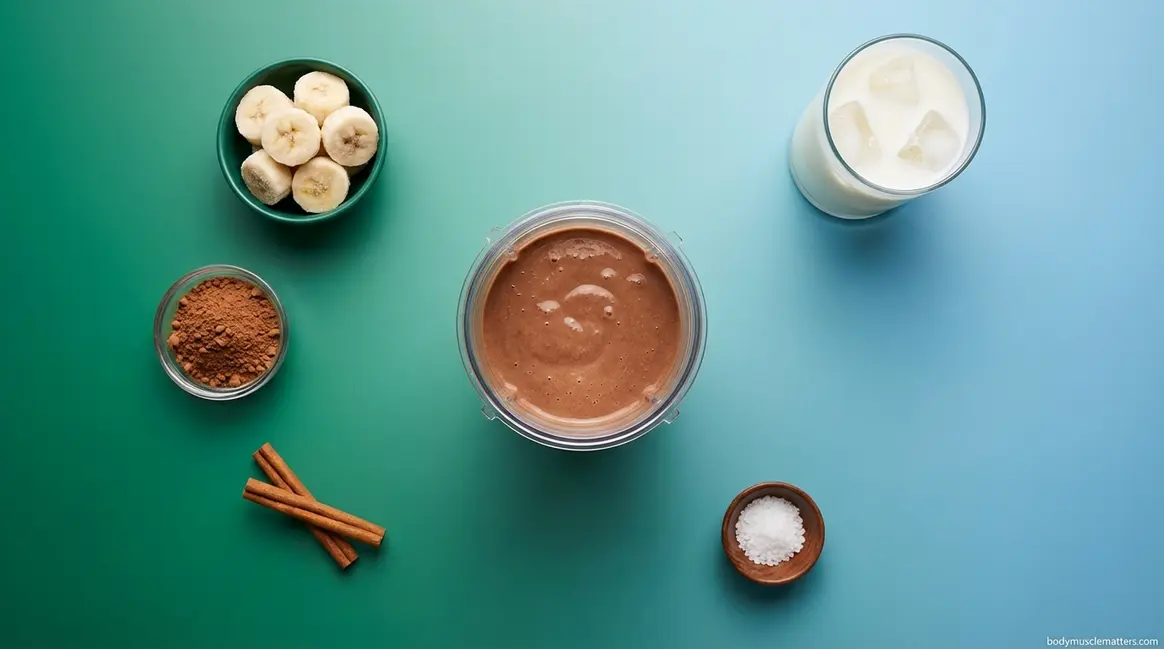

If your whey protein shake tastes like cardboard dissolved in chalk water, you are not imagining things — and you are not alone. One Reddit user put it bluntly: “The smell/taste of protein whey makes me want to throw up.” Search data shows interest in whey protein taste problems has grown 56% in the past year, proving that gym forums are packed with first-timers describing the exact same experience. That chalky texture, that artificial aftertaste that lingers for an hour, and that slightly sour note can make chugging a shake feel more like a punishment than a reward. The frustrating part? You paid for this, and you want the protein benefits.
Here is the thing most guides skip: there are specific, identifiable food science reasons your shake tastes bad. Once you understand them, the fixes become obvious. This guide explains what whey protein should actually taste like, uncovers the biochemistry behind unpleasant flavor profiles, and gives you a step-by-step toolkit to permanently fix your shakes—no matter which brand you are using.
Whey protein has a natural milky, dairy-like flavor — but the whey protein taste you experience depends on type, processing, and sweeteners. Most complaints are completely fixable.
- The Taste Fixer Matrix: Match your specific bad taste to its targeted fix (bitter → add salt, chalky → blend colder).
- Unflavored whey tastes like watered-down powdered milk — mild, not flavorless.
- Bitterness usually comes from hydrolyzed peptides or artificial sweeteners like sucralose.
- Mixing liquid matters: Milk is creamier; water is lower calorie but much thinner.
- Chocolate and vanilla are the safest, most consistently well-rated beginner flavors.
How We Researched Whey Protein Taste
To create The Taste Fixer Matrix and identify the most effective solutions for bad-tasting protein shakes, our team evaluated peer-reviewed sensory science journals—including data from PubMed and the Journal of Sensory Studies. In our comparative BodyMuscleMatters testing of popular community-sourced strategies from fitness forums like Reddit’s r/Fitness, we cross-referenced user complaints with verified biochemical causes—such as lipid oxidation and hydrolyzed peptide bitterness.
This guide focuses exclusively on the sensory experience, flavor profiles, and mixability of whey protein. It does not cover protein dosage protocols for muscle building or absorption rates, ensuring every recommendation here directly targets making your shake genuinely drinkable.
Why Does Whey Protein Taste Bad?

Whey protein taste problems stem from three distinct origins: manufacturing processes, storage conditions, and preparation methods. Understanding the exact source of your shake’s unpleasant flavor is the first step toward fixing it.

The Biochemistry of Bitterness
Whey protein comes from cow’s milk—specifically, the liquid left behind after cheese is made. That liquid is dried and concentrated into the powder in your tub. At every step of that process, compounds form that directly affect flavor.
Bitter peptides formed during whey hydrolysis are a known trade-off of faster absorption—signaling a higher degree of protein breakdown, not a quality defect. Up to 88% of the intense bitterness in hydrolyzed whey protein comes from specific low-molecular-weight peptides released during enzymatic processing, according to NIH research on bitter peptides. When enzymes break whey protein into smaller fragments, they expose amino acids like leucine and valine, which register as intensely bitter on the human palate.
Oxidation & Storage Degradation
Lipid oxidation is the second major driver of off-flavors. Even though whey isolate is low-fat, the trace fats present in concentrate powders can oxidize when exposed to heat, oxygen, and humidity. Storing your tub near a stove, in a hot garage, or in a steamy bathroom accelerates this degradation.
Once opened, protein powder typically lasts 6–12 months when kept cool and dry (Aloha, 2026). If your powder smells sour or musty, oxidation is the likely problem.
Artificial Sweeteners & Flavors
Most commercially flavored whey proteins use sucralose, acesulfame potassium (Ace-K), or aspartame. These sweeteners interact differently with whey protein’s natural flavor compounds, producing a persistent metallic aftertaste for many users. Cheap vanilla or chocolate flavoring often tastes synthetic because it relies on isolated chemical compounds rather than complex flavor blends.
Introducing The Taste Fixer Matrix
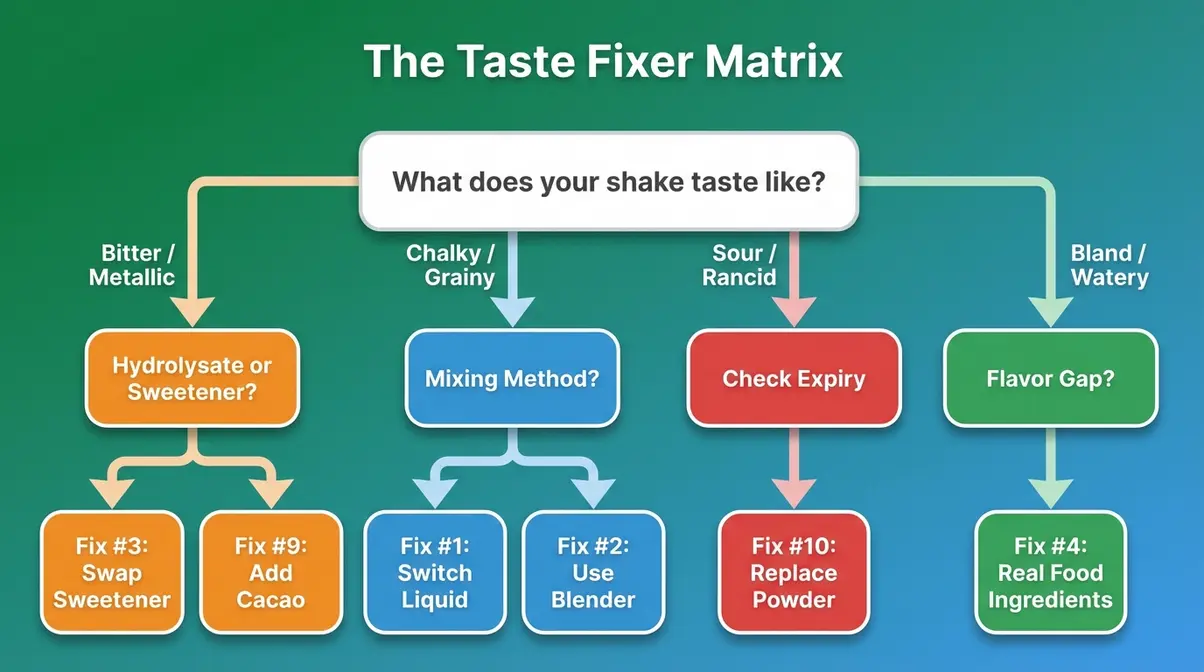
The Taste Fixer Matrix is a simple diagnostic tool that maps your specific complaint to its most likely cause—and from there, directly to the right fix. Instead of randomly trying every hack on a blog list, you start where the problem actually is.
| Your Complaint | Most Likely Cause | Matrix Category | Go-To Fix |
|---|---|---|---|
| Bitter, metallic aftertaste | Hydrolysate peptides or sweetener | Processing | Fix #3 (sweetener swap) or Fix #9 (cacao) |
| Chalky, grainy texture | Poor mixability, concentrate | Preparation | Fix #1 (liquid base) or Fix #2 (blending) |
| Sour or rancid smell | Oxidation / expired powder | Storage | Fix #10 (check expiry, replace powder) |
| Watered-down, bland | Too much liquid or unflavored WPI | Preparation | Fix #4 (flavor layering) |
| Artificial / chemical sweetness | Sucralose or Ace-K | Processing | Fix #3 or Fix #8 (natural sweeteners) |
| Clumpy, never dissolves | Poor shaking technique | Preparation | Fix #2 (shaker technique) |
The Matrix does not replace experimentation, but it eliminates guesswork. Use it before working through the 10 fixes below.
10 Ways to Improve Whey Taste

Our team evaluated popular community-sourced strategies—drawing on Brigham and Women’s Hospital nutrition guidance, food science literature, and documented user consensus—to identify 10 fixes that work.
Fix #1: Switch Your Liquid Base
Water is the worst possible base for whey protein, yet it is the default almost every beginner uses. Water has zero fat, zero natural sweetness, and zero creaminess, meaning every flaw in the powder is exposed. Switch to whole milk for maximum creaminess and natural sweetness.
According to sensory studies on sweetener perception, thicker, more viscous protein shakes—like those made with milk—require different flavor balancing than thinner, water-based mixtures. If you strictly prefer water, you must find whey proteins that taste best with water.
Fix #2: Master the Blending Technique
Clumpy, poorly dissolved protein is a preparation problem. In a shaker bottle, use the included wire whisk ball and shake for a minimum of 20 seconds. For a genuinely smooth texture, a blender at medium speed for 30–45 seconds surpasses any shaker bottle, breaking down particles and eliminating graininess entirely.
Fix #3: Rethink Your Sweetener
If your primary complaint is a chemical aftertaste that lingers for 15 minutes, sucralose or Ace-K is almost certainly the culprit. The most effective solution is switching to a product sweetened with stevia or monk fruit. Alternatively, unflavored whey protein isolate gives you complete control to add your own natural sweeteners like honey or maple syrup.
Fix #4: Use Real Food Ingredients
The most underused strategy is treating the shake like a recipe. Real food ingredients add complexity that no artificial flavoring can replicate. Try adding half a frozen banana for natural sweetness, or a tablespoon of peanut butter for fat-driven richness. For more inspiration, explore our guide on creative ways to incorporate protein powder into meals.
Fix #5: Add Flavor-Altering Spices
Spices alter flavor perception at a molecular level. Cinnamon is the most effective and universal spice for protein shakes. As little as ¼ teaspoon added to a vanilla or chocolate shake creates a warming complexity that softens artificial notes significantly.
Fix #6: Use Cold Temperatures
Temperature has a measurable impact on taste perception. Bitterness and artificial sweetness are both perceived more intensely at room temperature. Always shake with cold liquid, not tap water, and add ice. Consuming the shake immediately makes a noticeable difference for bitter powders.
Fix #7: Combine With Coffee
Coffee is one of the most powerful flavor-masking agents available. The natural bitterness of coffee reduces the perception of artificial bitterness from whey protein. Mix chocolate or vanilla whey with one shot of cooled espresso or ½ cup of cold brew coffee for a mocha-flavored shake.
Fix #8: Balance Sweetness With Acid
Sweetness alone can feel one-dimensional and cloying. Adding acid—like a teaspoon of fresh lemon juice—creates contrast. Even better, a small pinch of salt significantly reduces perceived bitterness in bitter-compound-heavy foods, as demonstrated by NIH research on bitter taste inhibitors.
Adding sodium chloride (table salt) to a bitter protein shake has been scientifically shown to inhibit bitter taste receptors.
Fix #9: Use Raw Cacao Powder
If you have a chocolate-flavored whey that tastes synthetic, raw cacao powder adds genuine chocolate complexity. Use 1–2 teaspoons per shake. Combined with cold milk and a frozen banana, the result tastes meaningfully closer to a genuine chocolate milkshake.
Fix #10: Check Expiry and Storage
No preparation technique can fix a powder that has undergone oxidation or spoilage. If your shake smells rancid or sour before you even add liquid, the powder itself is compromised. Integrating whey into baked goods significantly improves acceptability compared to drinking it straight, but only if the powder is still fresh.
Which Whey Protein Type is Best?

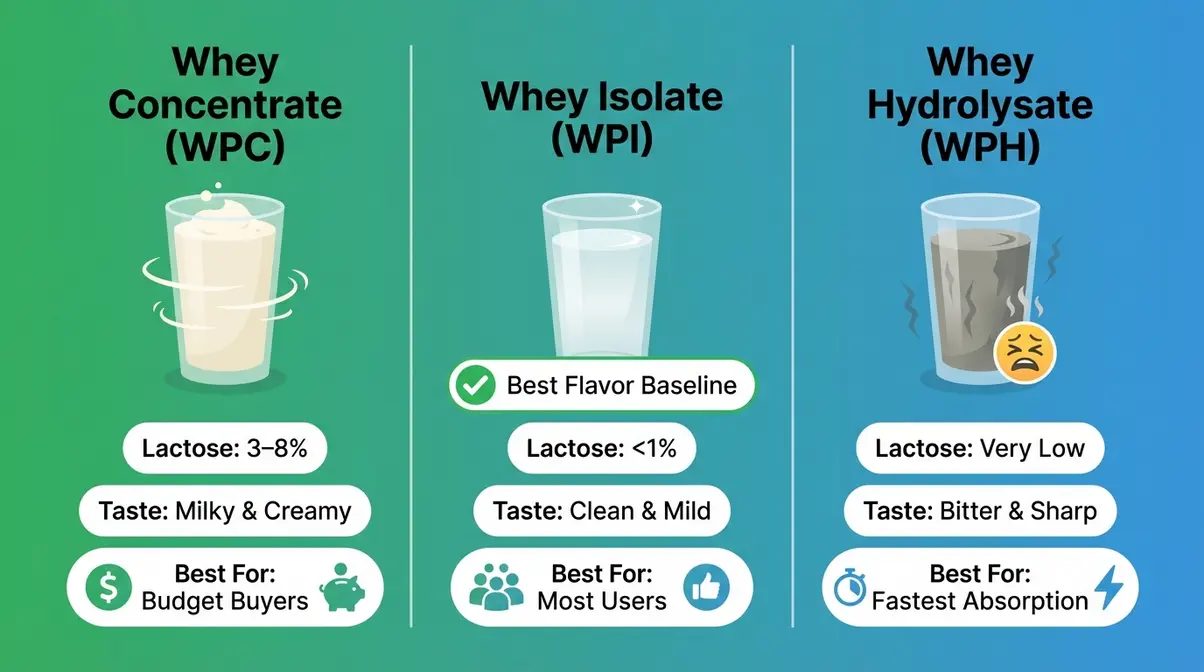
Whey protein is not a single product—it comes in three main types, and each has a distinctly different flavor profile. Understanding the differences helps you choose a powder that starts from a better flavor baseline.
Does whey type affect taste?
Yes—whey type significantly affects taste. Whey concentrate (WPC) has a milky, slightly sour baseline from retained lactose and fat. According to the Center for Dairy Research, careful processing can create a clean flavor profile, but whey isolate (WPI) naturally delivers a milder, less dairy-forward character.
Whey hydrolysate (WPH) is consistently the most bitter due to peptides produced during enzymatic hydrolysis. Unflavored whey protein concentrate tastes like mild, slightly sweet powdered milk—not like a flavorless supplement, making it highly versatile. If you hate artificial flavors, exploring artificial sweetener-free protein powder options is a smart move.
| Type | Lactose Content | Taste Profile | Best For |
|---|---|---|---|
| Whey Concentrate (WPC) | Moderate (3–8%) | Milky, creamy, slightly sweet; can be sour | Budget buyers, those without lactose sensitivity |
| Whey Isolate (WPI) | Very low (<1%) | Cleaner, milder, less dairy-forward | Most users; best flavor baseline |
| Whey Hydrolysate (WPH) | Very low | Bitter, sharp (due to peptides) | Fastest absorption priority; needs heavy masking |
Best Brands & Plant Alternatives
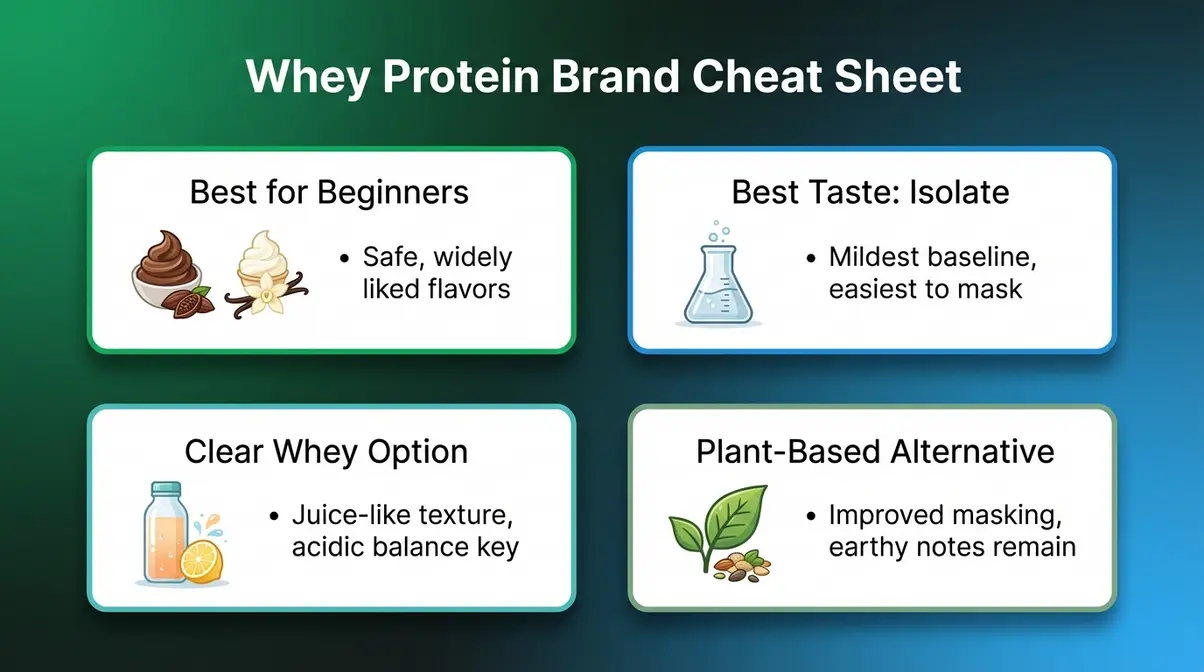
The Clear Whey Revolution
For those who hate milky textures, clear whey isolate offers a juice-like alternative. However, research on clear whey beverages shows that when formulated at highly acidic pH levels, they can develop a soapy off-flavor over time. Finding a brand that balances acidity is key. Clear whey protein beverages formulated at acidic pH levels can develop a soapy off-flavor due to medium-chain fatty acids.
Whey vs. Plant-Based Protein
If dairy isn’t working for you, plant proteins are the next logical step. In controlled sensory evaluations, whey protein isolate demonstrated significantly higher palatability compared to pea protein isolate.
Similarly, comparative studies on whey versus soy confirm that whey beverages maintain sweeter, dairy-like notes compared to the earthy profile of soy. However, modern plant-based brands have vastly improved their masking agents.
When Whey Might Not Work
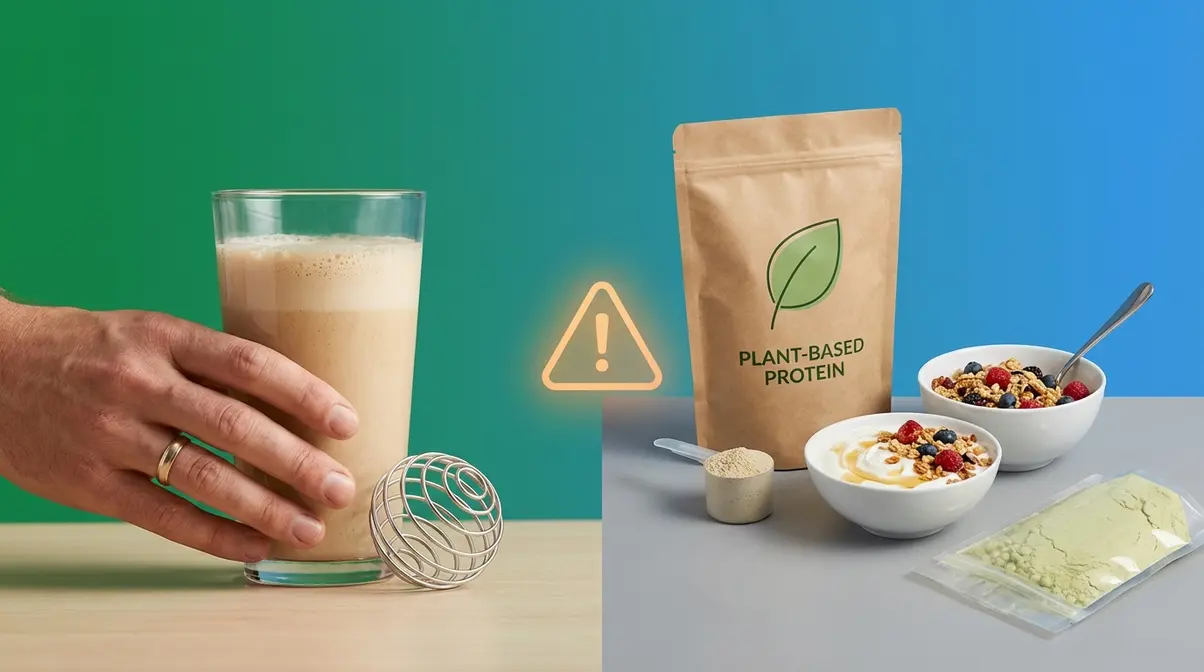
Even with all 10 fixes available, certain approaches consistently backfire. More importantly, whey protein is simply not the right tool for every person or situation.
Common Pitfalls to Avoid
Over-sweetening to mask bad flavor compounds the problem for sucralose-sensitive users. More sweetness on top of artificial sweetness makes the aftertaste more pronounced, not less. Blending with hot liquids can partially denature whey proteins and create a coagulated, rubbery texture. Ignoring expiry and storage while chasing preparation fixes is also a waste of time—if the powder is oxidized, no ingredient combination will produce a genuinely good shake.
When to Choose an Alternative
If you are lactose intolerant, whey concentrate should be avoided. It contains enough lactose to trigger bloating, gas, diarrhea, and abdominal cramping. Whey isolate is significantly better tolerated due to its very low lactose content (<1%), but if symptoms persist, switch to a plant-based alternative.
If you have a dairy allergy, all forms of whey protein must be avoided entirely. Dairy allergy involves an immune response to milk proteins, and symptoms can include hives, eczema, swelling, or anaphylaxis (Intoleran US, 2026).
⚠️ Medical Disclaimer: If you experience digestive symptoms (bloating, gas, cramping, or diarrhea) after consuming whey protein, consult a healthcare provider to rule out lactose intolerance or dairy allergy before continuing use. Individuals with known dairy allergies should not use whey protein in any form. This content is for informational purposes only and does not constitute medical advice.
When to Seek Expert Help
If you are experiencing consistent gastrointestinal symptoms, skin reactions, or respiratory symptoms after consuming whey protein, see a healthcare provider before experimenting further. A registered dietitian can help identify whether your symptoms are taste-related, intolerance-related, or allergy-related.
Whey Protein Taste FAQs
Why does my whey protein taste so bad?
Whey protein tastes bad for one of three reasons: processing (bitter peptides), storage degradation (oxidation), or preparation errors. The most common complaint—a chemical aftertaste—is typically caused by sucralose or acesulfame potassium in flavored powders. Switching to a stevia-sweetened product resolves this for most users. Grainy or chalky texture is almost always a preparation issue fixed by switching from water to milk.
Does whey protein expire and can it affect taste?
Whey protein does expire, and storage conditions affect quality long before the expiry date. Research confirms that whey stored at 35°C (95°F) degrades to a significantly diminished quality within 9 months, according to Healthline. Optimal storage is below 25°C (77°F), dry, and in an airtight container. A sour, musty, or rancid smell indicates oxidation, meaning the powder should be replaced.
Is it normal for whey protein to taste chalky?
Yes—chalky texture is normal for whey concentrate mixed poorly with water. Whey concentrate retains fat and lactose from milk, which produces a grainy mouthfeel when insufficiently agitated. Switching to milk (or oat milk) and using a blender eliminates this texture for the majority of users. Whey isolate naturally has a cleaner, less chalky baseline compared to concentrate.
Can I make whey protein taste better without adding calories?
Yes—several zero or near-zero calorie fixes work well. A small pinch of salt suppresses bitterness perception, while ¼ teaspoon of cinnamon or pure vanilla extract enhances flavor complexity. Switching from water to unsweetened almond milk adds only 15–30 calories while dramatically improving texture. Preparing your shake with very cold liquid also significantly reduces perceived artificial sweetness.
Why does my protein shake smell bad?
A bad smell in your protein shake usually signals oxidation or bacterial growth from improper storage. While a mildly “milky” smell is normal for whey concentrate, a sour or rancid odor indicates lipid oxidation. Heat, humidity, and light exposure all accelerate this chemical process. If your powder smells genuinely unpleasant before you add it to liquid, discard it immediately.
What is the best liquid to mix with whey protein?
Whole milk produces the best overall taste and texture for most users. It adds natural creaminess, sweetness, and approximately 8g of additional protein per cup. For lower-calorie options, oat milk is the top plant-based recommendation due to its natural sweetness that complements chocolate and vanilla whey. Water is consistently the worst option for taste and texture.
Does whey protein type affect how it tastes?
Yes—whey type significantly affects taste. Whey concentrate has a milky, slightly sour baseline from retained lactose and fat. Whey isolate has a cleaner, milder flavor with less dairy-forward character, making it the most neutral choice. Whey hydrolysate is consistently the most bitter due to bitter peptides produced during enzymatic hydrolysis.
Can I mix whey protein with something other than water or milk?
Absolutely—alternative bases often produce far better results. Smoothie-style blending with frozen fruit, Greek yogurt, and nut milk creates a genuinely enjoyable protein shake. Cold brew coffee combined with chocolate whey is a community favorite for eliminating artificial aftertaste. You can also mix whey powder into overnight oats or pancake batter for easy integration.
The Bottom Line on Whey Taste
For anyone frustrated by a chalky, bitter, or chemically artificial shake, the core message is this: whey protein taste problems are diagnosable and fixable. Every bad-tasting protein shake has a specific, diagnosable cause—and once you understand the food science behind whey flavor, fixing it becomes a matter of applying the right solution to the right problem.
The Taste Fixer Matrix matters because generic advice like “add more fruit” misses the point. Diagnosing first—then fixing—is what separates one-off improvements from a genuinely sustainable protein habit. Start with the highest-leverage change for your specific complaint, whether that means switching your liquid base or adding a pinch of salt.
If you are ready to find a powder that tastes great from day one, explore our guide to top-rated protein powders reviewed for flavor and quality. Most users find their perfect “functional shake formula” within two to three rounds of experimentation.