How to Use Protein Powder for Muscle Building: 5 Steps
Home ›Supplements and Nutrition
⚠️ Medical Disclaimer
This article is for informational and educational purposes only. It is not a substitute for professional medical advice, diagnosis, or treatment. Always consult a qualified healthcare provider — especially a Registered Dietitian or physician — before starting any new supplement regimen, particularly if you have undergone bariatric surgery, are taking GLP-1 medications, or have any pre-existing health conditions.
Most beginners using protein powder are unknowingly leaving muscle gains on the table — not because they’re using too little, but because they don’t know when, how much, or which type to use. Learning how to use protein powder for muscle building correctly is less about finding the perfect brand and more about following a simple, evidence-backed system.
Without a clear protocol, you risk wasting money on the wrong products, missing the optimal times to take them, and — in some cases — experiencing avoidable side effects. The confusion is understandable: there is more conflicting advice online about protein powder than almost any other supplement.
By the end of this guide, you will have a complete, step-by-step system for dosing, timing, and preparing protein powder so you can start building muscle with confidence. We will walk you through five clear steps — from calculating your daily target to adapting the protocol for special health conditions — using only the strongest clinical evidence available, organised into The Protein Pyramid Protocol: a five-step layered framework built from the ground up.
Using protein powder for muscle building correctly means following a five-step protocol — not just picking a flavour and shaking it with water. Research recommends 1.6–2.2g of protein per kg of body weight daily for muscle growth (ISSN, 2026).
- The Protein Pyramid Protocol builds muscle gains layer by layer: calculate → choose → time → prepare → adapt
- Timing matters but isn’t everything: consuming protein within 1–2 hours post-workout supports muscle protein synthesis (MPS), but total daily intake is the bigger driver
- Type matters: whey isolate absorbs fastest, casein works best pre-sleep, and plant-based blends rival animal protein for hypertrophy
- Medical contexts need extra care: GLP-1 users and bariatric patients require adjusted protein targets and specialised guidance from a healthcare professional
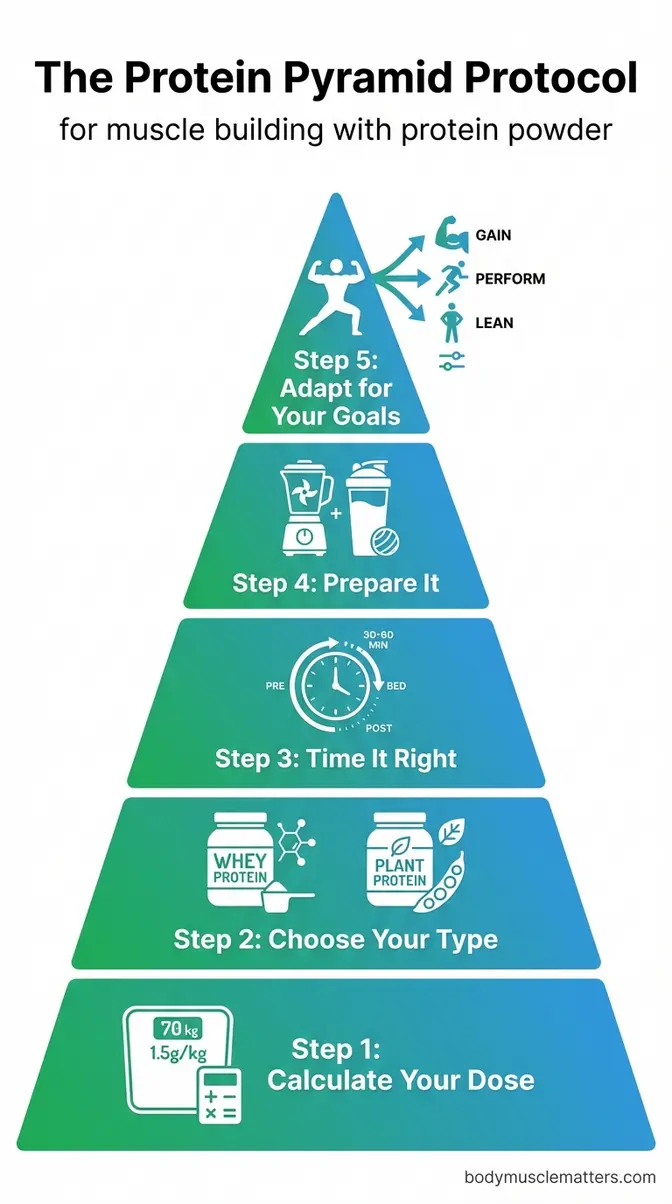
Caption: The Protein Pyramid Protocol — five layers of protein powder mastery, from calculating your dose to adapting for your specific health goals.
Before You Begin: Safety & Needs
Before you open that first tub of protein powder, there are three things worth knowing — and skipping them is the most common beginner mistake. Think of this as the foundation before The Protein Pyramid Protocol begins. In compiling this 2026 guide, our team evaluated current clinical studies from PubMed and synthesized protocols from registered dietitians to ensure your safety.
Protein powder is a supplement — not a replacement for a balanced diet — and its benefits only materialise when paired with consistent resistance training.
Who This Guide Is For
This guide applies to healthy adults doing regular strength training — whether that means bodyweight exercises, resistance machines, free weights, or resistance bands. You do not need to be an experienced lifter to benefit from it.
“Extra protein can definitely support muscle gains, but a shake alone won’t do it.”
This guide is built around that principle. However, certain groups must consult a physician before starting any protein supplementation:
- People who have undergone bariatric surgery (see Step 5 for a tailored protocol)
- Those taking GLP-1 medications such as semaglutide or tirzepatide (see Step 5)
- Individuals with kidney disease or impaired renal function
- People who are pregnant or breastfeeding
These groups are not excluded from protein powder — they simply need personalised dosing guidance that goes beyond a general beginner protocol. Once you know this guide is right for you, here is exactly what you will need before starting the five steps.
What You’ll Need to Get Started
Getting ready takes less than five minutes. Gather the following before you begin:
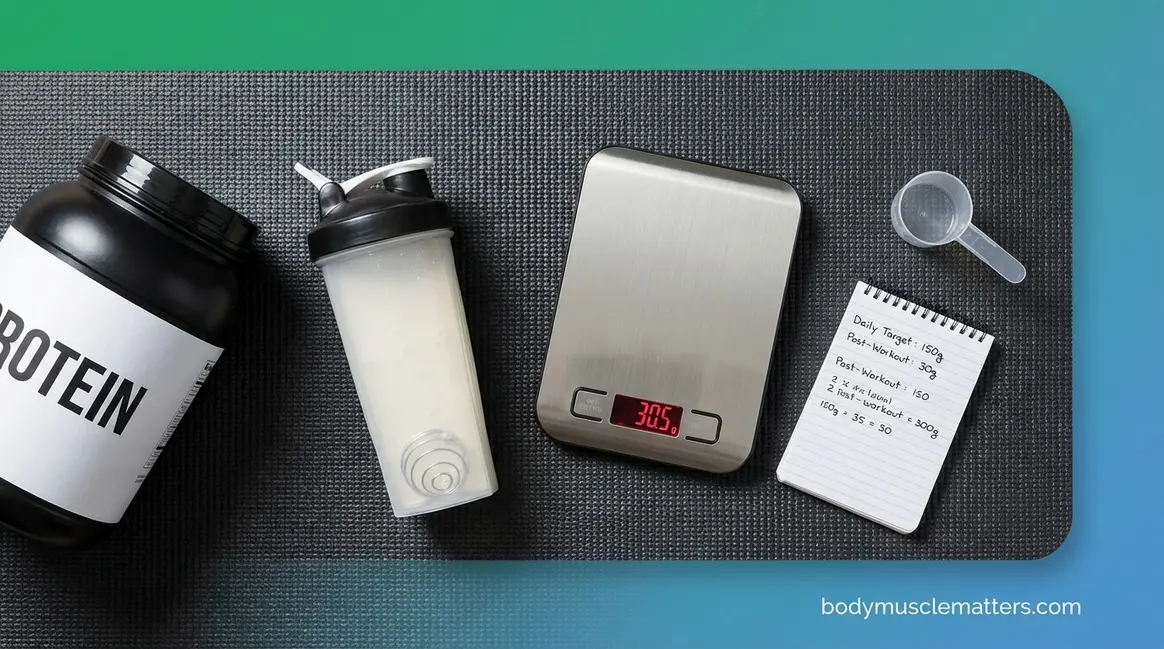
- ✓ A kitchen scale (to measure scoops accurately — most protein scoops equal approximately 25–30g of powder, but this varies significantly by brand)
- ✓ Your current body weight in kilograms (Step 1 will show you exactly why this matters)
- ✓ A protein powder — if you have not chosen one yet, Step 2 covers selection in full
- ✓ A mixing liquid — water, milk, or kefir (Step 3 covers ratios and options)
- ✓ A shaker bottle or blender
Quality also matters before the protocol begins — here is what to look for on the label.
Evaluating Powder Quality
Not all protein powders are created equal, and this is where protein powder safety becomes a genuine concern. Look for third-party certifications on the label: NSF Certified for Sport (an independent quality certification programme for supplements), Informed Sport, or USP Verified. These programmes test products for heavy metals, BPA contamination, and banned substances.
Watch for these red flags: “proprietary blends” (ingredient amounts not disclosed), more than 10g of added sugar per serving, and artificial fillers listed as primary ingredients. A specific issue worth knowing about is protein spiking — some manufacturers add cheap amino acids such as glycine or taurine to inflate the protein count on the label. A legitimate 25g-protein serving from whey isolate should list “whey protein isolate” as the first ingredient, with no more than 5–8g of carbohydrates and 2–3g of fat per serving.
With your supplies ready and a quality product chosen, you are ready to start Step 1: calculating exactly how much protein your body needs.
Step 1: Calculate Your Daily Protein Target

Step 1 of The Protein Pyramid Protocol answers the single most important question for beginners asking how much protein powder per day to gain muscle: exactly how much protein does your body need? According to the International Society of Sports Nutrition (ISSN), the leading global authority on sports nutrition science, most people aiming to build muscle should consume between 1.6 and 2.2 grams of protein per kilogram of body weight every day (ISSN, 2026). Without knowing your daily target, every other decision — which type to choose, when to take it — is guesswork.
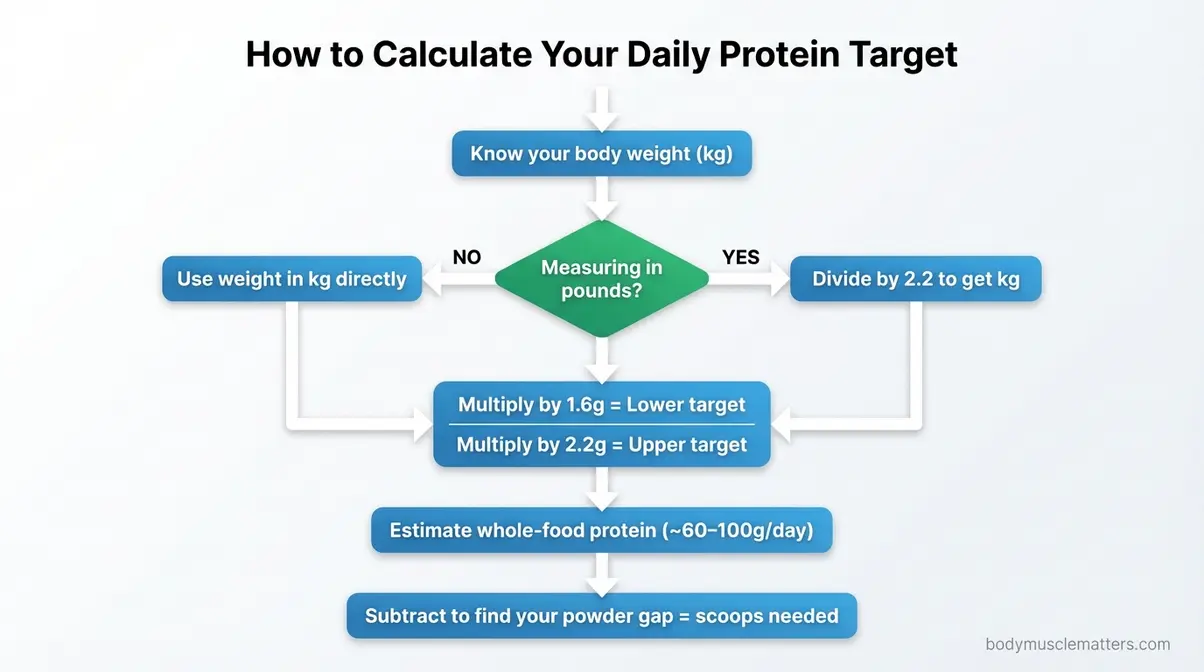
Caption: Follow this flowchart to calculate your personal daily protein target — the essential first layer of the Protein Pyramid Protocol.
The 1.6-2.2g Protein Rule
For every kilogram you weigh, you should aim to eat between 1.6 and 2.2 grams of protein every day from all food sources combined — not just from powder. This is what the research means by “grams per kilogram body weight,” and understanding it is central to knowing how to use protein powder for muscle building without overdoing it.
Why a range rather than one fixed number? Beginners building muscle typically do well starting at 1.6g/kg. More advanced lifters or those training intensively can benefit from the upper end of the range. Higher intakes of up to 3.0g/kg may have positive effects in resistance-trained individuals, though gains above 2.2g/kg are generally modest for most beginners — the ISSN position stand on protein intake describes this ceiling clearly.
A 2026 meta-analysis found that increasing daily protein ingestion yields small but significant additional gains in lean body mass in healthy adults enrolled in resistance training — meaning the more consistently you hit your daily target, the more muscle you preserve and grow (PMC, 2026). The meta-analysis on protein ingestion and lean body mass confirms this: consistency with your daily target matters more than any single shake.
Worked Example: A 70kg beginner needs approximately 112g (at 1.6g/kg) to 154g (at 2.2g/kg) of total protein daily. Most whole-food diets provide 60–80g, meaning protein powder typically needs to supplement 30–60g of that gap — roughly 1–2 scoops per day.
Now that you know your target range, here is how to calculate your exact personal number in three steps.
How to Calculate Your Target
To calculate your protein intake to build muscle, follow these three steps — no nutrition degree required.
- Convert your body weight to kilograms (if you measure in pounds): body weight in pounds ÷ 2.2 = kilograms. Example: 160 lbs ÷ 2.2 = 72.7 kg.
- Calculate your daily protein range: multiply your weight in kg by 1.6 (lower target) and 2.2 (upper target). Example: 72.7 × 1.6 = 116g, 72.7 × 2.2 = 160g. This is your daily protein range from all sources.
- Subtract your estimated dietary protein from whole foods: the average diet with meat and eggs provides approximately 80–100g of protein daily; a more plant-focused diet may deliver around 60g. The shortfall is what protein powder needs to cover.
Two worked examples:
- 60kg person — daily target: 96–132g; estimated dietary protein: ~70g; protein powder needed: 1–2 scoops per day
- 80kg person — daily target: 128–176g; estimated dietary protein: ~90g; protein powder needed: 1–2 scoops per day
One standard scoop of whey protein typically provides 20–30g of protein — check your brand’s label, as scoop sizes vary considerably. For a complete breakdown of how protein fits into your full macro plan, see our guide on calculating your daily macros for muscle gain.
With your daily target in hand, let us convert that number into scoops.
How Many Scoops Do You Actually Need?
How much protein powder per day to gain muscle comes down to simple arithmetic. Most standard protein scoops provide 20–30g of protein, so check your label — scoop size varies significantly between brands.
If your supplement gap (the shortfall after whole foods) is around 40g, that is typically 1.5–2 scoops per day, split across two servings of 20–25g each. Research identifies a practical per-meal ceiling for muscle protein synthesis (MPS) — the biological process your muscles use to repair and grow after exercise — of approximately 0.4g/kg per meal. Anything substantially beyond this is used for energy rather than converted to muscle at a proportionally higher rate (PMC, 2026).
| Daily Supplement Gap | Scoops Needed | Recommended Split |
|---|---|---|
| ~20g | 1 scoop | 1 serving post-workout |
| ~40g | 1–2 scoops | 2 servings, spread through day |
| ~60g | 2–3 scoops | 3 servings, including pre-sleep casein |
The amount is clear — but does the number change if you are trying to bulk up, slim down, or do both at once?
Adjusting for Bulking or Cutting
Your training goal shifts which part of the 1.6–2.2g/kg range to prioritise, and also affects how you use protein for muscle building and fat loss simultaneously.
| Goal | Daily Protein Target | Caloric Context | Key Priority |
|---|---|---|---|
| Bulking (muscle gain) | 2.0–2.2g/kg | Caloric surplus | Maximise muscle protein synthesis |
| Cutting (fat loss while preserving muscle) | 2.0–2.4g/kg | Caloric deficit | Prevent muscle breakdown (catabolism) |
| Body recomposition (build + lose simultaneously) | 1.8–2.2g/kg | Maintenance or slight deficit | Consistency and resistance training volume |
You now know exactly how much protein to take each day. But with dozens of protein types on the market, which one should you choose? That is Step 2.
Step 2: Choose Your Protein Type
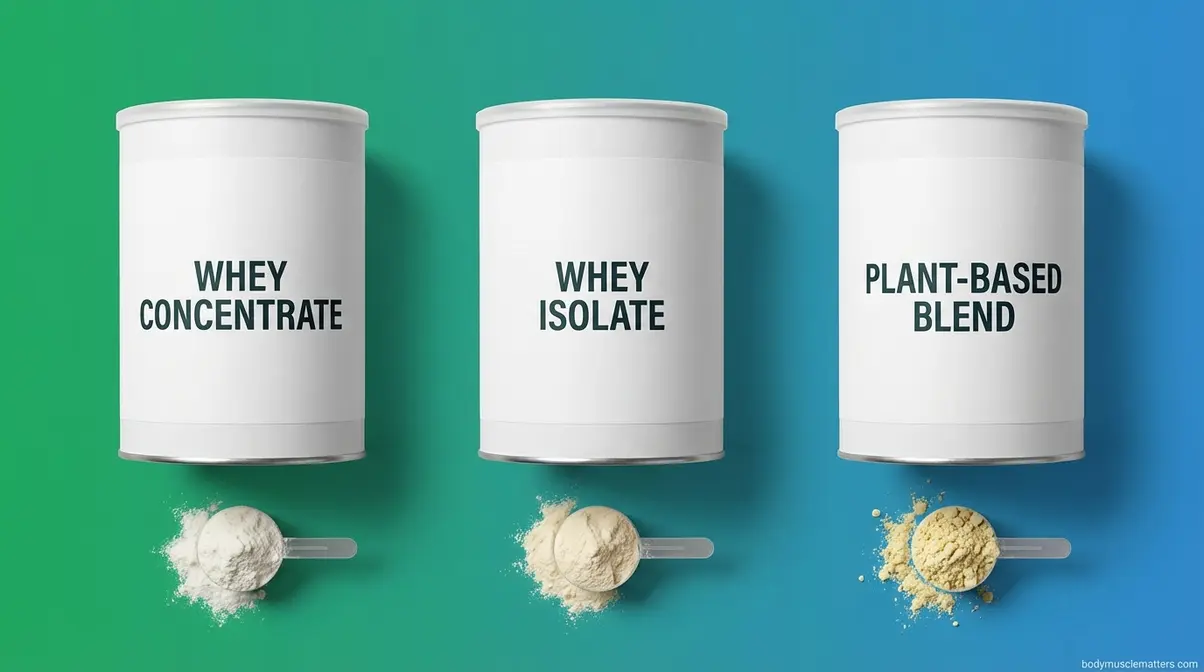
Step 2 of The Protein Pyramid Protocol is about choosing the right type of protein. With dozens of options on the market, the most important thing to know is this: the type of protein determines how quickly your body absorbs it, not whether it works. Once your daily target is set — the base of the pyramid — choosing the right type is the second layer. For most beginners, three options cover nearly every scenario.
Whey Concentrate vs. Isolate
Think of whey as a fast-acting fuel — it hits your bloodstream quickly after a workout. Here is how the three whey subtypes compare:
| Type | Protein % | Lactose | Best For | Approx. Cost per kg |
|---|---|---|---|---|
| Whey Concentrate (WPC) | 70–80% | Present | Beginners, no dairy sensitivity | $25–40 |
| Whey Isolate (WPI) | 90%+ | Minimal | Mild lactose sensitivity, fast absorption | $40–60 |
| Hydrolysate (WPH) | 90%+ | None | Post-surgery recovery, competition athletes | $60–90+ |
For most beginners, whey concentrate is the best starting point. It delivers 90%+ of the muscle-building benefits of more expensive options at a fraction of the cost. Whey protein isolate — a fast-digesting dairy-based protein with high leucine (an essential amino acid, the building block of protein, that acts as the primary trigger for muscle protein synthesis) content — is worth the upgrade only if you have mild lactose sensitivity or are training five or more times per week. Hydrolysate offers minimal additional benefit for average beginners and is considerably more expensive.
Beyond the three whey types, two other protein types are worth knowing before dismissing.
Casein, Collagen, & Egg Protein
Casein protein — a slow-digesting dairy protein that releases amino acids gradually over several hours — takes 5–7 hours to fully digest. Research consistently links casein consumed 30 minutes before bed to overnight muscle protein synthesis during the recovery phase. Think of it as a slow-release candle that burns steadily through the night while you sleep.
Collagen protein has recently gained significant popularity. Emerging research suggests a high ranking for collagen in fat-free mass outcomes, though it is important to note that collagen alone lacks the full complement of essential amino acids needed for muscle synthesis. It works best combined with a complete protein source like whey rather than used as a standalone replacement.
Egg white protein offers a complete amino acid profile, is entirely dairy-free, and absorbs at a moderate speed — slower than whey but faster than casein. It suits those avoiding both dairy and soy.
- Casein: Best for pre-sleep overnight recovery
- Collagen: Best as an add-on to a complete protein, not a replacement
- Egg white: Best for dairy-free and soy-free diets
Now let us apply this to your specific situation — which type fits your experience level, gender, and goals?
Best Types by Experience & Gender
Beginners (all genders): Start with whey concentrate or a quality plant-based blend. There is no need for isolate or hydrolysate until you are training five or more times per week and have already dialled in your daily target consistently.
Men building muscle: Whey isolate or concentrate covers nearly every scenario. If you are bulking, adding casein before bed opens an extra overnight synthesis window. The most important factor remains hitting your daily gram target — the type of protein is secondary.
Women building muscle: The same protein types apply entirely. There is no biological reason to choose a “women’s formula” over standard whey or plant-based options. Which protein powder is best for muscle gain for female lifters comes down to dietary restrictions (lactose intolerance, vegan preferences) and taste — not gender marketing. Research comparing which protein powder is best for muscle gain for male and female athletes consistently shows that the principles are identical: leucine content, completeness of amino acid profile, and third-party testing matter most.
Both plant-based and animal-based protein blends produce comparable muscle hypertrophy and strength gains when paired with adequate resistance training, according to evidence comparing plant-based and animal protein for hypertrophy (PMC, 2026). For the best protein powder for muscle gain for beginners across all goals, prioritise third-party tested options with ≥20g protein per serving and minimal additives. Explore your options with our guide to finding the best protein powder for your specific goals.
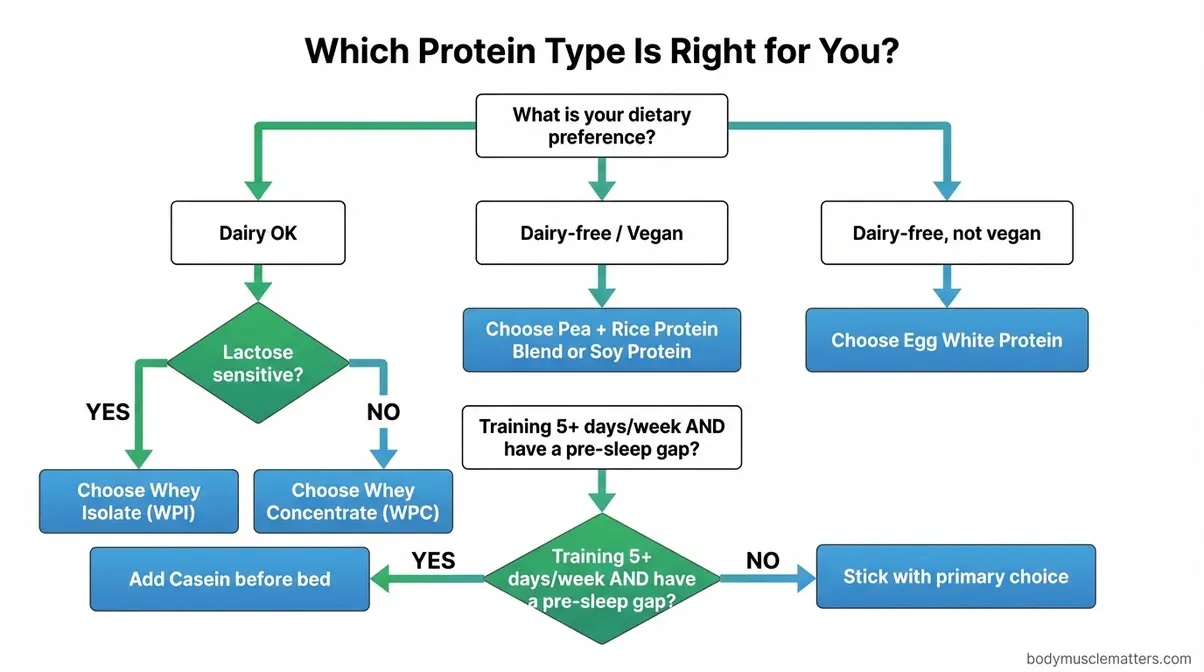
Caption: Use this decision guide to choose the right protein type based on your dietary needs, training frequency, and goals.
You know how much to take and what type to choose. Now the most hotly debated question in the supplement world: when should you actually take it?
Step 3: Time & Prepare Protein Right
Step 3 of The Protein Pyramid Protocol addresses the most debated topic in sports nutrition: when should you take protein powder? Understanding how to use protein powder for muscle building effectively means knowing that when you take it matters — but probably less than you have been told. Timing is the third layer of the pyramid, built on the foundation of your dosage and type decisions. Here is what the clinical evidence actually says.
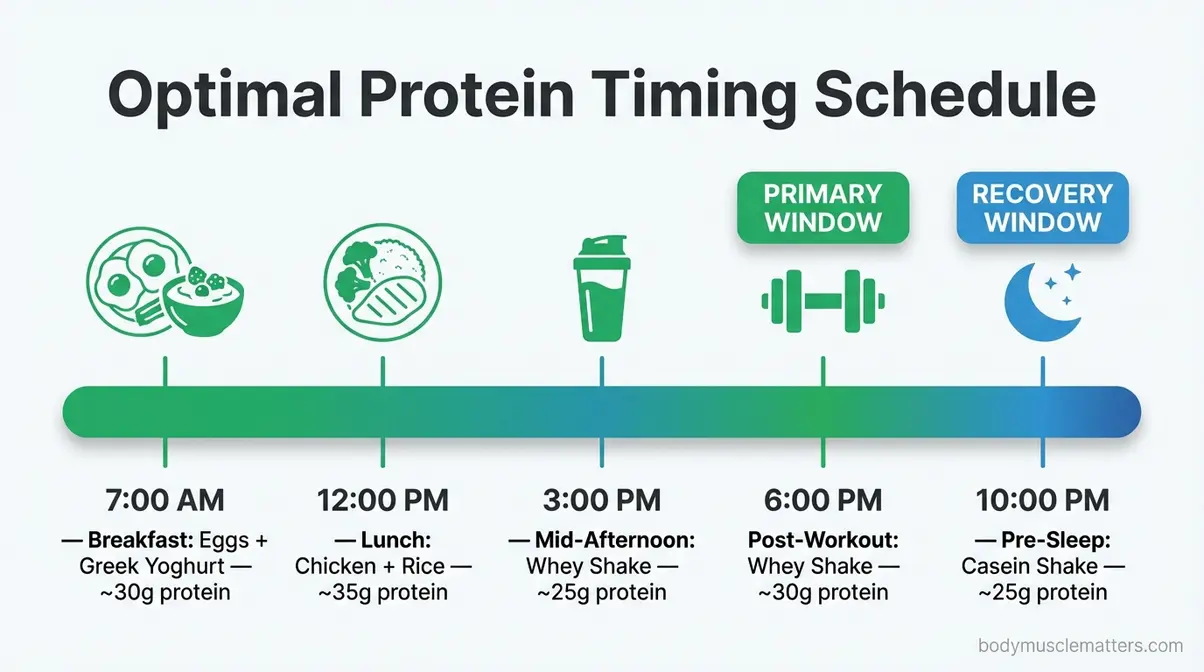
Caption: A practical daily protein timing schedule — covering post-workout, pre-sleep, and between-meal windows for consistent muscle protein synthesis.
Timing: Post-Workout & Pre-Sleep
Knowing when to take protein powder for muscle gain starts with three practical timing windows, each serving a different physiological purpose.
- Post-workout (primary window): Consume 20–40g of protein within 1–2 hours after training. This is when muscle fibres are most receptive to amino acids for repair and growth. Whey protein isolate or concentrate works best here due to fast absorption. How to use protein powder for muscle gain after training is straightforward: mix one scoop with 240–360ml of water and drink within the first two hours.
- Pre-sleep (secondary window): Take 20–40g of casein protein 30–60 minutes before bed. Casein’s slow digestion rate means amino acids are released throughout 6–8 hours of overnight recovery — a period when MPS is otherwise starved of raw materials.
- Between meals (tertiary window): If your daily target exceeds 140g or you struggle to eat enough whole food, a mid-morning or mid-afternoon shake bridges the gap. Research recommends consuming research on maximising per-meal protein synthesis — protein distributed across 3–5 daily meals maximises MPS compared to concentrated intake (PMC, 2026).
Sample daily schedule for a 75kg person:
| Time | Meal / Shake | Protein Approx. |
|---|---|---|
| 7:00 am | Breakfast (eggs, Greek yoghurt) | ~30g |
| 12:00 pm | Lunch (chicken, rice, vegetables) | ~35g |
| 3:00 pm | Mid-afternoon whey shake | ~25g |
| 6:00 pm | Post-workout whey shake | ~30g |
| 10:00 pm | Casein shake (pre-sleep) | ~25g |
For a deeper dive into what to eat alongside your shakes, see our guide on optimal post-workout nutrition and timing.
Before you set a 30-minute post-workout alarm for your shake, it is worth knowing what the latest research actually says about the so-called “anabolic window.”
The Truth About Anabolic Windows
The anabolic window is the period after exercise when your muscles are especially receptive to protein. Traditional advice insisted this window lasted just 30 minutes — the so-called “2 hour protein rule” has since replaced this, and modern research pushes the boundary even further.
A well-cited meta-analysis found that protein timing around workouts does not critically enhance hypertrophy when total daily intake is controlled — meaning consuming protein either before or after exercise results in similar improvements in muscle strength and body composition. The post-workout “anabolic window” is wider than the traditional 30-minute rule suggests (PMC, 2026). The clinical trial refuting the strict post-workout anabolic window makes this case clearly: total daily intake is the primary lever, timing is secondary.
What matters more than timing is what you do chronically. Missing the 30-minute mark after one workout will not cost you meaningful gains. Chronically under-consuming protein throughout the day, week after week, absolutely will. The practical verdict: aim for protein within 1–2 hours of training. If you trained fasted — without eating beforehand — prioritise the post-workout shake more urgently, since your muscles have had no recent amino acid supply.
With timing clear, the next question is equally practical: what should you actually mix your protein powder with?
Best Liquids for Protein Powder
How to mix protein powder is one of the most skipped parts of any beginner guide — yet the liquid you choose affects absorption speed, calorie load, and even gut health. Here are four options with exact liquid-to-powder ratios:
| Mixing Liquid | Protein Added | Absorption Speed | Best For | Ratio per Scoop |
|---|---|---|---|---|
| Water | 0g | Fastest | Post-workout, calorie-controlled goals | 240–360ml (8–12 oz) |
| Dairy milk | ~8g | Moderate | Pre-sleep casein shakes, bulking | 240–300ml (8–10 oz) |
| Plant-based milk (soy, oat, almond) | 1–7g (soy highest) | Moderate | Dairy-free preference | 240–300ml (8–10 oz) |
| Kefir | ~8g + probiotics | Moderate | Gut health, post-workout recovery | 240–360ml (1–1.5 cups) |
Water delivers the fastest absorption — ideal for post-workout when speed matters. Dairy milk adds roughly 8g of extra protein per cup, making it a solid choice for anyone struggling to hit their daily target during a bulk. Kefir is covered in detail in Step 4.
If you are bored of plain shakes, there are four other ways to add protein powder to your daily routine without using a shaker bottle.
Creative Ways to Add Protein
- Stir into oatmeal or overnight oats — add after cooking, not during, to prevent clumping. Use a whey or pea protein that dissolves easily.
- Blend into smoothies — one scoop plus frozen fruit, spinach, and your liquid of choice provides approximately 25–30g of protein along with fibre and micronutrients.
- Mix into pancake batter — replace two tablespoons of flour with one scoop of protein powder. Vanilla or unflavoured whey concentrate works best.
- Stir into Greek yoghurt — one scoop into 150g of full-fat Greek yoghurt adds ~25g on top of the yoghurt’s existing 15–17g for a high-protein snack.
- Make protein “bites” — blend oats, nut butter, honey, and one scoop of protein powder; roll into balls and refrigerate. Each ball delivers approximately 8–10g of protein and travels well.
Now that you have mastered the core protocol, Step 4 covers a growing need: what if whey protein is not right for you?
Step 4: Plant-Based & Homemade Options
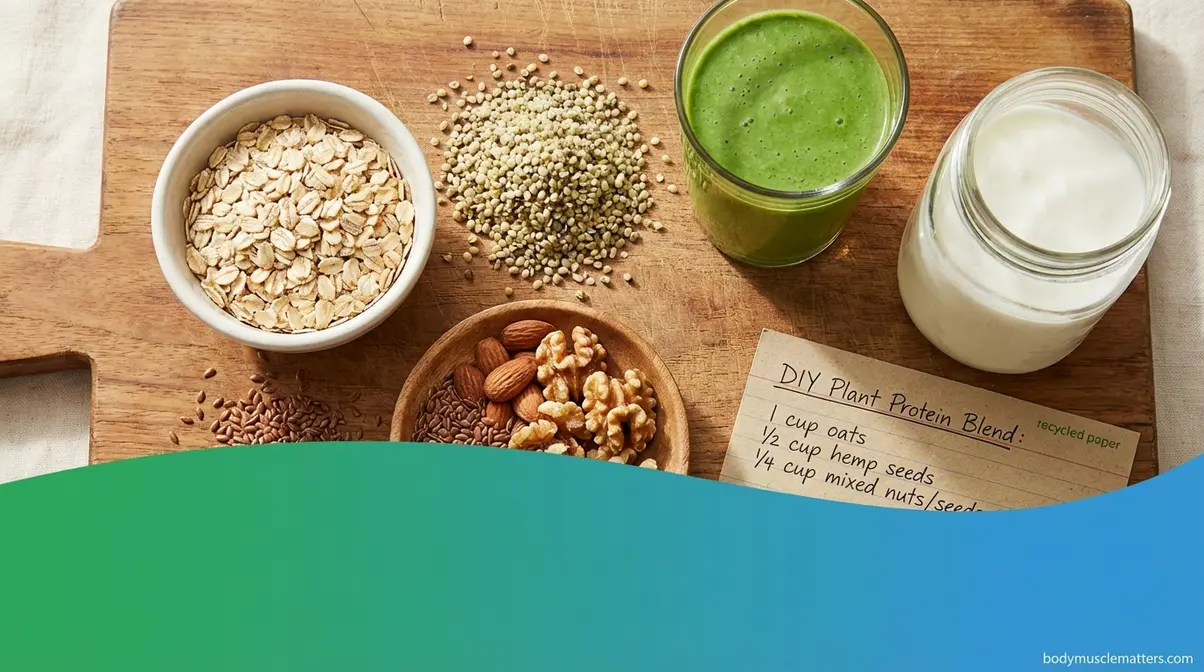
Step 4 of The Protein Pyramid Protocol is the “Preparation” layer — and if whey protein is not right for your body or budget, this step ensures you do not miss out. Research now confirms that plant-based protein blends produce muscle gains comparable to those from animal-based proteins when paired with resistance training and adequate daily intake (PMC, 2026). Here is how to make it work.
Plant-Based Protein Powders
Plant-based protein powder for muscle building is no longer a compromise — it is a legitimate, evidence-backed alternative. A complete amino acid profile means the protein contains all nine essential amino acids — the ones your body cannot produce on its own — critical for muscle growth. Most single plant proteins are “incomplete” on their own: pea protein is high in leucine but lower in methionine; rice protein is the opposite. Blending them solves this. Look for products labelled “pea + rice blend” or “pea + soy blend” with ≥20g protein per serving.
Soy protein is the exception — it is a complete protein on its own, with an amino acid score comparable to whey. Hormonal concerns around soy are largely overstated in the research for most healthy adults, though those with thyroid conditions should consult a doctor before making soy a primary protein source.
Recent evidence indicates that both animal and plant proteins support similar strength and hypertrophy gains when paired with resistance training and adequate protein intake — so a vegan lifter using a quality pea-rice blend achieves the same muscle-building outcomes as a whey user, provided daily protein targets are consistently met (PMC, 2026). The evidence comparing plant-based and animal protein for hypertrophy reinforces this finding clearly.
This equivalence is meaningful: choosing plant-based protein for muscle building and fat loss simultaneously is just as viable as choosing whey concentrate — the decision comes down to dietary preference and digestive tolerance, not efficacy.
If you would rather skip commercial products entirely, here is how to make your own.
How to Make Homemade Protein
Homemade protein powder for muscle building is a legitimate budget-friendly option — though it comes with some limitations worth knowing upfront.
DIY Base Protein Powder Recipe
- Ingredients:
- 2 parts hemp seeds (~10g protein per 3 tbsp; complete amino acid profile)
- 1 part rolled oats (ground to fine flour in a blender)
- 1 part mixed nuts and seeds (almonds, flaxseed, sunflower seeds)
- Method:
- Add all ingredients to a high-speed blender.
- Blend for 60–90 seconds until a fine, uniform powder forms.
- Transfer to an airtight container; store in a cool, dry place for up to two weeks.
Per serving (~3 tablespoons): approximately 12–15g of protein. This works well as a mid-meal supplement for those avoiding processed products, but it is not equivalent to commercial protein powder for post-workout recovery. The leucine density and digestibility of homemade blends are lower than isolates — this is not recommended as a sole post-workout protein source for those training five or more days per week.
For more ideas, see our guide on creating your own muscle-building protein shakes at home. Beyond the powder itself, what you mix it with can have a meaningful effect on your gut health and how well you absorb nutrients.
Kefir: The Gut-Health Upgrade
Kefir — a fermented dairy or non-dairy drink rich in probiotic bacteria — can replace milk as your mixing liquid for a meaningful gut-health advantage. Use 1–1.5 cups (240–360ml) of kefir per one scoop of protein powder.
A 2026 study published in PMC found that kefir consumption positively affects gut microbiota composition, improving diversity and increasing beneficial bacterial species — which in turn correlated with improved athletic performance markers including aerobic capacity (PMC, 2026). Better nutrient absorption means your body may extract more benefit from the same protein dose, making this a worthwhile upgrade for anyone already experiencing digestive discomfort from standard protein shakes. The recent study on kefir and gut health, and athletic performance provides solid mechanistic grounding for this recommendation.
Taste note: kefir is tangy — pair it with unflavoured or vanilla protein for the best result. Non-dairy kefir made from coconut or oat milk works equally well for those avoiding dairy.
Step 5 moves beyond the standard protocol — covering how to adapt your approach for fat loss or special medical conditions including GLP-1 medications and bariatric surgery.
Step 5: Adapt for Fat Loss & Med Needs

⚠️ Medical Disclaimer for This Section
The information in this section addresses specific medical conditions — including GLP-1 medication use and bariatric surgery — and is for educational purposes only. It does not constitute medical advice. Consult your physician or Registered Dietitian before adjusting your protein intake if you are taking any weight-loss medication or have undergone bariatric surgery.
The fifth and final layer of The Protein Pyramid Protocol is adaptation — personalising the protocol to fit your medical reality. Most protein powder guides stop at Step 3. This is where yours begins to diverge from everything you have read elsewhere.
Protein for Fat Loss & Recomposition
Body recomposition — simultaneously building muscle and losing body fat — is particularly achievable for beginners who are new to resistance training. The protein powder for muscle building and fat loss strategy differs from a standard bulking approach in one important way: protein requirements actually increase during a caloric deficit, not decrease.
Aim for 1.8–2.2g/kg of body weight daily when pursuing recomposition. Higher protein intake during a deficit helps prevent muscle breakdown — a process called catabolism (the breakdown of muscle tissue for energy, which undoes training gains). Spread intake across 4–5 meals rather than concentrating it in one or two large shakes.
For women pursuing body recomposition, the same targets apply. How to use protein powder for weight loss involves no special “female formula” — the priorities are consistent daily intake, resistance training, and a moderate caloric deficit. Whey concentrate or a plant-based blend both work effectively in this context.
Protocols for GLP-1 Users
Can you drink protein shakes on GLP-1 medications? Yes — and for most GLP-1 users, protein shakes are particularly helpful, precisely because the appetite suppression these medications cause makes it harder to eat adequate protein through whole foods alone.
GLP-1 receptor agonists (GLP-1s) — a class of weight-loss medications including semaglutide and tirzepatide — create what can be called the GLP-1 Protein Paradox: these medications suppress appetite significantly, making adequate protein intake harder — while rapid weight loss simultaneously makes adequate protein intake more critical for preserving muscle.
Research from a 2026 case series published in PMC found that patients on GLP-1 medications who prioritised lean soft tissue preservation through dietary protein and resistance training were able to maintain or even increase lean mass during weight loss — while those who did not faced meaningful muscle loss alongside fat loss (PMC, 2026). High protein intake combined with resistance training acts as a metabolic brake on muscle wasting during calorie restriction on GLP-1 medications.
Recommended protocol for GLP-1 users (always confirm with your physician):
- Daily protein target: 1.2–1.5g/kg body weight — research suggests this range adequately counters lean tissue loss
- Timing: Prioritise protein at each small meal, as GLP-1-induced satiety makes larger servings harder to consume
- Protein powder advantage: smaller-volume, high-protein shakes are easier to tolerate than whole-food-only approaches when appetite is suppressed
- Resistance training: combine with 2–3 sessions per week for maximum muscle preservation
Consult your physician before adjusting your protein intake on any GLP-1 medication. Women and older adults on semaglutide appear to face higher muscle-loss risk and may benefit from the upper end of the protein range (Endocrine Society, 2026).
For additional guidance, see our guide on using protein powder effectively for weight loss.
Protein After Bariatric Surgery
What is the best protein for bariatric patients? Whey protein isolate is the preferred protein supplement for most bariatric patients because its high protein density, minimal lactose, and low fat content suit the reduced digestive capacity common after surgery.
Bariatric surgery patients face some of the most demanding protein requirements of any population — and are among those most likely to search for this information without adequate specialist support.
The American Society for Metabolic and Bariatric Surgery (ASMBS), the leading professional organisation for bariatric surgery standards, recommends a minimum of 60-80g of protein per day post-surgery, with many guidelines citing this exact range as the practical target for procedures including sleeve gastrectomy and Roux-en-Y gastric bypass. Some clinical protocols recommend up to 1.5g/kg of ideal body weight for longer-term maintenance (PMC, 2026).
Why protein powder is especially important post-surgery: the dramatically reduced stomach capacity makes it difficult to consume adequate protein from whole foods alone in the early months after surgery. High-quality protein shakes help bridge this gap efficiently.
- Practical guidelines for bariatric patients (always follow your surgical team’s specific protocol):
- Choose whey isolate or hydrolysate — lower fat and lactose content tolerates the reduced digestive capacity better
- Sip slowly: aim for 20–30g per serving across multiple small servings throughout the day
- Avoid high-sugar protein products that contribute to “dumping syndrome” (rapid gastric emptying that causes nausea, sweating, and dizziness)
- YMYL alert: Do not self-prescribe your bariatric protein protocol from this or any general guide. Your registered dietitian or bariatric surgeon should set your specific daily targets and product recommendations.
Common Protein Powder Mistakes
Even with a solid protocol in place, certain habits undermine results. After reviewing the clinical literature and synthesising guidance from registered dietitians, these three mistakes appear most consistently among beginners.
Relying Solely on Shakes
Protein powder supplements whole-food intake — it does not replace it. Whole foods provide micronutrients, fibre, and naturally occurring compounds that no powder replicates. A beginner who hits their daily protein target entirely through shakes while neglecting vegetables, legumes, and quality carbohydrates is optimising one variable while ignoring the ecosystem it operates in. Aim for no more than 30–40% of your daily protein target from powders — the remainder should come from chicken, fish, eggs, dairy, legumes, and whole grains.
Ignoring Protein Distribution
A single 80g protein shake does not deliver the same muscle-building stimulus as four 20g servings spaced across the day. Research on protein timing and distribution recommends consuming protein across 3–5 meals, each delivering approximately 0.4g/kg body weight, to maximise MPS (PMC, 2026). Many beginners skip protein at breakfast, eat a large lunch, and compensate with an oversized post-workout shake — this pattern consistently underperforms distributed intake. Set an alarm if needed; protein timing, while not the primary driver, still matters for optimising the muscle signal each meal sends.
Choosing Untested Products
The supplement industry remains less tightly regulated than pharmaceutical products in most countries. The question “why do doctors say no to protein powder?” often traces back to this exact issue: some products on the market contain heavy metals (including lead and arsenic), undisclosed anabolic compounds, or far less protein than labelled. Third-party testing through NSF Certified for Sport, Informed Sport, or USP Verified eliminates this risk almost entirely. Pay the small premium — it is meaningless compared to the cost of regularly buying a product that does not deliver what it promises.
Limitations & Medical Advice
When Powder Isn’t the Right Choice
Protein powder is not appropriate — or requires careful modification — in several specific contexts. Individuals with chronic kidney disease (CKD) should not increase protein intake without nephrology guidance, as higher protein loads can accelerate kidney function decline. Those with phenylketonuria (PKU) or similar amino acid metabolism disorders require medically supervised protein intake from the outset. Anyone experiencing persistent gastrointestinal distress (bloating, cramps, nausea) after starting protein supplementation should pause and consult a dietitian before continuing.
Choosing Whole Foods Instead
Harvard Health and most registered dietitians agree: food should come first. If you can meet your daily protein target through whole foods without inconvenience, there is no requirement to use protein powder at all. Powder is a tool of convenience — particularly useful for people with high protein targets, busy schedules, or difficulty eating enough. If your budget is tight, eggs, canned tuna, Greek yoghurt, and legumes deliver complete amino acids at a lower cost per gram of protein than most commercial powders.
When to Consult a Professional
- Seek guidance from a Registered Dietitian or physician before starting protein supplementation if:
- You have any form of kidney, liver, or metabolic disease
- You are pregnant or breastfeeding
- You are under 18 or over 65 with pre-existing health conditions
- You are taking prescription medications that interact with dietary changes (including GLP-1 medications and post-bariatric supplements)
- You experience any new symptoms — digestive, cardiovascular, or neurological — after starting supplementation
Frequently Asked Questions
How to properly use protein powder for muscle gain?
Protein powder works best when used as part of a structured daily protocol, not as a random addition to your diet. Calculate your total protein needs (1.6–2.2g/kg body weight), determine your whole-food shortfall, and use powder to cover the gap. Consistency with your daily target matters far more than the exact timing of any single shake (ISSN, 2026).
How much protein powder per day do you need to gain muscle?
Most beginners need 1–2 scoops of protein powder per day, depending on their whole-food intake and body weight. A standard scoop provides 20–30g of protein. If your daily protein shortfall is 40g, that is roughly 1.5–2 scoops. It is best to spread this amount across two servings. Exceeding 40g in a single sitting offers diminishing returns, since the per-meal MPS ceiling is approximately 0.4g/kg body weight (PMC, 2026). Always check your label, as scoop sizes vary considerably between brands.
Can you mix kefir with protein powder?
Yes — mixing protein powder with kefir is safe, effective, and offers a meaningful gut-health advantage over water or plain milk. Use 1–1.5 cups (240–360ml) of kefir per scoop of protein. A 2026 PMC study found that kefir consumption positively modulates gut microbiota, increasing beneficial bacterial diversity and correlating with improved athletic performance markers (PMC, 2026). Non-dairy kefir works equally well for those avoiding dairy.
Why do some doctors advise against protein powder?
Doctors typically caution against low-quality, untested protein powders — not high-quality, third-party-certified ones. Published analyses have detected heavy metals, undisclosed compounds, and significant label inaccuracies in some commercial protein products. Doctors may also flag risks for patients with kidney disease, where higher protein loads can accelerate function decline. For healthy adults using NSF Certified for Sport or Informed Sport products within recommended dosage ranges, the risk profile is considered low (Harvard Health, 2026). Always discuss with your physician if you have a pre-existing condition.
Conclusion
For fitness beginners using protein powder for muscle building, success comes down to five interconnected decisions — not one lucky product choice. The Protein Pyramid Protocol shows that calculating your daily target (1.6–2.2g/kg), choosing the right type (whey, plant-based, or casein by timing), distributing intake across 3–5 meals, preparing it with the right liquid ratios, and adapting for your specific health context produces results that no random supplementation approach can match. Research consistently confirms that protein intake consistency outperforms any single timing trick or premium product upgrade (ISSN, 2026; PMC, 2026).
The Protein Pyramid Protocol exists because beginners deserve a framework, not a product pitch. Whether you are using kefir as a probiotic mixing medium, navigating GLP-1 appetite suppression, or simply trying to figure out how many scoops to add to your oats, the five-layer structure gives you a decision hierarchy that removes the guesswork. Each layer reinforces the next — no single step works in isolation.
Start with Step 1 today: calculate your body weight in kilograms and multiply by 1.6. That single number tells you your minimum daily protein target and immediately shows you how far your current diet falls short. From there, consult our guide on calculating your daily macros for muscle gain to see how protein fits into your full nutrition plan. If you are on a GLP-1 medication or post-bariatric journey, book a session with a Registered Dietitian who can personalise Steps 4 and 5 to your specific protocol — your situation is complex enough to warrant expert guidance, and this guide has given you the vocabulary to make that conversation far more productive.
Related posts:
Best Protein Powder for Muscle Growth: Tested (2026)
Best High Protein Meal Delivery Services 2026: Top 7
Protein Powder Without Artificial Sweeteners: 10 Best Picks
Can You Eat Too Much Protein? Symptoms & Safe Limits
Best Protein Powder for Weight Loss: 10 Expert Picks
What Are Macros? A Plain Guide to Protein, Carbs and Fat

Callum
Hi, I'm Callum, the founder of Body Muscle Matters. I'm not a certified trainer, I'm a self taught lifter who started this site to share what I've learned from my own training and a lot of trial and error. Everything here comes from real experience and honest research, written the way I'd explain it to a friend who is just getting started. My goal is simple: practical, no hype fitness advice you can actually use.