Can You Eat Too Much Protein? Symptoms & Safe Limits
Home ›Supplements and Nutrition
⚠️ Medical Disclaimer: The information in this article is for educational purposes only and is not a substitute for professional medical advice, diagnosis, or treatment. Always consult a qualified healthcare provider — such as a registered dietitian (RD) or physician (MD) — before making significant changes to your diet, especially if you have a pre-existing health condition.
You started eating more protein to lose weight or build muscle. Now you’re bloated, your breath smells strange, and you’re wondering if you can eat too much protein. The short answer is yes — and your body is probably already sending you the signals.
Protein is genuinely powerful. Research from the National Institutes of Health (NIH) consistently shows it supports muscle repair, keeps you full, and stabilizes blood sugar. But there is a threshold — what nutrition researchers call The Protein Tipping Point — where intake stops delivering benefits and starts creating a metabolic burden on your kidneys, liver, and digestive system.
This guide will show you exactly where that threshold sits for your body weight, what warning signs to watch for, and how your specific goals (keto, weight loss, pregnancy) shift the numbers. No vague advice. Specific grams, worked examples, and science-backed limits you can use today.
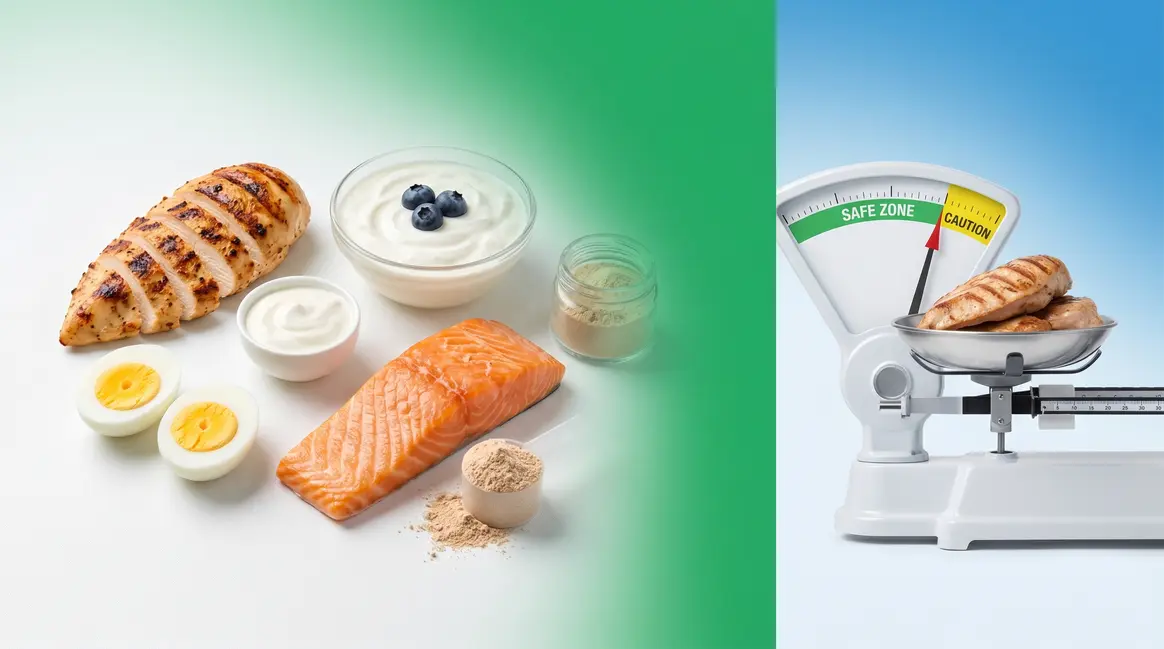
Yes, you can eat too much protein — The Protein Tipping Point for most healthy adults sits around 2.0–2.5g per kilogram of body weight per day, beyond which risks outweigh rewards.
- Safe range: Most adults need 0.8–2.0g of protein per kilogram of body weight daily, depending on activity level.
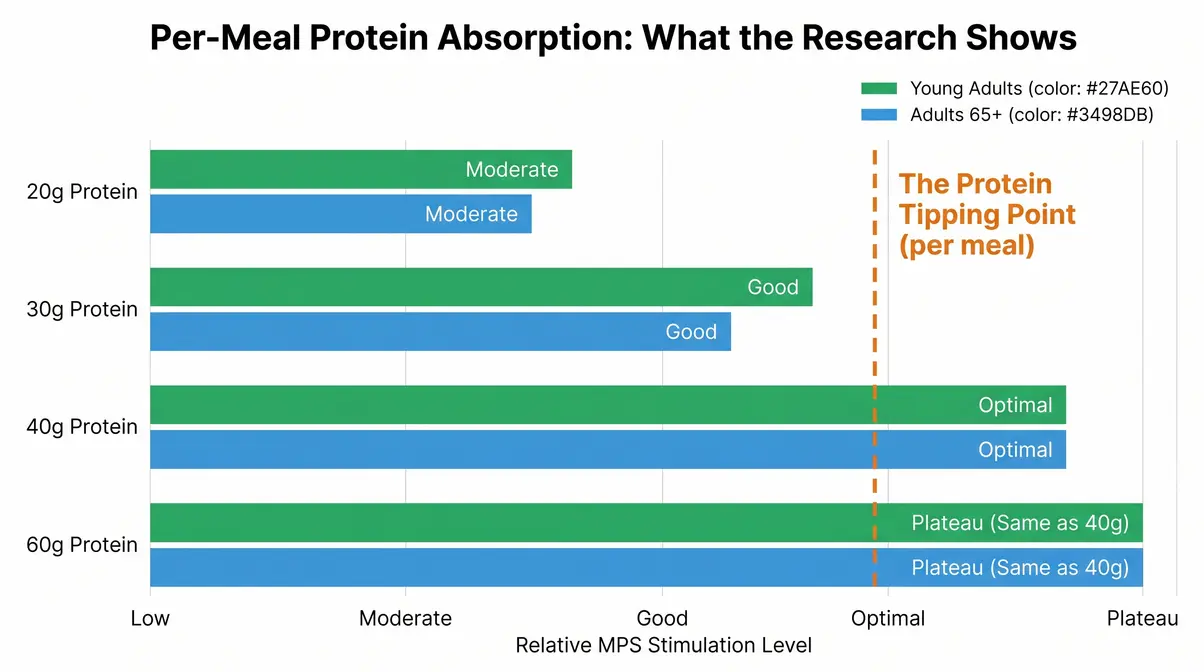
- Per-meal limit: Research suggests your muscles can actively use roughly 20–40g of protein per meal for muscle building; the rest is processed differently.
- Warning signs: Bloating, bad breath, fatigue, and unexpected weight gain are early signals of protein overload.
- High-risk groups: People with kidney disease, PKU, or who are pregnant have stricter, medically supervised limits.
- Whole foods first: Protein powders carry contamination risks that whole-food sources do not — third-party testing matters.
What Does “Too Much Protein” Actually Mean?
Most people eating a high-protein diet have no idea what their actual number should be. “Eat more protein” is everywhere — but the specific threshold where more becomes harmful is rarely discussed. Understanding where that line falls is the foundation of everything else in this guide.
Official Guidelines: 0.8g to 2.0g/kg
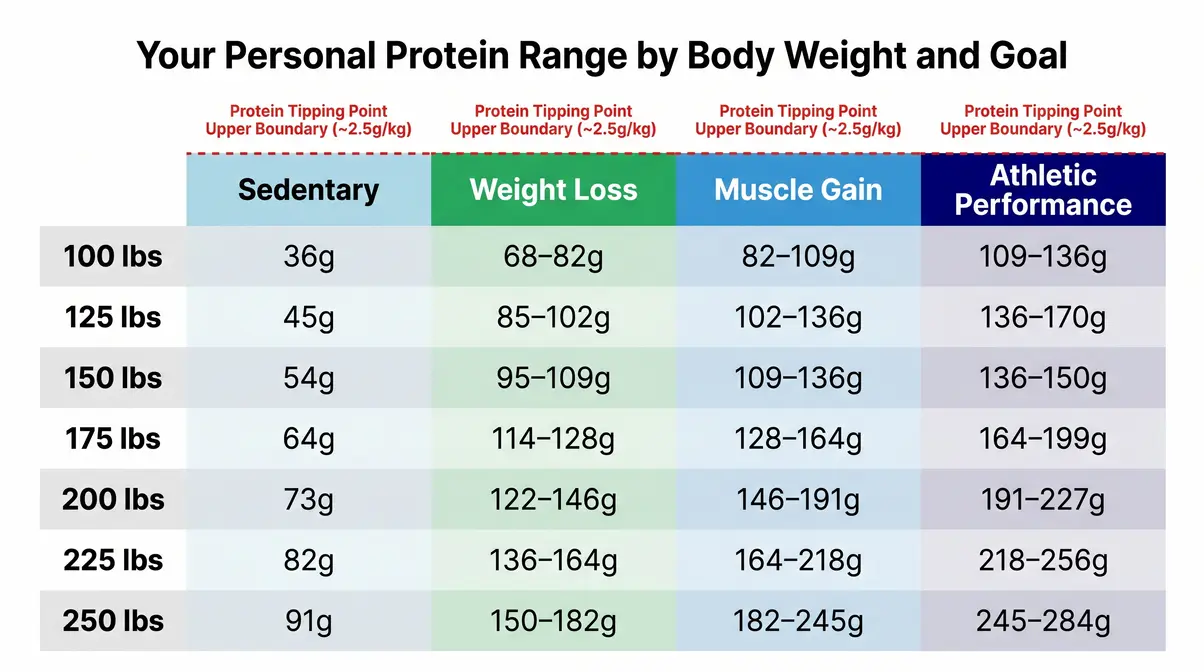
The Recommended Dietary Allowance (RDA) — the minimum needed to prevent deficiency in sedentary adults — is 0.8 grams of protein per kilogram of body weight per day, according to the National Academies of Sciences (National Academies, 2005, updated review 2026). For a 150-lb (68 kg) person, that equals roughly 54g per day.
However, the RDA is a floor, not a target. Research from the International Society of Sports Nutrition (ISSN) suggests that active adults building muscle benefit from 1.6–2.2g per kilogram per day. Beyond approximately 2.5g per kilogram, research suggests diminishing returns set in and metabolic strain increases — particularly on the kidneys and liver (NIH/PMC, 2026).
| Activity Level | Recommended Protein (g/kg/day) | Example: 150-lb (68 kg) Person |
|---|---|---|
| Sedentary adult | 0.8 g/kg | ~54g/day |
| Moderately active | 1.0–1.3 g/kg | 68–88g/day |
| Regular exerciser / weight loss | 1.2–1.6 g/kg | 82–109g/day |
| Strength athlete / muscle gain | 1.6–2.2 g/kg | 109–150g/day |
| Upper safe threshold (healthy adults) | ~2.5 g/kg | ~170g/day |
These ranges apply to healthy adults without pre-existing kidney or liver conditions. If you have any underlying health condition, consult a registered dietitian before targeting the upper end of any range.
Is 200g of Protein Too Much?
This is one of the most searched questions about protein — and most articles dodge it. Here is a direct answer.
For a 150-lb (68 kg) person, 200g of protein per day equals approximately 2.9g per kilogram. That exceeds the upper threshold research considers safe for long-term daily intake in most healthy adults. For a 200-lb (91 kg) person, 200g equals about 2.2g per kilogram — within the evidence-supported range for strength athletes.
So whether 200g is too much depends entirely on your body weight. A smaller person hitting 200g daily is well past The Protein Tipping Point. A larger, highly active person may be right in the sweet spot.
The key takeaway: 200g of protein is not inherently dangerous — but it is almost certainly too much for anyone under 175 lbs (80 kg) consuming it daily without intense athletic training.
Calculate Your Safe Limit in 3 Steps
You do not need a dietitian to find your starting target. Here is how to calculate it:
Estimated time: 2 minutes
Tools needed: A calculator, your current body weight in pounds
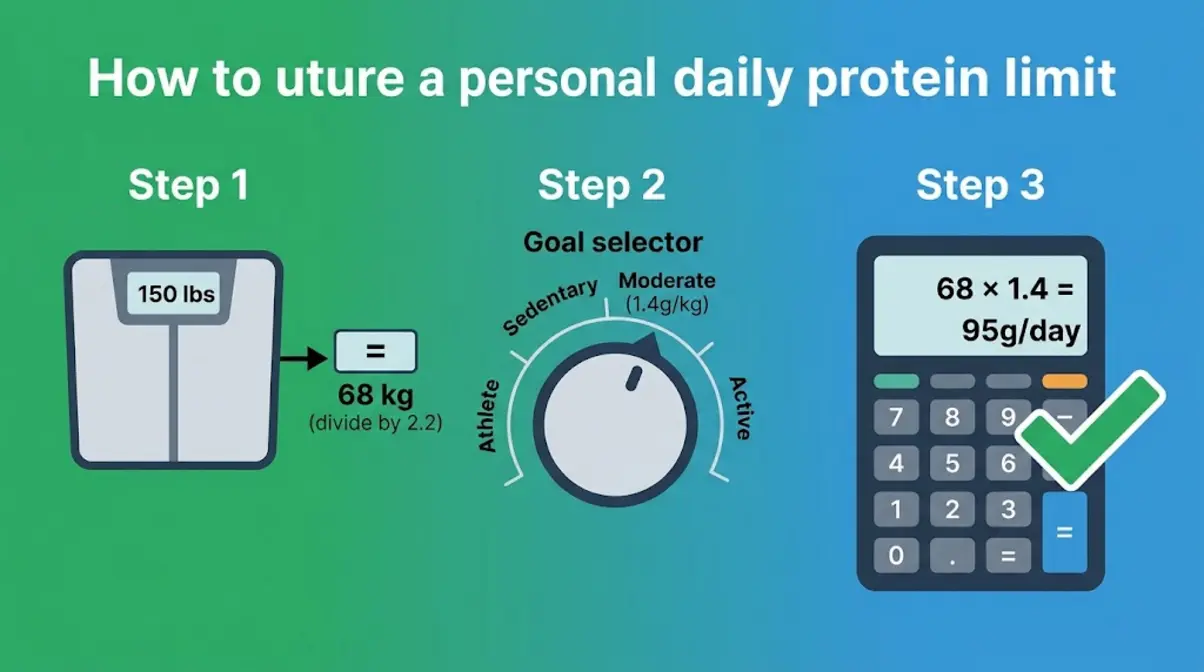
- Convert your weight to kilograms. Divide your weight in pounds by 2.2. Example: 150 lbs ÷ 2.2 = 68 kg.
- Choose your multiplier based on your goal (use the table above). For moderate weight loss and general fitness, use 1.4g/kg as a reliable starting point.
- Multiply. 68 kg × 1.4 = 95g of protein per day as your daily target.
For deeper guidance on calculating your intake based on age and specific goals, review daily protein needs by weight to walk through additional variables in detail.
How Much Protein Can Your Body Use in One Meal?
A common worry among high-protein eaters is this: “If I eat 60g of protein in one sitting, am I wasting half of it?” The science here is more nuanced than most fitness articles suggest — and the answer directly affects how you structure your meals.
Muscle Protein Synthesis Window
Muscle protein synthesis (MPS) — the process your body uses to build and repair muscle tissue — does not have a rigid per-meal cap the way older research implied. A widely cited 2009 study in the American Journal of Clinical Nutrition suggested the body could only use about 20–25g of protein per meal for MPS. More recent research has revised that view.
A 2026 review published in Nutrients (NIH/PMC) found that larger protein doses — up to 40g per meal — may actually stimulate greater whole-body protein synthesis, particularly in older adults and those doing resistance training. The body does not simply “waste” protein above a threshold; it processes the surplus through different metabolic pathways. For more context on these numbers, review the recommended protein intake guidelines established by dietitians.
What Happens to Unused Protein?
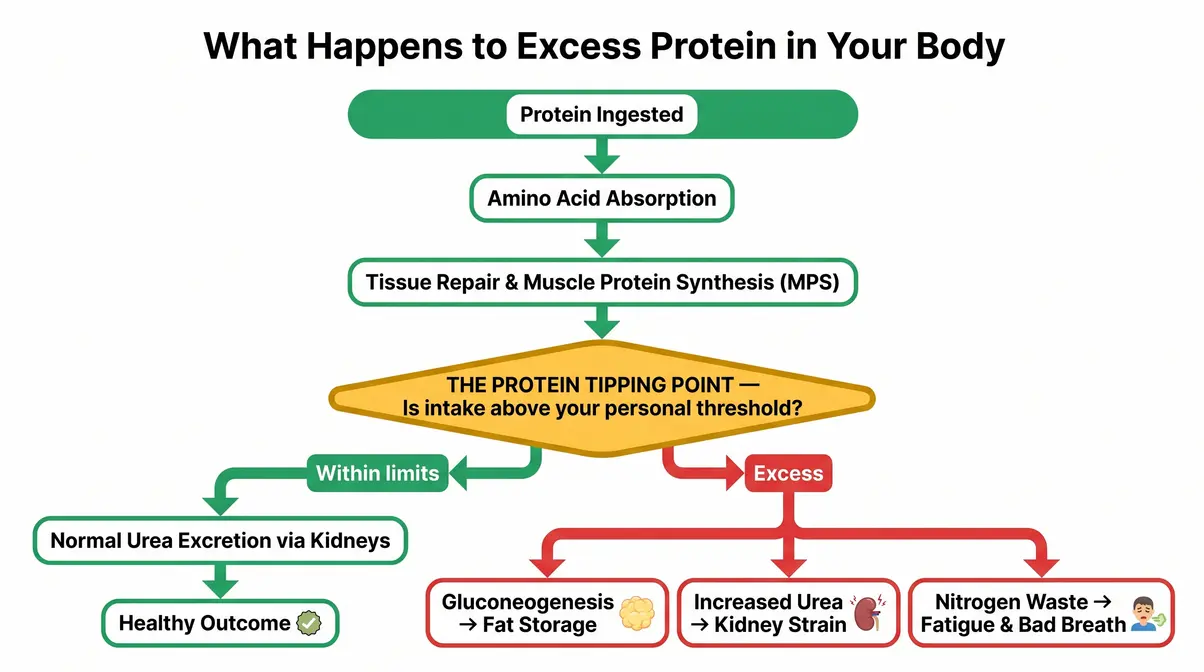
Here is where protein overload begins. When you consume more protein than your body can immediately use for tissue repair and MPS, the excess does not simply disappear. Your liver converts it into glucose through a process called gluconeogenesis (gloo-ko-neo-JEN-uh-sis) — the creation of new glucose from non-carbohydrate sources. Any glucose not immediately used for energy gets stored as fat.
Additionally, the nitrogen released during protein breakdown must be excreted through your kidneys as urea. The higher your daily protein intake, the harder your kidneys work to filter this waste. For healthy kidneys, this is manageable. For kidneys already under stress, the extra load matters significantly (Mayo Clinic, 2026).
The practical implication: Spreading 150g of daily protein across 4–5 meals of roughly 30–40g each is more effective — and gentler on your system — than consuming 80g at dinner and hoping your body uses it all.
Short-Term Warning Signs of Protein Overload
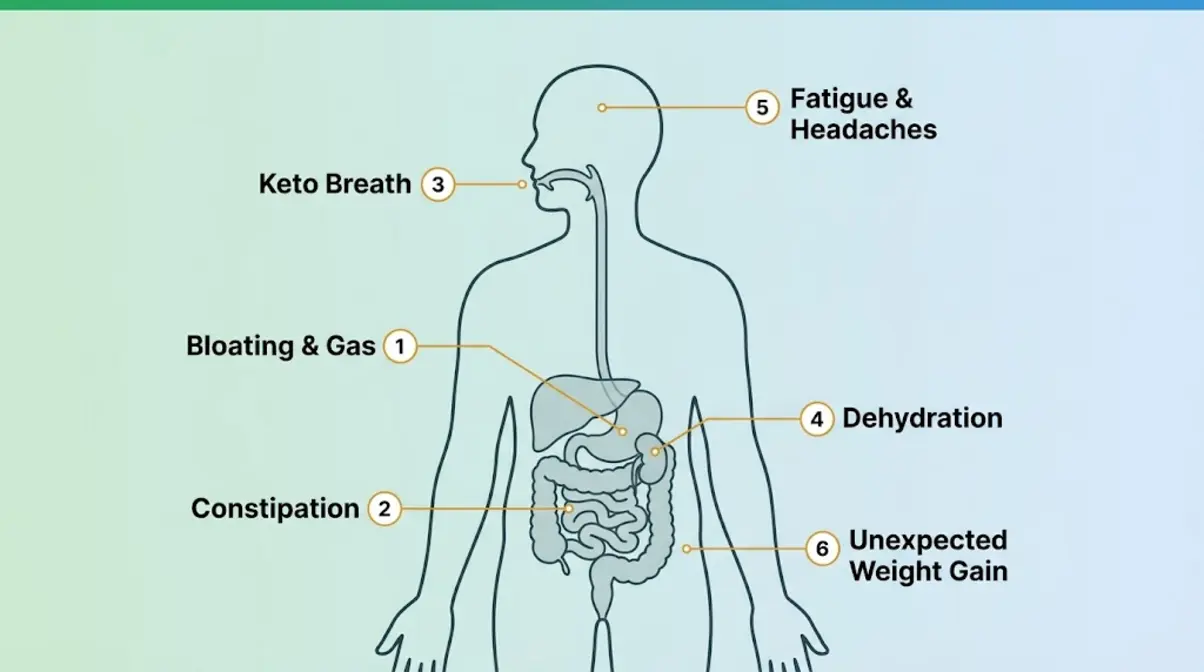
If you are asking, “can you eat too much protein?” right now, your body may already be answering that question. Research from Harvard Health Publishing identifies several early warning signs of excess protein intake — most of which people mistakenly attribute to other causes. Understanding the health risks of too much protein starts with your digestion.
What Are the First Signs of Too Much Protein?
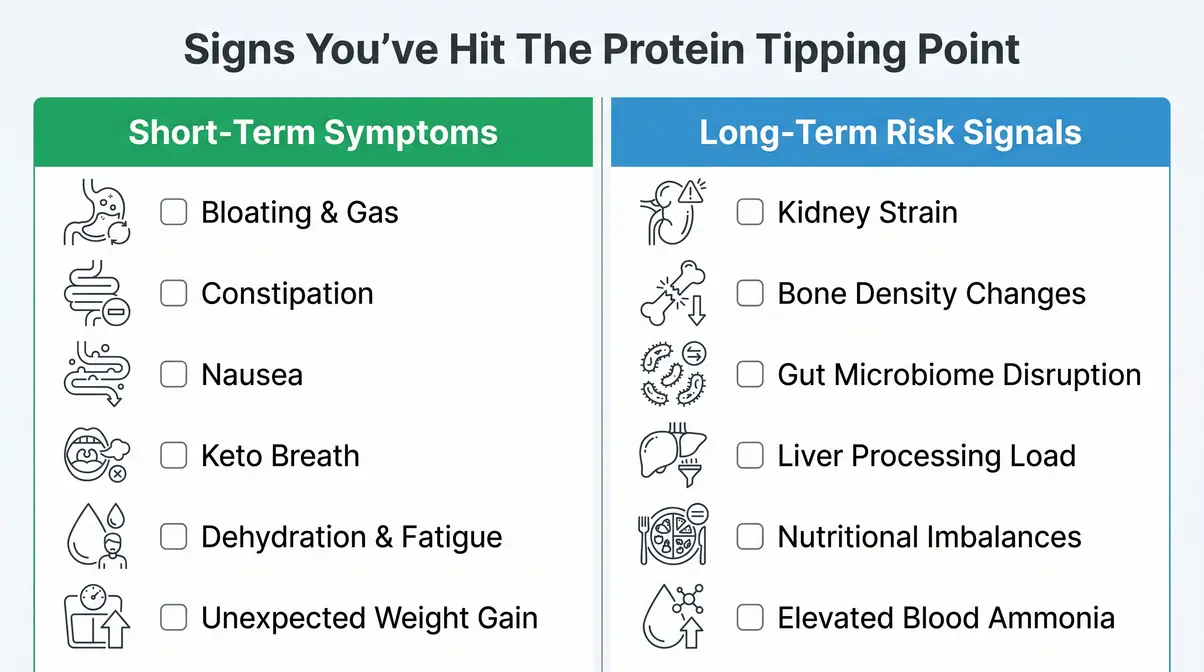
The first signs of eating too much protein are almost always digestive. Expert consensus among registered dietitians indicates that high-protein diets — particularly those heavy in animal sources — significantly reduce fiber intake, which slows digestion and triggers GI distress.
Specifically, you may notice:
- Bloating and gas — especially when protein comes from dairy (whey protein powder, cottage cheese) or legumes
- Constipation — caused by reduced fiber as protein-rich foods crowd out fruits, vegetables, and whole grains
- Nausea — particularly after large protein boluses (a single meal with 70g+ of protein)
According to UCLA Health (2026), these symptoms typically appear within 1–3 days of a sharp increase in protein intake. They are your body’s clearest early signal that you have crossed The Protein Tipping Point for your digestive system — not necessarily for your kidneys, but for your gut microbiome and bowel function.
If you experience persistent GI distress lasting more than a week, consult a registered dietitian to assess your intake and fiber balance.
What Does Protein Overload Feel Like?
Two symptoms that confuse high-protein dieters most are bad breath and persistent fatigue — neither of which seems obviously connected to eating more chicken.
Keto breath (a fruity or ammonia-like odor) occurs when the liver breaks down excess protein and fat, producing ketone bodies and ammonia as byproducts. Research published in the Journal of Clinical Endocrinology (NIH/PMC, 2026) notes this is especially pronounced on very low-carbohydrate, high-protein diets where gluconeogenesis is running at full capacity.
Dehydration is a direct consequence of the increased urea production described earlier. Your kidneys require more water to flush nitrogen waste, meaning a high-protein dieter who does not increase water intake will become chronically mildly dehydrated — which then causes fatigue, headaches, and reduced concentration.
A practical rule: for every additional 50g of protein you add to your daily diet beyond your baseline, add at least one additional 8 oz glass of water per day.
Unexpected Weight Gain
This symptom is perhaps the most frustrating. Many health-conscious individuals increase protein specifically to lose weight — and then watch the scale creep upward.
The mechanism is gluconeogenesis, described in H2 #2. When protein intake substantially exceeds your body’s needs for tissue repair and MPS, the liver converts the surplus amino acids into glucose. If that glucose exceeds your immediate energy needs, it is stored as triglycerides (body fat). A 2026 study in Obesity Reviews (NIH/PMC) confirmed that protein intakes above approximately 2.4g/kg/day in non-athletes were associated with modest but measurable fat gain over 12 weeks.
For guidance specifically on using protein effectively to support fat loss without overshooting, explore protein intake for weight loss to cover the optimal range in detail.
Long-Term Health Risks of Eating Too Much Protein
Short-term symptoms are uncomfortable. Long-term risks are where the science gets more serious — and more nuanced. When people ask, “can you eat too much protein?”, they are usually worried about long-term damage. The evidence does not suggest that high protein will destroy your kidneys overnight. It does suggest that chronically exceeding your personal threshold creates a compounding metabolic burden worth understanding.
“Extra protein is not used efficiently by the body and may impose a metabolic burden on the bones, kidneys, and liver.”
— Harvard Health Publishing
Kidney Strain and Renal Function
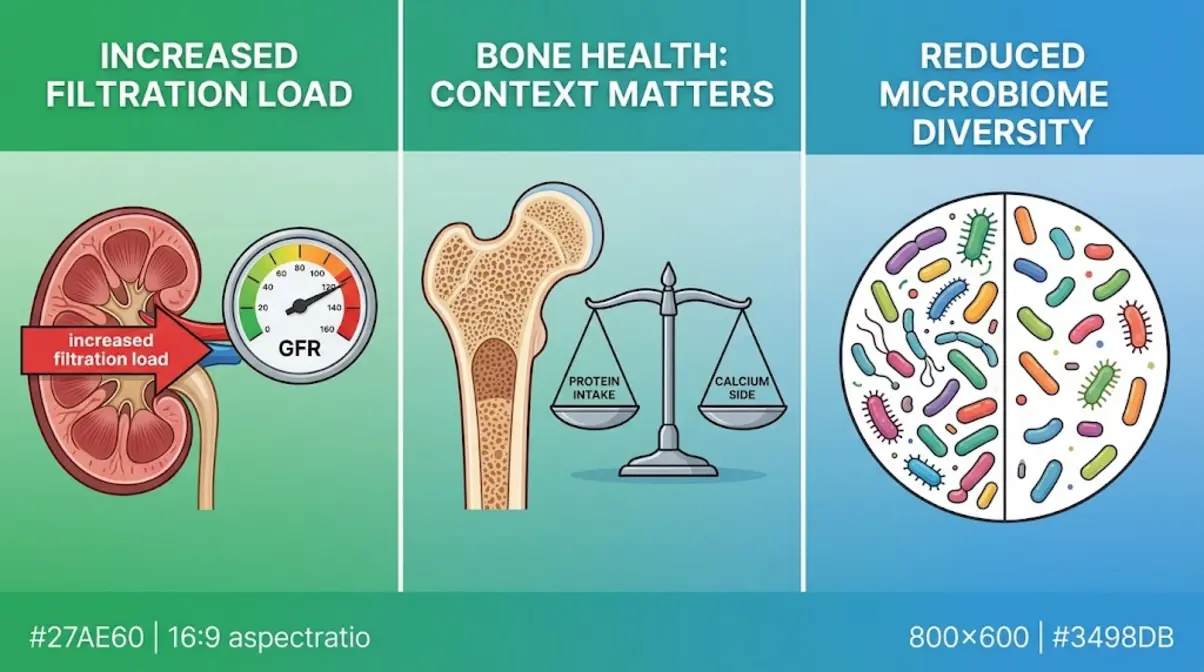
The kidneys are the organ most directly affected by sustained excess protein intake. Every gram of protein you digest produces nitrogen waste — primarily urea — that must be filtered and excreted. More protein means more filtration work, measured by a metric called glomerular filtration rate (GFR) — the speed at which your kidneys filter blood.
Research from the Mayo Clinic (2026) is clear on this: in people with healthy kidneys, high-protein diets do not cause kidney disease. The kidneys adapt by increasing their filtration capacity. However, in people with pre-existing chronic kidney disease (CKD), even moderate high-protein diets can accelerate renal decline. A 2026 review in Nutrients (NIH/PMC) found that patients with CKD on high-protein diets (above 1.3g/kg/day) showed measurably faster GFR decline than those on moderate-protein diets.
The bottom line: If your kidneys are healthy, high protein is unlikely to cause kidney disease. If you have CKD, diabetes, or hypertension — conditions that already stress the kidneys — you should work with a physician or registered dietitian to set a specific, supervised protein ceiling.
Bone Health and Protein Intake
Here is a finding that surprises many people: the relationship between protein and bone health is not what older research suggested.
Early studies proposed that high protein increased urinary calcium excretion, potentially weakening bones over time. More recent research has largely reversed this concern. A 2026 meta-analysis in Osteoporosis International (NIH/PMC) — one of the largest analyses of protein and bone density — found that higher protein intake was associated with greater bone mineral density and lower fracture risk in healthy adults, particularly when calcium intake was adequate.
The nuance: protein appears to both increase calcium excretion AND improve calcium absorption. In net terms, for healthy adults, protein is bone-protective, not bone-damaging. The concern is more relevant for individuals with very low calcium intake who also eat very high protein — an uncommon but real combination.
Nutritional Imbalances
One of the least-discussed long-term risks of excess protein intake is what it displaces. When protein-rich foods dominate your plate, fiber-rich vegetables, whole grains, and fruits often disappear. Research from the National Academies of Sciences (2026) identifies this dietary crowding as a significant secondary risk of high-protein diets — not because protein itself is harmful, but because the absence of dietary fiber, phytonutrients, and complex carbohydrates creates measurable health gaps over time.
Specifically, studies link low-fiber, high-protein diets to reduced gut microbiome diversity (NIH/PMC, 2026) — a marker associated with increased inflammation, impaired immune function, and higher long-term disease risk. Eating enough protein matters. So does eating enough of everything else.
Protein for Weight Loss and Muscle Gain
Most people increasing their protein intake have one of two goals: lose weight or build muscle. The optimal range is slightly different for each — and so is The Protein Tipping Point.
Can Too Much Protein Slow Weight Loss?
Protein supports weight loss through three well-established mechanisms: it increases satiety (feeling full), raises the thermic effect of food (TEF — the calories burned digesting food), and preserves lean muscle during a caloric deficit. Research from Houston Methodist (2026) confirms that protein’s TEF is roughly 20–30%, compared to 5–10% for carbohydrates.
However, protein is not calorie-free. At 4 calories per gram, 200g of daily protein equals 800 calories from protein alone. If that pushes you into a caloric surplus, weight loss stalls — regardless of how “clean” the protein source is. For weight loss specifically, research suggests 1.2–1.6g/kg/day as the sweet spot that maximizes satiety and muscle preservation without pushing total calories too high (NIH/PMC, 2026).
For a detailed breakdown of protein targets specifically for fat loss, this guide to protein intake for weight loss provides goal-specific ranges.
Too Much Protein for Muscle Gain?
For muscle building, the evidence consistently points to a ceiling effect. A landmark 2026 meta-analysis in the British Journal of Sports Medicine (NIH/PMC) — covering 49 studies and over 1,800 participants — found that protein intakes above 1.62g/kg/day produced no additional muscle gain in resistance-trained adults. Eating more protein above this threshold did not build more muscle. It simply added calories.
This is the muscle-building version of The Protein Tipping Point: above roughly 1.6–2.2g/kg/day (the upper range accounting for individual variation and training intensity), more protein delivers no additional anabolic benefit. Expert consensus among sports dietitians indicates that the ceiling for most natural athletes is approximately 2.2g/kg/day — beyond that, you are feeding your liver, not your muscles.
For sport-specific protein targets, protein intake for muscle gain covers periodization and timing strategies in detail.
Protein on Keto, Carnivore, and Atkins
Low-carbohydrate diets add a layer of complexity to protein intake. So, can you eat too much protein on a low-carb diet? The same amount of protein that is safe on a standard diet can cause measurable metabolic disruption on a ketogenic plan — for a specific reason most keto guides underexplain.
Protein and Ketosis Disruption
Ketosis is the metabolic state where your body burns fat for fuel instead of glucose, producing energy molecules called ketones. It requires keeping carbohydrates very low — typically under 20–50g per day. What many keto dieters do not realize is that protein can also disrupt ketosis through gluconeogenesis.
When you eat substantially more protein than your body needs for tissue repair, the liver converts excess amino acids into glucose — even in the absence of dietary carbohydrates. This glucose raises blood sugar and insulin levels, which signals the body to exit ketosis. Research published in Frontiers in Nutrition (NIH/PMC, 2026) found that protein intakes above approximately 1.5–1.7g/kg/day on a strict ketogenic diet were associated with measurably lower ketone levels in most participants.
The keto-specific Protein Tipping Point is lower than for standard diets. Most ketogenic nutrition specialists recommend keeping protein at 1.2–1.5g/kg/day to maintain deep ketosis while preserving muscle mass.
Carnivore and Atkins Protein Limits
The carnivore diet — which eliminates all plant foods — and the Atkins diet’s induction phase share a similar challenge: very high protein intake is almost unavoidable when carbohydrates and (in carnivore’s case) plant foods are eliminated.
On Atkins, protein is generally moderate rather than very high — fat is the primary macronutrient. On carnivore, protein intake can easily reach 2.5–3.0g/kg/day without deliberate effort, which exceeds the evidence-based upper threshold for most healthy adults. Expert consensus among dietitians working with low-carb populations suggests that carnivore dieters monitor for the short-term warning signs described in H2 #3 — particularly keto breath (indicating high ammonia production), GI distress, and fatigue — as early indicators of protein overconsumption.
Balancing Low-Carb Macros
Balancing protein correctly on a low-carb diet comes down to one practical rule: fat, not protein, should be your primary calorie source on keto and carnivore. Protein should sit at 1.2–1.7g/kg/day; fat fills the remaining caloric gap.
A simple macro framework for a 150-lb (68 kg) person on keto:
| Macro | Target | Example Daily Amount |
|---|---|---|
| Protein | 1.4g/kg/day | ~95g (380 calories) |
| Carbohydrates | <50g/day | ~50g (200 calories) |
| Fat | Fill remaining calories | ~130–160g (to meet energy needs) |
If you are struggling to maintain ketosis despite keeping carbohydrates low, excess protein is the most likely culprit. Reducing protein by 20–30g/day and replacing those calories with fat is the recommended adjustment.
Are Protein Supplements Riskier Than Whole Foods?
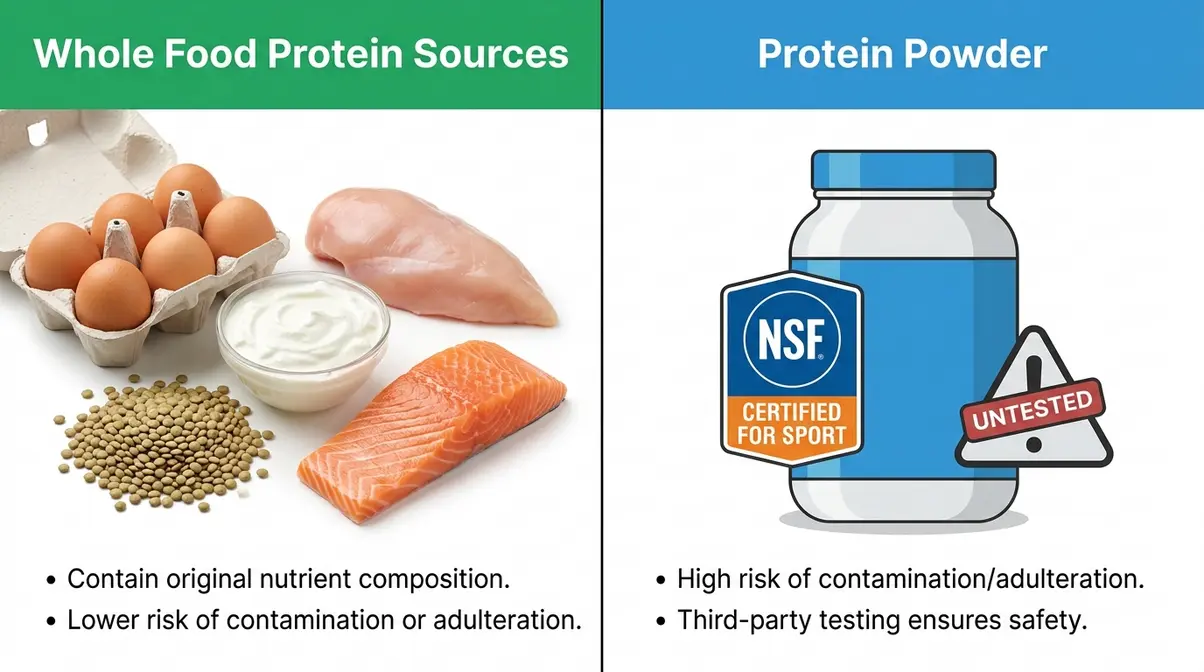
Protein powder is convenient, widely used, and — when chosen carefully — a legitimate tool for meeting protein targets. However, the supplement industry operates under significantly lighter regulatory oversight than the food supply, creating risks that whole-food protein sources simply do not carry.
Heavy Metals in Protein Powders
A 2018 analysis by the Clean Label Project — one of the most comprehensive independent tests of protein powders conducted to date — tested 134 products and found that 75% of protein powders tested positive for lead, 55% for BPA (a plastics chemical), and 68% for arsenic at detectable levels. Plant-based protein powders, particularly rice and pea protein, showed higher heavy metal levels than whey-based products on average.
This does not mean all protein powders are dangerous. It means that third-party testing certification matters enormously. Look for products certified by NSF International, Informed Sport, or USP — these certifications require independent verification of label accuracy and heavy metal testing. Using protein powder occasionally as a supplement to whole-food protein is very different from using it as your primary daily protein source.
For guidance on selecting a high-quality, third-party-tested option, explore grass-fed whey protein powders to cover what to look for on the label.
Whey vs. Plant-Based Protein
Neither whey nor plant-based protein is categorically “safer” — the distinction depends on the individual and the specific product quality.
Whey protein (derived from dairy) is a complete protein — meaning it contains all nine essential amino acids — with a high biological value. It is well-tolerated by most people but can cause GI distress in those with lactose intolerance or dairy sensitivity. Research from Nuvance Health (2026) notes that whey protein isolate (which has most lactose removed) is generally better tolerated than whey concentrate.
Plant-based protein powders (pea, rice, hemp, soy) are lower in one or more essential amino acids unless blended. Pea + rice blends are the most nutritionally complete plant-based option, approaching the amino acid profile of whey. The trade-off, as noted above, is higher average heavy metal content in independent testing.
For a detailed comparison of plant-based options and what to look for, review plant-based protein powder to cover amino acid completeness and third-party certifications.
Protein During Pregnancy and Breastfeeding
Pregnancy is one context where protein needs change significantly — and where the consequences of both too little and too much protein are more serious than at baseline. This is a YMYL topic that warrants specific, evidence-based guidance and professional consultation.
How Much Protein Do Pregnant Women Need?
The recommended protein intake increases during pregnancy to support fetal growth, placental development, and increased maternal blood volume. According to the American College of Obstetricians and Gynecologists (ACOG) and NIH guidelines (2026):
- First trimester: ~0.8–1.0g/kg/day (similar to non-pregnant baseline)
- Second and third trimesters: ~1.1–1.3g/kg/day (increased to support fetal development)
- Breastfeeding: ~1.2–1.3g/kg/day (to support milk production)
For a 130-lb (59 kg) pregnant woman in her third trimester, that equals approximately 65–77g of protein per day — achievable through whole-food sources without supplementation for most women.
Research suggests that protein intakes substantially above 1.5g/kg/day during pregnancy have not been shown to provide additional benefit and may be associated with increased maternal metabolic load (NIH/PMC, 2026). If you are pregnant and following a high-protein diet, work with your OB or a registered dietitian to confirm your targets are appropriate for your specific stage and health status.
For a comprehensive look at protein needs across women’s life stages, read about protein intake for women to cover pregnancy, postpartum, and perimenopause in detail.
Protein Supplements During Pregnancy
The honest answer: use caution, and prioritize whole foods. The heavy metal contamination data discussed in H2 #7 is especially relevant during pregnancy, when fetal exposure to lead and arsenic carries disproportionate developmental risk.
If supplementation is necessary — for example, due to severe morning sickness limiting food intake — choose a product with NSF or USP certification and discuss it with your OB or midwife first. The American Pregnancy Association (2026) recommends avoiding protein powders with added herbs, adaptogens, or artificial sweeteners during pregnancy, as the safety data for many of these additives is insufficient.
Whole-food protein sources — eggs, Greek yogurt, legumes, lean poultry, fish — are the preferred protein delivery method during pregnancy for both safety and micronutrient completeness.
When to See a Doctor About Your Protein Intake
Most people on high-protein diets will experience mild, temporary symptoms that resolve with a simple intake adjustment. However, certain symptoms and pre-existing conditions warrant professional medical evaluation — not just a Google search.
Red Flags That Warrant Medical Attention
The following symptoms go beyond normal dietary adjustment and should prompt a visit to your physician or a registered dietitian:
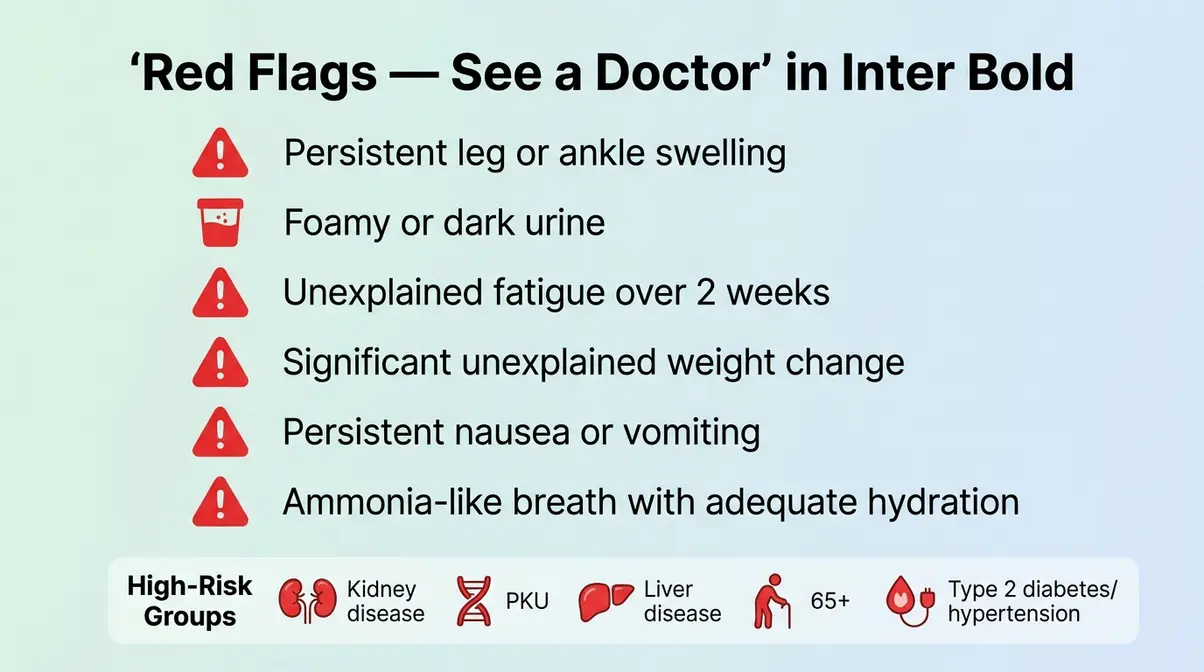
- Persistent swelling in the legs, ankles, or face — may indicate kidney dysfunction affecting fluid balance
- Foamy or dark urine — a potential sign of proteinuria (excess protein in urine), which can indicate kidney stress
- Unexplained fatigue lasting more than 2 weeks despite adequate sleep and hydration
- Significant, unexplained weight changes (gain or loss of 5%+ of body weight in 4 weeks)
- Persistent nausea or vomiting not related to illness
- Ammonia-like breath that persists even with adequate hydration — can indicate elevated blood ammonia levels requiring evaluation
Research from the Mayo Clinic (2026) emphasizes that these symptoms in isolation are rarely diagnostic — but in combination with a known high-protein diet, they warrant laboratory evaluation including a basic metabolic panel (BMP) to assess kidney and liver function.
Who Should Be Extra Cautious?
Certain populations should approach high-protein diets with medical supervision rather than self-guided experimentation:
- People with chronic kidney disease (CKD) — even moderate high-protein intake can accelerate GFR decline
- People with phenylketonuria (PKU) — a rare genetic disorder in which the body cannot metabolize phenylalanine, an amino acid found in most protein sources; protein intake must be medically managed
- People with liver disease — the liver is the primary organ for amino acid processing; impaired liver function reduces this capacity significantly
- Older adults (65+) — kidney filtration capacity naturally declines with age, reducing the threshold at which high protein becomes a burden
- People with type 2 diabetes or hypertension — both conditions stress the kidneys independently, reducing the margin for high-protein intake
This is especially true when determining the optimal protein for men with pre-existing metabolic conditions.
If you fall into any of these groups, work with a physician or registered dietitian before increasing protein intake above baseline recommendations. This is not excessive caution — it is the standard of care for YMYL dietary decisions.
Limitations and When to Seek Expert Help
Common Protein Adjustment Pitfalls
Pitfall 1: Using body weight rather than lean body mass for calculations. The standard gram-per-kilogram formula uses total body weight, which overestimates protein needs in individuals with higher body fat percentages. A 200-lb person who is 40% body fat has roughly 120 lbs of lean mass — their protein target based on lean mass would be considerably lower than a calculation based on total weight.
Pitfall 2: Counting only powder and meat while ignoring protein in grains, dairy, and vegetables. A cup of Greek yogurt contains 17–20g of protein. A cup of cooked lentils contains 18g. Many people tracking protein intake significantly undercount these sources, leading them to believe they are under-target when they are actually at or above it.
Pitfall 3: Treating all protein sources as equivalent for GI tolerance. Whey concentrate, red meat, and legumes all have very different digestive profiles and fiber contents. Cycling between sources — rather than relying exclusively on one — reduces GI distress and improves micronutrient diversity.
Alternatives to High-Protein Diets
A high-protein diet is a tool, not a universal prescription. It is the wrong approach — or requires modification — in these specific scenarios:
- You have CKD, liver disease, or PKU: A standard high-protein diet is medically contraindicated. Work with a nephrologist-dietitian team to establish a protein ceiling.
- You are primarily sedentary: The evidence base for high protein is strongest in active adults. For sedentary individuals, moderate protein (0.8–1.0g/kg/day) with adequate fiber and micronutrients is likely more beneficial than chasing a 2.0g/kg target.
- You are experiencing persistent GI distress: Rather than pushing through, reduce intake to 1.2–1.4g/kg/day, increase fiber, and reassess after two weeks.
When to Seek Expert Help
Seek guidance from a registered dietitian if: you are pregnant or planning pregnancy; you have any kidney, liver, or metabolic condition; your symptoms (fatigue, swelling, foamy urine) persist beyond two weeks of reducing intake; or you are an older adult (65+) significantly increasing protein for the first time. These scenarios exceed the scope of self-guided dietary adjustment and benefit from individualized, supervised planning.
Frequently Asked Questions
What are the symptoms of too much protein?
The most common symptoms of too much protein include bloating, gas, constipation, bad breath (keto breath), fatigue, and unexpected weight gain. These occur because excess protein is converted to glucose through gluconeogenesis, and the resulting nitrogen waste increases kidney workload. Research from Harvard Health (2026) identifies GI distress and dehydration as the earliest signals. Most symptoms resolve within 1–2 weeks of reducing intake to the appropriate gram-per-kilogram range for your body weight and goals.
How much protein in a day is too much?
For most healthy adults, protein intake above 2.5g per kilogram of body weight per day crosses The Protein Tipping Point — the threshold where risks begin to outweigh benefits. The National Academies set the RDA at 0.8g/kg/day for sedentary adults, while the ISSN supports 1.6–2.2g/kg/day for active individuals. For a 150-lb (68 kg) person, this means roughly 54–150g/day is the evidence-based range. Consistently exceeding the upper end without medical supervision is not recommended.
Can people with PKU eat protein?
People with phenylketonuria (PKU) must strictly limit natural protein intake because their bodies cannot metabolize phenylalanine, an amino acid present in virtually all protein-containing foods. PKU is a genetic metabolic disorder diagnosed at birth through newborn screening. Management requires a medically supervised low-phenylalanine diet, often supplemented with specially formulated PKU medical foods that provide essential amino acids without phenylalanine. This is not a self-managed condition — it requires ongoing care from a metabolic dietitian and physician team.
Is 200g of protein too much?
Whether 200g of protein per day is too much depends on your body weight. For a person under 175 lbs (80 kg), 200g exceeds the evidence-based upper threshold of ~2.5g/kg/day and may increase kidney workload and fat storage. For a 200-lb (91 kg) strength athlete, 200g equals approximately 2.2g/kg — within the supported range. The number itself is less meaningful than the gram-per-kilogram calculation. Always apply the 3-step calculation in this article to find your personal limit.
What 5 red flags mean you need more protein?
Five signs you may be under-eating protein include: (1) slow wound healing or frequent illness — protein is essential for immune function and tissue repair; (2) muscle loss or weakness despite training; (3) persistent hunger shortly after meals; (4) brittle nails or hair loss; and (5) low energy and difficulty concentrating. According to NIH nutritional guidance (2026), these symptoms in combination with a diet below 0.8g/kg/day suggest inadequate protein intake. A registered dietitian can confirm through dietary analysis.
What does protein overload feel like?
Protein overload typically feels like a cluster of digestive and energy symptoms — persistent bloating, gas, constipation, unusual fatigue, and an ammonia-like or fruity bad breath. Many people describe feeling “heavy” after high-protein meals and experiencing energy crashes despite eating what seems like a healthy diet. Research from UCLA Health (2026) notes that dehydration compounds these symptoms significantly, as the kidneys require more water to process the increased nitrogen load from excess protein.
What are the first signs of too much protein?
The first signs of eating too much protein are almost always digestive: bloating, gas, and changes in bowel habits (typically constipation) within 1–3 days of a significant protein increase. These appear before any measurable kidney or liver strain. Keto breath — a fruity or chemical odor — is another early signal, particularly on low-carb, high-protein diets where gluconeogenesis is most active. If you notice these symptoms, reducing protein by 20–30g/day and increasing water and fiber intake is the recommended first step.
Is 2 eggs a day enough protein?
Two eggs provide approximately 12–13g of protein — a meaningful contribution but far below most adults’ daily needs. For a sedentary 150-lb (68 kg) adult needing ~54g/day, two eggs cover roughly 23% of the target. For an active adult targeting 100g/day, two eggs cover about 12%. Eggs are a high-quality, complete protein source with excellent bioavailability (NIH/PMC, 2026), but they work best as one component of a varied protein strategy — paired with Greek yogurt, legumes, lean meat, or a quality protein supplement — rather than as a primary source.
Your Personal Protein Tipping Point
If you’re still wondering, can you eat too much protein, the answer is a definitive yes. For most healthy adults, the evidence converges on a clear range: 0.8–2.2g of protein per kilogram of body weight per day, scaled to activity level and goals. Beyond approximately 2.5g/kg/day, the research suggests diminishing returns for muscle and weight management, with increasing metabolic burden on the kidneys, liver, and digestive system. A 2026 review in Advances in Nutrition (NIH/PMC, 2026) confirmed this ceiling across multiple population groups, reinforcing that more protein is not always better protein.
The Protein Tipping Point is not a single number for everyone — it is a personalized threshold calculated from your body weight, activity level, kidney health, and dietary goals. The 3-step calculation in H2 #1 gives you a science-backed starting point. The symptom checklist in H2 #3 tells you if you have already crossed it.
Start by calculating your target using the framework in this article, then track your intake for one week using a free food diary app. If symptoms appear — particularly GI distress, unusual fatigue, or persistent bad breath — reduce intake by 20–30g/day and reassess after two weeks. If symptoms persist or you fall into a higher-risk group (CKD, pregnancy, age 65+), consult a registered dietitian before making further adjustments. A single RD consultation is one of the highest-value investments you can make in getting your protein strategy right.
Related posts:
Best Protein Powder for Muscle Growth: Tested (2026)
Best High Protein Meal Delivery Services 2026: Top 7
Protein Powder Without Artificial Sweeteners: 10 Best Picks
Best Protein Powder for Weight Loss: 10 Expert Picks
What Are Macros? A Plain Guide to Protein, Carbs and Fat
Best Protein Powder for Muscle Gain: 9 Picks for Every Goal

Callum
Hi, I'm Callum, the founder of Body Muscle Matters. I'm not a certified trainer, I'm a self taught lifter who started this site to share what I've learned from my own training and a lot of trial and error. Everything here comes from real experience and honest research, written the way I'd explain it to a friend who is just getting started. My goal is simple: practical, no hype fitness advice you can actually use.