Academy of Nutrition & Dietetics Protein Guidelines
Home ›Supplements and Nutrition
⚠️ Medical Disclaimer: This article is for educational purposes only and does not constitute medical advice. Protein needs vary by individual health status, medications, and medical history. Consult a licensed Registered Dietitian (RD) or your healthcare provider before making significant changes to your diet — especially if you have kidney disease, diabetes, or other metabolic conditions.
You have probably seen protein advice ranging from “just eat more chicken” to “one gram per pound of body weight, no exceptions.” The Academy of Nutrition and Dietetics — the world’s largest organization of registered dietitian nutritionists, with over 112,000 members — has precise, evidence-based guidelines that tell a more nuanced and more useful story.
Without the correct numbers, you may be eating far too little protein to protect your muscle mass as you age — or spending money on excess protein your body simply cannot use. Both outcomes are avoidable with the right framework.
“How much protein you need depends on several factors including age, sex, health status and activity level.
— Academy of Nutrition and Dietetics
By the end of this guide, you will know your exact personal protein target in grams per day, how to distribute it across your meals, and which food sources best align with the Academy of Nutrition and Dietetics protein recommendations. The guide follows a three-step process: find your baseline, calculate your daily target, and optimize quality and timing.
The Academy of Nutrition and Dietetics recommends 0.8 g/kg for sedentary adults, rising to 1.2–2.0 g/kg for active individuals and athletes under the 2026 Dietary Guidelines — the right amount depends on your age, weight, and activity level.
- Your baseline: 0.8 g/kg/day is the minimum — not the optimum for most active adults
- The Protein Totality Framework: Quantity + Quality + Timing all determine protein effectiveness, not grams alone
- Meal distribution: Aim for 20–30g per meal across 3–4 meals, not a single large serving
- The 2026 update: The Dietary Guidelines for Americans 2025–2030 raise the general target to 1.2–1.6 g/kg for healthy adults
- Protein package matters: The Academy prioritizes sources lower in saturated fat, emphasizing whole-food choices
Before You Start: Key Protein Concepts Explained
This guide synthesizes the Academy of Nutrition and Dietetics’ (AND) published position papers and the January 2026 Dietary Guidelines for Americans (DGAs) — the federal government’s five-year dietary policy update released on January 7, 2026. Understanding three foundational terms before you begin will save you time and prevent calculation errors.
What you will need:
(Estimated time: 10 minutes)
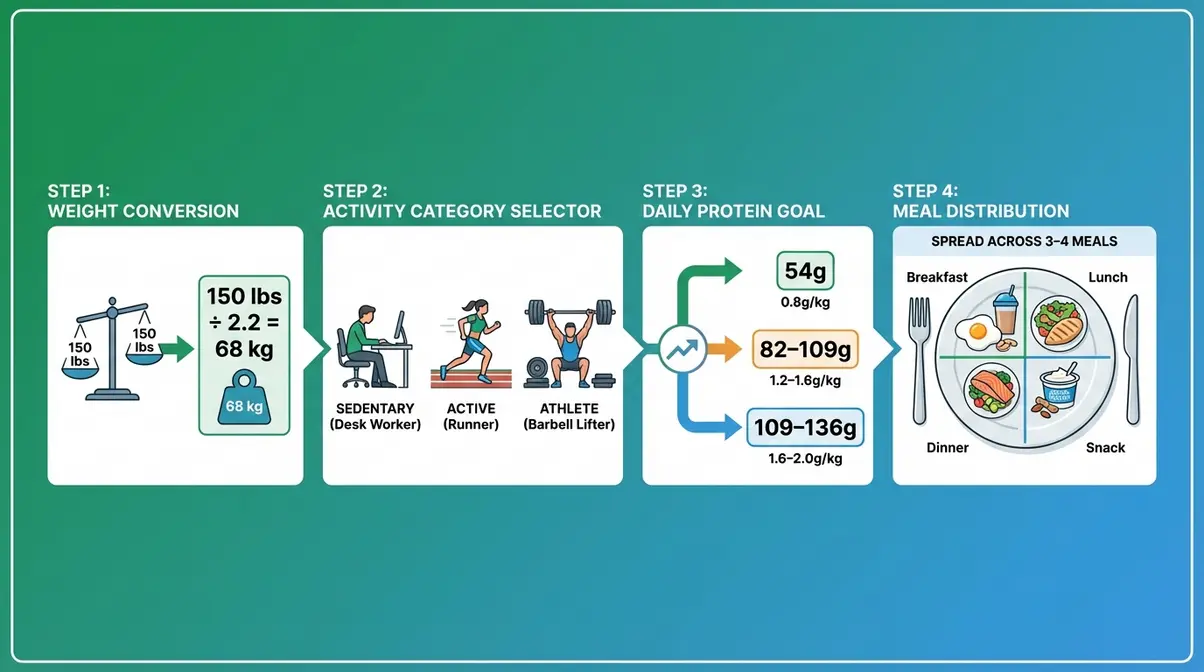
- Your current body weight — in kilograms (kg) or pounds (lbs). To convert pounds to kilograms, divide by 2.2. Example: 150 lbs ÷ 2.2 = 68 kg.
- Your age group — adults 50+ and teenagers follow different protein ranges than younger adults.
- Your typical weekly activity level — Sedentary means a desk job with no structured exercise. Moderately active means 3–4 sessions of deliberate exercise per week. Athlete means 5 or more hours of structured training per week.
Key terms defined:
- RDA (Recommended Dietary Allowance) — the minimum daily protein needed to prevent deficiency in healthy sedentary adults. It is a floor, not a ceiling.
- g/kg — grams of protein per kilogram of body weight. If you weigh 70 kg and your target is 0.8 g/kg, you need 56g daily — roughly the protein in 8 large eggs.
- AMDR (Acceptable Macronutrient Distribution Range) — the evidence-based percentage of total daily calories from protein that supports health; covered fully in Step 2.
- Protein package — the full collection of nutrients (fats, vitamins, fiber) that accompany the protein in a given food; covered in Step 3.
With those basics established, let’s move into Step 1: finding your official protein baseline.
Step 1: Find Your Protein Baseline
The Academy of Nutrition and Dietetics protein recommendations begin with a clear baseline: 0.8 grams of protein per kilogram of body weight per day for healthy sedentary adults, as established by the Recommended Dietary Allowance (NCBI). Critically, the January 2026 Dietary Guidelines for Americans raised the general healthy adult baseline to 1.2–1.6 g/kg — nearly doubling the older standard for people who are not entirely sedentary. That distinction matters enormously for your daily meal planning. In Step 3, we will show you how quantity is just one dimension of the Academy’s protein guidance — but first, let’s establish your number.
What Is the Protein RDA?
The Recommended Dietary Allowance (RDA) is set at 0.8 grams of protein per kilogram of body weight per day for healthy sedentary adults. This figure represents the minimum required to prevent deficiency — not the optimal intake for people who exercise, age actively, or want to preserve muscle mass over time.
Competitors and generic health websites still quote 0.8 g/kg as the universal target. That is outdated. The Academy’s January 2026 position statement aligns with the new Dietary Guidelines for Americans 2025–2030, which raise the general healthy adult baseline to 1.2–1.6 g/kg. The organization that sets these guidelines — the Academy of Nutrition and Dietetics (AND) — is the world’s largest professional body of food and nutrition professionals, and its recommendations carry the highest clinical authority in this field.
To make 0.8 g/kg concrete: a 68 kg (150 lb) sedentary adult meets the RDA with just 54g of protein per day — roughly the amount in 3 eggs, a cup of Greek yogurt, and one 3-oz chicken breast combined. That is an achievable baseline, but for most adults it represents a minimum, not a target.
The Academy of Nutrition and Dietetics endorses a baseline protein intake of 0.8 grams per kilogram of body weight for healthy sedentary adults, rising to 1.2–1.6 g/kg under the January 2026 Dietary Guidelines for Americans (NCBI).
According to the National Institutes of Health protein guide, the official reference protein allowance for a healthy young adult is 0.75 to 0.8 grams per kilogram of body weight per day (NCBI, 2024).
Now that you know what the RDA means, here is how to calculate your own daily target using the Academy’s exact formula.
How to Calculate Your Daily Protein Needs
The calculation is four steps. Work through each one in order with your own body weight:
- Find your weight in kilograms — divide your weight in pounds by 2.2. Example: 150 lbs ÷ 2.2 = 68 kg.
- Identify your activity category — sedentary, active, or athletic (see table below).
- Multiply your weight (kg) by the category multiplier — example: 68 × 0.8 = 54g for a sedentary adult.
- Set this as your daily minimum — then divide across 3–4 meals (covered in Step 3).
Daily Protein Targets by Activity Level (Academy of Nutrition and Dietetics, 2026)
| Profile | Weight | Multiplier | Daily Target |
|---|---|---|---|
| Sedentary adult | 68 kg (150 lbs) | 0.8 g/kg | 54g/day |
| Active adult (2026 DGA) | 68 kg (150 lbs) | 1.2–1.6 g/kg | 82–109g/day |
| Endurance/strength athlete | 68 kg (150 lbs) | 1.6–2.0 g/kg | 109–136g/day |
The active adult range of 82–109g reflects the 2026 DGA update — this is the key new figure that the majority of competing health websites have not yet incorporated.
To translate the sedentary number into real food: 54g daily ≈ 3 oz canned tuna (20g) + 1 cup Greek yogurt (17g) + 2 large eggs (12g) = 49g — close to your baseline, achievable before dinner.
For a more detailed breakdown by weight and age, calculate daily protein needs by body weight.
According to the UC Davis Nutrition Department, the Acceptable Macronutrient Distribution Range (AMDR) suggests consuming 10–35% of total daily energy from protein, aligning with the 0.8 g/kg RDA as a minimum (UC Davis, 2024).
Your daily target is now a number you can work with. But that number looks different across age groups and life stages — which the Academy addresses with specific adjustments.
Protein Needs by Age and Activity Level
Different life stages call for meaningfully different protein targets. Here is a reference overview based on the Academy’s guidance:
- Children and adolescents: Growing tissue demands higher proportional protein. Needs vary by age band, ranging from roughly 0.85–1.0 g/kg for school-age children, with teenage athletes requiring more.
- Healthy adults (18–49): 0.8 g/kg as the RDA minimum; 1.2–1.6 g/kg under the 2026 DGA for those who are active.
- Adults 50+: 1.2–2.0 g/kg minimum to help prevent sarcopenia (covered in depth in Step 2). This is one of the most clinically important distinctions the Academy makes.
- Pregnant and nursing women: Increased protein needs above the standard adult range — consult a registered dietitian for individualized targets during these phases.
- Athletes: 1.6–2.0 g/kg, jointly endorsed by the Academy and the American College of Sports Medicine (ACSM).
Sex differences are secondary to activity level. Men typically have higher absolute targets because of greater body mass, but the g/kg ratio — the formula you are using — is equivalent across sexes.
For US readers who prefer pounds: divide your g/kg target by 2.2 to get the g/lb equivalent. Example: 1.2 g/kg ≈ 0.55 g/lb.
The chart below summarizes g/kg and gram targets across life stages.
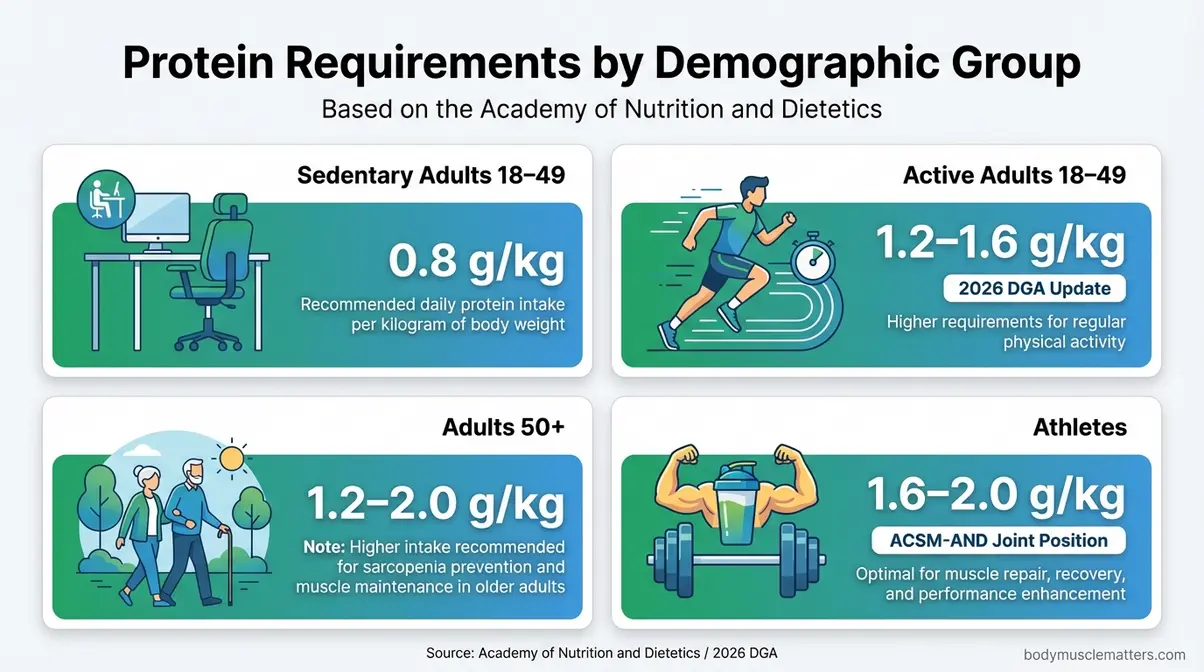
Caption: Protein targets by life stage, based on the Academy of Nutrition and Dietetics and 2026 Dietary Guidelines for Americans — g/kg ranges for sedentary adults, active adults, adults 50+, and athletes.
Now that you have your baseline protein number, Step 2 shows you how to work it into your total daily calorie plan — and adjust it for your specific life stage.
Step 2: Calculate Your Daily Protein Target
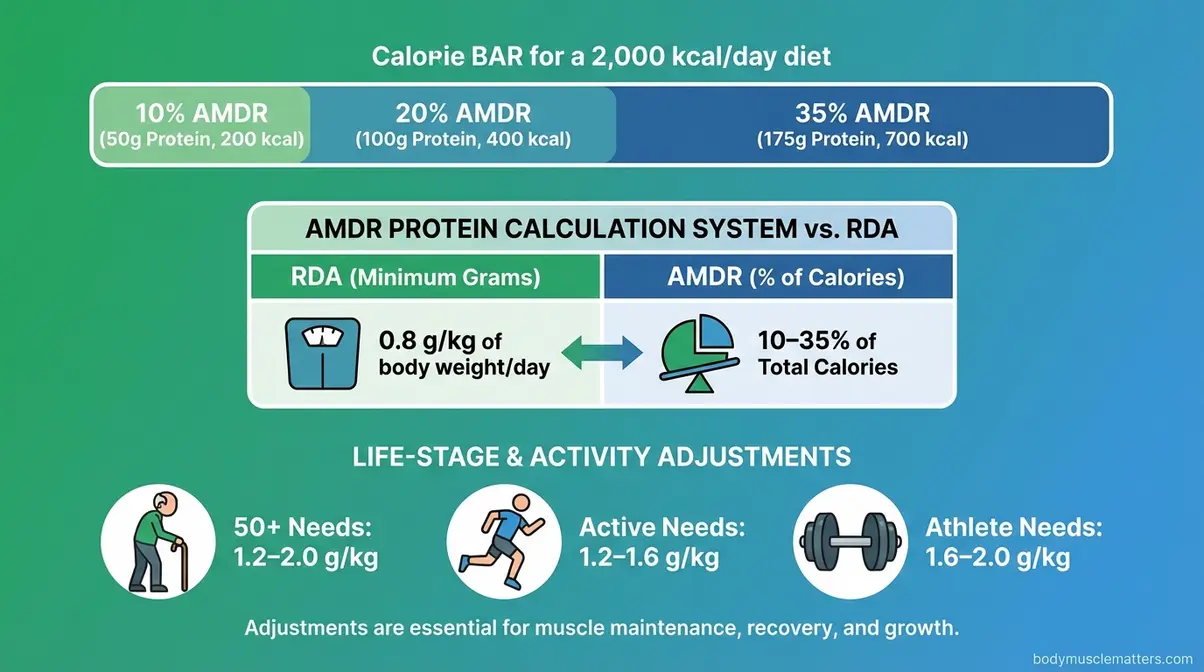
Protein should make up 10 to 35 percent of your total daily calories, according to the federal Acceptable Macronutrient Distribution Range (AMDR) standard. At 2,000 daily calories, that means 50g to 175g of protein per day — a wide range that the Academy narrows based on your specific life stage. Step 2 addresses the “how much” dimension of The Protein Totality Framework: understanding your target within the context of your whole diet. This step also covers critical life-stage adjustments for older adults and athletes, and explains when protein intake may carry risk.
What Is the Protein AMDR?
The Acceptable Macronutrient Distribution Range (AMDR) is the evidence-based range of macronutrient intake associated with reduced chronic disease risk, established by federal dietary authorities. For protein, that range is 10–35% of total daily calories. Unlike the RDA — which tells you the minimum grams needed — the AMDR tells you the acceptable percentage range for overall diet balance.
Here is how to calculate your AMDR protein window in three steps:
- Identify your daily calorie intake (example: 2,000 cal/day).
- Multiply by 10% for the lower bound and 35% for the upper bound → 200–700 calories from protein.
- Divide by 4 (the number of calories per gram of protein) → 50–175g of protein per day.
Most adults land in the 15–25% range in practice. Neither the 10% floor nor the 35% ceiling is typical — the Academy’s guidance uses this wide range to accommodate different metabolic needs, activity levels, and health goals.
Example: A moderately active 150 lb (68 kg) adult eating 2,000 cal/day targeting 20% protein = 400 cal ÷ 4 = 100g protein daily — within the Academy’s recommended range and consistent with the 2026 DGA guidance.
AMDR Protein Targets at Common Calorie Levels
| Daily Calories | 10% Protein | 20% Protein | 35% Protein |
|---|---|---|---|
| 1,600 cal | 40g | 80g | 140g |
| 2,000 cal | 50g | 100g | 175g |
| 2,200 cal | 55g | 110g | 193g |
| 2,500 cal | 63g | 125g | 219g |
For a broader introduction to how protein fits alongside carbohydrates and fats, see our guide on understanding macronutrient distribution ranges.
According to the NCBI AMDR reference, the Acceptable Macronutrient Distribution Range was established to provide guidance on macronutrient intakes that reduce the risk of chronic diseases while ensuring adequate essential nutrient intake (NCBI, 2024).
The AMDR sets the broad boundaries. But your position within that range depends heavily on your age and activity level — and the Academy provides specific guidance for each group.
Adjusting Your Protein Target for Age and Activity Level
Research shows that protein needs change dramatically across life stages — and the gap is largest for adults over 50.
Older Adults (50+) — The Sarcopenia Risk
Research indicates that optimal protein intake for older adults is approximately 70% greater than for young adults — equating to 1.2 to 2.0 grams per kilogram per day to prevent sarcopenia (PubMed Central, 2016). Sarcopenia is the progressive loss of muscle mass that accelerates after age 50, increasing the risk of falls, fractures, and loss of independence. Protein intake above the basic RDA — combined with resistance exercise — is the Academy’s primary dietary strategy against this decline.
A practical example: a 70-year-old woman weighing 60 kg needs a minimum of 72g of protein per day (at 1.2 g/kg) to protect her muscle mass. Under the old 0.8 g/kg RDA, that same woman would have been told 48g was sufficient — nearly 33% less. More recent research confirms this direction: a 2022 systematic review (PMC9320473) found that inadequate protein intake is significantly associated with sarcopenia risk in older adults, and a 2024 analysis in Critical Reviews in Food Science and Nutrition showed that 1.2 g/kg/day is linked to 40% less lean mass loss over a three-year period compared to 0.8 g/kg/day.
Muscle protein synthesis (MPS) — the biological process by which your body repairs and builds muscle tissue from dietary protein — becomes less efficient with age, meaning older adults must consume more protein at each meal to stimulate the same anabolic response as younger adults. This is not a reason for concern; it is a reason for precision.
Active Adults (18–49) — The 2026 DGA Range
For adults who exercise regularly (3–5 days per week), the 2026 Dietary Guidelines for Americans explicitly endorse 1.2–1.6 g/kg as the new baseline. The Academy’s January 2026 statement acknowledged this elevation from the legacy 0.8 g/kg RDA. At 68 kg, a moderately active adult should target 82–109g per day, not 54g.
Athletes — The ACSM-AND Joint Position
The Academy of Nutrition and Dietetics, jointly with the American College of Sports Medicine, endorses 1.2–2.0 g/kg for competitive and recreational athletes. Endurance athletes (runners, cyclists) generally do best toward the lower end (1.2–1.4 g/kg). Strength and power athletes (weightlifters, sprinters) benefit from the upper end (1.6–2.0 g/kg).
Overweight Individuals — A Critical Nuance
The Academy advises calculating protein targets using ideal or adjusted body weight — not current body weight — for individuals with significant excess weight. Using actual body weight in this group may substantially overestimate needs and create unnecessary caloric burden.
Consult a registered dietitian before significantly changing your protein intake, particularly if you are over 65 or managing a chronic condition.
Life-Stage Protein Summary
| Life Stage | Protein Target | Primary Reason |
|---|---|---|
| Sedentary adult (18–49) | 0.8 g/kg | Maintenance baseline |
| Active adult (18–49) | 1.2–1.6 g/kg | 2026 DGA update |
| Adults 50+ | 1.2–2.0 g/kg | Sarcopenia prevention |
| Athletes | 1.6–2.0 g/kg | Muscle repair and adaptation |
According to PubMed Central research on older adults, research indicates optimal protein intake for older adults is approximately 70% greater than for young adults, equating to roughly 1.2 to 2.0 grams per kilogram per day to prevent muscle loss (PubMed Central, 2016).
Knowing your adjusted daily target is critical — but so is understanding when you may be consuming too much. The Academy has clear guidance on upper limits.
How Much Protein Is Too Much?
The Academy’s position is that daily intakes exceeding 2.0 g/kg provide no additional muscle-building benefit for most individuals and may introduce unnecessary metabolic stress. For perspective: 200g of protein on a 2,000-calorie diet represents 40% of total calories — leaving little room for the carbohydrates and healthy fats your body also needs to function well.
For healthy kidneys: Current evidence suggests that high-protein intake does not cause kidney disease in individuals with normal kidney function. A 2024 analysis in Frontiers in Nutrition found that higher total protein intake — particularly from fish and seafood — was associated with a 14–23% lower risk of chronic kidney disease development (Frontiers in Nutrition, 2024). However, the research on very long-term intakes remains inconclusive.
For impaired kidneys: The picture is different. Research published in Nephrology Dialysis Transplantation found that patients with pre-existing kidney hyperfiltration who consumed ≥1.2 g/kg/day showed faster kidney function decline (Oxford Academic, 2019). Early research from Harvard University (2003) similarly found that a high-protein diet can accelerate the decline of kidney function in those who already have mild kidney impairment — this finding applies to pre-existing impairment, not healthy kidneys.
If you have any history of kidney disease, please consult a registered dietitian before increasing your protein intake. Individual protein needs vary. Work with a healthcare provider if you have kidney disease, diabetes, or other metabolic conditions.
For a comprehensive breakdown of safe daily and per-meal limits, see our detailed guide on safe upper limits for protein consumption.
Now that you know your daily protein target and its safe limits, Step 3 shows you how to make every gram count — through strategic timing, amino acid quality, and source selection.
Step 3: Optimize Protein Quality and Timing
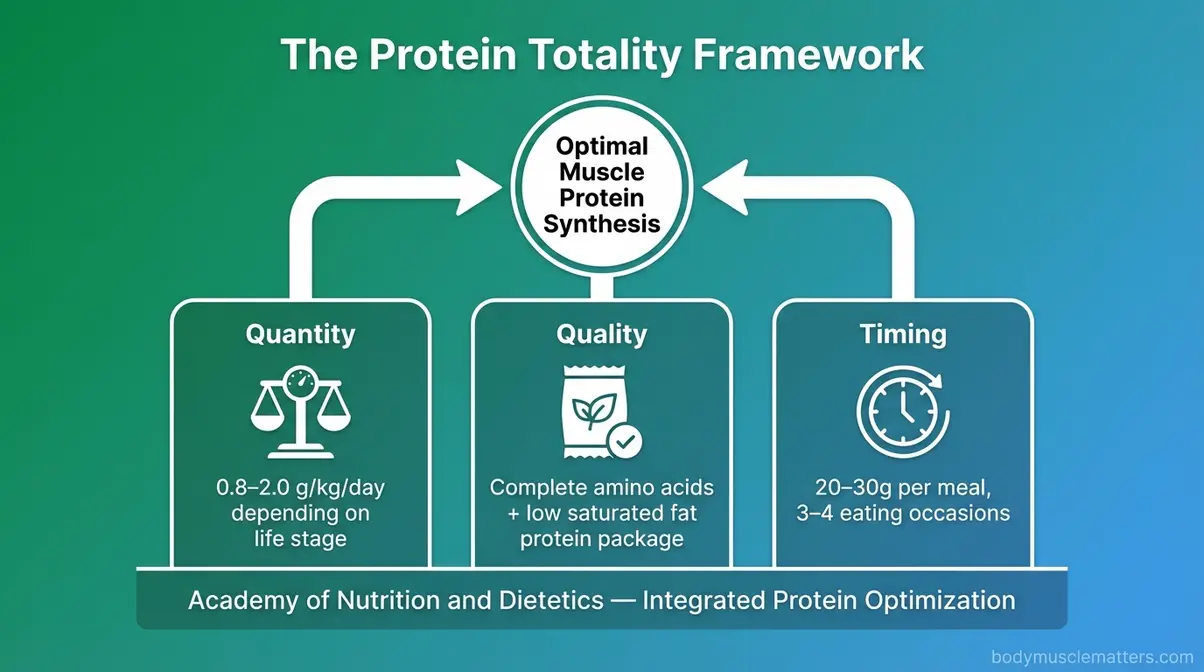
How you time and choose your protein sources is just as important as hitting your daily gram target. This step introduces The Protein Totality Framework — a three-part evaluation approach that assesses Quantity (your daily g/kg target from Steps 1 and 2), Quality (the amino acid completeness and protein package of your sources), and Timing (distributing 20–30g of protein across 3–4 eating occasions per day). Research shows that distributing protein across multiple meals maximizes muscle protein synthesis — a strategy the Academy of Nutrition and Dietetics endorses over single-session high-protein loading (PubMed Central, 2018). This step delivers your meal distribution plan, a protein source quality guide, and the Academy’s food-selection framework.
Why Spacing Your Protein Intake Throughout the Day Matters
Muscle protein synthesis (MPS) — the biological process by which your body repairs and builds muscle tissue from dietary protein — does not scale linearly with a single large meal. Think of leucine as a light switch for muscle building. Leucine is a branched-chain amino acid that acts as the primary trigger for MPS. Research suggests that approximately 2–3g of leucine per meal is needed to flip that switch on, which translates to roughly 20–30g of a high-quality protein source per sitting.
Eating 120g of protein at dinner and almost nothing earlier in the day is biologically inefficient. Your muscles can only use a limited amount of protein per meal for acute MPS stimulation; the remainder is oxidized for energy. This is why researchers consistently find greater lean mass gains when protein is distributed rather than concentrated.
The Academy’s guidance — consistent with peer-reviewed literature — recommends 20–30g of protein per meal, spread across 3–4 eating occasions throughout the day. Here is the math for an active 68 kg adult:
- Identify your target range: 1.2–1.6 g/kg → 82–109g daily.
- Divide across 4 meals: 82g ÷ 4 = 20.5g per meal (lower end) | 109g ÷ 4 = 27g per meal (upper end).
- Anchor each meal with a protein-first approach: Build the meal around the protein source, then add vegetables, complex carbohydrates, and healthy fats.
PubMed Central protein timing research shows that to maximize muscle protein synthesis, evidence supports distributing protein intake across a minimum of four meals per day rather than concentrating intake at one or two meals (PubMed Central, 2018).
Knowing how much protein to eat per meal is half the equation. The next step shows you how to build a full day of eating around these targets.
Step-by-Step: Building a Day of Protein-Rich Meals
The timeline below maps out a sample day of protein-optimized meals for a moderately active 68 kg adult targeting approximately 100g of daily protein.
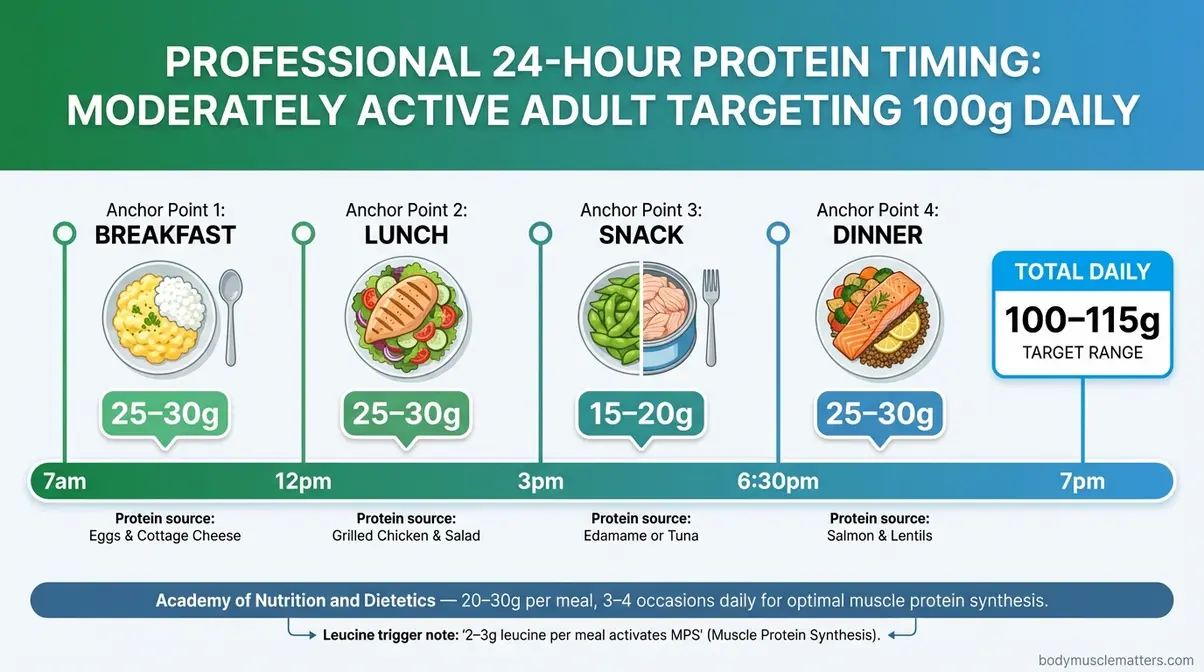
Caption: A sample protein timing plan for a 68 kg active adult targeting 100g daily — each meal anchored by a 20–30g protein source aligned with the Academy of Nutrition and Dietetics’ distribution guidance.
Sample day — numbered because the sequence matters:
- Breakfast (7 am) — 25–30g: 3 large eggs scrambled (18g) + ¾ cup cottage cheese (18g) on the side = ~36g. Alternatively: 1 cup Greek yogurt (17g) + 2 eggs (12g) + 1 scoop protein powder in coffee (25g) if calories allow.
- Lunch (12 pm) — 25–30g: 4 oz grilled chicken breast (35g) over a mixed green salad with chickpeas (7g) = ~42g. Scale down the chicken to 3 oz for ~26–27g if you prefer the lower bound.
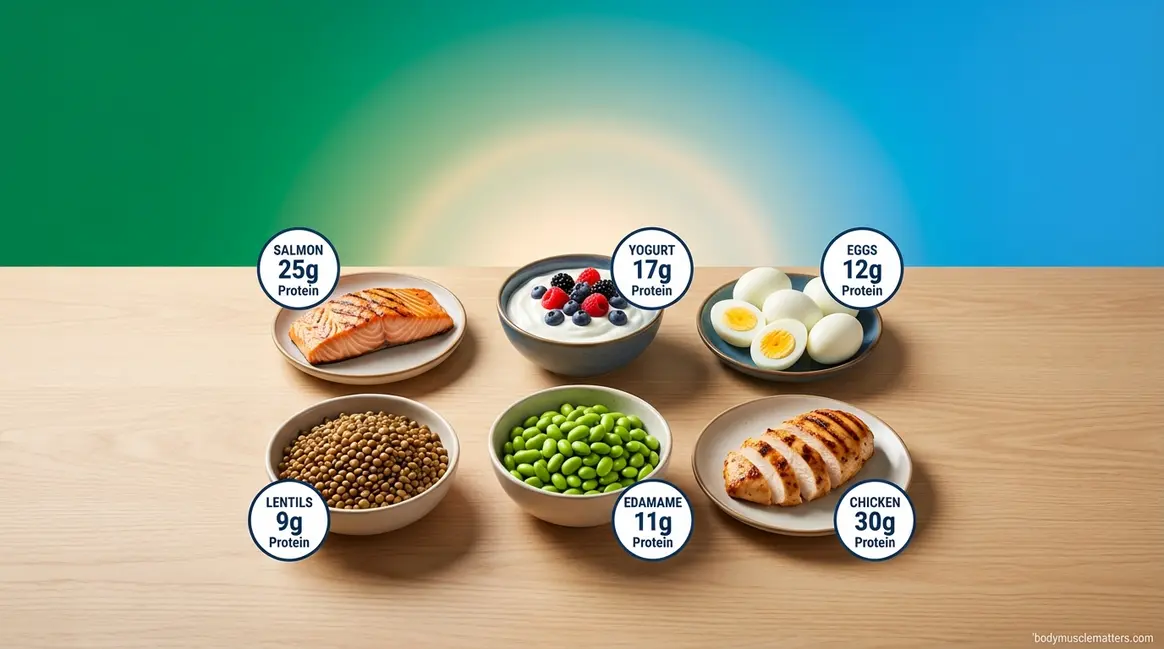
- Afternoon snack (3 pm) — 15–20g: 1 cup edamame (17g) or a 3.5 oz can of tuna (25g) with crackers.
- Dinner (6:30 pm) — 25–30g: 4 oz salmon fillet (25g) + ½ cup lentils (9g) + roasted vegetables = ~34g.
This sample delivers approximately 100–115g across four meals — consistent with the active adult target under the 2026 DGA without placing an excessive load on any single meal.
For deeper per-meal protein guidance tailored to muscle building, explore our guide on per-meal protein targets.
Knowing what to eat per meal is powerful. But not all protein sources are created equal — which is where the Academy’s “protein package” concept becomes the decisive factor.
Animal vs. Plant Protein Packages
The Academy’s guidance goes beyond counting grams. It evaluates each protein source through the lens of its protein package — the full collection of nutrients (fats, vitamins, fiber, sodium) that accompany the protein in a given food.
Complete vs. incomplete amino acid profiles are the first dimension. A complete amino acid profile means the food contains all nine essential amino acids in proportions your body needs for MPS. Animal proteins (chicken, fish, eggs, dairy) are naturally complete. Most plant proteins are incomplete on their own — for example, rice is low in lysine, while beans are low in methionine. However, eating a variety of plant proteins across the day — rice with lentils, hummus with whole-grain bread, tofu with edamame — effectively delivers a complete profile without requiring careful meal-by-meal planning.
The protein package concept becomes most visible when you compare sources at the same protein quantity:
| Source | Protein (per 100g) | Saturated Fat | Fiber | Package Assessment |
|---|---|---|---|---|
| Skinless chicken breast | 31g | 0.9g | 0g | Lean, complete — Academy-preferred animal protein |
| Fatty ribeye steak | 26g | 10g | 0g | Complete but high saturated fat — limit frequency |
| Canned salmon | 25g | 1.2g | 0g | Complete + omega-3s — Academy-recommended |
| Black beans | 9g | 0.2g | 8g | Incomplete alone, but adds fiber — combine with grains |
| Firm tofu | 8g | 0.5g | 0.3g | Near-complete + low saturated fat — Academy-approved |
| Whole eggs | 13g | 3.3g | 0g | Complete + micronutrients — moderate consumption |
The Academy’s January 2026 statement explicitly raises concern about saturated fat in red meat and full-fat dairy as protein sources — not because these foods are forbidden, but because the protein package they deliver includes a cardiovascular cost that leaner sources avoid.
“A healthful protein package minimizes saturated fat while maximizing nutrient density,” the Academy’s registered dietitian nutritionists consistently advise — a principle that favors fish, legumes, poultry, and low-fat dairy over processed meats and fatty red meat as everyday protein anchors.
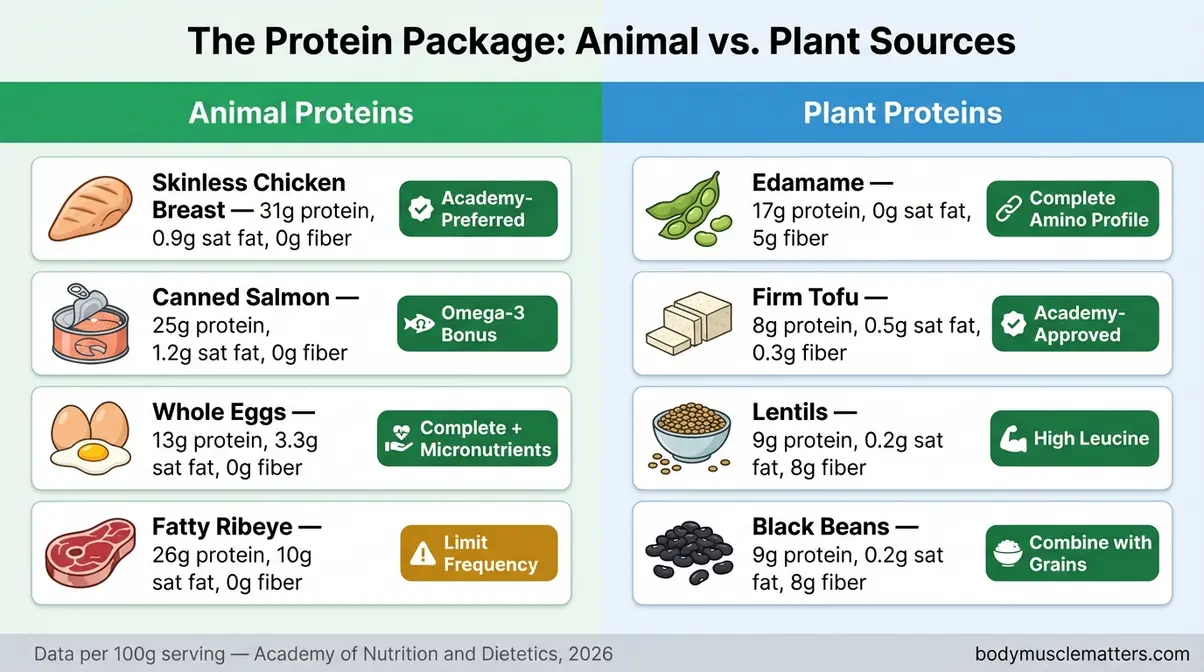
Caption: The Academy of Nutrition and Dietetics evaluates protein sources by their full nutrient package — not just grams of protein. Sources lower in saturated fat and richer in micronutrients receive the strongest clinical endorsement.
Now that you understand protein quality, here are the Academy’s top recommended sources across both animal and plant categories.
Top Academy-Approved Protein Sources
The following sources align with the Academy of Nutrition and Dietetics’ emphasis on high-quality protein with a favorable nutrient package — high in protein, lower in saturated fat, and nutrient-dense overall.
Animal-Based Sources (Complete Profiles)
- Skinless poultry (chicken, turkey) — ~30g per 4 oz cooked. Lean, versatile, and Academy-recommended as a primary animal protein anchor.
- Fish and seafood — salmon provides ~25g per 4 oz plus anti-inflammatory omega-3 fatty acids; canned tuna offers 20g per 3 oz at low cost.
- Eggs — ~6g per large egg with a complete amino acid profile plus choline, vitamin D, and B12. Two to three eggs per meal are a practical MPS-triggering unit.
- Low-fat dairy — Greek yogurt (17g per cup), cottage cheese (14g per ½ cup), and low-fat milk (8g per cup) contribute significant protein with beneficial calcium and probiotics (Greek yogurt).
Plant-Based Sources (Combine for Completeness)
- Lentils — 9g per ½ cup cooked, plus 8g of fiber. High leucine content relative to other legumes makes lentils among the most MPS-efficient plant proteins.
- Edamame (whole soybeans) — 17g per cup, complete amino acid profile, low saturated fat. Soy is one of the few plant proteins that is complete on its own.
- Tofu and tempeh — 8–15g per 3 oz depending on firmness. Tempeh is fermented, improving digestibility and adding beneficial gut bacteria.
- Chickpeas, black beans, kidney beans — 7–9g per ½ cup cooked. Combine with grains (rice, quinoa, whole wheat bread) across the day for a complete essential amino acid supply.
The Academy recommends building meals around a variety of these sources — not relying exclusively on any single food — to optimize both the amino acid profile and the broader protein package (eatright.org).
According to the Academy of Nutrition and Dietetics, choosing protein foods that are lower in saturated fat and higher in fiber supports both muscle health and long-term cardiovascular wellbeing.
Common Protein Mistakes to Avoid
Common Mistakes When Following Protein Guidelines
Even motivated, health-conscious adults regularly fall into these three patterns when first applying the Academy’s guidance.
Mistake 1: Eating almost all your protein at dinner. Concentrating 80–100g of protein in a single evening meal is one of the most common patterns in Western eating. As Step 3 explained, your muscles can only effectively use a limited amount of protein per meal for MPS stimulation — the rest is oxidized for energy. Front-loading or distributing protein across 3–4 meals produces measurably better outcomes for muscle maintenance and synthesis.
Mistake 2: Ignoring the protein package. Hitting your gram target by eating processed deli meats, high-fat red meat daily, or relying heavily on saturated-fat-dense dairy addresses quantity but undermines the Academy’s quality standard. The protein package — what comes with the protein — matters as much as the protein itself for long-term health outcomes, particularly cardiovascular risk.
Mistake 3: Still using the old 0.8 g/kg RDA as your ceiling. Millions of people — including many fitness apps and meal planning tools — have not been updated with the 2026 DGA guidance. If you are moderately active and eating to the 0.8 g/kg minimum, you are likely under-fueling muscle maintenance, especially if you are over 40. The new standard for active adults is 1.2–1.6 g/kg.
Mistake 4: Calculating protein for overweight individuals on actual body weight. Using current body weight rather than ideal or adjusted body weight in individuals with significant excess weight can dramatically overestimate daily targets. This nuance is rarely addressed in consumer-facing content, but the Academy’s clinical guidance explicitly accounts for it.
When to Consult a Registered Dietitian
The Academy’s protein frameworks are designed for generally healthy adults. However, individual clinical circumstances can change these numbers significantly — and applying a general guideline in a complex health situation can cause harm.
Seek guidance from a Registered Dietitian if you:
- Have been diagnosed with kidney disease, chronic kidney disease (CKD), or reduced kidney function at any stage
- Have Type 1 or Type 2 diabetes, or insulin resistance
- Are pregnant or breastfeeding
- Have a history of gout, as high purine-rich animal proteins can trigger flares
- Are managing cancer, autoimmune disease, or are on immunosuppressive medications
- Are significantly underweight or recovering from surgery, illness, or an eating disorder
This article is for educational purposes only and does not constitute medical advice. The steps in this guide do not replace a personalized assessment by a licensed healthcare provider. Consult a registered dietitian before significantly changing your protein intake if any of the above applies to you.
The UCLA Health nutrition resources and the Harvard School of Public Health protein overview both reinforce that protein needs are genuinely individual — a trained RD can factor in your specific health history in a way no generalized guide can.
Frequently Asked Questions
What is the Academy of Nutrition and Dietetics’ protein recommendation for the average adult?
The Academy of Nutrition and Dietetics recommends 0.8 g/kg of body weight per day as the minimum (RDA) for healthy sedentary adults — roughly 54g for a 150 lb person. However, the January 2026 Dietary Guidelines for Americans, which the Academy aligns with, raise the general healthy adult target to 1.2–1.6 g/kg for those who exercise regularly. Most adults who are even moderately active should target more than the 0.8 g/kg floor, not use it as their ceiling.
How do I calculate my exact protein needs using the g/kg formula?
To calculate your daily protein target, divide your weight in pounds by 2.2 to get kilograms, then multiply by your activity multiplier: 0.8 for sedentary, 1.2–1.6 for active adults, or 1.6–2.0 for athletes. A 150 lb (68 kg) active adult needs 82–109g per day. For a 180 lb (82 kg) strength athlete, that is 131–164g per day. This formula comes directly from the Academy’s guidelines and the 2026 DGA update, replacing older one-size-fits-all calculations (Academy of Nutrition and Dietetics, 2026).
Is 1.6g of protein per kg safe for older adults?
Yes — 1.6 g/kg is within the safe and recommended range for adults over 50, according to the Academy of Nutrition and Dietetics and peer-reviewed research. Studies consistently show that older adults need 70% more protein than younger adults to counteract sarcopenia (progressive muscle loss). A 1.2–2.0 g/kg range is supported by the Academy, the American College of Sports Medicine, and multiple systematic reviews (PMC9320473, 2022). For those with kidney disease, confirm appropriate limits with a registered dietitian.
What is the Acceptable Macronutrient Distribution Range for protein, and how does it differ from the RDA?
The AMDR for protein is 10–35% of total daily calories — at 2,000 calories per day, that equals 50–175g. The RDA (0.8 g/kg) is the minimum gram target to prevent deficiency. The AMDR is a percentage-based range showing where protein fits within your total diet. Most healthy adults land in the 15–25% range in practice, which aligns with both frameworks. The two measures complement each other: use g/kg to set your daily gram goal, and use AMDR to confirm it fits your calorie budget (NCBI, 2024).
What is the protein package, and why does the Academy prioritize it?
The protein package refers to the full collection of nutrients — fats, fiber, vitamins, and sodium — that accompany the protein in any given food. The Academy of Nutrition and Dietetics emphasizes this concept because two foods can deliver the same grams of protein while carrying very different health implications. A 4 oz salmon fillet and a 4 oz fatty ribeye provide similar protein, but the salmon adds omega-3s and minimal saturated fat while the ribeye contributes significantly more saturated fat — a cardiovascular risk factor. Choosing protein sources with a healthful package (lean, minimally processed, varied between animal and plant) is the Academy’s core food-selection strategy (eatright.org, 2026).
Conclusion
For health-conscious adults, applying the Academy of Nutrition and Dietetics protein recommendations means moving beyond the legacy 0.8 g/kg RDA to a more personalized, three-dimensional framework. The January 2026 Dietary Guidelines for Americans now set 1.2–1.6 g/kg as the standard for active adults — and research supports 1.2–2.0 g/kg for adults over 50 seeking to prevent sarcopenia. The best approach combines the right daily gram target, a quality-first source selection strategy, and consistent 20–30g per meal distribution.
The Protein Totality Framework makes this actionable: Quantity (your g/kg target), Quality (the protein package your sources deliver), and Timing (distributing intake across 3–4 meals) work together in a way that no single metric can. Most readers who implement all three dimensions will see meaningfully better outcomes than those who focus on grams alone — and that integrated view is precisely what the Academy’s registered dietitian nutritionists recommend.
Your next step is straightforward. Calculate your weight in kilograms, multiply by your activity multiplier from the table in Step 1, and plan your first day of meals using the 20–30g per meal template in Step 3. If you have kidney disease, diabetes, or other metabolic conditions, work with a registered dietitian through the Academy’s Find an Expert tool before making significant dietary changes. Start with one week of intentional protein distribution — the difference in energy and muscle recovery is measurable within days.
The American Heart Association’s protein and heart health guidance reinforces the Academy’s emphasis on lean, minimally processed protein sources for long-term cardiovascular health.
Related posts:
Best Protein Powder for Muscle Growth: Tested (2026)
Best High Protein Meal Delivery Services 2026: Top 7
Protein Powder Without Artificial Sweeteners: 10 Best Picks
Can You Eat Too Much Protein? Symptoms & Safe Limits
Best Protein Powder for Weight Loss: 10 Expert Picks
What Are Macros? A Plain Guide to Protein, Carbs and Fat

Callum
Hi, I'm Callum, the founder of Body Muscle Matters. I'm not a certified trainer, I'm a self taught lifter who started this site to share what I've learned from my own training and a lot of trial and error. Everything here comes from real experience and honest research, written the way I'd explain it to a friend who is just getting started. My goal is simple: practical, no hype fitness advice you can actually use.