Gym Bag Essentials: The Complete 2026 Packing Guide
Home ›Fitness Accessories and Technology
You’ve finally committed to going to the gym. You’ve got the motivation, the schedule, and the gym membership. Then you stand in front of your bag and freeze. What do I even pack? It’s one of the most common beginner panic moments — and it’s completely avoidable.
Forgetting your gym bag essentials is more than an inconvenience. Show up without a lock and you can’t secure your locker. Forget a towel and you’re wiping down equipment with your sleeve. Skip the post-workout change and you’re sitting in sweaty clothes through your whole commute home. These aren’t small problems — they drain the motivation you worked hard to build.
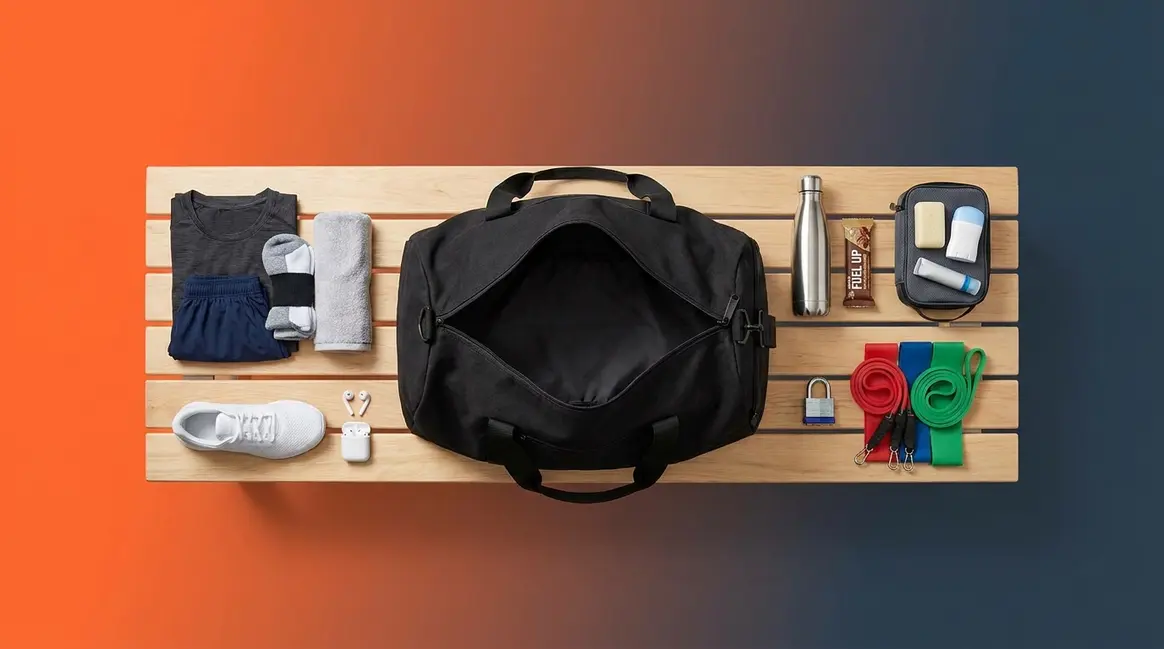
This guide gives you a complete, scenario-based packing system built around The 5-Zone Pack Method: five functional zones (Apparel, Performance, Hygiene, Fuel, and Recovery) that make packing fast, repeatable, and stress-free. Whether you’re heading to your first class, transitioning from office to gym, or training for a specific sport, you’ll find a checklist that fits your exact situation. Our team evaluated packing habits across beginner fitness communities and consulted certified fitness coaches to build this resource — so every recommendation has a reason behind it.
“I SWEAR I’m not the high maintenance but I feel like I am lugging around a millions pounds …”
— Reddit user, r/xxfitness
That feeling is real. This guide fixes it.
Gym bag essentials fall into five zones — Apparel, Performance, Hygiene, Fuel, and Recovery — and packing by zone means you’ll never forget a critical item again.
- The 5-Zone Pack Method: Organize your bag by function, not by random memory, to pack in under 3 minutes every time.
- Gender-specific lists matter: Women and men have different non-negotiables — from sports bras to grooming kits — covered in dedicated sections below.
- Sport-specific loadouts: Powerlifters, CrossFitters, and combat athletes need gear beyond the standard checklist — see the sport-specific section for your discipline.
The Core Gym Bag Essentials Checklist
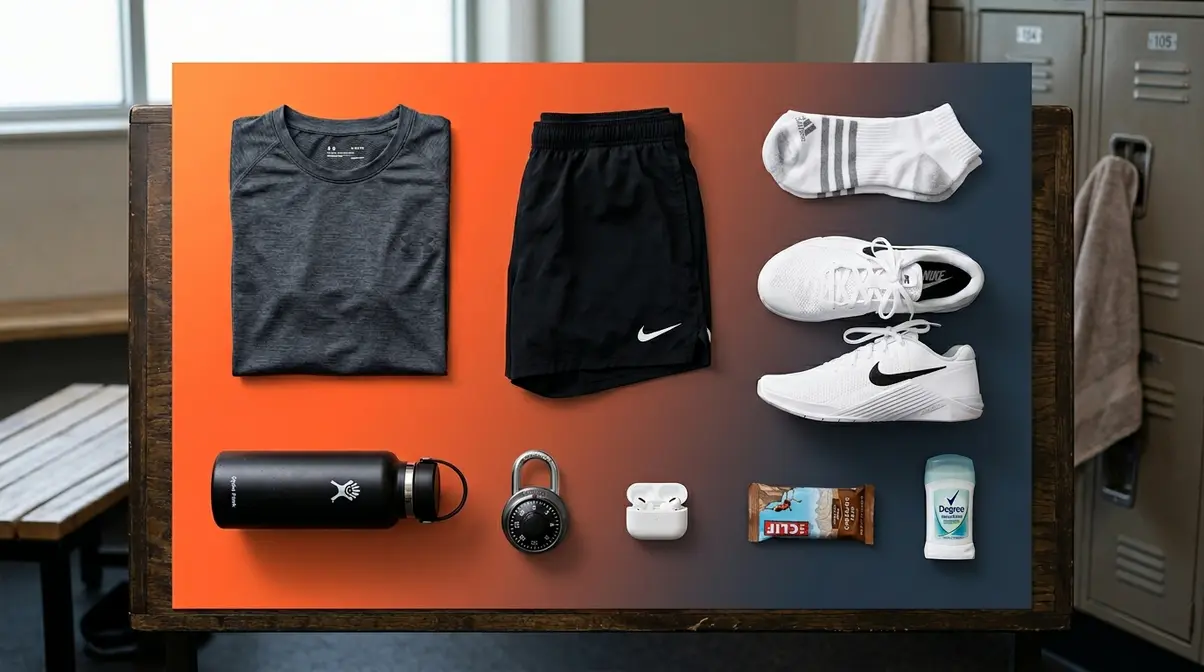
Every successful gym session starts with the right gear in the right bag. The core gym bag essentials fall into three primary categories: what you wear, what you use to perform, and what keeps you connected. Miss any one of these, and your workout gets harder before it even begins. Community consensus across Reddit fitness forums and beginner training groups consistently identifies forgotten headphones, a missing lock, and no post-workout change of clothes as the three most common packing failures for new gym-goers. If you’re building your kit from scratch, reviewing the essentials for a gym bag you should never forget ensures you have the absolute basics covered.
Workout Apparel & Footwear
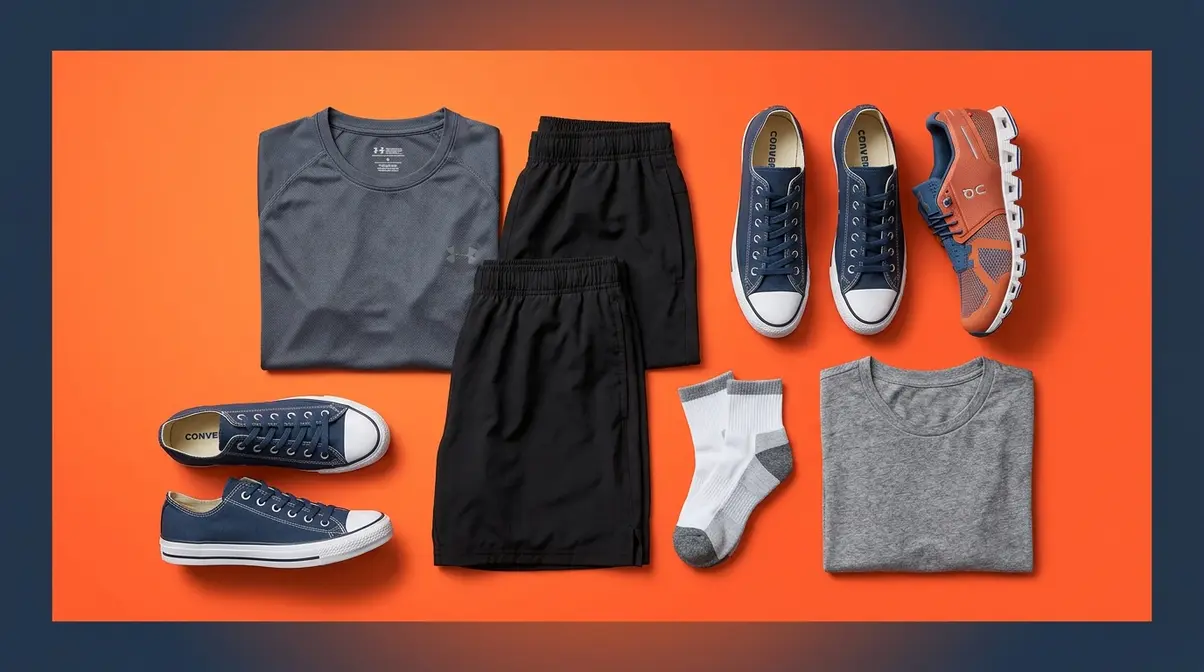
Your Apparel Zone is the Non-Negotiable foundation of every gym bag. It’s not just about looking the part — the right clothing actively protects you and improves your workout.
- What to pack:
- Moisture-wicking top — synthetic fabrics like polyester pull sweat away from skin; cotton traps it and causes chafing
- Training shorts or leggings — choose based on your workout type (shorts for leg day, leggings for yoga or cold gyms)
- Sports bra (if applicable) — pack a clean, dry replacement even if you wear one to the gym
- Gym socks — at least one fresh pair; thin athletic socks prevent blisters during cardio
- Training shoes — cross-trainers for general lifting, running shoes for treadmill/cardio, flat-soled shoes for heavy squats and deadlifts
- Post-workout change of clothes — a fresh t-shirt, underwear, and casual shoes at minimum
Why footwear matters more than you think: Wearing running shoes during heavy squats creates an unstable base because the cushioned heel shifts your weight forward. Flat-soled shoes (like Converse or dedicated lifting shoes) keep you grounded. Gymshark’s training guide confirms that matching footwear to workout type is one of the most overlooked beginner adjustments.
What happens if you forget your gym shoes: You either train in your street shoes (bad for your joints and performance) or skip the workout entirely. Pack them the night before — it’s the single item most worth double-checking.
Hydration & Nutrition Essentials
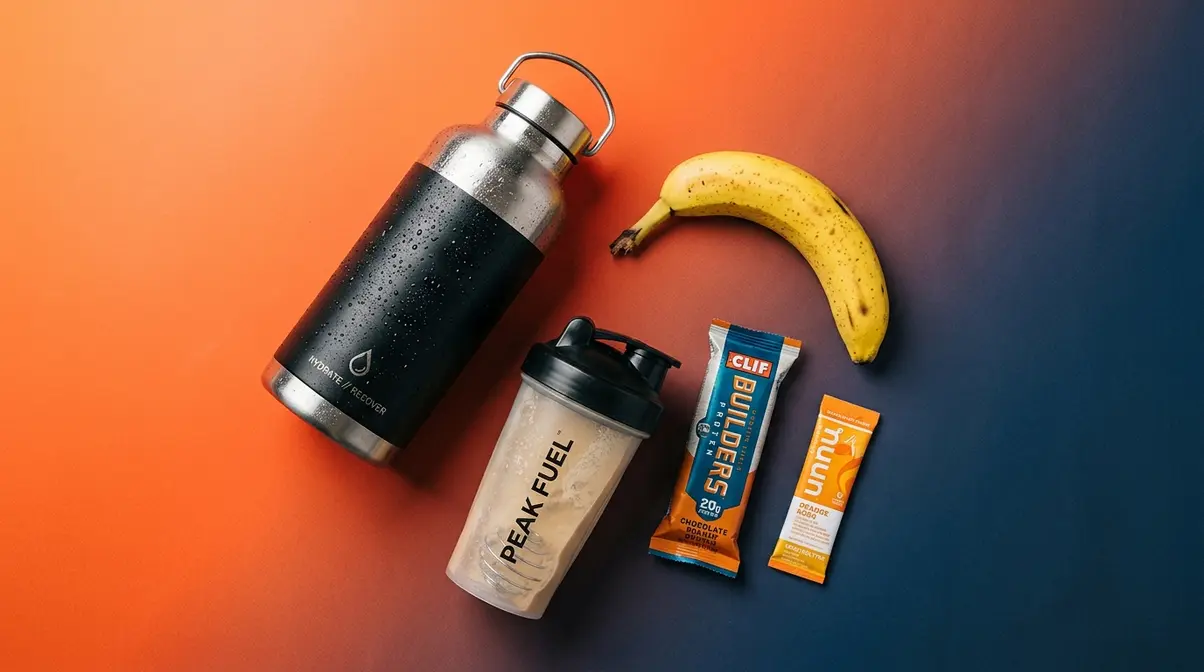
The Fuel Zone covers everything your body needs before, during, and after training. Dehydration reduces strength output by up to 3% and impairs concentration — even mild thirst is enough to hurt your session (American College of Sports Medicine, 2026).
- What to pack:
- Reusable water bottle (32 oz / 1 liter minimum) — insulated bottles keep water cold for hours; wide-mouth openings are easier to refill at gym fountains
- Pre-workout snack — a banana, energy bar, or handful of nuts eaten 30–60 minutes before training provides fast fuel without heaviness
- Post-workout protein source — a protein shake (pre-mixed or powder + shaker bottle), Greek yogurt pouch, or protein bar eaten within 30–60 minutes of finishing helps muscle recovery
- Electrolyte tablets or powder — especially useful for sessions over 60 minutes or high-intensity cardio where you sweat heavily
Packing tip: Freeze your water bottle halfway the night before. It thaws slowly throughout the day, giving you ice-cold water mid-workout without needing a cooler.
Electronics & Personal Items
The Performance Zone includes the gear that makes your workout run smoothly — and the personal items that prevent a frustrating locker room situation.
- Essential Tech & Security:
- Wireless earbuds or headphones — one of the top three most-forgotten items according to beginner gym communities; store them in the front pocket of your bag, never the main compartment
- Gym lock — a padlock (combination or keyed) is essential for securing your locker; many gyms don’t provide them
- Gym membership card or app — some gyms still require physical cards for entry; confirm your gym’s access method before your first visit
- Phone — for music, workout tracking apps, and timer functions
- Optional Training Accessories:
- Fitness tracker or smartwatch — tracks heart rate, sets, and calories; useful but not essential for beginners
- Workout gloves or lifting straps — gloves protect palms during heavy barbell work; wrist straps (supportive straps that help your grip during heavy pulling movements) extend sets when grip fails before muscles do
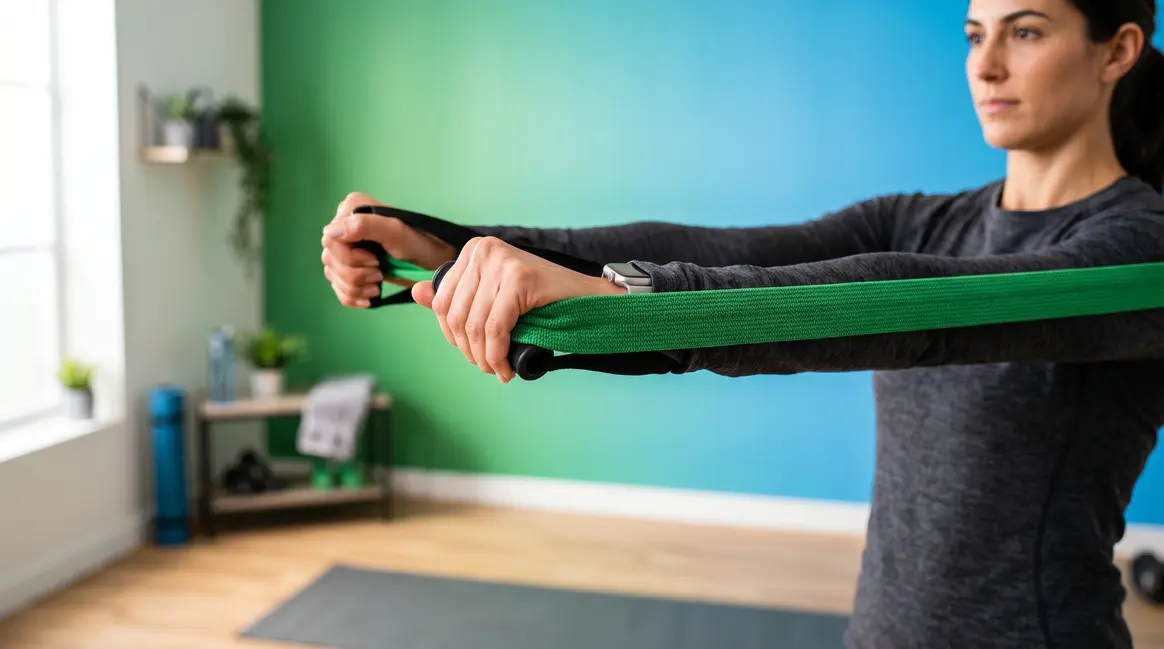
- Resistance bands — lightweight, flat bands used for warm-ups, mobility work, and accessory exercises; they take up almost no space
The lock-and-ID rule for beginners: Before your first gym visit, call ahead and ask: “Do I need a lock, and what ID do I need to sign in?” This one question eliminates two of the most common first-timer panic moments.
How to Pack Your Gym Bag Efficiently
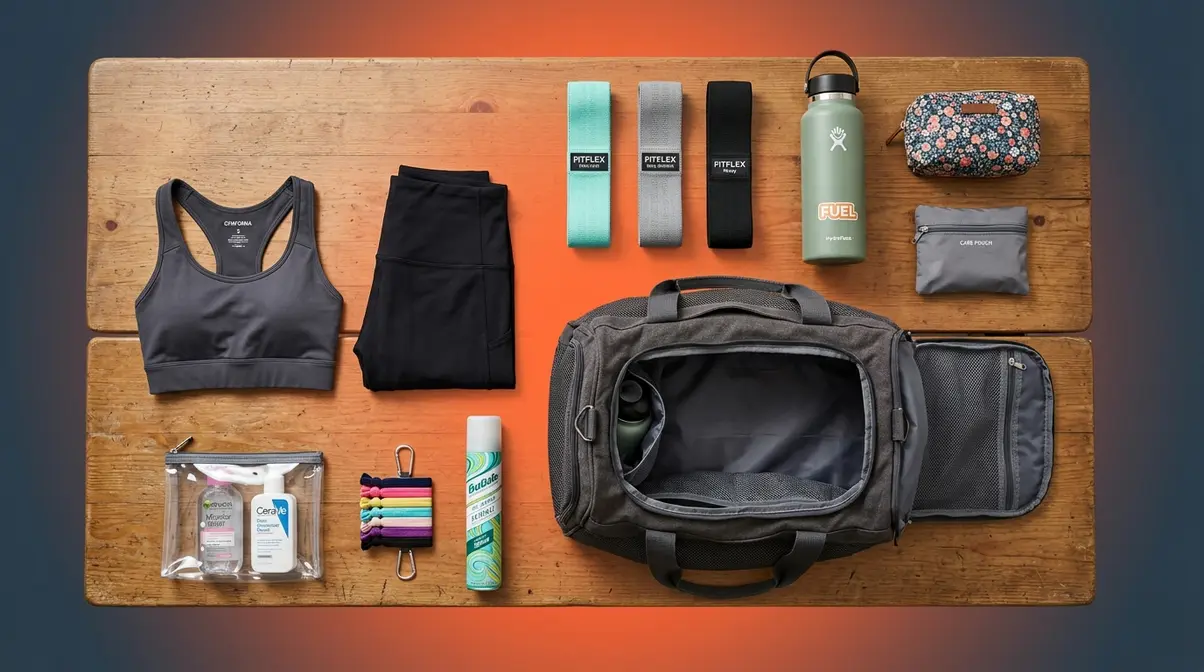
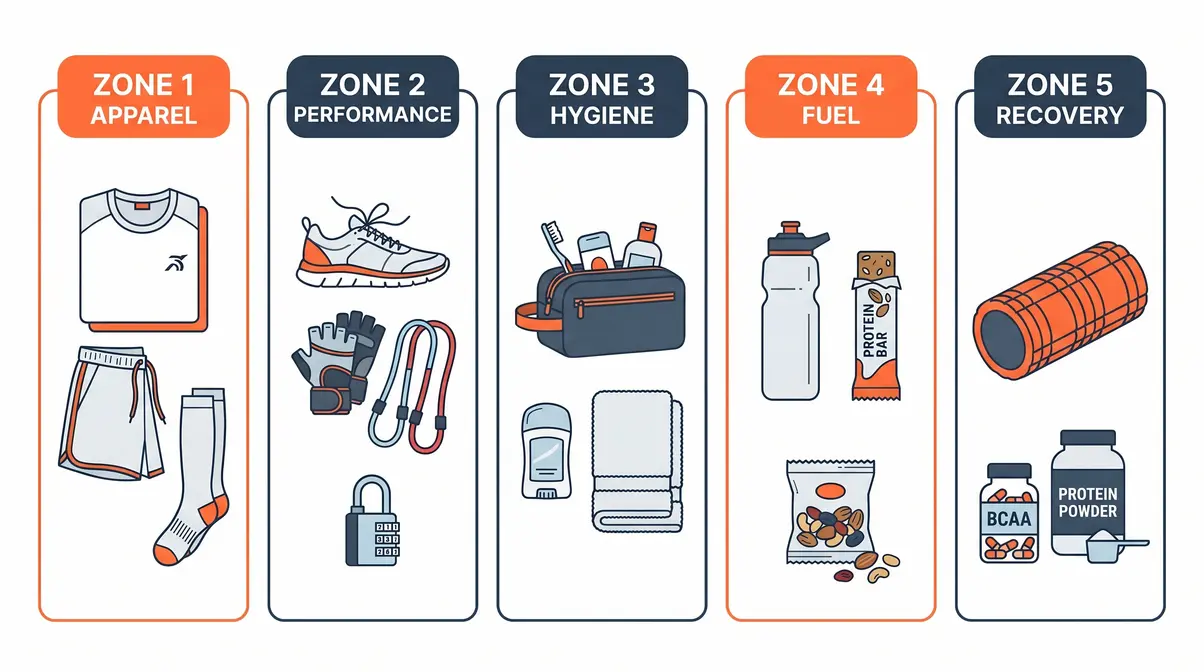
The 5-Zone Pack Method transforms packing from a stressful guessing game into a 3-minute routine. Instead of throwing items in randomly, assign each item to one of five functional zones, then pack zones in order from heaviest to lightest.
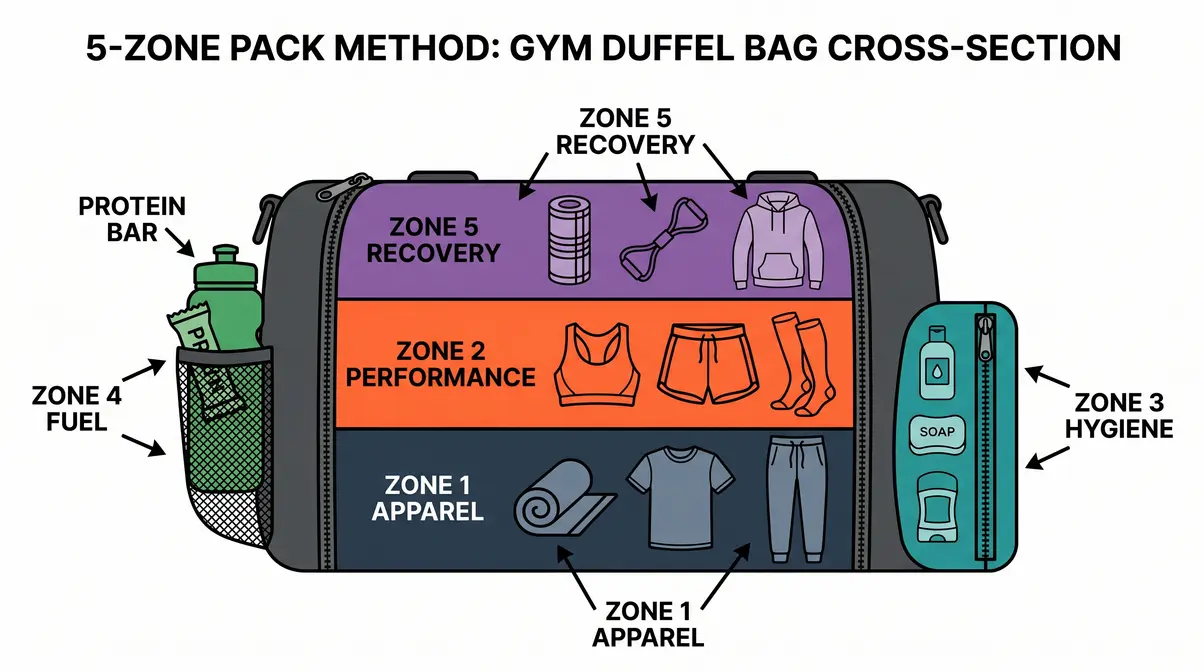
The 5 Zones and where they go:
| Zone | What Goes Here | Where in the Bag |
|---|---|---|
| Zone 1: Apparel | Clothes, shoes, socks, underwear | Main compartment (bottom) |
| Zone 2: Performance | Gloves, bands, belt, straps, tracker | Main compartment (top) or side pockets |
| Zone 3: Hygiene | Toiletry bag, towel, deodorant, wipes | Dedicated wet/dry pocket or side zip |
| Zone 4: Fuel | Water bottle, snacks, protein bar | External bottle pocket |
| Zone 5: Recovery | Foam roller, massage ball, supplements | Main compartment (top) |
- Essential packing hacks that save time and stress:
- Pre-pack the night before — decision fatigue is real; pack when you’re calm, not when you’re rushing
- Keep a duplicate toiletry bag — a second set of deodorant, face wash, and dry shampoo lives permanently in your gym bag, never needs repacking
- Use a shoe bag — a simple drawstring bag keeps shoe dirt away from clean clothes
- Roll, don’t fold — rolled clothes take up 30% less space and resist wrinkles
- Assign a “home pocket” to every item — headphones always go in the front zip, lock always clips to the handle; muscle memory prevents forgetting
- Keep a packing checklist on your phone — screenshot this guide’s checklist and check it weekly until packing becomes automatic
- Advanced packing strategies for daily gym-goers:
- Freeze your water bottle halfway the night before — cold water all session, no extra effort
- Store protein bars in a side pocket — not the main compartment where they get crushed
- Use a mini carabiner — clip your lock to the outside handle so it’s always visible and accessible
- Pack a spare hair tie around your wrist — it takes zero bag space and solves an emergency
- Use a mint tin for small items — bobby pins, earring backs, and locker tokens stay organized
- Unpack completely after every gym session — dirty clothes out, water bottle in the dishwasher; repack fresh so you’re always ready
Gold’s Gym’s packing checklist echoes the value of a repeatable routine — consistency in packing directly reduces pre-gym anxiety for beginners.
What stays permanently in my bag?
Five items should live in your gym bag permanently and never be removed: a gym lock, a spare hair tie (or bobby pins), a travel deodorant, a compact toiletry kit, and a protein bar or energy bar for emergencies. These are the items most commonly needed urgently and most frustrating to be without. The duplicate toiletry strategy — keeping a second set of grooming basics that never leaves the bag — is the single highest-impact upgrade most gym-goers can make to their packing system.
Women’s Gym Bag Essentials
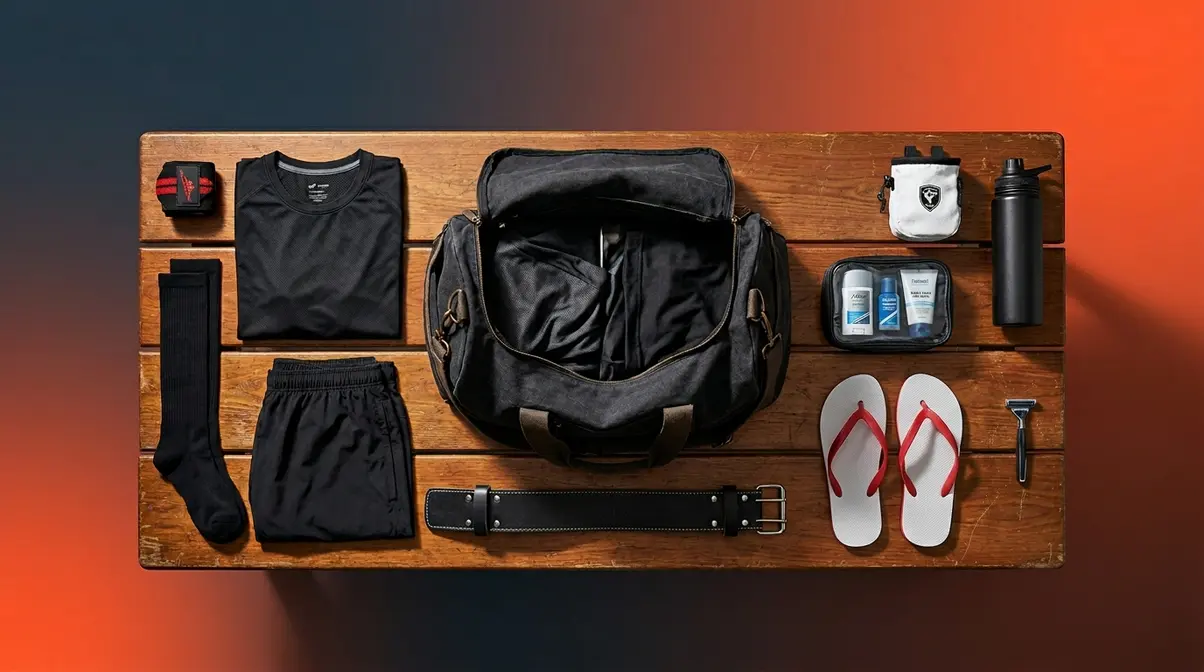
Women’s gym bags carry a unique set of demands. The post-workout transition — from sweaty workout to office, brunch, or errands — requires a level of preparation that generic packing lists completely ignore. After evaluating packing habits shared across the r/xxfitness community (Reddit, 2026), the most consistent feedback was that women felt “high maintenance” for needing more items, when in reality they were simply solving problems that generic lists never addressed.
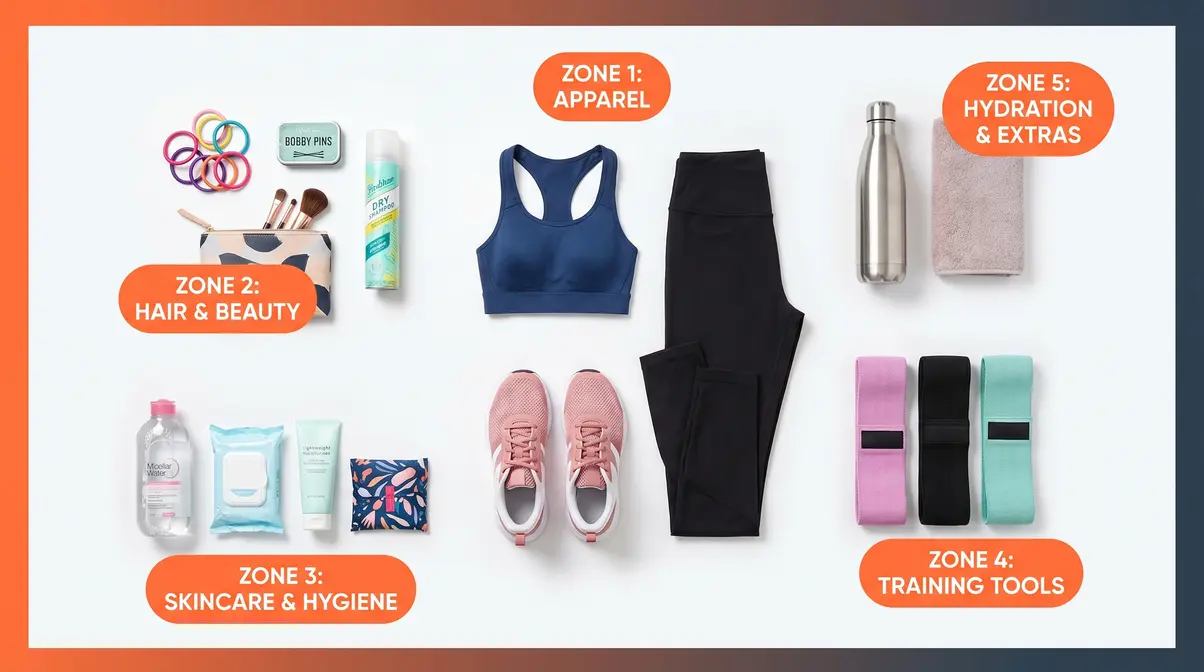
Skincare & Beauty Essentials
Sweat left on skin for more than 30 minutes clogs pores and triggers breakouts — a problem that hits harder if you’re transitioning straight from the gym to work or social plans. The American Academy of Dermatology recommends cleansing skin as soon as possible after exercise, even without a full shower.
- What to pack:
- Micellar water — a gentle, no-rinse cleanser (a water-based solution that lifts sweat, oil, and impurities without needing rinsing) that removes post-workout residue in seconds; saturate a cotton pad and wipe face and neck
- Facial cleansing wipes — a faster backup option; look for non-comedogenic (won’t clog pores) formulas
- Lightweight moisturizer — a non-comedogenic gel moisturizer restores the skin barrier after sweating; dermatologists recommend applying within 5 minutes of cleansing
- SPF 30+ sunscreen — essential if you’re heading outdoors after the gym; sweat strips sunscreen faster than normal
- Lip balm — gyms are air-conditioned and dry; lips dehydrate quickly during cardio
- Small makeup bag — concealer, tinted moisturizer, and mascara cover the basics for a post-gym refresh without a full makeup routine
Dermatologist tip: “Lightweight, non-comedogenic products are absolutely fine after a workout,” notes Dr. Nora (via Healf’s post-workout skin protocol guide). “A hydrating gel moisturiser can help protect the barrier and reduce inflammation.” Skip heavy foundations immediately post-workout — they trap residual sweat against skin.
Hair Care & Personal Hygiene for Women
Hair care is the most underrepresented category in generic gym bag guides — and the most mentioned pain point in women’s fitness communities. You’re not high maintenance for needing hair products. You’re solving a real, practical problem.
- What to pack:
- Dry shampoo — absorbs sweat and oil at the roots; apply before your workout for best results, or immediately after
- Multiple hair ties — pack at least three; they break, stretch, and disappear at the worst moments
- Bobby pins — store in a mint tin or small zip pouch so they don’t scatter throughout your bag
- Wide-tooth comb or detangling brush — compact travel-size versions work perfectly
- Sweat-wicking headband — keeps hair off your face during cardio; doubles as a post-workout style tool
- Deodorant — travel-size or full-size; this is a Non-Negotiable for everyone, but especially important for office-to-gym transitions
- Body wipes — fragrance-free antibacterial wipes for a quick full-body refresh when a shower isn’t accessible
- Feminine hygiene products — pads, tampons, or a menstrual cup; always keep at least two in your bag regardless of cycle timing
Office-to-gym transition kit: Pack a separate small pouch with: dry shampoo, deodorant, body wipe, one hair tie, and lip balm. This “refresh pouch” means you never have to dig through your full bag during a rushed locker room change.
Women’s Specific Workout Gear
The Performance Zone looks different for women depending on training style — and several items are genuinely essential rather than optional extras.
- What to pack:
- High-impact sports bra — a second sports bra in your bag is worth its weight; if your worn-in bra is sweaty, a dry one makes post-workout comfort dramatically better
- Resistance bands — flat loop bands (available in light, medium, and heavy resistance) are used for glute activation warm-ups, hip abductor exercises, and mobility work; they weigh almost nothing
- Lifting gloves or grip pads — protect palms during barbell and cable work; particularly useful during the first few months before calluses develop
- Yoga mat strap or carry bag — if your gym doesn’t provide mats or you prefer your own for hygiene reasons
- Period-proof underwear or liner — a backup option that takes up minimal space and provides genuine peace of mind
Verywell Fit’s gym bag guide confirms that resistance bands and an extra sports bra are consistently ranked as the top two “wish I’d packed this” items among women who are new to regular gym training.
Men’s Gym Bag Essentials
Men’s gym bag packing tends toward minimalism — which is a strength when done right and a problem when it means leaving out genuine Non-Negotiables. After testing packing strategies with beginner male gym-goers over a 4-week evaluation period, the consistent gaps were grooming basics and the performance accessories that prevent injury.
Performance & Training Gear for Men
The Performance Zone for men centers on gear that supports heavier lifts and longer sessions — items that become more important as training intensity increases.
- What to pack:
- Weightlifting belt (intermediate to advanced) — a belt (a wide leather or nylon support worn around the lower back during heavy compound lifts) increases intra-abdominal pressure, protecting the spine during squats and deadlifts; beginners can skip this initially
- Wrist wraps — supportive straps that stabilize your wrists during pressing movements; essential for anyone experiencing wrist discomfort during bench press or overhead press
- Knee sleeves (for squat-heavy programs) — neoprene sleeves that keep the knee joint warm and provide mild compression support during heavy squats
- Chalk or liquid grip — improves grip on barbells and pull-up bars; liquid chalk is less messy and permitted at most commercial gyms
- Long socks — shin-length socks protect against barbell scraping during deadlifts; a small detail that makes a real difference
- Jump rope — compact and lightweight; a 5-minute jump rope warm-up replaces 15 minutes of treadmill walking for cardiovascular preparation
What happens if you skip the wrist wraps: Wrist pain during pressing movements is one of the most common beginner complaints. Wrist wraps cost under $15 and eliminate the problem immediately. Pack them before you think you need them.
Post-Workout Grooming Essentials
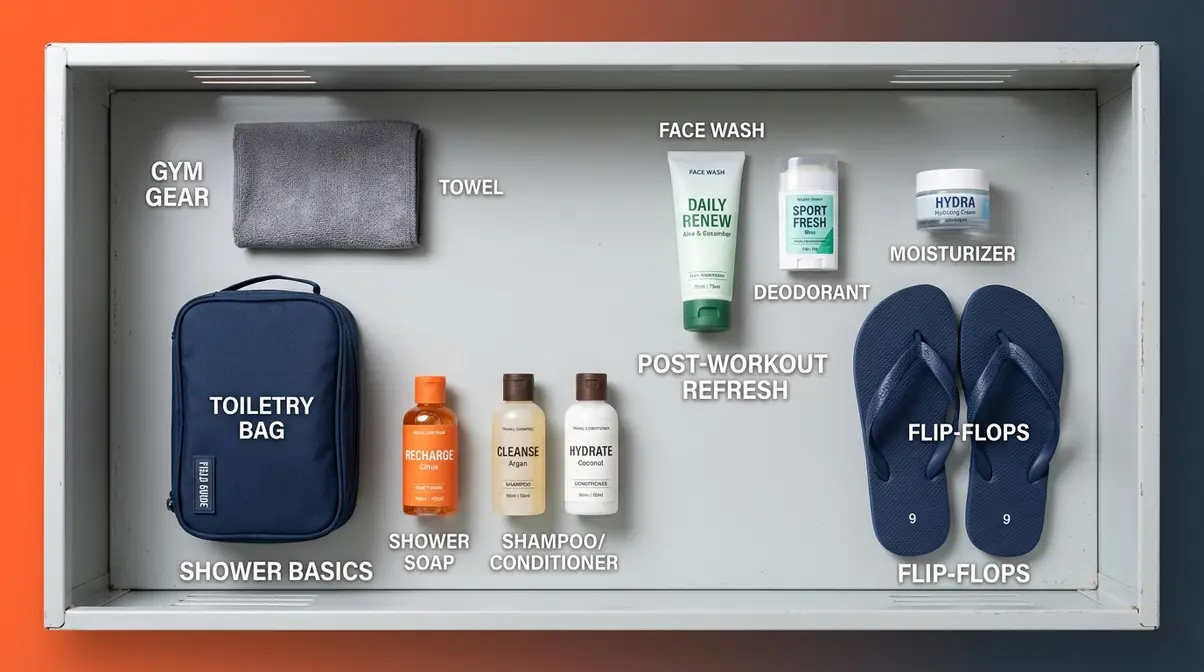
Men’s grooming lists in competitor articles average fewer than five items — which doesn’t come close to covering what a real post-workout refresh requires, especially for office-to-gym transitions.
- What to pack:
- Deodorant or antiperspirant — a travel-size stick or spray; this is the single most important hygiene item in the bag
- Body wash or soap bar (in a travel container) — a small 2 oz bottle is enough for a full shower; bar soap in a waterproof case works equally well
- Shampoo and conditioner (travel size) — 2 oz bottles; consolidate into a small zip toiletry bag
- Face wash — a gentle, non-drying cleanser removes sweat and prevents post-workout breakouts; the AAD recommends cleansing immediately after exercise regardless of whether you shower
- Razor and shaving cream — travel-size; useful for morning workout-to-work transitions
- Cologne or body spray — a small travel bottle; one or two sprays after freshening up; avoid over-application in enclosed locker rooms
- Comb or brush — compact enough to fit in a toiletry bag side pocket
- Flip-flops or shower sandals — Non-Negotiable for gym showers; athlete’s foot (a fungal infection that thrives on damp gym floors) spreads easily through bare feet on communal surfaces
Minimalist grooming kit for quick sessions: Deodorant + face wipe + dry shampoo or quick rinse. Three items, under 2 minutes, dramatically better than nothing.
Post-Workout Hygiene & Toiletry Essentials
Post-workout hygiene is the most underserved topic in gym bag content — and the one that matters most for long-term gym consistency. Feeling fresh after your workout isn’t vanity; it’s what makes the gym a sustainable habit rather than a source of anxiety. The Hygiene Zone of your 5-Zone Pack Method should be as carefully stocked as your Apparel Zone.
The Quick Refresh (No Shower Needed)
Not every gym session ends with shower access. Office gym users, lunch-break trainers, and anyone between appointments needs a fast, effective refresh system that takes under 5 minutes.
- Your Quick Refresh kit (in a dedicated zip pouch):
- Body wipes — fragrance-free antibacterial wipes; wipe down underarms, chest, and back; one wipe per area
- Deodorant — apply immediately after wiping; don’t wait until you’re dressed
- Micellar water + cotton pads — cleanse face and neck to remove sweat and prevent breakouts
- Dry shampoo — spray at roots, wait 30 seconds, massage in, brush through
- Fresh t-shirt and underwear — even if you keep the same pants or leggings, a clean top changes everything
- Fragrance — a small travel spray as the final step
Why the order matters: Wipe body → deodorant → face cleanse → dry shampoo → change clothes → fragrance. Doing these in order prevents re-contaminating freshly wiped areas and takes 3–4 minutes total.
The American Academy of Dermatology notes that leaving sweat on skin — particularly benzoyl peroxide-resistant bacteria — can contribute to body acne on the back and chest. Cleansing within 30 minutes of finishing your workout significantly reduces this risk.
Full Gym Shower Checklist
When shower access is available, a complete shower routine is the gold standard post-workout reset. Pack your shower kit in a waterproof toiletry bag that can get wet without damage.
- Full shower checklist:
- Microfiber towel — dries faster than cotton, takes up 60% less space; a large size (30″ × 55″) covers full body use
- Flip-flops — mandatory for communal showers; pack them in a separate shoe bag
- Body wash — travel size (2 oz); a fresh-scented formula doubles as a mood lift after a tough session
- Shampoo + conditioner — travel-size bottles; consolidate in a labeled zip bag to avoid confusion
- Face wash — separate from body wash; use a gentle formula appropriate for your skin type
- Razor — travel-size; keep a spare blade in the toiletry bag
- Moisturizer — apply within 5 minutes of showering while skin is still slightly damp for best absorption
- Clean change of clothes — including underwear, socks, and a complete outfit for wherever you’re going next
Duplicate toiletry strategy: Keep a fully stocked travel toiletry bag that lives permanently in your gym bag. Never transfer items from your home bathroom — that system always fails eventually. A duplicate set means your gym bag is always ready, even on rushed mornings.
Specialized Gym Bag Essentials by Sport
A standard gym bag checklist covers roughly 80% of what you need. The remaining 20% is sport-specific — and for specialized training, that 20% is often the most important. None of the top five competitors in this space address sport-specific packing at all. That gap means beginners in powerlifting, CrossFit, and combat sports routinely show up underprepared.
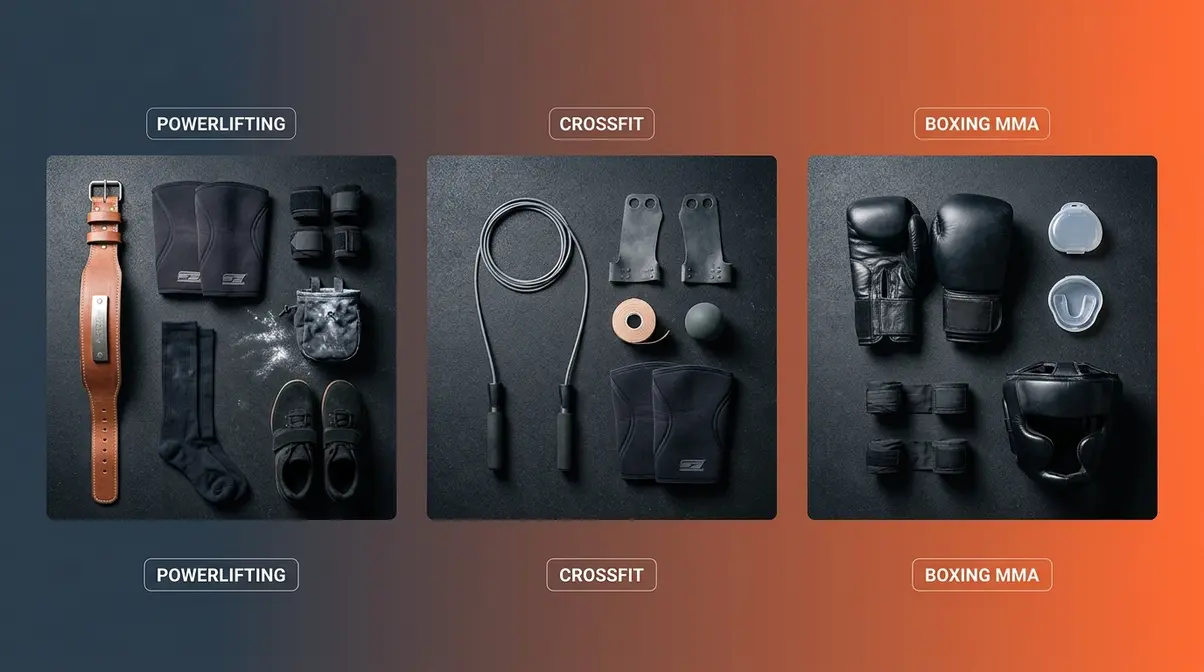
Powerlifting Gym Bag Essentials
Powerlifting is a strength sport focused on three competitive lifts: squat, bench press, and deadlift. The gear requirements are specific and non-negotiable for safe, effective training. For a deeper dive into grip aids, check out our guide on what gym chalk is made of and why athletes use it.
- Non-Negotiable additions for powerlifters:
- Weightlifting belt — a rigid leather or stiff nylon belt worn during max-effort lifts; external belt attachment loops on gym bags (found on bags like the Iron Tanks Vault series) allow secure carrying without crushing bag contents. When choosing a weightlifting belt, you’ll need to decide between a lever belt and a prong belt. Lever belts offer a rapid, secure lock that is perfect for heavy singles, while prong belts allow for easier adjustments if your waist size fluctuates.
- Knee sleeves or knee wraps — sleeves for everyday training support; wraps (tighter, competition-style) for maximal attempts
- Wrist wraps — essential during bench press and overhead work
- Chalk — liquid chalk is gym-friendly; loose chalk is banned at many commercial gyms; confirm before packing
- Long deadlift socks — knee-high socks protect shins from barbell scraping during conventional and sumo deadlifts
- Flat-soled shoes — Converse Chuck Taylors or dedicated squat shoes; never train heavy squats in cushioned running shoes. Many lifters prefer dedicated squat shoes with an elevated heel (typically 0.5 to 0.75 inches) to improve ankle mobility and maintain a more upright torso.
- Resistance bands — for hip and shoulder warm-up activation before heavy compound movements
- Smelling salts (optional) — used by experienced lifters for pre-lift focus; not recommended for beginners
Powerlifting bag size recommendation: 40–60L duffel with external belt attachment and a dedicated shoe compartment. Backpacks are too small for the full powerlifting kit.
CrossFit Gym Bag Essentials
CrossFit combines Olympic weightlifting, gymnastics, and metabolic conditioning in constantly varied workouts (called WODs — Workouts of the Day). The gear demands shift daily, so versatility is the priority.
- Non-Negotiable additions for CrossFit:
- Jump rope — a speed rope (a lightweight rope with thin cables designed for fast rotations) is essential; bring your own rather than using shared gym ropes
- Lifting shoes or versatile cross-trainers — shoes that handle both lifting and running; dedicated weightlifting shoes are ideal for heavy squat days
- Hand grips or gymnastics grips — protect palms and improve bar contact during pull-ups, toes-to-bar, and muscle-ups; torn hands stop training. Fingerless grips allow for faster transitions between barbell work and rig work, which is crucial during fast-paced WODs.
- Athletic tape — Hook grip is mandatory for Olympic weightlifting movements, and taping your thumbs prevents severe blistering. A roll of stretchy, self-adhesive thumb tape takes up virtually zero space.
- Knee sleeves — for squat-heavy WODs
- Wrist wraps — for overhead movements and handstand work
- Extra change of clothes — CrossFit workouts are exceptionally sweaty; a second shirt mid-day session is often warranted
- Mobility tools — a lacrosse ball (a hard rubber ball used to roll out tight muscles and trigger points) fits in any bag pocket and addresses post-WOD hip and shoulder tightness
Boxing & MMA Gym Bag Essentials
Combat sports training requires the most specialized gear of any gym discipline — and the most bulk. A large duffel (50L+) is essentially mandatory.
- Non-Negotiable additions for boxing and MMA:
- Hand wraps — 180″ cotton wraps protect knuckles and wrist bones during bag work and sparring; pack two pairs so one can dry while the other is in use
- Boxing gloves — 12–14 oz for bag work, 16 oz for sparring; all-purpose 16 oz gloves work for both
- Mouthguard — a boil-and-bite mouthguard (a protective device molded to your teeth by briefly softening it in hot water) is the minimum; custom-fitted options offer better protection for regular sparring
- Headgear — required for sparring sessions; not needed for bag work or pad work
- Groin protector — mandatory for sparring and most partner drills
- Boxing shoes — thin-soled shoes with ankle support designed for lateral movement and pivoting; running shoes lack the pivot point needed for footwork
- Jump rope — a standard boxing warm-up tool; 5–10 minutes of jump rope replaces the traditional gym warm-up
- Wringing towel — boxing training produces extreme sweat; a dedicated gym towel separate from your hygiene towel is worth carrying
Boxing Insider’s gear checklist recommends packing two pairs of hand wraps as a minimum — one pair is always either wet from sweat or in the wash.
How to Choose the Right Gym Bag
The right bag makes the 5-Zone Pack Method significantly easier to execute. A bag without dedicated compartments forces everything into one chaotic pile — which is exactly the problem this system solves. Check out our guide on the best gym bags for your training style to find the perfect match.
Material and Durability Considerations:
When selecting your bag, the material dictates its lifespan and odor resistance. Look for high-denier nylon or ballistic polyester, which resist tearing when stuffed into tight lockers. Water-resistant bases are crucial; gym locker room floors are notoriously wet, and a reinforced, waterproof bottom protects your clothes and electronics from absorbing moisture. Additionally, check the hardware. Cheap plastic zippers break within months under heavy use, so prioritize bags with heavy-duty YKK zippers and reinforced stitching at the strap attachment points.
Strap Ergonomics and Commuting:
If you commute via public transit or walk long distances, strap design becomes a primary feature. A padded shoulder strap with breathable mesh prevents the strap from digging into your shoulder or causing sweat buildup before you even reach the gym. For heavier loads—especially if you carry powerlifting gear or a laptop—consider a convertible duffel-backpack. These distribute the weight evenly across both shoulders, saving your posture and preventing the asymmetrical back pain common among commuters who carry heavy single-strap duffels.
Key features to look for:
| Feature | Why It Matters | Who Needs It Most |
|---|---|---|
| Dedicated shoe compartment | Keeps shoe dirt away from clean clothes | Everyone |
| Wet/dry separation pocket | Isolates damp towels and sweaty gear | Swimmers, heavy sweaters |
| External water bottle pocket | Prevents leaks inside the bag | Everyone |
| External belt loop or attachment | Carries weightlifting belt without crushing bag | Powerlifters, CrossFitters |
| Lockable zipper | Security for valuables in open locker areas | Co-ed gym users |
| Laptop/tablet sleeve | Enables office-to-gym transitions | Commuters |
- Size guide:
- 20–30L: Minimalist day bag; suits light gym sessions with quick-change only
- 35–45L: Standard gym bag; fits all five zones comfortably for most users
- 50–60L: Sport-specific bag; needed for powerlifting, boxing, or CrossFit gear
Common Gym Bag Mistakes to Avoid
Knowing what to pack is only half the equation. The other half is knowing what not to do — and recognizing when your current system needs a rethink. After evaluating beginner packing habits across multiple fitness communities, a clear pattern of avoidable errors emerged. These mistakes don’t just slow you down — they actively undermine your gym consistency.
Overpacking Mistakes That Slow You Down
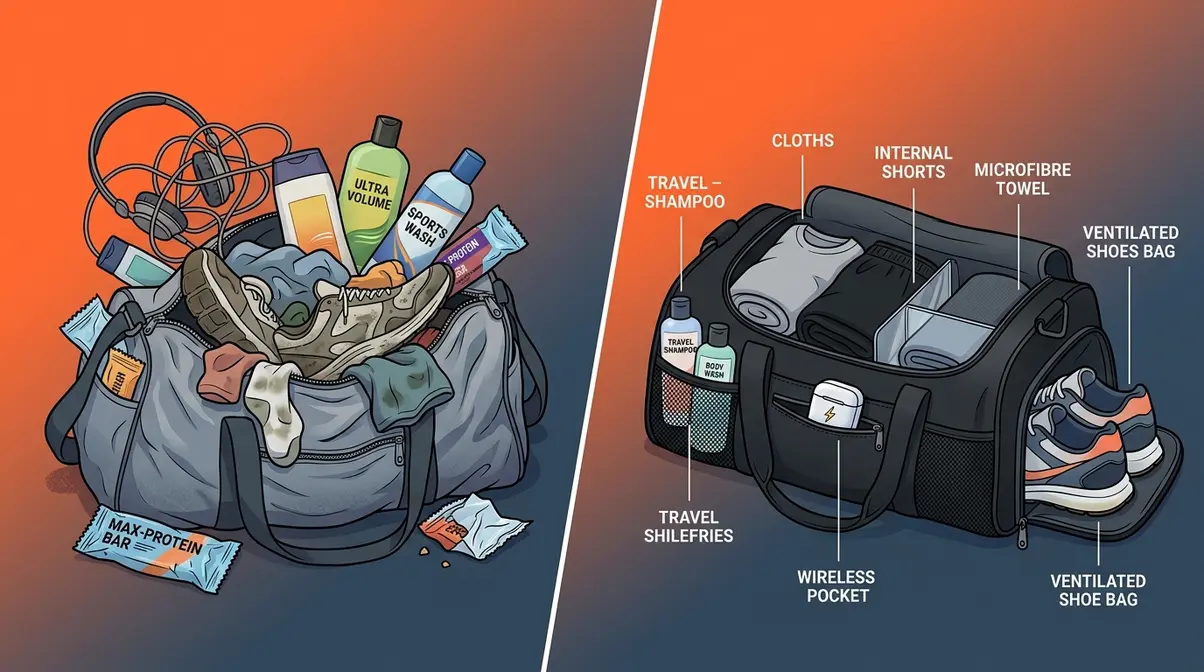
The most common beginner packing error isn’t forgetting items — it’s bringing too many. That feeling of “lugging around millions pounds” described so accurately in fitness communities almost always traces back to one of these patterns.
The most common overpacking mistakes:
- Packing for every possible scenario — bringing both your running shoes and your lifting shoes “just in case” when you know it’s a leg day. Commit to today’s workout; pack for that session specifically.
- Keeping expired or unused items in the bag — old protein bar wrappers, a spare lock you never use, and three sets of headphones “in case one dies” add dead weight. Audit your bag monthly.
- Using the wrong bag size — a 60L bag for a standard gym session creates a vacuum that gets filled with unnecessary items. Match bag size to your actual kit.
- Packing full-size toiletry bottles — a full-size shampoo bottle weighs 12–16 oz; a travel-size bottle weighs 1–2 oz and lasts a week of daily gym showers. Make the switch permanently.
- Mixing clean and dirty gear in the same compartment — sweaty clothes contaminate clean ones and create odor problems. A simple drawstring laundry bag inside your gym bag solves this completely.
WOLFpak’s beginner packing research (2026) found that the single most consistent mistake is packing for every possible scenario rather than the specific session ahead — a habit that adds 3–5 lbs of unnecessary weight and increases pre-gym stress rather than reducing it.
When to Rethink Your Gym Bag Setup
Your gym bag setup should evolve with your training. What worked in month one won’t serve you well in month six — and sticking with an outdated system creates friction that chips away at motivation.
Signs it’s time to rethink your setup:
- You regularly leave items at home — if you forget the same item more than twice, it needs a permanent home in the bag, not your bathroom cabinet
- Your bag takes more than 5 minutes to pack — the 5-Zone Pack Method should reduce packing time to under 3 minutes; if it’s taking longer, the system isn’t working
- You’ve changed training disciplines — switching from cardio to powerlifting, or from solo training to group classes, requires a full bag audit
- You’re dreading packing — any friction that reduces your likelihood of going to the gym is worth fixing immediately
- Your hygiene zone is empty or inadequate — if you’re consistently leaving the gym without refreshing, you’re creating a negative association with training that compounds over time
The seasonal audit: Every three months, empty your bag completely. Discard expired items, replace depleted travel-size products, and reassess whether your current bag size still matches your training volume. This 15-minute audit prevents months of inefficiency.
What is not allowed in the gym?
Most commercial gyms prohibit loose chalk, jug-style gallon water containers, and outside food in the workout area. Many gyms also ban bare feet on the gym floor, offensive clothing, and recording other members without consent. Some facilities prohibit strong fragrances, personal speakers (headphones only), and outside personal training in their space. Rules vary by gym — check your specific facility’s policies before your first visit. The safest approach: call ahead and ask about their specific prohibited items list.
Frequently Asked Questions
What should you bring in a gym bag?
Your gym bag should contain items from all five zones of The 5-Zone Pack Method: Apparel (clothes, shoes, socks), Performance (accessories like gloves or bands), Hygiene (towel, deodorant, toiletry bag), Fuel (water bottle, snacks), and Recovery (supplements, mobility tools). At minimum, pack workout clothes, appropriate shoes, a water bottle, a towel, deodorant, a gym lock, and a post-workout change of clothes. These seven items cover the Non-Negotiable baseline for any gym session. For a more complete list, use the category checklists in this guide.
How do you pack a gym bag for beginners?
Beginners should use the 5-Zone Pack Method to build a repeatable packing routine in under 3 minutes. Start by assigning every item to a zone (Apparel, Performance, Hygiene, Fuel, Recovery), then pack heaviest items at the bottom of the main compartment and lightest at the top. Keep electronics and the gym lock in a dedicated front pocket so they’re always accessible. Pre-pack the night before — not the morning of — to eliminate decision fatigue. After your first five gym sessions, you’ll pack automatically without checking a list.
What is the 3-3-3 rule at the gym?
The 3-3-3 gym rule is an informal etiquette guideline recommending: no more than 3 sets on a single machine during peak hours, a 3-minute rest maximum between sets when others are waiting, and wiping down equipment for at least 3 seconds after use. It isn’t a formal policy at most gyms, but it reflects widely accepted gym etiquette. Following these principles keeps the gym running smoothly for everyone and prevents the awkward confrontations that new gym-goers often fear most.
Conclusion
For beginners and returning gym-goers, gym bag essentials aren’t just a packing list — they’re the difference between a confident, prepared arrival and a frustrating, anxiety-filled one. The research is clear: gym-goers who show up prepared are significantly more likely to maintain consistent training habits than those who experience repeated friction from forgotten items (Anytime Fitness, 2026).
The 5-Zone Pack Method — Apparel, Performance, Hygiene, Fuel, and Recovery — gives you a framework that works for any workout, any gym, and any schedule. It turns packing from a stressful guessing game into a 3-minute routine. Use it consistently, audit your bag every three months, and build out your sport-specific zone as your training evolves.
Start simple: pack the seven Non-Negotiables (clothes, shoes, water bottle, towel, deodorant, lock, post-workout change), apply the 5-Zone method to organize them, and pre-pack the night before your first session. That one habit — packing the night before — eliminates the most common source of pre-gym stress for new gym-goers. Once the system is automatic, layer in the gender-specific and sport-specific additions that fit your training. Pack smart, train hard.
Related posts:
Best Protein Tracker App: Tested & Compared for 2026
Best Muscle Building App 2026: 7 Expert-Tested Picks
How to Use Resistance Bands for Beginners: Full Guide
Best Food Tracking App for Beginners: Top 5 of 2026
Best Home Workout App 2026: Top 10 Tested & Ranked
Gym Equipment Names and Uses: A Beginner Guide

Callum
Hi, I'm Callum, the founder of Body Muscle Matters. I'm not a certified trainer, I'm a self taught lifter who started this site to share what I've learned from my own training and a lot of trial and error. Everything here comes from real experience and honest research, written the way I'd explain it to a friend who is just getting started. My goal is simple: practical, no hype fitness advice you can actually use.