
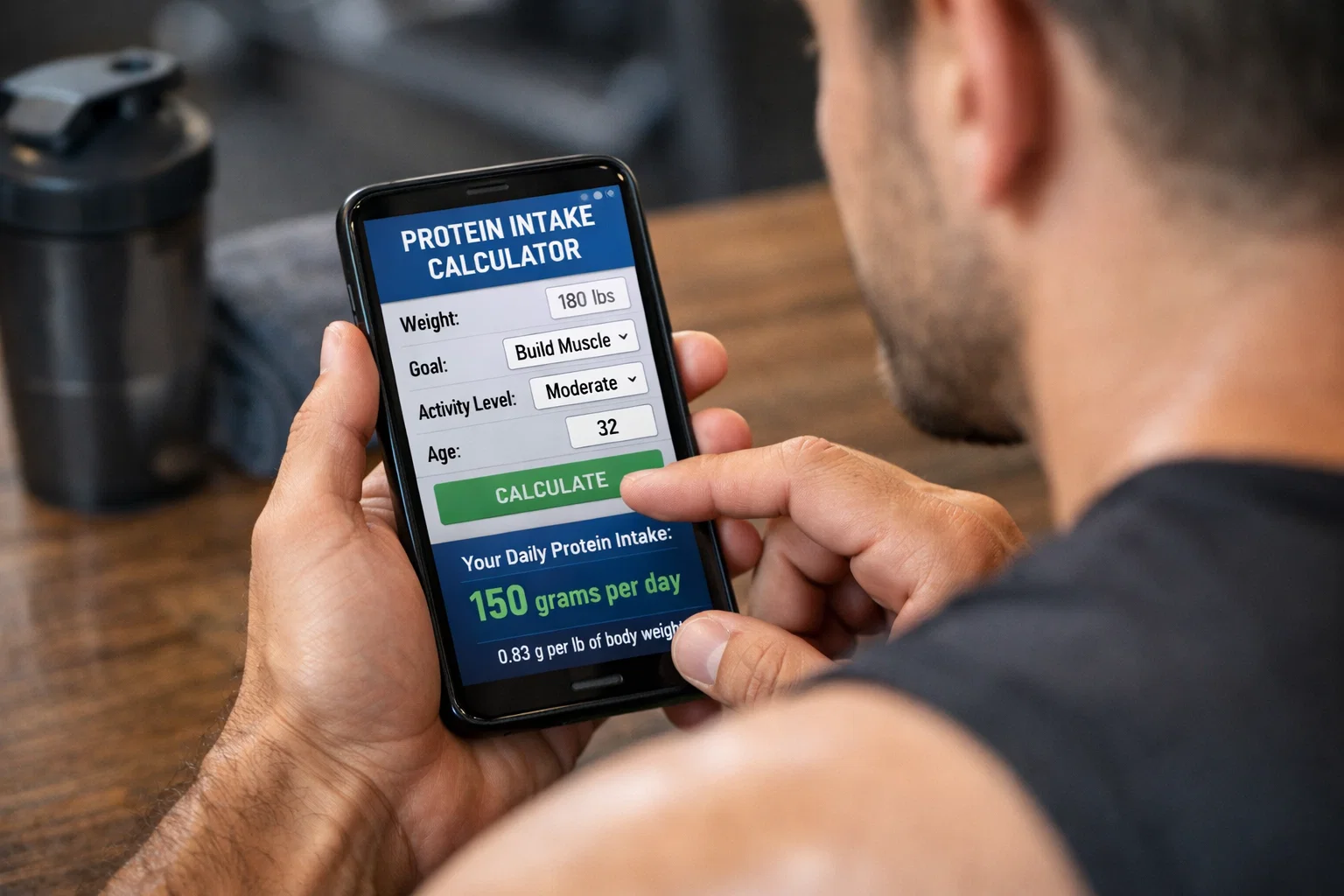
A protein intake calculator is an online tool that estimates how many grams of protein you should eat each day based on your body weight, activity level, and specific goals like building muscle or losing fat. You enter a few basic details about yourself and get a personalized number in seconds. These calculators save you from doing the math yourself and help you avoid eating too much or too little protein.
This guide walks you through the best protein calculators available right now and explains what makes them accurate. You’ll learn how to use them correctly, spot common mistakes people make when entering their information, and understand when a calculator might not be the right tool for your situation. We’ll also show you how to verify your results by hand and share practical strategies to actually hit your protein target every day. By the end, you’ll know exactly which calculator to trust and how to use it to support your fitness goals.
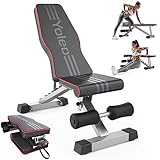
- 【Yoleo】is a fitness equipment brand that aims to provide affordable, durable and effective weight bench for the home
- 【Stable Structure】Heavy duty steel makes this weight bench a sturdy support for the toughest workouts. Mechanics construction based on the double-triangle structure and double supports create the best stability
- 【84 Adjustable Options& Fast Adjustment】 This workout bench offers 7 back adjustments, 4 seat adjustments and 3 leg adjustments. So this adjustable weight bench is also an incline, decline, or flat bench. It means you can perform movements on any of those planes. The ladder-style adjustment is fast and secure because a user can adjust it in a few seconds
- 【Portable&Compact Design】This bench press bench measures 31.5″L x 12.6″W x 13″ H when folded, making it highly portable and comfortably small. It weighs about 23.1 pounds. When unfolded, it stands at 41″ L x 12.6″ W x 42.5″ H —small enough to fit into tight workout spaces
- 【High-quality Materials】1.4″ thickness back pad and seat pad are made from high-density foam, composite board and PU leather cover. They can run smoothly to ensure a great exercise experience. And 2.4″ thickness leg foam also improves leg drive


- Ideal for Home Gyms: NICEPEOPLE basic weight bench is easy to set up and fully functional, making it an ideal choice for fitness beginners; Contact us for an additional training guides; Its compact size makes it perfect for your home gym
- Train Every Muscle Precisely: NICEPEOPLE adjustable weight bench is set with 8 backrest angles to accurately target chest, shoulders, arms, and core; The groove design allows you to switch between different angles in under 2 seconds
- Size suitable for 90% of users: The 745mm backrest provides comprehensive head and neck support, helps focus force points and improves movement stability; The NICEPEOPLE workout bench is designed to fit the user’s needs, enhancing workout results
- Solid Steel & Stable Frame: Superior steel allows the workout bench to support 660 LBS; Sturdy tube and structure offer strong support and safety for workouts; Adjustable non-slip foot cap is adapted to various floor types and protect floor from scratches
- 1 Step Fold, Zero Clutter: NICEPEOPLE foldable workout bench for home gym can be folded by simply pulling out 2 pins; The folded size is 30.7”x16.3”*9.25”; it can be stored under the sofa, under the bed or any corner of the house

- 【Fully Adjustable for Total Training】Designed for maximum flexibility, the adjustable bench provides multiple back, seat, and leg positions to support a wide range of workouts. Whether you’re aiming for strength training, core sessions, or warm-ups with the included resistance bands, it adapts seamlessly to your routine and helps you create a complete home gym setup anywhere.
- 【Comfort-Driven Design】The extended headrest and wider backrest provide enhanced comfort during lifting. Designed to support the neck, lower back, and upper body more effectively, this weight bench is especially ideal for taller users who need added stability and full-length support throughout their training.
- 【Heavy-Duty Strength】Constructed from premium commercial-grade steel and reinforced with a solid triangular structure, this foldable bench provides outstanding stability and handles loads up to 880 lbs with confidence. Non-slip foot caps keep the bench securely in place while preventing floor damage, ensuring both safety and durability throughout years of use.
- 【Foldable Convenience for Any Space】Assembly is quick and effortless—the bench comes partially pre-assembled from the factory, so you can have it fully set up in just minutes. Simply remove two locking pins to fold it flat in seconds, with no tools required. It saves up to 80% of storage space and fits neatly into closets, corners, or under beds, making it an ideal choice for compact home or apartment gyms.
- 【No Worries】Every folding workout bench is backed by a 1-year cover, so you can train with confidence. Our dedicated team is available around the clock to quickly assist with any concerns, ensuring your bench remains in good condition and ready whenever you need it. Please don’t hesitate to reach out to us anytime.

- ASTM-Certified & 800lbs Heavy-Duty Support: Its elongated thickened steel frame, dual-triangle structure, and double-locking mechanism reliably support up to 800lbs; weighing 28.5 lbs, it is designed for fitness enthusiasts—whether beginners seeking long-term use or pros upgrading—the FB800 delivers a trustworthy solution in home gym
- 144 Adjustable Positions for Full-Body Training: With a range from -30° to 90° (flat/incline/decline/upright), this workout bench enables effective exercise for every major muscle group from chest and shoulders to core; The -10° decline offers a gentle intro to decline bench press lifting; Perfect 90° upright lock for shoulder & arm isolation
- Extra-Long Padding for Support & Focused Strength Training: A 30-inch elongated backrest offers stable support for your head and spine, while the 15.7-inch seat pad provides ample space during heavy bench presses; This design promotes proper chest engagement and prevents lower back arching—so you can push limits safely
- Spring-Lock Quick Adjustment & Adjustable Leveling Footpad: The self-rebound spring lock allows 1-second angle changes for both seat and backrest; The adjustable leveling footpad offer minor height adjustment, ensuring full stability even on uneven floors
- Space-Saving Foldable Design in 3 Steps: Fold the bench quickly into a compact size, reducing its footprint by 80%; Easily portable and stored, it fits in narrow spaces like beside the sofa or under beds, requiring only 9.06 inches in width—perfect for apartments and small home gyms

- 【Versatile Full Body Workout 】This versatile weight bench combines a fitness bench and leg developer into one compact design. It’s suitable for a variety of exercises, including bench presses, push-ups, sit-ups, dumbbell flies. This bench enables comprehensive workouts for your chest, shoulders, back, abdomen, arms, and legs, promoting overall strength enhancement.
- 【Sturdy & Safe Design】Featuring a stable triangular design made from high-quality, thick materials, this weight bench ensures safety and stability during your workouts. Weight plates can be placed on the front and back tubes to further enhance stability. Additionally, the non-slip rubber pads protect your floor from scratches while providing added safety during exercises.
- 【Quick & Easy Adjustments】With multiple adjustment features, this bench allows you to modify the backrest angle to four different positions: incline, decline, and flat. The adjustable weight rest offers four height options, enabling you to quickly adapt the barbell height to your needs and workout goals. We strive to provide you with the most comfortable experience.
- 【Targeted Leg Training】This bench includes a dual-function leg developer for targeted lower body workouts, such as leg extension. Effectively train your quadriceps, and calves by adjusting the weight plates to change resistance and gradually increase intensity according to your workout plan for optimal results.
- 【Space-Saving Foldable Design】Concerned about space? This weight bench folds easily after use. Simply remove the locking pin, fold it up, and store it in a corner, saving up to 80% of your space and keeping your room tidy. (Note: Barbell And Weights Are Not Included)
Why protein intake calculators matter
Your protein needs change based on your weight, your activity level, and your specific fitness goals. Most people either eat too little protein and miss out on muscle gains, or eat too much and waste money on expensive food and supplements. A calculator eliminates the guesswork by giving you a personalized target number that matches your current situation. This precision makes a real difference when you track your progress over weeks and months.
You avoid common calculation errors
Manual protein math gets complicated fast. You need to convert your weight from pounds to kilograms, multiply by the right ratio for your goal, and adjust for your training schedule. One wrong decimal point can throw your entire calculation off by 20 or 30 grams. The best protein intake calculator handles all these conversions automatically and applies evidence-based formulas that researchers have tested in real studies. You simply enter your information and get an accurate number in seconds.
Accurate protein targets help you build muscle efficiently without overspending on food or supplements.
You get numbers that match your real goals
Different fitness goals require different protein amounts. Building muscle demands more protein per pound of body weight than maintaining your current physique does. Weight loss adds another variable because you need extra protein to preserve muscle while you cut calories. A quality calculator asks about your specific goal and adjusts its recommendation accordingly. This targeted approach means you consume exactly what your body needs, nothing more and nothing less.
You save time and stay consistent
Recalculating your protein needs every time your weight changes or your training intensity shifts wastes valuable time. A calculator gives you instant updates whenever your situation changes. This speed helps you stay consistent with your nutrition plan because you always know your current target. Consistency drives results in fitness, and having a reliable number to aim for each day removes one major obstacle from your path.
How to use a protein calculator
Using the best protein intake calculator takes less than two minutes once you know which information to prepare ahead of time. You start by entering basic body metrics like your current weight, age, and biological sex. Then you select your activity level from options that typically range from sedentary to highly active. Finally, you choose your primary fitness goal, whether that’s maintaining your current weight, building muscle, or losing fat. The calculator processes these inputs and delivers a recommended daily protein intake in grams.
Gather your basic information first
Your body weight forms the foundation of every protein calculation because recommendations scale directly with how much you weigh. Step on a scale the morning you use the calculator, and record your weight in either pounds or kilograms based on what the tool accepts. Most calculators also ask for your age and sex since metabolic rates and muscle mass distributions differ between men and women and change as you get older. Have these three numbers ready before you open the calculator to avoid guessing or estimating, which reduces accuracy.
Choose your activity level carefully
Activity level creates the biggest confusion for first-time calculator users. You need to consider all physical activity throughout your entire week, not just your gym sessions. Someone who lifts weights three times weekly but sits at a desk the rest of the time should select “moderately active” rather than “highly active.” Look for calculators that define each activity level with specific examples like “exercises 3 to 5 times per week” or “physically demanding job plus regular training.” When stuck between two levels, pick the lower option initially and adjust upward if you feel constantly hungry or notice performance drops.
Choose activity levels based on your total weekly movement, not just your hardest workout days.
Select your primary goal
The goal setting directly determines your final protein number because muscle gain requires more protein than simple weight maintenance does. Most calculators offer three or four goal options: maintain weight, build muscle, lose fat, or improve athletic performance. Pick only one primary goal even if you want to accomplish multiple things. If you want to lose fat while preserving muscle, select the fat loss option since it automatically includes higher protein to protect existing muscle tissue. Building muscle while staying lean means choosing the muscle gain setting, which provides enough protein for new tissue growth.
Enter accurate measurements
Some advanced calculators ask for body fat percentage or lean body mass to refine their recommendations. Skip these fields if you don’t have recent professional measurements from a DEXA scan or hydrostatic weighing. Guessing your body fat percentage based on mirror assessments introduces errors that make the final calculation less reliable. The calculator works perfectly well with just weight and activity level when body composition data isn’t available.
What makes a protein calculator accurate

The best protein intake calculator builds its recommendations on scientifically validated formulas that researchers have tested in controlled studies with thousands of participants. Accuracy comes from using the right mathematical model for your specific situation and accounting for all the variables that influence your protein needs. A calculator that simply multiplies your weight by a fixed number gives you a rough estimate at best, while sophisticated tools adjust for multiple factors and deliver personalized targets that match your real requirements.
Based on evidence-backed formulas
Accurate calculators apply research-based equations like those from the International Society of Sports Nutrition or the Dietary Reference Intakes established by the National Academy of Medicine. These formulas come from decades of studies that measured protein synthesis, nitrogen balance, and muscle growth in different populations. Top calculators reference specific studies and explain which formula they use for each goal category.
You can verify their approach by checking whether they cite actual research papers or just make vague claims about “science-based recommendations.” Calculators that show their math and explain their methodology typically deliver more reliable numbers than black-box tools that hide how they reach their conclusions.
Scientific formulas tested on real people provide more accurate protein targets than arbitrary multipliers.
Accounts for multiple variables
Your protein needs depend on at least five major factors: current body weight, biological sex, age, activity level, and fitness goal. Calculators that ask for only one or two of these inputs skip critical information and produce generic results that might miss your actual requirements by 30 grams or more. Sex matters because men typically carry more muscle mass than women at the same body weight, which increases baseline protein needs.
Age affects protein requirements because older adults need more protein per pound to maintain muscle tissue and combat natural age-related muscle loss. The best protein intake calculator considers all these variables simultaneously and weighs them appropriately in its final calculation.
Provides goal-specific recommendations
Different fitness objectives require distinctly different protein amounts per pound of body weight. Someone maintaining their current physique needs around 0.8 to 1.0 grams per pound, while someone building muscle requires 1.0 to 1.2 grams per pound or higher. Weight loss situations demand even more protein, typically 1.2 to 1.5 grams per pound, to preserve muscle mass during a caloric deficit.
Calculators that give everyone the same ratio regardless of their goal fail the accuracy test. Look for tools that adjust their formulas based on whether you selected maintenance, muscle gain, fat loss, or athletic performance as your primary objective.
Updates for body composition changes
Advanced calculators ask about lean body mass or body fat percentage to refine their estimates beyond simple body weight. Two people who weigh 180 pounds but have 15% and 30% body fat respectively need different amounts of protein because muscle tissue drives protein requirements more than fat tissue does. Calculators that incorporate body composition data deliver more precise recommendations for individuals at the extremes of the body fat spectrum. You get better accuracy when the tool accounts for how much of your weight comes from metabolically active muscle versus stored fat.
How top protein calculators compare
Popular protein calculators deliver wildly different results even when you enter identical information. Testing five major calculators with the same data points (180-pound male, age 30, moderately active, muscle gain goal) produced recommendations ranging from 130 grams to 200 grams of daily protein. This 70-gram spread represents hundreds of dollars in annual food costs and potentially compromises your results if you pick the wrong tool. Understanding which calculators consistently produce reliable numbers helps you avoid these pitfalls and trust the target you work toward every day.
Features that separate basic from advanced tools
Basic calculators ask for just your weight and goal, then apply a simple multiplier to generate your number. These tools work quickly but ignore critical factors like your age, sex, and actual activity patterns throughout the week. Advanced calculators request complete profiles including your training frequency, current body composition, and even your dietary preferences.
The best protein intake calculator category typically includes adjustment options that let you manually tweak the final number based on your personal response. Some premium tools track historical data and show you how your protein needs changed over time as your weight shifted or your training evolved.
Calculator complexity makes sense when it improves accuracy, but excessive questions about meal timing preferences or supplement brands just waste your time. Look for tools that ask between six and ten focused questions, hitting all the essential variables without drowning you in irrelevant details. Features like saving your profile or calculating protein per meal add genuine value, while flashy graphics or animated displays usually mask weak underlying formulas.
Accuracy differences in popular calculators
Calculator.net’s protein tool uses the standard RDA formula as its baseline and adjusts upward for activity levels, consistently landing in the middle of the recommendation range. Examine.com’s calculator draws from peer-reviewed research published in the Journal of the International Society of Sports Nutrition and skews higher for muscle gain scenarios. Everyday Health’s calculator incorporates pregnancy and age factors more thoroughly than competing tools, making it particularly accurate for older adults or women in specific life stages.
Free calculators from established nutrition science sources typically outperform fancy paid tools that prioritize design over formula quality.
Testing reveals that calculators affiliated with supplement companies regularly inflate recommendations by 15 to 25 grams compared to independent tools. This bias pushes you toward buying protein powder even when whole food sources could meet your needs. Government-backed calculators like the USDA’s DRI tool tend toward conservative estimates that protect against excessive intake but sometimes fall short for serious athletes or bodybuilders.
User experience and accessibility
You complete the fastest calculators in under 30 seconds, while complex tools require two or three minutes to work through all their questions. Speed matters when you recalculate frequently as your weight changes, but rushed tools often skip variables that affect your final number. Mobile-friendly calculators let you check your target anywhere, which helps when you grocery shop or meal prep away from your computer. Print-friendly results pages give you something tangible to post on your refrigerator or track in your food journal.
Interface clarity determines whether you understand what the calculator actually recommends. Vague outputs like “high protein diet” leave you guessing about specific gram targets, while detailed breakdowns showing protein per meal or per pound make the information immediately actionable. Some calculators explain their reasoning and show you the formula they applied, building confidence in the result and helping you learn the underlying math for future manual calculations.
How calculators set targets for your goals

Goal selection drives the entire protein calculation process because your body demands different amounts depending on whether you want to maintain, build, or reduce your current mass. The best protein intake calculator applies distinct formulas for each objective rather than using a one-size-fits-all multiplier. These formulas come from studies that measured protein turnover rates, muscle synthesis, and nitrogen balance in people pursuing specific fitness outcomes. Your selected goal directly determines which scientific equation the calculator uses and ultimately controls the gram-per-pound ratio it applies to your body weight.
Maintenance mode calculations
Calculators set maintenance targets between 0.8 and 1.0 grams per pound of body weight when you want to preserve your current muscle mass without gaining or losing weight. This range meets your baseline protein needs for daily tissue repair, immune function, and hormone production. Most tools default to the lower end of this range for sedentary individuals and push toward 1.0 grams per pound for people who train regularly. Your activity level within maintenance mode matters more than you might expect because someone who lifts weights three times weekly breaks down more muscle tissue than someone who walks occasionally, creating higher repair demands even when total muscle mass stays constant.
Muscle building adjustments
Building new muscle tissue requires calculators to increase your target to 1.0 to 1.5 grams per pound, with most landing between 1.2 and 1.3 grams for optimal results. Studies show that protein synthesis peaks around this range when you train with progressive overload and consume adequate calories. Calculators factor in your training intensity alongside your muscle gain goal because someone lifting heavy six days weekly needs more protein than someone doing light bodyweight exercises twice weekly. Advanced calculators also consider your training age, recognizing that beginners build muscle faster on lower protein amounts than experienced lifters who require higher intakes to trigger additional growth.
Muscle building demands 30 to 50 percent more protein per pound than simple maintenance because your body constructs new tissue daily.
Fat loss protein requirements
Your protein target jumps to 1.2 to 1.6 grams per pound during fat loss phases because this higher intake protects existing muscle while you run a caloric deficit. Calculators increase recommendations for weight loss goals to prevent your body from breaking down muscle tissue for energy when food intake drops below maintenance levels. Leaner individuals receive targets at the higher end of this range since they have less stored fat to protect their muscle, while people carrying more body fat can function well toward the lower end. Some calculators automatically adjust your target weekly as you lose weight, maintaining the same ratio but reducing total grams to match your new lower body weight.
How to double check your protein number by hand
Manual protein calculations take less than five minutes once you understand the basic formulas that calculators use behind the scenes. You multiply your body weight by a specific ratio that matches your fitness goal, then round to a practical number you can track daily. Doing this math yourself helps you verify calculator results and catches errors when an online tool produces numbers that seem suspiciously high or low. Learning the formulas also lets you quickly recalculate when your weight changes by a few pounds without opening a calculator every single time.
The basic formula for maintenance
You calculate maintenance protein by multiplying your body weight in pounds by 0.8 to 1.0 depending on your activity level. A 150-pound person who exercises occasionally needs roughly 120 grams daily (150 × 0.8), while someone who trains regularly should aim for 150 grams (150 × 1.0). Use the lower multiplier when you spend most of your day sitting and hit the gym only once or twice weekly. Push toward the higher end when you train three or more times per week or work a physically demanding job that keeps you moving throughout the day.
Adjusting the formula for muscle gain
Muscle building calculations use 1.0 to 1.5 grams per pound as your baseline multiplier, with most people landing between 1.2 and 1.3 for optimal results. That same 150-pound person now needs 180 to 195 grams daily (150 × 1.2 or 1.3) to support new tissue growth. Apply the higher multipliers when you lift heavy weights five or six days weekly or when you have several years of training experience and growth comes slower. Beginners often succeed with multipliers closer to 1.0 or 1.1 because their bodies respond to training stimuli more easily and build muscle on less protein than advanced lifters require.
Manual calculations using research-based multipliers confirm whether the best protein intake calculator gave you accurate targets.
Adjusting the formula for fat loss
Fat loss requires 1.2 to 1.6 grams per pound to preserve muscle mass while you cut calories, which pushes that 150-pound person to 180 to 240 grams daily. Leaner individuals need multipliers toward the higher end of this range because they have less stored body fat protecting their muscle tissue from breakdown. Someone carrying extra body fat succeeds with multipliers around 1.2 or 1.3 since their abundant energy stores naturally protect muscle better. Your deficit size also matters in this calculation because aggressive cuts with very low calories demand more protein than moderate deficits where you only reduce intake by 300 to 500 calories below maintenance.
Common mistakes when using protein calculators
Most people rush through protein calculators and click randomly on dropdown menus without thinking about what each selection actually means. These careless choices produce inaccurate recommendations that lead you to consume too much or too little protein for months before you realize something feels off. Small input errors compound quickly because the calculator multiplies your mistakes across every variable, potentially throwing your final number off by 50 to 100 grams. Understanding the most common mistakes helps you avoid them and trust the results you get from even the best protein intake calculator.
Entering weight at the wrong time of day
Your body weight fluctuates by three to five pounds throughout a single day depending on when you last ate, how much water you drank, and whether you recently exercised. Weighing yourself right after dinner with a full stomach and loaded water bottles gives the calculator inflated numbers that push your protein target higher than necessary. Step on the scale first thing in the morning after using the bathroom but before eating or drinking anything to get your true baseline weight. This consistent timing removes variables and ensures your protein calculation reflects your actual body mass rather than temporary water weight or food volume.
Overestimating your activity level
You probably think you move more than you actually do throughout the week because gym sessions feel intense and memorable while the hours spent sitting at your desk fade into the background. Selecting “very active” when you lift weights three times weekly but otherwise live a sedentary lifestyle inflates your protein recommendation by 20 to 40 grams beyond what you need. Count your total weekly exercise hours honestly and factor in your day-to-day movement patterns outside the gym. Someone who trains hard but sits for eight hours daily fits the “moderately active” category, not the higher tiers reserved for people with physically demanding jobs or athletes training twice daily.
Activity level mistakes cause more calculation errors than any other input because most people confuse workout intensity with total daily movement.
Selecting multiple goals simultaneously
Calculators force you to pick one primary objective because the math behind muscle gain differs fundamentally from the math for fat loss. Trying to build muscle while cutting fat by alternating between goal settings or mentally averaging two different recommendations leaves you stuck in the middle consuming inadequate protein for either outcome. Choose the goal that matters most to you right now, commit to that protein target for at least eight weeks, then reassess and potentially switch goals. Your body responds best to clear directional signals rather than mixed messages that try to accomplish everything at once.
Forgetting to update as your weight changes
The protein recommendation you received three months ago becomes outdated when you gain or lose ten pounds or more because your total body mass drives the entire calculation. Continuing to eat the same gram amount that worked at 180 pounds no longer makes sense at 170 or 190 pounds. Recalculate your target every four to six weeks during active gain or loss phases, and every three months during maintenance periods when your weight holds relatively steady. This regular updating keeps your protein intake aligned with your current body composition rather than chasing a number that no longer matches your reality.
When you should not rely on a calculator
Protein calculators work well for most healthy adults pursuing general fitness goals, but specific medical conditions and life situations require personalized guidance that no algorithm can provide. Generic formulas built into even the best protein intake calculator cannot account for kidney disease, liver problems, metabolic disorders, or medications that alter how your body processes protein. These tools also fall short during pregnancy, breastfeeding, and recovery from major surgery when your protein needs spike beyond what standard activity levels and goals suggest. Ignoring these limitations puts your health at risk and potentially makes existing conditions worse.
Medical conditions require professional guidance
Kidney disease dramatically changes how much protein you should consume because damaged kidneys struggle to filter protein waste products from your blood. Your nephrologist needs to set strict limits based on your specific kidney function tests and disease stage, often restricting you to 0.6 to 0.8 grams per kilogram of body weight instead of the higher amounts calculators recommend. Liver disease creates similar complications since your liver processes amino acids and produces proteins your body needs.
Diabetes changes protein requirements when blood sugar control becomes a factor, and certain cancers or their treatments alter how your body uses and stores protein. These medical scenarios demand personalized nutrition plans from registered dietitians who review your full health history and lab results.
Medical conditions affecting your kidneys, liver, or metabolism require customized protein targets that calculators cannot safely provide.
Pregnancy and specialized athletic demands
Pregnant and breastfeeding women need protein amounts that shift throughout each trimester and vary based on whether they carry one baby or multiples. Calculators built for general fitness cannot account for fetal development needs, changes in maternal blood volume, or milk production demands. Elite athletes training twice daily or competing at professional levels also outgrow standard calculator formulas because their protein requirements depend on training periodization, competition schedules, and recovery protocols that change weekly. Sports nutritionists working with these athletes adjust protein targets based on performance data and body composition measurements that simple online tools cannot process.
Extra tips to hit your daily protein target
Getting the right number from the best protein intake calculator solves only half the challenge because you still need to consistently eat that amount of protein every single day. Many people calculate their target perfectly but struggle to translate grams into actual meals and snacks throughout the week. Practical strategies that fit your schedule and food preferences make the difference between hitting your target once and building a sustainable habit that delivers real results. These tips help you bridge the gap between knowing your number and actually consuming it day after day.
Distribute protein evenly across meals
You absorb and use protein more effectively when you spread your total intake across three to five meals rather than loading most of it into dinner. Your muscles respond better to consistent protein signals throughout the day, with each meal containing 25 to 40 grams for most people pursuing fitness goals. Someone targeting 150 grams daily succeeds by eating 30 grams at breakfast, 40 at lunch, 30 as an afternoon snack, and 50 at dinner.
This distribution keeps your body in a positive protein balance all day long instead of creating feast-or-famine cycles that compromise muscle building or preservation. Plan your meals ahead so you know exactly which protein source you will eat at each sitting, removing the guesswork when hunger strikes and you need to make quick food decisions.
Stock convenient high-protein foods
Preparation beats willpower every single time when it comes to hitting your protein target consistently. You need ready-to-eat protein sources available in your refrigerator, pantry, and gym bag so you never face a situation where hitting your target requires extraordinary effort. Greek yogurt cups, hard-boiled eggs, canned tuna, pre-cooked chicken breast, protein powder, and beef jerky solve most emergency protein needs. Keep at least three options in your regular rotation to prevent taste fatigue, and replace items before they run out so you never face an empty fridge when you need a quick 25-gram protein hit.
Consistent protein intake comes from having multiple ready-to-eat sources available at all times, not from perfect meal planning.
Track everything you eat for two weeks
Estimating protein content by guessing leads to chronic undershooting because most people overestimate portion sizes and undercount small sources like the milk in your coffee or cheese on your sandwich. Download a food tracking app and log every single item you consume for 14 straight days to see where your actual intake lands compared to your target. This data-driven approach reveals patterns you miss when relying on intuition, like consistently falling short at breakfast or accidentally doubling up at dinner. Two weeks provides enough information to spot trends and adjust your meal structure, then you can stop tracking and maintain your improved habits.
Next steps

You now understand how to find and use the best protein intake calculator for your specific fitness goals. Pick one calculator from the tools we compared, enter your information carefully, and write down your personalized protein target. Track your actual intake for the next two weeks using a food journal or app to see how close you come to hitting that number each day.
Building muscle and achieving your fitness goals takes more than just knowing your protein needs. You need complete guidance on training programs, recovery strategies, and nutrition timing that work together. Explore our full collection of muscle building and fitness guides at Body Muscle Matters to get the complete picture and turn your protein target into real progress you can measure in the mirror and on the scale.
