How Much Protein Per Day to Build Muscle? The Honest Number
You’ve probably seen it everywhere. Someone on a fitness forum says you need 1 gram of protein per pound of body weight. Your doctor says 1 gram per kilogram. A YouTube trainer says something else entirely. So which number is actually right?
That confusion is completely valid — and it’s not your fault. The fitness world has been arguing about this for decades, and the mixed signals make it genuinely hard to know how much protein per day to build muscle. Getting it wrong in either direction costs you. Too little, and your muscles can’t recover and grow. Too much, and you’re spending money on protein you simply can’t use.
This guide gives you a clear, research-backed answer. You’ll get your exact daily protein target based on your body weight, six real meal plan examples for different weight classes, a breakdown of the best foods to hit that target, and guidance for specific situations — including protein needs on GLP-1 medications like tirzepatide. All recommendations below are based on our team’s analysis of current guidelines from the International Society of Sports Nutrition (ISSN), the British Journal of Sports Medicine (BJSM), and the American College of Sports Medicine (ACSM).
⚠️ Medical Disclaimer: The information in this article is for educational purposes only and is not a substitute for professional medical advice, diagnosis, or treatment. Consult a qualified healthcare provider or registered dietitian before making significant changes to your diet, especially if you have a pre-existing health condition or are taking medications such as GLP-1 agonists.
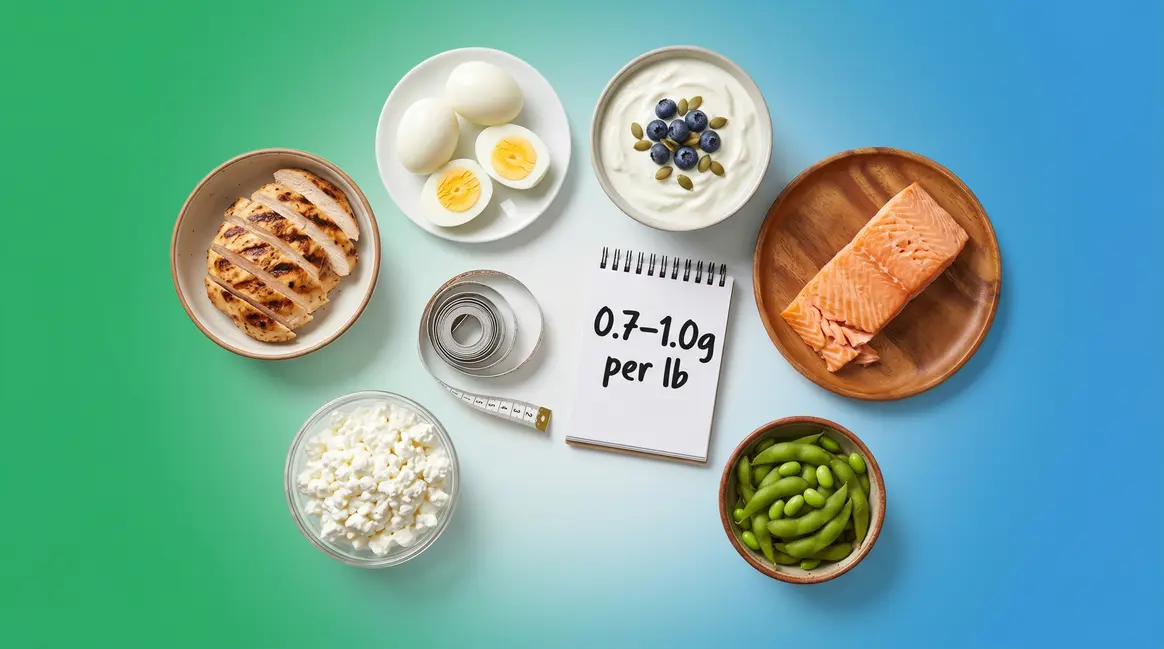
To build muscle, most adults need 0.7 to 1.0 grams of protein per pound of body weight per day — that’s 140–200g for a 200 lb person (International Society of Sports Nutrition, 2017).
- The Protein Precision Protocol: Your ideal target depends on body weight, goal, and context — not a single universal rule
- Spread protein across 3–5 meals: 20–40g per meal maximizes muscle protein synthesis (Mayo Clinic)
- 1g/lb vs. 1g/kg: The 1g/lb rule is the upper end of optimal; 0.7g/lb is the research-backed minimum for most lifters
- GLP-1 users need more: Aim for 1.0–1.5g per kg of body weight to prevent muscle loss on weight-loss medications
- 100g/day may not be enough: For anyone over 140 lbs actively lifting, 100g falls below the optimal range


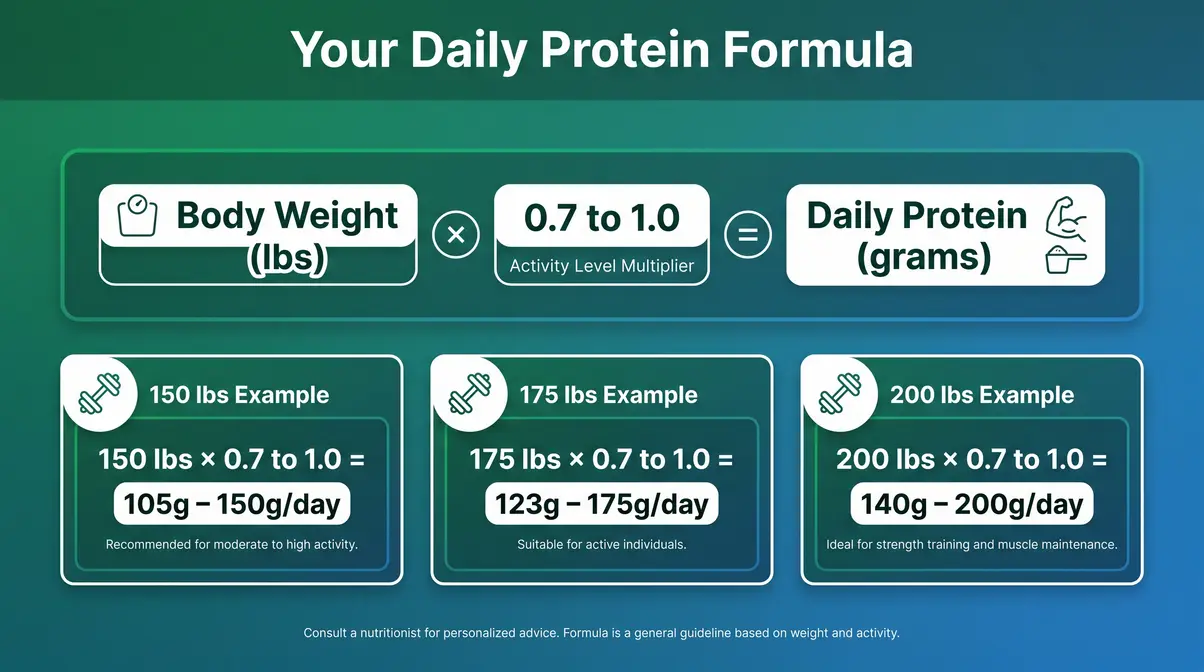
Table of Contents
- Daily Protein Needs for Muscle
- How to Hit Your Protein Target Every Day
- Protein Needs by Body Weight, Gender, and Goal
- Protein on GLP-1 Medications
- When High Protein Becomes a Problem
- Frequently Asked Questions
- Conclusion
Daily Protein Needs for Muscle
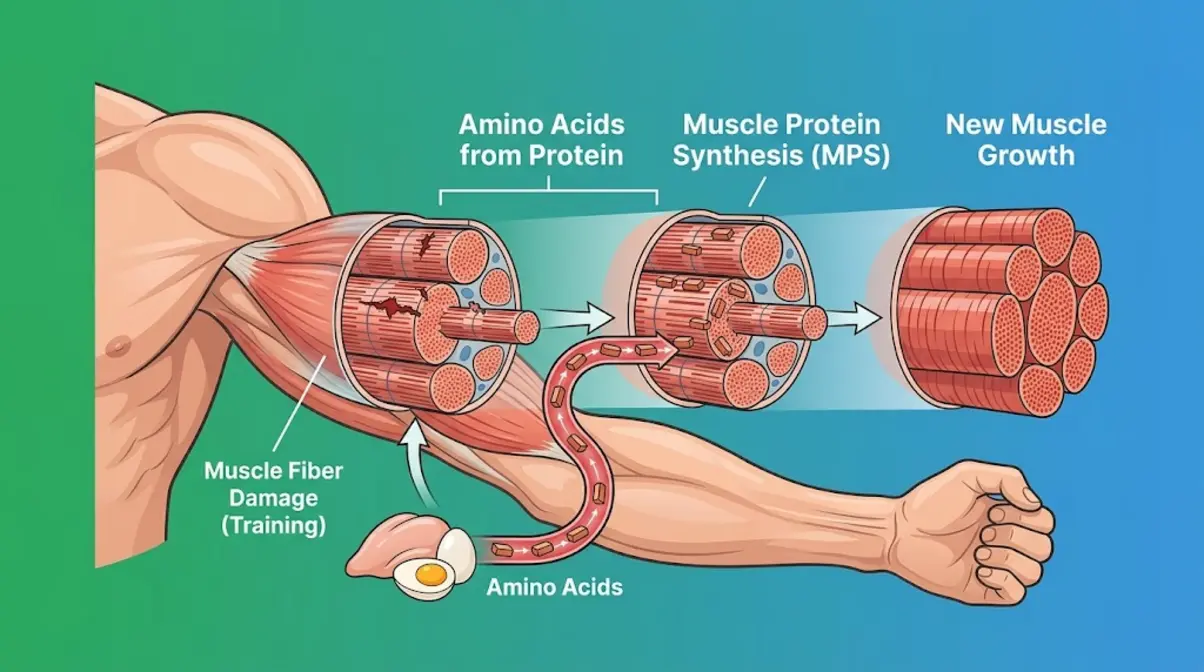
Most people asking this question want a single number. Here it is: 0.7 to 1.0 grams of protein per pound of body weight per day — or 1.6 to 2.2 grams per kilogram (g/kg). That range, endorsed by the International Society of Sports Nutrition (ISSN), covers the vast majority of people who lift weights and want to build or preserve muscle (ISSN, 2017).
But where you land within that range depends on three variables: your body weight, your goal (building vs. maintaining), and your context (age, training intensity, caloric intake). That three-variable approach is what we call The Protein Precision Protocol — and it’s the framework this entire guide is built around.
What Protein Does for Muscles
Before the numbers, a quick “why.” Every time you lift weights, you create tiny tears in your muscle fibers. Your body repairs those tears by building new muscle tissue — a process called muscle protein synthesis (MPS), which is simply the biological process of assembling new muscle proteins from amino acids. Protein from food provides those amino acids. Without enough protein, MPS stalls, and your muscles can’t fully recover or grow between sessions.
Think of amino acids as bricks. Lifting is the blueprint. Protein is the construction crew that actually builds the wall. No crew, no wall — no matter how good your workout plan is.
The body can’t store amino acids the way it stores fat or glycogen (stored carbohydrate energy). That’s why consistent daily protein intake matters more than occasional high-protein days.
The Science-Backed Range
Here’s what the research actually says, across the three major sports nutrition bodies:
| Organization | Recommended Range | Notes |
|---|---|---|
| ISSN (2017) | 1.4–2.0 g/kg/d (0.64–0.91 g/lb) | For exercising adults; higher end for muscle gain |
| ACSM | 1.2–1.7 g/kg (0.55–0.77 g/lb) | For strength-training athletes |
| NIH / RDA | 0.8 g/kg (0.36 g/lb) | Minimum for sedentary adults — NOT a muscle-building target |
g/kg/d means grams of protein per kilogram of body weight per day — a standard unit used in nutrition research. The NIH’s recommended dietary allowance (RDA) of 0.8 g/kg is the floor for survival, not the target for muscle growth. If you’re lifting consistently, that number is too low.
The ISSN’s practical recommendation for active adults aiming to build muscle sits at 1.6 to 2.2 g/kg per day, which translates to roughly 0.7 to 1.0 grams per pound (ISSN, 2017). That’s your working range.
“Most adults need 0.7 to 1.0 grams of protein per pound of body weight per day to build muscle — and research shows benefits plateau beyond 1.62 grams per kilogram” (British Journal of Sports Medicine, 2018).
Protein Targets by Body Weight
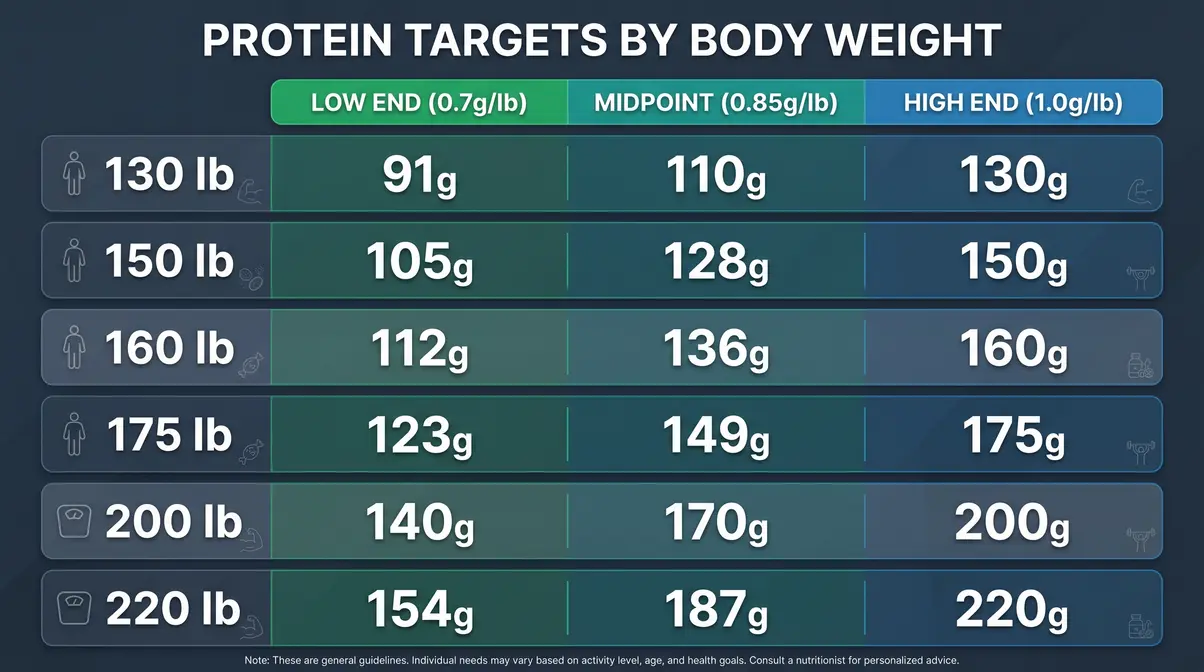
Applying the 0.7–1.0 g/lb range to six real body weights makes this immediately actionable. These examples use the full range so you can see your floor (minimum effective dose) and ceiling (upper research-supported limit):
| Body Weight | Low End (0.7 g/lb) | Midpoint (0.85 g/lb) | High End (1.0 g/lb) |
|---|---|---|---|
| 130 lb woman | 91g | 110g | 130g |
| 150 lb | 105g | 128g | 150g |
| 160 lb | 112g | 136g | 160g |
| 175 lb | 123g | 149g | 175g |
| 200 lb | 140g | 170g | 200g |
| 220 lb | 154g | 187g | 220g |
Practical starting point: Most beginners and intermediate lifters do well starting at 0.8 g/lb (the midpoint) and adjusting based on results after 4–6 weeks. If you’re in a caloric deficit (eating fewer calories than you burn to lose fat), aim for the higher end — 0.9–1.0 g/lb — to protect the muscle you already have.
Per Pound vs. Per Kilogram
This is the debate that started your search. Here’s the definitive answer.
A landmark 2018 meta-analysis published in the British Journal of Sports Medicine — analyzing data from 49 individual studies and 1,800 participants — found that muscle-building benefits plateau at approximately 1.62 g/kg per day (Morton et al., BJSM, 2018). Beyond that point, additional protein produced no statistically significant increase in muscle or strength gains.
Now do the math: 1.62 g/kg converts to roughly 0.74 g/lb. The popular “1 gram per pound” rule (2.2 g/kg) overshoots that research ceiling by about 35%.
So which rule should you follow?
- 1g per kilogram (0.45 g/lb): Too low for active lifters. Fine for sedentary adults, but falls short of muscle-building needs.
- 1g per pound (2.2 g/kg): Higher than the research ceiling but not harmful for healthy adults. You’ll likely excrete the excess.
- 0.7–1.0g per pound (1.6–2.2 g/kg): The ISSN-endorsed range that brackets the BJSM plateau. This is where you should aim.
The “1g per pound” rule persists because it’s easy to remember and errs on the side of more protein, which is rarely harmful. But for most people, 0.73–0.82 g/lb hits the research sweet spot without wasting money on excess protein powder or forcing uncomfortable amounts of food. For a deeper dive specifically on men’s protein needs, see our guide on protein intake for men.
Is 100g of Protein Enough?
For most people over 140 lbs who lift weights, 100g of protein per day falls below the optimal range. Using the ISSN’s recommended minimum of 0.7 g/lb, a 140 lb person needs 98g — so 100g is barely sufficient at that weight. A 175 lb person needs 123g at minimum. Research from the BJSM confirms that muscle protein synthesis is submaximal when protein intake falls below 1.6 g/kg per day (Morton et al., 2018). You may see some muscle gain, but you’re likely leaving results on the table. Aim for your weight-specific target from the table above.
How to Hit Your Protein Target Every Day
Estimated Time: 10 minutes
What You’ll Need: A food scale, a protein tracking app, and your calculated daily target.
Figuring out exactly how much protein per day to build muscle is only half the equation. Knowing your target number is useless if you aren’t hitting it — consistently, with food you enjoy, without turning every meal into a math problem. Research consistently shows that most people underestimate their protein intake by 20–30% on any given day (Mayo Clinic Health System). The step-by-step strategies below close that gap.
Step 1: Distribute Across Meals
Timing and distribution matter, but not in the way gym culture usually portrays. The anabolic window — the idea that you must consume protein within 30 minutes of training or “lose the gains” — is largely overstated. What actually matters more is spreading protein evenly across the day.
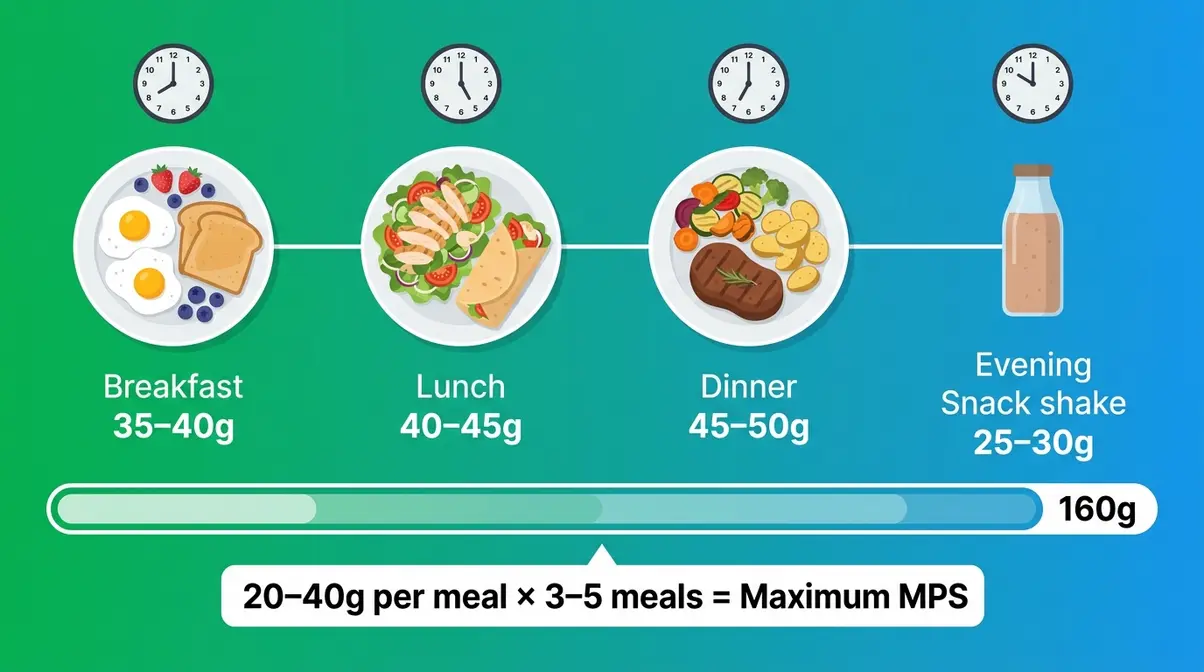
Research supports consuming 20–40 grams of protein per meal, spread across 3–5 eating occasions, to maximize muscle protein synthesis (MPS) at each sitting (ISSN, 2017). The body can only use so many amino acids for MPS at one time — eating 150 grams in a single meal doesn’t produce the same anabolic signal as spreading that 150 grams across four meals.
Here’s what a 160g daily target looks like spread across four meals:
| Meal | Protein Target | Example Foods |
|---|---|---|
| Breakfast | 35–40g | 4 eggs + Greek yogurt + cottage cheese |
| Lunch | 40–45g | 6 oz chicken breast + 1 cup lentils |
| Dinner | 45–50g | 7 oz salmon + 1 cup edamame |
| Evening snack | 25–30g | Protein shake + 1 oz almonds |
Post-workout protein: Aim to eat a protein-containing meal within 1–2 hours of training. This isn’t a narrow window — it’s a comfortable buffer that most people can manage without rearranging their schedule.
Step 2: Choose High-Protein Foods
Not all protein sources are equal. Complete proteins contain all nine essential amino acids (the ones your body can’t make on its own) and are the most effective for muscle protein synthesis. Animal proteins are generally complete; most plant proteins are not — though combining sources (rice + beans, for example) covers all nine amino acids.
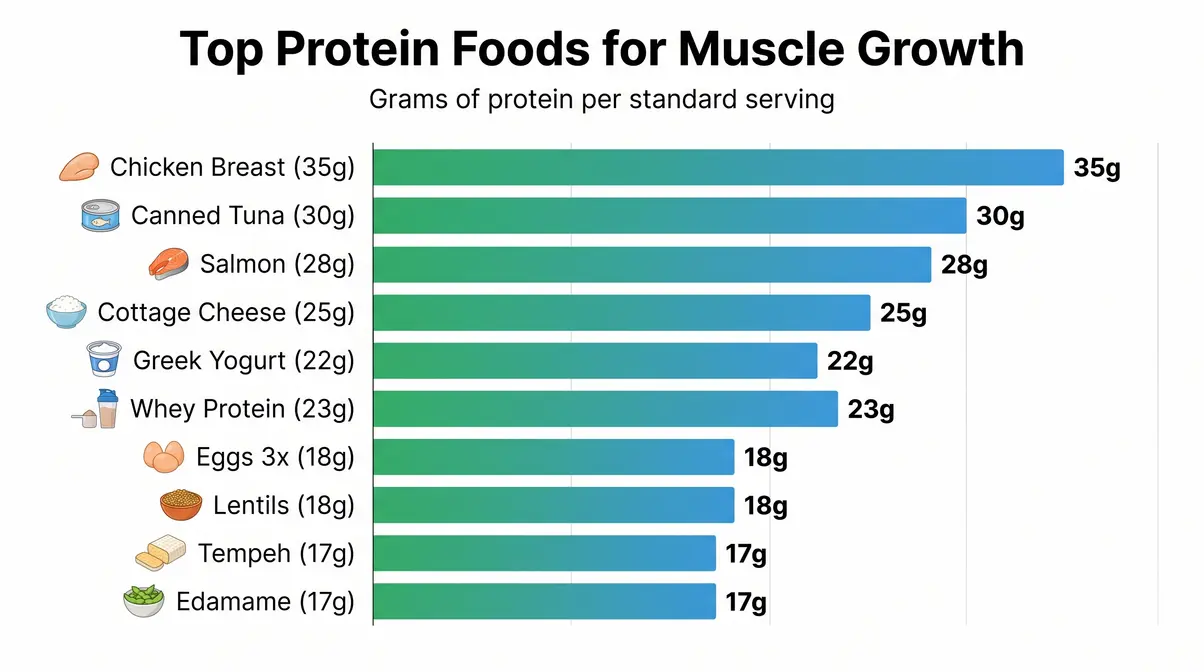
Here are the top high-protein foods by protein density:
| Food | Serving | Protein | Notes |
|---|---|---|---|
| Chicken breast (cooked) | 4 oz | 35g | Lean, versatile, cost-effective |
| Canned tuna | 1 can (5 oz) | 30g | Fastest prep, high EPA/DHA |
| Salmon (cooked) | 4 oz | 28g | Omega-3s support recovery |
| Cottage cheese | 1 cup | 25g | Slow-digesting casein — ideal before bed |
| Greek yogurt (plain, 0%) | 1 cup | 22g | Adds calcium; pairs with fruit |
| Eggs (whole) | 3 large | 18g | Complete amino acid profile |
| Tempeh | ½ cup | 17g | Best plant-based complete protein |
| Lentils (cooked) | 1 cup | 18g | High fiber; pair with rice for completeness |
| Edamame | 1 cup | 17g | Complete plant protein, low cost |
| Whey protein powder | 1 scoop (30g) | 22–25g | Fastest-absorbing; useful for convenience |
For a comprehensive breakdown of food-specific protein targets tailored to women, see our protein intake for women guide.
Step 3: Consider Supplements
Short answer: No, you don’t absolutely need them. Protein supplements — whey, casein, plant-based powders — are convenient, but they are not required. Whole foods deliver the same amino acids, often with additional micronutrients (vitamins, minerals, fiber) that powders lack.
Research confirms that protein source matters less than total daily intake. A 2022 review in Nutrients found no significant difference in muscle gain between participants meeting protein targets through whole foods versus supplements, when total intake was equalized (Gorissen et al., Nutrients, 2022).
- When supplements make sense:
- You’re consistently falling 30–50g short of your daily target through food alone
- You travel frequently or have limited meal prep time
- You struggle with appetite (common on GLP-1 medications — more on this below)
If you do use a protein powder, whey protein isolate is the most well-researched option for muscle protein synthesis, with a high leucine content that strongly triggers MPS (ISSN, 2017). For plant-based lifters, a blend of pea + rice protein provides a complete amino acid profile comparable to whey (van Vliet et al., Journal of Nutrition, 2015).
Step 4: Balance Carbs and Fat
Protein doesn’t work in isolation. Macronutrients — protein, carbohydrates, and fat — all play specific roles in muscle building, and getting the balance right matters.
- Carbohydrates replenish glycogen (the stored energy your muscles burn during training). Without adequate carbs, you’ll fatigue faster and train at lower intensity — which limits the muscle-building stimulus in the first place.
- Fat supports hormone production, including testosterone, which plays a role in muscle protein synthesis.
A practical starting macronutrient split for muscle building:
| Macronutrient | Target | Example (2,800 cal diet) |
|---|---|---|
| Protein | 0.7–1.0 g/lb body weight | 160g = 640 cal |
| Carbohydrates | 3–5 g/kg body weight | 300g = 1,200 cal |
| Fat | 0.5–1.0 g/kg body weight | 100g = 900 cal |
The key insight for beginners: hit your protein target first, then fill remaining calories with carbs and fat based on preference and energy needs. Protein is the non-negotiable foundation; the carb-fat split is more flexible.
Protein Needs by Body Weight, Gender, and Goal
When determining how much protein per day to build muscle, The Protein Precision Protocol’s three variables — body weight, goal, and context — produce meaningfully different targets for different people. This section walks through four specific scenarios where personalization matters most.
Protein for a 200 lb Man
A 200 lb man actively lifting to build muscle needs roughly 140–200 grams of protein per day using the 0.7–1.0 g/lb range. The research-supported sweet spot sits around 160–170 grams per day (approximately 0.82 g/lb), which aligns with the BJSM plateau finding of 1.62 g/kg (Morton et al., BJSM, 2018).
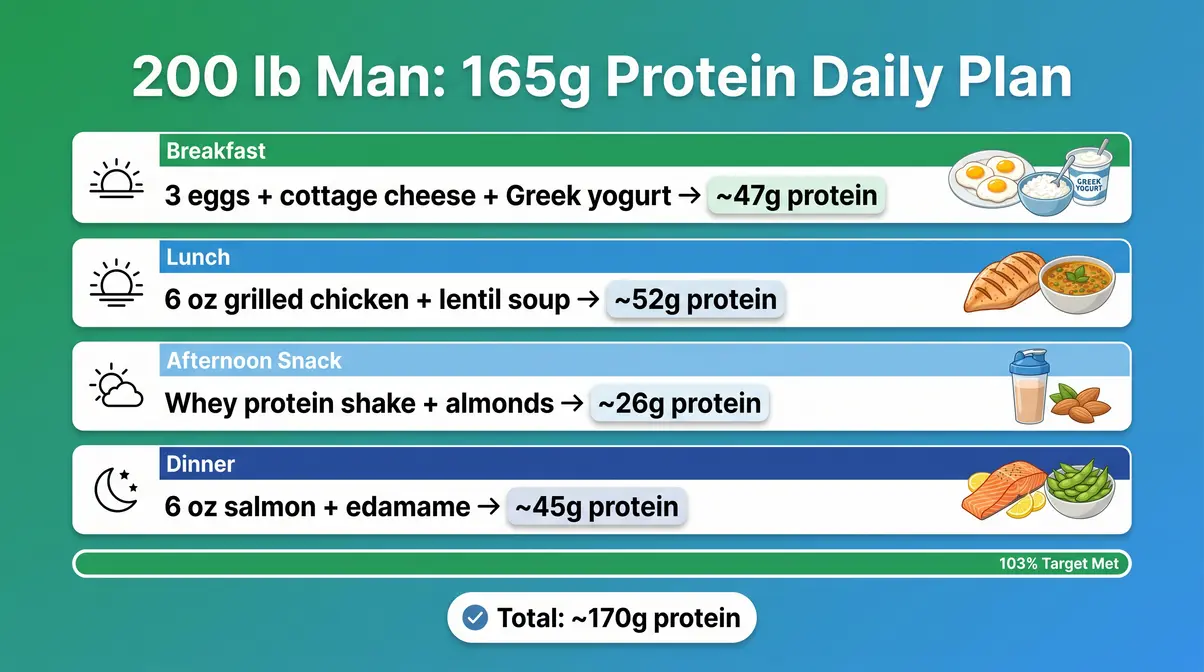
Here’s how a 200 lb man can hit 165 grams of protein in a single day:
| Meal | Foods | Protein |
|---|---|---|
| Breakfast | 3 eggs + 1 cup cottage cheese + 1 cup Greek yogurt | ~47g |
| Lunch | 6 oz grilled chicken breast + 1 cup lentil soup | ~52g |
| Afternoon snack | 1 scoop whey protein + 1 oz almonds | ~26g |
| Dinner | 6 oz salmon + 1 cup edamame | ~45g |
| Total | ~170g |
This plan hits the target with whole foods plus one protein shake — no heroic effort required. For a complete 7-day meal plan and calorie breakdown for men, see our protein intake for men guide.
Protein Intake for Women
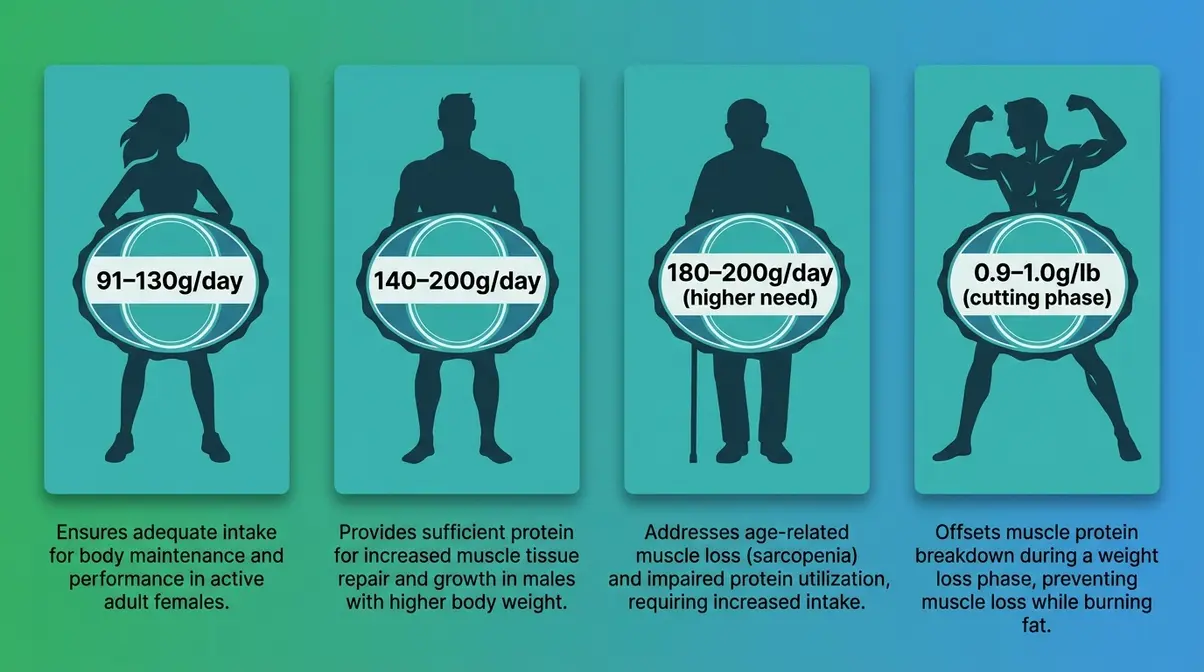
Women need protein for muscle growth by exactly the same biological mechanism as men — muscle protein synthesis doesn’t discriminate by sex. The same 0.7–1.0 g/lb range applies. However, because women typically weigh less and have proportionally less muscle mass, their absolute daily targets are lower.
- For a 130 lb woman lifting 3–4 times per week:
- Minimum (0.7 g/lb): 91 grams per day
- Optimal midpoint (0.82 g/lb): ~107 grams per day
- Higher end (1.0 g/lb): 130 grams per day
During pregnancy or breastfeeding, protein needs increase — the ISSN recommends consulting a registered dietitian for individualized targets during these stages. For a complete breakdown of protein needs across women’s life stages, visit our detailed protein intake for women guide.
Adjusting for Age and Goal
Men over 50 face a physiological challenge called anabolic resistance — the reduced ability of older muscle to respond to protein and exercise stimuli. Simply put, it takes more protein to generate the same MPS response in a 55-year-old than in a 25-year-old.
The ACSM recommends that men over 50 who strength train aim for the higher end of the protein range — 1.0–1.2 g/kg above the standard ceiling — to compensate for this reduced efficiency (ACSM Position Statement, 2009, updated 2019). For a 200 lb (91 kg) man over 50, that means targeting 180–200 grams per day rather than the 160–170g appropriate for younger lifters.
Sarcopenia — age-related muscle loss — accelerates after age 60 at roughly 1–2% of muscle mass per year without intervention (NIH, National Institute on Aging). Adequate protein, combined with resistance training, is the most effective evidence-based strategy to slow this process. A comprehensive age-specific protein breakdown is available in our protein intake for men resource.
Protein for Bodybuilders
Bodybuilders often push protein intake well beyond 1 g/lb — sometimes to 1.5 g/lb or higher. Does the research support this?
Generally, no. The BJSM meta-analysis found that muscle and strength gains plateau at 1.62 g/kg (≈ 0.74 g/lb), with no additional benefit observed at higher intakes in the 49 studies analyzed (Morton et al., BJSM, 2018). For healthy adults with functioning kidneys, eating more protein isn’t dangerous — but it’s also not more effective for building muscle. Those extra grams are simply oxidized for energy or excreted.
The one exception: during aggressive caloric deficits (cutting phases), bodybuilders may benefit from higher protein — up to 2.3–3.1 g/kg of lean body mass — to preserve muscle while losing fat (Helms et al., International Journal of Sport Nutrition and Exercise Metabolism, 2014). This is a context-specific adjustment, not a universal rule — a core principle of The Protein Precision Protocol.
Protein in a Caloric Deficit?
When eating in a caloric deficit (consuming fewer calories than you burn), aim for the higher end of the protein range — 0.9–1.0 g/lb. A caloric deficit signals the body to use stored energy for fuel, and without adequate protein, that “stored energy” can include muscle tissue. Research by Helms et al. (International Journal of Sport Nutrition and Exercise Metabolism, 2014) found that protein intakes of 2.3–3.1 g/kg of lean body mass best preserve muscle during calorie restriction. The takeaway: the leaner and more aggressively you’re cutting, the higher your protein target should be — a key principle of The Protein Precision Protocol.
Protein on GLP-1 Medications
GLP-1 receptor agonists — including semaglutide (Ozempic, Wegovy) and tirzepatide (Mounjaro, Zepbound) — are among the most prescribed medications in the United States. They work by suppressing appetite and slowing gastric emptying, which leads to significant calorie reduction and weight loss. But that appetite suppression creates a serious nutritional risk: muscle loss alongside fat loss.
This section addresses what 100% of competing articles miss entirely: how to protect your muscle while on these medications.
Why GLP-1 Users Need More
When you eat significantly less food — as most GLP-1 users do — your body can enter a state where it breaks down muscle tissue for energy, a process called catabolism. Studies on GLP-1 medications show that without deliberate protein prioritization, up to 25–40% of total weight lost may come from lean mass (muscle) rather than fat (Wilding et al., New England Journal of Medicine, 2021).
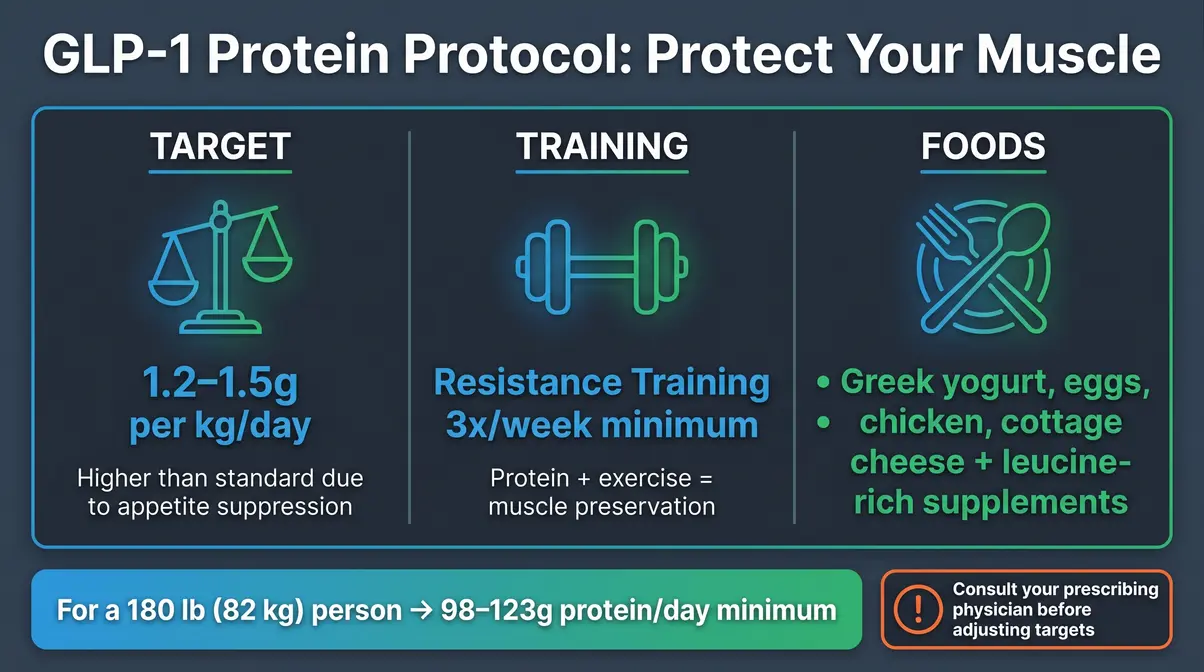
Sports medicine experts at Ohio State University Wexner Medical Center recommend that individuals on GLP-1 medications aim for at least 1.2–1.5 grams of protein per kilogram of body weight per day — notably higher than the standard 1.6 g/kg building range — specifically because total calorie intake is suppressed (Ohio State University Wexner Medical Center, 2024). For a 200 lb (91 kg) person, that means targeting 109–136 grams of protein daily even while eating at a significant caloric deficit.
“On GLP-1 medications, protein isn’t just about building muscle — it’s about protecting the muscle you already have while your body loses weight rapidly.”
Applying The Protein Precision Protocol here means adjusting the “context” variable significantly: lower total calories + aggressive fat loss = higher protein percentage of diet, resistance training 3x per week minimum, and potentially adding a leucine-rich protein supplement to compensate for reduced meal volume.
What to Avoid on Tirzepatide
Tirzepatide’s powerful appetite suppression can lead to behaviors that accelerate muscle loss. Here are the most common pitfalls — and how to avoid them:
1. Skipping protein-first eating
Because tirzepatide reduces hunger, many users eat very small meals and skip high-protein foods in favor of whatever feels easiest. This is the fastest route to muscle loss. Prioritize protein at every eating occasion, even if the meal is small. A 200-calorie Greek yogurt with 22g of protein beats a 200-calorie handful of crackers in every way that matters for muscle.
2. Falling below 1,000–1,200 calories total
Severely low calorie intake — sometimes triggered by tirzepatide’s strong appetite suppression — makes it nearly impossible to meet protein targets from whole foods alone. If you’re consistently eating fewer than 1,200 calories (women) or 1,500 calories (men), consult your prescribing physician or a registered dietitian immediately.
3. Skipping resistance training
Protein without exercise doesn’t build or preserve muscle effectively. Research confirms that combining adequate protein with resistance training reduces muscle loss during GLP-1-driven weight loss more effectively than either intervention alone (Cava et al., Advances in Nutrition, 2017).
4. Relying on low-protein processed foods
Protein bars and meal replacements vary wildly in quality. On tirzepatide, where every calorie counts, choose whole food protein sources first (eggs, chicken, Greek yogurt, cottage cheese), then supplement with high-quality protein powders if needed to close the gap.
For GLP-1 users, the modified Protein Precision Protocol looks like this: 1.2–1.5 g/kg/day protein + resistance training 3x/week + leucine-rich foods or supplements at every meal.
Protein Needs on Tirzepatide?
On tirzepatide, aim for at least 1.2–1.5 grams of protein per kilogram of body weight per day — higher than standard muscle-building recommendations. Ohio State University Wexner Medical Center advises this elevated target specifically because tirzepatide suppresses appetite so aggressively that muscle loss becomes a significant risk (Ohio State, 2024). For a 180 lb (82 kg) person, that means 98–123g of protein daily as a minimum floor. Pair this with resistance training at least 3 times per week to maximize muscle preservation during weight loss.
When High Protein Becomes a Problem
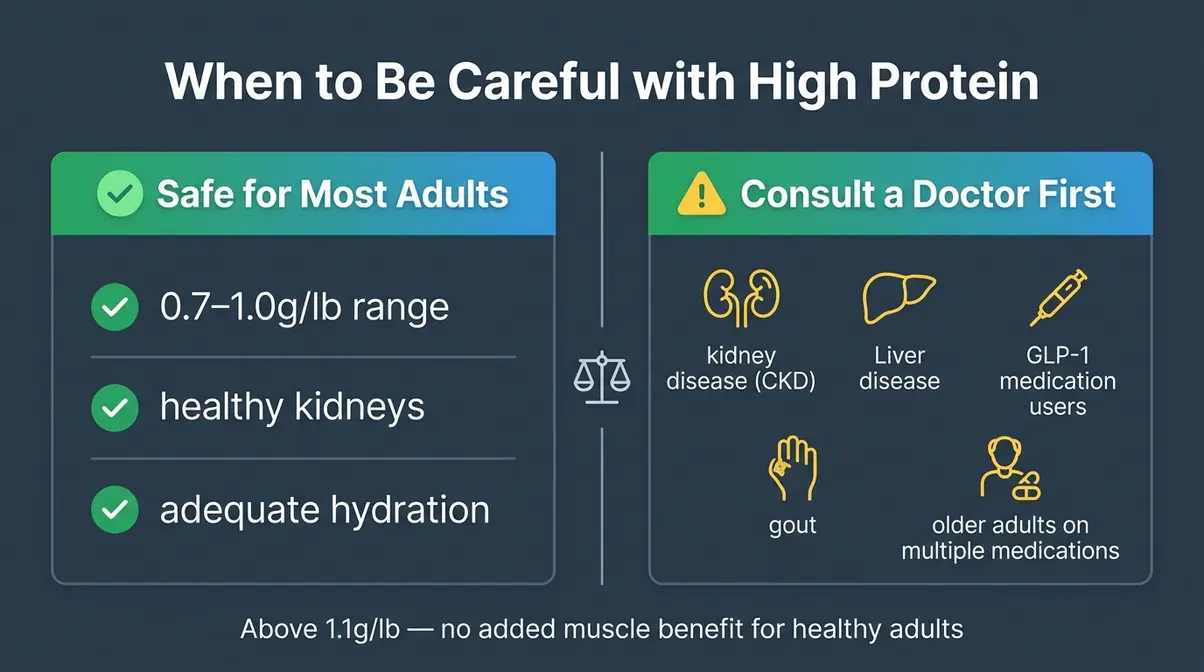
For healthy adults with functioning kidneys, high-protein diets in the 0.7–1.0 g/lb range are well-tolerated and safe. However, there are real scenarios where protein intake warrants caution — and a few signs that you may be overdoing it.
Signs of Too Much Protein
Consuming protein significantly above the research ceiling (beyond 2.5 g/kg or roughly 1.1 g/lb) doesn’t appear to cause harm in healthy people, according to a comprehensive review of safe protein intake upper limits (Bilsborough & Mann, International Journal of Sport Nutrition and Exercise Metabolism, 2006). However, very high intakes can produce noticeable side effects:
- Digestive discomfort: Bloating, gas, and loose stools — particularly from whey protein or very high-fiber plant proteins
- Dehydration: Protein metabolism produces urea, which requires water to excrete via the kidneys; high intake increases fluid needs
- Caloric surplus: Protein contains 4 calories per gram; 250+ grams daily adds 1,000+ calories from protein alone, which can undermine fat-loss goals
- Crowding out other nutrients: Eating primarily protein leaves less room for carbohydrates and fats, which support training performance and hormone production
Is 200g of protein a day too much? For a 200 lb person, 200g sits at exactly 1.0 g/lb — the upper end of the research-supported range, not an excess. For a 150 lb person, 200g would be 1.33 g/lb — above the research ceiling but not dangerous for healthy individuals. The Cleveland Clinic recommends staying under 2.0 g/kg for general populations unless supervised by a dietitian.
Who Should Talk to a Doctor
Certain populations should get medical clearance before significantly increasing protein intake:
Kidney disease (CKD): The primary evidence-based caution around high protein. Individuals with chronic kidney disease (CKD) — reduced kidney function — may need to limit protein because damaged kidneys struggle to process the byproducts of protein metabolism. The NIH and Mass General Brigham both note that standard high-protein recommendations do not apply to people with CKD.
Liver disease: Similar to kidney disease, impaired liver function affects how the body processes protein waste products.
GLP-1 medication users: As discussed above — consult your prescribing physician or a registered dietitian before adjusting protein targets significantly.
Gout: High intake of certain protein sources (particularly red meat and shellfish) can elevate uric acid levels and trigger gout flares.
Older adults with multiple medications: Some medications interact with high-protein diets. A registered dietitian can help identify conflicts.
If you’re in any of these categories, the Protein Precision Protocol still applies — but your “context” variable requires professional personalization. The Hartford HealthCare sports nutrition team recommends that anyone with a chronic health condition treat protein targets as a starting conversation with their healthcare team, not a self-prescribed formula.
Frequently Asked Questions
Protein for a 200 lb man?
A 200 lb man needs approximately 140–200 grams of protein per day to build muscle, with the research-supported sweet spot around 160–170g (0.82 g/lb). This aligns with the BJSM plateau finding of 1.62 g/kg, which equals roughly 147g for a 200 lb (91 kg) man. Spread this across 4 meals of 35–45g each for optimal muscle protein synthesis at each sitting. The sample meal plan in the demographics section above shows exactly how to hit 165–170g with whole foods and one protein shake.
Is 200g of protein too much?
Whether 200g is too much depends entirely on your body weight. For a 200 lb person, 200g equals exactly 1.0 g/lb — the upper end of the ISSN-endorsed range, which is not excessive. For a 150 lb person, 200g equals 1.33 g/lb, which exceeds the research ceiling but is not harmful for healthy adults with normal kidney function (Bilsborough & Mann, 2006). The Cleveland Clinic recommends staying under 2.0 g/kg unless supervised by a dietitian. More than 200g per day is unlikely to produce additional muscle gains and primarily adds unnecessary calories.
Are 2 eggs a day enough?
No — 2 eggs provide only about 12–13 grams of protein, which is far below what active adults need. Two large eggs contain roughly 6g of protein each (USDA FoodData Central). Even for a 130 lb woman at the minimum 91g target, 2 eggs cover only 13–14% of daily needs. Eggs are an excellent protein source with a complete amino acid profile, but they need to be part of a broader protein strategy — not the whole plan. Aim for 3–4 eggs as part of a larger meal that includes additional protein sources.
What is the 30-30-3 rule?
The 30-30-3 rule suggests eating 30 grams of protein within 30 minutes of waking, then again 3 hours later. It’s a popular social media framework, not an ISSN or ACSM guideline. The underlying logic — eating protein early and spreading it across the day — is sound and supported by research. However, the specific 30-minute morning window isn’t evidence-based; the anabolic window research applies more clearly to post-exercise timing. The more evidence-backed approach is simply spreading 20–40g of protein across 3–5 meals throughout the day (ISSN, 2017), without rigid timing requirements.
Tirzepatide protein mistakes?
On tirzepatide, avoid skipping protein-first eating, relying on low-protein processed foods, and dropping total calories below safe minimums. Tirzepatide’s appetite suppression makes it easy to under-eat protein without realizing it — which accelerates muscle loss alongside fat loss. Specifically avoid: eating carbohydrate-heavy snacks as your primary calories, skipping resistance training (protein without exercise is far less effective at preserving muscle), and ignoring signs of severe caloric restriction like fatigue and rapid weakness. The Mass General Brigham nutrition team recommends working with a registered dietitian when on GLP-1 medications to individualize both protein targets and overall calorie goals.
Putting It All Together: Your Protein Action Plan
You started with a genuine question — 1g per pound or 1g per kilogram? — and the answer is neither extreme. The research-backed range is 0.7 to 1.0 grams per pound of body weight per day (1.6 to 2.2 g/kg), with the BJSM meta-analysis confirming that muscle-building benefits plateau around 1.62 g/kg (≈ 0.74 g/lb). For most lifters, the sweet spot is 0.8–0.85 g/lb — enough to maximize muscle protein synthesis without spending money on excess protein you can’t use (Morton et al., BJSM, 2018).
The Protein Precision Protocol is the practical takeaway: your ideal daily protein target isn’t a single universal number. It’s the product of three variables — your body weight, your goal (building vs. cutting vs. maintaining), and your context (age, medications, training intensity). A 130 lb woman in her 20s, a 220 lb man over 50, and a 180 lb person on tirzepatide all need meaningfully different targets, even if the underlying formula is the same.
Your next step is simple. Find your body weight in the target table above, identify your goal, and start tracking for 2–3 weeks. Use the meal distribution framework — 20–40g per meal across 3–5 eating occasions — and prioritize complete protein sources like chicken, eggs, cottage cheese, and Greek yogurt. If you’re on a GLP-1 medication, apply the modified protocol (1.2–1.5 g/kg) and add resistance training at minimum 3 times per week. When in doubt, work with a registered dietitian who specializes in sports nutrition — especially if you have any of the health conditions outlined in the limitations section above.
Related posts:
Progressive Overload Guide: 7 Methods to Build Muscle
Muscle Atrophy: Causes, Symptoms & How to Reverse It
What Is Muscle Memory? The Complete Science Guide
Muscle Hypertrophy Explained: The Science of Muscle Growth
Strength Training vs Hypertrophy: The Complete 2026 Guide
Muscle Building Transformation Stories: What Actually Worked

Callum
Hi, I'm Callum, the founder of Body Muscle Matters. I'm not a certified trainer, I'm a self taught lifter who started this site to share what I've learned from my own training and a lot of trial and error. Everything here comes from real experience and honest research, written the way I'd explain it to a friend who is just getting started. My goal is simple: practical, no hype fitness advice you can actually use.