What 15% Body Fat Actually Looks Like (and How to Get There)
You know you’re close. You can see your upper abs on a good day. Your shirts fit better than they did a year ago. But that finish line — that lean, athletic look you’ve been working toward — still feels just out of reach.
Most guides show you what 15 percent body fat looks like, but skip the roadmap entirely. Others hand you a generic plan but ignore the crucial — and often dangerous — difference between men and women at this exact number. In this guide, you’ll learn exactly what 15% body fat looks like, whether it’s a healthy goal for your specific body, and the precise six-step plan to get there — backed by Tier-1 medical research.
⚕️ Medical Disclaimer: The information in this article is for educational purposes only and does not constitute medical advice. Body composition goals, dietary changes, and exercise programs can significantly affect your health. Consult a qualified healthcare professional, registered dietitian, or certified personal trainer before making changes to your diet or exercise routine. This is especially important for women, as 15% body fat approaches essential fat territory and may carry health risks.
At 15% body fat, men display a lean, athletic physique with visible upper abs and solid muscle definition — falling squarely in the healthy range of 10–20% for non-athletes (Cleveland Clinic, 2026).
- The 15% Paradox: For men, 15% is the health sweet spot; for women, it sits at the edge of essential fat territory and may carry real hormonal risks
- Visible abs: Upper abs (a 2–4 pack) become visible at 15% for most men; a full 6-pack requires dropping to 10–12%
- Achievable timeline: Most men can go from 20% to 15% body fat in 8–12 weeks with a consistent 500-calorie daily deficit
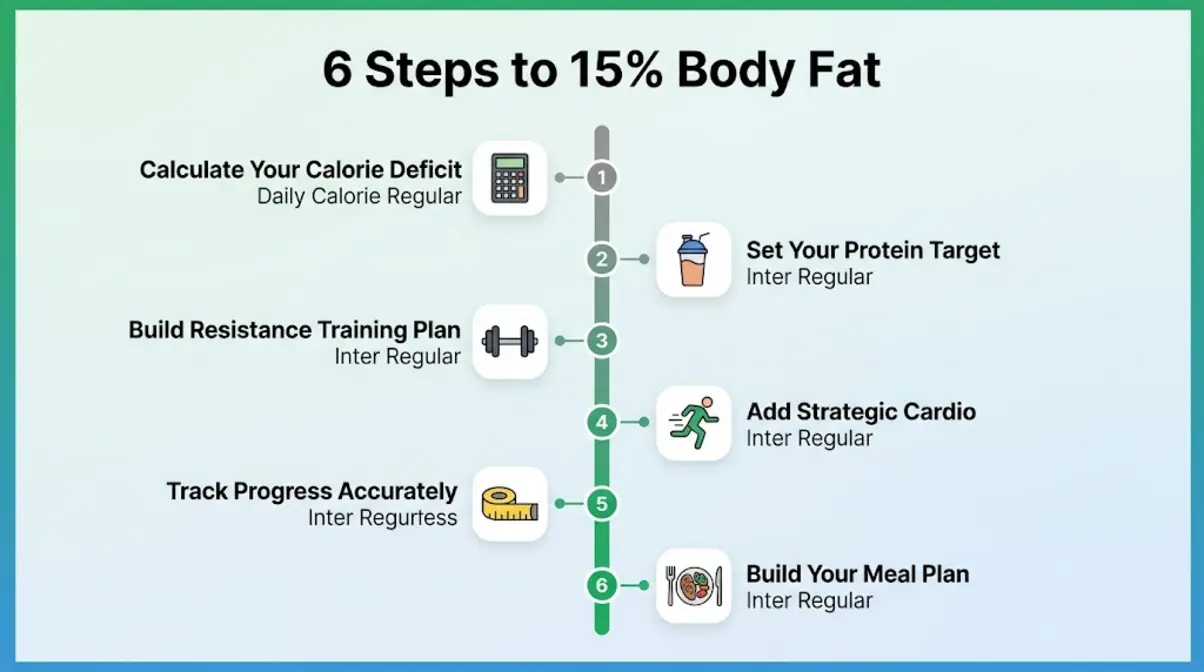
- Six-step roadmap: Calorie deficit → protein target → resistance training → strategic cardio → accurate tracking → meal planning
- Measurement matters: Bathroom scales don’t measure body fat — you need a DEXA scan, BodPod, or skinfold calipers for reliable accuracy


What Does 15% Body Fat Look Like?
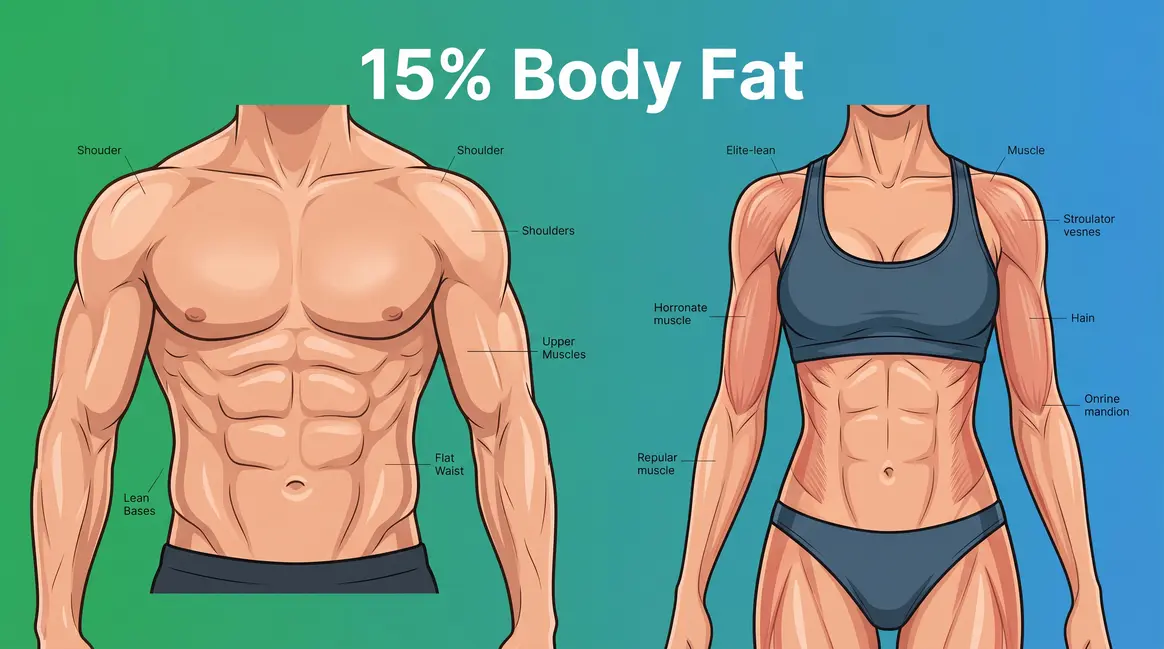
At 15% body fat, men display a lean, athletic physique with visible upper abdominal muscles, defined arms and shoulders, and a flat waist — placing them in the standard healthy range of 10–20% for non-athlete men (Cleveland Clinic, 2026). For women, the picture is dramatically different: 15% sits near essential fat territory, producing an extremely lean, competitive-athlete build that most women’s bodies are not designed to sustain. This is the visual benchmark most people are chasing — and it’s more achievable than it looks.
The Visual Reality: Muscle Definition at 15% Body Fat
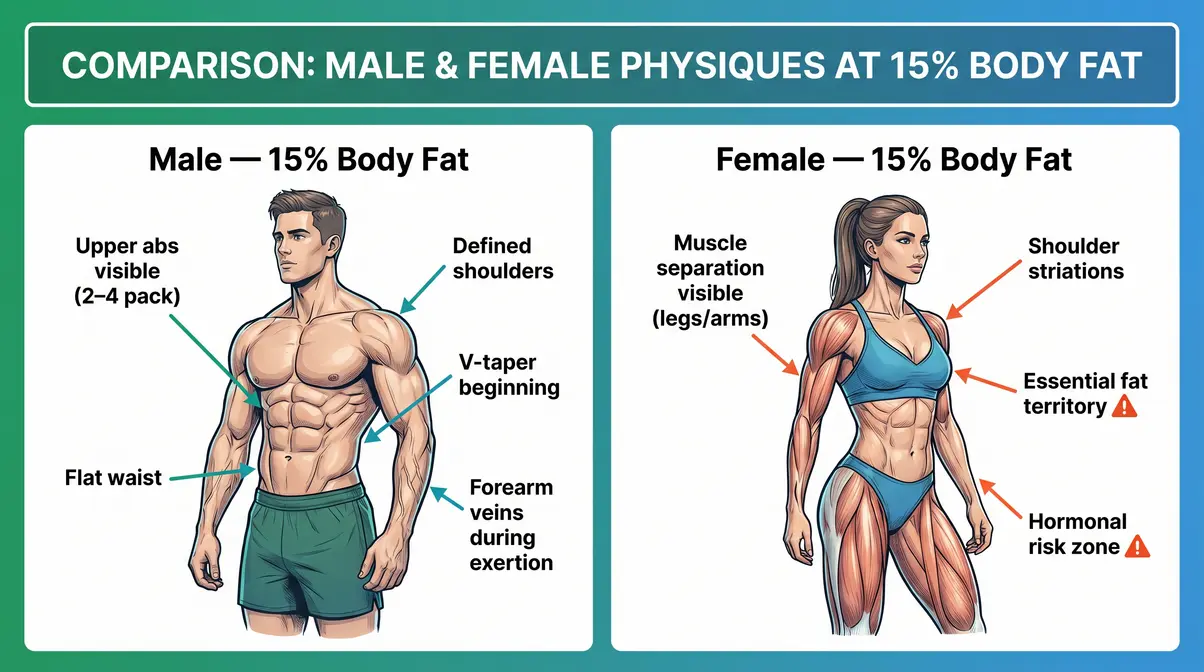
At 15% body fat, men start looking cut in a way that turns heads without looking extreme. The key visual markers are specific: a flat waist, visible upper abs (typically a 2–4 pack), defined arms and shoulders, and the early stages of a V-taper silhouette as the waist narrows relative to the upper body. Veins may appear on the forearms and biceps during workouts. The overall effect is athletic and lean — not shredded, but noticeably muscular.
If you’ve been carrying a “dad bod” at 20% body fat, reaching 15% means your shirts start fitting differently around the shoulders. Your waist measurement drops noticeably. People start asking if you’ve been working out.
For women, 15% body fat represents an extremely lean, competitive-athlete build. Visible muscle separation appears in the legs and arms. Striations (fine lines of muscle fiber) may show in the shoulders. This is NOT a typical physique for most women — it requires dedicated, sustained effort and places real physiological demands on the body.
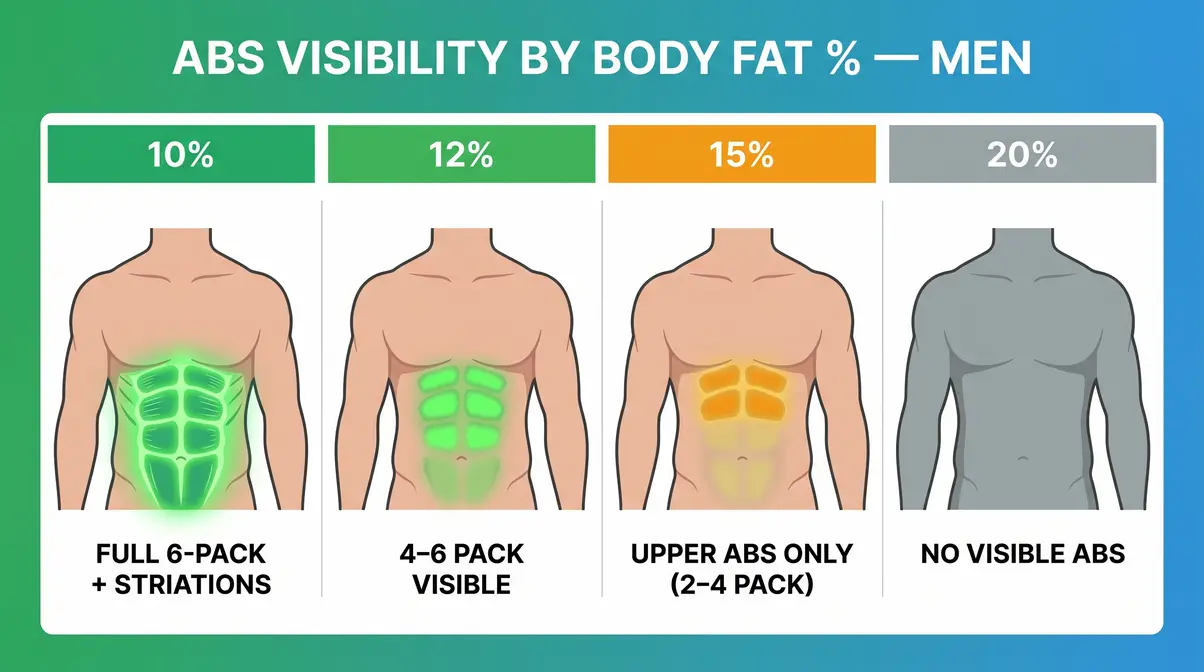
Now, the question everyone actually wants answered: can you see abs at 15% body fat? Yes — but only the upper ones. Research and clinical observation consistently show that the upper 2–4 abdominal muscles become visible for most men at 15%. The lower abs (“bottom abs still not visible,” as the VoC data confirms) typically require dropping below 12–13% body fat. The last few percentage points are genuinely the hardest to lose — and that’s not a motivational cliché, it’s physiology.
> For a visual walkthrough of what 15% body fat looks like in practice, watch the video below.
>
But body fat doesn’t just show up in your abs — your face and waist tell the story too.
What Your Face and Waist Look Like at 15% Body Fat
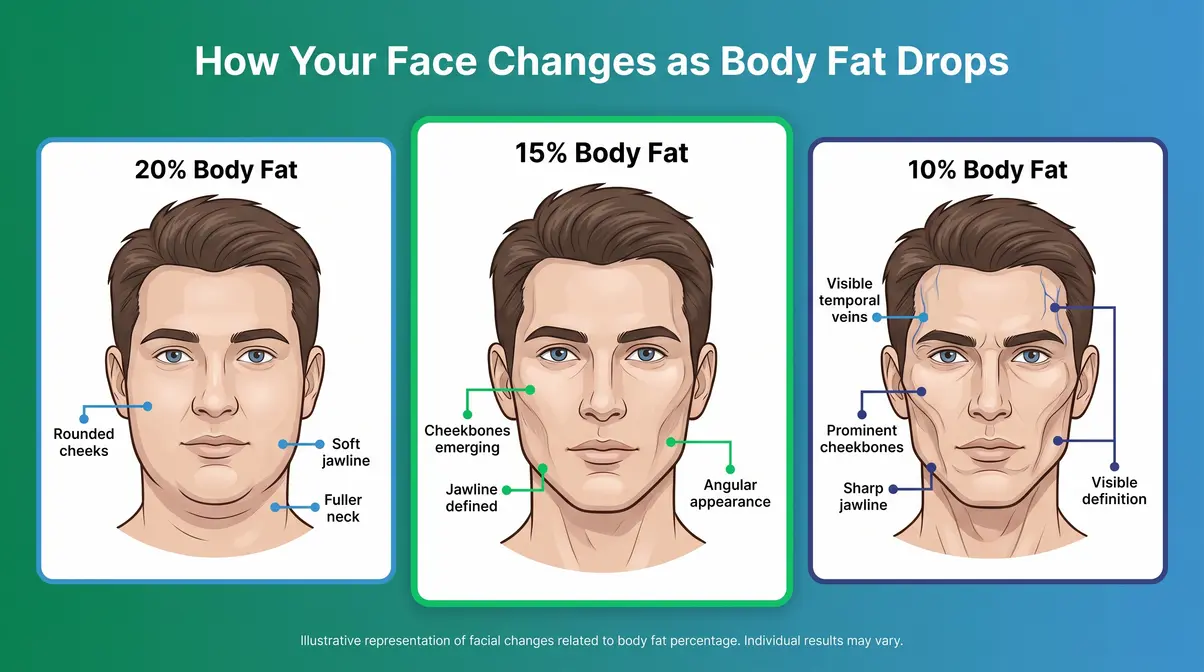
The changes at 15% body fat go well beyond your midsection. Your face is one of the first places people notice the difference. Cheekbones become slightly more prominent. Jawline definition improves visibly. Facial fat around the cheeks and neck decreases compared to 20%+, giving a sharper, more angular appearance. Searching for “15 percent body fat face” results online? You’re looking for this exact shift — and it’s real.
Your waist circumference also changes significantly. For an average 180-lb man, 15% body fat typically corresponds to a waist measurement of approximately 32–34 inches. This varies based on your height, frame size, and how much muscle you’ve built — a muscular man at 15% will carry that differently than a lighter man at the same percentage.
Think of it this way: at 15%, most men feel completely comfortable removing their shirt at the beach. Not “shredded” — but lean, defined, and confident. The difference between a recreational swimmer and a competitive bodybuilder sits at either end of the spectrum. At 15%, you’re solidly in the swimmer’s territory.
Where do men gain weight first?
Most men gain weight first in the abdominal region — specifically around the waist and lower belly. This is driven by higher concentrations of cortisol receptors and androgen receptors in visceral fat tissue, which respond readily to caloric surplus and stress. The lower abdomen and “love handles” are typically the last areas to lean out, which is why lower abs remain hidden at 15% body fat and typically only emerge below 12–13%.
Now that you can picture 15% body fat, let’s put it in context — how does it compare to 12% and 20%?
Comparing 12%, 15%, and 20% Body Fat Side by Side
The table below gives you a full reference spectrum — from competition-lean to above average — so you can locate yourself and understand exactly what you’re working toward.
| Body Fat % | Visual Appearance (Men) | Visual Appearance (Women) | Abs Visible? | Typical Category |
|---|---|---|---|---|
| 10% | Very defined; visible striations, prominent veins | ⚠️ Below essential fat for many women | Yes — full 6-pack | Shredded |
| 12% | Lean; clear 4–6 pack, visible muscle separation | Elite athlete; extreme leanness | Yes — 4–6 pack | Very Lean |
| 15% | Athletic; 2–4 pack visible, defined shoulders | Elite/competitive athlete; ⚠️ health risk zone | Upper abs only | Lean / Athletic |
| 18% | Fit; slight ab outline, some softness | Lean and athletic | Barely | Athletic / Fit |
| 20% | Average; minimal ab definition, “soft” look | Fit and healthy; sustainable | No | Average |
| 25% | Soft; little visible definition | Above average; healthy for many women | No | Above Average |
At 15%, men occupy the sweet spot of the spectrum — lean enough to show real muscle definition, while still carrying enough body fat for healthy hormone function and energy. For women, notice that 15% falls into the elite-athlete or health-risk zone, not the “healthy fit” category. That distinction is the core of The 15% Paradox, which we’ll explore fully in the gender section below.
Is 20% body fat chubby?
20% body fat is not “chubby” — it falls within the acceptable range for men according to the American Council on Exercise. However, at 20%, most men show minimal abdominal definition and a softer overall appearance. It’s the physique commonly described as “dad bod” — healthy, but without visible muscle definition. Moving from 20% to 15% produces a dramatic visual improvement with just 8–12 weeks of consistent effort, which is why 15% is such a popular target.
Knowing what 15% looks like is one thing — but is it actually good for your health? The science gives a clear answer, but it depends on who you are.
Is 15% Body Fat Healthy? What the Science Says
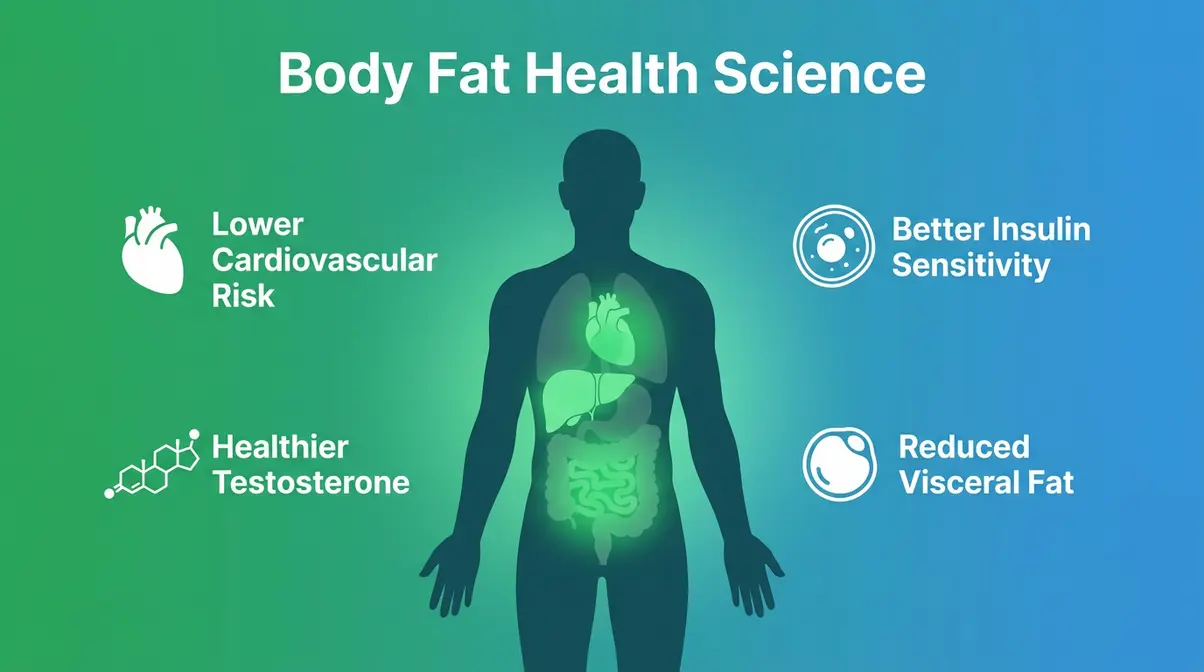
For men aged 20–39, a body fat percentage between 8% and 19% is considered healthy — placing 15% squarely in the optimal zone (American Journal of Clinical Nutrition, 2000). This isn’t just a cosmetic milestone. Research consistently links body fat in this range to better cardiovascular health, improved insulin sensitivity (your body’s ability to manage blood sugar), and healthier testosterone levels. For women, the calculus is entirely different — and we cover that fully in the next section.
This is one half of what we call The 15% Paradox: for men, 15% is a genuine health sweet spot backed by Tier-1 research. For women, the same number tells a very different story.
The Health Benefits of Reaching 15% Body Fat
The benefits of reaching 15% body fat for men are specific and well-documented. Here’s what the research shows:
Reduced visceral fat. Visceral fat — the dangerous fat stored around your internal organs, not just under your skin — decreases significantly as men move from 20%+ to the 15% range. Harvard T.H. Chan School of Public Health research links high visceral fat to increased cardiovascular disease risk, elevated blood pressure, and type 2 diabetes. Reducing it matters far more than how you look in a mirror.
Improved insulin sensitivity. At lower body fat percentages, your cells respond more efficiently to insulin, helping regulate blood sugar and reducing the risk of metabolic disease. Research from the American Journal of Clinical Nutrition (2000) confirms that men in the 8–19% range show significantly better metabolic markers than those above 25%.
Healthier testosterone levels. Testosterone — the primary male sex hormone — is negatively affected by excess body fat. Adipose (fat) tissue converts testosterone to estrogen through a process called aromatization. Reducing body fat to the 15% range supports healthier free testosterone levels, which affects energy, muscle building, libido, and mood.
Lower cardiovascular risk. A leaner body mass index and reduced abdominal fat are independently associated with lower LDL cholesterol, lower blood pressure, and reduced risk of cardiovascular events, according to data from the Cleveland Clinic.
Is 15% Body Fat Hard to Maintain Long-Term?
Honestly? For most men, 15% is one of the most sustainable lean physique goals you can set. Unlike 10–12% body fat — which often requires near-constant dietary restriction and is difficult to maintain without competitive motivation — 15% allows for a normal social life, regular meals, and occasional indulgences.
Common reports from fitness communities suggest that men who reach 15% through a structured plan (calorie deficit + resistance training) find it relatively easy to maintain within a 1–2% range by continuing basic dietary awareness and 3–4 training sessions per week. You don’t need to count every calorie forever. You need habits, not obsession.
That said, maintenance does require ongoing attention. Body fat naturally creeps upward with age, sedentary periods, and stress. The key is building the habits during your cut so that maintenance becomes your default — not a conscious daily effort.
15% Body Fat for Men vs. Women: Key Differences
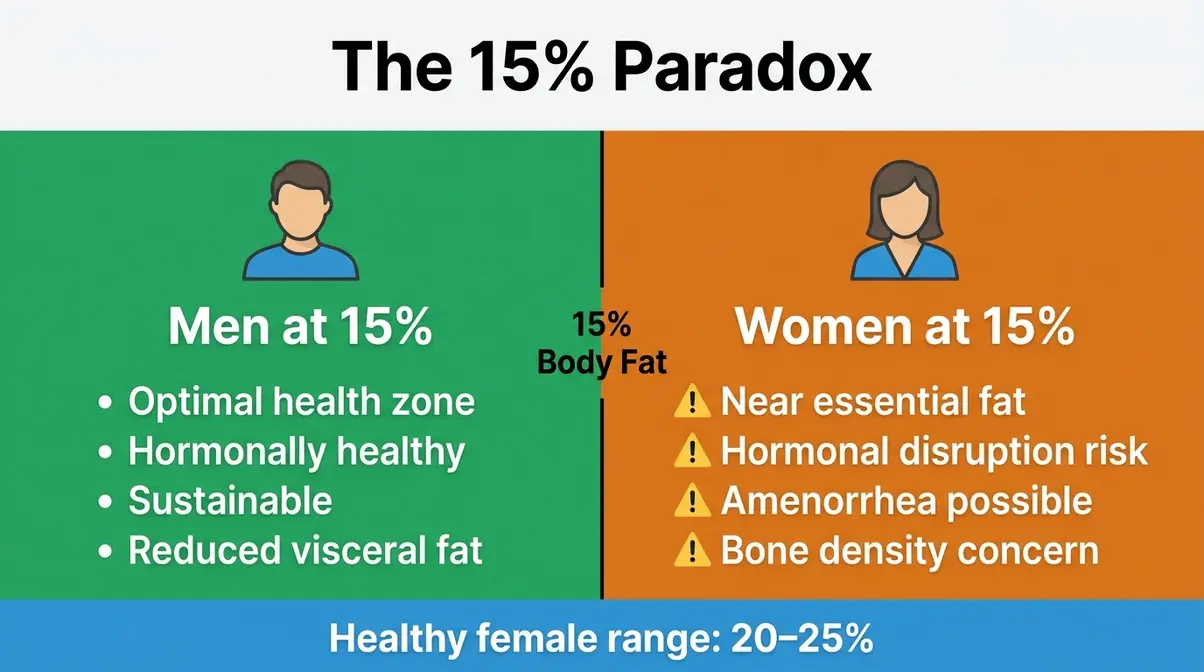
The number 15% means something completely different depending on your sex. For men, it’s a widely recommended health target. For women, it sits at the edge of physiological danger. Understanding this divide — The 15% Paradox — is the most important concept in this entire guide, and it’s one that most fitness content completely ignores.
Why 15% Body Fat Is Optimal for Men
For men, essential body fat — the minimum needed for basic physiological function — is approximately 2–5% of total body weight (American College of Sports Medicine). This means that at 15%, men are carrying a comfortable 10–13 percentage points above essential minimum. That buffer supports healthy hormone production, immune function, energy storage, and joint lubrication.
Men in the 10–20% range are classified as “athletes” to “fitness” level by most clinical body composition standards, including those used by the Cleveland Clinic and the American Council on Exercise. At 15%, a man has achieved a physique that is:
- Visually lean and athletic without the health trade-offs of sub-10% body fat
- Hormonally healthy, with testosterone production well-supported
- Metabolically efficient, with reduced visceral fat and improved insulin sensitivity
- Sustainable, without requiring extreme dietary restriction to maintain
Research from the American Journal of Clinical Nutrition confirms that the 8–19% range for men aged 20–39 is associated with the best overall health outcomes — and 15% sits comfortably in the middle of that optimal window.
Why 15% Body Fat Is Risky for Women
Here is where The 15% Paradox becomes critical. Women require a significantly higher essential body fat percentage than men — approximately 10–13% — because female physiology depends on fat for reproductive hormone production, menstrual cycle regulation, and fetal development (American College of Sports Medicine).
At 15% body fat, a woman is carrying only 2–5 percentage points above her essential minimum. Research published in PMC (National Institutes of Health) confirms that women who drop below approximately 17–20% body fat frequently experience disruptions to the hypothalamic-pituitary-ovarian axis — the hormonal pathway that regulates menstruation and fertility. This can manifest as:
- Irregular or absent menstrual cycles (amenorrhea)
- Decreased estrogen production, accelerating bone density loss
- Fatigue, mood disruption, and impaired immune function
- In severe cases, the female athlete triad: disordered eating, amenorrhea, and osteoporosis
For women, 15% body fat is not a health goal — it is an elite-athlete physique associated with real medical risk. A healthy, fit body fat range for most women is 20–30%, with 18–24% considered the “fitness” category by the American Council on Exercise. Women who are curious about improving their body composition should work with a registered dietitian and aim for the 20–25% range rather than 15%.
This is not a discouraging message — it’s an honest one. Women can absolutely achieve extraordinary fitness, strength, and aesthetics at 20–25% body fat. That range looks and feels incredible. Chasing 15% is chasing someone else’s standard, built for a different body.
Body Fat Percentage Reference Chart by Gender
| Category | Men (% Body Fat) | Women (% Body Fat) |
|---|---|---|
| Essential Fat | 2–5% | 10–13% |
| Athletes | 6–13% | 14–20% |
| Fitness | 14–17% | 21–24% |
| Acceptable | 18–24% | 25–31% |
| Obesity | 25%+ | 32%+ |
Source: American Council on Exercise body fat classification guidelines.
The chart makes the gap unmistakable. What is “Fitness” for a man (14–17%) is “Athlete” territory for a woman. The 15% target sits in the men’s Fitness category and the women’s Athlete category — two entirely different physiological realities carrying two entirely different health implications.
Step-by-Step Roadmap to 15% Body Fat
Getting to 15% body fat is not complicated — but it does require a structured plan, not just motivation. Our team evaluated the most evidence-based approaches from sports science literature and synthesized them into six steps that build on each other. Follow them in order.
What You’ll Need Before You Start
Before diving into the steps, gather these tools:
- A body fat measurement baseline (DEXA scan, BodPod, or skinfold calipers — not just a scale)
- A food tracking app (MyFitnessPal, Cronometer, or similar)
- A tape measure for waist and hip circumference
- Access to a gym or resistance training equipment
- A training schedule of at least 3 days per week
Step 1 — Calculate Your Calorie Deficit
A calorie deficit means consuming fewer calories than your body burns each day. This forces your body to use stored fat as fuel. The National Institute of Diabetes and Digestive and Kidney Diseases (NIDDK) identifies a daily deficit of 500–750 calories as the evidence-based target for safe, sustainable fat loss — producing approximately 1–1.5 lbs of fat loss per week.
How to calculate yours:
- Find your Total Daily Energy Expenditure (TDEE) — the total calories your body burns daily. Use an online TDEE calculator (search “TDEE calculator”) and input your age, weight, height, and activity level.
- Subtract 500 calories from your TDEE. This is your daily calorie target.
- Do not go below 1,500 calories per day for men, or 1,200 for women. Severe restriction slows metabolism and causes muscle loss — the opposite of what you want.
Example: A 180-lb man with a TDEE of 2,800 calories sets his daily intake target at 2,300 calories. Over 8–10 weeks, this produces the 5% body fat reduction needed to move from 20% to 15%.
Step 2 — Set Your Protein Target
Protein is the single most important macronutrient for fat loss. It preserves muscle mass during a calorie deficit, increases satiety (the feeling of fullness), and has a higher thermic effect — meaning your body burns more calories digesting protein than carbohydrates or fat.
Research published in sports nutrition literature consistently recommends 0.7–1.0 grams of protein per pound of bodyweight during a fat-loss phase. For a 180-lb man, that means 126–180 grams of protein per day.
Protein source examples (hit your target with these):
| Protein Source | Serving Size | Protein (g) |
|---|---|---|
| Chicken breast | 6 oz cooked | ~50g |
| Greek yogurt (non-fat) | 1 cup | ~17g |
| Eggs | 3 large | ~18g |
| Canned tuna | 1 can (5 oz) | ~25g |
| Cottage cheese | 1 cup | ~25g |
| Whey protein shake | 1 scoop | ~25g |
Fill the remainder of your calorie target with a moderate carbohydrate intake (to fuel training) and healthy fats (for hormone function). A workable starting macro split for fat loss: 40% protein / 35% carbs / 25% fat.
Step 3 — Build Your Resistance Training Plan
Resistance training — lifting weights or using bodyweight exercises against load — is non-negotiable for reaching 15% body fat while maintaining the muscle definition that makes 15% look the way it does. Without it, you’ll lose weight but look “skinny-fat,” not lean and athletic.
BodySpec and sports science literature consistently recommend 3–4 resistance training sessions per week during a fat-loss phase. A proven structure for beginners to intermediate lifters:
- 3–4 sessions per week, each 45–60 minutes
- Focus on compound movements (squats, deadlifts, bench press, rows, overhead press) — these burn more calories and build more muscle than isolation exercises
- Rep range: 6–12 reps per set (hypertrophy and strength range)
- Progressive overload: Increase weight or reps each week to keep your body adapting
For a detailed training program structure, explore our strength training for fat loss guide.
Step 4 — Add Strategic Cardio
Cardio accelerates your calorie deficit without requiring you to eat less. The key word is strategic — too much cardio increases muscle breakdown and recovery demand. Too little leaves fat loss slower than it needs to be.
Evidence-based cardio guidelines for fat loss:
- LISS (Low-Intensity Steady State): 2–3 sessions per week of 30–45 minutes at 60–70% max heart rate (brisk walking, cycling, light jogging). This is the least disruptive to muscle recovery.
- HIIT (High-Intensity Interval Training): 1–2 sessions per week of 15–20 minutes. Alternating 30-second all-out efforts with 90-second recovery periods. Research suggests HIIT produces superior fat oxidation in shorter time windows — but it is more demanding and should not replace resistance training days.
- Non-Exercise Activity Thermogenesis (NEAT): Simply moving more throughout the day — taking stairs, walking during calls, parking farther away — can add 200–400 extra calories burned per day without formal exercise.
Most competitors give generic cardio advice. The key insight: cardio is a calorie management tool, not a fat-loss mechanism by itself. Diet creates the deficit; cardio makes it easier to sustain.
Step 5 — Track Progress Accurately (Not Just the Scale)
This step is where most people go wrong. They step on a bathroom scale every morning, see it hasn’t moved, and assume nothing is working. The scale measures total body weight — not body fat percentage. Water retention, glycogen storage, and muscle gain can all mask real fat loss.
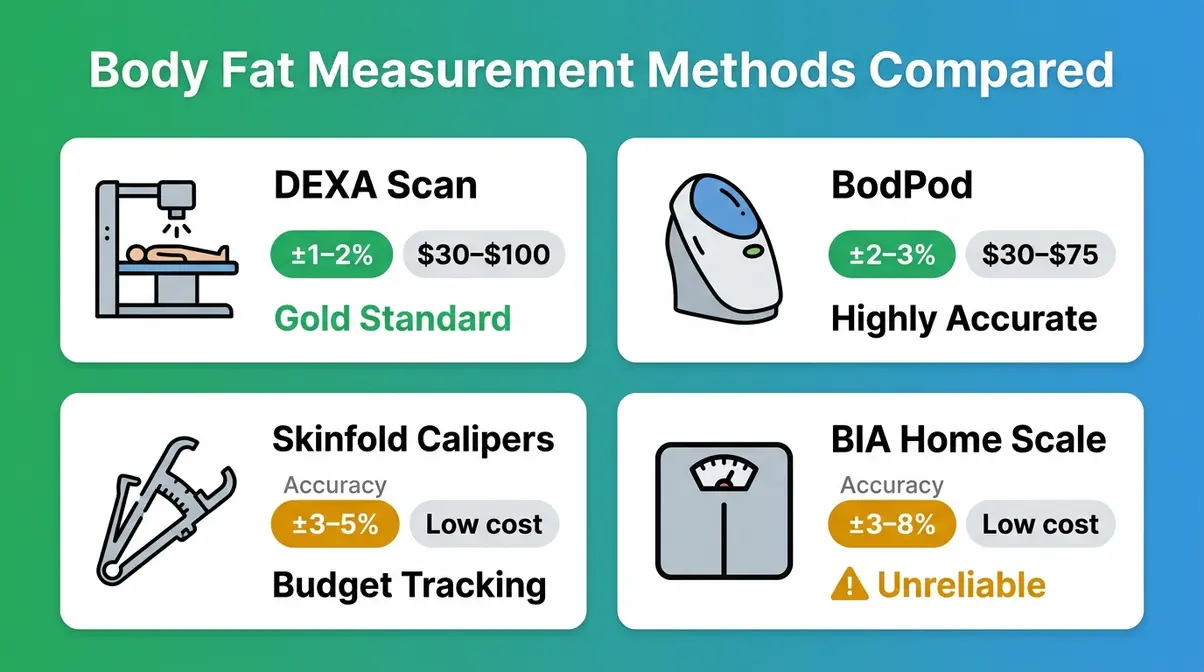
Our team evaluated the most commonly used body fat measurement methods based on accuracy, cost, and accessibility:
| Method | Accuracy | Cost | Best For |
|---|---|---|---|
| DEXA Scan | ±1–2% | $30–$100/session | Best overall accuracy |
| BodPod | ±2–3% | $30–$75/session | Good lab alternative |
| Skinfold Calipers | ±3–5% | Low (one-time tool) | Budget-friendly, consistent tracking |
| Bioelectrical Impedance (home scale) | ±3–8% | Low | Unreliable; avoid for decision-making |
| Tape Measure (Navy Method) | ±3–5% | Free | Useful for tracking trends |
Recommendation: Get a DEXA scan (a type of dual-energy X-ray used to measure body composition) at the start and end of your cut. Between scans, use skinfold calipers or the tape measure method weekly to track trends. Ignore daily scale fluctuations — track a 7-day rolling average instead.
Step 6 — Sample Meal Plan for Reaching 15% Body Fat
Here is a full sample day of eating for a 180-lb man targeting 2,300 calories and 160g protein. This is one of six macro configurations that work — adjust portions to fit your specific TDEE.
Sample Day (2,300 calories | 160g protein | 230g carbs | 65g fat):
| Meal | Food | Calories | Protein |
|---|---|---|---|
| Breakfast | 3 eggs + 1 cup oatmeal + 1 cup blueberries | ~520 | ~30g |
| Mid-Morning | 1 cup Greek yogurt + 1 tbsp honey | ~180 | ~17g |
| Lunch | 6 oz chicken breast + 1 cup brown rice + salad | ~550 | ~52g |
| Snack | 1 can tuna + rice cakes | ~220 | ~28g |
| Dinner | 6 oz salmon + roasted vegetables + sweet potato | ~580 | ~40g |
| Evening | Cottage cheese (½ cup) | ~110 | ~13g |
| Total | ~2,160 | ~180g |
Adjust total calories up or down to hit your specific TDEE-minus-500 target. This framework — high protein, moderate carbs timed around workouts, healthy fats — is the dietary engine behind reaching 15% body fat for most men.
How Long Does It Take to Reach 15% Body Fat?
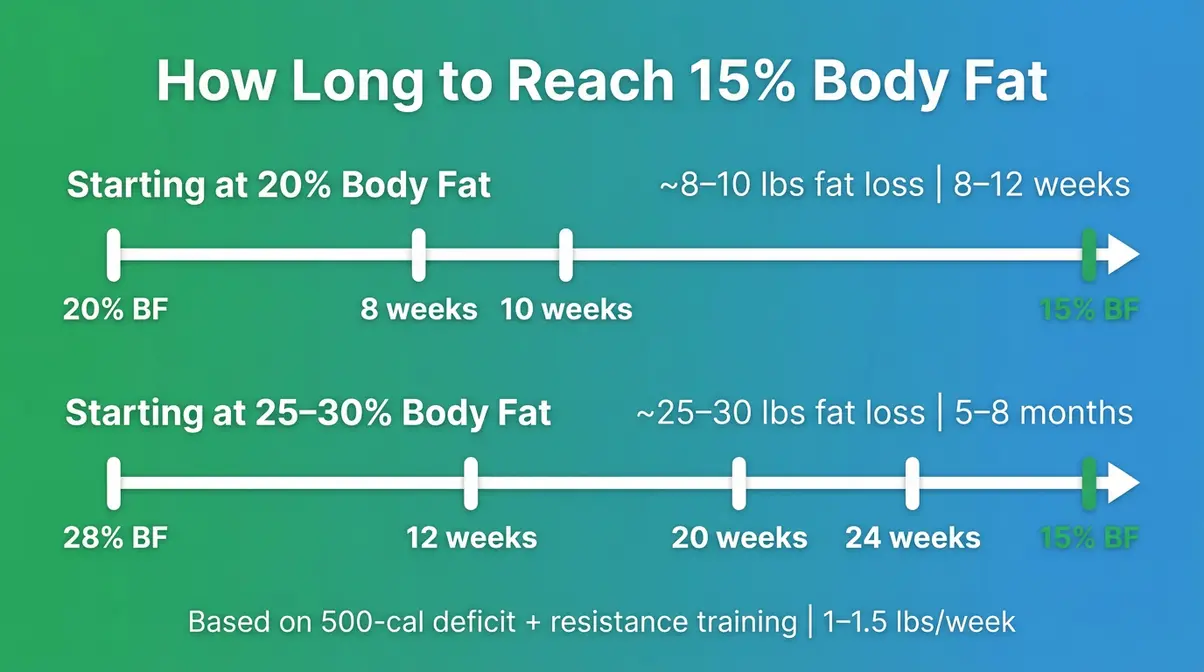
The honest answer: it depends on your starting point. But unlike most guides that leave it there, we’ll give you specific timelines for the two most common starting points — 20% and 25–30% body fat. These estimates are based on the NIDDK’s evidence-based guideline of 1–1.5 lbs of fat loss per week with a 500–750 calorie daily deficit.
Timeline from 20% to 15% Body Fat
This is the most common starting point for men who already exercise but haven’t dialed in their diet. At 20% body fat, you can see some muscle tone but lack clear ab definition — the classic “almost there” physique.
- The math for a 180-lb man:
- At 20% body fat: 36 lbs of fat mass
- At 15% body fat: ~27 lbs of fat mass (after accounting for weight lost)
- Fat to lose: approximately 8–10 lbs
- At 1–1.5 lbs/week: 8–10 weeks
Realistic timeline: 8–12 weeks with consistent adherence to a 500-calorie daily deficit and 3–4 resistance training sessions per week. Most men who stick to the plan land in this range. Those who have more muscle mass (and therefore a higher TDEE) tend to hit the lower end of the range.
Important caveat: This assumes you maintain or build muscle during the cut. If you skip resistance training or drop protein too low, you’ll lose muscle alongside fat — and the visual result at 15% will be far less impressive than you expected.
Timeline from 25–30% to 15% Body Fat
If you’re starting from 25–30% body fat — perhaps after a long period of inactivity, a “dad bod” phase, or significant weight gain — the journey is longer but absolutely achievable.
- The math for a 200-lb man starting at 28% body fat:
- Fat mass at 28%: 56 lbs
- Target fat mass at 15%: ~30 lbs (after accounting for weight changes)
- Fat to lose: approximately 25–30 lbs
- At 1–1.5 lbs/week: 17–30 weeks (roughly 4–7 months)
Realistic timeline: 5–8 months for most people starting in the 25–30% range. This is not discouraging — it’s empowering. Five months of structured effort produces a transformation that turns heads.
Break the goal into phases: aim for 20% first (8–12 weeks), then reassess and target 15% from there. Smaller milestones keep motivation high and allow you to adjust your approach based on real results.
What Slows Down Your Fat Loss Progress?
This is where most guides go silent — and where most people get stuck. Research and community experience consistently identify these as the primary progress killers:
Underestimating calories consumed. Studies show people underestimate their calorie intake by 20–50% on average. Tracking apps are only as accurate as your inputs. Weigh your food with a kitchen scale — don’t eyeball portions.
Overestimating calories burned. Fitness trackers overestimate calorie burn by 27–93% depending on the device (Stanford Medicine, 2017). Don’t “eat back” all your exercise calories.
Not eating enough protein. When protein drops below 0.7g per pound of bodyweight, muscle loss accelerates during a deficit. You lose weight, but not the right kind.
Skipping resistance training. Cardio-only approaches produce weight loss but not the lean, defined physique that makes 15% body fat look the way it should.
Inconsistent sleep. Research published in the Annals of Internal Medicine shows that sleep-deprived dieters lost 55% less fat and 60% more muscle than those who slept 8.5 hours per night — on the same calorie deficit.
Stress and cortisol. Chronic stress elevates cortisol (the stress hormone), which promotes fat storage — particularly around the abdomen — and can stall progress even with a good diet and training plan.
Advanced Questions: Bulking & Measuring
Once you understand the fundamentals, two questions come up repeatedly in fitness communities: should you bulk or cut at 15%, and how do you actually know what percentage you’re at? Both deserve honest, specific answers.
Should You Bulk or Cut at 15% Body Fat?
This is one of the most debated questions in fitness communities, and the answer genuinely depends on your goals and starting muscle mass. Common consensus from evidence-based fitness coaches and Reddit’s r/Fitness community suggests the following framework:
- Cut first if:
- You are above 18% body fat and want visible abs as a primary goal
- You have been in a “bulk” phase for more than 3–4 months
- Your waist-to-height ratio is above 0.50 (a simple health marker)
- Bulk (or maintain) at 15% if:
- You are already at 15% and want to build more muscle before cutting again
- You have been in a calorie deficit for more than 12 weeks and feel fatigued
- You are a beginner — those new to resistance training can often build muscle and lose fat simultaneously (body recomposition) at 15% without needing a formal bulk
At 15% body fat, men are in an excellent position for a lean bulk — a modest calorie surplus of 200–300 calories above TDEE that supports muscle growth without significant fat gain. This approach typically produces 0.5–1 lb of muscle per month while keeping body fat relatively stable.
For a deeper look at optimizing your training during this phase, see our guide to body recomposition strategies.
How to Accurately Measure Your Body Fat Percentage
The most important thing to understand about body fat measurement: no consumer method is perfectly accurate. Every method carries a margin of error. The goal is consistent, reliable tracking — not a single perfect number.
Our team evaluated the most widely available methods based on published accuracy data:
DEXA Scan (Dual-Energy X-ray Absorptiometry): The gold standard for most practical purposes. Accuracy of ±1–2%. Measures bone density, lean mass, and fat mass separately. Cost: $30–$100 per session at specialized clinics (BodySpec, DexaFit). This is what we recommend for baseline measurement and quarterly check-ins.
BodPod (Air Displacement Plethysmography): Highly accurate (±2–3%) and available at many university sports science labs and fitness clinics. Comparable to DEXA in reliability. Cost: $30–$75.
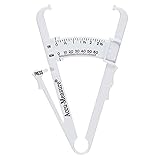
Skinfold Calipers: A trained technician pinches specific sites on your body to estimate subcutaneous fat. Accuracy of ±3–5% when performed consistently by the same person. The key limitation: technique variability. Use the same person and same sites every time for reliable trend data. Cost: negligible after the one-time tool purchase.
Bioelectrical Impedance Analysis (BIA) — home scales: These send a small electrical current through your body and estimate fat percentage based on resistance. Accuracy varies wildly (±3–8%) based on hydration, recent meals, and time of day. The CDC notes that clinical assessment methods (DEXA, hydrostatic weighing) are significantly more reliable than consumer BIA devices for body composition assessment. Use BIA only as a rough directional indicator, not a decision-making tool.
The rippedbody.com approach — which our team cross-referenced — correctly emphasizes that no single method should be trusted in isolation. The most reliable approach combines DEXA for baseline and quarterly checks with calipers or tape measure for weekly trend tracking.
For more on choosing the right measurement method for your situation, read our full body composition testing guide.
Common Mistakes and When to Seek Expert Help
Common Pitfalls
Mistaking weight loss for fat loss. The scale can drop 5 lbs in a week due to water and glycogen loss — this is not 5 lbs of fat. Conversely, the scale can stay flat for two weeks while you’re actively losing fat and gaining muscle. Use body fat measurements, not just scale weight, to assess progress.
Setting the wrong goal. If you’re a woman, 15% body fat is not a health target — it is a medical risk. Women who chase male-standard body fat percentages often develop hormonal disruption before reaching the goal. The right target for most women is 20–25%. If you’re a man over 50, consult your physician before pursuing aggressive fat loss, as body composition standards shift with age.
Cutting calories too aggressively. Dropping below 1,200–1,500 calories per day triggers metabolic adaptation — your body slows its metabolic rate to conserve energy. You lose muscle, feel exhausted, and plateau. A 500-calorie deficit is the evidence-based sweet spot.
Neglecting sleep and recovery. Fat loss happens during recovery, not during workouts. Chronic sleep deprivation (under 7 hours) measurably slows fat loss and accelerates muscle loss, as confirmed by research in the Annals of Internal Medicine.
Relying on supplements instead of fundamentals. No fat burner, thermogenic, or supplement replaces a calorie deficit and resistance training. Save your money for quality food.
When to Choose a Different Goal
If you are a woman reading this guide, the most important recommendation is to work with a registered dietitian who specializes in body composition rather than self-directing toward 15% body fat. The hormonal consequences of dropping below 17–18% body fat are real and can take months to reverse.
If you are a man over 45 with cardiovascular risk factors (high blood pressure, elevated cholesterol, family history of heart disease), consult your physician before beginning an aggressive calorie deficit. Aggressive fat loss can affect blood lipids and heart rate variability in ways that warrant medical supervision.
When to Seek Expert Help
- You have lost more than 1.5 lbs per week consistently for more than 4 weeks (muscle loss risk is high)
- You experience persistent fatigue, dizziness, or mood disruption during your cut
- You are a woman experiencing menstrual irregularities
- You have a history of disordered eating — working with a therapist alongside a dietitian is strongly recommended before pursuing aggressive body composition goals
Frequently Asked Questions
Is it good to have 15% body fat?
For men, 15% body fat is an excellent and healthy target. The American Journal of Clinical Nutrition classifies 8–19% as the healthy range for men aged 20–39, placing 15% squarely in the optimal zone. At this level, men show reduced visceral fat, better insulin sensitivity, and healthier testosterone levels. For women, however, 15% approaches essential fat territory and carries real hormonal risks — making it a goal that requires medical guidance, not self-direction.
What does 15% body fat actually look like on a man?
A man at 15% body fat displays a lean, athletic physique with visible upper abdominal muscles and defined shoulders. The waist is flat, the arms and shoulders show clear muscle definition, and the early stages of a V-taper silhouette appear. It’s the “recreational swimmer” look — noticeably lean and muscular, but not extreme. Shirts fit differently; veins may appear on the forearms during exertion. It’s the physique most people mean when they say “looking cut.”
Can you see abs at 15% body fat?
Yes — upper abs become visible at 15% body fat for most men. Typically, the upper 2–4 abdominal muscles (the “2-pack” to “4-pack”) become visible at this stage, while the lower abs remain hidden. Achieving a full 6-pack definition requires dropping further to approximately 10–12% body fat.
Will I see abs at 15% body fat?
Most men will see their upper abs at 15% body fat, but not a full 6-pack. The visibility heavily depends on your muscle development, genetics, and how evenly fat is distributed across your body. Men who have built significant abdominal muscle through heavy compound resistance training will see much more definition at 15% than those who haven’t. To see a full 6-pack with clearly defined lower abs, most men need to reach 10–12% body fat. This lower range requires a more extended, demanding cut that can be challenging to maintain year-round.
Is 15% body fat skinny?
No — 15% body fat is lean and athletic, not skinny. Skinny typically implies low muscle mass alongside low body fat, whereas a man at 15% with adequate muscle development looks noticeably athletic and defined. Reaching 15% with a structured resistance training program produces a muscular, aesthetic physique rather than a frail one.
Do girls like guys with big bellies?
Attraction is subjective and varies enormously by individual preference — no single body type is universally preferred. That said, research from multiple studies suggests that women generally rate lean, athletic physiques (consistent with 10–20% body fat) as physically attractive, while both extremes — very low body fat and significant excess body fat — tend to score lower in attractiveness ratings. More importantly, the health benefits of reaching 15% body fat — better energy, improved confidence, stronger performance — tend to make men feel more attractive regardless of what any study says.
Your Roadmap to 15% Body Fat
For most men, 15% body fat represents the best intersection of health, aesthetics, and lifestyle sustainability. The science is clear: at 15%, you’re in the optimal health range, your testosterone and metabolic function are well-supported, your visceral fat is reduced, and you have the physique that turns heads without requiring extreme sacrifice to maintain. That’s not a small thing.
The 15% Paradox is real and important: the same number that represents a health sweet spot for men sits at the edge of physiological risk for women. If you’re a woman reading this, work with a qualified professional and aim for the 20–25% range — where health, performance, and aesthetics align without hormonal trade-offs.
The six-step roadmap works when you follow it in order: calculate your deficit, set your protein, train with weights, add strategic cardio, track with real tools (not just a scale), and build a meal plan that makes hitting your numbers feel automatic. None of these steps is complicated. All of them together are effective.
Start with Step 1 this week. Get your DEXA scan or caliper measurement. Calculate your TDEE. Set your 500-calorie deficit. Give it 8 weeks of honest effort — and track what actually changes, not just what the scale says. The finish line you’ve been circling is closer than it feels.
Related posts:
Progressive Overload Guide: 7 Methods to Build Muscle
Muscle Atrophy: Causes, Symptoms & How to Reverse It
What Is Muscle Memory? The Complete Science Guide
Muscle Hypertrophy Explained: The Science of Muscle Growth
Strength Training vs Hypertrophy: The Complete 2026 Guide
Muscle Building Transformation Stories: What Actually Worked

Callum
Hi, I'm Callum, the founder of Body Muscle Matters. I'm not a certified trainer, I'm a self taught lifter who started this site to share what I've learned from my own training and a lot of trial and error. Everything here comes from real experience and honest research, written the way I'd explain it to a friend who is just getting started. My goal is simple: practical, no hype fitness advice you can actually use.