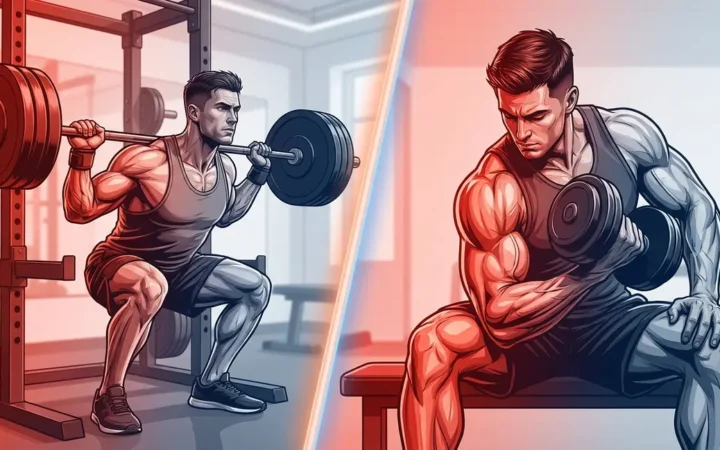
How Long to Build Muscle? Your Evidence-Based Timeline
This article is for informational purposes only and does not constitute medical advice. Consult a qualified healthcare professional, physician, or certified personal trainer before beginning any new resistance training or nutrition program.
“Most people expect the mirror to change as quickly as their effort changes. They start lifting, feel sore, push harder, eat better — and then stare at the same reflection two months later wondering if any of it is working.”
That frustration is real. But the answer isn’t “just be patient.” The answer is understanding how long to build muscle based on your specific variables — not some hypothetical average person.
Research shows muscle thickness can increase measurably within two weeks, yet the mirror won’t reflect those changes for months. That gap between what’s happening internally and what you see externally is responsible for more abandoned gym memberships than any other factor. This guide closes that gap. You’ll get a science-backed, demographic-specific timeline — so you’ll know exactly what to expect in month 1, month 3, and year 1. It covers the fundamental timeline phases, specific weight milestones, nutrition and supplement strategies, workout duration, how age and sex change everything, which body parts respond first, and how different training styles compare.
Measurable muscle growth begins within 2 weeks of consistent training, with visible changes typically appearing between months 3 and 6 (NIH PubMed, 2017).
- 1. Neural gains come first: Strength increases in weeks 1–4 are mostly neurological — actual muscle fiber growth begins around weeks 3–4.
- 2. Beginners gain fastest: Untrained individuals can add 1–2 lbs of muscle per month; experienced lifters average 0.25–0.5 lbs.
- 3. The 4-Variable Muscle Clock: Your personal timeline depends on training experience, age, sex, and weekly volume — not one-size-fits-all averages.
- 4. Nutrition is non-negotiable: Consuming 20–40g of protein per meal and maintaining a modest caloric surplus are required to hit any timeline.
- 5. 30-minute workouts work: A focused 30-minute session built on compound movements and progressive overload is sufficient for hypertrophy, confirmed by a 2026 University at Buffalo study.
Table of Contents
- The Real Timeline
- How Much Muscle Can You Realistically Gain?
- Nutrition and Supplements That Accelerate Your Timeline
- How Long Does Your Workout Need to Be?
- How Age and Sex Affect Your Muscle-Building Timeline
- Which Muscle Groups Grow First?
- Does Training Style Affect How Long It Takes?
- Gain Killers: What’s Slowing You Down
- Frequently Asked Questions
- Read the conclusion
The Real Muscle-Building Timeline {#h2-1}
How long to build muscle falls into three distinct phases: neurological adaptations in weeks 1–4, measurable hypertrophy beginning around weeks 3–4, and visible changes appearing between months 3 and 6 for most beginners. A 2026 comprehensive review published in NIH/PMC confirms that the most substantial muscle hypertrophy typically occurs within the first 3–6 months of consistent training, after which the rate declines significantly (NIH/PMC, 2026). Understanding these phases prevents you from quitting before the results arrive.
This is where The 4-Variable Muscle Clock becomes essential. Your personal timeline is not a single number — it is determined by four measurable variables: training experience (beginner, intermediate, or advanced), age (under or over 40), biological sex, and weekly training volume (sets per muscle group per week). Map your profile to the table below, and you have a realistic roadmap instead of a guess.
| Profile | First Strength Gains | First Measurable Hypertrophy | Visible Changes | 10 lbs of Muscle |
|---|---|---|---|---|
| Beginner Male (under 40) | Week 1–2 | Week 3–4 | Month 3–4 | 5–8 months |
| Beginner Female (under 40) | Week 1–2 | Week 3–4 | Month 4–6 | 9–12 months |
| Male Over 40 | Week 2–3 | Week 4–6 | Month 4–6 | 8–12 months |
| Female Over 40 | Week 2–3 | Week 4–6 | Month 5–8 | 12–18 months |
“
These ranges assume consistent training 3 times per week, adequate protein intake (0.7–1g per lb of bodyweight), and sufficient sleep (7–9 hours per night). They are evidence-informed estimates, not guarantees. Body fat percentage, stress levels, and training quality all influence where you fall within each range.
Key finding: Significant skeletal muscle hypertrophy is likely to occur around weeks 3 to 4 of a dedicated resistance training program, with measurable muscle thickness increasing and exceeding measurement error after just 2 weeks. Source: NIH PubMed, 2011.
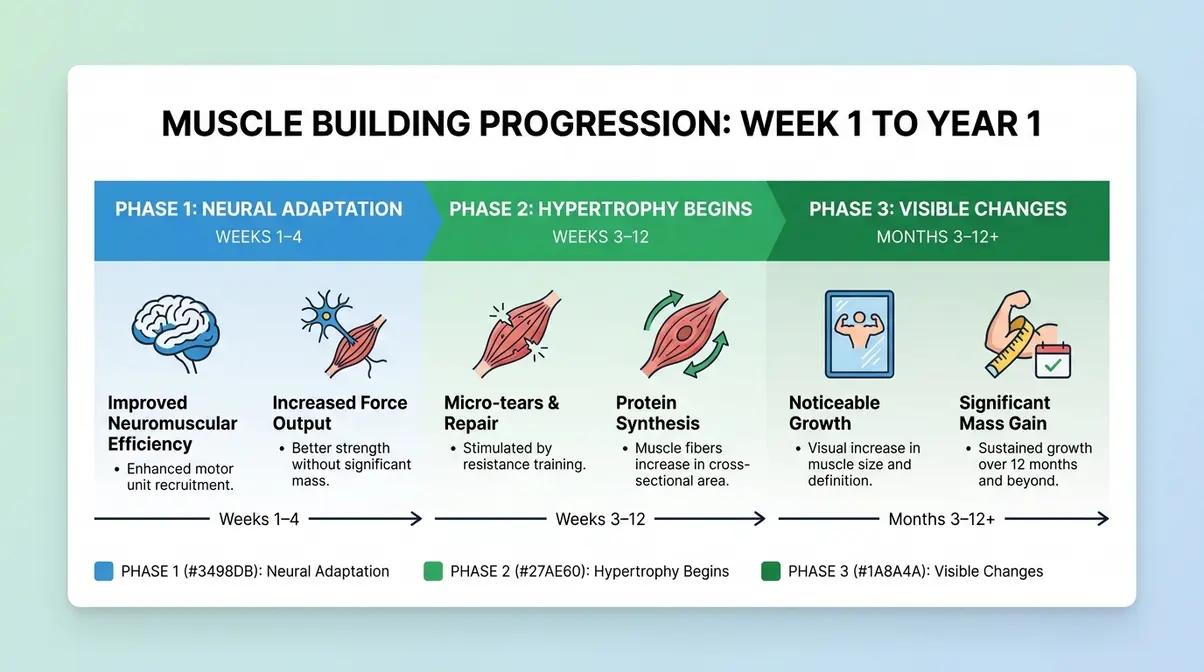
For a deeper look at what measurable progress looks like before the mirror catches up, see this guide to realistic muscle building timeline.
Month 1: Neural Adaptations
The first four weeks of training produce striking strength improvements — but almost none of them come from muscle growth. This phase is driven by neuromuscular adaptation: the nervous system learns to recruit more motor units and coordinate muscle firing patterns more efficiently. Think of it as your brain learning to use the muscle you already have, rather than building new tissue.
Research confirms that muscle hypertrophy in the initial stages (approximately the first four training sessions) is largely due to muscle damage and cell swelling, with neural adaptations driving the majority of strength gains in the first 8–12 sessions (NIH/PMC, 2019). This is why beginners can add 10–30% to their working weights within the first month without gaining visible size.
Here is the distinction that matters: measurable muscle thickness increases after 2 weeks of consistent training, as confirmed by ultrasound imaging (NIH PubMed, 2017). However, “measurable via ultrasound” and “visible in the mirror” are entirely different standards. The muscle is thickening; the layer of body fat covering it hasn’t changed yet. That’s why the reflection looks the same even when genuine adaptation is occurring.
If you feel like you’re working hard but seeing nothing, you’re experiencing exactly what the research predicts. The neural efficiency gains you’re making now are laying the foundation for the hypertrophy that begins in weeks 3–4. A beginner starting a 3-times-per-week full-body program typically adds meaningful weight to every lift in this period — not because muscles grew dramatically, but because the nervous system became dramatically more efficient. A small amount of hypertrophy does occur alongside neural gains — the distinction isn’t binary — but the neural component dominates in how long it takes to start building muscle.
By month two, the nervous system adaptations plateau — and this is when actual muscle protein synthesis starts driving visible size changes.
Months 2-3: Hypertrophy Begins
Muscle protein synthesis (MPS) — the cellular process by which your body assembles new muscle tissue from amino acids — becomes the primary driver of progress around weeks 3–4. An MRI-based study published in the Journal of Strength and Conditioning Research found that significant skeletal muscle hypertrophy likely occurred around weeks 3–4, with a total thigh muscle cross-sectional area increase of 9.6% over 8 weeks of training (NIH PubMed, 2011).
After a single resistance training session, MPS rises sharply within the first few hours, peaks at approximately 24 hours post-exercise, and returns close to baseline by 36 hours — with some studies indicating residual elevation for up to 48 hours, especially after harder or novel workouts (Frontiers in Nutrition, 2019). This is why training frequency matters: you want to re-stimulate MPS before it fully returns to baseline.
Progressive overload is non-negotiable for sustaining MPS past week 4. If you don’t progressively increase the challenge — through more weight, more reps, or more volume — MPS stalls. This is the core mechanism behind how long to build muscle mass: the stimulus must continuously exceed what the body has already adapted to.
The most common frustration at this stage is “I’ve been training for 2 months and look the same.” This is expected. The mirror is the last place to see changes because body fat obscures new muscle tissue. Your strength log and a tape measure are far more reliable early indicators. A beginner who increases their squat from 95 lbs to 135 lbs over 8 weeks is experiencing real hypertrophy — the quads and glutes are measurably larger even if the change isn’t visible yet.
Once hypertrophy begins, the next milestone most people care about is the mirror — and that typically arrives between months 3 and 6.
Months 3-6: Visible Changes
How long does it take to see muscle growth in the mirror? For most beginner lifters, visible muscle changes begin between months 3 and 6, with the specific timing determined by The 4-Variable Muscle Clock. Body fat percentage is the single biggest variable: a leaner person sees changes sooner because less adipose tissue obscures the underlying muscle.
Noticeable muscle gains in 6 to 10 weeks of training have been reported, with visible changes accelerating between months 3 and 6 (Healthline, 2026). Research on upper-body development found that increases in muscle thickness occurred earlier in the upper body than in the lower body during the first 12 weeks of a total-body weight training program (NIH PubMed, 2000). This means your arms and shoulders may show changes weeks before your legs do.
There are three distinct stages of “noticeable” muscle gain worth distinguishing:
- Visible to yourself: Months 3–6 (you notice in the mirror under good lighting)
- Visible to others who see you regularly: Months 4–8 (the “you look different” moment from coworkers)
- Well-developed physique: 1–3 years of consistent training
Progress photos taken every 4 weeks under consistent lighting — same time of day, same pose, same distance from the camera — are far more reliable than the daily mirror check. Your brain compensates for gradual change; photos don’t.
A beginner male at 180 lbs with 20% body fat who trains 3 times per week and eats at a slight caloric surplus will typically see visible arm and shoulder changes by month 4–5. A beginner female with similar consistency and body composition should expect visible changes around month 5–6. These aren’t arbitrary numbers — they reflect the 4-Variable Muscle Clock applied to real-world scenarios.
For most people, the biggest question isn’t “when will I see changes” — it’s “what will I look like after a full year?”
Year 1+: Long-Term Expectations
The first year of training is the most productive year you will ever have. This is the era of newbie gains — the accelerated hypertrophic response that occurs in untrained individuals whose muscle tissue is hypersensitive to a new training stimulus. Elevated anabolic sensitivity in untrained tissue means every workout produces a disproportionately large adaptive response. This window is finite and cannot be recreated.
The realistic year-1 totals for optimal conditions: beginner males can gain 10–20 lbs of lean muscle in year 1; beginner females can gain 5–10 lbs. A 2026 NIH review confirms realistic expectations of approximately 1–2 kg of fat-free mass gained after 8–12 weeks of training, with the most substantial hypertrophy occurring in the first 3–6 months. After year 1, the rate slows significantly — advanced lifters may gain only 2–5 lbs per year.
This slowdown is not failure. It is biology. As the body approaches its genetic potential for muscle mass, the signal-to-noise ratio of training drops. More work produces proportionally less muscle. This is why a 25-year-old male beginner who trains consistently for 12 months with adequate protein and progressive overload can realistically transform from “skinny” to “athletic” — achieving a 15–20 lb lean mass gain — while an advanced lifter doing the same program gains almost nothing.
“Measurable muscle thickness can increase and exceed measurement error after just 2 weeks of consistent resistance training” — but the full expression of year-1 potential requires 52 weeks of consistent effort, not 4 or 8.
Understanding the phases is step one. Step two is knowing how to set specific, measurable goals — starting with the most common question: how long does it take to gain exactly 10 pounds of muscle?
Realistic Muscle Gain Targets {#h2-2}
Building 1 lb of muscle takes the average beginner 2–4 weeks under optimal training and nutrition conditions. Gaining 10 lbs of muscle takes 5–8 months for beginner males and 9–12 months for beginner females. These numbers assume consistent progressive overload, adequate protein, and sufficient sleep. Most fitness marketing dramatically overstates these figures — the realistic numbers are lower, but they are genuinely achievable, and they compound into transformative results over 1–2 years.
The 4-Variable Muscle Clock outputs below show exactly how the numbers shift based on your profile. Notice how a beginner male and an advanced male have a 4-to-8x difference in the time required to gain 10 lbs. Experience level is the single biggest variable in any muscle gain timeline.
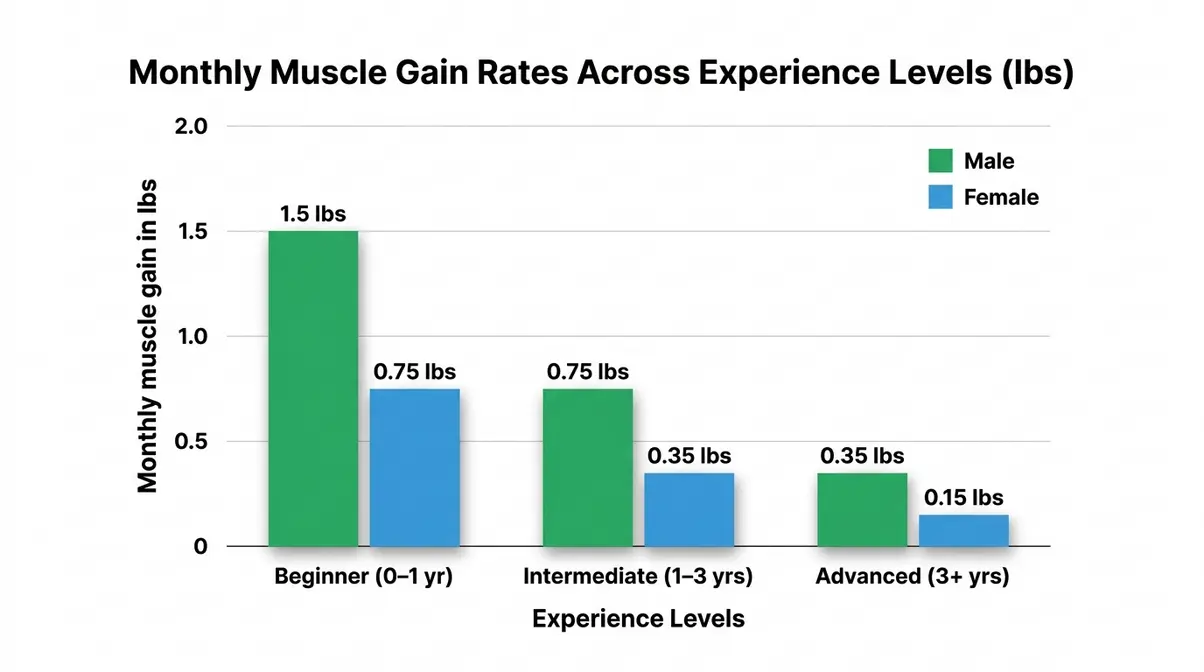
| Experience Level | Monthly Muscle Gain (Male) | Monthly Muscle Gain (Female) | Time to Gain 10 lbs |
|---|---|---|---|
| Beginner (0–1 year) | 1–2 lbs | 0.5–1 lb | 5–10 months |
| Intermediate (1–3 years) | 0.5–1 lb | 0.25–0.5 lbs | 10–20 months |
| Advanced (3+ years) | 0.25–0.5 lbs | 0.1–0.25 lbs | 20–40+ months |
“
These ranges assume a slight caloric surplus of 200–300 kcal per day, 0.7–1g of protein per lb of bodyweight, and 3 times per week training. Body recomposition — gaining muscle while losing fat simultaneously — is possible for beginners and those returning after a break, but it produces slower net muscle gain numbers than a dedicated surplus phase. For a more detailed breakdown of these benchmarks, see our guide on realistic muscle gain benchmarks.
“Beginner lifters can gain 1–2 lbs of lean muscle per month under optimal conditions; intermediate lifters average 0.5–1 lb per month; advanced lifters may gain as little as 0.25 lbs per month” — evidence-informed estimates based on current NIH research.
Time to Gain 1 Pound of Muscle
How long does it take to build 1 lb of muscle? This is one of the most misunderstood benchmarks in fitness. A pound of muscle is approximately 454 grams of actual lean tissue — not fat, not water, not glycogen. Building it requires a caloric surplus AND adequate protein AND a consistent training stimulus. You cannot gain 1 lb of actual muscle in a week even if the scale shows a 1-lb gain, because scale weight reflects water retention, glycogen storage, food weight, and bowel content, not just tissue.
The distinction between gaining 1 lb on the scale versus gaining 1 lb of actual muscle tissue is the number-one misconception in this space. A beginner who gains 4 lbs in their first month of training has almost certainly not gained 4 lbs of muscle — they’ve gained some muscle, some water, and some glycogen. This is normal and expected, but conflating it with lean tissue gain leads to unrealistic expectations later.
Realistic timelines for gaining 1 lb of actual muscle tissue:
- Beginner males: approximately 2–4 weeks per lb under optimal conditions
- Beginner females: approximately 4–6 weeks per lb
- Intermediate lifters: 6–12 weeks per lb
- Advanced lifters: several months per lb
These numbers feel slow compared to what social media suggests. However, 1 lb of actual lean muscle tissue represents a meaningful, permanent structural change to your body — not a temporary fluctuation. Ten of those pounds, gained over 6–10 months, will visibly transform your physique.
Once you understand the per-pound rate, the 10-lb question becomes much easier to answer.
Time to Gain 10 Pounds of Muscle
The 10-lb milestone is the most searched specific muscle-building goal — and the answer varies dramatically depending on your 4-Variable Muscle Clock profile:
- Beginner male under 40: 5–8 months
- Beginner female under 40: 9–12 months
- Male over 40: 8–12 months
- Female over 40: 12–18 months
Beginners hit 10 lbs faster because newbie gains mean the body is hypersensitive to the training stimulus. A beginner can gain more muscle in 6 months than an intermediate lifter gains in 2 years. This is not motivational language — it is the documented anabolic sensitivity advantage of untrained tissue.
One important caveat: most online estimates of 3–6 months for “anyone” are based on near-perfect conditions. Realistic muscle gain timelines show that beginners can often gain 1–4 lbs per month, while experienced lifters slow to approximately 0.5 lbs per month (US News, 2026). Real-world timelines are 20–30% longer for people with inconsistent training weeks, travel, or demanding schedules.
A practical example: a 30-year-old male beginner training 3 times per week, consuming 180g protein daily, and sleeping 8 hours per night can realistically hit the 10-lb milestone in 6–7 months. A 45-year-old female with similar consistency should plan for 14–16 months. These aren’t discouraging numbers — they’re honest ones. Setting a realistic target prevents the discouragement that kills progress at month 3.
The experience level in this table isn’t fixed — but the differences between beginner, intermediate, and advanced rates are dramatic enough to change your entire strategy.
Muscle Weight vs. Actual Muscle
Not all weight gain is muscle gain. This distinction matters enormously for setting expectations during a bulking phase. When you eat at a caloric surplus to support muscle growth, you will gain some fat alongside the muscle. The ratio depends on the size of your surplus and your training intensity.
A lean bulk — maintaining a surplus of 200–300 kcal per day — typically yields a muscle-to-fat gain ratio of roughly 1:1 for beginners and worse ratios for advanced lifters. A larger surplus accelerates scale weight gain but does not proportionally accelerate muscle gain; the extra calories above what muscle synthesis requires are stored as fat.
Body recomposition offers an alternative for beginners and those with higher body fat percentages: eating at or near maintenance calories while training consistently can produce simultaneous fat loss and muscle gain. The gains are slower in absolute muscle terms, but the aesthetic result — losing fat while building muscle — can be more satisfying for those who don’t want to gain significant scale weight. Research supports this approach primarily for untrained individuals and those returning from a training break, where anabolic sensitivity is elevated enough to drive hypertrophy even without a surplus.
A cut phase — eating below maintenance to lose fat — will slow muscle gain significantly and can cause muscle loss in advanced lifters if protein intake is insufficient. Beginners can often maintain or even gain small amounts of muscle during a cut, again due to elevated anabolic sensitivity.
Nutrition and Supplements Guide {#h2-3}
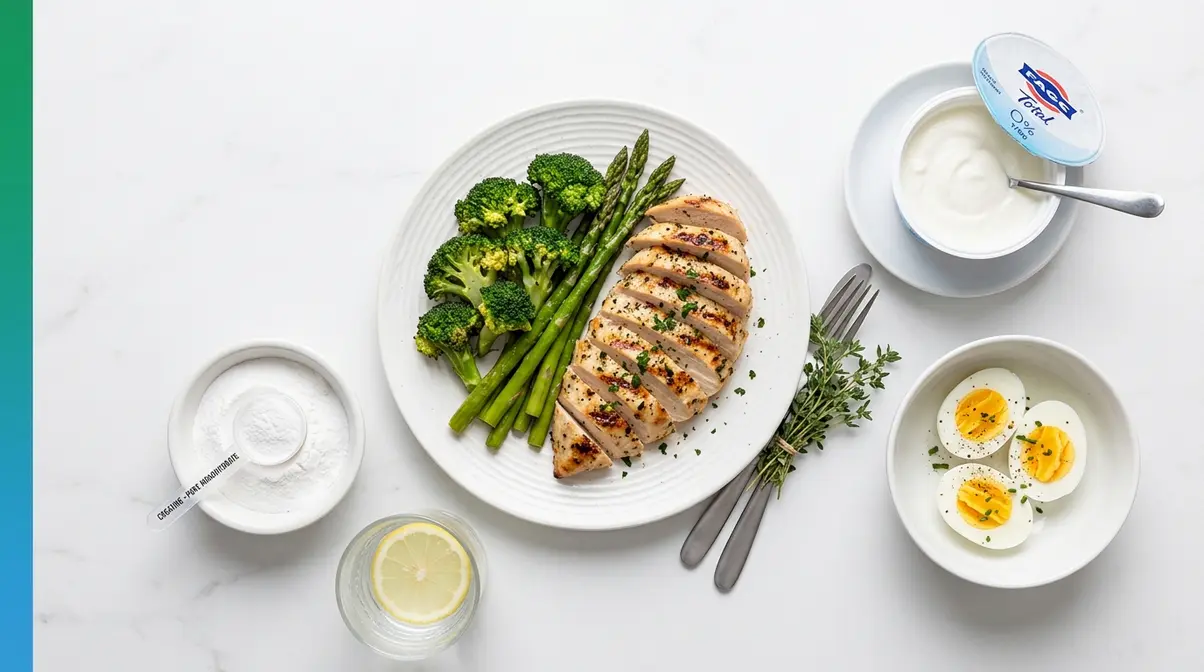
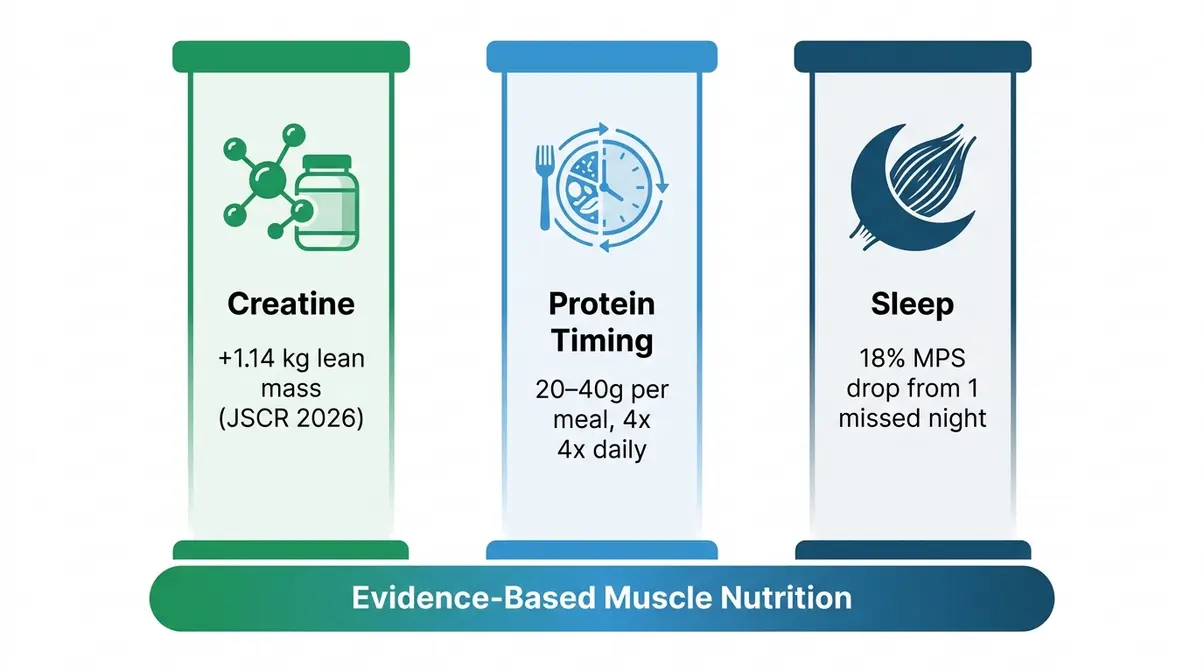
Nutrition is not a supporting character in muscle building — it is a co-equal driver alongside training. Research indicates that consuming 20–40g of high-quality protein per meal maximally stimulates muscle protein synthesis, with multiple meals per day providing greater cumulative MPS than the same total protein consumed in fewer, larger doses (NIH/PMC, 2012). Without adequate nutrition, even the most consistent training program produces a fraction of its potential results.
Three nutritional variables have the strongest research support for accelerating your muscle-building timeline: creatine monohydrate supplementation, protein distribution across meals, and sleep quality. Each is addressed below.
Creatine: Top Muscle Supplement
Creatine monohydrate is the most extensively studied ergogenic supplement in sports nutrition, and its effectiveness for muscle building is among the most replicated findings in exercise science. A 2026 meta-analysis in the Journal of Strength and Conditioning Research reviewed 12 randomized controlled trials and found that creatine users gained an average of 1.14 kg more lean body mass and reduced body fat mass by 0.73 kg compared with resistance training alone (JSCR meta-analysis, 2026, via MTN Tactical). A separate 2026 evidence synthesis aggregating 143 randomized controlled trials across 3,655 participants found an average 0.82 kg gain in fat-free mass with creatine supplementation (FitChef, 2026).
The mechanism is straightforward: creatine increases phosphocreatine stores in muscle, enabling more work at high intensities. More total training volume means more hypertrophic stimulus over time.
Effective dosing protocol:
- Loading phase (optional): 20g per day split into 4 doses for 5–7 days — saturates muscle creatine stores faster
- Maintenance dose: 3–5g per day indefinitely — sustains elevated stores
- Skip loading: 3–5g per day from the start produces the same result in 3–4 weeks
The International Society of Sports Nutrition identifies creatine monohydrate as the most effective ergogenic supplement currently available for increasing high-intensity performance and lean body mass (ISSN Position Stand, 2017). A 2026 head-to-head trial found that claims of creatine hydrochloride (HCl) superiority over monohydrate are “unfounded and misleading” — monohydrate remains the evidence-based choice (Journal of ISSN, 2026).
Creatine is not a shortcut to skipping hard training. It adds approximately 1–2 extra lbs of lean mass over a 12-week program and improves training capacity — a meaningful but modest contribution to your overall timeline.
Protein Timing and Distribution
Total daily protein intake is the most important nutritional variable for muscle building, but how you distribute that protein across the day matters more than most people realize. Research shows that muscle protein synthesis is maximally stimulated by consuming 20–40g of high-quality protein per meal. Eating 160g of protein in two large meals produces less total MPS stimulation than the same 160g spread across four meals of 40g each.
The “anabolic window” — the idea that you must consume protein within 30 minutes of training — is largely a myth for most practical purposes. Post-exercise MPS remains elevated for 24–48 hours, meaning protein consumed within a few hours of training still supports muscle repair and growth. However, consuming protein close to your training session does appear to slightly enhance the MPS response, so a pre- or post-workout meal containing 30–40g of protein is a reasonable practice.
If you are unsure about your total daily targets, check out our calculator for how much protein you need.
Practical protein targets by bodyweight:
| Body Weight | Daily Protein Target | Per-Meal Target (4 meals) |
|---|---|---|
| 140 lbs | 98–140g | 25–35g |
| 170 lbs | 119–170g | 30–43g |
| 200 lbs | 140–200g | 35–50g |
| 230 lbs | 161–230g | 40–58g |
Protein quality matters alongside quantity. Animal sources — chicken, beef, eggs, dairy, fish — contain all essential amino acids in favorable ratios for MPS. Plant sources can provide adequate protein when combined thoughtfully (e.g., rice and beans provide a complete amino acid profile), but typically require higher total intake to achieve equivalent MPS stimulation.
Sleep: The Underrated Variable
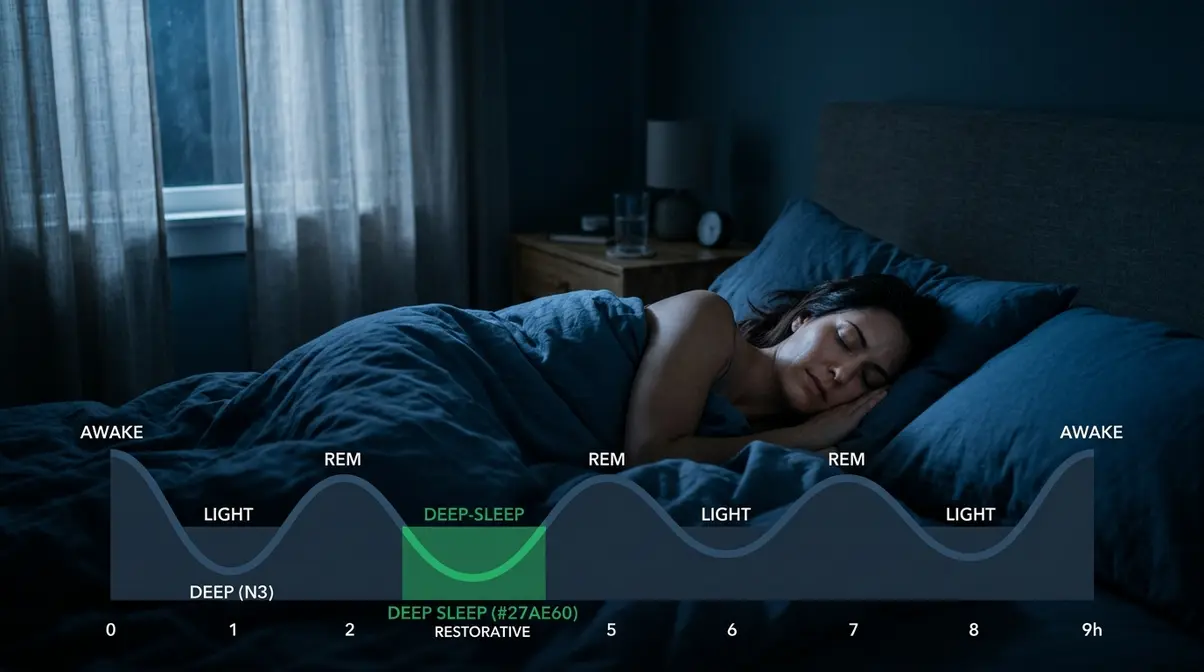
Sleep is where muscle is actually built. During sleep — particularly during slow-wave (deep) sleep in the first half of the night — the largest pulses of growth hormone are released, supporting IGF-1 signaling and muscle repair (Neuroendocrinology, 2022). Disrupting or shortening this deep sleep window directly impairs the anabolic environment your training created.
The research is unambiguous: a single night of total sleep deprivation reduces skeletal muscle protein synthesis by 18%, accompanied by a 24% reduction in testosterone and a 21% increase in cortisol (Lamon et al., Physiological Reports, 2021, via NIH/PMC research study). A separate study found that five consecutive nights of 4-hour sleep restriction reduced myofibrillar protein synthesis by approximately 19% compared with normal sleep (NIH/PMC, 2020). Chronic sleep below 7 hours consistently blunts MPS, elevates cortisol, reduces testosterone, and impairs recovery.
For a deeper dive into this mechanism, read our guide on sleep and muscle recovery.
The practical recommendation: 7–9 hours per night for general adults; 8–10 hours for those under heavy training loads. A 2026 study found that reducing sleep by 1–2 hours below the recommended 7 hours did not significantly impair short-term strength gains in novice trainees (NIH/PMC, 2026), suggesting some flexibility — but optimal conditions for long-term hypertrophy consistently require 7+ hours.
If you are training hard, eating right, and still not progressing, poor sleep is the first variable to examine.
Are 3 Eggs a Day Enough Protein?
Three large eggs provide approximately 18–19g of protein — a meaningful contribution, but insufficient as your primary protein source for muscle building. For a 170-lb person targeting 0.7–1g of protein per lb of bodyweight, daily protein needs fall between 119 and 170g. Three eggs supply roughly 11–16% of that requirement.
Eggs are an excellent protein source because they provide all essential amino acids and have a high biological value. However, relying on eggs alone would require consuming 10–15 eggs per day to meet muscle-building targets — nutritionally imbalanced and impractical. Three eggs work well as part of a protein-rich breakfast alongside Greek yogurt, cottage cheese, or a protein shake. Combined, a breakfast of 3 eggs plus one cup of Greek yogurt delivers approximately 36–40g of protein — enough to maximally stimulate a single MPS pulse.
The answer to “is 3 eggs a day enough protein for muscle gain?” is: no, not as your sole protein source, but yes as one component of a well-distributed protein strategy across four daily meals.
Ideal Workout Duration {#h2-4}
A focused, well-structured 30-minute resistance training session is sufficient to stimulate meaningful muscle hypertrophy — provided you train with adequate intensity, hit major muscle groups, and maintain consistency. This is not a motivational claim; it is supported by 2026 research from the University at Buffalo, which found that 30-minute sessions performed twice weekly produced measurable gains in muscle strength, mass, and endurance (University at Buffalo, 2026). The primary drivers of hypertrophy are weekly training volume and proximity to failure — not how long you spend in the gym.
For more on optimizing your schedule, review our guide on training frequency.
“Muscle growth depends on weekly volume and effort intensity, not session duration — research confirms that 30-minute sessions performed twice per week produce measurable hypertrophy when sets are taken close to failure” (University at Buffalo, 2026).
Is a 30-Minute Workout Enough?
Yes — with the right structure. A 2026 study found that performing one set of approximately nine full-body resistance exercises across a 30-minute session, twice weekly, produced significant improvements in muscle strength, endurance, and power compared with controls (Women’s Health UK, 2026). A 2023 systematic review in the British Journal of Sports Medicine confirmed that training with at least two sets and two sessions per week had a 95% probability of producing both strength gains and hypertrophy in healthy adults (BJSM, 2023).
A sample 30-minute hypertrophy session:
| Exercise | Sets × Reps | Rest | Target Muscles |
|---|---|---|---|
| Barbell Squat (or Goblet Squat) | 3 × 8–10 | 90 sec | Quads, glutes, hamstrings |
| Dumbbell Romanian Deadlift | 3 × 10–12 | 90 sec | Hamstrings, glutes |
| Push-Up or Dumbbell Press | 3 × 8–12 | 75 sec | Chest, shoulders, triceps |
| Dumbbell Row | 3 × 10–12 | 75 sec | Back, biceps |
| Overhead Press | 2 × 10–12 | 60 sec | Shoulders, triceps |
This protocol hits every major muscle group in under 30 minutes. The NASM identifies 75–85% of 1RM for 3–5 sets of 6–12 reps as the optimal hypertrophy range, with cells under tension for approximately 40–70 seconds per set (NASM, 2026). A compact compound-movement session fits these parameters precisely.
Optimal Rest Periods Between Sets
Rest interval length affects hypertrophy in ways that are often oversimplified. The old advice to rest only 60 seconds for “hypertrophy” has been revised by more recent evidence. Research now supports longer rest periods — 2–3 minutes between sets — for maximizing hypertrophy, because longer rest allows greater loads and more total volume per session.
This aligns with broader guidelines on sets and reps for strength.
Practical rest guidelines by goal:
- Strength (1–5 reps at high load): 3–5 minutes
- Hypertrophy (6–12 reps, moderate load): 90 seconds–3 minutes
- Muscular endurance (15+ reps, lower load): 30–60 seconds
For a 30-minute session, using 90-second rest periods between sets allows you to complete 3 sets of 5 exercises while spending roughly 18–20 minutes on actual working sets. If rest periods stretch toward 3 minutes for heavier compound movements, you may need to reduce total exercise count to stay within 30 minutes. Prioritize compound lifts (squats, presses, rows) over isolation movements (curls, extensions) when time is limited.
Junk Volume: Avoiding Over-Training
Junk volume refers to training sets that exceed your recovery capacity and produce no additional hypertrophic stimulus — or actively impair recovery. This concept is one of the most important and least discussed factors in answering how long to build muscle.
Research suggests that hypertrophy plateaus at approximately 6–8 hard sets per muscle group per session, with higher in-session volumes showing diminishing returns and eventually negative effects (Weightology, 2026). Weekly, most trained individuals benefit from 10–20 hard sets per muscle group per week — spread across multiple sessions rather than concentrated in one marathon workout.
Signs you’re accumulating junk volume: performance declining across sets (each set noticeably worse than the last), persistent soreness that doesn’t resolve between sessions, and stalled progress despite increasing training time. The solution is counterintuitive: reduce total volume, prioritize intensity, and allow adequate recovery. More is not always better — better is better.
How Age and Sex Affect Timelines {#h2-5}
Age and biological sex are two of the four variables in The 4-Variable Muscle Clock, and they exert significant influence on how long to build muscle. These variables don’t prevent muscle growth — they reshape the timeline and the strategy required. Women can build impressive, functional muscle at any age. Men over 40 can still achieve transformative physique changes. The key is adjusting expectations and programming to reflect the physiological reality of each profile.
Many wonder when muscles stop growing, but the truth is that with proper resistance training, the body remains capable of hypertrophy well into older age.
Muscle Building for Women
Women build muscle through the same physiological mechanisms as men — progressive overload, muscle protein synthesis, adequate protein, sufficient sleep. The timeline differences come from hormonal environment, not from fundamentally different biology. Women have significantly lower testosterone levels than men, which is the primary reason for the slower absolute gain rates in the table above. However, women have similar or even greater relative gains in muscle strength as a percentage of their starting baseline, and they often recover faster between sessions.
For specialized programming, see our comprehensive guide to muscle building for women.
A common concern among women is that resistance training will produce an “overly bulky” physique. This fear is inconsistent with the data. Given the hormonal environment — particularly lower testosterone — building the level of muscle mass that most people associate with “bulk” requires years of dedicated training with a consistent caloric surplus. The more realistic outcome of 6–12 months of resistance training for most women is a leaner, more defined physique with visible muscle tone.
Protein targets for women are proportionally the same as for men: 0.7–1g per lb of bodyweight daily. A 140-lb woman needs 98–140g of protein per day to support optimal muscle growth — a target that often requires intentional planning but is entirely achievable through whole foods.
Building Muscle Over 40
The physiology of muscle building over 40 shifts in several measurable ways, but none of them make muscle growth impossible. Testosterone levels in men decline at approximately 1% per year after age 30, meaning a 45-year-old male has roughly 15% less testosterone than he did at 30 — a meaningful but not disqualifying reduction (World Journal of Men’s Health, 2018). For women, the picture is more abrupt: research from a 2026 review found that women experience a sharp acceleration of sarcopenia — age-related muscle loss — after menopause, driven by steep declines in estrogen and progesterone (Aging-US, 2026).
At age 40, women’s testosterone levels are approximately 50% of what they were at age 20 (NIH/PMC, 2021). Women over 40 should lift weights to counteract what research describes as muscles “falling off a cliff” during the menopausal transition (Sydney Morning Herald, 2026). This is not alarmism — it is the evidence-based case for why resistance training becomes increasingly important, not less important, as women age.
- What changes after 40:
- Recovery between sessions takes longer (allow 48–72 hours per muscle group)
- Neural adaptations remain robust — strength gains still come quickly
- Hypertrophy proceeds more slowly in absolute terms
- Higher protein intake (1g per lb of bodyweight rather than 0.7g) becomes more important
- Sleep quality has an outsized impact on results
- What doesn’t change:
- The fundamental mechanisms of hypertrophy (progressive overload, MPS, protein)
- The ability to gain meaningful muscle and strength
- The benefit-to-effort ratio — resistance training may be more valuable at 45 than at 25
Building Muscle After 60
Sarcopenia — the progressive, age-related loss of skeletal muscle mass and function — affects approximately 20–23% of older postmenopausal women (Journals of Gerontology, 2003). Without resistance training, adults lose roughly 3–8% of muscle mass per decade after age 30, with the rate accelerating after 60. Resistance training is the most effective intervention for reversing this process.
A key study found that in older adults performing resistance training, significant increases in vastus lateralis cross-sectional area — approximately 7.1% — were only observable after 18 sessions (approximately 9 weeks) of training (NIH PubMed, 2016). This is roughly twice as long as it takes for younger trainees to show measurable hypertrophy. The mechanism is intact — the timeline is extended.
- For adults over 60, the most important adjustments are:
- Higher protein intake: 1–1.2g per lb of bodyweight to counteract anabolic resistance (the reduced MPS response per gram of protein that develops with age)
- Training frequency: 3 sessions per week minimum to maintain the MPS signal
- Compound movements: Squats, deadlifts, rows, and presses produce the greatest functional benefit and the most total muscle stimulation
- Medical clearance: Particularly important for those with cardiovascular conditions, joint issues, or osteoporosis
The timeline for visible muscle changes after 60 extends to 6–12 months of consistent training, but the functional benefits — improved strength, balance, bone density, and metabolic health — appear within weeks.
Which Muscle Groups Grow First? {#h2-6}
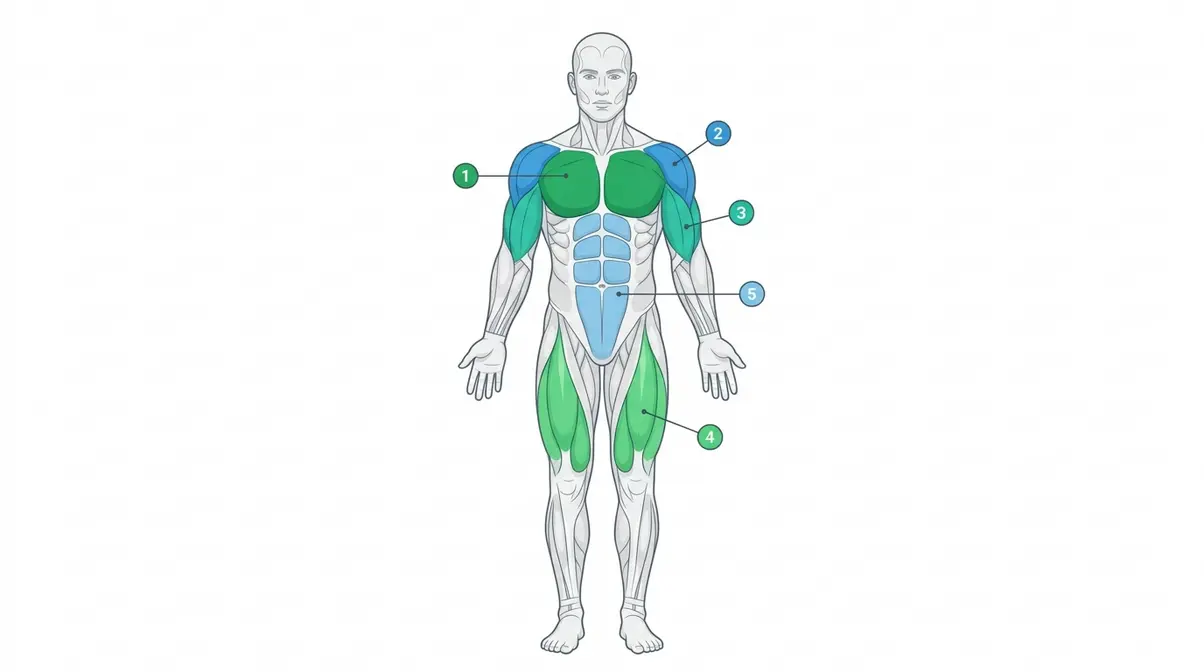
The rate of muscle growth across different body parts is not uniform, and understanding which areas respond first can help you set realistic expectations for each region. Research does not support a simple ranking like “biceps grow faster than legs” — growth is muscle-specific, region-specific, and heavily influenced by training volume, frequency, and exercise selection. However, some meaningful patterns emerge from the evidence.
Why do certain muscle groups seem to explode while others lag behind? The answer lies in a combination of androgen receptor density, muscle fiber type distribution, and the ability to achieve stretch-mediated hypertrophy. For example, the upper body — particularly the shoulders and trapezius muscles — typically contains a higher density of androgen receptors than the lower body. This makes these areas highly responsive to the hormonal environment created by resistance training, often leading to faster visible changes, especially in males.
Additionally, muscles with a higher proportion of fast-twitch (Type II) fibers generally possess a greater capacity for rapid growth compared to slow-twitch (Type I) dominant muscles. Understanding these physiological nuances prevents the frustration of expecting your calves to grow at the same rate as your chest.
—\
Arms: Biceps and Triceps Timeline
Arms are among the most frequently trained and most scrutinized muscle groups, yet they are not the fastest-growing. The biceps and triceps are relatively small muscles — the triceps constituting roughly two-thirds of upper arm mass — and they respond well to both direct and indirect stimulation.
Research on training volume found that triceps brachii appeared to benefit more from higher weekly training volumes than biceps brachii or quadriceps, suggesting triceps may require more direct work to match the growth of other upper-arm muscles (NIH/PMC, 2022). The biceps, by contrast, receive substantial indirect stimulation from all rowing and pulling movements, meaning they can grow meaningfully even without dedicated curl work.
Furthermore, the triceps often contain a higher proportion of fast-twitch muscle fibers, which are highly responsive to heavy loads and explosive movements. To maximize triceps growth, incorporating exercises that place the long head of the triceps under a deep stretch—such as overhead dumbbell extensions—is crucial for triggering stretch-mediated hypertrophy.
For most beginners, arms are among the first muscles to show visible changes — partly because they are always visible, and partly because upper-body muscles respond earlier than lower-body muscles. Realistic expectations for arm growth:
- Measurable thickness increase: 4–8 weeks of direct training
- Visible size change: 3–5 months for most beginners
- Significant transformation: 12–24 months
Direct arm training (curls, extensions) 2 times per week with 10–15 weekly sets per muscle group is sufficient for maximizing arm growth. More than 20 direct sets per week for arms likely produces junk volume for most individuals.
Legs: Quads, Hamstrings, Glutes
Legs contain the largest muscles in the body — the quadriceps and glutes are among the most metabolically active tissues — and they require the most stimulus to show visible changes. Upper-body muscles typically show visible changes several weeks before leg development becomes apparent to the average observer.
The quadriceps respond robustly to progressive loading through squats, leg presses, and lunges. A 2020 study found that significant quadriceps hypertrophy — a 3.5–5.2% increase in cross-sectional area — appeared after just 3 weeks of high-intensity resistance training in young subjects (Journal of Applied Physiology, 2007). However, the legs are also covered by more subcutaneous fat than the arms for most people, meaning visible leg changes require longer — typically months 4–8 for beginners.
Hamstrings and calves present entirely different timelines. The hamstrings are heavily fast-twitch dominant and respond exceptionally well to heavy, eccentric loading like Romanian Deadlifts (RDLs). Conversely, the calves are notoriously stubborn because they are predominantly slow-twitch fibers designed for all-day endurance. Growing calves requires high frequency, deep loaded stretches, and immense patience, often taking 8–12 months to show significant change.
Glutes deserve special attention: they are the largest and potentially most powerful muscle group in the body, but they are chronically undertrained by many beginners who rely solely on squats. Hip thrusts, Romanian deadlifts, and cable pull-throughs provide superior glute activation and more targeted hypertrophic stimulus for this muscle group.
Chest and Back: The Trunk Muscles
The pectoralis major (chest) and the back musculature — including the latissimus dorsi, rhomboids, and traps — are the trunk muscles that tend to show early, dramatic hypertrophic responses in beginners. Research confirmed that pectoralis major showed more pronounced cross-sectional area increases than the deltoid and triceps over 10 weeks of bench-press-focused training (ScienceDirect, 2024).
The chest is highly susceptible to stretch-mediated hypertrophy. Exercises that place the pectorals under tension in a fully lengthened position—like deep dumbbell bench presses or cable flyes—trigger rapid growth signals. This is why many beginners see their chest develop faster than their arms during the first three months of training.
The back, however, is the most commonly undertrained area for beginners, who tend to emphasize push movements (bench press, shoulder press) over pull movements (rows, pull-ups). Back muscles are also harder to feel and visualize during training, making it easier to underestimate whether the stimulus is adequate. A poor “mind-muscle connection” often delays back growth because beginners mistakenly use their biceps to pull the weight rather than engaging their lats and rhomboids.
A 1:1 ratio of push-to-pull movements — matching every pressing set with a rowing or pulling set — is a well-supported approach for balanced development and shoulder health.
- For most beginners:
- Chest: Visible changes in months 3–5 with 3 pressing sessions per week
- Back width (lats): Visible changes in months 4–7 with consistent pulling volume
- Upper back thickness: Often takes 6–12 months to become clearly visible
Abs: The Most Misunderstood Timeline
Abdominal muscle development is real and follows the same hypertrophic principles as every other muscle group — but abs are almost entirely hidden by body fat until that fat is reduced. The rectus abdominis and obliques can be fully developed and still invisible at 20% body fat for most individuals. Visible abs typically require 12–15% body fat for men and 18–22% for women, though this varies heavily with individual genetic fat distribution.
Some individuals naturally store less visceral and subcutaneous fat around their midsection, allowing their abs to show at slightly higher body fat percentages. Others may need to reach lower body fat levels before the lower abdominal region becomes visible.
This creates a two-part challenge: building the muscle AND reducing the fat covering it. Direct ab training — weighted crunches, hanging leg raises, cable crunches — does build abdominal muscle hypertrophy, but it does not selectively reduce the fat layer above it. Spot reduction is not physiologically supported by research. Planks are excellent for core stability, but they do not provide the active concentric and eccentric contractions necessary for maximal rectus abdominis hypertrophy.
- The most efficient path to visible abs combines:
- Progressive ab training: Treat abs like any other muscle — 10–15 sets per week with progressive overload using weighted movements.
- A modest caloric deficit: 300–500 kcal below maintenance to reduce total body fat over time.
- High protein intake: Preserves muscle during fat loss.
For most beginners, a realistic timeline for visible abs is 6–18 months — depending primarily on starting body fat percentage, not just training duration.
Impact of Different Training Styles {#h2-7}
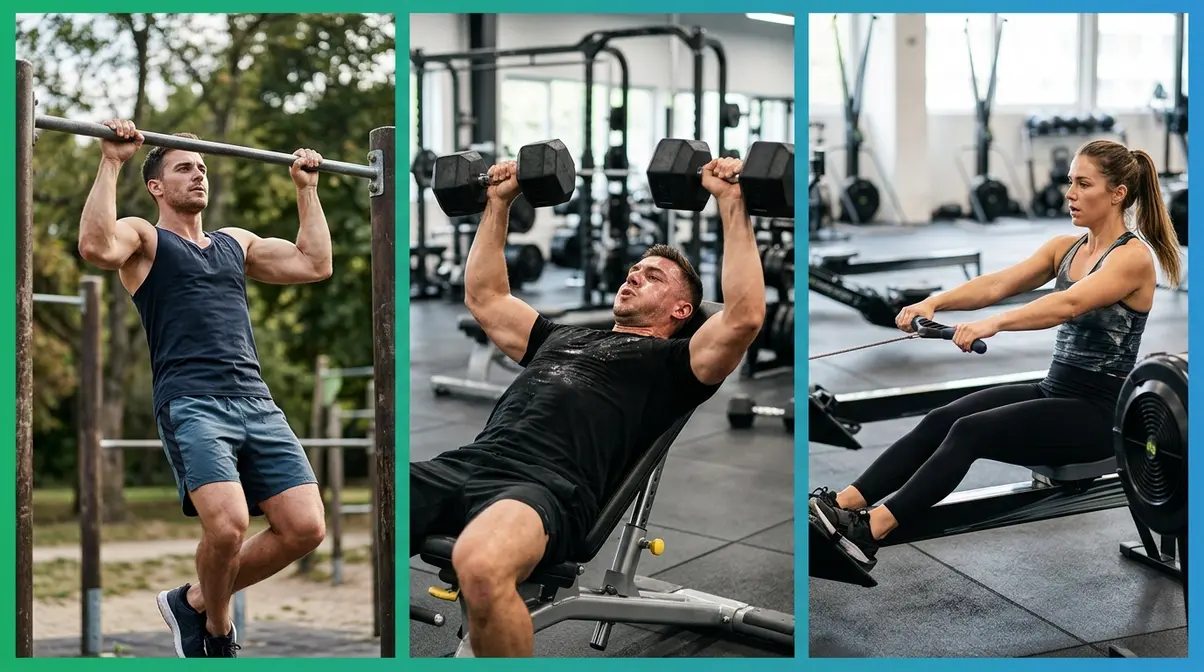
Different training modalities — calisthenics, dumbbell training, rowing machines, jump rope — produce muscle growth through the same fundamental mechanism: progressive overload applied to muscle tissue. The research is clear that modality is less important than programming quality. However, each approach has practical advantages and limitations that affect how efficiently you can apply progressive overload over time.
If you are interested in building muscle without weights, calisthenics is a highly viable starting point.
“When training is taken close to failure and progressively overloaded, calisthenics and weight training are similarly effective for building muscle in the upper body, especially in beginners and intermediates” — a conclusion supported by a 2017 meta-analysis of 21 controlled studies and confirmed by 2026 evidence reviews.
Calisthenics for Muscle Growth
Calisthenics can build substantial muscle, particularly in the upper body and core, when exercises are progressively made harder and sets are taken close to failure. A 2017 meta-analysis by Schoenfeld et al. synthesizing 21 controlled studies found no significant difference in muscle hypertrophy between low-load and high-load resistance training when effort was equated (RazFit, 2026), directly supporting the effectiveness of bodyweight-style loading.
Research on progressive calisthenic push-up training demonstrated that using progressive variations to maintain training principles significantly improved upper-body strength, with the key being systematic difficulty progression (NIH PubMed, 2018). The critical qualifier is “progressive” — static calisthenics (the same push-ups and pull-ups forever) stalls quickly because the load never increases.
- Where calisthenics works well:
- Upper body and core hypertrophy (push-ups, dips, pull-ups, rows)
- Beginners and intermediates in the first 1–3 years
- Time-efficient full-body training
- Where calisthenics falls short:
- Lower-body hypertrophy — even elite practitioners rarely exceed 15–20 reps on pistol squats, and high-rep bodyweight squats don’t provide enough progressive overload for maximal leg development
- Advanced trainees — the difficulty of adding small increments of load is harder than adding 2.5 lbs to a barbell
For lower-body development and long-term advanced hypertrophy, adding external resistance — dumbbells, barbells, or a weighted vest — provides a clear advantage over pure bodyweight training.
Dumbbell-Only Training Efficacy
Dumbbell training is one of the most versatile and accessible resistance training modalities, and research consistently supports its effectiveness for muscle hypertrophy. A systematic review and meta-analysis found no differences in muscle hypertrophy between machine-based and free-weight training (effect size: −0.01, 95% CI −0.525 to 0.545), confirming that equipment type is not a meaningful differentiator when programming is equated (NIH PubMed, 2022).
Dumbbells provide several practical advantages: they allow greater range of motion than barbells on many exercises, they require more stabilizer muscle activation, and they can be used for unilateral training (single-arm or single-leg) that corrects strength imbalances. This makes dumbbells perfect for home workouts to build muscle. A pair of adjustable dumbbells covering 5–50 lbs is sufficient for a beginner to train productively for 12–18 months.
The limitation of dumbbell-only training emerges as strength increases: most adjustable dumbbell sets cap out at 50–75 lbs, which becomes limiting for lower-body movements after 6–12 months of consistent training. At that point, adding a barbell or access to a cable machine extends the progressive overload range significantly.
Rowing and Jump Rope for Muscle
Rowing and jump rope are primarily cardiovascular training modalities, not resistance training tools. They can contribute to overall fitness, caloric expenditure, and work capacity — but they are not effective primary drivers of muscle hypertrophy.
Rowing does engage significant muscle mass — particularly the back, biceps, legs, and core — and can maintain muscle mass in a caloric deficit better than pure aerobic exercise. However, the loading is not sufficient for progressive hypertrophic overload in the way that resistance training is. Research on endurance exercise duration and muscle hypertrophy suggests that short-duration endurance exercise may contribute modestly to hypertrophy, while long-duration endurance exercise can actually suppress the hypertrophic response (NIH/PMC, 2020).
Jump rope improves cardiovascular fitness, calf endurance, and coordination — none of which constitute meaningful hypertrophic stimuli for major muscle groups. For caloric expenditure and conditioning, both rowing and jump rope are valuable tools. For building muscle, they are supplements to resistance training, not substitutes for it.
The practical recommendation: if you enjoy rowing or jump rope, use them for cardiovascular conditioning on recovery days. Reserve your primary training sessions for progressive resistance work that directly stimulates hypertrophy.
Gain Killers: What’s Slowing You Down {#h2-8}
Even with a solid training program and adequate nutrition, specific mistakes can dramatically extend your muscle-building timeline. These are the most evidence-supported factors that derail progress — and they are all correctable.
The 3 Biggest Muscle Gain Killers
1. Insufficient protein intake (especially per-meal distribution)
The most common nutritional mistake is eating adequate total protein in too few meals. As established, MPS is maximally stimulated by 20–40g of high-quality protein per meal. Eating 150g of protein in two meals produces significantly less cumulative MPS than the same amount spread across four meals. Review your protein distribution before assuming your total intake is the problem.
2. Inconsistent progressive overload
Progressive overload — systematically increasing the training stimulus over time — is the single most important training variable for continued muscle growth. Without it, the body has no reason to add new tissue. Many beginners train consistently but plateau because they never increase weight, reps, or volume. Track your lifts. Every 2–4 weeks, your working weights should be increasing. If they’re not, adjust your program before blaming your genetics.
3. Chronic sleep below 7 hours
One night of total sleep deprivation reduces muscle protein synthesis by 18%, raises cortisol by 21%, and lowers testosterone by 24% (Lamon et al., Physiological Reports, 2021). Chronic partial sleep restriction produces similar, cumulative hormonal disruption. No amount of supplementation or training optimization compensates for insufficient sleep. If you are sleeping less than 7 hours consistently, this is your number-one gain killer.
When to Seek Expert Help
Consider consulting a certified personal trainer (CPT) or certified strength and conditioning specialist (CSCS) if:
- You have been training consistently for 3+ months without measurable strength or size progress
- You are experiencing recurring pain (not muscle soreness) during resistance training
- You are over 60, have cardiovascular disease, osteoporosis, or joint conditions, and want to begin resistance training
- You are unsure how to structure progressive overload for your specific goals and experience level
- Consider consulting a registered dietitian if:
- You are struggling to meet protein targets on a plant-based diet
- You have metabolic conditions (diabetes, thyroid disorders) that may affect muscle protein synthesis
- You are considering a significant caloric surplus or deficit and want to optimize body composition changes
Frequently Asked Questions {#faq}
What kills muscle gains the most?
Chronic sleep deprivation is the single biggest muscle gain killer, with research showing one night of total sleep deprivation reduces muscle protein synthesis by 18% and testosterone by 24% (Lamon et al., Physiological Reports, 2021). Insufficient protein per meal — consuming too few meals with 20–40g protein each — ranks second. Lack of progressive overload (never increasing training stimulus) is the third most common cause of stalled progress. All three are correctable with straightforward adjustments.
Time to Gain 10 lbs of Muscle?
Gaining 10 lbs of muscle takes 5–8 months for beginner males under 40, 9–12 months for beginner females under 40, 8–12 months for males over 40, and 12–18 months for females over 40 under consistent training conditions. These timelines from The 4-Variable Muscle Clock assume 3 training sessions per week, 0.7–1g protein per lb of bodyweight daily, and 7–9 hours of sleep. Real-world timelines extend 20–30% longer for people with inconsistent schedules (US News, 2026).
Is a 30-minute workout enough?
Yes — 30-minute sessions performed twice weekly can produce meaningful muscle hypertrophy, according to a 2026 University at Buffalo study finding that 30 minutes of weight training twice per week led to measurable gains in strength, muscle mass, and endurance. A 2023 British Journal of Sports Medicine systematic review confirmed that training with at least two sets and two sessions per week had a 95% probability of producing hypertrophy. The key requirements are training close to failure and hitting major muscle groups with compound movements.
Which muscles grow the fastest?
No single muscle group is scientifically proven to grow fastest for all individuals. However, research shows upper-body muscles tend to show measurable growth earlier than lower-body muscles during the first 12 weeks of training (NIH PubMed, 2000). The pectoralis major (chest) shows earlier significant hypertrophy than the triceps under bench-press training (NIH/PMC, 2012). Growth rate is determined more by training volume, frequency, and exercise selection than by which muscle group you’re training.
What age is hardest to gain muscle?
Muscle building becomes progressively more challenging after age 40 due to declining testosterone (approximately 1% per year after 30 in men) and accelerating sarcopenia in postmenopausal women. Women at age 40 have testosterone levels roughly 50% of their levels at age 20 (NIH/PMC, 2021). Research confirms that older adults can still build significant muscle — significant quadriceps hypertrophy of 7.1% was observed in older adults after 9 weeks of training (NIH PubMed, 2016) — but the timeline extends and protein requirements increase.
Are 3 eggs a day enough protein?
Three eggs provide only 18–19g of protein, which is insufficient as your primary protein source for muscle building. A 170-lb person needs 119–170g of protein daily to support optimal muscle growth. Three eggs supply approximately 11–16% of that requirement. Eggs are an excellent protein source with all essential amino acids, but should be combined with other high-protein foods across multiple daily meals. Three eggs plus one cup of Greek yogurt at breakfast delivers approximately 36–40g — enough to maximally stimulate one MPS pulse.
Best exercises for fast growth?
Compound movements — exercises engaging multiple joints and large muscle groups simultaneously — produce the greatest hypertrophic stimulus per unit of time. The most evidence-supported compound exercises for overall muscle building are: squats (quads, glutes, hamstrings), deadlifts (posterior chain, back), bench press (chest, shoulders, triceps), barbell or dumbbell rows (back, biceps), and overhead press (shoulders, triceps). These five movements train the majority of muscle mass in the body and allow the most progressive overload over time, making them the fastest path to a well-developed physique.
Exercising 30 minutes every day?
Exercising 30 minutes every day produces cardiovascular and general health benefits, but may not optimize muscle growth if the same muscle groups are trained without adequate recovery time. Muscle protein synthesis remains elevated for 24–48 hours after resistance training, meaning training the same muscles daily prevents full recovery and can impair hypertrophy. A more effective approach for muscle building is resistance training 3–4 days per week with 48 hours of recovery between sessions targeting the same muscle groups, while using remaining days for light activity, stretching, or cardiovascular conditioning.
Conclusion {#conclusion}
For adults at any experience level, how long to build muscle follows a predictable, evidence-supported pattern: measurable changes within 2 weeks, significant hypertrophy by weeks 3–4, visible changes between months 3 and 6, and transformative results within 12 months for consistent beginners. A 2026 NIH review confirms realistic expectations of 1–2 kg of fat-free mass in the first 8–12 weeks, with the most substantial growth occurring in the first 3–6 months. The strategy that works combines progressive overload, 0.7–1g protein per lb of bodyweight distributed across four daily meals, 7–9 hours of sleep, and consistency measured in months, not days.
The 4-Variable Muscle Clock reframes the question from “how long does it take to build muscle?” to “how long does it take you to build muscle?” Your experience level, age, sex, and weekly training volume produce a specific, predictable timeline — not a vague “weeks to months” range. A beginner female over 40 needs a fundamentally different timeline and strategy than a beginner male under 40. Applying the right framework to your profile prevents the discouragement that ends most programs before results arrive.
Your next step is straightforward: identify your profile in The 4-Variable Muscle Clock table, commit to 12 weeks of consistent training with progressive overload and adequate protein, and measure progress with a tape measure and strength log rather than the daily mirror. The research is consistent — the results are coming. Start this week, track for 90 days, and you will have the data to know exactly where you stand and what to adjust.
Related posts:
Calorie Deficit Too Large? 5 Warning Signs to Fix It
Compound vs Isolation Exercises: Which Builds More Muscle?
Best Collagen Protein Powder: 9 Expert Picks (2026)
How Fast to Lose Fat: Safe Rate, Timeline & Science
Testosterone Muscle Growth Science: Complete Guide
Best Creatine Supplement: Tested & Compared for Every Goal

Callum
Hi, I'm Callum, the founder of Body Muscle Matters. I'm not a certified trainer, I'm a self taught lifter who started this site to share what I've learned from my own training and a lot of trial and error. Everything here comes from real experience and honest research, written the way I'd explain it to a friend who is just getting started. My goal is simple: practical, no hype fitness advice you can actually use.