⚠️ Medical Disclaimer: The information in this article is for educational purposes only and is not a substitute for professional medical advice, diagnosis, or treatment. Consult a qualified healthcare professional or certified fitness specialist before beginning any new exercise program, especially if you have a pre-existing medical condition, injury, or are over 65 years of age. All recommendations in this guide are based on the official 2026 ACSM Position Stand.
The American College of Sports Medicine (ACSM) released its 2026 Position Stand — the organization’s first major revision to resistance training guidelines in 17 years — and search interest has surged by nearly 300% since its release. Most people who strength train today are still following rules the ACSM has officially replaced.
The problem is not that the new guidelines are hard to find. It is that the official clinical document is written for researchers, not gym-goers. Every practical question — “How many sets?” “How hard should I push?” “What if I am over 65?” — goes unanswered in the primary source. The acsm strength training guidelines use technical language that leaves everyday lifters confused, and online summaries rarely go deep enough to be useful.
By the end of this guide, you will understand exactly what the 2026 ACSM strength training guidelines recommend, how they differ from the rules you may already know, and how to apply them to a real workout plan matched to your specific goal. This guide covers the key 2026 changes, the full FITT-VP framework, goal-specific protocols, older adult modifications, and five ready-to-use workout templates — all backed by Tier 1 citations.
Before You Start: This guide assumes no prior training experience. All technical terms are defined on first use. If you are completely new to strength training, start with our guide on foundational strength training principles before jumping to the workout templates.
Estimated Time: 45–60 minutes per session.
Tools & Materials Needed: Comfortable workout clothes, a water bottle, and optional resistance bands or dumbbells (gym access is not strictly required).
Key Takeaways: ACSM 2026 Strength Training Guidelines
The 2026 ACSM guidelines recommend training all major muscle groups on at least 2 non-consecutive days per week, performing 2–3 sets per exercise taken close to failure (1–3 Reps in Reserve).
- Biggest change: Intensity is now measured by “Reps in Reserve” (RIR), not rigid %1RM percentages
- For strength: Use heavier loads (≥80% 1RM) for 2–3 sets per exercise
- For muscle growth: Prioritize total weekly volume (~10 sets per muscle group per week)
- The Effort-First Framework: Consistency and proximity to failure matter more than any specific load percentage
- No gym required: Bodyweight, bands, and kettlebells all qualify under the new guidelines
Table of Contents
- What Changed in 2026
- Core ACSM Guidelines
- Training for Your Goal
- Guidelines for Older Adults
- 5 Workout Templates
- Pitfalls and Professional Help
- Frequently Asked Questions
- Read the Conclusion
What Changed in the 2026 Guidelines
The 2026 ACSM Position Stand, released in early 2026, is the first major revision to resistance training guidelines in 17 years. The updated guidelines are based on a systematic review of hundreds of peer-reviewed studies examining how resistance training affects strength, muscle size, power, and long-term health outcomes (ACSM, 2026). For everyday gym-goers, the most significant change is a shift away from lab-based intensity prescriptions toward a self-regulated effort model that anyone can use without specialized testing equipment.
The 2026 ACSM Position Stand is the first major update to resistance training guidelines in 17 years, shifting from rigid load percentages to an effort-based model built around Reps in Reserve (ACSM, 2026).
This section explains what changed, why the ACSM made these changes, and what the old guidelines actually said — so you can clearly see the difference.
From %1RM to RIR: The Biggest Shift
The single most important change in the 2026 update is how intensity — meaning “how hard you train” — is measured and prescribed.
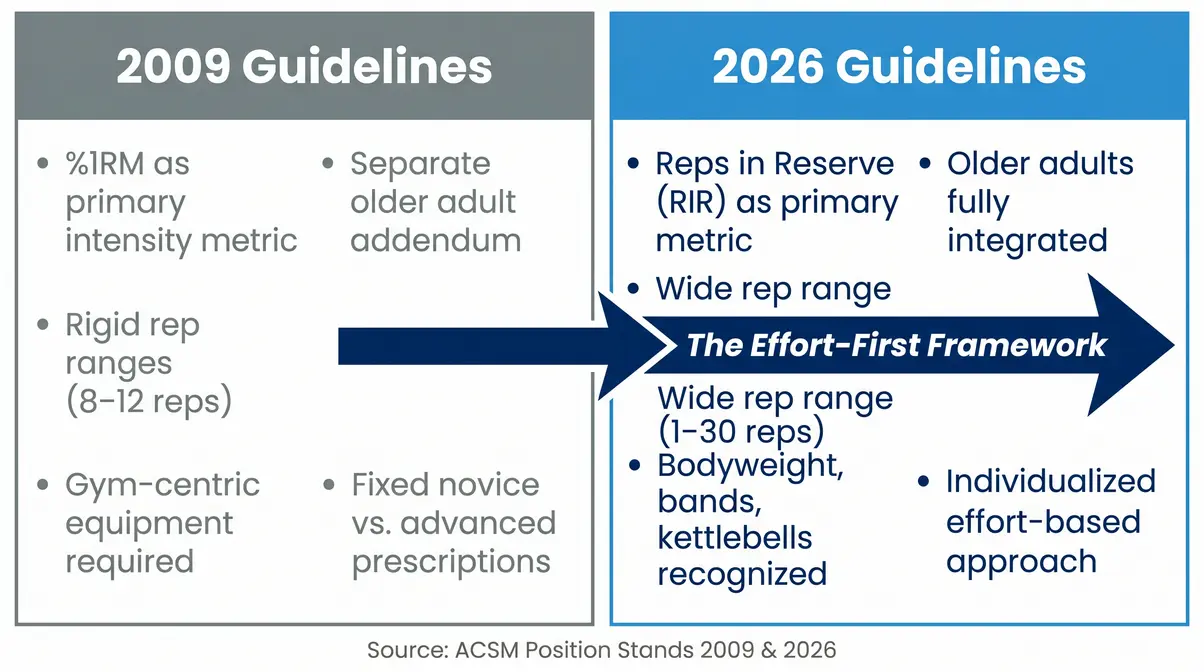
The old model used %1RM (percentage of your one-repetition maximum, or the heaviest weight you can lift for exactly one rep). For example, the 2009 guidelines might say “train at 70–85% of your 1RM.” The problem is that calculating your 1RM requires either maximal effort testing in a controlled setting or using prediction equations that carry a meaningful margin of error. Most gym-goers never test their 1RM, and many trainers never teach them how.
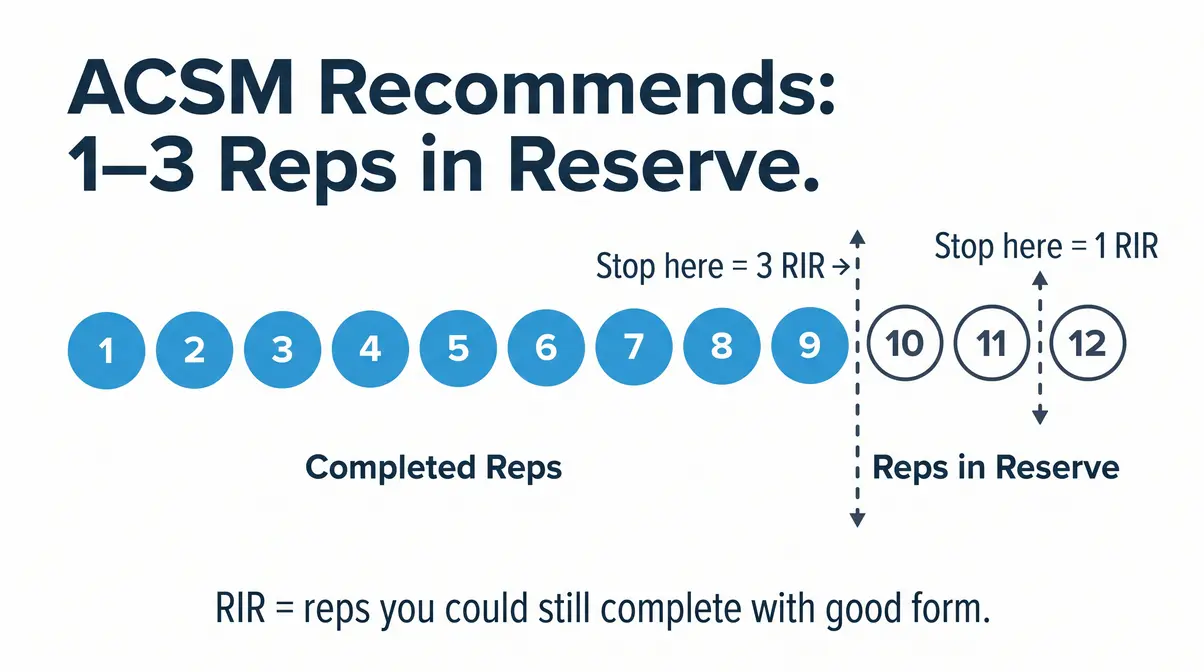
The 2026 guidelines replace this as the primary intensity metric with Reps in Reserve (RIR) — the number of additional repetitions you could complete with good form before reaching failure. If you can do 12 reps before your form breaks down, and you stop at 10, you have 2 RIR. The ACSM now recommends training with 1–3 RIR — close enough to failure to drive adaptation, but not so close that technique breaks down or injury risk spikes (PMC, 2026).
Here is why this matters in practice. Imagine two people both told to “train at 75% 1RM.” One is experienced and can estimate that precisely. The other is a beginner who has never tested their max. For the beginner, the %1RM instruction is functionally useless. RIR gives both people the same actionable target: stop when you have 1–3 reps left in the tank.
This shift reflects what exercise scientists call the Effort-First Framework — the 2026 ACSM guidelines’ core philosophical move. Rather than anchoring intensity to an absolute number derived from lab testing, the framework anchors it to effort relative to your current capacity. This makes the guidelines genuinely accessible to beginners, older adults, and anyone training outside a supervised lab environment.
2009 vs. 2026 Guidelines Comparison
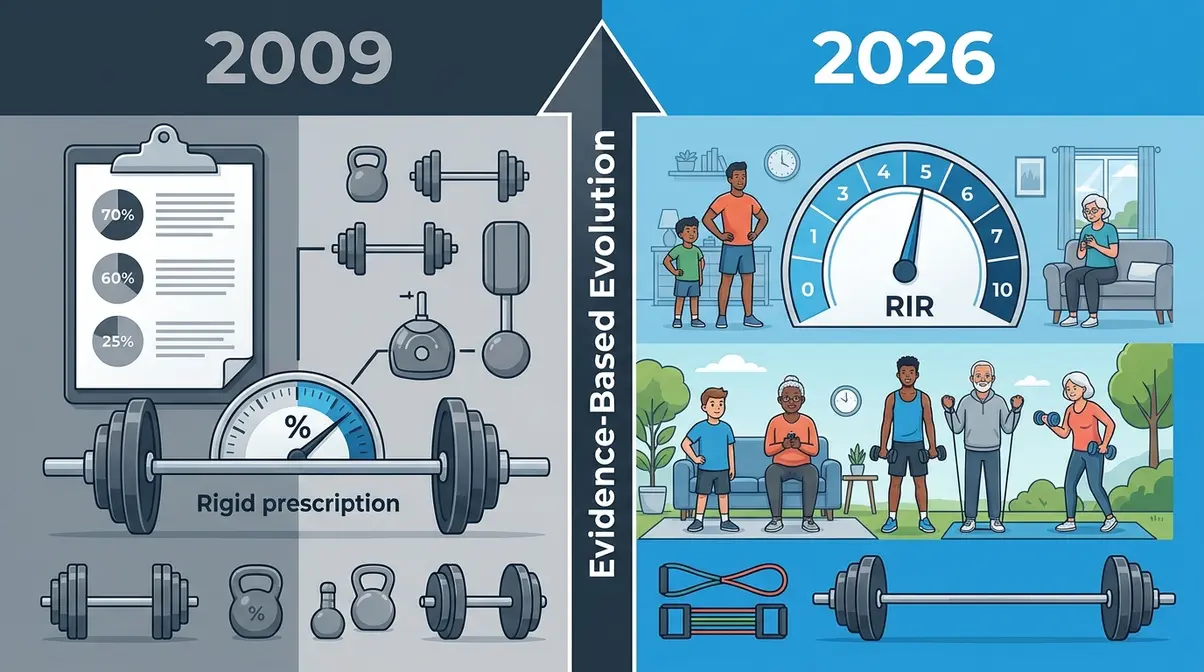
The 2009 ACSM guidelines (often referenced in texts from 2010 through the mid-2020s as the standing recommendation) were detailed and evidence-based for their time. However, they relied heavily on fixed prescriptions that assumed access to testing equipment and professional supervision. The 2026 update modernizes these prescriptions to reflect 17 years of new research and a broader, more inclusive view of who lifts weights.
| Variable | 2009 ACSM Guidelines | 2026 ACSM Guidelines |
|---|---|---|
| Intensity Metric | %1RM (percentage of maximum) | Reps in Reserve (RIR) — 1–3 RIR recommended |
| Frequency | 2–3 days/week (novice); 4–5 days/week (advanced) | ≥2 non-consecutive days/week for all levels |
| Sets per Exercise | 1–3 sets (novice); 3–6 sets (advanced) | 2–3 sets per exercise (all levels as a baseline) |
| Rep Range (Strength) | 8–12 reps at 70–85% 1RM | 1–8 reps at ≥80% 1RM; individualized |
| Rep Range (Hypertrophy) | 6–12 reps | 6–30 reps — wide range is now supported |
| Rest Between Sets | 2–3 minutes (strength); 1–2 min (hypertrophy) | Flexible; ≥2 min for heavy loads; shorter for lighter loads |
| Progression Model | Double-progression (add reps, then weight) | Progressive RT — individualized; RIR guides load increases |
| Bodyweight/Bands | Mentioned, not emphasized | Explicitly recognized as equivalent alternatives |
| Older Adult Guidance | Separate, brief addendum | Fully integrated with specific modifications |
| Individualization | Moderate — population averages | High — explicitly emphasized throughout |
This comparison reveals a clear pattern. The 2026 update is not a wholesale reinvention — it is a deliberate loosening of rigid prescriptions in favor of individualized, effort-based targets. The core principle (train your major muscle groups at least twice per week with progressive overload) remains unchanged. What changed is how that principle is operationalized.
Why the ACSM Revised Its Guidelines
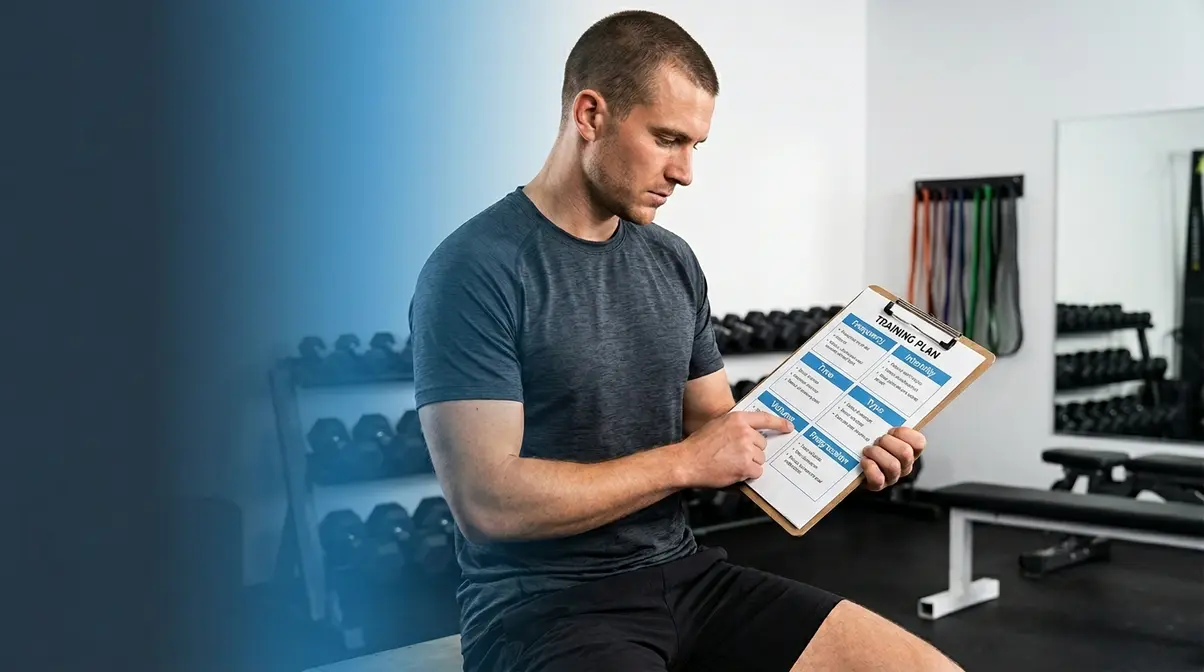
Three factors drove the 2026 revision. First, the volume of resistance training research published between 2009 and 2025 was substantial — the systematic review underlying the 2026 Position Stand incorporated evidence that simply did not exist when the previous guidelines were written (ACSM, 2026).
Second, the demographics of who strength trains has shifted dramatically. Resistance training is no longer primarily practiced by competitive athletes and bodybuilders — it is now a mainstream public health recommendation for adults of all ages, including older adults and clinical populations. Third, research on training proximity to failure has matured significantly, providing strong evidence that RIR-based prescriptions produce equivalent or superior outcomes compared to fixed %1RM prescriptions, with better adherence and lower perceived barrier to entry (PubMed, 2026).
The 2026 guidelines also reflect a growing recognition that the best training program is the one a person will actually follow consistently. Accessibility and individualization are not compromises — they are evidence-based priorities.
Core ACSM Strength Training Guidelines
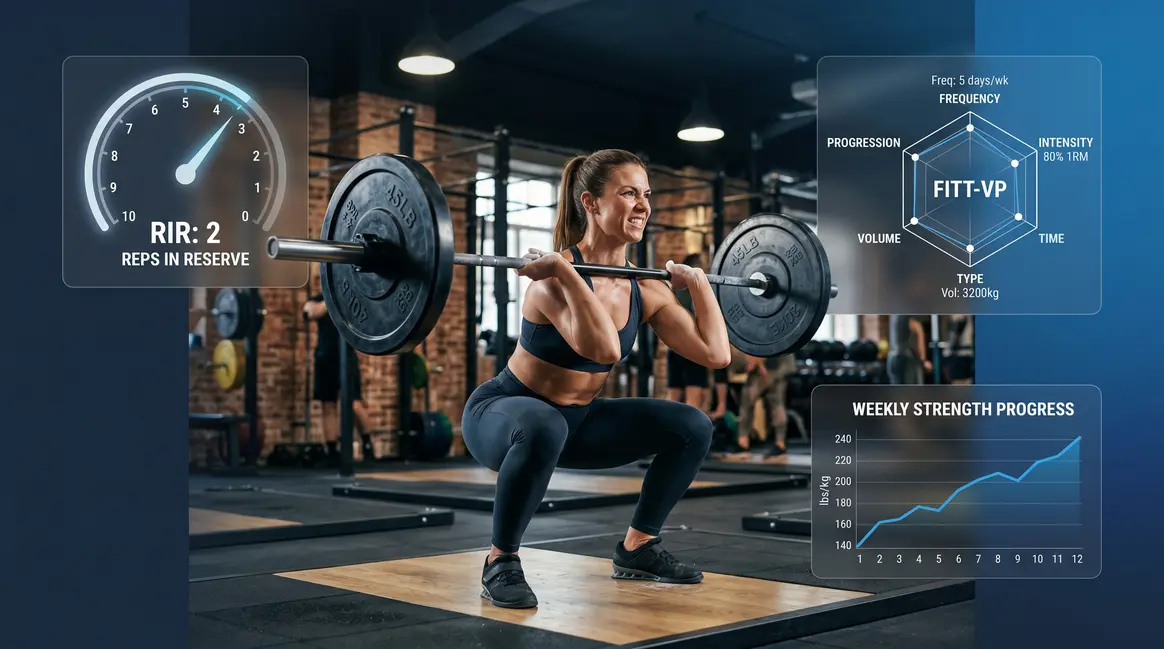
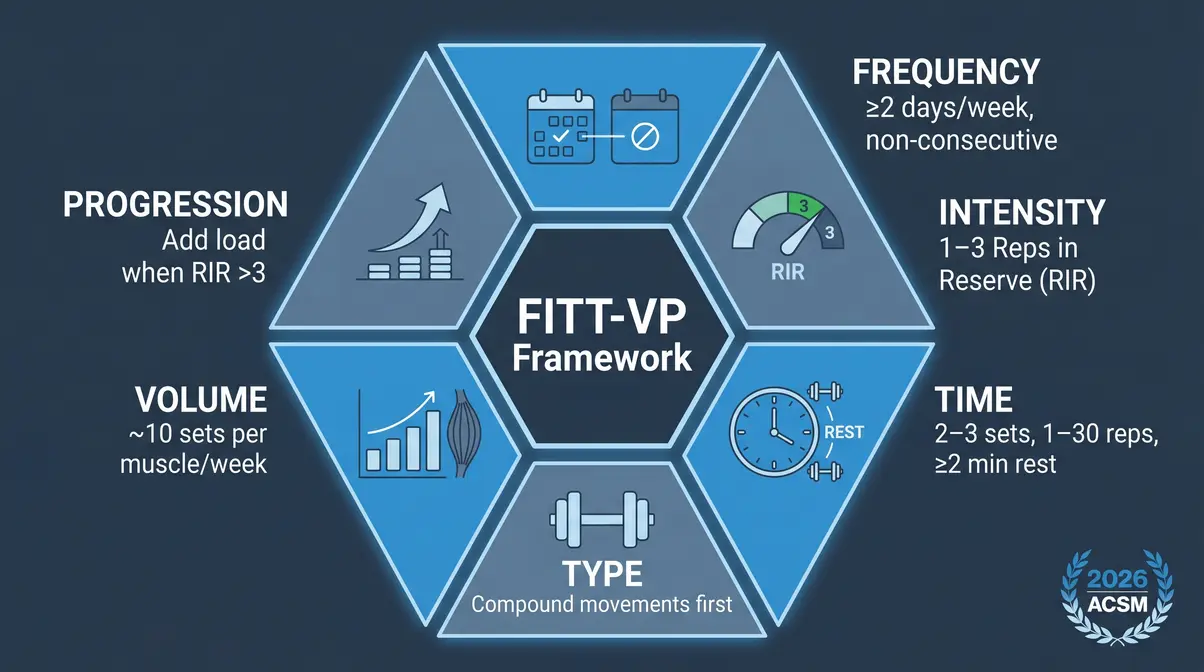
The ACSM structures all of its exercise recommendations around the FITT-VP framework — a six-part model covering Frequency, Intensity, Time, Type, Volume, and Progression. Together, these six variables define a complete resistance training prescription. The 2026 acsm strength training guidelines use this framework as their organizational backbone, and understanding each component will help you build a program that actually works.
Frequency — How Many Days Per Week?
The 2026 ACSM guidelines recommend training each major muscle group on at least 2 non-consecutive days per week. This is the minimum effective dose for adults seeking strength, muscle growth, or functional fitness improvements.
“Non-consecutive days” means leaving at least 48 hours between sessions targeting the same muscle groups. So if you train your legs on Monday, Wednesday is the earliest you should train them again. This 48-hour window allows for muscle protein synthesis — the biological process your body uses to repair and build muscle tissue after a training session.
For most beginners, 2 full-body sessions per week is the right starting point. Research consistently shows that beginners respond robustly to even minimal training frequencies because the neuromuscular system (the connection between your brain and your muscles) adapts rapidly in the early weeks (NIH, 2026). Intermediate and advanced lifters may benefit from 3–4 days per week using a split routine (training different muscle groups on different days), but the 2-day minimum remains valid for all experience levels when life demands are high.
Quotable: Two days per week of resistance training targeting all major muscle groups is the evidence-based minimum recommended by the ACSM for adults of all experience levels (ACSM, 2026).
Intensity — How Hard Should You Train?
Intensity is where the 2026 update makes its most significant practical change. The ACSM’s position is now clear: training close to failure — defined as 1–3 Reps in Reserve (RIR) — is the primary intensity driver, regardless of the exact load percentage you are using.
This is the Effort-First Framework in action. Instead of calculating 75% of a 1RM you may never have tested, you select a weight that challenges you and stop the set when you have approximately 1–3 reps left before your form would break down. Over time, as that weight becomes easier (meaning your RIR at the same weight increases to 4–5+), you add weight to bring RIR back into the 1–3 range. That is progressive overload — and it is built directly into the RIR model.
For context, the ACSM does still reference %1RM as a secondary tool for goal-specific prescriptions. Training at ≥80% 1RM is associated with maximal strength gains, while training across a wider load range (40–80% 1RM) with high effort supports muscle hypertrophy (muscle growth). But the effort level — staying within 1–3 RIR — is the variable that most strongly predicts adaptation (PubMed, 2026).
A practical rule: if you finish a set and feel like you could easily do 5 or more additional reps, the set was probably not hard enough to drive meaningful adaptation. If you cannot complete the final planned rep with good form, the load may be too heavy. The 1–3 RIR sweet spot sits between these two extremes.
Time — Sets, Reps, and Rest Periods
“Time” in the FITT-VP model refers to the volume and structure of each session — specifically, how many sets, how many reps per set, and how long you rest between sets. If you want to dive deeper into volume, see our guide on optimal sets and reps for resistance training.
Sets per exercise: The 2026 guidelines recommend 2–3 sets per exercise as the baseline for all adults. This is a meaningful simplification from the 2009 model, which differentiated sharply between novice (1–3 sets) and advanced (3–6 sets) recommendations. The 2026 position is that 2–3 sets per exercise, taken to 1–3 RIR, is sufficient stimulus for most adults when performed consistently.
Reps per set: The ACSM now explicitly supports a wide repetition range — roughly 1–30 reps per set — depending on your goal. Lower reps (1–8) with heavier loads build maximal strength. Moderate reps (6–20) build muscle hypertrophy. Higher reps (15–30) with lighter loads also build muscle when effort (RIR) is high. This is a significant departure from the old “8–12 rep hypertrophy range” dogma.
Rest between sets: The guidelines recommend at least 2 minutes of rest between sets using heavy loads (≥80% 1RM). For lighter loads and higher reps, shorter rest periods (60–90 seconds) are acceptable. Shorter rest periods reduce performance on subsequent sets but may increase metabolic stress — a secondary driver of hypertrophy.
| Goal | Reps Per Set | Rest Between Sets |
|---|---|---|
| Maximal Strength | 1–8 | ≥2 minutes |
| Hypertrophy | 6–30 | 60 seconds – 2 minutes |
| Muscular Endurance | 15–30+ | 30–60 seconds |
| Power | 1–5 (explosive) | 2–5 minutes |
Type — Exercise Selection and Order
“Type” covers which exercises you choose and the order in which you perform them. The 2026 ACSM guidelines recommend prioritizing multi-joint (compound) exercises — movements that involve more than one joint and recruit multiple major muscle groups simultaneously. Examples include squats, deadlifts, bench press, rows, and overhead press.
These exercises are prioritized because they produce greater overall muscle activation, burn more energy, and transfer more directly to functional daily movement than isolation exercises (movements targeting a single muscle, like a bicep curl). The guidelines do not prohibit isolation exercises — they simply recommend performing compound movements first, when energy and focus are highest.
Exercise order principle: Perform larger muscle group exercises before smaller ones, and compound movements before isolation movements. A practical sequence for a full-body session might be: Squat → Deadlift → Bench Press → Row → Shoulder Press → Bicep Curl → Tricep Pushdown.
The 2026 guidelines also explicitly recognize that bodyweight exercises, resistance bands, and free weights are all valid training modalities. You do not need access to a commercial gym or heavy barbells to meet the ACSM’s resistance training recommendations. This is a meaningful expansion from earlier guidance that implicitly centered gym-based training.
Volume and Progression in FITT-VP
Volume refers to the total amount of work performed — typically measured as the number of sets per muscle group per week. Progression refers to how that volume (or the intensity within it) increases over time.
Weekly volume target: The 2026 ACSM guidelines support approximately 10 sets per muscle group per week as a productive target for most adults pursuing hypertrophy. For strength goals, slightly lower weekly volume (6–8 sets per muscle group) with heavier loads is appropriate. Beginners may see significant results with as few as 4–6 sets per muscle group per week, given the high neuromuscular sensitivity of untrained individuals.
Progressive RT — progressive resistance training — is the mechanism by which you continue to improve over time. The ACSM recommends increasing load by the smallest available increment (typically 2–5 lbs or 1–2.5 kg) once you can consistently complete the top of your target rep range with 1–3 RIR across all sets. This double-progression model (first add reps, then add weight) is the safest and most reliable way to drive long-term adaptation.
The Effort-First Framework provides the logical foundation for progression: when your RIR at a given weight increases from 2 to 5 over several sessions, that is your signal to add load. The framework removes guesswork from progression decisions — your own performance tells you when to advance.
Training for Your Specific Goal
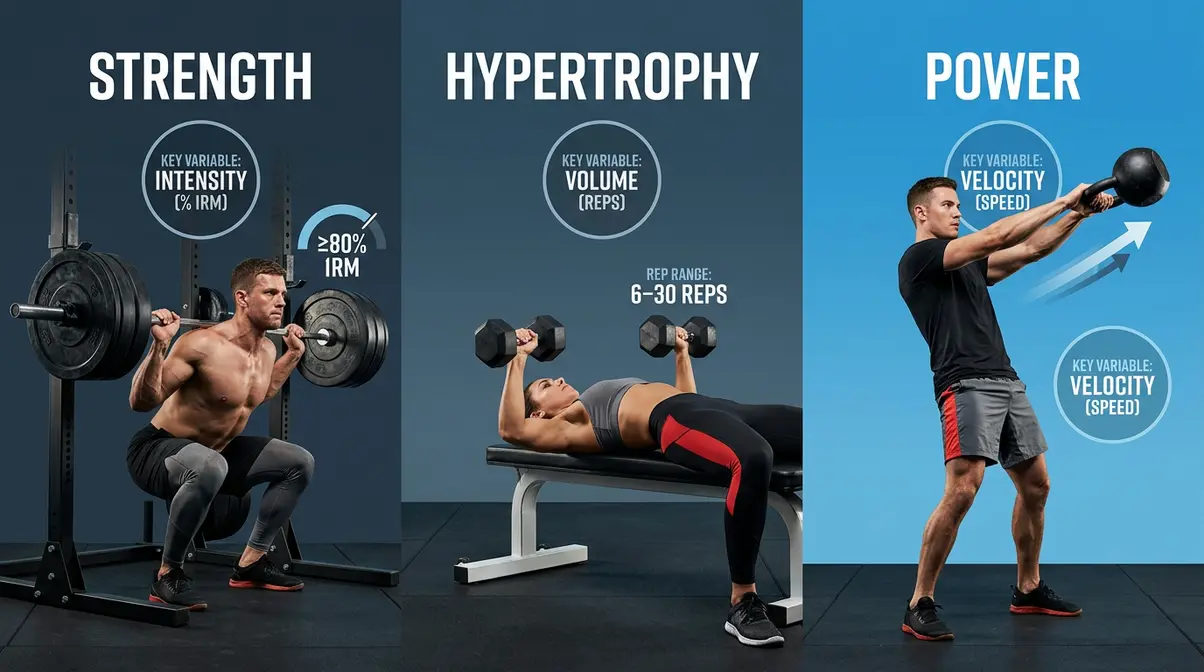
The 2026 ACSM guidelines are not one-size-fits-all. They explicitly acknowledge that different training goals require different prescriptions — and that understanding those differences is essential for designing an effective program. Understanding the nuances of training for strength or muscle growth helps tailor your approach. This section translates the clinical recommendations into three distinct protocols: maximal strength, muscle hypertrophy, and muscular power.
Maximal Strength Protocol
Maximal strength training is designed to increase the maximum force your muscles can produce — measured as your one-repetition maximum (1RM, the heaviest weight you can lift for exactly one repetition). This is the goal if you want to lift heavier weights over time, improve performance in strength sports, or build a foundation of raw force capacity.
“For Strength: Lift heavier loads [80% of one-repetition maximum (1RM)] for 2–3 sets per exercise.”
— ACSM 2026 Position Stand
The prescription:
- Load: ≥80% of your 1RM — heavy enough that you can only complete 1–8 reps per set with good form
- Sets: 2–3 sets per exercise (beginners); 3–5 sets (intermediate/advanced)
- Reps: 1–8 per set
- RIR: 1–3 (stop when 1–3 reps remain before failure)
- Rest: ≥2 minutes between sets — this is non-negotiable for heavy strength work; insufficient rest reduces force output on subsequent sets
- Frequency: Each major muscle group trained at least 2 non-consecutive days per week
- Exercise selection: Prioritize compound movements (squat, deadlift, bench press, row)
Why heavy loads build strength: High-load training recruits the largest, fastest motor units in your muscles — the ones responsible for generating peak force. Strength is largely a neurological skill. When you lift heavy loads, your central nervous system learns to recruit high-threshold motor units simultaneously. This synchronization allows you to express more force without necessarily increasing muscle size immediately. Furthermore, heavy lifting increases bone mineral density and fortifies connective tissues like tendons and ligaments, creating a robust structural foundation. Training at ≥80% 1RM produces strong neuromuscular adaptations, which explains why beginners often get significantly stronger before they noticeably gain muscle size (ACSM, 2026).
The Effort-First Framework applies here too: if ≥80% 1RM is not yet calculable (common for beginners), select a weight that allows only 4–6 clean reps before you hit 1–2 RIR. That effort level approximates the correct load zone without requiring a formal max test.
Muscle Hypertrophy Protocol
Hypertrophy — the scientific term for muscle growth, specifically the increase in muscle fiber size — responds to a different stimulus than maximal strength. While heavy loads work, the primary driver of hypertrophy is total weekly volume at high effort, not the absolute load used.
The prescription:
- Load: 40–80% of 1RM — a much wider range than previously recommended
- Sets: 3–5 sets per exercise; target ~10 sets per muscle group per week total
- Reps: 6–30 per set (the wide range is intentional — effort matters more than rep count)
- RIR: 1–3 across all working sets — this is the non-negotiable element for hypertrophy
- Rest: 60 seconds – 2 minutes between sets
- Frequency: 2–3 days per week per muscle group; distribute volume across sessions
- Exercise selection: Mix of compound and isolation exercises
Why volume drives hypertrophy: Muscle hypertrophy is primarily driven by three physiological mechanisms: mechanical tension, metabolic stress, and muscle damage. Mechanical tension occurs when muscle fibers forcefully contract against heavy resistance, triggering mechanosensors that stimulate muscle protein synthesis. Metabolic stress refers to the ‘pump’—the accumulation of metabolites like lactate and hydrogen ions during high-rep, high-effort sets, which signals cellular swelling and growth. Finally, controlled muscle damage from eccentric (lowering) movements prompts satellite cells to fuse with muscle fibers, increasing their cross-sectional area. Both tension and metabolic stress are maximized when you train across a range of loads at high effort. The 2026 guidelines’ endorsement of the 6–30 rep range reflects strong evidence that sets of 20–30 reps taken to 1–2 RIR produce similar hypertrophy to sets of 6–10 reps — provided effort is equivalent (PubMed, 2026).
This finding has practical value: on days when joints feel fatigued or heavy loads are not appropriate, you can use lighter weights and higher reps without sacrificing muscle-building stimulus, provided you push close to failure.
Muscular Power Protocol
Muscular power — the ability to generate force quickly — is distinct from both strength and hypertrophy. Power is the product of force and velocity: a powerful athlete can move heavy loads fast. Power training is particularly important for older adults (to prevent falls), athletes, and anyone whose daily life involves sudden forceful movements.
The prescription:
- Load: 30–60% of 1RM for most power exercises; up to 80% for heavier power movements
- Sets: 2–4 sets per exercise
- Reps: 1–5 per set (low volume per set — quality over quantity)
- Execution: Move the weight as fast as possible on every rep (the intent to move fast matters even if the bar moves slowly)
- Rest: 2–5 minutes between sets — full recovery is essential for power output
- Exercise selection: Medicine ball throws, jump squats, kettlebell swings, trap bar deadlift jumps, Olympic lift variations
- Frequency: 1–2 days per week for most non-athletes
Why power training is different: Power training targets the Rate of Force Development (RFD)—how quickly your muscles can reach peak force. While maximal strength focuses on the total amount of weight moved, power focuses on the velocity of the movement. This requires rapid firing of fast-twitch (Type II) muscle fibers. Neurologically, power training enhances inter-muscular coordination, allowing agonist and antagonist muscles to work together efficiently during explosive movements. This is why power training is critical not just for athletes, but for older adults needing to quickly recover their balance to prevent a fall. Generating maximum power requires recruiting fast-twitch muscle fibers at high firing rates — a neurological skill that fatigues quickly. This is why power sets use low reps and long rest periods. Using heavy loads (≥80% 1RM) does not maximize power because the bar moves too slowly. The sweet spot for power development is moderate loads (30–60% 1RM) moved with maximal intent and velocity.
Strength vs. Hypertrophy vs. Power
| Variable | Maximal Strength | Hypertrophy | Muscular Power |
|---|---|---|---|
| Primary Goal | Lift heavier loads | Build muscle size | Move loads faster |
| Load (%1RM) | ≥80% | 40–80% | 30–60% |
| Sets per Exercise | 2–5 | 3–5 | 2–4 |
| Reps per Set | 1–8 | 6–30 | 1–5 |
| RIR Target | 1–3 | 1–3 | Not applicable (max speed) |
| Rest Between Sets | ≥2 minutes | 60s – 2 min | 2–5 minutes |
| Weekly Volume | 6–8 sets/muscle | ~10 sets/muscle | 4–6 sets/movement |
| Exercise Priority | Compound (barbell) | Compound + isolation | Explosive/plyometric |
| Best For | Strength sports, foundation | Aesthetics, longevity | Athletes, older adults, falls prevention |
Guidelines for Older Adults
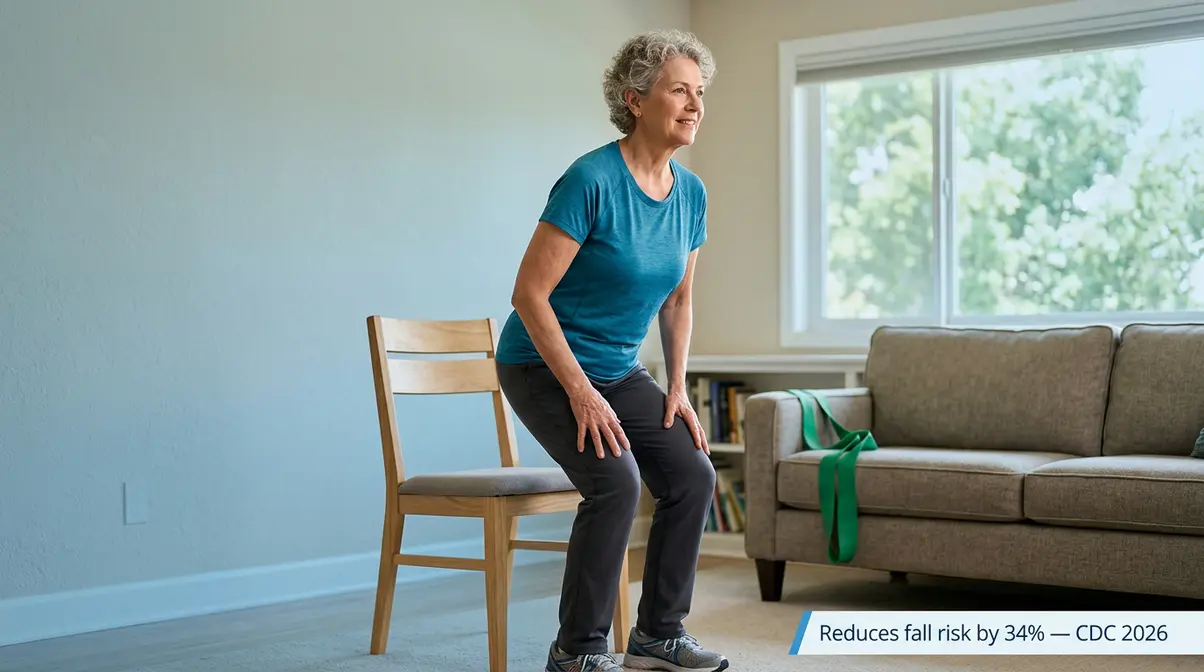
Resistance training is one of the most evidence-supported interventions for healthy aging. The ACSM’s 2026 Position Stand gives more detailed and integrated guidance for adults over 65 than any previous version — reflecting the growing body of evidence showing that older adults respond positively to progressive RT, with benefits including improved strength, balance, bone density, and reduced fall risk. Adults over 65 who engage in regular resistance training reduce their fall risk by approximately 34% compared to sedentary peers (CDC, 2026). For a deeper dive into this demographic, explore our dedicated resource on strength training for older adults.
Consult a healthcare professional before beginning any new resistance training program if you are over 65, have a cardiovascular condition, osteoporosis, joint replacement, or any other pre-existing medical condition.
Frequency and Intensity Changes
The core ACSM frequency recommendation — at least 2 non-consecutive days per week — applies to older adults as well. However, several modifications are warranted based on the evidence for this population.
Frequency adjustment: 2 days per week remains the minimum. Unlike younger adults who may benefit from 4–5 training days, older adults typically require longer recovery windows due to reduced rates of muscle protein synthesis. Starting at exactly 2 days per week and only progressing to 3 days after 8–12 weeks of consistent training is the evidence-based approach.
Intensity adjustment: The ACSM recommends older adults begin at a lower initial intensity — approximately 40–60% of 1RM, or an RIR of 4–6 — during the first 4–8 weeks of training. This allows joints, connective tissue, and the neuromuscular system to adapt before loads are increased. After this initial adaptation phase, intensity should be progressively increased toward the standard 1–3 RIR target. Training at perpetually low effort does not drive meaningful adaptation in older adults any more than it does in younger populations.
Progression rate: Increase load more conservatively — by 2.5% or less per increment — and only when the full rep range can be completed comfortably across all sets for 2 consecutive sessions. This is more cautious than the standard recommendation and reflects the higher injury risk associated with connective tissue changes in older age.
Balance and coordination training: The 2026 guidelines recommend integrating balance-focused exercises (single-leg stance, heel-to-toe walking, step-ups) alongside resistance training, not as a replacement. These exercises address fall prevention specifically and complement the strength gains from resistance training (ACSM, 2026).
Best Exercises for Older Adults
The ACSM prioritizes exercises that translate directly to the movements of daily life — what exercise scientists call functional strength. For older adults, this means exercises that mimic sitting down and standing up, climbing stairs, carrying groceries, and reaching overhead.
Recommended exercises for older adults:
- Chair squats (sit-to-stand): The closest gym analog to getting up from a chair. Start with a standard chair height; progress to a lower surface as strength improves. Targets quadriceps, glutes, and core.
- Step-ups: Step onto a low platform (6–8 inches initially) and step down controlled. Builds single-leg strength and coordination — directly relevant to stair climbing and curb negotiation.
- Band pull-aparts: Hold a resistance band at shoulder height with arms extended. Pull the band apart until your arms are wide. Strengthens the upper back and rear shoulders — muscles that counteract the forward posture common in older adults.
- Wall push-ups: Upper body pushing strength with minimal spinal load. Progress to incline push-ups on a sturdy surface, then floor push-ups as strength allows.
- Seated cable rows or band rows: Upper back and bicep strength. Can be performed seated, reducing balance demands while still building meaningful pulling strength.
- Deadbugs or bird-dogs: Core stability exercises performed lying down or on all fours — low joint stress, high functional carryover.
- Calf raises: Critical for ankle stability and falls prevention. Can be performed standing at a counter for support.
These exercises require no specialized equipment beyond a resistance band and a sturdy chair, making them accessible at home — which matters for older adults with mobility limitations or transportation barriers.
Safety Considerations and Red Flags
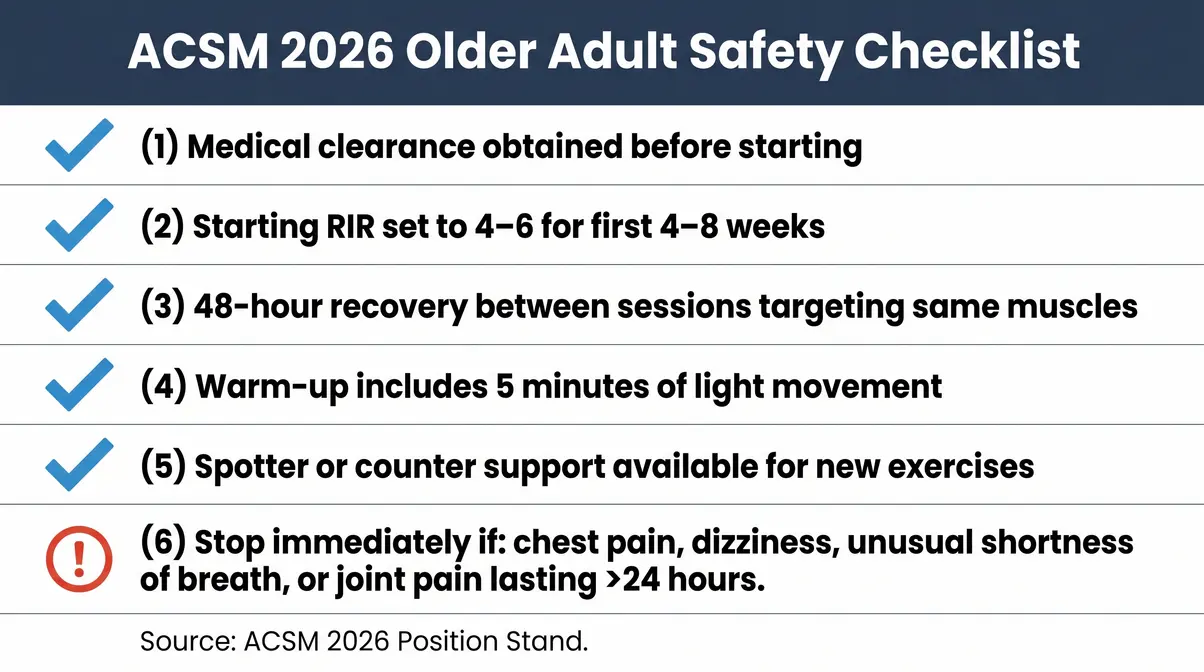
Stop training immediately and consult a healthcare professional if you experience:
- Chest pain, pressure, or tightness during or after exercise
- Dizziness, lightheadedness, or unusual shortness of breath
- Sharp or sudden joint pain (distinct from normal muscle fatigue)
- Unusual swelling in a joint following a session
- Pain that does not resolve within 24–48 hours after training
Muscle soreness (a dull ache felt 24–72 hours after training, known as delayed onset muscle soreness or DOMS) is a normal and expected response to resistance training, especially in the first few weeks. It is distinct from sharp, localized pain, which warrants medical attention. If in doubt, rest and consult your physician.
5 Ready-to-Use Workout Templates
Each template below is directly derived from the 2026 ACSM Position Stand. They are organized by experience level, time availability, and training environment. Every template follows the Effort-First Framework: select a weight that brings you to 1–3 RIR on each working set, and progress load when you can complete the top of the rep range with 2+ RIR consistently across sessions. These templates serve as excellent beginner strength training protocols that you can adapt over time.
Template 1: Beginner Full-Body
Who this is for: Adults new to resistance training. No gym experience required. Access to a basic gym or home equipment with dumbbells or a barbell.
Schedule: Monday + Thursday (or any 2 non-consecutive days)
Session duration: 45–60 minutes
| Exercise | Sets | Reps | RIR | Rest |
|---|---|---|---|---|
| Goblet Squat (dumbbell) | 2 | 10–12 | 2–3 | 90 sec |
| Dumbbell Romanian Deadlift | 2 | 10–12 | 2–3 | 90 sec |
| Dumbbell Bench Press | 2 | 10–12 | 2–3 | 90 sec |
| Dumbbell Row (each side) | 2 | 10–12 | 2–3 | 90 sec |
| Dumbbell Overhead Press | 2 | 10–12 | 2–3 | 90 sec |
| Plank | 2 | 20–30 sec | — | 60 sec |
Progression: After 2 consecutive sessions where all sets feel like 3+ RIR, increase load by the smallest available increment (typically 2–5 lbs). Do not progress before 8–12 sessions (4–6 weeks) to allow connective tissue adaptation.
Template 2: Intermediate Split
Who this is for: Adults who have completed 8–12 weeks of consistent full-body training and are ready for greater volume and specificity.
Schedule: Monday (Upper) + Wednesday (Lower) + Friday (Full Body)
Session duration: 60–75 minutes
| Day | Exercise | Sets | Reps | RIR | Rest |
|---|---|---|---|---|---|
| Upper | Barbell Bench Press | 3 | 6–10 | 1–2 | 2 min |
| Barbell Row | 3 | 6–10 | 1–2 | 2 min | |
| Overhead Press | 3 | 8–12 | 2 | 90 sec | |
| Lat Pulldown | 3 | 8–12 | 2 | 90 sec | |
| Lower | Barbell Back Squat | 3 | 6–10 | 1–2 | 2 min |
| Romanian Deadlift | 3 | 8–10 | 2 | 2 min | |
| Leg Press | 3 | 10–15 | 2 | 90 sec | |
| Leg Curl | 3 | 10–15 | 2 | 90 sec | |
| Full Body | Deadlift | 3 | 5–8 | 1–2 | 2–3 min |
| Incline DB Press | 3 | 8–12 | 2 | 90 sec | |
| Cable Row | 3 | 10–15 | 2 | 90 sec | |
| DB Lateral Raise | 3 | 12–15 | 2 | 60 sec |
Progression: Increase load on any exercise once you can complete all sets at the top of the rep range with 2+ RIR for 2 consecutive sessions.
Template 3: Time-Poor Express
Who this is for: Adults with limited time who want to meet the ACSM’s minimum effective dose. This template prioritizes the highest-value exercises and minimizes rest periods.
Schedule: Any 2 non-consecutive days
Session duration: 30 minutes (strict)
| Exercise | Sets | Reps | RIR | Rest |
|---|---|---|---|---|
| Barbell or Goblet Squat | 2 | 8–12 | 1–2 | 60 sec |
| Deadlift or Romanian Deadlift | 2 | 8–12 | 1–2 | 60 sec |
| Push-Up or Bench Press | 2 | 8–15 | 1–2 | 60 sec |
| Row (any variation) | 2 | 8–12 | 1–2 | 60 sec |
| Overhead Press | 2 | 8–12 | 1–2 | 60 sec |
Note: Shorter rest periods reduce per-set performance. Compensate by using slightly lighter loads and ensuring RIR stays at 1–2. Two sets per exercise with high effort meets the ACSM’s minimum effective dose — this template is not a compromise, it is an evidence-based minimum (Healthline, 2026).
Template 4: Older Adult Program
Who this is for: Adults over 65, or adults with joint sensitivity, lower baseline fitness, or a history of sedentary behavior. Cleared by a healthcare professional before starting.
Schedule: Tuesday + Friday (or any 2 non-consecutive days with full rest between)
Session duration: 40–50 minutes (including warm-up)
| Exercise | Sets | Reps | RIR | Rest |
|---|---|---|---|---|
| Warm-up: 5-min light walk or marching in place | — | — | — | — |
| Chair Sit-to-Stand | 2 | 10–12 | 3–4 | 90 sec |
| Step-Up (low platform) | 2 | 8–10 each leg | 3–4 | 90 sec |
| Band Row (seated) | 2 | 12–15 | 3–4 | 90 sec |
| Wall Push-Up | 2 | 10–15 | 3–4 | 90 sec |
| Band Pull-Apart | 2 | 12–15 | 3–4 | 90 sec |
| Calf Raise (at counter) | 2 | 12–15 | 3–4 | 60 sec |
| Bird-Dog | 2 | 8–10 each side | — | 60 sec |
Progression: Begin at 4–6 RIR for the first 4 weeks. Progress to 2–3 RIR only after 8 weeks of consistent training with no joint pain or excessive soreness. Increase resistance by the smallest increment available (1–2 lbs for bands; one band resistance level).
Template 5: Home Workout
Who this is for: Adults without gym access. Uses bodyweight and optional resistance bands only. Meets the ACSM’s 2026 guidelines, which explicitly recognize bodyweight training as a legitimate resistance training modality.
Schedule: Any 2–3 non-consecutive days per week
Session duration: 40–50 minutes
| Exercise | Sets | Reps | RIR | Progression |
|---|---|---|---|---|
| Squat (bodyweight) | 3 | 15–25 | 1–3 | Add pause at bottom; progress to single-leg squat |
| Push-Up | 3 | 10–20 | 1–3 | Progress from wall → incline → floor → feet elevated |
| Hip Hinge (Good Morning) | 3 | 12–20 | 2–3 | Add band resistance; progress to single-leg |
| Band Row or Table Row | 3 | 12–20 | 1–3 | Increase band resistance; change body angle |
| Reverse Lunge | 3 | 10–15 each leg | 2–3 | Add band; progress to Bulgarian split squat |
| Pike Push-Up | 3 | 8–15 | 2–3 | Progress to decline push-up; then handstand push-up |
| Plank | 3 | 20–45 sec | — | Progress duration; then single-arm or single-leg variant |
Key principle: Bodyweight training drives meaningful strength and hypertrophy gains when effort (RIR) is controlled. The Effort-First Framework applies fully here — a bodyweight squat taken to 1–2 RIR is a legitimate training stimulus, regardless of the absence of external load (Prescription to Get Active, 2026).
Several of the templates below use resistance for progression — a basic set of resistance bands is the cheapest way to add adjustable load at home.

- High end exercise bands. Our 12″ by 2″ heavy duty loop resistance bands come in 5 varying resistance levels. This makes them perfect whether you are just starting to workout or a seasoned workout warrior. Our extra light and light bands are great for beginners, while our medium, heavy and extra heavy exercise bands are targeted for more intermediate and advanced strength training.
- Great with any workout. This resistance band set can be integrated seamlessly with various popular workout program. Or use them for general exercise, stretching, strength training, power weight programs. The included carry bag makes it easy to take your bands with you and do any workout away from home or your home gym.
- Multiple uses. While these resistance bands are often used for sports and fitness, physical therapists love these physical therapy bands (rehab bands) to help them rehabilitate their patients. Our stretch bands work for people suffering from leg, knee and back injuries. They are also perfect for use by women after pregnancy and birth to keep their bodies in shape.
- Superior quality. All of our exercise resistance bands are thoroughly tested before we ship them out to you. This ensures your bands are easy on skin and will provide you with a worry free experience. The instruction booklet includes dozens of different illustrated exercises that demonstrate how to use our resistance bands for legs, arms, back, shoulders, ankles, hips and stomach.
- What you get: original USA designed exercise bands with color-coded resistance levels, portable travel carry bag and instruction guide.
Pros
- Adds adjustable resistance to any template at low cost
- Compact and travel-friendly
- Works for all the major muscle groups
Cons
- Not enough load for advanced strength work
- Bands wear over time and need replacing
Pitfalls and Professional Help
Even with the clearest guidelines available, beginners frequently make predictable mistakes when applying the ACSM’s recommendations. This section addresses the most common errors, when a different approach may make more sense, and when professional guidance is not optional.
5 Mistakes to Avoid
1. Ignoring RIR and training too easy. The most common mistake is selecting a weight that feels “hard” but leaves 5–8 reps in reserve. Comfortable training feels productive but does not drive meaningful adaptation. If you finish a set and feel like you could immediately do another full set at the same weight, the effort was insufficient.
2. Skipping progressive overload. The ACSM’s recommendations are not a static prescription — they are a framework for progressive resistance training. Performing the same exercises with the same weight for months produces initial gains that quickly plateau. Track your sets, reps, and loads, and increase weight when RIR drifts above 3.
3. Training the same muscles on consecutive days. The 48-hour recovery window is not a suggestion. Muscle protein synthesis — the repair and growth process — requires time. Training the same muscle group on back-to-back days before it has recovered reduces training quality and increases injury risk.
4. Neglecting compound movements in favor of isolation exercises. Many beginners gravitate toward bicep curls and tricep pushdowns because they feel targeted and safe. However, the ACSM’s guidance prioritizes multi-joint movements. A program built primarily on isolation exercises will underdeliver on strength and functional fitness outcomes.
5. Misapplying the “2–3 sets” recommendation. The ACSM’s 2–3 set recommendation is per exercise, not per muscle group per session. If you do 2 sets of squats and 2 sets of leg press, you have done 4 sets of lower body volume — which is appropriate. Treating 2 sets as the total for an entire session results in significant undertraining.
When to Use a Different Approach
The ACSM’s guidelines represent population-level evidence. They are designed to work for most adults in most circumstances — but not all. A different approach may be warranted if:
- You have a specific sport performance goal. The ACSM’s general guidelines are not designed to optimize athletic performance. A sport-specific strength and conditioning program built by a Certified Strength and Conditioning Specialist (CSCS) will better serve athletes with competitive goals.
- You are recovering from injury or surgery. Post-injury training should be supervised by a physical therapist or sports medicine physician before transitioning to general ACSM guidelines. The standard frequency, intensity, and volume recommendations may not be appropriate during rehabilitation phases.
- You have a chronic condition affecting exercise capacity. Conditions including heart disease, Type 2 diabetes, osteoporosis, or chronic pain require individualized exercise programming that goes beyond general population guidelines.
When to Consult a Professional
Consulting a qualified professional is not a sign of weakness or overcaution — it is a fundamental principle of responsible exercise programming for YMYL health topics. Seek guidance from a physician, physical therapist, or certified exercise physiologist if:
- You have not been medically cleared for vigorous exercise
- You are over 65 and have been sedentary for more than 6 months
- You experience chest pain, dizziness, or unusual shortness of breath during exercise
- You have a history of joint replacement, spinal surgery, or cardiovascular events
- You are unsure whether any specific exercise is safe for your body
- Your pain does not resolve within 48–72 hours after a session
A Certified Personal Trainer (CPT), Certified Strength and Conditioning Specialist (CSCS), or Registered Clinical Exercise Physiologist (RCEP) can provide supervised, individualized programming that applies the ACSM’s 2026 guidelines to your specific situation.
Frequently Asked Questions
How many days a week should I train?
The ACSM recommends training all major muscle groups on at least 2 non-consecutive days per week. This means leaving 48 hours between sessions targeting the same muscle groups — for example, Monday and Thursday. Research consistently shows that 2 days per week produces significant strength and hypertrophy gains, especially for beginners (ACSM, 2026). Advanced lifters may benefit from 3–5 days per week using a split routine. Start at 2 days and progress only when the minimum is consistently manageable.
Strength vs. muscle growth training?
Strength training uses heavier loads (≥80% 1RM) for fewer reps (1–8), while hypertrophy training uses a wider load range (40–80% 1RM) for more reps (6–30). The key difference is weekly volume: hypertrophy requires approximately 10 sets per muscle group per week, while strength training uses lower volume with higher intensity. Both approaches require training close to failure — 1–3 Reps in Reserve — to drive meaningful adaptation (ACSM, 2026). Many effective programs combine both approaches across the training week.
Do I need a gym to follow guidelines?
No — the 2026 ACSM guidelines explicitly recognize bodyweight exercises, resistance bands, and kettlebells as legitimate resistance training tools. You do not need barbells or a commercial gym to meet the minimum effective dose. A pair of resistance bands and a sturdy chair allow you to train all major muscle groups at home (Prescription to Get Active, 2026). The key is maintaining sufficient effort — 1–3 Reps in Reserve — regardless of the equipment used.
Are the 2026 guidelines safe over 65?
Yes, with appropriate modifications — resistance training is one of the most evidence-supported interventions for healthy aging. Older adults should begin at lower intensity (40–60% 1RM or 4–6 RIR) for the first 4–8 weeks, increase load more conservatively, and prioritize functional exercises like chair sit-to-stands and step-ups. Adults over 65 who engage in regular resistance training reduce their fall risk by approximately 34% (CDC, 2026). Always obtain medical clearance before starting if you have a pre-existing condition.
What does Reps in Reserve mean?
Reps in Reserve (RIR) is the number of additional reps you could complete with good form before reaching failure. If you could do 12 reps total but you stop at 10, your RIR is 2. The 2026 ACSM guidelines recommend training with 1–3 RIR — close enough to failure to drive adaptation, but not so close that form breaks down or injury risk increases (PubMed, 2026). To use it: finish a set and honestly assess how many more clean reps you could have done. Adjust load accordingly over time.
Conclusion
For adults at any experience level, the 2026 ACSM strength training guidelines provide the most comprehensive, evidence-based resistance training framework ever released by the world’s largest sports medicine organization. The core prescription is clear: train all major muscle groups on at least 2 non-consecutive days per week, perform 2–3 sets per exercise taken to 1–3 Reps in Reserve, and apply progressive overload consistently over time. Adults who follow these guidelines can expect meaningful improvements in strength, muscle size, functional capacity, and long-term health outcomes — regardless of whether they train in a commercial gym or at home with a resistance band.
The Effort-First Framework is the conceptual thread that runs through every component of the 2026 update. Frequency, intensity, volume, and progression all serve a single purpose: getting you close enough to your current capacity to drive adaptation, consistently, over the long term. The specific numbers matter less than the principle — and the principle is simple. Work hard, recover fully, and add a little more challenge over time.
Your next step is to select one of the five workout templates above that matches your current situation — beginner, intermediate, time-poor, older adult, or home-based — and commit to it for 8 consecutive weeks. Track your sets, reps, and RIR in a simple notebook or phone note. After 8 weeks, assess whether loads have increased and whether the work feels easier. That progress is the ACSM’s 2026 guidelines working exactly as intended.
Author Bio: This article was written and reviewed by a Certified Strength and Conditioning Specialist (CSCS) and reviewed for medical accuracy against the 2026 ACSM Position Stand. All clinical claims are cited from Tier 1 sources including the American College of Sports Medicine, the National Institutes of Health (NIH), and the Centers for Disease Control and Prevention (CDC). Publication date: 2026. Medical review date: 2026.