You’ve been training consistently for weeks, maybe months. But every time you check the mirror or step on the scale, you’re still not sure if any of it is actually working. Sound familiar?
Here’s the uncomfortable truth: the mirror is the worst early-progress indicator you have. Muscle growth starts internally — neurologically, metabolically, and physiologically — long before it becomes visible. Relying on your reflection alone means you’ll quit right before your newbie gains actually show up.
This guide covers 12 science-backed signs your muscles are growing, organized into what we call the 4-Layer Progress Stack (Physical, Performance, Physiological, and Metabolic). You’ll also learn the 3 habits silently killing your gains and what to realistically expect in your first four weeks. If you are wondering how long does it take to build muscles, the answer lies in tracking the right internal and external metrics.
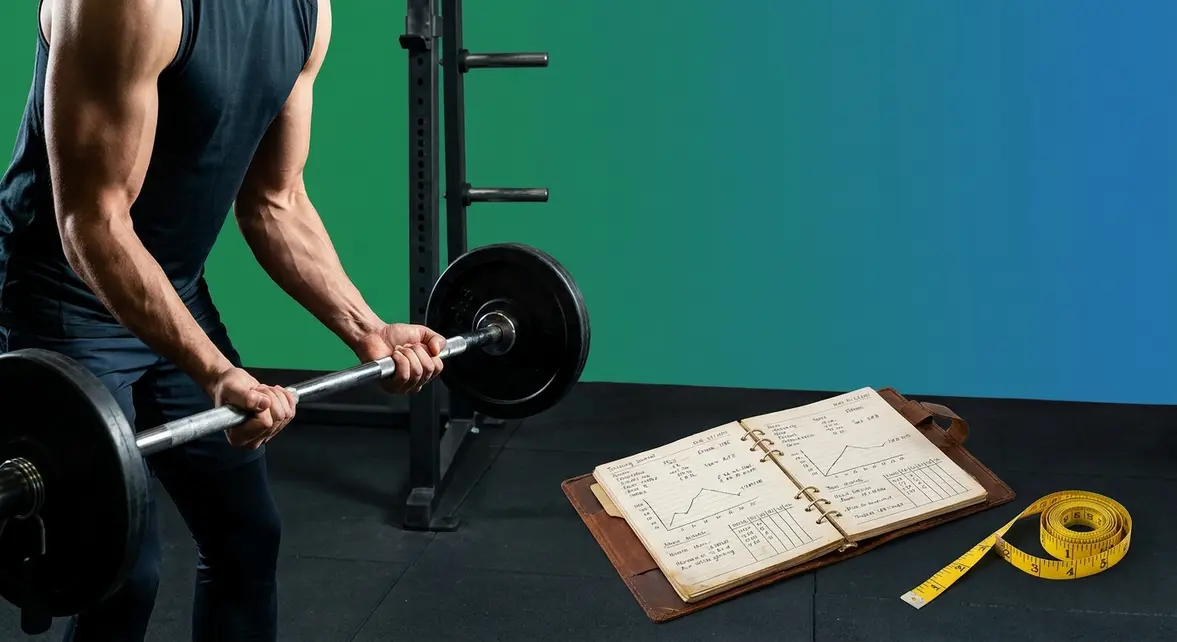
Before diving in, establish three quick baselines: your current max reps at a working weight on one compound lift, your arm/chest/thigh measurements with a tape measure, and a weekly photo in the same lighting. These benchmarks make the 12 signs below far easier to verify.
Estimated Time: 4-6 weeks to see initial signs
Tools Needed: Training log (app or notebook), tape measure, full-length mirror
The 12 signs your muscles are growing show up across four distinct layers — the 4-Layer Progress Stack (Physical, Performance, Physiological, Metabolic) — long before the mirror reveals anything obvious.
- Strength gains are the most reliable early indicator — lifting heavier = muscles growing
- Internal signs like a longer-lasting pump and improved neuromuscular efficiency appear in weeks 1–4
- Clothing fit changes before visible definition — sleeves and thighs get tighter first
- Hunger and sleep quality improve as your body ramps up muscle repair
- The 4-Layer Progress Stack gives you a complete self-assessment system — not just a mirror check
Physical Signs Your Body Is Changing
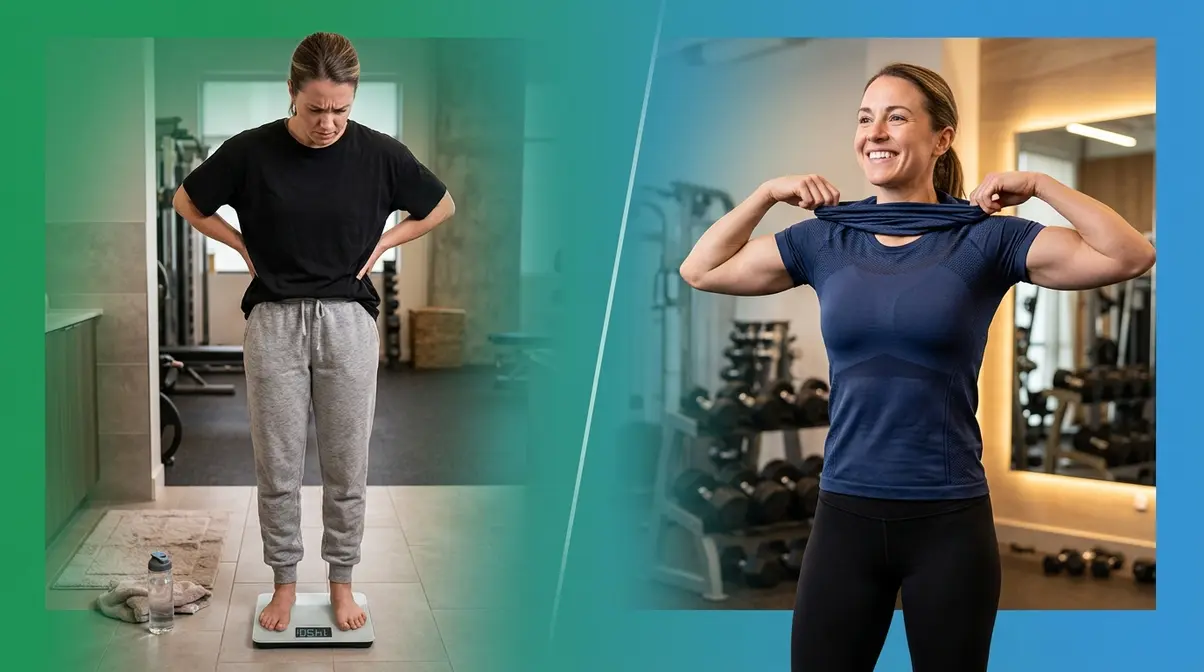
Physical changes are the last layer of the 4-Layer Progress Stack to show up — but they’re the most satisfying when they do. Hypertrophy (the process of muscle cells growing larger) works by increasing the cross-sectional area of muscle fibers. Muscles grow denser before they grow dramatically larger, and early fat loss can actually mask visible gains. That’s why so many intermediate trainees feel like nothing is happening when, biologically, everything is.
Your Sleeves and Thighs Are Fitting Tighter
This is one of the most practical and underrated signs you’re gaining muscle. When your training shirt starts pulling at the shoulders or your jeans feel snug through the thighs, that’s structural change — not bloating. A 2026 meta-analysis published in PMC confirmed that both men and women show statistically significant increases in muscle size after consistent resistance training, with relative percentage gains being similar across sexes. The location matters: upper-body trainees often notice sleeve tightness first, while those prioritizing squats and lunges feel it in their thighs. Track this with a tape measure monthly — even a half-inch gain in arm circumference is a meaningful physical signal.
You’re Looking More Defined — Even at the Same Scale Weight
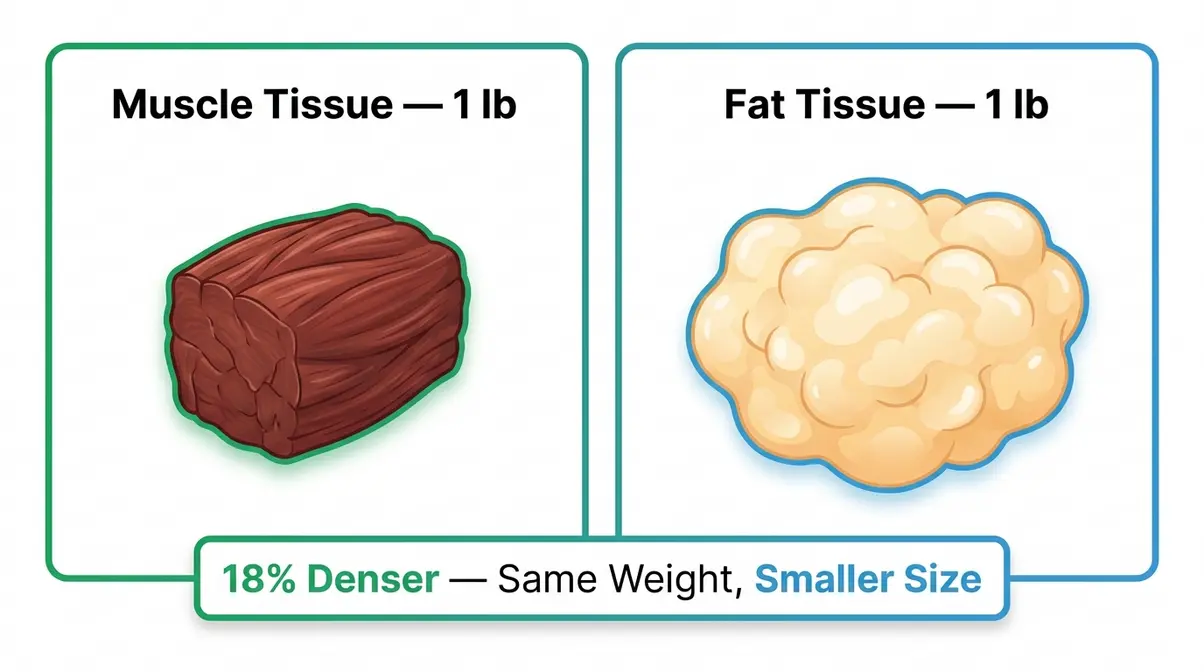
Increased definition without a significant weight change is a textbook sign of body recomposition — losing fat while building muscle simultaneously. This is especially common in intermediate trainees (3–18 months in) who still have body fat to lose. Muscle tissue is approximately 18% denser than fat tissue, meaning you can look leaner and more “swole” while weighing exactly the same. Research from the American College of Sports Medicine’s 2026 overview of reviews — covering more than 30,000 participants — confirms that resistance training consistently increases muscle size while reducing fat mass, even without dramatic weight changes. If you’re looking puffier or bigger in specific spots (shoulders, arms, glutes) while your waist stays the same or shrinks, that’s progress.
The Scale Is Creeping Up Slowly — and That’s Progress
A slow, gradual rise in scale weight — roughly 0.5–2 lbs per month — is a positive sign for muscle builders, not a red flag. Research on load-induced hypertrophy shows that realistic muscle gain for previously untrained individuals averages approximately 1–2 kg of fat-free mass over 8–12 weeks of consistent training (PMC, 2026). If you’re gaining weight faster than that, it’s likely fat. If you’re gaining slower, you may be under-eating. A steady crawl upward, combined with the clothing-fit and definition signs above, strongly suggests you’re progressing. The key distinction: muscle gain is slow and consistent; fat gain tends to spike.
Your Posture Has Improved Without Extra Effort
Stronger posterior chain muscles — the erectors, glutes, rhomboids, and rear deltoids — naturally pull your spine into better alignment. If you notice you’re sitting taller, your shoulders are pulling back on their own, or you’re no longer slouching at your desk by 3 PM, that’s your newly built muscle doing its job. This sign is easy to miss because it happens gradually. Ask someone who sees you regularly if you’re “standing differently” — you’ll often get a surprised “actually, yeah.” Better posture without deliberate effort is a reliable signal that your stabilizer muscles are getting stronger and thicker.
Performance Signs You’re Getting Stronger
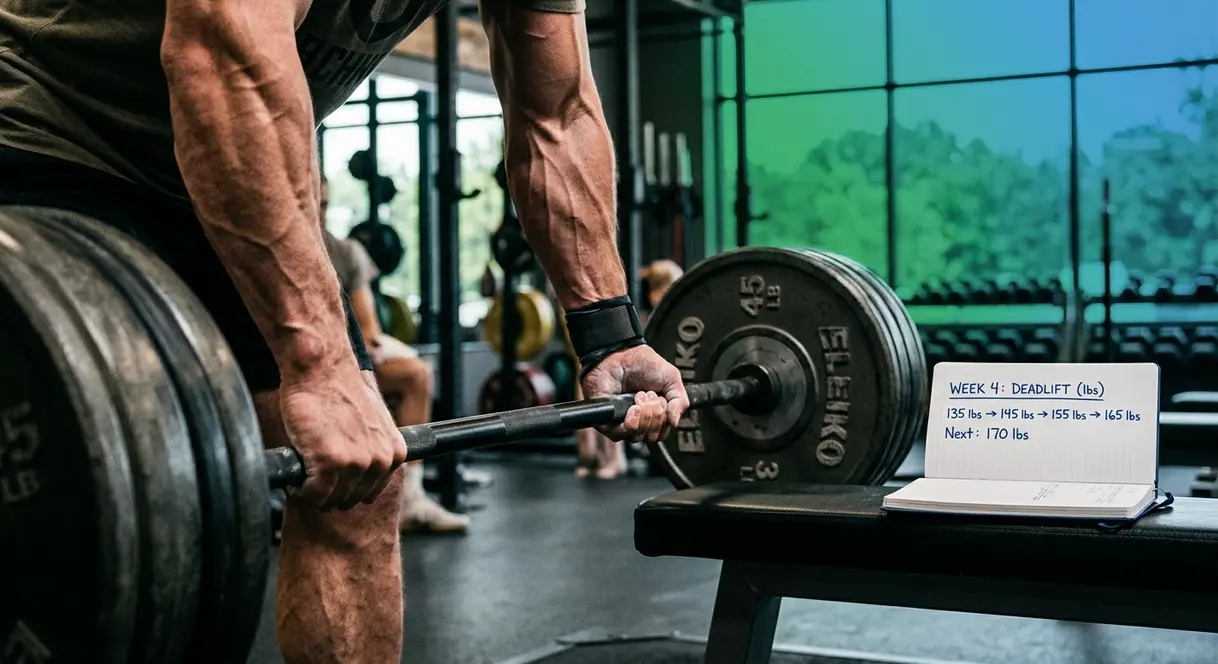
Performance is the most measurable layer of the 4-Layer Progress Stack. Unlike the mirror, numbers don’t lie. A 2026 study in Medicine & Science in Sports & Exercise found that muscle growth and strength gains are very strongly correlated within individuals — with muscle size contributing more than five times as much to strength increases as neuromuscular activation alone (PubMed, 2026). In other words: if you’re getting measurably stronger over weeks, you’re almost certainly building muscle.
You’re Lifting Heavier Than You Were 4 Weeks Ago
Applying progressive overload for muscle growth — consistently adding weight, reps, or difficulty over time — is both the primary driver of muscle growth and one of the clearest signs it’s happening. Ohio State Wexner Medical Center research confirms that using progressively heavier weights is the core mechanism for stimulating hypertrophy. If you benched 135 lbs for 8 reps four weeks ago and you’re now hitting 145 lbs for the same reps, your muscles have grown. Keep a simple training log — even a notes app on your phone. Lifting heavier than your past self is the most objective, unambiguous signal that you’re progressing. No guesswork required.
Workouts That Once Wrecked You Now Feel Manageable
Remember your first time doing Romanian deadlifts? You probably walked funny for three days. Now the same workout feels hard but manageable — and you recover faster. This shift reflects real neuromuscular adaptation and genuine hypertrophy. When muscles grow, they become more efficient at producing force and clearing metabolic waste. The ACSM’s 2026 position overview confirms that resistance training consistently improves muscular endurance alongside size and strength. If a workout that used to destroy you now just “challenges” you, that’s not you going easy — that’s your body becoming more capable. Time to add weight or volume.
You’re Recovering Faster Between Sessions
Delayed onset muscle soreness (DOMS) — that deep ache you feel 24–48 hours after a hard session — tends to decrease in intensity and duration as your muscles adapt. Early in training, DOMS can last 3–4 days. After consistent training, the same session may produce only mild soreness for 24 hours. Research in exercise physiology consistently links faster recovery to improved muscle repair capacity, better capillary density, and enhanced mitochondrial function — all byproducts of training adaptation. If you’re bouncing back between sessions faster than you were a month ago, your muscles are not just recovering — they’re adapting, which is the biological definition of progress.
“So if you wake up the day after exercising and you’re sore then you made progress. It will also tell you what muscles you’re working out and…” — Common gym-floor experience, echoed across training communities
Your Form Has Improved and Movements Feel More Controlled
Neuromuscular efficiency (your nervous system getting better at recruiting muscle fibers) is one of the most underappreciated signs of early gains. When your squat depth improves without cuing yourself, when your bench press bar path straightens out, or when a movement that felt jerky now feels smooth — that’s your motor system optimizing. A 2026 study published in Frontiers in Physiology found that high-load training produces greater neural adaptations that help explain disproportionate increases in muscle strength early in a program. Better form isn’t just aesthetics — it’s proof your muscles and nervous system are working together more effectively.
Internal Signs Only Your Body Can Feel
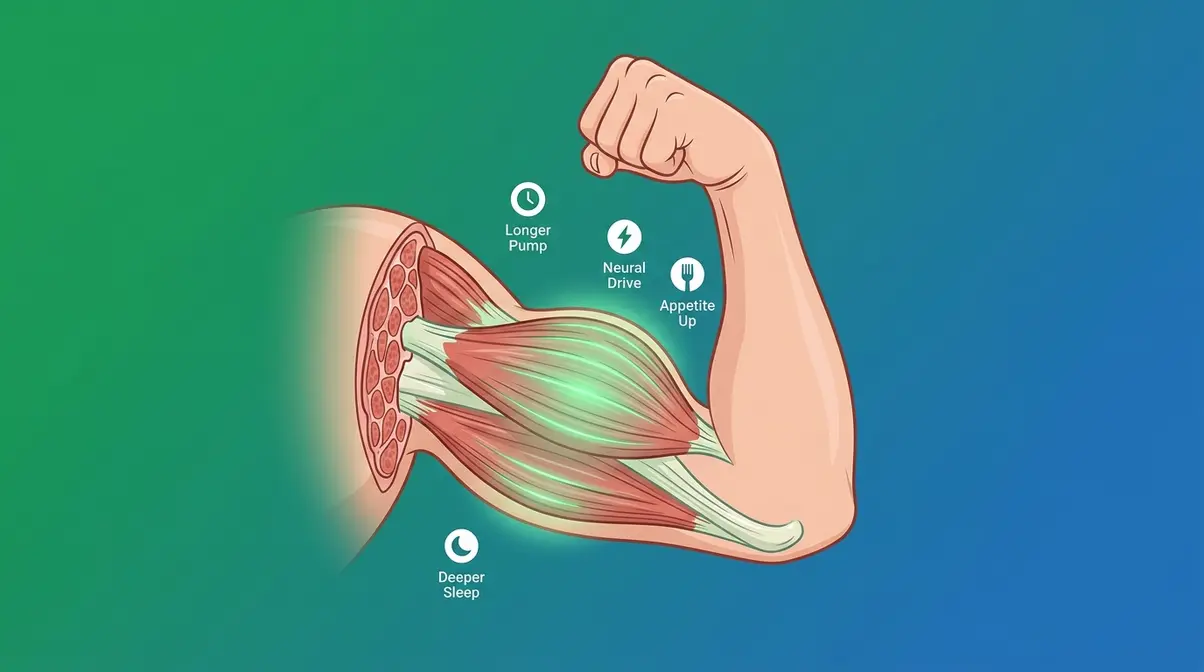
The physiological layer of the 4-Layer Progress Stack is the one most trainees overlook entirely — and it’s where the earliest signs live. These are feelings, not measurements. They show up in weeks 1–4, before the scale moves and before the mirror changes. Zero competitors explain this layer in detail. That’s the gap this section closes.
Your Post-Workout Pump Lasts Noticeably Longer
A “pump” — the temporary swelling caused by increased blood flow to working muscles — is normal after any workout. But as your muscles grow, you’ll notice the pump lasts significantly longer after sessions. Where it used to fade within 20–30 minutes, you may now feel it for 60–90 minutes or more. This happens because larger muscle fibers hold more glycogen (stored carbohydrate) and draw more blood during and after exercise. This extended pump isn’t vanity — it’s a physiological indicator that your muscles are denser and more metabolically active than they were before. Pumps last WAY longer as training adaptation progresses. That’s a real signal, not just a post-workout illusion.
Your Muscles Feel More ‘Switched On’ — Neuromuscular Efficiency
Early in training, many people feel like their muscles aren’t fully “firing” — they go through the motion but don’t feel the target muscle contracting strongly. As neuromuscular efficiency improves, that changes. You’ll start to feel your glutes during hip thrusts, your lats during rows, your chest during pressing movements. A 2026 study in PMC found that several weeks of strength training are sufficient to produce significant adaptations in neural drive to the muscles — meaning your nervous system learns to send stronger, more coordinated signals. This “switched on” feeling is a genuine physiological sign that muscle recruitment has improved, which directly precedes visible hypertrophy.
You’re Hungrier Than Usual, Especially for Protein
Unexplained increases in appetite — particularly cravings for protein-dense foods — are a metabolic sign that muscle repair is ramping up. Muscle protein synthesis (the process of building new muscle tissue) is energetically expensive. Your body responds by increasing hunger signals to ensure it has enough raw material. If you’re suddenly hungrier than usual after workouts, or finding yourself craving eggs, chicken, or Greek yogurt between meals, your body is communicating a genuine physiological demand. This isn’t weakness or lack of willpower — it’s your metabolism responding to the anabolic stimulus of resistance training. Feed it appropriately (more on this in H2 #4).
Your Sleep Quality Has Improved
Here’s a sign no competitor article mentions: consistent resistance training improves sleep quality. Research published in Sleep Medicine Reviews (ScienceDirect, 2026) shows that exercise positively influences circadian rhythm regulation, reducing the time it takes to fall asleep and increasing slow-wave (deep) sleep duration. Deep sleep is precisely when your body releases the most human growth hormone — a key driver of muscle repair and tissue growth. If you’re falling asleep faster, sleeping more deeply, or waking up feeling more rested than you did before you started training, that’s your body optimizing its recovery environment. Better sleep is both a sign of adaptation and a driver of further muscle growth.
What Your Nutrition Signals About Your Gains
Nutrition is the metabolic layer of the 4-Layer Progress Stack — the foundation everything else sits on. Your body’s hunger and protein signals are real-time feedback on whether your muscles are in repair mode. Ignore these signals and you’ll blunt your gains regardless of how hard you train. Understanding the best diet for muscle growth and how do I follow it is essential for maximizing these metabolic signals.
Your Appetite Is Increasing Because Muscle Repair Demands Fuel
Muscle repair is metabolically expensive. After a resistance training session, muscle protein synthesis remains elevated for up to 24–48 hours — and this process requires a steady supply of calories and amino acids. Your body responds to this demand with increased appetite signals, particularly in the hours and days following hard sessions. A 2026 meta-analysis confirmed that protein intakes exceeding 1.3 g/kg/day are associated with increased muscle mass, while intakes below 1.0 g/kg/day are linked to higher muscle loss risk (ScienceDirect, 2026). If you’re training hard and consistently hungrier than usual, your body is doing exactly what it should. Suppressing that hunger chronically is one of the fastest ways to stall your progress.
For those asking “what drink builds muscle fast” — the most evidence-backed answer is a protein shake containing 20–40 g of whey or plant-based protein post-workout, ideally within 2 hours of training. This isn’t a magic solution, but it’s a practical way to hit your daily protein targets when whole food isn’t convenient.
Your Protein Needs Have Gone Up — Here’s How to Meet Them
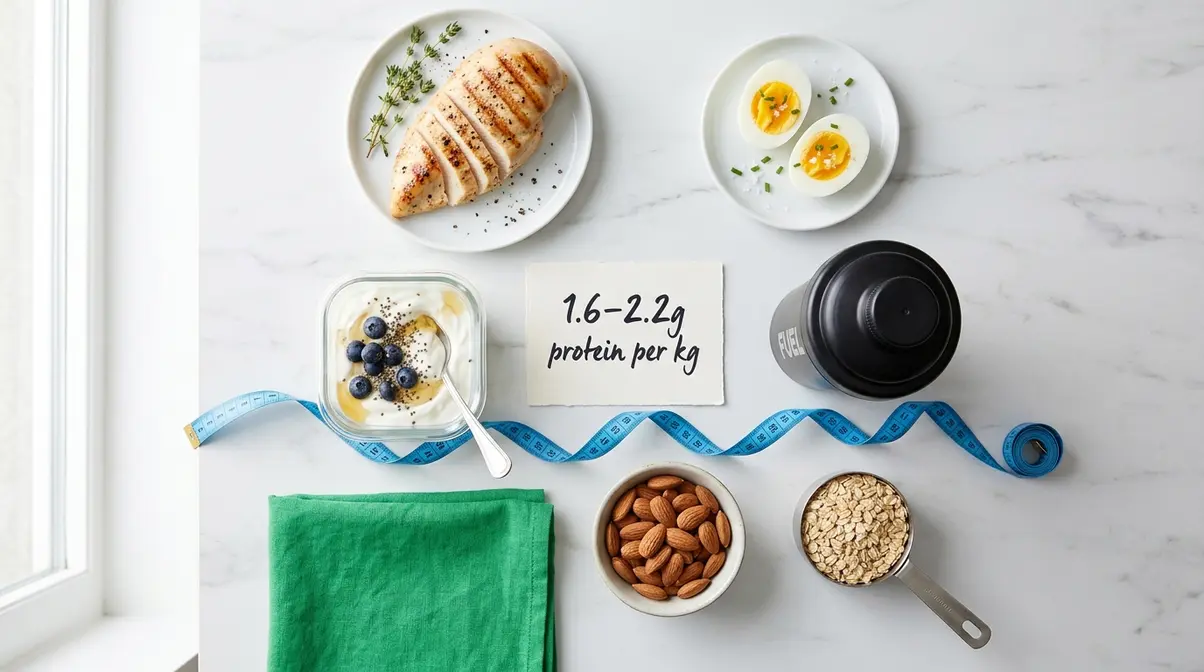
As your muscle mass increases, so does your daily protein requirement. If you are unsure how much protein to build muscle you actually need, start by calculating your baseline. The evidence is consistent: for active individuals doing regular resistance training, Mayo Clinic Health System guidelines recommend 1.1–1.5 g per kg of body weight, while those lifting weights regularly may need up to 1.6–2.2 g/kg/day. A 2026 systematic review and meta-analysis (PMC) found that lean body mass gains in resistance-training individuals were consistently seen at ≥1.6 g/kg/day — and Stanford Medicine’s updated 2026 dietary guidance now recommends 1.2–1.6 g/kg for general active adults, up from older RDA figures.
| Body Weight | Minimum (1.6 g/kg) | Upper Range (2.2 g/kg) |
|---|---|---|
| 60 kg (132 lbs) | ~96 g/day | ~132 g/day |
| 75 kg (165 lbs) | ~120 g/day | ~165 g/day |
| 90 kg (198 lbs) | ~144 g/day | ~198 g/day |
Distribute your protein across 3–5 meals, targeting 25–40 g per sitting, for optimal muscle protein synthesis throughout the day.
The Gain Killers: 3 Habits Blunting Hypertrophy
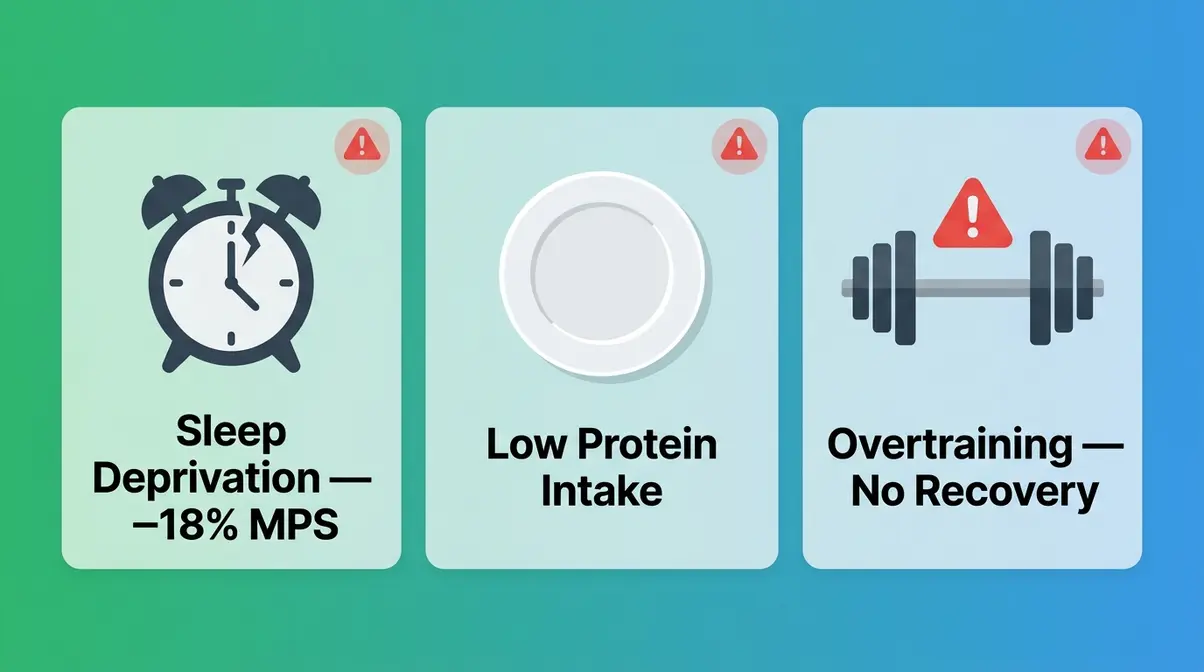
Every intermediate trainee hits a frustrating stretch where effort doesn’t seem to translate into results. More often than not, one of three specific habits is the culprit. If you want to know what kills muscle gains the fastest, look no further than these three habits. This section covers what stalls progress the most — a topic absent from every competitor article we reviewed.
Not Sleeping Enough
Sleep deprivation is one of the most damaging yet most overlooked gain killers. A controlled trial found that restricting sleep to just 4 hours per night for five nights reduced myofibrillar protein synthesis by approximately 18–19% — even when subjects continued training and eating protein (PMC, 2026). Your muscles don’t grow in the gym. They grow during deep sleep, when growth hormone peaks and muscle repair accelerates. Chronic sleep restriction also elevates cortisol (a catabolic hormone that breaks down muscle tissue) while suppressing testosterone. Aim for 7–9 hours per night. If your training is consistent but your results aren’t, your sleep schedule is the first variable to fix.
Eating Too Little Protein
Under-eating protein is the most common nutritional mistake among intermediate trainees. Many people assume they’re getting “enough” protein — then track their intake for one week and discover they’re hitting 80–100 g/day on a 75 kg body. That’s roughly 1.0–1.3 g/kg, which sits at or below the threshold associated with muscle mass maintenance, not growth (ScienceDirect, 2026). Consistent protein deficiency means your body lacks the amino acids needed to complete muscle protein synthesis after each training session. The result: you break muscle down with training, but you don’t fully rebuild it. Over weeks, this creates a ceiling on your gains that no amount of extra sets can break through.
Overtraining Without Recovery
More is not always more. Overtraining syndrome — training so frequently or intensely that your body cannot recover between sessions — actively suppresses hypertrophy. Signs include persistent fatigue, declining performance (you’re weaker than last week, not stronger), disrupted sleep, and mood changes. Research from the ACSM confirms that training to momentary muscle failure on every set does not consistently enhance hypertrophy compared to stopping slightly before failure when total volume is matched. If you’re training a muscle group more than 3–4 times per week without adequate recovery, you’re likely accumulating fatigue faster than you’re building muscle. Strategic rest is not laziness — it’s where the gains actually happen.
What to Expect in Your First 4 Weeks
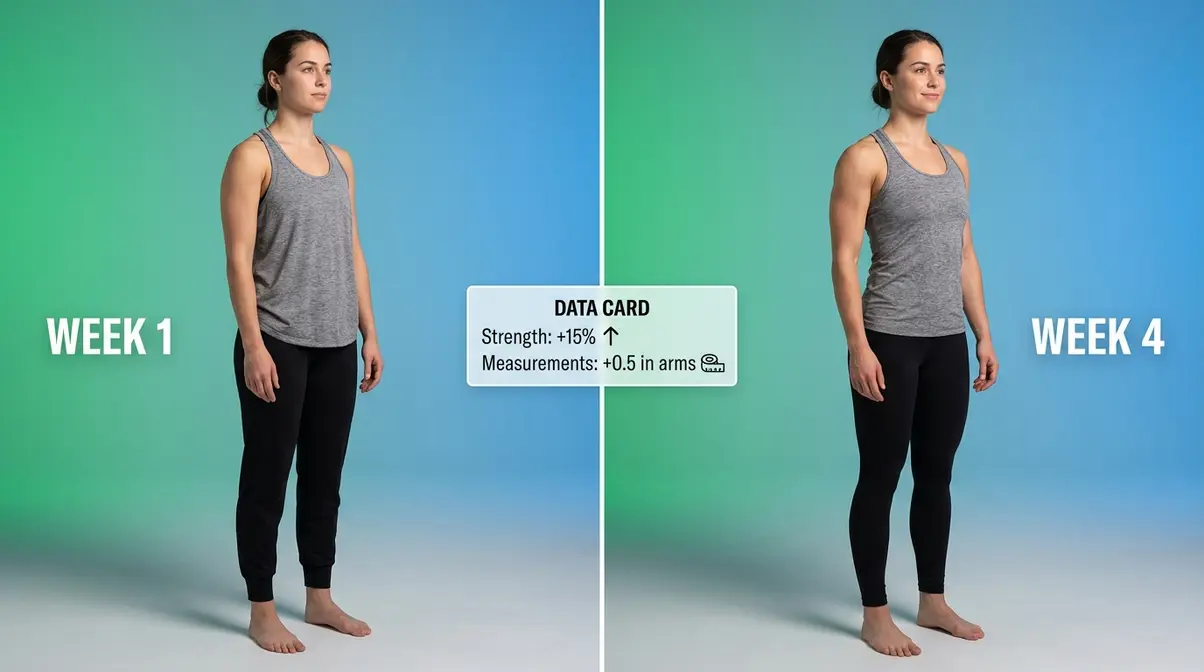
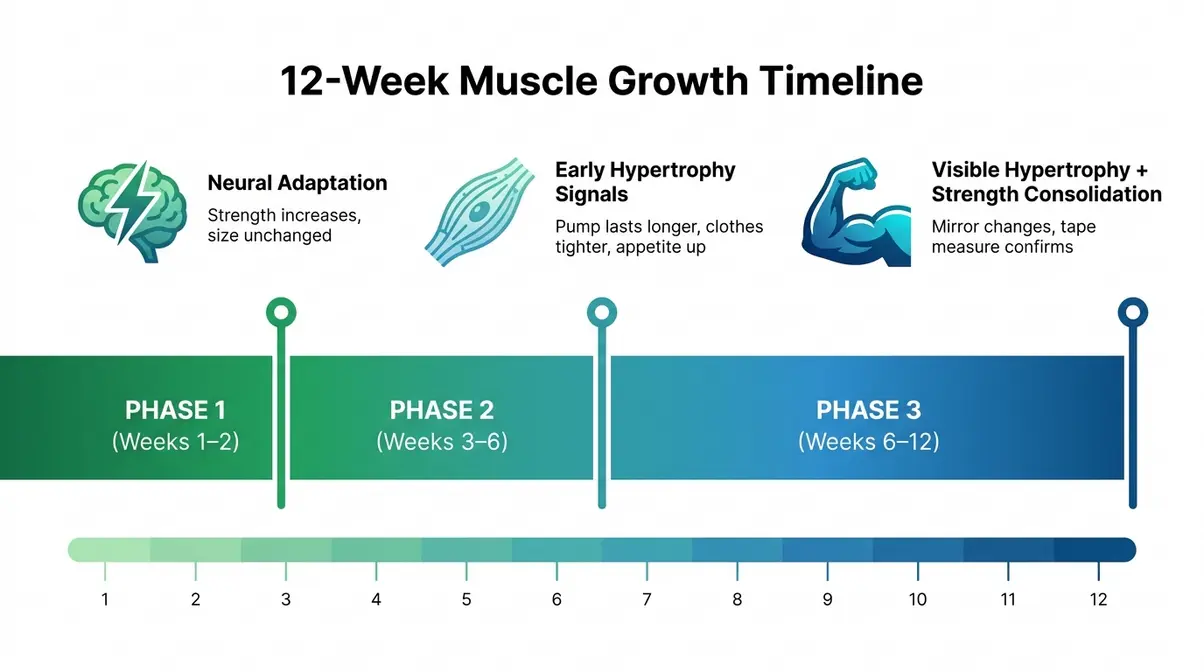
Understanding the timeline of muscle development is one of the most valuable pieces of context a new-to-intermediate trainee can have. The 4-Layer Progress Stack doesn’t activate all at once — it unfolds in a predictable sequence. Here’s what the research actually shows.
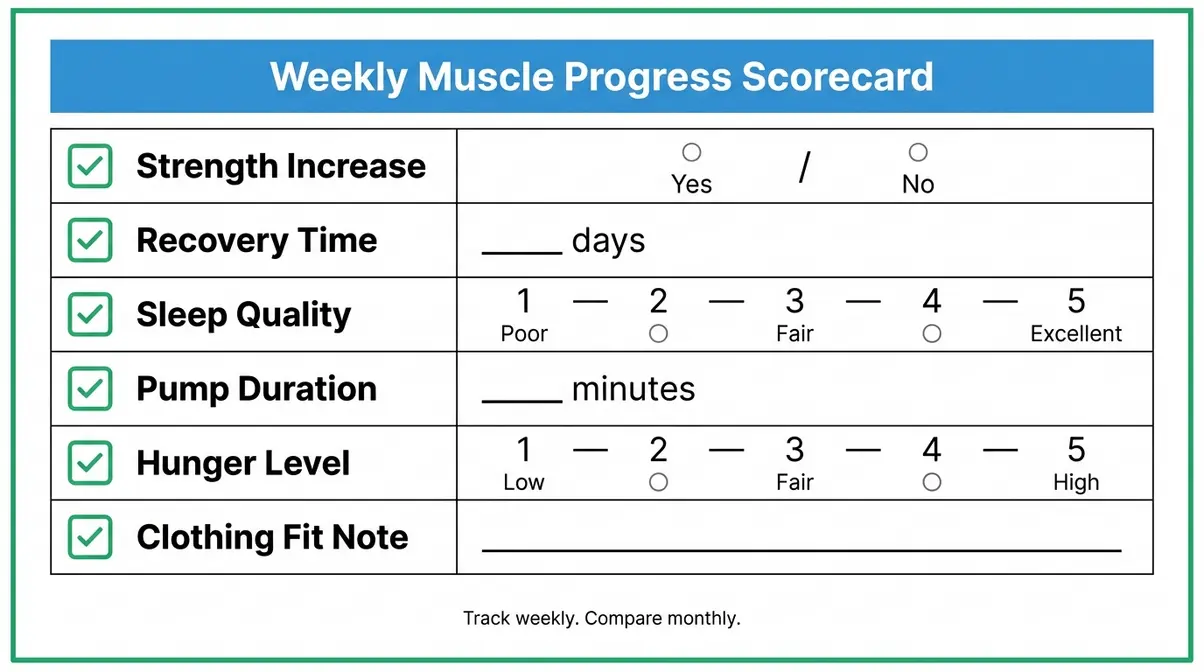
Weeks 1–2: Neural Adaptations (Strength Without Size)
In your first two weeks of training, strength improvements can be dramatic — sometimes 20–50% increases in working weight within weeks. But here’s what’s actually happening: almost none of that is muscle growth yet. It’s neuromuscular adaptation (your nervous system getting better at recruiting existing muscle fibers).
A 2026 PubMed study confirmed that several weeks of strength training produce significant adaptations in neural drive — the strength of the signal your brain sends to your muscles — before any meaningful structural change in the muscle itself. A weekly time-course study (PMC, 2026) found voluntary activation levels increased primarily in the first 4 weeks of intensive training. During weeks 1–2, you’ll feel sore, you’ll get stronger, but your tape measure won’t move much. That’s normal and expected. The internal physiological layer of the 4-Layer Progress Stack is activating — be patient.
Weeks 3–4: The First Hypertrophy Signals Appear
This is when the 4-Layer Progress Stack starts delivering measurable returns. A landmark study published in the Journal of Applied Physiology (Seynnes et al.) found significant quadriceps hypertrophy of 3.5–5.2% after just 20 days of high-effort training — challenging the long-held assumption that visible hypertrophy takes months.
At the cellular level, satellite cell activation (which adds new nuclei to muscle fibers, expanding their protein synthesis capacity) can begin within 4 days of a first training bout. BodySpec’s clinical summary (updated 2026) notes that most beginners see their first measurable lean-mass uptick around 4–6 weeks, right as the neural adaptation phase gives way to true structural hypertrophy. By week 4, you should notice 3–5 of the 12 signs covered in this guide. If you’re tracking your baselines (weight, measurements, performance), the data will confirm what the mirror hasn’t shown you yet.
Does Soreness Mean My Muscles Are Growing?
Soreness (DOMS) is a weak indicator of muscle growth on its own — but it does signal that your muscles experienced sufficient mechanical stress to initiate repair. The key distinction: soreness that decreases in intensity over weeks (while your performance improves) suggests your muscles are adapting and growing. Persistent, worsening soreness is a sign of overtraining. Research confirms that as muscles grow and adapt, DOMS from the same workout typically shortens from 3–4 days to 24 hours or less — which is itself a sign of improved recovery capacity and muscular development.
Frequently Asked Questions
How do I know if I’m gaining muscles?
The most reliable signs you’re gaining muscle are progressive strength increases over 3–4 weeks, clothing fitting tighter in specific areas, and faster recovery between sessions. Track your lifts weekly and measure your arms and thighs monthly. These two data points will confirm progress long before the mirror does.
Can you feel when your muscles are growing?
Yes — you can feel several internal signs of muscle growth, though they’re subtle at first. The most commonly reported physiological signals include a post-workout pump that lasts noticeably longer (60–90 minutes vs. 20–30 minutes earlier in training). You will also notice muscles that feel more “switched on” or engaged during exercises, alongside increased hunger for protein-dense foods. Research shows neuromuscular efficiency improves within the first 3–4 weeks, which most trainees describe as movements feeling more “connected” and controlled. These internal signals from the Physiological layer of the 4-Layer Progress Stack are real, not imagined.
What kills muscle gains the most?
Insufficient sleep is arguably the single biggest gain killer, followed closely by inadequate protein intake and overtraining without recovery. Restricting sleep to 4 hours per night for just five nights reduces myofibrillar protein synthesis by approximately 18–19% (PMC, 2026). Furthermore, under-eating protein means your body simply cannot complete muscle repair after training. Fix your sleep schedule first, then optimize your protein intake, and finally ensure your program structure allows for adequate rest.
How long does it take to see muscle growth results?
Most trainees notice their first measurable gains around 3–6 weeks into consistent training. Weeks 1–2 are dominated by neural adaptations, where strength improves significantly but muscle size changes minimally. However, research shows early hypertrophy can appear in as little as 20 days under high-effort conditions. For most intermediate trainees, visible changes become noticeable to others around weeks 6–10, while clothing fit and performance changes often appear by weeks 3–5. Realistic muscle gain averages 0.5–2 lbs of lean mass per month with proper training and nutrition.
What protein intake supports muscle growth?
For muscle growth, research consistently supports 1.6–2.2 g of protein per kg of body weight per day. Stanford Medicine’s 2026 updated dietary guidelines recommend 1.2–1.6 g/kg for active adults, while Mayo Clinic Health System places weight-training individuals at up to 1.6 g/kg or higher. Distribute this intake across 3–5 meals to maximize muscle protein synthesis.
What muscle is hardest to grow?
The calves and forearms are typically the hardest muscles to grow for most trainees. This is largely due to their dense composition of slow-twitch muscle fibers and the fact that they are accustomed to carrying your body weight all day. If you’re wondering what is the hardest muscle to build, genetics play a massive role in calf development. Overcoming this requires high-frequency training and a full range of motion with heavy loads.
Closing the Gap Between Effort and Evidence
For intermediate trainees putting in real gym time, the feedback void between “I’m working hard” and “I can see results” is genuinely frustrating. The 12 signs covered in this guide exist precisely to close that gap. Muscle growth shows up in 12 measurable ways — across the 4-Layer Progress Stack — before it becomes obvious in the mirror. The strongest early indicators are progressive strength gains (a 2026 PubMed study found a correlation of r = 0.89 between muscle growth and 1RM strength), followed by clothing fit changes, improved recovery, and the internal physiological signals most trainees don’t know to look for.
The 4-Layer Progress Stack isn’t just a framework — it’s a mindset shift. Physical, Performance, Physiological, and Metabolic signals together paint a complete picture that the mirror alone never could. When you stop asking “do I look bigger yet?” and start asking “am I stronger, recovering faster, sleeping better, and eating more?” — you gain clarity that keeps you consistent through the weeks that feel invisible.
Start this week: log your current working weight on your main compound lifts, take your measurements, and run through the 12-sign checklist above. Check it again in 4 weeks. The data will tell you what your reflection can’t — and it’ll keep you training with purpose instead of doubt.