
Maximize Muscle Protein Synthesis: Science-Backed Guide
You’ve been training consistently, hitting your protein targets, and doing everything the guides told you to do — yet your gains have plateaued. If that sounds familiar, the advice you’ve been following may actually be the problem. The 30g-per-meal rule, the 60-minute post-workout window, the obsession with the immediate post-workout shake — most of it traces back to research from 2009. A landmark 2023 study published in Cell Reports Medicine completely rewrote the rules on protein dosing, and even today in 2026, most fitness content hasn’t caught up.
In this guide, you’ll learn exactly how to see your muscle protein synthesis maximize using the most current evidence, including a step-by-step protocol you can apply starting with your next meal and your next training session.
- What You’ll Need:
- Estimated Time: 10 minutes to read, 24 hours to implement
- A basic understanding of macronutrients (protein, carbohydrates, fats)
- A consistent resistance training routine, at minimum 3 sessions per week
- Access to quality protein sources — whole food and/or supplemental
- Willingness to adjust meal frequency and distribution, not just total intake
- A food tracking app or scale to verify leucine and protein targets per meal
This guide covers six core areas: what MPS actually is, how training triggers it, how much protein you need, when to eat it, which protein sources work best, and what’s silently sabotaging your results.
To watch your muscle protein synthesis maximize, combine consistent resistance training with 1.6–2.2 g/kg of daily protein, spread across 3–5 meals — each containing at least 2.5–3g of leucine to trigger the anabolic response.
- 1. The 30g myth is dead: A 2023 NIH-published study (which remains the benchmark in 2026) found no upper limit on the anabolic response to protein per meal — the real trigger is leucine threshold, not a gram cap.
- 2. Leucine is the trigger: Each meal needs ~2.5–3g of leucine — not just total protein — to activate mTOR and switch on muscle building.
- 3. Timing matters less than you think: The post-workout “anabolic window” spans several hours, not 60 minutes — distribution across the day matters more.
- 4. Distribute, don’t dump: Spreading 3–5 protein meals evenly throughout the day consistently outperforms front-loading or back-loading.
- 5. The MPS Stacking Protocol combines leucine-optimized dosing, strategic timing, and progressive training into one daily framework you can execute immediately.
Understanding Muscle Protein Synthesis
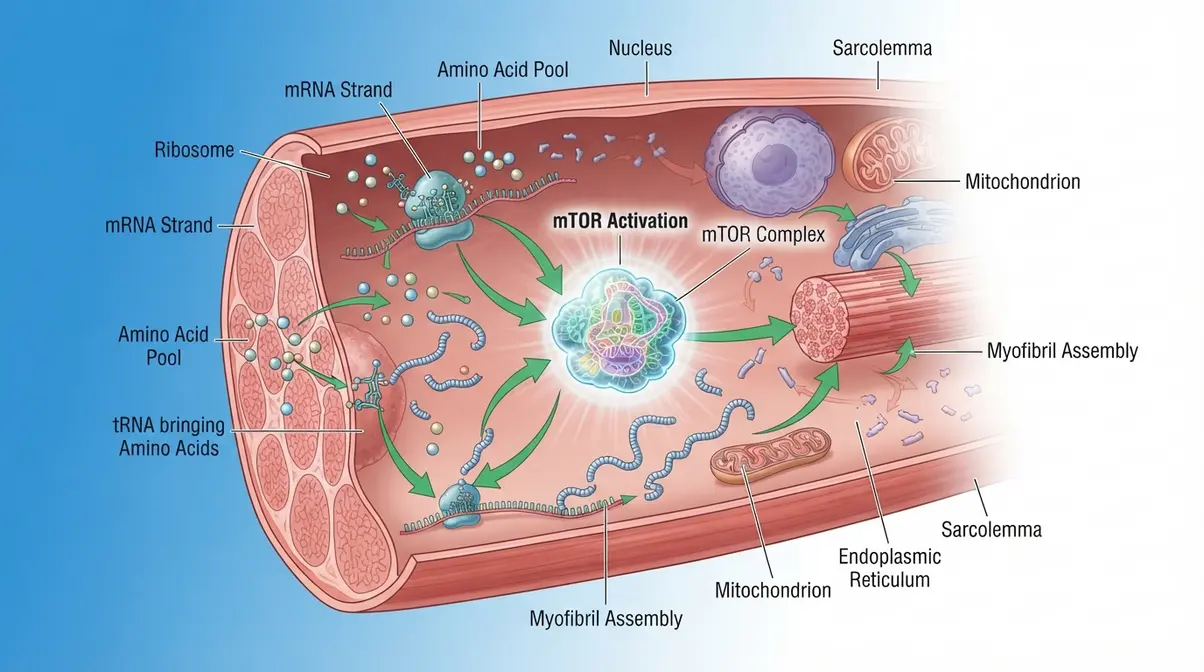
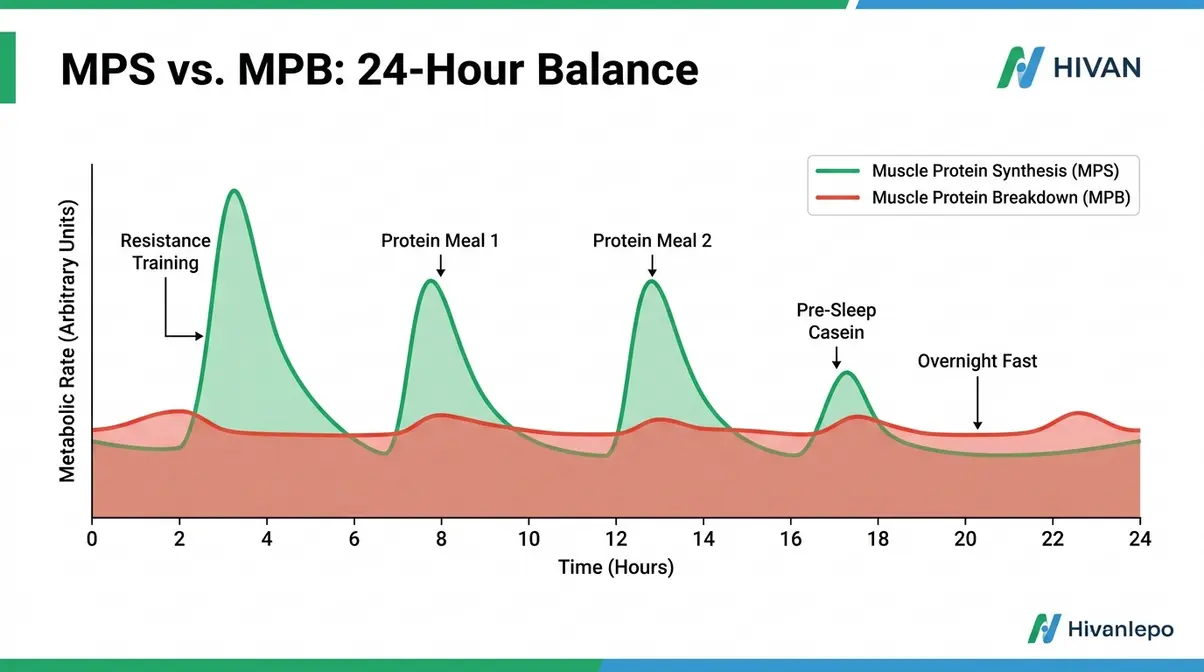
Muscle protein synthesis (MPS) is the biological process by which your body assembles new muscle proteins from amino acids. It runs continuously — 24 hours a day, 7 days a week — in direct competition with muscle protein breakdown (MPB). Net muscle growth only occurs when synthesis exceeds breakdown over a full 24-hour period. Every strategy in this guide is designed to tip that balance in your favor.
Understanding this balance is the mental model that makes every subsequent section click. Most guides treat MPS as a single post-workout event you “trigger” with a shake. The reality is more nuanced — and more actionable.
Muscle Protein Breakdown Balance
Muscle protein breakdown (MPB) is the normal, necessary process of degrading damaged or dysfunctional muscle proteins. It is not the enemy. In fact, MPB is essential for muscle remodeling — clearing out damaged proteins so new, stronger ones can be built in their place. The actual threat to your gains is a negative net balance, not breakdown itself.
The equation is straightforward: Net Muscle Protein Balance (NMPB) = MPS − MPB. For muscle growth to occur, NMPB must be positive over a 24-hour period, as confirmed across decades of stable isotope tracer research (NIH research on muscle protein turnover, 2009). Think of it like a bank account: MPS is your deposits, MPB is your withdrawals, and muscle growth is the profit you keep at the end of the day.
Most guides ignore MPB entirely — which is why they also miss the fact that factors like alcohol and sleep deprivation don’t just blunt MPS; they actively accelerate breakdown, hitting your balance from both sides simultaneously. That distinction matters, and it’s covered in detail in H2 #6. It also means that fasted states and aggressive calorie deficits can shift the balance toward MPB — a critical consideration for anyone cutting body fat while trying to preserve lean mass.
mTOR Pathway and Muscle Growth
mTOR (mechanistic target of rapamycin) is the molecular switch that signals your muscle cells to start building. More precisely, mTORC1 — the specific complex relevant to muscle growth — acts as the master regulator of muscle protein synthesis, integrating two critical inputs before giving the green light to build.
Those two inputs are: (1) mechanical tension from resistance exercise, and (2) amino acids — specifically leucine, the most potent mTOR activator among all 20 amino acids. Research from the GSSI research on resistance exercise and anabolic potential confirms that resistance training and leucine-rich protein together produce a synergistic MPS response — substantially greater than either stimulus alone (GSSI Sports Science Exchange, 2014).
This is the mechanistic foundation of The MPS Stacking Protocol: to maximize muscle protein synthesis, both mTOR inputs must be activated consistently, at every meal, on every training day. A 30-minute strength session followed by a leucine-rich protein source activates mTOR through both pathways simultaneously — the highest possible MPS stimulus available to you. In the sections ahead, you’ll build each layer of The MPS Stacking Protocol, starting with the non-negotiable foundation: training.
Training Triggers for MPS

Resistance training is the primary trigger for MPS because mechanical tension directly activates mTOR signaling in muscle cells, initiating the protein-building cascade. Without this stimulus, even optimal protein intake produces a fraction of the anabolic response — research consistently shows that sedentary individuals experience minimal MPS elevation from protein feeding alone. Training is non-negotiable: it is Layer 1 of The MPS Stacking Protocol, and everything that follows depends on it.
To understand how to maximize muscle protein synthesis through training, you need to understand not just that training works, but how long that effect lasts — because the answer changes everything about your nutrition strategy.
Mechanical Load and mTOR Signaling
Mechanical tension during resistance exercise — particularly from eccentric and concentric loading — activates mTOR signaling through a pathway that operates independently of amino acid availability. This means training alone can initiate MPS even in a fasted state, though the response is significantly amplified by protein intake.
The critical quantified finding: post-exercise, muscle cells remain highly sensitive to amino acids for 24–48 hours following a training session (GSSI research on resistance exercise and protein, GSSI SSE-107, 2014). Resistance exercise elevates muscle protein synthesis rates for up to 48 hours post-workout, making protein distribution across the entire recovery period more important than any single post-workout shake. This is why a 70kg male who trains legs on Monday should prioritize leucine-optimized protein at dinner and breakfast the following day — not just the immediate post-workout shake.
It’s also worth distinguishing between myofibrillar protein synthesis (the MPS subtype responsible for muscle size and strength, elevated most by high-tension compound movements like squats, deadlifts, and rows) and mitochondrial protein synthesis (relevant to endurance adaptations). When muscle growth is the goal, myofibrillar MPS is the target — and it responds most to multi-joint, high-load exercises.
Understanding the principle of progressive overload in muscle growth is the next essential layer: training opens the door, but progressive overload keeps it open over months and years of consistent effort.
Progressive Overload for MPS
Progressive overload — systematically increasing load, volume, or density over time — is the mechanism that prevents MPS from adapting to a fixed stimulus. A muscle fully adapted to a given weight shows a measurably blunted MPS response to that same workout. The training stimulus must evolve, or the anabolic signal weakens.
The practical implication is significant: if your gains have stalled despite consistent protein intake and good sleep, the training stimulus may have plateaued — not the nutrition. This is a distinction most protein-focused guides miss entirely. Higher weekly training volume, within your recovery capacity, is associated with greater cumulative MPS elevation. However, there is a clear point of diminishing returns: overtraining suppresses MPS through chronically elevated cortisol, which accelerates MPB and blunts the anabolic response.
A simple, sustainable approach: add 2.5kg to a compound lift every 2–3 weeks, or add one working set per muscle group per training block. Either method maintains the novel mechanical stimulus needed to sustain MPS elevation across months of training. With the training stimulus established, the next variable to optimize is the protein input — and this is where most guides get it dangerously wrong.
Protein Needs to Maximize MPS
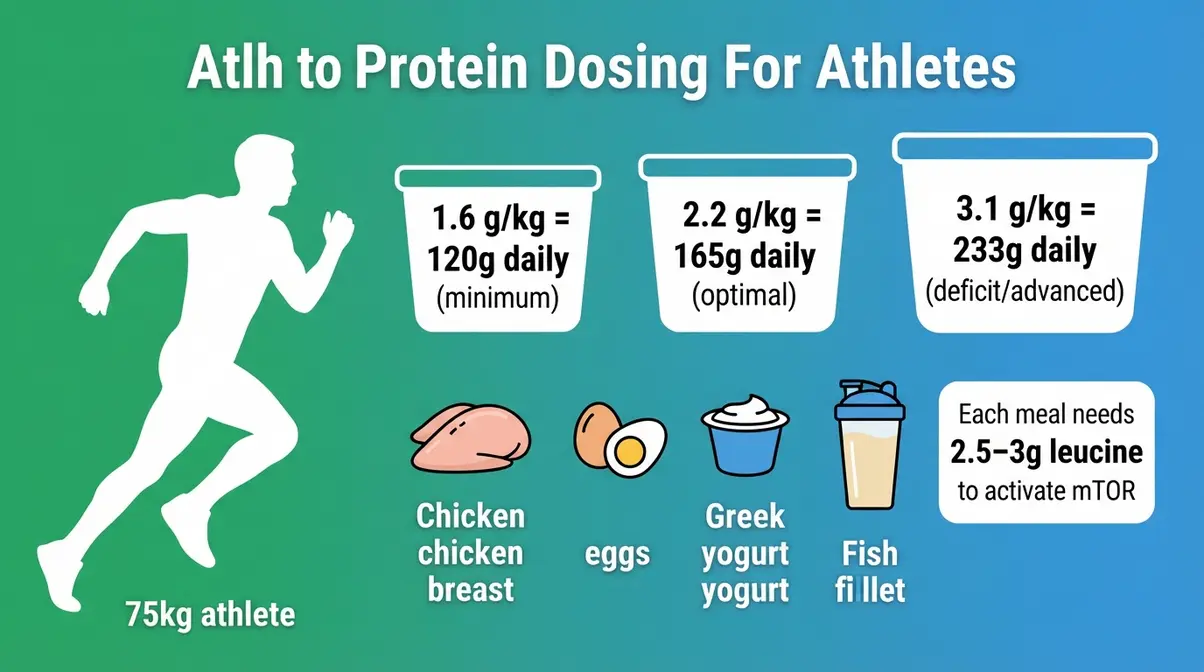
To maximize muscle protein synthesis, aim for 1.6–2.2 g/kg of bodyweight in total daily protein, spread across 3–5 meals. Each meal should contain at least 2.5–3g of leucine to cross the threshold that activates mTOR — this matters more than the total grams per sitting. Advanced athletes in a caloric deficit may benefit from 2.4–3.1 g/kg daily, according to the ISSN’s current position stand.
This is where The MPS Stacking Protocol comes into sharp focus — and where most competitor guides are still operating on outdated, decade-old evidence.
Research on Daily Protein Targets
The evidence-based daily target for resistance-training adults is 1.6–2.2 g/kg of bodyweight, as established by the International Society of Sports Nutrition (ISSN) 2018 position stand — the leading professional body for sports nutrition evidence synthesis. For a 75kg individual, that translates to 120–165g of protein daily. Advanced athletes in a caloric deficit may need up to 2.4–3.1 g/kg to preserve lean mass while losing body fat.
Distributing that total across 3–5 meals optimizes MPS stimulation. A 75kg person eating 4 meals targets approximately 30–41g of protein per meal — but the critical variable is not the gram total; it is whether each meal hits the leucine threshold of 2.5–3g. Plant-based athletes should target the upper end of the range (2.0–2.2 g/kg) because plant proteins have lower leucine density per gram than animal proteins, requiring a higher total intake to achieve the same mTOR activation.
On safety: the ISSN confirms no adverse renal effects from protein intakes of 2–3× the RDA in healthy adults with normal kidney function. The kidney-damage concern, while persistent in popular culture, is not supported by current evidence in healthy individuals.
Debunking the 30g Per Meal Myth
The 30g-per-meal rule is not just outdated — it is directly contradicted by the most important protein study published in the last decade. *A 2023 Cell Reports Medicine study found that ingesting 100g of protein post-exercise produced a prolonged anabolic response with no detectable upper limit — directly contradicting the widely cited 30g per meal rule* (NIH/PubMed Central, 2023).
The study found that larger protein doses did not “waste” the excess — they simply extended the duration of the anabolic response rather than capping it at a fixed ceiling. The body processes the additional amino acids over a longer window, maintaining an elevated MPS signal for more hours. This is physiologically logical: digestion rate varies by protein source, meal composition, and individual gut transit time.
What this means practically: stop fearing larger protein meals. A 60g protein meal is not wasteful. The real question is not “how much can I absorb?” but “does this meal contain at least 2.5–3g of leucine?” That is the actual trigger. The per-meal leucine threshold is the operative constraint — not an arbitrary gram cap. Consult a registered dietitian for personalized guidance on protein targets specific to your bodyweight, training volume, and health status.
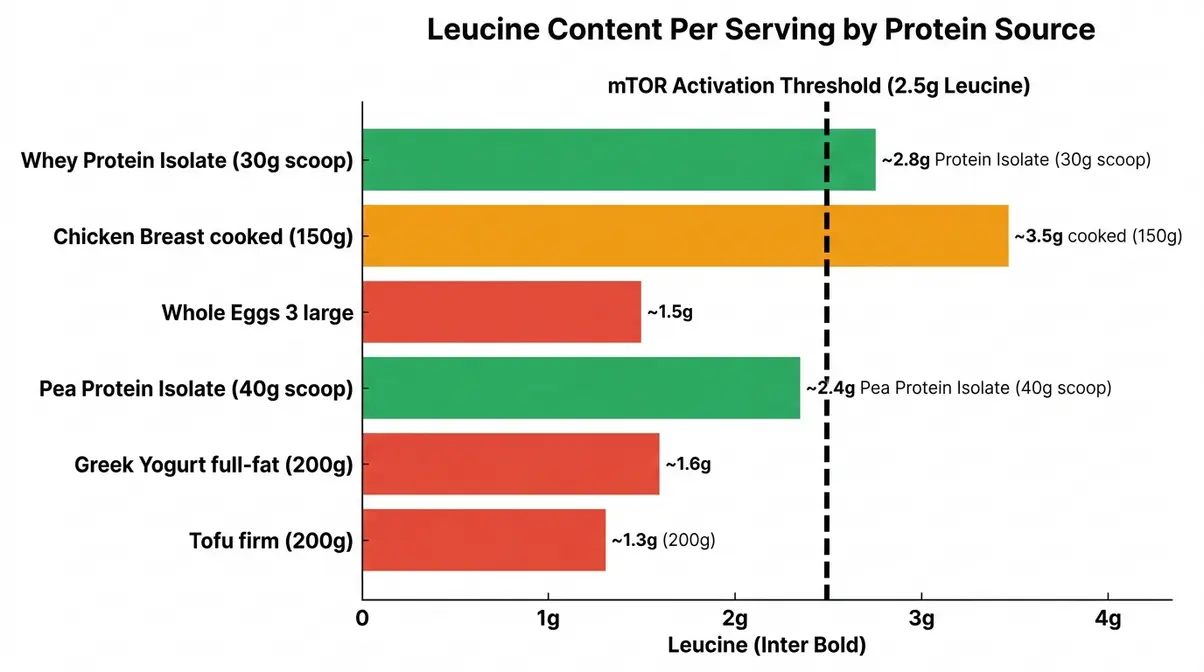
Here is a practical reference for hitting the leucine threshold across common protein sources:
| Protein Source | Serving Size | Approx. Protein (g) | Approx. Leucine (g) |
|---|---|---|---|
| Whey protein isolate | 30g scoop | 27g | ~2.8g |
| Chicken breast (cooked) | 150g | 45g | ~3.5g |
| Whole eggs | 3 large | 19g | ~1.5g |
| Pea protein isolate | 40g scoop | 32g | ~2.4g |
| Greek yogurt (full-fat) | 200g | 20g | ~1.6g |
| Tofu (firm) | 200g | 17g | ~1.3g |
**
Age-Specific Protein Dosing
Anabolic resistance is the age-related blunting of the MPS response to a given protein dose, and it begins meaningfully in the late 30s and accelerates after 60. It means that older adults need a higher per-meal protein dose to achieve the same mTOR activation that a younger adult gets from a smaller serving.
The evidence-based adjustment: younger adults (~18–35) can typically trigger a maximal MPS response with approximately 0.24 g/kg per meal (roughly 18g for a 75kg individual). Adults over 40, and particularly over 60, require approximately 0.40 g/kg per meal to overcome anabolic resistance — that is roughly 30g for a 75kg individual, and potentially 40g+ for larger or older athletes.
| Age Group | Per-Meal Target | Daily Total (75kg) | Notes |
|---|---|---|---|
| 18–35 | ~0.24 g/kg | 120–150g | Leucine threshold still critical |
| 36–55 | ~0.30–0.35 g/kg | 135–165g | Begin increasing per-meal dose |
| 55+ | ~0.40 g/kg+ | 160–200g | Prioritize leucine-dense sources |
| Plant-based (any age) | Upper end of range | +10–15% above baseline | Lower leucine density per gram |
This age-specific adjustment is Layer 2 of The MPS Stacking Protocol: once you know your daily target, calibrate per-meal doses to your demographic. An evidence-based approach to protein for muscle building accounts for these individual variables rather than applying a universal template.
When does protein synthesis max out?
*The 2023 Cell Reports Medicine study (PMC10772463) found no detectable upper limit on the anabolic response to a single protein meal — 100g produced a prolonged MPS response without a ceiling. However, the practical constraint is the leucine threshold*: once a meal contains ~2.5–3g of leucine, mTOR is maximally activated. Additional protein extends the duration of the anabolic response rather than amplifying its peak. The meaningful limit is daily total protein (1.6–2.2 g/kg), not per-meal grams.
Does Protein Timing Matter?
Protein timing does matter for optimizing MPS — but not in the way most guides describe. The critical variables are meal distribution across the day and pre-sleep protein, not the exact minute you consume your post-workout shake. Research consistently shows that spreading protein across 3–5 meals throughout the day produces superior MPS outcomes compared to consuming the same total protein in one or two large meals.
The Anabolic Window: Myth vs. Reality
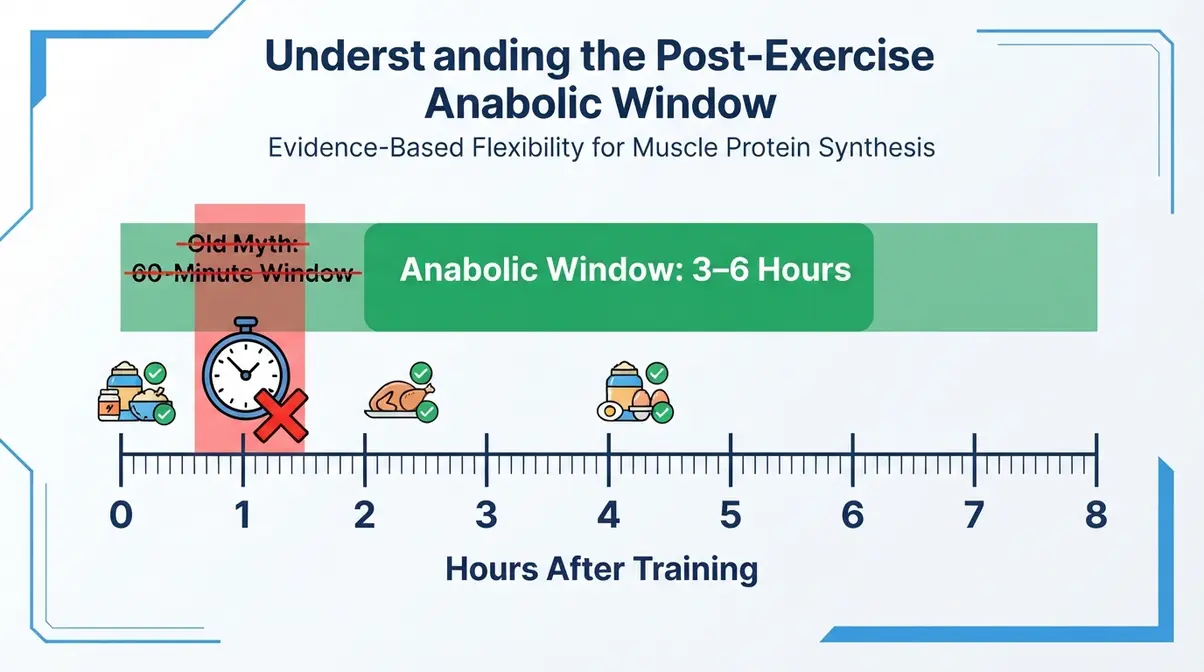
The idea that you must consume protein within 60 minutes of finishing your workout — or risk losing your gains — is one of the most persistent myths in sports nutrition. Current evidence does not support this urgency. The post-exercise anabolic window is real, but it spans 3–6 hours around the training session, not a narrow 60-minute emergency window.
The practical implication: if you trained in a fasted state or had a small pre-workout meal, prioritize protein within 1–2 hours post-exercise. If you ate a substantial protein-containing meal 1–2 hours before training, the post-workout urgency is largely moot — the amino acids from that meal are still circulating. A (https://www.frontiersin.org/journals/nutrition) in Frontiers in Nutrition (2019) supports this broader window interpretation, finding that total daily protein and distribution are more predictive of muscle gains than precise post-workout timing.
What you should prioritize is not the clock, but the leucine threshold at each meal — including the meal closest to your training session, whether that falls before or after.
Pre-Sleep Protein Opportunity
The 7–9 hour overnight fast is the longest protein gap in most people’s day — and it is a significant missed opportunity for MPS. Research demonstrates that consuming 30–40g of slow-digesting casein protein before sleep stimulates overnight muscle protein synthesis and improves whole-body protein balance without impairing fat metabolism.
A study by Res et al. (2012) found that pre-sleep casein protein ingestion significantly increased overnight MPS rates compared to a placebo — and subsequent research confirmed that this overnight protein is effectively incorporated into muscle tissue rather than being stored as fat. Casein’s slow digestion rate (releasing amino acids over 5–7 hours) makes it uniquely suited for this application compared to faster-digesting whey.
Practical options: 200g of cottage cheese (~28g protein, naturally casein-dominant), a casein protein shake (30–40g), or Greek yogurt with added leucine. This is Layer 3 of The MPS Stacking Protocol — closing the overnight gap.
Daily Protein Distribution Protocol
“This research really seems to suggest that multiple meals spread out throughout the day with moderate protein is the way to optimize MPS.” — Fitness community consensus reflecting the current evidence base
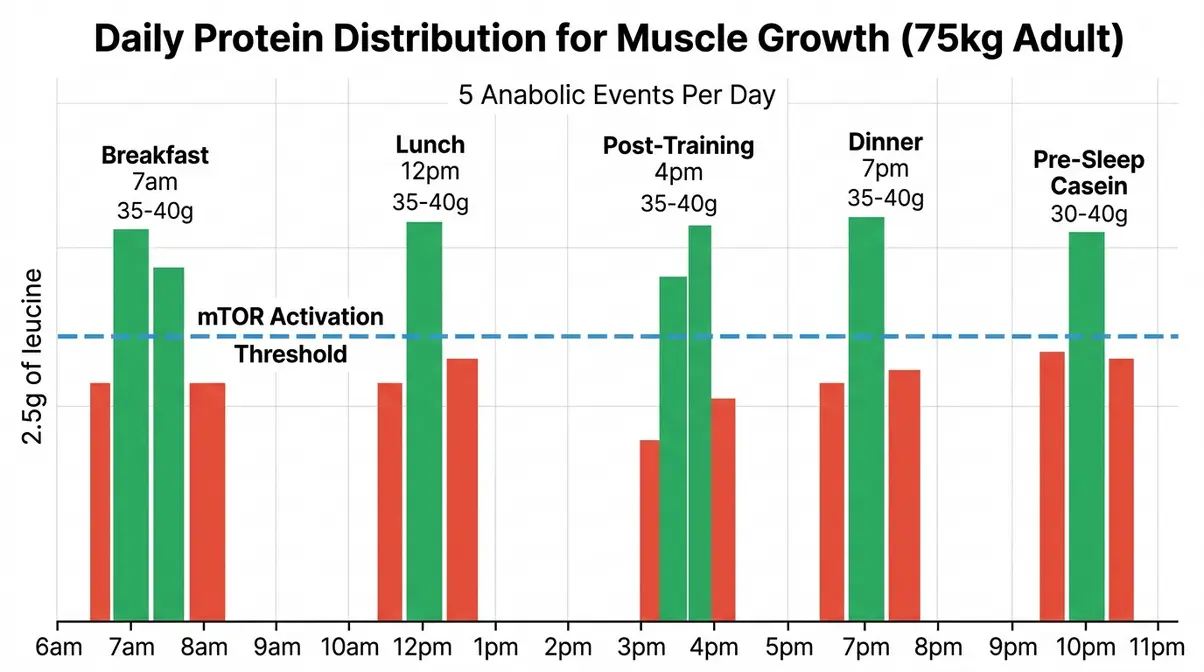
The evidence overwhelmingly supports 3–5 evenly spaced protein meals as the optimal distribution strategy. A 2019 Frontiers in Nutrition analysis found that distributing protein across 4 meals produced greater MPS stimulation than the same total protein consumed in 2 meals. The mechanism: each leucine-threshold-crossing meal triggers a fresh MPS spike, and spacing meals 3–5 hours apart allows MPS to return toward baseline before the next spike — maximizing the total number of anabolic events across the day.
A practical daily distribution for a 75kg adult targeting 150g of protein:
- Breakfast (7am): 35–40g protein — eggs, Greek yogurt, whey shake
- Lunch (12pm): 35–40g protein — chicken, fish, legumes + leucine supplement if plant-based
- Post-training snack (4pm): 30–35g protein — whey isolate or equivalent
- Dinner (7pm): 35–40g protein — lean meat, fish, or complete plant protein
- Pre-sleep (10pm): 30–40g casein protein — cottage cheese or casein shake
This distribution ensures 5 leucine-threshold crossings per day — five anabolic events rather than one or two.
Best Protein Sources for MPS
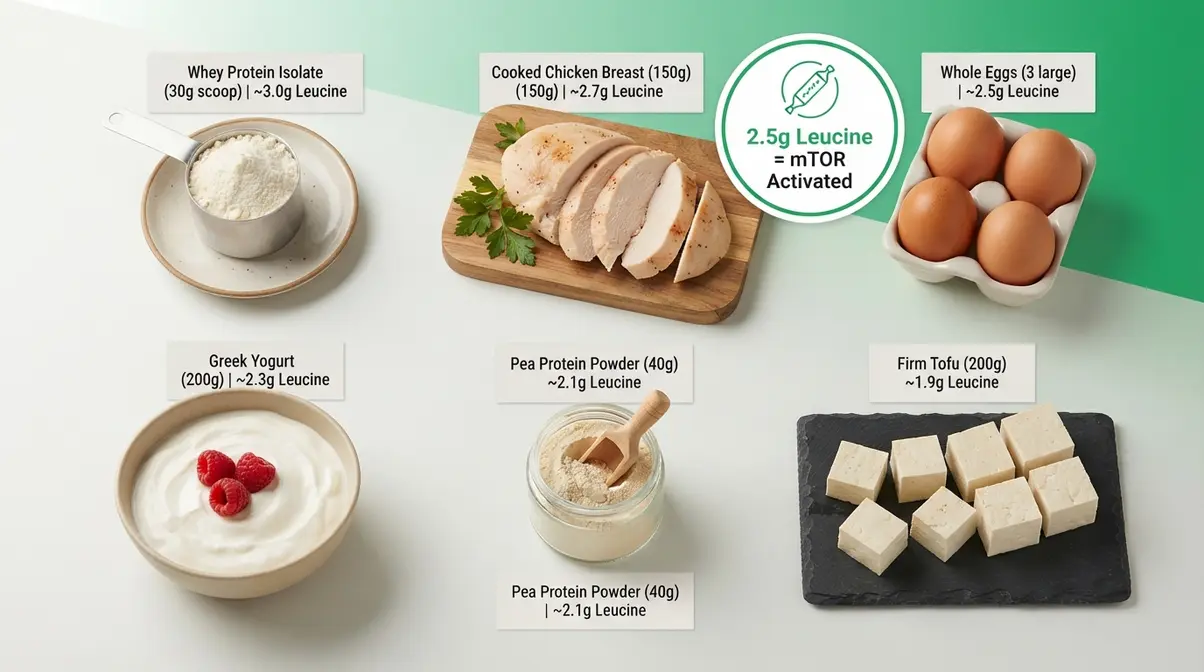
Not all protein sources are equal when it comes to triggering muscle protein synthesis. The quality of a protein source for MPS purposes is determined primarily by its leucine content, its essential amino acid (EAA) profile, and its digestion rate — not simply its total protein content per gram.
Leucine as the Key mTOR Trigger
Leucine is the branched-chain amino acid (BCAA) that most potently activates mTOR — the molecular switch for MPS. Research indicates that a leucine threshold of approximately 2.5–3g per meal is required to maximally stimulate mTOR signaling. Below this threshold, MPS is not fully activated regardless of total protein consumed. Above it, the mTOR signal is maximized, and additional leucine provides diminishing returns (though additional total protein extends the anabolic duration, per the 2023 Cell Reports Medicine findings).
This threshold model explains why protein quality matters as much as quantity. A 200-calorie serving of chicken breast crosses the leucine threshold. A 200-calorie serving of most plant proteins may not — without strategic combination or leucine supplementation.
Whey vs. Casein vs. Plant Protein
Each major protein category has a distinct profile relevant to MPS optimization:
Whey protein is the gold standard for acute MPS stimulation. Its rapid digestion rate delivers a fast leucine spike, making it ideal for post-workout consumption. Whey isolate typically provides ~2.7–3.0g of leucine per 30g scoop — reliably crossing the threshold. Research on whey protein and muscle protein synthesis consistently shows whey outperforms casein and soy for acute MPS response in head-to-head comparisons.
Casein protein digests slowly, releasing amino acids steadily over 5–7 hours. This slower release does not produce as high an acute MPS spike as whey, but it sustains positive muscle protein balance for longer — making it the superior choice for pre-sleep protein. It is not a replacement for whey post-workout; it is a complementary tool for a different physiological window.
Plant proteins (pea, rice, soy, hemp) are increasingly viable for MPS when dosed appropriately. The primary limitation is lower leucine density: pea protein provides approximately 2.4g leucine per 40g serving — near but not always above the threshold. Strategies for plant-based athletes include: targeting the upper protein range (2.0–2.2 g/kg daily), using leucine-fortified blends, combining rice + pea protein (which together approximate whey’s essential amino acid profile), or supplementing with 2–3g of additional leucine at meals where plant protein is the primary source.
Supplements vs. Whole Foods
Whole foods should form the foundation of any MPS-optimized diet. They provide the full matrix of micronutrients, fiber, and co-factors that support recovery and overall health. However, supplements — whey isolate, casein, pea protein, and leucine powder — serve a legitimate practical role when whole food sources are inconvenient, insufficient in leucine density, or difficult to dose accurately.
The priority hierarchy: whole food protein sources first, supplemented strategically at the post-workout window and pre-sleep period where specific digestion rate profiles matter most. Supplements are not superior to food; they are convenient and precise — two attributes that matter most in the 1–2 daily windows where timing and leucine threshold are most critical.
What Inhibits Protein Synthesis?
Understanding what suppresses MPS is as important as understanding what elevates it. Several lifestyle and dietary factors actively impair MPS — not just by reducing synthesis, but by simultaneously increasing MPB, creating a compounding negative effect on net muscle protein balance.
Sleep Deprivation: The MPS Killer
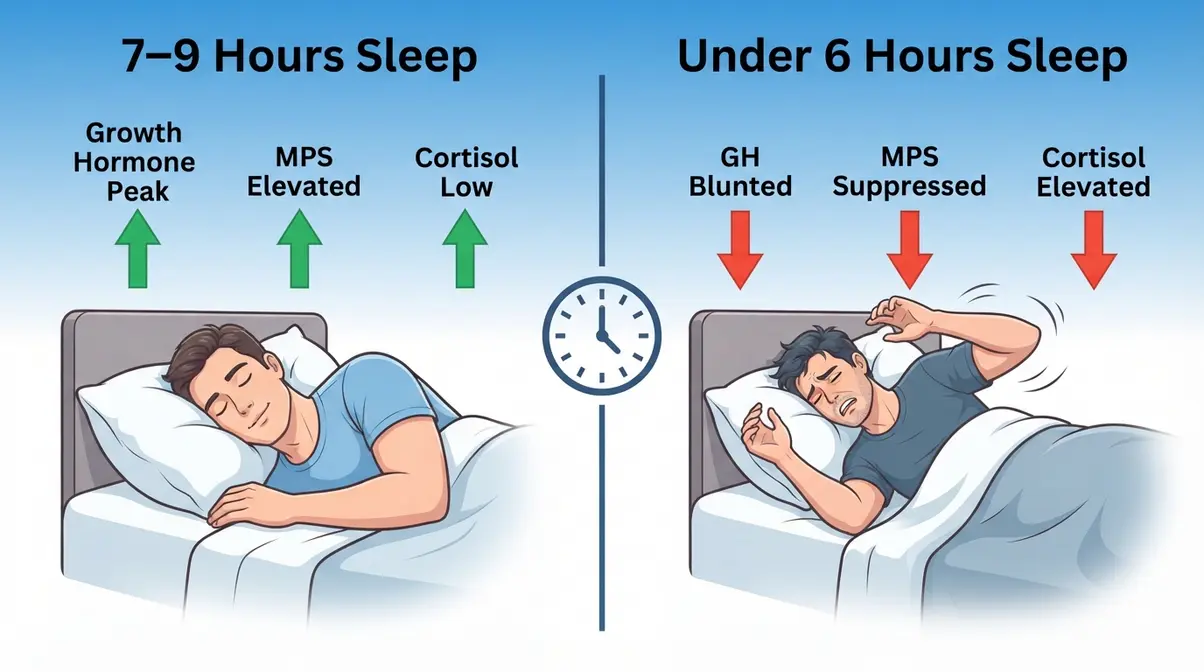
Sleep is the primary recovery window for MPS — and inadequate sleep is one of the most underappreciated inhibitors of muscle growth. Research indicates that sleep restriction to less than 6 hours per night significantly impairs MPS and shifts the hormonal environment toward catabolism: growth hormone secretion (which peaks during deep sleep) is blunted, cortisol remains elevated, and the anabolic response to protein feeding the following day is reduced.
A study published in Sleep (Dattilo et al., 2011) demonstrated that sleep deprivation increases muscle protein breakdown markers while simultaneously suppressing MPS — a dual hit to net muscle protein balance. For athletes, 7–9 hours of sleep per night is not a lifestyle preference; it is a physiological requirement for MPS optimization. Prioritizing sleep quality over additional training volume is a counterintuitive but evidence-supported strategy when gains have stalled.
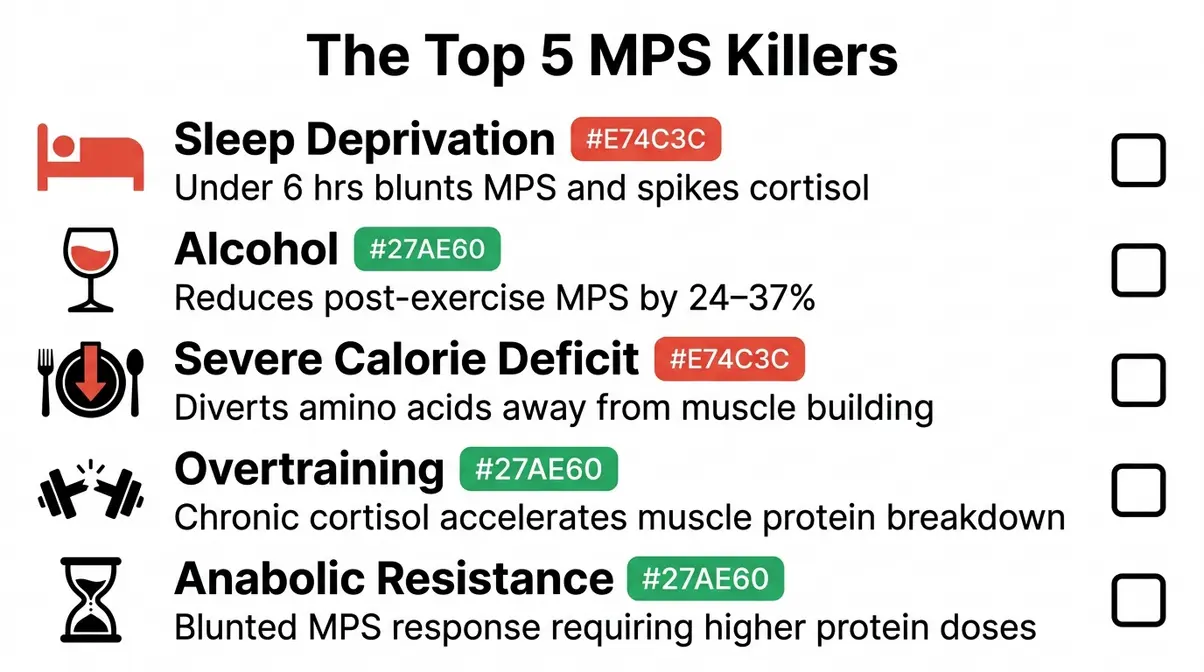
Alcohol: A Direct Suppressor of MPS
Alcohol consumption post-exercise directly impairs MPS through multiple mechanisms: it suppresses mTOR signaling, elevates cortisol, and disrupts the anabolic hormonal environment — including blunting the growth hormone pulse that normally follows resistance training. Studies indicate that consuming alcohol after exercise can reduce post-exercise MPS by approximately 24–37%, even when protein intake is held constant.
Critically, co-ingesting protein with alcohol does not fully protect against this suppression. A study by Parr et al. (2014) found that even when subjects consumed adequate protein alongside alcohol, MPS rates were significantly lower than in the protein-only condition. The practical implication: alcohol and muscle growth are genuinely incompatible in the post-exercise recovery window. If social drinking is part of your lifestyle, the evidence suggests avoiding alcohol in the 4–6 hours immediately following resistance training as the minimum mitigation strategy.
Calorie Deficits and Aging
Severe calorie restriction shifts the net muscle protein balance toward breakdown. When total energy intake is insufficient, the body increasingly oxidizes amino acids for fuel — reducing the pool available for MPS. Moderate deficits of 300–500 kcal/day, combined with high protein intake (2.4–3.1 g/kg), allow fat loss while preserving lean mass. Aggressive cuts below 20% of maintenance calories significantly compromise MPS regardless of protein intake.
Overtraining suppresses MPS via chronically elevated cortisol, which accelerates MPB and blunts the mTOR response to subsequent training sessions. The solution is periodization — planned deload weeks, adequate recovery between sessions, and monitoring for overtraining symptoms (persistent fatigue, declining performance, poor sleep).
Aging produces anabolic resistance — the blunted MPS response to protein and exercise described in the age-specific dosing section. The evidence-based mitigation strategies are: higher per-meal protein doses (0.40 g/kg+), leucine-dense protein sources, and maintaining consistent resistance training to preserve mTOR sensitivity. A targeted approach to muscle building after 40 requires adjusting both training and nutrition protocols to account for these physiological changes.
What inhibits protein synthesis?
The primary inhibitors of muscle protein synthesis are sleep deprivation, alcohol, severe calorie restriction, and overtraining. Sleep under 6 hours blunts MPS and growth hormone secretion. Alcohol post-exercise directly suppresses mTOR signaling. Aggressive calorie deficits divert amino acids toward energy metabolism. Overtraining elevates cortisol chronically, which accelerates muscle protein breakdown. Aging also produces anabolic resistance — a blunted MPS response that requires higher per-meal protein doses to overcome.
Limitations and Alternatives
Common Pitfalls to Avoid
Pitfall 1 — Chasing grams, ignoring leucine. Hitting 150g of daily protein from low-leucine sources (e.g., collagen, most plant proteins at standard doses) without verifying leucine threshold per meal means multiple meals may not fully activate mTOR — despite appearing compliant on paper. Fix: audit leucine content per meal using the table in H2 #3.
Pitfall 2 — Interpreting the 2023 study as “more is always better.” The finding that 100g produced no detectable upper limit does not mean that eating 100g per meal is optimal or practical. It means the old 30g ceiling was wrong. The actionable takeaway is to stop fearing larger meals — not to engineer excessive single-meal doses.
Pitfall 3 — Neglecting the overnight window. Most people inadvertently fast for 7–9 hours overnight with no protein. This is the single easiest MPS opportunity to capture with minimal behavioral change — 30g of casein before sleep.
When to Consider Alternatives
If you are unable to meet protein targets through diet alone — due to food allergies, dietary restrictions, medical conditions affecting appetite, or extreme calorie restriction — a registered dietitian can provide individualized protocols. Athletes with kidney disease, liver conditions, or other metabolic disorders should not apply general population protein targets without medical supervision.
When to Seek Expert Help
Consult a registered dietitian or sports nutritionist before significantly altering your protein intake if you have: a history of kidney or liver disease, are pregnant or breastfeeding, are managing a chronic metabolic condition, or are planning to sustain intakes above 2.5 g/kg for extended periods. The protocols in this guide are appropriate for healthy adults — they are not medical advice.
Muscle Protein Synthesis FAQs
What kills muscle gains the most?
Sleep deprivation is the single most underestimated inhibitor of muscle gains. Restricting sleep below 6 hours per night simultaneously suppresses MPS and elevates cortisol, accelerating muscle protein breakdown. Alcohol in the post-exercise window reduces MPS by approximately 24–37% even when protein intake is adequate (Parr et al., 2014). Chronic calorie restriction and overtraining also suppress MPS — often without the athlete realizing the training stimulus has become counterproductive.
What drink builds muscle fast?
No single drink builds muscle — but whey protein isolate is the most evidence-supported liquid protein source for acute MPS stimulation. Its rapid digestion rate delivers a fast leucine spike, making it ideal post-workout. A 30g whey isolate serving provides approximately 2.7–3.0g of leucine, reliably crossing the mTOR activation threshold. For the pre-sleep window, a casein shake (30–40g) is more appropriate due to its slow 5–7 hour amino acid release profile.
Hardest age to gain muscle?
Gaining muscle becomes progressively more difficult after age 40 due to anabolic resistance — the blunted MPS response to protein and exercise that accompanies aging. Adults over 60 experience the most significant impairment. The evidence-based response is not to accept the plateau: older adults require a higher per-meal protein dose (~0.40 g/kg vs. ~0.24 g/kg in younger adults), leucine-dense protein sources, and consistent progressive resistance training to maintain mTOR sensitivity. With the correct protocol, meaningful muscle gain remains achievable at any age.
The golden hour after a workout
The “golden hour” refers to the post-exercise period when muscles are most sensitive to amino acids — but current evidence shows this window spans 3–6 hours, not 60 minutes. The urgency of consuming protein within exactly 60 minutes post-workout is not supported by research. If you trained fasted or with a minimal pre-workout meal, consuming protein within 1–2 hours post-exercise is sensible. If you ate a protein-containing meal 1–2 hours before training, the post-workout timing window is largely already covered.
How to increase protein synthesis?
To increase muscle protein synthesis, apply The MPS Stacking Protocol: combine progressive resistance training with 1.6–2.2 g/kg of daily protein distributed across 3–5 leucine-threshold meals. Ensure each meal contains at least 2.5–3g of leucine to activate mTOR. Add 30–40g of casein protein before sleep to capture the overnight anabolic window. Eliminate the primary MPS inhibitors: prioritize 7–9 hours of sleep, minimize post-workout alcohol, and avoid severe calorie restriction while training for muscle growth.
Your MPS Action Plan
For athletes and active adults serious about muscle growth, watching your muscle protein synthesis maximize is not a post-workout event — it is a 24-hour competition between synthesis and breakdown that you influence at every meal and every training session. The most current evidence, including the 2023 Cell Reports Medicine study, confirms that the old 30g-per-meal rule is obsolete. The real levers are leucine threshold optimization, strategic protein distribution, and a progressive training stimulus — exactly what The MPS Stacking Protocol integrates into one executable daily framework.
The MPS Stacking Protocol works because it addresses all three mTOR inputs simultaneously: the mechanical stimulus from progressive resistance training, the leucine threshold at each of 3–5 daily meals, and the overnight casein window that most athletes leave completely unoptimized. Removing any one layer reduces the cumulative anabolic effect — stacking all three compounds it.
Start with your next meal. Calculate your leucine content using the table in this guide. Verify your daily protein target against your bodyweight. Add a pre-sleep casein source tonight. Then audit your training for progressive overload. These are not complex interventions — they are systematic, evidence-based adjustments that the current research strongly supports. Apply them consistently, and the plateau you have been fighting has a clear, mechanistic explanation — and a clear, actionable solution.
Medical Disclaimer: This content is for informational purposes only and does not constitute medical or nutritional advice. Consult a qualified healthcare professional or registered dietitian before making significant changes to your diet or exercise routine, particularly if you have a pre-existing medical condition.
Expert Review: This article synthesizes peer-reviewed research from PubMed/NCBI, the International Society of Sports Nutrition (ISSN), the Gatorade Sports Science Institute (GSSI), and Cell Reports Medicine. Readers are encouraged to consult a Registered Dietitian (RD) or Certified Strength and Conditioning Specialist (CSCS) for individualized protocol design.
Related posts:
How Long to Build Muscle? Your Evidence-Based Timeline
Calorie Deficit Too Large? 5 Warning Signs to Fix It
Compound vs Isolation Exercises: Which Builds More Muscle?
Best Collagen Protein Powder: 9 Expert Picks (2026)
How Fast to Lose Fat: Safe Rate, Timeline & Science
Testosterone Muscle Growth Science: Complete Guide

Callum
Hi, I'm Callum, the founder of Body Muscle Matters. I'm not a certified trainer, I'm a self taught lifter who started this site to share what I've learned from my own training and a lot of trial and error. Everything here comes from real experience and honest research, written the way I'd explain it to a friend who is just getting started. My goal is simple: practical, no hype fitness advice you can actually use.