You finish your last rep, drop the weights, and immediately head for the shower — or the couch. Sound familiar? Most beginners do exactly this, and it seems harmless. But understanding why is it important to cool down after exercise could be the single most valuable thing you learn in your first months of training.
Skipping your cool-down is a bit like driving a car at 70 miles per hour and cutting the engine without slowing down first. Your heart is still pumping hard, your blood vessels are wide open, and your muscles are flooded with metabolic byproducts. Stopping abruptly forces your body to manage all of that at once — and it doesn’t always cope gracefully. Dizziness, post-workout nausea, unexpected soreness, and muscle cramps are all common consequences.
This guide explains the physiology behind cooling down, introduces the Recovery Ramp framework for thinking about post-workout deceleration, and gives you a concrete 9-minute protocol — the 3-3-3 rule — that protects your heart, muscles, and nervous system every time you exercise.
If you are wondering why is it important to cool down after exercise, the answer lies in safe cardiovascular recovery. The Recovery Ramp framework shows that your body needs a gradual physiological deceleration — not a sudden stop — to prevent dizziness, reduce soreness, and protect long-term heart health.
- Heart Safety: Abruptly stopping exercise can cause blood pressure to drop dangerously, especially in older adults — a 5-minute cool-down significantly reduces this risk.
- Soreness Reduction: Active cool-downs help clear metabolic waste (including lactate) from muscles, reducing delayed onset muscle soreness (DOMS) by up to 40% compared to passive rest.
- Flexibility Gains: Warm muscles stretch up to 20% more effectively than cold ones — making post-workout the ideal time for static stretching.
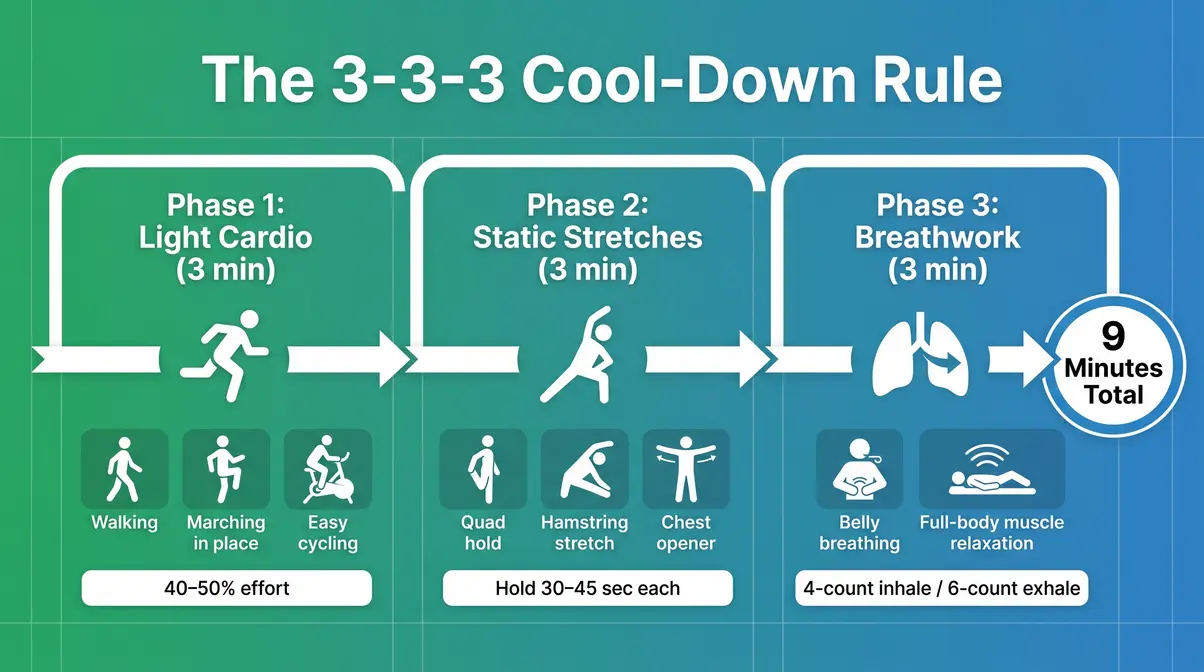
- The 3-3-3 Rule: 3 minutes of light cardio + 3 static stretches + 3 minutes of breathwork = a complete, evidence-based cool-down in just 9 minutes.
What a Cool-Down Actually Does to Your Body
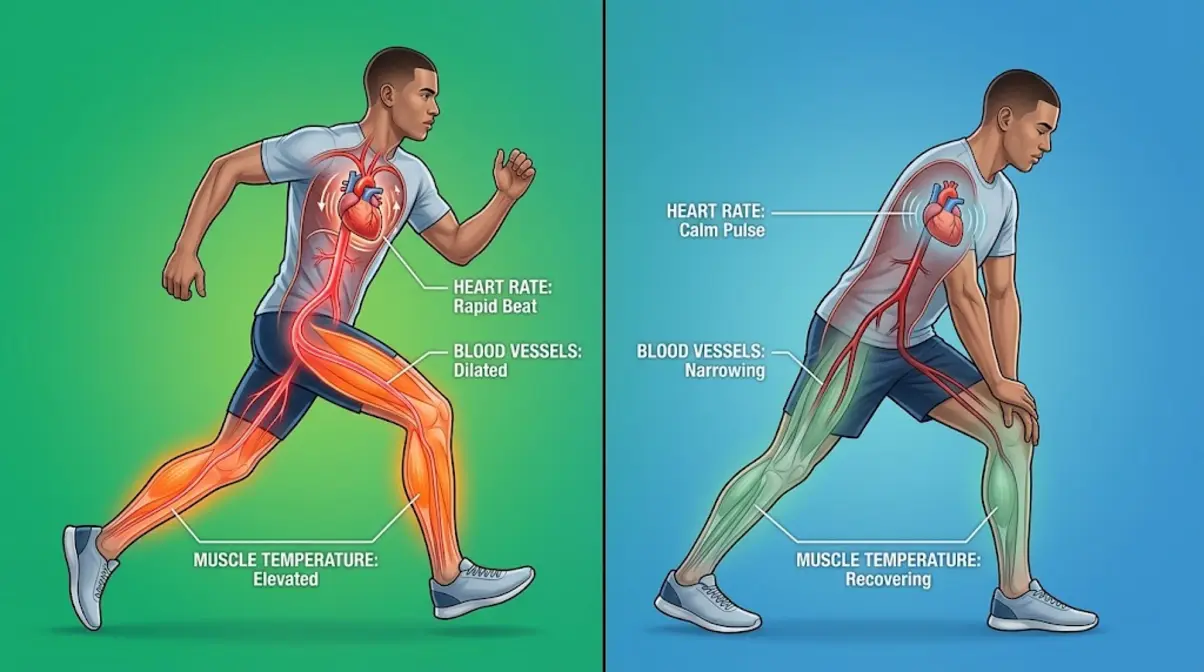
A cool-down is any low-intensity movement or breathing practice performed immediately after vigorous exercise. To truly grasp why is it important to cool down after exercise and fully understand the importance of cooling down, you must look at how your body transitions from exertion to rest. According to the American Heart Association, a proper cool-down allows your heart rate and blood pressure to return to resting levels gradually — a process your cardiovascular system genuinely depends on to stay safe.
Think of it as the Recovery Ramp: instead of slamming the brakes after a workout, you’re easing down a gradual slope back to your resting state. Your body doesn’t have an instant “off” switch. When you understand what’s actually happening inside you during exercise, the need for this ramp becomes obvious.
Your Body During Exercise: A Quick Primer
During a hard workout, your body makes dramatic changes to deliver oxygen to working muscles. Your heart rate can climb from a resting 60–70 beats per minute (bpm) to 150–180 bpm or higher. Your blood vessels dilate (widen) to increase blood flow, and your muscles produce metabolic byproducts like lactate (sometimes called “lactic acid”) as they generate energy.
Your sympathetic nervous system — the “fight or flight” branch — takes over. It increases cardiac output, redirects blood away from your digestive system, and keeps your muscles fueled. Research published in the PMC/NIH database confirms that these cardiovascular changes are significant and require a structured recovery period to reverse safely.
What Happens When You Stop Too Quickly
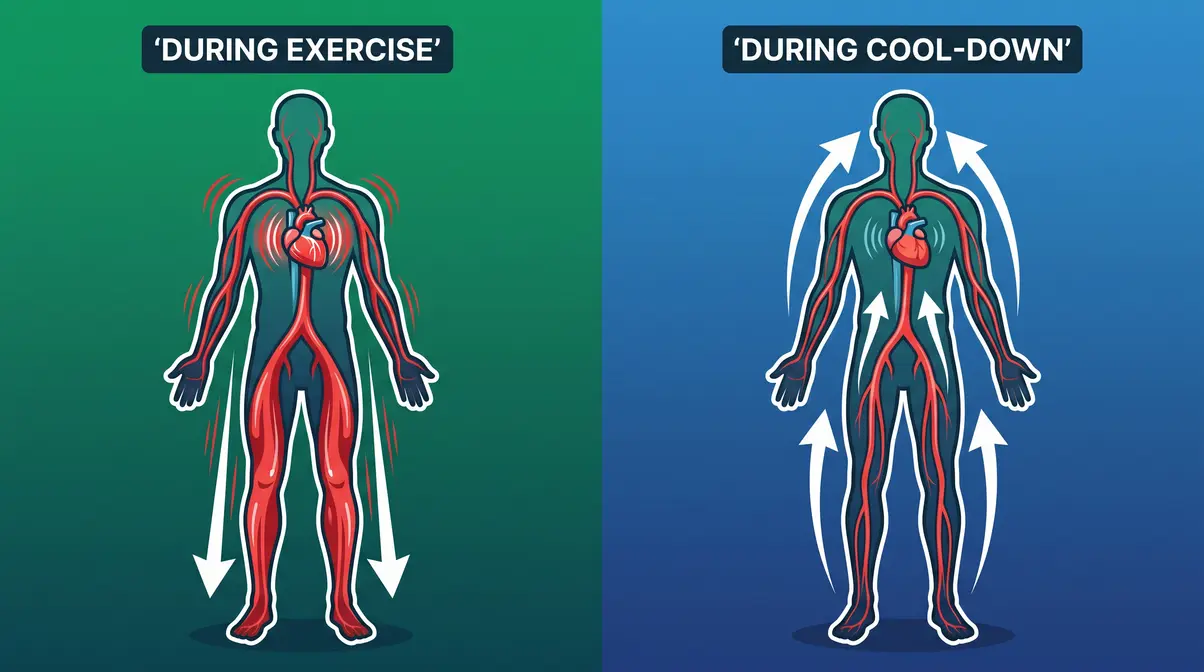
Here is where the Recovery Ramp concept becomes critical. When you stop exercising abruptly, your heart rate drops but your blood vessels remain dilated. Blood pools in your legs and lower body — a condition called venous pooling (when blood collects in your legs instead of circulating back to your heart). Your heart suddenly has less blood to pump, which causes a rapid drop in blood pressure.
The result? Dizziness, light-headedness, and in some cases, fainting. This is called post-exercise hypotension (a temporary drop in blood pressure after a workout). A study published in PubMed found that abrupt exercise cessation significantly increases the risk of cardiovascular events, particularly in individuals who are unfit or over 40. Continuing to move — even at a very slow pace — keeps your leg muscles contracting, which acts as a pump to push blood back up toward your heart.
5 Key Benefits of Cooling Down After Exercise
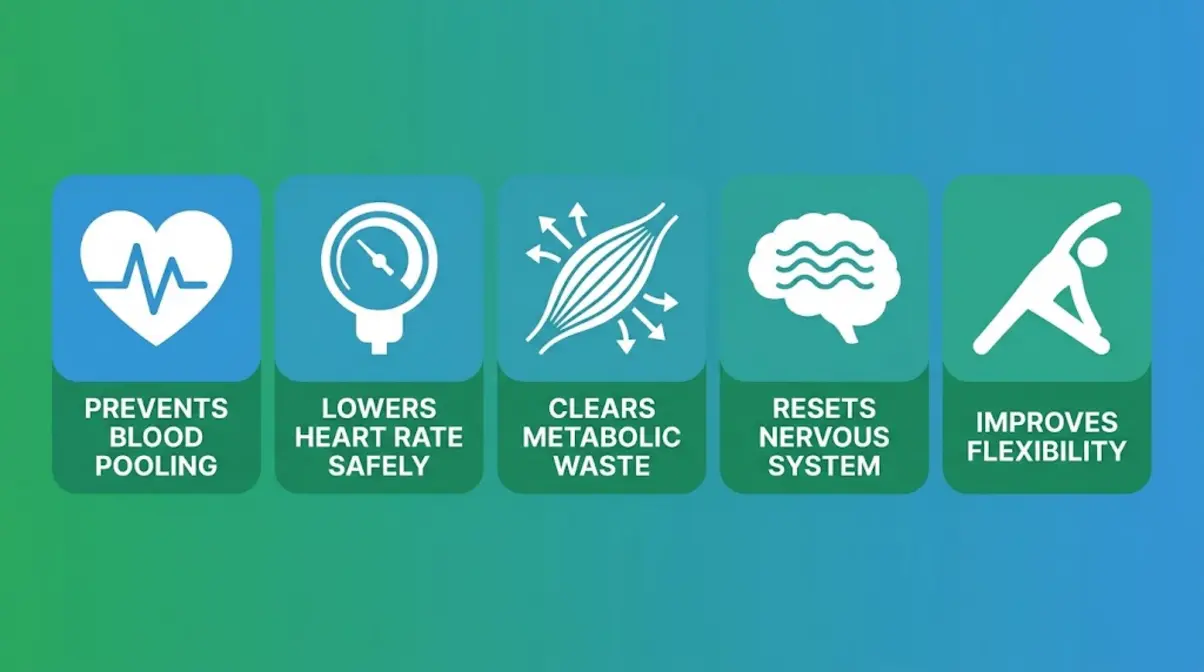
The case for cooling down after a workout isn’t just theoretical — it’s backed by decades of cardiovascular and sports medicine research. Understanding why is it important to cool down after exercise becomes clear when you look at the physiological benefits. Here are the five most important reasons your body needs this recovery time, explained in plain terms.
Benefit 1 — Prevents Dangerous Blood Pooling and Dizziness
When you exercise, your legs do more than just move — they act as a secondary pump. Each muscle contraction squeezes blood through your veins and back toward your heart. Stop moving suddenly, and that pumping action stops too. Blood pools in your lower extremities, starving your brain of oxygen-rich blood for a few critical seconds.
The Cleveland Clinic notes that this pooling effect is the most common reason people feel dizzy or faint immediately after intense exercise. A 5-minute walking cool-down keeps those leg muscles contracting rhythmically, maintaining blood return to your heart while your cardiovascular system gradually scales back. Venous pooling is preventable — and a cool-down is the prevention.
Benefit 2 — Lowers Heart Rate and Blood Pressure Safely
Your heart doesn’t appreciate sudden stops any more than your car engine does. After intense effort, your heart is working at a significantly elevated rate. An abrupt stop forces a rapid, uncontrolled drop in both heart rate and blood pressure — a transition your cardiovascular system is not designed to handle efficiently.
According to the American Heart Association, a gradual cool-down allows the heart to decelerate in a controlled way, reducing the strain on cardiac muscle and lowering the risk of arrhythmias (irregular heartbeats) in the immediate post-exercise window. For anyone with even mild cardiovascular concerns, this is not optional — it is a safety measure. Evidence from Mayo Clinic reinforces that a proper cool-down is a standard component of any safe exercise program.
Benefit 3 — Clears Metabolic Waste to Reduce Soreness
During hard exercise, your muscles produce lactate and other metabolic byproducts as a normal part of energy production. These byproducts contribute to that heavy, burning sensation you feel mid-workout. After exercise, your body needs to clear them from your muscles and bloodstream — and light movement dramatically speeds up this process.
Research published in PMC/NIH shows that active recovery (light movement) clears blood lactate significantly faster than passive rest. This faster clearance is directly linked to reduced delayed onset muscle soreness (DOMS) — the deep muscle ache you feel 24–48 hours after a tough workout. If you want to bounce back faster and feel less stiff the next day, an active cool-down is one of the most effective tools available.
Benefit 4 — Resets Your Nervous System After Exertion
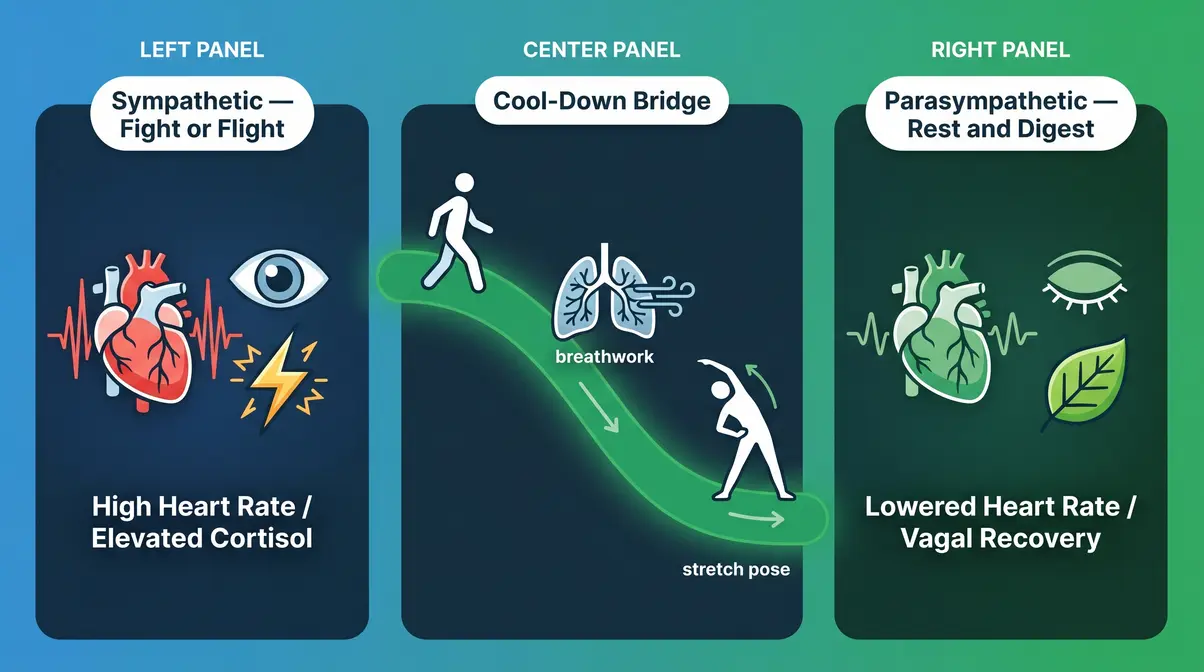
This benefit is almost entirely absent from competitor articles — and it may be the most underappreciated reason to cool down. During exercise, your sympathetic nervous system (the “fight or flight” system) is in full control. Your heart races, your pupils dilate, and your body is in a state of high alert. Abruptly stopping exercise leaves you physiologically “stuck” in this state longer than necessary.
A structured cool-down — especially one that incorporates slow, rhythmic breathing — actively engages your parasympathetic nervous system (the “rest and digest” system). This shift, called vagal tone recovery (the process by which your vagus nerve helps your body return to a calm state), reduces cortisol levels, lowers residual heart rate, and helps you transition out of workout mode mentally as well as physically. Evidence from sports medicine research confirms that controlled breathing during cool-down accelerates this autonomic recovery significantly.
Benefit 5 — Improves Flexibility and Lowers Injury Risk
Warm muscles are pliable muscles. At the end of a workout, your muscle temperature is elevated and your connective tissue is more elastic than at any other point in your day. This creates a brief but valuable window for flexibility work. Research suggests that muscle extensibility increases by up to 20% when tissue temperature is elevated — making post-workout the ideal time for static stretching.
The Mayo Clinic recommends holding static stretches for 30 seconds during cool-down to capitalize on this window. Over time, consistent post-workout stretching improves range of motion, reduces the risk of muscle strains, and helps keep you pain-free and flexible for the long term — especially when you’re trying new exercises or pushing into new movements.
Why Post-Workout Stretching Is the Right Time
Many beginners stretch before they exercise, assuming it prevents injury. However, current sports medicine evidence consistently shows that post-workout stretching — done when muscles are warm — delivers far greater flexibility and recovery benefits than pre-workout stretching. Combining this window with effective stretching techniques for flexibility ensures your muscles recover optimally.
Is it more important to stretch before or after exercise?
Stretching after exercise is more beneficial than stretching before, because warm muscles are significantly more pliable and responsive to lengthening. Research shows muscle extensibility increases by up to 20% when tissue temperature is elevated — a window that only exists at the end of your workout. Before exercise, dynamic stretching (controlled movements through range of motion) is appropriate for warm-up. Static stretching — holding positions for 30–60 seconds — belongs in your cool-down. Evidence from the Mayo Clinic and PMC/NIH consistently supports this sequencing for both flexibility gains and injury prevention.
Why Warm Muscles Stretch Better
Think of your muscles like cold taffy versus warm taffy. Cold taffy snaps; warm taffy stretches smoothly. When your body temperature is elevated after exercise, the proteins within your muscle fibers are more pliable, and your connective tissue (tendons and fascia) is more elastic. Attempting to deeply stretch cold muscles — before a workout — risks micro-tears in tissue that isn’t ready.
The Cleveland Clinic notes that stretching warm muscles leads to more lasting flexibility gains. Your nervous system is also more relaxed after exercise, which means your stretch reflex (the automatic muscle contraction that resists lengthening) is less reactive — allowing you to reach a deeper, more productive stretch without discomfort.
Static vs. Dynamic Stretching: Which to Use When
Understanding this distinction saves you time and reduces injury risk significantly.
| Stretching Type | What It Is | Best Used | Example |
|---|---|---|---|
| Dynamic | Controlled movements through full range of motion | Before exercise (warm-up) | Leg swings, arm circles |
| Static | Holding a stretch for 20–60 seconds | After exercise (cool-down) | Quad hold, hamstring reach |
| PNF | Contract-relax cycles for deeper stretch | After exercise (advanced) | Assisted hamstring stretch |
Dynamic stretching before exercise prepares your joints and muscles for movement. Static stretching after exercise capitalizes on elevated muscle temperature to improve flexibility and reduce stiffness. Using static stretches before exercise can temporarily reduce muscle power output — a finding supported by research in the PMC/NIH database.
Busting the Lactic Acid Myth: What Really Causes DOMS
Here’s something many beginners get wrong: lactic acid does not cause the soreness you feel the day after a hard workout. Your body clears lactate from your bloodstream within 30–60 minutes of stopping exercise — long before DOMS sets in.
Delayed onset muscle soreness (DOMS) is actually caused by microscopic damage to muscle fibers and the resulting inflammation as your body repairs them. This is a normal, healthy part of getting stronger. However, poor blood circulation during recovery can slow the delivery of repair nutrients to damaged tissue. An active cool-down — by maintaining circulation — helps your body begin the repair process faster. The Cleveland Clinic confirms this distinction, noting that while lactic acid is commonly blamed for soreness, the real culprit is inflammatory response to micro-damage.
The 3-3-3 Cool-Down Rule: 8 Exercises to Try Today
None of the major medical institutions currently explain the 3-3-3 rule in one accessible, actionable place. That gap ends here. The Recovery Ramp is built on a simple structure: three distinct phases of 3 minutes each, totaling 9 minutes of deliberate post-workout deceleration.
Estimated Time: 9 minutes
What You Need: A comfortable exercise mat, breathable clothing, and a water bottle.
What Is the 3-3-3 Rule?
The 3-3-3 rule is a structured cool-down protocol that divides post-workout recovery into three equal phases: light cardiovascular movement, static stretching, and breathwork. Each phase serves a distinct physiological purpose, and together they address every major recovery need — cardiovascular, muscular, and neurological — in under 10 minutes.
Certified trainers commonly recommend this framework because it removes the guesswork from cool-downs. Instead of vaguely “stretching a bit,” you follow a repeatable structure that your body learns to anticipate over time, making the transition from exertion to recovery increasingly efficient.
Phase 1 — 3 Minutes of Light Cardio
This phase keeps your leg muscles gently contracting to prevent venous pooling and guide your heart rate downward. Aim for 40–50% of your maximum effort — you should be able to hold a conversation easily.
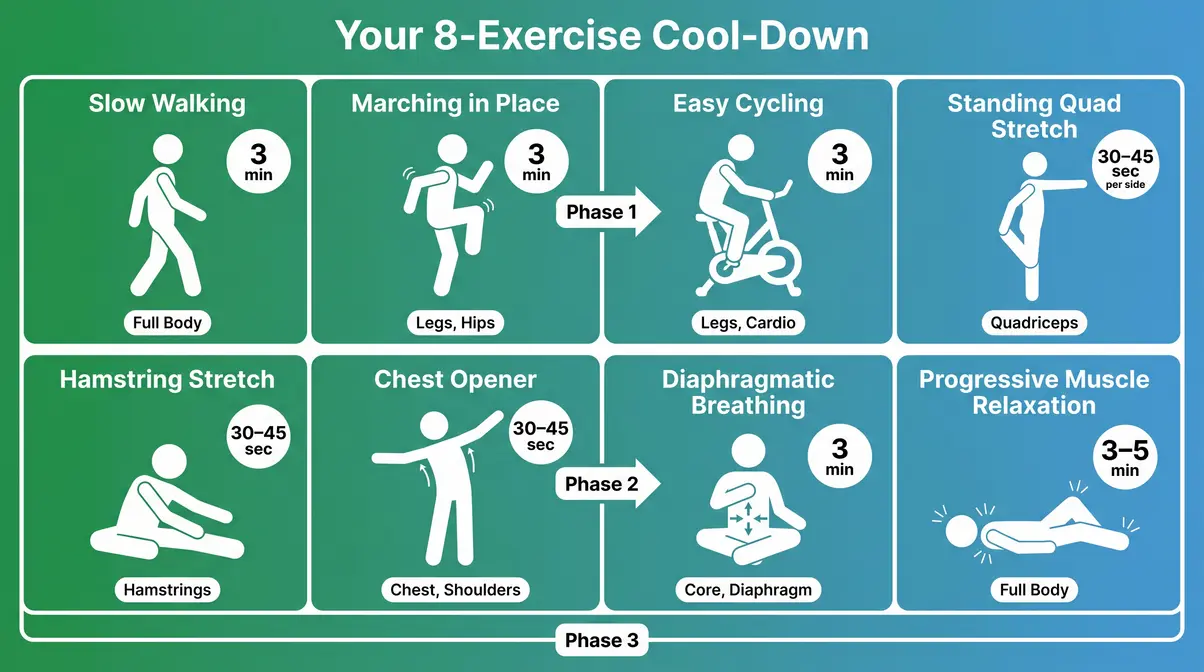
Exercise 1 — Slow Walking (3 minutes)
Walk at a leisurely pace, swinging your arms naturally. Focus on full heel-to-toe foot contact. This alone is enough to maintain blood return to your heart while your cardiovascular system decelerates.
Exercise 2 — Marching in Place (1–2 minutes, optional substitute)
If space is limited, lift your knees alternately to hip height while walking on the spot. Keep the pace slow and deliberate. This activates the same muscle-pump mechanism as walking.
Exercise 3 — Easy Cycling or Elliptical (3 minutes, gym alternative)
If you’re near a stationary bike or elliptical, set resistance to near-zero and pedal at a very slow cadence. This is particularly effective after leg-heavy workouts like squats or running.
Phase 2 — 3 Static Stretches to Hold
Each stretch targets a major muscle group stressed during typical workouts. Hold every stretch for 30–45 seconds. Breathe slowly throughout — exhale as you deepen into the stretch.
Exercise 4 — Standing Quad Stretch (30–45 seconds per leg)
Stand tall, bend one knee, and hold your ankle behind you. Keep your knees together and your hips forward. Target muscles: quadriceps, hip flexors.
Exercise 5 — Seated or Standing Hamstring Stretch (30–45 seconds per leg)
Extend one leg forward, hinge at your hips, and reach toward your toes while keeping your back flat. Avoid rounding your spine. Target muscles: hamstrings, lower back.
Exercise 6 — Chest Opener / Shoulder Stretch (30–45 seconds)
Clasp your hands behind your back, gently squeeze your shoulder blades together, and lift your arms slightly. This counteracts the hunched posture common in pressing and rowing exercises. Target muscles: pectorals, anterior deltoids.
Phase 3 — 3 Minutes of Breathwork and Recovery
This final phase is the most overlooked — and the one that most powerfully engages your parasympathetic nervous system to complete the Recovery Ramp.
Exercise 7 — Diaphragmatic (Belly) Breathing (2 minutes)
Sit or lie down. Place one hand on your chest and one on your belly. Inhale slowly through your nose for 4 counts, letting your belly rise (not your chest). Exhale through your mouth for 6 counts. This extended exhale activates your vagus nerve and accelerates vagal tone recovery.
Exercise 8 — Progressive Muscle Relaxation (1 minute)
Starting from your feet, consciously tense each muscle group for 5 seconds, then release completely. Work upward through calves, thighs, glutes, abdomen, and shoulders. This technique reduces residual muscular tension and signals your nervous system that the workout is truly over.
Active vs. Passive Cool-Down: The Research
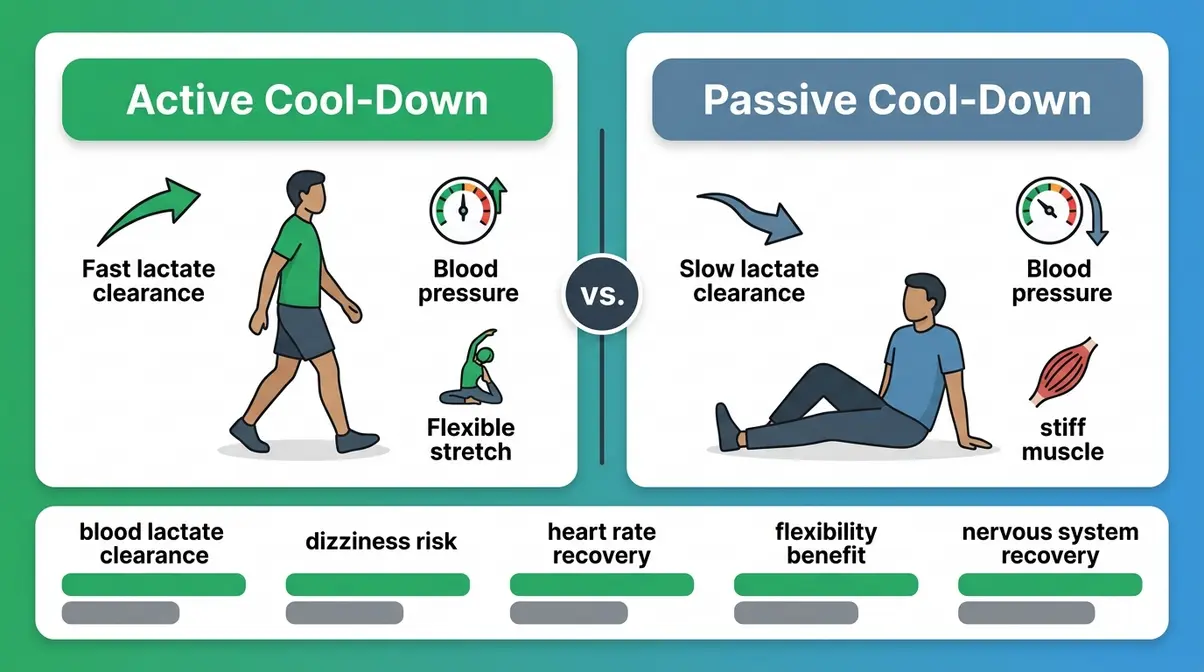
Not all cool-downs are equal. There is an important distinction between actively cooling down (continuing to move at low intensity) and passively cooling down (stopping and resting). Understanding this difference helps you make smarter recovery choices — especially as you age.
Active Cool-Down: Keep Moving Gently
An active cool-down involves continuing light physical activity — walking, slow cycling, gentle stretching — at roughly 30–50% of your maximum effort for 5–10 minutes. The physiological benefit is straightforward: muscle contractions maintain venous return (blood flow back to the heart), prevent blood pooling, and accelerate the clearance of metabolic byproducts from your muscles.
Research published in PMC/NIH found that active recovery after high-intensity exercise resulted in significantly faster blood lactate clearance compared to passive rest. Faster lactate clearance correlates with reduced muscle soreness and faster readiness for your next training session. For most people, most of the time, active cool-down is the superior choice.
Passive Cool-Down: Rest and Recover
A passive cool-down means stopping exercise and resting — sitting, lying down, or standing still. It is not inherently harmful for healthy young adults after moderate exercise. However, immediately lying down after intense effort is problematic because it eliminates the muscle-pump mechanism that returns blood to your heart.
The Cleveland Clinic notes that while passive rest eventually allows heart rate to normalize, it does so more slowly and with greater cardiovascular strain than active recovery. For older adults, those with cardiovascular conditions, or anyone after high-intensity exercise, passive cool-down significantly increases the risk of post-exercise hypotension and dizziness.
The Evidence-Based Verdict
Active cool-down wins on every measurable metric for the vast majority of exercisers. It clears metabolic waste faster, reduces dizziness risk, improves flexibility (when combined with stretching), and accelerates nervous system recovery. Passive rest is acceptable as a supplementary option for very low-intensity sessions or when injury prevents movement — but it should not replace an active protocol.
The one exception: if you feel genuinely unwell, dizzy, or experience chest discomfort during cool-down, stop and sit or lie down immediately. Safety always overrides protocol. Consult a healthcare professional if symptoms persist.
| Factor | Active Cool-Down | Passive Cool-Down |
|---|---|---|
| Blood lactate clearance | Faster | Slower |
| Dizziness/pooling risk | Lower | Higher |
| Heart rate recovery | More controlled | Less controlled |
| Flexibility benefit | High (with stretching) | Minimal |
| Nervous system recovery | Accelerated | Gradual |
| Best for | Most exercisers | Very light sessions only |
What Happens If You Skip Your Cool-Down?
Skipping your cool-down occasionally won’t cause lasting harm. But consistently bypassing it — especially after intense workouts — creates a pattern of physiological stress that compounds over time. If you want to learn about proper post-workout recovery, avoiding these abrupt stops is the first step.
Why Sitting or Lying Down Immediately Is a Problem
The moment you stop vigorous exercise and sit or lie down, your leg muscles stop contracting. Blood that was being actively pumped upward through your veins now pools in your lower extremities. Your heart, still beating rapidly, suddenly has less blood to work with. Blood pressure drops sharply.
For most healthy young adults, this triggers dizziness and light-headedness that passes in a minute or two. For others — particularly those who are deconditioned, exercising in heat, or have underlying cardiovascular factors — this sudden drop can trigger fainting or, in rare cases, more serious cardiac events. According to the American Heart Association, the post-exercise period is one of the highest-risk windows for cardiac events, making a proper cool-down a genuine safety measure.
Is it okay to lie down after exercise?
Lying down immediately after intense exercise is not recommended, because it eliminates the muscle-pump mechanism that returns blood to your heart. When your leg muscles stop contracting, blood pools in your lower extremities and your blood pressure drops sharply. For healthy young adults, this usually causes brief dizziness. For older adults or those with cardiovascular conditions, it can be more serious. After a complete cool-down — once your heart rate has returned near its resting level — lying down is perfectly fine and can even support parasympathetic recovery. Wait until your heart rate is below 100 bpm before resting horizontally.
Special Warning for Older Adults
This risk profile changes significantly with age — and almost no competitor articles address this. As people age, the cardiovascular system becomes less responsive to rapid changes in demand. Blood vessels are less elastic. The autonomic nervous system (which regulates heart rate and blood pressure automatically) responds more slowly.
Research cited by PMC/NIH shows that post-exercise hypotension is more pronounced and more prolonged in older adults. For anyone over 50 exercising at moderate to high intensity, a minimum 5-minute active cool-down is not just beneficial — it is a cardiovascular safety requirement. Certified trainers working with older populations consistently prioritize cool-down as the non-negotiable bookend to every session.
Long-Term Effects of Skipping Consistently
A single skipped cool-down rarely causes lasting damage. But a habit of abrupt stops after every workout creates a pattern of repeated cardiovascular stress, slower muscle recovery, and progressively reduced flexibility. Over months, this can contribute to:
- Increased injury risk from chronically tight, inflexible muscles
- Slower progress due to inadequate recovery between sessions
- Greater DOMS frequency from poor metabolic waste clearance
- Elevated resting heart rate as your autonomic system adapts to inefficient recovery patterns
The Mayo Clinic frames consistent cool-down as part of a sustainable long-term fitness habit — not a luxury, but a structural component of any program designed to keep you training pain-free for years.
Limitations and When to Modify Your Cool-Down
An honest look at cool-down protocols requires acknowledging that they are not one-size-fits-all. The evidence strongly supports cooling down, but the specific method, duration, and intensity should adapt to your individual circumstances.
When to Adjust Your Cool-Down Routine
After low-intensity exercise: A 20-minute gentle walk doesn’t require the same cool-down as a 45-minute HIIT session. For light activity, 3–5 minutes of slow movement and a few basic stretches is sufficient. Matching cool-down intensity to workout intensity is a principle certified trainers commonly recommend.
During illness or extreme fatigue: If you’re exercising while fighting off a mild illness or are unusually fatigued, shorten your cool-down but don’t eliminate it. Even 3–5 minutes of slow walking followed by one or two gentle stretches provides meaningful cardiovascular benefit.
In time-constrained situations: A 5-minute cool-down is better than none. Prioritize Phase 1 (light cardio) above all else if time is genuinely short, as this addresses the most acute cardiovascular risk. Stretching and breathwork can be abbreviated without compromising safety.
When injury limits movement: If a lower-body injury prevents walking, seated upper-body movements — gentle arm circles, shoulder rolls, seated diaphragmatic breathing — still engage your parasympathetic nervous system and provide partial benefit.
When to Consult a Healthcare Professional
Cool-down protocols are generally safe for healthy adults. However, certain symptoms during or after exercise warrant professional evaluation before continuing your program.
Consult a doctor or certified healthcare professional if you experience:
- Chest pain, tightness, or pressure during or after exercise
- Heart palpitations (irregular heartbeat sensations) that persist beyond cool-down
- Fainting or near-fainting that doesn’t resolve with a brief cool-down
- Persistent dizziness lasting more than 5 minutes after stopping exercise
- Unusual shortness of breath disproportionate to exercise intensity
- Any new or unexplained symptom that appears during the post-exercise window
The American Heart Association recommends that individuals with known cardiovascular conditions, diabetes, or hypertension discuss their cool-down protocol specifically with their physician — as medication interactions (particularly beta-blockers) can alter normal heart rate response patterns.
Frequently Asked Questions
Why is cooling down after exercise important?
Cooling down after exercise is important because it allows your cardiovascular system to return to its resting state gradually and safely. When you stop exercising abruptly, blood pools in your legs (venous pooling), causing a rapid drop in blood pressure that can trigger dizziness or fainting. A cool-down maintains blood circulation, clears metabolic byproducts from muscles, and engages your parasympathetic nervous system to reduce stress hormones. According to the American Heart Association, the immediate post-exercise period is one of the highest-risk windows for cardiovascular events — making a structured cool-down a genuine safety measure, not just a wellness nicety.
What are the 5 benefits of cooling down?
The five key benefits of cooling down are: preventing venous pooling and dizziness, lowering heart rate and blood pressure safely, clearing metabolic waste to reduce soreness, resetting your nervous system, and improving flexibility. Each benefit addresses a distinct physiological system — cardiovascular, muscular, and neurological. Together, they make the difference between bouncing back quickly after a tough workout and feeling wrecked the next day. Research from PMC/NIH confirms that active cool-downs outperform passive rest on nearly every recovery metric (PMC, 2018).
What is the 3-3-3 rule at the gym?
The 3-3-3 rule is a 9-minute cool-down protocol divided into three phases: 3 minutes of light cardio, 3 static stretches held for 30–45 seconds each, and 3 minutes of breathwork. Each phase targets a different recovery need — cardiovascular deceleration, muscular flexibility, and nervous system reset. It’s a practical framework that removes guesswork from post-workout recovery. Certified trainers recommend it because it’s short enough to actually do after every session, yet comprehensive enough to address all the major physiological needs of a proper cool-down.
What are three important reasons for cooling down?
Three critical reasons to cool down are: (1) preventing dangerous blood pooling that causes dizziness, (2) reducing delayed onset muscle soreness (DOMS) by clearing lactate and metabolic waste faster, and (3) accelerating nervous system recovery to reduce post-workout cortisol levels. These three reasons span cardiovascular, muscular, and neurological health — demonstrating that a cool-down isn’t just about “calming down.” It is a multi-system recovery protocol with measurable physiological benefits backed by peer-reviewed sports medicine research.
What happens if you don’t cool down after a workout?
If you skip your cool-down, blood pools in your legs immediately, causing a rapid blood pressure drop that triggers dizziness, light-headedness, or — in some cases — fainting. Over time, consistently skipping cool-downs leads to slower muscle recovery, increased injury risk from chronically tight muscles, more frequent DOMS, and greater cardiovascular strain. For older adults, the risks are more acute — post-exercise hypotension is both more pronounced and more prolonged after age 50. A PubMed study found that abrupt exercise cessation meaningfully increases cardiovascular risk in the post-exercise window.
Building Your Recovery Ramp: The Final Word
For beginner fitness enthusiasts wondering why is it important to cool down after exercise, the answer is no longer abstract. Your body is a high-performance system that cannot simply switch off at full speed. The Recovery Ramp — the gradual physiological deceleration from peak exertion back to rest — is not optional equipment. It is built into how your cardiovascular, muscular, and nervous systems are designed to function. Research from the American Heart Association, Mayo Clinic, and NIH consistently confirms that a structured cool-down reduces cardiovascular risk, accelerates muscle recovery, and improves long-term flexibility outcomes.
The Recovery Ramp framework gives this process a name and a structure you can remember. Every workout that ends on the ramp — rather than with a sudden stop — is a workout that moves you forward without unnecessary setbacks.
Start with the 3-3-3 rule today. Walk for 3 minutes. Stretch for 3 minutes. Breathe for 3 minutes. Nine minutes is all it takes to protect your heart, clear your muscles, and reset your nervous system. Do it after your next workout, and notice the difference in how you feel the following morning. That difference — less stiffness, clearer head, faster recovery — is the Recovery Ramp working exactly as designed.