Long Does Sugar Stay in Your Body? (And How to Clear It)
Medical Disclaimer: This article is for informational purposes only and does not constitute medical advice. Always consult a qualified healthcare provider — such as your doctor or a registered dietitian — before making changes to your diet, especially if you have diabetes, are pregnant, or take prescription medications.
You know the feeling. You finish a slice of birthday cake or a sugary coffee drink, and within an hour you feel it — the foggy brain, the heavy eyelids, the sudden craving for more sugar. Then comes the question: how long does sugar stay in your body, and when will this finally be over?
If you are wondering how long does sugar stay in your body, you are not alone. Hundreds of thousands of people search for this every month — and most find vague answers like “a few hours” with zero explanation of what’s actually happening inside their body. Every hour you spend guessing is an hour you could spend actively helping your body recover.
In this guide, you’ll learn the exact minute-by-minute timeline of how long sugar stays in your body, what factors make it last longer, and five specific actions you can take today to clear it faster. You’ll also find out what happens when you cut out sugar for 14 days, how diabetes medications affect the timeline, and when to see a doctor. Let’s get into it.
For a healthy person, how long sugar stays in your body comes down to roughly 2–3 hours after eating — but your activity level, metabolic health, and sugar type can extend this significantly. Using the Sugar Clearance Window framework, you can actively shrink that timeline.
- Blood sugar peaks at 60–90 minutes after eating, then insulin brings it back to normal within 2 hours
- Complete clearance takes 2–3 hours in healthy adults; significantly longer with diabetes or insulin resistance
- A 10–15-minute walk after eating can meaningfully reduce blood sugar spikes, according to a 2025 study in Scientific Reports
- Sugar in urine only appears when blood glucose exceeds 160–180 mg/dL — a sign your kidneys are overloaded
- Withdrawal symptoms from cutting out sugar peak at days 2–5, then improve rapidly through the second week
Quick Definitions — Read These First
Before diving in, here are four terms you’ll see throughout this article:
- Glucose: The form of sugar your body uses for energy — think of it as the “fuel” that powers every cell
- Insulin: A hormone (chemical messenger) made by your pancreas that acts like a key, unlocking your cells so glucose can enter
- Glycogen: Glucose that has been packaged and stored in your liver and muscles for later use — like a fuel reserve tank
- Blood sugar (blood glucose): The amount of glucose currently circulating in your bloodstream at any given moment
How Long Does Sugar Stay in Your Body?
For a healthy adult, sugar stays in your bloodstream for approximately 2 to 3 hours after eating. Research from the University of Rochester Medical Center confirms that blood glucose levels typically return to normal within 2 hours of eating (URMC, 2026). How fast that happens depends on factors you can actually control — starting with what you do in the next 30 minutes.
In healthy adults, blood sugar typically returns to normal within 2 hours of eating — but this 2–3 hour period is not a passive waiting game. It’s an active window of opportunity.
What Happens When You Eat Sugar?
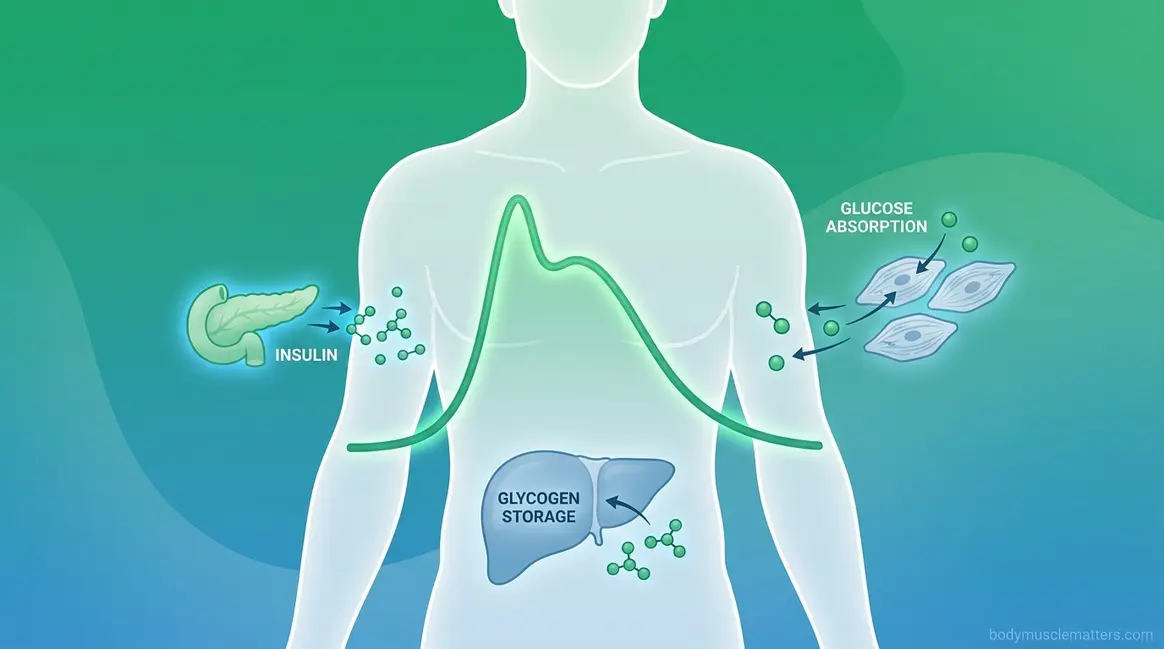
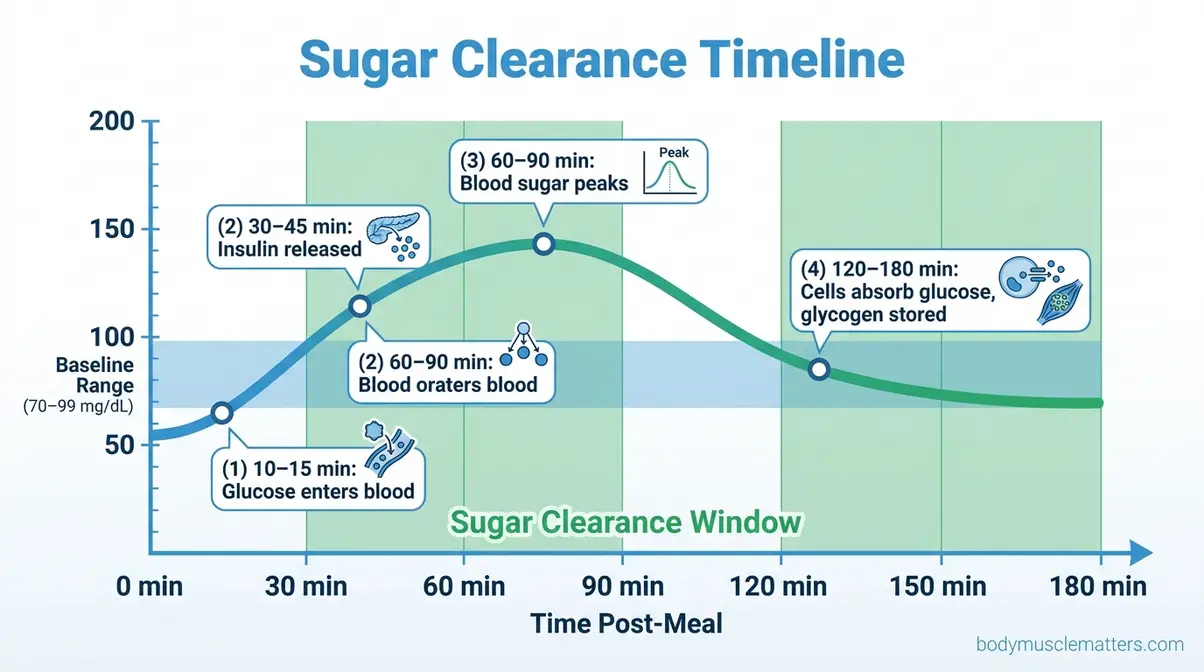
The moment sugar enters your mouth, digestion begins. Within 10 to 15 minutes of eating, glucose (the form of sugar your body uses as fuel) starts entering your bloodstream. Your pancreas — a small organ behind your stomach — detects the rise and releases insulin (the hormone that acts like a key, unlocking your cells so glucose can enter).
Think of this system like a fuel delivery truck. Glucose is the fuel, your bloodstream is the highway, and insulin opens the garage doors to your cells. When everything works correctly, the fuel gets distributed quickly and efficiently. Your liver and muscles also absorb excess glucose and convert it to glycogen (stored fuel) for later use.
This entire intake-and-clearance cycle, from first bite to normalized blood sugar, takes about 2 to 3 hours in a healthy person. According to Diabetes Action Research and Education Foundation, blood sugar peaks highest around 1 hour after a meal if carbohydrates were eaten, with protein beginning to break down at the 2-hour mark.
The Sugar Clearance Timeline
Here is what is happening inside your body at each stage:
| Time After Eating | What’s Happening |
|---|---|
| 10–15 minutes | Glucose enters your bloodstream; blood sugar begins rising |
| 30–45 minutes | Insulin release accelerates; cells start absorbing glucose |
| 60–90 minutes | Blood sugar reaches its peak — this is the “sugar rush” |
| 90–120 minutes | Insulin works hard; blood sugar drops back toward baseline |
| 2–3 hours | Blood glucose returns to normal fasting levels |
This is the Sugar Clearance Window — the specific 2–3 hour period after sugar consumption during which a healthy body can fully normalize blood glucose. What makes this concept powerful is that targeted actions taken during this window (walking, hydration, fiber, protein) can meaningfully shrink the timeline. No competitor article frames it this way — most treat it as a passive countdown. It isn’t.
Sugar Duration After Eating
The American Diabetes Association (ADA) defines a normal blood sugar target as below 180 mg/dL one to two hours after eating for most adults. For non-diabetic individuals, the return to fasting baseline (typically 70–99 mg/dL) happens within 2 hours (URMC, 2026).
The distinction between short-term clearance and long-term sugar history matters here. A standard blood glucose test captures right now — what’s in your blood in this moment. An HbA1c test (or hemoglobin A1c, a blood test that reflects your average blood sugar over the past 3 months) tells a completely different story. If you’ve been eating high-sugar foods for weeks or months, your HbA1c will reflect that even after a single day of clean eating.
Blood Sugar and Glucose Dynamics
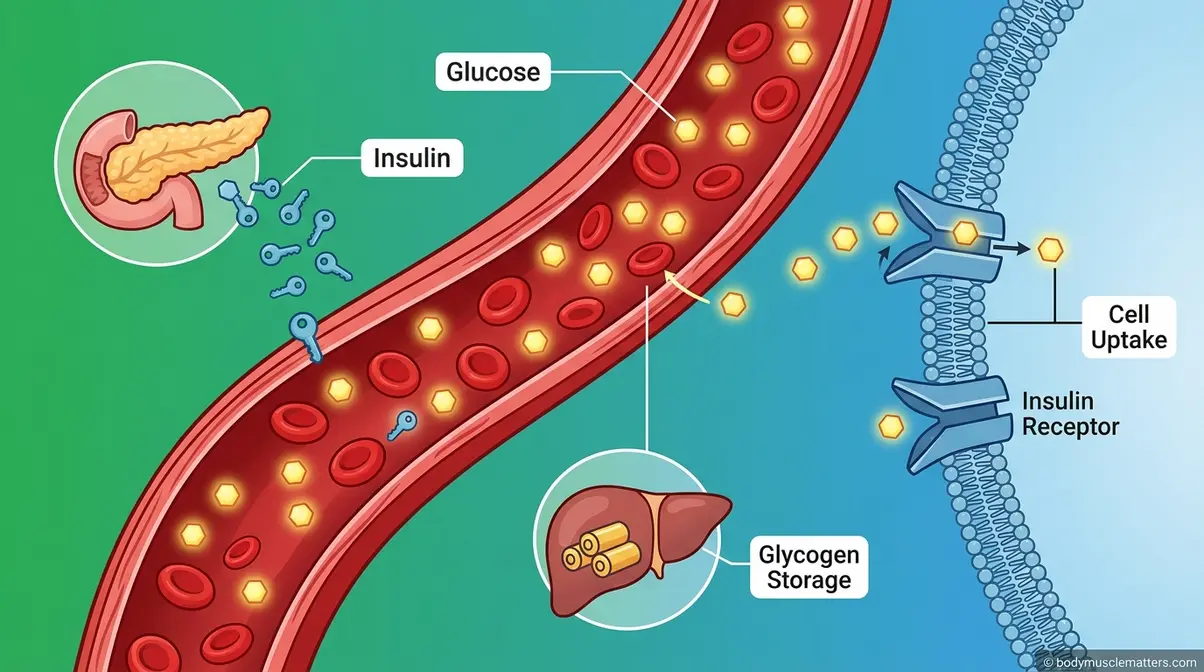
Blood sugar dynamics are the engine beneath every sugar spike and crash you’ve ever felt. Understanding even the basics helps you take control — rather than just riding the wave. To truly answer how long does sugar stay in your body, we must look at insulin. Understanding how long does sugar stay in your body helps you manage these dynamics effectively.
The Role of Insulin
Insulin is the hormone your pancreas releases to manage blood sugar — and it is arguably the most important molecule in this entire story. When glucose enters your bloodstream, your pancreas responds within minutes. Insulin signals your cells to open up and absorb the glucose, then signals your liver to store any excess as glycogen.
According to the MedlinePlus Blood Glucose resource from the National Library of Medicine, normal fasting blood glucose is 70–99 mg/dL, while a level between 100–125 mg/dL suggests prediabetes, and 126 mg/dL or higher on two separate tests indicates diabetes.
When insulin works well, this whole process runs smoothly. When cells stop responding to insulin — a condition called insulin resistance — glucose stays in the bloodstream longer, and you feel the effects: persistent fatigue, brain fog, and strong sugar cravings that feel impossible to ignore.
If you have prediabetes or a family history of type 2 diabetes, consult your doctor or a registered dietitian before making significant dietary changes.
Sugar Spikes and Crashes
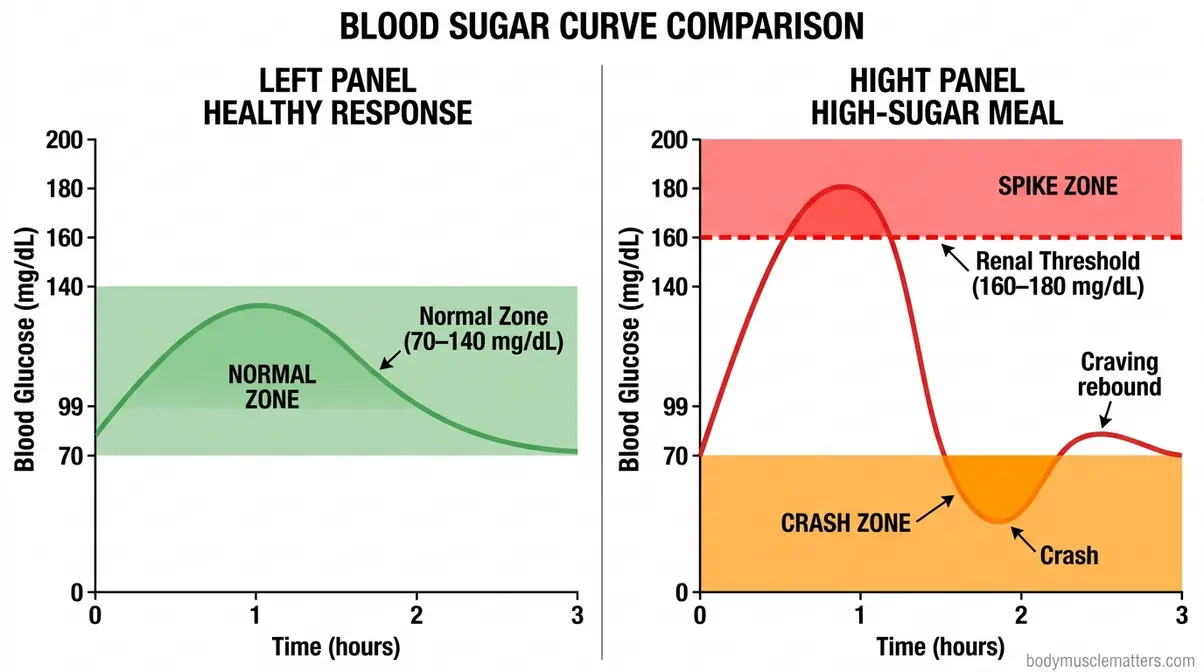
Here’s exactly why sugar spikes and crashes feel so terrible. When you eat a high-sugar food — a candy bar, a soda, a glazed donut — glucose floods your bloodstream rapidly. Your pancreas fires a large pulse of insulin to match it. That insulin works fast, often pulling blood sugar down below your comfortable baseline. The result: hypoglycemia (low blood sugar), which your body experiences as weakness, shakiness, irritability, and — critically — an intense craving for more sugar.
This is the crash. It’s your body’s alarm system saying “glucose is too low, eat something.” The cruel irony is that the craving pushes you toward sugar again, restarting the cycle. Research published in peer-reviewed literature identifies this feedback loop as a key driver of excess sugar consumption (Schulte et al., American Journal of Clinical Nutrition, 2015).
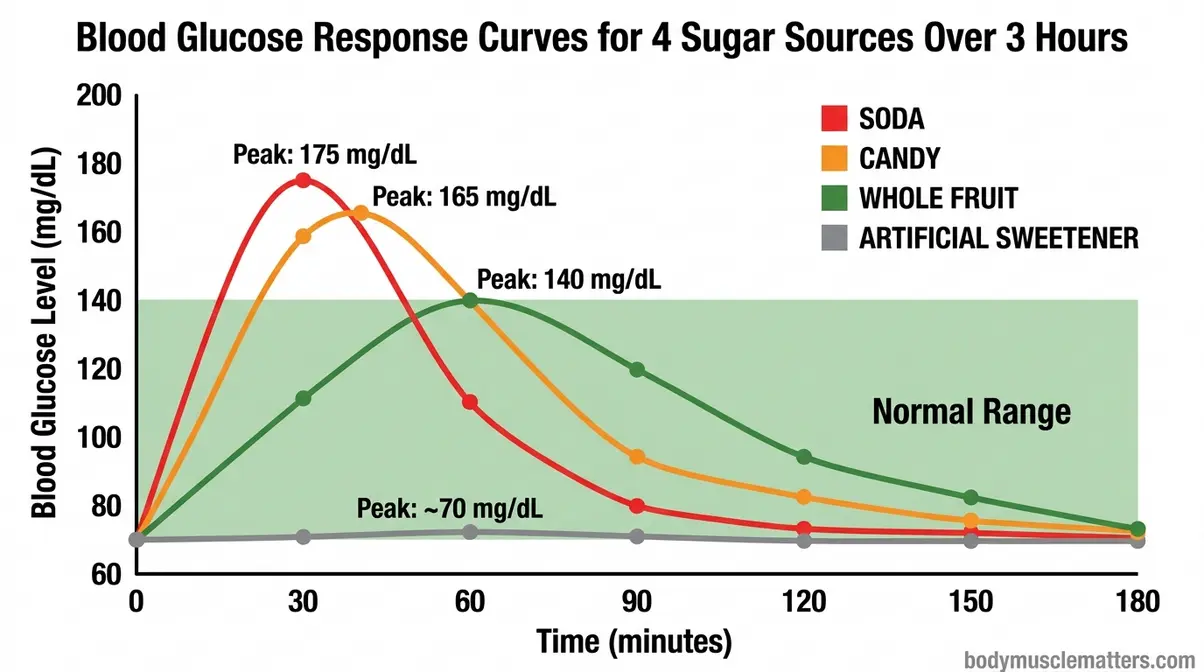
The type of sugar matters too. Simple sugars in candy and soda cause a sharper, faster spike than the natural sugars in whole fruit, which are packaged with fiber that slows absorption.
Hyperglycemia and Hypoglycemia
Hyperglycemia (high blood glucose) occurs when blood sugar stays above 180 mg/dL after meals — or above 130 mg/dL when fasting. Symptoms include frequent urination, excessive thirst, blurred vision, and fatigue. Chronic hyperglycemia damages blood vessels and nerves over time.
Hypoglycemia (low blood glucose) occurs when blood sugar drops below 70 mg/dL. Symptoms include shakiness, sweating, confusion, and hunger. Severe hypoglycemia can cause loss of consciousness and requires immediate treatment.
According to the CDC’s diabetes testing resources, a normal blood sugar level 1 hour after a glucose challenge is 140 mg/dL or below. Levels above that threshold prompt further testing for diabetes or prediabetes. If you regularly experience symptoms of either condition, speak with your doctor promptly — these are not issues to manage alone.
How Long Does Sugar Show Up in Your Urine?
Urine glucose testing is less common than blood testing, but many people wonder whether sugar can be “flushed out” through urination — and whether a urine test would catch elevated levels. The answer involves a key threshold your kidneys use.
Why Does Sugar Appear in Urine?
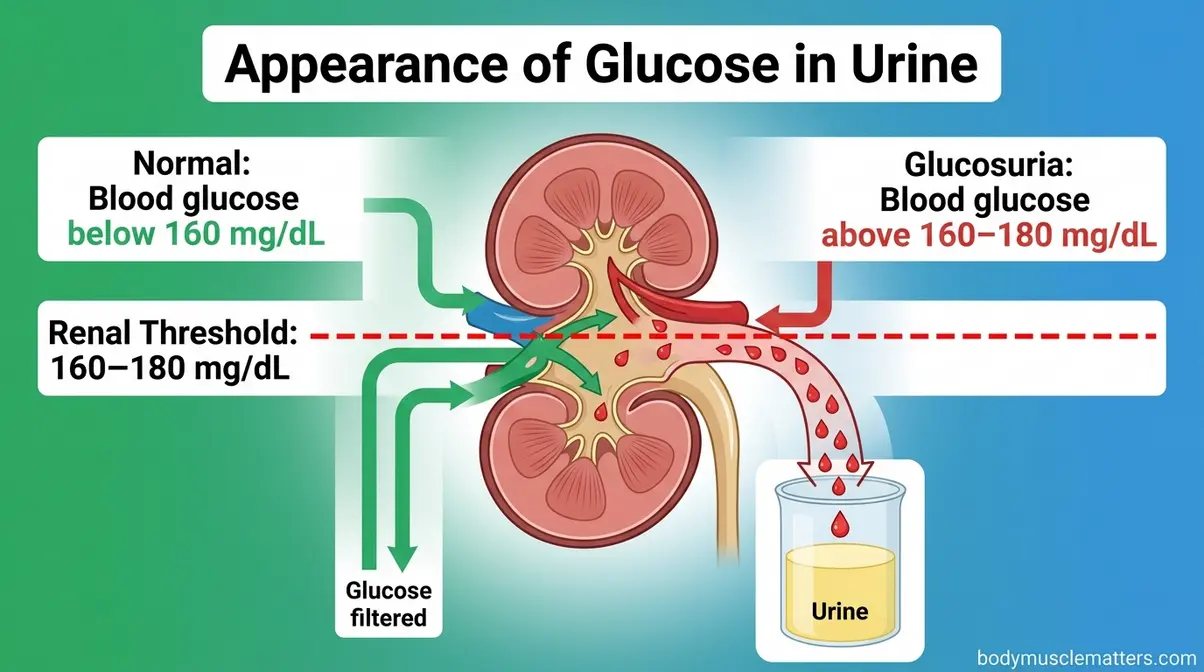
Your kidneys continuously filter your blood and normally reabsorb all glucose back into circulation. However, when blood glucose exceeds approximately 160–180 mg/dL, the kidneys’ reabsorption capacity is overwhelmed (Wikipedia, Glycosuria; Cleveland Clinic, 2026). At that point, glucose “spills over” into the urine — a condition called glucosuria (gloo-koh-SYUR-ee-ah, meaning glucose in the urine).
This is an important signal. In a healthy person who doesn’t have diabetes, blood sugar rarely reaches the 160–180 mg/dL threshold even after a large sugary meal. If glucose appears in your urine regularly, it warrants a conversation with your doctor, as it often indicates diabetes or a kidney issue.
Glucose Duration in Urine
Glucose remains detectable in urine only while blood glucose exceeds the renal threshold. Once blood sugar drops back below 160–180 mg/dL — which happens within 2–3 hours in healthy adults — the kidneys resume full glucose reabsorption and urine glucose levels fall. How quickly urine glucose clears also depends on your hydration level: more water intake means more frequent urination and faster clearance.
According to the UCSF Health Glucose Urine Test resource, a normal urine glucose result is negative — no detectable glucose in a spot sample. A 24-hour urine collection reference range is below 500 mg per 24 hours (UNC Medical Center, 2026).
Drinking water does help flush glucose from your urine by increasing urine output. However, it does not directly lower blood glucose — that depends on insulin and cellular uptake. Think of water as helping to drain the overflow, not fixing the source.
Factors That Change Sugar Duration
The 2–3 hour Sugar Clearance Window applies to a healthy adult at rest after a moderate meal. Several factors can extend — or compress — that window significantly.
Sugar Duration With Diabetes?
Yes — considerably longer. In people with type 1 diabetes, the pancreas produces little or no insulin, so blood glucose rises after eating and stays elevated until injected insulin takes effect. In type 2 diabetes, cells are resistant to insulin’s signal, meaning glucose lingers in the bloodstream even when insulin is present. Research in the African Journal of Diabetes Medicine (2024) notes that the renal threshold for glucose may also be altered in people with long-standing diabetes, affecting when and how much glucose appears in urine.
For people with diabetes, post-meal blood glucose may remain elevated for 4–6 hours or longer, depending on the meal composition, medication timing, and activity level. The ADA recommends a target of below 180 mg/dL at 1–2 hours post-meal for most adults with diabetes (ADA, 2026).
If you have diabetes, always work with your endocrinologist or diabetes care team to set personalized blood sugar targets. Never adjust insulin doses based on general guidelines alone.
Steroids, Pregnancy, and More
Steroid injections: Corticosteroids (like cortisone injections for joint pain) significantly raise blood glucose. According to research published by the University Hospitals system (2026), prednisone can begin triggering hyperglycemia within four hours and effects may last up to 12 hours, while dexamethasone effects can persist 12 to 36 hours. A 2020 study in PMC found that after a steroid injection, blood glucose levels were significantly elevated for approximately 1 day but decreased to baseline levels by day 2 in most patients. If you have diabetes and are receiving steroid injections, alert your care team in advance — they may need to adjust your medication temporarily.
Pregnancy: During pregnancy, the placenta produces hormones that increase insulin resistance — your cells use insulin less effectively (CDC, 2026). The ADA’s gestational diabetes guidelines (NCBI, 2026) set tighter targets: fasting blood sugar at 95 mg/dL or less, 1 hour post-meal at 140 mg/dL or less, and 2 hours post-meal at 120 mg/dL or less. This means that even a moderate sugary meal may keep blood glucose elevated longer than it would outside of pregnancy. If you are pregnant, consult your OB-GYN or midwife about blood sugar monitoring, especially in weeks 24–28 when gestational diabetes screening typically occurs.
Other factors: Physical inactivity, poor sleep, chronic stress (which raises cortisol), and certain medications (including some antipsychotics and diuretics) can all slow glucose clearance and extend the Sugar Clearance Window.
Does the Type of Sugar Matter?
Not all sugars behave the same way in your body.
| Sugar Source | Spike Speed | Clearance Time (Healthy Adult) | Notes |
|---|---|---|---|
| Soda / juice | Very fast (15–30 min to peak) | ~2–3 hours | No fiber to slow absorption |
| Candy / sweets | Fast (20–40 min to peak) | ~2–3 hours | High glycemic index |
| Whole fruit | Moderate (30–60 min to peak) | ~2 hours | Fiber slows glucose absorption |
| Artificial sweeteners | Minimal blood glucose effect | Minimal | May still trigger insulin response in some people |
Liquid sugar (like soda) hits your bloodstream fastest because there is no fiber or fat to slow digestion. The blood sugar spike from a 12-oz soda can be steeper and faster than from a candy bar of equivalent sugar content. Artificial sweeteners like aspartame and sucralose have minimal direct effects on blood glucose, though research on their impact on insulin response and gut bacteria is ongoing — and results are mixed (Medical News Today, 2026).
Diabetes Medications Duration
For people managing diabetes, understanding how long their medications remain active is just as important as tracking food. This is a frequently searched topic with almost no coverage in competing articles.
Metformin Clearance Time
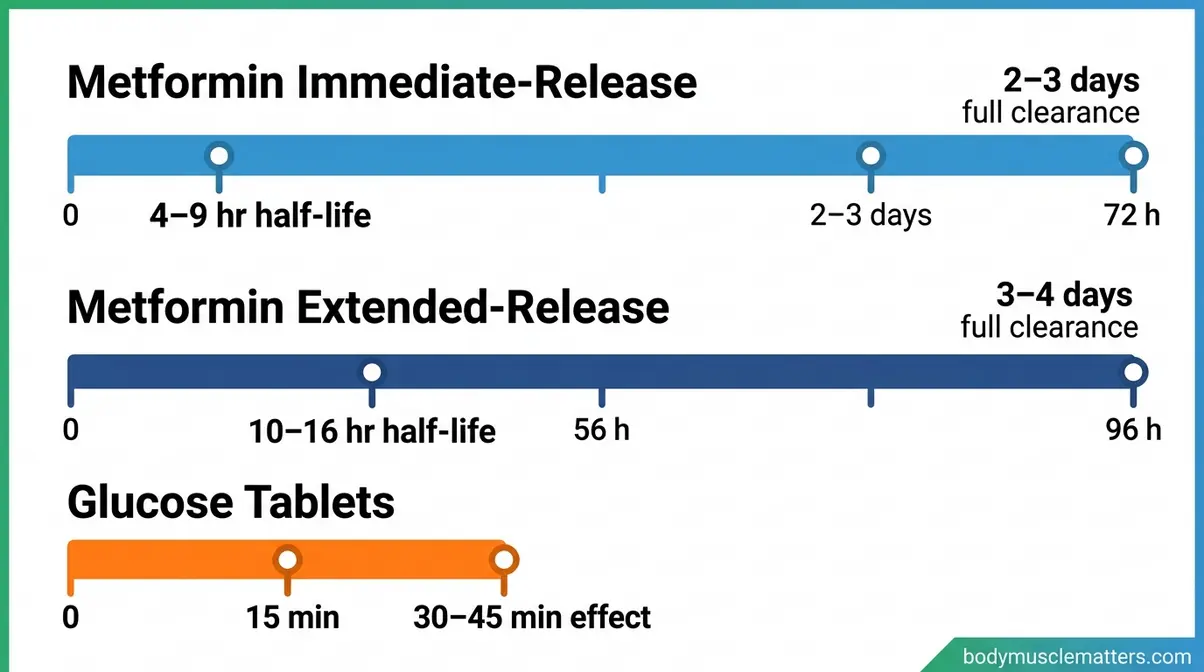
Metformin is the most commonly prescribed medication for type 2 diabetes. According to GoodRx’s clinical pharmacology resource (updated 2026), metformin has a plasma half-life of approximately 4–9 hours in people with normal kidney function, but a blood (erythrocyte) half-life of approximately 17.6 hours. This means it takes roughly 4–5 half-lives — about 3 to 4 days — to clear most of the medication from your system after stopping.
The extended-release formulation (Metformin ER) releases the drug more slowly and maintains steadier blood levels throughout the day, but the total clearance time is similar.
Important: Metformin works by reducing glucose production in the liver, not by stimulating insulin. It does not cause blood sugar to drop on its own between meals. If you are stopping or starting metformin, always do so under medical supervision — especially if you have kidney disease, which significantly slows clearance.
| Metformin Form | Plasma Half-Life | Full Clearance (Estimate) |
|---|---|---|
| Immediate-release | ~4–9 hours | ~2–3 days |
| Extended-release (ER) | ~10–16 hours | ~3–4 days |
| In kidney impairment | Up to 51.9 hours | Significantly longer |
Glucose Tablets Duration
Glucose tablets are used to rapidly treat hypoglycemia (low blood sugar). They are designed to work fast — and they do. A standard dose of 15–20 grams of glucose (typically 3–4 tablets) raises blood sugar within 15 minutes and the effect lasts approximately 30–45 minutes.
According to Diabetes Action’s FAQ resource, after treating a low blood sugar episode with glucose tablets, you should recheck your blood glucose after 15 minutes. If it remains below 70 mg/dL, repeat the dose. The glucose from tablets is processed exactly like dietary glucose — it follows the same 2–3 hour clearance timeline in a healthy person, though in someone with diabetes, the timeline extends based on their insulin response.
How to Flush Sugar Out of Your System Fast
This is the section most people are actually looking for. The good news: you have real tools to shrink the Sugar Clearance Window. The not-so-good news: there is no magic flush. What works is biology — and it starts within minutes of eating.
“Stored glycogen gets depleted in less than 24 hours usually with little to no exercise and a lot faster with exercise depending on the intensity.”
This is something many health-conscious readers already know intuitively. Exercise empties your glycogen tanks, creating more storage space for incoming glucose — and that’s exactly the mechanism behind Protocol #1 below.
How to Flush Sugar Fast?
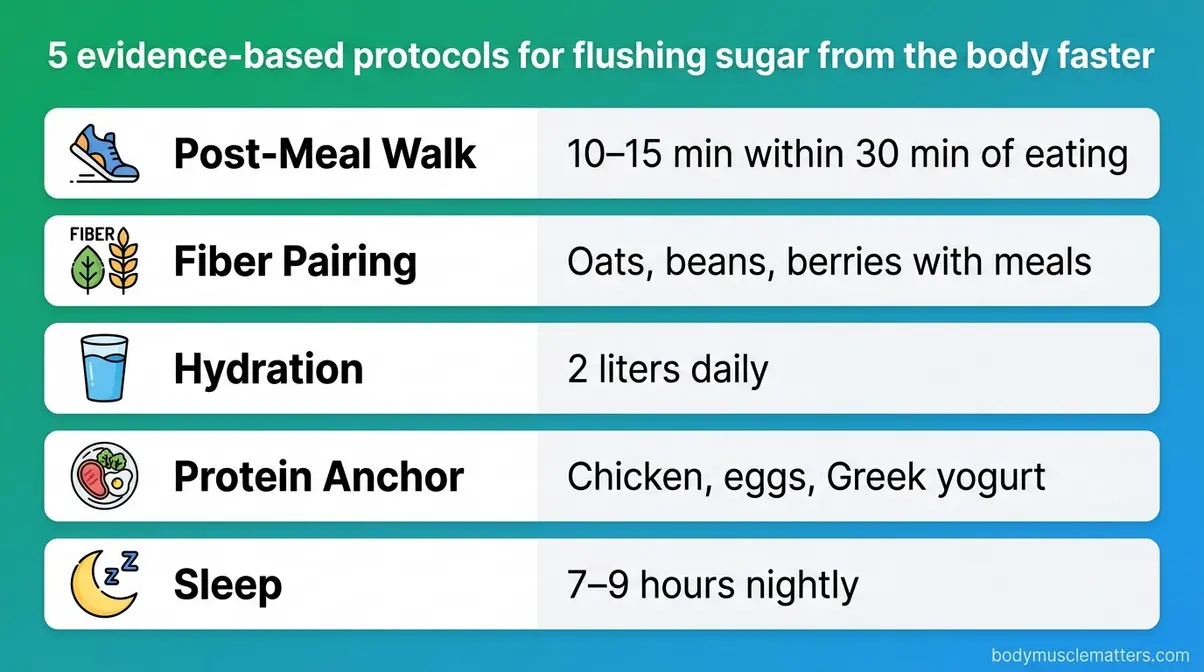
Based on clinical guidelines from the American Diabetes Association and peer-reviewed research, these five protocols represent the most evidence-backed strategies for accelerating glucose clearance during the Sugar Clearance Window.
Protocol 1: The Post-Meal Walk (Start within 10–30 minutes of eating)
A 2025 study published in Scientific Reports (Ritsumeikan University) found that a 10-minute walk immediately after glucose intake significantly reduced peak glucose levels compared to resting — with an effect size of d=0.731. A 2013 study in Diabetes Care confirmed that three 15-minute post-meal walks were as effective as one 45-minute walk for 24-hour glycemic control. You don’t need a gym. A brisk walk around the block does the job.
Why it works: Muscle contractions during walking absorb glucose directly — without needing insulin. Your muscles act as a secondary clearance system.
Time required: 10–15 minutes. Start within 30 minutes of finishing your meal.
Protocol 2: Fiber Pairing (Before or with your meal)
Soluble fiber (found in oats, beans, apples, and flaxseed) forms a gel in your digestive tract that slows the absorption of glucose into the bloodstream. According to WebMD’s sugar effects resource, pairing high-sugar foods with fiber reduces the glycemic impact of the meal.
Why it works: Fiber acts as a speed bump on glucose’s highway to your blood.
Time required: 0 extra minutes — just add a handful of berries, a side salad, or a tablespoon of chia seeds to your meal.
Protocol 3: The Hydration Target (Throughout the day)
Staying well-hydrated supports your kidneys in filtering excess glucose and helps your cells maintain sensitivity to insulin. Read more about the importance of hydration for your health to understand its full impact. Aim for at least 8 glasses (2 liters) of water per day — more if you’ve eaten a high-sugar meal or exercised.
Why it works: Dehydration raises blood glucose concentration. Water dilutes the glucose load and supports kidney function.
Time required: Ongoing — start a glass of water within 15 minutes of a sugary meal.
Protocol 4: The Protein Anchor (With every meal)
Including a source of protein — chicken, eggs, Greek yogurt, legumes — with every meal slows gastric emptying (how quickly food leaves your stomach), which blunts the post-meal glucose spike. Research from Harvard Health Publishing supports protein’s role in moderating glycemic response.
Why it works: Protein triggers a slower, steadier insulin release compared to carbohydrates eaten alone.
Time required: 0 extra minutes — it’s a planning choice, not an additional step.
Protocol 5: Sleep Optimization (7–9 hours per night)
Poor sleep raises cortisol (your stress hormone), which directly raises blood glucose and reduces insulin sensitivity. A single night of poor sleep can impair glucose clearance the next day. According to the CDC, adults who sleep fewer than 7 hours per night are significantly more likely to report diabetes and other chronic conditions.
Why it works: Deep sleep is when your body resets insulin sensitivity. Missing it extends the Sugar Clearance Window the next day.
Time required: 7–9 hours nightly.
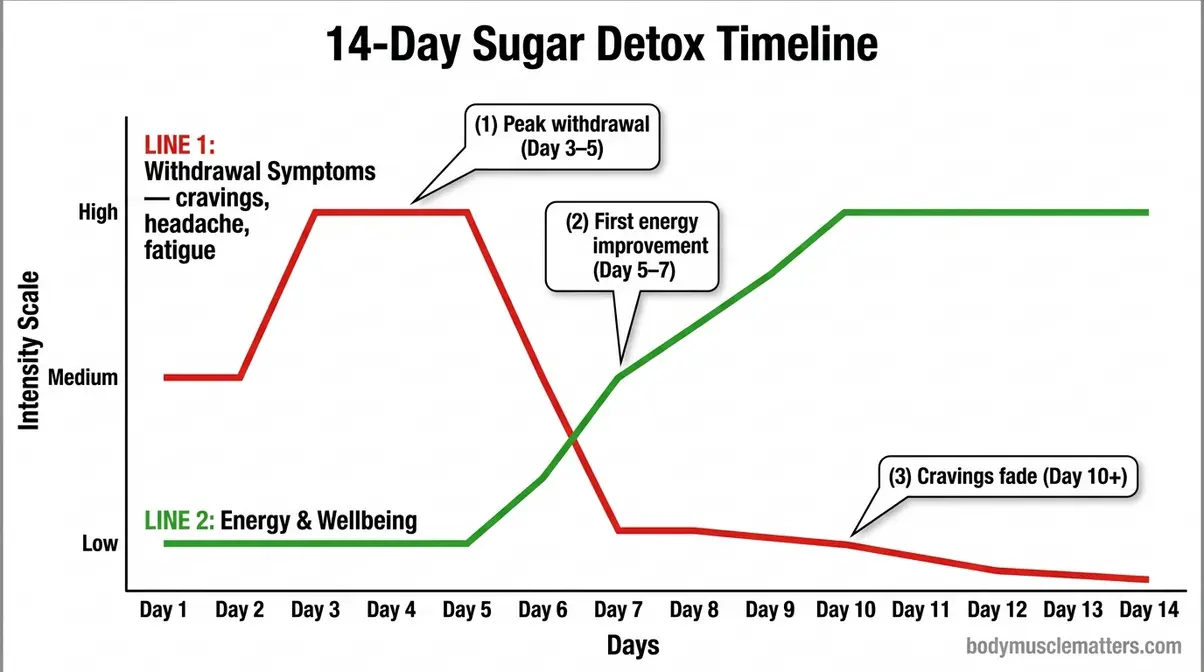
The 14-Day Sugar Detox
Cutting out sugar is one of the most impactful dietary changes you can make — but the first week can feel brutal. Here’s the honest, day-by-day breakdown based on clinical consensus from addiction research and nutrition science.
Days 1–2: The Calm Before the Storm
Symptoms begin 24–48 hours after reducing sugar intake (Canadian Centre for Addictions, 2026). You may notice mild headaches, the first sugar cravings (strongest around your usual snack times), and subtle mood dips. Energy feels slightly off, but nothing dramatic yet.
Days 3–5: Peak Withdrawal — The “Sugar Flu”
This is the hardest stretch. Headaches intensify. Cravings are at their strongest. You may feel irritable, foggy, fatigued, and even anxious. This period is sometimes called the “sugar flu” — and it’s real. Research from the Canadian Centre for Addictions (2026) confirms that the most intense withdrawal symptoms, including cravings and irritability, peak within 2–5 days of cutting sugar.
Days 5–7: The First Signs of Relief
Headaches begin to ease. Mental clarity starts returning. Energy becomes more predictable, with fewer dramatic crashes. Cravings are still present but less overwhelming.
Days 7–10: Adaptation Phase
Most acute physical symptoms fade. Sleep quality often improves noticeably. Cravings shift from physical urges to psychological habits — you might reach for sugar out of boredom or routine rather than genuine need.
Days 10–14: The Reward
Energy stabilizes. Mood improves. Skin clarity often improves. Many people report that foods they previously found too sweet now taste intensely sugary — a sign your taste buds are recalibrating. According to Opus Treatment’s clinical overview (2026), within 2–3 weeks of cutting sugar, focus improves and cravings subside significantly.
Signs of Too Much Sugar?
Recognizing the signs helps you act within the Sugar Clearance Window rather than waiting until you crash hard.
- Persistent fatigue — even after sleeping well
- Brain fog — difficulty concentrating or thinking clearly
- Strong sugar cravings — the urge for something sweet within 1–2 hours of eating
- Frequent urination — especially if accompanied by thirst (a sign blood sugar may be very high)
- Headaches — particularly in the afternoon
- Mood swings and irritability — especially when meals are delayed
- Bloating or stomach discomfort — sugar feeds gut bacteria that produce gas
- Blurred vision — a temporary effect of high blood glucose on the lens of the eye
If you experience symptoms 4, 7, or 8 regularly, speak with your doctor — these can indicate blood sugar levels that need medical attention.
Limitations and When to See a Doctor
The Sugar Clearance Window framework works well for healthy adults managing everyday sugar intake. However, it has real limits — and knowing those limits is part of making smart decisions.
Common Pitfalls to Avoid
Pitfall 1: Assuming exercise alone will “flush” sugar immediately. A post-meal walk helps, but it does not instantly normalize blood glucose. It reduces the peak and speeds the return to baseline — it does not eliminate the 2–3 hour window entirely.
Pitfall 2: Drinking large amounts of water expecting it to lower blood sugar. Water supports kidney function and urine glucose clearance, but it does not directly reduce blood glucose. Only insulin and cellular uptake do that.
Pitfall 3: Treating the 14-day detox as a cure for insulin resistance. Two weeks of reduced sugar improves insulin sensitivity, but long-standing insulin resistance requires sustained dietary change — and often medical support. Don’t expect a 2-week reset to fully reverse years of high-sugar eating.
Pitfall 4: Skipping the protein anchor. Many people try to clear sugar by eating nothing — which actually worsens the crash and intensifies cravings. Pairing protein with meals is more effective than fasting after a sugary meal.
When to See a Doctor
The protocols in this guide are designed for generally healthy adults. You should consult your doctor or a registered dietitian if:
- Your blood sugar regularly exceeds 140 mg/dL two hours after eating
- You experience symptoms of hyperglycemia or hypoglycemia frequently
- You have been diagnosed with diabetes, prediabetes, kidney disease, or are pregnant
- You are taking medications that affect blood glucose (steroids, metformin, insulin)
- You have tried cutting sugar for 2+ weeks and still experience persistent fatigue, cravings, or brain fog
In these scenarios, the standard 2–3 hour clearance timeline does not apply to you — and personalized medical guidance is essential.
When to Seek Expert Help
Some situations require professional support rather than self-management. Seek immediate medical attention if you experience symptoms of severe hypoglycemia (loss of consciousness, seizure, extreme confusion) or severe hyperglycemia (vomiting, inability to keep fluids down, blood sugar above 300 mg/dL). For longer-term concerns — managing diabetes during pregnancy, adjusting medications, or addressing insulin resistance — a registered dietitian (RD) or endocrinologist is the right resource.
Frequently Asked Questions
Time to Leave the Blood System?
For a healthy adult, sugar typically leaves the bloodstream within 2 to 3 hours after eating. Blood glucose peaks around 60–90 minutes post-meal, then insulin drives it back to normal fasting levels (70–99 mg/dL) within 2 hours (URMC, 2026). The exact timing depends on the type of sugar consumed, your activity level, and your metabolic health. People with diabetes or insulin resistance may take 4–6 hours or longer to return to baseline. Liquid sugars like soda clear faster in terms of digestion but can cause sharper spikes.
How to Flush Sugar Fast?
The fastest way to flush sugar out of your system is to take a 10–15-minute walk within 30 minutes of eating. A 2025 study in Scientific Reports found that a brief walk immediately after glucose intake significantly reduces peak blood glucose levels. Beyond walking, pair your meals with fiber and protein to slow glucose absorption, stay well-hydrated (at least 2 liters of water daily), and prioritize 7–9 hours of sleep to maintain insulin sensitivity. These five protocols work together to shrink the Sugar Clearance Window.
Signs of Too Much Sugar?
The most common signs of too much sugar include persistent fatigue, brain fog, intense sugar cravings, and frequent urination. You may also notice headaches (especially in the afternoon), mood swings when meals are delayed, bloating, and — in more serious cases — blurred vision. Most of these symptoms reflect the blood sugar spike-and-crash cycle. If you regularly experience frequent urination with excessive thirst or blurred vision, see your doctor — these can indicate blood glucose levels that need medical evaluation.
Stopping Sugar for 14 Days?
Cutting out sugar for 14 days triggers a predictable withdrawal-and-recovery cycle. Symptoms begin 24–48 hours after stopping, peak at days 3–5 (headaches, cravings, fatigue, and irritability — the “sugar flu”), then improve significantly by day 7 (Canadian Centre for Addictions, 2026). By days 10–14, most people report more stable energy, improved mood, better sleep, and reduced cravings. Your taste buds also recalibrate — foods that once tasted normal may start tasting overly sweet.
Cutting Sugar and Belly Fat?
Cutting out sugar can support fat loss, including belly fat, but it is not a guaranteed or immediate effect. Excess sugar — particularly fructose from added sugars — is linked to increased visceral fat (fat around the abdominal organs), according to research from Harvard Health. By reducing sugar intake, you lower insulin spikes, which reduces the signal to store fat. However, total calorie intake, protein levels, sleep, and exercise all play equally important roles. Most people see meaningful changes in body composition after 4–8 weeks of sustained dietary change — not 14 days.
Sugar Duration With Diabetes?
With diabetes, sugar stays in your system significantly longer than the standard 2–3 hours. In type 1 diabetes, blood glucose rises after eating and remains elevated until injected insulin takes effect — which varies by insulin type and timing. In type 2 diabetes, insulin resistance means glucose lingers in the bloodstream even when insulin is present. Post-meal blood glucose may stay elevated for 4–6 hours or longer depending on meal composition, medication, and activity (ADA, 2026). If you have diabetes, work with your care team to set personalized post-meal glucose targets.
Steroid Injection Effects?
Blood sugar typically stays elevated for 1–2 days after a steroid injection, returning to baseline by day 2 in most patients. According to a 2020 study in PMC, blood glucose levels were significantly elevated for approximately 1 day post-injection, then decreased to baseline levels by day 2. However, the duration varies by steroid type: prednisone can trigger hyperglycemia within 4 hours lasting up to 12 hours, while dexamethasone effects may persist 12–36 hours (University Hospitals, 2026). People with poorly controlled diabetes may experience more pronounced and longer-lasting elevations. Always inform your care team before receiving steroid injections.
Putting It All Together
For healthy adults, how long sugar stays in your body comes down to a predictable 2–3 hour window — a timeline confirmed by the University of Rochester Medical Center and consistent with American Diabetes Association guidelines. Blood glucose peaks at 60–90 minutes, insulin does its work, and blood sugar normalizes within 2 hours. But that window is not fixed. Your activity level, sugar type, hydration, sleep, and metabolic health all determine whether it’s 90 minutes or 4+ hours.
The Sugar Clearance Window is the key insight to take away from this guide. Every action you take in the 30–60 minutes after eating — walking, drinking water, pairing fiber and protein — directly influences how quickly your body clears glucose. That’s not passive biology. That’s something you can act on today.
Start with the simplest protocol: finish your next meal, then walk for 10–15 minutes. Based on clinical research from Scientific Reports (2025), that single habit can meaningfully reduce your post-meal blood sugar peak. From there, add fiber pairing and protein anchoring to your routine. If you’re considering a full 14-day sugar detox, prepare for days 3–5 to be the hardest — and know that what’s on the other side is more stable energy, fewer cravings, and a body that handles sugar far more efficiently. When considering how long does sugar stay in your body, remember that you have the power to influence the timeline. If you have diabetes, are pregnant, or take medications that affect blood glucose, bring this guide to your next appointment and work with your care team to apply these principles safely.
Related posts:
Benefits of Yoga for Fitness: The Science-Backed Guide
Home Workouts to Build Muscle Without Weights (2026)
CrossFit Strength Training for Beginners: 2026 Guide
Home Workout Plan for Beginners: 30-Day Step-by-Step
How to Self Massage Calves: The 4-Layer Method Guide
Strength Training for Beginners: Complete Workout Plan 2026

Callum
Hi, I'm Callum, the founder of Body Muscle Matters. I'm not a certified trainer, I'm a self taught lifter who started this site to share what I've learned from my own training and a lot of trial and error. Everything here comes from real experience and honest research, written the way I'd explain it to a friend who is just getting started. My goal is simple: practical, no hype fitness advice you can actually use.