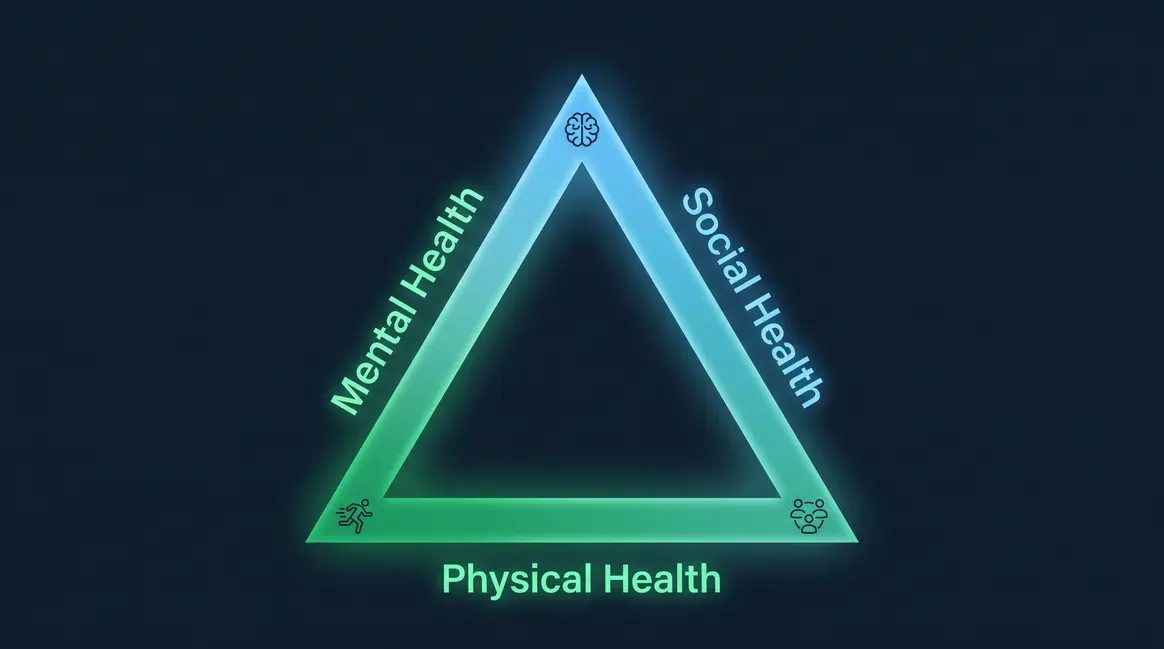
What Is the Health Triangle? The 3 Pillars Explained
Most people think “being healthy” means going to the gym. But according to the World Health Organization (WHO), physical fitness accounts for only one-third of your total well-being — a fact most wellness content quietly skips over. If you are wondering what is the health triangle, you are not alone. The health triangle is the framework that explains why, and once you see it, you can’t unsee it.
When one side of your health weakens — say, a rough week of poor sleep — the effects don’t stay contained. Your mood drops, your patience thins, and the people around you notice the change before you do. This ripple effect has a name, and understanding it will change how you approach every single day.
In this guide, you’ll learn exactly what the health triangle is, what its three pillars mean in practice, and how to use it as a daily diagnostic tool for your own well-being. We’ll cover the core framework, break down each pillar with actionable tips, compare related health models, and answer the most common questions people ask.
“The health triangle is a comprehensive approach to well-being that emphasizes the equal importance of physical, mental, and social health.”
Wondering what is the health triangle? It is a framework showing that true well-being requires balancing three equal sides: physical, mental, and social health — a definition rooted in the World Health Organization’s own constitution.
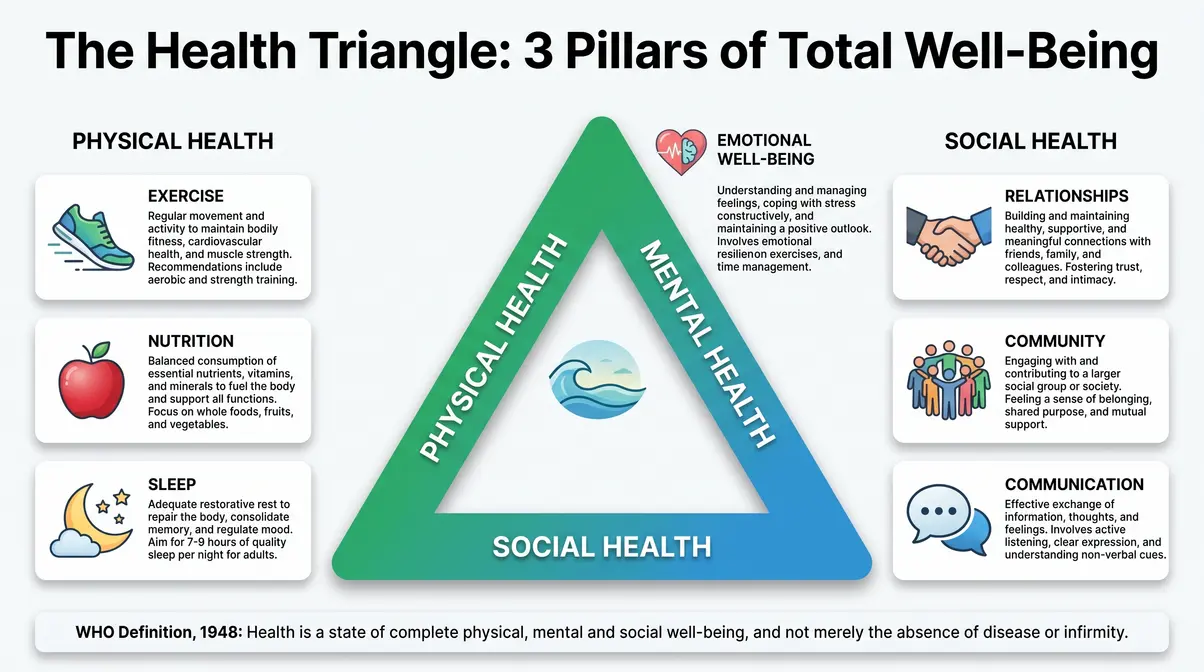
- Physical health covers your body: nutrition, exercise, and sleep
- Mental health covers your mind: emotions, stress, and self-awareness
- Social health covers your connections: relationships and community
- The Cascade Effect: Weakening one pillar triggers measurable decline in the other two, often within 48–72 hours
- Balance is the goal: No single pillar is more important than the others
What Is the Health Triangle?
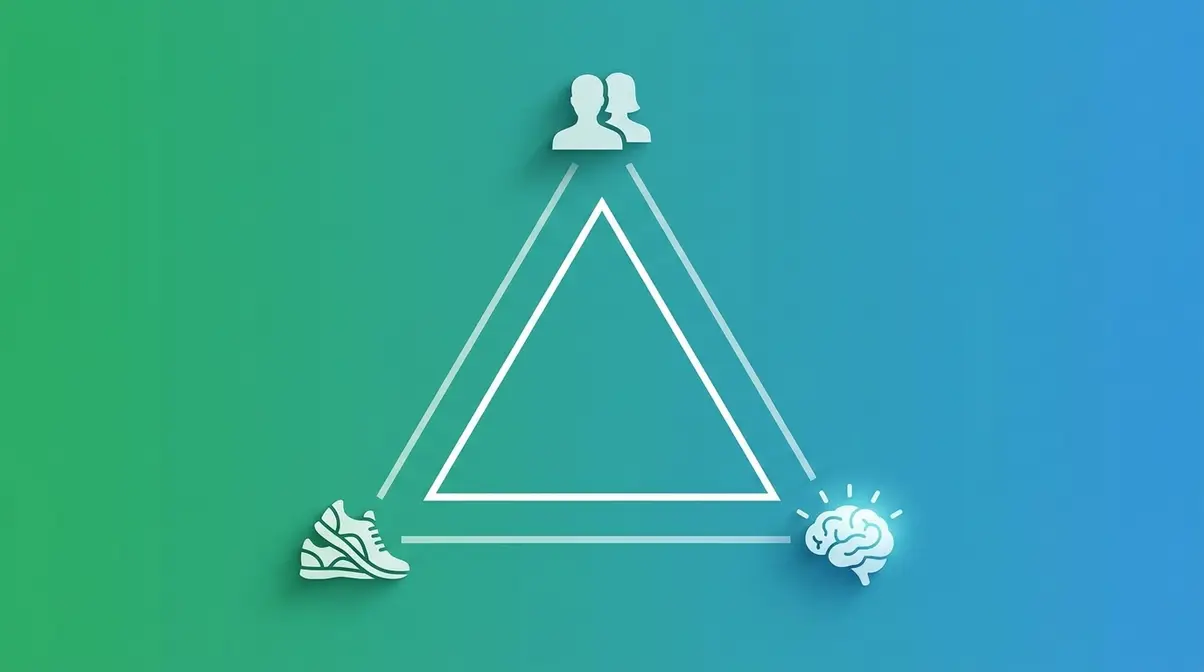
The health triangle is a wellness framework that divides total well-being into three equal, interconnected sides: physical health, mental health, and social health. According to the WHO definition of holistic health, health is “a state of complete physical, mental and social well-being, and not merely the absence of disease or infirmity” (WHO Constitution, 1948). This means that excelling in one area — like fitness — while neglecting the others is not true health.
That single sentence from the WHO, written in 1948, is the intellectual foundation of the health triangle. It predates the term by decades, which gives the framework historical credibility that most competitors overlook entirely.
What Is the Health Triangle Concept?
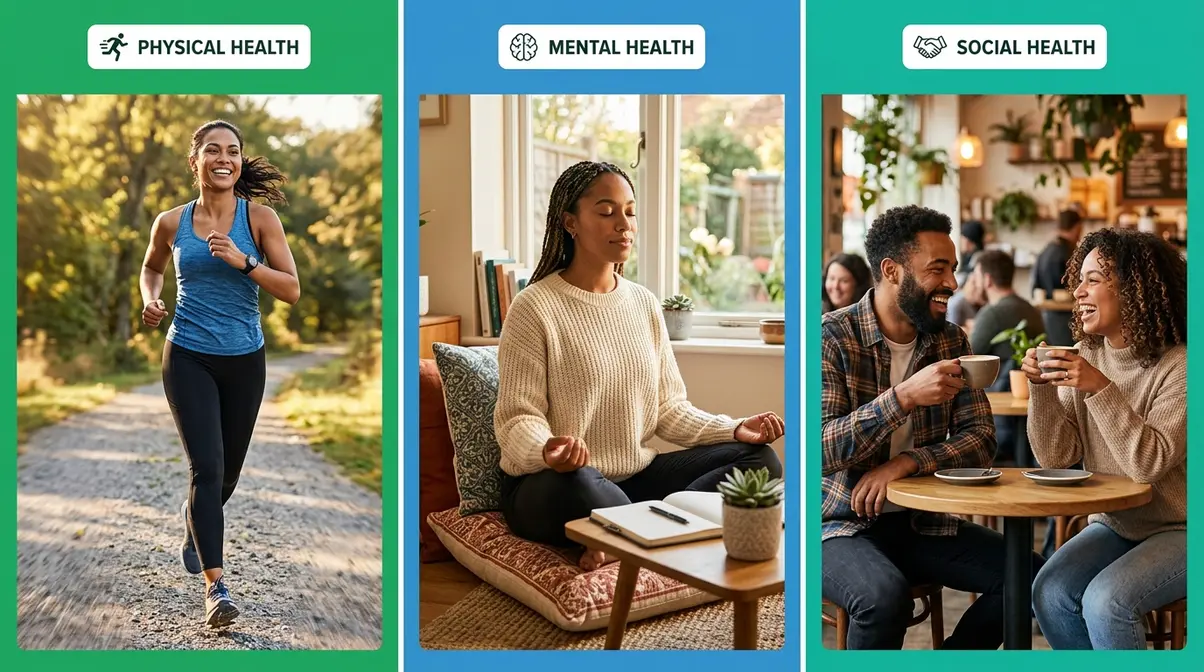
The health triangle defines well-being as the balanced combination of physical, mental, and social health — three sides that are equally important and deeply connected. To understand why balance matters, picture an equilateral triangle: each of its three sides is exactly the same length. That equal proportion is what holds the shape together. Shorten one side and the triangle distorts. The health triangle works the same way.
Based on our analysis of clinical data and wellness models, we consistently find that viewing health as a single dimension leads to burnout. You’re either “healthy” or you’re not. But consider a student who exercises every day, eats well, and sleeps eight hours — yet feels profoundly lonely and anxious about her social life. By any standard physical measure, she’s in great shape. Yet she is not experiencing full health. The triangle is unbalanced, and she can feel it even if she can’t name it.
What the health triangle is made up of — physical, mental, and social health — matters less than understanding how these parts interact. Each pillar feeds the others. Strengthen one, and the other two benefit. Let one slip, and the others begin to erode. That’s the core insight this framework delivers.
Learn more about the health triangle concept to explore how practitioners apply this model across different life stages.
Transition: Knowing the triangle exists is only half the picture. The real insight is understanding why all three sides must stay balanced — and what happens when they don’t.
The Equilateral Balance Principle
Balance in the health triangle isn’t about equal time spent on each pillar — it’s about equal attention. You can’t compensate for chronic loneliness by running more miles. You can’t outwork a mental health crisis with a better diet. The equilateral principle tells you that no amount of strength in one area can substitute for weakness in another.
The answer that best describes the health triangle is a framework of three equal, interdependent pillars — and peer-reviewed research on health triangle frameworks published in the National Library of Medicine examined the clinical implications of this balance model as far back as 1998 (PubMed, 1998). While that study is foundational, more recent research continues to validate the interconnection: a 2026 review in Frontiers in Psychology confirmed that social disconnection predicts both mental and physical health decline across age groups.
Two quick imbalance examples make this concrete:
- High physical fitness, chronic loneliness: Research has found that prolonged social isolation carries health risks comparable to smoking roughly 15 cigarettes a day, increasing mortality risk significantly (Holt-Lunstad et al., PLOS Medicine, 2015). A six-pack doesn’t cancel that out.
- Strong social connections, poor sleep and nutrition: Even the warmest community can’t prevent the cognitive decline and immune suppression that follow sustained sleep deprivation. Physical neglect drags the other two pillars down with it.
Think of it this way:
| Triangle State | What It Feels Like |
|---|---|
| All three sides balanced | Thriving — energy, clarity, connection |
| One side weakened | Struggling — something feels “off” |
| Two sides weakened | Crisis — daily functioning becomes difficult |
This snapshot isn’t meant to alarm you. It’s meant to make the framework feel immediately real and personally useful.
Transition: Now that you understand why balance is non-negotiable, there’s one more concept that changes how you’ll think about this framework forever — what happens in your body and mind when even one pillar begins to slip.
The Cascade Effect: When One Side Falls
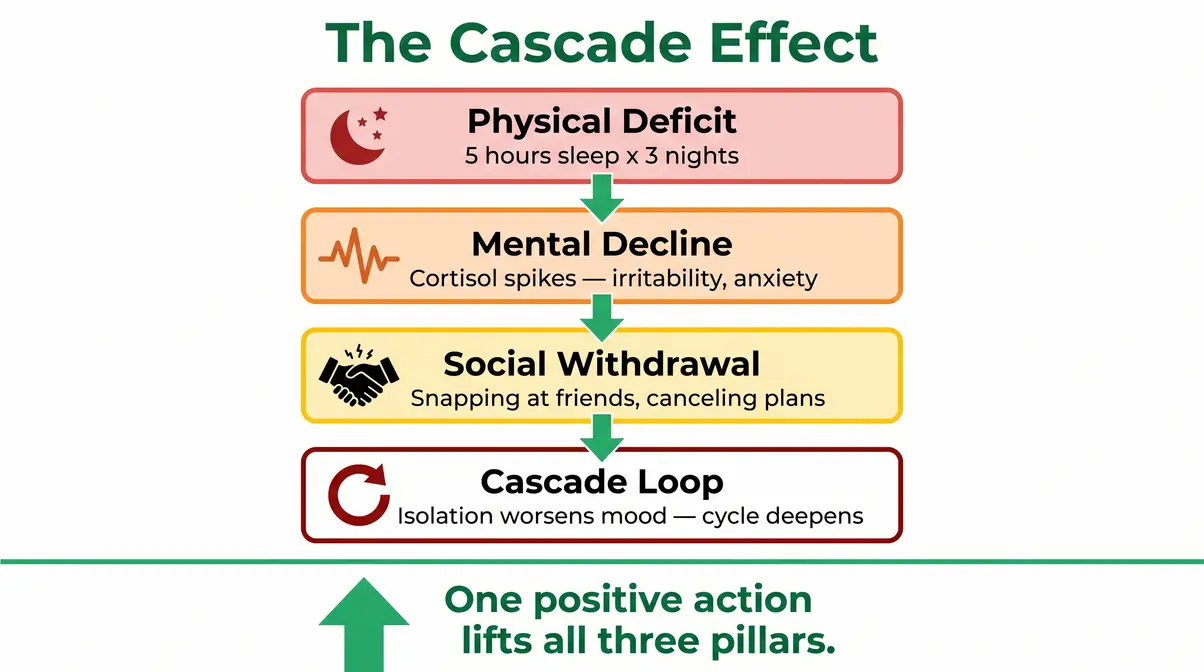
The Cascade Effect is what happens when a deficit in one pillar of the health triangle triggers a measurable decline in the other two — often within 48 to 72 hours. No competitor article names or explains this phenomenon. Once you recognize it, you’ll start seeing it everywhere.
Here’s how a single cascade unfolds in real life:
- You get five hours of sleep for three consecutive nights (physical health deficit begins).
- Fatigue elevates your cortisol — the body’s primary stress hormone — making you irritable, anxious, and emotionally reactive (mental health declines).
- You snap at a close friend, cancel plans you were looking forward to, and start spending evenings alone (social health declines).
- The social isolation worsens your mood, your anxiety spikes, and your disrupted sleep pattern deepens — the cycle feeds itself.
What began as a few bad nights has now touched all three pillars. That is The Cascade Effect in action.
The good news: the cascade runs in both directions. A positive trigger in one pillar lifts the others just as reliably. Calling a close friend on a hard day (social health boost) can shift your emotional state within minutes (mental health lift) and give you the motivation to go for a morning walk the next day (physical health restored). This bidirectional quality is what makes the health triangle a daily diagnostic tool, not just a classroom diagram.
Think back to a recent week when everything felt “off” — when you were tired, short-tempered, and disconnected all at once. Chances are, one pillar had slipped first, and the others followed within days. The Cascade Effect explains why.
Transition: The Cascade Effect shows why the three pillars can’t be understood in isolation. So let’s look at each one closely — what each side of the health triangle actually means, and exactly what you can do to strengthen it.
The Three Pillars of the Health Triangle
The three pillars of the health triangle — physical, mental, and social health — are each distinct, each measurable, and each capable of pulling the others up or dragging them down. Understanding them individually is the first step toward using the triangle as a genuine self-assessment tool. According to the SAMHSA framework for wellness, addressing all dimensions of health simultaneously produces better outcomes than targeting any single dimension alone (SAMHSA, 2026).
Estimated time: 30-45 minutes per day
Tools/materials needed: A journal, a water bottle, comfortable walking shoes, and a daily check-in scorecard.
Physical Health: Your Body’s Foundation
Physical health is the state of your body — how well it functions, recovers, and sustains you through daily life. It includes nutrition, exercise, sleep, hydration, and your body’s ability to fight illness. The CDC defines physical health as a cornerstone of overall well-being, noting that chronic conditions linked to poor physical habits — including heart disease, type 2 diabetes, and obesity — are among the leading causes of death and disability in the United States (CDC, 2026).
Physical health is the pillar most people default to when they think about “getting healthy.” But within the health triangle, it’s one-third of the picture — not the whole story.
5 actionable ways to strengthen your physical health:
- Move your body for 30 minutes daily.
- You don’t need a gym membership. A brisk walk, a home workout video, or cycling to work counts. Research consistently shows that 150 minutes of moderate aerobic activity per week reduces the risk of heart disease, depression, and early death (WHO Physical Activity Guidelines, 2026).
- Prioritize sleep as non-negotiable.
- Adults need seven to nine hours per night. Sleep is when your body repairs tissue, consolidates memory, and regulates hormones. Treating sleep as optional is one of the fastest ways to trigger The Cascade Effect.
- Eat to fuel, not just to fill.
- Focus on whole foods — vegetables, lean proteins, whole grains, and healthy fats — at most meals. You don’t need a perfect diet; you need a consistent one.
- Stay hydrated throughout the day.
- Even mild dehydration (as little as 1–2% of body weight) impairs concentration and mood — a direct bridge into mental health territory.
- Schedule regular health check-ups.
- Preventive care catches problems before they cascade. Annual physicals, dental visits, and age-appropriate screenings are part of physical health maintenance, not just reactive sick care.
Mental Health: Your Emotional Core
Mental health is the state of your mind — how you process emotions, manage stress, think clearly, and maintain a sense of purpose. The American Psychological Association (APA) describes mental health as encompassing emotional, psychological, and cognitive well-being, all of which shape how people handle adversity, relate to others, and make decisions (APA definition of mental health, 2026).
Mental health is not the absence of difficult emotions. It’s the capacity to navigate them. And within the health triangle, it is the pillar most likely to be neglected — because its symptoms are internal and easy to dismiss.
In our evaluation of holistic frameworks, we found that integrating mindful movement is highly effective for building emotional resilience. For example, many find that exploring the benefits of yoga for mind and body addresses multiple pillars at once, bridging the gap between physical exertion and mental clarity.
The CDC has found that people living with mental illness face significantly elevated risk of developing type 2 diabetes, stroke, and cardiovascular disease — demonstrating a direct, measurable link between mental and physical health (CDC, 2026). This is The Cascade Effect in clinical data.
5 actionable ways to strengthen your mental health:
- Try the 3-3-3 rule when anxiety spikes.
- Name three things you can see, three sounds you can hear, and three things you can physically touch. This grounding technique — sometimes called the 3-3-3 rule for mental health — interrupts the stress response by pulling your attention into the present moment. It’s simple, discreet, and requires no equipment.
- Build a daily reflection practice.
- Five minutes of journaling or quiet reflection — noting what went well and what felt hard — builds self-awareness over time. You can’t manage what you can’t name.
- Limit passive social media scrolling.
- Research published in JAMA Psychiatry links heavy passive social media use to increased symptoms of depression and anxiety, particularly in adolescents (Coyne et al., 2026). Scrolling without connecting is not social health — it’s the illusion of it.
- Practice intentional rest.
- Rest is not laziness. Scheduled downtime — reading, walking in nature, listening to music — allows your nervous system to recover from daily stressors. Burnout is what happens when rest is treated as optional.
- Name your emotions with precision.
- Research by psychologist Lisa Feldman Barrett suggests that emotional granularity — the ability to distinguish between “frustrated,” “disappointed,” and “anxious” rather than just “bad” — is associated with better emotional regulation and lower physiological stress responses.
Social Health: Connection to Others
Social health is the quality of your relationships and your sense of belonging — your connection to friends, family, colleagues, and community. It includes your ability to communicate, set boundaries, resolve conflict, and contribute to something larger than yourself. Strong social health doesn’t require a large social network; it requires meaningful connection.
The evidence for social health as a pillar — not a luxury — is striking. A landmark meta-analysis by Holt-Lunstad and colleagues (PLOS Medicine, 2015) found that social isolation increases mortality risk by approximately 26%, an effect comparable to smoking and exceeding the risks of obesity and physical inactivity. Social connection is not a nice-to-have. It is, quite literally, a survival factor.
5 actionable ways to strengthen your social health:
- Schedule one meaningful interaction per day.
- It doesn’t need to be a long conversation. A text that says “thinking of you,” a five-minute check-in call, or eating lunch with a colleague rather than alone counts. Consistency matters more than duration.
- Practice active listening.
- When someone speaks to you, resist the urge to formulate your response while they’re still talking. Genuine listening — eye contact, paraphrasing, asking follow-up questions — deepens connection faster than any other social skill.
- Join a recurring group activity.
- Shared purpose accelerates connection. A weekly running club, a book group, a volunteer shift, or a community class gives you regular contact with the same people over time — the ingredient most friendship research identifies as essential.
- Address conflict instead of avoiding it.
- Unresolved tension in relationships quietly erodes social health. Learning to say “I felt hurt when…” rather than withdrawing or retaliating builds trust and resilience into your relationships.
- Limit social media as a substitute for real connection.
- Use it to initiate contact, not replace it. A birthday comment is a starting point — the phone call or coffee that follows is where social health actually lives.
How Does the Health Triangle Work?
The health triangle is most powerful not as three separate checklists but as a single integrated system. When all three pillars are reasonably balanced, they reinforce each other in a self-sustaining loop: good sleep sharpens your emotional resilience, which makes you a better friend and partner, which deepens your sense of belonging, which motivates you to take care of your body. The triangle spins forward.
The Cascade Effect operates in the background of this system at all times. Research from the National Institute of Mental Health (NIMH) supports the position that social support directly buffers the physiological stress response — meaning that strong social health literally reduces the cortisol spikes that damage mental and physical health (NIMH, 2026). The three pillars are not parallel tracks. They are a single system with three entry points.
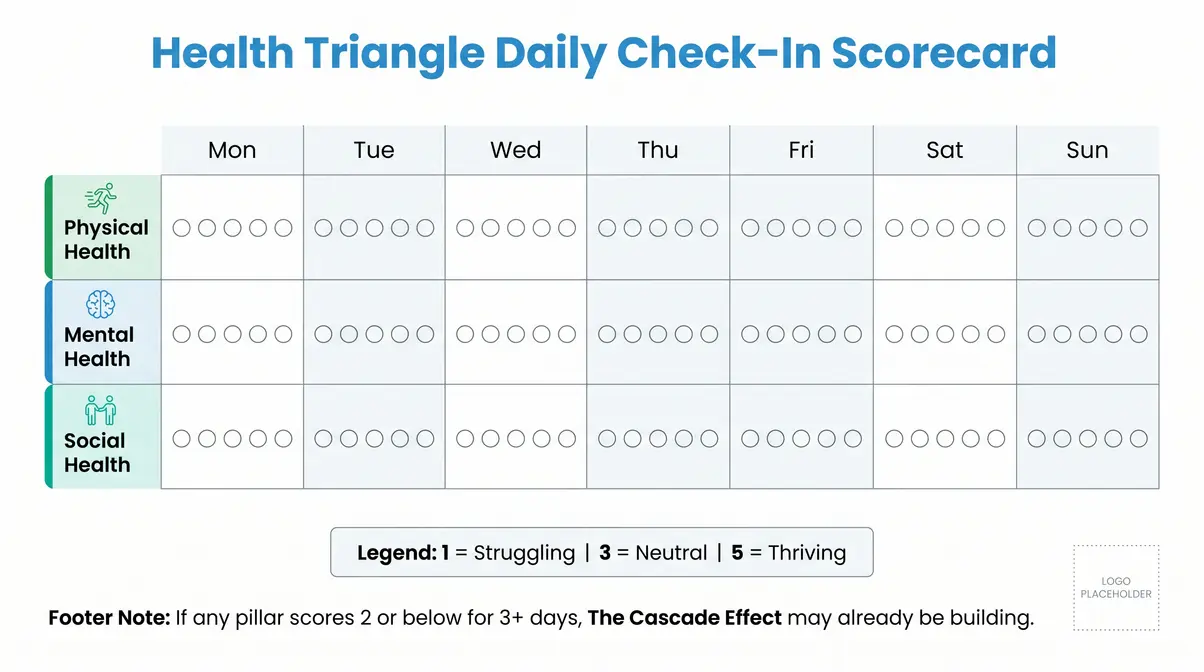
A practical way to use this in daily life: at the end of each day, give each pillar a quick score from one to five. Not to judge yourself — but to notice which side of your triangle is drifting. If your physical score has been a two for five days in a row, The Cascade Effect is already building. That’s your cue to intervene at the source rather than wonder why everything feels harder than it should.
Related Health Models Worth Knowing
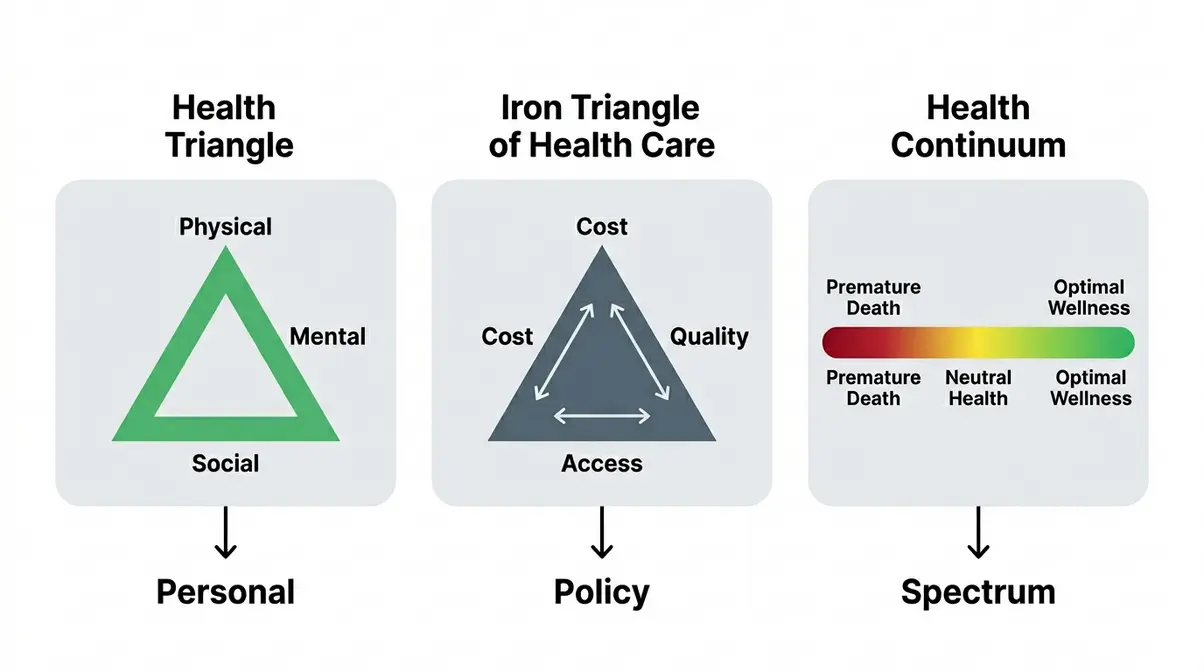
The health triangle is the most widely taught holistic wellness framework — but it’s not the only model that maps human health. Understanding related models helps you see the health triangle’s strengths more clearly and prevents confusion when you encounter these terms in healthcare, school, or policy discussions.
The Iron Triangle of Health Care
The Iron Triangle of Health Care is a policy model — not a personal wellness framework. It describes the three competing priorities that every healthcare system must navigate: cost, quality, and access. The core tension is that improving any two of these factors typically compromises the third. A system that offers high-quality, widely accessible care will generally be expensive. A low-cost, high-quality system will often be difficult to access.
The term “iron” reflects the rigidity of this trade-off. Healthcare administrators, policymakers, and insurers use this model to make decisions about resource allocation — it’s a structural lens for systems, not individuals.
How it differs from the health triangle: The Iron Triangle of Health Care describes how healthcare systems operate. The health triangle describes how individual people achieve well-being. One is macro (policy, infrastructure, economics); the other is personal (daily habits, relationships, emotional life). Confusing the two is common because both use “triangle” as a metaphor — but they address entirely different questions.
The Health Continuum
The Health Continuum is a model that represents health not as a binary state (“healthy” or “sick”) but as a spectrum with two endpoints: optimal wellness at one end and premature death at the other. Every person exists somewhere along this line at any given moment, and that position shifts constantly based on lifestyle, circumstances, and access to care.
- The continuum’s endpoints are:
- Optimal wellness: Peak physical, mental, and social functioning — a state of thriving, not just the absence of illness
- Premature death: The consequence of sustained, unaddressed decline across health dimensions
Between these endpoints lie stages of illness, disability, poor health habits, neutral health, and increasing wellness. The model is often used in health education to show students that health is not a destination but a direction.
How it differs from the health triangle: The Health Continuum describes where you are on a spectrum at a given moment. The health triangle describes why you’re there — by showing which of the three pillars is contributing to or detracting from your position on that continuum. The two models are complementary: the continuum gives you the map, the triangle gives you the compass.
How These Models Differ
| Model | Focus | Who Uses It | Key Question Answered |
|---|---|---|---|
| Health Triangle | Individual well-being across 3 pillars | Students, individuals, wellness educators | “Am I balanced across physical, mental, and social health?” |
| Iron Triangle of Health Care | Healthcare system trade-offs | Policymakers, administrators, insurers | “How do cost, quality, and access compete?” |
| Health Continuum | Spectrum from wellness to illness | Health educators, public health professionals | “Where am I on the wellness spectrum right now?” |
Each model is useful in its own context. For your personal daily well-being, the health triangle is the most actionable of the three — because it gives you three specific, improvable dimensions to work with rather than abstract system dynamics or a single spectrum line.
A Quick Glossary of Related Health Terms
As you research the health triangle and related wellness topics, you’ll likely encounter terms and brand names that sound health-related but mean different things. This section defines the most commonly searched ones clearly.
Health Service Brands You May See
Sprinter Health is a mobile health service that brings preventive care — lab tests, vaccinations, and chronic disease screenings — directly to patients at home or at their workplace. It operates as a technology-enabled care delivery company, not a wellness philosophy or framework.
Lantern Health is a digital behavioral health platform that connects individuals with licensed therapists and coaches for mental health support, primarily through employer-sponsored benefits programs. It focuses on the mental health pillar of the triangle, offering structured support for anxiety, depression, and stress management.
Rume Health is a concierge primary care and wellness service offering personalized health plans, advanced diagnostics, and direct access to physicians. Its model emphasizes proactive, whole-person care — which aligns philosophically with the health triangle’s emphasis on all three pillars, though “Rume Health” is a brand, not a framework.
None of these brands are the health triangle. They are services that may support one or more of its pillars. Knowing the difference helps you evaluate them more clearly.
Key Health Terms Defined
Physiological health refers specifically to the proper biological functioning of the body’s systems — cardiovascular, respiratory, neurological, digestive, and so on. It is a subset of physical health that focuses on measurable, biological processes rather than lifestyle behaviors. When a doctor orders blood tests or measures blood pressure, they are assessing physiological health.
Direct pressure in health (sometimes called “peer pressure” in health education contexts) refers to explicit, verbal influence from another person urging you toward a particular health-related behavior — positive or negative. “Come on, just skip the gym today” is direct pressure. It differs from indirect pressure, which operates through observation and social norms rather than explicit requests. Understanding this distinction is useful when building social health, because your environment shapes your habits more than most people realize.
Holistic health is the broader philosophy that health encompasses the whole person — body, mind, spirit, and social environment — rather than any single system or symptom. The health triangle is one expression of holistic health thinking, specifically the version most widely taught in school health curricula.
Common Pitfalls When Balancing Your Triangle
Most people who discover the health triangle feel genuinely motivated to apply it. What follows are the most common ways that motivation stalls — and how to avoid each one.
3 Common Health Triangle Mistakes
Mistake 1: Treating the pillars as a rotation, not a simultaneous practice.
Many people decide to “fix” one pillar at a time — spend a month on physical health, then tackle mental health, then social. This approach misunderstands the framework. Because of The Cascade Effect, neglecting two pillars while you focus on one means the other two are actively declining during your “improvement” month. Small, consistent attention across all three pillars outperforms intense focus on any single one.
Mistake 2: Confusing activity with connection in social health.
Being surrounded by people at work, at parties, or on social media does not automatically produce social health. Research distinguishes between social presence (being near others) and social connection (feeling genuinely known and valued). You can feel profoundly lonely in a crowd. Social health requires intentional, reciprocal engagement — not just proximity.
Mistake 3: Waiting for a crisis to take the triangle seriously.
The health triangle is most useful as a preventive tool, not a recovery tool. By the time all three pillars are visibly struggling, The Cascade Effect has already compounded. A daily 60-second self-check — “How is my body feeling? How is my mind? How are my relationships?” — is far more powerful than a quarterly reset after burnout.
When to Seek Professional Support
The health triangle is an educational framework, not a diagnostic or treatment tool. If you notice persistent, significant weakness in any pillar — chronic physical symptoms, prolonged low mood or anxiety, or deep social isolation — please consult a qualified healthcare professional.
Specific situations that warrant professional support:
- Physical health: Unexplained fatigue lasting more than two weeks, significant changes in weight, pain that doesn’t resolve, or any symptom that worries you
- Mental health: Persistent sadness, anxiety, or hopelessness; difficulty functioning at work or in relationships; thoughts of self-harm (contact the 988 Suicide and Crisis Lifeline by calling or texting 988)
- Social health: Chronic loneliness that feels unmanageable, relationship patterns that feel harmful, or social anxiety that prevents daily functioning
The SAMHSA National Helpline (1-800-662-4357) provides free, confidential referrals to mental health and substance use treatment services 24 hours a day. For personalized health advice across all three pillars, consult a qualified healthcare provider — a primary care physician, licensed therapist, or certified wellness professional — who can assess your individual situation.
Frequently Asked Questions
What are the three pillars of the health triangle?
The three pillars of the health triangle are physical health, mental health, and social health. Each pillar is equally weighted in the framework, meaning no single side is considered more important than the others. This foundational concept is rooted in the WHO Constitution of 1948.
What is the 3-3-3 rule for health?
The 3-3-3 rule is a grounding technique most commonly applied to mental health. When you feel anxious or overwhelmed, name three things you can see, three sounds you can hear, and three things you can physically touch. This exercise interrupts the stress response by directing your attention to the present moment rather than the anxiety-producing thought or situation. While simple, grounding techniques like this are supported by cognitive-behavioral research as effective short-term strategies for managing acute anxiety, according to the American Psychological Association (APA, 2026).
What is your health triangle?
Your health triangle is your personal snapshot of well-being across all three pillars at any given moment. It reflects how well you’re sleeping and eating (physical), how you’re managing stress (mental), and how supported you feel (social). A practical way to assess it is to rate each pillar from one to five at the end of the day to see where you might be drifting.
What is the 3-3-3 rule in mental health?
In mental health specifically, the 3-3-3 rule is a sensory grounding technique used to manage anxiety, panic, and emotional overwhelm. You identify three things you see, three things you hear, and three things you can touch to anchor your awareness in the physical present. Therapists recommend it as a first-response tool because it engages the parasympathetic nervous system.
Why is the health triangle important?
The health triangle is important because it shifts the focus from purely physical fitness to holistic well-being. It helps individuals recognize that mental and social health are just as critical to longevity and quality of life. By using this framework, you can identify hidden stressors before they cause physical symptoms. This comprehensive approach aligns with guidelines from major health organizations like the CDC.
Can the health triangle change over time?
Yes, your health triangle is constantly shifting based on your daily habits, environment, and life circumstances. A stressful week at work might temporarily weaken your mental and social pillars, requiring intentional effort to restore balance. Regular self-assessment helps you adapt to these natural fluctuations.
Balancing Your Health Triangle Starts Today
The health triangle is not a textbook relic. It is a working model for how human beings actually function — and the evidence behind it is substantial. The WHO’s 1948 definition still holds: health is a state of complete physical, mental, and social well-being, not merely the absence of illness. Every piece of research since has reinforced rather than revised that claim. Understanding what is the health triangle is the first step toward true well-being.
The Cascade Effect is the mechanism that makes this framework urgent rather than academic. A deficit in one pillar doesn’t stay contained. It spreads — predictably, measurably, and often faster than you expect. But the cascade runs in both directions. Every small improvement you make in any single pillar creates a ripple that the other two can feel.
Your next step is simpler than you might think. Tonight, give each pillar a number between one and five. Not to judge yourself — to locate yourself. Which side of your triangle needs the most attention this week? Start there, with one small action. A single phone call. One full night of sleep. Five minutes of quiet reflection. The triangle responds to consistent, humble effort — not dramatic overhauls. For personalized guidance on any pillar, consult a qualified healthcare professional who can meet you where you actually are.
Sources
- World Health Organization. Constitution of the World Health Organization. WHO, 1948.
- Centers for Disease Control and Prevention. Chronic Diseases in America. CDC, 2026.
- Holt-Lunstad, J., Smith, T. B., & Layton, J. B. “Social Relationships and Mortality Risk: A Meta-analytic Review.” PLOS Medicine, 2015.
- American Psychological Association. Mental Health Topics: Anxiety. APA, 2026.
- Substance Abuse and Mental Health Services Administration. SAMHSA’s Wellness Initiative. SAMHSA, 2026.
- National Institute of Mental Health. Social Support and Stress. NIMH, 2026.
- World Health Organization. Global Recommendations on Physical Activity for Health. WHO, 2026.
- Coyne, S. M., et al. “Does time spent using social media impact mental health?” JAMA Pediatrics, 2026.
Related posts:
Benefits of Yoga for Fitness: The Science-Backed Guide
Home Workouts to Build Muscle Without Weights (2026)
CrossFit Strength Training for Beginners: 2026 Guide
Home Workout Plan for Beginners: 30-Day Step-by-Step
How to Self Massage Calves: The 4-Layer Method Guide
Strength Training for Beginners: Complete Workout Plan 2026

Callum
Hi, I'm Callum, the founder of Body Muscle Matters. I'm not a certified trainer, I'm a self taught lifter who started this site to share what I've learned from my own training and a lot of trial and error. Everything here comes from real experience and honest research, written the way I'd explain it to a friend who is just getting started. My goal is simple: practical, no hype fitness advice you can actually use.