Testosterone Muscle Growth Science: Complete Guide
⚠️ Medical Disclaimer: This article is for informational purposes only and does not constitute medical advice. Always consult a qualified healthcare provider before making any decisions about testosterone therapy, supplementation, or changes to your training regimen.
Medically Reviewed | This article synthesizes peer-reviewed literature from PubMed, NEJM, and Frontiers in Physiology. It does not substitute for evaluation by a licensed endocrinologist or sports medicine physician.
In 1996, a landmark NEJM trial reported that 600 mg/week of testosterone enanthate increased fat-free mass by 6.1 kg in just 10 weeks — even in men who did not exercise (Bhasin et al., NEJM, 1996). That finding is routinely cited. What is rarely explained is the deeper question it raises: how, exactly, does a hormone trigger that magnitude of response at the cellular level?
Most online content on testosterone for muscle growth either flattens the answer to “testosterone = more muscle” or buries the mechanism in clinical language inaccessible to anyone without a biochemistry degree. Neither approach helps you make informed decisions about your training, sleep, supplementation, or whether to speak with a physician about TRT. The testosterone muscle growth science is genuinely fascinating — and practically useful once you understand it.
This guide covers the three cellular mechanisms that drive testosterone’s anabolic effects, the dose-response curve from therapeutic TRT to supraphysiologic dosing, six evidence-based natural optimization protocols, and an honest assessment of what supplements and TRT actually deliver.
Understanding testosterone muscle growth science reveals that the hormone drives muscle growth through three interdependent mechanisms — the Testosterone-Muscle Triad: protein synthesis amplification, satellite cell activation, and anti-catabolism. A landmark NEJM trial found 600 mg/week increased fat-free mass by 6.1 kg in 10 weeks, even without exercise.
- 1. Mechanism: Testosterone binds androgen receptors in muscle cells, triggering gene transcription for contractile proteins like actin and myosin.
- 2. Dose matters: Therapeutic TRT (restoring normal levels) adds approximately 2–4 kg lean mass; supraphysiologic doses add more but carry serious cardiovascular risks.
- 3. Exercise multiplies the effect: Combining resistance training with testosterone produces significantly greater gains than either alone.
- 4. Natural optimization works: Sleep (7–9h), resistance training at 70–85% 1RM, and adequate caloric intake are the highest-leverage natural levers.
- 5. Supplement skepticism warranted: Most OTC “testosterone booster” products fail to meaningfully increase total testosterone in healthy men, with ashwagandha as a notable partial exception.
Cellular Mechanisms of Muscle Growth {#mechanisms}
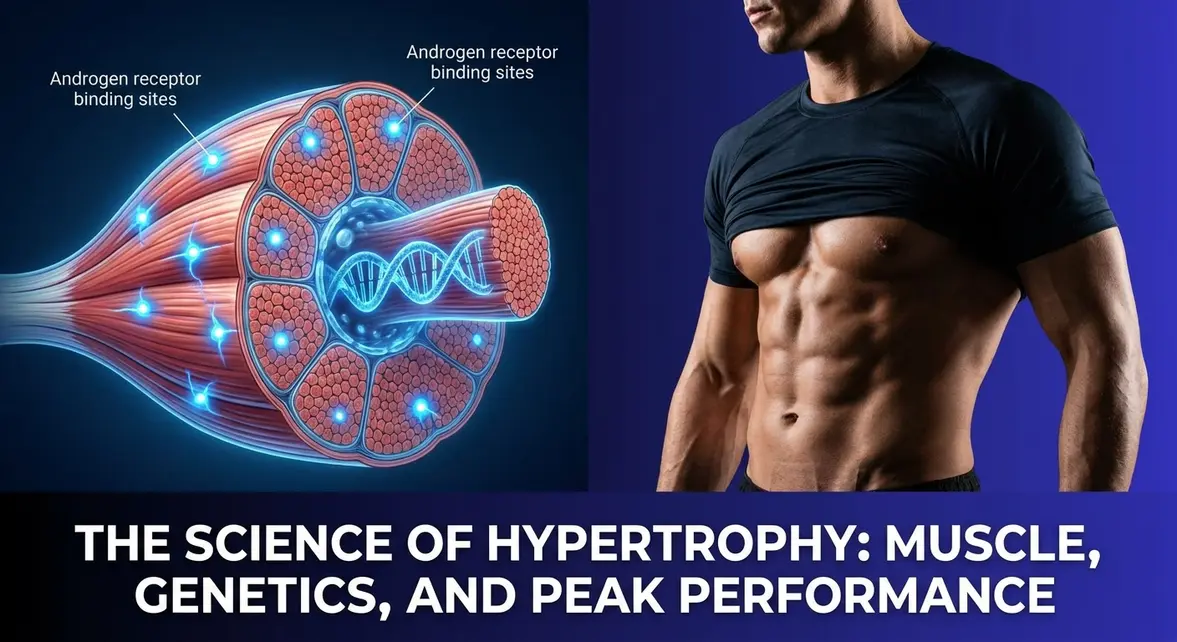
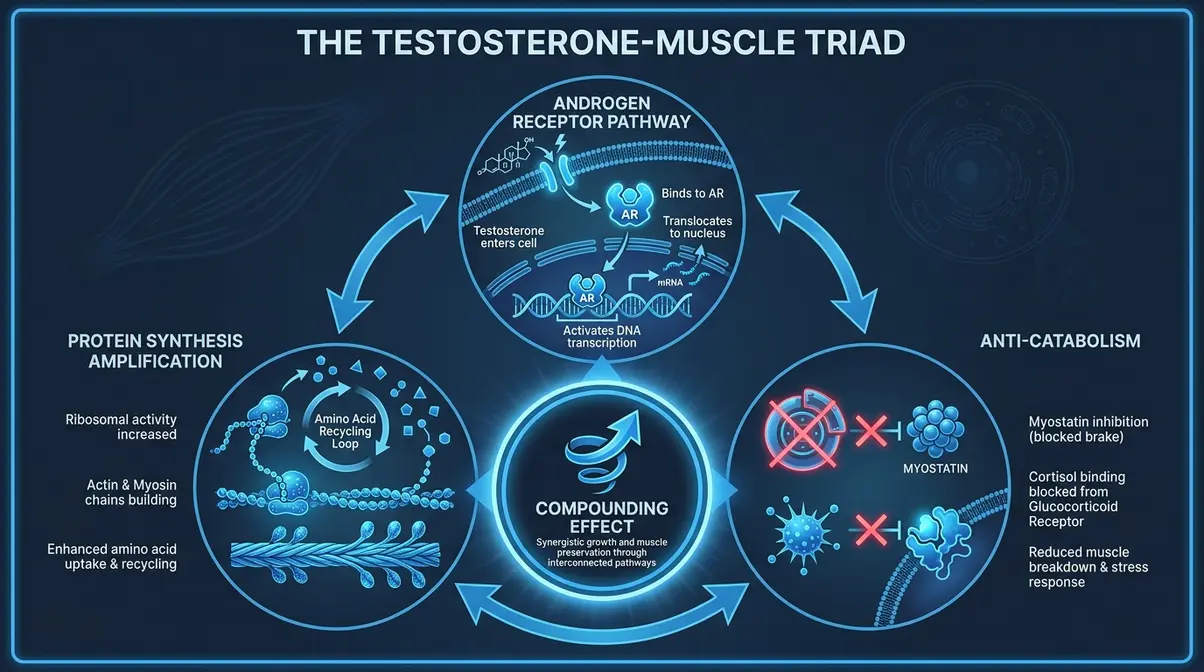
When exploring testosterone muscle growth science, we see that it drives muscle growth through three distinct but deeply interconnected cellular mechanisms — protein synthesis amplification, satellite cell activation, and anti-catabolism. Together, these form what this guide calls the Testosterone-Muscle Triad. Testosterone binds androgen receptors (ARs — protein structures inside muscle cells that recognize and respond to the hormone) and initiates a cascade of gene-level changes. According to a 2024 NIH review, satellite cells are the predominant sites of AR expression in skeletal muscle tissue, making them central to testosterone’s anabolic effect.
What distinguishes the Testosterone-Muscle Triad from a simple list of three parallel effects is that these mechanisms compound. Satellite cell activation adds new nuclei to muscle fibers, which expands the cell’s productive capacity for protein synthesis. Anti-catabolic protection then preserves that expanded capacity even during periods of stress or caloric deficit. Understanding this interdependence — not just the individual mechanisms — is what separates a mechanistic understanding of testosterone for muscle growth from a superficial one.
The Androgen Receptor Pathway
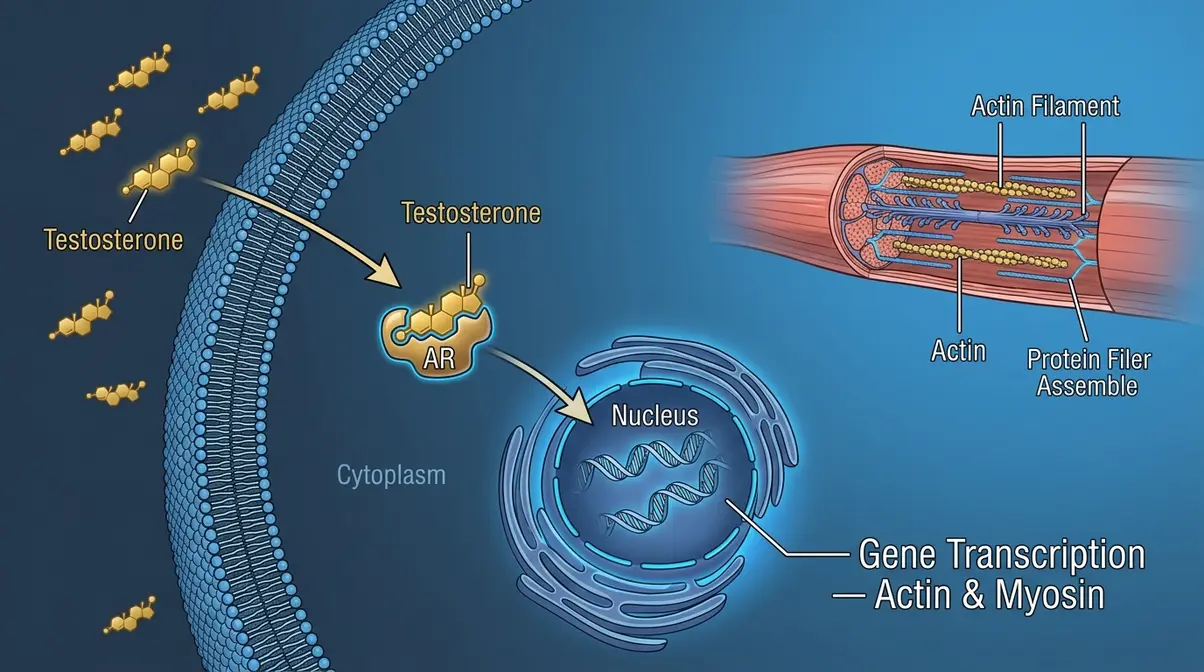
Testosterone is a lipid-soluble hormone — it passes directly through the muscle cell’s outer membrane, unlike peptide hormones that require surface receptors to relay their signal. Once inside the cell, testosterone binds to androgen receptors (ARs) located in the cytoplasm. This binding event triggers the testosterone-muscle growth science in its most fundamental form: the testosterone-AR complex translocates to the cell nucleus, where it functions as a transcription factor.
Inside the nucleus, the complex binds to androgen response elements (AREs) — specific sequences on the DNA — and activates genes encoding contractile protein synthesis in skeletal muscle, specifically actin and myosin (the two proteins that physically generate force in muscle contractions). A transcription factor is essentially a molecular switch: it turns gene expression on or off. Testosterone’s AR complex is one of the most potent anabolic switches in human physiology.
This mechanism explains why testosterone’s muscle-building effect is sustained rather than instantaneous. Gene transcription takes time, which is precisely why long-term baseline testosterone levels matter more than acute post-workout spikes — a point addressed in detail in the next section. Notably, ARs are more densely expressed in fast-twitch (Type II) muscle fibers, which explains why testosterone disproportionately benefits strength and power athletes.
Once those genes are activated, the cell begins producing contractile proteins at an accelerated rate — a process called muscle protein synthesis.
Protein Synthesis Amplification
Research confirms that testosterone directly affects muscle growth by amplifying the rate of muscle protein synthesis (MPS) — the process by which muscle cells build new proteins to repair and enlarge muscle fibers following exercise. Testosterone achieves this by increasing the transcription rate of anabolic genes and improving intracellular amino acid recycling.
Testosterone’s role in muscle protein synthesis is well-characterized: according to a 2024 NIH PMC review, “testosterone administration induces an increase in skeletal muscle protein synthesis and an improved recycling of intracellular amino acids” (NIH PMC, 2024). Intracellular amino acid recycling means the cell reuses its own building blocks more efficiently — it breaks down older proteins and redirects those amino acids back into new synthesis rather than exporting them for elimination. The practical consequence: under elevated testosterone, the same dietary protein intake produces a greater anabolic response.
The quantified scale of this effect is striking. The landmark Bhasin et al. NEJM trial found that men receiving 600 mg/week of testosterone enanthate gained 6.1 kg of fat-free mass over 10 weeks without any structured exercise program (Bhasin et al., NEJM, 1996). This is the foundational evidence for testosterone’s MPS-driven anabolic effect.
“Supraphysiologic doses of testosterone, especially when combined with strength training, increase fat-free mass and muscle size and strength in normal men.”
— Bhasin et al., New England Journal of Medicine, 1996
Testosterone also increases circulating IGF-1 (insulin-like growth factor 1), which independently activates the mTOR pathway — the science of muscle hypertrophy and mTOR pathway represents a parallel anabolic system that testosterone amplifies rather than replaces.
Amplifying protein synthesis is only part of the story. Testosterone also expands the capacity of muscle cells to produce proteins — by recruiting new nuclei through satellite cell activation.
Satellite Cell Activation
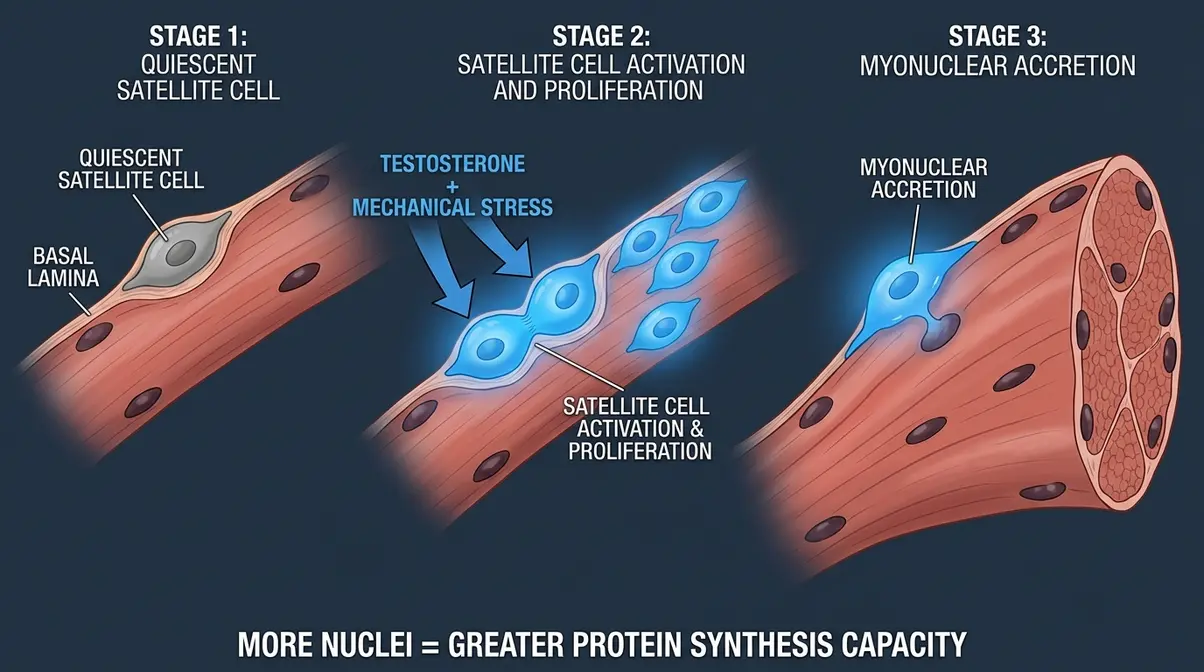
Satellite cells are dormant, undifferentiated stem cells that sit on the outer surface of muscle fibers. Under resting conditions, they remain quiescent. Testosterone — particularly in the presence of mechanical stress from resistance training — activates these cells, prompting them to proliferate and fuse with existing muscle fibers.
This fusion process is called myonuclear accretion: the addition of new nuclei to muscle cells. Each nucleus governs a finite “domain” of cytoplasm for protein synthesis. More nuclei means a larger productive capacity for MPS. This is why testosterone’s muscle-building effect compounds over time rather than plateauing quickly — the infrastructure for synthesis is actively expanding. Does high testosterone increase muscle growth beyond what training alone achieves? The myonuclear accretion data suggests yes, by a substantial margin.
A graded-dose study published in the Journal of Clinical Endocrinology and Metabolism found that satellite cell number increased in a dose-dependent manner at the three highest doses tested (125, 300, and 600 mg/week), rising from 3% at baseline to 6.2%, 9.2%, and 13.0% respectively, with corresponding increases in muscle fiber cross-sectional area (increased satellite cell replication and activation, Bhasin et al., JCEM, 2006). The 2008 mechanistic review in PMC confirms that “a mechanism by which testosterone facilitates the hypertrophy of muscle fibres is the activation of satellite cells and the promotion of myonuclear accretion when existing myonuclei become unable to sustain further enhancement of protein synthesis”.
There is also a “muscle memory” implication: once myonuclei are added through satellite cell fusion, they persist even after testosterone levels return to baseline. Men who have trained with elevated testosterone regain muscle faster following a detraining period — not because of the hormone itself, but because the nuclear infrastructure it built remains.
A notable mechanistic nuance that competitors consistently miss: satellite-cell-dependent hypertrophy (testosterone-driven) and satellite-cell-independent hypertrophy (mTOR/mechanical tension driven) are distinct pathways. Resistance training activates both; testosterone specifically amplifies the satellite-cell-dependent route.
Beyond building muscle, testosterone also protects existing muscle tissue — a mechanism that’s often overlooked but equally important.
Anti-Catabolic Effects
Testosterone inhibits the expression of myostatin — a protein that functions as a biological brake on muscle fiber growth. Lower myostatin activity allows muscle fibers to grow larger. This mechanism is distinct from and additive to testosterone’s direct anabolic effects on protein synthesis and satellite cells, making it the third pillar of the Testosterone-Muscle Triad.
Testosterone also reduces the muscle-wasting effect of cortisol (the primary stress hormone) by competing for glucocorticoid receptor binding sites in muscle cells. When cortisol binds glucocorticoid receptors, it promotes protein breakdown. Testosterone occupies those same receptors, partially blocking cortisol’s catabolic signal. This interaction is particularly relevant during caloric restriction or overtraining periods, when cortisol is chronically elevated. Testosterone’s role in muscle protein synthesis encompasses this anti-catabolic dimension alongside its direct anabolic effects, including myostatin inhibition and glucocorticoid receptor competition (NIH PMC, 2024).
The clinical relevance is clear: men with hypogonadism (clinically low testosterone, defined as below 300 ng/dL) experience accelerated muscle loss not just because anabolism slows, but because catabolism proceeds unchecked. The Testosterone-Muscle Triad — protein synthesis amplification, satellite cell activation, and anti-catabolism — functions as an integrated system. Disrupting any one component weakens the other two.
Now that the cellular mechanisms are clear, the next question follows naturally: does more testosterone always produce more muscle, and where does the dose-response relationship change?
Testosterone Dose-Response Levels {#dose-response}
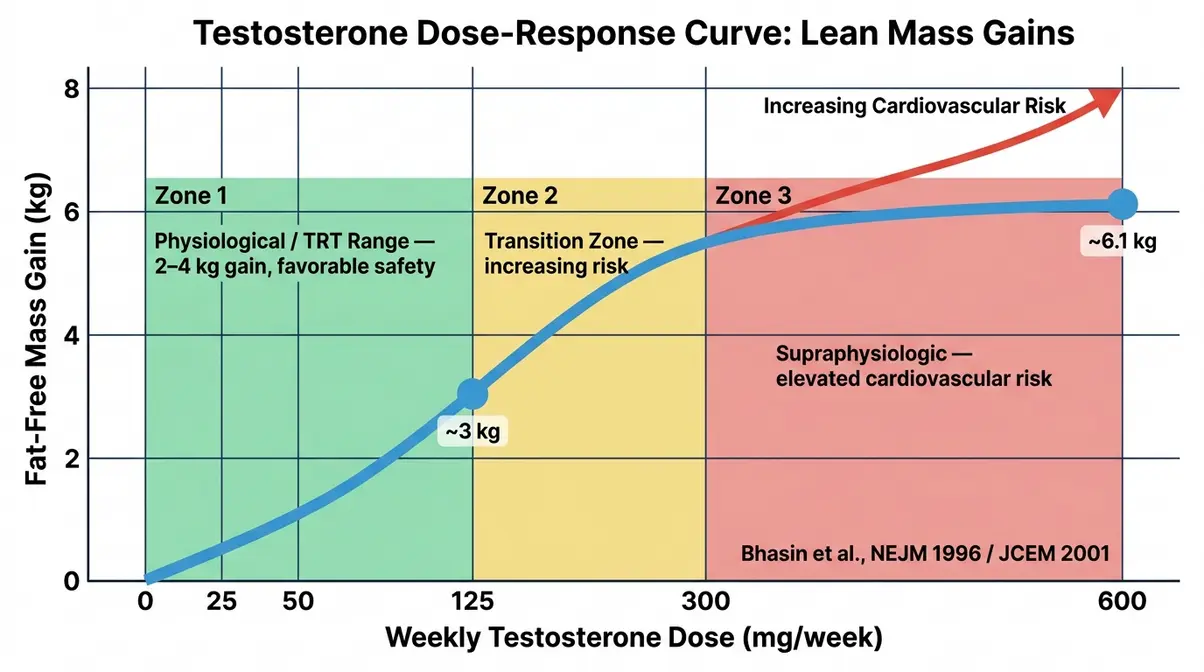
A crucial aspect of testosterone muscle growth science is understanding the dose-response curve: therapeutic TRT (restoring levels to the normal physiological range of 300–1,000 ng/dL) typically adds approximately 2–4 kg of lean mass over 20 weeks in controlled trials. Supraphysiologic doses — exceeding the normal physiological ceiling — produce larger gains but carry serious cardiovascular and endocrine risks. Understanding this distinction is essential for anyone evaluating testosterone dosage for muscle growth.
The Testosterone-Muscle Triad provides the mechanistic explanation for why more testosterone amplifies all three mechanisms simultaneously: higher androgen receptor occupancy, greater satellite cell recruitment, and stronger myostatin suppression. However, the dose-response relationship is not linear — each incremental dose increase yields smaller marginal gains, while adverse effects scale disproportionately at supraphysiologic levels.
Normal vs. Supraphysiologic Levels
Understanding testosterone dosage for muscle growth requires a clear reference frame. Normal total testosterone ranges from approximately 300–1,000 ng/dL (values vary by laboratory methodology). The American Urological Association defines hypogonadism as a total testosterone consistently below 300 ng/dL. Therapeutic TRT aims to restore levels to the mid-normal range of roughly 500–700 ng/dL, typically achieved with 100–200 mg of testosterone enanthate or cypionate injected intramuscularly per week.
Supraphysiologic means any level consistently exceeding the normal physiological ceiling (~1,000 ng/dL). The 1996 NEJM trial used 600 mg/week — producing serum levels well above 1,000 ng/dL. This is not a TRT dose. It is a performance-enhancing dose, approximately 3–6x the typical therapeutic amount. Conflating the two is one of the most common errors in online content about testosterone and muscle.
| Category | Dose Range | Serum Level | Primary Goal |
|---|---|---|---|
| Natural/Untreated | Endogenous | 300–1,000 ng/dL | Baseline function |
| Therapeutic TRT | 100–200 mg/week | 400–700 ng/dL (target) | Hypogonadism treatment |
| Supraphysiologic | 300–600+ mg/week | >1,000 ng/dL | Performance enhancement |
According to MedlinePlus (National Library of Medicine), serious side effects of high testosterone doses include heart attack, heart failure, stroke, and liver disease — risks that scale with dose and duration.
With dosage ranges established, a common misconception needs to be addressed directly: the belief that the post-workout testosterone spike is what drives muscle growth.
Acute Spike vs. Basal Level Myth
Heavy resistance training does cause a measurable acute testosterone spike — typically lasting 15–30 minutes post-exercise. This is well-documented. The misconception is that this spike directly causes muscle hypertrophy.
The evidence against this interpretation is now substantial. The acute spike is too short-lived to meaningfully upregulate gene transcription for extended protein synthesis. Long-term hypertrophy — the Testosterone-Muscle Triad operating over weeks and months — correlates with sustained baseline testosterone levels, not acute peaks.
A 2025 epidemiological study in Frontiers in Physiology found a positive association between serum testosterone and appendicular lean mass in young to middle-aged males — a finding that reflects baseline hormonal environment, not training-induced spikes (Frontiers in Physiology, 2025). A comprehensive 2024 open-access review (“Hormones, Hypertrophy, and Hype”) concluded that “the acute rise in anabolic hormones following exercise does not appear to significantly influence muscle protein synthesis or the hypertrophic and strength adaptations induced by resistance exercise training in males or females”.
Research initially suggested the post-workout testosterone surge was a primary driver of anabolic adaptation. More recent meta-analyses have revised this view: the spike appears to be a marker of training intensity, not a direct causal mechanism for hypertrophy. What matters for long-term muscle growth is the hormonal environment sustained across days and weeks — which is why sleep, nutrition, and stress management are as important as the training itself.
The practical implication: optimizing for sustained baseline testosterone through sleep, nutrition, and recovery is more productive for natural trainees than attempting to “maximize the spike” with specific exercise protocols.
What level is needed for growth?
Testosterone within the normal physiological range (300–1,000 ng/dL) supports muscle growth when combined with resistance training and adequate nutrition. Research from the Bhasin dose-response trials indicates that meaningful lean mass gains begin at serum levels achievable with approximately 125 mg/week — high-normal range (~600–700 ng/dL). Men with levels below 300 ng/dL (hypogonadism) experience significantly impaired anabolic response to exercise and may require medical evaluation for TRT.
The Risks of Supraphysiologic Dosing
Supraphysiologic testosterone doses (600 mg/week) produced 6.1 kg of fat-free mass gain in 10 weeks — roughly 3–4x the lean mass gain typical of therapeutic TRT (Bhasin et al., NEJM, 1996). The anabolic effect is real. So are the risks.
The landmark dose-response trial by Bhasin et al. (2001) — involving 61 healthy men assigned to five escalating weekly doses — found that while fat-free mass increased dose-dependently, so did hematocrit, suppression of endogenous testosterone production, and adverse lipid changes (specifically HDL reduction). At 300–600 mg/week, the authors documented a markedly less favorable safety profile than at TRT-range doses (Am J Physiol Endocrinol Metab, 2001). A 2026 JCEM analysis of real-world androgen abuse confirmed these findings, noting that supraphysiologic protocols are associated with substantially elevated cardiovascular risk markers (JCEM, 2026).
For most men who are not clinically hypogonadal, supraphysiologic doses represent a risk-benefit calculation with serious downside exposure, not a straightforward enhancement strategy. The more sustainable path is maximizing the muscle-building capacity of existing testosterone through evidence-based protocols.
Natural Testosterone Protocols {#natural-protocols}
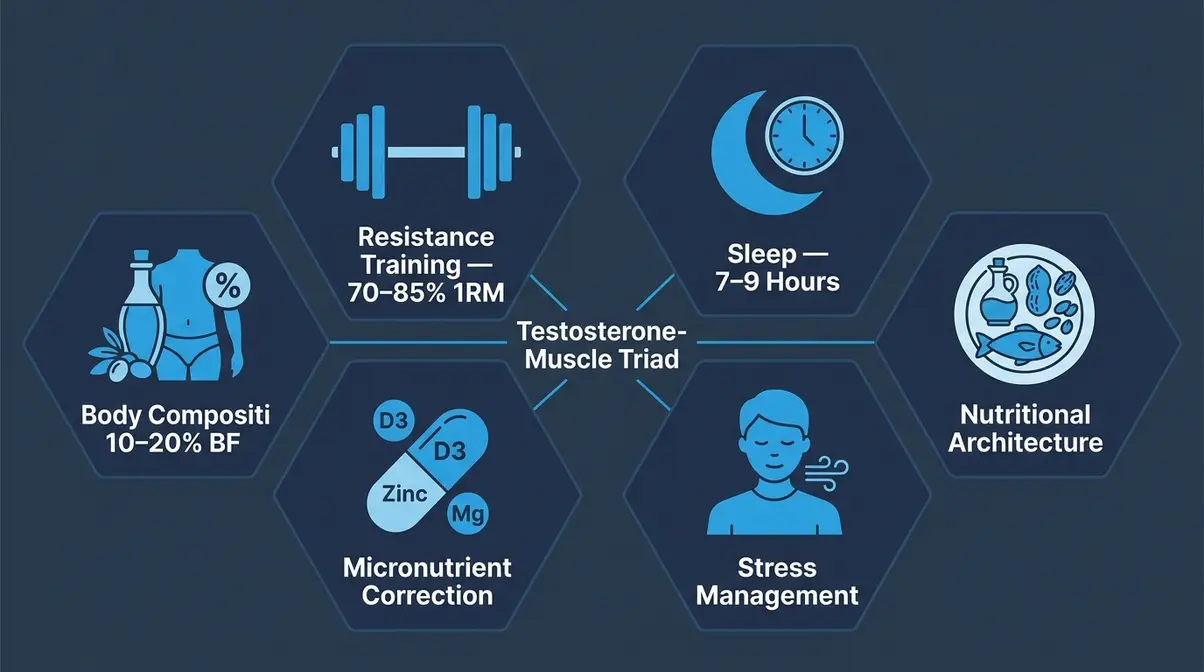
The most productive approach for natural trainees is not chasing the post-workout spike — it is building and sustaining the hormonal environment that keeps the Testosterone-Muscle Triad operating at full capacity across weeks and months. Six protocols have the strongest evidence base. Each is presented with specific, quantified parameters.
Protocol 1: Resistance Training
Compound resistance training at 70–85% of 1RM (one-repetition maximum), 3–5 sets, 3–4 sessions per week, is the foundational stimulus for testosterone’s anabolic mechanisms in muscle tissue. This loading range recruits the fast-twitch (Type II) fibers that express the highest density of androgen receptors — the cells most responsive to testosterone’s anabolic signal.
A 2026 integrative review in PMC recommends progressive overload with compound lifts (squats, deadlifts, presses, rows) as the training modality with the best overall hormonal and body composition profile. The nuance worth noting: while resistance training reliably produces acute testosterone spikes and improves body composition, systematic reviews indicate it does not consistently raise resting basal testosterone in eugonadal men (Sports Medicine, 2021). Its primary value for testosterone optimization is indirect — reducing adiposity (excess fat tissue increases aromatization of testosterone to estrogen), improving insulin sensitivity, and creating the mechanical stimulus that multiplies testosterone’s satellite cell activation.
Protocol target: 3–4 sessions/week | compound lifts | 70–85% 1RM | 3–5 sets of 6–12 reps | progressive overload applied weekly.
Protocol 2: Prioritize Sleep
Sleep is the single highest-leverage natural modulator of testosterone. The majority of daily testosterone production occurs during sleep, governed by pulsatile LH release that follows sleep architecture. A 2021 systematic review and meta-analysis confirmed that total sleep deprivation of 24 hours or more significantly reduces testosterone, while consistent, adequate sleep duration is associated with higher testosterone levels (Sleep Medicine Reviews, 2021).
“Getting 7–9 hours of quality sleep consistently is the highest-return testosterone optimization strategy available — no supplement approaches the testosterone impact of correcting chronic sleep restriction.” A 2023 study in older men found that sleep duration above 9.5 hours was associated with higher testosterone in normal-BMI individuals, reinforcing the dose-response nature of this relationship (Chinese Medical Journal, 2023).
Protocol target: 7–9 hours per night | consistent wake time (±30 minutes including weekends) | bedroom temperature 18–20°C | screen for sleep apnea if snoring is present.
Protocol 3: Nutritional Architecture
Chronic caloric restriction suppresses testosterone — the body downregulates reproductive hormones when energy availability is insufficient for both survival and anabolism. Very low-fat diets (under 20% of calories from fat) reduce testosterone by approximately 10–15%, because dietary fat provides the cholesterol substrate for steroid hormone synthesis (PMC12887910).
Research from the 2026 integrative review identifies a Mediterranean-style dietary pattern — rich in monounsaturated fats, omega-3 fatty acids, whole foods, and antioxidant-rich plants — as the most consistently supportive dietary framework for endogenous testosterone. Excess adiposity (above ~20–25% body fat in men) increases the aromatization of testosterone to estrogen, creating a self-reinforcing cycle of hormonal imbalance.
Protocol target: Dietary fat at 25–35% of calories (emphasize olive oil, nuts, fatty fish) | protein at 1.0–1.6 g/kg/day | avoid chronic severe caloric deficits | maintain healthy body composition.
Protocol 4: Micronutrient Correction
Three micronutrients have the most consistent evidence linking deficiency to reduced testosterone: vitamin D, zinc, and magnesium. The critical framing: these are deficiency-correction strategies, not true boosters. Supplementing above adequate levels does not further raise testosterone in replete men.
Vitamin D deficiency is associated with lower testosterone; target serum 25(OH)D of 50–80 ng/mL, typically requiring 4,000–5,000 IU/day when deficient (under medical supervision). Zinc is required for Leydig cell steroidogenesis; dietary deficiency can reduce testosterone substantially. Magnesium may increase free testosterone by reducing sex hormone-binding globulin (SHBG) and improving sleep quality.
Protocol target: Test for deficiencies before supplementing | vitamin D: 4,000–5,000 IU/day if deficient | zinc: 30–50 mg/day short-term if dietary intake is low | magnesium: 400–600 mg/day (glycinate or threonate form).
Protocol 5: Stress Management
The hypothalamic-pituitary-adrenal (HPA) axis and hypothalamic-pituitary-gonadal (HPG) axis are directly antagonistic. Chronic stress and elevated cortisol suppress LH secretion, which reduces testicular testosterone production. The 2026 integrative review estimates that each ~10% rise in chronic cortisol associates with approximately a 5% reduction in testosterone (PMC12887910).
Structured stress reduction — including 10–20 minutes of daily mindfulness or breathwork, limiting late-day caffeine, and ensuring 1–2 rest days per week from training — directly supports testosterone by reducing cortisol’s suppressive effect on the HPG axis.
Protocol target: 10–20 min/day mindfulness or breathwork | limit caffeine after noon | at least 1–2 non-training rest days per week | avoid chronic overtraining.
Protocol 6: Body Composition
Excess adipose tissue is not metabolically inert — it contains aromatase, the enzyme that converts testosterone to estradiol. Men with elevated body fat (above 25%) typically show lower total testosterone and higher estrogen relative to lean men, independent of age. Achieving and maintaining a body fat percentage in the 10–20% range removes this ongoing hormonal drag.
The mechanism is straightforward: less aromatase activity means less testosterone is converted to estrogen before it can bind androgen receptors in muscle tissue. Combined with resistance training and adequate nutrition, body composition management is one of the most durable natural testosterone optimization strategies available.
Protocol target: Target body fat 10–20% for men | achieve via modest caloric deficit (not aggressive restriction) combined with Protocol 1 (resistance training) | monitor progress over 12–16 weeks.
Supplements, Boosters, and TRT {#supplements-trt}
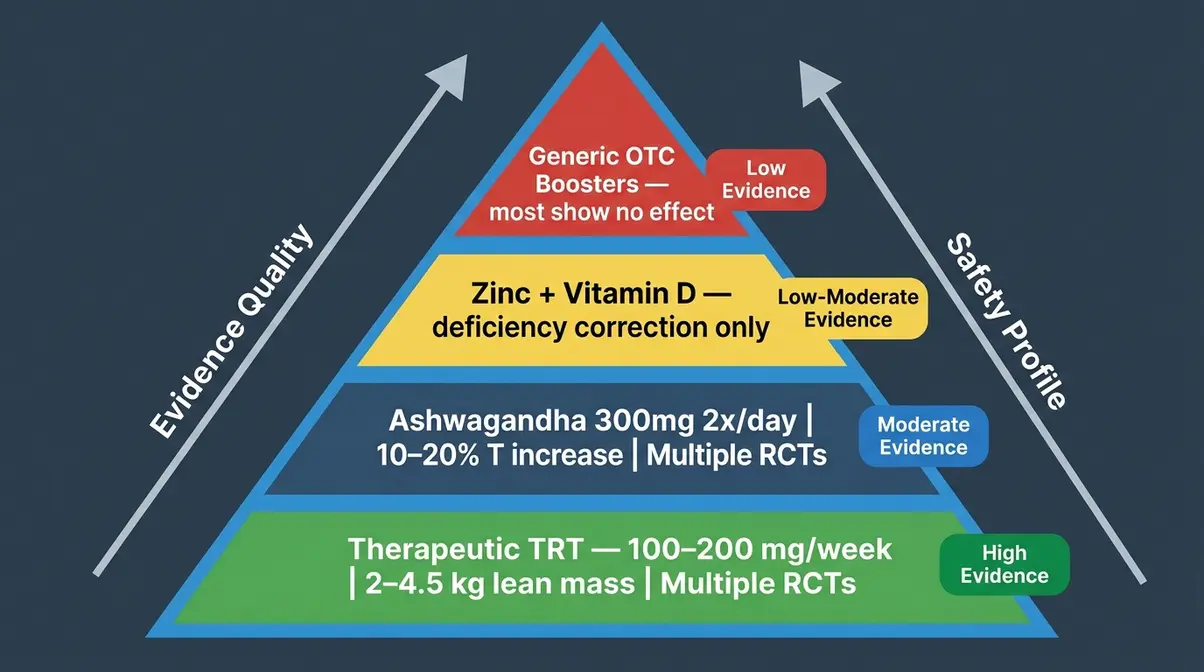
The market for testosterone supplements for muscle growth is vast and largely unsupported by clinical evidence. A 2024 review in a peer-reviewed public health journal examined OTC testosterone booster ingredients across multiple human trials and concluded that “most fail to increase total testosterone” (PubMed, 2024). A 2022 clinical review in Androgens: Clinical Research and Therapeutics found the data “inconsistent” and concluded the existing literature “fails to support routine use of OTC testosterone boosters in men” (Liebertpub, 2022). That said, not all ingredients are equally unsupported — and pharmaceutical TRT occupies an entirely different evidence tier.
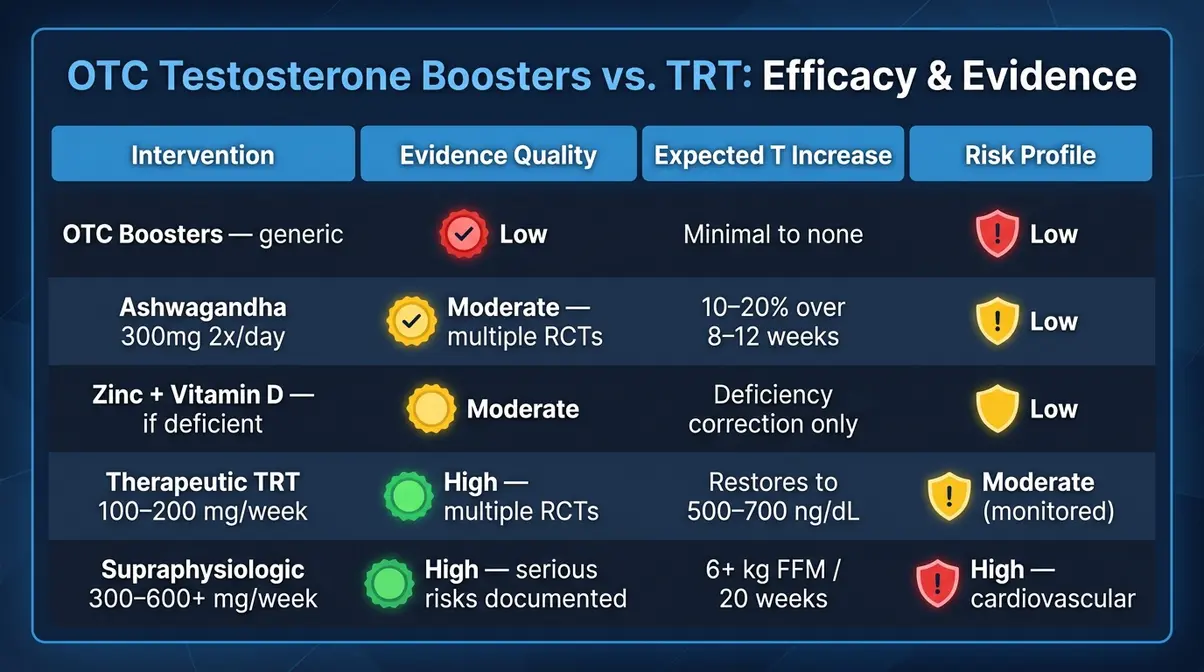
OTC Testosterone Boosters
The testosterone booster for muscle growth category is populated by products with ingredient blends that often lack any ingredient-level clinical data. A 2025 analysis of commonly marketed ingredients identified a small subset with genuine human RCT support, and a much larger group with either animal data only or no credible evidence at all.
Among the more credible ingredients:
Ashwagandha (Withania somnifera): This is the ingredient with the most consistent human RCT data. Three of four human studies examining ashwagandha and testosterone showed significant increases, typically in the range of 10–20% over 8–12 weeks. A 2023 randomized, double-blind, placebo-controlled trial found significant increases in free testosterone and luteinizing hormone in men taking ashwagandha compared to placebo (PubMed, 2023). A 2025 analysis classified standardized ashwagandha root extract (300 mg twice daily) as “possibly effective for healthy men,” with approximately 14–17% increases in serum total testosterone after 8 weeks. Critically, effects appear strongest in men with elevated cortisol, infertility, or low-normal baseline testosterone — the evidence is weaker in fully eugonadal, healthy men.
Zinc and Vitamin D3: As discussed in Protocol 4, these correct deficiency-driven testosterone suppression. They are not boosters in the pharmacological sense — supplementing above adequate levels does not further raise testosterone in replete men.
Fenugreek and Tongkat Ali: Advances in Clinical and Experimental Medicine (2024) identified fenugreek seed extracts and tongkat ali among the ingredients with the strongest positive evidence alongside ashwagandha — but emphasize the evidence remains limited and study quality is variable.
The honest summary: most OTC testosterone supplements for muscle growth do not deliver meaningful testosterone increases in healthy men. Ashwagandha is the partial exception, with the caveat that a 10–20% increase in testosterone (from, say, 450 to 530 ng/dL) is unlikely to produce dramatic muscle gains on its own.
Are boosters effective?
Most OTC testosterone booster supplements do not meaningfully increase total testosterone in healthy men, based on a 2024 peer-reviewed review of human clinical trials (PubMed, 2024). Ashwagandha is the most evidence-supported herbal ingredient, with multiple RCTs showing 10–20% testosterone increases over 8–12 weeks — primarily in men with elevated stress, infertility, or low-normal baseline testosterone. Zinc and vitamin D correct deficiency-driven suppression but do not boost testosterone above normal in replete men. No supplement replicates the effect of pharmaceutical TRT.
TRT Clinical Outcomes
TRT is a medical treatment for diagnosed hypogonadism — not a performance enhancement strategy. When prescribed appropriately to men with clinically low testosterone, TRT produces consistent, well-documented improvements in body composition. The landmark Bhasin et al. dose-response trial found that TRT-range doses (~125 mg/week) added approximately 3–4 kg of fat-free mass over 20 weeks in men with pharmacologically suppressed endogenous testosterone, with a favorable safety profile relative to higher doses (Am J Physiol Endocrinol Metab, 2001).
Real-world TRT protocols using 100–200 mg/week testosterone cypionate or enanthate are associated with approximately 2–4.5 kg of lean mass gain in the first year, particularly when combined with consistent resistance training. The best trade-off between meaningful anabolic effect and low adverse event frequency was found at doses producing high-normal serum testosterone (~500–700 ng/dL) — not at the supraphysiologic levels used in performance-enhancement contexts.
Testosterone Cypionate for Muscle Growth
Testosterone cypionate for muscle growth is one of the most searched pharmaceutical TRT topics, and the clinical data is straightforward. Cypionate and enanthate are both long-acting testosterone esters — they differ primarily in half-life (cypionate: ~8 days; enanthate: ~7 days) rather than anabolic potency. Both produce comparable lean mass outcomes at equivalent doses. Typical therapeutic dosing is 100–200 mg injected intramuscularly every 1–2 weeks, or 50–100 mg weekly for more stable serum levels.
For those looking to optimize their results without pharmaceuticals, exploring natural bodybuilding supplements alongside these protocols can provide additional support. The important distinction for anyone researching this topic: testosterone cypionate prescribed for TRT at therapeutic doses is a legitimate medical treatment. The same compound used at 300–600 mg/week for performance enhancement is classified as anabolic-androgenic steroid (AAS) abuse by endocrine societies, with substantially elevated cardiovascular and endocrine risk.
| Intervention | Typical Dose | Expected Lean Mass Gain | Evidence Quality |
|---|---|---|---|
| OTC Testosterone Boosters | Varies | Minimal (most: none) | Low–Moderate |
| Ashwagandha | 300 mg twice daily | ~10–20% T increase; modest indirect effect | Moderate (multiple RCTs) |
| Therapeutic TRT | 100–200 mg/week | ~2–4.5 kg over 12 months | High (multiple RCTs) |
| Supraphysiologic Dosing | 300–600 mg/week | ~5–8+ kg over 20 weeks | High — but serious risks |
Limitations and Medical Advice {#limitations}
Common Pitfalls
Pitfall 1: Confusing TRT with performance enhancement dosing. A man prescribed 150 mg/week of testosterone cypionate for diagnosed hypogonadism is receiving a medical treatment. A man self-administering 500 mg/week without a diagnosis or medical supervision is engaging in a fundamentally different — and substantially riskier — practice. The internet conflates these constantly. The clinical literature does not.
Pitfall 2: Expecting supplements to replicate pharmaceutical effects. Even the best-evidenced OTC ingredient (ashwagandha) produces testosterone increases in the range of 10–20% in responsive populations. Pharmaceutical TRT restores testosterone from, say, 250 ng/dL to 600 ng/dL — a 140% increase. These are not comparable interventions. Expecting supplement-level results comparable to TRT leads to either disappointment or escalation to unsupervised pharmaceutical use.
Pitfall 3: Ignoring sleep and treating training as the primary lever. Based on current evidence, chronic sleep restriction has a more suppressive effect on testosterone than any single training variable has an elevating effect. Men optimizing training protocols while averaging 5–6 hours of sleep are fighting an uphill hormonal battle that resistance training cannot compensate for.
Pitfall 4: Assuming “more testosterone = more muscle” without limit. The dose-response curve plateaus. At supraphysiologic doses above 300 mg/week, each additional increment of testosterone produces smaller marginal anabolic returns while cardiovascular and hematological risks scale steeply. The NEJM and JCEM dose-response trials both document this pattern clearly.
Pitfall 5: Interpreting a single testosterone blood test as definitive. Total testosterone varies by up to 30% across a single day due to circadian rhythm and acute stressors. A single morning measurement is more reliable than an afternoon draw, but two measurements on separate days are required for a clinical hypogonadism diagnosis per current endocrine guidelines.
When to Choose Alternatives
Natural optimization has diminishing returns in clinically hypogonadal men. If total testosterone is consistently below 300 ng/dL with symptoms (fatigue, loss of muscle mass, reduced libido, low mood), lifestyle optimization — while still valuable — is unlikely to normalize levels sufficiently. This is the scenario where a conversation with an endocrinologist or urologist about TRT is medically appropriate.
Supplement approaches are not appropriate for confirmed hypogonadism. Ashwagandha producing a 15% increase in testosterone from 250 ng/dL results in approximately 288 ng/dL — still below the clinical threshold for normal function. In this scenario, supplements are not an evidence-based alternative to medical evaluation.
When to Seek Expert Help
Consult a qualified healthcare provider — ideally an endocrinologist or urologist with experience in male hormonal health — if you experience persistent symptoms of low testosterone (fatigue, unexplained muscle loss, sexual dysfunction, mood changes), if two morning blood tests confirm total testosterone below 300 ng/dL, or if you are considering any pharmaceutical testosterone use. Self-administering testosterone without medical supervision carries serious risks including infertility (from HPG axis suppression), polycythemia (elevated hematocrit increasing stroke risk), and irreversible endocrine disruption.
Frequently Asked Questions {#faq}
How long to build muscle?
Testosterone begins activating muscle protein synthesis within days of administration, but measurable changes in lean mass typically require 8–12 weeks. In the landmark NEJM trial, significant fat-free mass gains were documented at 10 weeks (NEJM, 1996) with supraphysiologic dosing. Therapeutic TRT produces more gradual changes — most studies report clinically meaningful lean mass improvements over 12–24 weeks (Am J Physiol Endocrinol Metab, 2001), with continued gains through 12 months in hypogonadal men initiating TRT alongside resistance training.
Does training raise testosterone?
Resistance training produces reliable acute testosterone spikes but does not consistently raise resting basal testosterone in eugonadal men, according to a 2021 systematic review in Sports Medicine (PubMed, 2021). Its primary hormonal benefit is indirect: reducing adiposity (which lowers aromatase activity), improving insulin sensitivity, and creating the mechanical stimulus that maximizes testosterone’s satellite cell activation effect. In men with obesity or metabolic dysfunction, resistance training combined with weight loss can produce meaningful improvements in resting testosterone.
What are the risks?
The risks of testosterone use for muscle growth scale directly with dose and duration. Therapeutic TRT at 100–200 mg/week under medical supervision carries a well-characterized safety profile when monitored appropriately. Supraphysiologic doses (300–600+ mg/week) are associated with elevated hematocrit, HDL cholesterol reduction, suppression of endogenous testosterone production, potential infertility, and significantly increased cardiovascular risk. MedlinePlus (National Library of Medicine) lists serious side effects of high testosterone doses including heart attack, heart failure, stroke, and liver disease. All pharmaceutical testosterone use should occur under qualified medical supervision.
Can you build muscle with low testosterone?
While it is possible to build muscle with lower testosterone levels, the process is significantly slower and less efficient. Men with clinically low testosterone (hypogonadism) often struggle to add lean mass despite rigorous resistance training and adequate protein intake. Because the anti-catabolic and protein synthesis mechanisms are operating at a deficit, muscle breakdown frequently outpaces growth. Medical evaluation is recommended if symptoms persist despite optimized lifestyle factors.
Does testosterone change muscle fiber type?
Testosterone primarily induces hypertrophy in existing muscle fibers rather than changing their fundamental type. However, because androgen receptors are more densely concentrated in fast-twitch (Type II) muscle fibers, testosterone disproportionately increases the size and strength of these power-generating fibers compared to slow-twitch endurance fibers. This explains why athletes utilizing supraphysiologic doses often see the most dramatic improvements in explosive strength and absolute force production.
Conclusion
For fitness enthusiasts, students, and men evaluating TRT, testosterone muscle growth science operates through a precisely defined biological system. The Testosterone-Muscle Triad — protein synthesis amplification, satellite cell activation, and anti-catabolism — explains both why testosterone is the most potent anabolic hormone in human physiology and why its effects compound rather than simply add. The 1996 NEJM trial’s finding of 6.1 kg fat-free mass gain in 10 weeks at supraphysiologic doses remains the most cited benchmark in the field, but the 2024–2026 evidence base makes clear that sustained baseline levels, not acute spikes, drive long-term hypertrophy.
The Testosterone-Muscle Triad framework has practical implications beyond cellular biology. It explains why sleep deprivation undermines muscle growth even with optimal training, why body composition management is a hormonal intervention, and why the gap between ashwagandha’s effects and pharmaceutical TRT is not a marketing failure but a physiological reality. Each pillar of the Triad requires a specific input — anabolic signaling, mechanical stress, and cortisol management — to function at full capacity.
The evidence-based path forward is clear: prioritize sleep at 7–9 hours nightly, train with compound lifts at 70–85% 1RM three to four times per week, maintain dietary fat above 25% of calories, and address any micronutrient deficiencies before considering supplements. If symptoms of hypogonadism persist despite optimized lifestyle factors, consult a qualified endocrinologist — two morning testosterone measurements below 300 ng/dL warrant medical evaluation, not another supplement cycle.
Related posts:
Compound vs Isolation Exercises: Which Builds More Muscle?
Best Collagen Protein Powder: 9 Expert Picks (2026)
How Fast to Lose Fat: Safe Rate, Timeline & Science
Best Creatine Supplement: Tested & Compared for Every Goal
Best Creatine Supplement: Tested & Compared for Every Goal
Delayed Onset Muscle Soreness (DOMS): Complete Guide

Callum
Hi, I'm Callum, the founder of Body Muscle Matters. I'm not a certified trainer, I'm a self taught lifter who started this site to share what I've learned from my own training and a lot of trial and error. Everything here comes from real experience and honest research, written the way I'd explain it to a friend who is just getting started. My goal is simple: practical, no hype fitness advice you can actually use.