⚠️ Medical Disclaimer: This article is for educational purposes only. Consult a certified personal trainer, exercise physiologist, or physician before starting any new exercise program.
Most people who train regularly have heard the terms “fast-twitch” and “slow-twitch” — but very few can explain what those labels actually mean for their programming. Understanding the difference between fast twitch vs slow twitch muscle fibers is the foundation of intelligent training. Without that knowledge, you may be spending months in the wrong intensity zone, building neither the power nor the endurance you’re actually chasing.
Here’s the problem that doesn’t get enough attention: after age 30, one fiber type begins deteriorating significantly faster than the other — and most training programs do nothing to stop it. The reason is recruitment physics. Your body activates muscle fibers in a strict hierarchical order, and the most powerful fibers only get called into action when you’re working above roughly 70% of your maximum effort.
In this guide, you’ll learn exactly how fast and slow twitch muscle fibers differ, how to identify which type dominates your physique, and how to train each one with specific, science-backed prescriptions. We cover the core biology, genetics, targeted exercise programming, elite athlete profiles, and the critical role aging plays in fiber loss.
Quick Verdict
Fast-twitch fibers win for: Power, speed, strength, and muscle size. Best for sprinters, weightlifters, and bodybuilders.
Slow-twitch fibers win for: Endurance, sustained effort, and metabolic efficiency. Best for marathon runners, cyclists, and triathletes.
Core difference: Fast-twitch fibers contract 2–3× faster but fatigue in seconds. Slow-twitch fibers are fatigue-resistant and can sustain effort for hours. Most people need both — and most people are under-training at least one type.
Fast twitch vs slow twitch muscle fibers differ in speed, fuel source, and fatigue resistance — and the right training strategy depends on which type dominates your physique.
- Fast-twitch (Type II): High force, rapid fatigue, fueled by glycolysis — ideal for sprinting and heavy lifting
- Slow-twitch (Type I): Fatigue-resistant, aerobically fueled — built for endurance and sustained effort
- Genetics matter: ~45% of your fiber composition is heritable (Yang et al., 2003) — but training shifts the balance
- The Fiber Preservation Principle: Fast-twitch fibers atrophy first with age because you only recruit them above 70% of your max effort — making high-intensity training non-negotiable as you age
- You can test your dominant type at home without a lab biopsy — see the self-assessment section below
Fast vs Slow Twitch Fibers: Core Differences
At bodymusclematters.com, our editorial team cross-referenced peer-reviewed NIH/PMC research with evidence-based training practice to build this foundational section. All fiber classifications and physiological claims below are sourced from Tier 1 academic literature.
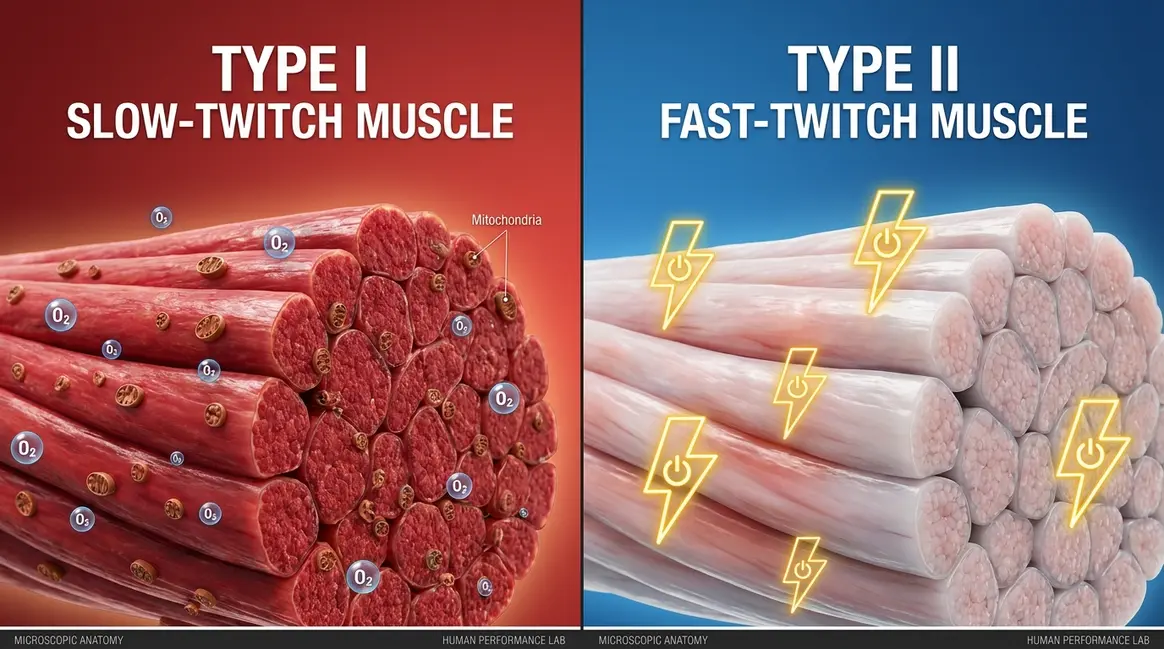
Slow-twitch (Type I) and fast-twitch (Type II) muscle fibers are classified by the differential expression of myosin heavy chain (MHC) genes — the molecular motors inside each fiber that determine contraction speed and energy use (Schiaffino & Reggiani, 2017). Type I fibers are highly fatigue-resistant and rely on aerobic oxidative metabolism. Type II fibers contract 2–3× faster but depend on anaerobic glycolysis (the rapid breakdown of glucose without oxygen) and fatigue within seconds to minutes. Most people carry roughly a 50/50 split of both types in their primary locomotor muscles, though the ratio varies considerably between individuals. Understanding these strength training vs hypertrophy adaptations helps clarify why fiber types matter for your specific goals.
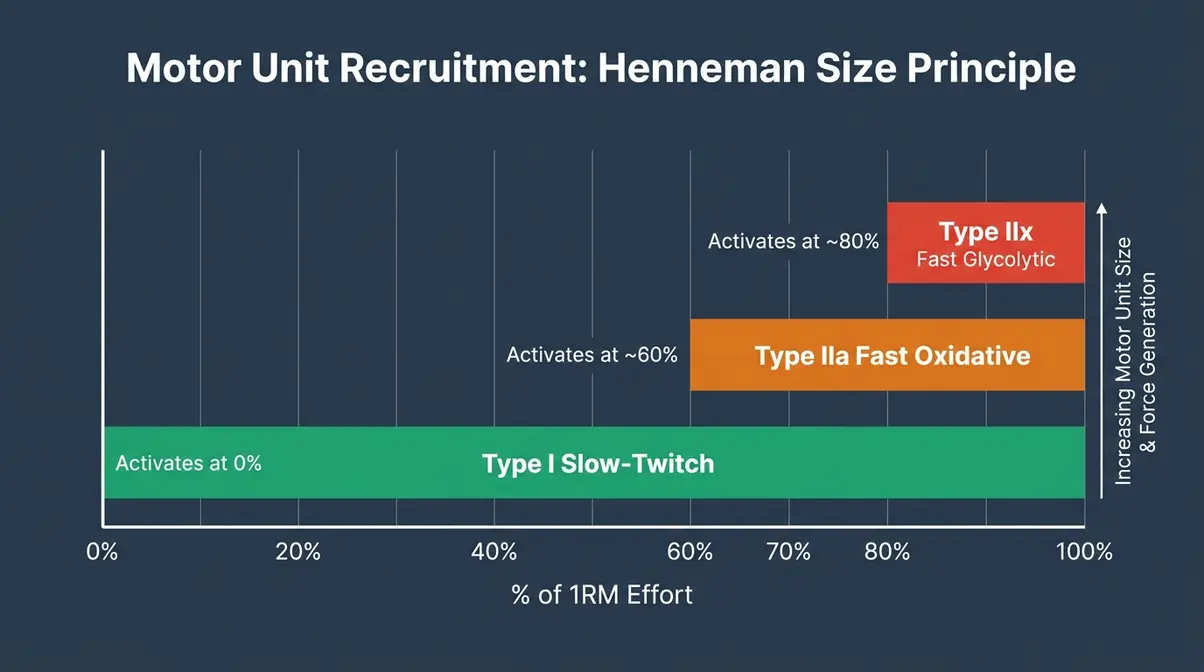
The Henneman Size Principle explains exactly why this matters for your training. Your nervous system recruits motor units (groups of muscle fibers) in a fixed order: slow-twitch first, then fast-twitch as the demand increases. At low to moderate intensities — say, a casual jog or light resistance training — your Type II fibers never fire. They only engage when you push above approximately 60–70% of your maximum effort, with the most powerful Type IIx subtype requiring 80–100% intensity to activate (NASM, 2026). This recruitment hierarchy is the mechanistic core of The Fiber Preservation Principle: if you never train at high enough intensities, your fast-twitch fibers are never recruited — and underrecruited fibers atrophy preferentially with age.
Type I Fibers: Built for the Long Haul
Slow-twitch (Type I) fibers are the endurance workhorses of your muscular system. They are densely packed with mitochondria (the cellular organelles that produce energy aerobically) and myoglobin, a protein that binds oxygen and gives these fibers their characteristic reddish color (NIH research, 2014). Because they generate ATP through oxidative phosphorylation (the aerobic energy pathway), they can sustain contractions for hours without significant fatigue.
The trade-off is force production. Type I fibers generate lower peak force than their fast-twitch counterparts, making them poorly suited for explosive movements. However, their fatigue-resistant nature makes them dominant in activities like distance running, cycling, rowing, and any sustained postural work. They’re also the first fibers your nervous system recruits — even during a warm-up set at 30% of your 1RM (one-rep max), you’re primarily training Type I. Endurance athletes can develop up to 90% slow-twitch fiber composition in their primary working muscles (Georgiou et al., 2021).
Type II Fibers: Built for Power
Fast-twitch (Type II) fibers are your power and speed assets. They express faster isoforms of myosin (the contractile protein that generates force), enabling them to cycle through contraction-relaxation sequences 2–3× faster than Type I fibers (PMC study, 2017). The downside is metabolic: fast-twitch fibers rely heavily on anaerobic glycolysis, which generates ATP rapidly but produces lactic acid as a byproduct, causing fatigue within seconds to a few minutes at maximum effort.
Fast-twitch fibers are larger in cross-sectional area than slow-twitch fibers, which is why they contribute disproportionately to both strength and visible muscle size. Elite strength and power athletes — sprinters, weightlifters, throwers — typically show 60–80% fast-twitch fiber composition in their primary working muscles (Georgiou et al., 2021). For anyone training for hypertrophy (muscle growth), explosive sports, or maximum strength, training the fast-twitch system is non-negotiable.
Type IIa vs. Type IIx: Fast Subtypes
Fast-twitch fibers are not a single category. They split into two functionally distinct subtypes with different performance profiles:
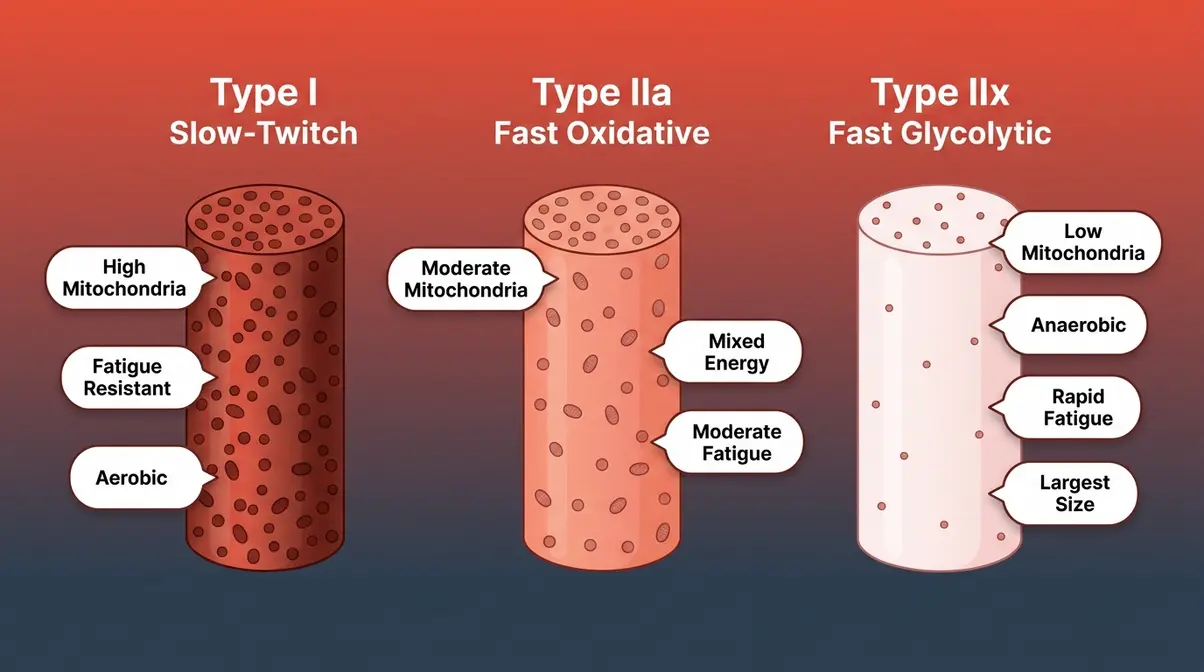
Type IIa (fast oxidative glycolytic) fibers are a hybrid between the two extremes. They contract faster than Type I but slower than Type IIx, and they can use both aerobic and anaerobic pathways. This makes them moderately fatigue-resistant — they can sustain effort for 1–3 minutes before fatiguing. Resistance training and high-intensity interval training (HIIT) primarily develop Type IIa fibers, and with training, Type IIx fibers frequently shift toward the IIa phenotype.
Type IIx (fast glycolytic) fibers are the most powerful and most explosive fibers in the human body. They rely almost entirely on anaerobic glycolysis and fatigue within 15–30 seconds of maximum effort. Crucially, humans generally do not express MHC IIb fibers (the “super-fast” type found in many other mammals) — IIx is our highest-speed fiber type (PMC review, 2017). In a biopsy of a world-class sprint hurdler, researchers found that 24% of his quadriceps fibers were pure IIx — the highest proportion reported in an elite sprinter to date — contributing to a total fast-twitch population of 71% (Trappe et al., 2015). Most sedentary adults carry less than 2% pure IIx fibers.
The comparison table below summarizes the key differences across all three fiber types:
| Characteristic | Type I (Slow-Twitch) | Type IIa (Fast Oxidative) | Type IIx (Fast Glycolytic) |
|---|---|---|---|
| Contraction Speed | Slow | Fast | Very Fast |
| Force Production | Low | High | Very High |
| Fatigue Resistance | Very High | Moderate | Very Low |
| Primary Energy System | Aerobic (oxidative phosphorylation) | Both aerobic + anaerobic | Anaerobic (glycolysis) |
| Mitochondrial Density | High | Moderate | Low |
| Myoglobin Content | High (red fibers) | Moderate | Low (white fibers) |
| Recruitment Threshold | 20–40% 1RM | ~60–70% 1RM | >70–80% 1RM |
| Best Training Stimulus | Long-duration cardio, low-intensity steady-state | HIIT, moderate resistance (8–15 reps) | Max strength (1–5 reps), plyometrics, sprints |
| Athlete Example | Marathon runner, cyclist | 800m runner, CrossFit athlete | Olympic weightlifter, sprinter |
Quotable stat: Slow-twitch (Type I) muscle fibers are classified by differential MHC gene expression and are highly fatigue-resistant, while fast-twitch (Type II) fibers contract 2–3× faster but rely on anaerobic glycolysis and fatigue within seconds (Schiaffino & Reggiani, 2017).
How to Identify Your Dominant Muscle Fiber Type
Your fiber type composition isn’t fixed at birth, but it is strongly influenced by genetics — and understanding your baseline helps you train more intelligently. At bodymusclematters.com, our editorial team evaluated the available self-assessment methods and cross-referenced them with the peer-reviewed literature on fiber-type testing. Short of a muscle biopsy, no home test is perfectly accurate, but several validated protocols give you a reliable directional read.
Genetics Behind Fiber Composition
Approximately 45% of the variation in human muscle fiber-type proportions is attributed to genetic factors, with the remaining variation shaped by training history and environment (Yang et al., 2003). That means genetics loads the gun, but your training pulls the trigger.
The most studied genetic factor in this area is the ACTN3 R577X polymorphism — a variant in the gene encoding alpha-actinin-3, a structural protein expressed exclusively in Type II (fast-twitch) muscle fibers (PMC study, 2017). Individuals carrying the R allele produce functional alpha-actinin-3 and tend to show enhanced fast-twitch fiber size and power output. Those homozygous for the X allele (approximately 16% of the global population) produce no alpha-actinin-3 at all (NIH study, 2013). Critically, ACTN3 genotype does not substantially change the proportion of fast-twitch fibers you carry, but it does affect their size and contractile properties — meaning two people with the same fiber ratio can still perform very differently in explosive tasks (Broos et al., 2016).
The frequency of the “speed-favoring” R allele also varies by population. The alpha-actinin-3-deficient XX genotype ranges from 25% in Asian populations to less than 1% in African Bantu populations (Yang et al., 2003). No female Olympic sprinters in the original Yang et al. cohort carried the XX genotype — a striking illustration of how powerfully this variant correlates with elite sprint performance.
Practical takeaway: Unless you’ve had genetic testing, you can estimate your fiber dominance through the self-assessment protocols below. Genetic testing services (e.g., those analyzing the ACTN3 R577X variant) exist but are not clinically validated for training prescription — treat results as directional, not prescriptive.
3 Self-Assessment Tests You Can Do Today
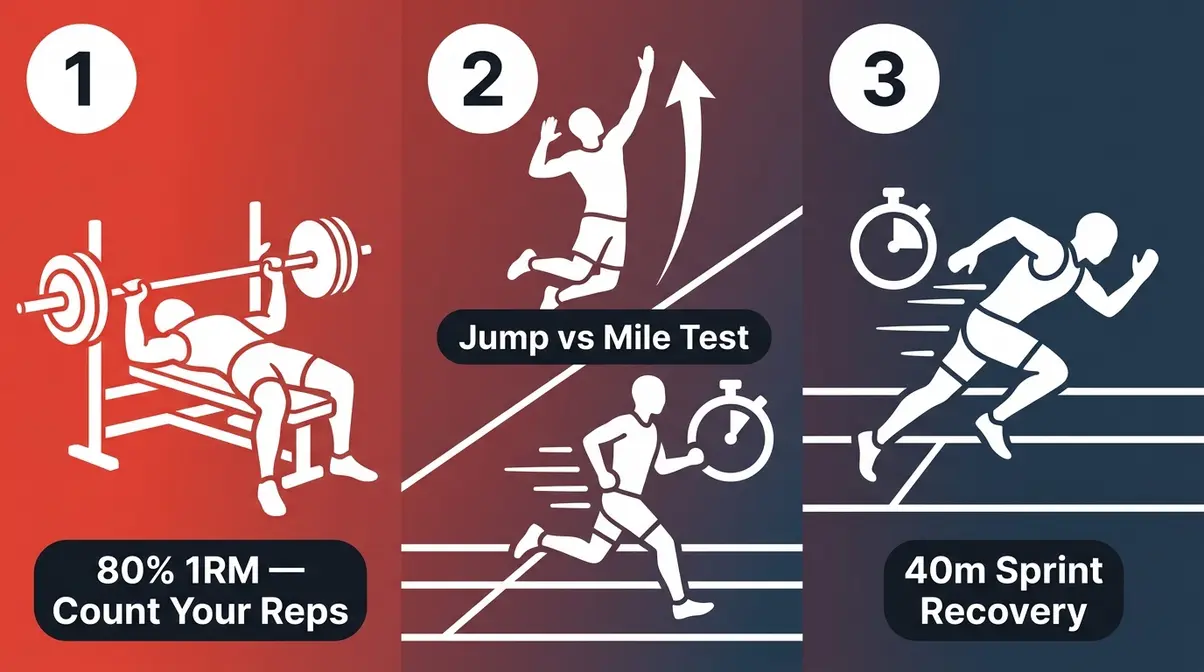
These protocols are used in evidence-based coaching to estimate fiber-type dominance without laboratory equipment. Perform each test after a thorough warm-up and at least 48 hours after your last hard training session. If you are new to testing your limits, mastering progressive overload for muscle growth is a prerequisite to ensure safety and accuracy.
Test 1: The Bench Press Endurance Test (Rep-to-Failure Protocol)
- Determine your approximate 1RM on the bench press (or use a recent max effort as your benchmark).
- Load the bar to 80% of your estimated 1RM.
- Perform as many reps as possible with strict form, stopping one rep before total failure.
- Interpret your result:
- ≤7 reps: Fast-twitch dominant — your muscles fatigue quickly at sub-maximal loads.
- 8–12 reps: Mixed fiber composition — the most common result.
- ≥13 reps: Slow-twitch dominant — your muscles resist fatigue well at this relative intensity.
Test 2: The Vertical Jump vs. 1-Mile Run Comparison
- Measure your vertical jump height (standing jump, best of three attempts).
- Record your best 1-mile run time on a flat surface.
- Interpret your profile:
- High vertical jump (≥24 inches for men, ≥18 inches for women) + slow mile time (>8:00 min/mile): Fast-twitch dominant.
- Low vertical jump + fast mile time (<7:00 min/mile): Slow-twitch dominant.
- Average on both: Mixed composition.
Test 3: The Sprint vs. Distance Recovery Test
- Sprint 40 meters at maximum effort. Note how long it takes you to feel fully recovered (breathing and heart rate returning to near-baseline).
- Interpret your result:
- Recovery in under 60 seconds: Suggests good anaerobic capacity — fast-twitch leaning.
- Recovery taking 2–3+ minutes: Suggests lower anaerobic buffer — slow-twitch leaning.
How to Train Fast and Slow Twitch Fibers
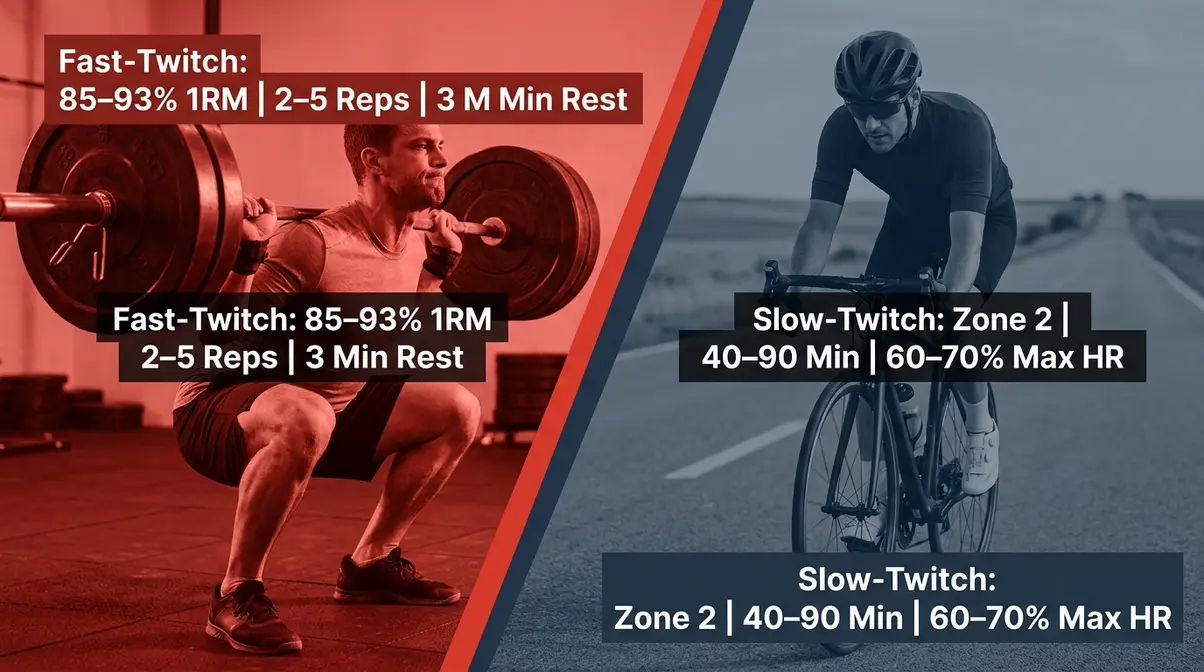
Training fiber types intelligently means matching your programming variables — load, rep range, rest periods, and exercise selection — to the physiological demands of each fiber type. The Fiber Preservation Principle applies directly here: if your programming never exceeds 70% 1RM, you are effectively excluding your most powerful fibers from the training stimulus entirely.
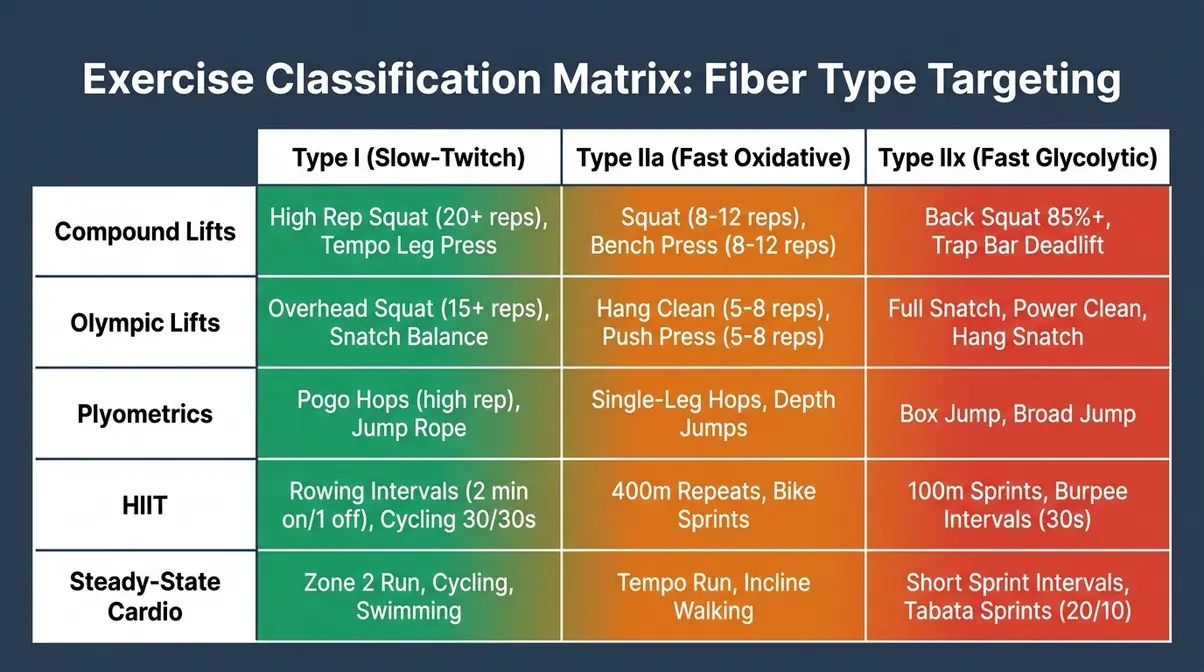
Fast-Twitch Fibers: 5 Exercises
Fast-twitch fibers respond to high force, short duration, and adequate rest — the programming variables that force your nervous system to recruit Type IIa and IIx motor units. Research indicates that loads above 70% 1RM are required to meaningfully activate fast-twitch fibers, with maximum IIx recruitment occurring at 85–100% 1RM (NASM, 2026). Rest periods of 2–3 minutes between sets are essential to allow phosphocreatine resynthesis, enabling full-intensity effort on subsequent sets. For further explosive power development, understanding Olympic weightlifting vs powerlifting key differences can refine your exercise selection.
- Barbell Back Squat
- Sets/Reps/Load: 4 sets × 3–5 reps @ 85–90% 1RM
- Rest: 3 minutes between sets
- Cue: Drive explosively from the bottom position — intent matters as much as load.
- Why it works: Maximum recruitment of quadriceps, glutes, and hamstring Type IIx fibers through full-range compound loading.
- Power Clean (or Hang Clean)
- Sets/Reps/Load: 4 sets × 3 reps @ 75–85% 1RM
- Rest: 2–3 minutes
- Cue: The pull phase must be maximally explosive — this is not a slow grind.
- Why it works: Olympic lifts produce some of the highest rates of force development of any exercise, making them elite fast-twitch stimuli.
- Box Jump (Loaded or Unloaded)
- Sets/Reps/Load: 4 sets × 5 reps (bodyweight or with 10–20 lb vest)
- Rest: 90 seconds
- Cue: Land softly, reset fully, and jump with maximal intent on every rep.
- Why it works: Plyometric loading creates rapid calcium transients (the calcium ion release that triggers muscle contraction), specifically targeting fast-twitch motor units.
- Trap Bar Deadlift (Heavy)
- Sets/Reps/Load: 5 sets × 2–3 reps @ 87–93% 1RM
- Rest: 3 minutes
- Cue: Brace maximally before initiating the pull — intra-abdominal pressure protects the spine and enables peak force output.
- Why it works: Heavy deadlift variations are among the most validated exercises for fast-twitch hypertrophy across the posterior chain.
- 40-Meter Sprint (Resisted or Flat)
- Sets/Reps/Load: 6–8 × 40 m @ 95–100% effort
- Rest: 90–120 seconds full recovery between efforts
- Cue: Accelerate through the entire distance — don’t decelerate in the final 10 meters.
- Why it works: Sprinting is the most direct stimulus for Type IIx activation and is uniquely effective at countering age-related fast-twitch atrophy when performed consistently.
Slow-Twitch Fibers: 5 Exercises
Slow-twitch fibers respond to sustained duration, moderate load, and shorter rest periods — conditions that emphasize aerobic energy production and time under tension. Loads of 50–65% 1RM with higher rep ranges (15–30+) or continuous aerobic work lasting 20+ minutes are the primary stimuli for Type I development.
- Long-Duration Cycling or Running
- Duration/Intensity: 40–90 minutes @ 60–70% max heart rate (Zone 2 training)
- Frequency: 3–4 sessions per week
- Why it works: Zone 2 cardio is the gold standard for slow-twitch mitochondrial density and oxidative capacity development.
- Goblet Squat (High Rep)
- Sets/Reps/Load: 3–4 sets × 20–25 reps @ 50–60% 1RM
- Rest: 60 seconds
- Cue: Controlled descent (3-second eccentric), brief pause at bottom, smooth concentric.
- Why it works: Extended time under tension at moderate load keeps the demand within the aerobic-dominant range, driving Type I adaptation.
- Romanian Deadlift (Moderate Load, High Volume)
- Sets/Reps/Load: 3 sets × 15–20 reps @ 55–65% 1RM
- Rest: 60–90 seconds
- Cue: Maintain a neutral spine throughout — the hamstring stretch is the point, not the load.
- Why it works: Sustained eccentric loading at moderate intensities is highly effective for slow-twitch hamstring and glute development.
- Seated Cable Row (Endurance Protocol)
- Sets/Reps/Load: 3 sets × 20–25 reps @ 40–50% 1RM
- Rest: 45 seconds
- Why it works: Upper-back slow-twitch fibers are critical for posture and endurance rowing sports; this protocol specifically targets that adaptation.
- Walking Lunges (Bodyweight or Light Load)
- Sets/Reps/Load: 3–4 sets × 30–40 steps @ bodyweight or 10–15 lb dumbbells
- Rest: 60 seconds
- Why it works: Continuous, unilateral loading over extended distances is an excellent slow-twitch stimulus for the quads, glutes, and hip stabilizers.
Balanced Programming for Both Types
The most effective training programs recruit both fiber types within a structured weekly framework — not by doing everything in every session, but by dedicating specific days to each system. Research on fiber-type transitions indicates that the most common training-induced shift is from Type IIx → Type IIa (NIH research, 2021), meaning heavy resistance training actually converts your most explosive fibers into slightly more fatigue-resistant ones. This is generally a positive adaptation for athletes who need sustained power output. Balancing these systems is critical; our guide on bodybuilding vs strength training explores how to integrate both effectively.
A practical weekly split for intermediate athletes:
| Day | Focus | Fiber Target | Intensity |
|---|---|---|---|
| Monday | Heavy compound lifts | Type IIx/IIa | 80–93% 1RM |
| Tuesday | Zone 2 cardio | Type I | 60–70% max HR |
| Thursday | HIIT or Olympic lifts | Type IIa/IIx | 75–90% effort |
| Saturday | Moderate-volume hypertrophy | Type IIa + Type I | 65–75% 1RM |
This structure ensures every fiber type receives an adequate training stimulus across the week. The critical rule: never let two or more consecutive weeks pass without at least one session above 80% 1RM. That is the minimum threshold for meaningful fast-twitch recruitment — and the minimum required to apply the Fiber Preservation Principle in practice.
Fiber Dominance in Elite Athletes
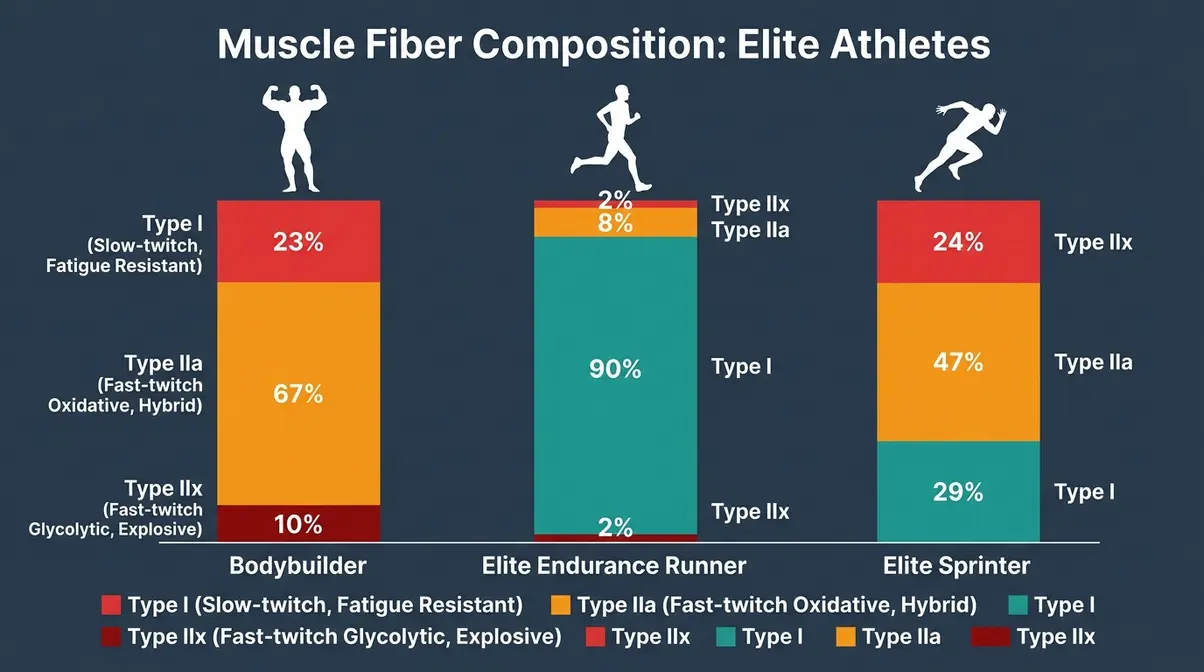
Understanding how fiber composition maps onto elite athletic profiles gives you a practical reference point for your own training goals. The data here comes from muscle biopsies and MHC (myosin heavy chain) gel electrophoresis — the gold standard for fiber-type quantification.
Bodybuilders: Fast-Twitch Specialists
Bodybuilders predominantly develop fast-twitch fibers because hypertrophy (muscle growth) is disproportionately a Type II phenomenon. Fast-twitch fibers are larger in cross-sectional area than slow-twitch fibers at baseline, and they respond to hypertrophic training with greater size increases. A PMC study of elite weightlifters found that their vastus lateralis (quadriceps) averaged approximately 23% Type I fibers and 67% pure Type IIa fibers, with the remaining fibers being hybrid types — a dramatically fast-twitch-dominant profile compared with the general population (Trappe et al., 2019).
Bodybuilding programming — sets of 8–15 reps at 65–80% 1RM — primarily targets Type IIa fibers, with some Type I involvement for higher-rep sets. Research evidence suggests that Type IIa fibers show the greatest hypertrophic response to moderate-to-heavy resistance training. For maximum muscle size, evidence indicates that training across a spectrum of rep ranges (6–30 reps, all taken close to failure) recruits the broadest range of fiber types and maximizes overall hypertrophic stimulus.
Endurance Athletes: Slow-Twitch Engine
Elite endurance athletes represent the extreme slow-twitch end of the human fiber-type spectrum. Long-distance runners, cyclists, and triathletes who train for 10–20+ hours per week drive a sustained adaptation toward Type I dominance. Studies show that endurance athletes can develop up to approximately 90% slow-twitch fiber composition in their primary locomotor muscles — a near-complete shift from the average population’s 50/50 split (Georgiou et al., 2021).
This slow-twitch dominance reflects years of high-volume aerobic training that maximizes mitochondrial density, capillary supply, and oxidative enzyme activity. The trade-off is a significant loss of explosive power. Many elite marathon runners cannot generate the vertical jump height of an average recreational basketball player — their Type IIx fibers have either transitioned toward IIa or have simply atrophied from years of underrecruitment. This is the Fiber Preservation Principle operating in reverse: sustained low-intensity training, without high-intensity work, gradually erodes the fast-twitch system.
Elite Sprinters: Extreme Fast-Twitch
Elite sprinters occupy the opposite extreme — their muscles are engineered almost entirely for explosive, anaerobic output. A landmark 2015 biopsy study of a world-record-holding sprint hurdler found that 71% of his quadriceps fibers were fast-twitch, including an extraordinary 24% pure Type IIx fibers — the highest IIx proportion ever recorded in an elite sprinter (Trappe et al., 2015). For context, most sedentary adults carry less than 2% pure IIx fibers.
Most top-level sprinters cluster around 70% fast-twitch and 30% slow-twitch in their primary working muscles — roughly double the fast-twitch proportion of the average person. No female Olympic sprinters in the Yang et al. cohort carried the “speed-limiting” ACTN3 XX genotype, underscoring how profoundly genetics shapes the upper ceiling of sprint performance (PMC study, 2003). However, even among non-elite athletes, consistent sprint training measurably increases fast-twitch fiber size and IIx-to-IIa transition rates — benefits that extend well beyond competitive sport into aging and general health.
Aging and the Fiber Preservation Principle
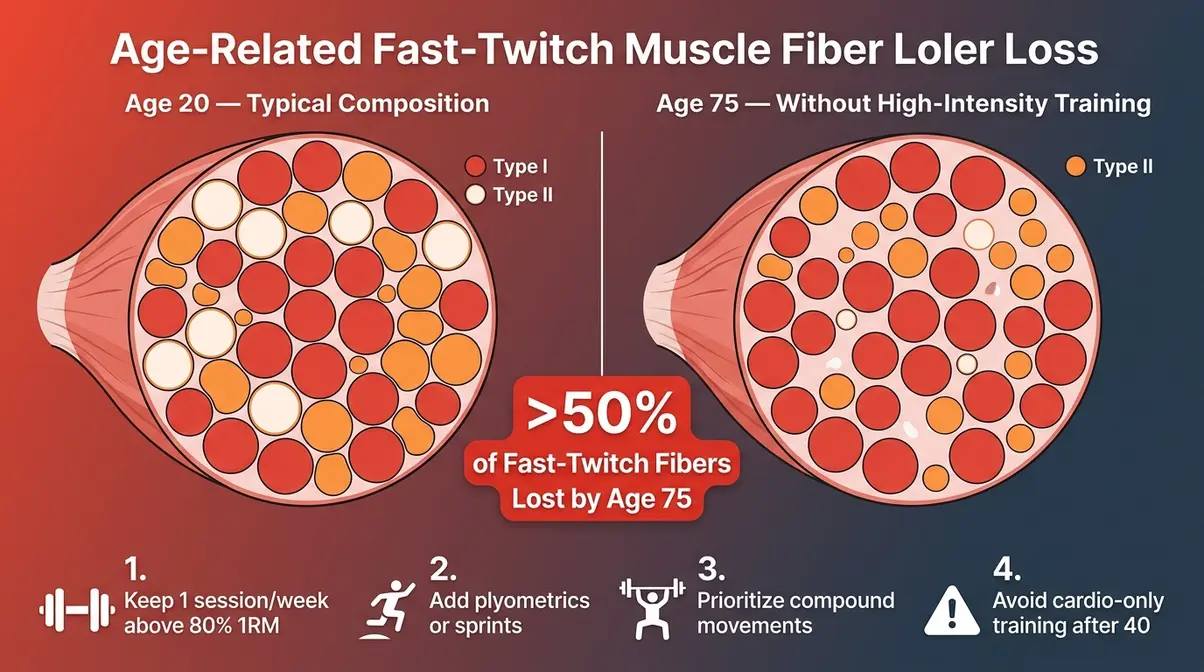
The most clinically important dimension of fiber-type biology is also the most underappreciated: fast-twitch fibers don’t just get weaker with age — they disappear. This is the central problem that The Fiber Preservation Principle is designed to solve.
Why Fast-Twitch Fibers Atrophy First
Sarcopenia (the progressive, age-related loss of skeletal muscle mass and function) affects approximately 10–20% of older adults, rising to 25% in those aged 65 and older and 30–50% in those aged 80 and older. But the fiber-type breakdown within that loss is striking.
Research shows that atrophy is disproportionately distributed, with a higher atrophy rate in Type IIa fast-twitch muscle fibers and their motor units (Runge et al., 2014). More than 50% of fast-twitch muscle fibers are lost between approximately ages 20 and 75 (Runge et al., 2014). By contrast, Type I slow-twitch fibers show much greater stability over the same timeframe. Muscle strength begins declining after age 30, with pronounced losses of greater than 15% per decade after age 50 — and fast-twitch fiber loss drives the majority of that functional decline (Runge et al., 2014). This explains how quickly do you lose muscle when detraining from high-intensity work.
The mechanism is exactly what the Fiber Preservation Principle predicts. Fast-twitch fibers require high-intensity recruitment signals to survive and adapt. When people reduce training intensity with age — or never trained at high intensity to begin with — their Type IIx and Type IIa fibers are chronically underrecruited. Underrecruited fibers receive no anabolic signal. Without that signal, they atrophy preferentially. The motor neurons supplying them also degrade, accelerating the process.
“Fast-twitch muscle fibers atrophy first with aging because you stop using them. You only recruit them at 60–70%+ of your max, and most at 80–100%.”
This is not a theoretical concern. It is the biomechanical explanation for why older adults lose explosive power — the ability to catch a fall, climb stairs quickly, or generate force on demand — far faster than they lose aerobic endurance.
Hybrid Fibers: The Middle Ground
Hybrid fibers co-express more than one MHC isoform (e.g., Type I/IIa or Type IIa/IIx), forming a functional continuum between the pure fiber extremes (PMC review, 2017). They represent the muscle’s plasticity — the ability to shift along the slow-to-fast spectrum in response to training stimuli.
Research on fiber-type transitions shows that the most common training-induced shift in humans is from Type IIx → Type IIa with both endurance and resistance training (NIH research, 2021). This is a net positive adaptation: IIa fibers retain high force output while gaining some fatigue resistance. However, the reverse transition — from IIa toward IIx — is also possible with detraining or chronic inactivity, particularly in aging populations where motor neuron loss accelerates the shift toward the fastest (and most fragile) fiber phenotype.
Hybrid fiber abundance increases during periods of transition: when you begin a new training program, return from injury, or dramatically change training modality. A large proportion of hybrid fibers in a biopsy is often interpreted as a muscle in flux — actively remodeling its contractile machinery. This is why the first 4–8 weeks of a new training stimulus often produce the most rapid strength and power gains: your hybrid fibers are converting toward the phenotype your training demands.
Countering Age-Related Fiber Loss
The Fiber Preservation Principle translates directly into a training prescription: to preserve fast-twitch fibers as you age, you must consistently train above the recruitment threshold — meaning loads at or above 70% 1RM, or maximal-intent explosive movements. Evidence from sarcopenia research consistently supports resistance training as the most effective intervention for slowing age-related fast-twitch atrophy (NIH data). If you are wondering what age do muscles stop growing, the answer emphasizes that consistent, heavy loading is required to maintain mass regardless of your birth year.
Four evidence-based strategies to implement starting today:
- Keep at least one heavy session per week above 80% 1RM. This is the minimum threshold for meaningful IIx and IIa recruitment. As you age, reducing training volume is acceptable — but reducing intensity below this threshold accelerates fast-twitch loss.
- Add plyometric or sprint work, even at low volumes. Two sets of box jumps or four 40-meter sprints twice a week provide a sufficient fast-twitch stimulus without excessive recovery demand.
- Prioritize compound movements over isolation exercises. Squats, deadlifts, power cleans, and loaded jumps recruit the largest fast-twitch motor units across multiple muscle groups simultaneously.
- Avoid the “cardio only” trap after 40. Steady-state aerobic training at moderate intensity exclusively trains Type I fibers. Without high-intensity work, your fast-twitch fibers are effectively invisible to your nervous system — and they will atrophy accordingly.
Limitations, Caveats, and When to Seek Expert Help
Common Pitfalls
Pitfall 1: Assuming fiber type is destiny. Genetics sets your baseline fiber ratio, but training consistently shifts the balance — particularly the IIx ↔ IIa transition. A naturally slow-twitch individual who trains explosively for 12 months will develop meaningfully more fast-twitch capacity. Don’t use “I’m naturally slow-twitch” as a reason to avoid high-intensity training.
Pitfall 2: Misinterpreting the self-assessment tests. The rep-to-failure and vertical jump protocols give directional estimates, not clinical accuracy. Factors like training history, fatigue, and technique confound results significantly. Use them to inform your programming priorities, not to make definitive claims about your physiology.
Pitfall 3: Going to failure on every set in the name of fast-twitch recruitment. Training to failure is one way to ensure full motor unit recruitment — but it also accumulates fatigue rapidly and increases injury risk. Research evidence suggests training to 1–2 reps short of failure (leaving 1–2 reps in reserve) achieves similar recruitment with lower systemic fatigue, particularly for compound movements at heavy loads.
Pitfall 4: Ignoring the overshoot mechanism in detraining. When you stop training for 2–4 weeks, Type IIa fibers can actually shift toward IIx temporarily — an “overshoot” phenomenon. This sounds beneficial but is counterproductive: pure IIx fibers fatigue faster and are more vulnerable to injury when you return to training. Maintaining training consistency, even at reduced volume, prevents this shift.
When to Choose Alternatives
- If your primary goal is cardiovascular health and longevity: Zone 2 aerobic training (targeting slow-twitch fibers) provides the strongest evidence base for metabolic health, VO2 max improvement, and cardiovascular disease risk reduction. Fast-twitch-focused training is complementary, not a replacement.
- If you have joint pathology (osteoarthritis, tendinopathy): High-intensity loading above 80% 1RM may be contraindicated. An exercise physiologist can prescribe velocity-based training or blood flow restriction (BFR) training as alternatives that stimulate fast-twitch fibers at lower absolute loads.
When to Seek Expert Help
⚠️ Medical Disclaimer: The information in this article is for educational purposes only and does not constitute medical or professional training advice. Consult a certified personal trainer, exercise physiologist, or physician before beginning any new exercise program, particularly if you have a pre-existing condition.
- Seek guidance from a certified professional if:
- You are over 50 and have not performed resistance training above 70% 1RM in the past year — a supervised return-to-loading program is strongly advisable.
- You have a history of musculoskeletal injury, cardiovascular disease, or metabolic disorder.
- You want an accurate fiber-type assessment — only an exercise physiologist with biopsy access or validated isokinetic dynamometry can provide clinical-grade data.
Frequently Asked Questions
Better to have fast or slow twitch?
Neither fiber type is objectively “better” — the optimal balance depends entirely on your performance goals. Fast-twitch fibers produce more force and generate greater muscle size, making them critical for strength, power, and sprinting. Slow-twitch fibers are fatigue-resistant and metabolically efficient, making them essential for endurance and long-duration performance. Research consistently shows that the most functionally capable individuals — including those with the best health outcomes in aging populations — maintain a robust mix of both types (Georgiou et al., 2021). If you train for one type exclusively, you’ll pay a performance tax in the other.
How to tell if you have fast twitch?
The most accessible home test is the bench press endurance protocol: load 80% of your estimated 1RM and perform reps to near-failure. Fewer than 7 reps suggests fast-twitch dominance; 13 or more suggests slow-twitch dominance; 8–12 indicates a mixed composition. A second method is comparing your vertical jump height against your best 1-mile run time — high jumpers with slow mile times tend to be fast-twitch dominant. No home test is clinically precise, but these protocols give a reliable directional estimate without a lab biopsy.
Bodybuilders: fast or slow twitch?
Bodybuilders are predominantly fast-twitch dominant, particularly in their Type IIa fibers. A biopsy study of elite weightlifters found approximately 67% Type IIa fibers in the quadriceps — a dramatically fast-twitch profile compared with the general population’s ~50/50 split (Trappe et al., 2019). Bodybuilding programming at 65–80% 1RM for sets of 8–15 reps specifically targets Type IIa development, which produces the greatest hypertrophic (size) response. However, bodybuilders who also incorporate heavy compound work at 85%+ 1RM further develop their Type IIx fibers, contributing to both size and maximum strength.
Exercises for slow twitch fibers?
Slow-twitch fibers are best trained with sustained, moderate-intensity aerobic exercise and high-rep resistance training at 50–65% 1RM. Zone 2 cardio (40–90 minutes at 60–70% max heart rate) is the gold standard for Type I mitochondrial development. On the resistance side, goblet squats for 20–25 reps, walking lunges for 30–40 steps, and seated cable rows at 20–25 reps all create the extended time-under-tension that Type I fibers respond to. Rest periods should be kept short (45–60 seconds) to maintain metabolic demand within the aerobic system. These exercises specifically avoid the high-intensity threshold that would shift recruitment toward fast-twitch motor units.
Conclusion
For intermediate athletes and fitness enthusiasts, understanding fast twitch vs slow twitch muscle fibers is not just academic — it directly determines whether your training produces the results you’re working toward. Slow-twitch (Type I) fibers are your endurance engine, aerobically fueled and fatigue-resistant. Fast-twitch (Type II) fibers are your power and size assets, recruited only at high intensities and lost disproportionately with age. Research shows that more than 50% of fast-twitch fibers disappear between ages 20 and 75 (Runge et al., 2014) — a loss that accelerates when training intensity drops below the recruitment threshold.
The Fiber Preservation Principle provides a clear framework for addressing this: to preserve your fast-twitch fibers, you must consistently train above 70% of your 1RM. This isn’t just about strength — it’s a long-term investment in maintaining the explosive capacity, fall prevention ability, and functional independence that fast-twitch fibers provide. Every week you spend training exclusively in low-intensity zones is a week your most powerful fibers are being underrecruited. At bodymusclematters.com, our editorial team’s cross-referencing of NIH/PMC research with practical programming confirms that intensity — not just volume — is the irreplaceable variable for fiber preservation.
Your next step is concrete: identify your dominant fiber type using the self-assessment protocols in this guide, then audit your current programming against the prescriptions above. If you haven’t trained above 80% 1RM in the past month, start there. Add one heavy compound session this week — four sets of back squats at 85% 1RM, or a power clean session — and build from that foundation. Your fast-twitch fibers are waiting to be recruited. Train hard enough to actually reach them.